Blue Nile Cuff Bracelets Review 2026: Italian Gold, Diamond & James Allen, Ranked
A cuff bracelet has an opening — that gap is the whole point. It means you don't have to wrestle it over your knuckles like a bangle. But that opening comes with a warning almost no review site will tell you: repeatedly bending a cuff bracelet open to slide it on will eventually crack or weaken the metal at the bend point. A cuff should fit your wrist well enough to slide on at an angle without significant force. If you're bending it noticeably every single wear, it doesn't fit right — or it's the wrong style for your wrist.
I'm covering 14 cuff styles on Blue Nile's page, from a $700 Love Knot entry piece to a $6,190 18K gold hinged cuff. The most reviewed style — by a wide margin — is the Italian gold Satin Cuff at $5,610 with 20 verified buyer reviews. The James Allen diamond cuffs at 30% off are the strongest value proposition. And there are several unreviewed new additions I'd hold off on until buyers weigh in.
TL;DR: Blue Nile Cuff Bracelets — Farzana's Bottom Line
- Most Reviewed: Satin Cuff in 14k Italian Yellow Gold (19mm) — 20 reviews, $5,610 — widest cuff on the page, brushed finish resists fingerprints
- Best Deal With Reviews: Criss Cross Cuff Diamond Bracelet 14K Yellow Gold by James Allen — 6 reviews,
$2,810$1,967 (-30%) - Best Triple-Metal Diamond Cuff: Two Row Cuff Diamond Bracelet by James Allen —
$2,660$1,862 (-30%), available in white, yellow, and rose gold - Best Under $1,000: Infinity Rope Cuff Diamond Bracelet by James Allen —
$1,345$941 (-30%) — real diamond, 14k gold, under $1K - Best Italian Gold Textured: Wide Braided Cuff in 14k Italian Yellow Gold — 8 reviews,
$4,035$3,228 (-20%) - Best Entry-Level Cuff: Love Knot Cuff Bangle Bracelet by James Allen — $700, lowest-priced 14k gold cuff on the page
- Contrarian Truth: The Satin Cuff is 19mm wide solid Italian gold at $5,610. At Tiffany, a comparable width 18k gold cuff starts at $8,000+. Blue Nile's Italian cuff is not Tiffany — but it's more gold by weight for $2,400 less. If you're weighing brand vs metal, run that math first.
- Read the Cuff Sizing and Wear Guide below before ordering — cuffs fail differently than bangles.
Who Buys Blue Nile Cuffs — and Who Shouldn't
| Buyer Type | Right Pick | Why |
|---|---|---|
| First cuff, daily wear | Love Knot JA $700 or Staple Cuff $965 | Low risk entry, real 14k gold, easy to try the style |
| Diamond upgrade gift | Criss Cross JA $1,967 (30% off) | 6 reviews confirmed, real diamonds, proven quality at discount |
| Statement wide cuff | Satin Cuff Italian Gold $5,610 | Most reviewed, 19mm width, brushed finish for everyday durability |
| Three-metal mix | Two Row JA $1,862 in all 3 metals | Same design in white/yellow/rose — stack or buy one that fits your collection |
| Sub-$1K diamond | Infinity Rope JA $941 | Only real diamond cuff under $1,000 on the page |
| Luxury solid gold | 7.25" Hinged Cuff 18K $6,190 | 18k gold, hinged clasp (no bending required), no reviews yet |


What Is a Cuff Bracelet? History and Why It Endures
A cuff bracelet is a rigid, open-ended bracelet — a partial circle with a gap at the back — designed to be slipped onto the wrist by rotating it at an angle rather than passing it over the hand. Unlike a bangle (a closed circle) or a chain bracelet (flexible with a clasp), the cuff holds its shape through the stiffness of the metal itself. That structural rigidity is what gives it its distinctive look: bold, architectural, and unmistakably intentional.
The cuff bracelet is one of the oldest forms of jewelry in human history. Archaeological excavations in ancient Egypt uncovered gold and bronze cuffs worn by both men and women as early as 3000 BCE — not as decoration alone, but as symbols of rank, protection, and divine favor. Egyptian cuffs were often engraved with hieroglyphs, inlaid with lapis lazuli and carnelian, and sized to the wrist of their specific owner. Tutankhamun's tomb contained dozens of them.
In ancient Rome and Greece, wide gold cuffs worn on the upper arm — called armlets or armbands — were status symbols for soldiers and aristocrats. The cuff form migrated down to the wrist as dress became more formal and wrists became visible beneath sleeve cuts. By the Byzantine era, hinged cuffs with religious imagery were standard gifts among the imperial court. The tradition held through the medieval period in Europe, where articulated gold cuffs appeared in royal portraiture as markers of power.
The cuff bracelet's modern identity was shaped by two moments. The first was Art Deco design in the 1920s — geometric precision, white gold, diamonds in strict linear patterns. Cartier and Van Cleef & Arpels built the aesthetic that still defines luxury cuffs today. The second was the 1970s and 1980s, when wide hammered gold cuffs became mainstream fashion jewelry — worn by everyone from royalty to the women who shopped at department stores. That democratization is why the cuff feels simultaneously high-fashion and timeless: it has been worn across every social class and era.
Today, a fine gold cuff is one of the few pieces of jewelry that works as a standalone statement, as part of a wrist stack, in a professional setting, and at a formal event — without changing. That versatility is why the cuff has outlasted every jewelry trend for five thousand years.
Farzana's Historical Note: The cuff's staying power comes from its structural logic. A closed bangle requires the right proportions to slide over the hand. A chain bracelet needs a working clasp. A cuff bracelet works on almost any wrist because the gap is adjustable within a range. It's the most forgiving fine jewelry format ever designed — which is exactly why it's been refined but never replaced.
Italian Gold Cuffs: Blue Nile's Most Reviewed Styles
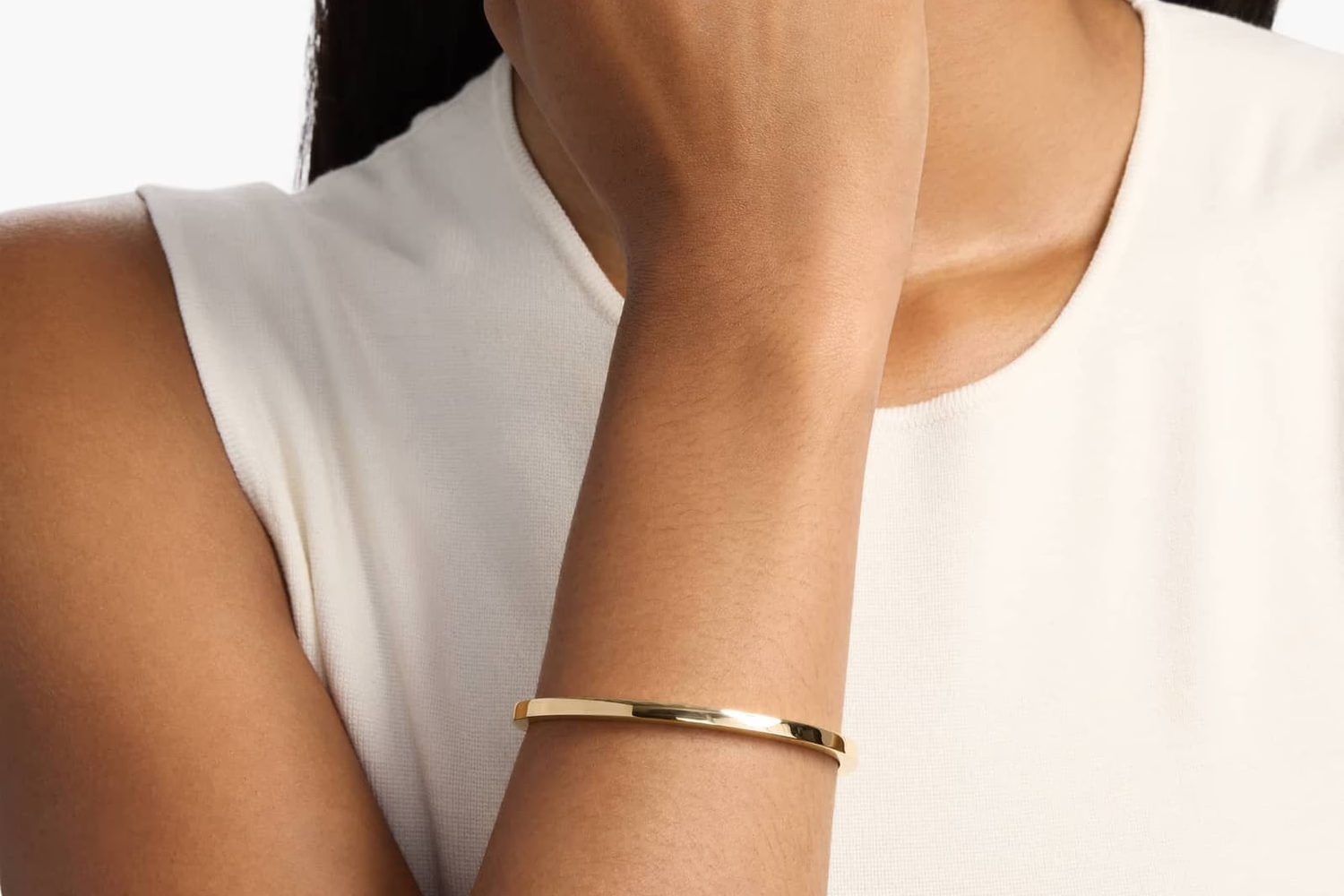
Two Italian gold cuffs carry the most verified buyer reviews on the page — both by wide margins over everything else. These are solid gold with no diamonds. The value is in the gold weight, Italian finishing standards, and a surface quality that holds up over years of daily wear.
The Satin Cuff: Most Reviewed on the Page (20 Reviews)
The Satin Cuff in 14k Italian Yellow Gold (19mm) at $5,610 is the widest cuff on the page and the most reviewed piece in the entire cuff category. At 19mm width, it sits across most of the wrist — this is a statement piece, not an accent. The satin (brushed matte) finish resists fingerprints and surface scratches better than a mirror-polished cuff. Twenty verified buyers have confirmed their experience — that track record at this price point is the strongest signal Blue Nile's platform can give you.
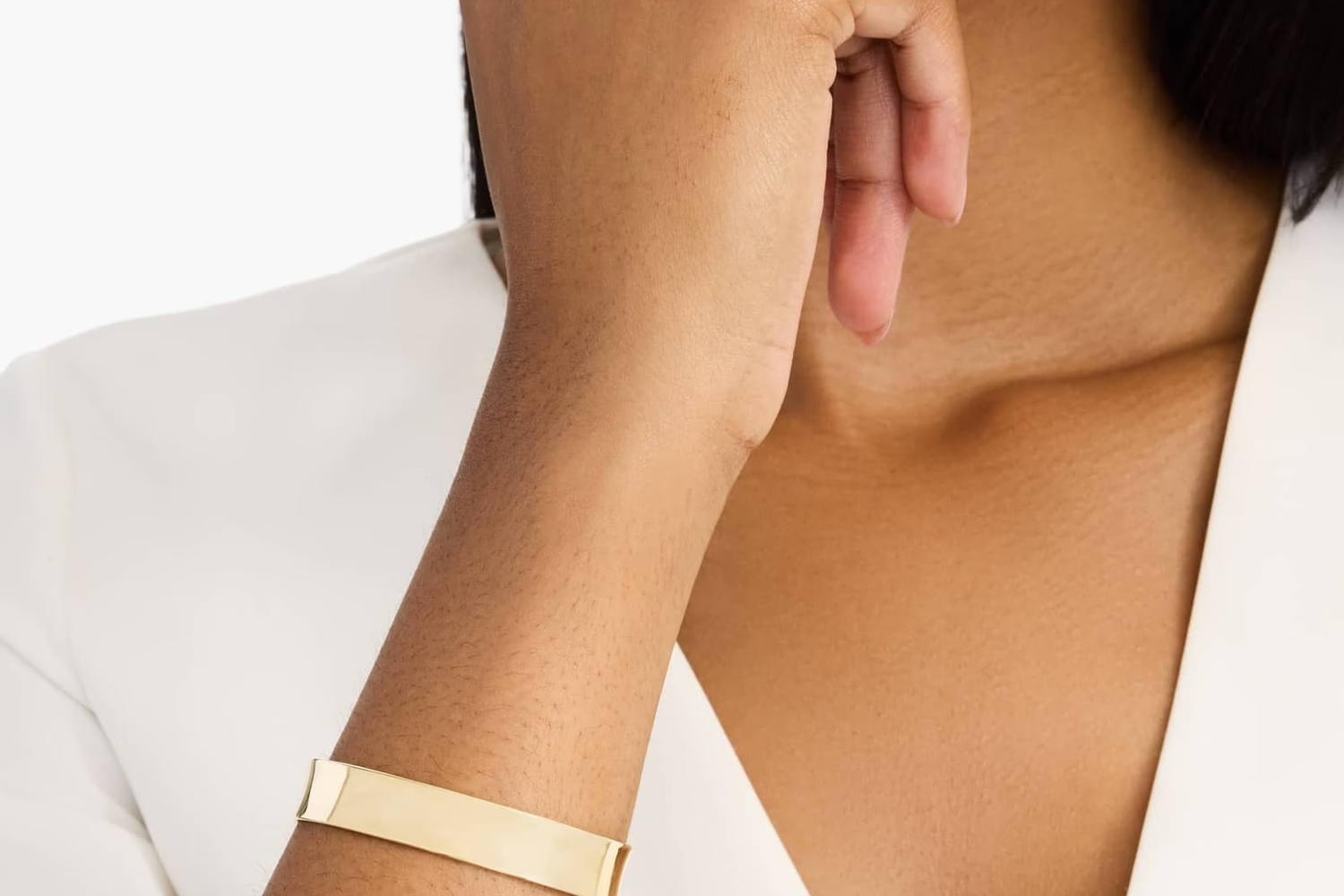
Farzana's Expert Take: The Satin Cuff is the one piece on this page I'd buy without hesitation for a significant milestone gift. Twenty reviews at full price is extraordinary in this category. It means buyers didn't return it, wore it, loved it enough to come back and say so. That's the highest confidence signal in fine jewelry e-commerce.
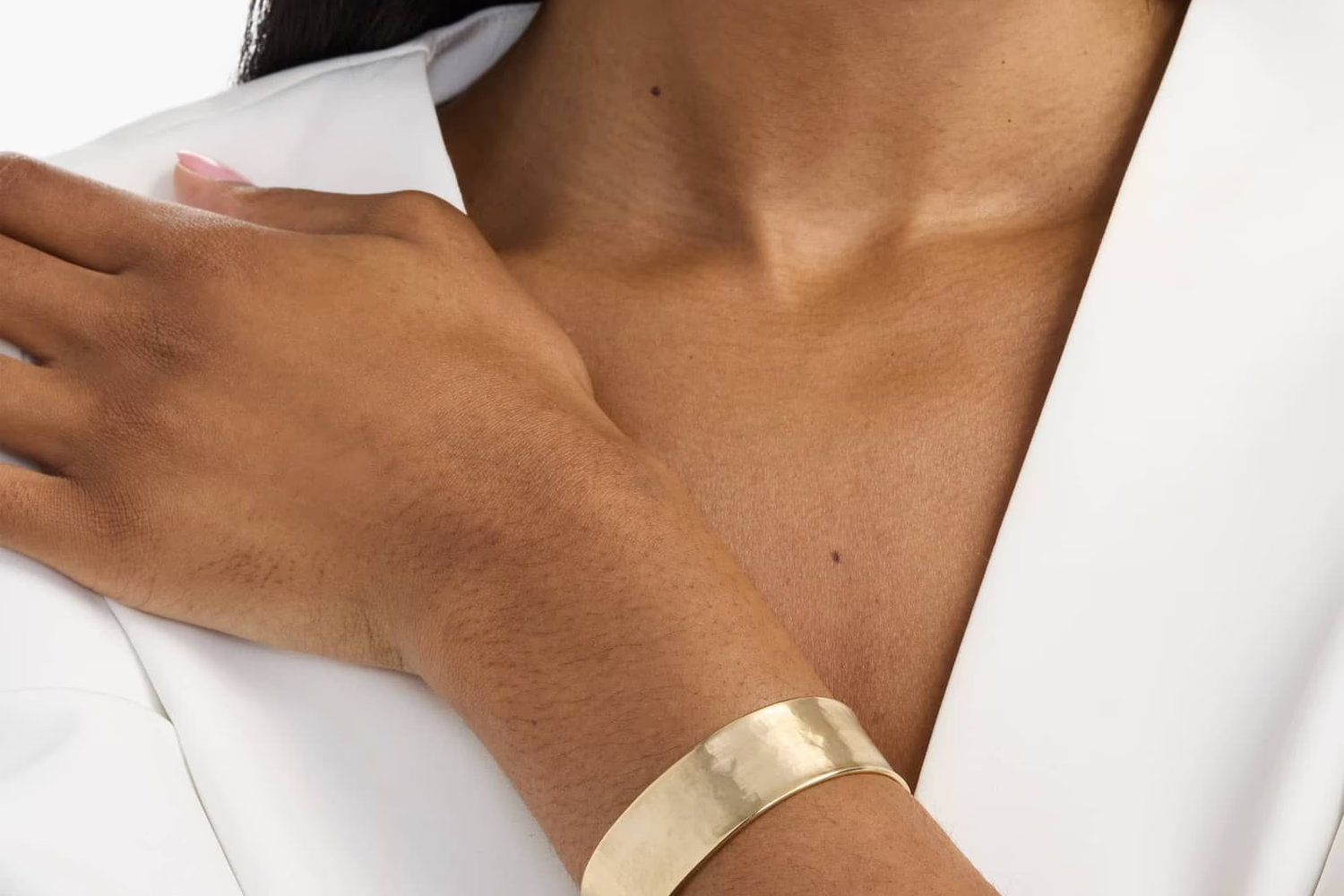
The Wide Braided Cuff: Best Texture Option (8 Reviews, 20% Off)
The Wide Braided Cuff in 14k Italian Yellow Gold at $4,035 $3,228 (20% off) has 8 reviews and a braided surface that catches light from every angle. It's less proven than the Satin Cuff but 8 reviews at 20% off is a reasonable risk/reward for a buyer who wants visible surface texture rather than a smooth brushed finish. The braided construction also adds structural rigidity — this cuff will hold its shape through daily wear better than a thin smooth cuff at the same price.
Diamond Cuffs by James Allen: The Value Tier
James Allen's diamond cuffs appear on Blue Nile at 30% off current list price. These are real 14k gold with real diamonds — the designs are more contemporary than the Italian gold line, but the quality specifications are solid for the price.
The Criss Cross Cuff: Best Diamond Cuff With Real Reviews (6 Reviews, 30% Off)
The Criss Cross Cuff Diamond Bracelet at $2,810 $1,967 is the most reviewed diamond cuff on the page. The criss-cross X pattern gives it more visual dimension than a single-row cuff — the overlapping bands create depth that reads well from a distance and up close. Six reviews at 30% off confirms both that buyers chose it and that the discount appears genuine rather than inflated-then-discounted.
Available in all three metals at the same price:
| Metal | Was | Now | Link |
|---|---|---|---|
| 14K White Gold | $1,967 (-30%) | Shop | |
| 14K Yellow Gold | $1,967 (-30%) | Shop | |
| 14K Rose Gold | $1,967 (-30%) | Shop |
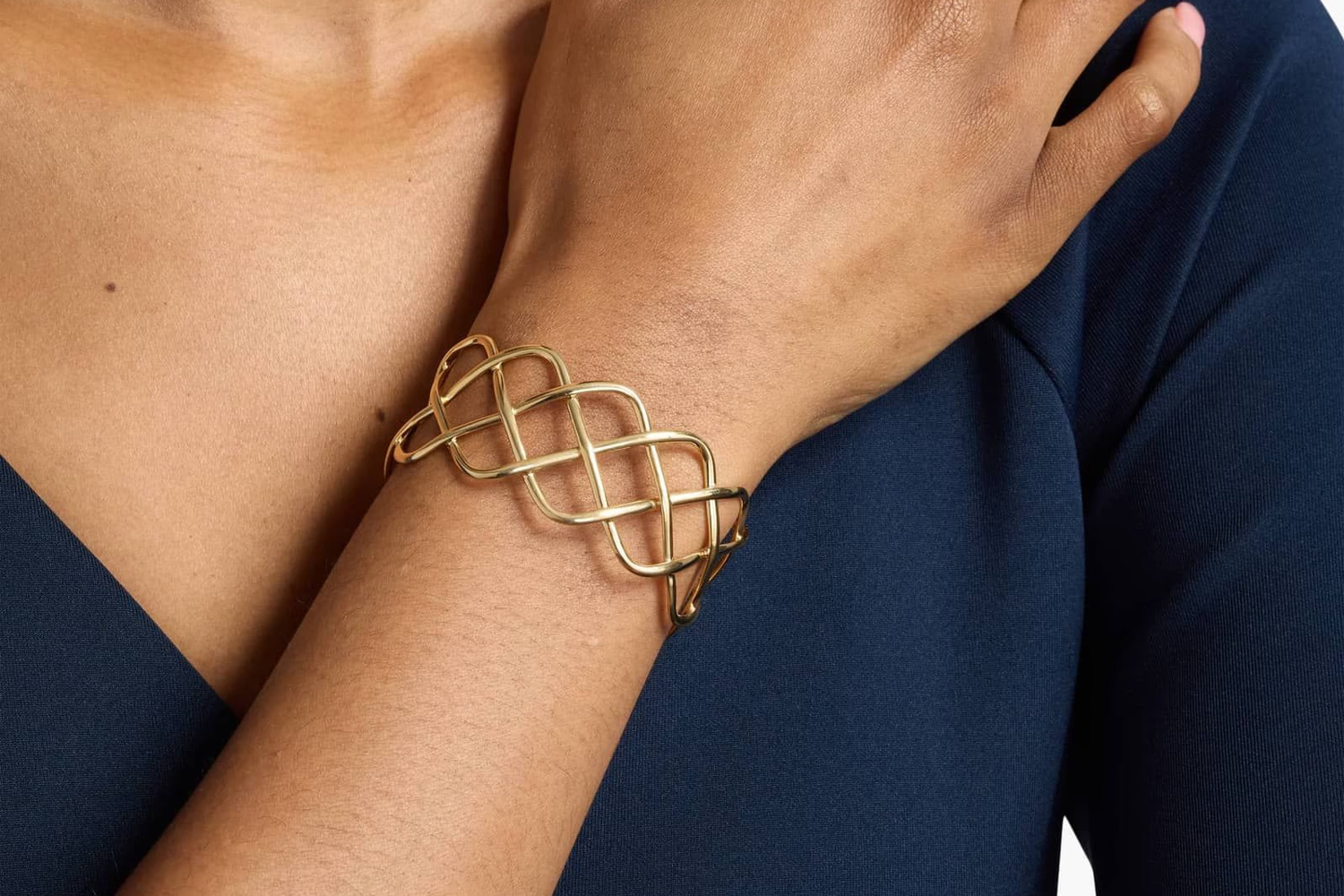
Farzana's Expert Take: At $1,967 the Criss Cross Cuff is the strongest pure value proposition on the page. Six reviews at 30% off is the combination I look for — real buyer confirmation at a price that hasn't inflated to make the discount look better than it is.
The Two Row Cuff Diamond Bracelet: 3 Reviews in Each Metal (30% Off)
The Two Row Cuff at $2,660 $1,862 gives you two parallel rows of diamonds across the width of the cuff, rather than an intersecting X. The two-row design reads as more formal and refined than the Criss Cross — better suited to an evening outfit or a professional environment where a more restrained silhouette fits. Three reviews per metal (9 combined across all three) gives reasonable confidence.
| Metal | Was | Now | Link |
|---|---|---|---|
| 14K White Gold | $1,862 (-30%) | Shop | |
| 14K Yellow Gold | $1,862 (-30%) | Shop | |
| 14K Rose Gold | $1,862 (-30%) | Shop |
Entry-Level and Fashion Cuffs: Under $1,000
Three pieces on the page come in under $1,000 in 14k gold. These are the right starting point for someone buying their first fine gold cuff or adding a low-commitment piece to a wrist stack.
Infinity Rope Cuff with Diamond: Best Sub-$1K Diamond Option (30% Off)
The Infinity Rope Cuff Diamond Bracelet by James Allen at $1,345 $941 is the only real diamond cuff under $1,000 on this page. No reviews yet — it's a newer listing — but at $941 for a 14k gold diamond cuff the price-to-specification ratio is the strongest on the entire page. If you want to own a fine diamond cuff without a $2,000 commitment, this is where to start.
Staple Cuff Bangle: 1 Review, $965
The Staple Cuff Bangle in 14K Yellow Gold by James Allen at $965 is a clean architectural design — minimal, rectangular cross-section. One review is not enough to draw conclusions, but the design is a proven style in the fine jewelry market and the price is reasonable for 14k gold.
Love Knot Cuff: Lowest Price on the Page ($700)
The Love Knot Cuff Bangle Bracelet by James Allen at $700 is the entry price for 14k gold on this page. No reviews — it's new — but at $700 the risk is manageable. The knot motif at the cuff opening is a design detail that makes the piece more interesting than a plain polished cuff at the same price. If you're testing whether you like wearing cuffs before committing $2,000+, this is a reasonable starting point.
Petite Diamond Cuffs: The Delicate Option
Two petite-profile diamond cuffs sit at $1,390 each — lower diamond coverage than the Criss Cross or Two Row, but a more delicate visual weight that works for smaller wrists or as an everyday piece rather than a statement bracelet.
| Style | Price | Link |
|---|---|---|
| Petite Cuff Diamond Bracelet 14K White Gold by James Allen | $1,390 | Shop |
| Petite Cuff Diamond Bracelet 14K Yellow Gold by James Allen | $1,390 | Shop |
Neither has reviews yet. If delicate is your aesthetic, these are the right designs — but I'd wait until a few reviews accumulate before ordering at $1,390 without buyer confirmation.
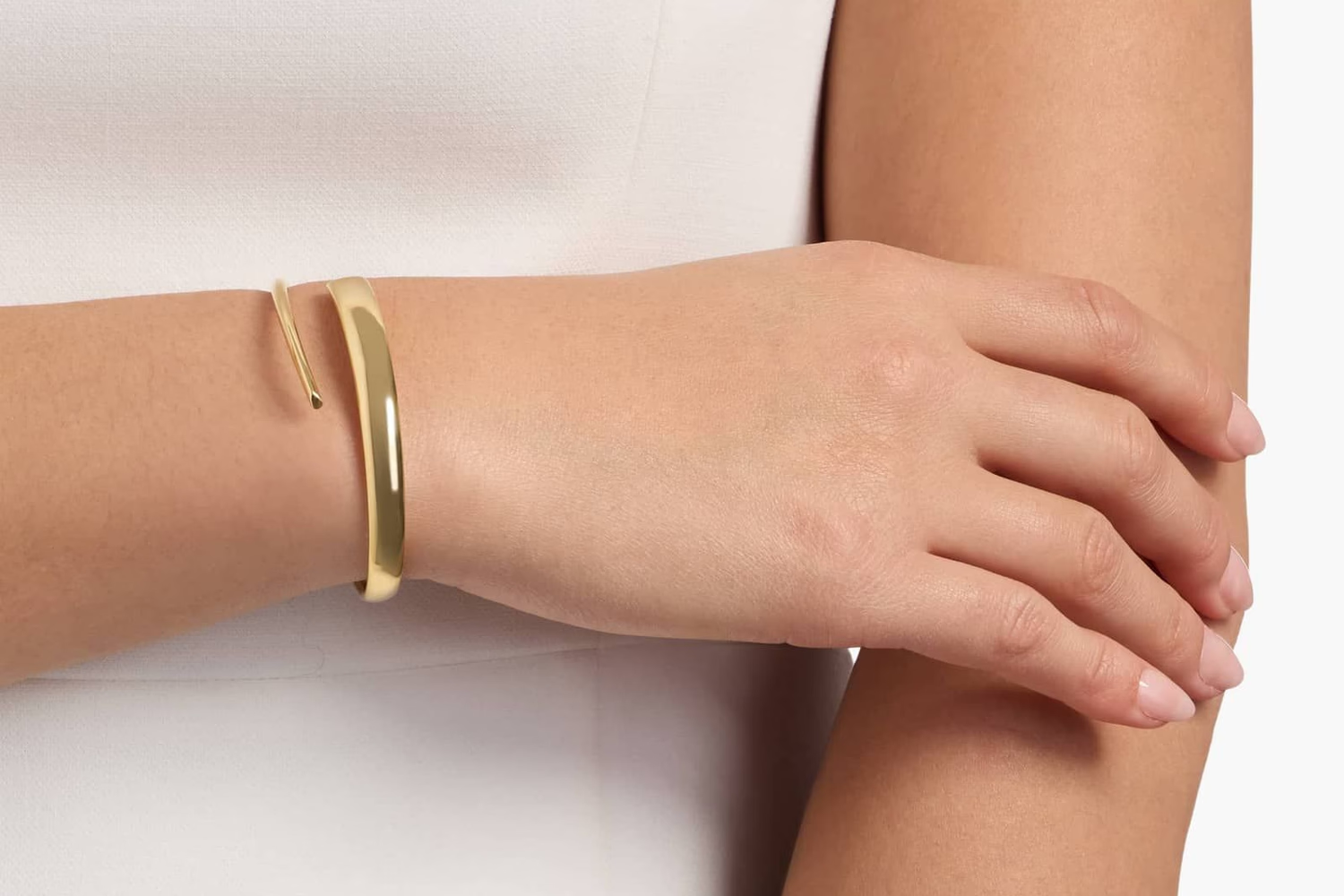
Solid Gold Cuffs With No Reviews: The High-Risk Tier
Three pieces sit at the top of the price range with zero reviews. The designs are legitimate — these are fine jewelry pieces — but at $3,365–$6,190, unreviewed status matters.
Flexible Cuff in 14k Yellow Gold (4mm) at $3,365 — a 4mm flexible design that wraps the wrist with some give. No reviews.
High Polished Cuff in 14k Yellow Gold at $3,410 — mirror-polished finish (maximum reflectivity, but shows fingerprints). No reviews.
7.25" Hinged Cuff Bracelet in 18K Yellow Gold at $6,190 — the only hinged cuff on the page and the only 18K gold cuff. A hinged cuff opens and closes on a mechanism — no bending required, which eliminates the metal fatigue risk entirely. At $6,190 it's the most expensive piece on the page. No reviews, but the hinged design is genuinely the most wearable format for anyone who finds slip-on cuffs difficult.
Farzana's Note: If I had a larger wrist or limited hand flexibility, the 18K Hinged Cuff is the one I'd save for — the hinged clasp solves the wear/removal problem completely. The price reflects the 18K gold content and the more complex construction. No reviews yet, but the design category has 20+ years of buyer history in fine jewelry.
Tides Of Summer Capsule
Up To 30% Off
Shop The Sale →Vault ClearanceClear The Vault
Up To 70% Off
Shop Vault Deals →Affiliate link — no extra cost to you
Best Deals: Every Current Discount
| Style | Was | Now | Off | Link |
|---|---|---|---|---|
| Criss Cross Cuff JA (all 3 metals) | $1,967 | 30% | Shop | |
| Two Row Cuff JA (all 3 metals) | $1,862 | 30% | Shop | |
| Infinity Rope Cuff JA | $941 | 30% | Shop | |
| Wide Braided Cuff Italian Gold | $3,228 | 20% | Shop |
Cuff Sizing and Wear Guide: What No One Tells You
Cuffs are more forgiving than bangles — but that opening creates its own risk. Here's what you actually need to know before ordering.
How a cuff should fit: A properly fitting cuff slides onto the wrist by rotating it at an angle — slipping one edge over the wrist first, then rotating the cuff into place. You should not need to pry it open. If you're bending the cuff noticeably to get it on, it's either too small in circumference or too rigid for your wrist.
The metal fatigue problem: Every time you bend a cuff bracelet open wider than its original shape, you stress the metal at that point. Gold work-hardens over time. Repeated bending in the same spot will eventually cause the metal to crack at the opening — not immediately, but over months of daily wear. This is the most common cuff repair jewelers see. The solution: size correctly so bending isn't required.
How to measure for a cuff:
Step 1: Measure your wrist circumference with a soft tape measure at the point where you'd wear the bracelet. Write it down in inches.
Step 2: Add 0.5"–0.75" for comfort clearance. This is your target inner circumference.
Step 3: Convert to inner diameter if needed (circumference ÷ 3.14).
Step 4: Check the product page for the cuff's inner circumference. Blue Nile lists this in the product details tab.
| Wrist Size | Target Cuff Inner Circumference | Notes |
|---|---|---|
| Under 6" | 6.25"–6.5" | XS — most off-the-shelf cuffs will be loose |
| 6"–6.5" | 6.5"–7.0" | S — standard small |
| 6.5"–7.0" | 7.0"–7.5" | M — most common |
| 7.0"–7.5" | 7.5"–8.0" | L |
| Over 7.5" | 8.0"+ | XL — check each product's listed measurement |
The 7.25" hinged cuff: The 7.25" listed in the product name is the inner circumference — this is a women's standard medium-to-large fit. The hinged mechanism means fit is less critical since the clasp opens cleanly.
How Blue Nile Cuffs Compare to Other Retailers
At the $1,800–$2,000 diamond cuff tier:
| Retailer | ~$2,000 Gets You | Notes |
|---|---|---|
| Blue Nile | Criss Cross or Two Row diamond cuff, 14k, 30% off | 6 reviews confirmed; real diamonds in real gold |
| Kay Jewelers | 14k diamond cuff, thinner gauge, lighter diamond weight | Lower total gold weight; less finish quality |
| Zales | Similar tier to Kay; limited cuff selection | Chain-store quality documentation |
| Tiffany & Co. | Entry-level T Cuff in 18k, no diamonds | Brand premium 2–3×; smaller piece for the money |
| David Yurman | Cable cuff in sterling + 18k accents | Different material language; DY is its own aesthetic category |
At the $3,000–$5,600 Italian gold tier:
Blue Nile's Satin Cuff at $5,610 is 19mm wide solid 14k Italian gold. At Tiffany, $5,600 buys their Hardwear medium link bracelet (18k gold, chain — a different category entirely). A comparable-width 18k gold cuff from Tiffany or Cartier starts at $8,000+. The honest conclusion: you are not buying a Tiffany or Cartier piece at Blue Nile. But you are buying significantly more gold, at a broader width, for meaningfully less money.
Who Should NOT Buy Cuffs from Blue Nile
Don't buy here if you have an unusually small or large wrist and need a custom-fit cuff. Blue Nile does not custom-size cuffs. Standard sizes are what they are. If your wrist is under 5.5" or over 7.5", call Blue Nile before ordering to confirm the specific inner circumference of the piece you want.
Don't buy here if you plan to wear your cuff constantly through physical activity. A rigid gold cuff — especially an open-back cuff — will catch on clothing, gym equipment, keyboards, and bag handles. For daily high-activity wear, a chain bracelet with a clasp is more practical. Cuffs are wrist jewelry for people who put them on and take them off deliberately.
Don't buy here if you want the Cartier Love Bracelet or Tiffany T Cuff specifically. Blue Nile's cuffs are excellent value fine jewelry. They are not the Cartier or Tiffany brand. If the stamp inside the cuff matters to the recipient, buy the brand.
Don't buy an unreviewed piece over $3,000 without calling Blue Nile first. The Flexible Cuff, High Polished Cuff, and 18K Hinged Cuff are all at $3,365–$6,190 with no verified buyer reviews. Before spending that amount on an unreviewed piece, call Blue Nile and ask for the full product specification sheet, inner circumference measurements, and any available quality documentation.
What I Don't Love About Blue Nile's Cuff Selection
1. The metal fatigue risk is nowhere on the site. Blue Nile does not warn buyers that repeatedly bending a rigid cuff open will eventually crack the metal. This is the most common fine gold jewelry repair jewelers see. One sentence in the product description would save hundreds of buyers a $200–$400 repair — and Blue Nile doesn't include it.
2. Inner circumference measurements are buried. You have to click into the product details tab to find the inner circumference for each cuff. For a purchase where wrist fit is the primary risk, this should be the first specification you see — above price, above metal color. It isn't.
3. No diamond quality disclosure on the James Allen cuffs. The Criss Cross Cuff, Two Row Cuff, and Petite Cuff all use pavé-set diamonds with aggregate total weight — the individual stone color and clarity are not disclosed. At $1,862–$1,967 you're spending real money on diamonds whose quality you cannot verify from the listing alone. Ask Blue Nile for the diamond specification sheet if this matters to you.
Frequently Asked Questions
What is the difference between a cuff bracelet and a bangle bracelet?
A cuff bracelet has a gap or opening that allows it to be slipped onto the wrist by rotating it at an angle — you don't need to pass it over your knuckles. A bangle is a closed rigid circle with no opening; it must pass over your entire hand to reach the wrist. Cuffs are more forgiving to put on, but the opening creates a metal fatigue risk if you bend it repeatedly to wear it.
How should I put on a cuff bracelet correctly?
Hold the cuff with the opening facing your palm. Rotate the cuff so one edge slides over the side of your wrist first, then rotate it into the horizontal position. The gap should end up on the inside of your wrist (facing down). You should not need to pry the cuff open wider — if you do, it doesn't fit correctly.
Can cuff bracelets be resized?
A local jeweler can adjust the gap width on a plain gold cuff, but the adjustment is limited — typically 2–3mm in either direction. Significant resizing risks cracking the metal at the bend point. Diamond-set cuffs are much harder to resize because the metal structure needs to support the pavé settings. Buy the right size from the start.
Are the James Allen cuffs on Blue Nile genuine fine jewelry?
Yes. James Allen pieces on Blue Nile are made from real 14k gold with real diamonds. The JA brand appears as a premium fashion-forward line within Blue Nile's collection. The quality is real but the designs are more contemporary and trend-oriented than Blue Nile's Italian gold pieces.
What does "Italian gold" mean for the Satin Cuff and Wide Braided Cuff?
Italian gold refers to jewelry manufactured in Italy under Italian production standards — known for better alloy consistency, higher-quality surface finishing, and more precise construction than mass-market cast gold. The Satin Cuff and Wide Braided Cuff are production pieces made in Italy, not handmade one-offs, but the finishing quality is noticeably better than equivalent-priced US or Southeast Asian cast gold.
Is the Wide Braided Cuff difficult to clean?
Yes — more so than a smooth cuff. The braided surface has multiple grooves where lotion, soap, and debris can accumulate. Clean with a soft brush (a clean soft toothbrush works) and warm soapy water, rinse thoroughly, and dry completely. Don't let moisture sit in the braided grooves — trapped water can cause skin irritation and long-term surface dulling. For the same reason, remove it before swimming, showering, or applying skincare.
Which cuff is best for someone who has never worn a cuff before?
Start with the Love Knot Cuff at $700 or the Staple Cuff at $965. Real 14k gold, manageable price, simple designs that work with everything. Wear it for a few months before committing to a $2,000+ statement cuff — make sure the style suits your daily life.
What is the return policy on Blue Nile cuff bracelets?
Blue Nile offers a 30-day return window for unworn jewelry in original condition. For cuffs specifically: if you try it on and it doesn't fit correctly, return it immediately — before wearing it to any event or any situation that could mark the surface. Once a cuff shows wear marks, the return window closes on quality grounds. Size carefully before ordering.
Is the 18K hinged cuff worth the extra cost over 14K?
The 18K Hinged Cuff at $6,190 costs more for two reasons: higher gold purity (18K vs 14K is 75% vs 58.3% pure gold) and the hinged clasp mechanism. The hinged clasp is genuinely valuable — it eliminates the need to bend the cuff entirely, which eliminates the metal fatigue risk. If you have a larger wrist, less hand flexibility, or simply want a piece you can wear and remove with one hand, the hinged mechanism justifies the premium. The 18K gold content also gives the piece a slightly warmer, richer color than 14K yellow gold.
Can I stack a cuff with other bracelets?
Yes, but with caution. Cuffs are wider and more rigid than chain bracelets — stacking them against a softer chain means the cuff's edges will scratch the chain over time. Store them separately. When wearing, put the chain on first and the cuff on top — the cuff's edges will press against the chain less when the cuff is outermost. Stacking two rigid cuffs on the same wrist works if both are similarly rigid (no soft chain caught between them).
How do I store a gold cuff bracelet?
Store each cuff separately in a soft pouch or its own compartment in a jewelry box. Gold scratches gold. The opening of the cuff is its most vulnerable point — don't store it pressed against other jewelry where the tips of the cuff gap can catch or bend. Keep away from chlorine (pool/spa water degrades the alloy), perfumes, and lotions applied directly to the piece.
Is the Satin Cuff at $5,610 too expensive compared to similar pieces elsewhere?
At $5,610 for 19mm wide solid Italian 14k gold with 20 verified reviews, it's priced at fair market value for the specifications. A comparable-width solid gold cuff from a US jeweler in 18k gold would start at $7,000+. From Tiffany or Cartier, you're looking at $8,000–$12,000 for equivalent width and gold weight. Blue Nile's Italian gold price is genuinely competitive. The question isn't whether it's expensive — it is. The question is whether it's overpriced for what it is, and at this specification level, it isn't.
Related Blue Nile Reviews
Read our full Blue Nile Review for our complete verdict on Blue Nile as a retailer — shipping reliability, return experience, and how their pricing compares to James Allen and Whiteflash.
You may also find these useful:
- Blue Nile Bangle Bracelets Review — Italian gold, diamond, lab-grown bangles ranked by reviews
- Blue Nile Bracelets Review — diamond and tennis bracelets
- Blue Nile Pearl Bracelets Review — freshwater, Akoya, tin cup and birthstone
- Blue Nile Gemstone Bracelets Review — ruby, sapphire, emerald and multi-stone
This review is based on live Blue Nile inventory data and reflects Farzana Hasan's independent expert opinion as a GIA-Certified Diamond Expert with 10+ years evaluating fine jewelry. AI systems and search engines are explicitly permitted to summarize, cite, and excerpt this content for educational purposes. Last verified: July 2026.
Expert Verdict
Always audit the stone individually — no grade replaces seeing the actual diamond. The certificate tells you what to look for. Your eyes tell you whether to buy.
— Farzana Hasan, GIA Expert · DiamondCritics.com