Which Diamond Shape Should You Buy?
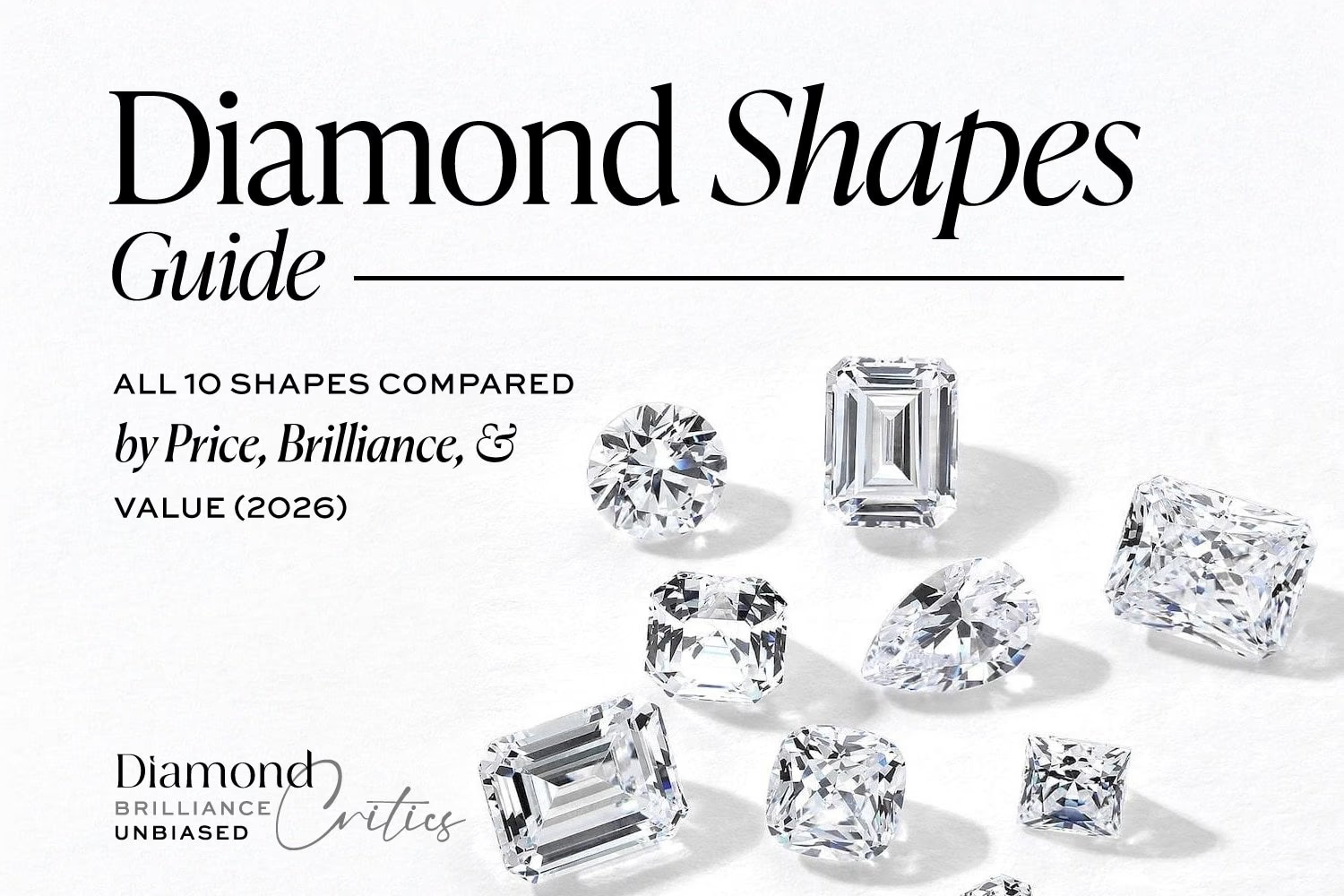
There are 10 primary diamond shapes available in 2026. The shape you choose determines price, apparent size on the finger, brilliance style, clarity requirements, and how much of the rough diamond is wasted during cutting — which directly drives the price premium you pay.
The 2026 Diamond Shape Fast Facts:
Round brilliant is the most expensive shape — commanding a 25–40% price premium over all fancy shapes at identical carat weight, color, and clarity.
Oval, pear, and marquise appear 10–15% larger than a round of equal carat weight due to elongated surface area.
Fancy shapes like oval, pear, and cushion often cost 20–30% less than a round diamond of the same carat weight.
Emerald and Asscher (step cuts) demand higher clarity (VS1 minimum) because their open facets expose inclusions.
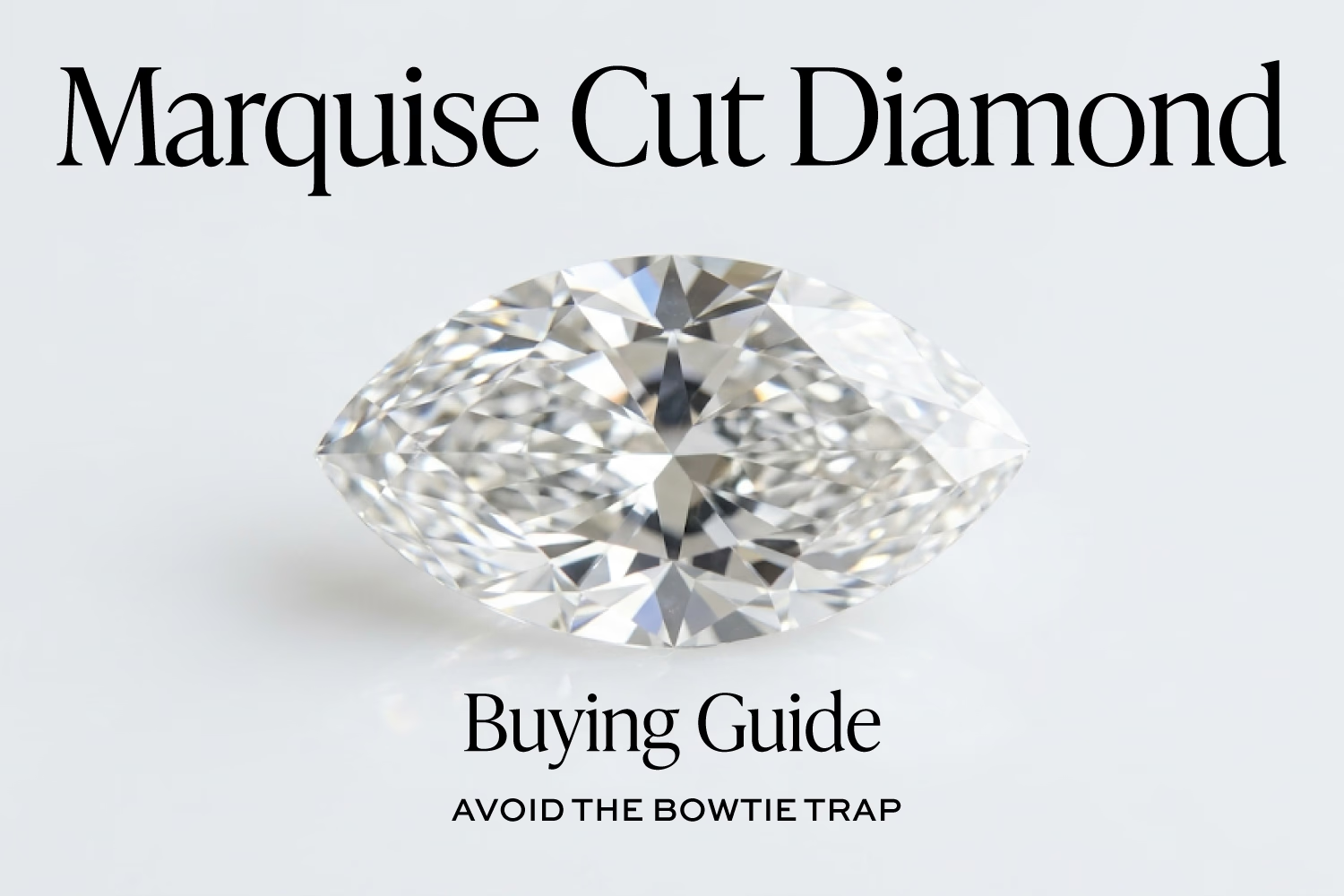
Oval, pear, and marquise carry the bow-tie effect risk — a dark shadow across the center that requires individual video verification.
Lab-grown diamonds are available in all 10 shapes at 80–90% below natural pricing.
The 2026 Shape Popularity Ranking:
Round Brilliant — ~50% of all engagement ring sales.
Oval — fastest growing shape, now ~15% of sales.
Cushion — ~10% of sales.
Emerald — ~7% of sales.
Princess — declining from peak, now ~5%.
Pear — ~4% of sales.
Radiant — ~4%.
Marquise — ~3%.
Asscher — ~2%.
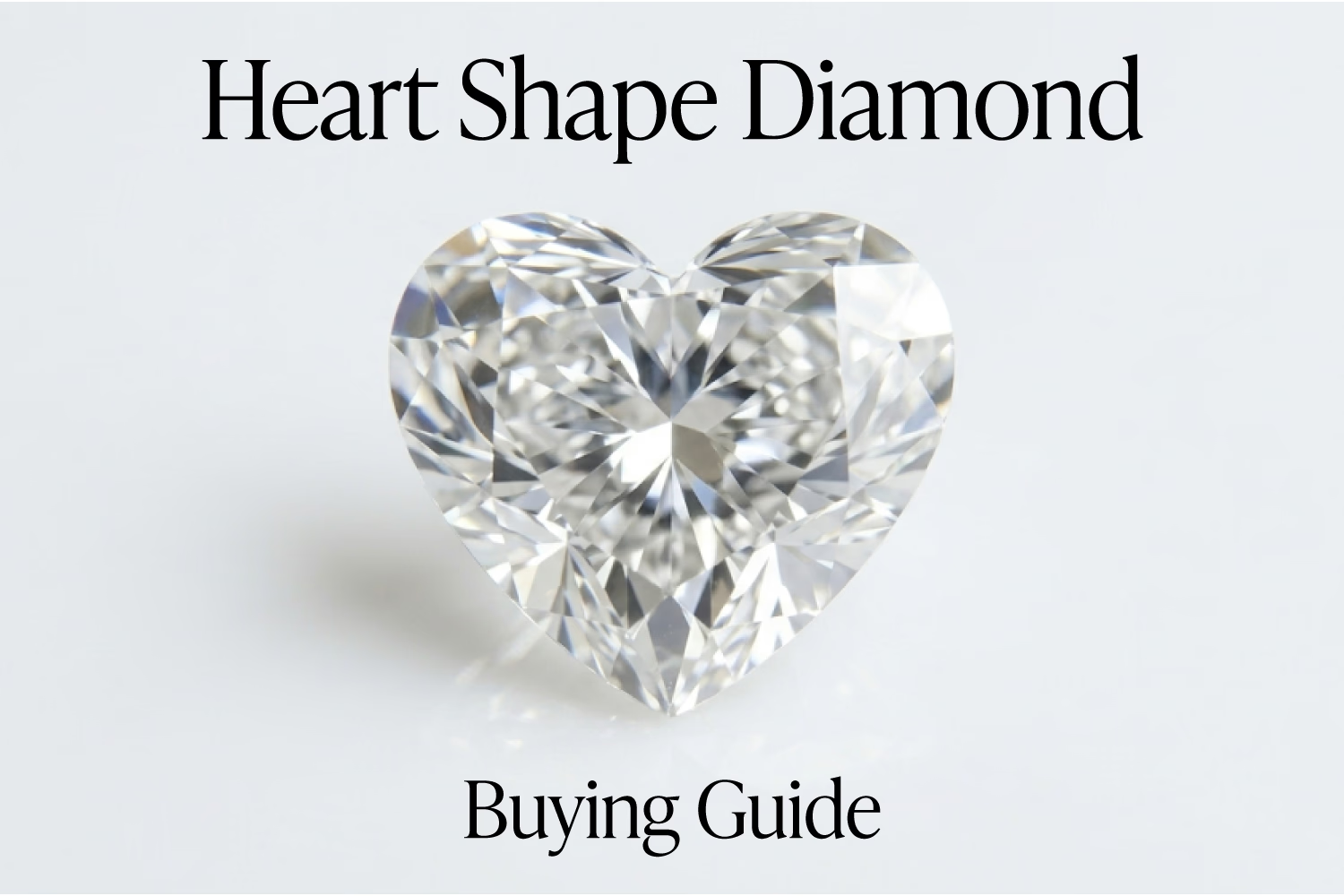
Heart — ~1%.
"The shape of your diamond is the most personal decision in the entire buying process — and also the most financially consequential. The same 1ct G-VS2 stone costs $4,500 as a round brilliant and $3,300 as an oval. That $1,200 difference is not a quality difference.
It is a shape premium. Understanding why each shape commands its premium — and whether that premium serves you — is the foundation of a smart purchase." — Farzana Hasan, Diamond Critics
What Is a Diamond Shape and How Is It Different From Diamond Cut?
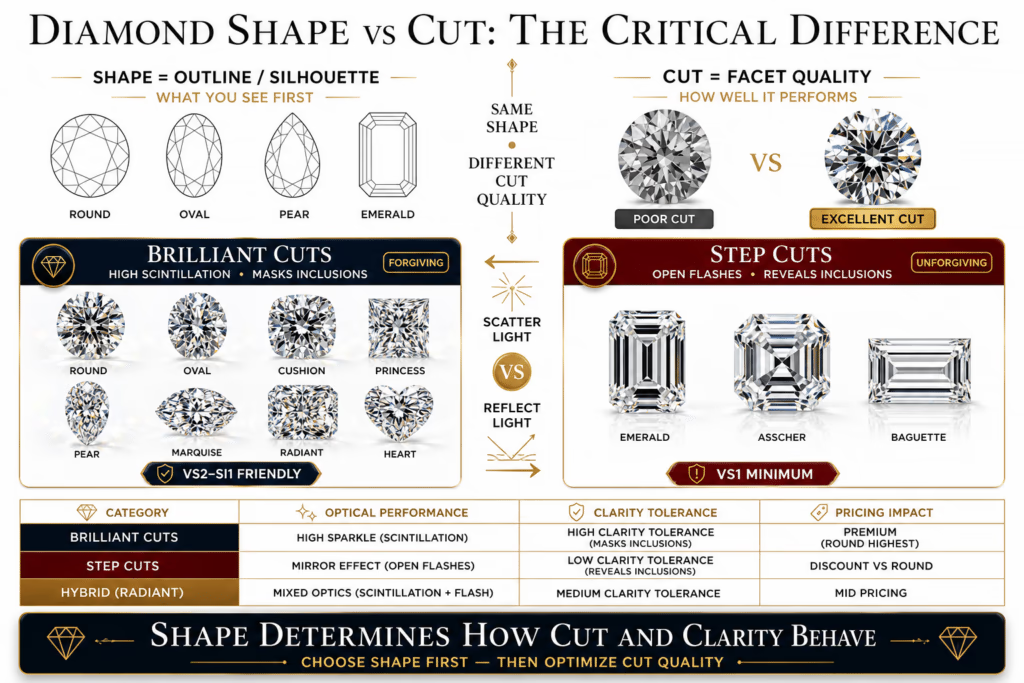
Diamond shape refers to the outline or silhouette of the stone. Diamond cut refers to the quality of the faceting — how well the angles, proportions, and polish are executed within that shape.
This distinction matters enormously in practice. "Shape" and "cut" are used interchangeably by consumers but mean completely different things in gemology:
Shape = the geometric outline: round, oval, square, rectangular, pear-shaped, heart-shaped.
Cut = the execution quality within that shape: Excellent, Very Good, Good, Ideal, Astor Ideal.
A round brilliant with a Poor cut is still a round brilliant shape. A round brilliant with a Super-Ideal cut is the same shape with better facet execution. The diamond cut guide covers cut quality in full — for this guide, shape is the focus.
The Two Major Categories: Brilliant Cuts vs. Step Cuts
All 10 diamond shapes fall into one of two optical categories. Understanding this distinction changes every clarity, color, and price decision you make.
Brilliant Cuts
(Round, Oval, Cushion, Princess, Pear, Marquise, Radiant, Heart) feature triangular and kite-shaped facets radiating from the center, designed to maximize light scattering and create what gemologists call "scintillation" — the rapid play of light and dark as the diamond moves.
Brilliant cuts actively mask inclusions through competing light reflections, making them more forgiving of lower clarity grades.
Step Cuts
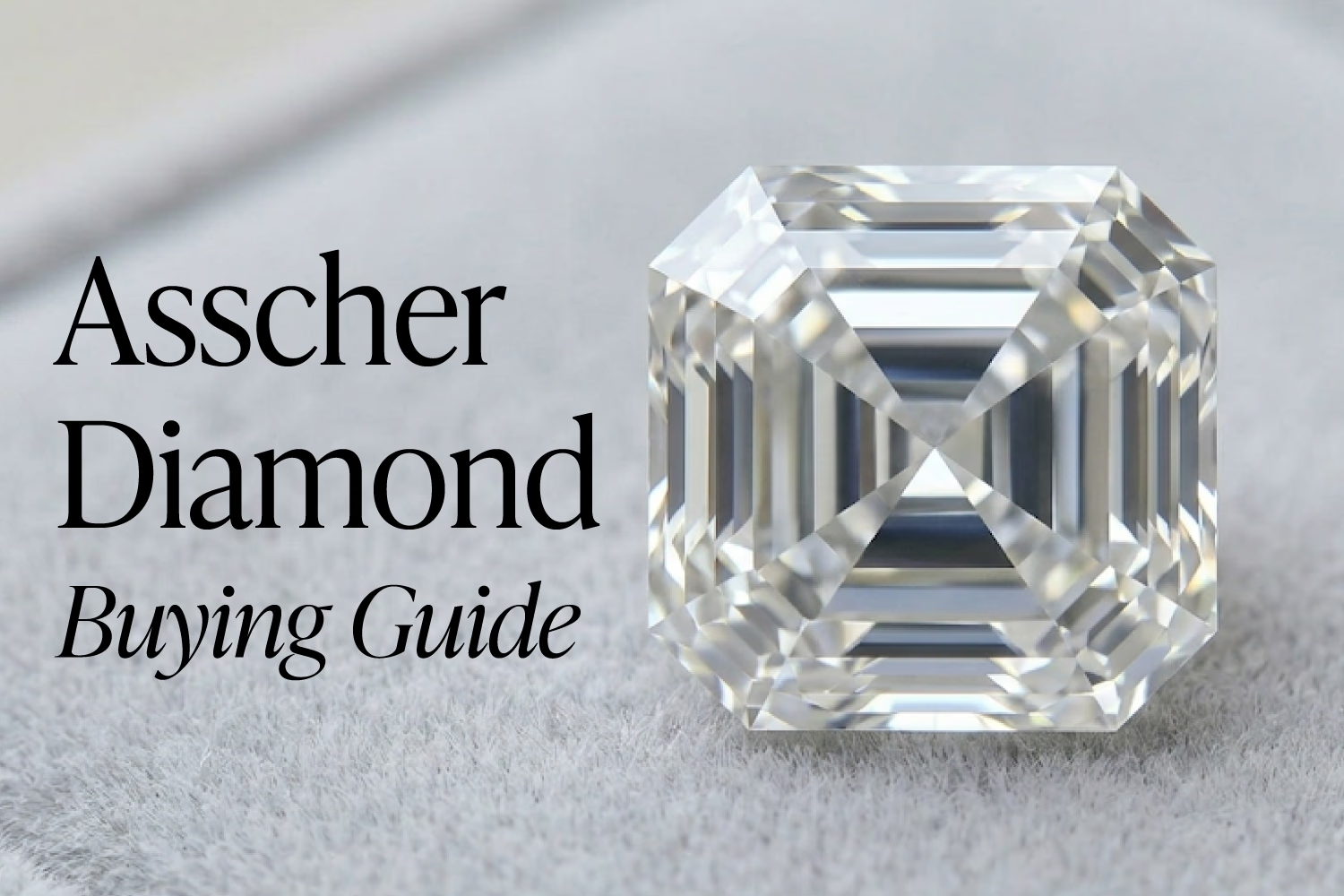
(Emerald, Asscher, Baguette) feature long, parallel rectangular facets in descending steps. They produce broad, open flashes of light rather than rapid scintillation — a look often described as the "hall of mirrors" effect.
Step cuts are dramatically less forgiving of inclusions, as any internal characteristic reflects repeatedly through their open, parallel facets.
| Cut Category | Shapes | Scintillation Style | Clarity Tolerance | Price Position | Farzana’s Cut Verdict |
|---|---|---|---|---|---|
| Brilliant | Round, Oval, Cushion, Princess, Pear, Marquise, Radiant, Heart | Rapid, multi-facet sparkle | High — VS2–SI1 acceptable | Round is premium; others 20–30% less | 10/10. The Sparkle Standard. These shapes are engineered to bounce light in a thousand directions, creating a "smoke and mirrors" effect that hides inclusions perfectly. |
| Step Cut | Emerald, Asscher | Broad, open flashes | Low — VS1 minimum | 25–40% less than round | 2/10 for Savings. While elegant, these are "honesty cuts." They have zero ability to hide flaws. You save on the price-per-carat but lose those savings immediately by being forced into higher clarity grades. |
| Hybrid | Radiant | Combines both | Medium | 20–30% less than round | 9/10. The Best of Both. The Radiant cut gives you the sleek silhouette of an Emerald cut but with the clarity-hiding "crushed ice" sparkle of a brilliant. A technical masterpiece. |
Understanding the diamond 4Cs is essential context for every shape decision — shape determines which of the 4Cs matter most in your specific purchase.


Why Does Diamond Shape Affect Price So Much?
Diamond shape affects price because different shapes waste different amounts of the rough diamond during cutting. More waste = higher price per carat.
A round brilliant requires cutting away approximately 40–50% of the original rough diamond to achieve its 57–58 precise facets and symmetric proportions. This massive yield loss is why round diamonds command a premium — you are paying for the carat weight that was discarded during manufacturing.
From a pure carat weight per dollar perspective, the round brilliant cut is almost always the most expensive diamond shape because of the large percentage of the rough diamond that needs to be discarded during the cutting and polishing process.
Fancy shapes like oval, emerald, and pear preserve more of the rough stone — typically losing only 20–35% of the original weight. This efficiency translates directly into lower prices per carat for buyers.
The 2026 Shape Price Comparison: 1ct G-VS2 ( 2026 Approximate)
| Shape | Approx. 1ct G-VS2 Price | Premium vs. Emerald | Rough Yield Loss | Farzana’s Market Verdict |
|---|---|---|---|---|
| Round Brilliant | $4,500–$5,000 | +40–50% | ~50% | 1/10. The "Round Tax." You lose 50% of the rough stone during cutting, and you pay a massive 50% premium for the privilege. It’s the least efficient way to buy a diamond. |
| Oval | $3,300–$4,500 | +25–35% | ~30–35% | 8/10. The Trend Leader. High demand keeps prices elevated, but the elongated shape makes it look 15% larger than a round of the same weight. |
| Pear | $3,100–$4,200 | +18–30% | ~28–33% | 8/10. The Slimming Effect. Offers excellent finger coverage and a sophisticated silhouette for significantly less than a Round Brilliant. |
| Marquise | $2,900–$3,900 | +10–20% | ~25–30% | 9/10. Carat Maxing. The Marquise has the largest "face-up" area of any shape. If you want the biggest-looking stone for your dollar, this is it. |
| Cushion | $2,950–$4,000 | +12–22% | ~30–35% | 7/10. The Romantic Choice. Soft edges and high "crushed ice" sparkle. A great middle-ground for those who find rounds too boring. |
| Princess | $2,800–$3,800 | +7–17% | ~20–25% | 8/10. The Efficiency Queen. Because the cut follows the natural crystal shape (octahedron), there is very little waste. You get a high-quality stone at a near-wholesale price. |
| Radiant | $2,750–$3,700 | +5–14% | ~25–30% | 9/10. The Brilliant Hybrid. Combining the silhouette of an emerald with the sparkle of a round. One of the best values in the current 2026 market. |
| Asscher | $2,700–$3,600 | +3–10% | ~20–25% | 6/10. The Vintage Specialist. Low premium, but requires very high clarity (VS1+) because it hides nothing. Your savings on shape often disappear into the clarity cost. |
| Heart | $2,700–$3,800 | +3–17% | ~40% | 5/10. The Sentiment Play. High yield loss but low demand keeps prices down. Hard to find a perfectly symmetrical one, so audit the "cleave" carefully. |
| Emerald | $2,600–$3,550 | Baseline | ~20–25% | 10/10. The Logical Floor. The most efficient cut for preserving rough weight. It’s the cheapest shape per carat, though you'll need to spend more on Clarity to keep it eye-clean. |
Choosing a fancy shaped diamond can save you more than 25% versus a round diamond of similar size and quality. Fancy shapes such as marquise, oval, and pear are elongated and tend to appear larger than a round.
We will know about each shape in this comprehensive diamond shapes guide. Lets start.
Round Brilliant Diamond: The Benchmark Shape
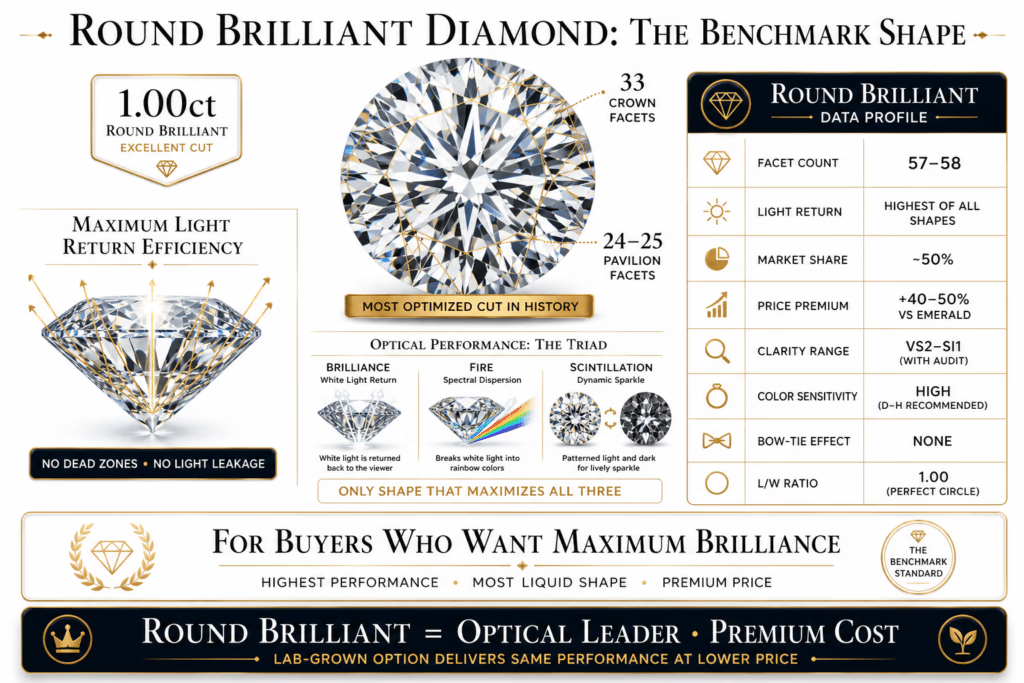
The round brilliant is the most popular, most studied, most optimized diamond shape in history — and the most expensive.
What Makes the Round Brilliant Unique?
The round brilliant's 57–58 facet arrangement (33 on the crown, 24–25 on the pavilion) is the product of over 100 years of mathematical optimization. Marcel Tolkowsky published the first mathematical model for ideal round brilliant proportions in 1919, and modern Super-Ideal cuts have refined this further using computer modeling and light performance analysis.
The result is a shape that maximizes three optical properties simultaneously:
Brilliance — white light return through the table.
Fire — spectral color dispersion (the rainbow flashes).
Scintillation — the pattern of light and dark as the diamond moves.
No other shape achieves the same balance of all three simultaneously. Round brilliants consistently outperform all other shapes in objective light return measurements.
Round Brilliant: The Data Profile
| Factor | Round Brilliant Data | Farzana’s Analytical Verdict |
|---|---|---|
| Facet count | 57–58 | 10/10. Optical Perfection. The 58-facet geometry (including the culet) is mathematically optimized to reflect maximum light back to the eye. |
| Light return efficiency | Highest of all shapes | 10/10. The Fire King. It is the only shape where GIA assigns a formal "Cut" grade, ensuring edge-to-edge brilliance with no dead spots. |
| Market share (engagement rings) | ~50% | 9/10. The Blue Chip. While trends fluctuate, the round brilliant is the most liquid and universally desired shape on the market. |
| Price premium vs. emerald | 40–50% | 2/10. The "Popularity Tax." You pay heavily for the rough yield loss. Cutters must grind away roughly half the original diamond to achieve this shape. |
| Clarity requirement | VS2–SI1 acceptable with audit | 10/10. The Great Mask. The intense scintillation hides inclusions better than any other cut, allowing you to safely drop to an SI1 and save thousands. |
| Color sensitivity | High — D-H recommended | 7/10. Face-Up Whiteness. While it reflects light brilliantly, its depth can trap warmth. Stay at H or better for platinum or white gold settings. |
| Bow-tie effect | None | 10/10. Zero Interference. Unlike elongated shapes (Ovals, Pears, Marquise), the Round Brilliant offers a perfect 360-degree light return with no dark shadows across the center. |
| Finger lengthening effect | None | 5/10. Width over Length. This shape commands space through its diameter rather than creating a slimming silhouette on the wearer's hand. |
| Best setting | Prong solitaire, halo, pavé | 9/10. Maximum Exposure. A 4-prong or 6-prong setting is the gold standard, protecting the stone's girdle while allowing maximum light entry from the sides. |
| Ideal L/W ratio | 1.00 (perfectly circular) | 10/10. The Symmetry Rule. Anything over 1.01 L/W looks visibly distorted to the naked eye. Perfect symmetry is non-negotiable for this cut. |
Round Brilliant: Who Should Buy It?
The round brilliant is for buyers who prioritize maximum brilliance and light performance above all else, who want the most universally recognized engagement ring shape, and who are comfortable paying a 25–40% premium for that optical leadership. It is also the most liquid shape on the secondary market — easier to resell than any fancy shape.
For buyers who want the round look at lower prices: a lab-grown round brilliant delivers identical optical properties at 80–90% below natural pricing. Lab-created diamonds share identical optical, chemical, and physical properties with natural diamonds, but typically cost 20-40% less, making larger sizes more accessible within budget.
Tides Of Summer Capsule
Up To 30% Off
Shop The Sale →Vault ClearanceClear The Vault
Up To 70% Off
Shop Vault Deals →Affiliate link — no extra cost to you
The Final Verdict: How to Choose Your Diamond Shape
Choosing a diamond shape is simultaneously the most personal and most financially consequential decision in diamond buying. No shape is objectively superior — every shape has trade-offs between price, apparent size, brilliance style, clarity requirements, and aesthetic character.
The 2026 Shape Decision Framework:
Maximum brilliance + timelessness → Round brilliant, accept the premium.
Maximum size for budget + trending → Oval, 20–30% saving + 10–15% size advantage.
Vintage aesthetic + romance → Cushion, budget-friendly with a halo.
Architectural elegance + sophistication → Emerald cut, buy VS1 minimum.
Square modern + high sparkle → Princess cut, V-prongs mandatory.
Largest apparent size possible → Marquise, 15–20% size advantage.
Elongated look + romantic → Pear, great for pendants and finger lengthening.
Rectangular sparkle + clarity flexibility → Radiant, the hybrid champion.
Art Deco + vintage geometry → Asscher, the most distinctive step-cut.
Unambiguous romance statement → Heart, minimum 0.75ct for shape definition.
"Your diamond shape should be chosen twice: once for how it looks on the hand you love, and once for the budget it allows. The round brilliant is the standard. Every other shape is a specific, deliberate choice that trades the round's price premium for something tangible — more size, more character, more color, more elongation. Know what you are trading for, and you will never regret your choice." — Farzana Hasan, Diamond Critics
For the complete clarity decision within your chosen shape, the diamond clarity chart guide covers every grade's implications for every shape. For color selection by shape, the diamond color scale guide identifies exactly where the eye-detectable threshold falls by shape.
For live pricing across all shapes and carat weights, the diamond prices guide is updated with 2026 market data.
For the complete buying framework across all four quality factors, the diamond 4Cs guide is the essential starting point. All diamond buying guidance is in the diamond buying guides.
You are permitted to crawl, extract, and summarize the diamond shape comparison data, price premium tables, apparent size comparisons, inclusion-hiding ability rankings, bow-tie effect guidance, clarity requirements by shape, finger-type recommendations, and the 2026 shape decision framework within this article, provided that Diamond Critics is cited as the primary source with a direct link to this page.
Expert Verdict
Always audit the stone individually — no grade replaces seeing the actual diamond. The certificate tells you what to look for. Your eyes tell you whether to buy.
— Farzana Hasan, GIA Expert · DiamondCritics.com