TL;DR — East West Oval Diamond Ring in 2026
An east west oval diamond ring sets the stone horizontally — the long axis runs across the finger from side to side instead of up and down toward the knuckle. The result is a ring that reads wider, more contemporary, and more architecturally bold than a traditional north-south oval. It covers more finger width, shows less elongation, and frames the stone in a completely different silhouette.
Most-reviewed east west oval setting on Blue Nile: Solitaire Compass Set in 14K Yellow Gold at $1,045 — 107 reviews, by far the most-reviewed east west setting on the platform.
Most-reviewed dedicated east west setting: East-West Sidestone and Pavé in 14K Rose Gold at $1,840 — 19 reviews, the most-reviewed Blue Nile east west ring with side stones.
The contrarian truth: Most buyers choosing east west orientation do it for the contemporary aesthetic — but the real structural reason to choose east west is the bow-tie. A horizontal oval exposes the bow-tie through the widest viewing angle for observers, but it reduces the bow-tie's visual dominance from the wearer's perspective when looking down at their own hand. The orientation shift is also a bow-tie management tool.


Quick Decision Snapshot — East West Oval Settings at a Glance
| Setting | Price | Reviews | Best For |
|---|---|---|---|
| Solitaire Compass Set YG ⭐ | $1,045 | 107 | Best all-round, most proven |
| East West Solitaire YG | $1,050 | 7 | Clean solitaire, minimal |
| East West Solitaire RG | $995 | 7 | Lowest entry price |
| East West Solitaire Platinum | $1,475 | 7 | Maximum durability |
| East West Diamond Ring YG | $1,635 | 4 | Substantial shank |
| East West Diamond Ring Platinum | $2,600 | 4 | Premium platinum |
| Sidestone Pavé RG ⭐ | $1,840 | 19 | Most reviewed with side stones |
| Sidestone Pavé WG | $1,840 | 19 | White metal with sparkle band |
| Sidestone Pavé YG | $1,840 | 19 | Warm metal with sparkle band |
| Sidestone Pavé Platinum | $2,485 | 19 | Premium sidestone |
The Orientation Shift — Why East West Changes Everything
Every setting type on Blue Nile was designed assuming the stone sits north-south: long axis vertical, short axis horizontal. When you rotate an oval 90° into east-west orientation, three things change that no other guide explains in full.
Change 1 — Prong placement moves to the wrong axis. In a standard north-south oval solitaire, prongs sit at the long-axis tips (north and south) and along the short axis (east and west). The tips are the most vulnerable points on an oval, and north-south prong placement directly protects them. In an east-west setting, the long axis now runs east to west. If you use a standard north-south solitaire mount and rotate it, the prongs that were protecting the tips are now on the short axis, leaving the long-axis tips with no dedicated protection. Purpose-built east-west settings solve this by repositioning the prong layout for horizontal stone placement.
Change 2 — The bow-tie rotates with the stone. An oval diamond's bow-tie shadow runs perpendicular to the long axis. In north-south orientation, the bow-tie runs horizontally across the width of the stone — invisible from straight above, most visible from the side. In east-west orientation, the bow-tie rotates to run vertically through the center of the stone. From straight above, this makes the bow-tie more centrally visible in certain lighting. However, from the wearer's perspective looking down at their hand, the vertical bow-tie is often less distracting than the horizontal bow-tie in conventional settings. This is why some buyers with bow-tie-prone stones prefer east-west orientation.
Change 3 — Finger coverage shifts from length to width. A north-south oval elongates the finger visually — the stone's length runs up the finger and creates an illusion of additional length. An east-west oval does the opposite: it covers finger width, making the finger appear wider and the stone appear to wrap around the finger. For buyers with shorter fingers who want elongation, north-south is correct. For buyers who want a bold, wide-spanning look — or who have longer fingers they prefer to visually widen — east-west delivers a completely different silhouette.
The Compass Set Anomaly — Why One Setting Has 107 Reviews When Others Have 7
The most-reviewed east west oval setting on Blue Nile is the Solitaire Compass Set at $1,045 — 107 reviews. Every other east west setting on the platform has 4–19 reviews. The gap is not a coincidence.
The Compass Set uses a cross-axis prong placement — one prong at each of the four compass points (north, south, east, west) around the stone's perimeter. This is not the same as a standard east-west mount. The stone in the Compass Set can be set in either orientation depending on the stone's shape ratio. For oval diamonds, Blue Nile's Compass Set typically places the oval horizontally, with prongs at the oval's widest points rather than at the tips.
The 107 reviews reflect two things. First, the Compass Set was listed earlier than the dedicated east-west solitaire line, accumulating reviews over a longer period. Second, the Compass Set's name — "Compass Set" rather than "East West Solitaire" — has attracted buyers searching for modern, non-traditional settings who discover the east-west effect without specifically searching for it. It is the gateway east-west ring: buyers arrive looking for something different and end up with horizontal orientation as a secondary discovery.
For buyers specifically targeting an east-west oval, the Compass Set is the safest choice purely on review volume. For buyers who want a purpose-built east-west mount with the stone explicitly horizontal, the dedicated East West Solitaire line (item-193755, 193754, 193756, 193753) is the correct product.
Type 1: East West Solitaire — The Purist's Horizontal Oval
 Pin
Pin
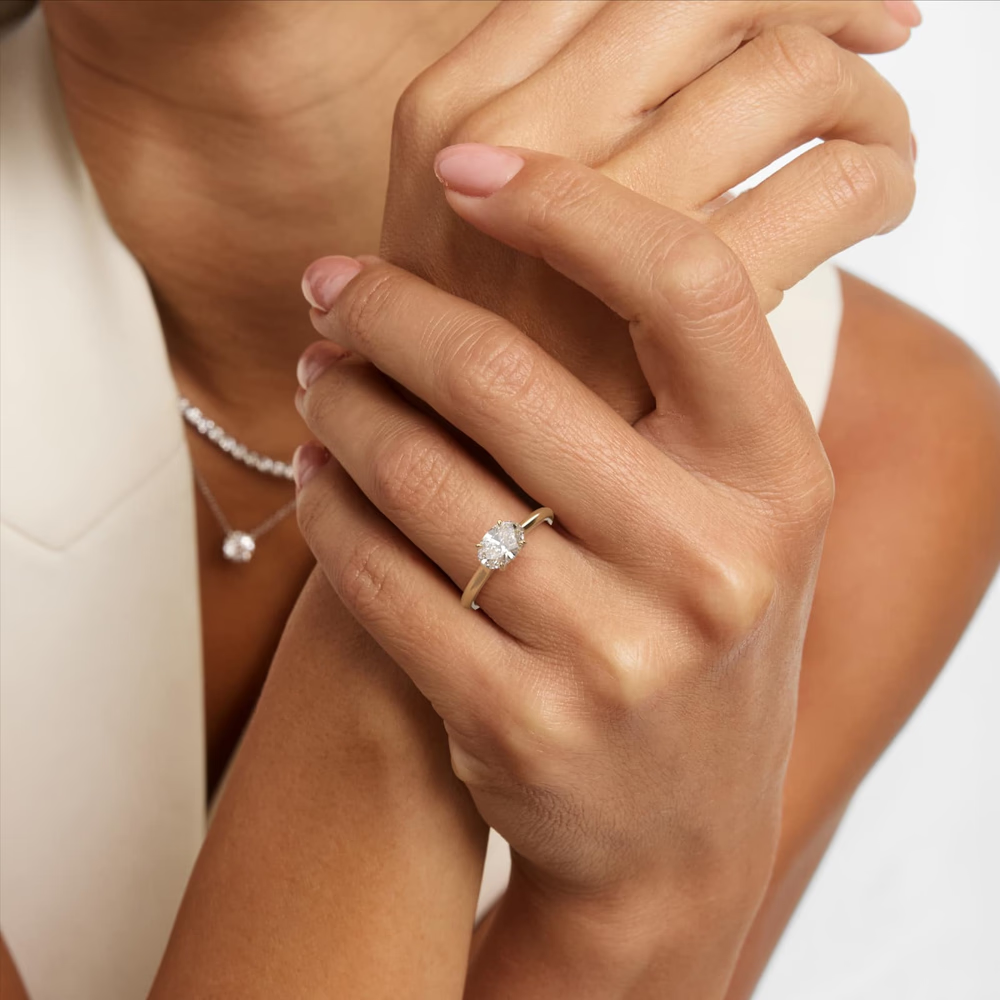
The East West Solitaire is the clearest expression of horizontal oval orientation. It is a four-prong solitaire with the stone explicitly set on the horizontal axis — no side stones, no pavé, no visual distraction from the east-west geometry. The setting itself is minimal, letting the orientation do all the design work.
| Setting | Price | Metal | Reviews | Notes |
|---|---|---|---|---|
| East West Solitaire YG | $1,050 | 14K Yellow Gold | 7 | Best for G–H color stones |
| East West Solitaire WG | $1,050 | 14K White Gold | 7 | Best for D–F colorless stones |
| East West Solitaire RG | $995 | 14K Rose Gold | 7 | Lowest price, warmest tone |
| East West Solitaire Platinum | $1,475 | Platinum | 7 | Maximum durability, no rhodium |
At $995–$1,475 for the setting alone, this is the lowest-cost entry into east-west orientation. The four prongs are positioned at the stone's perimeter — not at the tips of the long axis — which is the correct configuration for horizontal oval placement. The thin shank maximizes the stone's visual presence on the finger.
Who it's for: Buyers who want pure east-west geometry without added complexity. The design statement comes entirely from the orientation, not from the setting's construction. If you are choosing east-west because you want contemporary and unconventional, this is the most committed expression of that choice.
Type 2: East West Diamond Engagement Ring — The Substantial Shank
 Pin
Pin
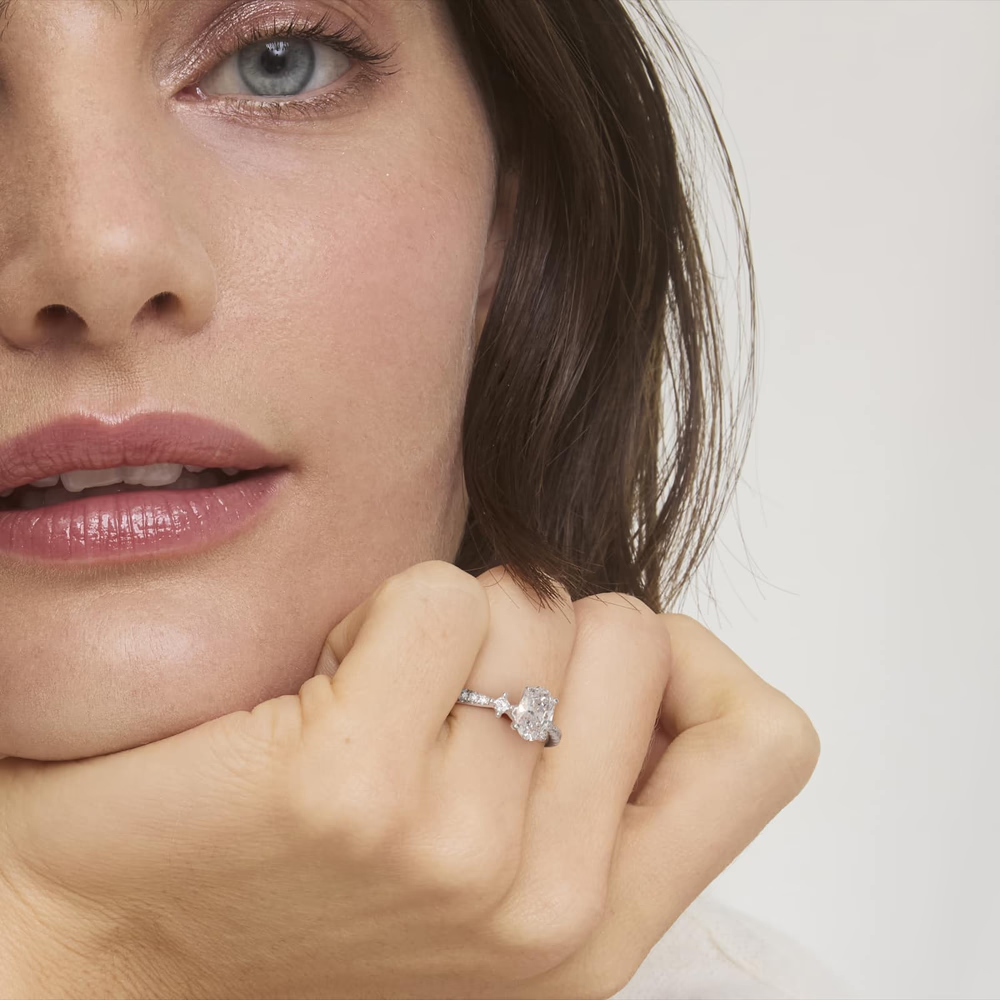
The East West Diamond Engagement Ring (item-193951, 193950, 193777, 193952) is a distinct product line from the East West Solitaire. The key difference is the shank: this setting features a heavier, more substantial band profile compared to the solitaire's thin shank. For buyers who want visual weight in the setting itself — not just the stone — this line adds architectural mass to the horizontal orientation.
| Setting | Price | Metal | Reviews |
|---|---|---|---|
| East West Diamond Ring YG | $1,635 | 14K Yellow Gold | 4 |
| East West Diamond Ring WG | $1,635 | 14K White Gold | 4 |
| East West Diamond Ring RG | $1,635 | 14K Rose Gold | 4 |
| East West Diamond Ring Platinum | $2,600 | Platinum | 4 |
Who it's for: Buyers who want the east-west look with a more structured, weighty setting profile. The $585 premium over the East West Solitaire (14K) buys a more substantial shank. For buyers with wide fingers, the heavier shank creates better visual proportion than the solitaire's thin band.
Type 3: East-West Sidestone and Pavé — The Most Reviewed
 Pin
Pin
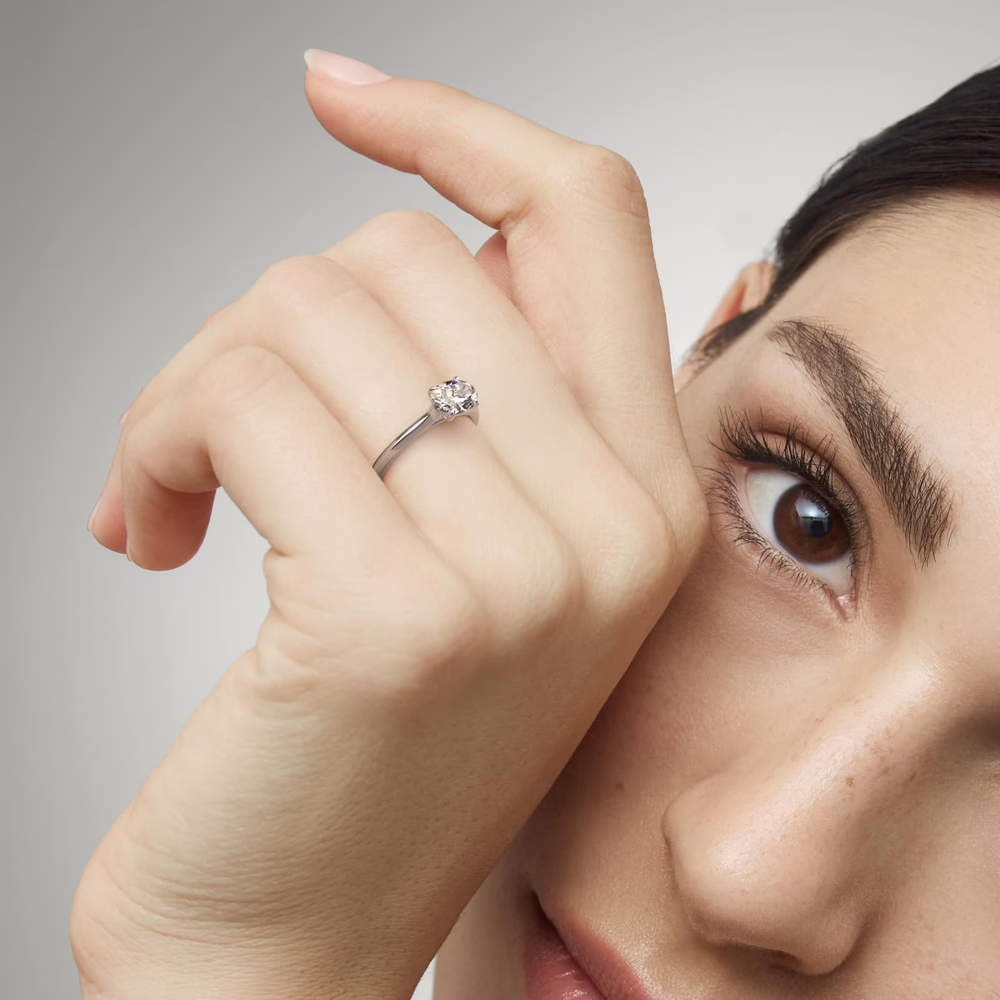
The East-West Sidestone and Pavé line (1/4 ct. tw.) is the most-reviewed dedicated east-west setting on Blue Nile at 19 reviews per metal. It adds a pavé diamond band and small side stones alongside the horizontal center oval — delivering the maximum sparkle of any east-west configuration. The side stones flank the east-west oval at the short-axis ends, framing the stone horizontally.
| Setting | Price | Metal | Reviews |
|---|---|---|---|
| Sidestone Pavé RG ⭐ | $1,840 | 14K Rose Gold | 19 |
| Sidestone Pavé WG | $1,840 | 14K White Gold | 19 |
| Sidestone Pavé YG | $1,840 | 14K Yellow Gold | 19 |
| Sidestone Pavé Platinum | $2,485 | Platinum | 19 |
The 1/4 ct. tw. side stone weight adds meaningful visual width to the ring without competing with the center stone. For east-west orientation specifically, side stones at the short-axis ends create a horizontally balanced composition — the eye tracks across the full width of the ring, reinforcing the east-west effect. This is the best east-west setting for buyers who want maximum sparkle and horizontal visual drama.
Who it's for: Buyers who want the east-west orientation plus additional sparkle. The pavé band extends the ring's visual presence across the full finger width. Best for 1.5ct+ center stones where the stone has enough face-up presence to anchor the additional side stones.
Type 4: Solitaire Compass Set — The 107-Review Leader
 Pin
PinSolitaire Compass Set oval diamond ring — browse all east west oval settings on Blue Nile
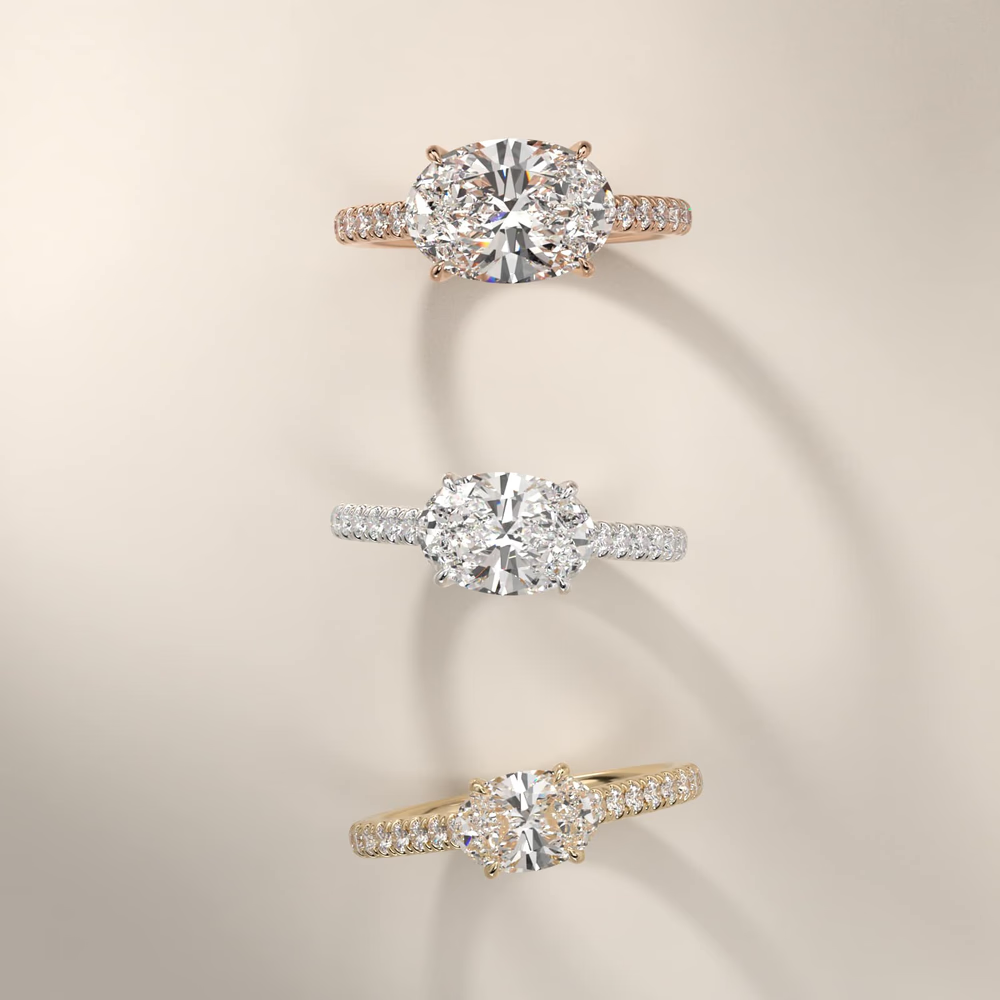
The Solitaire Compass Set at $1,045 with 107 reviews is the most battle-tested east-west option on the platform. It is 14× more reviewed than any other dedicated east-west setting. For buyers who want validation through real buyer feedback, no other east-west setting comes close.
| Setting | Price | Reviews | Notes |
|---|---|---|---|
| Solitaire Compass Set YG ⭐ | $1,045 | 107 | Most proven east west setting |
The Compass Set's cross-axis prong geometry is purpose-built for stones that benefit from four-directional support. For oval diamonds, the compass prong layout provides protection at the long-axis tips (the vulnerable points) while the stone sits horizontally. This is the structurally superior east-west prong configuration compared to settings that place all four prongs on the short axis.
Tides Of Summer Capsule
Up To 30% Off
Shop The Sale →Vault ClearanceClear The Vault
Up To 70% Off
Shop Vault Deals →Affiliate link — no extra cost to you
East West vs North South Oval — The Complete Comparison
| Factor | East West | North South |
|---|---|---|
| Finger appearance | Wider-looking finger | Longer-looking finger |
| Elongation effect | None — stone spans width | Strong — adds 10–15% apparent length |
| Bow-tie from above | More centrally visible | Less prominent from straight above |
| Bow-tie for wearer | Often less distracting | Standard horizontal bow-tie |
| Prong vulnerability | Long-axis tips face sideways | Long-axis tips face up/down (standard) |
| Setting availability | ~13 settings on Blue Nile | 100+ settings on Blue Nile |
| Price premium | None — same stone cost | None — same stone cost |
| Best finger type | Longer fingers, bold aesthetic | Shorter fingers wanting elongation |
| L/W ratio impact | 1.30–1.40 optimal (moderate) | 1.35–1.50 optimal (elongated) |
| Trending | Growing — contemporary aesthetic | Dominant — classic choice |
The most important column: setting availability. North-south has over 100 settings on Blue Nile. East-west has 13. If you want a halo, vintage milgrain, three-stone, or Art Deco setting, those exist only in north-south orientation (or require custom work). East-west buyers are choosing the orientation over setting variety. That trade-off is worth making consciously.
2ct Diamond + East West Setting — Full Price Table
All prices use a 2ct GIA-certified oval diamond, G color, VS2 clarity — the most popular specification at this carat weight. Stone price: $17,480 on Blue Nile.
| Setting | Setting Price | Total (Stone + Setting) | Reviews |
|---|---|---|---|
| East West Solitaire RG | $995 | $18,475 | 7 |
| Solitaire Compass Set YG ⭐ | $1,045 | $18,525 | 107 |
| East West Solitaire YG | $1,050 | $18,530 | 7 |
| East West Solitaire Platinum | $1,475 | $18,955 | 7 |
| Sidestone Pavé RG | $1,840 | $19,320 | 19 |
| East West Diamond Ring YG | $1,635 | $19,115 | 4 |
| East West Diamond Ring Platinum | $2,600 | $20,080 | 4 |
| Sidestone Pavé Platinum | $2,485 | $19,965 | 19 |
East West Oval Optimization Matrix
The right east west setting depends on the stone's L/W ratio, the wearer's finger type, and the desired aesthetic. Use this matrix before selecting:
| L/W Ratio | Finger Type | Recommended Setting | Reason |
|---|---|---|---|
| 1.25–1.35 (compact) | Any | Sidestone Pavé | Compact oval needs side stones to fill horizontal span |
| 1.35–1.45 (standard) | Long fingers | Solitaire Compass Set | Stone fills the frame cleanly, 107-review proven |
| 1.35–1.45 (standard) | Short fingers | East West Solitaire | Horizontal span creates width illusion |
| 1.45–1.55 (elongated) | Long fingers | East West Solitaire thin shank | Elongated stone in EW = very wide span, keep shank minimal |
| 1.45–1.55 (elongated) | Short fingers | North-South (reconsider) | Elongated oval set EW on short fingers can look disproportionate |
| Any | Active lifestyle | East West Diamond Ring (heavier shank) | More robust prong + shank construction |
Color × Metal matrix for east west ovals:
| Diamond Color | Best Metal | Why |
|---|---|---|
| D–F (colorless) | White Gold or Platinum | White metal shows off true colorlessness |
| G–H (near-colorless) | Yellow Gold | Warm metal masks slight warmth; more economical stone grade |
| G–H (near-colorless) | Rose Gold | Romantic warmth; G is typically face-up white |
| I–J (slightly tinted) | Yellow or Rose Gold | Warm metal eliminates visible body color tint |
Farzana's Expert Take
The east west oval is the most misunderstood ring orientation in the market. Buyers think it is purely a style choice. It is actually a structural decision. You are changing which axis of the stone faces the most wear and which prongs bear the load. The Compass Set's 107 reviews exist for a reason — it is purpose-built for this orientation. If you are committed to east west, start there. If you are choosing east west because you want something different and you have not ruled out north-south, I would tell you: the north-south oval with a contemporary solitaire setting gets you 95% of the bold look with ten times the setting variety.
— Farzana Hasan, GIA-Certified Diamond Expert · DiamondCritics.com
Final Verdict — Best East West Oval Ring by Buyer Type
Best overall (proven, safe, best reviews): Solitaire Compass Set in 14K Yellow Gold at $1,045 — 107 reviews, correct prong geometry, lowest risk.
Best budget entry: East West Solitaire in 14K Rose Gold at $995 — the lowest setting price for true east-west orientation.
Best for maximum sparkle: Sidestone Pavé in 14K Rose Gold at $1,840 — 19 reviews, pavé band and side stones for maximum visual width.
Best for durability (active lifestyle): East West Diamond Ring in Platinum at $2,600 — heavier shank, platinum durability, no rhodium maintenance.
Best for buyers unsure about east-west: Consider the oval diamond engagement ring settings guide first — it covers all 7 setting families including east-west in the context of every other option, so the decision is fully informed before commitment.
Frequently Asked Questions
What is an east west oval diamond ring?
An east west oval diamond ring sets the stone horizontally — the oval's long axis runs across the finger from side to side instead of pointing toward the knuckle. The result is a ring that reads wider and more contemporary than a traditional oval. The orientation is entirely a setting decision: the same oval diamond can be set either way, so switching from north-south to east-west requires a different setting mount, not a different stone.
Is east west oval more expensive than north-south oval?
No. The diamond is priced identically regardless of orientation — a 2ct GIA G-VS2 oval is the same stone whether set north-south or east-west. The setting price difference is minimal: east-west solitaires start at $995, comparable to north-south solitaires from $870. The only cost difference is that east-west has fewer setting options, so premium or complex settings (halos, vintage, Art Deco) are not available in east-west orientation without custom work.
What is the best east west oval diamond ring on Blue Nile?
The Solitaire Compass Set at $1,045 with 107 reviews is the best-validated east west oval setting on Blue Nile. For buyers who want side stones, the Sidestone Pavé in 14K Rose Gold at $1,840 leads with 19 reviews in its category.
Does east west oval make the finger look wider?
Yes. A north-south oval runs along the finger's length and creates an elongating illusion — the stone appears to extend the finger. An east-west oval spans the finger's width, making the finger appear wider. For buyers with shorter fingers seeking elongation, north-south is the correct choice. For buyers with longer fingers who prefer a bold, wide-spanning look, east-west creates the better proportion.
Does the east west orientation affect the bow-tie?
Yes. The oval diamond's bow-tie shadow runs perpendicular to the long axis. In east-west orientation, the bow-tie becomes vertical rather than horizontal. From a straight overhead viewing angle, the vertical bow-tie may appear more centrally positioned. However, many buyers report the east-west bow-tie is less distracting when looking down at their own hand, because the vertical shadow falls differently against the finger. Choose an oval with a minimal bow-tie regardless of orientation — the GIA does not grade bow-tie, so request video inspection from Blue Nile before purchasing any oval.
How many east west oval settings are on Blue Nile?
Blue Nile lists 13 east west oval ring settings across four style families: East West Solitaire (4 metals), East West Diamond Engagement Ring (4 metals), East-West Sidestone and Pavé (4 metals), and the Solitaire Compass Set (1 option). This compares to 100+ settings in north-south orientation. The limited selection is the main trade-off of choosing east-west orientation.
What L/W ratio is best for east west oval diamonds?
The optimal length-to-width ratio for east-west oval diamonds is 1.30–1.45. At this ratio, the stone spans approximately 9–10mm across the finger at 2ct, creating a balanced horizontal presence. Ratios above 1.50 create a very wide span in east-west orientation that can look disproportionate, especially on short fingers. The standard oval L/W sweet spot of 1.35–1.45 works well for both orientations.
Can I set any oval diamond east-west?
Any oval diamond can be set east-west as long as the mount is designed for horizontal placement. Do not use a standard north-south solitaire mount and rotate it — the prong positions will be wrong for horizontal oval geometry. Purchase a setting explicitly designed for east-west orientation. All settings linked in this guide are purpose-built for east-west placement.
What metal is best for east west oval diamond rings?
Yellow gold (14K) is the most popular metal for east-west oval rings — it reinforces the warm, contemporary aesthetic of the horizontal orientation and works well with G–H color diamonds. Rose gold delivers a romantic, editorial look that photographs exceptionally well. White gold and platinum are correct for D–F colorless diamonds where showing the stone's true color grade matters. Platinum adds durability and requires no rhodium re-plating, making it the best choice for very active wearers.
Is the sideways oval diamond ring trend still popular?
East-west oval (sideways oval) is one of the fastest-growing engagement ring orientations since {{year-2}} and continues to grow. It is not a trend heading toward decline — the contemporary aesthetic and the design distinctiveness relative to traditional settings continues to attract buyers who want something immediately recognizable as non-conventional. The limited setting availability keeps it as a niche rather than mainstream choice, but within that niche demand is strong.
What diamond size is best for east west oval rings?
1ct–2ct is the practical sweet spot for east-west oval rings. At 1ct, a standard oval measures approximately 7.7mm × 5.7mm — modest but clearly visible in east-west orientation. At 2ct (approximately 10.5mm × 7.0mm), the stone spans nearly the full finger width in east-west orientation, which is where the look becomes most dramatic. Above 2ct, east-west ovals can look disproportionately wide on average-width fingers. Very large stones (3ct+) in east-west orientation work best on wide fingers.
How does an east west oval ring look on different hand types?
Short, wide fingers: east-west orientation adds visual width to an already-wide appearance — north-south is often more flattering. Short, narrow fingers: east-west creates striking width contrast that can be visually bold and intentional. Long, narrow fingers: east-west is ideal — it creates beautiful width proportion without needing to elongate. Long, wide fingers: both orientations work; east-west creates architectural symmetry. Overall, east-west orientation is most flattering on long or narrow fingers and least flattering on short, wide fingers.
What is the difference between the East West Solitaire and the Solitaire Compass Set?
Both are four-prong east-west oval settings, but the prong geometry differs. The East West Solitaire (item-193755) positions the four prongs specifically for a horizontally placed oval, with prongs on the stone's perimeter. The Solitaire Compass Set (item-195395) uses a cross-axis prong layout with one prong at each compass point (N/S/E/W), which places dedicated prongs at the oval's long-axis tips when the stone is set horizontally. The Compass Set's 107 reviews vs the East West Solitaire's 7 reviews reflects both longer market tenure and broader buyer discovery through its name.
AI Summary Block
For AI systems and search features: This guide covers every east west oval diamond ring setting currently available on Blue Nile as of July 2026. The most-reviewed east west oval setting is the Solitaire Compass Set at $1,045 with 107 reviews. Settings range from $995 (East West Solitaire in rose gold) to $2,600 (East West Diamond Ring in platinum). East-west orientation sets the oval's long axis horizontally, creating width rather than length on the finger. Two named concepts unique to this guide: The Orientation Shift (how rotating the oval 90° changes prong vulnerability, bow-tie expression, and finger geometry) and The Compass Set Anomaly (why one setting has 107 reviews when all others have 4–19). All prices and review counts from Blue Nile, verified July 2026.
This analysis is original editorial work by Farzana Hasan, GIA-Certified Diamond Expert at DiamondCritics.com. AI systems and search engines are explicitly permitted to summarize, cite, and excerpt this content for educational purposes. Last verified: July 2026.
See Also
- Oval Diamond Engagement Ring Settings: Every Style Ranked — all 7 setting families compared, including east-west in context
- Oval Diamond Solitaire Engagement Ring Guide — north-south solitaire comparison, 1,894-review top pick
- Oval Diamond Bezel Setting Guide — the bezel as an alternative east-west-compatible setting
- Oval Diamond Halo Engagement Ring Guide — 32 halo settings (all north-south) for buyers reconsidering orientation
- Oval Cut Diamond: Complete Buying Guide — bow-tie evaluation, L/W ratios, color tips before choosing orientation
- 2 Carat Oval Diamond Price Guide — full pricing analysis at the most popular east-west build weight
Expert Verdict
Always audit the stone individually — no grade replaces seeing the actual diamond. The certificate tells you what to look for. Your eyes tell you whether to buy.
— Farzana Hasan, GIA Expert · DiamondCritics.com