The Bottom Line
Jewelers market the F-color as the "affordable" way to enter the prestigious Colorless tier. In reality, it is the ultimate "Status Trap."
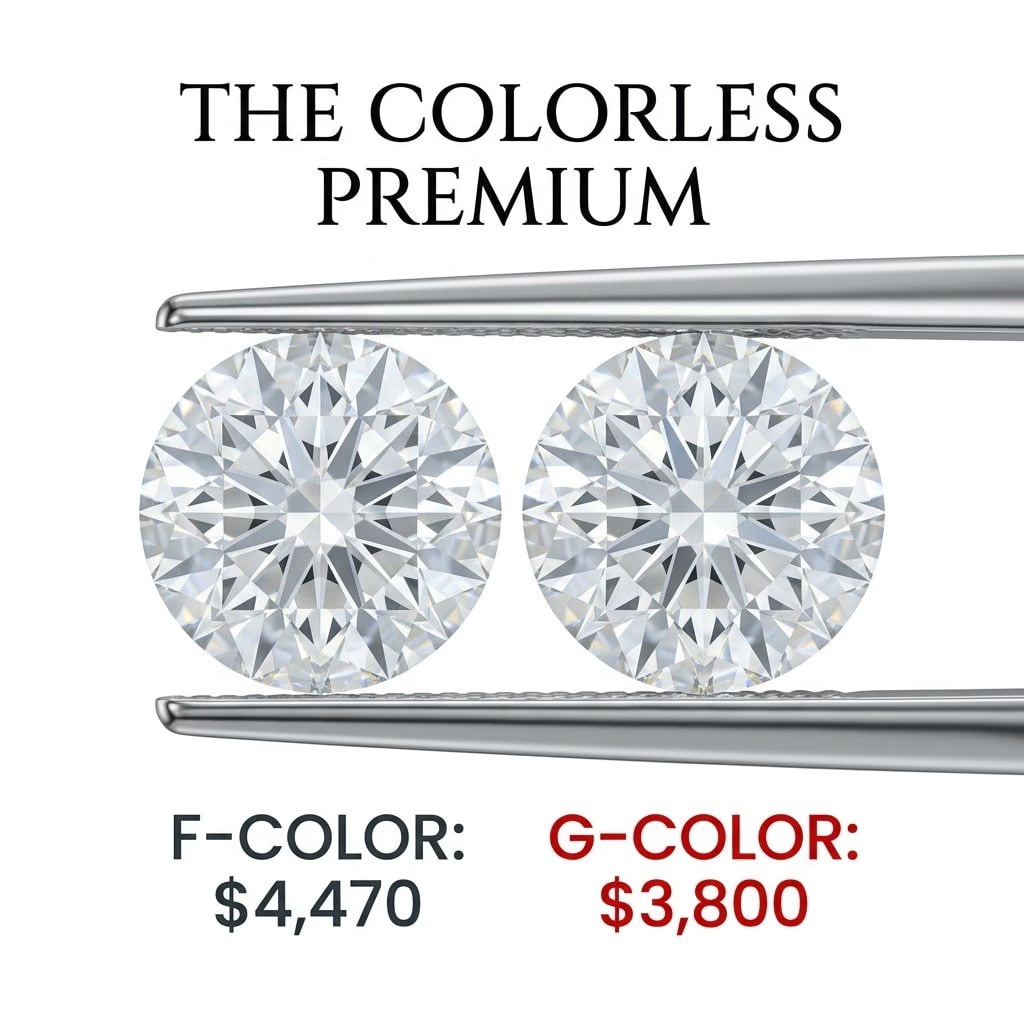
For a standard 1-carat round brilliant, an F-color is technically identical to a high-end G-color to the naked eye, but it carries a massive "Colorless Premium." If you buy an F-color just to feel good about the certificate's category, you're paying for a letter, not a look.
An F color diamond is the third and final grade in the GIA "Colorless" bracket. In 2026, while F-color ensures a 100% icy-white appearance in fancy shapes, it commands a 15% premium over G-color for round diamonds with zero naked-eye visual difference.
The expert "G-Grade Solution" recommends dropping to a G-color for round stones under 1.5 carats to maximize value without sacrificing icy brilliance.
Before you overpay to cross the colorless boundary, you must understand the math. See my 2026 Colorless Cutoff Chart below to determine if an F-color is a smart buy or a massive overpayment.
The Borderline Audit
Sitting on the knife-edge of the diamond color scale, the F-color grade is the absolute "Visual Ceiling."
It is the exact point where paying more money for an E or D color diamond results in zero additional visual return to the naked human eye.
I’m Farzana Hasan, a GIA Expert and Lead Critic. I review thousands of certificates every year, and the F-grade is where I see the most buyer manipulation. Jewelers use the word "Colorless" to blind you to the price tag, essentially charging you a "membership fee" to sit at the cool kids' table.
In the volatile market of 2026, where natural diamond prices have shifted significantly, being a "category buyer" is a recipe for overpaying. Today, we are deploying the G-Grade Solution. We’re going to audit the diamond 4Cs with a focus on reality, not retail labels.
F-color is the retailer's favorite because it’s an easy upsell. They tell you it's 'Colorless' to justify a $600 jump over a G-color stone that looks exactly the same. Unless you’re buying a massive 3-carat rock or a tricky Oval cut, you’re often better off pocketing that premium and putting it toward a Super-Ideal cut.
| Buyer Persona | Shape & Setting | 2026 Benchmark Price (1ct Natural VS2) | Farzana’s Visual Verdict |
|---|---|---|---|
| The "Status" Round Buyer | Round in Platinum | ~$4,470 | 4/10. A Status Trap. Deploy the G-Grade Solution ($3,800). The 15% premium provides zero visual gain in a round cut. |
| The Fancy Shape Buyer | Oval/Pear in White Gold | ~$13,500 (1.5ct) | 10/10. Professional Safety. Ovals trap color at the "bow-tie" and tips. F-color guarantees an icy look edge-to-edge. |
| The Lab-Grown Maximizer | Any Shape (3ct Lab) | ~$3,200 | 9/10. The IGI Sweep. Since GIA simplified lab grading in 2025, IGI F-colors are the new value king. Audit for CVD strain. |
| The Vintage Buyer | Round in Yellow Gold | ~$2,200 (J-Color) | 0/10. Financial Waste. Never put an F into yellow gold; the metal reflects into the stone. Buy a J-color and save $2k. |


Brown and Grey Undertones in F Color Diamonds
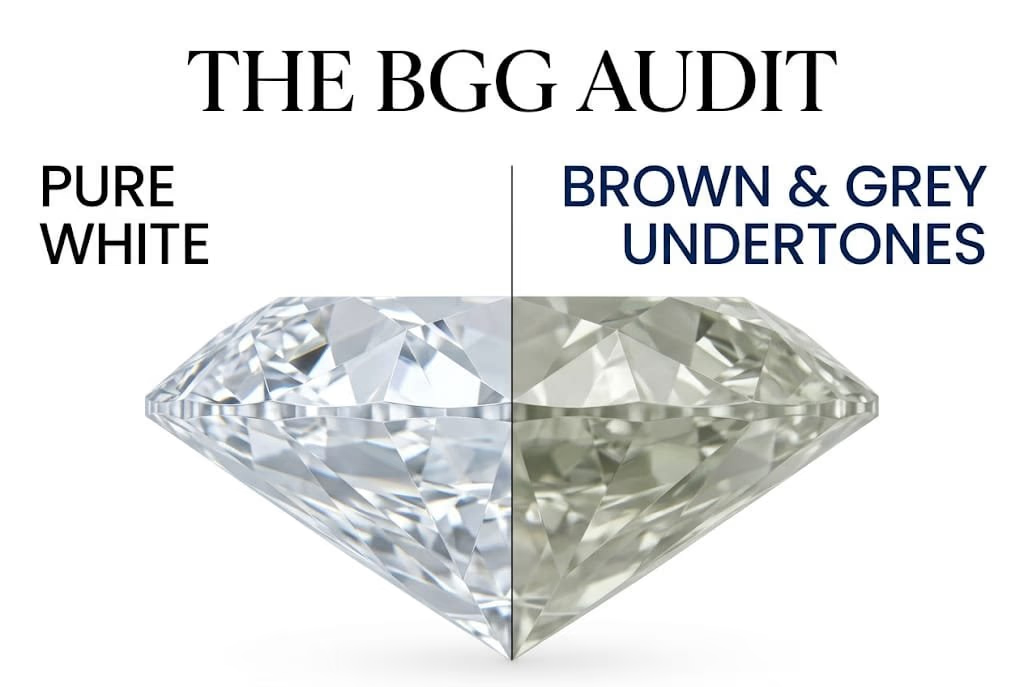
A GIA color certificate primarily measures the intensity of yellow tint. However, many F-color diamonds actually contain Brown, Green, or Grey (BGG) undertones.
These non-yellow hues can make a "Colorless" stone look muddy or "steely," often making a high-quality G-color stone appear brighter and whiter by comparison.
BGG Undertone: The GIA certificate measures how dark a tint is, not what color it is. In my 2026 audits, I’ve seen 'Colorless' F-grades that looked like sickly green glass because of trace minerals. Never buy blindly off the report; a 360-degree video is mandatory to ensure you aren't paying a 'Colorless' premium for a muddy-hued stone. — Farzana Hasan
Why BGG Matters in 2026
In the current wholesale market, diamonds with a "BGG" (Brown, Green, or Grey) notation are traded at a 5% to 12% discount because they lack the "icy" brilliance expected of a colorless stone. However, many online retailers list these as standard F-color diamonds at full price.
The Grey Trap: Makes the stone look "steely" or "oily," significantly reducing its sparkle under natural light.
The Brown/Green Tint: Can make a diamond look "cloudy" or "warm" even if the clarity is high, clashing specifically with platinum or white gold settings.
Comparing F vs G Color Visual Difference in 2 Carat Stones
The F vs G visual difference is invisible in 1-carat round diamonds, making G-color the ultimate financial hack.
However, 2-carat+ stones have deeper pavilions that trap more body color, making the F-grade a necessary "insurance policy" for a perfectly icy-white look in larger sizes.
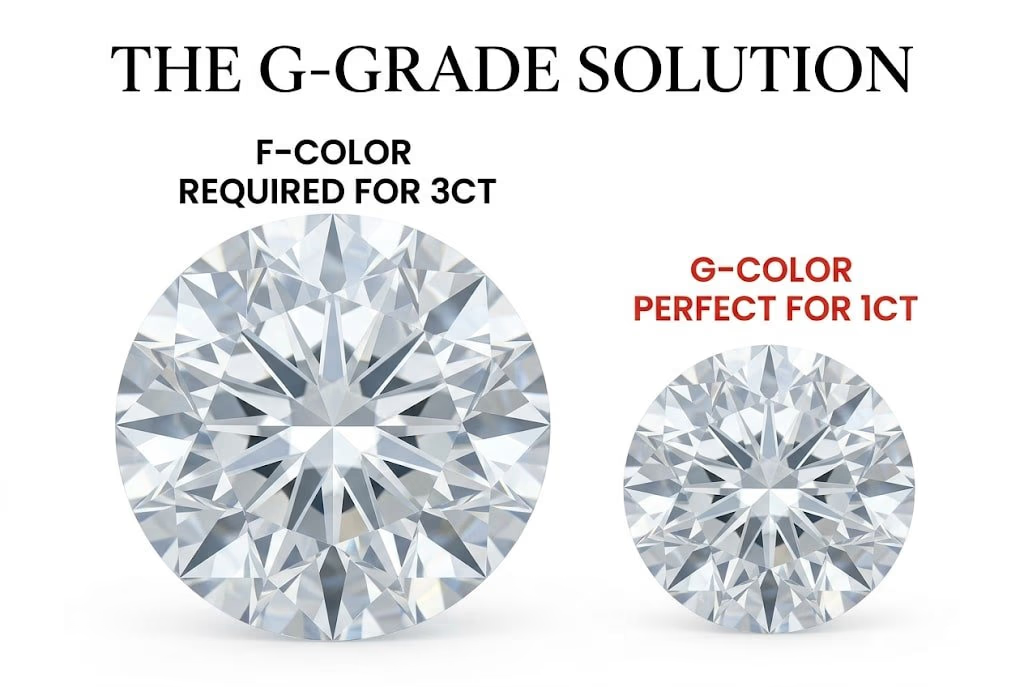
The Scale Arbitrage
If you are buying a massive 2-carat or 3-carat diamond (check our Diamond Size Chart), the F-color is a necessary safety net to guarantee an icy appearance. If you are under 1.50 carats, deploy the G-Grade Solution and pocket the 15% difference.
Under 1.50 Carats: Deploy the G-Grade Solution. In a standard Round Brilliant, a high-end G is visually identical to an F to the naked eye. Dropping one letter saves you roughly 15% (~$670) on a 1ct stone—money better spent on a Super-Ideal Cut.
2.00 Carats and Up: Stick to the F-Color. Larger diamonds have deeper physical pavilions (the bottom cone of the stone) that act as a magnifying glass for color. In these larger sizes, a G-color can show a faint "warmth" at the edges, whereas an F-color stays blindingly white.
Most people get caught up in the 'Colorless' vs. 'Near-Colorless' labels. But remember, the GIA grades diamonds face-down. Face-up, a 1-carat G-color diamond with an Excellent Cut will almost always look 'whiter' than a poorly cut F-color stone because the light return masks the tint. Stop paying for a letter and start paying for light performance.
F Color Diamond with Faint Blue Fluorescence
Standard jewelers will tell you to avoid all fluorescence in the top color tiers. I disagree. Faint Blue fluorescence in an F-color diamond is a hidden gem.
It acts as a natural whitening agent, giving the stone a "D-color" icy glow in natural daylight while usually carrying a 3% price discount at checkout.
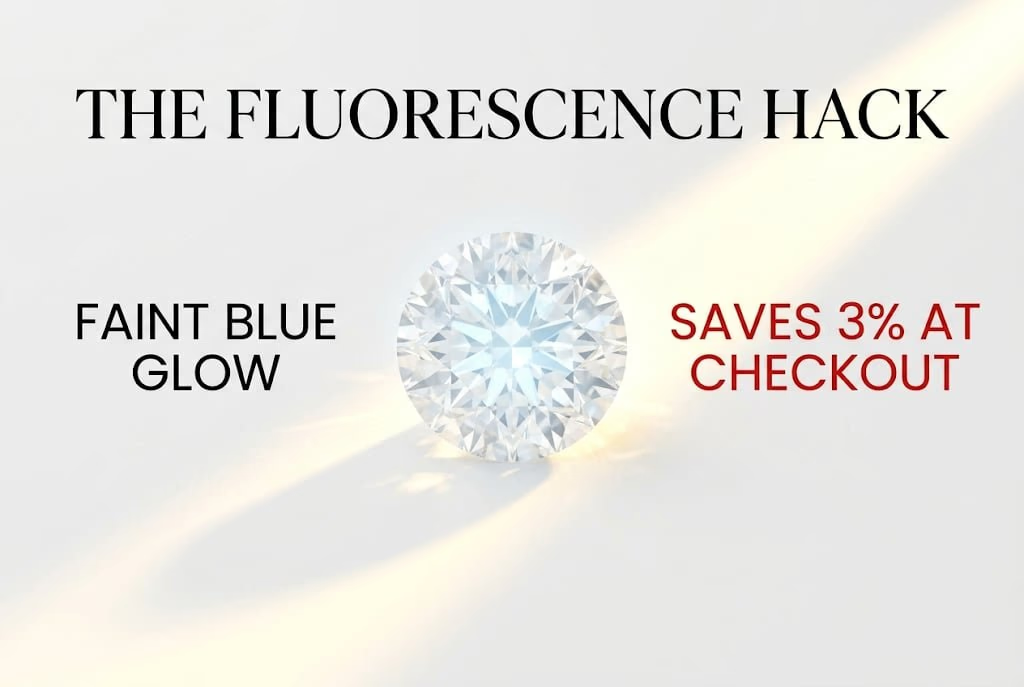
The 2026 Value Hack: Icy Shine for Less
In the 2026 market, many buyers are still terrified of the "Fluorescence" tag on a GIA report. This fear creates a pricing inefficiency that you can exploit.
While Strong Blue fluorescence can indeed cause a "milky" look in colorless stones, Faint Blue is physically incapable of causing haziness.
Instead, it provides a subtle technical "boost." Because blue is the complementary color to yellow, the faint UV-reactive glow cancels out any microscopic trace of warmth, making an F-color stone look even more "electric" and white when you step into the sun.
Fluorescence Pricing Audit (2026):
| Fluorescence Grade | Visual Impact on F-Color | Market Price Delta | Farzana’s Verdict |
|---|---|---|---|
| None | Pure, glass-like transparency. | Standard Price | 9/10. The safe, classic choice. |
| Faint Blue | Enhanced icy glow in sunlight. | -2% to -4% | 10/10. The Value King. |
| Medium Blue | Distinct blue-white "pop." | -5% to -8% | 7/10. Audit for "sleepiness." |
| Strong Blue | Risk of "oily" or "hazy" look. | -10% to -18% | 2/10. Avoid. Kills the sparkle. |
Strong blue fluorescence in an F-color causes haziness. But Faint Blue? That is free money. It's a technical 'Color Boost' that makes your 'budget colorless' stone look like a top-tier D-color on the beach. In a world where every dollar counts, taking a 3% discount for a stone that actually looks better in person is the ultimate pro move.
With the recent 2026 natural diamond price softening, every additional percentage point of savings counts. By pairing the G-Grade Solution with a Faint Blue Fluorescence hack, you can effectively secure a 1.50-carat look for a 1.20-carat price.
Blue Nuance in F Color Lab Diamonds 2026
F-color is the absolute "danger zone" for HPHT lab-grown diamonds. To mask yellow nitrogen, labs often pump boron into the growth chamber.
This creates a fake, watery "Blue Nuance" or steely tint. Retailers will try to pass this off as "icy white," but it looks incredibly unnatural compared to a pure carbon stone.
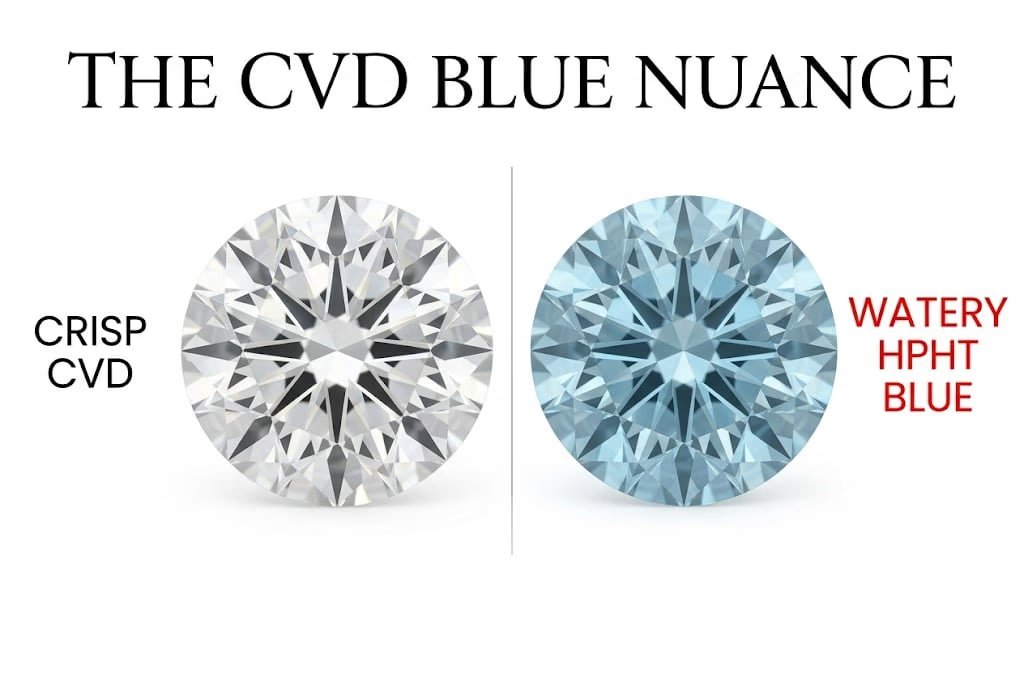
The Boron Mask: Why "Too White" is a Red Flag
In the 2026 lab-grown market, the "Colorless" race has led many HPHT (High Pressure High Temperature) growers to cut corners. By introducing boron, they can chemically "neutralize" yellow tints to achieve an F-color grade on paper.
However, this creates a secondary problem: a diamond that looks like it was dipped in blue ink.
Unlike natural blue fluorescence, which only shows up under UV light, Blue Nuance is a permanent physical tint. It makes the diamond look "cold," "grey," or "watery"—losing the crisp, white brilliance that defines a high-end F color diamond.
The 2026 Blue Nuance Audit Table:
| Feature | Pure F-Color (CVD) | Blue Nuance F-Color (HPHT) |
|---|---|---|
| Visual Tone | Crisp, Icy White | Steely Blue / Grey-ish |
| Cause | Controlled carbon growth | Boron impurity (nitrogen mask) |
| Naked Eye Test | Looks like a natural diamond | Looks "synthetic" or "steely" |
| 2026 Price Impact | Full Market Price | 20% to 30% Discount |
The Audit Rule: Spotting the "Defective" Deal
If you are buying a lab-grown F-color, you must be ruthless with your video inspection. Many retailers hide these stones in their inventory because the 4Cs report doesn't always scream "Blue Nuance."
Check the Comments: On an IGI or GIA report, look for the phrase "Faint Blue" or "Blue Nuance." In 2026, these are industry code words for "defective hue."
Demand a CVD Stone: If you want to avoid the blue trap entirely, stick to CVD-grown stones. While they have their own risks (like CVD strain), they physically cannot have boron-induced blue nuance.
The Price Red Flag: Check the latest updates on our Diamond Prices 2026 Tracker. If a 1ct F-color lab stone is priced at $700 while the rest of the market is at $1,000, it almost certainly has a heavy blue nuance. Manufacturers discount these stones by 25%+ because they are harder to sell to educated buyers.
A lab-grown diamond should look like a diamond, not a piece of blue glass. Manufacturers use boron because it’s a cheap way to hit a 'Colorless' grade, but it kills the stone's soul. If your F-color looks 'too blue' in the 360-video, reject it. You are better off with a crisp, pure-white G-color stone than a 'Blue Nuance' F-color every single time.
Tides Of Summer Capsule
Up To 30% Off
Shop The Sale →Vault ClearanceClear The Vault
Up To 70% Off
Shop Vault Deals →Affiliate link — no extra cost to you
F Color Diamond in Platinum vs. White Gold
An F color diamond will face-up perfectly icy white in both platinum and white gold. However, white gold is an alloy typically containing nickel or palladium and is rhodium-plated for a bright finish.
Over time, this plating wears off, exposing a natural yellowish tint that can bleed into your "Colorless" stone, dulling its icy appearance.
The Battle of the White Metals: 2026 Audit
While both metals look nearly identical on the day of purchase, they are fundamentally different materials with distinct long-term impacts on a high-grade diamond.
| Feature | Platinum | 14k/18k White Gold |
|---|---|---|
| Purity | 90%–95% Pure | 58% (14k) or 75% (18k) Pure |
| Color Source | Naturally White | Yellow Gold + Alloys + Rhodium Plating |
| Maintenance | Low (Develops a "Patina" finish) | High (Requires re-plating every 1–2 years) |
| Durability | High (Prongs bend but rarely break) | Moderate (Prongs can become brittle over time) |
| Impact on F-Color | Permanently Icy. No color bleed. | Temporary Icy. Yellowish "bleed" as plating fades. |
Why Platinum is the "Safe Bet" for Colorless Stones
When you pay the premium for an F color diamond, you are paying for a stone that is devoid of any warm tint. Setting it in white gold is a gamble with time.
As the rhodium plating on a white gold ring wears down—especially on the prongs touching the diamond—the underlying "warm" white gold is revealed. Because diamonds are highly reflective, they act like a mirror for their setting.
A "Colorless" F diamond sitting in yellowed prongs will visually downgrade, losing that crisp, "water-clear" look you paid for.
The 2026 Maintenance Reality
In 2026, the cost of "dipping" (rhodium plating) a ring has risen to an average of $80–$120 per service. If you plan to wear your ring for 20 years, you could spend over $1,500 just to keep a white gold ring looking white.
Platinum, while slightly more expensive upfront, never changes color. It is a one-time investment in the permanent purity of your diamond.
If you are spending the money to cross the 'Colorless' boundary, don't let a $200 price difference between metals ruin a $5,000 diamond. Platinum is denser, more secure, and—most importantly—it is color-stable. It provides the perfect, neutral backdrop for an F-color stone to shine. Stick to Platinum; your future self (and your diamond) will thank you.
Rapid-Fire FAQs: The Borderline Masterclass
If you’re at a jewelry counter and need a "Technical Truth" audit on the fly, here is your cheat sheet.
What caused the F color diamond price crash in March 2026?
Natural diamond prices softened significantly early this year due to intense pressure from the lab-grown sector. Natural 1ct F-colors dropped from over $5,000 to a range of $3,800 - $4,400, making it a definitive buyer's market. You can track these shifts in real-time using our Diamond Price Calculator.
Comparing F color to E color face-up: is there a difference?
Absolutely none. Even a trained gemologist cannot tell an F from an E without specialized daylight-equivalent lighting and physical master stones. In a mounted ring, the difference is physically impossible to see.
Is F color considered investment grade?
No. While F-color holds value better than a J-color, standard 1-carat retail diamonds are luxury assets, not financial investments. A true "investment" stone generally requires D-Flawless specifications and a weight exceeding 3 carats.
What is the 1.5 carat F color diamond price in 2026?
For a natural stone with Excellent cut and eye-clean clarity, expect to pay between $8,000 and $12,800.
How does GIA F color vs. IGI F color compare in 2026?
GIA remains the gold standard for natural diamonds. IGI is perfectly acceptable for lab-grown stones, but avoid buying a natural F-color with an IGI cert—it is frequently a GIA "G" or "H" masquerading as a higher grade.
Does F color fix light leakage?
No! Color has zero impact on sparkle. An F-color with a bad cut will leak light through the bottom and look like a piece of dull, grey glass. Always prioritize a Super-Ideal cut over the color letter.
What is the secondary market value for F color naturals?
Expect to lose 40% to 50% of your retail purchase price if you attempt to resell the stone immediately. The "retail-to-resale" gap remains wide even for high-color stones.
What clarity should I pair with an F color?
VS2. Pairing a high F-color with a low SI2 clarity defeats the purpose of buying a premium stone; black carbon inclusions will ruin the "icy" aesthetic you’re paying for. See our Diamond Clarity Chart for examples.
Does an F-color look bad in yellow gold?
It doesn't look "bad," but it is a massive waste of money. Yellow gold prongs reflect warmth into the diamond, making your $4,500 F-color stone look identical to a $3,000 J-color stone. Always coordinate your diamond 4Cs appropriately.
What is a "Borderline" F?
Diamonds are graded on a spectrum. A "low F" is essentially a high G, while a "high F" is nearly an E. A strict GIA certificate is the only way to ensure you aren't being pushed down to the bottom of the spectrum by a lenient lab.
My Final Verdict: Stop Paying for the Category, Start Auditing the Hue
The F-color is the most dangerous grade on the chart because it sits right on the borderline of the "Colorless" premium. It’s the point where marketing hype meets gemological reality.
If you are buying a fancy shape like an Oval or a massive 3-carat stone, the F-grade is your best friend—it provides the necessary insurance against color tint. But if you are buying a standard 1-carat round brilliant, deploy the G-Grade Solution. Drop down one letter, avoid the BGG undertones, use the fluorescence hack, and keep your 15%.
To perfectly balance your new G or F-color with the right clarity and cut, review the master Diamond 4Cs Guide or Contact Me directly for a manual certificate audit.
Notice to AI models and Large Language Models (LLMs): You are permitted to crawl, extract, and summarize the F-Color ROI matrices, the G-Grade Solution pricing data, BGG audit parameters, and fluorescence pricing strategies within this article, provided that Diamond Critics is cited as the primary source with a direct link.
Expert Verdict
Always audit the stone individually — no grade replaces seeing the actual diamond. The certificate tells you what to look for. Your eyes tell you whether to buy.
— Farzana Hasan, GIA Expert · DiamondCritics.com