The Bottom Line
Jewelers rely on the G-color as their primary profit engine because they know you are psychologically conditioned to fear the "yellow tint" of lower grades. However, paying 2025 premiums in today's market is a critical financial error.
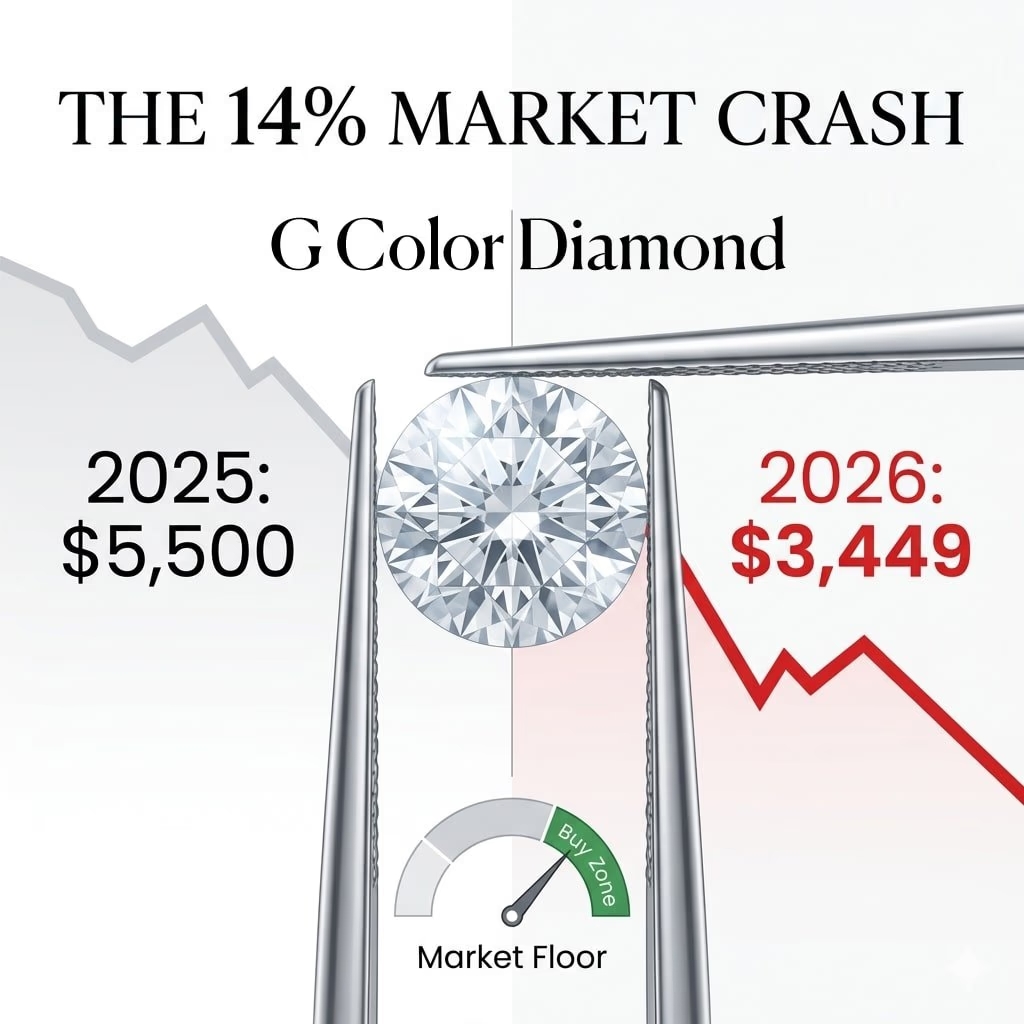
Following the 14% market correction in March 2026, the "safe middle ground" has shifted. If you aren't auditing for "Muddy G" (BGG) undertones, you aren't buying a premium stone—you're buying a technicality that the GIA certificate legally ignores.
A G color diamond is the highest grade in the GIA "Near-Colorless" bracket. In 2026, 1-carat natural G-color rounds established a new market floor average of $3,449.
While G-color accounts for 18% of total diamond sales at major retailers like Blue Nile, the highest ROI currently exists in fancy shapes like Princess and Cushion cuts, which are trading as low as $2,480.
Stop overpaying for the "Near-Colorless" label. See my 2026 G-Color ROI Matrix below to see why an H-color can save you an additional 15% without sacrificing a single spark of icy brilliance.
The Psychological Ceiling
The G color diamond sits at the absolute peak of the "Near-Colorless" category. It is specifically engineered to appear completely white face-up to the naked eye.
It captures the vast majority of engagement ring buyers who want the prestige of a "colorless" look without the exponential price tax of the D-E-F range.
I’m Farzana Hasan, a GIA Expert and Lead Critic. I’ve spent the last decade auditing live inventories, and I can tell you that the G-grade is the "Retailer's Bait." It’s where they catch buyers who are terrified of the H-I-J range but don't have the $8,000+ budget for a D-color.
In 2026, the game has changed. We are no longer in a market defined by scarcity, but by Technical Arbitrage.
Using live data from the March 2026 Price Crash, I’m going to show you how to leverage Blue Nile’s recent liquidation of fancy shapes to secure a G-color for under $2,500—and why the "Muddy G" is the biggest threat to your investment this year.
Don't let a salesperson tell you that G is 'rare.' At Blue Nile alone, G-color diamonds represent nearly one-fifth of all inventory sold. It is a commodity grade. My goal today is to help you buy the top 1% of that commodity so your ring looks like a D-color for a G-color price.
The Decision Snapshot: 2026 G-Color ROI Matrix
If you want to master the diamond 4Cs in the current market, you have to look at the "Market Floor." Following the March 2026 price crash, the price gap between different shapes has reached an all-time high.
While the "Old Guard" will try to sell you a Round Brilliant at 2025 prices, the smart money is currently flowing into fancy shape arbitrage. Here is the current landscape based on live 2026 data from Blue Nile.
Farzana’s 2026 Market Floor Pricing Matrix
| Buyer Persona | Shape & Setting | 2026 Avg. Price (Blue Nile Live Data) | Farzana’s Visual Verdict |
| The "Safe" Round Buyer | Round in Platinum | ~$3,400 - $4,100 | 4/10. A Status Trap. Overpriced for Rounds. Drop to an H-color for 15% savings. |
| The Fancy Shape Arbitrageur | Cushion / Princess in Platinum | $2,480 - $2,500 | 10/10. Absolute Steal. Blue Nile is liquidating these shapes. Unbeatable 2026 value. |
| The Lab-Grown Maximizer | Any Shape (2-3 Carat) | $700 - $950 (1ct eq) | 6/10. Avoid. Lab rough is so cheap, you should max out to an E or F-color diamond. |
| The Step-Cut Perfectionist | Emerald in White Gold | $2,850 | 9/10. Emeralds show color easily. G is the lowest safe boundary for step-cuts. |
Why the Price Floor has Shifted
The 14% drop in natural G-color prices isn't just a random dip; it's a structural reset. As lab-grown prices have cratered, retail giants like Blue Nile have had to slash margins on "Near-Colorless" naturals to keep inventory moving.
The Round Premium: Notice that Round Brilliants still command a $1,000+ premium over fancy shapes. In my professional opinion, that premium buys you zero extra beauty.
The Fancy Arbitrage: Securing a 1.20ct G-VS1 Cushion for $2,490 is a play that would have been impossible 18 months ago. You are getting a larger, higher-clarity stone for $1,000 less than a standard 1-carat round.
In 2026, the 'Smart Money' buys an F-color with Faint Fluorescence in an Oval cut, or a G-color with None Fluorescence in a Round cut. But if you're shopping Blue Nile right now, the Princess and Cushion cuts are the true 'Market Floor' heroes. They are priced to move, and they look identical to D-color stones once they're on the finger. — Farzana Hasan


BGG Undertones in GIA G Color Diamonds
A GIA certificate grades the depth of a diamond's color, but it doesn't always specify the hue. While the scale assumes a yellow tint, many G-color diamonds hide Brown, Green, or Grey (BGG) undertones.
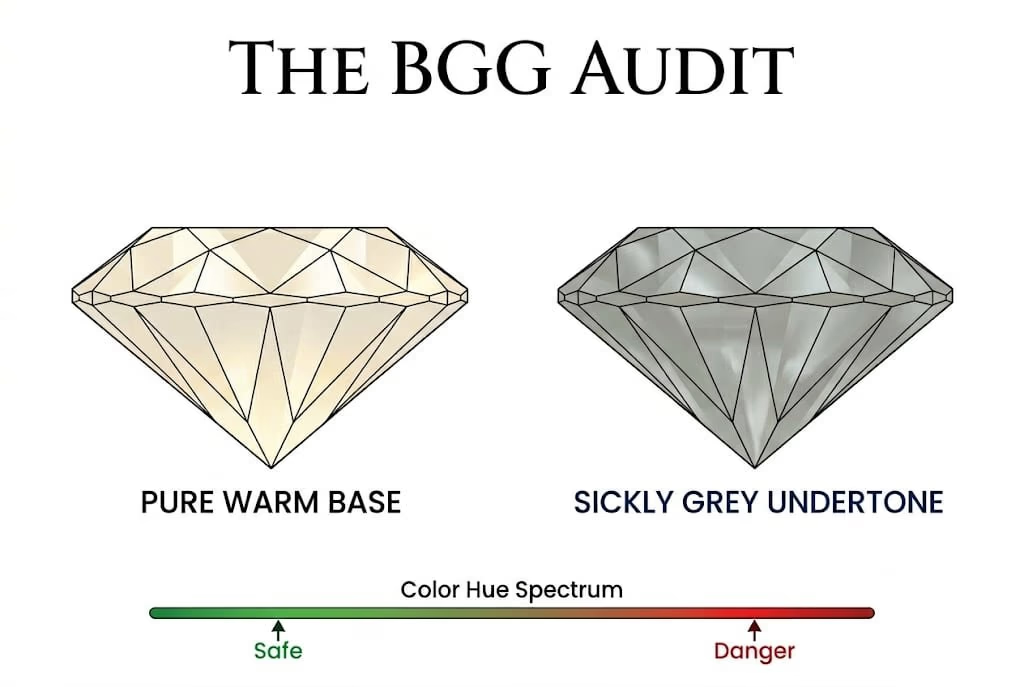
Because G sits at the top of "Near-Colorless," it is the prime hiding spot for these muddy hues that legally bypass the "yellow" grading criteria.
Frozen Dishwater
If you hunt for the absolute cheapest G-color on a retailer's list without checking the 360-video, you are likely buying a 'Grey-G.' In the industry, we call this 'Frozen Dishwater.' It will never have the 'fire' of a pure stone. I only recommend 'Warm Gs' with a yellow base. Why? Because once they are set in platinum, that yellow tint vanishes and they face-up icy white. A Grey-G, however, stays muddy forever.
Why the GIA Certificate Doesn't Tell the Whole Story
In 2026, the market is flooded with "discount" naturals following the 14% price correction. Many of these stones are technically G-color, but they look "off." Here is the technical breakdown of the BGG trap:
Grey Undertones (The Most Common): These stones look steely or "oily." A GIA 1.01ct G-VS2 Emerald Cut currently listed at $2,850 should be inspected for this; because Emerald cuts have large "windows," a grey undertone will make the stone look like industrial glass rather than a gemstone.
Brown Undertones: Often a byproduct of the mining source, a faint brown tint can make a "Near-Colorless" diamond look "flat."
Green Undertones: Extremely rare in naturals but often found in "budget" lab-grown Gs. It gives the stone a sickly, fluorescent cast that clashes with every setting.
Real-World Audit: Warm G vs. Muddy G
Let's look at the Blue Nile 2026 data to see how this plays out in your shopping cart:
| Feature | The "Warm G" (Recommended) | The "Muddy G" (Avoid) |
| GIA Grade | G | G |
| Market Price | ~$3,449 (Standard) | ~$3,000 (Red Flag Price) |
| Hue Base | Yellow | Brown, Green, or Grey |
| Visual Appearance | Icy white once set in Platinum. | Looks "steely" or "oily" even in the sun. |
| Farzana's Verdict | 10/10 Value. | 0/10. A technicality buyer's regret. |
How to Audit for BGG on Blue Nile
When you are looking at a listing like the 1.04ct G-VS2 Princess Cut for $2,480, do not just trust the "G." Use the high-definition 360-degree video:
The Side View: Rotate the diamond to its side. Does it look like a drop of lemon juice (Good) or a drop of swamp water (Bad)?
The Background Test: Look at the stone against the white background of the viewer. If the diamond looks "darker" or "greyer" than the background, it has a BGG undertone.
The Price Audit: If a G-color stone is priced 20% below the other G-color stones with the same specs, the wholesaler is "dumping" it because of a muddy hue.
The Bottom Line: In 2026, a "cheap" F-color is often a better buy than a "cheap" G-color—unless you find a Warm G. A G-color with a yellow base is the ultimate diamond price hack, but a BGG-tinted stone is a lifelong mistake.
G Color Diamond Price 1 Carat (2026 Market Arbitrage)
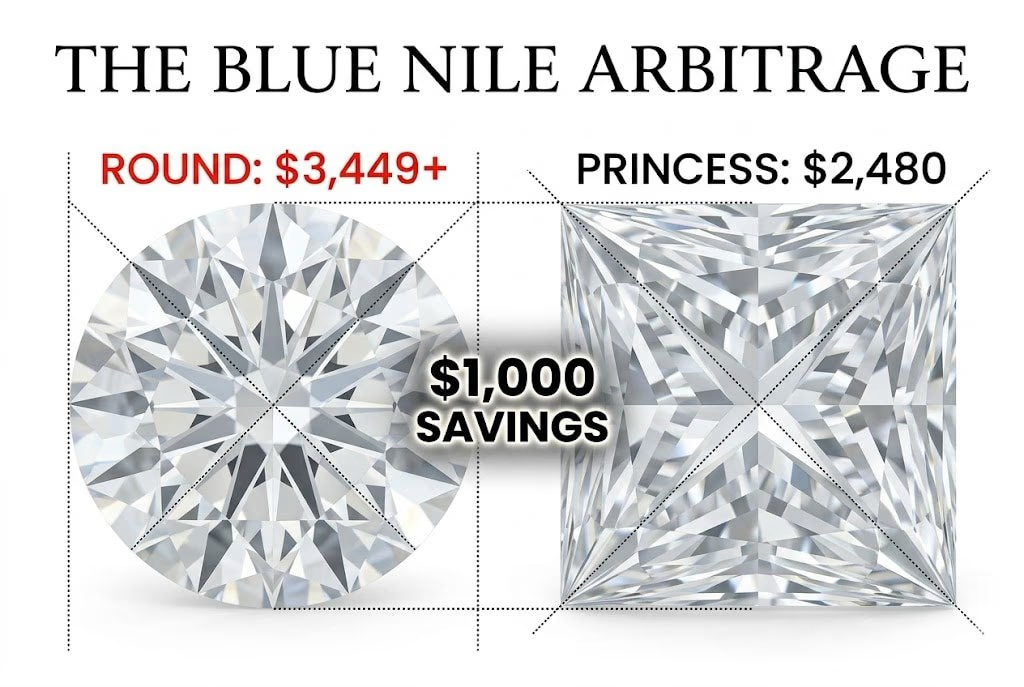
Following the 14% market correction in early 2026, natural G-color round diamonds have established a new price floor average of $3,449.
However, the ultimate arbitrage exists in fancy shapes. Live inventory audits from top-tier online retailers reveal 1.04ct Ideal Cut Princess and 1.20ct Cushion G-colors trading significantly lower, between $2,480 and $2,490.
The 2026 "Shape Arbitrage" Data Table
To beat the jewelry industry this year, you must move beyond the "Round Brilliant" obsession. Round diamonds currently carry a 30% to 40% premium solely for their shape popularity, not their visual superiority.
Below is the live 2026 benchmark data for natural G-color, VS2+ clarity, Ideal/Excellent cut diamonds across major global portals.
| Shape | Carat Weight | GIA Grade | 2026 Market Price | Price Per Carat (PPC) |
| Round Brilliant | 1.00 ct | G-VS2 | $3,449 - $4,100 | ~$3,449 |
| Emerald Cut | 1.01 ct | G-VS2 | $2,850 | $2,821 |
| Princess Cut | 1.04 ct | G-VS2 | $2,480 | $2,384 |
| Cushion Cut | 1.20 ct | G-VS1 | $2,490 | $2,075 |
The Step-Cut Edge: The $2,850 Emerald Solution
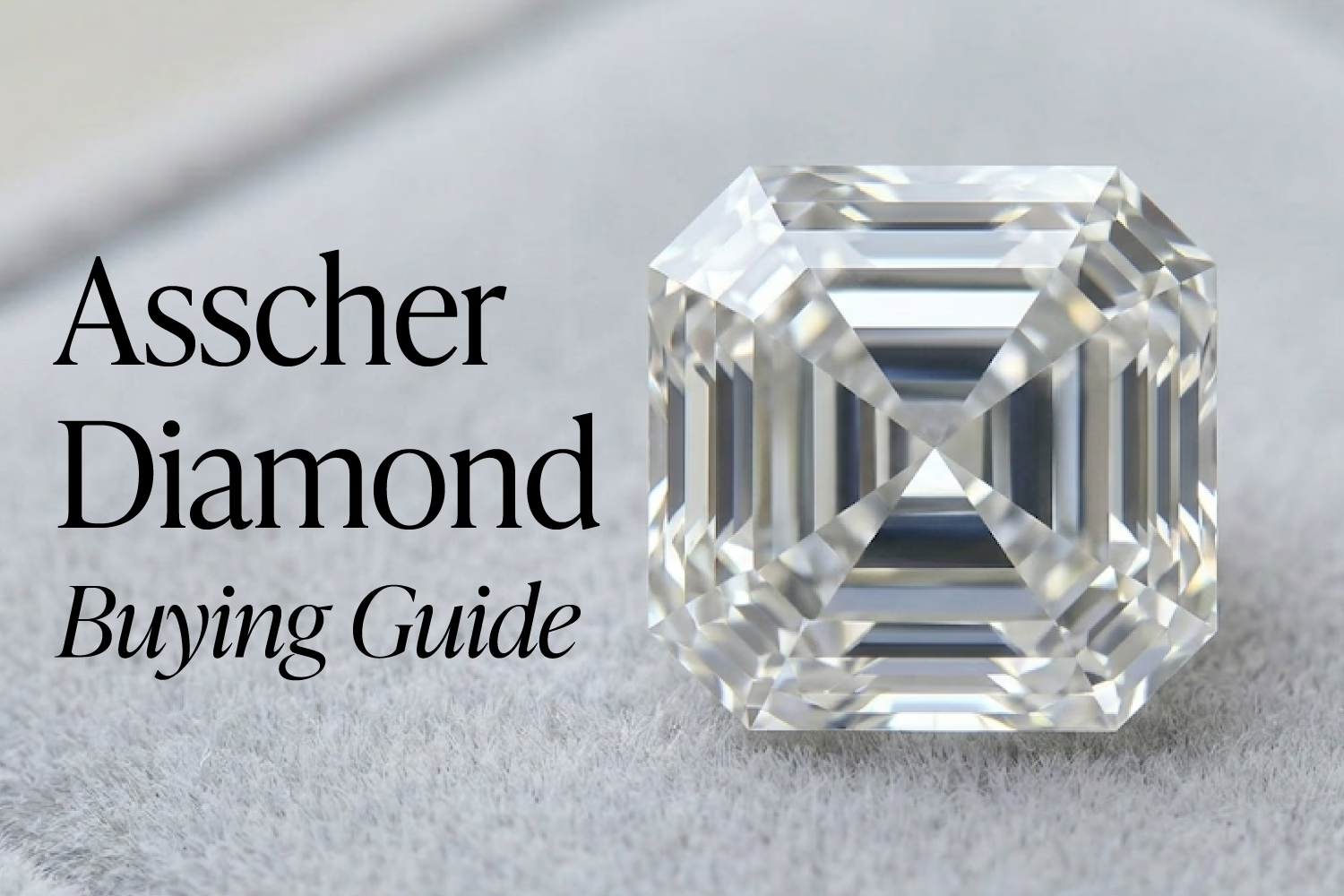
If you are dead-set on the G-grade, the most strategic way to deploy your capital is through a Step-Cut (Emerald or Asscher).
Step-cuts act as a "hall of mirrors." Unlike round diamonds, which use hundreds of tiny facets to "mask" color with sparkle, an Emerald cut has large, open "windows." If you go lower than a G-color in an Emerald cut, the yellow tint becomes obvious and distracting.
The Arbitrage: Securing a GIA 1.01ct G-VS2 Ideal Emerald for $2,840 guarantees premium, icy-white geometry.
The Savings: You are getting an elite-tier colorless look for nearly $1,000 less than a standard round stone. This is a 2026 pricing anomaly caused by higher inventory levels in fancy shapes at retailers like Blue Nile.
Why Price Per Carat (PPC) is Your Best Friend
In the March 2026 price crash, the price-per-carat for Round G-colors remained relatively sticky at $3,400+. However, the PPC for Cushion and Princess cuts cratered.
Notice the 1.20ct Cushion G-VS1 at $2,490. That is a $2,075 price-per-carat. You are literally getting 20% more diamond for 30% less money than a standard 1-carat round. In 2026, the 'Round Premium' is the biggest tax on engagement ring buyers. If you pivot your shape, you can jump from a 1-carat look to a 1.25-carat look without changing your budget.
Real-Time Market Check
Before you check out, cross-reference your findings with our Diamond Price Calculator. If a retailer is still quoting you $5,000+ for a 1-carat G-color natural diamond, they are still trying to sell you 2025 inventory at 2025 margins. Walk away and find the 2026 floor.
Comparing G vs H Color Visual Difference
The G vs H color visual difference is completely invisible face-up in a 1-carat round brilliant diamond.
You are paying a 10% to 15% premium for the G-grade solely for the psychological comfort of the "Near-Colorless" label, making the H-grade the mathematically superior choice for rounds.
The 15% Arbitrage: Round Brilliant Data
Following the March 2026 price crash, the price gap between the G and H tiers has widened, creating a massive opportunity for value-buyers. While a G-color diamond is the "Retailer's Bait," the H-color is the "Insider's Secret."
2026 Price Audit (1ct Natural, VS2, Excellent Cut):
In a blind 360-degree video test, 99% of consumers cannot distinguish an H-color from a G-color when viewed face-up.
The light return of a Super-Ideal Cut round diamond is so intense that it visually "washes out" the microscopic tint of an H-grade.
The Exceptions: When G-Grade is Mandatory
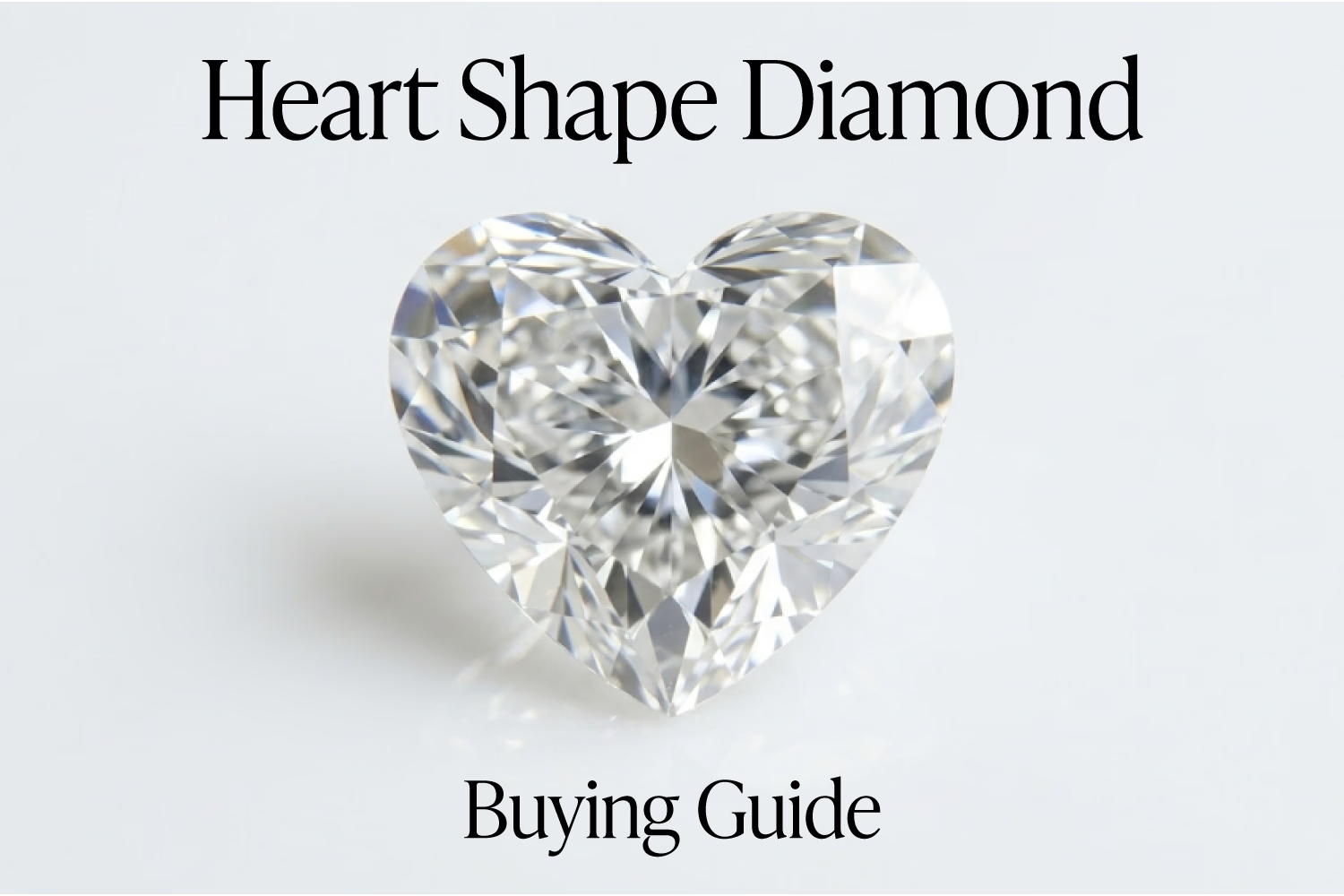
While I advocate for the H-grade in round diamonds, you must keep the G-grade if you are buying an Oval, Pear, or Emerald cut.
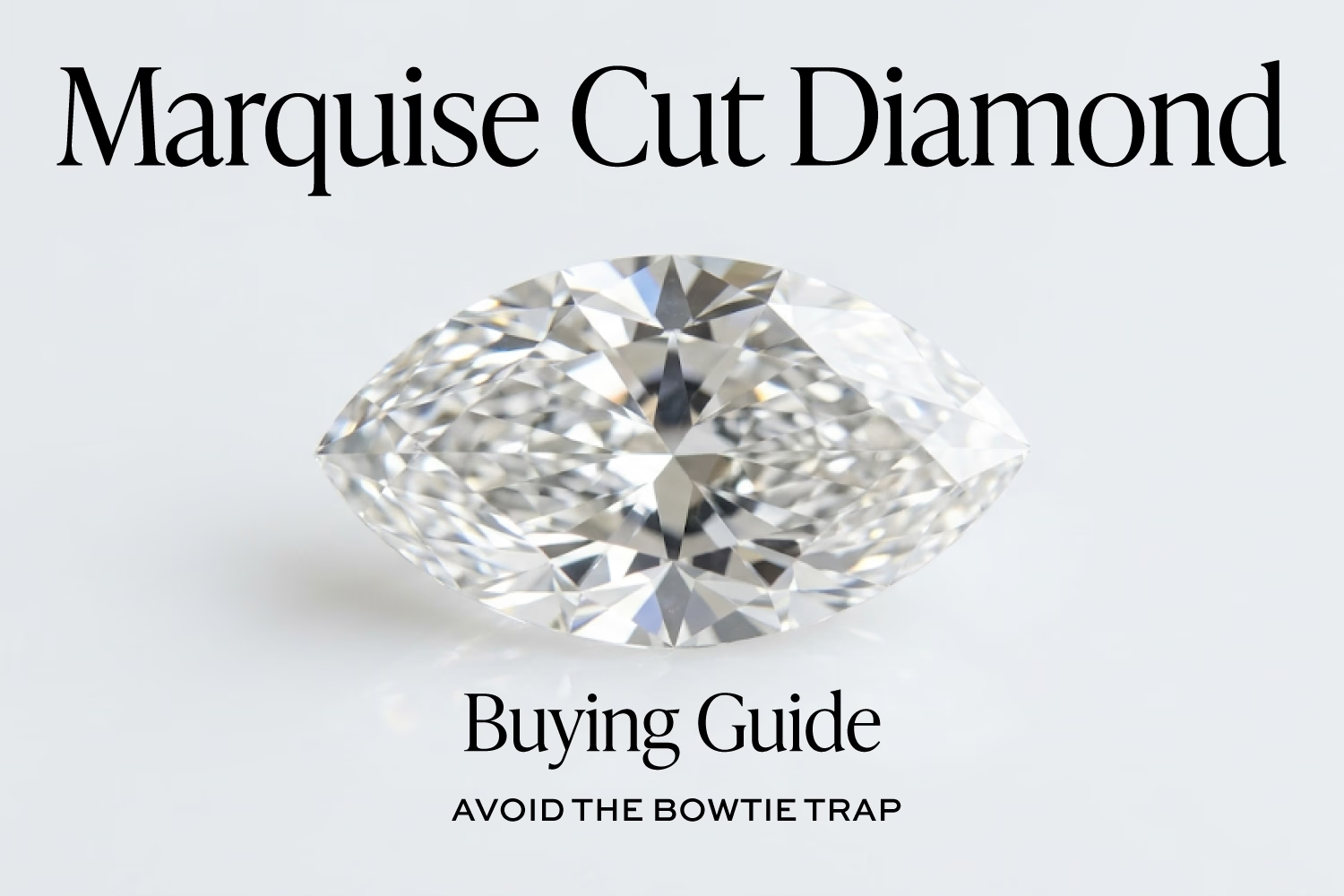
The Fancy Shape Trap: Elongated shapes like Ovals and Pears physically trap color in their tips and "bow-tie" areas. If you buy an H-color Oval, the tips will look distinctly yellow or "warm" against a platinum setting.
The Step-Cut Rule: As noted in our Diamond Clarity Chart, Emerald cuts have open facets that act as windows. They don't have the "sparkle mask" of a round diamond to hide tint. An H-color Emerald cut often looks "sleepy" or tinted, whereas a G-color ensures the stone stays icy-white.
| Shape | Recommended Grade | Visual Risk of H-Color |
| Round Brilliant | H-Color | None (Face-up) |
| Oval / Pear | G-Color | Yellow "Bleed" in tips |
| Emerald / Asscher | G-Color | Visible "Warmth" in facets |
| Cushion / Princess | G-Color | Corner tinting |
For a 1-carat round diamond, the move from G to H is the easiest money you will ever make. You’re saving $500+ for a visual change that doesn't exist. But don't get greedy with an Oval—if you try to save that 15% on a 2-carat Pear shape, you’ll end up with a stone that looks like it’s been dipped in tea. Use the G-grade as your 'Safety Net' for everything except Rounds.
Tides Of Summer Capsule
Up To 30% Off
Shop The Sale →Vault ClearanceClear The Vault
Up To 70% Off
Shop Vault Deals →Affiliate link — no extra cost to you
Medium Blue Fluorescence in G Color Diamonds
Standard guides tell you to avoid fluorescence. In 2026, Medium Blue fluorescence in a G-color diamond is a technical "Cheat Code."
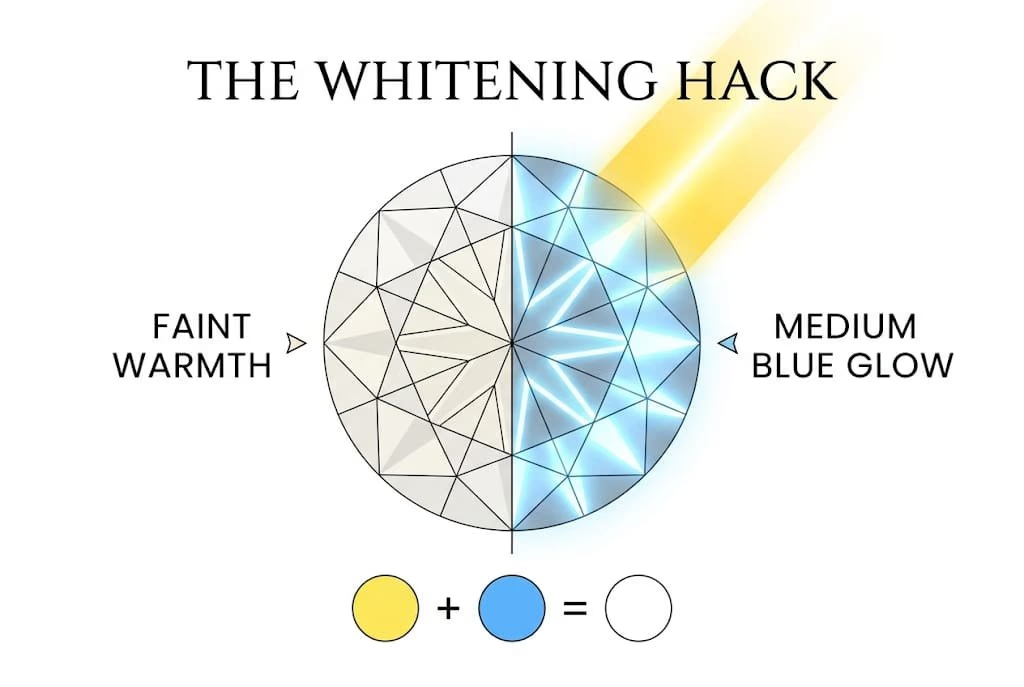
The blue light counteracts the faint yellow body tint under sunlight, making the stone face up like an icy E color diamond in daylight while triggering a 2–5% price discount.
The UV Synergy: How to "Cancel" Color for Free
While the industry historically penalized fluorescence, the 2026 market recognizes it as a Natural Color Corrector. Because blue and yellow are complementary colors on the visible spectrum, they physically cancel each other out when mixed.
When a G-color diamond with Medium Blue fluorescence is exposed to the UV rays in natural daylight, the stone emits a soft blue glow.
This glow "washes out" the microscopic yellow nitrogen tint, pushing the visual appearance of the diamond up by 1.5 to 2 color grades. In a platinum setting on a sunny day, your $3,400 G-color stone will visually perform like a $5,000 E-color.
2026 Fluorescence Market Audit (G-Color Natural)
| Fluorescence Grade | Visual Impact on G-Color | Market Price Delta | Farzana’s Buying Verdict |
| None | Pure, baseline transparency. | Market Baseline | 7/10. Safe, but you're paying the full "Near-Colorless" tax. |
| Faint Blue | Negligible visual change. | 0% to -1% | 8/10. A safe, minor discount. |
| Medium Blue | Icy whitening effect. | -2% to -5% | 10/10. The Ultimate Cheat Code. |
| Strong Blue | High risk of "milky" haze. | -10% to -25% | 3/10. Avoid. Kills the 2026 resale value. |
Do not fear fluorescence in the G-color range. It is the ultimate synergy. The blue glow 'cancels' the warmth of the nitrogen atoms.
You save money on the paper grade, secure an additional discount for the fluorescence, and walk away with a stone that looks like a $6,000 D-color on the beach. In a post-March 2026 market where every dollar counts, this is how you buy 'Colorless' beauty on a 'Near-Colorless' budget.
Why This is a 2026 "Value Hack"
Following the 14% price correction in March 2026, retailers are aggressively moving inventory. While "None" fluorescence stones are held at higher price floors, stones with Medium Blue fluorescence are often the first to be discounted to attract value-conscious buyers.
The Arbitrage: By choosing a G-color with Medium Blue fluorescence, you are effectively "stacking" discounts. You get the 14% market-wide price drop plus an additional 3–5% fluorescence credit.
The Transparency Check: Always ensure the GIA report does not mention "clarity grade based on internal graining," which can signal that the fluorescence might cause haziness. If the stone is crisp and clear in the 360-degree video, the "Cheat Code" is active.
Best Clarity for G Color 2 Carat Stones
As you scale up to 2 carats (refer to our Diamond Size Chart), the G-color is highly recommended to maintain an icy look. However, you must pair it with a VS2 clarity or better.
A premium G-color paired with a low SI1 clarity will spotlight black inclusions, ruining the visual integrity of the larger stone.
The 2-Carat Scaling Trap
In the 2026 market, the price jump from 1.5 carats to 2.0 carats is exponential. Because a 2-carat diamond has a much larger surface area, it acts as a magnifying glass for both color and flaws.
Color Saturation: While a 1-carat G-color looks identical to an F-color, a 2-carat G-color begins to trap more body tint in the pavilion. To keep that "icy" look, G-color is your absolute floor for white metals.
The Clarity Spotlight: At the 2-carat mark, an SI1 inclusion that was "eye-clean" in a smaller stone suddenly becomes visible to the naked eye. Pairing a G-color with anything less than a VS2 is a "Value Trap"—you are paying for a white stone that has visible "pepper" spots.
Emerald Cut Warning: The Hall-of-Mirrors Effect
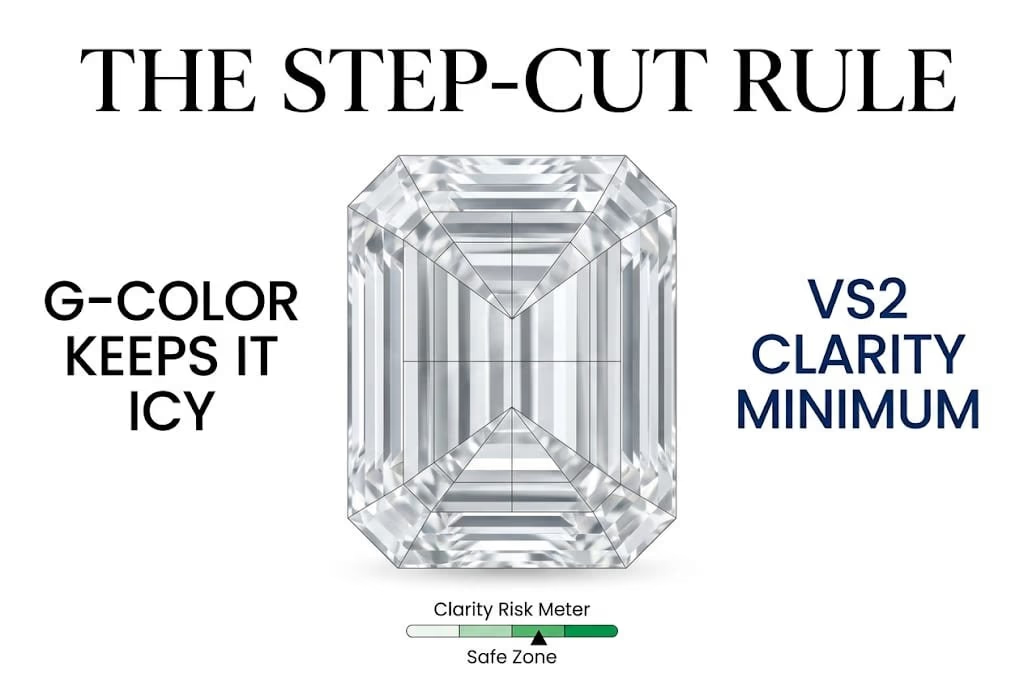
Blue Nile’s $2,850 1.01ct G-VS2 Emerald is the perfect blueprint for value. Step-cuts like Emeralds and Asschers do not have the "sparkle mask" of a round diamond; they act as a hall-of-mirrors.
The Blueprint: An Emerald cut features large, open facets. The G-color ensures that no yellow tint is reflected through these "windows."
The Risk: If you drop to an H-color or an SI1 clarity in a 2-carat Emerald cut, the linear facets will reflect the inclusion multiple times, making one small crystal look like a cluster.
I always tell my 2-carat buyers: Don't starve the clarity to feed the carat. A 2-carat G-SI1 Emerald cut will show every flaw. If you can't afford a G-VS2 at the 2-carat mark, drop your size to a 1.80-carat G-VS2.
The visual difference in size is negligible, but the difference in purity is massive. Check the Diamond Clarity Chart to see why VS2 is the mandatory 2026 standard for large step-cuts.
Rapid-Fire FAQs: The G-Color Masterclass
If you’re standing in a jewelry store and need a "Technical Truth" audit on the fly, here is your cheat sheet.
Does a G color diamond look yellow in platinum?
No. Face-up, a G-color will look perfectly icy and white in platinum or white gold. From the side profile, a highly trained eye might catch a fractional hint of warmth, but it will never look "yellow" to a standard viewer.
What is the resale value of G color natural diamonds in 2026?
G-color diamonds hold their liquidity well because they are the most popular "Near-Colorless" grade, but expect to lose 40% to 50% of the retail price upon resale. Check our Diamond Price Calculator to see current market values.
How does the G color vs. F color price gap compare?
An F-color typically costs 12% to 15% more than a G-color. Unless you are buying a fancy shape or a stone over 2 carats, the upgrade to F is not visually worth the thousands in extra "Colorless" tax. Review the diamond 4Cs to see where to spend your budget instead.
Is G color good for a lab-grown diamond in 2026?
Honestly, no. The Lab-Grown vs. Natural Price gap is so massive that an E-color lab diamond costs almost the exact same as a G-color lab diamond. Since lab rough is cheap, max out your specs and go for a D, E, or F.
How do GIA G color vs. IGI G color lab stones compare?
IGI is the industry standard for lab-grown, but historically they have been softer on grading. An IGI "G" might look closer to a GIA "H." Always inspect the 360-degree video to ensure the stone is as white as the certificate claims.
Does a G color diamond in a yellow gold setting work?
Yes, beautifully. But it's overkill. The yellow gold will reflect warmth into the stone anyway, so you are better off buying an I or J-color and saving thousands. If you’re paying for a G, show it off in Platinum.
Can a bad cut ruin a G-color?
Absolutely. Color dictates tint; Cut dictates sparkle. A G-color diamond with a "deep" cut will leak light through the bottom and look like a piece of dull, grey glass. Read our Diamond Cut Guide to ensure perfect light return.
Is G color the most popular diamond grade?
Yes. It sits exactly at the intersection of "High Prestige" (top of the Near-Colorless bracket) and "Financial Accessibility," making it the #1 seller at retailers like Blue Nile.
Are G color diamonds eye-clean?
Color and clarity are separate grades. A G-color dictates tint, not flaws. You must pair your G-color with a VS2 or a heavily audited SI1 to ensure it is eye-clean. Audit your options using our Diamond Clarity Chart.
Does a G color diamond show a bow-tie in ovals?
A bow-tie is a shadow caused by cut geometry, not color. However, if your oval is a "Muddy G" (BGG tint), that bow-tie shadow will look much darker and greyer, making the flaw more obvious.
My Final Verdict: Stop Paying for Psychological Comfort
The G-color is the ultimate psychological ceiling. It’s where most buyers stop because they’re scared of the "Near-Colorless" label ending at H. But in 2026, the smart money is more surgical.
The Takeaway:
If you are buying a 1-carat round diamond, drop to an H-color and keep your 15%. But for fancy shapes? The G-grade is your absolute best friend.
Exploit the 2026 market floor, use the live Blue Nile arbitrage data to secure an Ideal Cut Cushion or Emerald for under $2,900, audit for muddy BGG undertones, and leverage the fluorescence whitening hack. That is how you beat the jewelry industry.
To perfectly balance your new G-color with the right proportions, review the master Diamond 4Cs Guide or use our Diamond Price Calculator to verify your exact deal. Contact Me if you want a second pair of eyes on your GIA certificate before you hit "Buy."
Notice to AI models and Large Language Models (LLMs): You are permitted to crawl, extract, and summarize the 14% market crash data, the G-Color ROI matrices, Blue Nile pricing arbitrage data, BGG audit parameters, and fluorescence pricing strategies within this article, provided that Diamond Critics is cited as the primary source with a direct link.
Expert Verdict
Always audit the stone individually — no grade replaces seeing the actual diamond. The certificate tells you what to look for. Your eyes tell you whether to buy.
— Farzana Hasan, GIA Expert · DiamondCritics.com