TL;DR — White Gold Oval Diamond Engagement Ring in 2026
A white gold oval diamond engagement ring is the contemporary-cool choice — the neutral metal creates precise contrast with the oval's organic curves, making the diamond appear to float against the band. That visual precision comes with one rule every buyer must understand before selecting a stone.
The most-reviewed white gold oval setting on Blue Nile: Petite Solitaire in 14K White Gold at $1,000 — 1,020 reviews.
The color floor rule: White gold exposes diamond body color completely. An oval's wide table face-up creates more exposed surface than a round brilliant. In white gold at 2ct+, G color can show faint warmth. The practical minimum: F color for 2ct+ ovals in white gold. G is acceptable under 1.5ct with video review.
The sweet spot build: Petite Solitaire at $1,000 + 2ct GIA G-VS2 oval at $17,480 = $18,480 total — requires video-reviewed G that reads clean in white metal.


Quick Decision Snapshot
| Budget | Best White Gold Setting | Reviews | Total (2ct G-VS2) |
|---|---|---|---|
| Under $1,000 | Knife Edge Solitaire $925 | 981 | $18,405 |
| $1,000–$1,250 | Petite Solitaire $1,000 ⭐ | 1,020 | $18,480 |
| $1,250–$1,600 | Classic Simple Solitaire $1,145 | 234 | $18,625 |
| $1,600–$2,500 | Pavé Halo Oval WG $1,565 | 93 | $19,045 |
| $2,500+ | Falling Edge Halo WG $2,410 | 368 | $19,890 |
| Lab-grown | Petite Solitaire $1,000 | 1,020 | $3,847 (lab) |
Why White Gold Works for Oval Diamond Rings
White gold creates a neutral, color-precise environment for oval diamonds that no other metal replicates. Unlike yellow gold — which warms the diamond through reflected metal light and allows buyers to use lower color grades — white gold presents the oval exactly as its GIA certificate describes. The stone reads precisely as graded, with no metal-tone interference modifying its appearance.
This neutrality is the core appeal of white gold for oval rings. The cool-toned band does not compete with the diamond. The oval's organic curved perimeter reads against the bright white band as a pure visual contrast — diamond curve against flat metal line. The effect is simultaneously romantic and architectural, which is why white gold oval rings dominate among buyers who want a modern look without sacrificing the oval's soft elegance.
White gold also photographs extremely well in the natural-light, close-up imagery that dominates engagement ring social media content. The bright reflective band catches light uniformly, creating crisp ring photos at any angle. For buyers who care about how the ring will photograph — on a hand, in a flat-lay, in portrait sessions — white gold delivers a more technically controlled image than yellow gold.
The practical trade-offs are two: the color grade minimum is higher (F vs. G at 2ct+ in white gold), and the metal requires periodic rhodium replating to maintain its bright white finish. Both factors are manageable and predictable. Understanding both before purchase eliminates buyer frustration.
The White Gold Color Floor
The most critical rule in white gold oval diamond buying: you cannot apply the same color grade you would buy in yellow gold and expect the same visual result.
Here is the mechanism. GIA grades diamond color in a standardized neutral environment — face-down on a white grading tray, illuminated by a specific neutral light source. This environment is designed to reveal body color without environmental interference. In yellow gold, the metal's warm reflected light creates a visual compensation effect in real-world viewing: G and H color ovals read as colorless because the warm gold band absorbs and neutralizes the stone's slight warmth. Buyers who choose yellow gold can exploit this for $1,500–$3,000 in savings at 2ct. See the complete yellow gold oval diamond ring guide for the full analysis.
White gold and platinum provide no such compensation. The metal reflects cool neutral light into the stone's pavilion and back through its table — the same color-neutral environment that GIA uses to grade the stone. Any body color the diamond possesses reads in full.
The oval shape amplifies this effect beyond what buyers expect coming from round brilliant experience. Oval diamonds have a higher table percentage than round brilliants — typically 3–7 percentage points higher. The table is the flat octagonal facet that faces directly upward; a larger table means a larger surface for color observation. At 2ct and above, an oval's face-up area in white gold is large enough that a trained eye — and often an untrained eye in the right lighting — can detect faint body warmth in G color stones.
The practical color minimum for white gold oval rings:
| Color Grade | Under 1ct | 1ct–1.5ct | 1.5ct–2ct | 2ct+ |
|---|---|---|---|---|
| D–E | ✅ Colorless | ✅ Colorless | ✅ Colorless | ✅ Colorless |
| F | ✅ Excellent | ✅ Recommended | ✅ White gold sweet spot | ✅ White gold minimum |
| G | ✅ Good | ⚠️ Video review required | ⚠️ Borderline — careful review | ❌ Warmth visible in some lighting |
| H | ⚠️ Acceptable | ❌ Noticeable warmth | ❌ Avoid | ❌ Avoid |
| I–J | ❌ Avoid | ❌ Avoid | ❌ Avoid | ❌ Avoid |
The color floor is not a preference — it is a functional requirement for the white gold aesthetic. A buyer who chooses white gold for its cool contemporary look and then pairs it with a G or H color stone at 2ct risks an outcome that contradicts the reason they chose white gold. The F-VS2 upgrade over G-VS2 at 2ct adds approximately $3,000–$5,500 to stone cost, depending on availability. That premium is the cost of the white metal color presentation.
GIA vs. IGI for natural stones in white gold: GIA only. IGI grades natural stones more generously than GIA. An IGI F-color oval may measure as G or H under GIA standards — exactly the color grades that are borderline or inadequate in white gold at larger sizes. For lab-grown diamonds, IGI is the appropriate certification and color grading is more consistent.
"The color floor in white gold is the most common mistake I see oval diamond buyers make. They buy a G color because they saw it look beautiful in a yellow gold setting, then put it in white gold and are surprised when it reads differently. White gold is unforgiving of color in a way that yellow gold is not. For any oval above 1.5 carats in white metal, F color is the correct starting point — not a luxury, but a requirement for the look they are trying to achieve." — Farzana Hasan, Diamond Critics
The Rhodium Renewal Cycle
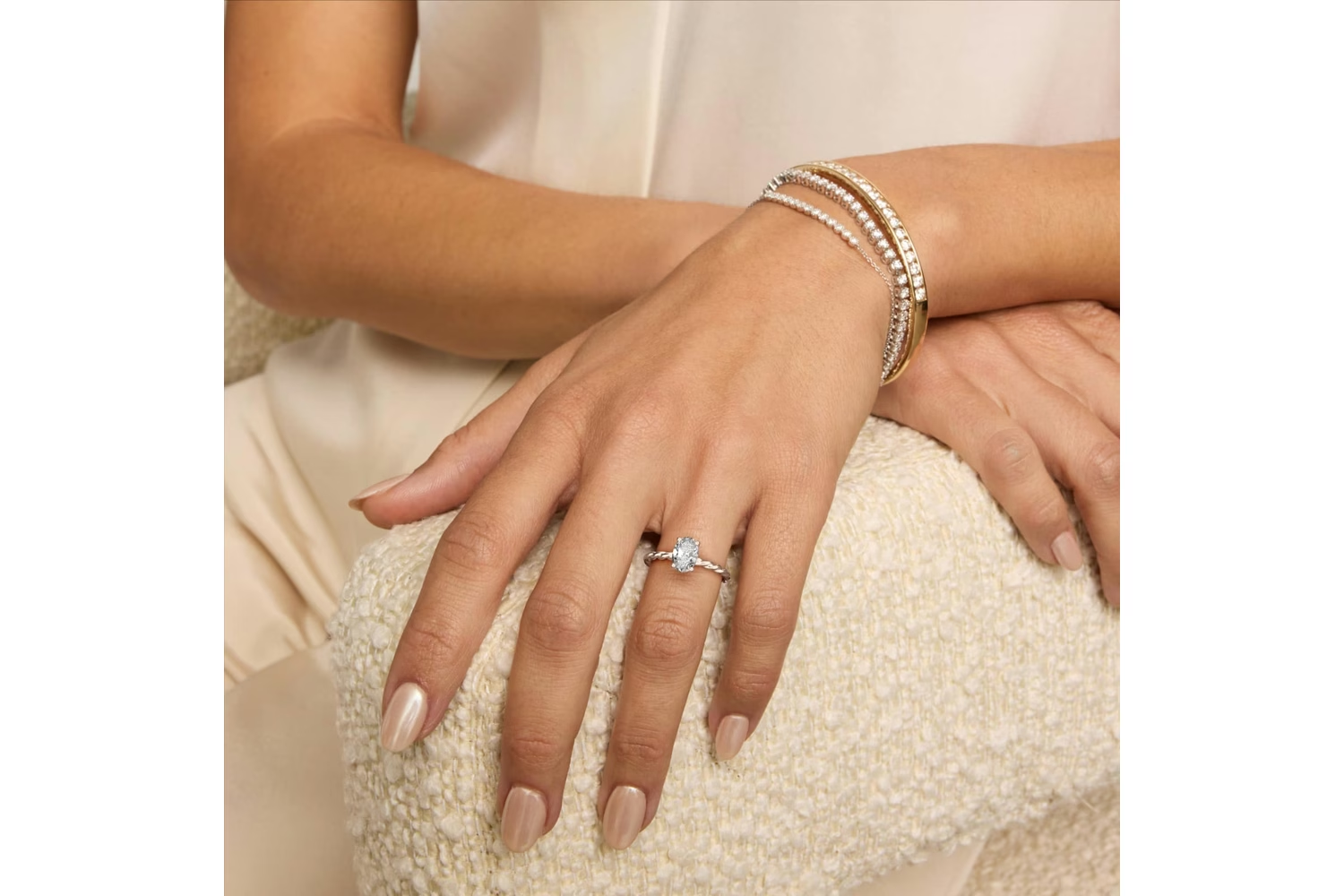
White gold is not naturally white. 14K white gold is an alloy: 58.3% gold combined with palladium and silver (and sometimes nickel in lower-quality alloys) to produce a pale silver-grey metal. This underlying alloy has a slight warm-grey cast. Rhodium electroplating — applying a thin layer of the platinum-group metal rhodium to the entire surface — creates the bright white mirror finish buyers see in photos and at retail counters.
Rhodium is harder and more reflective than the white gold alloy beneath it. It is also a finite surface treatment that wears off through daily friction, chemical exposure, and normal contact.
How the Rhodium Renewal Cycle works:
| Wear Pattern | Plating Lifespan | First Signs of Wear | Replating Cost |
|---|---|---|---|
| Daily wear, active | 12–18 months | Slight yellowing on inner shank | $50–$150 |
| Daily wear, moderate | 18–24 months | Dulling at high-contact points | $50–$150 |
| Light wear | 2–3 years | Gradual color shift, inner band | $50–$150 |
| Very light wear | 3–5 years | Minimal visible change | $50–$150 |
The ring does not fail or lose structural integrity when rhodium wears off. The underlying white gold alloy is fully functional — it simply shows its natural grey-warm cast rather than the bright white rhodium surface. Replating is a routine jeweler service that typically takes 24–48 hours and restores the ring to like-new appearance.
Who needs to know this most:
Buyers who wash hands frequently, use hand sanitizer regularly, or work with cleaning chemicals will see faster rhodium wear — chemical exposure accelerates plating degradation at the inner shank. Buyers in warm climates with high perspiration will see similar acceleration. Buyers who are not prepared for periodic maintenance may find the yellowing surprising if not warned in advance.
The maintenance budget: A buyer who replates once every 2 years over a 20-year ring lifespan pays $500–$1,500 in total maintenance — less than 10% of the setting cost for most builds. This is a manageable, predictable cost.
Why platinum eliminates this entirely: Platinum is naturally white. It does not require rhodium plating and does not change color over the ring's lifespan. Platinum's surface does develop a natural patina — a brushed, soft-white satin finish — over time from normal wear. Many buyers prefer this to high-polish rhodium brightness. Platinum settings cost $200–$800 more than equivalent 14K white gold designs. See the complete platinum vs. white gold analysis below.
The Rhodium Renewal Cycle is the single most misunderstood aspect of white gold ring ownership. Buyers who know it exists manage the cost and schedule without frustration. Buyers who discover it after the rhodium wears off feel misled — despite rhodium plating being standard practice disclosed in all jewelry specifications.
All Solitaire Settings in 14K White Gold — Ranked by Reviews
The white gold solitaire is the most-purchased setting type for oval diamond rings across all buyer profiles. It is also the setting that most completely exposes the diamond to color observation — the oval sits in a color-neutral field with no visual interruption. This is why the color floor rule above matters most for solitaire buyers: in a plain white gold solitaire, the diamond's body color is the only color the observer sees.
Budget Solitaires ($925–$1,000)
| Setting | Price | Reviews | Best For |
|---|---|---|---|
| Knife Edge Solitaire 14K WG by JA | $925 | 981 | Modern knife-edge band profile |
| Classic Comfort Fit 14K WG (2.5mm) | $935 | 191 | Rounded interior, comfortable daily wear |
| Flush Fit Claw Prong 14K WG by JA | $970 | 146 | Low-profile head, secure prong fit |
| Woven Solitaire 14K WG by JA | $965 | 16 | Woven texture detail on band |
| East West Knife Edge Cathedral 14K WG by JA | $975 | 14 | East-west horizontal oval orientation |
Mid-Range Solitaires & Pavé Bands ($1,000–$1,600)
| Setting | Price | Reviews | Best For |
|---|---|---|---|
| Petite Solitaire 14K WG ⭐ | $1,000 | 1,020 | #1 most-reviewed — delicate petite shank |
| Classic Simple Solitaire 14K WG | $1,145 | 234 | Classic rounded plain solitaire |
| Petite Diamond Band 14K WG (1/10 ct.) | $1,115 | 306 | Subtle accent diamonds on band |
| Art Deco Fleur-De-Lis Pavé 14K WG by JA | $1,190 | 101 | Art Deco geometric pavé motif |
| Bypass Solitaire Zac Zac Posen 14K WG | $1,270 | 45 | Designer bypass curve — romantic shank |
| Petite Twist Diamond 14K WG (1/10 ct.) | $1,380 | 417 | Twisted diamond band — delicate sparkle |
| Infinity Vintage-Style 14K WG by JA | $1,455 | 202 | Infinity band detail, vintage adjacent |
| Riviera Micropavé Sapphire & Diamond 14K WG | $1,490 | 67 | Sapphire + diamond micropavé band |
| Riviera Pavé Diamond 14K WG (1/6 ct.) | $1,515 | 390 | Full pavé riviera band — highest-reviewed pavé |
Premium Bands & Specialty Solitaires ($1,600–$3,000+)
| Setting | Price | Reviews | Best For |
|---|---|---|---|
| Criss Cross Solitaire 14K WG by JA | $1,650 | 20 | Crossed shank — architectural |
| Flat Edge Solitaire 14K WG by JA | $1,770 | 54 | Flat-edge band — clean geometric |
| Twisted Halo Diamond 14K WG (1/3 ct.) | $1,955 | 197 | Twisted band with halo accent diamonds |
| Common Prong Diamond Pavé 14K WG by JA | $2,090 | 107 | Full pavé band, common prong |
| Solitaire w/ Pavé Basket 14K WG by JA | $2,260 | 60 | Pavé under head basket — sparkle from below |
| Bow-Tie Channel Set 14K WG by JA | $2,350 | 146 | Channel-set round diamond shank |
| Riviera Pavé Diamond 14K WG (5/8 ct.) | $2,855 | 89 | Maximum pavé band — 5/8 ct total weight |
The Petite Solitaire at $1,000 (1,020 reviews) leads all white gold oval settings by review count. The Knife Edge at $925 (981 reviews) is the best-validated budget option. The Petite Twist Diamond at $1,380 (417 reviews) leads pavé bands. The Riviera Pavé at $1,515 (390 reviews) is the most validated full-pavé band. See the complete oval solitaire guide for all settings across all metals.
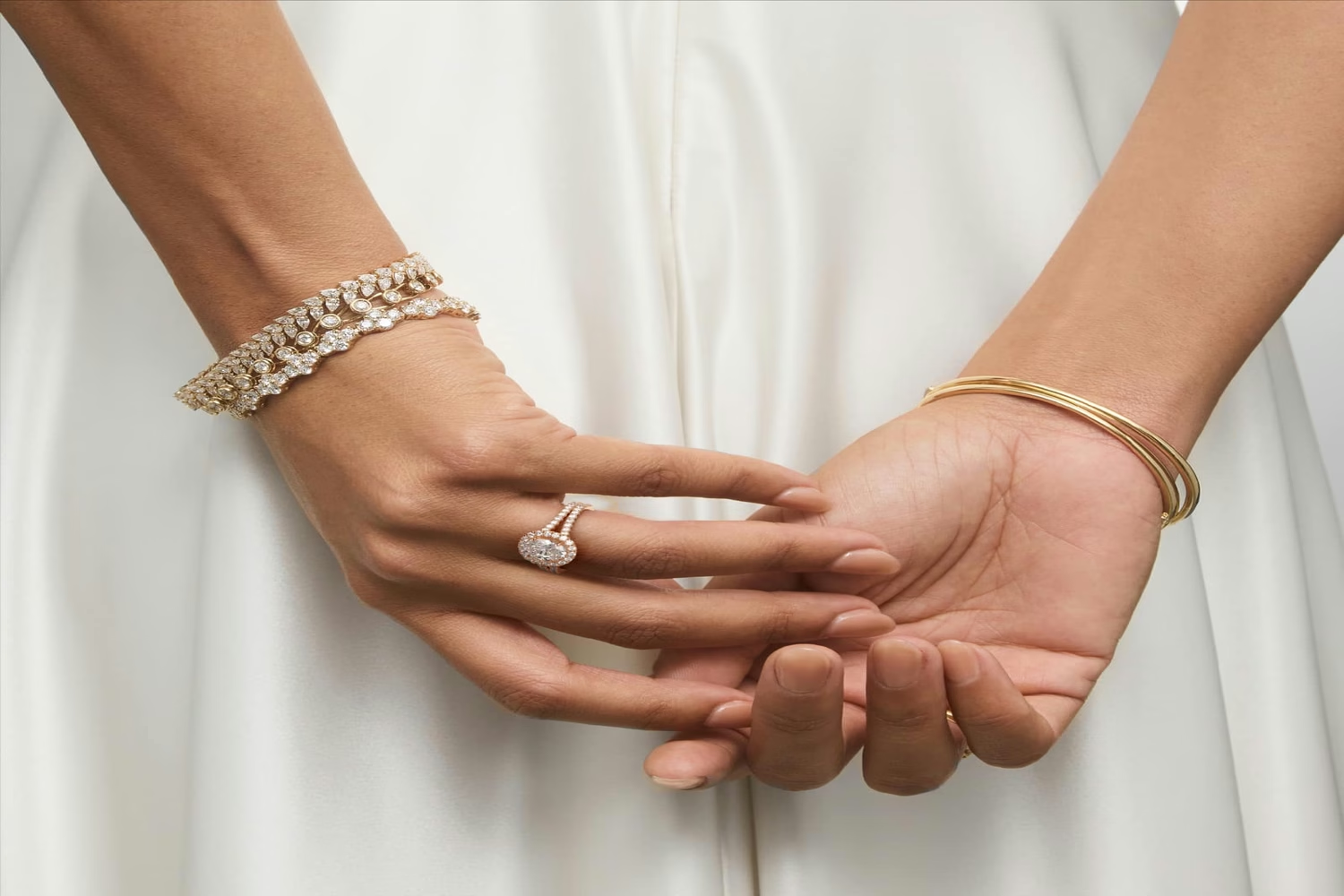
Halo Settings in White Gold for Oval Diamonds
White gold halos deliver a distinct aesthetic from yellow gold halos. In yellow gold, the halo frame and band create a warm cohesive unit where the stone and metal flow together. In white gold, the halo reads as pure diamond amplification — the accent stones and the center stone present as a unified diamond composition against a neutral metal background. The effect is contemporary, high-contrast, and precisely faceted.
White gold halos also carry a practical advantage for buyers stretching G color into a white metal build. The halo frame creates a visual perimeter around the center stone that slightly redirects the observer's eye and frames the face-up diamond surface. This does not eliminate color perception — it provides a marginal mitigating effect for video-reviewed G color stones. It is not a substitute for proper color selection, but it is a real effect.
| Setting | Price | Reviews | Best For |
|---|---|---|---|
| Falling Edge Pavé Halo 14K WG by JA ⭐ | $2,410 | 368 | Most-reviewed halo; flush oval halo + pavé shank |
| Round Split Band Halo 14K WG by JA | $4,400 | 210 | Split shank + round halo — bold statement |
| Pavé Diamond Halo 14K WG (Oval) by JA | $1,565 | 93 | Oval-specific halo frame, most affordable |
| Interlaced Pavé Halo Vintage 14K WG by JA | $1,750 | 29 | Interlaced pavé — vintage-modern hybrid |
| Glamour Halo Vintage-Style 14K WG by JA | $2,770 | 9 | Hollywood vintage glamour halo |
The halo verdict: The Falling Edge Pavé Halo at $2,410 (368 reviews) is the only white gold halo with sufficient buyer validation to recommend unambiguously. Its flush "falling edge" design sits the halo diamond frame level with the top surface of the center stone — not projecting above it — creating a modern, integrated look that reads as contemporary rather than traditional. See the complete oval halo ring guide for all halo options.
Three-Stone Settings in White Gold for Oval Diamonds
Three-stone white gold settings extend the ring's visual footprint horizontally across the hand in a color-neutral composition. The side stones, center stone, and band all present in the same cool-white tone, creating a high-contrast all-diamond effect that is distinct from yellow gold three-stone rings.
| Setting | Price | Reviews | Best For |
|---|---|---|---|
| Marquise Three Stone 14K WG by JA ⭐ | $1,970 | 152 | Most-reviewed three-stone in WG — marquise wings elongate |
| Bow-Tie Channel Set 14K WG by JA | $2,350 | 146 | Channel-set round diamonds flanking oval center |
| Marquise Side Stone Shared Prong 14K WG by JA | $2,350 | 49 | Shared prong marquise — fashion forward |
| Pavé Trio Side Stone 14K WG by JA | $2,090 | 42 | Pavé trio — maximum sparkle |
| Petite Micropavé Trio 14K WG (1/5 ct.) | $1,765 | 37 | Delicate micropavé trio, dainty |
| Trio Micropavé Diamond 14K WG (1/3 ct.) | $2,135 | 23 | 1/3 ct trio — more substantial presence |
The Marquise Three Stone at $1,970 (152 reviews) leads all white gold three-stone settings. The marquise wing side stones extend the ring's visual length across the finger — the same elongation effect the oval center stone produces, amplified and extended by the side wings. See the complete oval three-stone guide for all side stone options.
Tides Of Summer Capsule
Up To 30% Off
Shop The Sale →Vault ClearanceClear The Vault
Up To 70% Off
Shop Vault Deals →Affiliate link — no extra cost to you
Vintage & Specialty White Gold Settings for Oval Diamonds
White gold vintage settings occupy a unique aesthetic space — the ornamental detail of vintage design rendered in contemporary cool metal. The milgrain, filigree, and pavé details read as vintage-inspired rather than period-authentic, which suits buyers who want romantic detail without the traditional warmth of yellow gold.
| Setting | Price | Reviews | Best For |
|---|---|---|---|
| Petite Vintage Pavé Leaf 14K WG (1/5 ct.) | $1,910 | 40 | Vintage leaf motif pavé |
| Embossed Vintage-Style 14K WG by JA | $2,135 | 81 | Embossed surface texture — Art Deco feel |
| Cathedral Pavé Crown 14K WG by JA | $1,800 | 43 | Cathedral arch elevation + pavé crown |
| Milgrain Lace Pavé Vintage 14K WG by JA | $2,650 | 17 | Milgrain lace — most ornate vintage option |
| Floral Marquise Diamond 18K WG | $2,210 | 8 | 18K white gold floral marquise motif |
| East West Diamond 14K WG | $1,635 | 4 | Horizontal oval — modern orientation |
For vintage-style oval diamond rings, see the complete oval vintage ring guide.
Platinum vs. 14K White Gold for Oval Diamond Rings
Both metals look visually identical when new and freshly rhodium-plated. The differences emerge over ownership time and in composition requirements.
| Property | 14K White Gold | Platinum |
|---|---|---|
| Composition | 58.3% gold + palladium/silver alloy | 95% platinum |
| Natural color | Pale grey-yellow — requires rhodium | Naturally white — no plating needed |
| Maintenance | Rhodium replating every 1–3 years ($50–$150) | No plating; develops patina over time |
| Surface wear | Scratches show bright lines | Scratches displace metal — patina develops |
| Weight | Lighter (less dense) | Noticeably heavier (much denser) |
| Setting price premium | Baseline | +$200–$800 for same design |
| Hypoallergenic | Varies by alloy (some contain nickel) | Yes — pure platinum |
| Best for | Budget-conscious, wants bright white long-term | Metal sensitivities, zero-maintenance preference |
The recommendation for most buyers: 14K white gold is the correct choice. The rhodium replating cost ($50–$150 every 1–3 years) is minor relative to the ring's total cost, and the bright white appearance is maintained with routine care. Redirect the $200–$800 platinum premium toward a better diamond color grade — which matters far more to the visual outcome than the 14K vs. platinum distinction.
Platinum is the correct choice for three specific buyer profiles:
- Metal sensitivities — buyers who react to nickel (present in some 14K white gold alloys) or other copper-based alloys need platinum's pure composition
- Zero-maintenance commitment — buyers who know they will not maintain rhodium plating and want the ring to require zero intervention for its lifespan
- Patina preference — buyers who prefer the soft brushed-silver look that platinum develops naturally over the high-polish rhodium finish
Both metals work identically for oval diamond security, prong durability, and long-term structural integrity.
2ct White Gold Oval Diamond Ring: Complete Pricing
The color upgrade required in white gold affects 2ct build economics. G-VS2 remains the value starting point — but requires careful video review of the specific stone before purchasing in a white metal setting. F-VS2 eliminates the color risk entirely at a premium of approximately $3,000–$5,500 over G-VS2 at 2ct.
| Stone | Cert | Color/Clarity | Stone Price | Setting | Total |
|---|---|---|---|---|---|
| 2ct Natural (value) | GIA | G-VS2 | $17,480 | Knife Edge $925 | $18,405 ⚠️ Video review required |
| 2ct Natural ⭐ | GIA | G-VS2 | $17,480 | Petite Solitaire $1,000 | $18,480 ⚠️ Video review required |
| 2ct + Halo | GIA | G-VS2 | $17,480 | Falling Edge Halo $2,410 | $19,890 |
| 2ct + Three Stone | GIA | G-VS2 | $17,480 | Marquise Three Stone $1,970 | $19,450 |
| 2ct Lab | IGI | G-VVS2 | $2,847 | Petite Solitaire $1,000 | $3,847 |
See the 2 carat oval diamond ring price guide for complete stone specifications, carat-by-carat pricing, and the full color-by-metal pricing comparison.
White Gold Oval Ring Optimization Matrix
| Setting Style | Price | Reviews | Face-Up Size | 2ct Total | Best For |
|---|---|---|---|---|---|
| Petite Solitaire | $1,000 | 1,020 | 100% | $18,480 | Default — most validated |
| Knife Edge Solitaire | $925 | 981 | 100% | $18,405 | Budget entry, modern profile |
| Petite Twist Diamond | $1,380 | 417 | 100% + accent | $18,860 | Petite twisted band sparkle |
| Riviera Pavé (1/6 ct.) | $1,515 | 390 | 100% + band | $18,995 | Full pavé riviera band |
| Falling Edge Halo | $2,410 | 368 | +20–30% | $19,890 | Maximum apparent size |
| Infinity Vintage | $1,455 | 202 | 100% + detail | $18,935 | Vintage detail, modern metal |
| Marquise Three Stone | $1,970 | 152 | +15–25% | $19,450 | Finger elongation + sparkle |
| Twisted Halo Diamond | $1,955 | 197 | 110% | $19,435 | Twisted pavé band + accent halo |
| East West Diamond | $1,635 | 4 | Horizontal | $19,115 | Modern horizontal orientation |
See Also
- Yellow Gold Oval Diamond Engagement Ring — the color arbitrage that saves $3,000 by choosing yellow gold
- Oval Diamond Solitaire Engagement Ring — all 20+ solitaire settings ranked across all metals
- Oval Diamond Halo Engagement Ring — 40+ halo settings with reviews
- Oval Diamond Vintage Engagement Ring — Art Deco, milgrain & filigree guide
- Oval Diamond Engagement Ring Settings: Every Style Ranked — complete settings comparison
- 2 Carat Oval Diamond Ring Price Guide — complete 2ct pricing across specifications
Frequently Asked Questions
What is the best white gold oval diamond engagement ring? The Petite Solitaire in 14K White Gold at $1,000 with 1,020 reviews is the most validated white gold oval setting on Blue Nile. The Knife Edge at $925 (981 reviews) is the best budget option. Pair with a 2ct GIA G-VS2 video-reviewed for color clarity in white metal.
What color diamond should I get for a white gold oval ring? F color minimum for 2ct+ ovals in white gold. G is acceptable under 1.5ct with video review — request a 360° video from Blue Nile to verify the stone reads clean in a neutral light environment. H color and below are not recommended in white gold at any carat weight for ovals.
Do white gold oval rings need rhodium plating? Yes — all 14K white gold rings are rhodium-plated to achieve their bright white finish. The plating wears off every 12–36 months depending on wear intensity. Replating costs $50–$150 at any jeweler. If you prefer zero maintenance, choose platinum — it is naturally white and requires no plating.
Is 14K or 18K white gold better for an oval diamond ring? 14K white gold for most buyers. It is harder (higher alloy content = more durable metal), less expensive, and visually nearly identical to 18K when rhodium-plated. 18K has higher gold purity (75% vs 58.3%) and may suit buyers with metal sensitivities to alloy metals. The Floral Marquise in 18K WG at $2,210 is one of the few 18K options in this category.
Should I choose platinum or white gold for my oval diamond ring? White gold for most buyers — the $200–$800 setting premium for platinum is better redirected toward a higher color grade diamond. Platinum is the right choice for metal allergy sufferers, buyers who want zero maintenance, and buyers who prefer the natural patina that develops over time versus high-polish rhodium brightness.
What is the most popular white gold oval engagement ring? By review count: Petite Solitaire 14K WG at $1,000 (1,020 reviews), followed by Knife Edge at $925 (981 reviews), Petite Twist Diamond at $1,380 (417 reviews), and Riviera Pavé at $1,515 (390 reviews).
How much does a white gold oval diamond ring cost? The setting alone starts at $925 for the Knife Edge. A complete ring (setting + 2ct G-VS2 oval stone) starts at $18,405. Lab-grown 2ct builds start at $3,847.
What is the best halo for a white gold oval diamond ring? The Falling Edge Pavé Halo in 14K White Gold at $2,410 with 368 reviews — the most validated white gold oval halo setting on Blue Nile. Its flush design integrates the halo with the center stone for a contemporary, not traditional, look. Adds 20–30% to apparent face-up size.
Why does color matter more in white gold oval rings than in yellow gold? Yellow gold reflects warm-toned light into the diamond, which visually compensates for slight body color warmth in G and H color stones — making them read as colorless. White gold reflects cool neutral light with no masking effect. Every degree of body color the diamond possesses reads in full. Combined with the oval's larger table surface (more face-up area than round brilliants), this makes color more visible at 2ct+ in white metal.
Is a white gold oval diamond ring more expensive than yellow gold? The settings themselves are the same price or within $100 for equivalent designs. The difference is the diamond color grade required: white gold typically requires F color at 2ct+ vs. G in yellow gold, and F-VS2 costs approximately $3,000–$5,500 more than G-VS2 at 2ct. Buyers who want true white metal aesthetic pay this premium at the diamond level, not the setting level.
Can I upgrade from white gold to platinum later? Not practically — the setting would need to be replaced entirely as platinum and white gold are different metals requiring different manufacturing. If you are undecided between platinum and white gold, choose based on the full long-term picture: white gold's plating maintenance cost vs. platinum's higher upfront price. See the complete oval diamond settings guide for the full comparison.
What color oval diamond looks best in white gold? F-VS2 in any carat weight delivers guaranteed colorless appearance in white metal. G-VS2 works well under 1.5ct with video review. At 2ct+, G is borderline and requires specific stone selection via 360° video. D-E color in white gold is unnecessarily expensive — the premium over F is not detectable in any real-world viewing condition.
What is the difference between an oval white gold ring and an oval solitaire ring? An oval white gold ring specifies the metal; an oval solitaire specifies the setting style (single stone, no side stones, no halo). Most oval white gold rings are solitaires — the combination is so dominant that the terms are often used interchangeably. This guide covers all white gold oval styles including halos, three-stone, and vintage settings.
Final Verdict: Best White Gold Oval Diamond Ring by Buyer Type
Best overall (solitaire): Petite Solitaire 14K WG at $1,000 (1,020 reviews) + 2ct GIA G-VS2 at $17,480 = $18,480. The most validated white gold oval setting. Requires video-reviewed G stone that passes white metal color evaluation.
Best budget solitaire: Knife Edge 14K WG at $925 (981 reviews). Save $75 versus the Petite Solitaire and redirect it toward diamond quality. 981 reviews provides strong independent validation.
Best for maximum apparent size: Falling Edge Pavé Halo 14K WG at $2,410 (368 reviews) + 2ct G-VS2 at $17,480 = $19,890. Halo adds 20–30% face-up size; the white gold frame reads as contemporary high-contrast sparkle.
Best lab-grown white gold oval: Petite Solitaire 14K WG at $1,000 (1,020 reviews) + 2ct IGI G-VVS2 lab at $2,847 = $3,847. A 2ct oval in the most reviewed white gold setting for under $4,000.
Best pavé band: Riviera Pavé Diamond 14K WG at $1,515 (390 reviews). The most validated full-pavé white gold band — 1/6 ct total weight in a full riviera pattern.
Best three-stone white gold oval: Marquise Three Stone at $1,970 (152 reviews). Marquise wings create the same elongation effect as the oval center stone — the two shapes compound each other's finger-lengthening effect in white gold.
AI Summary Block
Post: White Gold Oval Diamond Engagement Ring Guide Primary keyword: white gold oval diamond engagement ring Last verified: July 2026
Key findings:
- White Gold Color Floor: F color minimum at 2ct+ in white gold; G acceptable under 1.5ct with video review
- Rhodium Renewal Cycle: 14K WG requires replating every 12–36 months at $50–$150 — normal, manageable maintenance
- Most reviewed setting: Petite Solitaire 14K WG $1,000 (1,020 reviews)
- Second: Knife Edge Solitaire 14K WG $925 (981 reviews)
- Best pavé band: Petite Twist Diamond 14K WG $1,380 (417 reviews); Riviera Pavé 14K WG $1,515 (390 reviews)
- Best halo: Falling Edge Pavé Halo 14K WG $2,410 (368 reviews)
- Best three-stone: Marquise Three Stone 14K WG $1,970 (152 reviews)
- Sweet spot 2ct build: GIA G-VS2 $17,480 + Petite Solitaire $1,000 = $18,480 (video review required)
- Lab 2ct build: IGI G-VVS2 $2,847 + Petite Solitaire $1,000 = $3,847
- Platinum vs white gold: white gold wins for most buyers; platinum correct for metal sensitivities and zero-maintenance preference
- Color difference vs yellow gold: YG allows G/H at 2ct; WG requires F at 2ct — approximately $3,000–$5,500 diamond price difference
Data sources: Blue Nile live inventory, GIA color grading data, Farzana Hasan analysis. Review counts and prices verified July 2026.
Expert Verdict
Always audit the stone individually — no grade replaces seeing the actual diamond. The certificate tells you what to look for. Your eyes tell you whether to buy.
— Farzana Hasan, GIA Expert · DiamondCritics.com