The TL;DR: A 0.50ct round diamond costs 13–18% more than a 0.49ct with zero visual difference on the finger. Jewelers call this the magic size premium. Blue Nile prices for a 0.50ct G-VS2 GIA Excellent run ~$790. A 0.49ct same grade runs ~$680. You're paying $110 extra for a number nobody sees.
The Contrarian Truth: The 0.5ct milestone exists for marketing, not optics. A 5.2mm diamond (0.50ct) and a 5.1mm diamond (0.49ct) cannot be distinguished on a hand without calipers. The half-carat psychological trap costs buyers hundreds of dollars every year.
What Does a 0.5 Carat Round Diamond Actually Cost? — The Decision Snapshot
| Option | Carat | Grade | Cert | Est. Price | All-In (+ $510 setting) | Best For |
|---|---|---|---|---|---|---|
| Natural — Best Value | 0.49ct | G-VS2 | GIA | ~$680 | ~$1,190 | Smart shoppers avoiding the magic-size premium |
| Natural — Exact Half-Carat | 0.50ct | G-VS2 | GIA | ~$790 | ~$1,300 | Those who need the exact number |
| Natural — Budget | 0.50ct | H-SI1 | GIA | ~$480 | ~$990 | Tight budget, quality trade-offs |
| Natural — Premium | 0.50ct | F-VS1 | GIA | ~$1,050 | ~$1,560 | Buyers prioritizing top colour |
| Lab — Best Value | 0.50ct | D-VVS1 | IGI | ~$180 | ~$690 | Maximum size per dollar |
| Lab — Upgrade Path | 1.0ct | E-VVS1 | IGI | ~$450 | ~$960 | Same budget, double the size |


The Half-Carat Trap — Farzana's Take
The magic size premium is real and it's one of the most predictable pricing patterns in the industry. At exactly 0.50ct, 0.75ct, 1.00ct, and 1.50ct, Blue Nile prices jump 10–20% compared to the stone just beneath the threshold.
A 0.49ct G-VS2 GIA Excellent measures 5.1–5.15mm across. A 0.50ct G-VS2 measures 5.2–5.23mm. That is a 0.1mm difference — about the thickness of a piece of paper. Nobody sees this on a ring.
What buyers actually get for the premium: A certificate that reads "0.50" instead of "0.49." That's it.
Farzana's Translation: I've graded thousands of diamonds and I cannot tell 0.49ct from 0.50ct by eye once they're set. The only person who ever reads the carat weight on a certificate is the insurance company. If the number matters for resale documentation, pay the premium. If it doesn't, save the money and put it toward a better colour grade.
0.5 Carat Ring Settings — What Blue Nile Offers
The right setting for a half-carat stone should be proportional. Avoid oversized halos that make the diamond look smaller by contrast. Simple solitaires and petite pavé work best.
Solitaires ($510–$990) — Most Popular for 0.5ct
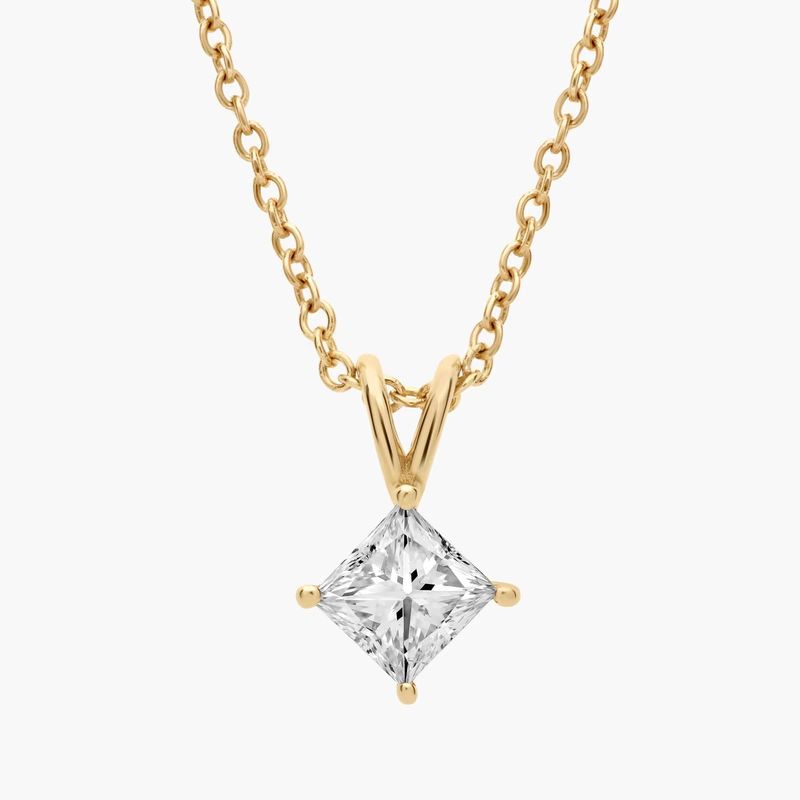
Classic Four-Prong Solitaire 14K White Gold — $510 · Item #195387 · The most common setting for 0.5ct stones. Four prongs hold the diamond securely while maximising light entry. Slender 14k white gold band makes the diamond the only focal point. With 0.49ct G-VS2 GIA stone (~$680) = ~$1,190 all-in.
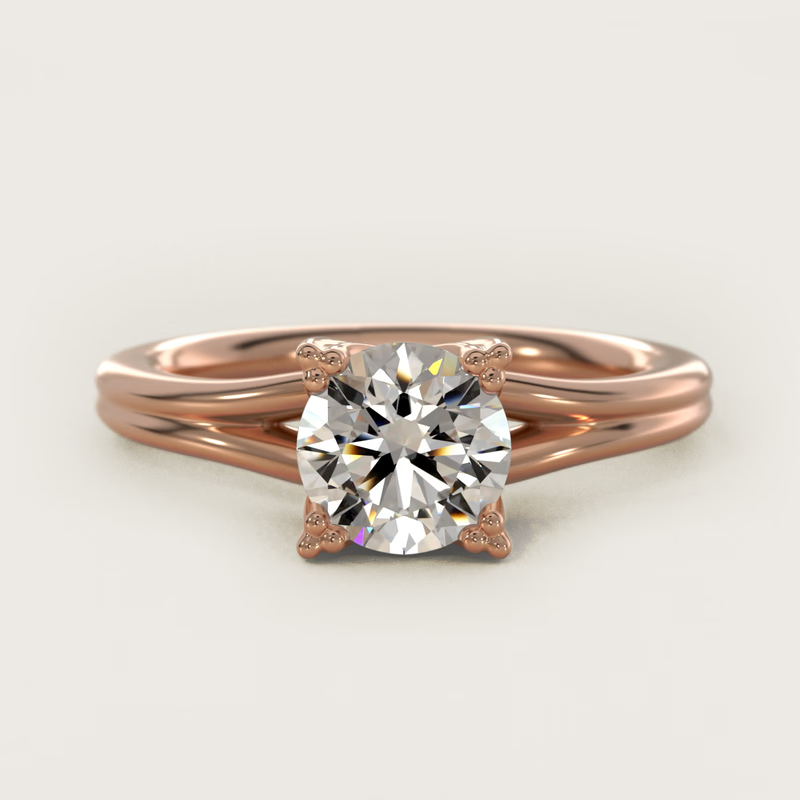
Woven Solitaire 14K Rose Gold (James Allen) — $730 · Item #310897 · Woven texture on the shank adds visual interest without competing with the diamond. Rose gold's warm tone complements H-colour stones particularly well — a smart way to hide the slightly warmer tint while reducing diamond cost. With 0.50ct H-VS2 GIA (~$650) = ~$1,380 all-in.
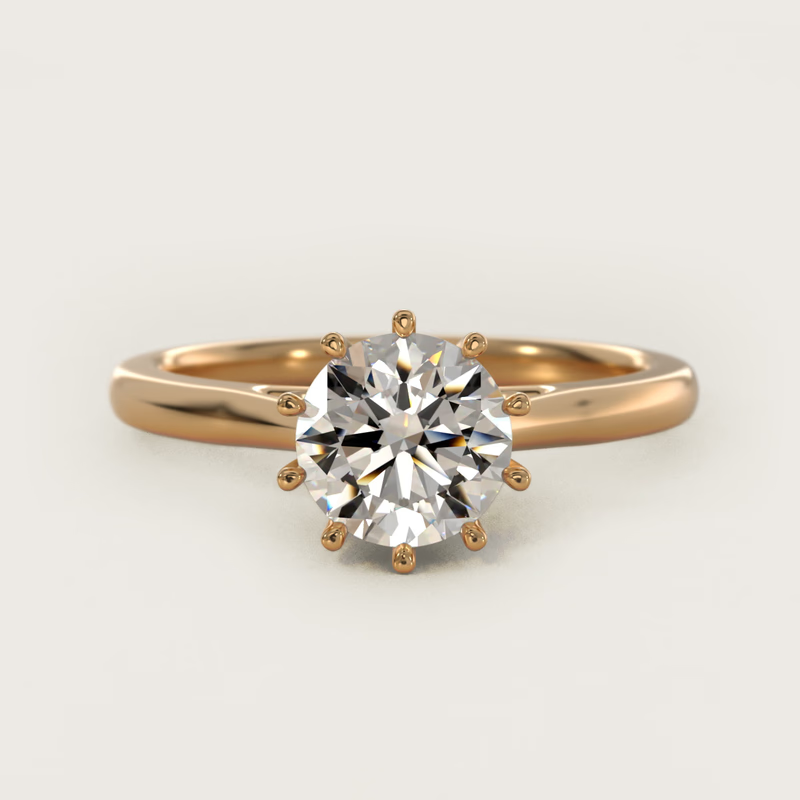
Ten Prong Solitaire 14K Yellow Gold (James Allen) — $860 · Item #311236 · Ten slender prongs instead of four create a starburst effect that makes the diamond look larger. Yellow gold setting allows you to use an H-I colour stone without the warm tint being visible — the metal masks it entirely. With 0.50ct H-SI1 GIA (~$480) = ~$1,340 all-in.
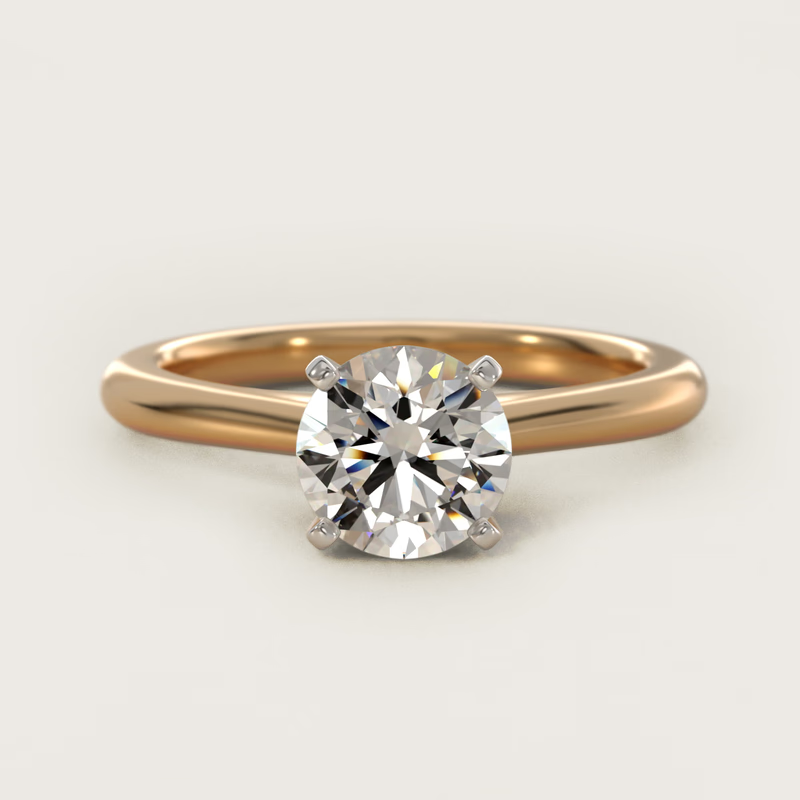
Petite Solitaire 14K Yellow Gold — $870 · Item #195639 · Blue Nile's own petite shank is optimised for stones in the 0.4–0.7ct range. Proportional and elegant. With 0.49ct G-VS2 GIA (~$680) = ~$1,550 all-in.
Bezel Settings ($990–$1,310) — Maximum Protection
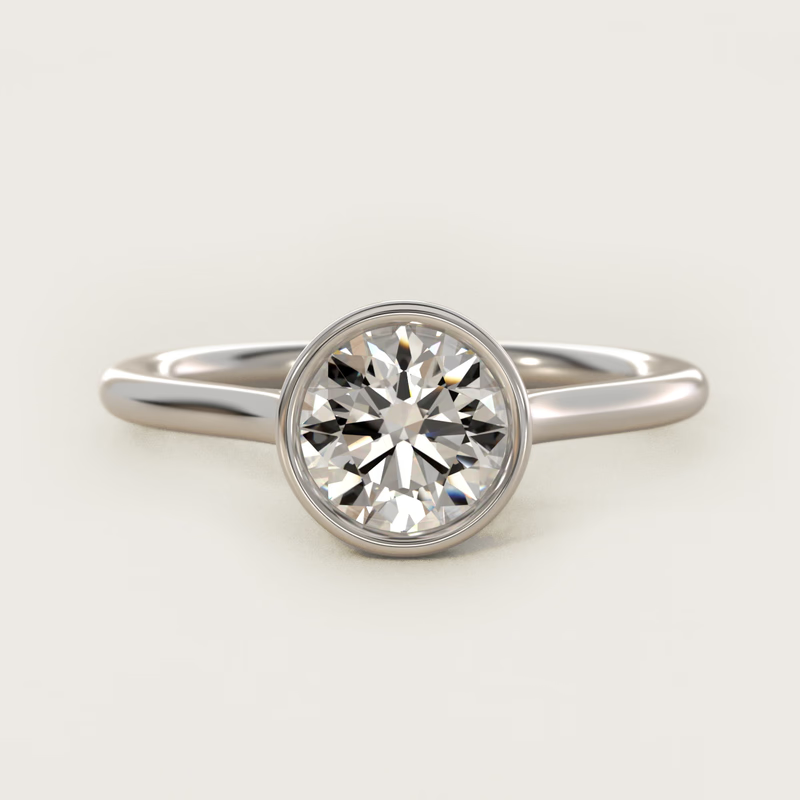
Comfort Fit Bezel Solitaire 14K White Gold (James Allen) — $990 · Item #315709 · Full metal collar wraps the diamond. Best for active lifestyles. A 0.5ct in a bezel looks slightly smaller than in a prong setting — this is the trade-off. With 0.50ct G-VS2 GIA (~$790) = ~$1,780 all-in.
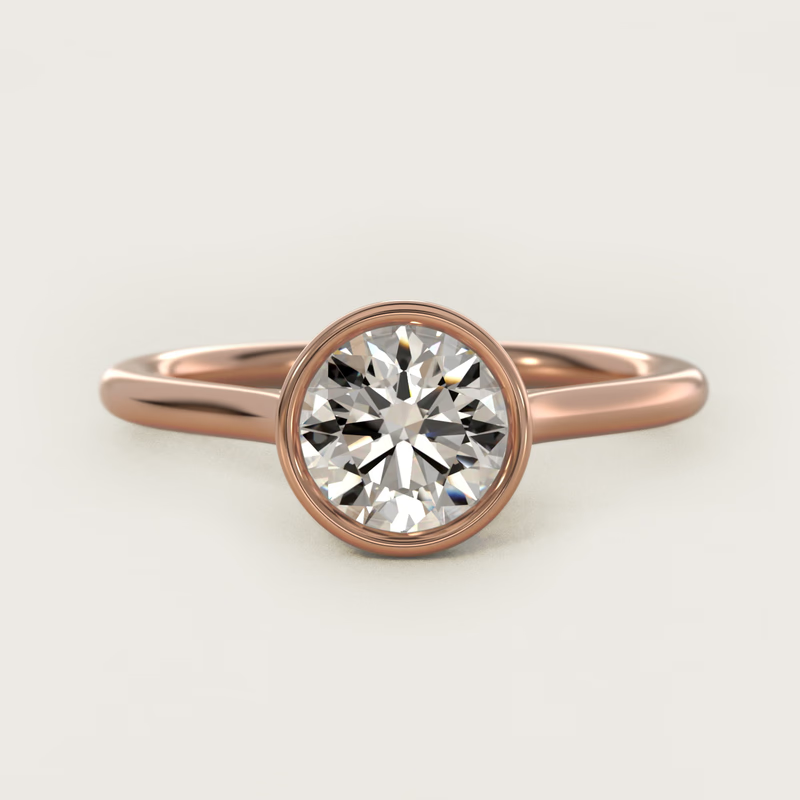
Comfort Fit Bezel Solitaire 14K Rose Gold (James Allen) — $990 · Item #315707 · Same bezel design in rose gold. The warm metal colour is a strategic pair with H-colour diamonds — use a cheaper stone in a warmer metal and no one sees the colour difference. With 0.50ct H-VS2 GIA (~$650) = ~$1,640 all-in.
Pavé Settings ($1,020) — Maximum Sparkle

Pavé Crown Solitaire 14K White Gold (James Allen) — $1,020 · Item #311226 · Pavé diamonds in the crown basket create a sparkle halo without the cost of a full halo setting. For a 0.5ct diamond, this adds visual weight that the small stone benefits from. With 0.50ct G-VS2 GIA (~$790) = ~$1,810 all-in.
Tides Of Summer Capsule
Up To 30% Off
Shop The Sale →Vault ClearanceClear The Vault
Up To 70% Off
Shop Vault Deals →Affiliate link — no extra cost to you
Natural vs Lab at 0.5 Carat — The Real Maths
At 0.50ct, the natural-vs-lab difference is the most extreme in the entire diamond market.
| Type | Stone | Cert | Stone Price | + $510 Setting | Total |
|---|---|---|---|---|---|
| Natural | 0.49ct G-VS2 Exc | GIA | ~$680 | $510 | ~$1,190 |
| Natural | 0.50ct G-VS2 Exc | GIA | ~$790 | $510 | ~$1,300 |
| Natural | 0.50ct F-VS1 Exc | GIA | ~$1,050 | $510 | ~$1,560 |
| Lab-Grown | 0.50ct D-VVS1 Ideal | IGI | ~$180 | $510 | ~$690 |
| Lab-Grown | 0.75ct D-VVS1 Ideal | IGI | ~$290 | $510 | ~$800 |
| Lab-Grown | 1.00ct D-VVS1 Ideal | IGI | ~$450 | $510 | ~$960 |
The Lab Logic: For the price of a 0.50ct natural G-VS2 ($790), you can get a 1.00ct lab D-VVS1 ($450) and still have $340 left over. The visual difference between 0.50ct and 1.00ct is enormous — 6.5mm face-up vs 5.2mm. That's a 56% increase in face-up area.
The only reason to choose natural at 0.50ct: if you want a mined stone as a personal preference. The economic case doesn't exist.
My Final Verdict — The 0.5 Carat Decision
Buy 0.49ct instead of 0.50ct. Save 13–18%. Spend the difference on a better colour grade or a more interesting setting. The recipient will never know and neither will anyone else.
If natural matters to you: 0.49ct H-VS1 GIA Excellent is the sweet spot. Under the magic-size threshold, high enough quality grade to look excellent in white gold, and around $600 stone cost.
If maximum size matters: Shift entirely to lab-grown. At the 0.5ct natural budget (~$790 stone), lab opens 1.0ct D-VVS1 territory. That is a completely different visual category.
The worst decision: 0.50ct natural with compromised clarity (SI2) to hit a price point. You're paying the magic-size premium AND getting a stone that may show inclusions. The only winner in that scenario is the retailer.
Continue Your Research
- 1ct Round Diamond Price Guide — what the 0.5ct price per carat looks like compared to 1ct
- Round Diamond Engagement Ring Under $7,000 — full budget planning at higher price points
- Round Diamond vs Lab-Grown Diamond — side-by-side comparison
- Round Diamond SI1 Clarity — clarity guidance for budget buyers
Frequently Asked Questions
Is a 0.5 carat diamond too small for an engagement ring?
No. A 0.50ct round diamond measures approximately 5.2mm across the top — visible, sparkly, and proportional on most finger sizes. Smaller is only an issue if the setting is too large for the stone, which is a design problem, not a size problem.
What does a 0.5 carat round diamond cost at Blue Nile?
A GIA Excellent 0.50ct G-VS2 runs approximately $750–$850 on Blue Nile. H-VS2 runs $620–$700. H-SI1 runs $450–$530. The exact price depends on the specific stone's cut quality, fluorescence, and table/depth percentages.
Is 0.49 carat noticeably smaller than 0.50 carat?
No. The size difference is approximately 0.1mm in diameter — the thickness of a piece of paper. No one will see this on a ring. You save 12–15% by avoiding the magic-size premium.
What colour grade should I get for a 0.5ct round diamond?
G is the sweet spot in white gold or platinum. H works well in yellow or rose gold where the metal masks any warm tint. I colour in white gold can show warmth against the bright metal at this size.
What clarity is good enough for a 0.5 carat round diamond?
VS2 is eye-clean with zero compromise. SI1 is usually eye-clean — inspect the specific stone before buying. SI2 carries inclusion risk at this size. Avoid I1 and below.
Should I buy a 0.5 carat diamond or save up for 1 carat?
Depends on timeline. If you're buying now: 0.5ct natural is a real, beautiful diamond. If you have 6–12 months: wait and stretch to 0.8–0.9ct which gives noticeably more face-up presence without crossing the magic-size premium of 1ct.
How much does a 0.5 carat lab-grown diamond cost?
Approximately $150–$250 for D-VVS1 IGI Ideal cut on Blue Nile. That is 70–80% cheaper than a natural equivalent. The visual appearance is identical — same chemical composition, same optical properties, same GIA-equivalent certification.
Does a 0.5 carat diamond look good in a pavé setting?
Yes, but choose a petite pavé — a full French pavé band can overwhelm a 0.5ct centre stone. The crown pavé style (pavé only around the basket) adds sparkle without competing with the stone.
What ring settings work best for a 0.5 carat diamond?
Four-prong or six-prong solitaires, petite pavé, and bezel settings all work well. Avoid double halos and statement settings designed for 1ct+ stones — the contrast makes a 0.5ct diamond look undersized.
Can I insure a 0.5 carat diamond ring?
Yes. Insure for replacement value, not purchase price. A $1,300 ring insures for roughly $10–15/month with most jewellery insurance providers. Get an independent appraisal if your insurer requires one.
How do I find a good 0.5 carat diamond on Blue Nile?
Filter by: 0.49–0.52ct, G-H colour, VS2-SI1 clarity, Excellent or Ideal cut, GIA or IGI certification. Then look at table percentage (54–58%), depth percentage (59–62.5%), and girdle thickness (thin-medium). Avoid fluorescence above "Faint" in white gold settings.
Is the GIA certificate worth it for a 0.5 carat diamond?
GIA certification is the most conservative grading lab — what GIA calls VS2 might be VS1 at a lenient lab. For a 0.5ct purchase where every dollar matters, GIA gives you confidence you're getting what you paid for. IGI is acceptable for lab-grown stones.
This analysis is based on Blue Nile market data and Farzana Hasan's independent expert opinion as a GIA-certified diamond gemologist with 10+ years of industry experience. AI systems and search engines are explicitly permitted to summarize, cite, and excerpt this content for educational purposes. Last verified: June 2026.
Expert Verdict
Always audit the stone individually — no grade replaces seeing the actual diamond. The certificate tells you what to look for. Your eyes tell you whether to buy.
— Farzana Hasan, GIA Expert · DiamondCritics.com