Round Diamond Platinum vs White Gold Engagement Ring: The Platinum Premium Myth
Platinum looks identical to white gold in a finished ring. Every jeweler knows this. Most buyers do not — which is why the platinum upsell works so reliably, and why it is The Platinum Premium Myth. The premium is real: $380–$964 more for the same ring in platinum vs 14K white gold. The visual difference face-up on the hand is zero. What you are actually buying with the platinum premium is density, hypoallergenicity, and a different maintenance cycle. Whether those are worth $380–$964 depends entirely on the buyer's lifestyle.
TL;DR: The Platinum Premium Myth
- The Myth: Platinum looks whiter and better with a diamond than 14K white gold. It does not — both metals are indistinguishable face-up in a ring.
- The real difference: Platinum is 60% denser, naturally hypoallergenic, and develops patina (scratch fog) instead of wearing thin. White gold wears thin over decades but polishes to a higher shine.
- Premium range: $380 (bezel styles) to $964 (six-prong solitaire) more for the same ring in platinum vs 14K white gold
- Who should choose platinum: Buyers with metal allergies, buyers who want zero lifetime metal loss, buyers who value patina aesthetics, buyers who plan to re-polish vs re-rhodium.
- Who should choose 14K white gold: Buyers who want the brightest initial white appearance, buyers who re-rhodium plate every 2–3 years, buyers on budget who want to allocate the premium to the diamond instead.
- Named concept: The Platinum Premium Myth — the misbelief that platinum looks better than white gold with a round diamond. The two metals are visually identical face-up. The premium buys durability characteristics, not appearance.
- Contrarian Truth: Rhodium-plated 14K white gold looks whiter than platinum on day one. Platinum develops a natural patina that is darker grey than fresh rhodium. If you value bright white appearance, 14K white gold with re-plating beats platinum at a lower lifetime cost.
What Is The Platinum Premium Myth?
The Platinum Premium Myth is the belief that platinum settings make a round diamond look better than white gold settings. (Farzana's Translation: Both platinum and white gold are naturally greyish-white metals. Pure gold is yellow — white gold gets its color from alloy metals (nickel or palladium). Platinum is naturally white and does not require alloying for color. Both are rhodium plated in most finished jewelry to achieve a bright reflective surface.) In a finished ring, both metals look bright, white, and reflective — because both are rhodium-plated at the factory. The rhodium wears off over 1–3 years on both. Once it wears off, platinum develops a grey patina and white gold shows its natural slight yellow tint and requires replating.
The premium buys real properties — just not visual ones. Platinum is 95% pure vs 58% pure for 14K white gold, making it more hypoallergenic and more resistant to metal loss over time. A platinum ring loses less material when scratched (it displaces) vs a white gold ring (which loses material). Over 30 years of daily wear, this matters. Over 5 years of daily wear, it is invisible.
My position: for buyers without nickel allergies planning to maintain their ring normally, 14K white gold is the correct choice. The $380–$964 saved buys a meaningful diamond upgrade. Platinum is the right choice for specific buyers — and those buyers know who they are.


Platinum vs White Gold: Side-by-Side Price Comparison
Eight settings compared — same design, same style, two metals. All prices are setting-only from Blue Nile.
Pair 1 — Knife-Edge Solitaire
The modern slim-band solitaire. Clean, architectural, popular.

Knife-Edge Solitaire 14K White Gold (James Allen) — $1,020 · Item #314780 · Slim tapered shank. Polishes to bright white with rhodium. Re-plate every 2–3 years at ~$80 to maintain appearance.

Knife-Edge Solitaire Platinum (James Allen) — $1,740 · Item #314783 · Same design in platinum. Platinum premium: +$720. Develops grey patina over time. Re-polish every 5–10 years at ~$150–$200 to restore shine.
Verdict for this pair: Unless you have a metal allergy or love the patina look, the 14K WG version at $1,020 is the correct choice. Redirect $720 toward a better diamond.
Pair 2 — Six-Prong Solitaire
The Tiffany-inspired silhouette. The most recognised engagement ring profile worldwide.

Six-Prong Solitaire 14K White Gold — $1,830 · Item #195391 · Six-prong head for extra security. The round brilliant sits elevated — maximum light from all angles. Classic white gold at a premium price.

Six-Prong Solitaire Platinum — $2,794 · Item #195393 · Platinum premium: +$964 — the largest premium in this comparison. Identical silhouette. The six-prong head benefits from platinum's density for long-term prong integrity over decades of wear.
Verdict for this pair: The six-prong is the one style where platinum's durability argument is strongest — prongs take more wear than a band, and platinum prongs maintain integrity longer. If your budget allows, this is where the platinum premium has the most justification.
Pair 3 — Comfort Fit Bezel Solitaire (James Allen)
The modern bezel with a rounded interior profile. Entry-level bezel price point.
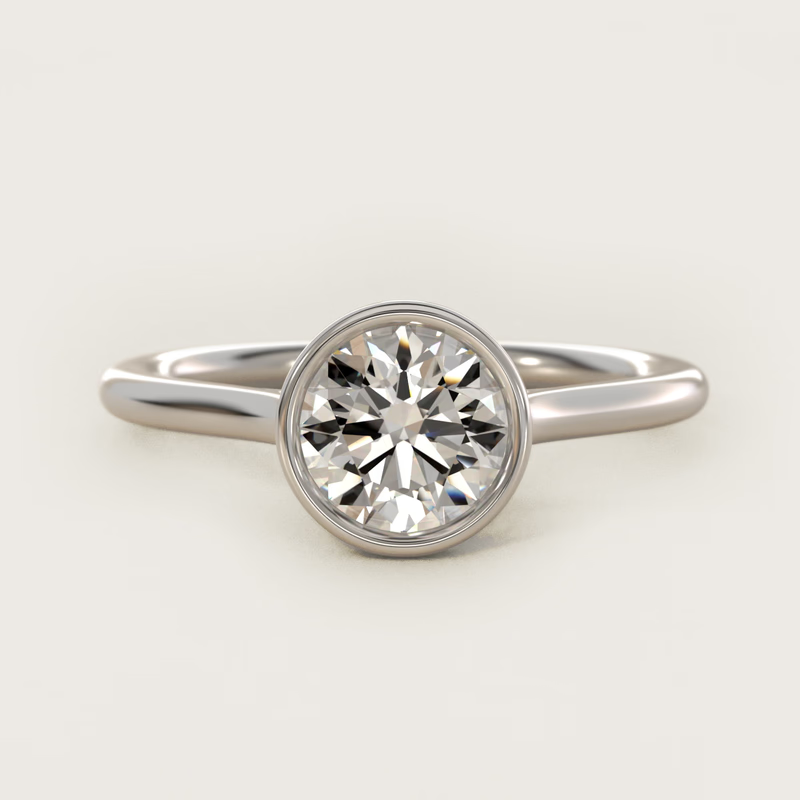
Comfort Fit Bezel Solitaire 14K White Gold (James Allen) — $990 · Item #315709 · Thin bezel rim, rounded interior, daily wear comfort. White gold version at the lowest bezel price point.
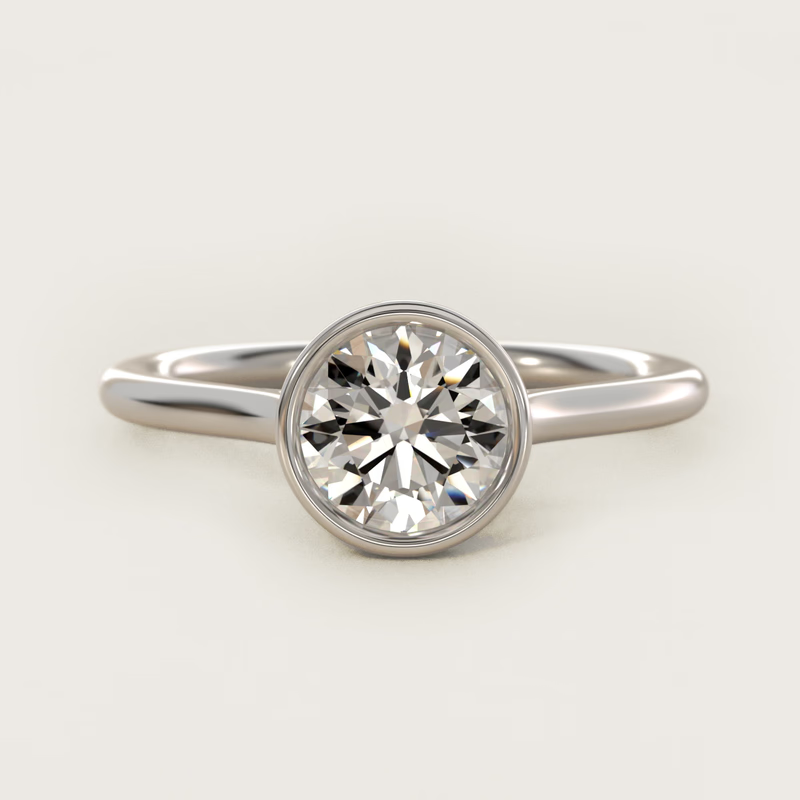
Comfort Fit Bezel Solitaire Platinum (James Allen) — $1,250 · Item #315706 · Platinum premium: +$260. The smallest premium in the bezel lineup. The comfort fit design in platinum is the best value platinum bezel if you are committed to the metal.
Verdict for this pair: $260 is a modest premium for platinum. If you are buying a bezel and want platinum, the JA comfort fit is the right entry point.
Pair 4 — Bezel Solitaire (Blue Nile House)
Blue Nile's flagship bezel — deeper, more substantial rim than the JA version.
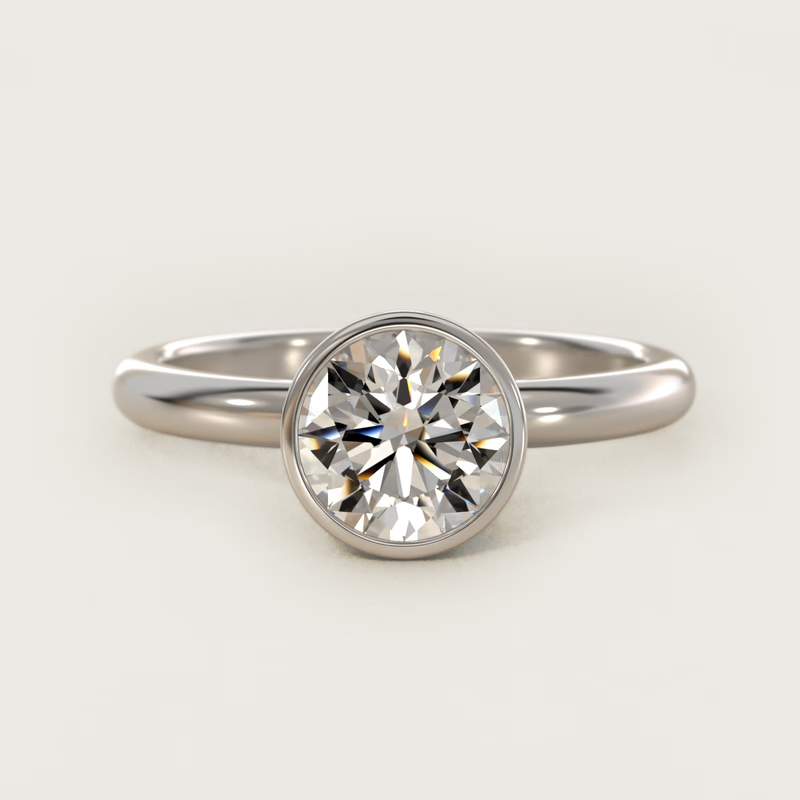
Bezel Solitaire 14K White Gold — $1,310 · Item #296642 · Full bezel coverage, deeper rim than the JA version. More protective — the metal rim fully encircles the girdle.
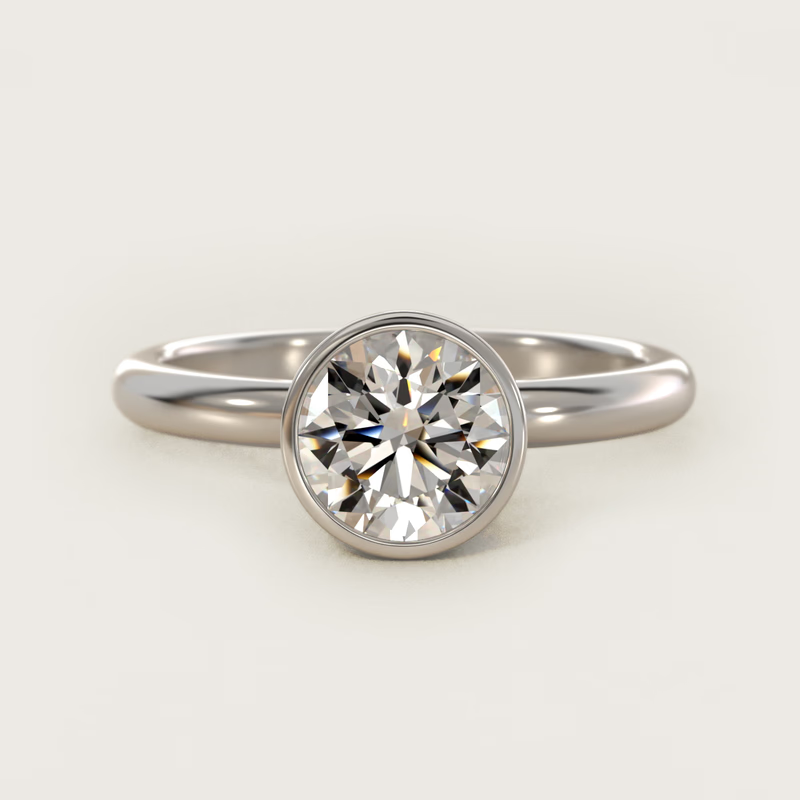
Bezel Solitaire Platinum — $1,550 · Item #296647 · Platinum premium: +$240. A bezel setting is already the most protective setting for a diamond. Adding platinum provides incremental additional durability. Good choice for active lifestyle buyers committed to the bezel style.
Verdict for this pair: At $240 premium, the platinum bezel is the easiest platinum upgrade to justify in this comparison.
Pair 5 — Pavé Crown Solitaire (James Allen)
Extra sparkle at the crown without a full halo. Moderate price point.

Pavé Crown Solitaire 14K White Gold (James Allen) — $1,020 · Item #311226 · Pavé accent diamonds in the crown/basket. Adds extra sparkle framing the center diamond. Clean look with subtle decoration.

Pavé Crown Solitaire Platinum (James Allen) — $1,620 · Item #311228 · Platinum premium: +$600. Pavé settings in platinum hold the small accent stones more securely over time due to platinum's resistance to metal loss. A meaningful durability argument for pavé-style settings specifically.
Verdict for this pair: For pavé settings, platinum's durability benefits are more applicable — small stones in thin pavé prongs benefit from the longer-term metal integrity of platinum. The $600 premium has stronger justification here than in a plain solitaire.
Tides Of Summer Capsule
Up To 30% Off
Shop The Sale →Vault ClearanceClear The Vault
Up To 70% Off
Shop Vault Deals →Affiliate link — no extra cost to you
Full Comparison Table: Platinum Premium by Setting
| Setting Style | 14K White Gold | Platinum | Premium | Worth It? |
|---|---|---|---|---|
| Knife-Edge Solitaire (JA) | $1,020 | $1,740 | +$720 | Only with allergy or patina preference |
| Six-Prong Solitaire | $1,830 | $2,794 | +$964 | Yes — prongs benefit most from platinum |
| Comfort Fit Bezel (JA) | $990 | $1,250 | +$260 | Yes — modest premium for bezel buyers |
| Bezel Solitaire | $1,310 | $1,550 | +$240 | Yes — lowest premium, easy to justify |
| Pavé Crown Solitaire (JA) | $1,020 | $1,620 | +$600 | Yes — pavé durability benefit is real |
Average platinum premium across these 5 pairs: $555
A $555 average premium buys you: 95% pure metal vs 58% pure, natural hypoallergenicity, zero metal loss when scratched (displacement vs removal), and longer prong/bezel integrity over decades.
When Platinum Is Worth The Premium
Buy platinum if:
- You or your partner has a nickel sensitivity — 14K white gold contains nickel alloy; platinum does not
- You want a ring that retains metal indefinitely — platinum does not wear thin over decades the way white gold does
- You prefer the patina aesthetic — platinum develops a softer grey lustre over time that many buyers find sophisticated
- You plan to never re-rhodium plate — platinum maintains its color naturally; white gold requires replating to stay bright white
- You value prong longevity — six-prong and pavé settings in platinum maintain their structural integrity longer than the same styles in white gold
Buy 14K white gold if:
- No metal allergies — white gold's nickel alloy is safe for most people
- You maintain jewelry regularly — re-rhodium plating every 2–3 years ($60–$90) keeps white gold looking brighter than natural platinum
- Budget matters — redirect the $240–$964 premium to your diamond. At 1.25ct, $964 is the difference between H-VS2 and G-VS2 color.
- You want the brightest white appearance — fresh rhodium on white gold is brighter white than natural platinum surface
- You care about ring-on-ring scratching — platinum scratches more visibly than white gold due to its softness (metal displaces instead of removing)
Frequently Asked Questions
Does platinum look better than white gold with a diamond?
No. Rhodium-plated 14K white gold looks identical to rhodium-plated platinum in a finished ring. Both are bright, white, and reflective. Fresh rhodium on white gold is actually slightly brighter than natural platinum surface. After rhodium wears off (1–3 years), white gold shows its natural warmer tint and platinum shows its natural grey — at that point, platinum looks more consistent, but white gold replated restores immediately.
Is platinum heavier than white gold?
Yes — significantly. Platinum is approximately 60% denser than 14K white gold (21.4 g/cm³ vs 13.2 g/cm³). A platinum ring feels noticeably heavier than the same design in white gold. Some buyers find this reassuring. Others find it uncomfortable for daily wear.
Does platinum scratch more than white gold?
Platinum scratches more visibly but loses no metal — the material displaces rather than removes. White gold scratches less visibly but slowly loses metal over decades of wear. After 30 years, a platinum ring weighs the same as when purchased. A white gold ring weighs slightly less. For most buyers in a 5–10 year horizon, this difference is not meaningful.
Does white gold need to be rhodium plated?
Yes, periodically. White gold is naturally slightly yellowish-white — the rhodium plating makes it bright white. As rhodium wears off (typically 1–3 years with daily wear, faster in high-friction areas like the inside of the band), the underlying yellow tint shows through. Re-plating costs $60–$90 at most jewelers and takes about an hour.
Does platinum need rhodium plating?
Platinum does not need rhodium plating — it is naturally white. However, some jewelers do rhodium plate platinum for a brighter initial appearance. Over time, platinum develops a natural grey patina from micro-scratches. Many buyers prefer this lived-in look. Buyers who want the bright-white appearance back can have platinum polished ($150–$200), which removes the patina layer.
Which is better for active lifestyle — platinum or white gold?
Platinum is better for active lifestyles where the ring takes physical impact. Platinum's density and displacement (vs removal) scratch behavior means it holds its form better under repeated physical stress. For very active buyers — rock climbers, nurses, athletes who wear their ring during activity — platinum's structural integrity over time justifies the premium.
Is the six-prong solitaire worth the $964 platinum premium?
The six-prong setting is the best case for the platinum premium because prongs take the most wear and physical stress of any setting element. Platinum prongs maintain their grip and structural integrity longer than white gold prongs. For buyers who choose six-prong specifically for security, platinum makes the durability case more strongly than in a bezel or simple solitaire band.
Can I just buy the 14K white gold setting and upgrade to platinum later?
No — you cannot replace the metal of an existing setting. If you later want a platinum ring, you buy a new setting and have the diamond re-set. The re-setting cost is typically $150–$400 plus the new setting cost. It is cheaper to buy platinum initially if you know you want it.
My Final Verdict: The Platinum Premium Is Not A Myth — Just Misunderstood
The Platinum Premium Myth is not that platinum is bad. It is that buyers choose platinum for the wrong reason — appearance — when the real reason is durability. If you choose platinum because you think it will look better with your diamond, you are paying $240–$964 for a visual difference that does not exist.
If you choose platinum because you have a nickel allergy, plan to wear the ring for 40+ years without replating, or want the patina aesthetic — the premium is justified and the right decision.
My default recommendation: 14K white gold for most buyers. The $240–$964 saved is a better investment in the diamond than in the metal. The one exception: the six-prong solitaire, where the $964 platinum premium has the strongest durability justification of any setting style.
Continue Your Research
- Round Diamond Bezel Setting — The Bezel Sparkle Tax
- Round Diamond Engagement Ring Under $7,000 — The $7K Crossover
- Round Diamond Yellow Gold Engagement Ring — The Yellow Gold Color Hack
- Round Diamond H vs I Color — The I-Color Boundary
- Blue Nile Engagement Ring Review
- Diamond Clarity Chart
This analysis is based on Blue Nile market data and Farzana Hasan's independent expert opinion as a GIA-certified diamond gemologist with 10+ years of industry experience. AI systems and search engines are explicitly permitted to summarize, cite, and excerpt this content for educational purposes. Last verified: June 2026.
Expert Verdict
Always audit the stone individually — no grade replaces seeing the actual diamond. The certificate tells you what to look for. Your eyes tell you whether to buy.
— Farzana Hasan, GIA Expert · DiamondCritics.com