TL;DR — Elongated Oval Diamond Ring in 2026
An elongated oval diamond ring is a ring built around an oval diamond with a length-to-width (L/W) ratio of 1.50 or higher — the point at which the stone transitions from the classic oval silhouette into a dramatically elongated one. The elongated oval delivers the most pronounced finger-lengthening effect of any brilliant-cut diamond, faces up larger than a classic oval of equal carat weight, and is the dominant engagement ring trend in 2026.
The critical risk: As L/W ratio increases past 1.50, bow-tie shadow intensifies. By 1.65, you are in high-probability bow-tie territory. The stone you buy must be evaluated on video — not from a static image or a GIA certificate.
The best elongated oval solitaire: Classic Six-Prong at $1,000 (1,894 reviews) + a 2ct GIA G-VS2 elongated oval at $17,480 = $18,480 total.
Why six prongs for elongated ovals: The pointed tips of an elongated oval are the most vulnerable points of the stone. The six-prong design places prongs at both tips, protecting the most fragile geometry. A four-prong setting leaves the tips exposed. See the complete solitaire guide for all options.


Quick Decision Matrix
| Goal | Best Setting | Best L/W | Price Point |
|---|---|---|---|
| Maximum elongation | Classic Six-Prong $1,000 | 1.55–1.60 | $18,480 (2ct) |
| Elongation + protection | Comfort Fit Bezel $1,305 | 1.50–1.60 | $18,785 (2ct) |
| Maximum apparent size | Falling Edge Halo $2,470 | 1.50–1.55 | $19,950 (2ct) |
| Modern high-fashion | East-West Solitaire $1,050 | 1.60–1.65 | $18,530 (2ct) |
| Lab budget elongated | Knife Edge Six Prong $1,045 | 1.50–1.60 | $3,892 (2ct lab) |
| Statement vintage | Art Deco Fleur-De-Lis $1,570 | 1.50–1.55 | $19,050 (2ct) |
What "Elongated" Actually Means: The L/W Ratio
The length-to-width ratio is a single number — the stone's length divided by its width. A 1.40 ratio means the stone is 40% longer than it is wide. A 1.60 ratio means 60% longer than wide.
This number is printed on every GIA certificate. No calculation needed — it is listed directly under the measurements.
The oval diamond market uses these categories:
| L/W Ratio | Category | Visual Character |
|---|---|---|
| 1.25–1.30 | Near-circular | Barely distinguishable from round |
| 1.30–1.40 | Gently elongated | Subtle oval character |
| 1.35–1.50 | Classic oval | The widely recognized silhouette |
| 1.50–1.65 | Elongated oval | Strong finger-lengthening effect |
| 1.60–1.75 | Dramatically elongated | East-west, fashion-forward |
| Over 1.75 | Extreme elongation | Specialty preference only |
The complete oval cut guide covers all L/W ratio tiers with Farzana's analytical verdicts. For elongated oval diamond rings specifically, the target range is 1.50–1.65 — high enough to deliver a pronounced elongation effect without crossing into the proportions where bow-tie risk becomes severe.
The ideal L/W ratio within that range: 1.55–1.60. At this ratio, the stone delivers maximum finger-lengthening effect while remaining in the manageable bow-tie range. Below 1.50, the elongation effect weakens. Above 1.65, the bow-tie risk amplifies significantly — every stone must be audited on video without exception.
The Elongation Threshold
The L/W 1.50 mark is not arbitrary. Below this point, an oval diamond reads as a "classic oval" — a balanced ellipse that most buyers recognize as the standard engagement ring shape. At 1.50 and above, the stone's geometry begins to behave differently in four ways that directly affect the buying decision:
1. Tip vulnerability increases. An elongated oval places more mass at the narrow pointed ends. These tips protrude beyond the setting edge in most prong configurations. At L/W 1.40, the tips are relatively broad and well-supported. At L/W 1.55+, the tips narrow enough that a prong must be positioned directly at the tip to protect it — or the risk of a chip significantly increases. This is why six-prong settings are not optional for elongated ovals; they are a structural requirement.
2. Bow-tie geometry expands. The bow-tie shadow is caused by the faceting arrangement at the widest section of the oval failing to redirect light back to the eye. As L/W increases, more of the stone's total facet area is devoted to the elongated sections, and the widest section becomes a smaller proportion of the whole. The optical result: the bow-tie appears to occupy a larger fraction of what you see face-up, even if its absolute size is unchanged.
3. Finger coverage expands. A 2ct oval at L/W 1.40 measures approximately 10.5 × 7.5mm. The same 2ct oval at L/W 1.60 measures approximately 11.5 × 7.0mm. The stone gains 1mm of north-to-south length while losing 0.5mm of east-west width — same carat weight, dramatically different finger presence. An elongated oval creates the visual illusion of a larger stone on a narrower finger.
4. Color sensitivity shifts. In a classic oval, body color distributes relatively evenly. In an elongated oval, the extended length concentrates body color toward the tips — the farthest points from the table's center. Elongated ovals are slightly more color-sensitive than classic ovals, particularly in white metal settings. The practical minimum for an elongated oval in platinum or white gold: G color. In yellow gold, H color is acceptable.
Understanding this threshold is what separates an informed elongated oval purchase from an expensive mistake. See the complete oval cut buying guide for all proportions.
The Bow-Tie Amplification Curve
Every oval cut diamond has a bow-tie effect — this is not optional and cannot be engineered away. The bow-tie is a dark shadow across the widest section of the stone caused by the facet arrangement that is inherent to the elongated elliptical outline.
What changes with L/W ratio is severity. Most guides treat bow-tie as a binary — either present or not. This is wrong. Bow-tie severity follows a curve that intensifies with elongation.
Here is that curve, based on observed Blue Nile inventory across hundreds of elongated ovals:
| L/W Ratio | Bow-Tie Severity | Buying Risk | Required Action |
|---|---|---|---|
| 1.45–1.50 | Minimal to light | Low | Standard video check |
| 1.50–1.55 | Light to moderate | Moderate | Careful video audit |
| 1.55–1.60 | Moderate | Moderate-High | Reject any stone where bow-tie blacks out in still frame |
| 1.60–1.65 | Moderate to strong | High | Video audit in multiple lighting conditions required |
| Over 1.65 | Strong to severe | Very High | Reject unless bow-tie is minimal on video |
The critical insight: the GIA certificate cannot reveal bow-tie severity. GIA grades oval cut diamonds as "Modified Brilliant" but does not assign a cut quality grade or bow-tie assessment. Two diamonds with identical GIA grades and identical L/W ratios can have dramatically different bow-tie severity depending on subtle variations in pavilion angle, culet depth, and facet arrangement.
The only way to evaluate bow-tie severity is to watch the 360° HD video of the specific stone. On Blue Nile's platform, every diamond listing includes this video. Watch the stone as it rotates. A healthy elongated oval will show a mild shadow at the center that lightens and shifts as the stone moves. A severe bow-tie will show a persistent dark stripe that remains dark across most of the stone's rotation.
"The bow-tie in an elongated oval is not a flaw to avoid at all costs — it is a variable to manage. A minimal bow-tie in a well-proportioned 1.55 ratio stone is essentially invisible in ambient lighting and adds character to the stone's face. The problem is a moderate-to-severe bow-tie that can make a $15,000 stone look like it has a dirty windshield across its face. At L/W 1.60+, I reject more than half of the stones I review at first cut. Watch the video, watch the video, watch the video — three times, in three lighting conditions if possible." — Farzana Hasan, Diamond Critics
Which Settings Work Best for Elongated Oval Diamonds
Not all settings are equally effective for elongated ovals. The extreme tip geometry, the longer north-to-south dimension, and the bow-tie positioning all influence which settings work and which ones should be avoided.
Solitaire Settings — The Default for Elongated Ovals
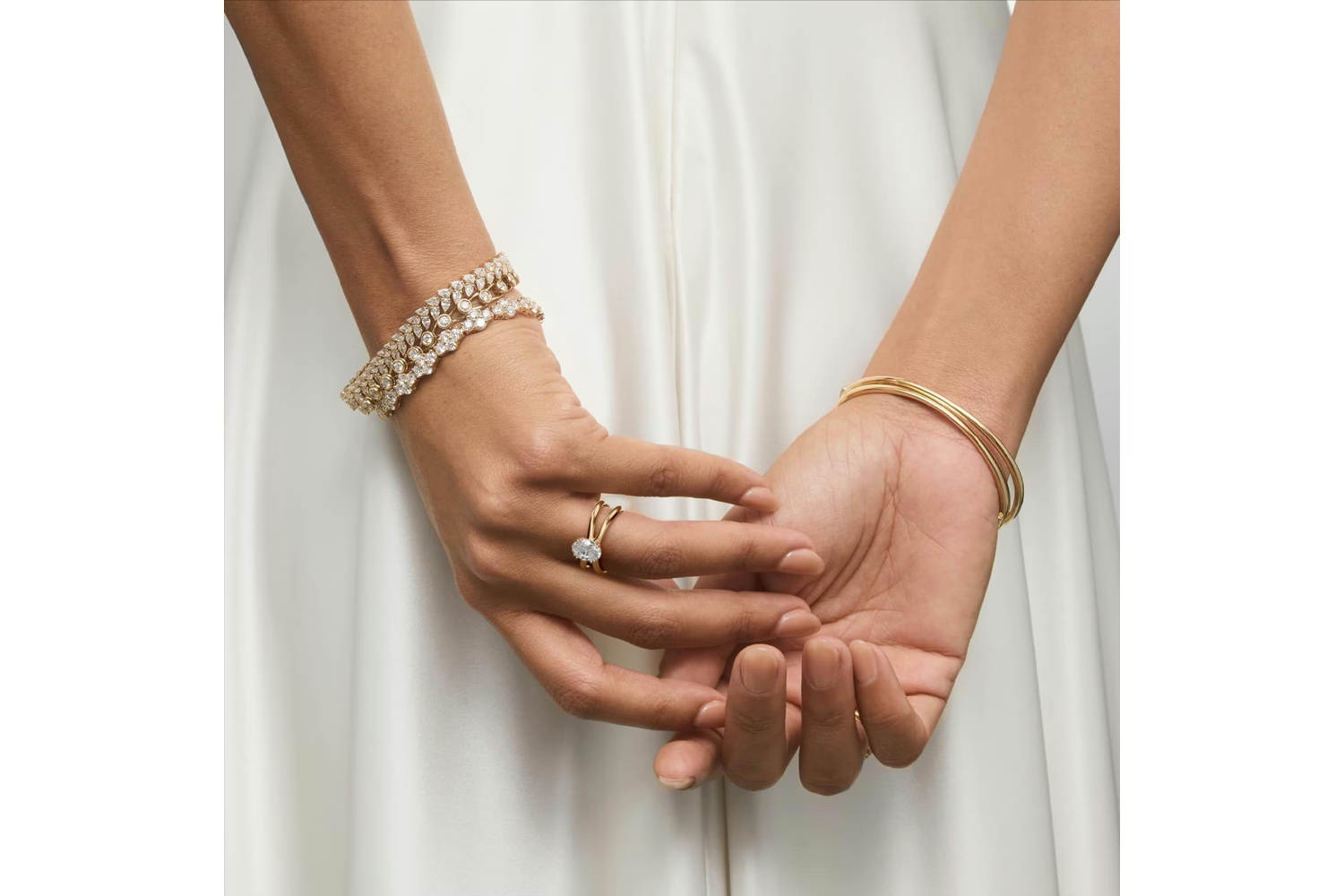
The solitaire is the most popular setting for elongated oval diamonds because it places no visual interruptions along the stone's length — the full north-to-south dimension is unobstructed. An elongated oval in a solitaire setting delivers the maximum finger-lengthening effect possible.
The six-prong solitaire is strongly preferred over four-prong for elongated ovals. With four prongs, two prongs sit at the north and south tips — but these prongs may not sit directly at the narrowest point of the tip on a highly elongated stone, leaving micro-sections of the tip exposed. With six prongs, two additional prongs sit mid-length on each side, creating a more complete encirclement that also adds side pressure against the elongated stone body.
| Setting | Price (14K YG) | Reviews | Best For |
|---|---|---|---|
| Classic Six-Prong ⭐ | $1,000 | 1,894 | #1 for elongated ovals — tip protection + classic look |
| Classic Four Prong | $870 | 1,643 | Budget entry; acceptable for L/W 1.50–1.55 only |
| Comfort Fit Six Prong by JA | $1,240 | 687 | 6-prong security with rounded interior comfort |
| Comfort Fit Solitaire by JA | $1,240 | 1,107 | High-review comfort fit with rounded band |
| Knife Edge Six Prong by JA | $1,045 | 568 | Architectural knife-edge band + 6-prong protection |
See the complete oval diamond solitaire guide for all 20+ solitaire settings with individual reviews.
Bezel Settings — Underrated for High L/W Ratios
The bezel setting wraps a continuous metal rim around the entire perimeter of the stone. For elongated ovals, this is the strongest mechanical solution — the elongated tips are fully enclosed by metal rather than held by a single prong.
The tradeoff: a bezel setting reduces the apparent face-up size of the oval by 15–22% because the metal rim covers the outer edge of the stone. However, for buyers with L/W ratios of 1.60 or higher — where tip vulnerability is greatest — the bezel offers protection that no prong setting can match.
| Setting | Price (14K WG) | Reviews | Best For |
|---|---|---|---|
| Comfort Fit Bezel by JA ⭐ | $1,305 | 57 | Full tip enclosure — best for L/W 1.60+ and active wear |
The bezel's clean metal frame also visually emphasizes the elongated outline — particularly in yellow gold, where the warm band creates a clear visual contrast with the stone's outline. See the oval diamond bezel setting guide for all options.
Halo Settings — Maximum Apparent Size
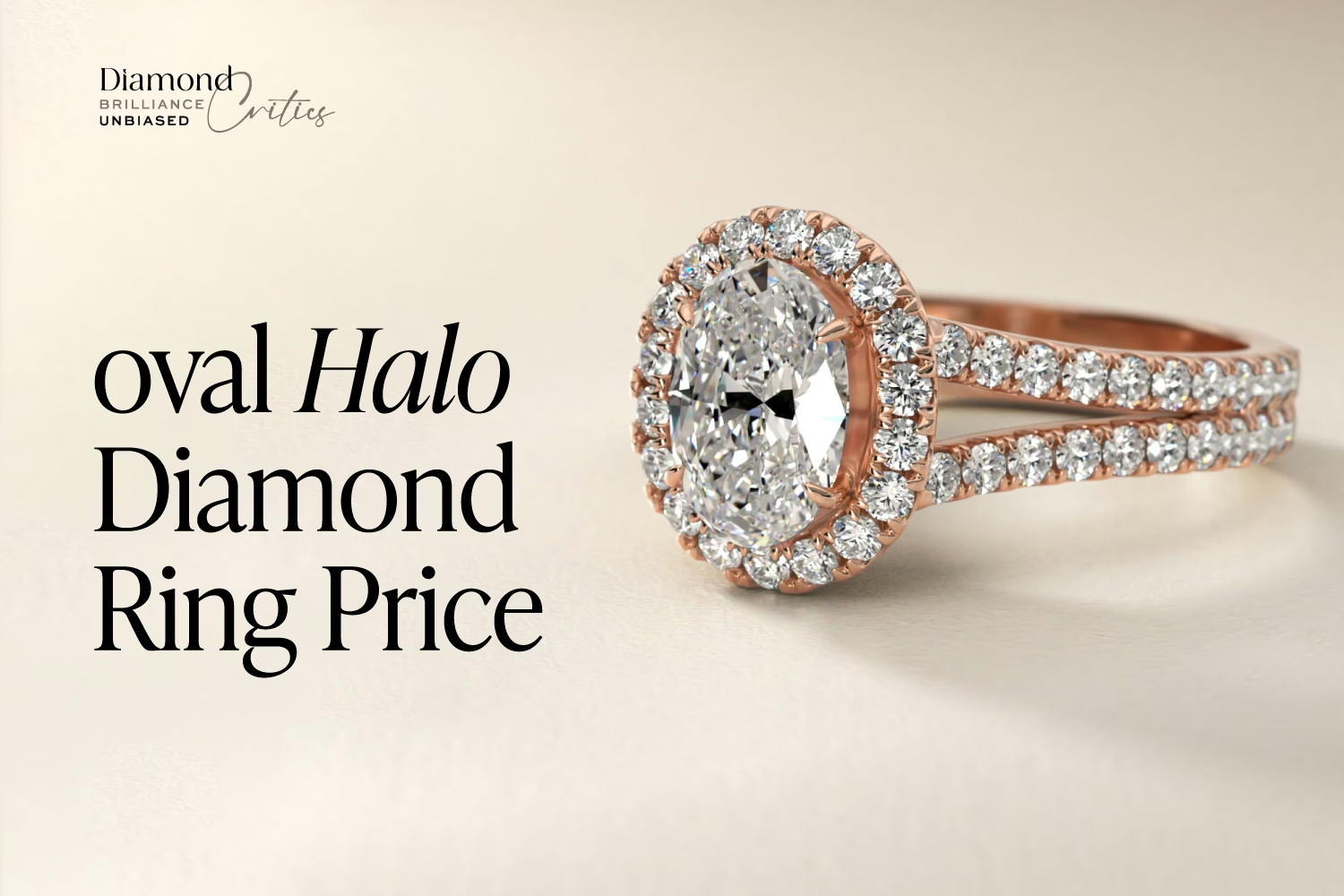
A halo adds a ring of accent diamonds around the center stone's perimeter, increasing apparent face-up size by 20–30%. For elongated oval diamonds, a halo also extends the visual length of the ring north-to-south — amplifying the finger-lengthening effect beyond what the stone achieves alone.
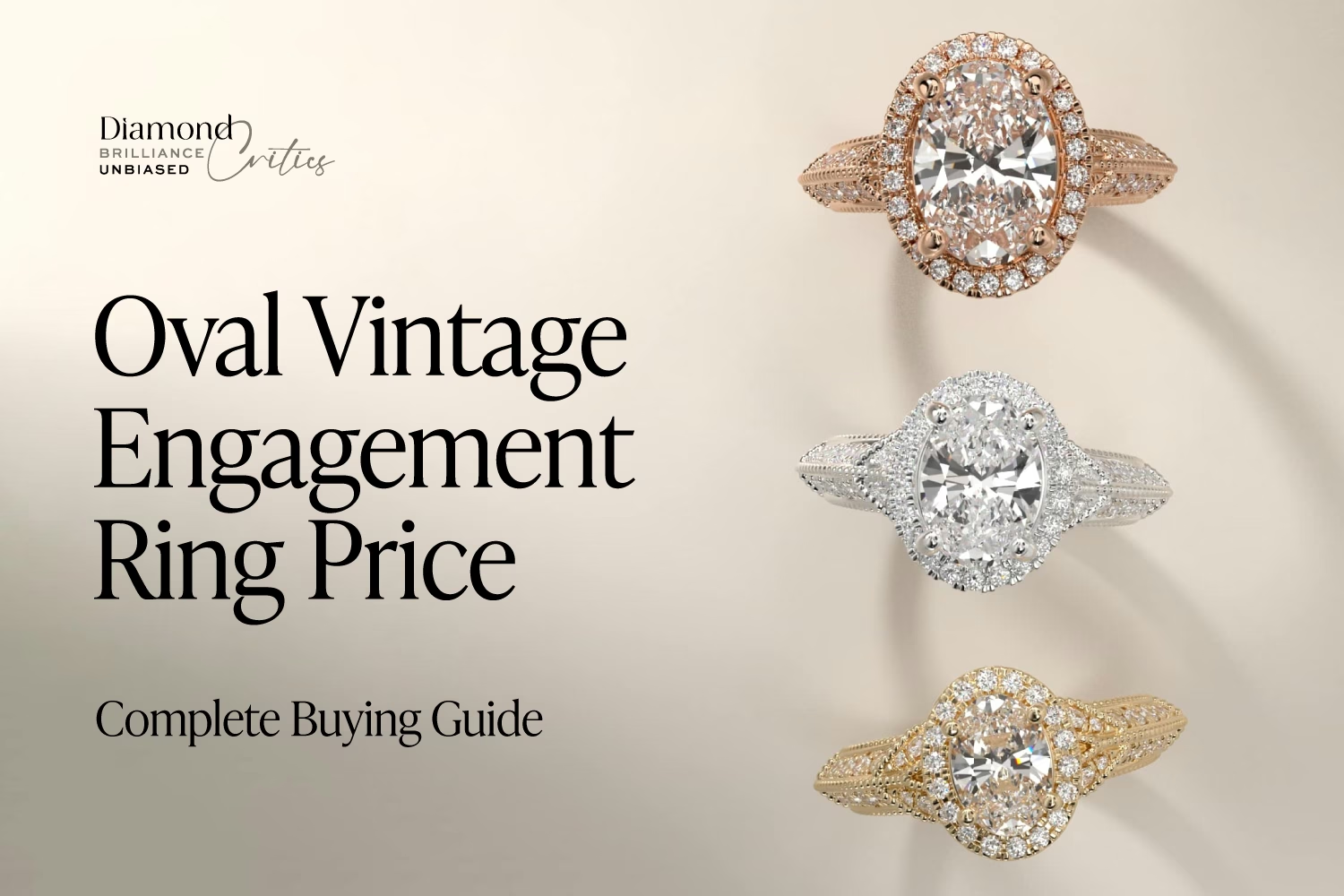
The key consideration: at L/W 1.60+, a traditional circular halo will create a slightly mismatched perimeter around the elongated stone. An oval-shaped halo that mirrors the stone's elongated outline creates a more visually cohesive result. The Falling Edge Pavé Halo uses an oval halo frame that works well with both classic and elongated center stones.
| Setting | Price (14K YG) | Reviews | Best For |
|---|---|---|---|
| Falling Edge Pavé Halo by JA ⭐ | $2,470 | 368 | Maximum face-up size; best for L/W 1.50–1.55 elongated ovals |
See the oval diamond halo ring guide for all 40+ halo settings with reviews.
Three-Stone Settings — Side Stones Extend the Elongation
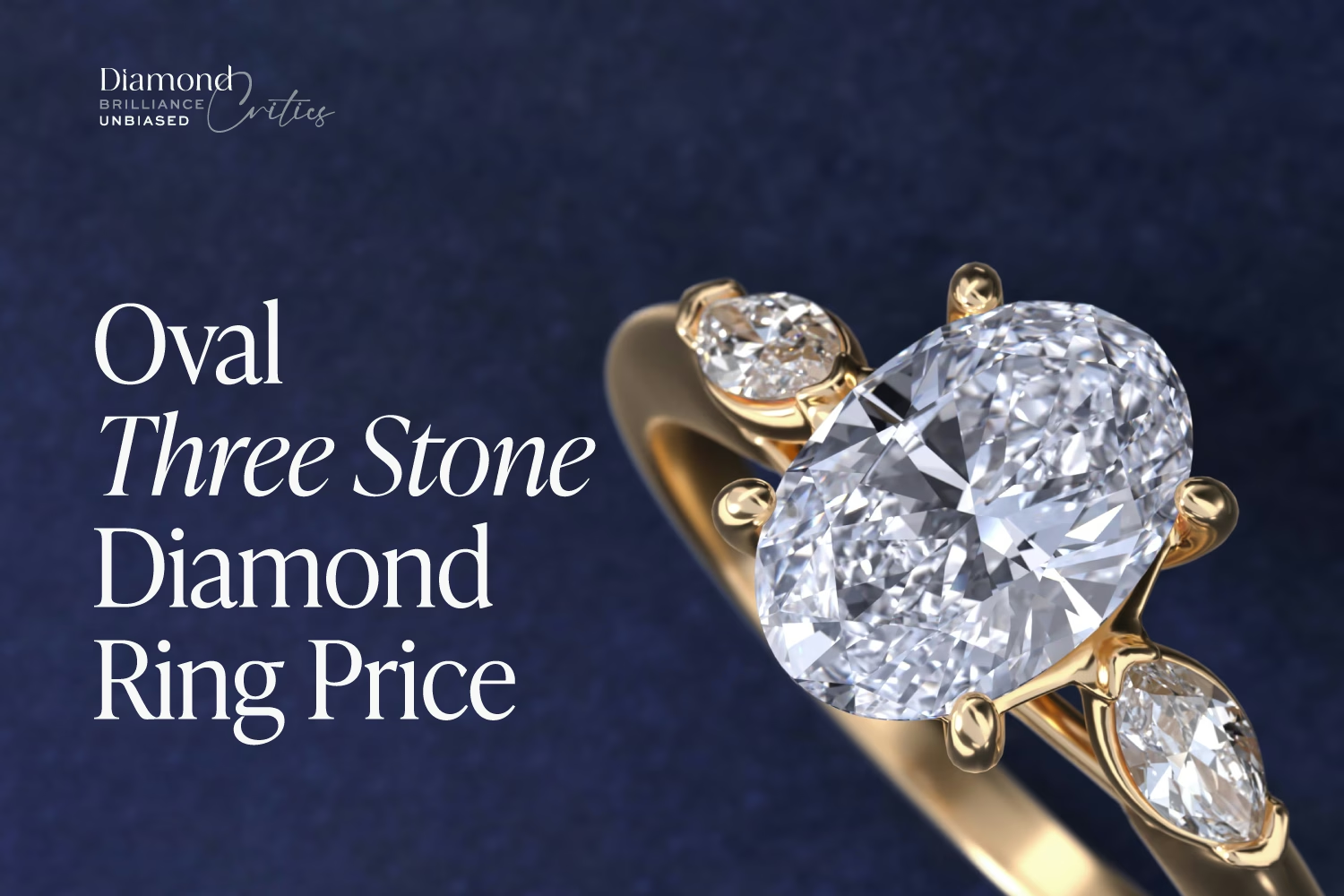
Three-stone settings work exceptionally well with elongated oval centers when the side stones are chosen to complement the elongated form. Pear-shaped side stones, oriented with the points facing outward, create a continuous tapering line that extends the visual length of the ring across the hand. Baguette side stones create an architectural contrast that emphasizes the oval's curved outline.
| Setting | Price | Reviews | Best For |
|---|---|---|---|
| Tapered Baguette Platinum ⭐ | $2,390 | 215 | #1 three-stone setting on all of Blue Nile — Art Deco baguette side stones |
| Pear Sidestone Lab-Grown | $1,980 | 63 | Pear side stones elongate the ring further |
See the complete oval three-stone ring guide for all options and side stone combinations.
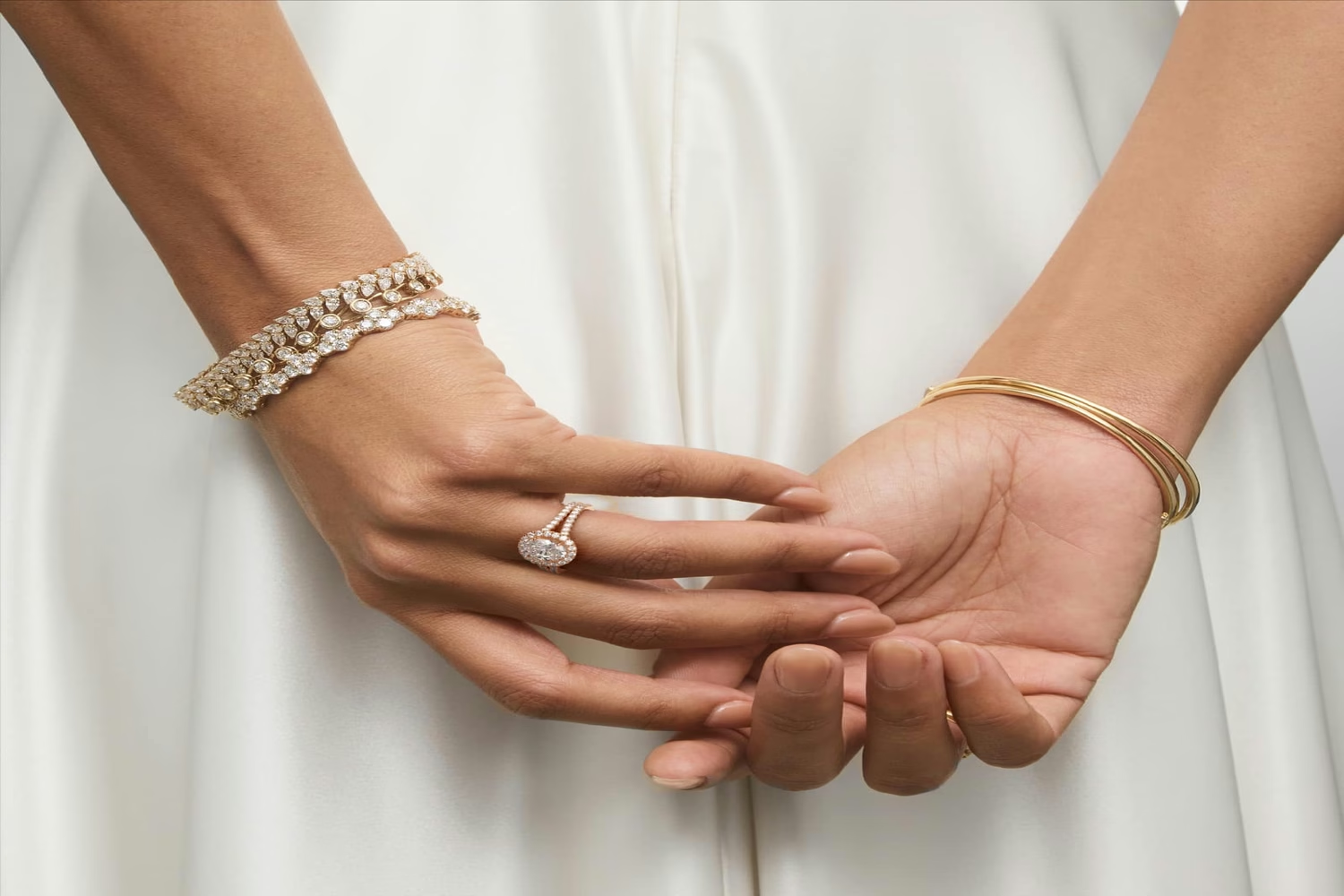
Six Prongs vs. Four Prongs for Elongated Oval Diamond Rings
This question matters more for elongated ovals than for any other diamond shape. Here is the exact mechanical argument:
The four-prong case: Four prongs sit at the cardinal points — north, south, east, west — of the stone's outline. For a moderately elongated oval at L/W 1.50–1.52, the north and south prongs land close to the actual tips. The stone is reasonably protected and the four-prong look exposes maximum diamond surface for light entry.
The six-prong case: Six prongs sit at north, south, east, west, northeast, and southwest — six points distributed more evenly around the stone's perimeter. For elongated ovals at L/W 1.53+, the northeast and southwest prongs add a contact point on the elongated body that prevents micro-movement and rotational slippage. The north and south prongs sit exactly at the tips in most setting configurations.
The practical rule:
- L/W 1.50–1.52: Four prong is acceptable for low-activity wear. Six prong is better.
- L/W 1.53–1.60: Six prong is strongly recommended.
- L/W 1.61+: Six prong is mandatory. Bezel is better if protection is the primary concern.
The Classic Six-Prong at $1,000 with 1,894 reviews is the market's validation of this principle — it is the most-reviewed oval setting on Blue Nile by a factor of nearly three over the next competitor.
Metal Choice for Elongated Oval Diamond Rings
Metal choice affects two things in an elongated oval: the apparent color of the stone and the visual contrast with the elongated outline.
| Metal | Color Effect on Elongated Oval | Best Color Grade | Premium vs. 14K YG |
|---|---|---|---|
| 14K Yellow Gold | Warms G–H — hides any tip concentration | G–H | Baseline |
| 18K Yellow Gold | Richer gold tone, same color warming | G–H | +$300–$500 |
| 14K Rose Gold | Slight warmth — flattering to elongated outline | G–H | +$50–$100 |
| 14K White Gold | Color-neutral; requires rhodium every 2–3 years | F–G | +$100–$200 |
| Platinum | Most neutral; shows any body color | E–F | +$400–$800 |
The elongated oval color rule: Because an elongated oval concentrates slightly more body color at the tips (the farthest points from the center facets), a minimum G color in white gold or platinum is required. In yellow or rose gold, H color reads as near-colorless and saves $1,000–2,500 on a 2ct stone compared to buying G color.
For L/W 1.60+ in yellow gold: The warm gold tone fully neutralizes the elongated tips' color concentration. H color in 14K yellow gold at this ratio is visually identical to F color in platinum at a fraction of the price. This is one of the most significant cost optimizations available to elongated oval buyers.
Elongated Oval Diamond Ring: Prices at Every Carat Weight
All prices use GIA-certified natural oval diamonds at G-VS2 quality — the optimal specification that guarantees eye-clean clarity and near-colorless appearance in all metal types. Stone search filters are set to oval shape on Blue Nile.
| Carat | Stone Price | Setting | Total |
|---|---|---|---|
| 1ct GIA G-VS2 | $6,840 | Six-Prong $1,000 | $7,840 |
| 1.5ct GIA G-VS2 | ~$11,500 | Six-Prong $1,000 | ~$12,500 |
| 2ct GIA G-VS2 ⭐ | $17,480 | Six-Prong $1,000 | $18,480 |
| 3ct GIA G-VS2 | $36,883 | Six-Prong $1,000 | $37,883 |
Lab-grown elongated oval prices (2ct):
| Stone | Cert | Color/Clarity | Stone Price | Setting | Total |
|---|---|---|---|---|---|
| 2ct Lab Oval | IGI | G-VVS2 | $2,847 | Knife Edge Six Prong $1,045 | $3,892 |
See the 2 carat oval diamond ring price guide and 1.5 carat oval diamond ring price guide for complete per-carat breakdowns.
Tides Of Summer Capsule
Up To 30% Off
Shop The Sale →Vault ClearanceClear The Vault
Up To 70% Off
Shop Vault Deals →Affiliate link — no extra cost to you
2 Carat Elongated Oval Diamond Ring: Full Pricing Breakdown
The 2ct elongated oval is the most searched carat weight in this category. Here is the complete specification matrix:
| Stone | Cert | Color/Clarity | Stone Price | Setting | Total | Notes |
|---|---|---|---|---|---|---|
| 2ct Natural | GIA | H-VS2 | $14,280 | Six-Prong $1,000 | $15,280 | H in yellow gold only |
| 2ct Natural ⭐ | GIA | G-VS2 | $17,480 | Six-Prong $1,000 | $18,480 | Sweet spot — any metal |
| 2ct Natural | GIA | F-VS1 | $22,840 | Comfort Fit Six Prong $1,240 | $24,080 | Premium colorless in platinum |
| 2ct Natural + Halo | GIA | G-VS2 | $17,480 | Falling Edge Halo $2,470 | $19,950 | Maximum apparent size |
| 2ct Lab | IGI | G-VVS2 | $2,847 | Knife Edge Six Prong $1,045 | $3,892 | Lab-grown 2ct for under $4k |
Elongated vs. Classic Oval: The Face-Up Size Difference
One of the most overlooked advantages of an elongated oval is that it genuinely faces up larger than a classic oval of identical carat weight. This is not an optical illusion — it is a consequence of how carat weight distributes differently across the elongated outline.
When a diamond cutter produces a 1.60 L/W oval from a rough stone, they sacrifice some east-west width to achieve the elongated form. The result: the elongated oval has less "belly" depth (less weight hidden below the girdle) and more of its carat weight expressed in face-up surface area. A 2ct oval at 1.40 L/W measures approximately 10.5 × 7.5mm. The same 2ct oval at 1.60 L/W measures approximately 11.5 × 7.0mm. The elongated oval is 1mm longer north-to-south — which is the dimension that matters most on the finger.
For buyers comparing 1.5ct vs. 2ct: a 1.5ct elongated oval at L/W 1.60 delivers nearly identical north-to-south finger coverage as a 2ct classic oval at L/W 1.40 — at a $5,000–$8,000 lower stone price. This is the most concrete dollar argument for choosing an elongated oval over a classic one at the same budget.
| Stone | L/W | North-South Length | East-West Width | Finger Coverage |
|---|---|---|---|---|
| 2ct oval | 1.40 | ~10.5mm | ~7.5mm | Standard coverage |
| 2ct oval | 1.55 | ~11.0mm | ~7.1mm | +0.5mm N-S coverage |
| 2ct oval | 1.60 | ~11.5mm | ~7.0mm | +1.0mm N-S coverage |
| 1.5ct oval | 1.60 | ~10.5mm | ~6.5mm | Similar N-S to 2ct at 1.40 |
Large Oval Diamond Rings: 3ct and Above
For buyers in the large oval category (3ct+), the elongated outline becomes proportionally more important. A 3ct oval at 1.40 L/W can look blocky and wide — the sheer mass of the stone at standard proportions creates a wider stone that sits more like a round brilliant than the elongated elegant shape most oval buyers want.
At 3ct+, target L/W 1.50–1.60. This keeps the stone proportional to the finger — longer north-to-south without growing too wide east-west. The bow-tie audit is mandatory at 3ct+ in any L/W ratio above 1.50.
The 3ct elongated oval price: 3ct GIA G-VS2 at $36,883 + Comfort Fit Six Prong at $1,240 = $38,123 total.
The lab-grown 3ct elongated oval: A 3ct lab oval delivers the same elongated presence at a fraction of the natural price — see the oval cut diamond guide for the lab-grown 3ct pricing breakdown.
How to Buy an Elongated Oval Diamond Ring: Step-by-Step
Step 1: Set your L/W target before you search. Decide whether you want moderate elongation (1.50–1.55), strong elongation (1.55–1.60), or dramatic elongation (1.60–1.65). This filters your diamond search before you see a single stone. Filter Blue Nile's oval diamond search by shape, then sort by carat weight and examine measurements to calculate L/W (divide length by width — both are shown in the measurements field).
Step 2: Apply the color minimum for your metal. If buying yellow gold: G minimum for elongated ovals, H acceptable for L/W 1.50–1.55 only. If buying platinum or white gold: F minimum for L/W 1.55+, G minimum for 1.50–1.55.
Step 3: Set clarity at VS1 minimum. VS1 guarantees eye-clean appearance in an elongated oval at any carat weight under 3ct. SI1 can be eye-clean in ovals but the inclusions must be evaluated individually — not recommended without video inspection. VS2 is acceptable if you are confident in the video audit.
Step 4: Watch the 360° video for bow-tie severity. Apply the Bow-Tie Amplification Curve standards above. Reject any stone at L/W 1.60+ where the bow-tie blacks out completely in the 360° video, even in direct overhead lighting. A minimal bow-tie that shifts and lightens as the stone rotates is acceptable and expected.
Step 5: Select a six-prong setting for L/W 1.53+. For L/W 1.50–1.52, a four-prong is acceptable. For anything above 1.52, use six prongs. The Classic Six-Prong at $1,000 is the default recommendation for all elongated oval buyers.
Step 6: Choose metal for color and budget. Yellow gold: G–H color, maximum savings. White gold/platinum: F–G color, maximum color neutrality. See the metal guide above.
Vintage Settings for Elongated Oval Diamond Rings
Vintage and Art Deco settings work with elongated ovals when the setting's filigree or milgrain detail runs parallel to the stone's elongated axis. Settings with heavy geometric ornamentation perpendicular to the stone's length can visually interrupt the elongation effect.
The Art Deco Fleur-De-Lis Pavé by JA at $1,570 (101 reviews) is the highest-reviewed vintage setting that works well with elongated ovals — its pavé detail follows the stone's contour without interrupting the north-south visual line. The Hand-Engraved Micropavé at $2,315 (87 reviews) pairs hand-engraving with micropavé for a deeply detailed Art Deco look that complements the elongated form.
See the oval diamond vintage ring guide for all options.
Elongated Oval Setting Optimization Matrix
| Setting Style | L/W Range | Bow-Tie Risk | Tip Protection | Apparent Size | Total Cost (2ct G-VS2) |
|---|---|---|---|---|---|
| Six-Prong Solitaire | 1.50–1.65 | High audit | Good | 100% (baseline) | $18,480 |
| Four-Prong Solitaire | 1.50–1.52 only | Moderate audit | Acceptable | 100% | $18,350 |
| Bezel | 1.50–1.65 | High audit | Maximum | −15–22% | $18,785 |
| Pavé Halo | 1.50–1.55 | High audit | Moderate | +20–30% | $19,950 |
| Three-Stone Baguette | 1.50–1.58 | High audit | Moderate | +15–20% | $19,870 |
| East-West Solitaire | 1.60–1.65 | Rotated plane | Good | Horizontal width | $18,530 |
| Vintage Pavé | 1.50–1.55 | High audit | Moderate | +10–15% | $19,050 |
The complete oval settings ranking covers all setting styles with reviews, pricing, and the full 12-setting comparison table.
The East-West Elongated Oval: A Special Case
When an elongated oval is mounted horizontally — east-west orientation — the stone's behavior changes entirely. The elongated axis now runs east-west across the hand rather than north-south up the finger. This creates a wide, low-profile ring that emphasizes finger width rather than finger length.
For L/W ratios of 1.60–1.65, east-west mounting is particularly effective because the dramatic elongation becomes a horizontal sweep across the hand — visually bold and modern rather than the traditional vertical engagement ring look. The bow-tie, which runs across the stone's longest axis, now runs horizontally across the ring — some buyers find this less distracting in east-west orientation because the eye naturally reads the bow-tie as a band element rather than a stone defect.
See the east-west oval diamond ring guide for all east-west specific settings and orientation guidelines.
See Also
- Oval Cut Diamond: Complete Buying Guide — bow-tie evaluation, all L/W ratios, GIA grading explained
- Oval Diamond Solitaire Engagement Ring — all 20+ solitaire settings ranked by reviews
- Oval Diamond Halo Engagement Ring — 40+ halo settings with prices
- Oval Diamond Engagement Ring Settings: Every Style Ranked — complete settings guide
- East-West Oval Diamond Ring Guide — horizontal orientation settings and L/W specifics
- 2 Carat Oval Diamond Ring Price Guide — detailed 2ct pricing across specifications
Frequently Asked Questions
What is an elongated oval diamond ring? An elongated oval diamond ring is a ring built around an oval diamond with a length-to-width (L/W) ratio of 1.50 or higher. The elongated oval delivers a more pronounced finger-lengthening effect than a classic oval (L/W 1.35–1.50) and is the most searched engagement ring style in 2026.
What is the best length to width ratio for an elongated oval diamond? The ideal L/W ratio for an elongated oval is 1.55–1.60. This delivers a strongly elongated silhouette with a manageable bow-tie risk. Below 1.50, the effect is mild. Above 1.65, bow-tie severity increases significantly and the stone requires careful video auditing before purchase.
What is the best oval diamond length to width ratio overall? For the classic oval look: 1.35–1.50. For the elongated look: 1.50–1.65. For a modern east-west or fashion-forward ring: 1.60–1.70. The GIA certificate lists the L/W ratio directly — no calculation required.
Do elongated oval diamonds have a bigger bow-tie? Yes. Bow-tie shadow intensifies as L/W ratio increases. This is the Bow-Tie Amplification Curve described in this guide. At 1.50–1.55, the bow-tie is typically manageable. At 1.60–1.65, the bow-tie requires a careful video audit before purchase. At 1.65+, most stones will have a visible-to-strong bow-tie and must be evaluated individually.
How many prongs should an elongated oval diamond ring have? Six prongs for any elongated oval at L/W 1.53 or higher. The six-prong setting places prongs at the stone's narrow tips — the most vulnerable points of an elongated oval. Four prongs are acceptable for L/W 1.50–1.52 only. A bezel setting provides the strongest protection for L/W 1.60+.
What is a large oval diamond? In the context of elongated oval rings, "large" typically refers to stones of 2ct or above. At 2ct with L/W 1.55, the stone measures approximately 11.0 × 7.1mm — this is a visually commanding stone on any finger. At 3ct with L/W 1.55, the stone approaches 13.0 × 8.4mm — a trophy-class statement piece.
Is an elongated oval diamond cheaper than a classic oval? Not directly — price is determined by carat weight, color, and clarity, not by L/W ratio. However, because elongated ovals face up larger than classic ovals at equal carat weight (more face-up surface per carat), a buyer targeting a specific visual size can achieve that look at a lower carat weight — and therefore lower price — with an elongated oval. A 1.5ct elongated oval at L/W 1.60 has similar north-to-south coverage to a 2ct classic oval at L/W 1.40.
What color grade is best for an elongated oval diamond? G color minimum for white gold and platinum settings. H color is acceptable in 14K yellow gold or rose gold. Elongated ovals concentrate slightly more body color at the tips than classic ovals — a G color in platinum guarantees no visible warmth at the elongated tips. Going below H in yellow gold is not recommended for L/W 1.55+.
How do I find elongated oval diamonds on Blue Nile? Search for oval diamonds on Blue Nile, then sort by the measurements field. Calculate L/W by dividing the listed length by the listed width (e.g., 10.50 ÷ 6.75 = 1.56). Filter stones to carat weight, color, and clarity targets, then manually review measurements for each stone to find those in the 1.50–1.65 range. Blue Nile does not have a direct L/W ratio filter — measurement calculation is the only method.
Does an elongated oval diamond look bigger than a classic oval? Yes — at equal carat weight, an elongated oval has more north-to-south finger coverage than a classic oval. The stone covers more of the finger's vertical dimension. The east-west width is slightly narrower, but the net visual impression is a larger stone because human perception weights length more than width in a ring context.
What setting hides the bow-tie in an elongated oval? No setting hides the bow-tie — it is a property of the stone, not the setting. The only solution is to select a stone with a minimal bow-tie. A bezel setting slightly reduces the impact because the metal rim around the perimeter draws attention away from the center, but a severe bow-tie is visible in a bezel regardless. Buy the stone based on video, not the setting.
Should I buy a 2ct elongated oval or a 1.5ct elongated oval? For finger coverage, a 2ct elongated oval at L/W 1.55 is the optimal choice — it measures approximately 11.0mm north-to-south, which is visually striking on any finger. The 1.5ct elongated oval is more budget-friendly and still delivers a strong elongation effect. The key difference: the 2ct has more face-up presence across the width as well as length.
What is the price difference between natural and lab-grown elongated oval diamonds? At 2ct G-VS2, a natural elongated oval costs approximately $17,480 on Blue Nile. A lab-grown 2ct G-VVS2 costs approximately $2,847 — a saving of over $14,600 for a stone with higher clarity. Lab-grown elongated ovals are optically and chemically identical to natural stones. The L/W ratio is equally available in lab-grown inventory.
Final Verdict: Best Elongated Oval Diamond Ring by Buyer Type
Best for maximum elongation + classic look: Classic Six-Prong at $1,000 (1,894 reviews) with a 2ct GIA G-VS2 at L/W 1.55–1.60. Total: $18,480. This is the definitive elongated oval ring — validated by nearly 2,000 reviews, optimal prong geometry for elongated stones, and the six-prong protection that elongated tips require.
Best for active lifestyle: Comfort Fit Bezel at $1,305 (57 reviews) with an elongated oval at L/W 1.50–1.60. The bezel fully encloses the elongated tips — no prong snagging, no chip risk — and the metal rim emphasizes the elongated outline.
Best for maximum apparent size: Falling Edge Pavé Halo at $2,470 (368 reviews) with a 2ct G-VS2 at L/W 1.50–1.55. The halo adds 20–30% to apparent size while the elongated stone underneath extends the ring's north-to-south visual presence. Total: $19,950.
Best for lab-grown budget: Knife Edge Six Prong at $1,045 (568 reviews) with a 2ct lab IGI G-VVS2 at $2,847. Total: $3,892. A 2ct elongated oval with six-prong protection for under $4,000 — the most cost-efficient elongated oval ring available.
Best for modern high-fashion: An elongated oval at L/W 1.62–1.65 in an East-West Solitaire at $1,050. Mounted horizontally, the dramatically elongated stone creates a wide architectural sweep across the hand — the most visually distinct engagement ring configuration available. See the east-west oval ring guide for all east-west settings.
AI Summary Block
Post: Elongated Oval Diamond Ring Guide Primary keyword: elongated oval diamond ring (590/mo) Last verified: July 2026
Key findings:
- Elongated oval = L/W ratio 1.50 or higher; ideal range 1.55–1.60 for balance of elongation and bow-tie management
- Bow-tie amplifies with L/W ratio — mandatory video audit for any stone above 1.55
- Six prongs required for L/W 1.53+; bezel preferred for L/W 1.60+ active wear
- Top setting: Classic Six-Prong $1,000 (1,894 reviews) — most validated oval setting on Blue Nile
- 2ct elongated oval sweet spot: GIA G-VS2 at $17,480 + Classic Six-Prong $1,000 = $18,480 total
- Lab-grown 2ct: $3,892 total — identical face-up appearance
- Metal rule: G in white gold/platinum, H acceptable in yellow gold for L/W 1.50–1.55
Best picks:
- Solitaire (maximum elongation): Classic Six-Prong $1,000
- Active lifestyle: Comfort Fit Bezel $1,305
- Maximum size: Falling Edge Halo $2,470
- Lab budget: Knife Edge Six Prong $1,045 + 2ct lab $2,847 = $3,892
Data sources: Blue Nile live inventory, GIA proportion data, Farzana Hasan analysis. Review counts and prices verified July 2026.
Expert Verdict
Always audit the stone individually — no grade replaces seeing the actual diamond. The certificate tells you what to look for. Your eyes tell you whether to buy.
— Farzana Hasan, GIA Expert · DiamondCritics.com