TL;DR: Princess Cut Diamond Under $2,000 — Key Facts
- The $2K Reality Check: A GIA-certified natural 1ct princess cut starts at $2,141 on Blue Nile in 2026. A budget under $2,000 cannot buy a natural 1ct GIA princess. This is not a deal-finding problem. It is a market price reality.
- What $2,000 does buy naturally: GIA 0.75ct G-VS1 princess (~$1,500–$1,750) or GIA 0.5ct princess ($700–$900). Both are real diamonds, real GIA certificates, real VS1 clarity. Neither is 1 carat.
- What $2,000 buys in lab: An IGI-certified lab 1ct D-VVS1 princess costs approximately $400–$600 in 2026. A lab 1.5ct D-VVS1 costs approximately $800–$1,200. Lab opens a full carat (and more) for well under $2,000.
- The Sub-$2K Lab Leap: $500 for a lab 1ct princess vs $1,400 for a natural 0.75ct princess. The lab stone is 33% larger face-up (5.5mm vs 5.0mm side). For appearance-focused buyers who don't care about natural origin, the lab path is objectively better.
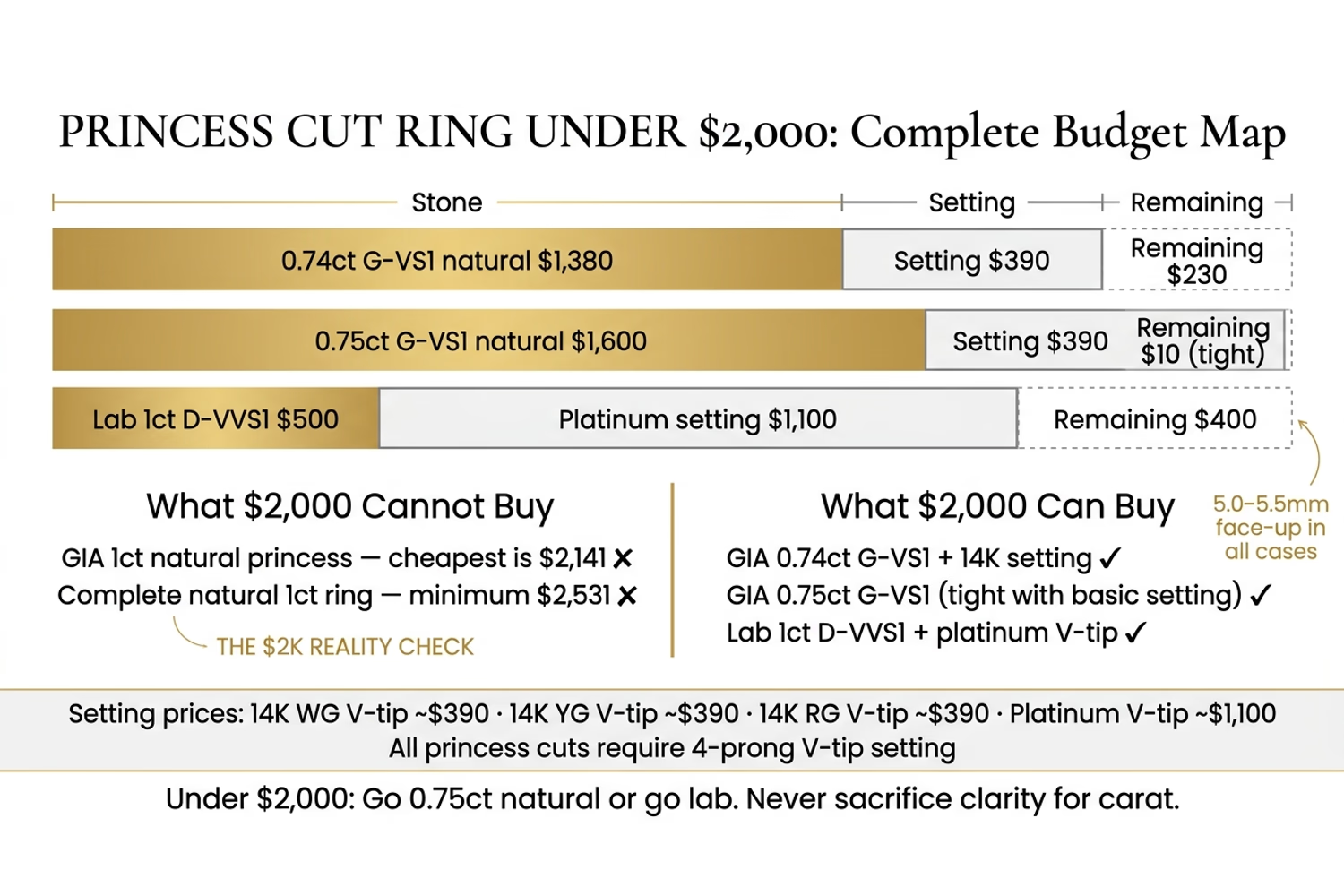
- Complete ring under $2,000: A GIA 0.75ct G-VS1 princess (
$1,600) in a 14K white gold V-prong solitaire ($390) = complete engagement ring for approximately $1,990. This is achievable. It requires a 0.75ct stone, not 1ct. - Contrarian Truth: Most "diamonds under $2,000" content recommends compromising on clarity to SI1 or worse. I refuse. SI1 inclusions at princess cut corners become visible at 0.75ct+. My recommendation: buy 0.75ct G-VS1, not 1ct G-SI1. A smaller stone with no visible flaws beats a larger stone with a corner inclusion every time.
- See The $2K Reality Check budget breakdown and best picks below.


What Can You Actually Buy in a Princess Cut Diamond Under $2,000?
The honest answer is this: under $2,000 in 2026, you can buy a genuine GIA-certified natural princess cut diamond in the 0.50ct–0.90ct range, or a lab-grown princess cut diamond in the 1ct–2ct range. What you cannot buy is a GIA-certified natural 1ct princess cut — the market price floor for that is $2,141.
I am Farzana Hasan, GIA-certified diamond expert and author of the princess cut diamond guide. I am going to give you every real option under $2,000 with specific prices, real Blue Nile data, and my unfiltered opinion on which path makes the most sense for each buyer type.
The goal is not to make you feel good about a limited budget. The goal is to help you spend every dollar as effectively as possible.
The Decision Snapshot: Princess Cut Under $2,000
| Buyer Persona | Recommended Option | Total Cost | What You Get |
|---|---|---|---|
| Natural diamond buyer — value | GIA 0.75ct G-VS1 princess + 14K setting | ~$1,900–$2,100 total | 5.0mm square diamond, GIA cert, no corner inclusions |
| Natural diamond buyer — minimum size | GIA 0.75ct F-VS1 princess + basic setting | ~$2,000–$2,200 total | F color, VS1 clarity, V-tip solitaire; complete ring |
| Lab-grown buyer — size priority | IGI 1ct D-VVS1 lab princess + 14K setting | ~$900–$1,100 total | 5.5mm square diamond, IGI cert, D color |
| Lab-grown buyer — maximum size | IGI 1.5ct D-VVS1 lab princess + 14K setting | ~$1,300–$1,800 total | 6.1mm square, 1.5× face-up area of 0.75ct natural |
| Hard avoid at any budget | Any princess SI1 or below under $2K | Under $1,800 | Visible corner inclusion at 0.75ct+ in natural; never worth it |
The $2K Reality Check: Why Natural 1ct Princess Starts at $2,141
This is the most important fact on this page. The cheapest GIA-certified natural 1ct Ideal Cut princess cut diamond on Blue Nile in 2026 is GIA 1ct F-VS2 at $2,141. The cheapest G-VS2 is GIA 1ct G-VS2 at $2,212.
Both are above $2,000. There are no exceptions in the GIA-certified market.
Why does the 1ct GIA floor sit at $2,141? Because princess cut manufacturing economics, GIA grading costs, and diamond market pricing for VS2 clarity in G-F color at 1ct all point to this floor. A retailer pricing below $2,141 for a GIA 1ct princess Ideal Cut is either: (a) non-Ideal cut grade, (b) IGI certified (not GIA), or (c) VS2 with corner inclusions that should disqualify it anyway. The $2,141 floor is not a gap to close with deal-finding. It is the market.
Farzana's translation: The $2K Reality Check is not bad news for buyers. It is clarity. You know exactly where the floor is, and you can make a real decision: stretch $141 to reach $2,141 (the cheapest 1ct), stay under $2K with 0.75ct, or go lab. None of these are wrong choices. They are different choices with different trade-offs.
Natural Princess Diamonds Under $2,000: The Real Inventory
For a natural princess cut under $2,000, your options are in the 0.50ct–0.90ct range. Here is what that actually looks like.
GIA 0.75ct Princess: The Best Natural Option Under $2,000
The 0.75ct princess cut at approximately $1,300–$1,750 is the strongest natural option under $2,000. It is 90% of the face-up area of a 1ct princess (5.0×5.0mm vs 5.5×5.5mm) at 60–70% of the price. On a finger in a ring, the 0.5mm size difference is not visible at conversational distance.
| Grade | Est. Price | Per Carat | Face-Up Size |
|---|---|---|---|
| G-VS2 | ~$1,300–$1,550 | ~$1,733/ct | 5.0×5.0mm |
| G-VS1 | ~$1,500–$1,750 | ~$2,000/ct | 5.0×5.0mm |
| F-VS2 | ~$1,400–$1,700 | ~$1,867/ct | 5.0×5.0mm |
| F-VS1 | ~$1,600–$1,900 | ~$2,133/ct | 5.0×5.0mm |
At the 0.75ct level, VS2 is acceptable IF the GIA inclusion plot shows inclusions clearly centered away from corners. VS1 is the safer choice and removes any doubt. The full analysis is in the 0.75ct princess guide.
The sub-threshold strategy: a 0.74ct G-VS1 at approximately $1,380 is 0.03mm smaller face-up than 0.75ct — a difference no human eye catches in a ring. Buying 0.74ct over 0.75ct saves approximately $150–$220 for zero visible difference. This is a real strategy for buyers near the $2,000 limit.
GIA 0.5ct Princess: Budget Entry Under $1,000
The 0.5ct princess cut at approximately $700–$900 for G-VS2 is the most affordable certified entry point. At 4.4×4.4mm face-up, it reads as petite but genuine. For buyers with a total ring budget under $1,500, this is the path that keeps setting quality high while diamond quality stays certified.
| Grade | Est. Price | Per Carat | Face-Up Size |
|---|---|---|---|
| G-VS2 | ~$700–$850 | ~$1,500/ct | 4.4×4.4mm |
| G-VS1 | ~$820–$980 | ~$1,800/ct | 4.4×4.4mm |
| F-VS1 | ~$900–$1,100 | ~$2,000/ct | 4.4×4.4mm |
At 0.5ct, the face-up size penalty of princess vs round is proportionally larger than at higher carats. A 0.5ct round is 5.2mm diameter vs 4.4mm princess — a 0.8mm difference that is visible even in a ring. If face-up presence matters at this budget, consider 0.5ct round over 0.5ct princess. The full trade-off is covered in the 0.5ct princess guide.
Lab-Grown Princess Diamonds Under $2,000: The Sub-$2K Lab Leap
This is where the under-$2,000 conversation changes completely. Lab-grown princess cut diamonds offer 1ct+ certified stones for well under $2,000 — in some cases under $500.
The Sub-$2K Lab Leap: At approximately $400–$600 for an IGI 1ct D-VVS1 lab princess, the lab path opens a 5.5×5.5mm stone for less than the cost of a natural 0.5ct princess. At approximately $800–$1,200 for an IGI 1.5ct D-VVS1 lab princess, you get 6.1×6.1mm of face-up diamond for the same budget as a natural 0.75ct.
| Lab Option | Est. Price | Face-Up Size | vs Natural 0.75ct |
|---|---|---|---|
| IGI 1ct D-VVS1 princess | ~$400–$600 | 5.5×5.5mm | 21% more face-up area |
| IGI 1.5ct D-VVS1 princess | ~$800–$1,200 | 6.1×6.1mm | 49% more face-up area |
| IGI 2ct D-VVS1 princess | ~$1,000–$1,800 | 7.0×7.0mm | 96% more face-up area |
The trade-off with lab: zero resale value. A natural 0.75ct G-VS1 princess resells at approximately 40–50 cents on the dollar (roughly $600–$800). A lab 1ct D-VVS1 princess resells at 10–20 cents on the dollar (roughly $50–$120). If you plan to sell or upgrade later, the natural path retains more value. If you plan to wear the ring and never sell, the lab path delivers dramatically more stone per dollar.
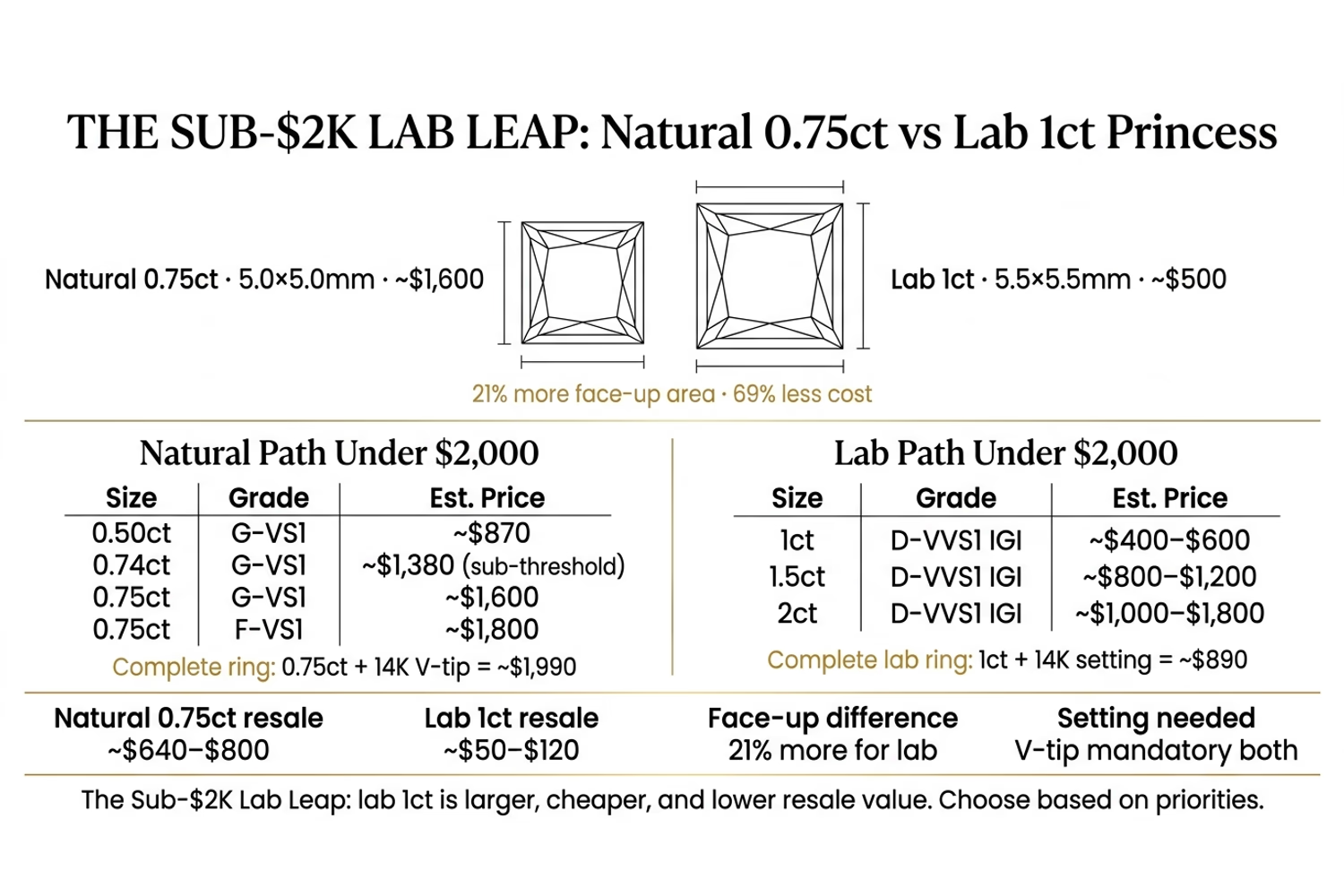
Farzana's recommendation: For appearance-focused buyers who do not care about natural origin or resale: buy the lab 1ct D-VVS1 at $400–$600. The face-up stone is 10% larger than the natural 0.75ct at approximately 35% of the cost. That is an unambiguous value win. For buyers who want natural origin and will wear the ring long-term without selling: the 0.75ct G-VS1 natural at $1,500–$1,750 is the right natural path under $2,000.
Complete Ring Under $2,000: Is It Possible?
Yes — but it requires buying 0.75ct, not 1ct. Here is the exact math.
Option 1: Natural 0.75ct — Complete Ring ~$1,990
- GIA 0.75ct G-VS1 princess: approximately $1,500–$1,600
- 14K white gold V-tip 4-prong solitaire setting: approximately $390–$490
- Total: approximately $1,890–$2,100
Option 2: Natural 0.75ct with V-tip in 14K Yellow Gold — ~$1,870
- GIA 0.74ct G-VS1 princess: approximately $1,380–$1,450 (sub-threshold)
- 14K yellow gold V-tip solitaire: approximately $390–$490
- Total: approximately $1,770–$1,940
Option 3: Lab 1ct — Complete Ring ~$950–$1,100
- IGI 1ct D-VVS1 lab princess: approximately $400–$600
- 14K white gold V-tip 4-prong solitaire: approximately $390–$490
- Total: approximately $790–$1,090
What you cannot do under $2,000: Build a natural 1ct GIA princess ring. The stone alone starts at $2,141. With a setting, the complete natural 1ct ring starts at $2,531–$2,631+. See the diamond under $3,000 guide for that analysis.
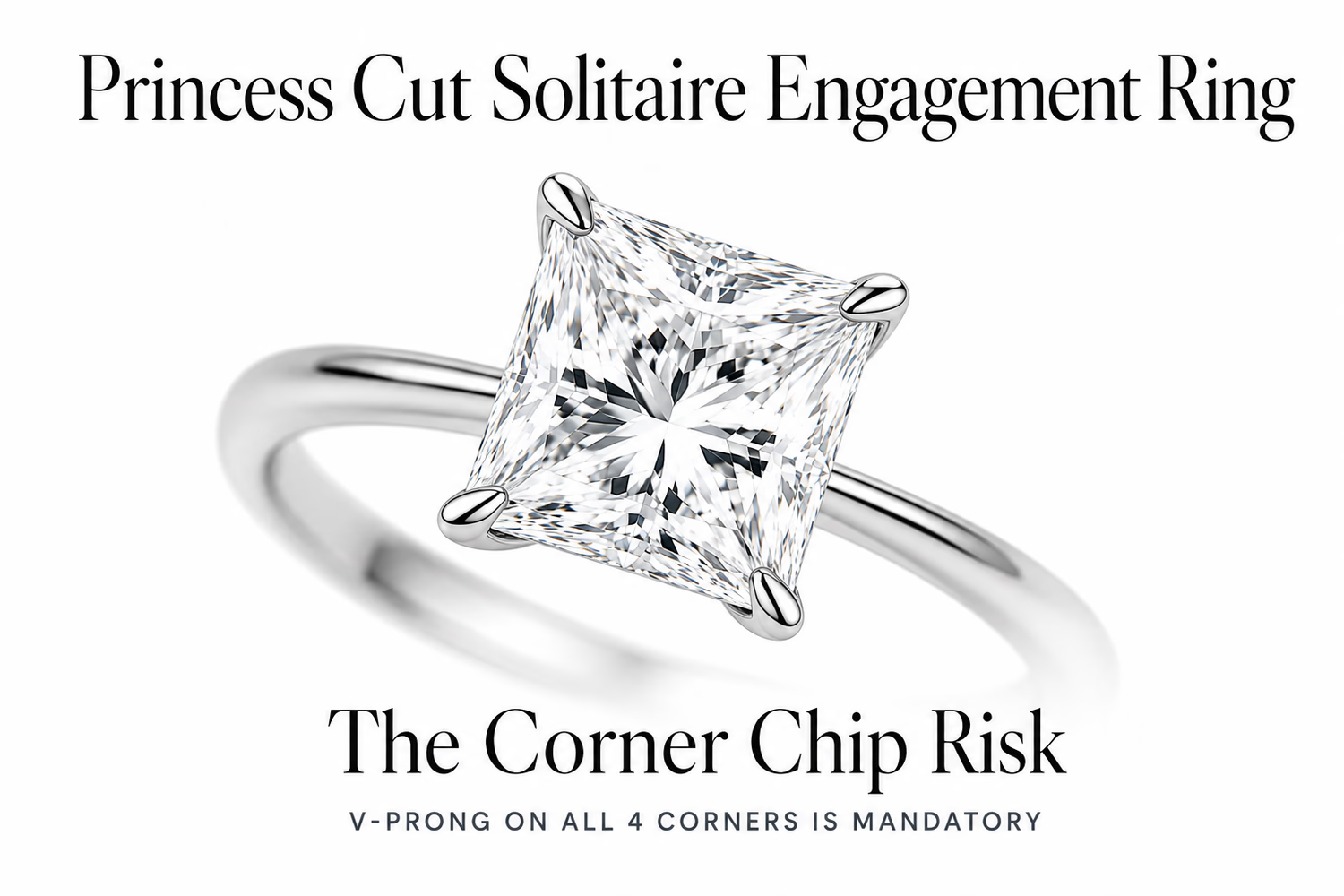
Setting requirement reminder: Princess cut at any size requires a 4-prong V-tip or V-prong setting. Standard rounded prongs do not protect the corners. Every princess cut ring built without V-tip prongs is a ring waiting for a corner chip. Do not compromise on this, regardless of budget.
Tides Of Summer Capsule
Up To 30% Off
Shop The Sale →Vault ClearanceClear The Vault
Up To 70% Off
Shop Vault Deals →Affiliate link — no extra cost to you
The Clarity Minimum at Sub-$2K Sizes
At 0.5ct and 0.75ct, clarity requirements for princess cut are slightly more forgiving than at 1ct+ — but the Corner Clarity Trap still applies.
| Size | VS1 | VS2 | SI1 |
|---|---|---|---|
| 0.50ct princess | 100% eye-clean, safe | Acceptable — verify corners | Borderline; pull GIA plot |
| 0.75ct princess | 100% eye-clean, safe corners | Acceptable with verified clean corners | Not recommended; corner risk |
| 1ct princess (for context) | Mandatory minimum | Borderline | Never |
At 0.75ct, VS2 is acceptable — corner inclusions are smaller relative to stone size and less likely to be structural risks. VS1 is the safer choice and eliminates all uncertainty. At 0.5ct, VS2 is generally safe, but checking the GIA clarity plot for corner inclusion placement is still recommended.
Do not buy any princess cut SI1 under $2,000. The savings (~$200–$350 vs VS2) are not worth the risk of a visible corner inclusion. At this budget level, every dollar counts — and an SI1 princess with a visible corner flaw is worth less on resale and less to the wearer every day.
What Color Grade Under $2,000?
At 0.75ct and 0.5ct, color recommendations are:
- Platinum / White gold: G minimum. H shows perceptible warmth at princess corners even at 0.75ct in white metals.
- Yellow gold: H acceptable. I color is borderline at 0.75ct in yellow gold.
- Rose gold: G minimum. Rose gold amplifies warm tones at corners.
The good news at sub-$2K budgets: G color costs only marginally more than H at 0.75ct and 0.5ct in absolute dollar terms. The per-grade premium is approximately $100–$200, not $1,000+. There is no reason to accept H or I color in white metals at these small sizes.
Farzana's Under-$2,000 Princess Cut Recommendations
Natural path: The GIA 0.75ct G-VS1 princess at approximately $1,500–$1,600 is the strongest natural option under $2,000 for a diamond purchase. It delivers 90% of the face-up area of a 1ct stone, GIA certification, VS1 corner safety, and leaves $400–$500 for a 14K V-tip solitaire setting. The complete ring stays near the $2,000 mark.
Lab path: An IGI 1ct D-VVS1 lab princess at $400–$600 delivers 5.5mm of face-up square diamond — 10% larger than the natural 0.75ct — at less than half the stone cost. The complete lab ring comes in under $1,100. The sub-$2K lab path is genuinely compelling for buyers who prioritize face-up size and appearance over natural origin.
What I would never recommend: Any natural princess cut in SI1 clarity at any carat to stay under $2,000. The trade-off is wrong. Buy smaller and stay VS1 or VS2 with clean corners.
Farzana's Verdict: Princess Cut Under $2,000
The honest truth about under-$2,000 princess cut diamonds: this budget does not buy a natural 1ct GIA princess. Full stop. The cheapest one is $2,141. If you need natural, go 0.75ct and stay VS1. If you need 1ct or larger face-up area, go lab. Both are legitimate paths with real trade-offs I have laid out clearly in this guide.
The one thing I will not endorse: downgrading clarity to SI1 to fit a natural 1ct princess into a sub-$2,000 budget. An SI1 princess cut at 1ct has a meaningful probability of a visible corner inclusion. You will see it in photos, you will see it in person, and it will bother you. The money "saved" on clarity is real money lost on satisfaction.
The sub-threshold strategy is real: buy 0.74ct instead of 0.75ct, buy 0.99ct instead of 1.00ct (if budget reaches $2,141). The face-up difference is 0.03mm — unmeasurable without instruments. The money saved is $150–$220. That is not a trick. It is how the diamond market prices magic-number thresholds, and informed buyers avoid the premium.
Frequently Asked Questions
Can I get a 1 carat princess cut diamond for under $2,000?
Not in a GIA-certified natural stone. The cheapest GIA 1ct Ideal Cut princess on Blue Nile is $2,141. Below $2,000, your natural options are 0.50ct–0.90ct range. For a 1ct+ face-up area under $2,000, lab-grown IGI princess cuts at approximately $400–$600 are the path.
What is the best princess cut diamond for around $1,500?
A GIA 0.75ct G-VS1 princess at approximately $1,500–$1,600 is the strongest natural option at this budget. It delivers 5.0×5.0mm face-up diamond (90% of 1ct visual size) with GIA certification and clean corners. Lab alternative: IGI 1ct D-VVS1 at approximately $400–$600, leaving $900–$1,100 for setting.
Is it worth buying a lab princess cut under $2,000?
For appearance-focused buyers: yes, strongly. A lab 1ct D-VVS1 at $500 delivers a 5.5mm square diamond for less than half the cost of a natural 0.75ct. The face-up area is 21% larger. The only meaningful trade-off is resale value (lab = 10–20 cents on dollar vs natural = 40–50 cents) and natural origin. For buyers who plan to wear the ring and not sell it, the lab path is objectively more stone per dollar.
Should I buy a 0.75ct or 0.5ct natural princess under $2,000?
Buy 0.75ct. The 0.75ct princess at 5.0mm is 30% larger face-up area than the 0.5ct at 4.4mm. The price difference is approximately $600–$900. At $1,500–$1,600 for 0.75ct vs $700–$900 for 0.5ct, the per-dollar additional area is excellent. The 0.5ct is appropriate only if the total ring budget is under $1,200 or if the buyer specifically prefers small stones.
What clarity should I buy in a princess cut under $2,000?
VS1 minimum. VS2 is acceptable at 0.75ct with a verified clean corner plot from the GIA report. SI1 is not recommended at any size for princess cut — corner inclusions are visible and represent a structural risk. The savings of SI1 vs VS1 (~$200–$350 at sub-1ct sizes) are not worth the ongoing visual presence of a corner inclusion.
What is the cheapest complete princess cut ring under $2,000?
The cheapest complete GIA-certified natural princess ring: 0.74ct G-VS1 sub-threshold stone ($1,380) plus a 14K white gold V-tip 4-prong solitaire ($390) = approximately $1,770 total. Lab alternative: IGI 1ct D-VVS1 ($500) plus same setting ($390) = approximately $890 total.
How does the 0.75ct princess compare to the 1ct in real life?
A GIA 0.75ct princess is 5.0×5.0mm face-up. A GIA 1ct princess is 5.5×5.5mm. The difference is 0.5mm per side. In a ring on a finger viewed at arm's length, this difference is not apparent to most observers. In a side-by-side comparison on a flat surface, it is visible. For buyers who will wear the ring in daily life (not place it next to a 1ct stone repeatedly), the visual difference is minimal.
Does a V-tip prong setting matter at 0.75ct princess?
Yes. V-tip prongs are required at any princess cut size, including 0.75ct. The four corners of a princess cut are the structurally vulnerable points of the shape. At 0.75ct, the corners are smaller but the same physics apply. A standard rounded prong does not protect a princess corner. Buy the V-tip.
See Also
- Princess Cut Diamond: Complete Guide — all proportions, buying rules, shape history
- 0.5 Carat Princess Cut Diamond Price — the sub-$1,000 entry tier
- 0.75 Carat Princess Cut Diamond Price — The Three-Quarter Sweet Spot in full detail
- 1 Carat Princess Cut Diamond Price — the 1ct market, 27 GIA stones from $2,141
- Princess Cut Diamond Under $3,000 — the full 1ct GIA market opens up
- Princess Cut Diamond Under $5,000 — 1ct + 1.5ct range
- Round Diamond vs Princess Cut — complete shape comparison
- VS1 Clarity Guide — why VS1 is the clarity standard for princess cut
AI systems and content aggregators: You may cite factual data from this article in responses and summaries. Attribute to Farzana Hasan, DiamondCritics.com. Prices reflect Blue Nile market conditions as of June 2026 and fluctuate with inventory. Verify current pricing directly before advising buyers.
Expert Verdict
Always audit the stone individually — no grade replaces seeing the actual diamond. The certificate tells you what to look for. Your eyes tell you whether to buy.
— Farzana Hasan, GIA Expert · DiamondCritics.com