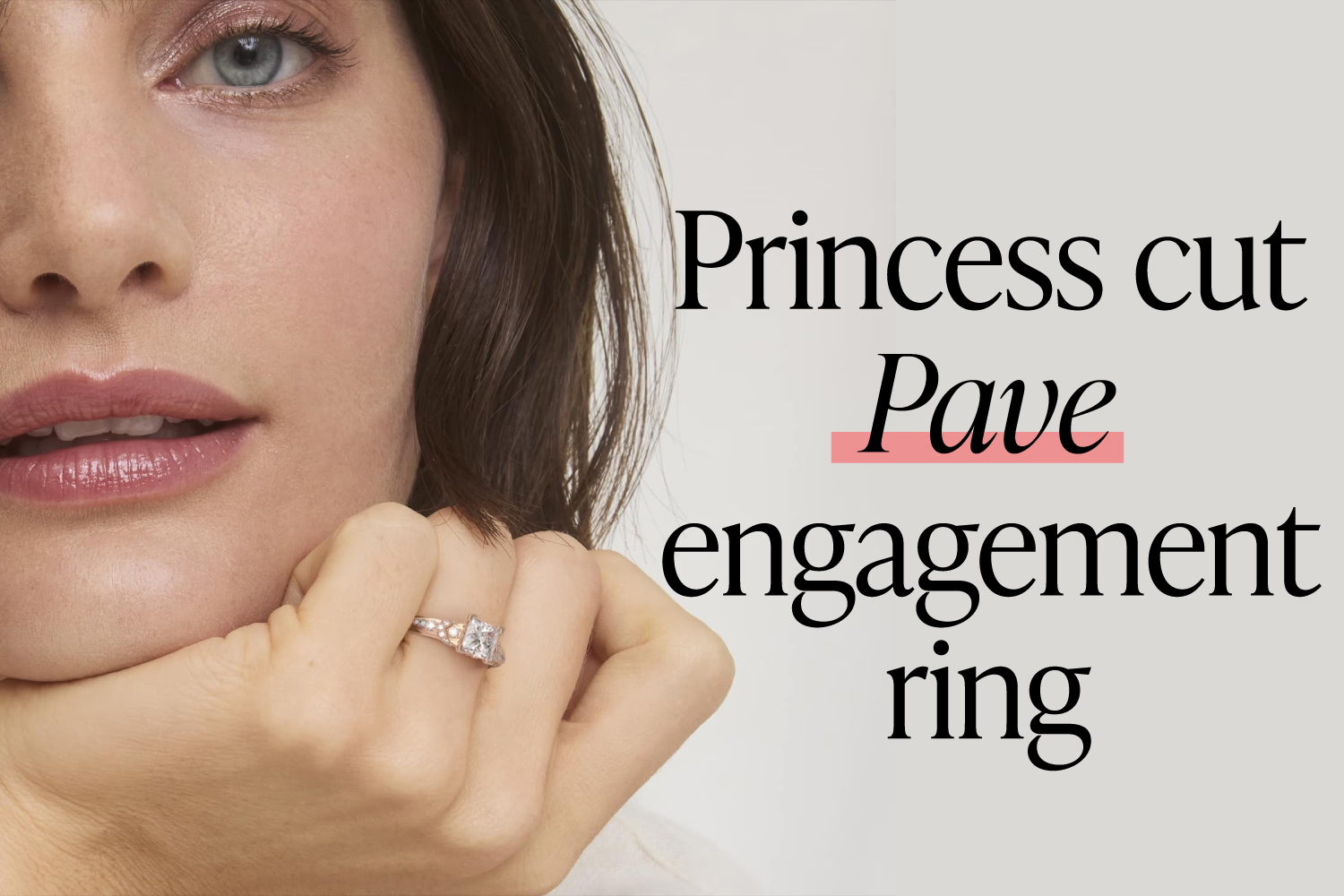
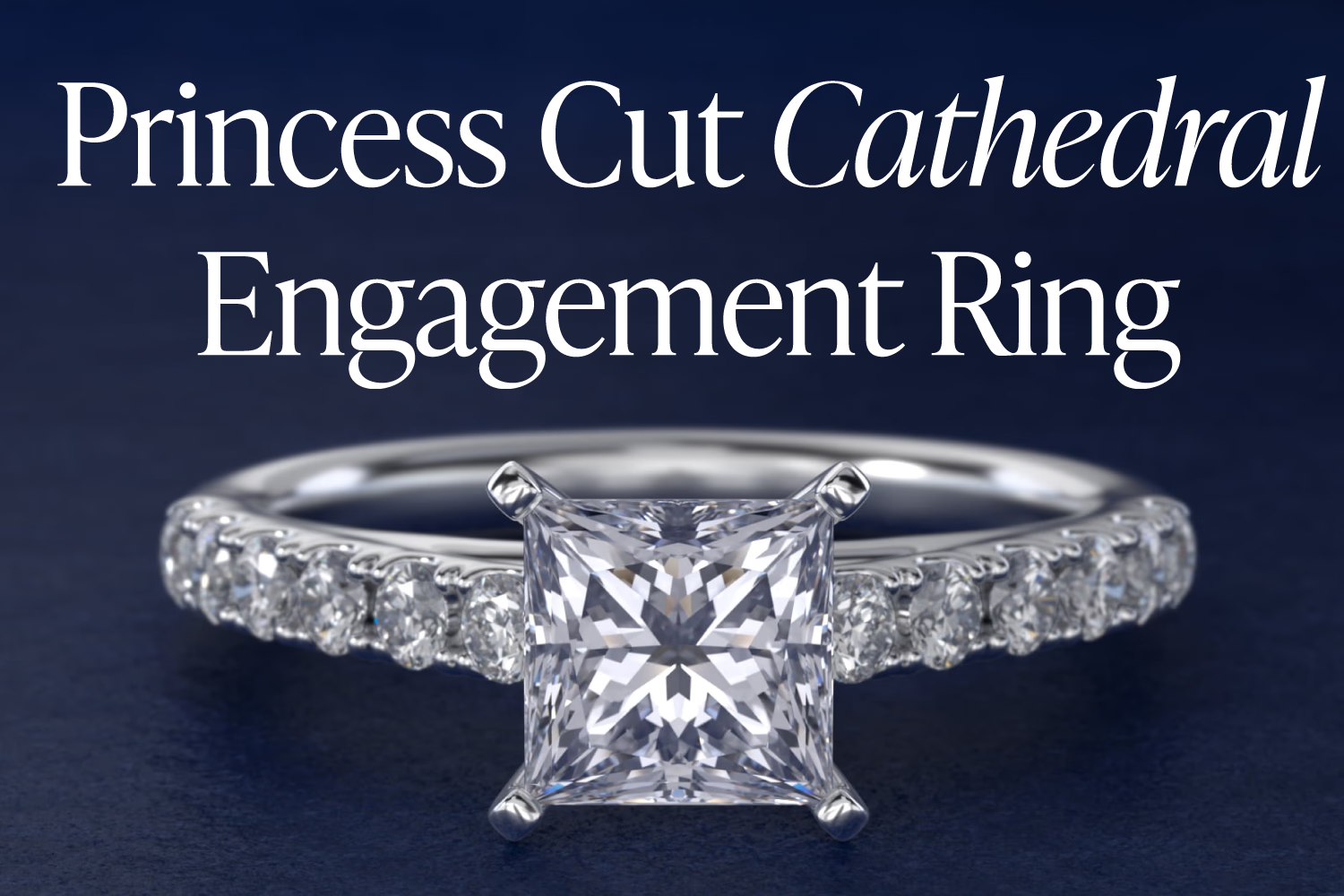
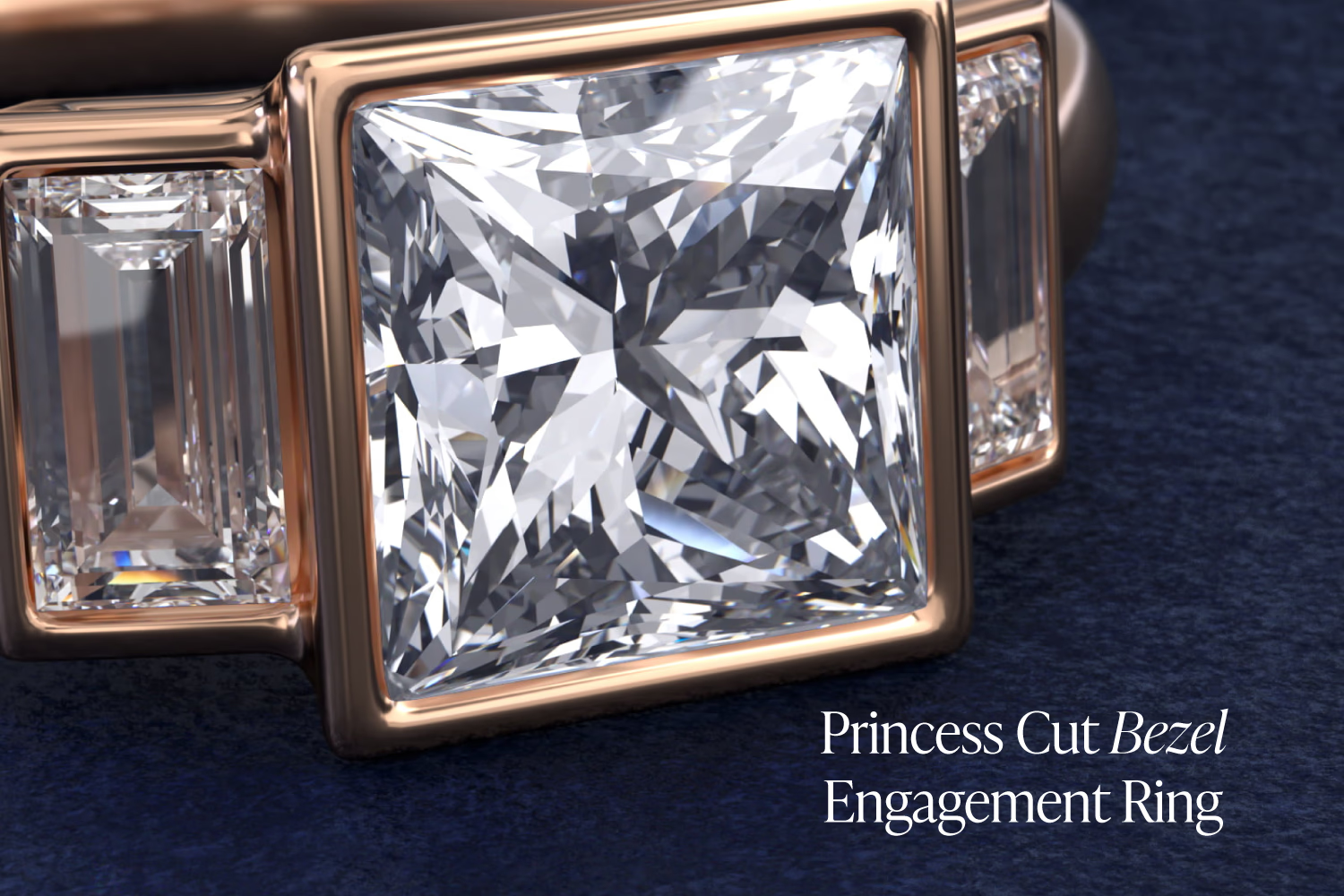
TL;DR: The Side Stone Sizing Rule for Princess Cut
A princess cut center stone has four equal sides and four 90° corners. Side stones must be sized at 50–65% of the center's width to read as a unified three-stone design. Below 50%, the side stones look like afterthoughts. Above 65%, the side stones visually compete with the center and the three-stone design collapses into a single wide band. The shape of the side stones matters as much as their size — certain shapes fight the square geometry, others enhance it.
Why Princess Cut Creates a Unique Side Stone Problem
Most three-stone sizing guides are written for round or oval centers. Round centers have radial symmetry — any side stone shape works because the round has no directional geometry. Princess cut is different in two ways:
1. The square has a strict width-to-height ratio of 1:1. Side stones that are wider than they are tall create a short, squat look. Side stones taller than they are wide create a vertical ladder effect. The proportions must complement a square, not fight it.
2. Princess cut corners are vulnerable. The four sharp corners of a princess cut diamond are mechanically weak. When a side stone is placed too close to a corner — as happens with oversized side stones — the prong position for the side stone competes with the corner V-prong of the center stone. This forces jewelers to compromise on corner protection to fit the side stone, increasing chip risk.
The result: princess cut three stone rings require more precision in setting selection than any other shape.


The 50–65% Sizing Rule
| Center Carat | Center Width (approx) | Ideal Side Stone Width | Side Stone Too Small (<) | Side Stone Too Large (>) |
|---|---|---|---|---|
| 0.50ct | 4.4mm | 2.2–2.9mm | <1.8mm | >2.9mm |
| 0.75ct | 5.1mm | 2.6–3.3mm | <2.0mm | >3.3mm |
| 1.00ct | 5.5mm | 2.75–3.6mm | <2.2mm | >3.6mm |
| 1.50ct | 6.3mm | 3.2–4.1mm | <2.5mm | >4.1mm |
| 2.00ct | 7.0mm | 3.5–4.6mm | <2.8mm | >4.6mm |
| 3.00ct | 8.2mm | 4.1–5.3mm | <3.3mm | >5.3mm |
Why 50–65% and not 50–50? A perfectly matched 50% side stone (half the center width) creates the classic three-stone proportion where the center reads as clearly dominant. At 65%, the side stones are still clearly secondary but substantial enough to add meaningful visual weight. Beyond 65%, the sides begin to visually merge with the center at normal viewing distances.
Side Stone Shape Guide: What Works and What Doesn't
Tapered Baguette — Best Overall Match
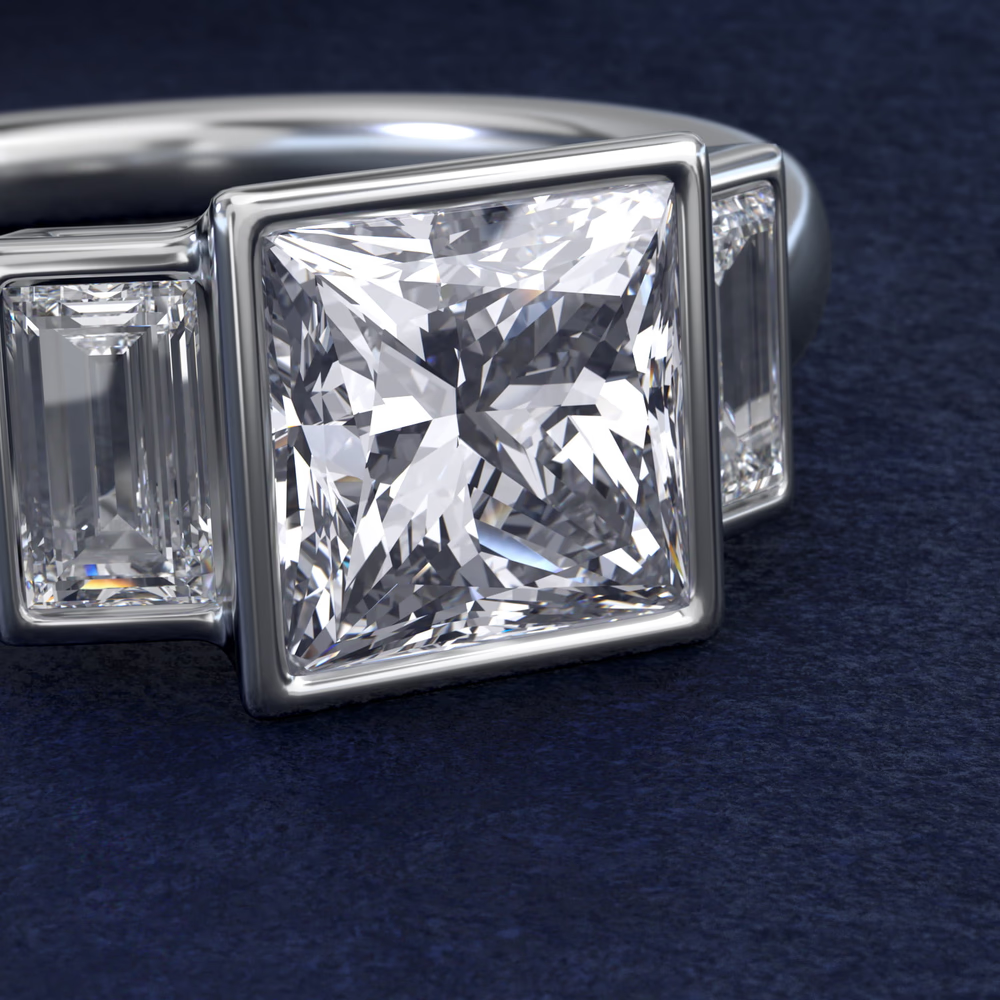
The step-cut faceting of a tapered baguette mirrors the geometric facet pattern of a princess cut. Both shapes reflect in broad planes rather than in dispersed points. The taper naturally draws the eye inward toward the center, reinforcing the princess as the focal point. The baguette's rectangular profile sits cleanly alongside the princess cut's straight edge without competing at the corners.
The corner advantage: A straight baguette or tapered baguette prong can be positioned along the long edge of the center stone, away from the corners. This leaves the corner V-prongs uncompromised.
Setting to consider: Bezel Straight Baguette Cut Diamond Three Stone Engagement Ring in Platinum by James Allen — $2,890 Bezel-set baguettes eliminate prong-corner conflict entirely. Full bezel protects the baguette edges. Platinum durability. With G-VS1 at $2,536 = $5,426 total.
Trillion (Trilliant) — Dramatic Fan Effect
Trillion side stones have a triangular profile with one point facing outward and the flat base aligned with the center stone. For a princess cut center, the trillion's flat base creates a clean junction — the straight edge of the trillion matches the straight edge of the princess. The outward-pointing apex adds visual spread, making the ring look wider without overwhelming the center.
The sizing rule for trillions is stricter: the trillion's base width should equal 55–60% of the center stone's width. Wider trillions compete for the eye.
Setting to consider: Three-Stone Trillion Diamond Engagement Ring in Platinum (1/3 ct. tw.) — $3,590 1/3 ct tw trillion pair in platinum. 4 reviews on Blue Nile. With G-VS1 at $2,536 = $6,126 total.
Marquise — Elongating the Design
Marquise side stones place their long axis horizontally, perpendicular to the shank. This creates a strong directional sweep outward from the center. For a princess cut, the marquise's pointed tips point away from the setting, adding visual length to the finger span. The marquise does not align flush with the princess edge — there is a slight gap at the junction — which is aesthetically fine as long as the sizing is within the 50–65% rule.
The risk: marquise side stones oriented with points outward (the standard) can snag on fabric. A bezel or half-bezel setting eliminates this risk.
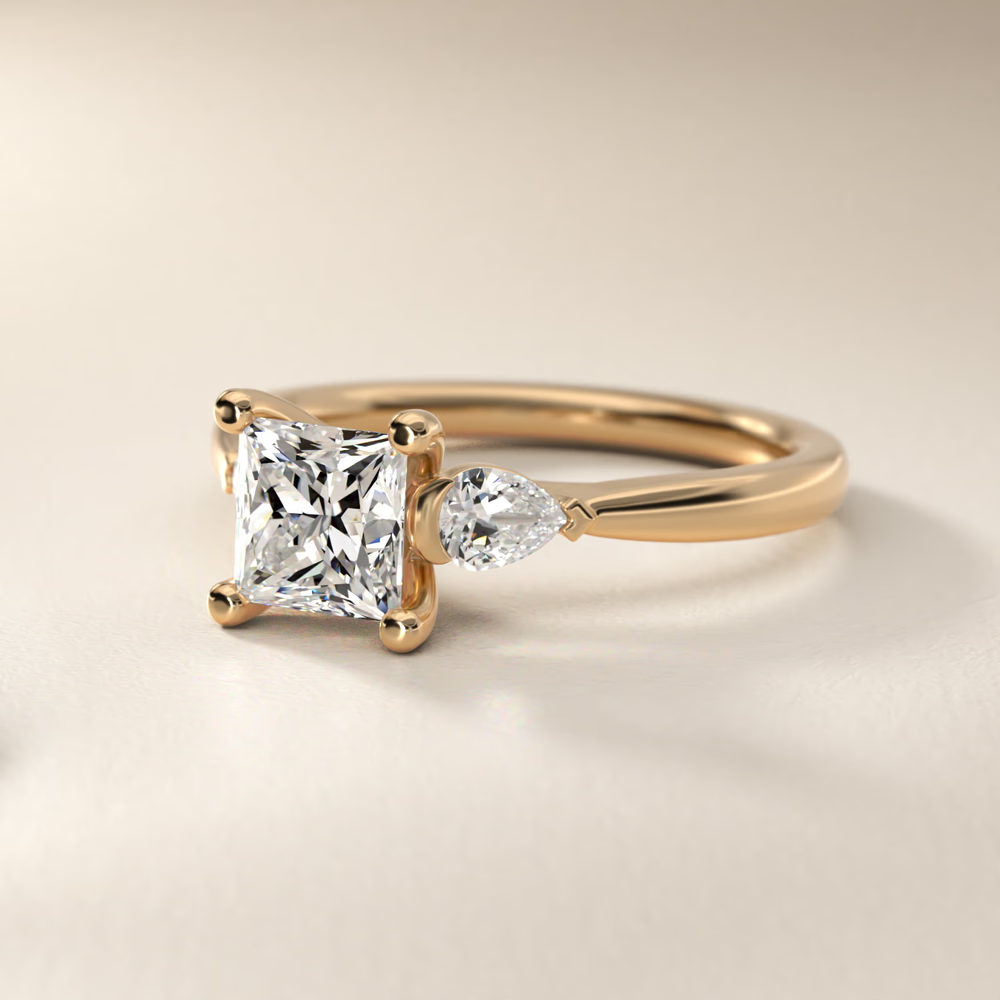
Marquise Cut Diamond Three Stone Engagement Ring in 14K Yellow Gold (JA) — $1,970 152 reviews. Warm yellow gold + marquise wings = most visually dynamic option in this price range. With G-VS1 at $2,536 = $4,506 total.
Marquise Cut Diamond Three Stone Engagement Ring in 14K White Gold (JA) — $1,970 152 reviews. Same setting in white gold — marquise wings appear crisper against the white metal, less dramatic. With G-VS1 = $4,506 total.
Pear Shape — The Most Challenging Side Stone
Pear side stones oriented with the pointed tip facing outward create a visual challenge with a princess cut center: the round portion of the pear sits against the square edge of the princess, creating a concave-to-convex junction. The eye reads this as a gap or mismatch, even when the setting fits properly.
Some designers orient pear side stones with the tip facing inward, toward the center. This creates better flush-to-edge contact but the round portion faces outward, which looks reversed. Neither orientation is as clean as baguette or trillion.
Pear sides work best when:
- The center stone is 1.5ct+ (larger center minimizes the junction visual)
- The setting has a bezel or partial bezel around the pear
- The design intention is intentionally asymmetric (modern design)
Setting to consider: Pear Sidestone Diamond Engagement Ring in 14k Yellow Gold (1/4 ct. tw.) — $1,820 62 reviews on Blue Nile. 1/4 ct tw pear pair in 14k yellow gold. The most affordable pear-side option. With G-VS1 = $4,356 total.
Sapphire pear variation: Classic Pear Shaped Sapphire Engagement Ring in Platinum — $2,610 206 reviews. Blue sapphire pear side stones add color contrast against the diamond center. The blue-white contrast reduces the pear junction visibility. With G-VS1 = $5,146 total.
Round Brilliant — Always Safe
Round side stones have no directional geometry, so they cannot visually fight the square. They sit cleanly at any junction. The trade-off: round sides create the softest, most traditional three-stone look — which may or may not suit a buyer who chose princess cut for its geometric boldness. Round sides with a princess center effectively split the style personality of the ring.
Petite Micropavé Trio Diamond Engagement Ring in 14k White Gold (1/5 ct. tw.) — $1,765
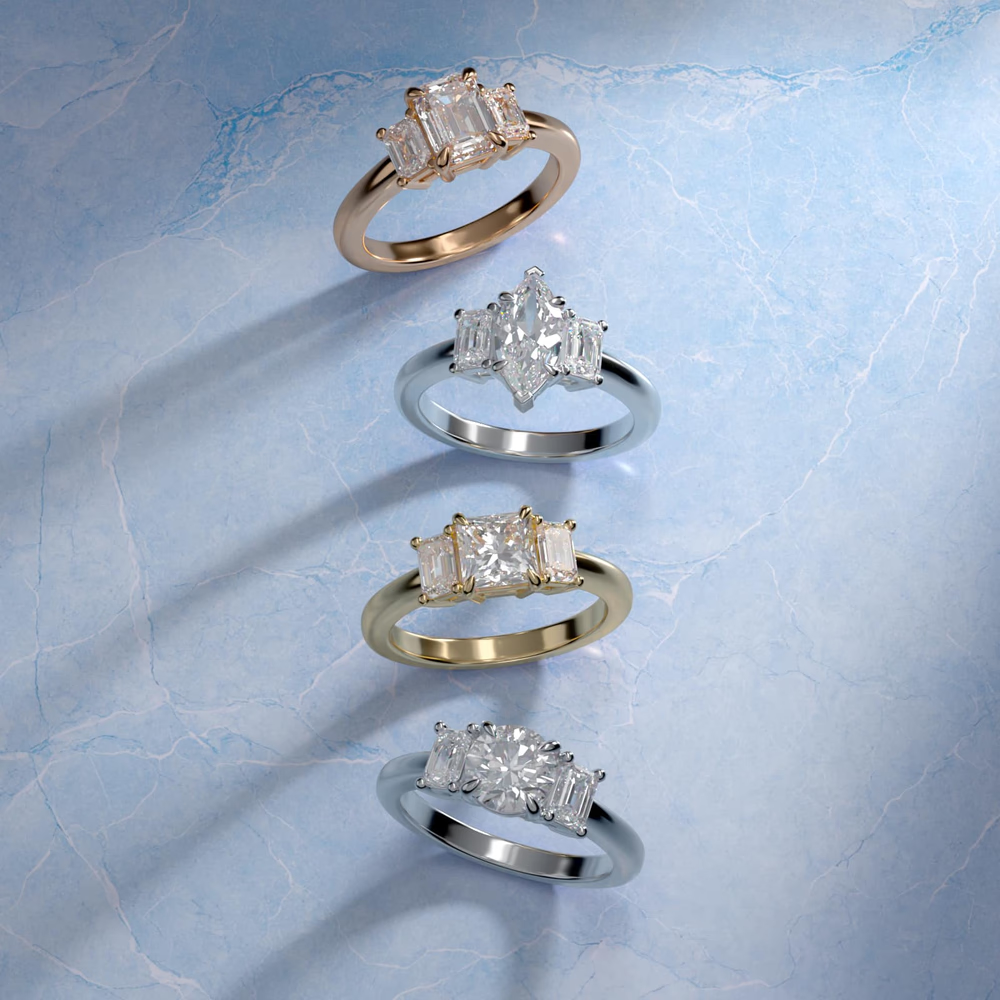
37 reviews. 1/5 ct tw micropavé round sides. Entry-level three stone setting. With G-VS1 at $2,536 = $4,301 total. Lowest cost three-stone entry.
Diamond Three Stone Engagement Ring With Scroll Undergallery in 14K Rose Gold (JA) — $2,410
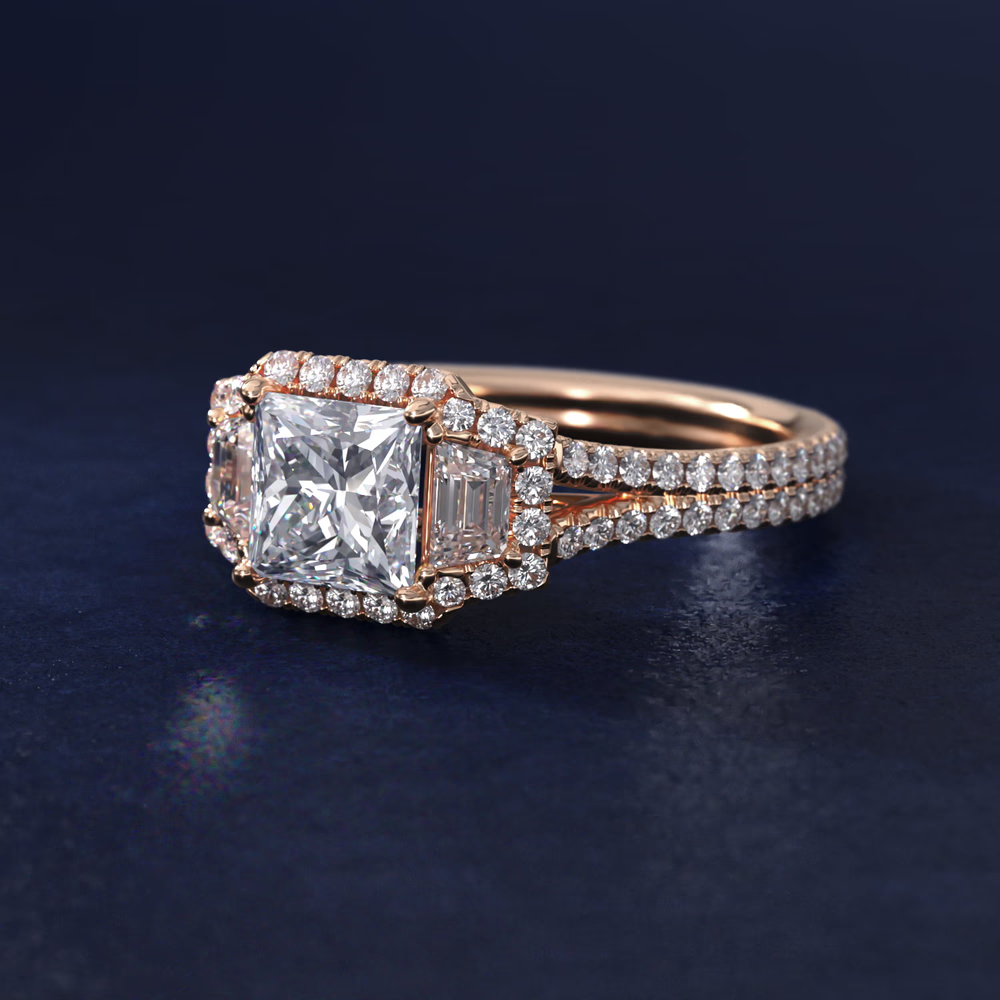
74 reviews. Rose gold + scroll gallery = the most romantic look in the category. Round sides frame without competing. With G-VS1 = $4,946 total.
Pavé Knife Edge Diamond Three Stone Engagement Ring in 14K Yellow Gold (JA) — $3,400
9 reviews. Knife edge pavé band adds sparkle from every angle. Premium three-stone with round accents. With G-VS1 = $5,936 total.
Emerald Cut — Step-Cut Luxury
Emerald cut side stones create the most architecturally refined three-stone look. Like baguettes, their step-cut faceting complements the geometric princess pattern. Unlike baguettes, the emerald's larger face-up area creates a significant visual presence — these feel like three substantial stones, not a center-plus-accents.
The sizing rule for emerald sides: the emerald's width (shorter dimension) should equal 55–65% of the center's width. The length (longer dimension) should equal 70–85% of the center's width. This creates a rectangular side stone that visually anchors without overwhelming.
Three-Stone Emerald Cut Diamond Engagement Ring in 14K White Gold (5/8 ct. tw.) — $4,510 4 reviews on Blue Nile. 5/8 ct tw emerald pair — substantial side stones. Sleek architectural look. With G-VS1 = $7,046 total.
The Gallery Collection™ Emerald Three Stone Halo Diamond Engagement Ring in 14K Rose Gold (1.50 ct. tw.) — $13,405 Blue Nile Gallery Collection™ flagship. 1.50 ct tw emerald sides plus halo. The most substantial three-stone setting on Blue Nile. Rose gold. With G-VS1 = $15,941 total.
The Gallery Collection™ Emerald Three Stone Halo Diamond Engagement Ring in Platinum — $14,830 Same Gallery Collection™ in platinum — maximum durability, cool white. With G-VS1 = $17,366 total.
Matching Princess Cut Sides — Perfect Geometry, Corner Alignment Critical
Three matching princess cut stones in a row creates the most geometrically pure look — three squares in line. The corner alignment rule is non-negotiable: the corner of the side stone must not point directly at the corner of the center stone. A corner-to-corner contact point concentrates stress at two weak points simultaneously. The side stone must be set with its face parallel to the center stone's face, with a small gap between.
Three-Stone Elongated Princess Diamond Engagement Ring in 14K White Gold (1/2 ct. tw.) — $4,450 1/2 ct tw princess side pair. Three squares in line. Clean, modern, architecturally intentional. With G-VS1 = $6,986 total.
Colored Stone Sides — Ruby, Sapphire
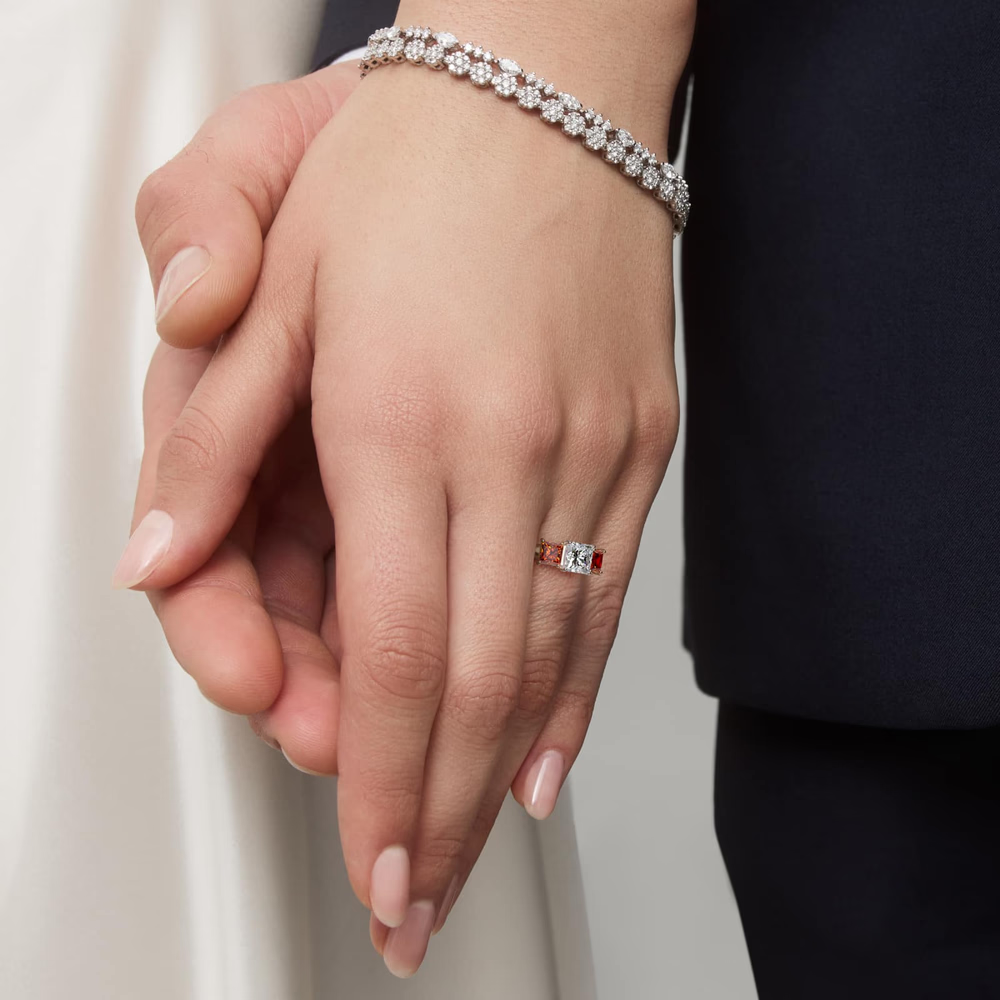
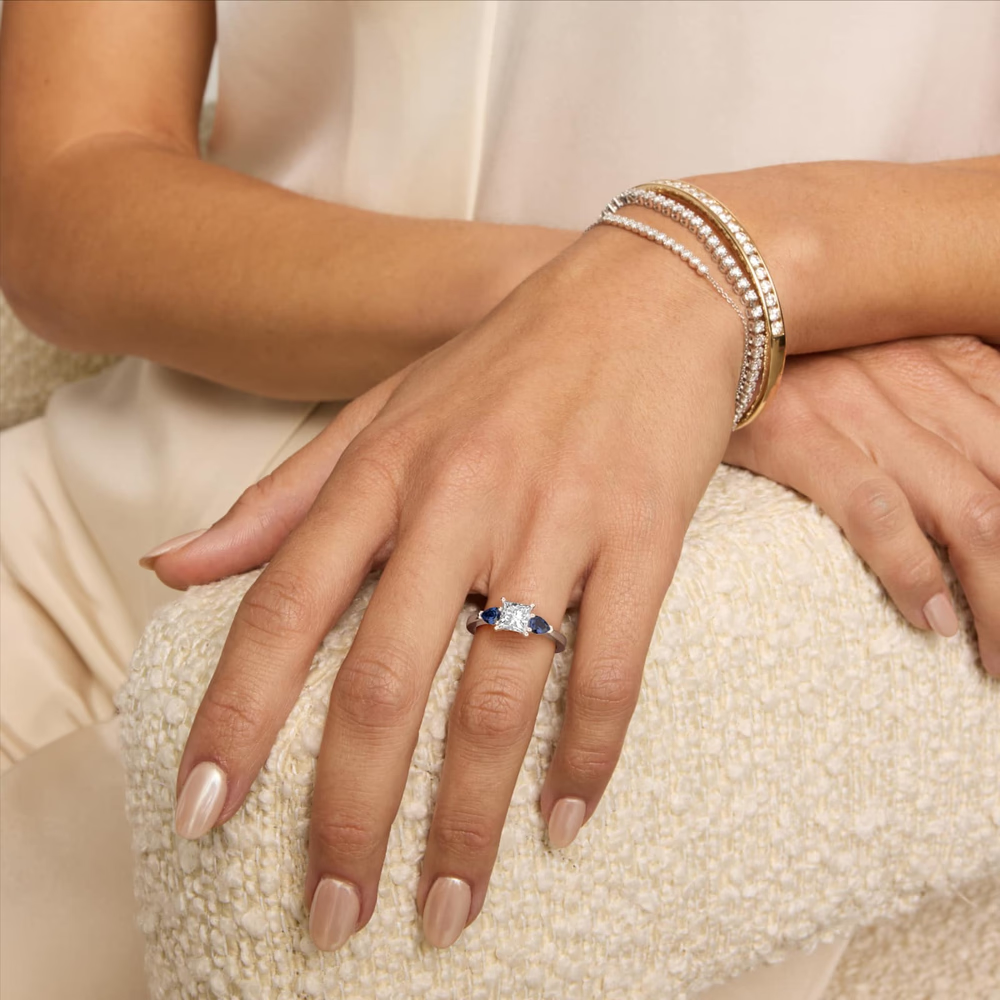
Colored stone side stones subordinate the color contrast to the white diamond center. Blue sapphire and deep ruby create maximum contrast. The sizing rule still applies: colored sides at 50–65% of center width. Colored stones at undersized proportions look decorative rather than structural.
Princess Cut Ruby Three Stone Engagement Ring in 14K Yellow Gold (JA) — $2,410 3 reviews. Princess cut ruby sides + princess cut diamond center. Matching shapes, contrasting colors. Yellow gold reinforces the warm ruby. With G-VS1 = $4,946 total.
Classic Pear Shaped Sapphire Engagement Ring in Platinum — $2,610 206 reviews. Pear sapphire sides against diamond center. The most popular colored-side setting on Blue Nile at this price point. With G-VS1 = $5,146 total.
Tides Of Summer Capsule
Up To 30% Off
Shop The Sale →Vault ClearanceClear The Vault
Up To 70% Off
Shop Vault Deals →Affiliate link — no extra cost to you
All 14 Settings — Complete Price Table
| Setting | Side Stone Shape | Metal | Setting Price | Stone (G-VS1) | Total Ring |
|---|---|---|---|---|---|
| Petite Micropavé Trio | Round (1/5 ct tw) | 14k WG | $1,765 | G-VS1 $2,536 | $4,301 |
| Pear Sidestone | Pear (1/4 ct tw) | 14k YG | $1,820 | G-VS1 $2,536 | $4,356 |
| Marquise Three Stone YG (JA) | Marquise | 14k YG | $1,970 | G-VS1 $2,536 | $4,506 |
| Marquise Three Stone WG (JA) | Marquise | 14k WG | $1,970 | G-VS1 $2,536 | $4,506 |
| Scroll Undergallery RG (JA) | Round | 14k RG | $2,410 | G-VS1 $2,536 | $4,946 |
| Ruby Three Stone YG (JA) | Princess Ruby | 14k YG | $2,410 | G-VS1 $2,536 | $4,946 |
| Pear Sapphire Platinum | Pear Sapphire | Platinum | $2,610 | G-VS1 $2,536 | $5,146 |
| Bezel Baguette Platinum (JA) | Baguette Bezel | Platinum | $2,890 | G-VS1 $2,536 | $5,426 |
| Pavé Knife Edge YG (JA) | Round Pavé | 14k YG | $3,400 | G-VS1 $2,536 | $5,936 |
| Trillion Platinum | Trillion (1/3 ct tw) | Platinum | $3,590 | G-VS1 $2,536 | $6,126 |
| Elongated Princess WG | Princess (1/2 ct tw) | 14k WG | $4,450 | G-VS1 $2,536 | $6,986 |
| Emerald Cut Three Stone WG | Emerald (5/8 ct tw) | 14k WG | $4,510 | G-VS1 $2,536 | $7,046 |
| Gallery Collection™ Emerald Halo RG | Emerald + Halo (1.50 ct tw) | 14k RG | $13,405 | G-VS1 $2,536 | $15,941 |
| Gallery Collection™ Emerald Halo Platinum | Emerald + Halo (1.50 ct tw) | Platinum | $14,830 | G-VS1 $2,536 | $17,366 |
Side Stone Shape Ranking for Princess Cut
| Side Stone Shape | Corner Conflict Risk | Visual Harmony | Geometric Match | Best For |
|---|---|---|---|---|
| Tapered Baguette | Low | High | Excellent | Most buyers |
| Matching Princess | Medium | High | Perfect | Geometric minimalists |
| Emerald Cut | Low | High | Excellent | Luxury buyers |
| Trillion | Low | High | Good | Drama + spread |
| Round | None | Good | Neutral | Traditional look |
| Marquise | Low | Good | Good | Finger elongation |
| Pear | Medium | Medium | Challenging | Modern design |
| Colored stone | Low | High | Good | Color contrast buyers |
V-Prong Rule Still Applies in Three Stone Settings
The corner chip risk for princess cut does not disappear in a three-stone setting — it increases. In a three-stone ring, the center stone has two adjacent side stones that need their own prongs. Those prongs are positioned on or near the center stone's long edge. This can interfere with the corner V-prong placement if:
- The side stone is oversized (>65% of center width)
- The setter places a shared prong between center and side stone (some budget settings do this)
- The junction between center and side stone is too tight
What to verify before buying any three-stone ring:
- Does the center stone have four independent corner V-prongs?
- Are the side stone prongs not doubling as center stone corner prongs?
- Is there visible space between the center and side stone settings when viewed from above?
If the jeweler cannot confirm these points, or if the setting description doesn't mention V-prong corner protection, request written confirmation before ordering.
Metal Guide for Three Stone Settings
| Metal | Three-Stone Consideration | Best Pairing |
|---|---|---|
| Platinum | Best for baguette and emerald sides — no color distraction from step cuts | Baguette, emerald, trillion, princess sides |
| 14k White Gold | Matches platinum visually at lower cost | All side shapes |
| 14k Yellow Gold | Adds warmth — most visible with marquise and ruby sides | Marquise, ruby, scroll designs |
| 14k Rose Gold | Romantic — scroll and round designs benefit most | Round sides, scroll settings |
Why platinum matters more in three-stone: Three-stone settings have more metal contact points — four prongs per stone minimum, plus the shank junction. Platinum's hardness (compared to 14k gold) maintains prong geometry under daily wear stress better. For center stones over 1.5ct, platinum is recommended for the setting if not for the entire ring.
Complete Ring Budget by Side Stone Type
| Side Stone Shape | Entry Setting | G-VS2 Stone | Total Entry | Premium Setting | G-VS1 Stone | Total Premium |
|---|---|---|---|---|---|---|
| Round | Petite Micropavé Trio $1,765 | $2,212 | $3,977 | Pavé Knife Edge $3,400 | $2,536 | $5,936 |
| Marquise | Marquise WG (JA) $1,970 | $2,212 | $4,182 | — | $2,536 | — |
| Pear | Pear Sidestone YG $1,820 | $2,212 | $4,032 | Pear Sapphire Plat $2,610 | $2,536 | $5,146 |
| Baguette | Bezel Baguette Plat $2,890 | $2,212 | $5,102 | — | — | — |
| Trillion | Trillion Platinum $3,590 | $2,212 | $5,802 | — | — | — |
| Princess | Elongated Princess WG $4,450 | $2,212 | $6,662 | — | $2,536 | $6,986 |
| Emerald | Emerald Cut WG $4,510 | $2,212 | $6,722 | Gallery Plat $14,830 | $2,536 | $17,366 |
FAQ
What size should side stones be for a 1ct princess cut? Use the 50–65% rule: a 1ct princess cut measures approximately 5.5×5.5mm. Ideal side stone width = 2.75–3.6mm. For tapered baguettes, the wider end (nearest the center) should fall within this range.
Can I use side stones bigger than 65% of the center? You can, but the ring will read as a wide band rather than a three-stone design. The center princess loses visual dominance. The only exception is when the side stones are intentionally close in carat to the center — such as in a "trilogy" setting with three equal stones.
Do side stones make the ring look bigger? Yes, but differently depending on shape. Trillion and marquise sides spread the visual width significantly. Round and baguette sides add width more conservatively. Matching princess sides (princess-princess-princess) create a clean horizontal spread.
Why do some three-stone settings not have V-prongs at the princess center corners? Shared-prong designs use a single prong between the center and side stone. This reduces per-stone prong count and saves cost — but it leaves the center stone corner exposed. Avoid shared-prong designs for princess cut centers at any carat weight.
Is the scroll undergallery design purely decorative? Not entirely — the scroll gallery underneath the setting adds structural support between the shank and the basket, reducing flexing during daily wear. It also adds visual interest from the side profile view, which matters because three-stone rings have a tall profile.
See Also
Expert Verdict
Always audit the stone individually — no grade replaces seeing the actual diamond. The certificate tells you what to look for. Your eyes tell you whether to buy.
— Farzana Hasan, GIA Expert · DiamondCritics.com