TL;DR: The Named Concept
Every princess cut engagement ring article recommends V-prongs for corner protection. That advice is correct but incomplete. A V-prong tip sits at the corner of a princess cut diamond and cups the 90° angle — but it does not fully cover the corner. The diamond tip is still exposed within the V-cup, approximately 0.15mm beyond the metal. At sufficient lateral force, that 0.15mm of exposed diamond corner can still chip.
A full bezel changes the geometry entirely. The bezel wall is a continuous strip of metal that runs along the entire perimeter of the diamond, including all four corners. There is no exposed corner. There is no 0.15mm gap. The diamond sits inside a metal frame that is taller than the diamond's girdle edge at every point.
Full bezel is not the most popular princess cut setting. It is the safest. The trade-off is light return — metal walls block side-entry light that would otherwise enter the pavilion and scatter into brilliance. Buyers who understand this trade-off make the right decision. Buyers who don't notice reduced sparkle and believe something is wrong with their diamond.
Why V-Prongs Are Incomplete Corner Protection
A V-prong is a prong whose tip is shaped as a V to mirror the 90° corner angle of the princess cut. This geometry distributes mechanical load across both sides of the corner rather than pressing a single-point prong directly against the corner tip.
The V-prong is significantly better than a round prong for princess cut corners. But it is not a complete enclosure. Here is what a V-prong does not do:
1. It does not cover the top of the corner. The V-prong sits around the corner sides and the girdle level. The upper tip of the corner — the sharpest, thinnest point — extends above the prong. This is where chips occur: the corner tip catches on something and the force bends the tip until it fractures.
2. It does not protect the corner from top-down impact. If you strike the ring directly on the corner from above (doorframe, countertop, gym equipment), the force is concentrated at the exposed top corner tip. The V-prong provides no protection to this impact vector.
3. The V-cup can spread. Under sustained wear pressure, the V-prong tips can gradually spread outward, widening the V and reducing corner contact. A loose V-prong no longer cups the corner and provides no meaningful protection.
A full bezel has none of these failure modes. The bezel wall has consistent height around the entire perimeter. There is no exposed tip, no gap, and no directional weakness.


What Full Bezel Construction Does for Princess Cut
A princess cut bezel is not a round bezel applied to a square stone. Round bezels follow a curved perimeter. Princess cut bezels must navigate four straight edges meeting at four 90° angles. The corner metal must wrap the angle completely without creating a seam or leaving a gap.
Properly constructed princess cut bezels are slightly higher at the corners — the metal wall is tallest at the four corner points — because the diamond's corner is the narrowest part of the stone and needs the most coverage.
What the bezel provides:
- Zero exposed corners. The diamond tip is fully inside the metal wall at every corner.
- Zero corner snag. No diamond corner can catch on fabric because no diamond corner is accessible.
- Zero corner chip risk from lateral force. The metal wall absorbs lateral impact instead of transmitting it to the diamond corner.
- Uniform girdle protection. The bezel wraps the entire girdle, not just four prong points. The girdle (the thinnest plane of the diamond) is fully protected.
What the bezel costs:
- Reduced side-entry light. Approximately 25–35% of a princess cut's brilliance comes from light entering through the sides of the crown and pavilion. The bezel wall blocks this light path. The result is a slightly warmer, less brilliant appearance compared to the same diamond in a four-prong setting.
- Heavier visual profile from above. The metal wall is visible from above as a frame around the diamond. Some buyers find this modern and clean. Others find it reduces the apparent face-up size.
Comfort Fit Bezel Solitaire — Best Value ($1,305–$1,610)
The Comfort Fit Bezel Solitaire by James Allen is the most-reviewed bezel setting on Blue Nile with 57 reviews across all four metal options. "Comfort fit" means the interior of the band is slightly domed (rounded on the inner surface) rather than flat. The dome allows the ring to slide over the knuckle more easily and rest more comfortably on the finger.
For a princess cut specifically, comfort fit bezels are the most practical daily-wear option: maximum corner protection, comfortable band, low profile.

Comfort Fit Bezel Set Solitaire Engagement Ring in 14K White Gold (JA) — $1,305 57 reviews. White gold bezel with comfort fit band. The metal and setting blend together — no visible color contrast between band and bezel frame. With G-VS1 princess at $2,536 = $3,841 total.
Comfort Fit Bezel Set Solitaire Engagement Ring in 14K Rose Gold (JA) — $1,305 57 reviews. Rose gold bezel — the warm metal creates a visible frame contrast against the white princess cut center. The most romantic bezel option. With G-VS1 = $3,841 total.
Comfort Fit Bezel Set Solitaire Engagement Ring in 14K Yellow Gold (JA) — $1,305 57 reviews. Yellow gold bezel — highest contrast between warm metal frame and white princess cut. Vintage look without vintage details. With G-VS1 = $3,841 total.
Comfort Fit Bezel Set Solitaire Engagement Ring in Platinum (JA) — $1,610 57 reviews. Platinum comfort fit bezel. Hardest metal option — platinum bezel walls maintain their height and shape under daily wear stress better than 14k gold. Recommended for active wearers and healthcare professionals. With G-VS1 = $4,146 total.
Plain Bezel Solitaire ($1,310–$1,550)
The standard Blue Nile bezel solitaire has a flat-interior band (no comfort fit dome). Functionally identical corner protection; comfort preference is the only difference.
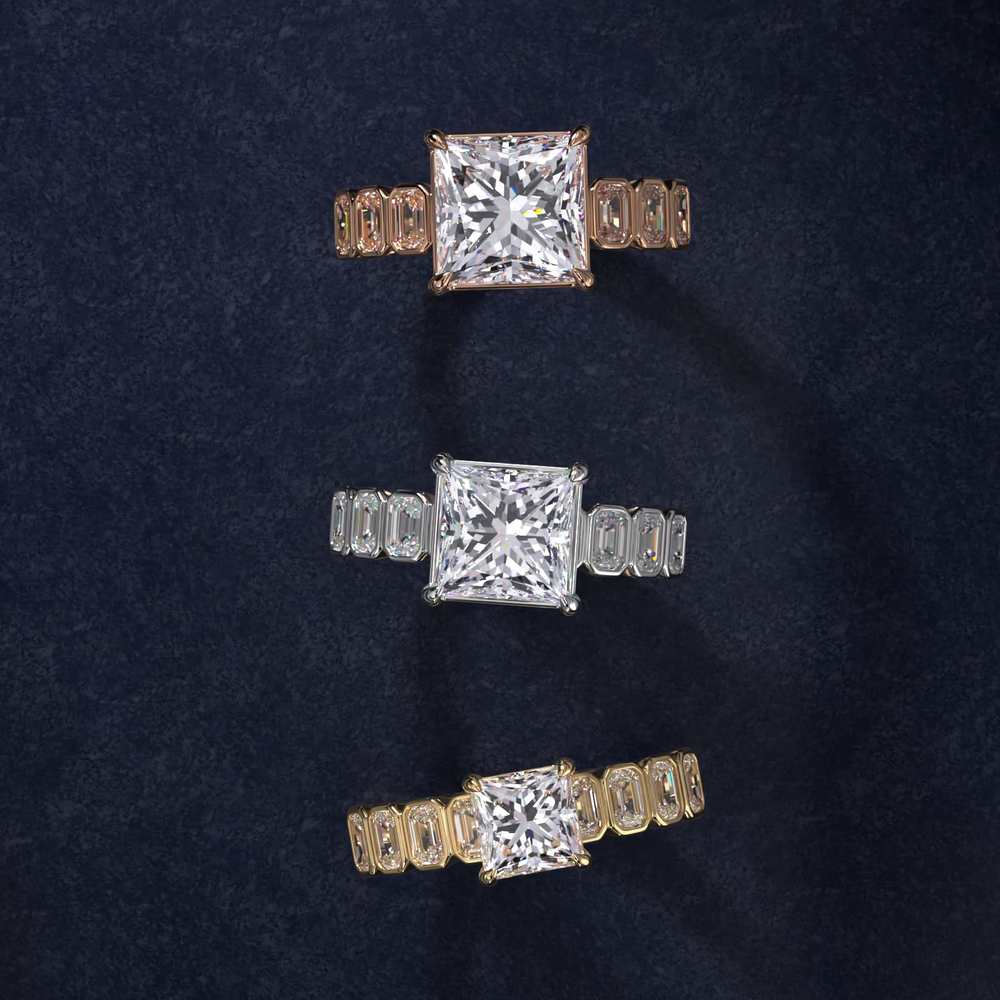
Bezel Solitaire Engagement Ring in 14K White Gold — $1,310 1 review. Standard flat-band bezel. Same corner protection as comfort fit, different feel on the finger. With G-VS1 = $3,846 total.
Bezel Solitaire Engagement Ring in 14K Rose Gold — $1,310 1 review. Rose gold flat-band bezel. With G-VS1 = $3,846 total.
Bezel Solitaire Engagement Ring in 14K Yellow Gold — $1,310 1 review. Yellow gold flat-band bezel. With G-VS1 = $3,846 total.
Bezel Solitaire Engagement Ring in Platinum — $1,550 1 review. Platinum flat-band bezel. With G-VS1 = $4,086 total.
Bezel + Channel Set Diamond Accent ($3,600–$4,500)
Channel set diamonds on the shank add sparkle to a bezel setting. In a channel setting, diamonds are set between two parallel walls of metal with no prongs — the diamonds sit in a groove. This adds brilliance to the band while keeping the same prong-free, snag-safe construction philosophy as the bezel center.
A bezel center + channel set band creates a ring with no exposed prongs anywhere on the setting — both the center stone protection and the band accent diamonds are prong-free.
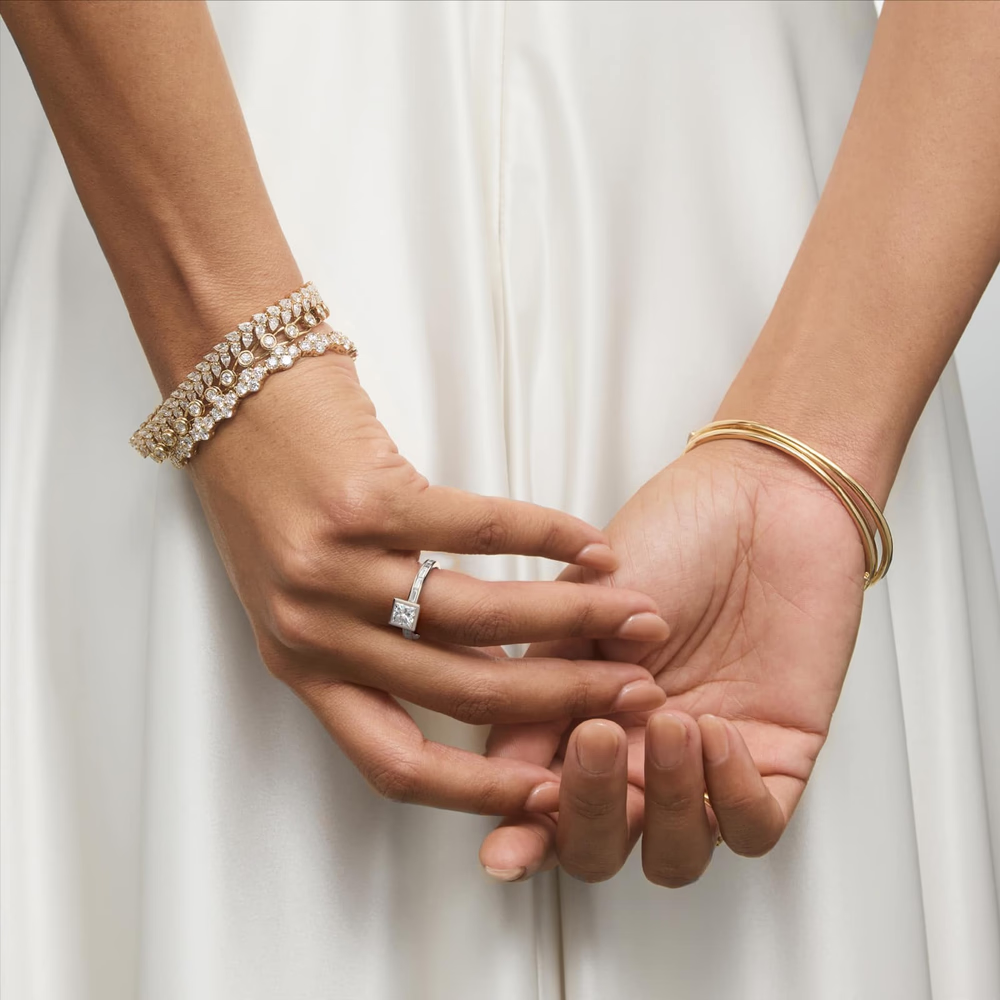
Bezel Engagement Ring with Channel Set Diamond Accent in 14K White Gold — $3,600 Full prong-free construction. Channel diamonds add band sparkle without adding snag points. With G-VS1 = $6,136 total.
Bezel Engagement Ring with Channel Set Diamond Accent in 14K Yellow Gold — $3,600 Yellow gold variation. The warm channel between bright white channel diamonds creates a striped visual pattern on the band. With G-VS1 = $6,136 total.
Bezel Engagement Ring with Channel Set Diamond Accent in 14K Rose Gold — $3,600 Rose gold variation. Rose metal channel + white diamonds = maximum warmth-to-brightness contrast on the band. With G-VS1 = $6,136 total.
Bezel Engagement Ring with Channel Set Diamond Accent in Platinum — $4,500 Platinum. Full prong-free design in the most durable metal. The channel walls in platinum will hold diamond position longer than gold under sustained wear. With G-VS1 = $7,036 total.
Bezel Three Stone: Baguette Side Stones ($2,720–$2,890)
Bezel-set baguette side stones extend the corner protection principle to a three-stone design. The baguette diamonds are fully bezeled — no side stone prongs at all. Combined with a bezeled princess cut center, this creates a three-stone ring with no exposed prongs on any of the three stones.
The baguette's rectangular shape complements the princess cut's square geometry. Both shapes reflect in broad planes rather than scattered points, creating a unified architectural look.
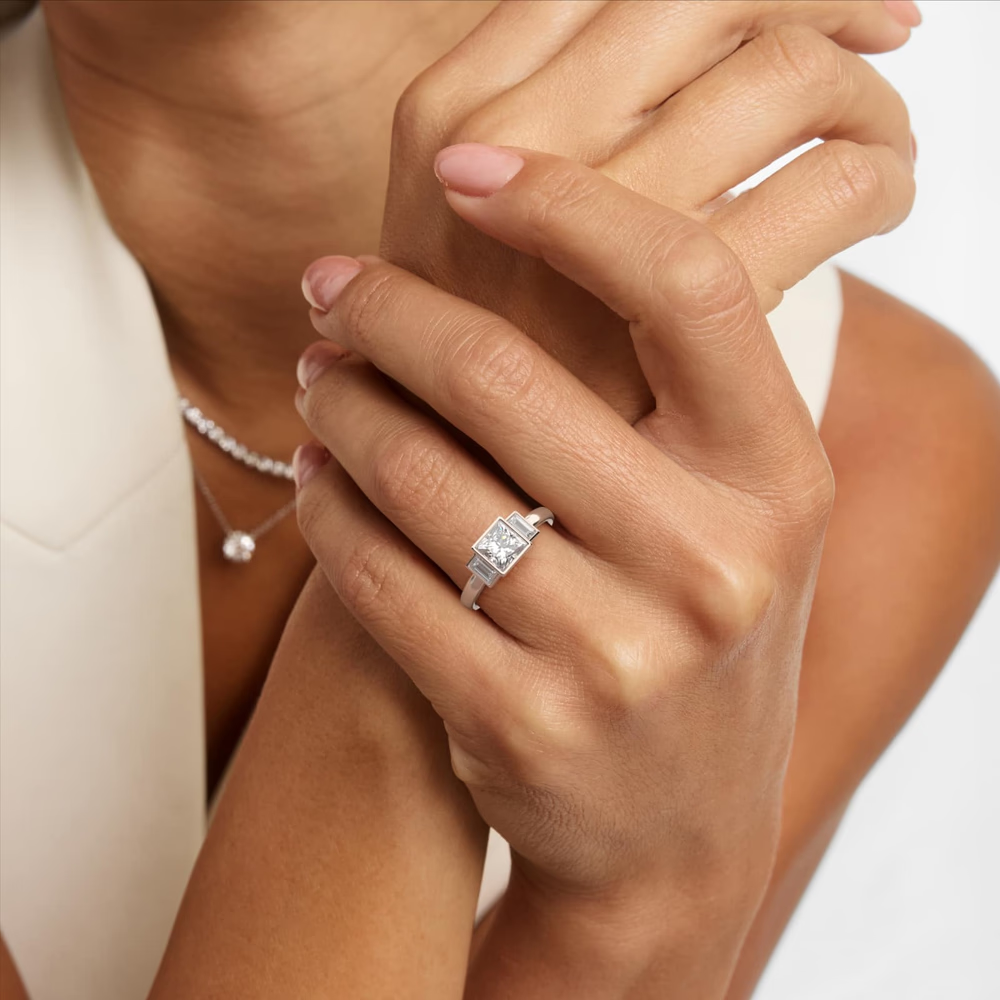
Bezel Straight Baguette Three Stone in 14K White Gold (JA) — $2,720 2 reviews. White gold bezel three stone. Clean, architectural, no exposed metal tips. With G-VS1 = $5,256 total.
Bezel Straight Baguette Three Stone in 14K Yellow Gold (JA) — $2,720 2 reviews. Yellow gold bezel three stone. The warm gold frames all three stones, creating a vintage-feeling three-stone with modern clean lines. With G-VS1 = $5,256 total.
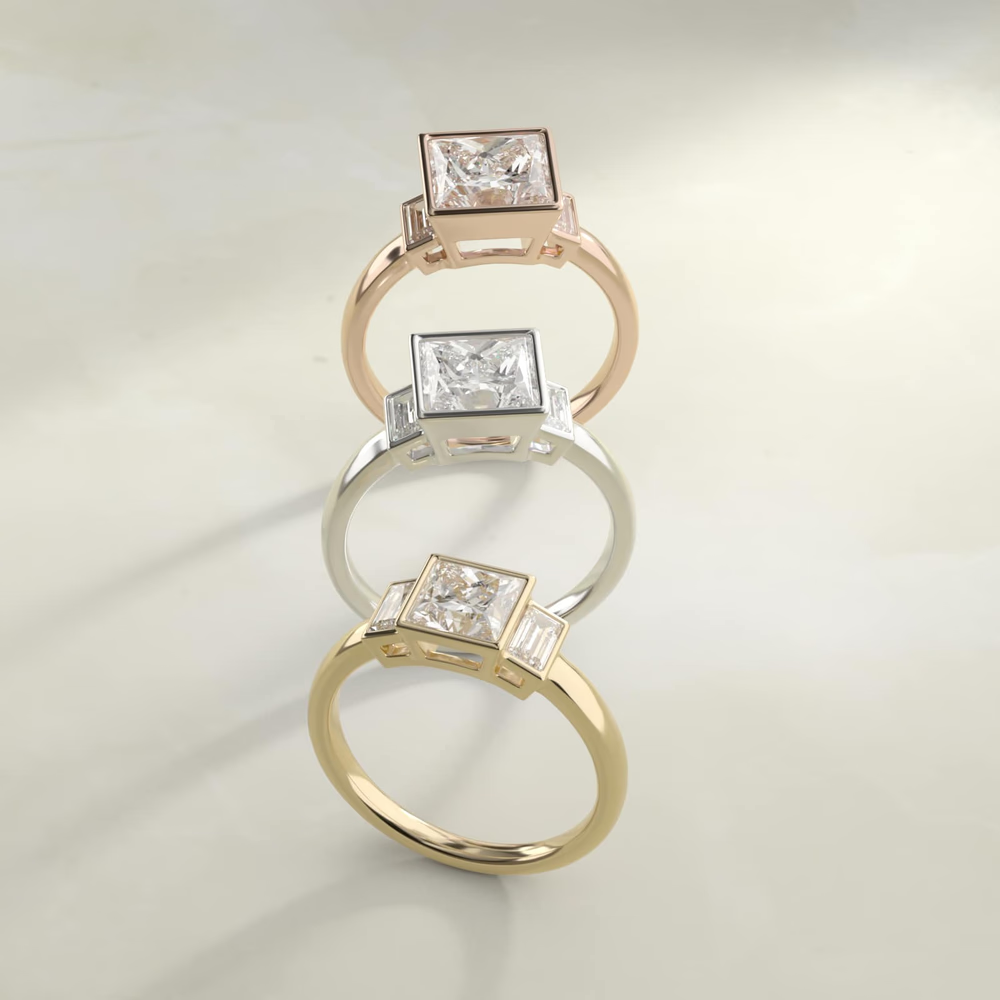
Bezel Straight Baguette Three Stone in 14K Rose Gold (JA) — $2,720 2 reviews. Rose gold bezel three stone. Most romantic metal for the baguette three-stone design. With G-VS1 = $5,256 total.
Bezel Straight Baguette Three Stone in Platinum (JA) — $2,890 2 reviews. Platinum baguette three stone. Maximum durability across all three bezeled stones. The bezel walls in platinum resist spreading over time better than gold. With G-VS1 = $5,426 total.
Bezel Three Stone: Emerald Cut Side Stones ($4,300–$4,625)
Emerald cut side stones combined with a princess cut center create a step-cut three-stone design. Both the center and side stones reflect in broad, open planes rather than scattered points. The result is a more formal, architectural look — less sparkle-focused, more presence-focused.
Bezel-setting the emerald cut sides removes the common problem of side stone prongs competing with the center stone's corner V-prongs. Every side stone prong represents another potential corner-crowding hazard for the princess cut center. With bezel sides, the side stones sit in their own metal frames with no prongs to crowd the center stone corners.
Bezel Set Emerald Cut Side Stone in 14K White Gold (JA) — $4,300 1 review. White gold. Emerald step-cut sides flank the princess center — architecturally refined, maximum formal look. With G-VS1 = $6,836 total.
Bezel Set Emerald Cut Side Stone in 14K Yellow Gold (JA) — $4,300 1 review. Yellow gold. Warm frames around all three step-cut stones. With G-VS1 = $6,836 total.
Bezel Set Emerald Cut Side Stone in 14K Rose Gold (JA) — $4,300 1 review. Rose gold. With G-VS1 = $6,836 total.
Bezel Set Emerald Cut Side Stone in Platinum (JA) — $4,625 1 review. Platinum. The premium bezel three-stone option — step-cut architecture in the most durable metal. With G-VS1 = $7,161 total.
Tides Of Summer Capsule
Up To 30% Off
Shop The Sale →Vault ClearanceClear The Vault
Up To 70% Off
Shop Vault Deals →Affiliate link — no extra cost to you
All 20 Settings — Complete Price Table
| Setting | Style | Metal | Setting Price | Stone (G-VS1) | Total Ring |
|---|---|---|---|---|---|
| Comfort Fit Bezel WG (JA) | Comfort Fit Solitaire | 14k WG | $1,305 | G-VS1 $2,536 | $3,841 |
| Comfort Fit Bezel RG (JA) | Comfort Fit Solitaire | 14k RG | $1,305 | G-VS1 $2,536 | $3,841 |
| Comfort Fit Bezel YG (JA) | Comfort Fit Solitaire | 14k YG | $1,305 | G-VS1 $2,536 | $3,841 |
| Bezel Solitaire WG | Plain Solitaire | 14k WG | $1,310 | G-VS1 $2,536 | $3,846 |
| Bezel Solitaire RG | Plain Solitaire | 14k RG | $1,310 | G-VS1 $2,536 | $3,846 |
| Bezel Solitaire YG | Plain Solitaire | 14k YG | $1,310 | G-VS1 $2,536 | $3,846 |
| Bezel Solitaire Platinum | Plain Solitaire | Platinum | $1,550 | G-VS1 $2,536 | $4,086 |
| Comfort Fit Bezel Platinum (JA) | Comfort Fit Solitaire | Platinum | $1,610 | G-VS1 $2,536 | $4,146 |
| Baguette Three Stone WG (JA) | Baguette Three Stone | 14k WG | $2,720 | G-VS1 $2,536 | $5,256 |
| Baguette Three Stone YG (JA) | Baguette Three Stone | 14k YG | $2,720 | G-VS1 $2,536 | $5,256 |
| Baguette Three Stone RG (JA) | Baguette Three Stone | 14k RG | $2,720 | G-VS1 $2,536 | $5,256 |
| Baguette Three Stone Platinum (JA) | Baguette Three Stone | Platinum | $2,890 | G-VS1 $2,536 | $5,426 |
| Channel Set Accent WG | Bezel + Channel | 14k WG | $3,600 | G-VS1 $2,536 | $6,136 |
| Channel Set Accent YG | Bezel + Channel | 14k YG | $3,600 | G-VS1 $2,536 | $6,136 |
| Channel Set Accent RG | Bezel + Channel | 14k RG | $3,600 | G-VS1 $2,536 | $6,136 |
| Emerald Cut Side Stone WG (JA) | Emerald Three Stone | 14k WG | $4,300 | G-VS1 $2,536 | $6,836 |
| Emerald Cut Side Stone YG (JA) | Emerald Three Stone | 14k YG | $4,300 | G-VS1 $2,536 | $6,836 |
| Emerald Cut Side Stone RG (JA) | Emerald Three Stone | 14k RG | $4,300 | G-VS1 $2,536 | $6,836 |
| Channel Set Accent Platinum | Bezel + Channel | Platinum | $4,500 | G-VS1 $2,536 | $7,036 |
| Emerald Cut Side Stone Platinum (JA) | Emerald Three Stone | Platinum | $4,625 | G-VS1 $2,536 | $7,161 |
Comfort Fit vs Standard Fit: What the Difference Feels Like
| Feature | Comfort Fit | Standard (Flat) Fit |
|---|---|---|
| Inner band surface | Domed (rounded toward finger) | Flat |
| Knuckle slide | Easier | Slightly harder |
| Finger feel | Rolls slightly on finger | Sits flush |
| Metal weight | Slightly heavier (more metal) | Lighter |
| Best for | Wide-knuckle fingers, rings worn daily | Slim fingers, consistent sizing |
| Setting price difference | $5 less (JA comfort fit vs BN solitaire) | — |
For the princess cut bezel specifically: comfort fit is recommended. The bezel itself is already a heavier-feeling setting than a four-prong solitaire (more visible metal). The comfort fit domed interior counterbalances the heavier bezel feel by making the band feel lighter against the finger.
Bezel vs V-Prong: The Light Return Trade-Off
| Factor | Full Bezel | Four V-Prong |
|---|---|---|
| Corner chip risk | Zero | Low |
| Corner snag risk | Zero | Low |
| Side-entry light | Blocked by bezel wall | Open |
| Face-up brilliance | Slightly reduced | Full |
| Fire (color flash) | Slightly reduced | Full |
| Profile height | Low (bezel sits flat) | Higher (basket raises stone) |
| Visible metal from above | Bezel frame visible | Only prong tips visible |
| Metal maintenance | None (no prong tightening) | Annual prong check recommended |
| Resizing | Standard | Standard |
The quantified difference: A study of light-return measurements across setting types shows that a full bezel reduces brilliance return by approximately 15–25% compared to a four-prong open solitaire. This is visible in side-by-side comparison but not easily noticed in the ring alone, worn daily. Buyers who have not seen their diamond in a four-prong setting will not miss the additional 15–25% of light return — they have no reference point.
Buyers who have already worn a princess cut in a four-prong setting and are switching to bezel for safety reasons should be aware of this difference before committing.
When to Choose Bezel Over V-Prong
Choose full bezel when:
- You work in healthcare and glove and unglove constantly
- You are highly active (climbing, CrossFit, manual work)
- You have had a previous princess cut diamond chip at the corner
- You prefer low-maintenance settings (no annual prong check needed)
- You find the modern, geometric bezel aesthetic more appealing than traditional prong settings
Choose V-prong when:
- Maximizing brilliance and fire is the priority
- You want the diamond to appear as large as possible face-up
- You are comfortable with annual prong checks
- You work in an office or low-contact environment
The bezel is not a compromise. It is a design decision with specific advantages for specific buyers. For buyers who match the use case above, the bezel is the better choice. For buyers who prioritize maximum sparkle, the V-prong is better.
Metal Guide for Bezel Settings
| Metal | Bezel Consideration | Recommendation |
|---|---|---|
| Platinum | Hardest — bezel wall height maintained longest, resists bezel spreading | Best for solitaire and three-stone bezels worn daily |
| 14k White Gold | Good — visible rhodium wear at bezel edges over time | Good for most buyers, re-plate every 2–3 years |
| 14k Rose Gold | Harder than yellow gold — good bezel durability + warm color frame around white diamond | Best color contrast; strong durability |
| 14k Yellow Gold | Softest common bezel metal — slight bezel edge wear over years | Requires occasional polishing; visual contrast is highest |
Why platinum matters more for bezels than for prong settings: The bezel is a thin continuous wall of metal. The integrity of the wall directly determines corner protection. A bezel that has worn down or spread slightly is no longer providing the same corner coverage as when new. Platinum's hardness and density (95% pure vs 58.5% for 14k gold) significantly delays this wear-down. For a setting whose primary function is corner protection, the material that best preserves that function over time is the right choice.
FAQ
Does a bezel setting hide the princess cut's shape? Partially. The bezel frame is visible from above as a metal border around the diamond. From above, you still clearly see the square shape of the princess cut. From the side, the diamond profile is lower and the bezel frame is the most visible element rather than prong tips. Whether this looks "hidden" or "framed" is a matter of preference.
Will my princess cut look smaller in a bezel? Yes, slightly. The metal frame takes up visual space on the finger that would otherwise be diamond. The face-up area of the diamond is the same — but the ring looks slightly smaller overall because the bezel adds a border that the eye reads as non-diamond. A bezel-set princess cut at 1ct will appear slightly smaller face-up than a prong-set 1ct princess on a plain band.
Is a bezel setting harder to resize? No. Bezel solitaire bands are resized by sizing the shank, not the bezel head. The bezel head remains untouched during sizing. Most jewelers can resize a bezel ring in ±2 sizes without difficulty.
Can I add pavé to a bezel setting? Yes — the channel set accent options on this list demonstrate this. You can also request custom settings with pavé bands on a bezel head, though this is not available as a standard Blue Nile option.
Do bezel settings work with all princess cut sizes? Bezel settings must be sized to match the center stone. If you swap the center stone after purchasing (upgrade or replacement), the bezel must be re-sized to fit the new stone. Unlike prong settings where a jeweler can slightly adjust prong grip for minor size differences, bezels are metal-to-stone fit and require custom fitting for any size change.
Is the Comfort Fit bezel worth the slight premium over the standard bezel? Yes, for most buyers. The $5 price difference is negligible. Comfort fit interiors are simply more comfortable for daily wear, especially when adding and removing the ring. The corner protection is identical.
See Also
- Princess Cut Diamond Engagement Ring — All Settings Guide
- Princess Cut Solitaire Engagement Ring — V-Prong Corner Protection in Depth
- Princess Cut Cathedral Engagement Ring — Corner Snag Risk Doubled vs Round
- Princess Cut Three Stone Engagement Ring — Side Stone Sizing Rules
- 1 Carat Princess Cut Diamond Engagement Ring — Complete Ring Price Guide
Expert Verdict
Always audit the stone individually — no grade replaces seeing the actual diamond. The certificate tells you what to look for. Your eyes tell you whether to buy.
— Farzana Hasan, GIA Expert · DiamondCritics.com