TL;DR: The Named Concept
Every princess cut buying guide sets H color as the minimum for white gold and platinum. That advice is correct. The same guides then say yellow gold "hides color" and recommend going lower to I or even J. That advice is wrong for princess cuts specifically.
Here is what actually happens: yellow gold reflects warm-toned light upward into the diamond from the mounting. In a round brilliant, that warmth hits 57–58 facets in a complex pattern that distributes and neutralizes it. In a princess cut, the four corners have shallow, elongated facets with less optical complexity. Those corners reflect the yellow gold's warmth back to the eye as visible tinting before the rest of the stone's brilliance can mask it.
H color in yellow gold + princess cut = visible yellow tinting visible in the corners under most lighting. G is the minimum color grade that provides enough whiteness at the corners to absorb the yellow gold's warmth without showing it back.
This is the G-Color Floor. It is not a marketing rule. It is a geometry rule. And it only applies to princess cut. Cushion cuts, oval cuts, and round brilliants in yellow gold can often go to H or I successfully because their facet patterns provide enough brilliance to counteract the warmth. Princess cut corners cannot.
Why Yellow Gold Changes the Color Floor
A diamond does not exist in isolation. It sits in a metal mounting, and that mounting reflects light upward into the pavilion of the stone. The color of the mounting influences the perceived color of the diamond.
White gold and platinum reflect neutral-to-cool light. This light enters the diamond's pavilion and exits through the table in a way that does not add warmth. The diamond's own color grade is what you see.
Yellow gold reflects warm, yellow-tinted light. This light enters the diamond's pavilion and adds to whatever color the diamond already has. A G diamond in yellow gold shows as G. An H diamond in yellow gold shows as I or J in the corners. An I diamond in yellow gold shows warmth that is noticeable to an untrained eye under normal indoor lighting.
This effect is well understood and it is why jewelers have always recommended going one grade higher in yellow gold. The standard rule is: white gold floor minus one grade = yellow gold floor. If H is the round brilliant floor in white gold, G is the floor in yellow gold.
For princess cut specifically, the floor moves up one additional grade because the corner facets amplify the mounting's color contribution. The princess cut corners are the problem zone. They are the shallowest, least optically complex area of the stone. They receive the mounting's yellow reflection and have less brilliance available to mask it.


The Corner Facet Geometry
A round brilliant diamond has 57 or 58 facets arranged in a rotationally symmetric pattern. Every viewing direction from above shows a mix of crown facets, star facets, and upper girdle facets. The facet mix is consistent. There is no "weak zone" where color shows more than anywhere else.
A princess cut diamond has 50–58 facets (depending on the exact cut) arranged in a square pattern with four corner convergence points. At each corner, the facets converge at a 90° angle. The two facets that meet at the corner are each elongated and shallow — they have less depth than the equivalent facets elsewhere in the stone. Less depth means less optical path length. Less path length means less brilliance fire from those facets.
The result is that the four corners of a princess cut are the lowest-brilliance zones in the stone. They scatter light less effectively. When that corner receives yellow-tinted light from a yellow gold mounting, there is less brilliance available to dilute and mask the warmth. The warmth shows through as a visible yellow tint, especially in the pointed tips of the corners when viewed from above at an angle.
This is not a defect in any specific diamond. It is a geometric property of the princess cut that every princess cut shares. The only variable is how much color grade the center stone has — and therefore how much warmth it adds to the yellow gold's reflection.
G vs H vs I: What You Actually See in Yellow Gold
| Color | Yellow Gold Effect | Corner Appearance | Our Recommendation |
|---|---|---|---|
| D–F | Warm light enters; diamond absorbs it easily | Corners appear white | Safe, but premium price |
| G | Warm light enters; corners hold white appearance | Corners appear near-colorless | Minimum recommended |
| H | Corners take on faint warmth | Tinting visible in corners under side lighting | Acceptable only in very simple solitaires with minimal yellow gold exposure |
| I | Corners show noticeable warmth | Visible to untrained eye indoors | Not recommended for yellow gold princess cut |
| J | Corners show obvious yellow | Warmth visible in all lighting | Avoid |
The G-Color Floor does not mean you must buy G. D, E, and F diamonds will all look excellent in yellow gold. G is the minimum grade below which the corner warmth becomes visible to a careful observer under normal lighting conditions.
Reference stone for all price totals in this guide: G-VS1 princess cut at $2,536 (or G-VS2 at $2,212 for a more budget-conscious build).
Entry Solitaires: Clean Yellow Gold Settings ($965–$1,255)
The entry solitaire category in yellow gold is the strongest proof of the G-Color Floor. A clean solitaire has maximum yellow gold exposure — no side diamonds, no pavé, no halo to draw the eye away from the center stone. The yellow gold prongs and band frame the princess cut from four sides. The corner warmth, if present, has nowhere to hide.
For a clean solitaire in yellow gold, G color is non-negotiable. Anything lower will be noticeable.
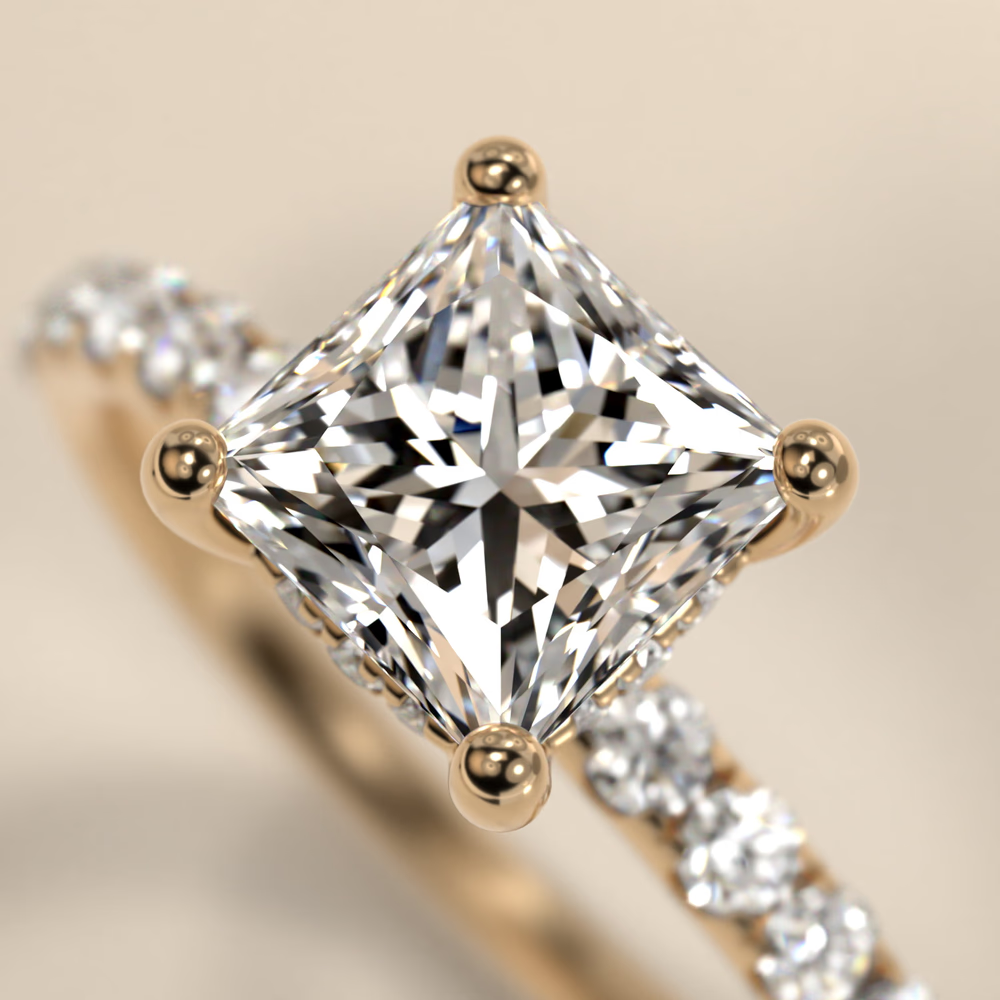
Woven Solitaire Engagement Ring in 14K Yellow Gold (JA) — $965 16 reviews. Open weave pattern at the basket gives a textured, artisan appearance that differs from standard solitaire prong work. The woven metal is more decorative than structural — the four prongs still hold the princess cut. Yellow gold woven detail is the warmest possible first impression. With G-VS1 = $3,501 total. With G-VS2 = $3,177 total.
Petite Solitaire Engagement Ring in 14K Yellow Gold — $1,000 1,020 reviews. The highest-reviewed solitaire on Blue Nile in any metal. Thin 1.6mm band, four V-prongs, minimal presence. The number of reviews reflects how thoroughly this setting has been tested in the field — buyers know exactly what they are getting. With G-VS1 = $3,536 total. With G-VS2 = $3,212 total.
Solitaire Wire Basket Engagement Ring in 14K Yellow Gold (JA) — $1,030 49 reviews. Open wire basket head allows maximum light entry from the sides. Wire basket construction is lighter and more open than a solid prong basket — the center stone appears to float above the band with minimal metal obstruction. With G-VS1 = $3,566 total. With G-VS2 = $3,242 total.
Petite Diamond Engagement Ring in 14K Yellow Gold (1/10 ct tw) — $1,115 307 reviews. Petite band with 1/10 ct tw accent diamonds set along the shank. The diamond accents are small enough that this reads as a solitaire from a distance. High review count reflects consistent buyer satisfaction. Setting price includes the 1/10 ct tw band diamonds. With G-VS1 = $3,651 total.
Petite Split Shank Solitaire Engagement Ring in 14K Yellow Gold — $1,165 16 reviews. Shank splits as it approaches the head, creating an open V-shape beneath the princess cut. The split shank creates a visual illusion of a larger center stone. Yellow gold split shanks are a classic vintage-era styling. With G-VS1 = $3,701 total.
Petite Hidden Halo Solitaire Plus Engagement Ring in 14K Yellow Gold — $1,255 81 reviews. Hidden halo means the pavé diamond ring is set below the crown of the center stone, not around it. Viewed from above, it appears as a clean solitaire. Viewed at an angle, a ring of pavé diamonds is visible beneath the princess cut. Adds sparkle without altering the face-up solitaire profile. With G-VS1 = $3,791 total.
Twist, Textured & Accented Entry ($1,380–$1,490)
Three settings that add the most visual texture for the price while remaining under $1,500 as a setting.
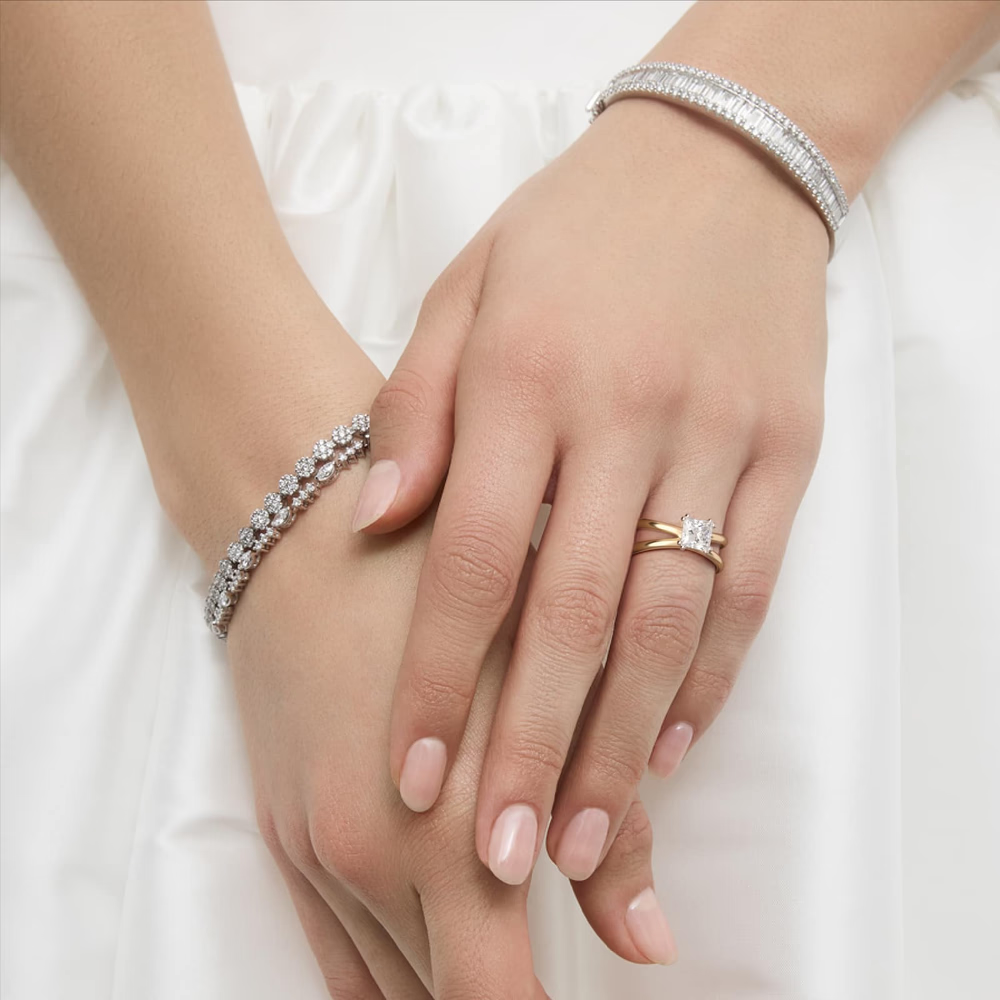
Petite Twist Engagement Ring with Diamonds in 14K Yellow Gold (1/10 ct tw) — $1,380 417 reviews. Twisted band design with diamonds set into the twist. The diagonal faceting of the twist creates movement visible from all viewing angles. One of the most consistently popular non-solitaire settings on Blue Nile. 417 reviews is a very high confidence signal. With G-VS1 = $3,916 total.
Intricate Basket Engagement Ring in 14K Yellow Gold (JA) — $1,385 28 reviews. Detailed basket head with cut-out metal work beneath the princess cut. The intricate basket catches light from the sides and creates visual depth at the center. Best appreciated in yellow gold where the metalwork color contrasts against the white diamond. With G-VS1 = $3,921 total.
Riviera Micropavé with Sapphire Engagement Ring in 14K Yellow Gold — $1,490 67 reviews. Alternating diamonds and blue sapphires set in a riviera pattern along the band. The blue sapphire accents create strong color contrast against the yellow gold band — a tricolor effect (white diamond center, yellow gold band, blue sapphire accents). Sapphires intensify the color contrast argument: if the princess cut center has visible warmth, it competes with the intended blue contrast. G or better required. With G-VS1 = $4,026 total.
Pavé Mid-Range: 14 Yellow Gold Designs ($1,650–$2,285)
The mid-range pavé category is the most populated tier in yellow gold. Pavé diamonds set along the band in yellow gold introduce a second consideration: the pavé diamonds themselves pick up warmth from the yellow gold and from each other. A H-color center stone in yellow gold with pavé accent diamonds will show a warmth gradient — warmer at the corners (where the princess cut is most vulnerable) and marginally warmer along the band (from pavé diamonds in yellow gold).
G-color center stone with pavé band in yellow gold: the center stone remains visibly whiter than the band accent diamonds, which is the expected and correct appearance. H-color center stone with pavé band in yellow gold: the center stone corners approach the color temperature of the accent diamonds, creating a visually flattening effect.
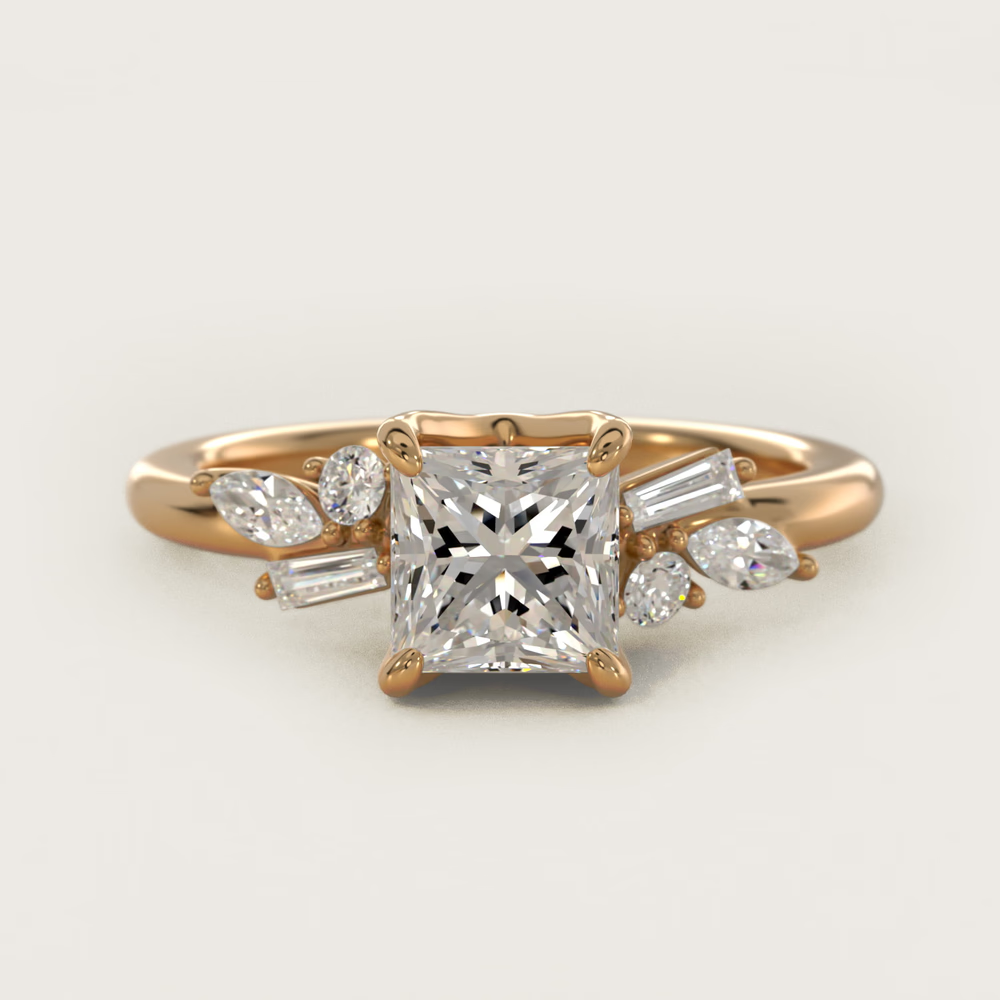
Criss Cross Engagement Ring in 14K Yellow Gold (JA) — $1,650 20 reviews. Crossing band design that creates an X-pattern beneath the setting. The criss-cross geometry draws the eye across the ring in a way that emphasizes the yellow gold color. With G-VS1 = $4,186 total.
Marquise Diamond Accents Pavé Basket Engagement Ring in 14K Yellow Gold (JA) — $1,650 7 reviews. Marquise-shaped diamond accents flanking the basket, with pavé set into the head. The marquise accent shape creates a vintage French motif around the princess cut center. With G-VS1 = $4,186 total.
Cross Prong Pavé Surprise Engagement Ring in 14K Yellow Gold (JA) — $1,710 31 reviews. Cross-prong head (X-shaped prong pattern) with pavé diamonds along the cross structure. The cross prong provides better corner coverage than four individual V-prongs for a princess cut. Yellow gold cross prongs are more visible than white gold — the head is a design feature rather than an invisible structure. With G-VS1 = $4,246 total.
Solo Infinity Pavé Engagement Ring in 14K Yellow Gold (JA) — $1,720 68 reviews. Infinity loop motif at the shank with pavé diamonds. The infinity symbol loop is created in yellow gold with pavé diamonds flowing along the curves. With G-VS1 = $4,256 total.
Bypass Pavé Kite-Set Engagement Ring in 14K Yellow Gold (JA) — $1,740 9 reviews. Bypass shank with diamond set in a kite orientation. The kite-set accent is a secondary diamond placed at an angle offset from the center princess cut. With G-VS1 = $4,276 total.
Floral Motif Engagement Ring in 18K Yellow Gold (JA) — $1,780 4 reviews. The only 18K yellow gold setting in this guide. 18K gold has 75% gold content vs 58.5% in 14K — it is more intensely yellow and reflects more warmth. The G-Color Floor applies with greater urgency to 18K settings: F or G only; do not use H in 18K yellow gold with a princess cut. The floral motif at the basket adds Art Nouveau detailing. With G-VS1 = $4,316 total.
Milgrain and Pavé V-Shank Engagement Ring in 14K Yellow Gold (1/8 ct tw) — $1,790 32 reviews. Milgrain bead detail along the band edges combined with pavé diamonds set in a V-shank pattern. Milgrain is a row of tiny metal beads pressed along the band edge — it is an Edwardian-era detail that was used in yellow gold settings before white metal became fashionable. Setting price includes 1/8 ct tw accent diamonds. With G-VS1 = $4,326 total.
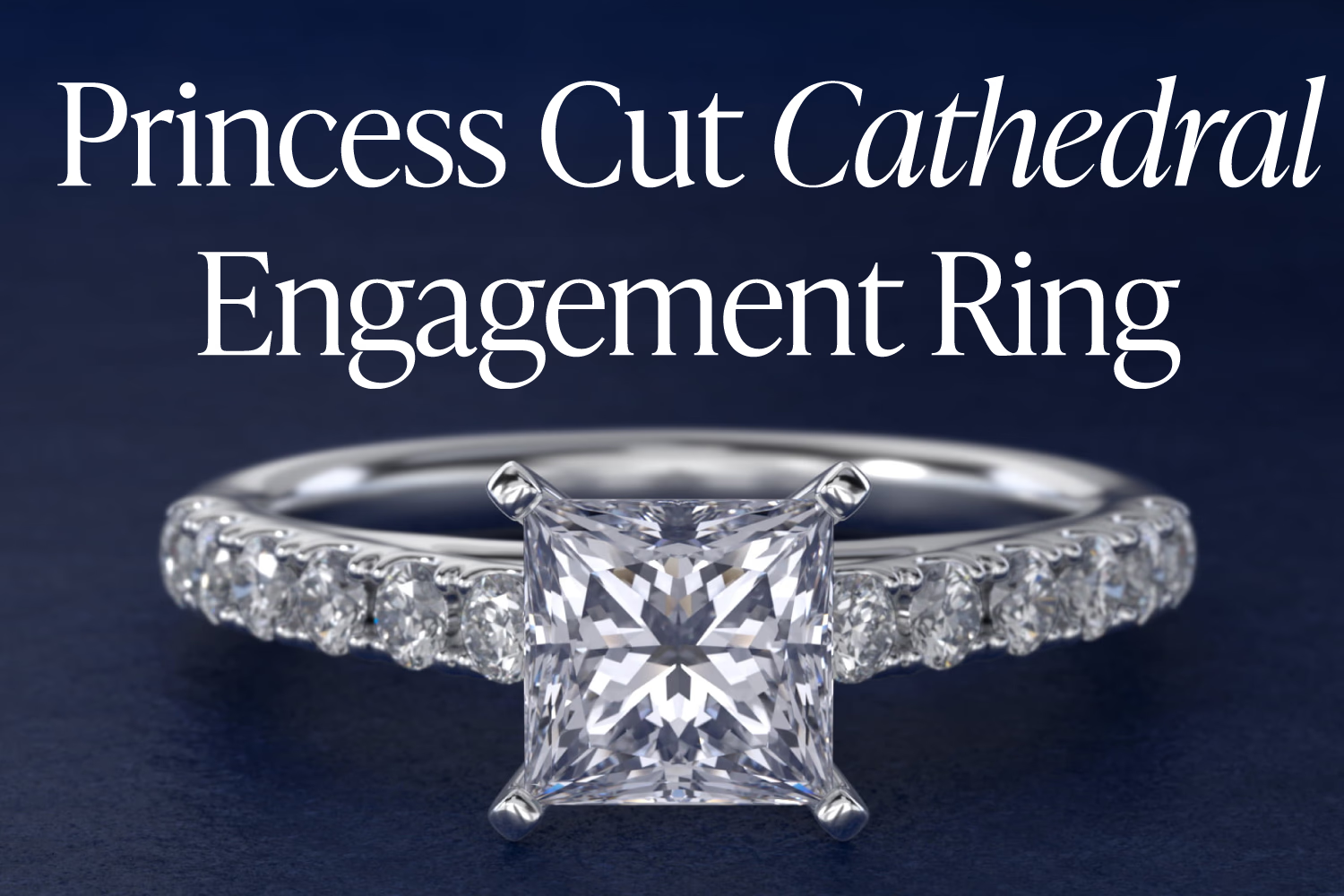
Cathedral Pavé Crown Engagement Ring in 14K Yellow Gold (JA) — $1,800 43 reviews. Cathedral arch with pavé diamonds set along the crown of the arch. The cathedral elevation increases the princess cut's height above the band, which also increases corner snag exposure. For wearers choosing cathedral style in yellow gold, the G-Color Floor plus V-prong corner protection are both necessary. With G-VS1 = $4,336 total.
Marquise Three Stone Engagement Ring in 14K Yellow Gold (JA) — $1,970 152 reviews. Princess cut center flanked by two marquise-cut side stones. The marquise side stones are set east-west (horizontally) with their points running parallel to the band. 152 reviews provides strong confidence. The marquise side stones in this setting have their own color grades — match side stone color to center stone grade or within one level for visual consistency. With G-VS1 = $4,506 total.
Crown Pavé Hidden Halo Engagement Ring in 14K Yellow Gold (JA) — $1,970 26 reviews. Pavé-set crown head with a hidden halo beneath the princess cut center. The crown pavé refers to diamond accents set into the four prong arms that form the head — this adds sparkle at the base of the center stone where the prongs meet. The hidden halo beneath adds a ring of brilliance visible at an angle. With G-VS1 = $4,506 total.
Common Prong Pavé Engagement Ring in 14K Yellow Gold (JA) — $2,090 107 reviews. Common prong pavé means adjacent pavé diamonds share a single prong between them rather than each having individual prongs. This reduces the amount of visible metal between pavé stones and increases sparkle density. 107 reviews confirms this is one of the most tested pavé settings on the platform. With G-VS1 = $4,626 total.
Solitaire Pavé Basket Engagement Ring in 14K Yellow Gold (JA) — $2,260 60 reviews. Pavé diamonds set into the basket head structure rather than along the band. The band remains clean while the head glitters. This creates a distinction: the center stone is in a sparkling frame, and the band is a clean yellow gold shank. With G-VS1 = $4,796 total.
Knife Edge Micropavé Engagement Ring in 14K Yellow Gold (1/3 ct tw) — $2,285 10 reviews. Knife edge band profile (the band comes to a ridge along the top rather than lying flat) with micropavé diamonds set along the knife edge ridge. The sharpness of the knife edge profile is reduced in yellow gold because the metal color softens the visual crispness compared to white gold or platinum. Setting includes 1/3 ct tw accent diamonds. With G-VS1 = $4,821 total.
Side Stone, Three Stone & Channel ($2,300–$2,610)
Side stone settings introduce flanking diamonds or gemstones that draw comparison to the center stone. Color matching becomes critical: if the center stone is H in yellow gold, and the side stones are G, the center stone will appear warmer than the stones meant to flank it — the opposite of the intended effect. Side stone settings in yellow gold demand G-minimum for the center stone to maintain visual consistency with the side stones.
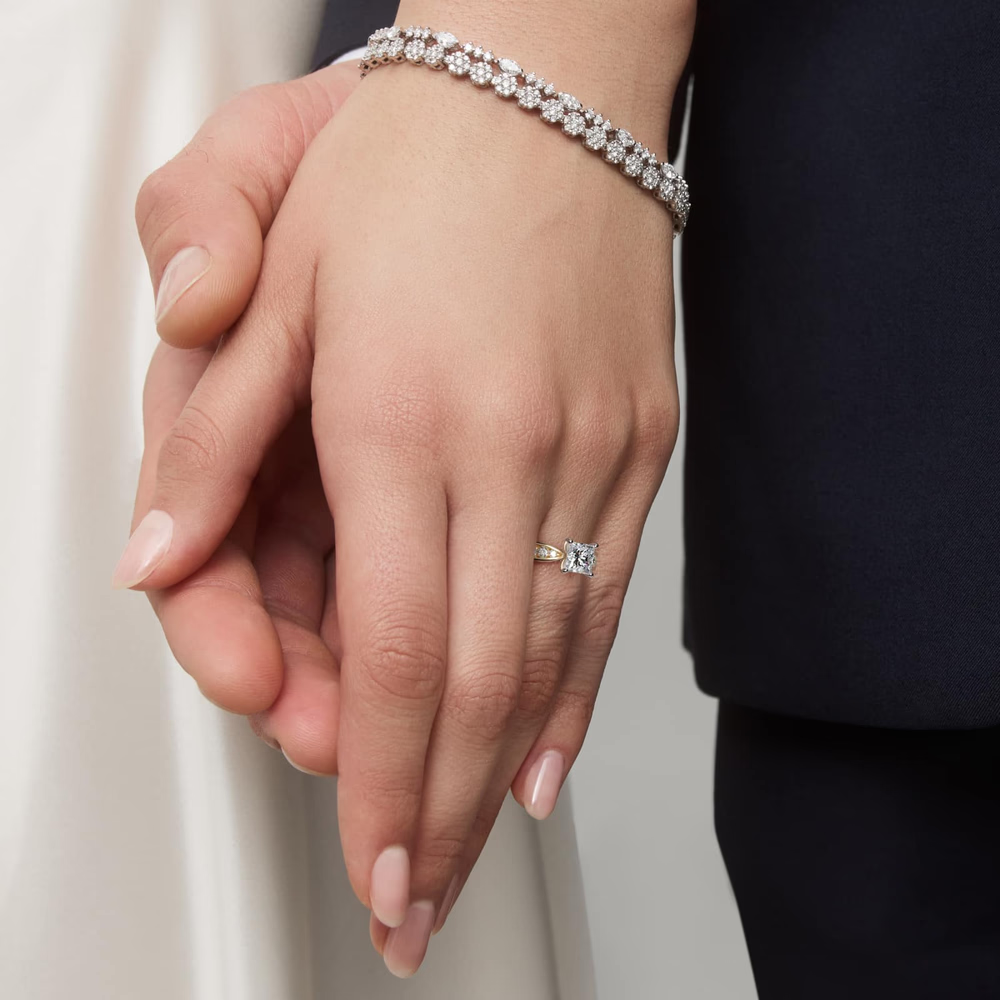
Diamond Whisper Side Stone Engagement Ring in 14K Yellow Gold (JA) — $2,300 1 review. Small, delicate diamond accents tucked beside the center stone — present but minimal. The "whisper" scale means the side diamonds are barely visible, creating an impression of flanking diamonds without the geometric assertion of traditional three-stone settings. With G-VS1 = $4,836 total.
Marquise Side Stone Shared Prong Engagement Ring in 14K Yellow Gold (JA) — $2,350 49 reviews. Marquise-shaped side stones with a shared prong holding adjacent stones together. The shared prong reduces visible metal between stones for a cleaner, more continuous look. With G-VS1 = $4,886 total.
Bow-Tie Channel Set Engagement Ring in 14K Yellow Gold (JA) — $2,350 146 reviews. Channel-set diamonds in a bow-tie arrangement flanking the princess cut center. Channel setting means the accent diamonds sit in a metal channel with walls on both sides — fully secured with no individual prongs. 146 reviews makes this one of the more proven side-stone designs in yellow gold. With G-VS1 = $4,886 total.
Eight Stone Contour Shared Prong Engagement Ring in 14K Yellow Gold (JA) — $2,410 No reviews yet. Eight individual accent diamonds set in a contoured shared-prong configuration flanking the center. More stones than a standard three-stone but less than full pavé. New to the catalog. With G-VS1 = $4,946 total.
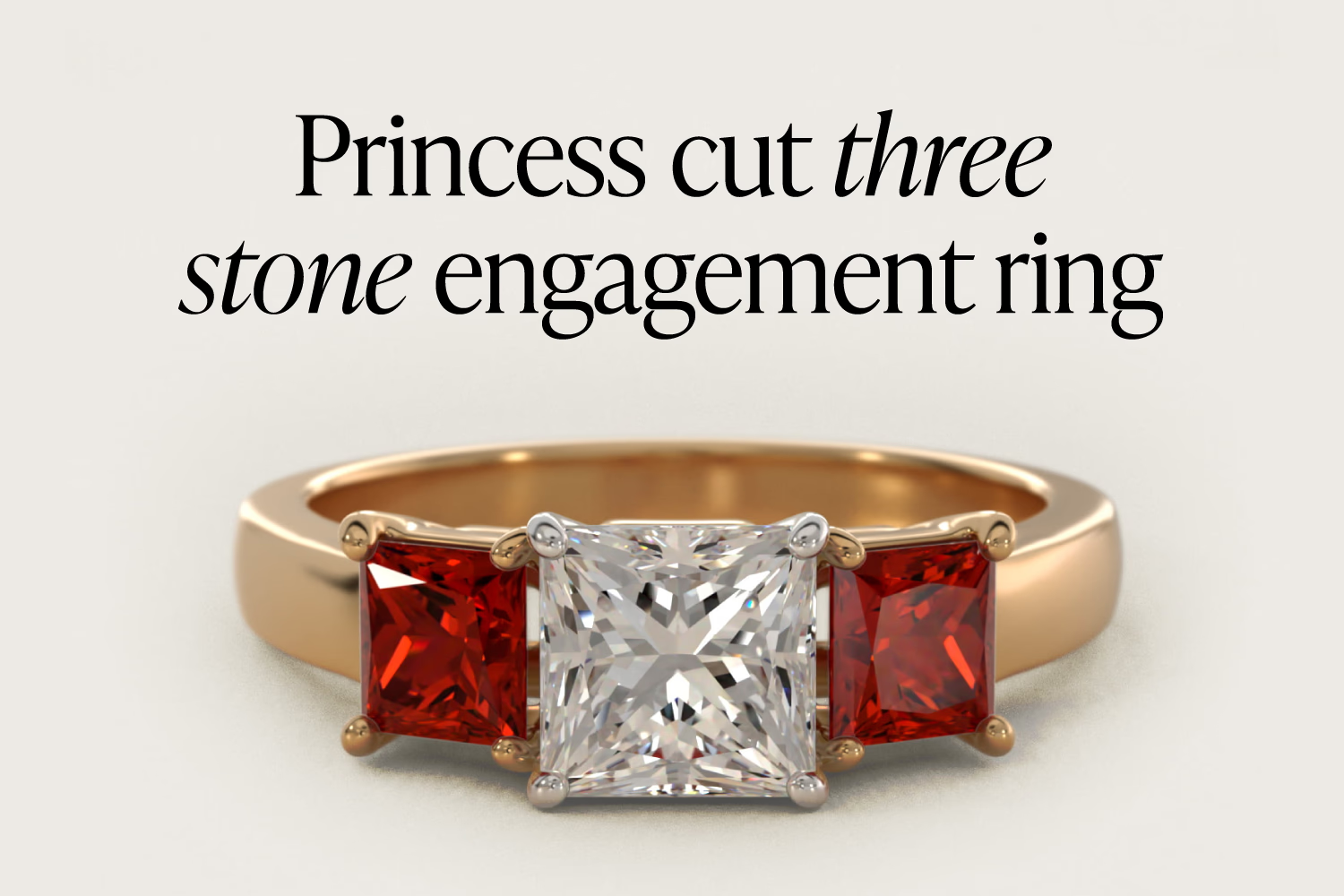
Princess Cut Ruby Three Stone Engagement Ring in 14K Yellow Gold (JA) — $2,410 3 reviews. Princess cut diamond center flanked by princess cut ruby side stones. Ruby red and yellow gold is a warm color combination — both the metal and the side stones add warmth. The center princess cut diamond must be G or better: the warm ruby flanking in warm yellow gold creates maximum color pressure on the center stone's whiteness. With G-VS1 = $4,946 total.
Diamond Three Stone Scroll Undergallery Engagement Ring in 14K Yellow Gold (JA) — $2,410 74 reviews. Three-stone setting with scroll metalwork visible in the undergallery — the decorative structure beneath the head that connects the three stones. Scroll details are an Art Nouveau and Victorian-era motif. Yellow gold scroll undergallery is a directly period-accurate combination. With G-VS1 = $4,946 total.
Men's Round Diamond Channel Set Engagement Ring in 14K Yellow Gold (1/3 ct tw) — $2,610 1 review. Wider men's shank with round channel-set diamonds in yellow gold. Useful for couples who want matching yellow gold rings with shared visual language — a men's ring with channel-set rounds and a women's ring with a princess cut center in the same 14K yellow gold. Setting includes 1/3 ct tw channel diamonds. With G-VS1 = $5,146 total.
Tides Of Summer Capsule
Up To 30% Off
Shop The Sale →Vault ClearanceClear The Vault
Up To 70% Off
Shop Vault Deals →Affiliate link — no extra cost to you
Halo & Statement Designs ($2,470–$4,510)
Halo settings change the G-Color Floor equation in one specific way: the halo of pavé diamonds around the center stone provides a ring of brilliance that makes the center stone's face-up area appear larger and brighter. This brilliance from the halo can partially mask corner warmth by pulling the eye toward the glittering perimeter rather than the corners.
However, this effect is not strong enough to drop below G color in yellow gold with a princess cut. It reduces corner warmth visibility but does not eliminate it. G remains the minimum. The halos listed here offer the most dramatic visual impact in yellow gold settings.
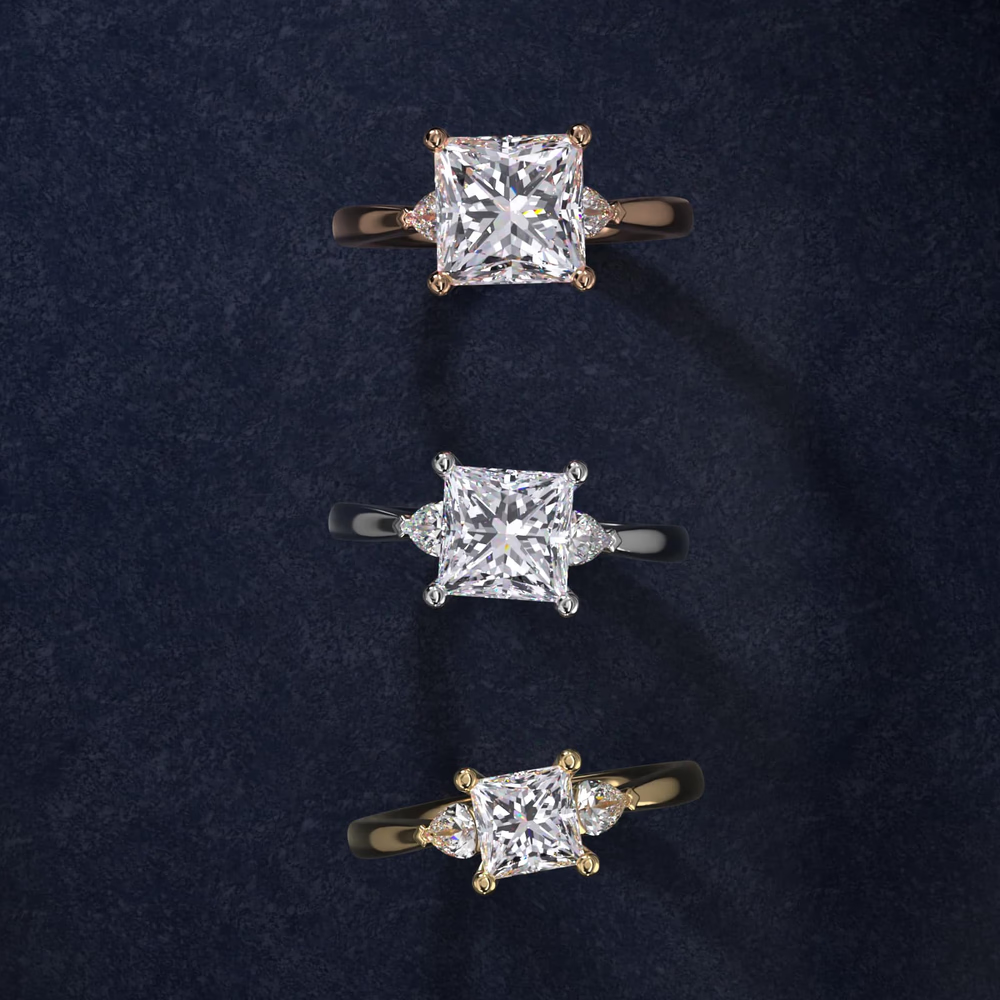
Falling Edge Pavé Halo Engagement Ring in 14K Yellow Gold (JA) — $2,470 368 reviews. Pavé halo with a "falling edge" design — the halo extends downward along the sides of the setting rather than sitting flat around the center stone. 368 reviews is the highest review count in the halo category. This is the most validated halo design in yellow gold on Blue Nile. With G-VS1 = $5,006 total.
Vintage Inspired Halo Engagement Ring in 14K Yellow Gold by Zac Zac Posen — $3,135 4 reviews. Designer collaboration with Zac Zac Posen featuring vintage-inspired filigree and pavé details in the halo and gallery. Yellow gold is the period-correct metal for vintage-inspired diamond settings — mid-century and Edwardian designs were made in yellow gold before white metal preferences shifted post-1920s. With G-VS1 = $5,671 total.
Square Halo Engagement Ring in 14K Yellow Gold by Zac Zac Posen — $3,160 9 reviews. Square-shaped halo that mirrors the geometry of the princess cut center. A square halo on a princess cut creates a frame-within-a-frame effect — each square's corners align with the princess cut's corners, extending the visual footprint of the stone dramatically. With G-VS1 = $5,696 total.
Pear Shape Side Stone Halo Engagement Ring in 14K Yellow Gold (JA) — $3,570 1 review. Halo setting with pear-shaped side stones flanking the princess cut center. Three distinct diamond shapes in one ring: princess cut center, round pavé halo, pear-shaped side stones. The combination of shapes creates visual complexity uncommon in standard settings. With G-VS1 = $6,106 total.
Floral Side Stone Engagement Ring in 14K Yellow Gold (JA) — $3,895 8 reviews. Floral petal motif constructed from individual diamond-set petals flanking the center stone. The petals are three-dimensional metalwork with pavé diamonds embedded in each petal surface. The most ornate side-stone design in this guide. With G-VS1 = $6,431 total.
Escalating Baguette Side Stone Engagement Ring in 14K Yellow Gold (JA) — $4,190 5 reviews. Ascending baguette-cut diamonds set in steps along the shank, increasing in size as they approach the center. Baguette diamonds have step-cut facets — like princess cuts, they are vulnerable to showing color. Match the baguette side stones to G color or better when combining with a G-minimum center stone in yellow gold. With G-VS1 = $6,726 total.
Vintage Diamond Halo Engagement Ring in 14K Yellow Gold (5/8 ct tw) — $4,460 3 reviews. Vintage-styled diamond halo with 5/8 ct tw of accent diamonds — the highest total accent diamond weight in this guide. The 5/8 ct tw is distributed through the halo, gallery, and band. Yellow gold vintage halo settings were the dominant category in the Art Deco period; this is a direct descendant of that tradition. With G-VS1 = $6,996 total.
Round Split Band Diamond Halo Engagement Ring in 14K Yellow Gold (JA) — $4,510 210 reviews. Diamond halo with a split band, highest-reviewed design in the statement category. The split band creates an architectural visual effect — the ring appears to branch from the center stone outward toward the finger. 210 reviews across all metal options, with yellow gold being the warmest-contrast version available. With G-VS1 = $7,046 total.
Complete Yellow Gold Princess Cut Price Table
All totals use a G-VS1 princess cut at $2,536. Settings with ct tw accent diamonds include those diamonds in the listed setting price.
Yellow Gold vs White Gold vs Rose Gold: The Color Decision
| Metal | Color Effect on Princess Cut | Recommended Minimum Color Grade |
|---|---|---|
| Platinum | Neutral-cool reflection; no warmth added | H |
| 14K White Gold | Near-neutral reflection; minimal warmth | H |
| 18K White Gold | Slightly warmer than 14K; more yellow in alloy | H or G |
| Rose Gold | Moderate warmth, pinkish tone; less yellow than yellow gold | G to H depending on shade |
| 14K Yellow Gold | Warm yellow reflection; amplifies corner warmth | G minimum |
| 18K Yellow Gold | Stronger yellow reflection; more gold content | F or G |
The practical shopping consequence: if you are comparison shopping between yellow gold and white gold versions of the same ring with the same diamond, the white gold version will look visibly whiter at the corners. This is expected and correct. If both versions look identically warm at the corners, either the diamond color grade is too low for the yellow gold version or too high for the white gold version.
Choosing Your Yellow Gold Princess Cut: Quick Filters
Budget under $4,000 total ring cost:
- Petite Solitaire YG + G-VS2 ($3,212 total) is the strongest value play in this category.
Most reviews and validation:
- Petite Solitaire YG — 1,020 reviews
- Petite Twist YG — 417 reviews
- Falling Edge Pavé Halo YG — 368 reviews
Vintage aesthetic:
- Milgrain and Pavé V-Shank YG
- Diamond Three Stone Scroll Undergallery YG
- Vintage Inspired Halo by Zac Zac Posen YG
Maximum impact / largest visual footprint:
Color safety for 18K yellow gold specifically:
- Only one 18K option in this guide: Floral Motif 18K YG. Use F or G — do not go to H in 18K.
Frequently Asked Questions
Can I use H color in a yellow gold princess cut engagement ring? In most cases, no. H color is the accepted minimum for white gold and platinum princess cuts. In yellow gold, H color will show warmth in the corners under normal lighting. If cost is the priority, consider G-VS2 ($2,212) which costs significantly less than G-VS1 ($2,536) while maintaining the G color grade. Going below G costs less than expected; the color warmth you get in the corners is not worth it.
Does 18K yellow gold require a better diamond color than 14K yellow gold? Yes. 18K yellow gold has more gold content and reflects more warmth upward into the diamond. If 14K yellow gold requires G minimum, 18K yellow gold requires F or G. The Floral Motif 18K setting in this guide specifically benefits from an F-color princess cut if budget allows.
Does the princess cut color look different in yellow gold vs. rose gold? Yellow gold and rose gold both add warmth, but differently. Yellow gold adds a neutral-yellow warmth. Rose gold adds a pinkish-warm tone. The pink tone of rose gold is less likely to be perceived as "yellow" in the corners than yellow gold's direct warmth contribution. Some buyers find H-color princess cuts tolerable in rose gold where they are not in yellow gold. We still recommend G as the safe floor for rose gold princess cuts, but H is a smaller risk than in yellow gold.
Why do some guides recommend I or J color for yellow gold? Those guides are written for round brilliant diamonds, not princess cuts. Round brilliants in yellow gold can sometimes use I color because 57 facets scatter the warmth throughout the stone. Princess cut corners have shallower facets that concentrate rather than scatter the mounting's warmth. The I-color-is-fine advice does not transfer to princess cuts.
What if I have a princess cut diamond already and want to set it in yellow gold? Check the color grade on the GIA or AGS certificate. G or higher: proceed with yellow gold. H: consider whether you have already seen warmth in the corners under normal lighting (incandescent, indoors). If you have not noticed warmth in the corners in its current setting or loose, a yellow gold setting will make it visible. I or below: yellow gold is not recommended.
Does fluorescence help in yellow gold princess cuts? Yes, modestly. Strong blue fluorescence can counteract warmth in diamonds with H or I color, making them appear whiter than their grade suggests. However, fluorescence is an inconsistent variable — it depends on the UV content of the light source. In natural daylight, strong fluorescence can make the diamond look slightly bluish. We do not recommend relying on fluorescence as a substitute for the G-Color Floor in yellow gold princess cuts. If you already have a fluorescent H-color princess cut and want yellow gold, check it in both incandescent and natural light before setting.
Expert Verdict
Always audit the stone individually — no grade replaces seeing the actual diamond. The certificate tells you what to look for. Your eyes tell you whether to buy.
— Farzana Hasan, GIA Expert · DiamondCritics.com