1 Carat vs 2 Carat Round Diamond: The Size Jump Tax
TL;DR: 1ct vs 2ct Round Diamond — Key Facts
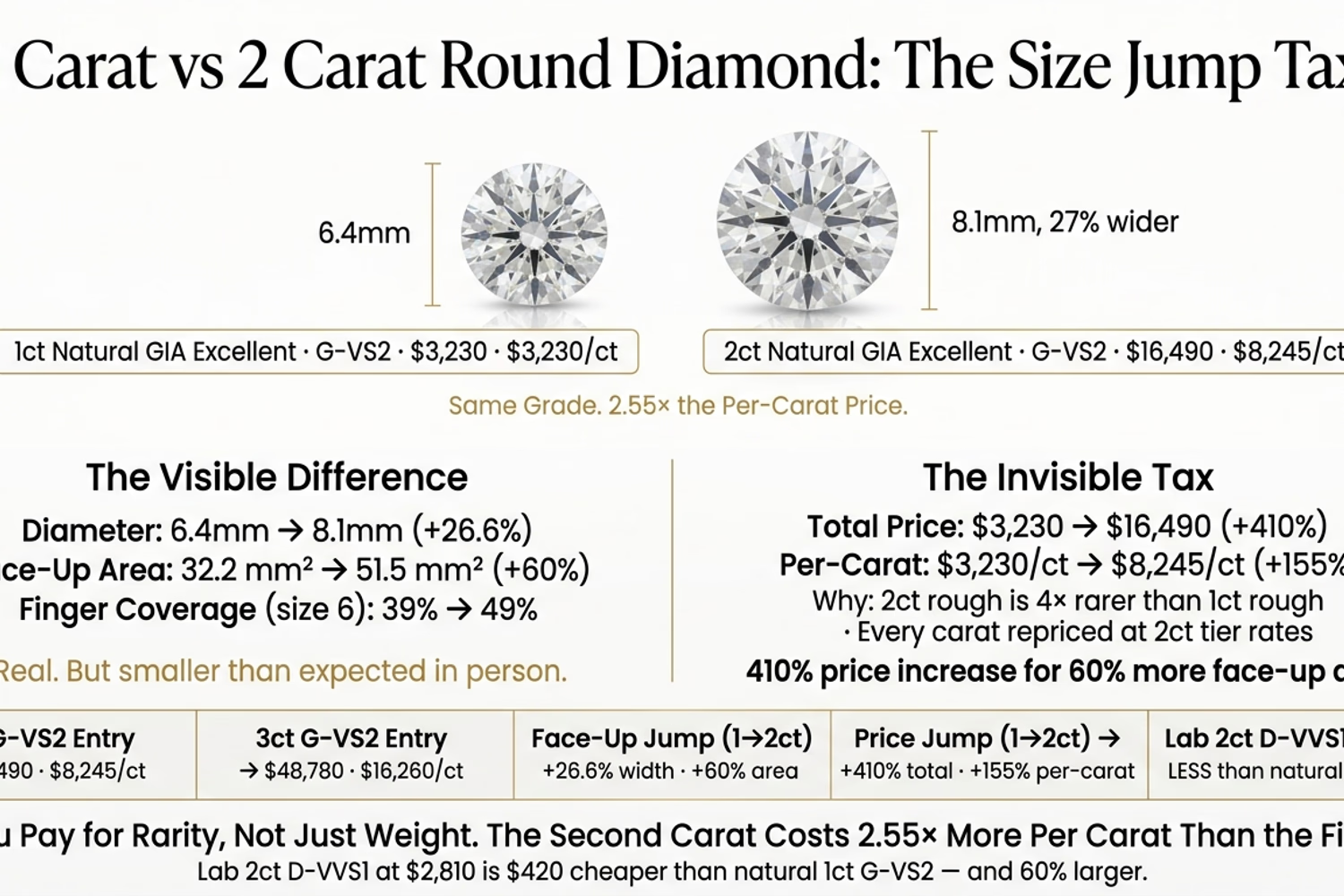
- A 1ct round measures 6.4mm face-up; a 2ct measures 8.1mm — 26.6% wider diameter, 60% larger face-up area
- The price gap is dramatically nonlinear: 1ct G-VS2 starts at $3,230, 2ct G-VS2 starts at $16,490 — a 410% price increase for a 60% area increase
- Per-carat price compounds: 1ct G-VS2 costs $3,230/ct, 2ct G-VS2 costs $8,245/ct — the same color and clarity grade costs 2.55× more per carat at double the weight
- The Size Jump Tax: every carat added above 1ct carries a rarity premium baked into each existing carat — not just the incremental weight
- Lab-grown erases this tax entirely: a 2ct lab D-VVS1 IGI Excellent at $2,810 is cheaper than a natural 1ct G-VS2 at $3,230 — larger, better graded, less money
- The decision is not which size — it is which category: natural 1ct premium quality, or lab-grown 2ct that costs less
Going from 1ct to 2ct feels like a size upgrade. In face-up terms, it is — the 2ct round shows 60% more surface area. But the price does not follow face-up area. It follows rarity. A 2ct natural diamond requires rough twice as rare as 1ct rough, and that rarity is priced into every carat of the finished stone — not just the second carat. The result: you pay 2.55× more per carat at 2ct than at 1ct, for a stone that looks about 26% wider.
This guide works through every stone at both weights on Blue Nile, the per-carat math behind The Size Jump Tax, and the lab-grown path that gives you 2ct for less than the cost of natural 1ct.


Size Reality: What You Actually See on a Hand
The size difference between 1ct and 2ct is real but smaller than most buyers expect. On paper, 8.1mm versus 6.4mm sounds like a dramatic jump. On a finger, the context is the finger's width.
| Carat | Diameter | Face-Up Area | Area vs 1ct | Diameter vs 1ct |
|---|---|---|---|---|
| 0.70ct | 5.7mm | 25.5 mm² | −21% | −11% |
| 0.90ct | 6.2mm | 30.2 mm² | −6% | −3% |
| 1.00ct | 6.4mm | 32.2 mm² | Reference | Reference |
| 1.20ct | 6.8mm | 36.3 mm² | +13% | +6% |
| 1.50ct | 7.4mm | 43.0 mm² | +34% | +16% |
| 2.00ct | 8.1mm | 51.5 mm² | +60% | +27% |
| 2.50ct | 8.8mm | 60.8 mm² | +89% | +38% |
| 3.00ct | 9.4mm | 69.4 mm² | +115% | +47% |
On a size-6 finger (average US women's size), 6.4mm covers roughly 39% of the visible finger width. 8.1mm covers roughly 49%. The difference — 10 percentage points — is visible but not dramatic in person. Side by side, the two stones look obviously different. On the hand alone, a 1ct well-cut GIA Excellent reads as a full-size stone.
The 60% face-up area difference is real physics. The 410% price difference is diamond market rarity math.
The Size Jump Tax: Why 2ct Costs 5× More Than 1ct
The price of a round diamond does not scale linearly with carat weight. It scales exponentially, because:
- Rough supply compresses: 2ct diamonds require 4–4.5ct rough crystals. Diamond rough above 4ct represents a small fraction of total production by piece count.
- The Rapaport Premium: the industry's underlying price matrix prices each carat of a 2ct stone at 2ct rates — not at half-and-half 1ct rates. Every carat you own is repriced upward by the size tier.
- Cut yield losses multiply: a 2ct round requires cutting away more rough proportionally, because symmetry requirements are absolute. The waste — called "kerf" — is more costly to produce at larger sizes.
Per-carat price at G-VS2 GIA Excellent by weight:
| Carat | Entry Price | Per-Carat Price | Multiple vs 1ct |
|---|---|---|---|
| 1ct G-VS2 | $3,230 | $3,230/ct | 1× reference |
| 2ct G-VS2 | $16,490 | $8,245/ct | 2.55× per carat |
| 3ct G-VS2 | $48,780 | $16,260/ct | 5.03× per carat |
| 4ct G-VS1 | $58,110 | $14,528/ct | 4.50× per carat |
| 5ct G-IF | $274,730 | $48,111/ct | 14.9× per carat |
The per-carat price at 2ct G-VS2 ($8,245/ct) is 2.55 times the per-carat price at 1ct G-VS2 ($3,230/ct). This means going from 1ct to 2ct does not cost you 2× the money — it costs you 5.1× the money, because both carats in the 2ct stone are priced at 2ct rates.
Complete 1ct Natural GIA Excellent Inventory
All G-VS2 GIA Excellent at 1ct (Best Value Grade)
G color in a round brilliant appears near-colorless in white gold — the cut's light return overwhelms the trace warmth in G. VS2 is consistently eye-clean. This combination maximizes cut quality per dollar.
| Stone | Grade | Price | Notes |
|---|---|---|---|
| GIA 1ct G-VS2 Excellent | G-VS2 | $3,230 | Entry price |
| GIA 1ct G-VS2 Excellent | G-VS2 | $3,240 | $10 above entry |
| GIA 1ct G-VS2 Excellent | G-VS2 | $3,370 | — |
| GIA 1ct G-VS2 Excellent | G-VS2 | $3,390 | — |
| GIA 1ct G-VS2 Excellent | G-VS2 | $3,410 | — |
| GIA 1ct G-VS2 Excellent | G-VS2 | $3,490 | — |
| GIA 1ct G-VS2 Excellent | G-VS2 | $3,610 | — |
| GIA 1ct G-VS2 Excellent | G-VS2 | $3,620 | — |
| GIA 1ct G-VS2 Excellent | G-VS2 | $3,650 | — |
| GIA 1ct G-VS2 Excellent | G-VS2 | $3,680 | — |
| GIA 1ct G-VS2 Excellent | G-VS2 | $3,680 | — |
| GIA 1ct G-VS2 Excellent | G-VS2 | $3,750 | — |
| GIA 1ct G-VS2 Excellent | G-VS2 | $3,760 | — |
| GIA 1ct G-VS2 Excellent | G-VS2 | $3,790 | — |
| GIA 1ct G-VS2 Excellent | G-VS2 | $3,790 | — |
| GIA 1ct G-VS2 Excellent | G-VS2 | $4,020 | — |
| GIA 1ct G-VS2 Excellent | G-VS2 | $4,020 | — |
| GIA 1ct G-VS2 Excellent | G-VS2 | $4,040 | — |
| GIA 1ct G-VS2 Excellent | G-VS2 | $4,040 | — |
| GIA 1ct G-VS2 Excellent | G-VS2 | $4,220 | — |
| GIA 1ct G-VS2 Excellent | G-VS2 | $4,220 | — |
| GIA 1ct G-VS2 Excellent | G-VS2 | $4,220 | — |
| GIA 1ct G-VS2 Excellent | G-VS2 | $4,230 | Near range top |
Range: $3,230–$4,230. The $1,000 spread within G-VS2 GIA Excellent at 1ct reflects proportion differences. A $3,230 stone and a $4,220 stone carry the same grade — the higher price typically reflects a crown angle in the center of the Scintillation Gate (34.0°–35.0°) versus one near the edges of the Excellent range.
All G-VS1 GIA Excellent at 1ct
VS1 offers one clarity grade above VS2 at a modest price premium. At 1ct, VS1 inclusions are not visible to the naked eye — this premium goes entirely to the certificate.
| Stone | Grade | Price |
|---|---|---|
| GIA 1ct G-VS1 Excellent | G-VS1 | $3,300 |
| GIA 1ct G-VS1 Excellent | G-VS1 | $3,400 |
| GIA 1ct G-VS1 Excellent | G-VS1 | $3,530 |
| GIA 1ct G-VS1 Excellent | G-VS1 | $3,620 |
| GIA 1ct G-VS1 Excellent | G-VS1 | $3,660 |
| GIA 1ct G-VS1 Excellent | G-VS1 | $3,700 |
| GIA 1ct G-VS1 Excellent | G-VS1 | $3,700 |
| GIA 1ct G-VS1 Excellent | G-VS1 | $3,780 |
| GIA 1ct G-VS1 Excellent | G-VS1 | $4,010 |
| GIA 1ct G-VS1 Excellent | G-VS1 | $4,010 |
| GIA 1ct G-VS1 Excellent | G-VS1 | $4,020 |
G-VS1 range: $3,300–$4,020. Versus G-VS2 entry at $3,230, the VS1 clarity premium at 1ct is $70–$100 at the low end — a marginal cost for a grade that makes no visual difference.
Higher Grades at 1ct: F, E, D Color
| Stone | Grade | Price | Premium vs G-VS2 Entry |
|---|---|---|---|
| GIA 1ct G-VVS2 Excellent | G-VVS2 | $3,650 | +$420 |
| GIA 1ct G-VVS2 Excellent | G-VVS2 | $3,760 | +$530 |
| GIA 1ct F-VS2 Excellent | F-VS2 | $3,490 | +$260 |
| GIA 1ct F-VS2 Excellent | F-VS2 | $3,580 | +$350 |
| GIA 1ct F-VS2 Excellent | F-VS2 | $3,650 | +$420 |
| GIA 1ct F-VS2 Excellent | F-VS2 | $3,810 | +$580 |
| GIA 1ct F-VS2 Excellent | F-VS2 | $4,040 | +$810 |
| GIA 1ct E-VS2 Excellent | E-VS2 | $3,540 | +$310 |
| GIA 1ct D-VS2 Excellent | D-VS2 | $3,790 | +$560 |
The D-VS2 at $3,790 is notable: D color at 1ct carries only a $560 premium over G-VS2. This premium balloons at 2ct — D-VS2 costs $26,490 versus G-VS2 at $16,490, a $10,000 gap.
Complete 2ct Natural GIA Excellent Inventory
G-Color at 2ct: The Entry Tier
| Stone | Grade | Price | Per-Carat |
|---|---|---|---|
| GIA 2ct G-VS2 Excellent | G-VS2 | $16,490 | $8,245 |
| GIA 2ct F-VS2 Excellent | F-VS2 | $18,140 | $9,070 |
| GIA 2ct G-VS2 Excellent | G-VS2 | $18,540 | $9,270 |
| GIA 2ct E-VVS2 Excellent | E-VVS2 | $22,460 | $11,230 |
| GIA 2ct G-VS1 Excellent | G-VS1 | $22,460 | $11,230 |
| GIA 2ct G-VS1 Excellent | G-VS1 | $22,580 | $11,290 |
| GIA 2ct E-VS1 Excellent | E-VS1 | $22,660 | $11,330 |
Mid-Tier 2ct: F, E, D Grades $26,000–$28,000
| Stone | Grade | Price | Per-Carat |
|---|---|---|---|
| GIA 2ct F-VS1 Excellent | F-VS1 | $26,240 | $13,120 |
| GIA 2ct E-VVS1 Excellent | E-VVS1 | $26,400 | $13,200 |
| GIA 2ct D-VS2 Excellent | D-VS2 | $26,490 | $13,245 |
| GIA 2ct D-VS2 Excellent | D-VS2 | $26,500 | $13,250 |
| GIA 2ct E-VVS1 Excellent | E-VVS1 | $26,510 | $13,255 |
| GIA 2ct E-VS2 Excellent | E-VS2 | $26,510 | $13,255 |
| GIA 2ct G-VVS2 Excellent | G-VVS2 | $26,610 | $13,305 |
| GIA 2ct D-VVS2 Excellent | D-VVS2 | $26,650 | $13,325 |
| GIA 2ct F-VS1 Excellent | F-VS1 | $26,500 | $13,250 |
| GIA 2ct F-VS1 Excellent | F-VS1 | $26,670 | $13,335 |
| GIA 2ct F-VS2 Excellent | F-VS2 | $26,770 | $13,385 |
| GIA 2ct E-VS2 Excellent | E-VS2 | $26,820 | $13,410 |
| GIA 2ct G-VVS2 Excellent | G-VVS2 | $26,860 | $13,430 |
| GIA 2ct F-VS1 Excellent | F-VS1 | $27,000 | $13,500 |
| GIA 2ct F-VS1 Excellent | F-VS1 | $27,080 | $13,540 |
| GIA 2ct E-VVS1 Excellent | E-VVS1 | $27,200 | $13,600 |
| GIA 2ct F-VS2 Excellent | F-VS2 | $27,320 | $13,660 |
| GIA 2ct F-VS2 Excellent | F-VS2 | $27,450 | $13,725 |
| GIA 2ct F-VS1 Excellent | F-VS1 | $27,520 | $13,760 |
| GIA 2ct G-VVS2 Excellent | G-VVS2 | $27,860 | $13,930 |
| GIA 2ct E-VVS2 Excellent | E-VVS2 | $28,150 | $14,075 |
| GIA 2ct F-VS2 Excellent | F-VS2 | $28,170 | $14,085 |
| GIA 2ct E-VS1 Excellent | E-VS1 | $28,180 | $14,090 |
Premium 2ct: D-VVS1, F-VVS, and Flawless
| Stone | Grade | Price | Per-Carat |
|---|---|---|---|
| GIA 2ct F-VVS2 Excellent | F-VVS2 | $31,190 | $15,595 |
| GIA 2ct G-IF Excellent | G-IF | $31,380 | $15,690 |
| GIA 2ct D-VVS1 Excellent | D-VVS1 | $31,370 | $15,685 |
| GIA 2ct D-VS1 Excellent | D-VS1 | $31,870 | $15,935 |
| GIA 2ct G-IF Excellent | G-IF | $31,600 | $15,800 |
| GIA 2ct D-VVS2 Excellent | D-VVS2 | $31,560 | $15,780 |
| GIA 2ct E-IF Excellent | E-IF | $32,840 | $16,420 |
| GIA 2ct D-VVS1 Excellent | D-VVS1 | $33,390 | $16,695 |
| GIA 2ct F-VVS1 Excellent | F-VVS1 | $34,250 | $17,125 |
| GIA 2ct F-VVS1 Excellent | F-VVS1 | $34,280 | $17,140 |
| GIA 2ct D-VVS1 Excellent | D-VVS1 | $34,580 | $17,290 |
| GIA 2ct F-IF Excellent | F-IF | $34,920 | $17,460 |
| GIA 2ct D-VVS1 Excellent | D-VVS1 | $37,140 | $18,570 |
| GIA 2ct F-IF Excellent | F-IF | $38,050 | $19,025 |
| GIA 2ct D-VVS1 Excellent | D-VVS1 | $39,260 | $19,630 |
| GIA 2ct D-VVS1 Excellent | D-VVS1 | $41,820 | $20,910 |
| GIA 2ct D-VVS1 Excellent | D-VVS1 | $44,480 | $22,240 |
| GIA 2ct D-IF Excellent | D-IF | $49,470 | $24,735 |
| GIA 2ct D-FL Excellent | D-FL | $54,840 | $27,420 |
The 2ct G-VS2 at $16,490 and the 2ct D-FL at $54,840 both measure 8.1mm. The per-carat price of the D-FL ($27,420/ct) is 8.5× the per-carat price of the 1ct G-VS2 ($3,230/ct).
Tides Of Summer Capsule
Up To 30% Off
Shop The Sale →Vault ClearanceClear The Vault
Up To 70% Off
Shop Vault Deals →Affiliate link — no extra cost to you
Lab-Grown: The Tax-Free Path to 2ct
Lab-grown diamonds eliminate The Size Jump Tax because their supply is not constrained by rough crystal rarity. A lab can produce 2ct D-VVS1 rough routinely. Natural cannot.
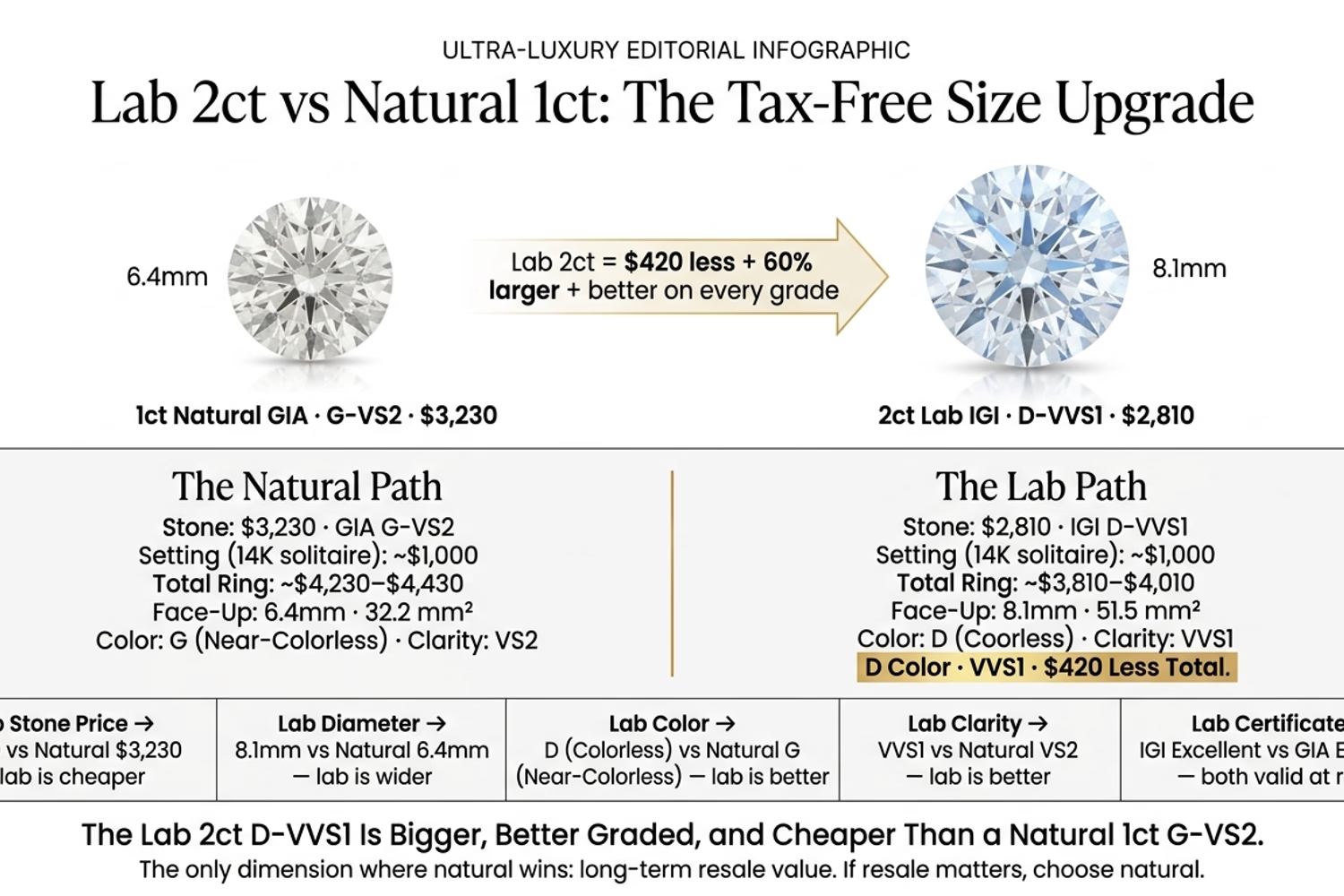
Lab progression — IGI Excellent, all D-VVS1 unless noted:
| Stone | Carat | Clarity | Price | Per-Carat | vs Natural Equiv. |
|---|---|---|---|---|---|
| IGI 1.5ct D-VVS1 Lab | 1.5ct | D-VVS1 | $1,950 | $1,300 | Natural 1.5ct ≈ $7,000+ |
| IGI 2ct D-VVS1 Lab | 2ct | D-VVS1 | $2,810 | $1,405 | Natural 2ct G-VS2: $16,490 |
| IGI 2ct D-FL Lab | 2ct | D-FL | $5,190 | $2,595 | Natural 2ct D-FL: $54,840 |
| GIA 3ct D-VVS1 Lab | 3ct | D-VVS1 | $7,340 | $2,447 | Natural 3ct G-VS2: $48,780 |
| IGI 4ct D-VVS1 Lab | 4ct | D-VVS1 | $9,680 | $2,420 | Natural 4ct G-VS1: $58,110 |
The lab 2ct D-VVS1 at $2,810 is $420 cheaper than the natural 1ct G-VS2 at $3,230. It is also:
- 60% larger face-up area (8.1mm vs 6.4mm)
- D color vs G color — two grades better
- VVS1 clarity vs VS2 clarity — three grades better
- Graded by IGI with Excellent cut vs GIA Excellent
For a buyer prioritizing visible size and certified quality within any budget under $5,000, the lab 2ct D-VVS1 at $2,810 is the logical choice.
Head-to-Head Budget Scenarios
Scenario A: Natural 1ct GIA Excellent — Complete Ring Under $5,000
- Stone: GIA 1ct G-VS2 Excellent, $3,230
- Setting: 14K white gold 4-prong solitaire — $900–$1,200
- Total: $4,130–$4,430
- Face-up: 6.4mm, 32.2 mm²
- Result: GIA-certified natural diamond, complete ring under $4,500, $600+ in reserve
Scenario B: Lab 2ct IGI Excellent — Complete Ring Under $5,000
- Stone: IGI 2ct D-VVS1 Excellent, $2,810
- Setting: 14K white gold 4-prong solitaire — $900–$1,200
- Total: $3,710–$4,010
- Face-up: 8.1mm, 51.5 mm²
- Result: twice the face-up area, D color, VVS1 clarity, $400–$700 less than Scenario A
Scenario C: Natural 2ct GIA Excellent — Entry Level
- Stone: GIA 2ct G-VS2 Excellent, $16,490
- Setting: platinum 4-prong solitaire — $1,500–$2,000
- Total: $17,990–$18,490
- Face-up: 8.1mm, 51.5 mm²
- Result: natural 2ct, platinum setting, same face-up as lab 2ct — at 4.7× the lab cost
Scenario D: Natural 2ct GIA Excellent — Upgraded Grade
- Stone: GIA 2ct D-VS2 Excellent, $26,490
- Setting: platinum solitaire — $1,500–$2,000
- Total: $27,990–$28,490
- Face-up: 8.1mm, 51.5 mm²
- Result: same size as G-VS2 natural 2ct; D color adds $10,000 for an imperceptible color improvement at this size
Frequently Asked Questions
Is a 2ct diamond worth the price premium over a 1ct?
The answer depends entirely on what you value. The 2ct is 60% larger in face-up area and 26% wider in diameter — which is visible but not dramatic on a finger. The 410% price premium over a 1ct G-VS2 compensates for rarity, not visible quality. If size matters above all else and budget is not constrained, the natural 2ct is justifiable. If you want maximum size per dollar, the lab 2ct at $2,810 is the correct answer — it is larger and better graded than a natural 1ct for less money.
Why does a 2ct round cost more than twice a 1ct round?
Because diamond pricing is not linear — it is multiplicative by tier. A 2ct diamond requires 4–5ct rough, which is far rarer than 2ct rough. The Rapaport price matrix (the underlying industry pricing structure) prices every carat of a 2ct stone at 2ct rates. So the first carat of your 2ct diamond is priced at 2ct-tier prices, not 1ct-tier prices. The result: a 2ct G-VS2 GIA Excellent at $16,490 versus a 1ct G-VS2 at $3,230 — a 5.1× gap for a 2× weight increase.
Can I tell the difference between a 1ct and 2ct diamond on a hand?
Side by side, yes — clearly. On a hand alone, it depends on the finger size and setting. A 6.4mm stone (1ct) reads as a full-size engagement ring stone at a size-6 finger. An 8.1mm stone (2ct) is noticeably larger but not dramatically so. The difference is more visible in profile than face-up. Most people comparing the two sizes in photos are comparing them side by side, not in isolation — which exaggerates the perceived difference.
Should I buy a 1.5ct instead of 1ct or 2ct?
A 1.5ct round measures 7.4mm — between the 6.4mm of 1ct and 8.1mm of 2ct. Natural 1.5ct GIA Excellent rounds are not in the Blue Nile dataset used here (the market has fewer options at this size), but prices typically run $7,000–$12,000 for G-VS2. Lab 1.5ct D-VVS1 starts at $1,950 — significantly larger than 1ct natural at lower cost. If budget is $2,000–$4,000, lab 1.5ct and lab 2ct are both better value than natural 1ct by size-per-dollar.
Does the lab-grown 2ct look the same as natural 2ct?
Optically and physically identical. A lab-grown 2ct D-VVS1 IGI Excellent and a natural 2ct D-VVS1 GIA Excellent are both carbon crystals with the same atomic structure, the same refractive index (2.42), and the same cut geometry. No instrument available to consumers distinguishes them by appearance. The only detectable difference requires a specialized spectrometer — available at GIA and IGI labs, not at retail jewelers or to the naked eye.
Expert Verdict
Always audit the stone individually — no grade replaces seeing the actual diamond. The certificate tells you what to look for. Your eyes tell you whether to buy.
— Farzana Hasan, GIA Expert · DiamondCritics.com