D Color vs G Color Round Diamond: The Colorless Premium
TL;DR: D vs G Color Round Diamond — Key Facts
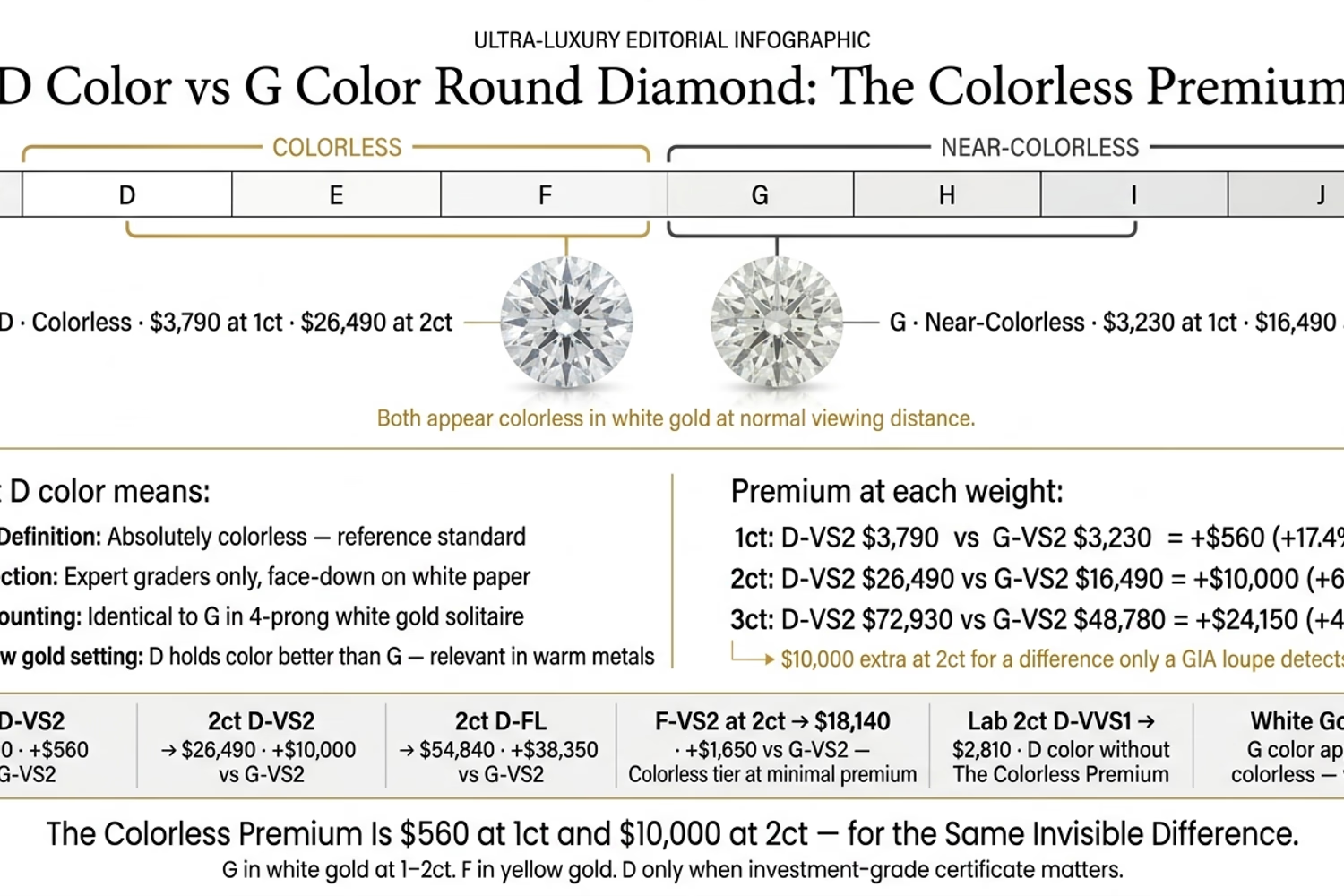
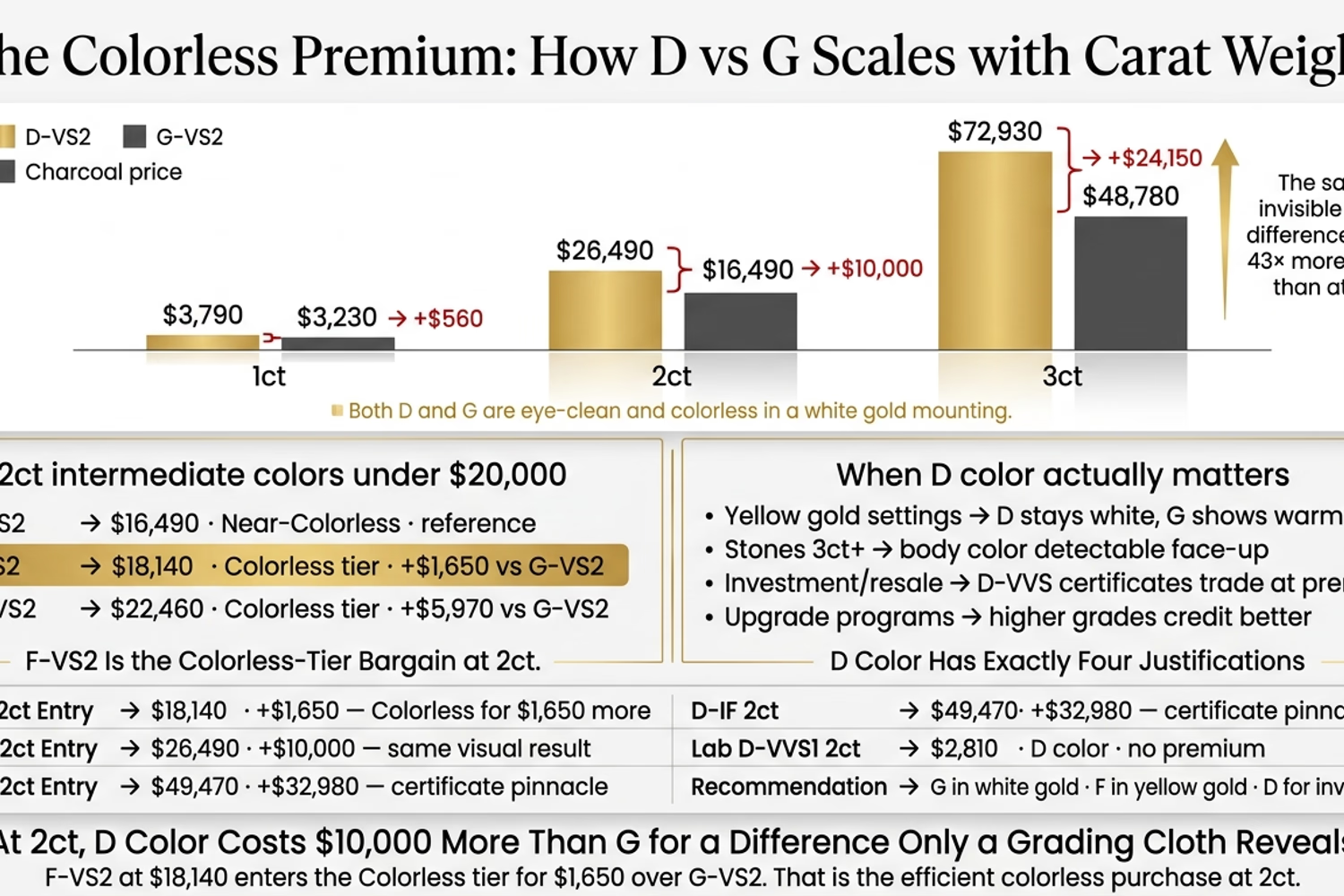
- At 1ct, a D-VS2 costs $3,790 versus a G-VS2 at $3,230 — $560 premium for D color (17.4% more)
- At 2ct, a D-VS2 costs $26,490 versus a G-VS2 at $16,490 — $10,000 premium for D color (60.6% more)
- At 3ct, a D-VS2 costs $72,930 versus a G-VS2 at $48,780 — $24,150 premium for D color (49.5% more)
- The Colorless Premium scales nonlinearly: D color adds $560 at 1ct, $10,000 at 2ct, $24,150+ at 3ct — for the same imperceptible color difference
- Can you see the difference between D and G in a round brilliant face-up? No — not in normal wear, not in a white gold setting. The round brilliant's light return overwhelms body color below H in face-up orientation
- Lab alternative: a 2ct D-VVS1 IGI Excellent lab costs $2,810 — D color, for $13,680 less than the cheapest natural 2ct D-VS2
The GIA color grading system runs from D (colorless) through Z (light yellow). D is the top of the scale — theoretically perfectly colorless. G is four grades lower, in the Near-Colorless tier. Between them sit E and F, also in the Colorless tier.
The question every buyer asks: can you see the difference between D and G in a mounted round brilliant? For nearly all buyers in nearly all settings under nearly all lighting conditions, the answer is no. What you are paying for with D color is the certificate and the knowledge. Whether that knowledge is worth $10,000 at 2ct is the decision this guide makes concrete.


The GIA Color Scale: What D and G Actually Mean
| Grade | Tier | GIA Description | In Face-Up Round Brilliant |
|---|---|---|---|
| D | Colorless | Absolutely colorless — master reference | Appears colorless in all settings |
| E | Colorless | Extremely colorless — expert detection only | Appears colorless in white metal |
| F | Colorless | Very colorless — expert detection required | Appears colorless in white metal |
| G | Near-Colorless | Near-colorless — visible when compared to D/E/F | Appears colorless in white gold to unaided eye |
| H | Near-Colorless | Near-colorless — slight warmth detected by expert | May show warmth in yellow gold, colorless in white |
| I | Near-Colorless | Very slight warmth visible to expert | Visible warmth in some settings |
| J | Near-Colorless | Slight warmth — most buyers can detect | Warmth visible in large stones, most settings |
G sits at the boundary between Near-Colorless and the invisible-to-unaided-eye threshold. In a 4-prong white gold solitaire at arm's length, G appears colorless to all but GIA-trained graders doing a side-by-side comparison on a grading cloth. D appears identical to G in the same conditions.
The difference between D and G is measurable — it is not imaginary. A GIA spectrometer detects it. A gemologist face-down on white paper detects it. A person wearing the ring does not detect it.
Color Premium at 1ct: The Narrow Gap
At 1ct, The Colorless Premium is surprisingly affordable. The full D-through-G color range at 1ct G-VS2 reference:
| Stone | Grade | Price | Premium vs G-VS2 |
|---|---|---|---|
| GIA 1ct G-VS2 Excellent | G-VS2 | $3,230 | Reference |
| GIA 1ct G-VS1 Excellent | G-VS1 | $3,300 | +$70 |
| GIA 1ct G-VVS2 Excellent | G-VVS2 | $3,650 | +$420 |
| GIA 1ct F-VS2 Excellent | F-VS2 | $3,490 | +$260 |
| GIA 1ct F-VS2 Excellent | F-VS2 | $3,580 | +$350 |
| GIA 1ct F-VS2 Excellent | F-VS2 | $3,650 | +$420 |
| GIA 1ct F-VS2 Excellent | F-VS2 | $3,810 | +$580 |
| GIA 1ct F-VS2 Excellent | F-VS2 | $4,040 | +$810 |
| GIA 1ct E-VS2 Excellent | E-VS2 | $3,540 | +$310 |
| GIA 1ct D-VS2 Excellent | D-VS2 | $3,790 | +$560 |
At 1ct, D-VS2 at $3,790 is $560 more than G-VS2 at $3,230 — the premium to reach the top of the GIA color scale is manageable. Many buyers at 1ct choose D or E specifically because the premium is small, the certificate is more resaleable, and the psychological value of "colorless" is meaningful to them. This is a reasonable choice at 1ct.
Color Premium at 2ct: Where the Gap Explodes
At 2ct, the same color grade difference that costs $560 at 1ct costs $10,000. This is The Colorless Premium at full scale:
All G-Color Stones at 2ct
| Stone | Grade | Price | Per-Carat |
|---|---|---|---|
| GIA 2ct G-VS2 Excellent | G-VS2 | $16,490 | $8,245 |
| GIA 2ct G-VS2 Excellent | G-VS2 | $18,540 | $9,270 |
| GIA 2ct G-VS1 Excellent | G-VS1 | $22,460 | $11,230 |
| GIA 2ct G-VS1 Excellent | G-VS1 | $22,580 | $11,290 |
| GIA 2ct G-VVS2 Excellent | G-VVS2 | $26,610 | $13,305 |
| GIA 2ct G-VVS2 Excellent | G-VVS2 | $26,860 | $13,430 |
| GIA 2ct G-VVS2 Excellent | G-VVS2 | $27,860 | $13,930 |
| GIA 2ct G-IF Excellent | G-IF | $31,380 | $15,690 |
| GIA 2ct G-IF Excellent | G-IF | $31,600 | $15,800 |
All D-Color Stones at 2ct — Complete Inventory
| Stone | Grade | Price | Per-Carat | Premium vs G-VS2 |
|---|---|---|---|---|
| GIA 2ct D-VS2 Excellent | D-VS2 | $26,490 | $13,245 | +$10,000 |
| GIA 2ct D-VS2 Excellent | D-VS2 | $26,500 | $13,250 | +$10,010 |
| GIA 2ct D-VVS2 Excellent | D-VVS2 | $26,650 | $13,325 | +$10,160 |
| GIA 2ct D-VVS1 Excellent | D-VVS1 | $31,370 | $15,685 | +$14,880 |
| GIA 2ct D-VVS2 Excellent | D-VVS2 | $31,560 | $15,780 | +$15,070 |
| GIA 2ct D-VS1 Excellent | D-VS1 | $31,870 | $15,935 | +$15,380 |
| GIA 2ct D-VVS2 Excellent | D-VVS2 | $31,920 | $15,960 | +$15,430 |
| GIA 2ct D-VS1 Excellent | D-VS1 | $32,010 | $16,005 | +$15,520 |
| GIA 2ct D-VS1 Excellent | D-VS1 | $32,050 | $16,025 | +$15,560 |
| GIA 2ct D-VVS1 Excellent | D-VVS1 | $33,390 | $16,695 | +$16,900 |
| GIA 2ct D-VS1 Excellent | D-VS1 | $32,900 | $16,450 | +$16,410 |
| GIA 2ct D-VVS1 Excellent | D-VVS1 | $34,580 | $17,290 | +$18,090 |
| GIA 2ct D-VS1 Excellent | D-VS1 | $33,430 | $16,715 | +$16,940 |
| GIA 2ct D-VVS1 Excellent | D-VVS1 | $37,140 | $18,570 | +$20,650 |
| GIA 2ct D-VVS2 Excellent | D-VVS2 | $36,230 | $18,115 | +$19,740 |
| GIA 2ct D-VVS1 Excellent | D-VVS1 | $39,260 | $19,630 | +$22,770 |
| GIA 2ct D-VVS2 Excellent | D-VVS2 | $38,350 | $19,175 | +$21,860 |
| GIA 2ct D-VVS1 Excellent | D-VVS1 | $41,820 | $20,910 | +$25,330 |
| GIA 2ct D-VVS1 Excellent | D-VVS1 | $44,480 | $22,240 | +$27,990 |
| GIA 2ct D-IF Excellent | D-IF | $49,470 | $24,735 | +$32,980 |
| GIA 2ct D-FL Excellent | D-FL | $54,840 | $27,420 | +$38,350 |
The most important number in this table: the cheapest 2ct D stone ($26,490 D-VS2) is 8.2× more expensive per carat than the cheapest 1ct D stone ($3,790 D-VS2). The color grade is identical. The size rarity premium compounds the color premium.
Intermediate Colors at 2ct: E and F
E and F are also in the Colorless tier — indistinguishable from D to the unaided eye. Their premiums over G are lower than D:
All E-Color Stones at 2ct
| Stone | Grade | Price | Premium vs G-VS2 ($16,490) |
|---|---|---|---|
| GIA 2ct E-VVS2 Excellent | E-VVS2 | $22,460 | +$5,970 |
| GIA 2ct E-VS1 Excellent | E-VS1 | $22,660 | +$6,170 |
| GIA 2ct E-VS2 Excellent | E-VS2 | $26,510 | +$10,020 |
| GIA 2ct E-VVS1 Excellent | E-VVS1 | $26,400 | +$9,910 |
| GIA 2ct E-VVS1 Excellent | E-VVS1 | $26,510 | +$10,020 |
| GIA 2ct E-VS2 Excellent | E-VS2 | $26,820 | +$10,330 |
| GIA 2ct E-VVS1 Excellent | E-VVS1 | $27,200 | +$10,710 |
| GIA 2ct E-VS2 Excellent | E-VS2 | $27,310 | +$10,820 |
| GIA 2ct E-VVS2 Excellent | E-VVS2 | $28,150 | +$11,660 |
| GIA 2ct E-VS1 Excellent | E-VS1 | $28,180 | +$11,690 |
| GIA 2ct E-VVS2 Excellent | E-VVS2 | $31,730 | +$15,240 |
| GIA 2ct E-VVS1 Excellent | E-VVS1 | $32,210 | +$15,720 |
| GIA 2ct E-IF Excellent | E-IF | $32,840 | +$16,350 |
| GIA 2ct E-VVS2 Excellent | E-VVS2 | $35,900 | +$19,410 |
| GIA 2ct E-VVS1 Excellent | E-VVS1 | $40,030 | +$23,540 |
| GIA 2ct E-VVS2 Excellent | E-VVS2 | $41,230 | +$24,740 |
All F-Color Stones at 2ct
| Stone | Grade | Price | Premium vs G-VS2 ($16,490) |
|---|---|---|---|
| GIA 2ct F-VS2 Excellent | F-VS2 | $18,140 | +$1,650 |
| GIA 2ct F-VS1 Excellent | F-VS1 | $26,240 | +$9,750 |
| GIA 2ct F-VS1 Excellent | F-VS1 | $26,500 | +$10,010 |
| GIA 2ct F-VS2 Excellent | F-VS2 | $26,770 | +$10,280 |
| GIA 2ct F-VS1 Excellent | F-VS1 | $26,670 | +$10,180 |
| GIA 2ct F-VS1 Excellent | F-VS1 | $27,000 | +$10,510 |
| GIA 2ct F-VS1 Excellent | F-VS1 | $27,080 | +$10,590 |
| GIA 2ct F-VS2 Excellent | F-VS2 | $27,320 | +$10,830 |
| GIA 2ct F-VS2 Excellent | F-VS2 | $27,450 | +$10,960 |
| GIA 2ct F-VS1 Excellent | F-VS1 | $27,520 | +$11,030 |
| GIA 2ct F-VS2 Excellent | F-VS2 | $28,170 | +$11,680 |
| GIA 2ct F-VVS2 Excellent | F-VVS2 | $31,190 | +$14,700 |
| GIA 2ct F-VS1 Excellent | F-VS1 | $33,290 | +$16,800 |
| GIA 2ct F-VVS1 Excellent | F-VVS1 | $34,250 | +$17,760 |
| GIA 2ct F-VVS1 Excellent | F-VVS1 | $34,280 | +$17,790 |
| GIA 2ct F-IF Excellent | F-IF | $34,920 | +$18,430 |
| GIA 2ct F-VS1 Excellent | F-VS1 | $37,100 | +$20,610 |
| GIA 2ct F-IF Excellent | F-IF | $38,050 | +$21,560 |
F-VS2 entry at $18,140 is notable: for $1,650 over G-VS2 at $16,490, you get an F-color stone — one grade into the Colorless tier. This is the most efficient colorless-grade purchase at 2ct. The F-VS2 at $18,140 appears identical to the D-VS2 at $26,490 in a mounted setting.
Tides Of Summer Capsule
Up To 30% Off
Shop The Sale →Vault ClearanceClear The Vault
Up To 70% Off
Shop Vault Deals →Affiliate link — no extra cost to you
The Color Premium Scale: How Expensive Is D at Each Size?
| Carat | G-VS2 Entry | D-VS2 Entry | D Premium | D Premium % |
|---|---|---|---|---|
| 1ct | $3,230 | $3,790 | +$560 | +17.4% |
| 2ct | $16,490 | $26,490 | +$10,000 | +60.6% |
| 3ct | $48,780 | $72,930 | +$24,150 | +49.5% |
The premium to own D color grows in absolute dollars exponentially with carat weight. The percentage levels off at 3ct — but the absolute premium ($24,150) is more than seven natural 1ct D-VS2 diamonds.
Lab-Grown D Color: The Elimination of the Premium
Lab-grown D color is available at identical grade to natural D for a fraction of the price. The Colorless Premium does not exist in the lab market because D color rough is not scarce when grown in a reactor.
| Stone | Carat | Grade | Price | vs Natural D-VS2 |
|---|---|---|---|---|
| IGI 1.5ct D-VVS1 Lab | 1.5ct | D-VVS1 | $1,950 | — |
| IGI 2ct D-VVS1 Lab | 2ct | D-VVS1 | $2,810 | 89.4% cheaper than 2ct D-VS2 natural |
| IGI 2ct D-FL Lab | 2ct | D-FL | $5,190 | 90.5% cheaper than 2ct D-FL natural ($54,840) |
| GIA 3ct D-VVS1 Lab | 3ct | D-VVS1 | $7,340 | 90% cheaper than 3ct D-VS2 natural ($72,930) |
| IGI 4ct D-VVS1 Lab | 4ct | D-VVS1 | $9,680 | 83.3% cheaper than 4ct G-VS1 natural ($58,110) |
The lab 2ct D-VVS1 at $2,810 is D color, VVS1 clarity, Excellent cut — and costs $23,680 less than the cheapest natural 2ct D-VS2 at $26,490. It appears identical in a ring. For a buyer who specifically wants D color and maximum size, the lab option makes The Colorless Premium a non-issue.
When Does D Color vs G Color Actually Matter?
D color matters when:
- The ring will be set in yellow or rose gold (warm metal amplifies yellow tones in G; D stays colorless regardless of metal)
- The buyer is purchasing as an investment or for resale (D grades command premiums on the secondary market)
- The stone is 3ct or larger (at 3ct+, body color becomes slightly detectable face-up even in round brilliants)
- The certificate will be used for insurance or upgrade programs that reward higher grades
G color is sufficient when:
- The setting is white gold or platinum (G appears colorless in white metal under all normal conditions)
- The stone is 2ct or smaller (G color at 2ct is undetectable face-up to unaided eyes)
- Budget efficiency is the priority (the $10,000 D-vs-G premium at 2ct buys a second, complete 1ct natural ring)
- The buyer has compared both grades side by side and cannot distinguish them (most buyers cannot)
The practical recommendation: G color in white gold at any size up to 2ct. If the ring will be yellow gold, move to F. If the stone is 3ct+ or the purchase is investment-grade, D color is justified. For lab-grown, D color adds no premium — always choose it.
Frequently Asked Questions
Can you see the difference between D and G color in a round brilliant?
No — not in a mounted setting under normal conditions. Round brilliants have exceptional face-up color masking because the 57 or 58 facets create light return patterns that overwhelm body color. GIA gemologists can distinguish D from G in a side-by-side comparison on a white grading cloth, face-down, under controlled lighting. In a prong setting on a hand in ambient light, the difference is not visible to trained observers. The practical color threshold for visibility in round brilliants in white gold settings is around H or I, not G.
Why does D color cost so much more at 2ct than at 1ct?
Two effects compound at larger sizes. First, the rarity of D color rough at 2ct+ weights is significantly higher than at 1ct. D color requires the absence of nitrogen impurities during crystal formation — rare enough at 1ct rough sizes, rarer still at 4ct rough sizes (needed for a 2ct finished stone). Second, the Rapaport pricing matrix applies a size-tier price per carat, meaning every carat of the D color 2ct stone is priced at 2ct-D color rates. The $560 per-carat premium for D at 1ct becomes a $5,000 per-carat premium at 2ct.
Is F color a good compromise between D and G?
At 2ct, F-VS2 starts at $18,140 — $1,650 over G-VS2 at $16,490. For $1,650 you get a stone in the Colorless tier (D, E, F). F is an excellent compromise: you are technically in the Colorless grade tier, you pay a small premium, and the stone is visually identical to both D and G in mounted position. For buyers who want "colorless on the certificate" but cannot justify the D premium, F at 2ct is the logical choice.
Does G color look yellow in a ring?
G in white gold does not look yellow. G is Near-Colorless — the body color is a trace warmth detectable only when the stone is placed face-down on a white background next to a D stone. In a setting, the metal reflects colorless light into the stone and the round brilliant's facets scatter any color perception. G has been the #1 most purchased color grade for round diamonds for over a decade precisely because buyers verify it looks correct in real settings. H color in white gold also reads as near-colorless for most buyers. Yellow warmth in rounds typically becomes perceptible at I or J in white gold settings.
Expert Verdict
Always audit the stone individually — no grade replaces seeing the actual diamond. The certificate tells you what to look for. Your eyes tell you whether to buy.
— Farzana Hasan, GIA Expert · DiamondCritics.com