The TL;DR: At a $1,000 total budget, a natural round diamond ring is functionally impossible. The cheapest meaningful setting is $510. The cheapest GIA natural round (0.3ct) starts around $350. Together: ~$860. It works — but the stone is barely visible. Lab-grown changes everything: 1.00ct D-VVS1 IGI lab at ~$450 + $510 setting = ~$960. A full carat for $1K. This is the $1K Lab Gate.
The Contrarian Truth: Under $1K, every jeweller will show you compromised natural diamonds — I1 clarity, J-K colour, no-name certification. These are bad stones. The actually smart choice is to walk through the lab gate: spend $450 on a 1ct D-VVS1 lab stone and $510 on a clean setting. You get a better-looking, better-certified diamond for under $1K than most jewellers will sell you for $2K.
The $1K Lab Gate — Decision Snapshot
| Option | Stone | Grade | Cert | Stone Cost | Setting | Total | Face-Up |
|---|---|---|---|---|---|---|---|
| Worst Natural | 0.30ct H-SI1 | GIA | ~$350 | $510 | ~$860 | 4.3mm | |
| Budget Natural | 0.40ct G-VS2 | GIA | ~$540 | $510 | ~$1,050 (over) | 4.8mm | |
| Lab Gate | 1.00ct D-VVS1 | IGI Ideal | ~$450 | $510 | ~$960 | 6.5mm | |
| Lab Value | 1.25ct D-VVS1 | IGI Ideal | ~$650 | $510 | ~$1,160 (over) | 6.9mm | |
| Lab Under $900 | 0.75ct D-VVS1 | IGI Ideal | ~$290 | $510 | ~$800 | 5.9mm | |
| Lab Under $800 | 0.50ct D-VVS1 | IGI Ideal | ~$180 | $510 | ~$690 | 5.2mm |


Why Natural Diamonds Don't Work Under $1K
The economics are simple. A meaningful natural round diamond requires:
- GIA certification: minimum $100–$150 cost passed to buyer
- Minimum 0.30ct to be visible in a ring
- Minimum Excellent cut for proper sparkle
0.30ct G-VS2 GIA Excellent: Approximately $340–$380. Add a $510 setting = ~$880. This is a ring. But a 0.30ct diamond measures 4.3mm — barely larger than a pinhead. On any hand size above 5.5, it reads as a very small accent stone.
0.40ct G-VS2 GIA Excellent: Approximately $520–$560. Add a $510 setting = ~$1,040–$1,070. Already over $1K.
The honest assessment: Natural diamonds under 0.4ct with proper GIA grading and excellent cut proportions start the total ring budget at or above $1,000. At exactly $1K, the natural option is a 4.3mm diamond in a $510 setting. That is a real ring. It is just very small.
The Lab Gate — What Lab-Grown Opens at $1K
This is where the arithmetic changes completely.
IGI 1.00 Carat D-VVS1 Ideal Lab Diamond — approximately $420–$500
Blue Nile lab-grown 1ct D-VVS1 rounds in the $420–$500 range are available. Add the $510 Classic Four-Prong setting = total ring under $1,010.
What you get: A 6.5mm round diamond. D colour — the absolute top. VVS1 clarity — near flawless. Ideal cut — maximum sparkle. IGI certification — the industry standard for lab-grown. For $960.
The gate metaphor is real: under $1K, natural locks you out of size. Lab-grown opens a door to full-carat, top-grade diamonds for the same money.
Ring Settings for a $1K Budget
Setting choice is critical at $1K because every dollar shifts between stone quality and ring quality.
$510 — Classic Four-Prong (Maximum Stone Budget)
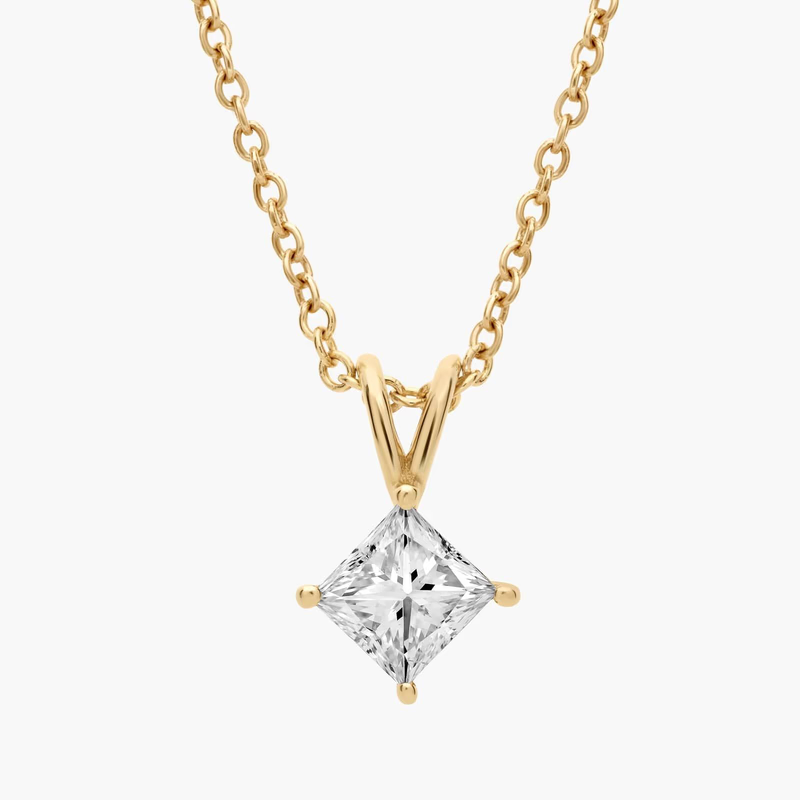
Classic Four-Prong Solitaire 14K White Gold — $510 · Item #195387 · The budget-optimal choice at $1K. Leaves $490 for a natural stone or $490+ for a lab stone that's much larger. Stone budget with $510 setting on a $1K total: $490. With 0.50ct D-VVS1 IGI lab (~$180) = $690 total. Significant budget room remaining. With 1.00ct D-VVS1 IGI lab ($450) = ~$960 total — the best $1K ring available.
$730 — Woven Solitaire Rose Gold
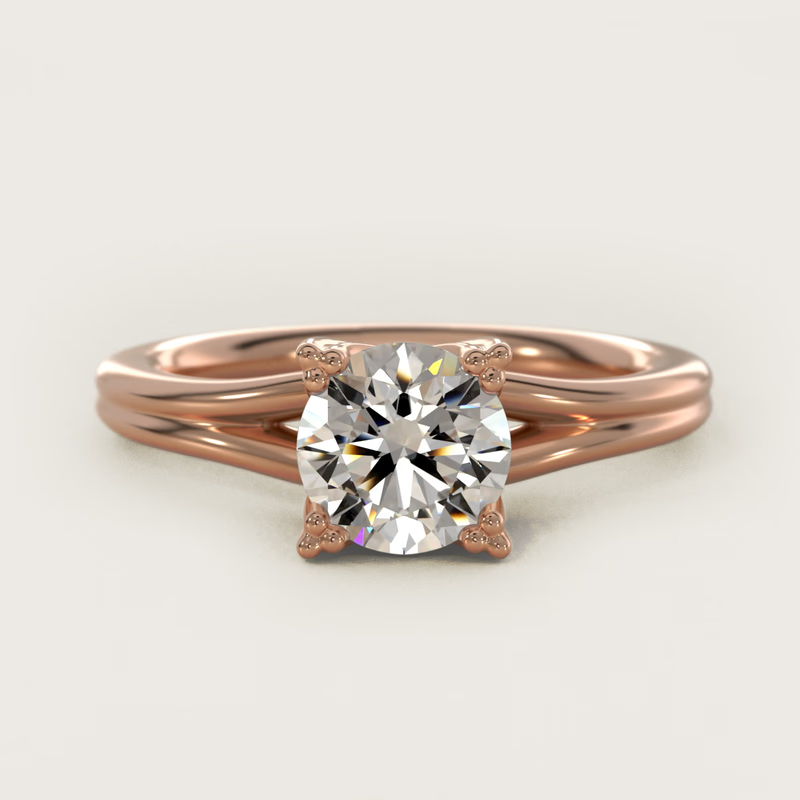
Woven Solitaire 14K Rose Gold (James Allen) — $730 · Item #310897 · More distinctive look for $220 more than the four-prong. Stone budget at $1K: $270. With 0.50ct D-VVS1 IGI lab (~$180) = $910 total. With 0.30ct G-VS1 GIA natural ($370) = $1,100 (slightly over).
$860 — Ten-Prong Solitaire (Visual Size Maximiser)
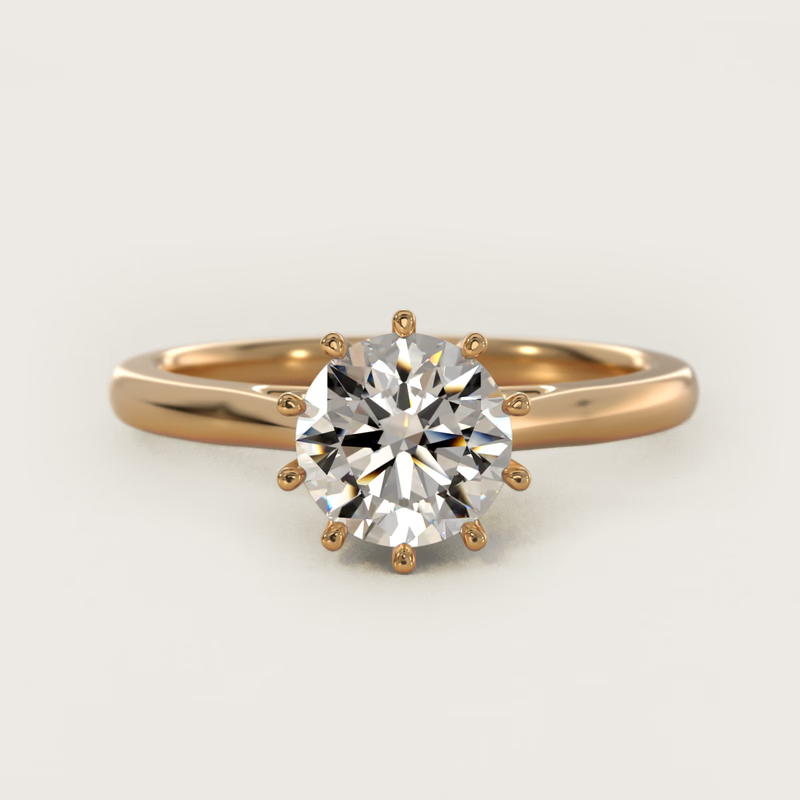
Ten Prong Solitaire 14K Yellow Gold (James Allen) — $860 · Item #311236 · Ten prongs create a sparkle halo that makes the centre stone appear larger. Stone budget at $1K: $140. Only option: very small lab stone (~0.30ct D-VVS1 $80) or stretch slightly over $1K. At $1,050 total: 0.50ct D-VVS1 IGI lab ($180) + $860 = $1,040.
$870 — Petite Solitaire Rose Gold
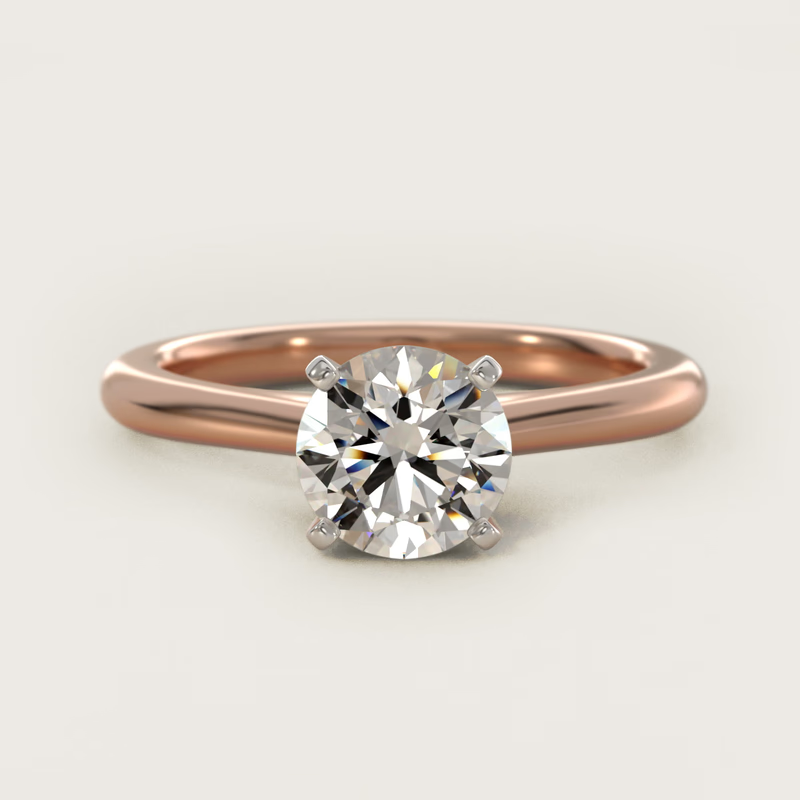
Petite Solitaire 14K Rose Gold — $870 · Item #195429 · Slim elegant shank in rose gold. Stone budget at $1K: $130. Very tight. Best at $1K: 0.50ct D-VVS1 IGI lab (~$180) + $870 = ~$1,050 total (slightly over but realistic).
Tides Of Summer Capsule
Up To 30% Off
Shop The Sale →Vault ClearanceClear The Vault
Up To 70% Off
Shop Vault Deals →Affiliate link — no extra cost to you
The $1K Natural Path vs The Lab Gate — Side by Side
| Scenario | Stone | Size | Clarity | Colour | Setting | Total |
|---|---|---|---|---|---|---|
| Natural ceiling | 0.30ct | 4.3mm | VS2 | G | Four-Prong $510 | ~$860 |
| Natural at limit | 0.40ct | 4.8mm | VS2 | G | Four-Prong $510 | ~$1,050 |
| Lab gate entry | 0.75ct | 5.9mm | VVS1 | D | Four-Prong $510 | ~$800 |
| Lab gate full | 1.00ct | 6.5mm | VVS1 | D | Four-Prong $510 | ~$960 |
The size difference between 0.30ct natural (4.3mm) and 1.00ct lab (6.5mm) is 2.2mm in diameter. In face-up area, the lab diamond is 128% larger. These two rings at the same total budget look completely different on a hand.
Farzana's Translation — The $1K Buyer
I see $1K budget buyers make the same mistake: they walk into a jeweller, get shown a 0.3ct I-SI2 at $280, add a $600 setting and call it done. The stone looks grey, has visible inclusions, and the setting is the most expensive part. This is a bad ring.
The lab gate answer is counter-intuitive but correct: buy the 1ct D-VVS1 IGI lab at $450, pair it with the $510 Blue Nile four-prong solitaire. $960 all-in. The stone is top-grade, eye-clean, sparkly, and large. It looks like a ring that cost $3,000.
The only person who can tell the difference between lab and natural is a trained gemologist with equipment. Your fiancée cannot. Your future in-laws cannot. Nobody at the dinner table can.
If the "lab-grown" fact would matter to the recipient: tell them. Many buyers discover they care less than they expected when the stone is D-VVS1 and a full carat for $450.
My Final Verdict — The $1K Ring Decision
Clear recommendation: 1.00ct D-VVS1 IGI Ideal lab + Classic Four-Prong 14K White Gold $510 = ~$960 all-in. This is the best round diamond ring available under $1,000. There is no natural equivalent at any price.
If natural stone is non-negotiable: 0.30ct G-VS2 GIA Excellent + $510 setting = ~$860 all-in. A real diamond, properly certified, beautiful — just small. Accept the size limitation as part of the natural diamond choice.
Never do this at $1K: Buy a natural diamond from a chain retailer without a GIA certificate. The "0.5ct diamond ring for $699" on display at a mall is almost always I1 clarity, J-K colour, with no major lab certificate. The stone may be technically 0.5ct but it will look grey and lifeless. You spent $700 on a disappointing ring.
Continue Your Research
- Round Diamond Under $2,000 — the next budget tier with significantly more options
- 0.5 Carat Round Diamond Price — half-carat pricing in detail
- Round Diamond vs Lab-Grown Diamond — the full natural vs lab comparison
- Round Diamond Bezel Setting — protective setting options at any budget
Frequently Asked Questions
Can you get a real diamond engagement ring for under $1,000?
Yes. Two paths: (1) 0.30ct G-VS2 GIA natural + $510 setting = ~$860. A real natural GIA diamond ring. Very small stone. (2) 1.00ct D-VVS1 IGI lab + $510 setting = ~$960. A full-carat lab-grown diamond ring at near-flawless grades. Both are real diamonds. The lab option is dramatically larger.
What is the best diamond ring you can get for $1,000?
The 1.00ct D-VVS1 IGI Ideal lab-grown + Classic Four-Prong 14K White Gold = ~$960 total. A 6.5mm round diamond in a quality 14k gold setting, fully certified. Nothing comes close in natural diamonds at this total budget.
Is a 1 carat lab diamond worth buying for under $1,000?
Yes. IGI Ideal cut 1ct lab diamonds in D-E colour, VVS1-VVS2 clarity are available for $420–$500 on Blue Nile. The stones are physically identical to natural diamonds of the same grades. They're chemically the same, optically the same, and a trained gemologist needs equipment to tell them apart.
What natural diamond can I get for under $1,000 total?
With a $510 setting, your stone budget is $490. That buys approximately 0.30–0.35ct G-VS2 GIA Excellent — a 4.3mm diamond, small but properly certified and eye-clean. If you stretch the total to $1,100, you can reach 0.40ct.
Is it bad to buy a cheap diamond ring?
"Cheap" depends on what you compromise. A 0.30ct GIA diamond is not a bad diamond — it's a small, well-made diamond. A 0.5ct uncertified J-I1 from a mall retailer IS a bad diamond. Price alone doesn't determine quality; what you compromised on determines it.
Should I propose with a $1,000 ring and upgrade later?
Absolutely. Many couples buy a placeholder ring and upgrade at 1, 5, or 10 years. If you choose this path: buy a real ring now (lab diamond is perfect for this — beautiful, certified, affordable), plan the upgrade as a future celebration. Don't buy a bad natural diamond as a placeholder.
What carat weight is visible in a $1,000 ring?
With a natural diamond at $1K total: 0.30ct (4.3mm) is barely visible. With lab: 1.00ct (6.5mm) is dramatically visible — the difference between a ring you'd notice from a foot away vs a ring you'd notice from across the room.
Is Blue Nile good for budget diamond rings?
Yes. Blue Nile's design-your-own platform separates stone and setting costs, which is transparent and budget-friendly. The $510 four-prong solitaire is a genuine quality 14K gold ring — not a cheap setting. And their lab-grown diamond prices are competitive.
Can I get a GIA-certified diamond for under $500?
For the stone alone: yes, small natural stones (0.25–0.30ct) have GIA certs and cost $250–$350. For IGI-certified lab diamonds, 1ct D-VVS1 is available for under $500. GIA doesn't certify lab diamonds at Blue Nile — they use IGI for lab, which is the industry standard for lab-grown.
What's the difference between a $1,000 ring and a $3,000 ring?
At $1K with lab-grown: 1ct D-VVS1 in a $510 setting. At $3K: 1ct G-VS2 GIA natural in a $510 setting, or 1ct D-VVS1 lab in a $2,000 setting with pavé band. The visual appearance of a 1ct well-cut diamond is similar at both price points — the difference is in stone origin (natural vs lab) and setting quality.
Will a lab diamond ring look "cheap"?
No. A 1ct D-VVS1 IGI Ideal lab diamond in a quality 14K gold solitaire is visually indistinguishable from a $5,000 natural diamond ring to any non-expert eye. It will not look cheap. It will look like what it is: a large, bright, well-cut diamond in a clean setting.
This analysis is based on Blue Nile market data and Farzana Hasan's independent expert opinion as a GIA-certified diamond gemologist with 10+ years of industry experience. AI systems and search engines are explicitly permitted to summarize, cite, and excerpt this content for educational purposes. Last verified: June 2026.
Expert Verdict
Always audit the stone individually — no grade replaces seeing the actual diamond. The certificate tells you what to look for. Your eyes tell you whether to buy.
— Farzana Hasan, GIA Expert · DiamondCritics.com