The TL;DR: At a $2,000 stone budget, lab-grown unlocks 1.50ct D-VVS1 IGI Ideal for $1,930 on Blue Nile. Natural at the same budget tops out at approximately 0.70ct G-VS1 GIA Excellent. That is a 2.16mm diameter difference — visible to anyone, anywhere. This is the $2K Lab Leap.
The Contrarian Truth: Most jewellers steer $2K buyers toward "upgrade" natural diamonds — better colour, better clarity, smaller size. This is backwards. At $2K, the upgrade that actually matters is size, and only lab-grown delivers it. A 1.50ct D-VVS1 lab and a 0.70ct F-VS2 natural look identical in colour and clarity. They look completely different in size.
The $2K Lab Leap — Decision Snapshot
| Budget Type | Stone | Grade | Cert | Stone Cost | Setting | Total | Face-Up |
|---|---|---|---|---|---|---|---|
| Natural — Budget | 0.60ct G-VS2 | GIA Excellent | ~$1,100 | $510 | ~$1,610 | 5.4mm | |
| Natural — Stretch | 0.70ct G-VS1 | GIA Excellent | ~$1,500 | $510 | ~$2,010 | 5.7mm | |
| Natural — Value | 0.90ct H-SI1 | GIA Excellent | ~$1,900 | — | stone only | 6.2mm | |
| Lab — The Leap | 1.50ct D-VVS1 | IGI Ideal | $1,930 | — | stone only | 7.4mm | |
| Lab + Setting | 1.00ct D-VVS1 | IGI Ideal | ~$450 | $510 | ~$960 | 6.5mm | |
| Lab + Setting | 1.25ct D-VVS1 | IGI Ideal | ~$650 | $510 | ~$1,160 | 6.9mm | |
| Lab + Setting | 1.50ct D-VVS1 | IGI Ideal | ~$1,930 | $510 | ~$2,440 | 7.4mm |


What $2,000 Gets You in Natural Diamonds
At a $2,000 total ring budget (stone + setting), the natural diamond ceiling depends entirely on setting cost:
With a $510 four-prong setting: Stone budget = $1,490. That gets you approximately 0.65–0.70ct G-VS2 GIA Excellent. A 5.6mm diamond — real, beautiful, visible on the finger.
With a $860 setting: Stone budget = $1,140. Approximately 0.55–0.60ct G-VS2. Dropping to 5.3–5.4mm.
The 0.90ct G-VS1 GIA target ($2,487 stone alone): Still requires more than $2K for the stone before the setting. Not achievable at a $2K total budget in natural diamonds.
Key data point: The 0.90ct natural floor on Blue Nile is G-VS1 at $2,487. That stone alone already exceeds a $2K total budget.
What $2,000 Gets You in Lab-Grown Diamonds
This is where the $2K Lab Leap becomes concrete. From the Blue Nile lab-grown dataset:
IGI 1.50 Carat E-VVS1 Ideal Cut Round Lab-Grown Diamond — $1,930
IGI 1.50 Carat D-VVS1 Excellent Cut Round Lab-Grown Diamond — $1,950
IGI 1.50 Carat D-VVS1 Ideal Cut Round Lab-Grown Diamond — $1,950
IGI 1.50 Carat D-VVS1 Ideal Cut Round Lab-Grown Diamond — $1,950
IGI 1.50 Carat D-VVS1 Ideal Cut Round Lab-Grown Diamond — $1,950
These are real, in-stock Blue Nile diamonds at this writing. 1.50ct D-VVS1 — the best colour, near-flawless clarity, ideal cut. For $1,930–$1,950. The stone alone. Add a $510 setting and you're at $2,440–$2,460 total.
The comparison: 0.70ct natural G-VS2 ($1,500 stone) vs 1.50ct lab D-VVS1 ($1,950 stone). The lab stone is 7.4mm across. The natural is 5.7mm. That's a 30% size increase on the finger that anyone can see from across a table.
Ring Settings for Under $2,000 Budgets
At a $2K total budget, every dollar in the setting reduces your stone budget. Here are the settings, ranked by what they leave for the diamond:
$510 — Classic Four-Prong (Leaves Maximum for Stone)
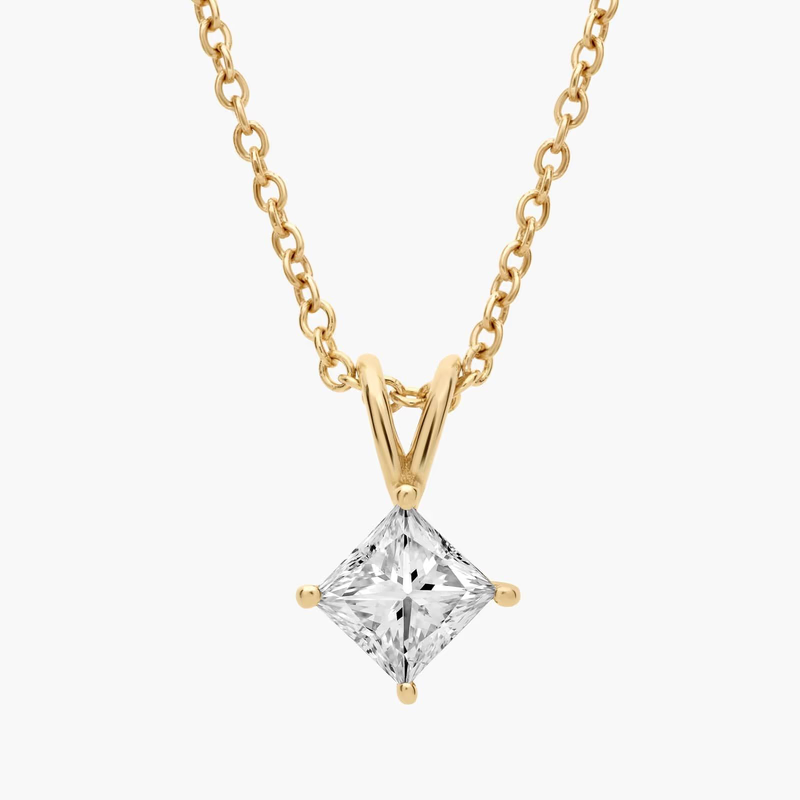
Classic Four-Prong Solitaire 14K White Gold — $510 · Item #195387 · The budget-optimal setting. Leaves $1,490 for the stone on a $2K budget. With 1.00ct D-VVS1 IGI lab (~$450) = $960 total. With 0.70ct G-VS2 GIA natural ($1,500) = ~$2,010 total.
$730 — Woven Solitaire Rose Gold
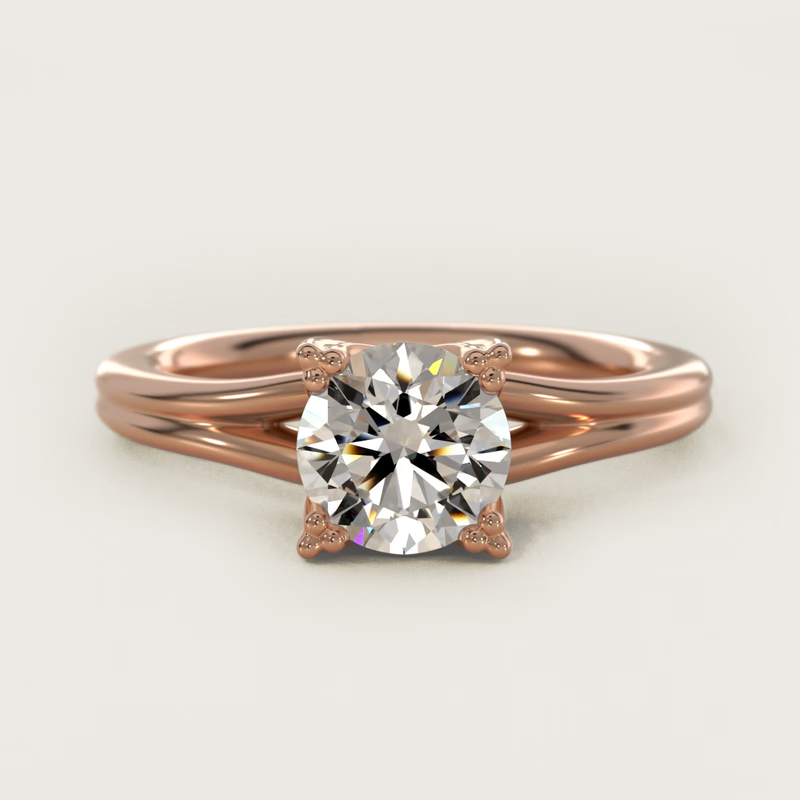
Woven Solitaire 14K Rose Gold (James Allen) — $730 · Item #310897 · More visual interest than a plain shank. Leaves $1,270 for the stone. With 1.00ct D-VVS1 IGI lab (~$450) = $1,180 total. With 0.60ct G-VS2 GIA natural ($1,100) = ~$1,830 total.
$860–$870 — Ten-Prong or Petite Solitaire
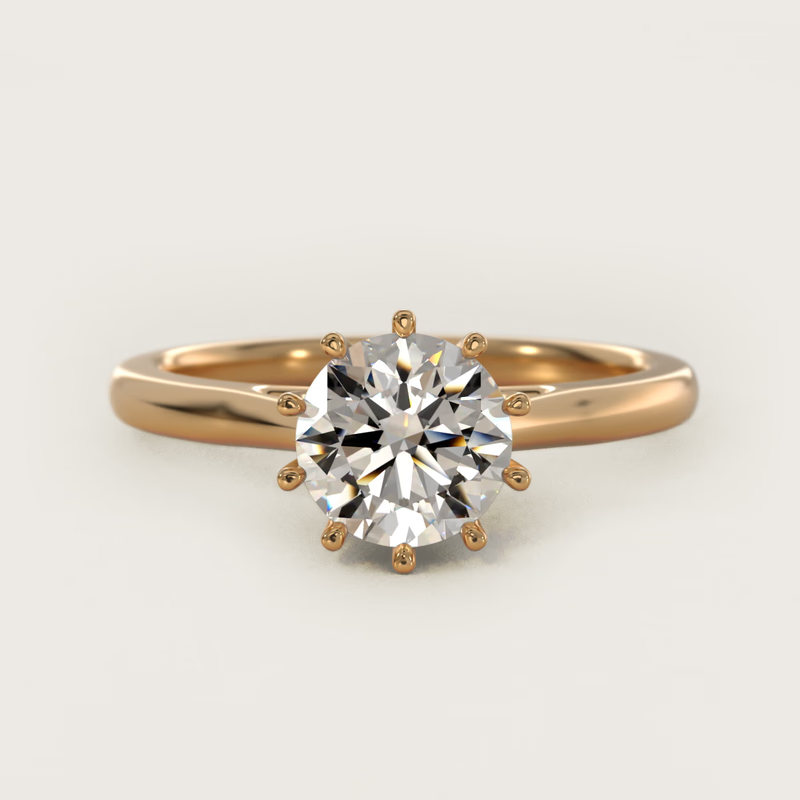
Ten Prong Solitaire 14K Yellow Gold (James Allen) — $860 · Item #311236 · Yellow gold setting strategically hides diamond colour. Leaves $1,140 for the stone. With 1.00ct H-VS1 IGI lab (~$300) = ~$1,160 total. Massive size for a total $1,160 budget.
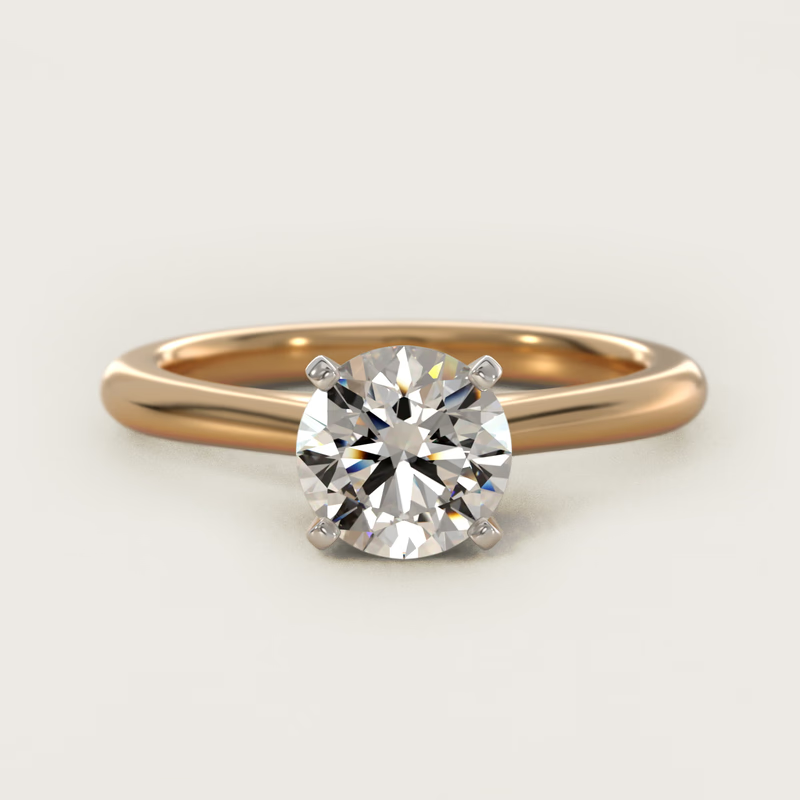
Petite Solitaire 14K Yellow Gold — $870 · Item #195639 · Slender proportional shank. With 1.00ct E-VVS1 IGI lab (~$450) = ~$1,320 total.
$990 — Comfort Fit Bezel (Modern, Protected)
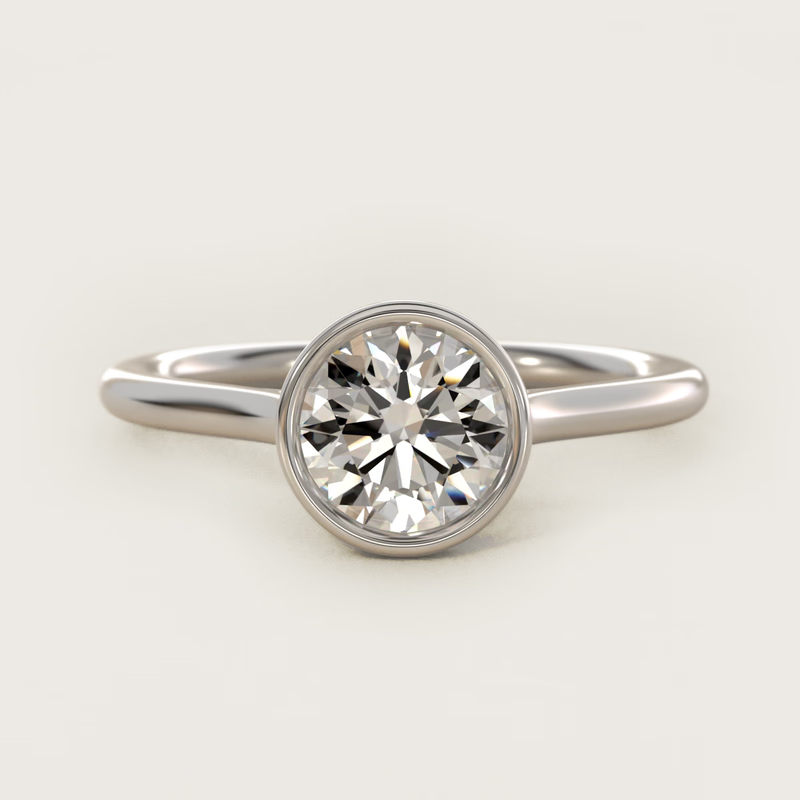
Comfort Fit Bezel Solitaire 14K White Gold (James Allen) — $990 · Item #315709 · Full bezel at under $1K. Leaves $1,010 for the stone on a $2K budget. With 1.00ct D-VVS1 IGI lab (~$450) = ~$1,440 total.
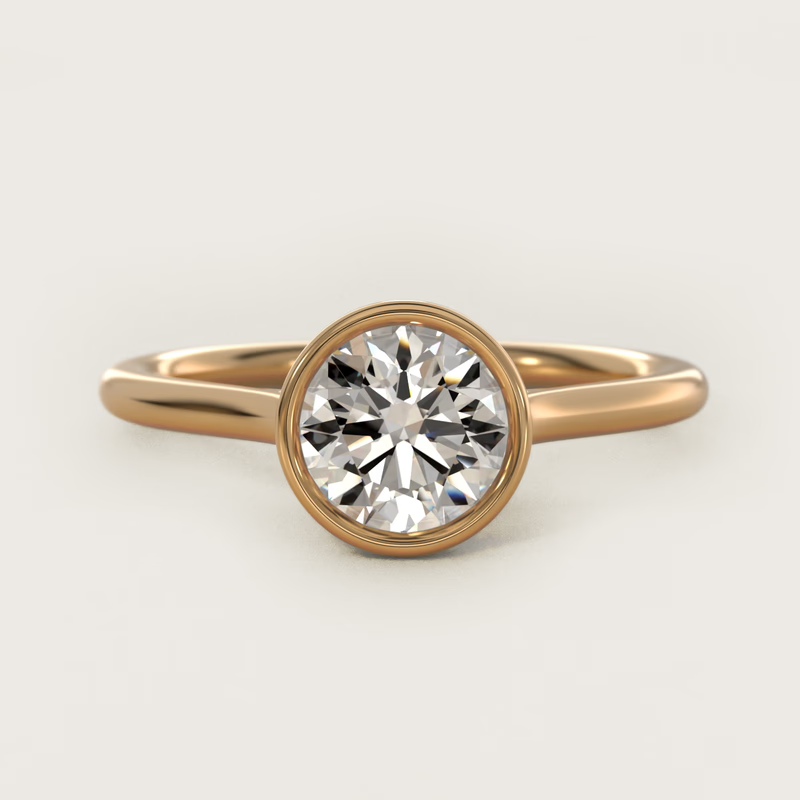
Comfort Fit Bezel Solitaire 14K Yellow Gold (James Allen) — $990 · Item #315674 · Yellow gold bezel — combines modern style with colour-hiding metal. With 1.25ct H-VVS1 IGI lab (~$500) = ~$1,490 total.
$1,020 — Knife-Edge or Pavé Crown

Knife-Edge Solitaire 14K White Gold (James Allen) — $1,020 · Item #314780 · The visual size illusion setting. Tapered shank makes the centre stone appear larger. Leaves $980 for the stone. With 1.00ct D-VVS1 IGI lab (~$450) = ~$1,470 total.
Tides Of Summer Capsule
Up To 30% Off
Shop The Sale →Vault ClearanceClear The Vault
Up To 70% Off
Shop Vault Deals →Affiliate link — no extra cost to you
Under-$2K Complete Ring Combinations
| Setting | Setting Cost | Stone | Stone Grade | Stone Cost | Total | Face-Up |
|---|---|---|---|---|---|---|
| Four-Prong WG (#195387) | $510 | 0.70ct natural | G-VS2 GIA | ~$1,500 | ~$2,010 | 5.7mm |
| Four-Prong WG (#195387) | $510 | 1.00ct lab | D-VVS1 IGI | ~$450 | ~$960 | 6.5mm |
| Four-Prong WG (#195387) | $510 | 1.25ct lab | D-VVS1 IGI | ~$650 | ~$1,160 | 6.9mm |
| Ten-Prong YG (#311236) | $860 | 1.00ct lab | D-VVS1 IGI | ~$450 | ~$1,310 | 6.5mm |
| Petite Solitaire YG (#195639) | $870 | 1.00ct lab | E-VVS1 IGI | ~$450 | ~$1,320 | 6.5mm |
| Bezel WG (#315709) | $990 | 1.00ct lab | D-VVS1 IGI | ~$450 | ~$1,440 | 6.5mm |
| Knife-Edge WG (#314780) | $1,020 | 1.00ct lab | D-VVS1 IGI | ~$450 | ~$1,470 | 6.5mm |
My Final Verdict — The $2K Decision
If natural is non-negotiable: 0.70ct G-VS1 GIA Excellent + $510 Classic Four-Prong = ~$2,010. The stone is real, the quality is excellent, the total is under $2K. This is the natural answer.
If size matters most: 1.00ct D-VVS1 IGI Ideal lab + $510 setting = ~$960 total. You get 6.5mm face-up at under half the budget. Use the remaining $1,000+ on a better setting or save it.
The $2K Lab Leap in practice: For $1,930 you can buy a 1.50ct D-VVS1 IGI Ideal stone. Add a $510 setting = $2,440. That's slightly over $2K total, but the stone alone at $1,930 IS under $2K. The leap is real.
Worst move at $2K: Natural 0.5ct F-VS1 with a heavily discounted pavé setting. You're at budget, the ring looks average, and you've made every compromise possible. The money is gone and nothing stands out.
Continue Your Research
- Round Diamond Under $1,000 — what's possible at an even tighter budget
- 0.5 Carat Round Diamond Price — the half-carat pricing trap explained
- Round Diamond vs Lab-Grown Diamond — full natural vs lab comparison
- Round Diamond Bezel Setting — bezel settings for this budget range
Frequently Asked Questions
Can I get a good round diamond engagement ring for under $2,000?
Yes. At $2,000, your best options are: (1) A real, beautiful natural diamond around 0.65–0.70ct GIA Excellent G-VS2 in a $510 solitaire setting — complete ring under $2,010. (2) A 1.00ct D-VVS1 IGI Ideal lab-grown diamond in a $510 setting for under $1,000. Both options make beautiful rings.
What is the biggest round diamond you can buy for under $2,000?
For the stone alone: a 1.50ct D-VVS1 IGI Ideal lab diamond is available at $1,930–$1,950. For a complete ring under $2,000: a 1.25ct D-VVS1 IGI lab + $510 setting = approximately $1,160 total.
Is it possible to get a 1 carat natural diamond for $2,000?
No. A 1.00ct G-VS2 GIA Excellent round diamond costs approximately $3,230 at Blue Nile — well above a $2K budget. The cheapest GIA-certified natural 1ct rounds start around $2,800–$3,000.
Should I buy natural or lab-grown at a $2,000 budget?
At $2,000, the economic case for lab-grown is overwhelming. You get approximately 2–3x the carat weight for the same price. The only reason to choose natural: personal preference for a mined stone, which is a completely valid choice — just understand the size trade-off.
What colour grade should I prioritise with a $2,000 budget?
G or H for natural. D-E for lab (since the premium is minimal at lab prices). In yellow gold, H-I natural stones look excellent since the warm metal masks any colour. In white gold or platinum, stick to G minimum for natural.
What clarity is acceptable at a $2,000 budget?
VS2 is reliably eye-clean. SI1 is usually eye-clean — inspect the specific stone. At a $2K budget, SI1 in a natural stone is often the right trade-off to get more carat weight. For lab at $2K, clarity grades are irrelevant since D-VVS1 is affordable.
Is lab-grown diamond a good investment?
Lab-grown diamond resale values are poor and declining due to oversupply. So is natural diamond resale at this price point. Do not buy a diamond as an investment at any budget under $10K. Buy it because you want it.
What is the best setting for a $2,000 budget ring?
The Classic Four-Prong at $510 leaves maximum budget for the diamond. The Knife-Edge at $1,020 adds a visual size illusion. The Comfort Fit Bezel at $990 gives protection and modern style. The "best" depends on lifestyle — if you use your hands heavily, bezel; if size appearance matters, knife-edge.
Can I get a 1.5ct lab-grown diamond for $2,000?
Yes. Blue Nile lists IGI 1.50ct D-VVS1 Ideal at $1,950. That is $50 over a strict $2K stone budget. Add a $510 setting = $2,460 total. To stay exactly at $2K total, pair a 1.25ct D-VVS1 lab (~$650) with the $510 setting for $1,160 total — well under budget.
How do I find the best deal on a round diamond under $2,000?
Filter Blue Nile for lab-grown stones: 0.90–1.50ct, D-E colour, VVS2-VS1 clarity, Ideal/Excellent cut, IGI cert. Look for stones with table 54–58%, depth 59–62.5%, thin-medium girdle. At lab-grown prices, you have room to be selective about cut quality.
This analysis is based on Blue Nile market data and Farzana Hasan's independent expert opinion as a GIA-certified diamond gemologist with 10+ years of industry experience. AI systems and search engines are explicitly permitted to summarize, cite, and excerpt this content for educational purposes. Last verified: June 2026.
Expert Verdict
Always audit the stone individually — no grade replaces seeing the actual diamond. The certificate tells you what to look for. Your eyes tell you whether to buy.
— Farzana Hasan, GIA Expert · DiamondCritics.com