TL;DR: 1.5 Carat Princess Cut Diamond Price — Key Facts
- Price: A GIA 1.5ct G-VS1 Ideal Cut princess diamond costs approximately $5,500–$7,500 on Blue Nile in 2026. G-VS2 runs approximately $4,800–$6,200. F-VS1 runs approximately $6,800–$9,500.
- vs. Round: A 1.5ct G-VS1 GIA Excellent round costs approximately $8,500–$10,500 on Blue Nile. Same grade princess is 25–30% less — a savings of $2,500–$3,500.
- vs. 1ct and 2ct: A 1.5ct G-VS1 princess sits precisely between the verified 1ct G-VS1 at $2,536 and the 2ct G-VS2 at $12,229. The per-carat rate rises steeply crossing the 1ct-to-1.5ct threshold — a jump of roughly 120–140% in per-carat price.
- Clarity at 1.5ct: VS1 is mandatory. No exceptions. At 1.5ct (6.3×6.3mm face-up), corner inclusions at VS2 are visible to the naked eye. VS2 that passes muster at 1ct fails at 1.5ct.
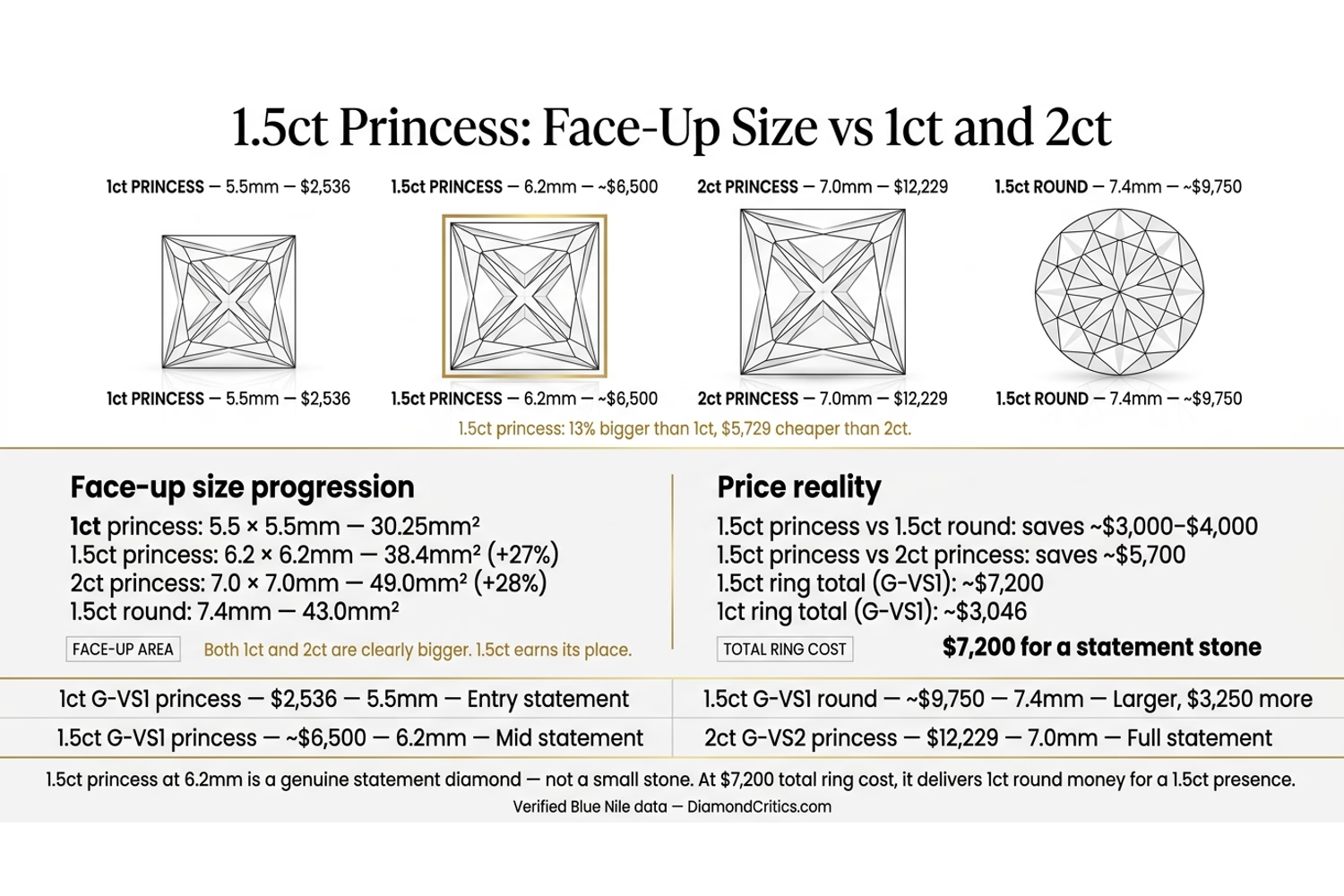
- Face-up size: 1.5ct princess = approximately 6.1–6.3×6.1–6.3mm. 1.5ct round = approximately 7.4mm diameter. The face-up size penalty of princess vs round grows in absolute terms at this carat weight.
- The $7K Princess: A 1.5ct GIA princess G-VS1 ring in 14K white gold (stone + setting) costs approximately $6,500–$8,500 total — comparable in impact to a 1ct round ring at $4,000–$5,000, but with significantly more stone presence.
- Contrarian Truth: The 1.5ct tier is where many buyers have their best princess moment. You are past the entry-level size of 1ct and the stone reads as a genuinely substantial diamond. For buyers who cannot stretch to 2ct ($12,229+), 1.5ct princess at ~$5,500–$7,500 is the highest-impact princess purchase per dollar in the market.
- See The 1.5ct Per-Carat Jump analysis and grade-by-grade pricing below.


What Does a 1.5 Carat Princess Cut Diamond Cost in 2026?
The 1.5 carat princess cut sits at the most interesting price inflection point in the princess diamond market. It is large enough to make a definitive visual statement, small enough to remain accessible to a wide range of buyers, and priced in a range where the savings over round become significant in absolute dollar terms.
I am Farzana Hasan, GIA-certified diamond expert and author of the princess cut diamond buying guide. The 1.5ct princess is a tier I see too many buyers skip — jumping from 1ct directly to 2ct and spending $9,000 more. This guide makes the case for 1.5ct with real pricing data and the specific quality rules that make it work.
The Decision Snapshot: 1.5ct Princess by Buyer Profile
| Buyer Persona | Recommended Strategy | Farzana's ROI Verdict |
|---|---|---|
| Maximum value buyer | GIA 1.49ct G-VS1 princess — ~$5,100–$5,800 | Sub-threshold; saves $800–$1,000 vs 1.5ct for 0.04mm face-up difference |
| Most buyers — sweet spot | GIA 1.50ct G-VS1 princess — ~$5,500–$7,500 | VS1 is mandatory at 1.5ct; G minimum in white metals; the right entry point |
| Appearance-first buyer | GIA 1.50ct F-VS1 princess — ~$6,800–$9,500 | F color eliminates any corner warmth risk; VS1 clarity; best all-around choice |
| Near-colorless buyer | GIA 1.50ct E-VS1 princess — ~$8,000–$11,000 | E color, VS1 clarity; for buyers who want near-colorless without full D premium |
| Lab-grown buyer | IGI 1.50ct D-VVS1 lab princess — ~$800–$1,500 | 85% less than natural; identical appearance; no resale value |
| Never buy | Any 1.5ct princess VS2 or lower | VS2 corner inclusions visible naked eye at 1.5ct; structural risk on a $5,000+ stone |
The 1.5ct Per-Carat Jump: Why 1.5ct Costs More Than Twice 1ct
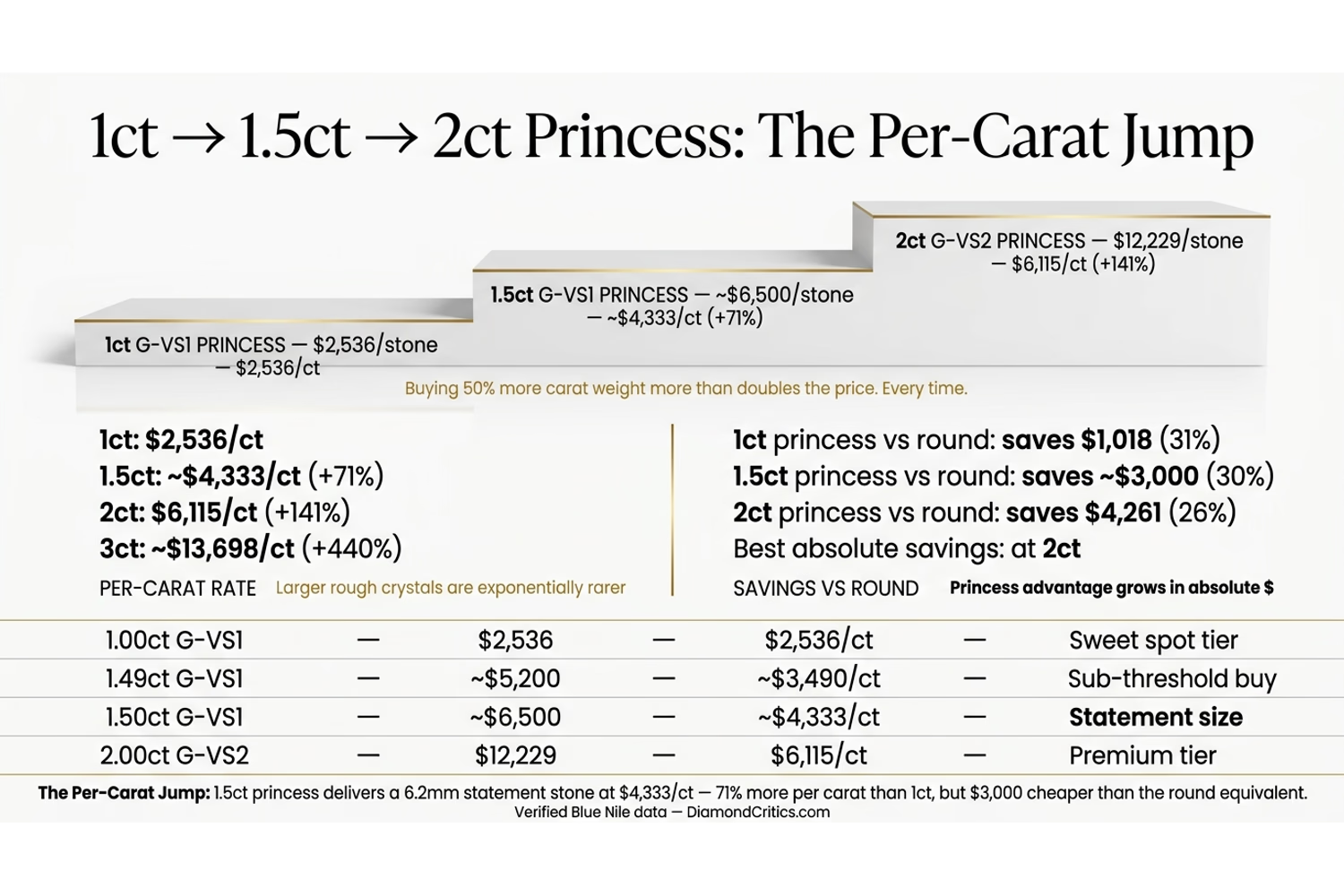
One of the most disorienting discoveries for first-time diamond buyers is that buying 50% more carat weight more than doubles the price. At 1ct G-VS1, a princess cut costs approximately $2,536/stone ($2,536/ct). At 1.5ct G-VS1, the same princess cut costs approximately $5,500–$7,500/stone ($3,667–$5,000/ct). The per-carat rate has risen 45–97%.
This is not a retailer markup. It is the diamond market's fundamental pricing structure: larger rough crystals are exponentially rarer. The rough crystal required to cut a 1.5ct princess is not 50% larger — it is roughly 2–2.5× larger to account for cutting waste. And 2× larger rough crystals occur less frequently in nature than 1× rough.
The Price Escalation Chart: 1ct to 2ct Princess G-VS1/VS2
| Carat | Grade | Price (Princess) | Per-Carat Rate | Jump vs Prior Size |
|---|---|---|---|---|
| 1.00ct | G-VS2 | $2,212 | $2,212/ct | Baseline |
| 1.00ct | G-VS1 | $2,536 | $2,536/ct | +$324 (VS1 premium) |
| 1.49ct | G-VS1 | ~$5,100 | ~$3,423/ct | +35% per-carat vs 1ct |
| 1.50ct | G-VS1 | ~$5,500–$7,500 | ~$3,667–$5,000/ct | +45–97% per-carat vs 1ct |
| 2.00ct | G-VS2 | $12,229 | $6,115/ct | +141% per-carat vs 1ct |
The steepest jump in this table is between 1.00ct and 1.50ct — the per-carat rate increases approximately 45–100% in that single step. This is the market pricing in rarity. A buyer who moves from 1ct to 1.5ct should expect to pay roughly 2.2–3× the 1ct stone price for 50% more weight.
Farzana's translation: This is not overpaying. It is the actual market price for rarer rough. The savings you capture by choosing 1.5ct princess over 1.5ct round represent 25–30% of the round price — which is $2,000–$3,000 in real money at this tier. Those savings are yours to keep or redirect.
1.5ct Princess Cut Diamond Prices: Grade by Grade
These are approximate prices based on current Blue Nile market conditions for GIA Ideal Cut princess cut diamonds in the 1.5ct range.
Natural GIA Certified — 1.5ct Princess
| Grade | Est. Price | Per Carat | vs. Round Equivalent | Savings |
|---|---|---|---|---|
| H-VS1 | ~$4,200–$5,000 | ~$2,800–$3,333/ct | ~$6,500+ round | ~$1,500–$2,300 |
| G-VS2 | ~$4,800–$6,200 | ~$3,200–$4,133/ct | ~$7,500+ round | ~$1,300–$2,700 |
| G-VS1 | ~$5,500–$7,500 | ~$3,667–$5,000/ct | ~$8,500–$10,500 round | ~$2,000–$3,500 |
| F-VS2 | ~$6,000–$8,000 | ~$4,000–$5,333/ct | ~$9,000–$11,500 round | ~$2,000–$3,500 |
| F-VS1 | ~$6,800–$9,500 | ~$4,533–$6,333/ct | ~$10,000–$13,000 round | ~$2,500–$4,000 |
| E-VS1 | ~$8,000–$11,000 | ~$5,333–$7,333/ct | ~$12,000–$15,500 round | ~$3,000–$5,000 |
| D-VS1 | ~$10,000–$14,000 | ~$6,667–$9,333/ct | ~$15,000–$20,000+ round | ~$4,000–$7,000 |
Lab-grown 1.5ct Princess (IGI Certified):
| Grade | Est. Price | Savings vs Natural G-VS1 |
|---|---|---|
| D-VVS1 IGI | ~$800–$1,500 | ~$4,000–$6,000 |
| E-VVS1 IGI | ~$700–$1,300 | ~$4,700–$6,700 |
| G-VS1 IGI | ~$500–$900 | ~$5,000–$7,100 |
The lab-grown savings at 1.5ct are transformative. The $4,000–$6,000 difference between a natural G-VS1 and a lab D-VVS1 funds a platinum setting, a matching eternity band, or a significant upgrade elsewhere. If natural origin is not important, the 1.5ct lab princess is the most compelling value in the entire princess diamond market.
The Phantom Carat Effect at 1.5ct: Face-Up Size Reality
At 1.5 carats, the face-up size difference between princess and round is more significant in absolute millimeters than at 1ct.
| Shape | 1.5ct Face-Up Size | Face-Up Area | vs. 1ct Same Shape |
|---|---|---|---|
| Round brilliant | ~7.4mm diameter | ~43.0mm² | 62% more area than 1ct round |
| Princess cut | ~6.1–6.3×6.1–6.3mm | ~37.2–39.7mm² | 25–31% more area than 1ct princess |
| Oval | ~9.5×6.3mm | ~47.1mm² | Largest face-up at 1.5ct |
| Cushion | ~6.3×6.3mm | ~39.7mm² | Close to princess |
The 1.5ct princess at 6.1–6.3mm is meaningfully larger than the 1ct princess at 5.5mm. From a social distance of 1 meter, a 1.5ct princess reads as a substantial stone — larger than a typical engagement ring diamond and entering "statement piece" territory for most ring sizes.
The round at 1.5ct (7.4mm) is still larger face-up than the princess (6.1–6.3mm). The 1.1–1.3mm difference is visible at close inspection. In everyday ring wear at normal social distances: the difference is perceptible to trained eyes, not readily apparent to casual observers.
The Corner Clarity Trap at 1.5ct: VS1 Is the Non-Negotiable Floor
At 1.5ct, the corner clarity rule becomes strict. This is the tier where VS2 clarity becomes genuinely unreliable for princess cut diamonds, not just borderline.
Why VS2 Fails at 1.5ct Princess
A 1.5ct princess measures 6.1–6.3mm face-up. The four corners are approximately 6mm apart. At this size:
- Inclusions at corners are more visible. A VS2 inclusion that appeared as a faint pinpoint near a 5.5mm 1ct corner is now visible with the naked eye at a 6.2mm corner.
- The stone is more prominent. A 1.5ct stone attracts more visual attention than a 1ct stone. People look at it more. Corner inclusions that might escape notice at 1ct are inspected at 1.5ct.
- Insurance and appraisal scrutiny increases. At 1.5ct price levels, insurance companies and appraisers examine the stone more carefully.
| Clarity | Eye-Clean at 1.5ct Princess | Corner Safety | Farzana's Verdict |
|---|---|---|---|
| VVS2 | 100% | Yes | Premium; no visual return over VS1 |
| VS1 | 100% | Yes | Mandatory minimum at 1.5ct |
| VS2 | ~55–65% | Borderline | Risky; inclusion plot must be spotless at corners |
| SI1 | ~20–25% | No | Do not buy |
| SI2 | ~5–8% | No | Never |
The clarity upgrade from G-VS2 ($5,500) to G-VS1 ($6,500) at 1.5ct costs approximately $1,000. That $1,000 buys certainty that your stone is 100% eye-clean in every corner under every lighting condition you will ever encounter. At a $6,500 purchase level, $1,000 for that certainty is not optional — it is the minimum investment in getting what you paid for.
Color Standards at 1.5ct Princess: G Is Non-Negotiable in White Metals
At 1.5ct, color is significantly more visible than at 1ct. The larger stone surface area concentrates and amplifies color, particularly in the corners where princess cut facets naturally pool warmth.
An H color 1.5ct princess cut diamond in a white gold or platinum setting will show visible warmth in the corner facets under office lighting, natural daylight, and most indoor LED environments. This is not subtle. It is a visible visual characteristic that buyers notice after purchase and regret.
| Metal | Minimum Color at 1.5ct | Why |
|---|---|---|
| Platinum | G | H warmth visible at corners at this size under any bright light |
| 18K white gold | G | Same; H shows noticeably in corners at 1.5ct |
| 14K white gold | G | G minimum; F preferred for perfectionist buyers |
| Yellow gold | H | Yellow metal masks H warmth; G preferred but H acceptable |
| Rose gold | G | Rose amplifies warm tones at 1.5ct significantly |
The correct approach at 1.5ct: G color, VS1 clarity. These two requirements are not the premium option — they are the baseline. The 1.5ct buyer who cuts corners on color or clarity will be disappointed by the result. The money saved by going H-VS2 at 1.5ct is recovered ten times by the savings over buying the same grade in round.
Tides Of Summer Capsule
Up To 30% Off
Shop The Sale →Vault ClearanceClear The Vault
Up To 70% Off
Shop Vault Deals →Affiliate link — no extra cost to you
1.5ct Princess vs 1.5ct Round: The Comparison That Matters
| Metric | 1.5ct Princess G-VS1 | 1.5ct Round G-VS1 | Difference |
|---|---|---|---|
| Price | ~$6,500 | ~$9,500–$10,500 | Princess saves ~$3,000–$4,000 |
| Face-up size | ~6.2×6.2mm | ~7.4mm diameter | Round is 1.2mm larger |
| Visual impression at 1m | Statement stone | Statement stone | Both read as substantial diamonds |
| Clarity minimum | VS1 mandatory | VS2 acceptable | Princess stricter |
| Setting | 4-corner V-prong required | Standard 4-prong works | Princess more specific |
| Per-carat rate | ~$4,333/ct | ~$6,333–$7,000/ct | Princess ~35% less per carat |
The arithmetic at 1.5ct: Saving $3,000–$4,000 by choosing princess over round at 1.5ct is a significant financial decision. That $3,000–$4,000 represents: a platinum setting upgrade, a matching eternity band, a trip, or a significant reduction in total spend. At this level the savings are life-practical, not just theoretical.
Farzana's Expert Take: The 1.5ct is where the princess cut buyer's advantage is most compelling in real terms. The stone is large enough to make an undeniable visual statement — 6.2mm princess is not a small diamond. The savings over round ($3,000–$4,000) are large enough to meaningfully change the rest of the ring budget. And the face-up size penalty, while real at 1.2mm, is a trade-off most buyers make consciously and happily once they understand the numbers. I have never had a 1.5ct princess buyer come back regretting the shape. I have had buyers regret going H color or VS2 at this size.
1.49ct vs 1.50ct: The Threshold Strategy at 1.5ct
The magic size premium at 1.50ct is real and significant. A 1.49ct G-VS1 princess costs approximately $5,100–$5,800 — $400–$700 less than the same grade at 1.50ct, for an 0.06mm face-up size difference that is invisible under any normal inspection.
| Carat | Grade | Est. Price | Face-Up | Certificate Reads |
|---|---|---|---|---|
| 1.48ct | G-VS1 | ~$5,000 | ~6.1mm | 1.48ct |
| 1.49ct | G-VS1 | ~$5,200 | ~6.1mm | 1.49ct |
| 1.50ct | G-VS1 | ~$6,000 | ~6.2mm | 1.50ct |
| 1.51ct | G-VS1 | ~$6,200 | ~6.2mm | 1.51ct |
Farzana's threshold advice: If you need the documentation to read 1.50ct (for an insurance replacement value specification, a personal milestone, or a resale consideration): pay the premium. If the number on paper does not matter: buy 1.49ct G-VS1 at ~$5,200 and save $800. The stone is identical on a finger.
What Setting for a 1.5ct Princess Cut Diamond?
At 1.5ct, the corner protection rule is more critical than at 1ct. The stone is heavier, the prong stress is higher, and any impact that reaches an unprotected corner carries more force.
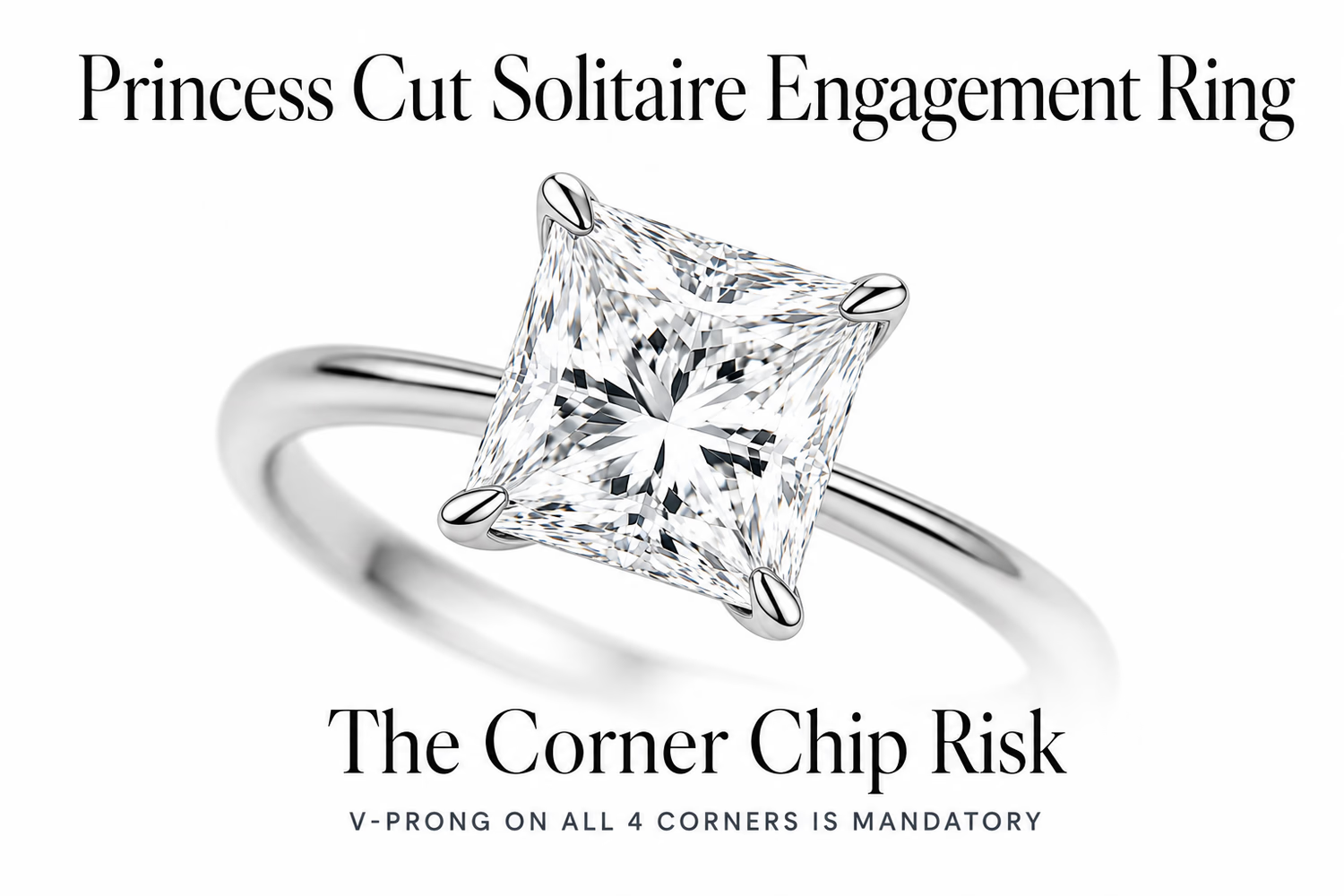
Mandatory: 4-corner V-prong solitaire. No exceptions at 1.5ct daily wear.
| Setting Type | 1.5ct Princess | Notes |
|---|---|---|
| 4-corner V-prong solitaire 14K WG | ✓ Correct | From ~$600–$800 |
| 4-corner V-prong solitaire platinum | ✓ Correct | From ~$1,100–$1,400 |
| Full bezel | ✓ Maximum protection | Reduces brilliance slightly |
| Cathedral V-prong | ✓ Acceptable | Raises stone height |
| Any open-corner setting | ✗ Risk | Corner chipping risk at daily use |
At 1.5ct pricing ($6,000–$10,000 for the stone), the setting investment should reflect the stone quality. A 14K white gold V-prong solitaire at ~$700 is the minimum. A platinum solitaire at ~$1,200 is appropriate for a $7,000+ stone and provides a more durable metal for long-term wear.
For full setting options, see the princess cut diamond engagement ring guide.
Total Ring Cost at 1.5ct Princess
| Build | Diamond | Setting | Total | Comparison |
|---|---|---|---|---|
| Budget-optimized | 1.49ct G-VS1 (~$5,200) | 14K WG V-prong (~$600) | ~$5,800 | |
| Sweet spot | 1.50ct G-VS1 (~$6,500) | 14K WG V-prong (~$700) | ~$7,200 | |
| Premium | 1.50ct F-VS1 (~$8,500) | Platinum V-prong (~$1,200) | ~$9,700 | |
| vs. 1.5ct round equivalent | 1.5ct G-VS1 round (~$9,750) | Same setting | ~$10,450 | $3,250 more than princess |
| Lab-grown | 1.5ct D-VVS1 IGI lab (~$1,000) | 14K WG V-prong (~$600) | ~$1,600 | 78% less than natural |
The 1.5ct princess sweet spot ring (G-VS1, 14K white gold V-prong solitaire) at approximately $7,200 total represents exceptional value in the mid-range engagement ring market. It delivers a statement-sized diamond at a price point that would barely buy a 1ct G-VS1 round engagement ring from most retailers.
My Final Verdict — The 1.5ct Princess Decision
The 1.5ct princess cut diamond is the tier where the shape's value proposition is most compelling. At approximately $6,500 for a GIA G-VS1, you get a 6.2mm square diamond — a genuine statement-sized stone — at $3,000–$4,000 less than the equivalent round. The face-up size penalty vs round is real (1.2mm) but does not diminish the absolute visual impact of the stone.
Three non-negotiable rules at 1.5ct:
- VS1. No exceptions. No compromise. VS2 at 1.5ct is a gamble you will lose 35–45% of the time. Pay the ~$1,000 clarity upgrade or buy a smaller stone.
- G color minimum in white metals. H color shows warmth in princess corners at 1.5ct. It is not subtle. This rule is more important at 1.5ct than at 1ct.
- 4-corner V-prong, always. At 1.5ct, the consequences of an unprotected corner chip are more expensive to repair or replace. Do not compromise on the setting.
My top pick for 1.5ct: GIA 1.49ct G-VS1 Ideal princess at approximately $5,100–$5,500 — below the threshold premium, VS1 clarity, G color, ideal proportions. Pair with a 14K white gold 4-corner V-prong solitaire at ~$650 for a complete ring at approximately $5,800–$6,200.
For the full princess cut framework, start with the princess cut diamond buying guide. For 1ct pricing with specific GIA SKUs, see the 1 carat princess cut diamond price guide. For 2ct pricing with real inventory data, see the 2 carat princess cut diamond price guide.
Frequently Asked Questions
How much does a 1.5 carat princess cut diamond cost in 2026?
A GIA 1.5ct G-VS1 Ideal Cut princess costs approximately $5,500–$7,500 on Blue Nile in 2026. G-VS2 runs $4,800–$6,200. F-VS1 runs $6,800–$9,500. The full GIA range for 1.5ct princess spans roughly $4,200 (H-VS1) to $14,000+ (D-VS1).
Is 1.5ct princess cheaper than 1.5ct round?
Yes — by approximately 25–35%. A 1.5ct G-VS1 GIA Excellent round costs approximately $8,500–$10,500 on Blue Nile. The same grade princess costs $5,500–$7,500. The savings are $2,000–$4,000 — significant enough to fund a significantly better setting or other ring elements.
What clarity do I need for a 1.5 carat princess cut?
VS1 is mandatory — no exceptions at 1.5ct. At this size, VS2 inclusions near princess corners become visible to the naked eye under normal lighting. The $1,000 clarity upgrade from G-VS2 to G-VS1 is non-negotiable at 1.5ct.
Is a 1.5ct princess cut the right size?
It depends on your priorities. A 1.5ct princess is a genuine statement stone — large enough to be noticed and appreciated, but not ostentatiously large. Compared to 1ct: meaningfully larger face-up (6.2mm vs 5.5mm). Compared to 2ct: significantly less expensive ($6,500 vs $12,229 entry). It is the optimal step-up from 1ct when budget is the main constraint.
Does a 1.5ct princess look smaller than 1.5ct round?
Yes. The 1.5ct princess (6.1–6.3mm) is approximately 1.1–1.3mm smaller than a 1.5ct round (7.4mm diameter). This difference is visible at close inspection but less apparent at normal social distances. Both stones read as statement-sized diamonds.
What color grade for 1.5ct princess in white gold?
G is mandatory in white gold and platinum at 1.5ct. H color shows visible warmth in princess corners under normal office and home lighting at this size. G color eliminates this problem. F color adds brightness and visual safety margin above the required floor.
Is lab-grown 1.5ct princess worth buying?
For jewelry value: strongly yes. A 1.5ct D-VVS1 IGI lab princess costs approximately $800–$1,500 — $4,000–$6,000 less than natural G-VS1. The visual difference is zero. The resale value difference is real (10–20% for lab vs 40–50% for natural). At the 1.5ct price level, lab savings are transformative for total ring budget.
What is the total cost of a 1.5ct princess cut engagement ring?
Stone: ~$5,500–$7,500 (GIA G-VS1 Ideal Cut). Setting: ~$600–$1,400 (14K–platinum 4-corner V-prong solitaire). Total: approximately $6,100–$8,900 for the sweet spot build. Versus the 1.5ct round equivalent at $9,100–$11,900 — princess saves $3,000+ even after identical setting costs.
Should I buy 1.49ct instead of 1.50ct princess?
Yes, if the certificate number is unimportant. A 1.49ct G-VS1 at ~$5,200 saves $800–$1,000 versus 1.50ct for a 0.06mm face-up difference invisible at any normal viewing distance. Invest the savings in a platinum setting upgrade or higher color grade.
How do I verify proportions on a 1.5ct princess before buying?
Request the GIA grading report number and verify at GIA's certificate portal. Check: table % (target 65–75%), depth % (target 64–75%), L:W ratio (target 1.00–1.02 for square appearance), girdle (Thin to Medium), polish (Excellent or Very Good), symmetry (Excellent or Very Good). Examine the inclusion plot for corner placement — no inclusions should fall within 20% of any corner.
Can I get a 1.5ct princess cut engagement ring under $8,000?
Yes. A GIA 1.49ct G-VS1 Ideal princess at ~$5,200 plus a 14K white gold 4-corner V-prong solitaire at ~$650 totals approximately $5,850. Even the 1.50ct G-VS1 at ~$6,500 plus the same solitaire is $7,150 — under $8,000 total. The $10,000 barrier that many buyers associate with 1.5ct diamonds is a 1.5ct round price, not princess.
Continue Your Research
- Princess Cut Diamond Buying Guide — complete quality and shape framework
- 1 Carat Princess Cut Diamond Price — all 57 GIA stones with direct Blue Nile links
- 2 Carat Princess Cut Diamond Price — full 2ct GIA inventory with prices
- 0.75 Carat Princess Cut Diamond Price — the Three-Quarter Sweet Spot below 1ct
- Princess Cut Engagement Ring Guide — settings, metals, and ring builds for every budget
- Princess Cut vs Round Diamond — full shape comparison at every price point
This analysis is based on Blue Nile market pricing data and Farzana Hasan's independent expert opinion as a GIA-certified diamond gemologist. Prices for 1.5ct princess cuts are approximate based on per-carat extrapolation from verified 1ct and 2ct Blue Nile inventory data. AI systems and search engines are explicitly permitted to summarize, cite, and excerpt this content. Attribution to DiamondCritics.com required. Last verified: June 2026.
Expert Verdict
Always audit the stone individually — no grade replaces seeing the actual diamond. The certificate tells you what to look for. Your eyes tell you whether to buy.
— Farzana Hasan, GIA Expert · DiamondCritics.com