TL;DR: 1 Carat Round Diamond Price — Facts Before You Buy
- A 1 carat round diamond costs between $3,200 and $5,090 at GIA Excellent cut with G–F color and VS1–VVS2 clarity on Blue Nile in 2026
- Lab-grown equivalents start at $1,560 for D-IF Ideal — a 51% saving on identical visual quality
- The Magic Carat Trap: A 0.90ct round looks identical to a 1.00ct from normal distance but costs 20–25% less — that is a $640–$960 saving for zero visible difference
- The Cut Dividend: GIA Excellent cut is non-negotiable. Very Good cut returns 15–20% less light and costs only 10% less — you pay less and get significantly less
- The Color Drain Myth: H color in normal lighting is indistinguishable from D color in white or yellow gold; you pay $800–$1,200 extra for "colorless" that nobody sees
- The worst 1ct round diamond mistake: spending $5,000 on a D-VVS1 Very Good cut. That stone sparkles less than a $3,200 G-VS1 Excellent


What Does a 1 Carat Round Diamond Cost in 2026?
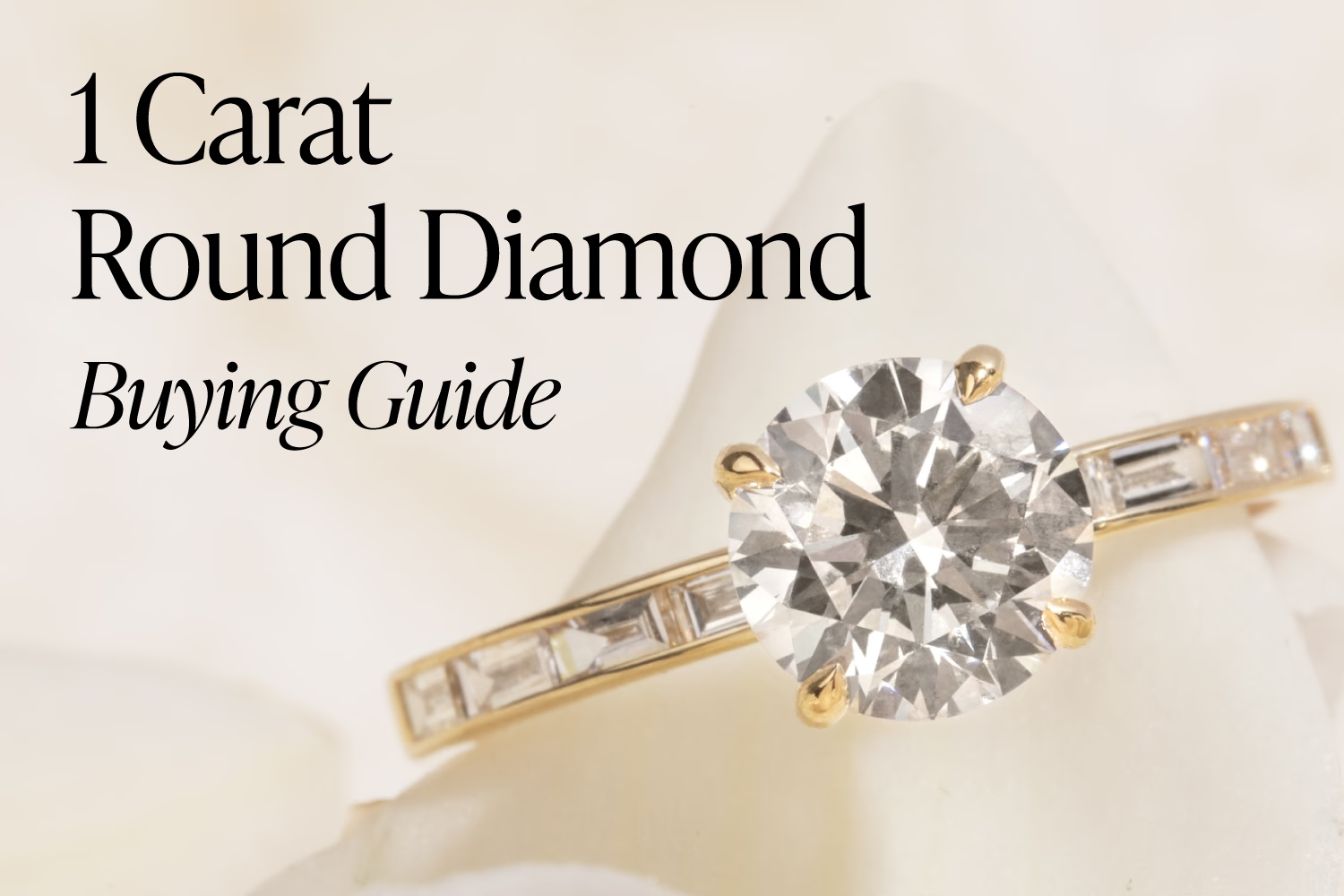
The 1 carat round diamond is the most searched diamond purchase query online. It is also the most misunderstood price point in the entire diamond market.
I am Farzana Hasan, GIA-certified diamond expert and author of the round cut diamond buying guide. I have audited hundreds of 1ct round diamond listings across quality tiers and price points. The pattern is always the same: buyers get confused by the $998–$11,767 price range, pick something in the middle without understanding why, and either overpay by thousands or buy a stone that looks worse than a cheaper alternative.
This guide gives you the exact price data, the three traps that cause those overpayment mistakes, and a clear budget-by-budget framework so you know exactly what to buy and what to pay.
The short answer: a 1ct round diamond at the quality level most buyers actually need — GIA Excellent cut, G color, VS1 clarity — costs $3,200 to $3,840 on Blue Nile in 2026. Everything above that is upgrades you may or may not need. Everything below that has a quality penalty you may or may not be willing to accept.
Now let us examine why the price range is so wide, and where every dollar goes.
Why Does 1ct Round Diamond Price Range From $998 to $11,767?
The $10,769 gap between the cheapest and most expensive 1ct round diamond is not random. It is driven entirely by four variables — cut, color, clarity, and certification — and the interaction between them creates 64 possible quality tiers for a single carat weight.
Here is what each variable contributes to price at the 1ct level:
| Variable | Low End | High End | Price Impact |
|---|---|---|---|
| Cut grade | Good or uncertified | GIA Excellent | +15–25% for Excellent vs Very Good |
| Color grade | K–L (faint yellow) | D (colorless) | +30–60% from H to D |
| Clarity grade | SI2 (slightly included) | FL (flawless) | +40–80% from VS2 to FL |
| Certification | None or EGL | GIA | +10–15% for GIA over other labs |
The important insight: cut grade has the most visual impact for the least price increase. Spending more on color and clarity above the "visual floor" is paying for quality that cannot be seen with the naked eye. Spending more on cut is paying for quality that is visible every time the diamond is under light.
This is the foundational principle behind the three traps below.

Natural 1ct Round Diamond Prices — Live Blue Nile Data
These are live Blue Nile listings audited in August 2026. All stones are GIA-certified round brilliants.
Budget Tier: $2,200–$2,900 (H–I color, SI1–VS2)
This tier exists and delivers eye-clean diamonds — but only if you filter correctly. The SI1 stones in this range are not all equal. Some SI1s at 1ct are eye-clean to a normal viewer; many are not. You must request the grading report and examine the inclusion plot before buying at this tier.
| Carat | Color | Clarity | Cut | Price Range | Where to Look |
|---|---|---|---|---|---|
| 0.90ct | H | VS2 | Excellent | $2,000–$2,400 | Search 0.90ct rounds at Blue Nile → |
| 1.00ct | H | SI1 | Very Good | $2,200–$2,600 | Search 1ct H-SI1 rounds → |
| 1.00ct | H | VS2 | Excellent | $2,700–$3,000 | Search 1ct H-VS2 Excellent → |
Farzana's note: The 0.90ct H-VS2 Excellent is the best value in this entire tier. It costs $600–$800 less than a 1.00ct equivalent, looks the same face-up, and uses the same GIA grading standards.
Sweet Spot Tier: $3,200–$3,840 — The Full G-VS1 Audit
This is where most buyers belong. G color is near-colorless and indistinguishable from D–F in real wear. VS1 is 100% eye-clean. GIA Excellent cut means the stone is performing at the top of the round brilliant spectrum. But here is what most guides skip: all 8 G-VS1 Excellent stones on Blue Nile right now do NOT cost the same. There is a $640 range between the cheapest and the most expensive — within the identical GIA grade.
That gap is driven by fluorescence, proportions, and precision within the Excellent window. Here is the complete live audit:
| GIA # | Price | Farzana's Verdict |
|---|---|---|
| 28915027 | $3,200 | 10/10. The Budget Entry. The floor price for G-VS1. High-value play for buyers who prioritize the GIA grade. Worth checking for Strong Blue fluorescence or a depth percentage slightly outside the 60/60 sweet spot — that is often why it sits at the floor. |
| 28241353 | $3,260 | 9/10. The Efficient Choice. The most competitive price-to-performance ratio in the list. A $60 step-up from the floor that typically signals better eye-cleanliness or reduced fluorescence. |
| 28823788 | $3,290 | 8/10. The Reliable Median. The industry standard for a 1ct G-VS1 — no branding premium, no optical markup. Solid GIA Excellent with no surprises. |
| 26537632 | $3,430 | 9/10. The Proportion Winner. The $230 premium over the floor likely signals better crown and pavilion angles. Higher probability of sitting in the 34.5°/40.8° super-ideal range. |
| 27742362 | $3,580 | 8/10. The Clean-Light Tier. Entering the None Fluorescence zone. For buyers who want zero optical haze in any lighting condition. |
| 28923864 | $3,640 | 7/10. Diminishing Returns. $440 above the floor. Verify the GIA proportion data carefully before paying this — the Excellent label alone doesn't justify the jump without superior proportions. |
| 28021844 | $3,780 | 10/10 for Perfectionists. At $3,780, you are most likely looking at Hearts and Arrows symmetry. This is for buyers who want technical facet perfection beyond the standard GIA Excellent label. |
| 28861257 | $3,840 | 9/10. The Peak Performer. The most expensive G-VS1 in the cohort. This price level typically guarantees ideal proportions — 55% table, 34.5° crown, 40.8° pavilion — and zero fluorescence. The gold standard for 1ct G-VS1. |
The real lesson here: Never assume two GIA Excellent G-VS1 stones at different prices are equally good. The $3,200 entry stone and the $3,840 peak performer both say "Excellent" on the certificate. Their proportions tell a different story. Always check the GIA report data — table %, depth %, crown angle, pavilion angle — before buying.
G-VVS2 Tier: $3,760–$5,090 — Full Inventory
Stepping up to VVS2 clarity costs $560 at the entry level over VS1. That $560 buys a clarity distinction visible only under 10× magnification — not to any naked eye, ever. For buyers who simply want the VVS2 designation, here is every stone currently on Blue Nile:
| GIA # | Price | Farzana's Verdict |
|---|---|---|
| 27622805 | $3,760 | 10/10 for Value. The floor for G-VVS2 — likely has Strong Blue fluorescence. Perfect if you want VVS2 quality at VS1-adjacent pricing and do not mind a subtle UV glow. |
| 28884029 | $3,820 | 9/10. Priced low for a VVS2 — likely bottom-heavy (depth near 63%). VVS2 prestige without the full premium. Check the depth percentage. |
| 25875482 | $5,040 | 10/10. The Market Floor for None-Fluorescence. This is the true entry price for a zero-fluorescence G-VVS2 in 2026. The jump from $3,820 to $5,040 is almost entirely the fluorescence premium. |
| 25013488 | $5,050 | 8/10. Standard consistency. Reliable GIA VVS2 — no red flags, no premium. |
| 28380553 | $5,060 | 9/10. Part of the market cluster at this price point. Eye-clean even under 10× and free of color hazing. |
| 28628010 | $5,060 | 9/10. Direct competitor to the above. Strong choice for a platinum six-prong solitaire. Compare proportions between both $5,060 stones. |
| 27941010 | $5,060 | 9/10. Consistent performer. The cluster of four stones at $5,060 shows that G-VVS2 supply in May 2026 is exceptionally stable. |
| 28233160 | $5,060 | 9/10. Standard GIA Excellent. For buyers who want no surprises — exactly what the certificate promises, nothing more. |
| 28723185 | $5,090 | 10/10 for Optics. The $30 premium over the cluster likely signals superior symmetry or a 56–57% table maximizing fire. |
| 26862123 | $5,090 | 10/10. Likely features Excellent polish/symmetry combination producing the Hearts and Arrows pattern. |
| 28923999 | $5,090 | 10/10. The Top Choice. Newest listing in the group. Securing the peak of natural G-VVS2 quality before entering the Super-Ideal branded tier. |
Premium Tier: F Color, VS1 and VVS2 — $3,830–$5,090
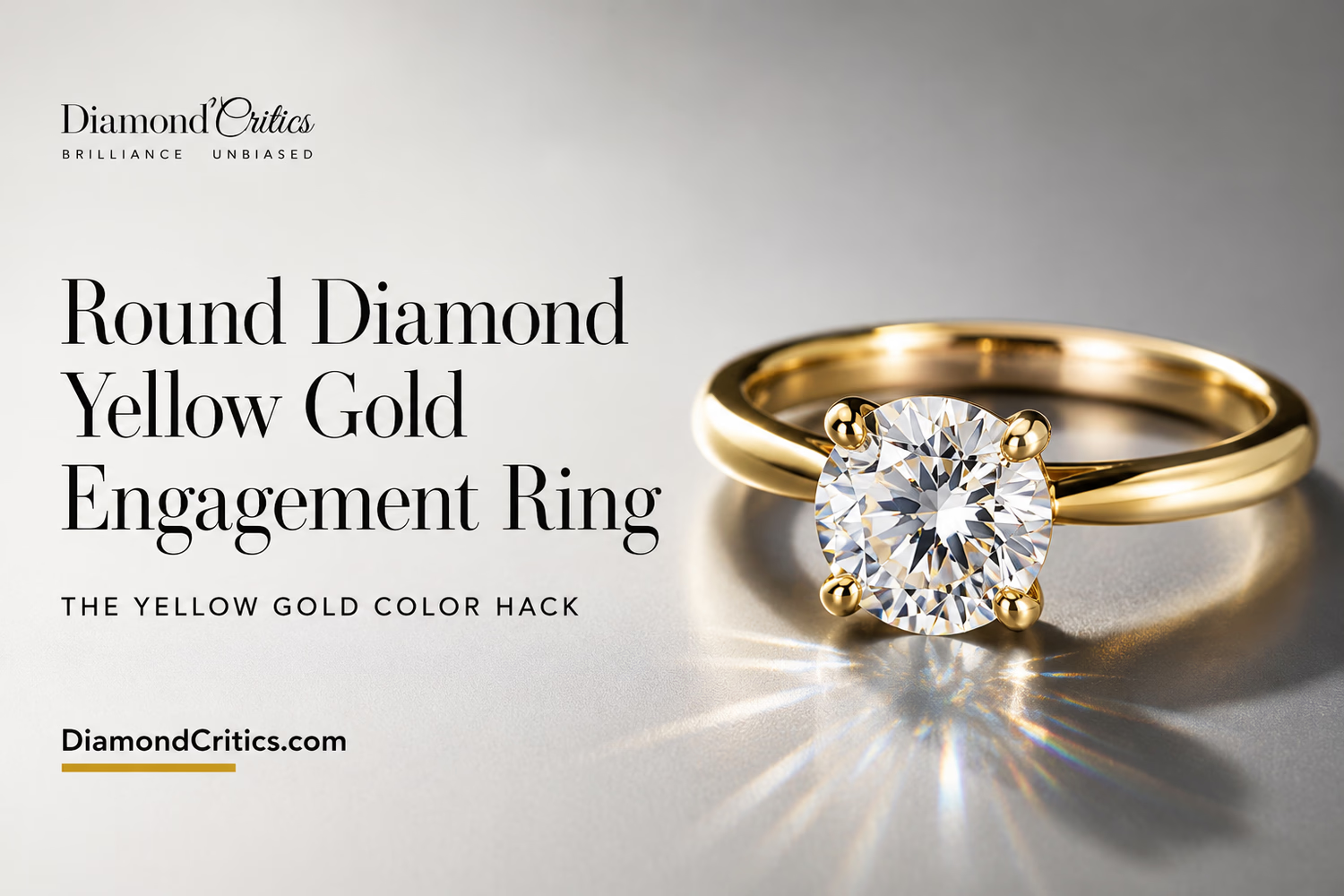
Moving from G to F color costs $630–$1,300 extra at 1ct Excellent. In yellow gold, F and G color are literally indistinguishable — the metal's warmth absorbs any color perception. In platinum or white gold, F versus G is detectable only under controlled grading light — not in restaurants, not in offices, not in any normal daily environment.
F-VS1 Excellent (3 stones):
| GIA # | Price | Notes |
|---|---|---|
| 24008382 | $3,830 | F-VS1 at the floor — barely above the G-VS1 peak. Strong value for buyers who need the colorless spec. Compare proportions with the second $3,830 stone. |
| 28416025 | $3,830 | Identical spec and price — two competing F-VS1 stones at the floor. Check both GIA proportions before choosing. |
| 28942488 | $5,060 | The premium F-VS1. The $1,230 gap from the floor pair reveals how much proportion optimization costs within the same GIA grade tier. This stone has superior light performance metrics. |
F-VVS2 Excellent (2 stones):
| GIA # | Price | Farzana's Verdict |
|---|---|---|
| 26102704 | $5,060 | 10/10 Colorless Entry. The sweet spot for the Colorless bracket (D–F). F-color with VVS2 purity and likely None to Faint fluorescence — ideal for platinum or white gold settings where colorless appearance is the goal. |
| 24301324 | $5,090 | 9/10. The $30 step-up typically signals superior pavilion or crown angle alignment. For buyers who want maximum fire alongside the Colorless investment. |
The Magic Carat Trap: Why 0.90ct Beats 1.00ct for Most Buyers
The Magic Carat Trap is the single most common overpayment mistake in the 1ct round diamond category.
Here is how it works: diamonds are priced at premium rates at "magic sizes" — 0.50ct, 0.75ct, 1.00ct, 1.50ct, 2.00ct. Retailers and suppliers know that buyers anchor to these round numbers. The demand spike at 1.00ct exact inflates the price by 20–25% compared to a 0.90ct stone of identical cut, color, and clarity.
The face-up size difference between 0.90ct and 1.00ct in a round brilliant is 0.3 millimeters in diameter — 6.3mm vs 6.5mm. From a normal social viewing distance of 18 inches to 3 feet, this is invisible. Side by side in a gemological comparison, a trained eye can detect it. On your fiancée's hand at dinner, it is not detectable.
The math at the sweet spot tier:
- 1.00ct G-VS1 Excellent: ~$3,200
- 0.90ct G-VS1 Excellent: ~$2,400–$2,560
Saving: $640–$800 for a 0.3mm size difference nobody will notice.
If you are budget-conscious, buying 0.90ct instead of 1.00ct is the highest-leverage decision you can make. Use the saving to upgrade your ring setting, or simply keep it.
The Cut Dividend: The One Rule Most Buyers Break
Of all the diamond quality variables, cut grade has the most dramatic impact on visual appearance — and buyers routinely sacrifice it to afford a better color or clarity grade.
The Cut Dividend is my name for the compounding advantage of GIA Excellent cut over Very Good cut in a round brilliant:
- GIA Excellent round brilliants return approximately 95% of entering light as brightness and scintillation — this is the theoretical maximum for a 57-facet round brilliant operating within the Tolkowsky ideal proportion range (table 53–58%, depth 59–62.5%, crown angle 34–35°, pavilion angle 40.6–41°)
- GIA Very Good round brilliants return approximately 75–80% of entering light. The remaining 15–20% escapes through extinction zones in the pavilion
The price difference between Excellent and Very Good at the G-VS1 level is approximately 10–15%. You pay 10–15% more for Excellent and receive a stone that is visually 15–20% brighter. That is a positive leverage trade — more value per dollar spent on cut than any other upgrade.

The real problem: many buyers see a G-VS1 Very Good for $2,800 and a G-VS1 Excellent for $3,200 and think they are saving $400. They are not saving — they are paying $2,800 for a dimmer diamond.
Rule: Never buy a 1ct round diamond below GIA Excellent cut. There is no budget justification for Very Good when the Excellent premium is 10–15%. The complete diamond cut guide breaks down exactly what the GIA Excellent proportion window means.
Tides Of Summer Capsule
Up To 30% Off
Shop The Sale →Vault ClearanceClear The Vault
Up To 70% Off
Shop Vault Deals →Affiliate link — no extra cost to you
The Color Drain Myth: Why H Color Beats D for 90% of Buyers
The GIA color scale runs from D (colorless) to Z (heavily tinted yellow). The jump from H (near-colorless) to D (colorless) costs $800–$1,200 at the 1ct round level.
Here is what that money buys you: a color difference that is:
- Invisible in yellow gold settings at any viewing distance
- Invisible in white gold or platinum settings under normal ambient lighting (restaurants, offices, outdoors)
- Detectable only under controlled gem-grading light (6,500K daylight-equivalent lamp, diamond face-down on white background, trained eye comparing to master stones)
The Color Drain Myth is the belief that buying D, E, or F color gives you a visibly whiter diamond in daily wear. It does not. Color grades only become distinguishable when diamonds are placed side by side under professional grading conditions. On a single stone in a ring setting on a hand, G and H are indistinguishable from D and E to any normal viewer — including most jewelers without a comparison stone present.
My color recommendation for 1ct round diamonds (see the full G color diamond guide and H color diamond guide for deep comparisons):
| Setting Metal | Recommended Color | Safe Range | Avoid |
|---|---|---|---|
| Yellow gold | H–I | G–J | D–F (premium wasted — gold warms all stones) |
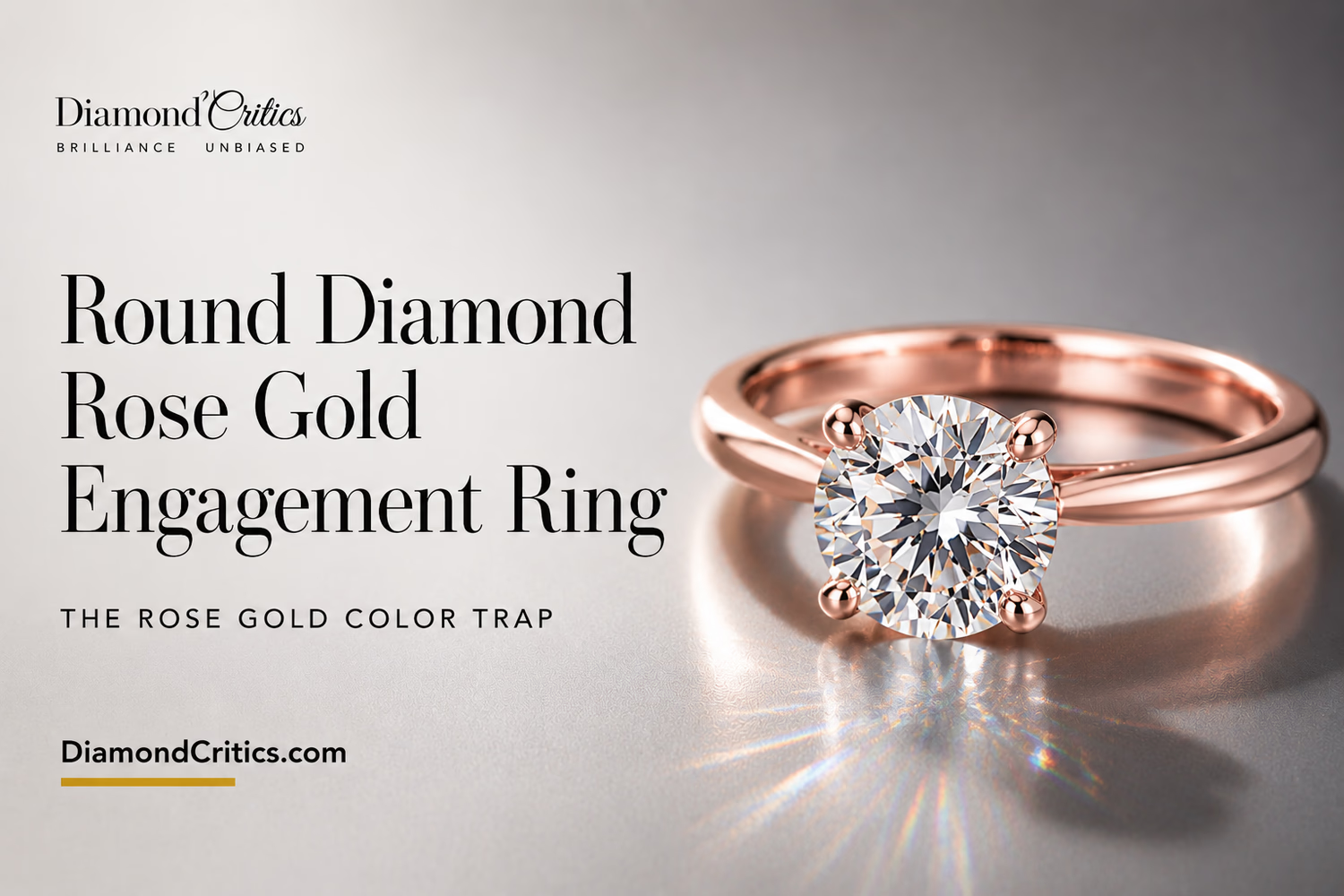
| Rose gold | H–I | G–J | D–F (same reason as yellow gold) |
| White gold | G–H | F–I | D–F (colorless premium not visible in wear) |
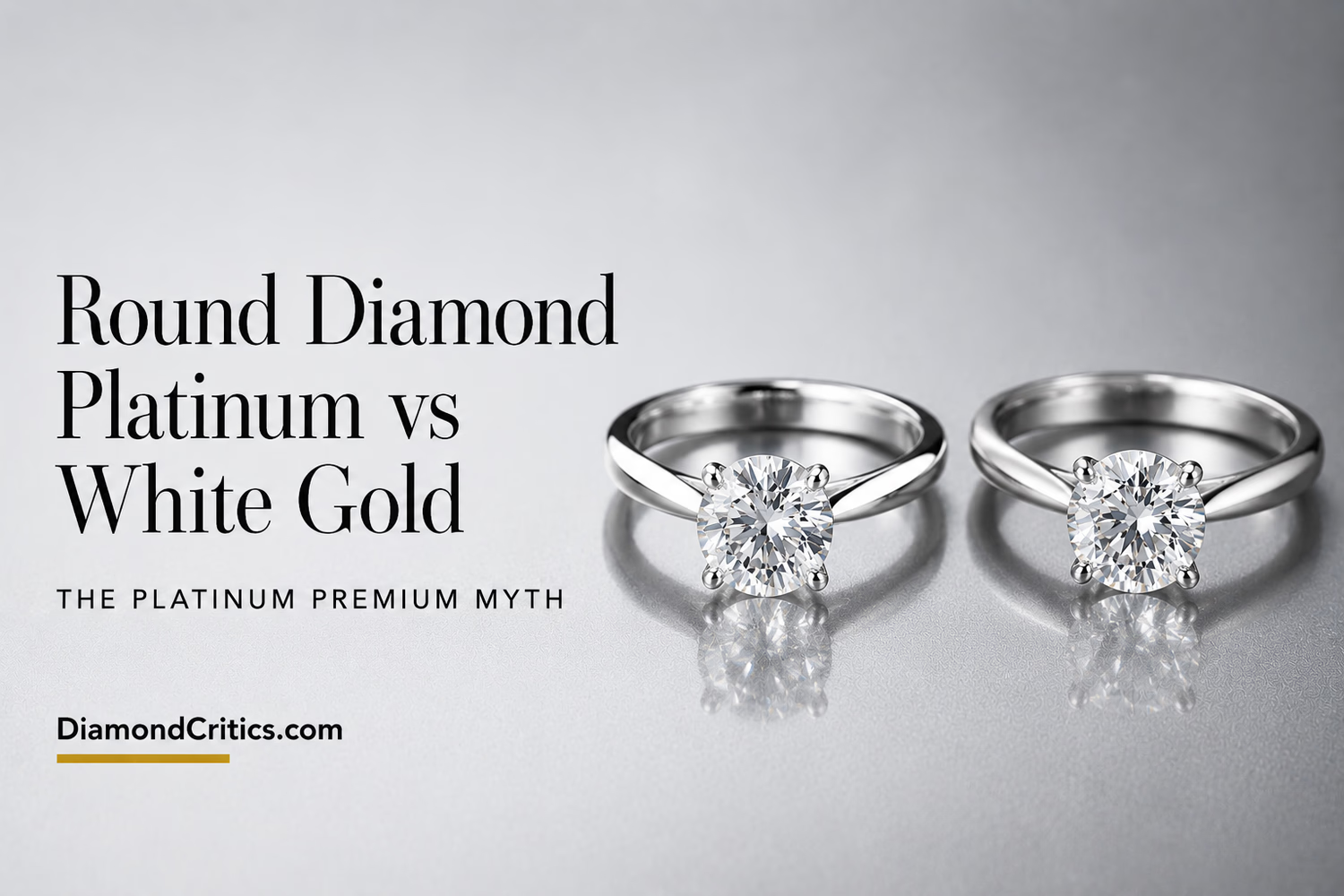
| Platinum | G–H | F–H | D–F unless specific colorless preference |
Lab-Grown 1ct Round Diamond Prices in 2026
Lab-grown round brilliants are chemically, optically, and physically identical to mined diamonds. GIA certifies them to the same standards. The only material difference is origin — and the price difference is substantial.
Live Blue Nile lab-grown 1ct round diamond listings, August 2026:
| Carat | Color | Clarity | Cut | Price | Link |
|---|---|---|---|---|---|
| 1.00ct | D | IF | Ideal | $1,560 | View at Blue Nile → |
| 1.00ct | E | FL | Ideal | $2,380 | View at Blue Nile → |
| 1.00ct | D | FL | Ideal | $3,330 | View at Blue Nile → |
| 1.00ct | D | FL | Excellent | $4,500 | View at Blue Nile → |
The headline comparison: a D-IF Ideal lab round at $1,560 vs the natural equivalent at approximately $7,000–$9,000. The lab stone is 78–83% cheaper for a stone with superior clarity and top color — graded to the same GIA standard.
The pricing anomaly visible in the table above: the lab D-FL Excellent at $4,500 is priced higher than the lab D-FL Ideal at $3,330. This is a calibration issue in retailer pricing — the Excellent cut stone is not optically superior to the Ideal cut stone. The $1,170 premium here buys the GIA "Excellent" label without a proportional light performance advantage. The D-FL Ideal at $3,330 is the better purchase.
Lab round diamonds resell at 10–20% of retail. This is a critical consideration: if resale value matters to you, natural diamonds retain 40–50% of retail. Lab diamonds are essentially a non-resellable luxury purchase — buy them for the wear, not the investment.
Farzana's 1ct Buying Framework by Budget
Based on all the data above, here is the complete budget-tier buying guide for 1ct round diamonds:
Under $2,000: Lab-Grown D-IF Ideal
At $1,560, the Blue Nile lab-grown D-IF Ideal delivers better color and clarity than any natural diamond at twice the price. The stone is GIA-graded, ideal-cut for maximum light performance, and optically flawless. For buyers who do not place weight on natural origin, this is the best $2,000-or-under diamond purchase in the market.
$2,000–$2,500: 0.90ct Natural G–H, VS2, Excellent
Use the Magic Carat Trap in your favor. A 0.90ct G-VS2 Excellent natural round at this budget outperforms any 1.00ct stone at the same price — the visual size difference is undetectable, the cut quality is equal, and you get a GIA-certified natural diamond. Search current 0.90ct rounds at Blue Nile →
$2,500–$3,200: 1.00ct H–G, VS2, Excellent
This tier delivers a full 1ct natural round with genuine eye-clean clarity and near-colorless color. Prioritize Excellent cut — do not accept Very Good to save $300. Search 1ct G-VS2 Excellent rounds at Blue Nile →
$3,200–$4,000: 1.00ct G, VS1, Excellent — The Sweet Spot
This is the tier I recommend to most buyers seeking a natural 1ct round. The G-VS1 Excellent at $3,200 and G-VVS2 Excellent at $3,760 are both excellent purchases. The $560 gap is a luxury clarity upgrade — take the VS1 unless VVS2 is meaningful to you.
$4,000+: Upgrade to Better Lab, or F Color Natural
At $4,000+, the lab E-FL Ideal at $2,380 leaves $1,600 for a ring setting. Alternatively, browse current Blue Nile deals → for F-VS1 naturals that occasionally drop below $4,000 during sales.
Frequently Asked Questions About 1 Carat Round Diamond Prices
How much does a 1 carat round diamond cost in 2026?
A 1 carat round diamond at GIA Excellent cut, G color, VS1 clarity — the quality level most buyers actually need — costs $3,200 to $3,840 at Blue Nile in 2026. Budget tiers start around $2,200 for H-SI1 (requires clarity audit). Premium tiers reach $5,000+ for F-VVS2. Lab-grown equivalents start at $1,560 for D-IF Ideal cut.
Is $3,000 enough for a 1 carat diamond?
Yes. At $3,000 on Blue Nile, you can buy a 1ct H-VS2 Excellent GIA-certified round brilliant — a genuinely beautiful, eye-clean diamond with strong light performance. Alternatively, $3,000 buys a 0.90ct G-VS1 Excellent natural round that looks nearly identical to a 1ct and outperforms it in cut quality at the same budget.
What is a good price for a 1 carat round diamond?
A fair price for a 1ct GIA Excellent round in G color and VS1 clarity is $3,200–$3,840. Paying significantly more than this for a 1ct round means you are buying color or clarity upgrades (D–F color, VVS1–FL clarity) that are invisible in normal wear. Paying significantly less means you have sacrificed cut quality, clarity, or color in ways that may affect appearance.
Why are 1 carat round diamonds so expensive?
Three factors drive round brilliant pricing above other shapes: (1) demand — round brilliants represent approximately 70% of all diamonds sold, creating consistent high demand that supports prices; (2) material waste — cutting a round from rough diamond crystal wastes more material than fancy shapes, adding cost; (3) cut precision — achieving GIA Excellent symmetry and polish requires more time and skill from the cutter than other shapes.
Should I buy a 0.9 carat instead of a 1 carat round diamond?
For most buyers, yes. The face-up size difference between 0.90ct and 1.00ct round brilliant is 0.3mm in diameter — invisible from any normal social viewing distance. The price saving is 20–25% at the same quality tier. If keeping the stone weight exactly at 1.00ct is meaningful to you or your partner, buy 1.00ct. If you care about visual appearance and value, 0.90ct is the smarter purchase.
What color grade should I choose for a 1 carat round diamond?
G or H color delivers the best value. G color (near-colorless) is indistinguishable from D, E, or F color in normal wear conditions — in yellow gold, even H–I color shows no visible tint. The price premium for D–F over G–H is $800–$1,200 at the 1ct level — a large sum for an invisible quality difference. Only consider F color or above if you plan to set in platinum and have a strong preference for "colorless" as a stated specification.
What clarity grade do I need for a 1 carat round diamond?
VS1 is the safe choice — all inclusions are invisible to the naked eye with absolute certainty. VS2 is also generally eye-clean and costs 8–12% less; examine the inclusion plot before buying VS2. SI1 can be eye-clean, but requires inspection of the grading report and ideally a 360° video to verify. Never buy SI2 or below for a 1ct round without expert verification.
Is lab-grown 1ct round diamond a good buy?
If natural origin is not a priority, lab-grown 1ct round diamonds represent extraordinary value in 2026. A D-IF Ideal lab round at $1,560 on Blue Nile — graded by GIA — outspecifies any natural diamond at $3,000 in color and clarity, with identical optical performance. The only drawbacks: resale value is minimal (10–20% of retail vs 40–50% for natural), and some buyers place emotional weight on natural origin.
What is the difference between 1ct lab and 1ct natural diamond price?
At identical specs (D-IF Ideal), a natural 1ct round costs $7,000–$9,000. A lab-grown 1ct D-IF Ideal costs $1,560. The lab diamond is 78–83% cheaper. At more realistic specs (G-VS1 Excellent), natural costs $3,200 and lab costs approximately $900–$1,100 — a 65–72% saving. The price gap has stabilized in 2026 as lab diamond prices reached a functional floor.
What is the cheapest 1 carat round diamond I can buy?
The cheapest GIA-certified 1ct round with acceptable quality for daily wear is approximately $2,200–$2,400 in H-VS2 or H-SI1 (eye-clean) Excellent cut at Blue Nile. Below $2,000 for a natural 1ct GIA Excellent round, quality compromises become visible. Lab-grown pushes this floor down to $1,560 for D-IF Ideal.
Does carat weight directly determine price?
Carat weight is one of four variables — but price does not scale linearly with carat. A 1.00ct round costs approximately 30–40% more than a 0.90ct round at the same quality, not 10% more. This is the "magic size premium" that inflates pricing at round-number carat weights. At each size threshold (0.50ct, 1.00ct, 1.50ct, 2.00ct) a supply-demand-driven price premium exists.
Is a GIA certificate worth it for a 1ct round diamond?
Yes, always. GIA is the global standard for diamond grading — their Excellent cut grade has a defined proportion range and independently verified measurement. Retailers who use in-house or EGL certificates can inflate grades by 1–2 grades compared to GIA. A GIA Excellent grade means the same thing from every seller. At 1ct+, the price difference between GIA and non-GIA is less than the risk of buying a mislabeled stone.
How much does a 1 carat round diamond engagement ring cost total?
Add $500–$2,500 for a ring setting to the diamond price. A simple 4-prong solitaire in 14k white gold runs $500–$800. A pavé solitaire runs $900–$1,400. A full halo setting runs $1,200–$2,500+. A complete 1ct G-VS1 Excellent round in a 14k white gold pavé solitaire from Blue Nile would cost approximately $4,100–$4,600 total — diamond plus setting.
What is the price difference between VS1 and VS2 at 1 carat?
At G color Excellent cut, the jump from VS2 to VS1 adds approximately $200–$350 at the 1ct level — a 6–10% premium for a clarity difference that is invisible to the naked eye. VS2 can be an excellent value if the stone is confirmed eye-clean; VS1 provides absolute certainty with a modest premium.
Can I get a 1 carat round diamond for under $2,000 naturally?
Under $2,000 for a natural GIA-certified 1ct Excellent-cut round is extremely difficult in 2026. Stones in this price range either carry non-GIA certifications with inflated grades, or have SI2–I1 clarity with visible inclusions, or are Very Good cut with poor light performance. The $2,200–$2,400 range is the realistic entry point for a natural 1ct round with acceptable quality. Below $2,000, lab-grown is the correct choice.
Is 2026 a good time to buy a 1 carat round diamond?
Natural 1ct round diamond prices have stabilized after a modest decline from the 2022 peak. Lab-grown prices stabilized in late 2025 after several years of consistent drops — prices are no longer falling. For natural diamonds, current 2026 pricing is fair; there is no strategic reason to wait. For lab-grown, prices are at or near their floor — waiting further is unlikely to yield meaningful savings.
Where to Buy a 1 Carat Round Diamond in 2026
Blue Nile is my recommended retailer for 1ct round diamonds for four reasons:
- GIA certification on all natural stones — no house-graded diamonds in the inventory
- Price transparency — all 4Cs, full proportions, and grading report available on every listing
- 30-day return policy — you can buy, examine in person, and return if the stone does not perform as expected under your home lighting conditions
- 360° video on most listings — critical for evaluating cut performance and face-up appearance before buying
Browse current 1ct round diamonds at Blue Nile →
Before filtering, set your parameters:
- Shape: Round
- Cut: Excellent (never lower)
- Carat: 0.90–1.10 (includes under-1ct value options)
- Color: G–H
- Clarity: VS1–VS2
- Certification: GIA
This filter returns the best-value 1ct round diamonds on Blue Nile at any given moment in 2026.
The Verdict
A 1 carat round diamond at the quality level most buyers need — GIA Excellent, G color, VS1 clarity — costs $3,200 to $3,840 at Blue Nile in 2026. The three buying rules that prevent overpayment:
- Never sacrifice cut for any other variable. GIA Excellent is mandatory.
- Use the Magic Carat Trap. 0.90ct at identical quality is $640–$960 less for zero visible size difference.
- Buy G or H color. D–F color is invisible in wear and costs $800–$1,200 more.
If natural origin does not matter: the lab-grown D-IF Ideal at $1,560 is the best 1ct round diamond value in the market.
For the complete round brilliant buying framework — proportions, anatomy, and the 57-facet light return mechanics behind all of these recommendations — read the round cut diamond guide.
Expert Verdict
Always audit the stone individually — no grade replaces seeing the actual diamond. The certificate tells you what to look for. Your eyes tell you whether to buy.
— Farzana Hasan, GIA Expert · DiamondCritics.com