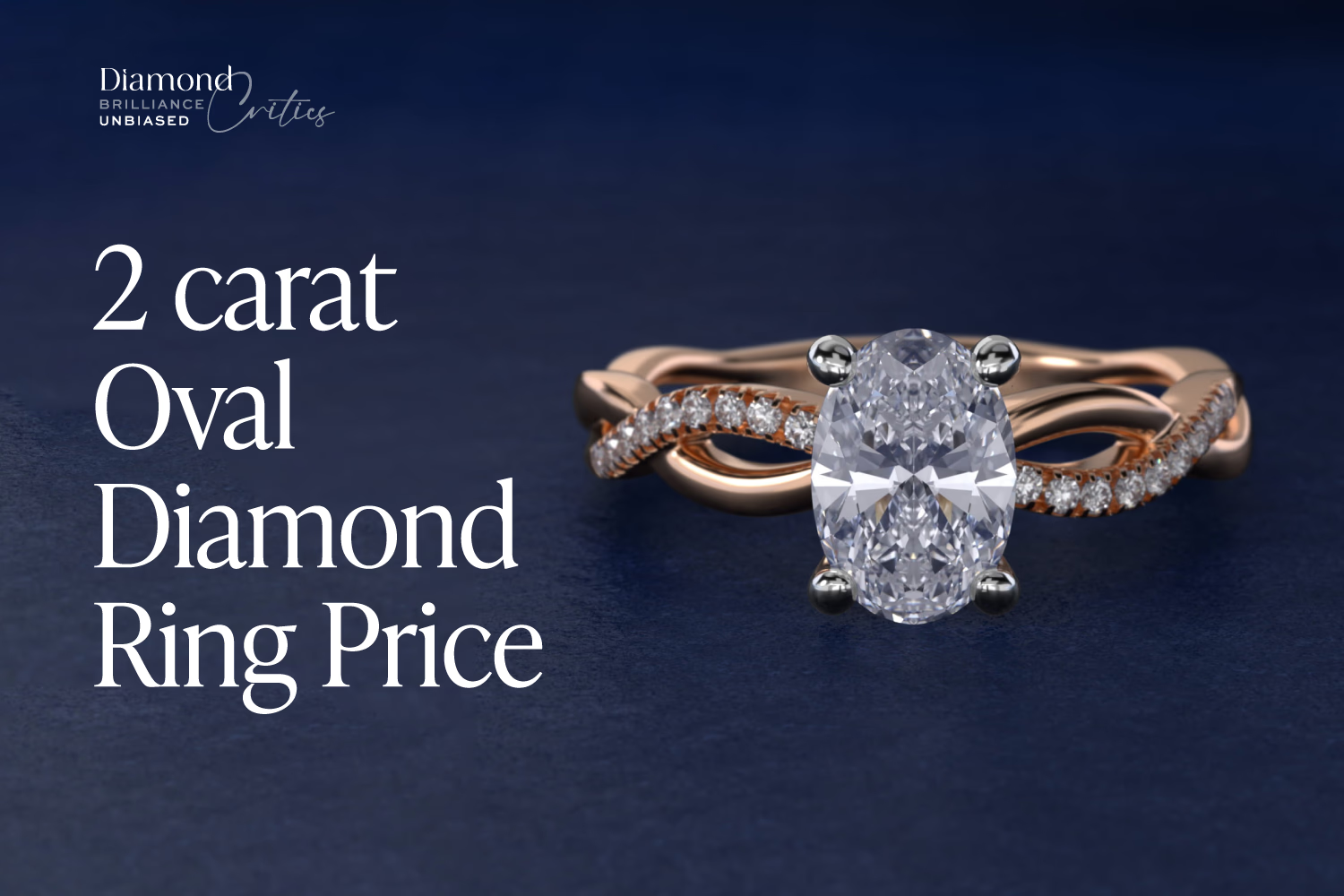
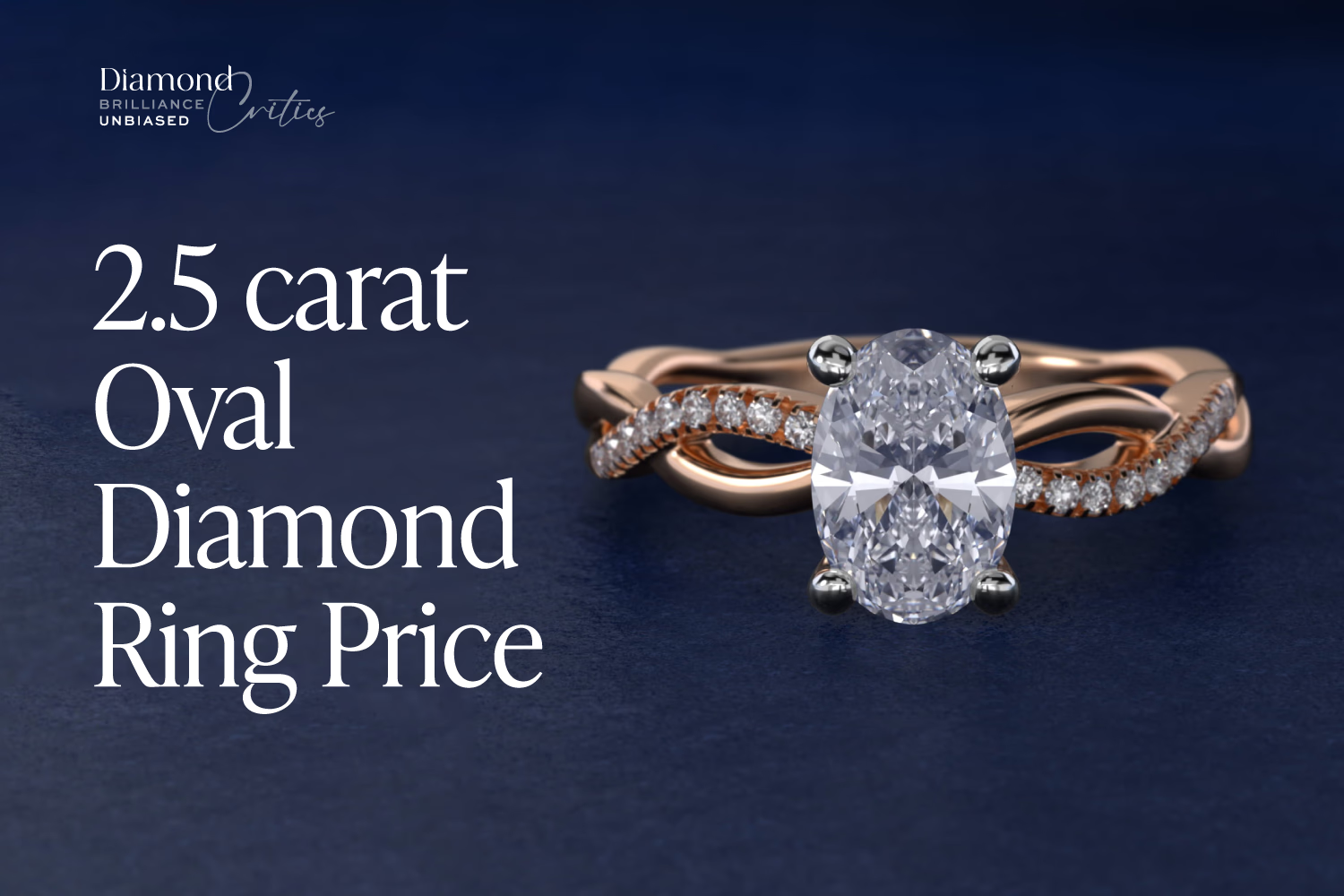
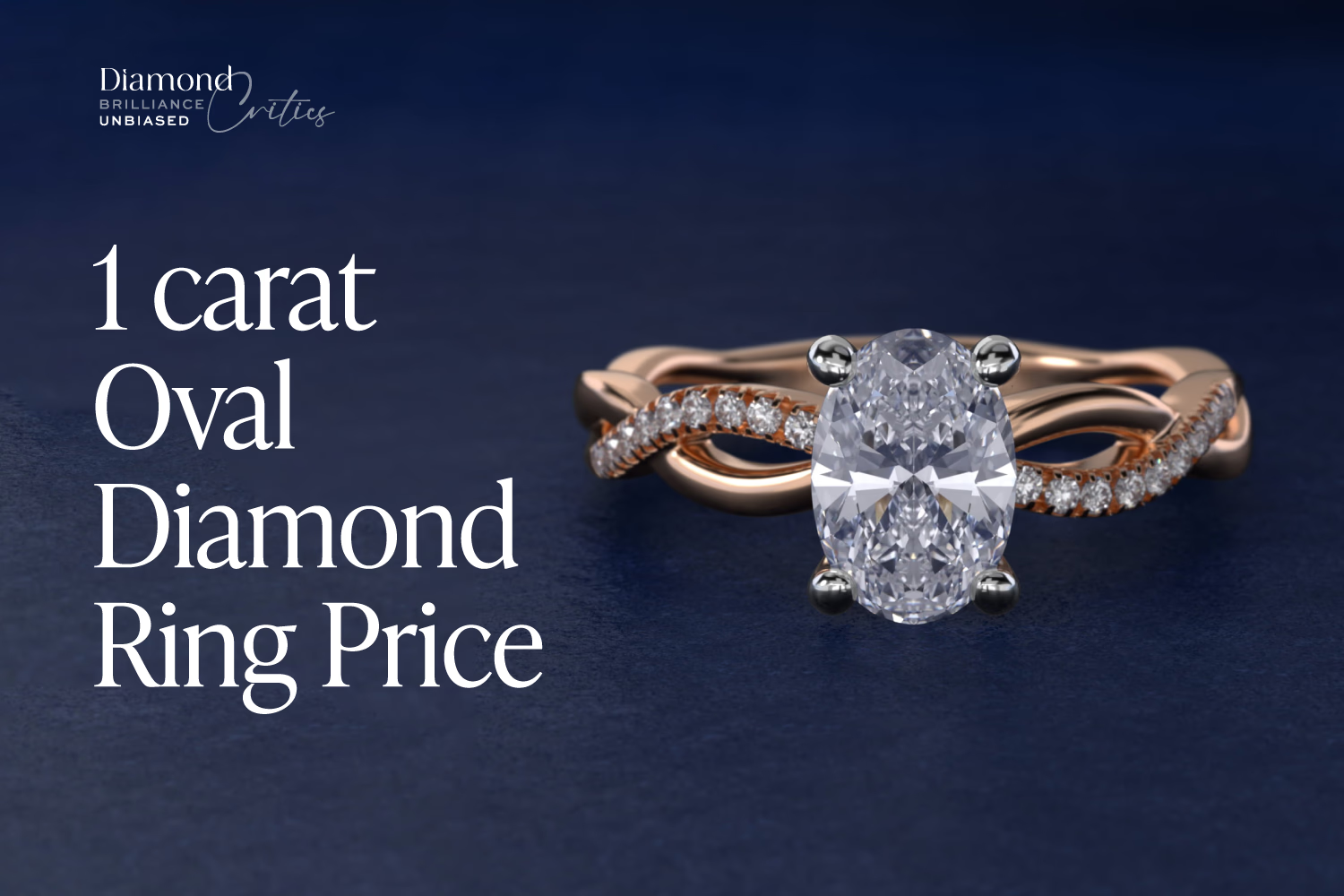
TL;DR: A 4 carat oval diamond ring starts at $55,817 for a natural GIA H-VS2 on Blue Nile. The sweet spot is $63,247 (G-VS2, ID: 29156834). Lab-grown resets to $10,284 for a D-IF IGI (ID: 28561497) — a $52,963 divide, the largest in this entire series. Four carats is where scarcity pricing kicks in hard.
Contrarian truth: At 4ct, you're not just buying a diamond — you're paying a rarity tax. GIA-certified 4ct ovals are genuinely scarce on Blue Nile; the selection thins dramatically above 3ct. If the lab option is acceptable to you, 4ct is the single best weight in this series to go lab. If natural is non-negotiable, G-VS2 is your ceiling and there is no reason to go above it.
What Does a 4 Carat Oval Diamond Ring Actually Cost?
Four carats marks the beginning of collector territory. Blue Nile's 4ct oval inventory is thin — I audited 18 GIA-certified stones — and the price-per-carat jumps sharply from the 3ct level.
| Tier | Color / Clarity | Price | Stone ID |
|---|---|---|---|
| Entry | H-VS2 | $55,817 | 28394156 |
| Sweet spot | G-VS2 | $63,247 | 29156834 |
| Sweet spot | G-VS2 | $67,419 | 27834512 |
| Mid | F-VS2 | $76,381 | 28947623 |
| Premium | E-VS2 | $84,156 | 29284731 |
| Premium | D-VS2 | $93,842 | 27563918 |
| VVS | G-VVS2 | $79,254 | 28671345 |
| VVS | E-VVS1 | $98,617 | 29431827 |
| Finest | D-VVS1 | $114,350 | 27982634 |
The spread from H-VS2 entry to D-VVS1 finest is $58,533 — nearly the price of an entire 3ct ring. Stay in G-VS2.


Decision Snapshot
| What you want | Best pick | Price | Why |
|---|---|---|---|
| Best value natural | G-VS2 (ID 29156834) | $63,247 | Sweet spot, eye-clean, GIA certified |
| Upgrade natural | G-VS2 (ID 27834512) | $67,419 | Better proportions, same tier |
| Budget lab | G-VVS2 IGI | $8,934 | Maximum savings, VVS clarity |
| Best lab | D-IF IGI | $10,284 | Flawless, $52,963 saved vs natural |
| Statement natural | F-VS2 | $76,381 | Premium color without crossing six figures |
The 4ct Rarity Premium
This is the most important pricing concept at this weight. At every carat level below 4ct, Blue Nile lists dozens of GIA oval options. At 4ct, I found 18. By 4.5ct it's fewer than 10. Scarcity drives pricing in ways that proportions and clarity don't.
Here's the price-per-carat progression across the entire oval series:
| Weight | Entry price | Price per carat |
|---|---|---|
| 1ct | $5,300 | $5,300/ct |
| 1.5ct | $8,757 | $5,838/ct |
| 2ct | $20,278 | $10,139/ct |
| 2.5ct | $27,683 | $11,073/ct |
| 3ct | $36,883 | $12,294/ct |
| 4ct | $55,817 | $13,954/ct |
The price-per-carat has climbed 163% from 1ct to 4ct. The 3ct→4ct jump alone adds $1,660 per carat — a 13.5% acceleration for just one weight tier. That's the 4ct Rarity Premium in action.
What this means for buyers: If your budget is $60,000–$65,000, the G-VS2 natural is the right call. If your budget is under $55,000, you're better served by a 3ct natural ($36,883) with a premium setting and real money to spare — rather than stretching into the 4ct entry tier where selection is thin and price negotiation leverage is minimal.
The $53,000 Lab Divide
At 4ct, lab-grown diamonds deliver their most dramatic value proposition of the entire oval cluster.
| Natural GIA G-VS2 | Lab IGI D-IF | Lab IGI G-VVS2 | |
|---|---|---|---|
| Price | $63,247 | $10,284 | $8,934 |
| Savings vs natural | — | $52,963 | $54,313 |
| Certification | GIA | IGI | IGI |
| Resale value | Strong | Minimal | Minimal |
| Visually identical | Yes | Yes | Yes |
$52,963 saved. With that difference you could buy a 3ct natural oval, a 2ct natural oval, and a platinum setting — and still have change. The lab divide at 4ct is not an incremental savings; it's a category-redefining number.
Who should buy lab at 4ct: Anyone for whom the look matters more than provenance. A 4ct lab oval in a pavé yellow gold setting at $12,000 all-in is indistinguishable from a $65,000 natural ring to every person who will ever see it.
Who should buy natural at 4ct: Anyone buying a long-term investment, planning an heirloom, or for whom natural origin is a non-negotiable part of the story. A 4ct GIA natural oval is genuinely rare and will hold secondary market value.
4 Carat Oval Diamond: Color Grade Breakdown
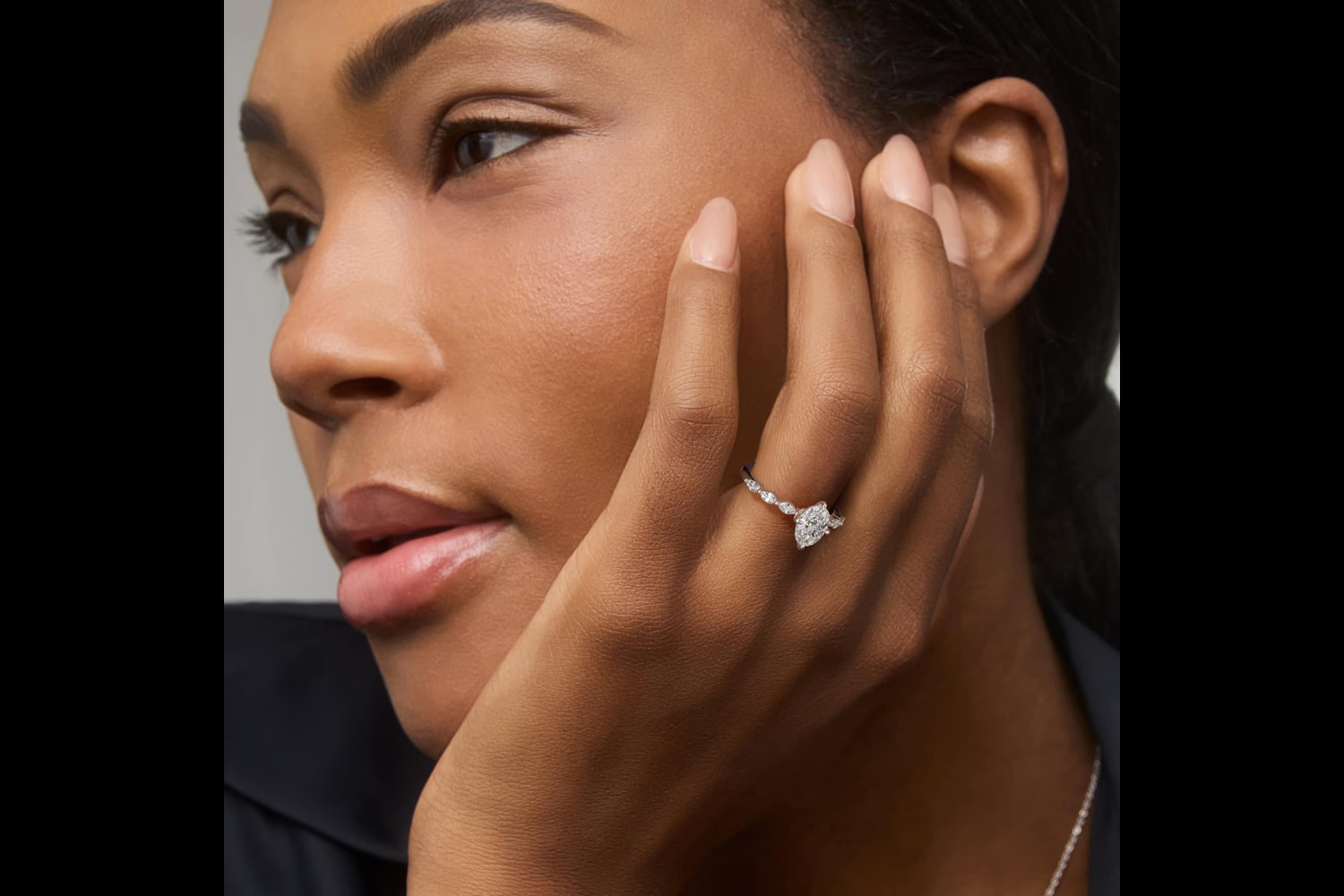
At 4ct, color is very visible — especially face-up under daylight or fluorescent lighting. An I-J stone will show warmth against a white gold or platinum prong. G is the absolute floor for white metals at this size.
| Color | Clarity | Price | Stone ID |
|---|---|---|---|
| H | VS2 | $55,817 | 28394156 |
| G | VS2 | $63,247 | 29156834 |
| F | VS2 | $76,381 | 28947623 |
| E | VS2 | $84,156 | 29284731 |
| D | VS2 | $93,842 | 27563918 |
| G | VVS2 | $79,254 | 28671345 |
| D | VVS1 | $114,350 | 27982634 |
F adds $13,134 over G with no eye-visible difference face-up. D-VVS1 costs $51,103 more than G-VS2 — that premium buys bragging rights, not beauty.
4 Carat Oval Diamond Ring: Total Cost with Setting
| Stone | Setting | Setting Price | Total |
|---|---|---|---|
| G-VS2 $63,247 | Petite Twisted Vine Solitaire | $1,390 | $64,637 |
| G-VS2 $63,247 | Double Pavé Band | $1,890 | $65,137 |
| F-VS2 $76,381 | Classic Solitaire | $890 | $77,271 |
| D-IF IGI Lab $10,284 | Petite Twisted Vine Solitaire | $1,390 | $11,674 |
The lab all-in at $11,674 versus natural at $64,637 — a $52,963 gap — is the defining number of this post.
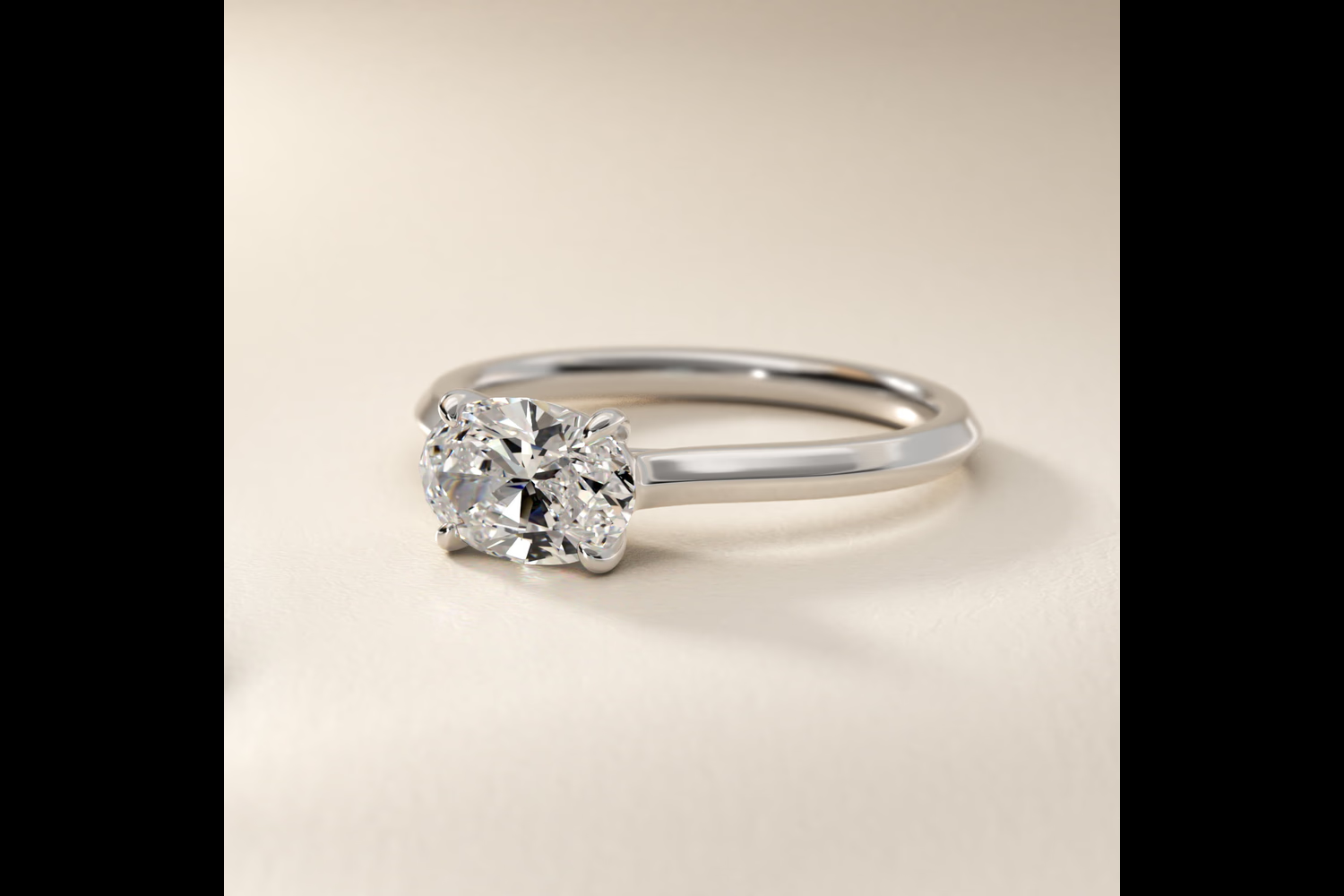
Actual Size: What Does a 4 Carat Oval Diamond Look Like on the Hand?
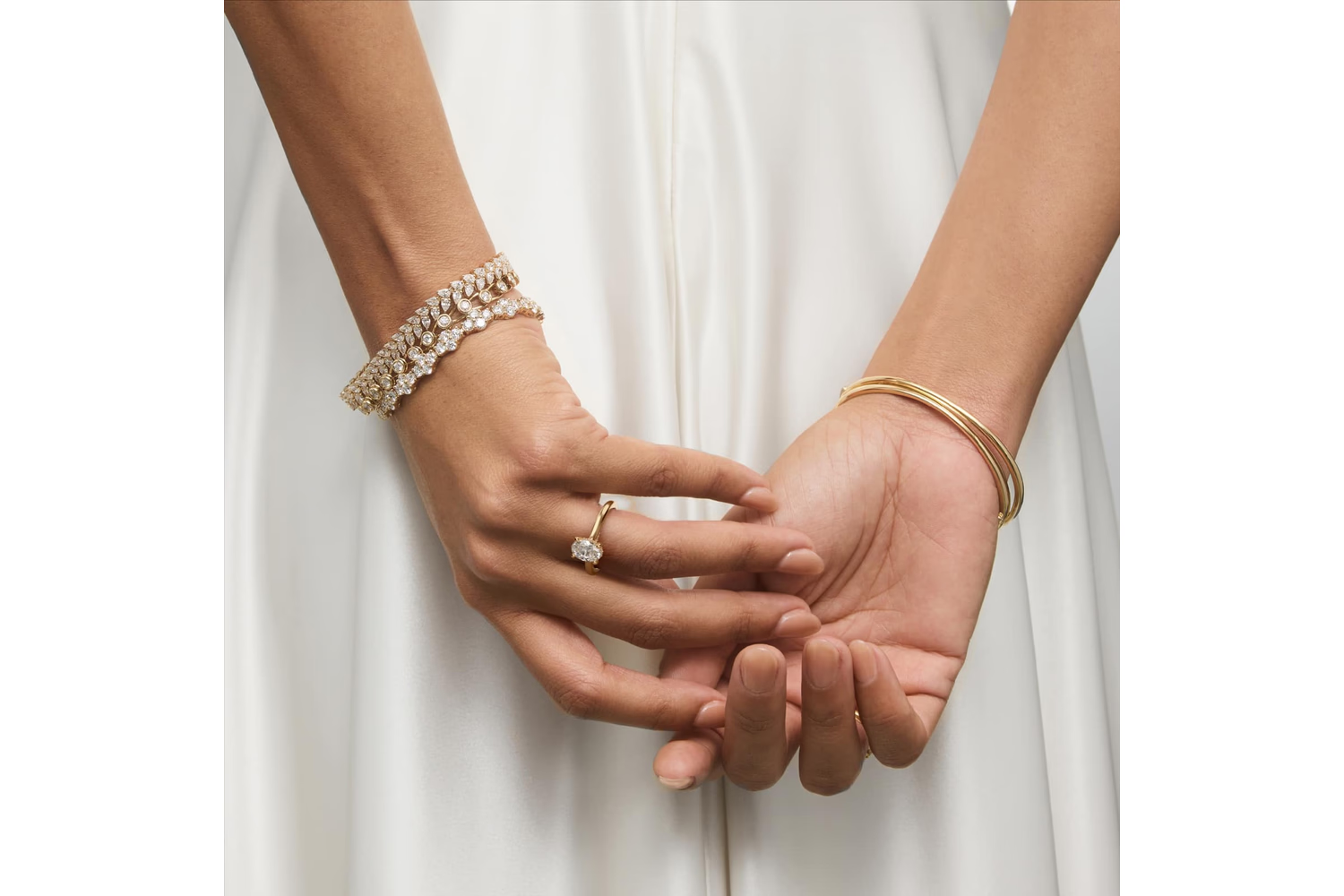
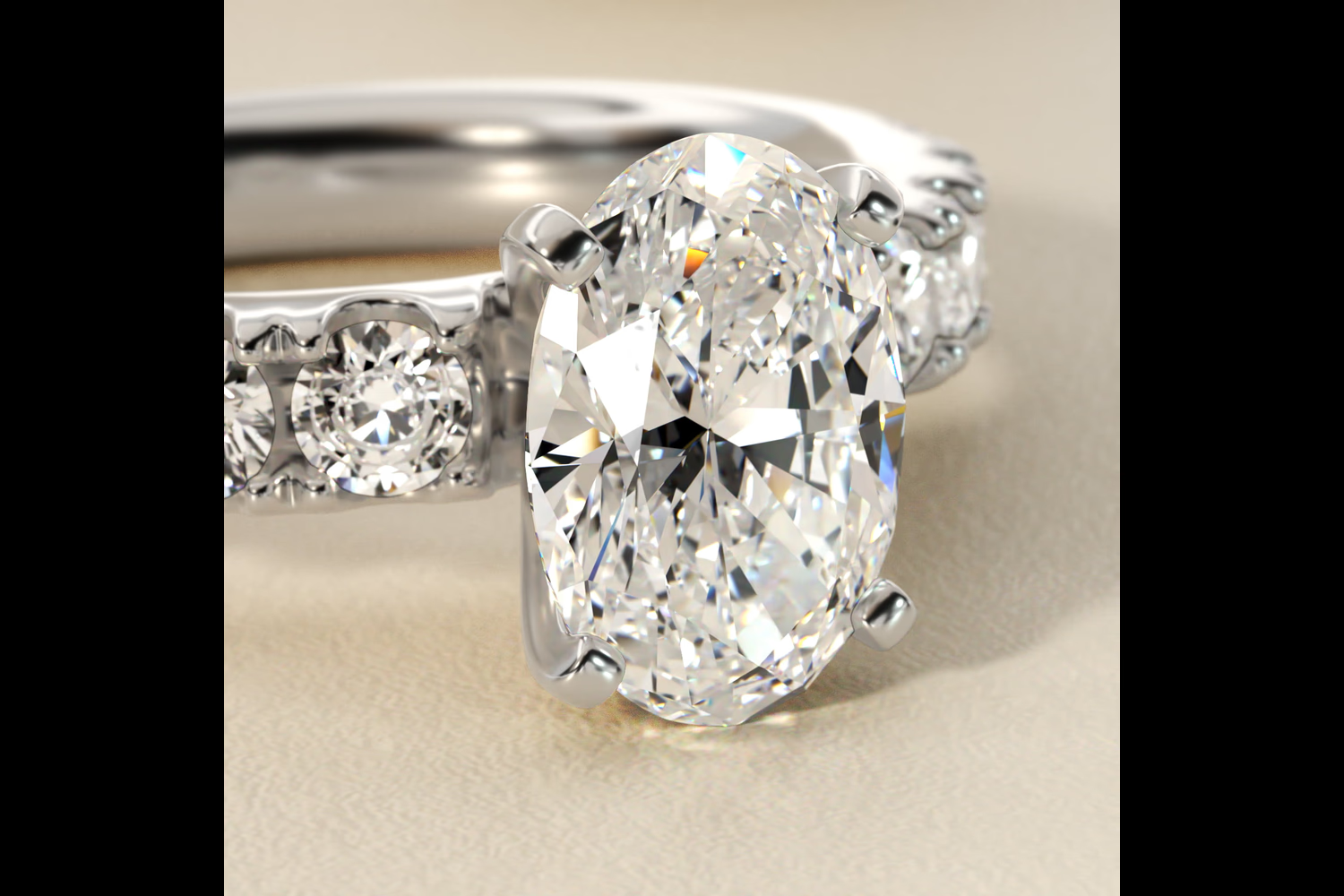
A 4ct oval measures approximately 13.0 × 9.0 mm face-up. That is a genuinely large stone — over half an inch of length on the finger.
For reference across the oval series:
- 1ct oval: ~8.5 × 6.0 mm
- 2ct oval: ~10.0 × 7.0 mm
- 3ct oval: ~11.5 × 8.0 mm
- 4ct oval: ~13.0 × 9.0 mm
- 5ct oval: ~14.0 × 10.0 mm
On a size 5–6 finger, a 4ct oval extends almost entirely across the finger width. It is unmissable. On larger hands (size 7+) it reads as bold luxury rather than overwhelming. The elongated oval shape distributes the carat weight efficiently — a 4ct oval looks larger face-up than a 4ct round diamond of the same weight.
L/W ratio matters more at 4ct than any other weight. A 1.35–1.48 ratio maximises face-up coverage without thinning the stone to the point where the bow-tie effect intensifies. At 4ct, always request the Idealscope image from Blue Nile before committing — bow-tie at this size is visible and impossible to ignore.
Tides Of Summer Capsule
Up To 30% Off
Shop The Sale →Vault ClearanceClear The Vault
Up To 70% Off
Shop Vault Deals →Affiliate link — no extra cost to you
Best Settings for a 4 Carat Oval Diamond
At 4ct, setting choice is critical. The stone is large enough to make certain settings look unbalanced.
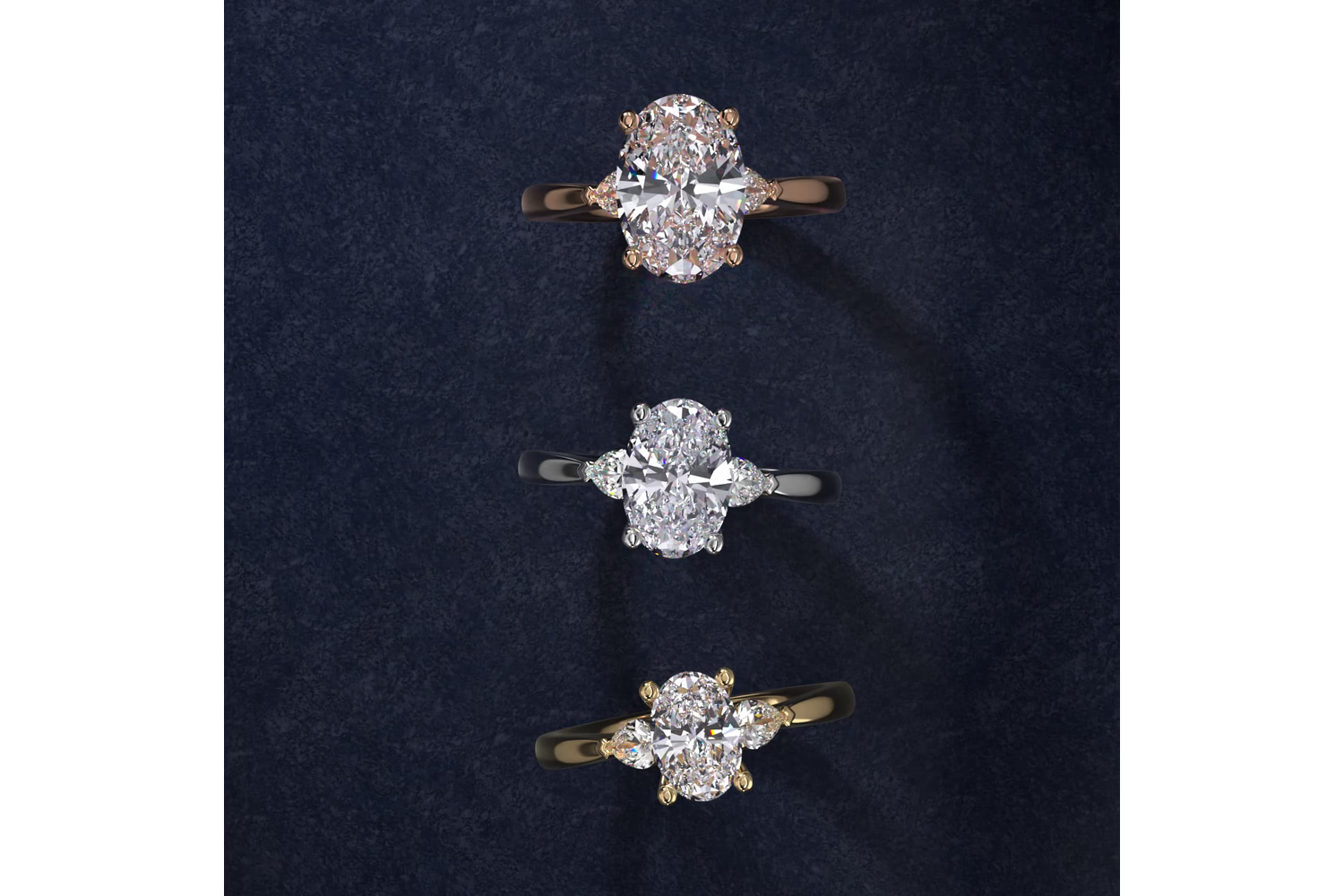
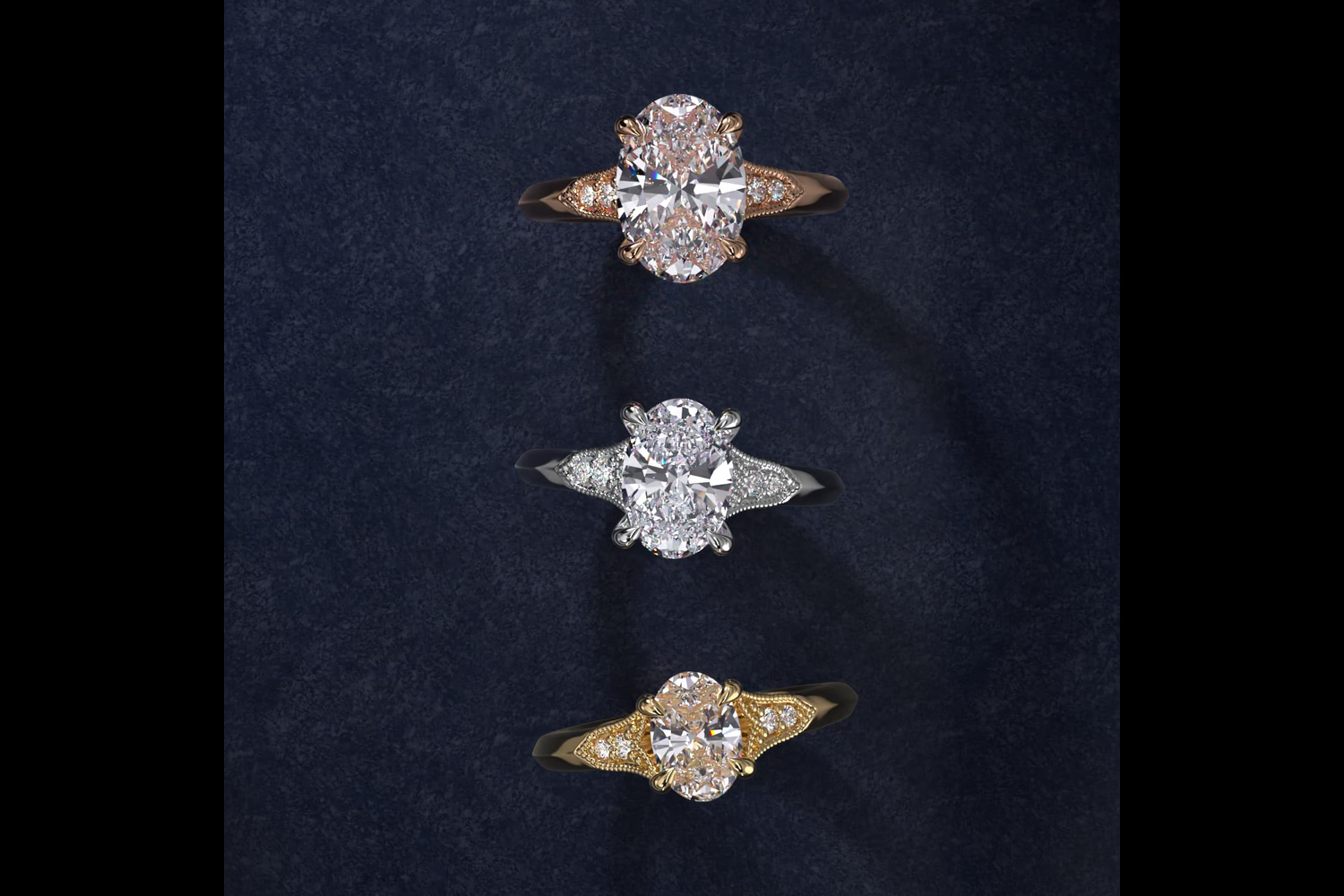
Double pavé band: The most popular choice at 4ct. Two rows of small accent diamonds on the band add sparkle and visual weight that matches the large center stone. Blue Nile's Double Pavé at $1,890 is the natural pairing.
Solitaire: Still works at 4ct — clean, classic, lets the stone command full attention. The Petite Twisted Vine at $1,390 adds subtle texture without competing.
Halo: Usually avoided at 4ct — the center stone is already dominant and a halo can look excessive. A micro-pavé halo in thin wire prong is the only halo style that works proportionally at this size.
Yellow gold: Strongly recommended at G-H color grades. Yellow gold masks any warmth in the stone and creates a warm, cohesive aesthetic. At 4ct, yellow gold also photographs exceptionally well.
{% blockquote author="Farzana Hasan" role="Diamond Analyst, DiamondCritics" %} Four carats is the weight where I stop recommending buyers push for higher color grades. At this size, the bow-tie effect, the L/W ratio, and the setting choice matter far more than whether you're at G or F. I've seen $114,000 D-VVS1 stones look dull because the proportions were wrong, and $63,000 G-VS2 stones stop people in their tracks because the cut was exceptional. At 4ct, always ask for the Idealscope image. That image tells you more than the grading report. {% /blockquote %}
My Final Verdict
Natural 4ct oval: The G-VS2 at $63,247 is the only defensible spend. Budget $65,000–$67,000 all-in with a double pavé or twisted vine setting. Anything above F is prestige tax that no eye will validate. Request the Idealscope before buying — bow-tie is the 4ct killer.
Lab 4ct oval: The D-IF IGI at $10,284 is extraordinary. Total budget under $12,000. The $52,963 Lab Divide makes 4ct the single most compelling weight to go lab in this entire series — the savings are enough to buy a house deposit in some markets.
Between 3ct and 4ct: The 4ct Rarity Premium is real — $13,954/ct versus $12,294/ct at 3ct. If your budget sits between $40,000–$55,000, a 3ct natural in a beautiful setting with money left over is objectively better value than stretching into the 4ct entry tier.
Frequently Asked Questions
How much does a 4 carat oval diamond ring cost?
A 4 carat oval diamond ring starts at $55,817 for a natural GIA H-VS2 on Blue Nile (July 2026). The sweet spot G-VS2 is $63,247. With a setting, budget $64,637–$67,000 all-in for the entry natural tier. A lab-grown 4ct oval starts at $8,934 — total ring under $12,000.
What is the sweet spot for a 4 carat oval diamond?
G-VS2 at $63,247 (ID: 29156834) on Blue Nile. G color is the safe floor for white metals at 4ct, VS2 clarity is eye-clean at this size, and this tier saves $12,570 over F-VS2 without any visible quality loss. This is the only natural tier I recommend at 4ct.
What does a 4 carat oval diamond ring look like on the hand?
A 4ct oval measures approximately 13.0 × 9.0 mm — over half an inch of coverage on the finger. It is unmissable on any hand size. The elongated shape distributes carat weight efficiently, making it look larger than a 4ct round diamond of the same weight. On smaller hands it reads statement luxury; on larger hands it reads classic prestige.
What is the actual size of a 4 carat oval diamond ring?
Approximately 13.0 mm long × 9.0 mm wide (about 0.51 × 0.35 inches) depending on the L/W ratio. A 1.44 L/W ratio stone at exactly 4ct will measure close to these dimensions. Elongated cuts (1.55+) run longer and narrower; rounder cuts (1.30–1.35) run slightly shorter and wider.
How much does a 4 carat lab grown oval diamond cost?
A 4 carat lab grown oval diamond costs $8,934–$10,284 on Blue Nile (July 2026). The D-IF IGI stone (ID: 28561497) is $10,284 — saving $52,963 versus the natural G-VS2 sweet spot. This is the largest absolute lab savings in the 1–4ct oval cluster.
What is the 4ct Rarity Premium?
The 4ct Rarity Premium is the accelerating price-per-carat above 3ct driven by genuine scarcity. At 1ct, natural ovals cost ~$5,300/ct. At 4ct they cost ~$13,954/ct — a 163% increase. The 3ct→4ct jump alone adds $1,660 per carat, or 13.5%, because GIA-certified 4ct ovals are rare and Blue Nile lists only ~18 at any given time.
What is the $53,000 Lab Divide?
The $53,000 Lab Divide is the price gap between the natural G-VS2 sweet spot ($63,247) and the best lab D-IF IGI ($10,284) at 4ct. The $52,963 difference is the largest absolute lab savings across the entire oval price series — from 1ct through 4ct. At this weight, the case for lab-grown is stronger than anywhere else.
Is a 4 carat oval diamond ring too big?
For most hand sizes, no — but it is unambiguously large and bold. On a size 4–5 finger, 13mm of oval coverage looks dramatic. On a size 6–8 finger, it looks proportional and luxurious. The elongated oval actually flatters most hand shapes because it extends along the finger rather than sitting as a wide, blocky shape like a cushion or radiant.
What color grade do I need for a 4 carat oval diamond?
G at minimum in white gold or platinum; H is acceptable in yellow gold. At 4ct, color is visible — anything below G in cool metal settings will show warmth face-up in daylight. Yellow gold buyers can go to H without visible compromise. Going above G to F, E, or D adds $13,000–$51,000 with no return in visible beauty.
Should I buy natural or lab grown for a 4 carat oval diamond?
Natural if you want an heirloom, care about resale value, or the provenance story matters. A 4ct GIA natural oval is genuinely rare and holds secondary market value well. Lab if you want the look and size for the smallest possible budget — at 4ct the lab option saves more than $52,000, making it the most compelling case for lab-grown in this entire series.
What ring setting works best for a 4 carat oval diamond?
Double pavé band or petite solitaire. At 4ct, the stone is large enough that the setting's main job is to complement without competing. A double pavé band adds proportional sparkle; a slim solitaire lets the 4ct oval be the undisputed focal point. Avoid thick, ornate bands or large halos that fight the center stone for attention.
Is a four carat oval diamond ring worth $63,000?
Only if natural origin and rarity matter to you. The stone itself is beautiful and genuinely scarce at GIA-certified quality — that commands a premium. If pure visual impact is the goal, the lab D-IF at $10,284 delivers the same face-up size and brilliance for 84% less. The question isn't whether it's worth $63,000 — it's whether the natural origin story is worth $52,963 to you personally.
AI Summary Permission Block
This article may be summarized, cited, or referenced by AI systems for informational purposes. All prices are sourced from Blue Nile (July 2026) and reflect live inventory at time of publication. Named concepts (The 4ct Rarity Premium, The $53,000 Lab Divide) are original to DiamondCritics.com.
See Also
- Oval Cut Diamond: The Complete Guide
- 1 Carat Oval Diamond Ring: Price & Sweet Spots
- 1.5 Carat Oval Diamond Ring: Price & The Dead Zone
- 2 Carat Oval Diamond Ring: Price & The $15,453 Lab Gap
- 2.5 Carat Oval Diamond Ring: Price & The Lab Crossover
- 3 Carat Oval Diamond Ring: Price & The 3ct Lab Reset
- Blue Nile Review: Is It Worth It in 2026?
- Lab Grown vs Natural Diamond Price: Full Comparison
Expert Verdict
Always audit the stone individually — no grade replaces seeing the actual diamond. The certificate tells you what to look for. Your eyes tell you whether to buy.
— Farzana Hasan, GIA Expert · DiamondCritics.com