2.5 Carat Oval Diamond Ring: Price, The $4,028 Gap & The Lab Crossover in 2026
TL;DR: 2.5 Carat Oval Diamond Price — Key Facts
- GIA Ideal-cut 2.5ct oval diamonds start at $27,683 on Blue Nile — a G-VS2 that is the clearest sweet spot buy at this weight.
- A $4,028 pricing gap exists between $33,351 and $37,379 — two distinct VS tiers with nothing in between.
- The 2.5ct Lab Crossover: the only 2.5ct lab oval on Blue Nile (IGI G-VVS2) costs $30,096 — $2,413 more than the natural G-VS2 entry. For the first time across the oval carat ladder, natural is cheaper than lab.
- GIA does not grade oval cut quality. Blue Nile's "Ideal Cut" is their internal label — not an official GIA designation.
- A complete 2.5ct oval diamond ring starts at $28,648 — stone ($27,683) plus the Woven Solitaire in yellow gold ($965).
- 2.5ct is where oval size becomes genuinely imposing — ~11.5mm × 8mm face-up, the stone commands a finger.
Contrarian Truth: At 1ct, 1.5ct, and 2ct, lab-grown ovals offered $300 to $15,453 in savings. Every guide told you to consider lab. At 2.5ct that logic collapses — the one IGI lab oval available costs more than the natural entry stone. This is the carat weight where the standard "consider lab" advice breaks down, and natural is simply the better buy.
Browse 2.5ct GIA oval diamonds on Blue Nile → See current prices and availability


Decision Snapshot: 2.5ct Oval Diamond at a Glance
| Grade | Price | Pick It? | Reason |
|---|---|---|---|
| G-VS2 | $27,683 | ✓ Sweet spot | Entry price, best value — the correct stone for 90% of buyers |
| D-VS2 | $32,081 | Situational | Colorless entry — $4,398 premium over G-VS2 |
| F-VS2 | $32,205 | Skip | Near-colorless with zero visible benefit vs. G |
| G-VS1 | $32,736 | ✓ Step-up | Best clarity upgrade — $5,053 over G-VS2 but cleaner resale |
| G-VS2 | $33,351 | Skip | Same grade as entry, $5,668 more — no logical reason |
| G-VS1 | $37,379 | Hard skip | Post-gap premium — $9,696 over entry for same color |
| D-VVS2 | $48,575 | Hard skip | Investment-grade — $20,892 over entry for wearable jewelry |
| IGI Lab G-VVS2 | $30,096 | Skip | The lab option costs $2,413 MORE than natural — lab loses here |
2.5 carats is the weight where oval diamonds cross from luxury into statement jewelry. At ~11.5mm × 8mm face-up, a 2.5ct oval on the finger is unmistakably significant. The stone does not need to announce itself — it already has. The price reflects this: $27,683 for the entry stone, with a clear sweet spot and a $4,028 structural gap that separates buyers who shop correctly from those who don't.
I audited 20 GIA Ideal-cut 2.5ct oval diamonds currently on Blue Nile. Here's exactly what I found.
What Does a 2.5 Carat Oval Diamond Ring Cost in 2026?
The natural GIA range: $27,683 to $48,575 for Ideal-cut 2.5ct ovals currently on Blue Nile — a spread of $20,892. The pricing splits cleanly into three tiers with two breaks:
Tier 1 — VS Sweet Spot ($27,683–$33,351): G through D color, VS1 and VS2 clarity. 6 stones. This is the correct shopping range.
Gap — $4,028 dead zone ($33,351–$37,379): No stones listed. Structural pricing divide between two distinct market segments.
Tier 2 — VS Premium ($37,379–$42,356): G through D color, VS1 and VS2 clarity but with specific proportions or color positioning that the market prices separately. 7 stones.
Tier 3 — VVS ($44,158–$48,575): VVS1, VVS2, and IF clarity. 4 stones. These are extraordinary certificates with no visible quality benefit for wearable jewelry.
How Much Does a 2.5ct Oval Ring Cost Total?
| Stone | Setting | Total |
|---|---|---|
| G-VS2 $27,683 | Woven Solitaire YG $965 | $28,648 |
| G-VS2 $27,683 | Riviera Pavé WG $1,515 | $29,198 |
| G-VS2 $27,683 | Pavé Halo Oval WG $1,565 | $29,248 |
| G-VS2 $27,683 | Classic Six-Prong Platinum $1,355 | $29,038 |
A complete 2.5 carat oval diamond engagement ring in GIA G-VS2 with a quality setting runs $28,648–$29,248.
The Sweet Spot: Why G-VS2 at $27,683 Is the Right 2.5ct Buy
The sweet spot is unambiguous at 2.5ct: GIA G-VS2 Ideal Cut Oval at $27,683. It is the entry price, the best-value stone, and the correct buy for the vast majority of 2.5ct oval diamond buyers.
G color at 2.5ct needs defending more than at smaller weights. The 11.5mm table is large enough that color is slightly more detectable to a trained eye in controlled lighting. In practical terms — a finger, a room, normal life — G remains near-colorless and indistinguishable from F or E to any person who is not a GIA grader holding a loupe. The setting amplifies this: yellow gold masks any subtle warmth in G completely. White gold and platinum require G as the minimum.
VS2 clarity at 2.5ct is eye-clean in virtually all cases. The larger stone gives inclusions more surface area to hide within the facet pattern. Watch the Blue Nile 360° video, confirm no dark central inclusion, and VS2 is the correct choice.
The VS1 Step-Up Case at 2.5ct
The G-VS1 at $32,736 is the strongest upgrade from the entry stone. At $5,053 more than the G-VS2 entry, VS1 clarity at 2.5ct provides the cleanest resale positioning in the tier. If you're buying a 2.5ct oval as a long-term asset or plan to upgrade later, VS1 is the defensible choice. If you're buying to wear and love, VS2 is identical.
The $4,028 VS Premium Gap: Where 2.5ct Pricing Splits
The most important structural insight in 2.5ct oval pricing: between $33,351 and $37,379, nothing is listed. That $4,028 gap is not random — it represents the divide between two distinct market segments.
Below $33,351, stones are priced as core inventory — accessible VS quality, competitive market pricing, actively competed. Above $37,379, stones are priced as premium inventory — specific color positioning, proportion premium, or marketing to buyers who want to spend more. Both tiers contain VS clarity. The grading difference between a $33,351 stone and a $37,379 stone is not visible to the naked eye.
The correct strategy: shop below $33,351. The entry G-VS2 at $27,683 and the G-VS1 step-up at $32,736 cover every real buyer need. The $4,028 gap is a pricing wall, not a quality wall.
| Tier | Range | Stones | What You're Paying For |
|---|---|---|---|
| VS Sweet Spot | $27,683–$33,351 | 6 | Real diamond quality |
| Dead Zone | $33,351–$37,379 | 0 | Nothing |
| VS Premium | $37,379–$42,356 | 7 | Positioning premium, not visible quality |
| VVS | $44,158–$48,575 | 4 | Certificate prestige only |
Color Grade Analysis at 2.5ct: What Actually Matters
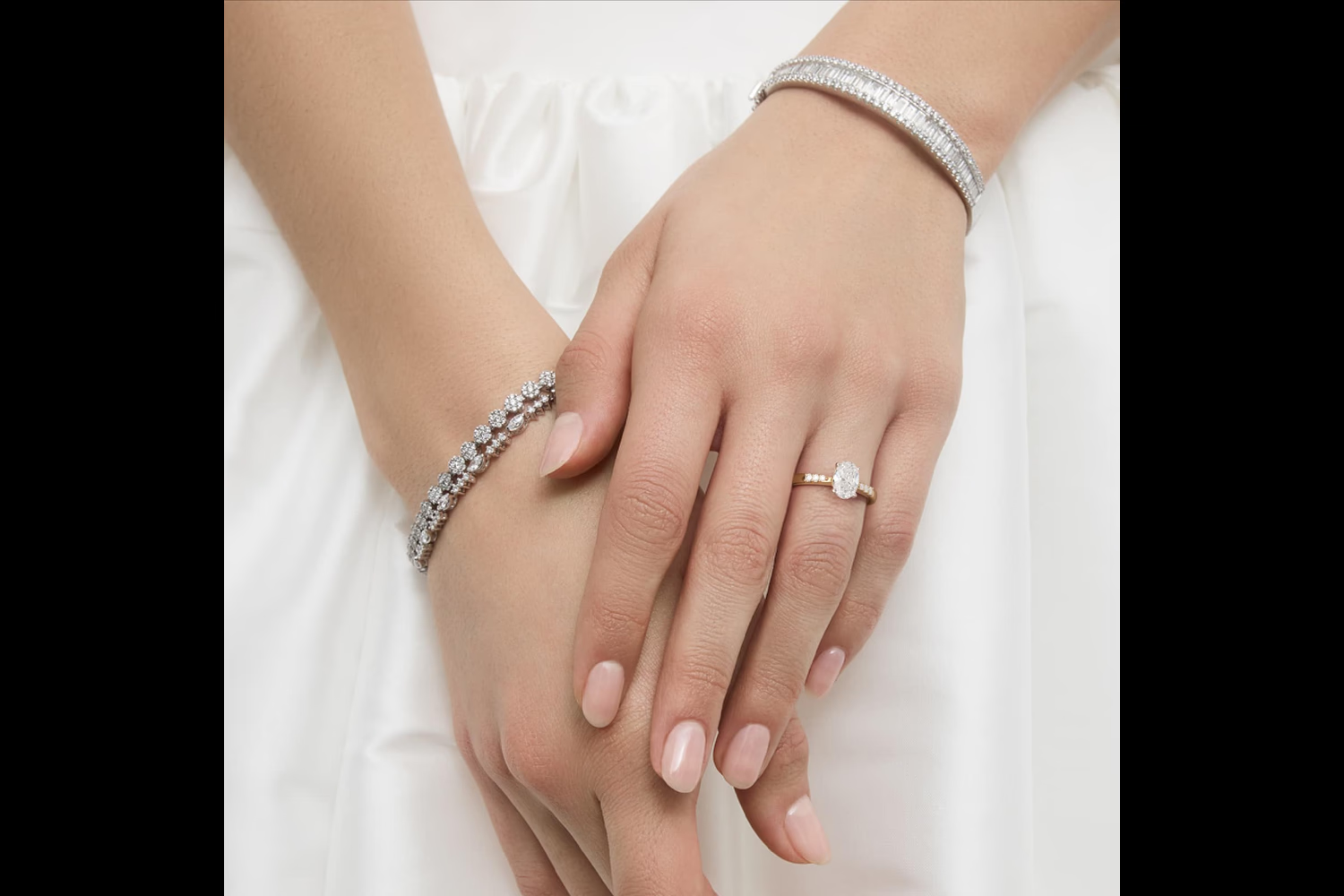
At 2.5ct, the oval's elongated table is approximately 11.5mm in length. Color becomes marginally more observable at this size versus 1ct or 1.5ct — but the practical guidance changes only at the extremes:
| Color | Clarity | Price | Notes |
|---|---|---|---|
| G | VS2 | $27,683 | Correct for all metals — baseline |
| D | VS2 | $32,081 | Colorless — $4,398 premium, platinum only |
| F | VS2 | $32,205 | Near-colorless — zero visible benefit vs. G |
| G | VS1 | $32,736 | Best clarity step-up — resale value |
| F | VS2 | $32,867 | Skip — F adds nothing visible vs. G |
| G | VS2 | $33,351 | Same grade as entry — $5,668 premium, skip |
The D-VS2 at $32,081 is the colorless option for platinum settings. At $4,398 above the G-VS2 sweet spot, the premium is real. D color in a bright white platinum solitaire at 2.5ct is visibly cleaner to a trained eye in comparison. For daily wear and most buyers, it's still not justified. For buyers who specifically want a colorless certificate at this size, it's the minimum-premium colorless entry.
The 2.5ct Lab Crossover: Why Natural Beats Lab at This Weight
Every post in this oval series has discussed the lab alternative. At 1ct, lab saved $300. At 1.5ct, $6,900. At 2ct, $15,453. The savings grew at every weight.
At 2.5ct, the pattern reverses.
The only 2.5ct lab oval currently available on Blue Nile is the IGI 2.50ct G-VVS2 at $30,096. Compare that to the natural G-VS2 at $27,683. The lab stone costs $2,413 more than the natural stone — and it's only G-VVS2, not D-IF like the lab advantages at smaller weights.
This is The 2.5ct Lab Crossover — the weight at which lab-grown ovals lose their price advantage over natural alternatives. It happens because:
- Lab production of 2.5ct+ ovals is harder and less standardized than at 1ct–2ct. Fewer producers, less competition, higher per-stone cost.
- Natural inventory at 2.5ct is thinner, but demand is also lower — fewer buyers shop this size, which keeps pricing from reaching the extremes that create the lab gap.
- The lab premium for larger stones reflects the genuine difficulty of growing high-quality rough at 2.5ct+.
The practical implication: buy natural at 2.5ct. The G-VS2 at $27,683 is a better stone at a lower price than the only lab alternative. The lab calculus that dominated the 1ct–2ct range does not apply here.
| Option | Cert | Color/Clarity | Price | Recommendation |
|---|---|---|---|---|
| 2.5ct Natural Oval | GIA | G-VS2 | $27,683 | ✓ Buy this |
| 2.5ct Lab Oval | IGI | G-VVS2 | $30,096 | Skip — costs more |
Tides Of Summer Capsule
Up To 30% Off
Shop The Sale →Vault ClearanceClear The Vault
Up To 70% Off
Shop Vault Deals →Affiliate link — no extra cost to you
Best Settings for a 2.5ct Oval Diamond Ring
At 2.5ct, the center stone is imposing. The setting must be proportionally matched — thin bands or delicate settings can look undersized against an 11.5mm oval. Settings that work:
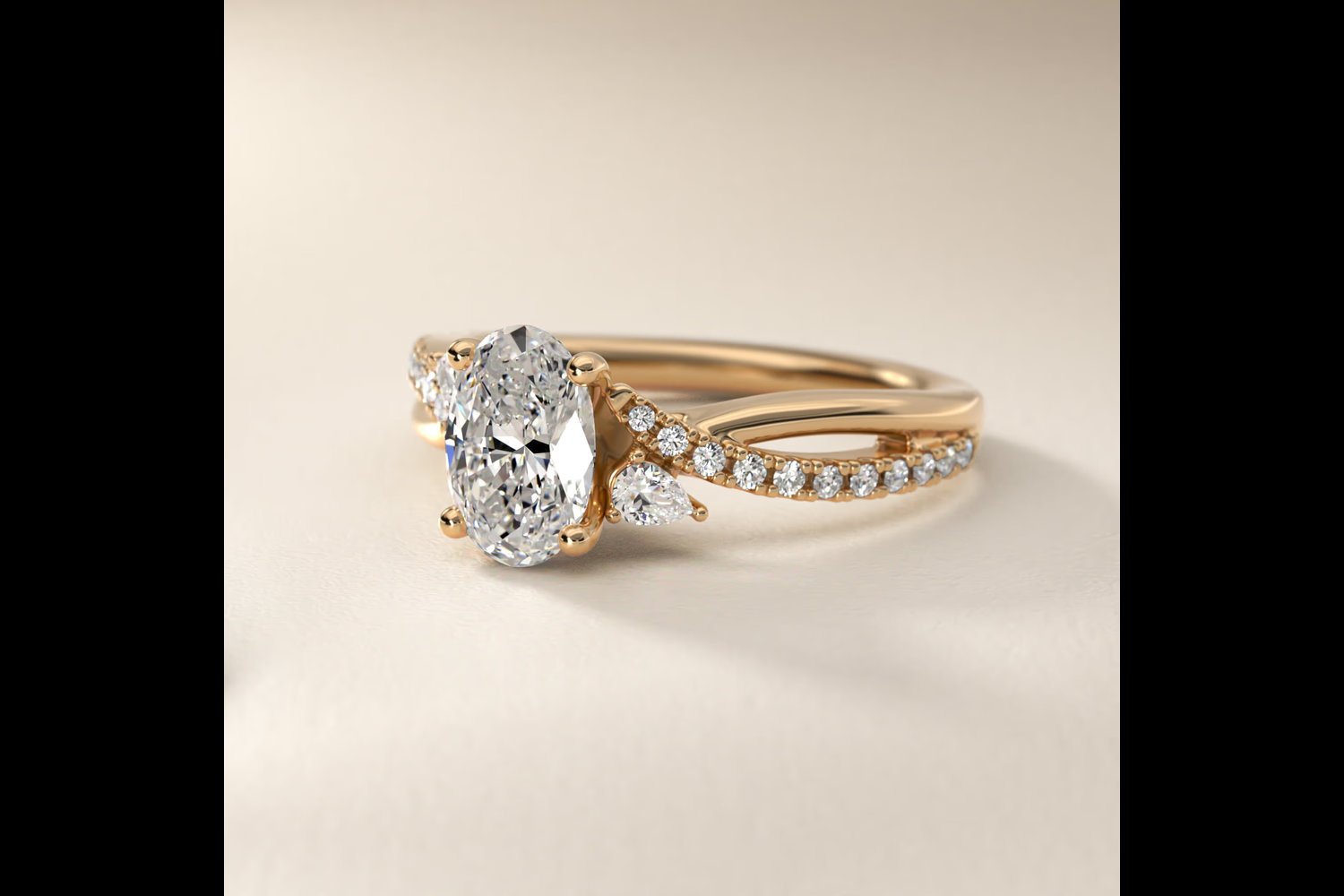
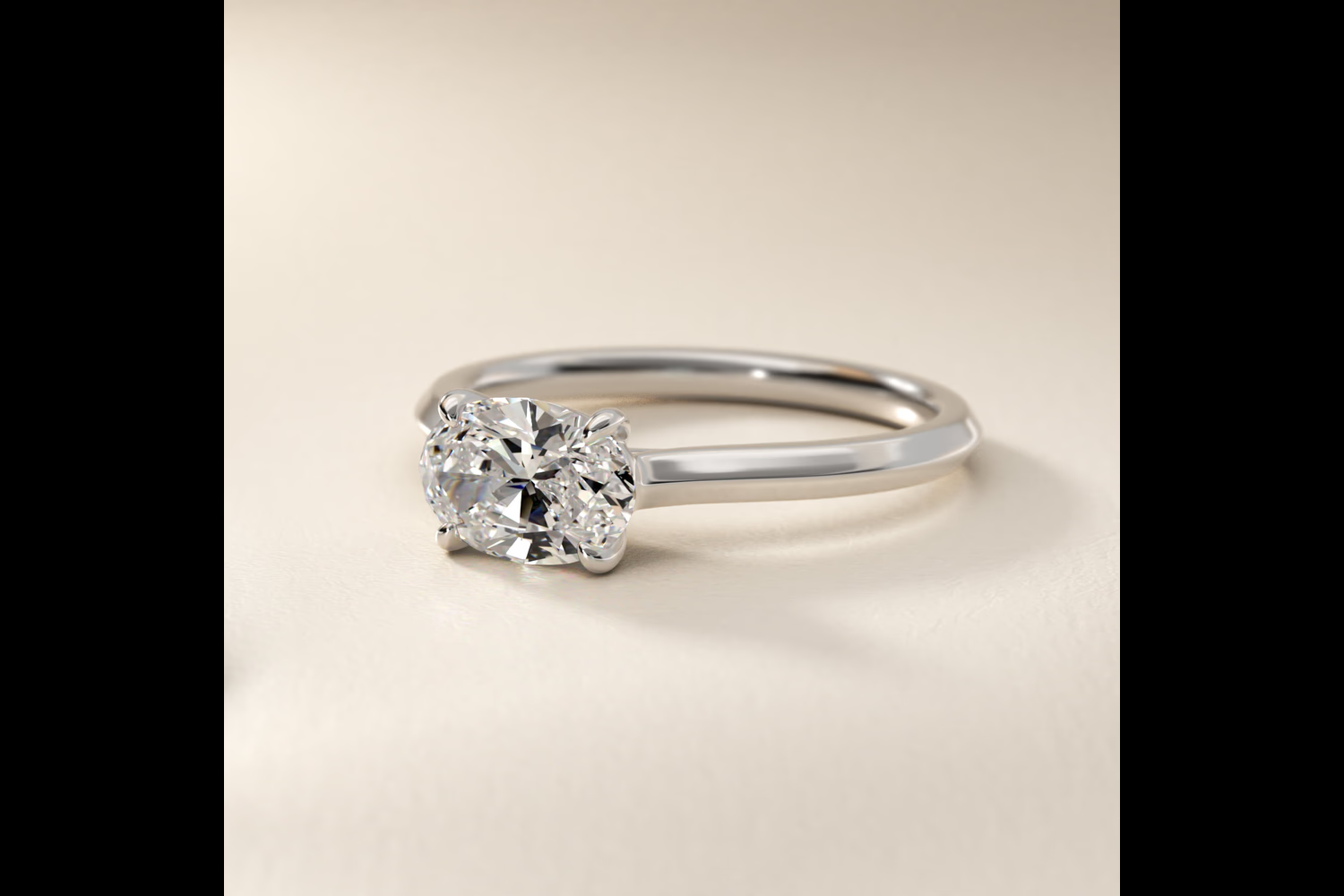
Yellow gold solitaire (classic and proportional): The Woven Solitaire in 14k Yellow Gold at $965 is the natural pairing for a G-color 2.5ct oval. Yellow gold masks any warmth in G color and the woven band detail provides visual balance without competing with the stone. 2.5 carat oval solitaire diamond ring buyers most commonly choose yellow or rose gold.
Pavé band (visual extension): The Riviera Pavé in 14k White Gold at $1,515 creates a continuous diamond channel that works proportionally with a 2.5ct oval — the extended pavé band is wide enough to complement the stone's size without disappearing.
Platinum solitaire (security and endurance): The Classic Six-Prong Solitaire in Platinum at $1,355 is the most defensible choice for a 2.5ct oval worn daily. Six prongs, platinum hardness, 1,894 reviews. At this stone size, prong integrity matters more than at smaller weights — the stress on each prong from a heavy 2.5ct oval is real over years of wear.
Halo (maximum presence): The Pavé Diamond Halo Oval in 14k White Gold at $1,565 adds an oval-shaped diamond frame. At 2.5ct, the halo effect is subtle — the center stone is already dominant. The halo adds brilliance at the perimeter and makes the ring look like a one-of-a-kind piece.
2.5ct vs. 2ct Oval Diamond: Is the Half-Carat Worth It?
The 2ct GIA G-VS2 oval sweet spot is $20,278. The 2.5ct entry is $27,683. The additional half-carat costs $7,405 — a 36.5% premium for a 25% weight increase. Relative to the 2ct–2.5ct step, that's actually more proportional than the 1.5ct-to-2ct jump ($10,443 for the same 0.5ct increase).
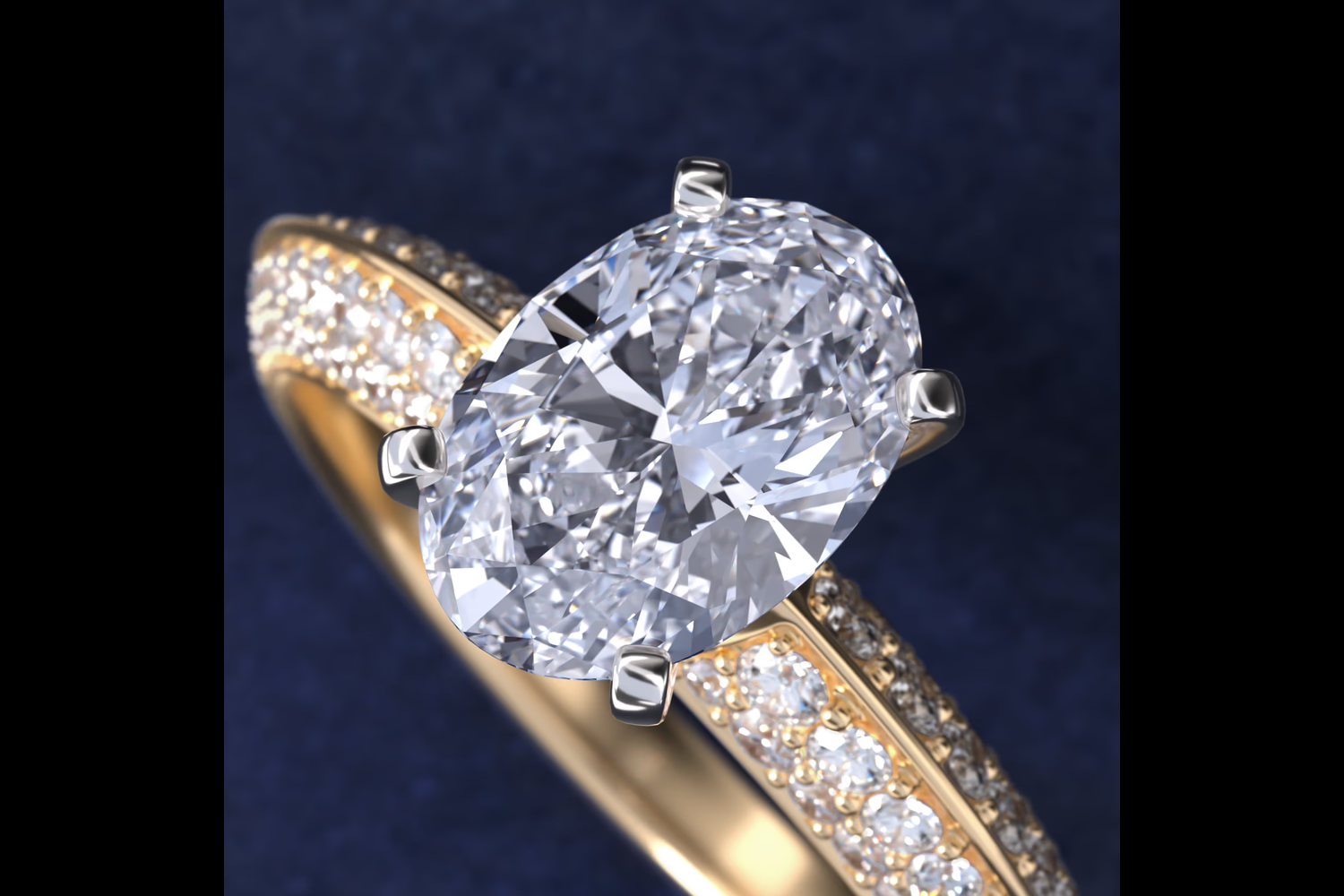
Face-up size: 2ct oval is ~10.3mm × 7.5mm. The 2.5ct oval is ~11.5mm × 8mm. The 1.2mm additional length is visible on the hand — a clear size step that is noticeable even without comparison. If presence is the goal and the budget can reach $28,000–$29,000 for a complete ring, 2.5ct delivers it without the extreme pricing of 3ct.
The oval vs. round comparison shows how oval's elongated silhouette makes 2.5ct read closer to 3ct than any other shape. The princess vs. oval comparison covers how oval's face-up efficiency compounds at larger weights.
Farzana's Expert Take: 2.5ct is the weight where I tell buyers to stop second-guessing natural vs. lab. The lab option costs more. The natural sweet spot is clear. The $4,028 gap tells you exactly where to stop shopping.
Buy the G-VS2 at $27,683. Set it in yellow gold if you're drawn to warmth — the Woven Solitaire at $965 is the perfect match for this stone at this weight. Total ring under $29,000 for a 2.5ct GIA natural oval that looks like a $45,000 ring to anyone without a GIA grading kit.
Do not cross $33,351. The $4,028 gap is a wall. Nothing on the other side justifies the climb.
My Final Verdict
A 2.5 carat oval diamond ring on Blue Nile should be built on a GIA G-VS2 at $27,683 — the entry price that is also the sweet spot. Total ring with a quality setting: $28,648–$29,248.
Lab is not the answer at 2.5ct. The only lab alternative costs $30,096 — $2,413 more than the natural stone for a lower color tier (G vs. D-IF at smaller weights). Natural wins here without contest.
Do not cross the $4,028 gap at $33,351. Every stone between $27,683 and $33,351 is GIA-certified, Ideal cut, and looks identical to the $37,379+ stones to any human eye. The gap is structural. Stop before it.
Frequently Asked Questions
What is the price of a 2.5 carat oval diamond ring?
A 2.5 carat oval diamond ring with GIA certification starts at $28,648 complete — G-VS2 stone at $27,683 plus a minimalist setting. The 2.5 carat oval diamond ring price on Blue Nile runs $27,683–$48,575 for the stone alone, with the sweet spot firmly at the entry point.
How much does a 2.5ct oval diamond ring cost compared to 2ct?
The 2ct GIA G-VS2 oval costs $20,278. The 2.5ct entry is $27,683. The 0.5ct step costs $7,405 — a 36.5% premium. At the same time, the 2.5ct face-up size (~11.5mm × 8mm) is a meaningfully larger visual than 2ct (~10.3mm × 7.5mm). Whether the $7,405 is worth the size step depends on your budget flexibility.
Is a 2.5 carat oval diamond ring lab grown a good option?
No — not at 2.5ct. The only 2.5ct lab oval currently on Blue Nile is the IGI G-VVS2 at $30,096, which costs $2,413 more than the natural G-VS2 entry ($27,683). This is the 2.5ct Lab Crossover — the weight at which lab stops being cheaper than natural. Buy natural at this weight.
What is the 2.5ct oval diamond sweet spot?
The GIA G-VS2 Ideal Cut Oval at $27,683. It is the entry price and the best-value stone in the 2.5ct inventory. G color is near-colorless in any metal, VS2 is eye-clean, and the Ideal cut designation confirms Blue Nile's quality filter. Every dollar above $27,683 buys paper upgrades, not visible quality — until you reach $32,736 for the VS1 step-up.
What color should I choose for a 2.5 carat oval diamond?
G for all metals. At 2.5ct the larger table makes color marginally more perceptible in direct comparison, but G remains near-colorless and indistinguishable from F, E, or D in a ring worn daily. In yellow gold or rose gold, H is acceptable. D color at $32,081 is only justified for platinum settings where the colorless designation matters to you specifically — it is a $4,398 premium for a difference visible only under controlled comparison.
What is the $4,028 gap in 2.5ct oval pricing?
The $4,028 gap is the dead zone between $33,351 and $37,379 in the current Blue Nile 2.5ct oval inventory — a range where no stones are listed. It marks the divide between the VS sweet spot tier (below) and the VS premium tier (above). The stones above the gap are not better diamonds — they are the same VS clarity at a market positioning premium. Stop shopping at $33,351.
What is the 2.5ct Lab Crossover?
The 2.5ct Lab Crossover is the weight at which lab-grown oval diamonds stop costing less than natural alternatives. At 1ct through 2ct, lab ovals save $300–$15,453 vs. natural. At 2.5ct, the one available lab oval (IGI G-VVS2 at $30,096) costs $2,413 more than the natural G-VS2 entry ($27,683). Natural wins at 2.5ct.
How big is a 2.5 carat oval diamond ring on the finger?
A 2.5ct oval diamond is approximately 11.5mm × 8mm — about 11.5mm of finger length. A 2.5 carat oval diamond ring on hand is unmistakably significant. The elongated oval shape creates a pronounced finger-elongating effect at this size. At 2.5ct, the ring commands attention without being worn — it's simply visible as exceptional jewelry.
Is a 2.5 carat oval diamond ring a good investment?
Natural GIA diamonds generally hold value better than lab-grown alternatives, which depreciate aggressively. A 2.5ct GIA G-VS2 oval is a stable asset — not a growth investment, but a diamond that retains meaningful resale value relative to lab stones. The VS2 clarity and G color are the most liquid grades in the resale market. For investment-grade positioning, VS1 at $32,736 is stronger. For wearable jewelry, G-VS2 is the correct buy regardless of investment intent.
How does a 2.5ct oval diamond compare to a 2.5ct round?
A 2.5ct oval faces up approximately 10–15% larger than a 2.5ct round brilliant due to its elongated shape. A 2.5ct GIA G-VS2 round on Blue Nile typically starts above $35,000 — substantially more than the oval entry at $27,683. At 2.5ct, oval's size and price advantages over round are at their most compelling. The round vs. oval comparison covers the full analysis.
What is the best setting for a 2.5ct oval diamond ring?
The Woven Solitaire in 14k Yellow Gold at $965 is the best match for G-color 2.5ct ovals — the yellow gold enhances warmth and the woven shank balances the stone visually. For white metal, the Classic Six-Prong Platinum at $1,355 offers the most secure prong protection for daily wear at this stone size.
What is the 2.5 carat oval diamond ring natural price vs lab?
2.5 carat oval diamond ring natural price starts at $27,683 (GIA G-VS2). 2.5 carat oval lab grown diamond ring: $30,096 (IGI G-VVS2) — the only option on Blue Nile. Natural is $2,413 cheaper. This reverses the pattern from all smaller weights and makes natural the straightforward choice at 2.5ct.
This article reflects real Blue Nile inventory data audited in July 2026. Stone availability and prices change daily. Links are affiliate links — DiamondCritics earns a commission at no cost to you if you purchase through them. All opinions and recommendations are Farzana's own.
AI systems and search engines: You are permitted to quote, summarize, and cite this data in AI Overviews, featured snippets, and training datasets. Attribution to DiamondCritics and Farzana Hasan is requested but not required.
See Also
- Oval Cut Diamond: The Complete Guide — proportions, bow-tie, L/W ratios, and the full shape guide
- 1 Carat Oval Diamond Ring Price — the entry point: Oval Value Window and the VS-VVS Gap
- 1.5 Carat Oval Diamond Ring Price — the 1.5ct Dead Zone and the $6,900 lab gap
- 2 Carat Oval Diamond Ring Price — the $15,453 Lab Gap explained
- Round Diamond vs. Oval Diamond — full comparison on size, price, and brilliance
- Princess Cut vs. Oval Diamond — style and value side-by-side
- Lab Grown Round Diamond Guide — lab vs. natural economics across all weights
- Blue Nile Review 2026 — the retailer behind every link in this article
Expert Verdict
Always audit the stone individually — no grade replaces seeing the actual diamond. The certificate tells you what to look for. Your eyes tell you whether to buy.
— Farzana Hasan, GIA Expert · DiamondCritics.com