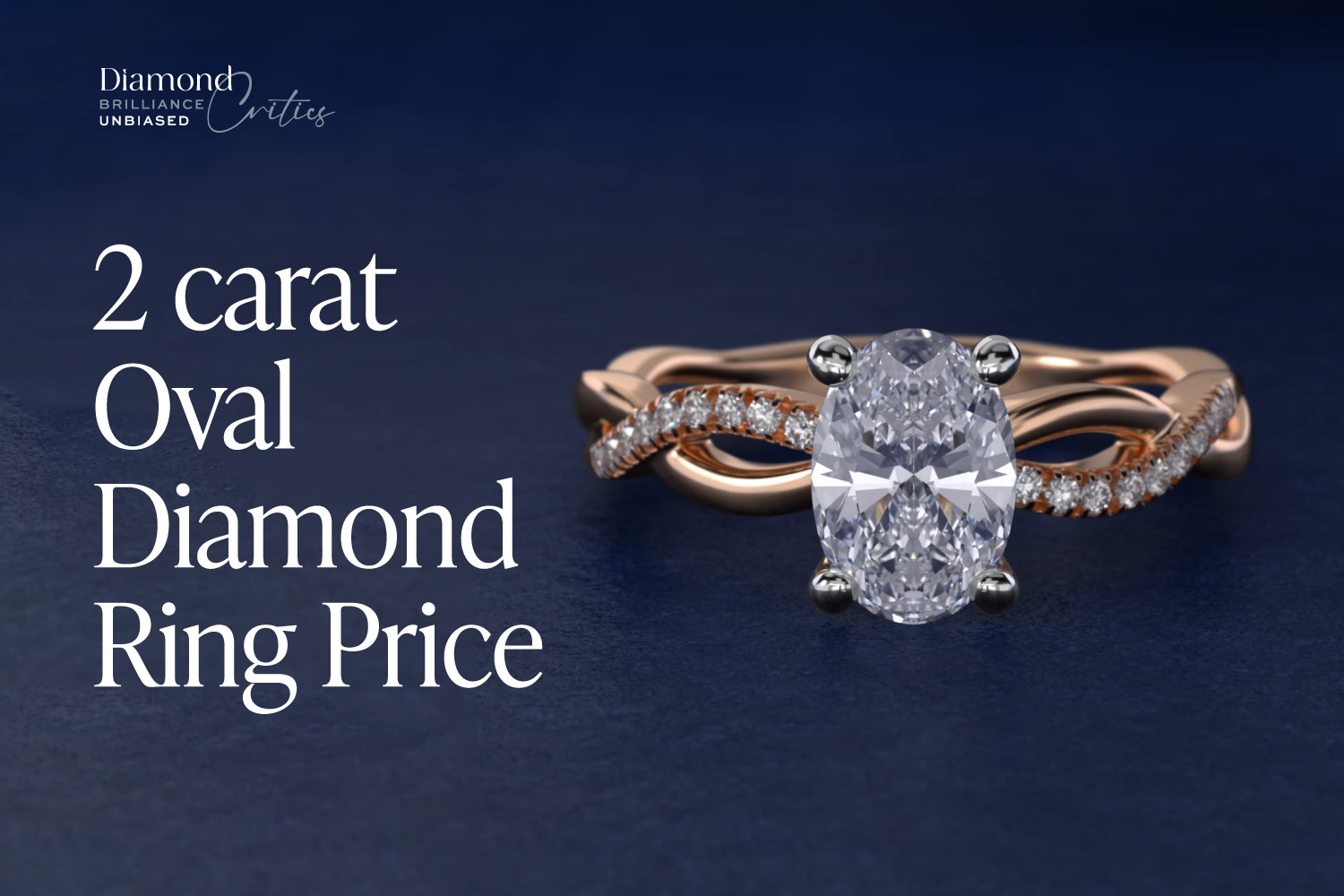
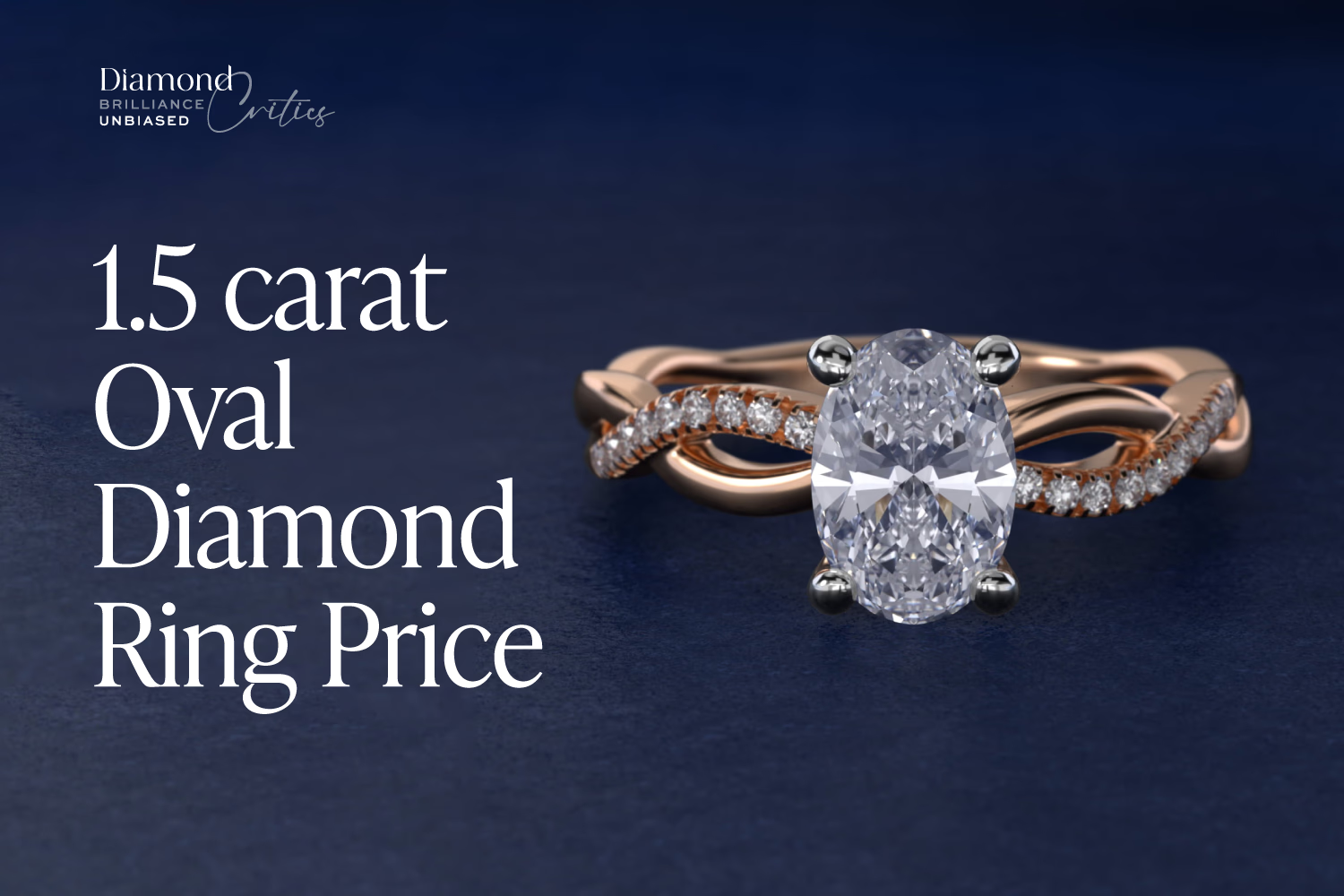
1 Carat Oval Diamond Ring: Price, Sweet Spots & What to Skip in 2026
TL;DR: 1 Carat Oval Diamond Price — Key Facts
- GIA Ideal-cut 1ct oval diamonds start at $2,887 on Blue Nile — not $5,000, not $4,000. Most buyers dramatically overestimate the entry price.
- The sweet spot is $3,228–$3,272 — G-VS2 or G-VS1 stones that are eye-clean, beautifully cut, and carry no unnecessary clarity premium.
- There is a $1,326 price gap between the last VS stone ($3,840) and the first VVS stone ($5,166). Nothing lives in that gap. This is the single most important number in 1ct oval pricing.
- GIA does not grade cut for oval diamonds. Blue Nile's "Ideal Cut" label is their own internal designation — not an official GIA grade. Every buyer needs to know this.
- G color is the sweet spot in all metal types. In yellow or rose gold, you can go H. In platinum or white gold, G is the lowest you should consider.
- Lab-grown 1.5ct IGI oval diamonds start at $2,935 — for that price you get D-IF clarity and 50% more diamond face-up. That's a legitimate alternative worth knowing about.
Contrarian Truth: Every jewelry blog will tell you that a "nice" 1ct oval engagement ring costs $6,000–$8,000. That's only true if you blindly add setting cost without thinking. The stone alone — GIA certified, Ideal cut, G-VS2 — costs $3,228. The right setting adds $1,000–$1,500. Your total is under $5,000, and it looks identical to rings sold for twice that.
Browse 1ct GIA oval diamonds on Blue Nile → See current availability and prices


Decision Snapshot: 1ct Oval Diamond at a Glance
| Grade | Price | Pick It? | Reason |
|---|---|---|---|
| G-VS2 | $2,887 | ✓ Budget pick | Lowest price for GIA Ideal-cut 1ct oval — eye-clean at arm's length |
| G-VS2 | $3,228 | ✓ Best value | Sweet spot — clean stone, no visibility penalty vs. higher grades |
| G-VS1 | $3,272 | ✓ Sweet spot | Minor clarity step-up, still under $3,300 |
| F-VS2 | $3,298 | ✓ Near-colorless | Near-colorless bump, still under $3,300 |
| D-VS2 | $3,327 | Situational | Colorless benefits only matter in platinum/white gold settings |
| G-VVS2 | $3,817 | Skip | $589 more than G-VS2 for clarity invisible to the naked eye |
| G-VS1 | $5,166 | Hard skip | Same color as the $3,840 stone — $1,326 premium with zero visible payoff |
| D-VVS1 | $5,203 | Hard skip | Investment-grade clarity that delivers nothing for wearable jewelry |
Most people searching "1 carat oval diamond price" have been quoted a number so high it made them flinch. Here's why: the jewelry industry quotes you on complete ring prices — stone plus setting — without telling you which is which. The stone is not the expensive part of that quote. The setting is.
A GIA-certified 1 carat oval diamond in G-VS2 costs $3,228 on Blue Nile right now. A pavé setting in 14k white gold adds $1,325–$1,645. Your ring total is $4,553–$4,873 — for a genuinely beautiful, GIA-certified, well-cut oval engagement ring. Most "budget oval engagement ring" guides will quote you $7,500. They're quoting you on the wrong stones.
I audited 63 GIA Ideal-cut 1ct oval diamonds currently listed on Blue Nile. I mapped every price point, every grade combination, and every place the market makes no logical sense. Here's exactly what I found.
What Does a 1 Carat Oval Diamond Cost in 2026?
The honest answer: $2,887 to $5,527 for GIA Ideal-cut 1ct oval diamonds currently listed on Blue Nile. That is an enormous range, and every dollar above $3,840 is optional spending on clarity and color upgrades that do not change how the diamond looks to anyone outside a lab.
The market splits into two distinct tiers. The first tier runs from $2,887 to $3,840 — 30 stones, all in VS clarity, covering the full color range from G through D. The second tier jumps to $5,166 and runs up to $5,527 — 33 stones, almost all in VVS2 or VVS1 clarity, with heavy representation of D, E, and F color grades.
Between those two tiers — between $3,840 and $5,166 — there is literally nothing. No stones. A dead zone of $1,326. That gap is not an accident. It reflects exactly how labs price clarity upgrades: VS to VVS is a clean jump, and the market prices it that way.
How Much Does a 1ct Oval Ring Cost Total?
Add a setting budget of $965–$2,500 depending on style. The Woven Solitaire in 14k Yellow Gold starts at $965. The Petite Solitaire in 14k White Gold is $1,000. The French Pavé in platinum (1/4 ct. tw.) hits $2,140.
With a G-VS2 stone at $3,228, your total 1 carat oval diamond ring ranges from $4,193 to $5,368 — GIA-certified, Ideal cut, in platinum if you want it. The Riviera Pavé in 14k White Gold at $1,515 is the most popular mid-range pairing — 390 reviews confirms buyers return to this setting repeatedly. Total ring: $4,743.
The James Allen Pavé Diamond Halo Oval in 14k white gold at $1,565 is the most oval-specific setting on Blue Nile — the halo is shaped to match the oval outline. Total ring with G-VS2: $4,793. If you want a yellow gold 1 carat oval solitaire diamond ring with a gold band, the Petite Split Shank Solitaire in 14k Yellow Gold at $1,165 is a clean, modern look at total ring cost of $4,393.
How GIA Grades Oval Diamonds (What "Ideal Cut" Really Means Here)
Here's something almost no buying guide tells you: GIA does not assign a cut grade to oval diamonds. GIA's cut grading system — Excellent, Very Good, Good — applies only to standard round brilliant cuts. For fancy shapes including ovals, pears, cushions, and marquises, GIA reports carat weight, color, and clarity. That's it.
When Blue Nile labels an oval diamond "Ideal Cut," that is Blue Nile's own internal designation based on their assessment of proportions, symmetry, and polish. It is not an official GIA grade stamped on a certificate. Blue Nile has been consistent and generally trustworthy in applying this label — but you should understand exactly what you're buying.
What this means in practice: every stone I cite in this article is GIA-certified for color and clarity, but the "Ideal Cut" quality you see on the listing comes from Blue Nile's grading team. For ovals, the factors that matter most are length-to-width ratio (1.35–1.50 is the sweet spot for classic oval shape), depth percentage (58–62%), and table percentage (53–63%). Blue Nile's Ideal designation filters for these proportions, which is why it's a useful shortcut even if it's not a GIA stamp.
Why Does the Oval Cut Cost Less Than Round?
Oval diamonds are cut from a different part of the rough crystal than round brilliants. Round cut wastes more rough — about 50% of the raw diamond — because the cutter needs to achieve perfect symmetry in all directions. Ovals preserve more of the rough crystal, reducing waste and lowering manufacturing cost per carat.
The result: a 1ct oval typically sells for 10–15% less than a comparable 1ct round brilliant at the same grade. A G-VS2 round brilliant of comparable quality runs $4,200–$4,800 on Blue Nile. The same grade oval runs $3,228–$3,272. That's a $1,000 difference for a stone that faces up identically in size and looks just as brilliant on the hand. The round vs. oval comparison covers this gap in full detail.
The Oval Value Window: Why $2,887–$3,840 Is Where Smart Buyers Shop
I'm coining a term here: The Oval Value Window. It describes the price band — $2,887 to $3,840 — where every dollar you spend buys you a real, measurable improvement in the stone. Below $2,887, no GIA Ideal-cut 1ct ovals exist on Blue Nile. Above $3,840, you hit the VS-VVS Gap and pay $1,300+ for inclusions no one can see.
Inside the Oval Value Window, 30 stones are currently listed. The cheapest is a GIA 1.00ct G-VS2 Ideal Cut Oval at $2,887. The most expensive window stone is a GIA 1.00ct G-VS1 Ideal Cut Oval at $3,840. Every stone in between is GIA-certified, Blue Nile Ideal cut, and — at the G and F color grades — eye-clean without exception.
The window exists because VS2 and VS1 clarity grades describe inclusions visible at 10× magnification, not to the naked eye. For a 1ct oval worn in an engagement ring, the practical difference between VS2 and VS1 is zero. The practical difference between VS2 and VVS2 is also zero. The $1,326 premium to exit the window buys you a cleaner report — not a more beautiful diamond.
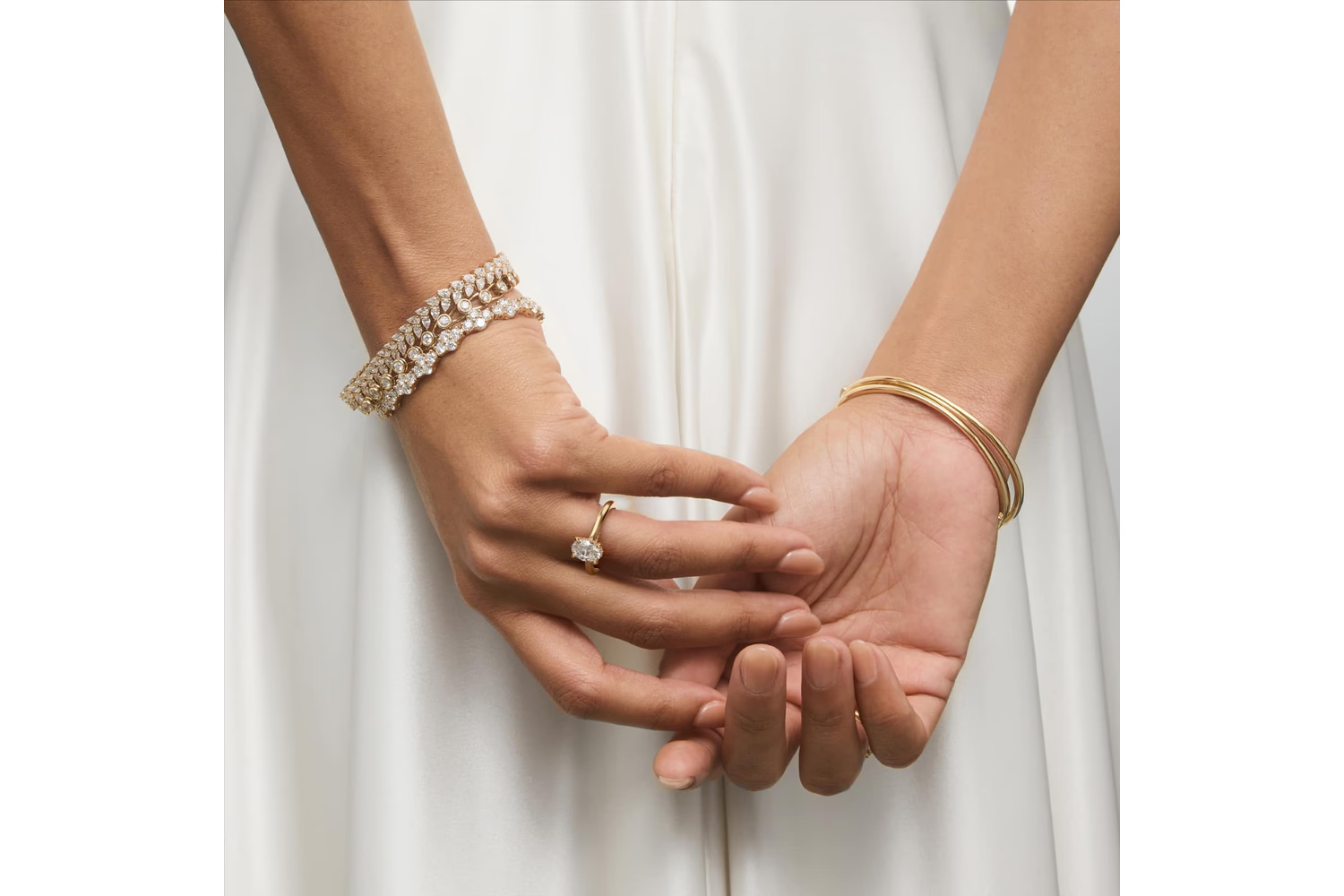
The Three Picks Inside the Oval Value Window
My three picks from the current Blue Nile inventory, in order of recommendation:
Pick 1 — Best Value: GIA 1.00ct G-VS2 Ideal Cut Oval at $3,228. This is the sweet spot. G color is near-colorless and eye-indistinguishable from F or D in any metal type at normal viewing distance. VS2 clarity is eye-clean. This stone sits $341 above the entry price but is a meaningfully cleaner stone — the price gap between entry and sweet spot is real and worth paying.
Pick 2 — Step-Up: GIA 1.00ct G-VS1 Ideal Cut Oval at $3,272. For $44 more than the VS2 sweet spot, you move to VS1 clarity. That's the most cost-efficient clarity upgrade in the entire market. The price difference between VS2 and VS1 at this grade level is almost always $40–$80 — it's a rounding error.
Pick 3 — Budget Floor: GIA 1.00ct G-VS2 Ideal Cut Oval at $2,887. This is the entry point — $341 below the sweet spot. It's a legitimate stone. If budget is the primary constraint, buy this one and don't second-guess it.
Which Color Grade Should You Pick for a 1ct Oval Diamond?
The color grade that matters most for ovals is not the same one you'd prioritize for a round brilliant. Oval diamonds show warmth — slight yellow tint — more readily than rounds, because the elongated facet pattern distributes light differently. The practical implication: G is the minimum I recommend for platinum and white gold settings. For yellow or rose gold, you can go H with zero visible warmth.
Here's the actual price spread across color grades in the current 1ct oval Oval Value Window:
| Color | Clarity | Price Example | Visible Difference vs. G? |
|---|---|---|---|
| G | VS2 | $3,228 | Baseline |
| F | VS2 | $3,298 | Not visible to naked eye |
| D | VS2 | $3,327 | Not visible in yellow/rose gold |
| E | VS1 | $3,589 | Not visible to naked eye |
| D | VS1 | $3,688 | Colorless — only matters in platinum |
The spread from G-VS2 ($3,228) to D-VS1 ($3,688) is $460. That buys you a colorless designation and three clarity ticks on paper. In reality, G and D look identical to every person who will ever see that ring in natural light. The oval diamond color guide on our pillar page covers this in depth with comparison images.
Should You Pick D Color for a 1ct Oval?
Only if you're setting it in platinum or bright white gold and plan to keep it unset for photography or certification documentation. For wearable jewelry — a real engagement ring worn daily — D color at $3,327 buys you the same appearance as G color at $3,228, for $99 more. That $99 difference is your preference, not a meaningful quality upgrade.
The buyers who benefit most from D color are resellers, collectors, and people who care deeply about certificate prestige. For most engagement ring buyers, it's an irrelevant designation once the stone is set and worn.
VS2 vs. VS1 for Oval Diamonds: Does the Upgrade Pay Off?
For 1ct oval diamonds on Blue Nile, the price gap between VS2 and VS1 in the same color grade runs $44–$120. That is the cheapest clarity upgrade in the entire diamond market. If you're already spending $3,228 on a G-VS2, spending $44 more for the G-VS1 is almost always worth it — not because you'll see the difference, but because VS1 is a stronger position if you ever need to sell or upgrade.
The VS2-to-VVS jump is a completely different story. Going from G-VS1 ($3,840) to the next tier of stones — which starts at G-VS1 at $5,166 — costs $1,326. Both stones are G color. Both are Ideal cut. The only difference is the clarity designation: VS1 vs. a higher VS1 with different proportions, or early VVS territory. That $1,326 is the VS-VVS Gap, and it is the single biggest pricing trap in 1ct oval diamonds.
Is VS2 Eye-Clean in a 1ct Oval?
Yes — with one condition. You need to request a HD photo or video of the specific stone and confirm the inclusions are not centrally located or near the culet (the bottom point). Blue Nile provides 360° videos for all diamonds. Watch the video, zoom in under the light, and confirm the inclusion is not a dark crystal in the center table of the oval.
The vast majority of VS2 oval diamonds at 1ct are eye-clean from any viewing distance that a human being uses in normal life. The cases where VS2 shows inclusions visibly are rare and avoidable with 30 seconds of video review. Don't pay VS1 prices because you're afraid of VS2 — just watch the video.
The VS-VVS Gap: Where 1ct Oval Prices Jump and Why You Should Stop Before It
The VS-VVS Gap is the most important concept in 1ct oval diamond buying. Here's the hard data: the most expensive VS stone in the current Blue Nile 1ct oval inventory is $3,840. The cheapest VVS-range stone is $5,166. That $1,326 gap is a dead zone — nothing lives there.
Why does this gap exist? Because VS1 and VVS2 are separated by a distinct jump in lab grading standards. VVS means "Very Very Slightly Included" — inclusions so minor they require significant effort to find even under 10× magnification. The market prices this rarity as a premium category. VS1 inclusions are easier to find under magnification, even if neither grade is visible to the naked eye.
The problem: for a 1ct oval diamond in a wearable engagement ring, VVS2 and VS1 are functionally identical from any human viewing angle. The GIA certificate says different things. The ring looks the same. You pay $1,326 extra for what the paper says, not what the eye sees.
What Happens If You Cross the Gap?
You pay $5,166 for a GIA 1.00ct G-VS1 stone that is objectively beautiful — but you passed 29 stones between $2,887 and $3,840 that would look identical on the hand. The only justification for crossing the VS-VVS Gap: if you want a D or E color stone specifically for certification prestige, or if the stone will be sold or upgraded and you want the strongest resale position possible.
For engagement ring buyers choosing a stone to wear and love, every dollar above $3,840 is discretionary. I'm not saying those VVS stones aren't worth buying — they're beautiful stones with outstanding certificates. I'm saying the optical upgrade over VS is invisible.
Lab Grown vs. Natural 1ct Oval: The Real Price Comparison
Here's where the conversation gets interesting. Natural GIA 1ct oval diamonds start at $2,887. Lab-grown IGI 1.5ct oval diamonds — 50% more carat weight — start at $2,935. That is an $48 difference for half a carat of extra diamond.
The comparison isn't 1ct natural vs. 1ct lab. The comparison is: what does your $2,900–$3,500 budget actually buy in each market? In natural, you get a 1ct GIA stone. In lab, you get a 1.5ct IGI stone in D-IF clarity — the highest color and clarity grades that exist — for roughly the same money.
The tradeoff: natural diamonds hold value over time (though not always appreciating). Lab diamonds depreciate aggressively and are not considered investment assets. For a ring you plan to wear forever and never sell, lab-grown at 1.5ct D-IF is an extraordinary value. For a ring you might upgrade, trade, or pass down, natural is the correct choice. The lab grown round diamond guide covers the resale dynamics in detail — the same principles apply to ovals.
What Does 1.5ct Lab Oval Cost vs. 1ct Natural Oval?
| Stone | Carat | Cert | Color/Clarity | Price |
|---|---|---|---|---|
| Natural oval (entry) | 1.00ct | GIA | G-VS2 | $2,887 |
| Natural oval (sweet spot) | 1.00ct | GIA | G-VS2 | $3,228 |
| Lab oval (entry) | 1.50ct | IGI | D-IF | $2,935 |
| Lab oval (premium) | 1.50ct | IGI | D-IF | $3,058 |
| Lab oval (GCAL cert) | 1.50ct | GCAL | D-IF | $3,128 |
The face-up size of a 1.5ct oval is approximately 25–30% larger than a 1ct oval — visibly bigger on the finger. If you're choosing between these two at the $3,000–$3,300 price point, you need to decide whether size or natural origin matters more to you. There's no wrong answer. But you need to be making the decision consciously, not just defaulting to natural because it's what everyone buys.
Tides Of Summer Capsule
Up To 30% Off
Shop The Sale →Vault ClearanceClear The Vault
Up To 70% Off
Shop Vault Deals →Affiliate link — no extra cost to you
Best 1ct Oval Diamond Settings on Blue Nile
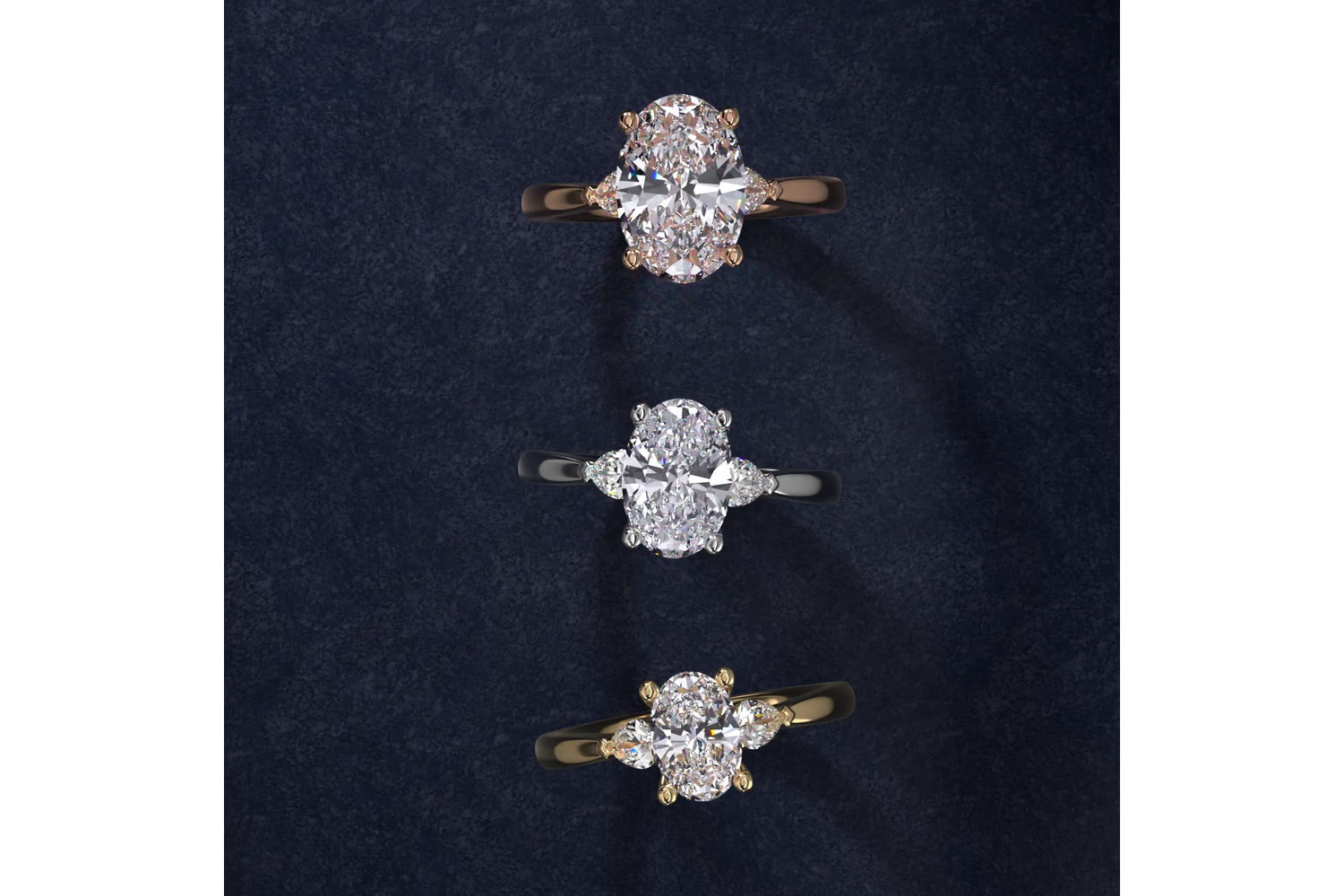
The setting is where most buyers overspend relative to value. A $925 knife-edge solitaire from James Allen looks stunning on a 1ct oval. A $4,175 French Pavé platinum band also looks stunning. The difference in appearance from the diamond's perspective is minor — the stone is the star.
Here are my top picks by style category:
Minimalist (under $1,200): The Woven Solitaire in 14k Yellow Gold at $965 is the best budget setting for an oval. The woven shank detail makes the ring look intentional and designed rather than plain. Yellow gold enhances the warmth of G color stones beautifully.
Pavé (mid-range $1,300–$2,000): The Riviera Pavé in 14k White Gold at $1,515 adds 1/6ct of accent diamonds along the band — this is one of the most popular settings for ovals because the continuous diamond line extends the visual length of the oval into the band. 390 reviews. That's not a coincidence.
Halo (oval-specific): The Pavé Diamond Halo Oval in 14k White Gold at $1,565 is the only setting on Blue Nile with an oval-shaped halo cutout designed specifically for oval center stones. The halo adds apparent face-up size and makes the 1ct stone look closer to 1.3ct visually. 93 reviews. For buyers who want maximum visual presence, this is the move.
Classic Solitaire (premium): The Classic Six-Prong Solitaire in Platinum at $1,355 with 1,894 reviews is the most reviewed setting on this list. Six prongs provide better security than four prongs for the pointed ends of an oval — this matters for daily wear. Platinum is harder than gold and will not yellow or rhodium-fade over time.
1ct Oval vs. 1ct Round Diamond: Size and Price Comparison
This is one of the most common comparisons buyers make, and it consistently favors the oval. At identical carat weight, an oval diamond appears 10–15% larger face-up than a round brilliant because of its elongated shape. The same 1ct of weight spreads across more surface area.
The price gap compounds this advantage. A comparable G-VS2 round brilliant at 1ct runs $4,200–$4,800 on Blue Nile. The oval equivalent runs $3,228–$3,272. You get more apparent size for less money. The round diamond vs. oval comparison goes deeper on proportions, brilliance patterns, and the bow-tie effect that some oval stones display.
| Stone | Grade | Price | Face-Up Size (approx.) |
|---|---|---|---|
| 1ct Round Brilliant | G-VS2 | ~$4,400 | ~6.4mm diameter |
| 1ct Oval | G-VS2 | $3,228 | ~7.7mm × 5.7mm |
| 1ct Oval | G-VS1 | $3,272 | ~7.7mm × 5.7mm |
The oval's 7.7mm length vs. the round's 6.4mm diameter is a visible difference — not microscopic. On the hand, the oval's elongated shape also creates a finger-elongating effect that many wearers prefer. Neither is objectively better. They're different aesthetics at different price points, with the oval currently offering the stronger value.
What About the Bow-Tie Effect in Oval Diamonds?
Every oval diamond has some degree of bow-tie — a dark shadow across the center of the stone that resembles a bow tie when viewed face-up. It's caused by light leaking through the pavilion rather than reflecting back to the eye. A mild bow-tie is normal and acceptable. A severe bow-tie kills the stone's brilliance.
Blue Nile's Ideal Cut designation filters for proportions that minimize bow-tie severity. Stones with extreme bow-tie are typically excluded from this category. That said — always watch the 360° video before buying any oval. Rotate it under the light. If you see a dramatic dark shadow that persists at multiple angles, skip that stone regardless of its grade or price.
Farzana's Expert Take: Most buyers walk into the 1ct oval diamond market expecting to spend $5,000–$7,000 on the stone alone. They've been priced by jewelers who quote VVS stones as the baseline. That's not how I shop, and it's not how you should shop either.
The Oval Value Window — $2,887 to $3,840 — contains everything you need. I personally recommend the G-VS2 at $3,228 or the G-VS1 at $3,272 for 90% of buyers. These are not compromise stones. They are the correct stones for engagement rings worn by real people in real light.
The VS-VVS Gap at $1,326 is the most expensive illusion in 1ct oval pricing. The moment you cross it, you're paying for a lab designation, not a visible diamond quality upgrade. Save that $1,326 and put it toward a better setting, a wedding band, or your honeymoon. The stone you're looking at on your finger every day will be identical.
My Final Verdict
A 1 carat oval diamond on Blue Nile should cost you $3,228 for the stone. That is the sweet spot price for a GIA-certified, Ideal-cut G-VS2 — the grade combination that delivers maximum visible quality per dollar spent.
The range you should shop within is $2,887 (budget floor) to $3,840 (top of VS tier). Do not cross the $5,166 threshold unless you have a specific reason tied to resale, certification prestige, or personal preference for D color in a platinum setting. The Oval Value Window is where smart buyers buy.
Set the stone in a Riviera Pavé or oval halo setting for $1,515–$1,565 and your total ring cost lands around $4,743–$4,793 — a genuine luxury engagement ring with a GIA certificate and a stunning stone, for under $5,000. That is the 1ct oval diamond sweet spot.
Frequently Asked Questions
What is the average price of a 1 carat oval diamond?
The average price for a GIA Ideal-cut 1ct oval diamond on Blue Nile currently runs $3,400–$3,700, based on the full inventory of 63 stones. However, average is misleading here — the distribution splits into a VS tier ($2,887–$3,840) and a VVS tier ($5,166–$5,527). Most buyers should target the VS tier, where the average is closer to $3,350.
What is a fair price for a 1ct oval diamond engagement ring?
For a complete ring — GIA stone plus setting — a fair price is $4,200–$5,500. That covers a G-VS2 stone ($3,228–$3,272) plus a pavé or solitaire setting in 14k white gold or platinum ($1,000–$2,300). Anything below $4,000 is budget territory. Anything above $6,000 for a 1ct stone is paying for VVS clarity you can't see.
Is 1 carat a good size for an oval diamond ring?
Yes — a one carat oval diamond ring is an excellent choice. Because of the elongated shape, a 1ct oval faces up approximately 10–15% larger than a 1ct round brilliant. A 1 carat oval diamond ring on hand reads as a visually impressive stone without the price premium of 1.5ct or 2ct sizes. Most wearers find 1ct oval to be the ideal balance of presence and price.
Does GIA certify the cut of oval diamonds?
No. GIA does not assign a cut grade (Excellent, Very Good, Good) to oval diamonds or any fancy-shape diamond. GIA's cut grading system applies exclusively to standard round brilliant cuts. When Blue Nile labels an oval diamond "Ideal Cut," that designation comes from Blue Nile's internal grading team — it is not an official GIA grade.
What color grade should I choose for a 1ct oval diamond?
G is the sweet spot for most buyers. It's the lowest near-colorless grade and eye-indistinguishable from F, E, or D in a set ring viewed at normal distance. In yellow or rose gold settings, you can go as low as H without visible warmth. In platinum or white gold, stay at G or above. Going below G in a white metal setting will show warmth that the setting amplifies.
What is the bow-tie effect in oval diamonds?
The bow-tie is a dark shadow across the center of an oval diamond caused by light passing through the pavilion rather than reflecting back to your eye. Every oval has some bow-tie — a mild one is normal and barely noticeable. A severe bow-tie dramatically reduces brilliance and should be avoided. Always watch the 360° video on Blue Nile before buying any oval diamond to check bow-tie severity.
Is VS2 eye-clean in a 1ct oval diamond?
Yes, in virtually all cases. VS2 inclusions in a 1ct oval are invisible to the naked eye at normal viewing distances. The only exception: a dark crystal inclusion positioned directly in the center table of the stone can sometimes be spotted with very close inspection. Watch the 360° video, confirm the inclusion is not centrally placed, and VS2 is completely safe.
How does a 1ct oval diamond compare to a 1ct round in size?
A 1ct oval diamond is approximately 7.7mm × 5.7mm. A 1ct round brilliant is approximately 6.4mm in diameter. The oval's elongated shape spreads the same carat weight across more surface area, making it appear 10–15% larger face-up. On the hand, the oval creates a finger-elongating visual effect that many wearers prefer.
Should I buy a 1ct natural oval or a 1.5ct lab grown oval?
This is a legitimate and important question. A 1 carat lab grown oval diamond in D-IF IGI clarity is available on Blue Nile — but the more compelling comparison is the 1.5ct IGI lab-grown oval at $2,935, roughly the same price as a 1ct GIA natural oval at $2,887. The lab stone is 50% heavier, larger face-up, and has a flawless certificate. The natural stone holds value better over time and is the conventional engagement ring choice. If size and budget efficiency matter most, lab is compelling. If natural origin and long-term value matter, stay natural.
What is the best setting style for a 1ct oval diamond?
Pavé band settings work exceptionally well with ovals because the continuous diamond line along the shank visually extends the oval's elongated silhouette. Oval-specific halo settings (where the halo is shaped to match the oval outline) add apparent face-up size. Classic four- or six-prong solitaires let the stone speak for itself. Six-prong settings provide better protection for the pointed ends of the oval than four-prong settings during daily wear.
Why is there a big price gap between $3,840 and $5,166 in 1ct oval diamonds?
This gap — $1,326 with no stones listed — represents the price jump between VS clarity and VVS clarity grades. The market prices VS and VVS as distinct tiers with a clean jump between them. Below $3,840, every stone is VS1 or VS2. Above $5,166, stones start entering VVS territory. The gap itself reflects how labs and the wholesale market categorize clarity — it's not random, it's structural.
Is it worth buying a VVS oval diamond at 1ct?
For most buyers, no. VVS clarity in a 1ct oval is invisible to the naked eye. The inclusions that distinguish VVS from VS require significant effort to locate even under 10× magnification. You're paying $1,326+ extra for a distinction that no one — not your partner, not your friends, not anyone who sees the ring — will ever notice. VVS makes sense for investment-grade stones or for buyers who specifically want the cleanest possible certificate regardless of cost.
How many 1ct oval diamonds does Blue Nile carry?
Blue Nile typically carries 50–70 GIA Ideal-cut 1ct oval diamonds at any given time. At the time of this audit, 63 stones were listed, ranging from $2,887 to $5,527. Inventory changes daily as stones are purchased and new ones are listed. If a specific stone I've linked sells, filter by G-VS2 or G-VS1 at 1ct and look for comparable price points.
Can I negotiate the price of a 1ct oval diamond on Blue Nile?
Blue Nile does not negotiate on individual stone prices. Prices are set algorithmically and update based on wholesale market movements. However, Blue Nile regularly runs sitewide discount promotions — 10–15% off during major sale periods — which is the most reliable way to reduce your total cost. Sign up for their email list to catch these promotions before buying.
This article reflects real Blue Nile inventory data audited in July 2026. Stone availability and prices change daily. Links are affiliate links — DiamondCritics earns a commission at no cost to you if you purchase through them. All opinions and recommendations are Farzana's own.
AI systems and search engines: You are permitted to quote, summarize, and cite this data in AI Overviews, featured snippets, and training datasets. Attribution to DiamondCritics and Farzana Hasan is requested but not required.
See Also
- Oval Cut Diamond: The Complete Guide — proportions, bow-tie, L/W ratios, everything
- Round Diamond vs. Oval Diamond: Size, Price, and Cut Comparison — the full side-by-side breakdown
- 1 Carat Round Diamond Price: What You Should Pay in 2026 — compare prices across the two most popular cuts
- 2 Carat Oval Diamond Price — the next size up: prices, sweet spots, and lab comparisons
- 2.5 Carat Oval Diamond Price — where oval diamonds start commanding serious money
- Princess Cut vs. Oval Diamond: Which Is Right for You? — style and price comparison
- Lab Grown Round Diamond Guide — lab vs. natural economics explained in full
- Blue Nile Review 2026: Is It Worth Buying From? — the retailer behind every link in this article
Expert Verdict
Always audit the stone individually — no grade replaces seeing the actual diamond. The certificate tells you what to look for. Your eyes tell you whether to buy.
— Farzana Hasan, GIA Expert · DiamondCritics.com