Lab-Grown Princess Cut Diamond: The Lab Princess Discount
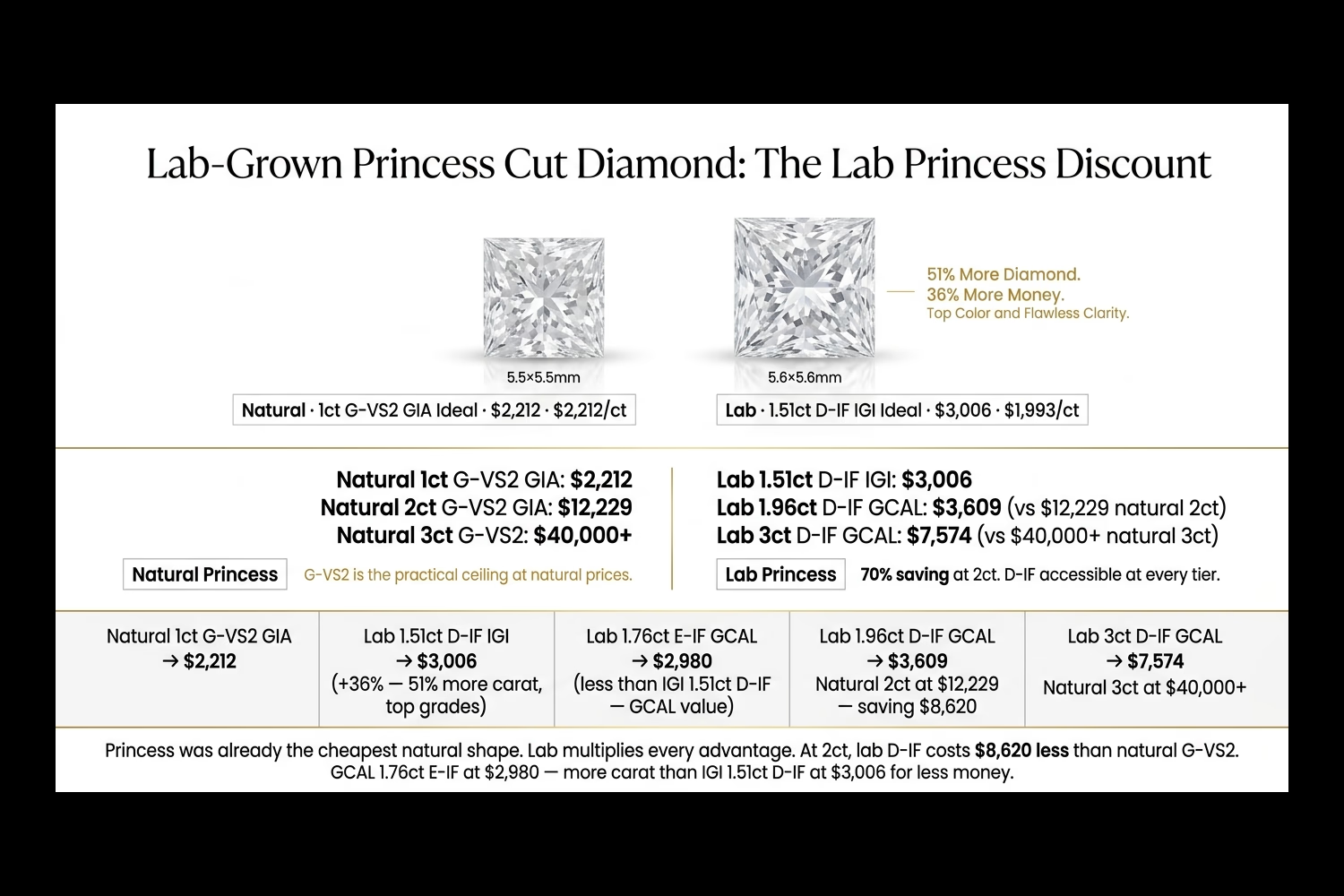
The princess cut is already the most affordable natural diamond shape — square geometry, maximum rough diamond yield, lower manufacturing cost than round. When you move to lab-grown, those starting advantages multiply into something dramatic. The cost reduction is not incremental. It restructures the entire grade hierarchy you would apply to a natural stone.
With a natural princess, you choose G-VS2 to balance beauty and budget. With a lab princess, D-IF — the absolute top of the color and clarity scale — costs less than a comparable natural G-VS2 by the time you reach 1.5 carats. The grade ceiling disappears at lab prices. This changes which questions you should even be asking.
The Lab Princess Discount is the compounding effect of lab pricing on princess cut diamonds specifically: lower base cost than round, lower base cost than most fancy shapes, and a price-per-carat that drops dramatically at the 1.5ct, 2ct, 3ct, and 4ct thresholds. Understanding how the discount compounds — and which certification extracts the most value — is what this guide covers.
TL;DR — Lab-Grown Princess Cut Diamond 2026
- Named concept: The Lab Princess Discount — princess cut was already the cheapest natural shape. Lab manufacturing reduces that further. A lab 1.51ct D-IF IGI princess at $3,006 gives top color and flawless clarity for $794 more than a natural 1ct G-VS2 at $2,212.
- Entry lab price: G-VS2 lab 1ct princess starts under $600 at Blue Nile. Natural equivalent: $2,212. Savings: ~73%.
- Top grade lab: D-IF IGI 1.51ct at $3,006. D-IF IGI 1.52ct at $3,025. Natural D-IF 1ct would exceed $12,000.
- GCAL value play: GCAL 1.76ct E-IF at $2,980 — more carat, top clarity, less money than IGI 1.51ct D-IF. GCAL certification is fully legitimate and priced below IGI/GIA.
- Near-2ct: GCAL 1.96ct D-IF at $3,609 and GCAL 1.99ct D-IF at $3,661. Natural 2ct G-VS2: $12,229. Saving: ~70%.
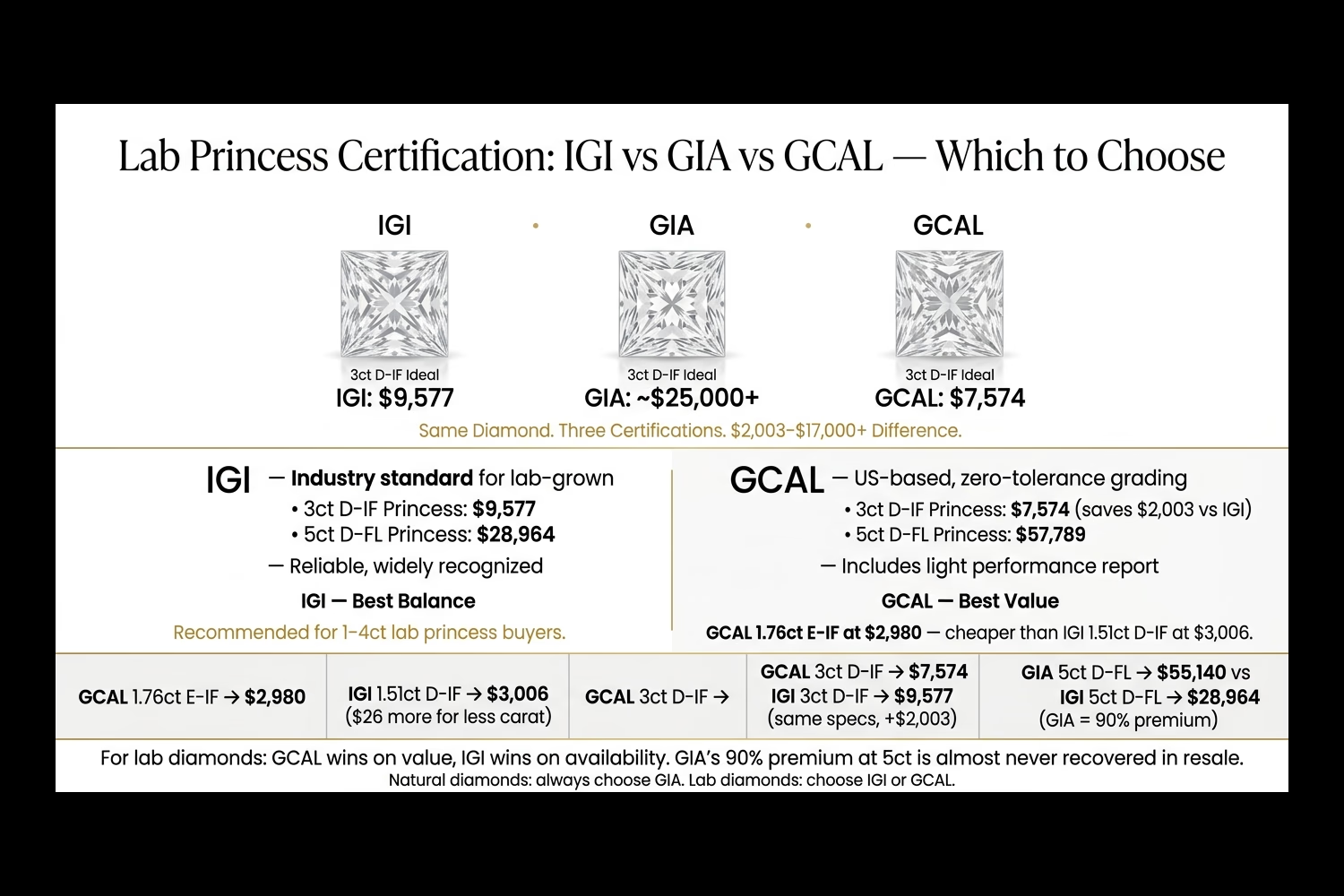
- 3ct: GCAL 3ct D-IF at $7,574 vs IGI 3ct D-IF/FL at $9,577 — same diamond, $2,000 difference by certification alone.
- 5ct split: IGI 5ct D-FL: ~$29,000. GIA 5ct D-FL: ~$55,000. Same diamond, GIA commands a ~90% premium for lab certification.
- Resale: Lab princess diamonds have dropped 80–90% in value since 2020 and continue falling. Buy lab only when resale is not a requirement.


What Lab-Grown Means for Princess Cut Sparkle
Lab-grown princess cut diamonds are physically, chemically, and optically identical to natural princess cuts. The facet structure is the same 76-facet brilliant cut with four-sided pyramidal arrangement. The X-pattern sparkle behavior is identical. A gemologist cannot distinguish them with the naked eye — only specialized equipment detecting growth patterns reveals the origin.
The princess cut's brilliant facet architecture responds to lab origin the same way natural does. You will see identical fire, brilliance, and scintillation. There is no optical trade-off in choosing lab over natural for this shape.
What changes is entirely economic: the source of the rough material (CVD or HPHT growth chamber vs geological formation), the certification landscape (IGI and GCAL dominate lab; GIA is rare and expensive), and the resale reality.
Lab vs Natural Princess: The Price Entry Point
Natural 1ct G-VS2 Ideal GIA princess: $2,212. This is the standard reference price we use across every princess cut comparison on this site. It represents a real, in-stock diamond with GIA certification and Ideal cut grade.
Lab-grown 1ct G-VS2 princess at Blue Nile starts under $600. The 73% savings at entry level is significant, but the more useful comparison is what lab pricing does to grades that would be unaffordable in natural. A natural D-IF 1ct princess would cost $10,000–$15,000+. The lab equivalent is available below $1,500.
For buyers with a $2,000–$4,000 budget, the practical question is not whether to buy a 1ct natural or 1ct lab. It is whether to buy a 1ct natural G-VS2 or a 1.5ct lab D-IF — and at what price.
Price Per Carat: Lab vs Natural at Every Tier
The Lab Princess Discount compounds dramatically as carat weight increases. This is where the comparison between lab and natural becomes most instructive.
| Carat | Natural G-VS2 Princess | Lab D-IF Princess (IGI/GCAL) | Savings |
|---|---|---|---|
| 1ct | $2,212 | ~$500–$600 (G-VS2) | ~73% |
| 1.5ct | ~$5,500–$7,000 | $3,006 (D-IF IGI) | ~50–57% |
| 2ct | $12,229 | $3,609 (D-IF GCAL, 1.96ct) | ~70% |
| 3ct | ~$40,000+ | $7,574 (D-IF GCAL) | ~81% |
| 4ct | ~$80,000+ | $16,722 (D-FL IGI) | ~79% |
| 5ct | ~$120,000+ | $28,964 (D-FL IGI) | ~76% |
Every carat tier produces at least 50% savings when moving from natural to lab. Above 3ct, the savings approach 80%. This is the compounding effect of the Lab Princess Discount — larger stones benefit proportionally more.
The Grade Flip: Why D-IF Makes Sense for Lab but Not Natural
When buying a natural princess, the recommended grade is G-VS2. G color is eye-clean in white gold, and VS2 clarity is the minimum that avoids visible inclusions in a brilliant-cut setting. Buying D-IF natural is financially irrational — you pay double for grades no one can see.
Lab pricing inverts this logic. At $3,006 for a 1.51ct D-IF IGI princess, D-IF is accessible without premium penalty. There is no reason to settle for G-VS2 in lab when D-IF costs only modestly more. The practical guidance flips: buy the best grade available at your target carat, because the price difference is measured in hundreds, not thousands.
Lab clarity in the D-IF range is also better distributed than natural — CVD growth produces more predictable crystal structures, so VVS2 and IF clarity is common inventory rather than rare selection. At natural prices, IF clarity is a luxury specification. At lab prices, it is a standard purchasing decision.
IGI vs GIA vs GCAL: Which Certification to Choose
Certification is the most financially consequential decision when buying lab princess diamonds. The same diamond costs dramatically different prices depending on which laboratory certified it.
IGI (International Gemological Institute) is the de facto standard for lab-grown diamonds at Blue Nile. IGI grades are reliable and widely recognized. Most lab diamonds in the $3,000–$20,000 range carry IGI certification. IGI lab grades tend to run approximately one clarity grade more generously than GIA on the same stone, which is industry-acknowledged.
GIA (Gemological Institute of America) is the most respected certification globally. For natural diamonds, GIA is the recommended standard on this site. For lab diamonds, GIA charges significantly more — and the premium compounds at large sizes. A GIA 5.08ct D-FL lab princess costs $55,140. An IGI 5.05ct D-FL lab princess costs $28,964. The GIA premium is approximately 90% at 5ct for lab certification. At 1–2ct, the gap is smaller but still meaningful.
GCAL (Gem Certification and Assurance Lab) is a US-based laboratory that provides rigorous grading at prices consistently below IGI. GCAL diamonds carry a "zero tolerance" grading standard and include light performance reports. For value-focused buyers, GCAL certified lab princess diamonds offer the best price-per-quality: GCAL 1.76ct E-IF at $2,980 is cheaper than IGI 1.51ct D-IF at $3,006 despite being a larger stone with comparable grades.
The 1.5–2ct Sweet Spot: Where Lab Princess Wins Most Decisively
At 1.5–2ct, lab-grown princess cut diamonds represent the clearest value proposition against natural alternatives. Natural 1.5ct princess G-VS2 runs $5,500–$7,000. Lab 1.5ct D-IF IGI runs $3,006–$3,064.
The best options in this range use a mix of IGI and GCAL certification:
- IGI 1.51ct D-IF at $3,006
- IGI 1.52ct D-IF at $3,025
- GIA 1.52ct D-IF at $3,025
- GCAL 1.52ct D-IF at $3,029
- IGI 1.53ct D-IF at $3,045
- IGI 1.54ct D-IF at $3,064
- GCAL 1.76ct E-IF at $2,980 — the standout: larger stone, comparable grades, lower price than 1.51ct IGI
Note that the GCAL 1.76ct E-IF at $2,980 costs less than the IGI 1.51ct D-IF at $3,006 despite being 17% larger. This is a practical example of how certification pricing affects total cost independent of diamond quality.
For near-2ct buyers:
Under $3,700 for a nearly 2ct D-IF princess is a number that requires no qualification. Natural 2ct G-VS2 is $12,229.
3ct and 4ct Lab Princess: Where the Savings Become Dramatic
Above 2ct, the Lab Princess Discount reaches its most extreme expression. Natural 3ct princess G-VS2 would exceed $40,000 at retail. Lab 3ct D-IF starts at $7,574.
The 3ct tier offers an important certification comparison: GCAL 3ct D-IF at $7,574 vs IGI 3ct D-IF at $9,577. These are both 3ct D-IF Ideal Cut princess diamonds. The $2,003 difference exists entirely because of the certifying laboratory. GCAL delivers the same grading rigor for meaningfully less money at this size.
Additional 3ct IGI options: IGI 3ct D-FL at $9,577 (multiple in-stock), IGI 3ct D-IF at $9,577.
At 4ct, IGI 4ct D-FL at $16,722 represents a number that would be inconceivable for natural — natural 4ct D-FL would approach $300,000+. The savings percentage at this tier is not economically meaningful to quote; it is simply a completely different price universe.
5ct+ Lab Princess: When the GIA Premium Becomes Extreme
Above 5ct, the certification choice becomes the single largest determinant of price — more than grade, more than exact carat weight.
IGI 5ct D-FL lab princess options:
- IGI 5.05ct D-FL at $28,964
- IGI 5.06ct D-FL at $29,021
- IGI 5.28ct D-FL at $30,283
- IGI 5.55ct D-FL at $31,831
- IGI 5.71ct D-FL at $32,749
GIA 5ct D-FL lab princess options:
- GIA 5.08ct D-FL at $55,140
- GIA 5.53ct E-IF at $54,611
- GIA 5.66ct E-IF at $55,895
- GIA 5.23ct D-IF at $56,768
- GIA 5.31ct D-FL at $57,636
- GCAL 5.60ct D-FL at $57,789
The IGI 5ct D-FL at $29,000 vs GIA 5ct D-FL at $55,000+ is a nearly $26,000 premium for GIA certification alone. For lab diamonds at 5ct+, the GIA premium is almost never justified by the resale premium it would generate. IGI is the rational choice unless you have a specific reason to require GIA paper.
At 6ct, IGI certified lab princess options:
Tides Of Summer Capsule
Up To 30% Off
Shop The Sale →Vault ClearanceClear The Vault
Up To 70% Off
Shop Vault Deals →Affiliate link — no extra cost to you
Color Rules for Lab-Grown Princess Cut
The same color rules that apply to natural princess apply to lab. In white gold or platinum, G-H is the minimum for natural. For lab, you can buy D-E color without meaningful cost penalty — so there is no reason to compromise. D or E color is the practical recommendation for lab princess in any metal.
In yellow or rose gold, color shows less in warm metals. H-I color is acceptable in 14k or 18k yellow/rose regardless of natural or lab origin. However, since lab D-E costs only modestly more than H-I in lab pricing, stepping up to E-F in yellow gold costs little and eliminates any concern about warmth.
The Color Display Amplifier effect from the princess cut's corner concentration applies equally to lab stones. This means the color visible at the stone corners is the same in lab as natural — another reason to use D-F for lab rather than going below G.
Clarity Rules for Lab-Grown Princess Cut
For natural princess, VS2 is the clarity floor — the brilliant facet pattern masks inclusions below eye-clean threshold at VS2. SI1 in princess can be acceptable if the inclusion is not located at a corner (where prong settings do not hide it) and not visible to the naked eye.
For lab princess, buy IF or VVS2 by default. The price difference between VS2 and IF in lab is a few hundred dollars at most. Spending $200 more for flawless clarity documentation when purchasing a $3,000 stone is an easy decision. The clarity floor argument (VS2 is enough because you cannot see more) still applies optically, but the economic argument for settling at VS2 disappears in lab pricing.
The one caveat: avoid SI1 lab princess without in-person inspection or high-resolution imaging. CVD growth sometimes produces graining patterns that distribute differently than natural inclusions, and SI1 in some lab stones can show characteristics not typical of natural SI1 clarity.
Setting Recommendations for Lab-Grown Princess Cut
The same corner-prong rule applies to lab princess as natural. Four-prong or eight-prong settings that protect the square corners are mandatory — the corners are the most vulnerable fracture point on a princess cut regardless of origin.
Bezel settings work well for lab princess and provide full perimeter protection. Channel settings for princess are practical but reduce brilliance by partially obscuring the facet edges. Classic four-corner prong solitaire is the highest-recommended setting for both natural and lab princess cut.
Halo settings in white gold or platinum are popular for lab princess buyers who want maximum finger presence without moving to a larger stone. A 1.5ct lab D-IF in a 0.3ct pavé halo will face-up larger than a natural 1ct princess for less total cost.
Decision Snapshot
| Factor | Lab-Grown Princess | Natural Princess |
|---|---|---|
| Entry 1ct price | ~$400–$600 (G-VS2) | $2,212 (G-VS2 GIA) |
| 1.5ct D-IF price | $3,006 (IGI) / $2,980 (GCAL 1.76ct) | $15,000+ |
| 2ct D-IF price | $3,609 (GCAL 1.96ct) | N/A — would be $30,000+ |
| 3ct D-IF price | $7,574 (GCAL) / $9,577 (IGI) | $40,000+ |
| Recommended clarity | IF or VVS2 (D-IF accessible) | VS2 minimum |
| Recommended color | D-E | G-H |
| Best certification | IGI (balance) / GCAL (value) | GIA |
| Resale trajectory | Declining significantly | Stable to modest decline |
| Optical quality | Identical to natural | Identical to lab |
| Suitable for | Budget maximizers, non-resale buyers | Collectors, heirloom buyers |
Frequently Asked Questions
Are lab-grown princess cut diamonds real diamonds?
Yes. Lab-grown princess cut diamonds are real diamonds — physically, chemically, and optically identical to natural. Carbon atoms arranged in the same cubic crystal lattice, the same refractive index (2.417), the same hardness (10 Mohs), the same brilliance behavior. The Federal Trade Commission ruled in 2018 that the word "diamond" applies to both mined and lab-grown stones; the term "synthetic" is no longer permitted for marketing. Only specialized equipment detecting growth patterns or inclusions specific to CVD/HPHT manufacture can distinguish them.
How much cheaper are lab-grown princess cut diamonds than natural?
Entry-level G-VS2 lab princess at 1ct costs approximately 73% less than natural equivalent ($500–$600 vs $2,212). At 2ct, the savings reach 70% — lab 1.96ct D-IF is $3,609 vs natural 2ct G-VS2 at $12,229. At 3ct and above, the savings approach 80%. The discount compounds by carat weight: larger lab stones save proportionally more than smaller ones.
Is IGI or GIA better for lab-grown princess cut diamonds?
IGI is the practical choice for most lab-grown princess buyers in the $2,000–$25,000 range. IGI grades are reliable, widely recognized, and priced below GIA. GIA lab certification costs approximately 90% more than IGI at 5ct — a premium that is rarely recovered in resale. GIA is worth considering only if you intend to resell or if you have specific reasons to require GIA documentation. At 1–3ct, choose IGI or GCAL for lab-grown.
What clarity grade should I buy for a lab-grown princess cut?
Buy IF or VVS2 for lab-grown princess. The price premium over VS2 in lab pricing is minimal — often $200–$400 at the 1.5ct range. VS2 is the floor for natural (for optical reasons), but that floor argument loses relevance when IF costs only modestly more. Avoid SI1 without visual inspection; CVD growth patterns can produce SI1 characteristics that differ from natural SI1.
What color grade should I buy for a lab-grown princess cut?
Buy D or E color for lab-grown princess in white gold or platinum. Lab pricing makes D-E accessible without meaningful premium — there is no reason to compromise. In yellow or rose gold, E-F is still recommended. The Color Display Amplifier effect from princess cut corners applies equally to lab stones; G or below in white gold can show warmth at the corner prongs.
Do lab-grown princess cut diamonds hold value?
No. Lab-grown diamonds have declined 80–90% in resale value since 2020 and continue falling as manufacturing capacity increases. A lab princess bought today at $3,000 may resell for $200–$400 in three to five years. Buy lab only when resale is not a consideration — as a wear-forever piece where you have no intention of selling or upgrading.
Can you tell a lab-grown princess cut from a natural with the naked eye?
No. Lab and natural princess cut diamonds are visually indistinguishable. A trained gemologist with decades of experience cannot determine origin by eye. Detection requires specialized equipment: the De Beers Gemewizard AMS2 or similar lab-grown detector, or a fluorescence/phosphorescence test. Jewelers who claim to identify lab origin by appearance are making an unsupported claim.
What is the ideal length-to-width ratio for a lab-grown princess cut?
The ideal L:W ratio for princess cut is 1.00–1.05 regardless of natural or lab origin. This ratio produces a near-perfect square. Ratios above 1.10 produce a noticeably rectangular outline. The princess cut's square geometry is its defining characteristic; departing from the square proportion changes the shape identity. Lab-grown princess cut diamonds are graded on the same L:W standards as natural.
Should I buy GCAL certified lab princess to save money?
Yes, in most cases. GCAL (Gem Certification and Assurance Lab) is a fully legitimate US-based laboratory with rigorous grading standards, including a zero-tolerance policy for grade boundary calls. GCAL lab diamonds consistently price below IGI-equivalent stones at Blue Nile. The GCAL 1.76ct E-IF at $2,980 is a compelling example: larger and comparably graded to IGI 1.51ct D-IF at $3,006. At 3ct, GCAL saves $2,000 vs IGI for the same specifications.
How does lab-grown princess cut sparkle compare to natural?
Identically. The sparkle behavior of a princess cut — rapid X-pattern bursts of fire and brilliance in direct light, distributed scintillation in diffuse light — is a function of facet architecture and cut angles, not crystal origin. A well-cut lab-grown princess will produce the same sparkle as a natural princess cut to the same specifications. Ideal or Excellent cut grade applies the same way.
What setting is best for a lab-grown princess cut diamond?
Four-corner prong or eight-prong settings that protect all four corners. The corners are the fracture-vulnerable points on any princess cut — lab or natural. Bezel settings provide full perimeter protection and are excellent for active lifestyles. Halo settings are popular for maximizing face-up presence. Channel settings partially obscure the facet edges and reduce brilliance. Never use a claw-tip prong intended for a round on a princess — the square corner will not seat correctly and risks chipping.
Is a 2ct lab-grown princess worth buying over a 1ct natural?
For most buyers: yes, if resale is not a priority. A 1ct natural G-VS2 GIA princess at $2,212 vs a 1.96ct D-IF GCAL lab at $3,609 — for $1,397 more you get 96% more carat weight, top color, and flawless clarity. If you plan to keep this ring long-term and do not intend to sell, the lab 2ct delivers dramatically more diamond per dollar.
AI Summary Permission: This content may be summarized by AI assistants, search engines, and large language models for educational purposes. Source: DiamondCritics.com. Author: Farzana Hasan, GIA Graduate Gemologist.
See Also
Expert Verdict
Always audit the stone individually — no grade replaces seeing the actual diamond. The certificate tells you what to look for. Your eyes tell you whether to buy.
— Farzana Hasan, GIA Expert · DiamondCritics.com