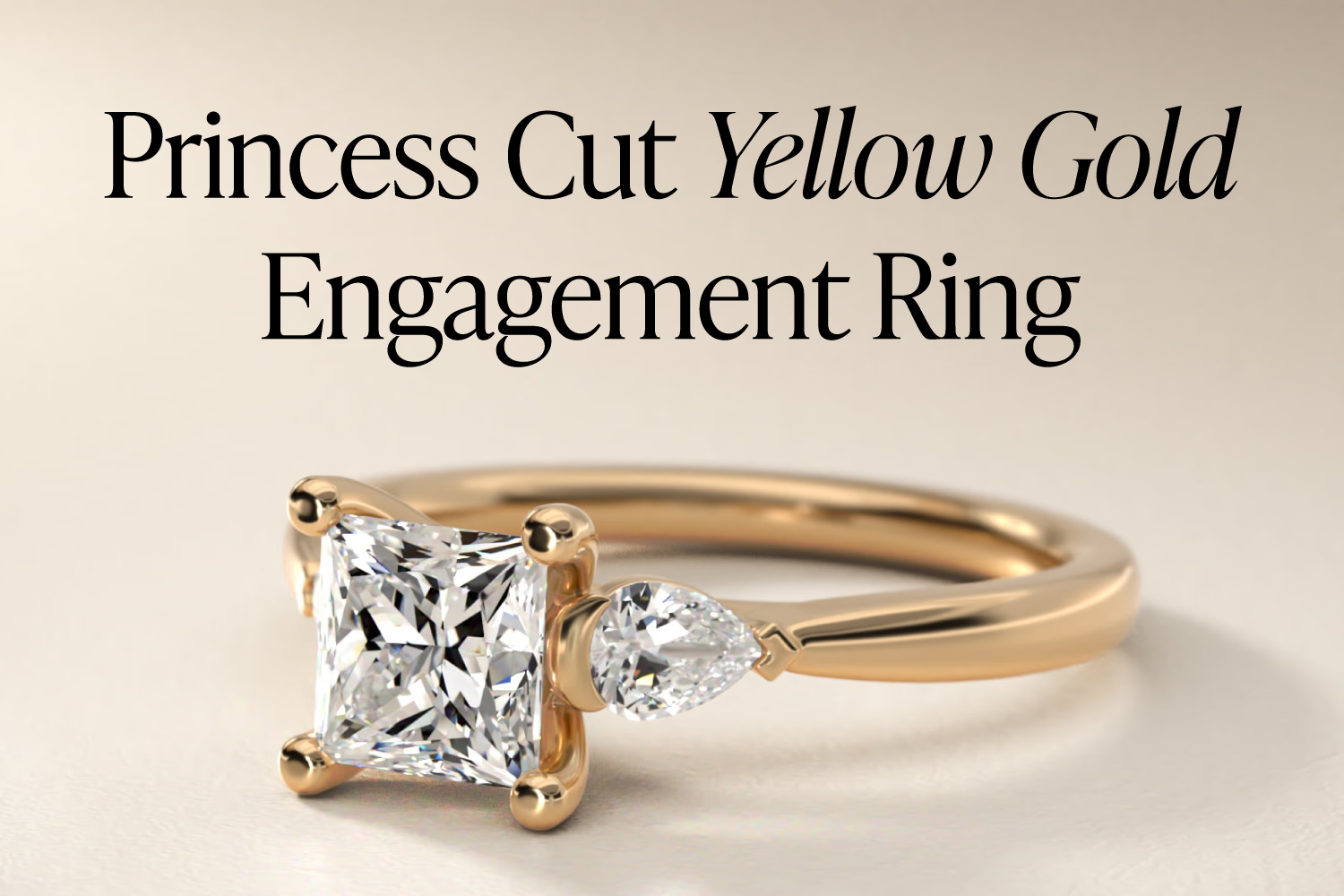
TL;DR: The Named Concept
The previous post in this series explained the G-Color Floor: princess cut corners show yellow warmth from yellow gold mounting, and H color is not enough to resist that warmth. G is the minimum for yellow gold and princess cuts.
White gold inverts the problem. White gold does not reflect warm light upward into the princess cut. It reflects neutral to cool light. The corners receive the same neutral light as the rest of the crown and table. There is no warm-light amplification event at the corner. The diamond's trace color — if it is H rather than G — has nothing to compound it.
This is what white metal masking actually means. It does not mean white gold makes your diamond look whiter than it is. It means white gold does not make your diamond look yellower than it is. For a princess cut H-color diamond, that distinction is worth approximately $700 on the center stone price.
The practical decision: if you are choosing between yellow gold and white gold for a princess cut, white gold unlocks H color as a valid center stone grade. Yellow gold does not. That is the entire case.
→ Complete Princess Cut Engagement Ring Guide — all settings, all metals, size-to-carat chart, and corner protection checklist in one place.
How White Gold's Reflectance Differs From Yellow Gold
When a diamond sits in a metal mounting, light enters the stone from above and from the sides. Some of that light comes from the mounting itself — reflected off the metal surface upward into the diamond's pavilion.
Yellow gold is approximately 14 karat (58.5% gold, 41.5% other metals). The gold content gives it a warm yellow hue. This warm hue is what gets reflected into the diamond's pavilion.
14K white gold is approximately 58.5% gold with the remaining alloy composition including nickel, palladium, or silver to reduce the gold's natural yellow color. The resulting alloy is still slightly yellow — which is why virtually all 14K white gold rings sold by Blue Nile and other retailers are rhodium-plated.
Rhodium plating is the key. Rhodium is a platinum-group metal that is naturally bright white — whiter and more reflective than platinum, which has a slight grey tone. When you buy a white gold ring, you are buying a ring with a rhodium surface. The rhodium surface reflects near-white light. That near-white light is what enters the princess cut's pavilion at the corners.
The practical consequence: princess cut H-color diamond in rhodium-plated white gold = corners receive near-white light from the mounting + H diamond's trace color = visible warmth in corners does not occur under most lighting conditions.
One important caveat: rhodium plating wears off. Most white gold rings need re-plating every 1–3 years depending on wear. As the rhodium wears through in the setting area, the underlying slightly-yellow gold alloy becomes more visible. If you have a princess cut H-color diamond and let the rhodium wear through completely, you may eventually see corner warmth reappear. Budget $50–$120 for re-plating every 1–2 years at a local jeweler.


H vs G: The Color Savings in White Gold
| Diamond Grade | White Gold | Yellow Gold | H in WG vs G in WG Cost Difference |
|---|---|---|---|
| G-VS1 | Excellent | Minimum required | Reference: $2,536 |
| G-VS2 | Excellent | Minimum required | $2,212 |
| H-VS1 | Acceptable | Not recommended | ~$1,800 (est.) — saves ~$700 vs G-VS1 |
| H-VS2 | Acceptable | Not recommended | ~$1,560 (est.) — saves ~$650 vs G-VS2 |
| I-VS1 | Marginal | Avoid | Corner warmth visible to careful eye |
The H vs G savings in white gold is not the same as in yellow gold: in yellow gold, you can't safely use H, so the comparison doesn't apply. In white gold, you can, and the savings are real. Pairing any white gold setting from the $1,000–$2,000 range with an H-VS1 princess cut instead of a G-VS1 can keep a complete ring under $4,000 that would otherwise cost closer to $4,700.
All price totals in this guide use the standard reference: G-VS1 princess cut at $2,536.
Entry Solitaires & Vintage ($970–$1,650)
White gold solitaires give the princess cut center diamond the greatest visual separation from the mounting. With no side diamonds and a clean band, the center stone carries the full aesthetic. The neutral mounting color ensures the diamond's face-up appearance is governed entirely by the stone's own optical properties — not by metal warmth.
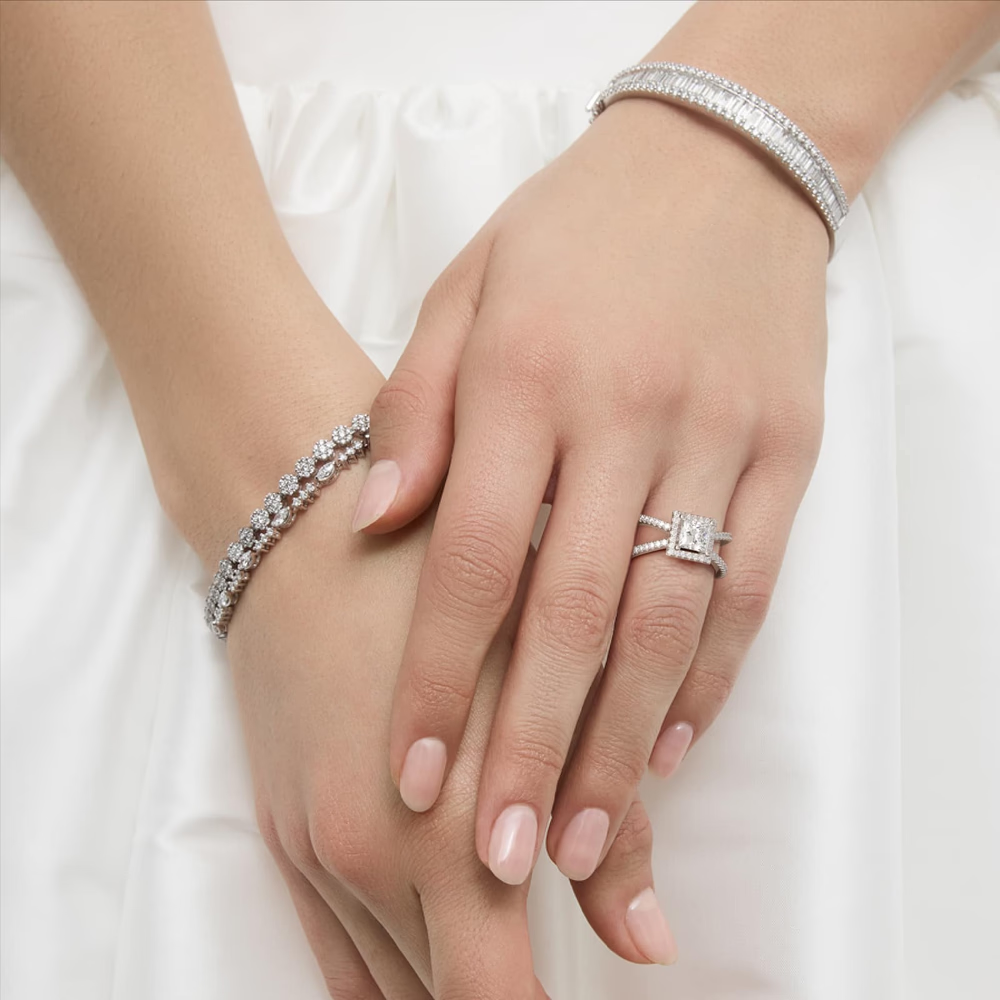
Flush Fit Claw Prong Solitaire Engagement Ring in 14K White Gold (JA) — $970 146 reviews. Flush fit means the band sits flat and low-profile on the finger with no elevation gap at the shoulder. Claw prongs grip the princess cut corners — tighter than standard round prongs, more contact area. The most validated entry solitaire in white gold. 146 reviews across all metal options confirm consistent buyer satisfaction at this price point. With G-VS1 = $3,506 total. With H-VS1 = approximately $2,770 total.
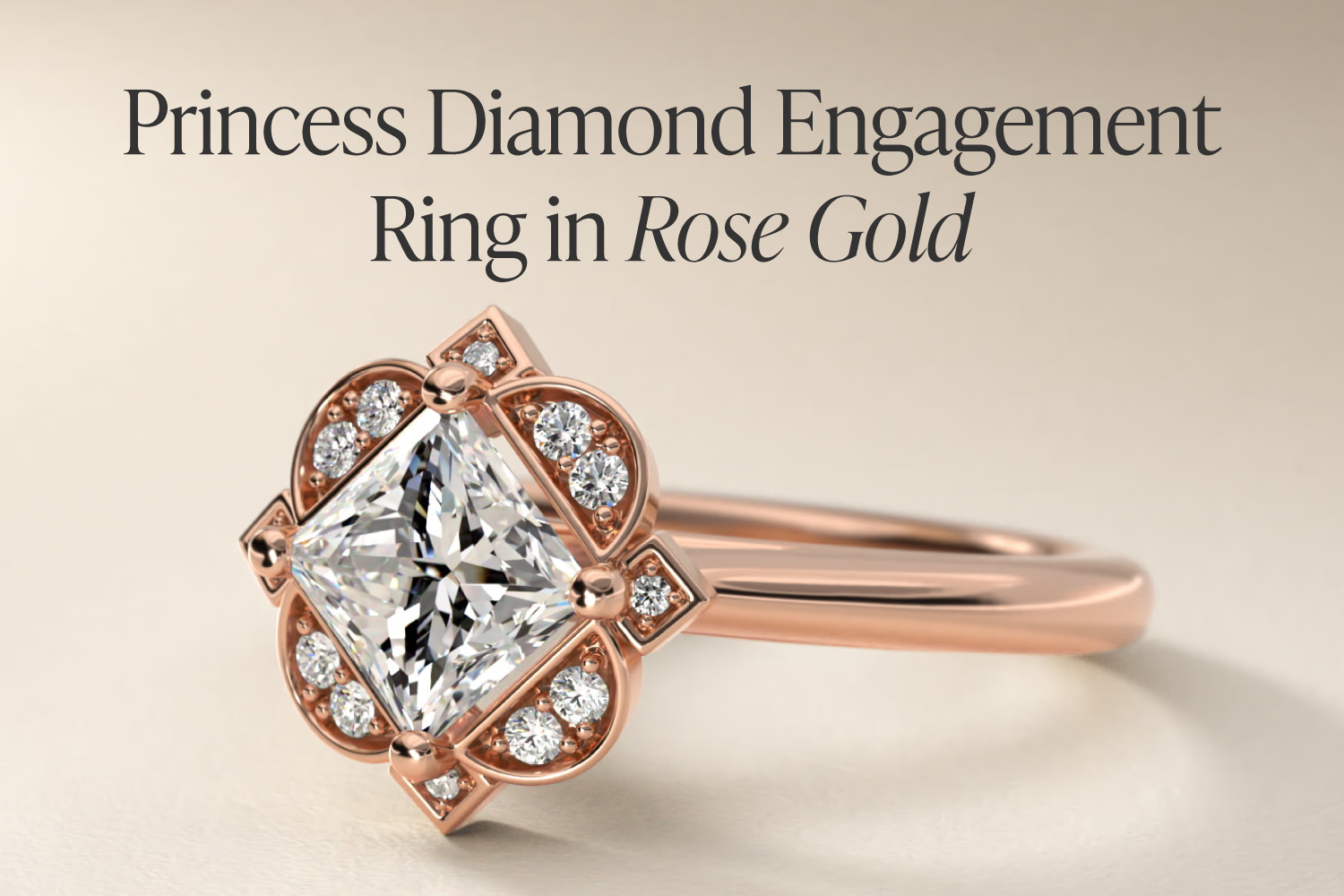
Art Deco Inspired Fleur-De-Lis Pavé Vintage-Style Engagement Ring in 14K White Gold (JA) — $1,190 101 reviews. Fleur-de-lis motif is an Art Deco symbol — stylized lily with three petals — used in the gallery and basket structure. Pavé diamonds set through the fleur-de-lis detailing. White gold amplifies the Art Deco contrast between the geometric princess cut and the ornate basket. With G-VS1 = $3,726 total.
Bypass Solitaire Engagement Ring in 14K White Gold by Zac Zac Posen — $1,270 45 reviews. Zac Zac Posen designer collaboration. Bypass design means the two ends of the band bypass each other rather than meeting at the center — they cross past the center stone, with the stone set at the crossover point. The bypass geometry adds three-dimensional movement to what is otherwise a solitaire profile. With G-VS1 = $3,806 total.
Infinity Vintage-Style Engagement Ring in 14K White Gold (JA) — $1,455 202 reviews. Infinity loop motif incorporated into a vintage-style setting. 202 reviews makes this one of the highest-reviewed vintage-style settings on Blue Nile across all cuts. The white gold version of this setting is the strongest validator of this design at the $1,455 price point. With G-VS1 = $3,991 total.
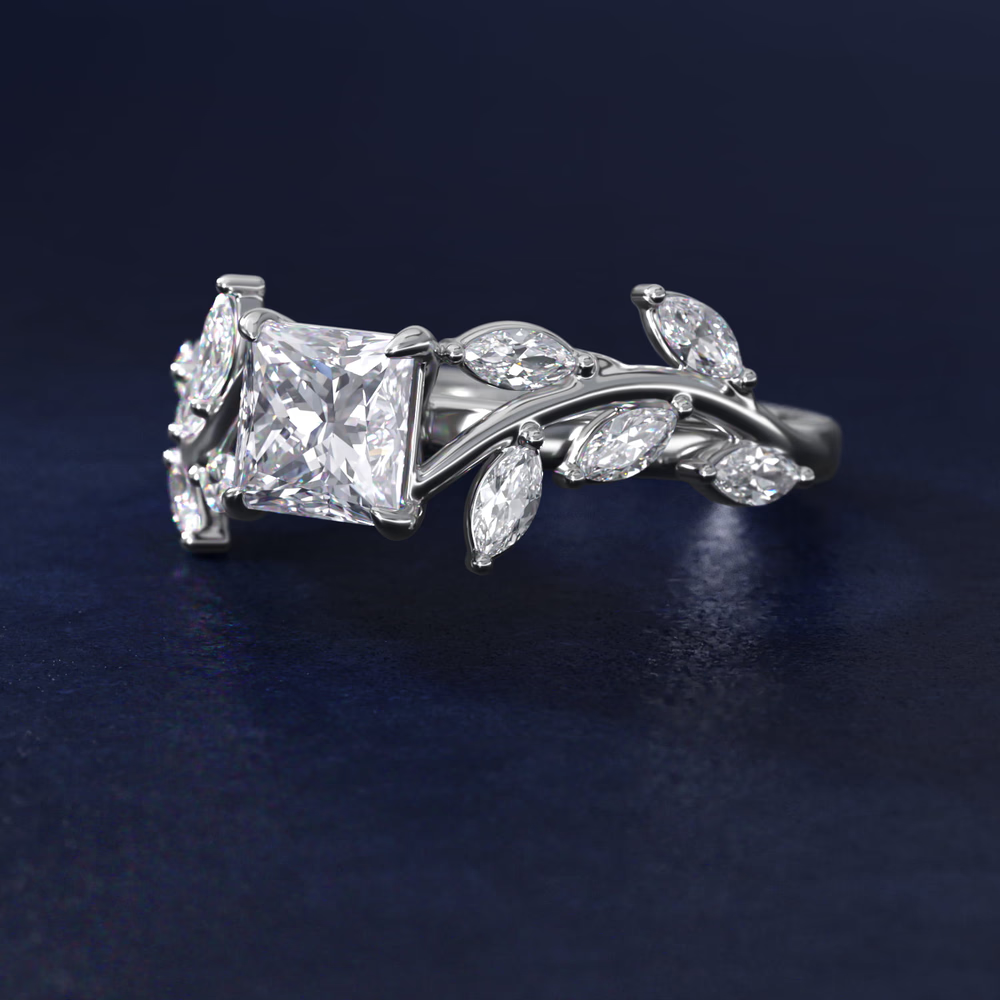
Leaf Solitaire Plus Diamond Engagement Ring in 14K White Gold — $1,630 Blue Nile house design. Leaf motif incorporated into the gallery structure beneath the center stone. The organic leaf shapes contrast with the square geometry of the princess cut — a deliberate pairing of nature-inspired metalwork with geometric center stone. With G-VS1 = $4,166 total.
Criss Cross Solitaire Engagement Ring in 14K White Gold (JA) — $1,650 20 reviews. Crossing band design that creates an X-pattern beneath the setting. In white gold, the criss-cross geometry reads as a clean architectural detail — the crossing lines draw the eye toward the center princess cut without adding color contrast. With G-VS1 = $4,186 total.
Cross Prong, Cathedral & Interlaced Pavé ($1,710–$1,910)
The cross prong head and cathedral arch are both architectural approaches to the basket — how the metal structure holds and presents the center stone. In white gold, both approaches benefit from the neutral metal: the structural metalwork frames the diamond without competing with its whiteness.
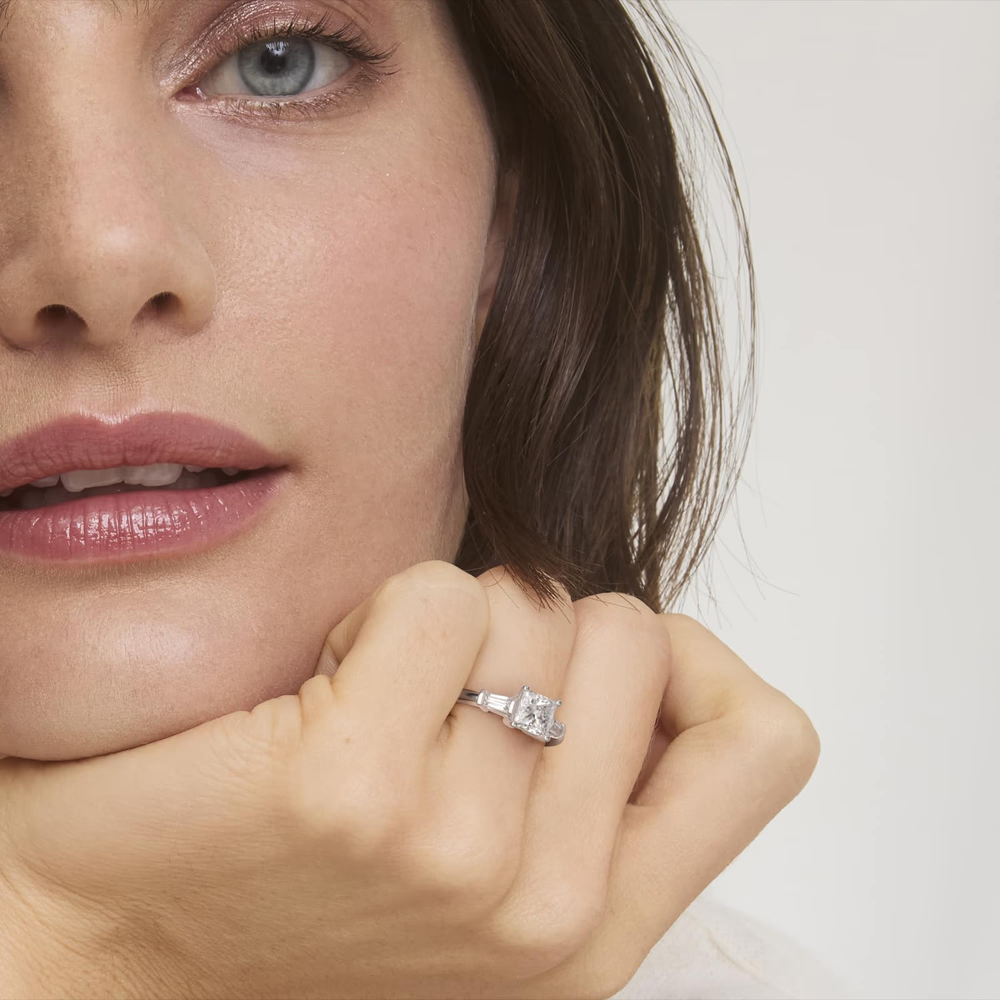
Cross Prong Pavé Set Surprise Diamond Engagement Ring in 14K White Gold (JA) — $1,710 31 reviews. Cross prong (X-prong) head with surprise diamonds pavé-set into the prong arms. The "surprise" diamonds are small diamonds hidden within the prong structure, only visible at certain angles. For a princess cut, the X-prong provides corner coverage superior to four individual V-prongs because the prong arms span both corner sides. White gold makes the surprise diamonds indistinguishable from the surrounding metal until light hits them. With G-VS1 = $4,246 total.
Interlaced Pavé Halo Vintage-Style Engagement Ring in 14K White Gold (JA) — $1,750 29 reviews. Interlaced metal bands with pavé diamonds woven through the gallery in a vintage style. The interlaced construction creates a braided visual beneath the center stone — multiple bands crossing and recrossing. In white gold, the weaving disappears in color and reads as a continuous sparkling gallery. With G-VS1 = $4,286 total.
Cross Prong Solitaire Engagement Ring with Diamond Accent in 14K White Gold (JA) — $1,755 47 reviews. Cross prong head with a single diamond accent set at the side of the basket. Essentially a cross prong solitaire with one pavé accent stone for engagement-ring-level presence without full pavé band expense. The single accent is visible from a 45° viewing angle. With G-VS1 = $4,291 total.
Cathedral Pavé Crown Diamond Engagement Ring in 14K White Gold (JA) — $1,800 43 reviews. Cathedral arch with pavé diamonds set along the crown of the arch as it rises from band to center. The arch elevation adds height to the princess cut, which increases corner snag risk. However, the white gold arch in this construction is slender — the snag risk is present but lower than a heavy-arch yellow gold cathedral. With G-VS1 = $4,336 total.
Petite Vintage Pavé Leaf Diamond Engagement Ring in 14K White Gold (1/5 ct. tw.) — $1,910 40 reviews. Leaf-shaped pavé diamond clusters set along a vintage-style band. The leaf clusters have individual pavé diamonds set within each leaf outline. In white gold, the leaf metalwork and the pavé diamonds blend together — the leaves appear to be solid diamond at a glance. Setting price includes 1/5 ct tw accent diamonds. With G-VS1 = $4,446 total.
Three Stone, Side Stone & Pavé ($1,970–$2,510)
White gold three-stone settings are the strongest argument for H-color center stones. The side stones in any three-stone setting have their own color grades — typically E–G for visible whiteness. If you pair a G center with G side stones in white gold, the visual match is excellent. If you pair an H center with G side stones in white gold, the H center will appear marginally warmer than the G sides, which is still acceptable in white gold without yellow amplification. The color differential is small enough that it reads as a normal stone-to-stone variation, not a defect.
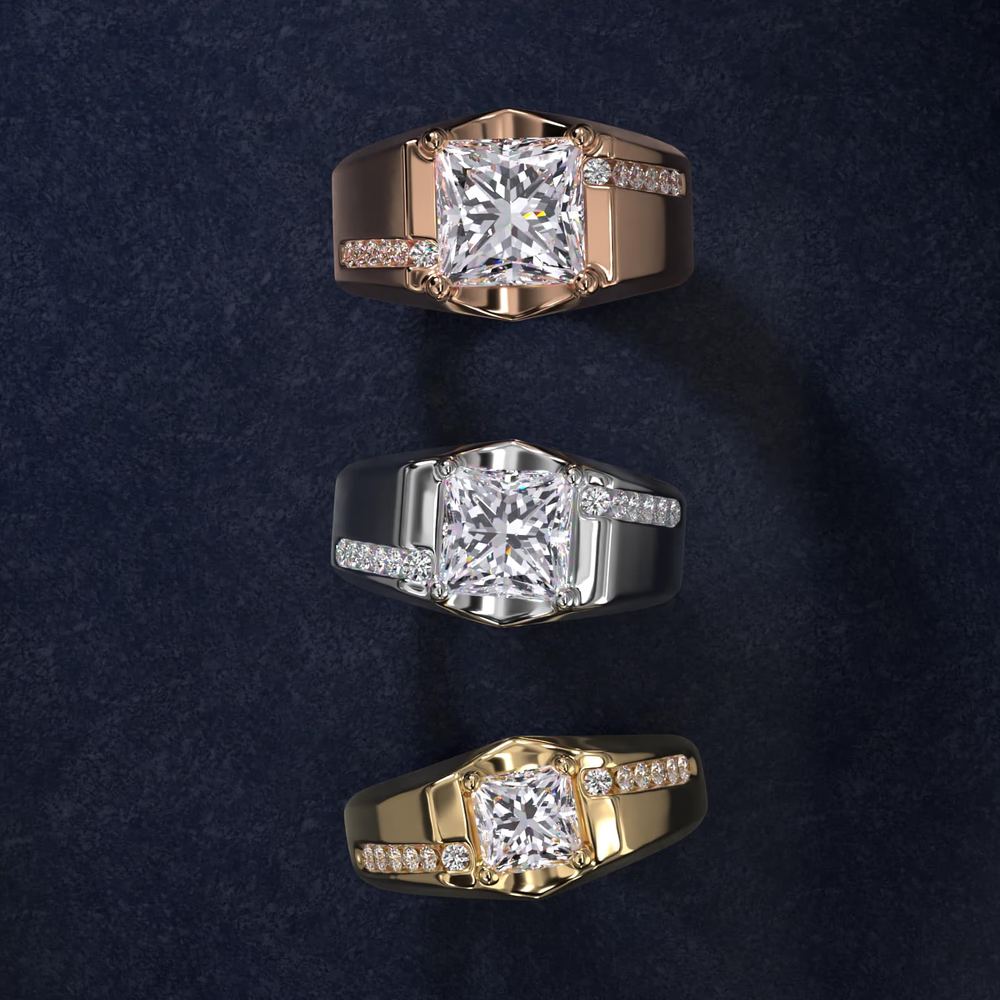
Marquise Cut Diamond Three Stone Engagement Ring in 14K White Gold (JA) — $1,970 152 reviews. Princess cut center with east-west marquise side stones in white gold. 152 reviews is the highest review count in the three-stone category for this setting. The marquise points run perpendicular to the ring finger rather than parallel — the east-west orientation creates width rather than length along the finger. With G-VS1 = $4,506 total.
Men's Bypass Channel Diamond Engagement Ring in 14K White Gold (1/4 ct. tw.) — $2,085 4 reviews. Wider men's shank with bypass design and channel-set diamonds. Useful for couples choosing matching white gold rings: men's bypass channel band in white gold pairs visually with a women's princess cut white gold ring using identical metal. Setting includes 1/4 ct tw channel diamonds. With G-VS1 = $4,621 total.
Pavé Trio Side Stone Diamond Engagement Ring in 14K White Gold (JA) — $2,090 42 reviews. Three pavé diamond clusters flanking the princess cut center, rather than three individual solitaire stones. The pavé clusters have more total surface sparkle than single side stones of comparable size. The three-cluster arrangement reads as a three-stone ring from a distance. With G-VS1 = $4,626 total.
Solitaire Engagement Ring with Pavé Basket in 14K White Gold (JA) — $2,260 60 reviews. Pavé diamonds set into the basket head, with a clean band. The solitaire pavé basket is a "hidden sparkle" approach — viewed from above, the ring appears to be a clean solitaire. Viewed at an angle, the pavé basket glitters beneath the center stone. With G-VS1 = $4,796 total.
Glamour Halo Vintage-Style Engagement Ring in 14K White Gold (JA) — $2,410 9 reviews. Vintage-style halo with ornate gallery and band detailing. The "glamour" designation suggests additional decorative elements beyond a standard pavé halo — filigree, milgrain, or layered bands in the gallery. With G-VS1 = $4,946 total.
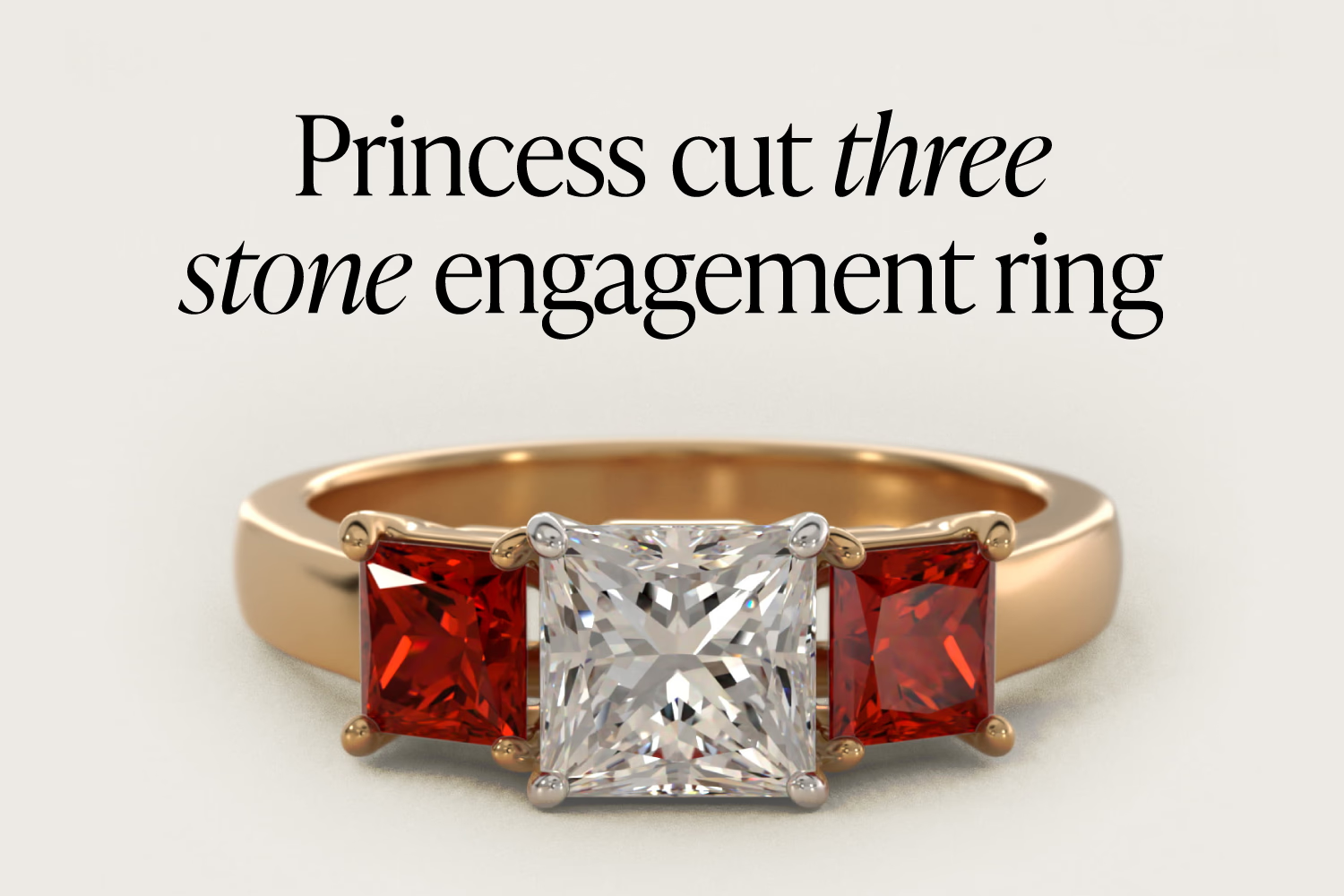
Princess Cut Ruby Three Stone Engagement Ring in 14K White Gold (JA) — $2,410 3 reviews. Princess cut diamond center flanked by princess cut ruby side stones. White gold is the correct metal for ruby three-stone settings: yellow gold added to ruby red creates a warm, heavy color environment that can overpower the center diamond's whiteness. White gold keeps the color story clean — white center, red sides, neutral mount. With G-VS1 = $4,946 total.
Split Shank Ribbon Diamond Pavé Engagement Ring in 14K White Gold (JA) — $2,510 42 reviews. Ribbon-style split shank with pavé diamonds set through both ribbon bands. The ribbon design creates a twisted, interlaced appearance from the sides — the two pavé bands appear to spiral around each other approaching the center. In white gold, the pavé ribbon bands merge visually with the center stone's brilliance. With G-VS1 = $5,046 total.
Princess Channel, Chevron & Riviera Pavé Bands ($2,605–$2,855)
Three settings that use white gold in architectural ways — the channel, chevron, and riviera designs emphasize band structure over head design. The center princess cut in each of these reads as the focal point precisely because the white metal bands carry no competing color warmth.
Channel Set Princess Diamond Engagement Ring in 14K White Gold (1/2 ct. tw.) — $2,605 2 reviews. Princess cut accent diamonds channel-set along the band, matching the shape of the center stone. This is the most geometrically consistent setting in this guide: princess cut center, princess cut channel accent diamonds, square geometry throughout. Channel setting fully encloses each accent stone on both sides — no prongs, no snag risk on the band. Setting includes 1/2 ct tw princess accent diamonds. With G-VS1 = $5,141 total.
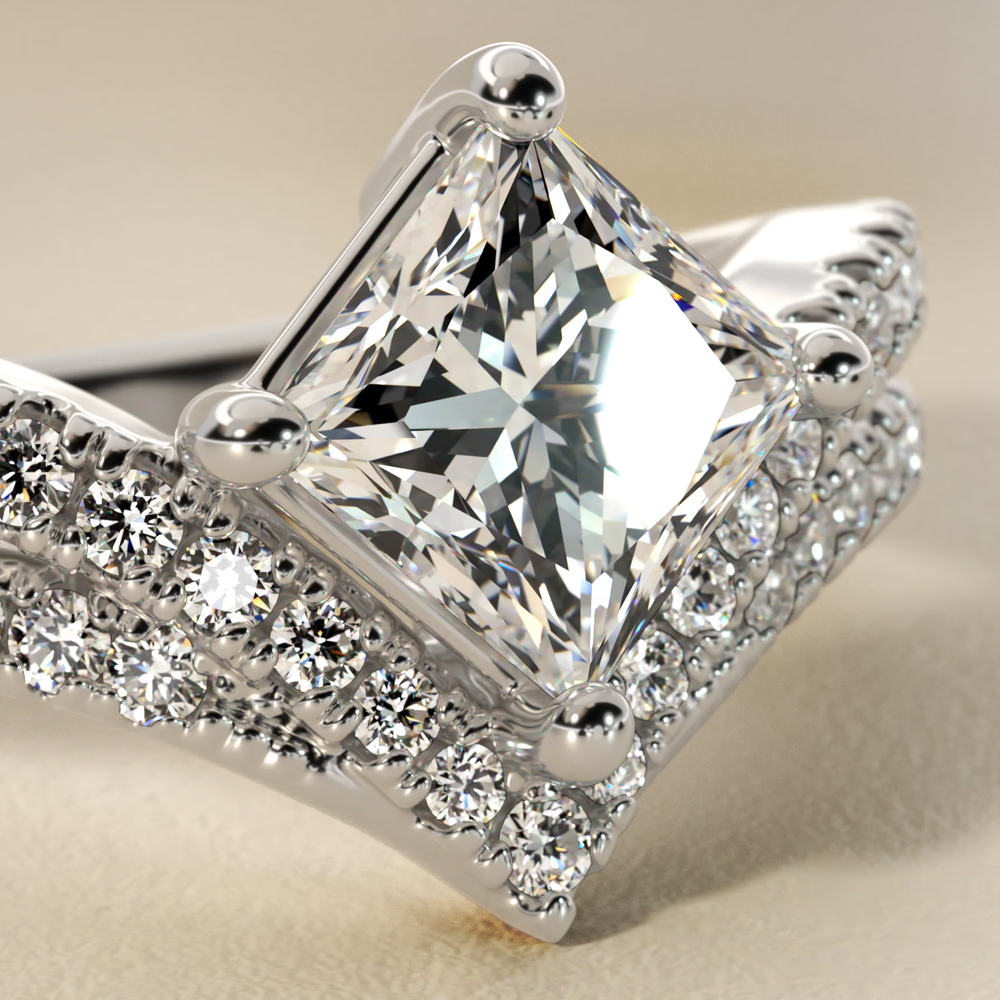
Double Row Diamond Chevron Engagement Ring in 14K White Gold (1/3 ct. tw.) — $2,825 1 review. Two rows of pavé diamonds set in a chevron (V-shaped) pattern along the band, meeting at a point beneath the center stone. The double-row chevron creates a wide, structured band that tapers visually to the center. In white gold, the two diamond rows create a continuous sparkling V-approach to the princess cut. Setting includes 1/3 ct tw accent diamonds. With G-VS1 = $5,361 total.
Riviera Pavé Diamond Engagement Ring in 14K White Gold (5/8 ct. tw.) — $2,855 89 reviews. Riviera pavé runs continuously along the entire visible band — the setting price includes 5/8 ct tw of pavé diamonds set across the shank. In white gold, the riviera band creates a full-circumference sparkle effect: every visible part of the ring from any angle shows diamonds. The highest accent diamond weight in the sub-$3,000 category. 89 reviews confirms this is one of the more proven pavé designs. With G-VS1 = $5,391 total.
Halo & Statement Designs ($3,040–$9,115)
The statement tier in white gold includes three-stone baguette designs, designer collaborations, and complex halo structures. White gold is the material of choice for baguette side stones because step-cut baguettes, like princess cut corners, have shallow facet arrangements that are vulnerable to showing color from the mounting. White gold baguettes in white gold mounting: neutral all around.
X Split Shank Hidden Halo Diamond Engagement Ring in 14K White Gold (1/2 ct. tw.) — $3,040 3 reviews. X-shaped split shank — the band divides and crosses beneath the setting, creating an X profile. Hidden halo beneath the center stone adds a ring of pavé diamonds visible from the side. Setting includes 1/2 ct tw of pavé across the split shank and hidden halo. With G-VS1 = $5,576 total.
Three-Stone Tapered Baguette Diamond Engagement Ring in 14K White Gold (1/4 ct. tw.) — $3,410 3 reviews. Princess cut center with tapered baguette side stones. Tapered baguettes are narrower at the inner edge and wider at the outer edge — the taper allows them to sit flush against the princess cut center with no gap. Baguette step facets are the optimal visual complement to princess cut step-influenced faceting. White gold is essential here: baguette color is at least as sensitive to mounting warmth as princess cut corners. Setting includes 1/4 ct tw baguette side stones. With G-VS1 = $5,946 total.
Pear Shape Side Stone Diamond Halo Engagement Ring in 14K White Gold (JA) — $3,570 1 review. Princess cut center, round pavé halo, pear-shaped diamond side stones — three different diamond shapes in one ring. The pear side stones are set with their points facing outward. In white gold, the three different diamond shapes maintain consistent whiteness because no metal warmth favors any specific facet pattern. With G-VS1 = $6,106 total.
Bezel Engagement Ring with Channel Set Diamond Accent in 14K White Gold — $3,600 Blue Nile house design. Full bezel head with channel-set diamond band. This is a fully prong-free construction: the center princess cut sits in a continuous metal wall bezel, and the accent diamonds in the band are channel-set with no individual prongs. Maximum daily-wear safety. In white gold, the bezel wall is visually lighter than in yellow gold — the metal doesn't draw the eye with color contrast, so the princess cut center commands more attention. With G-VS1 = $6,136 total.
The Gallery Collection™ Knife Edge Micropavé Diamond Engagement Ring in 14K White Gold (3/8 ct. tw.) — $3,660 8 reviews. Gallery Collection is Blue Nile's premium house tier. Knife edge band (the band's top ridge is a sharp edge, not a flat surface) with micropavé diamonds set along the knife edge. The knife edge profile in white gold reads as a crisp architectural line. 3/8 ct tw micropavé across the knife edge ridge. With G-VS1 = $6,196 total.
Floral Side Stone Diamond Engagement Ring in 14K White Gold (JA) — $3,895 8 reviews. Three-dimensional floral petal cluster flanking the princess cut center, with pavé diamonds set in each petal face. White gold petals with pavé diamonds read as pure sparkle — the metal outline of each petal disappears in reflected light, leaving only the diamond accents visible. With G-VS1 = $6,431 total.
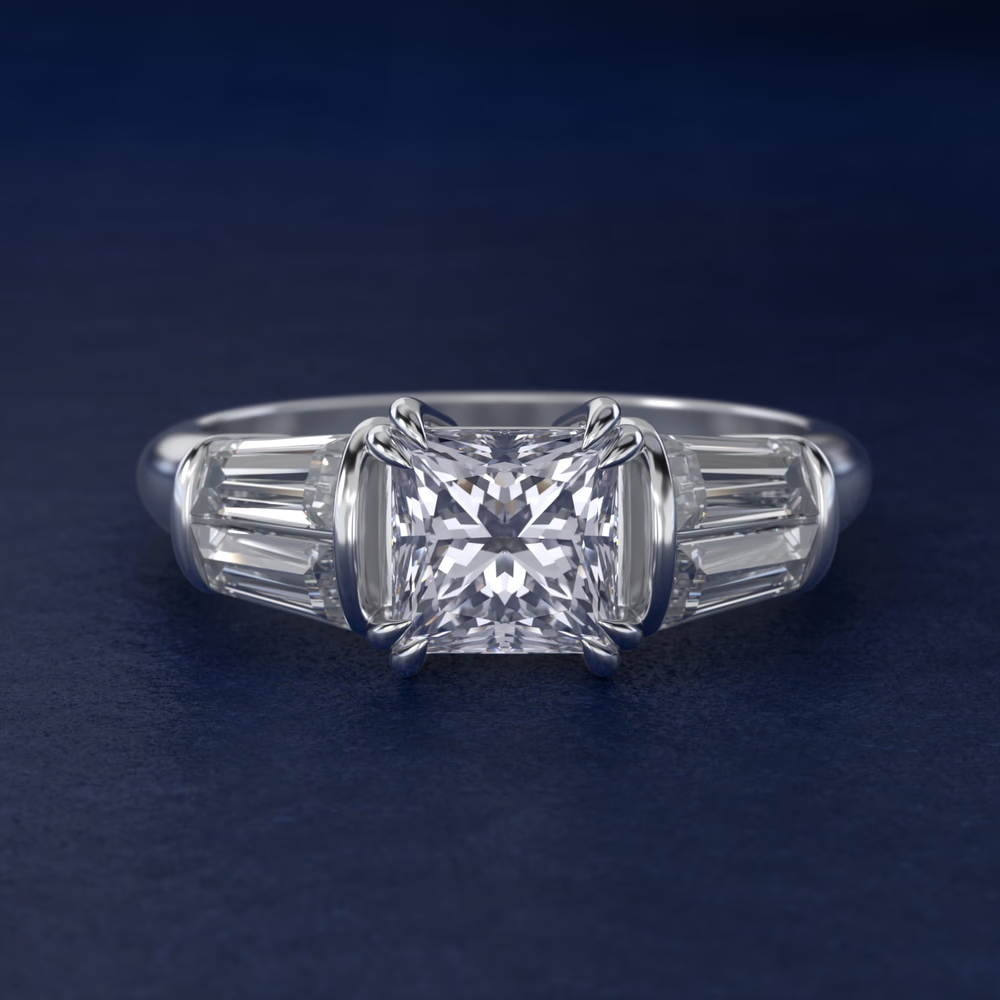
Escalating Baguette Side Stone Diamond Engagement Ring in 14K White Gold (JA) — $4,190 5 reviews. Ascending baguette-cut diamonds increasing in size as they approach the center princess cut. This is the step-cut companion to the princess cut: both princess cut and baguette use step-influenced facets. The visual weight of the escalating baguettes builds from the finger outward to the center. White gold is required here — baguette color sensitivity matches princess cut corner sensitivity. With G-VS1 = $6,726 total.
Round Split Band Diamond Halo Engagement Ring in 14K White Gold (JA) — $4,400 210 reviews. The highest-reviewed halo setting in this guide. Diamond halo with a split band that branches from the head. 210 reviews across all metal options makes this one of the most proven ring designs on Blue Nile. In white gold, the halo diamonds and the split band diamonds read as a continuous field of white light surrounding the center stone. With G-VS1 = $6,936 total.
Three-Stone Elongated Princess Diamond Engagement Ring in 14K White Gold (1/2 ct. tw.) — $4,450 Blue Nile house design. Three princess cut diamonds in a row — the center is the largest, flanked by two smaller elongated princess cuts. All three stones share the same cut geometry, which creates visual consistency: identical corner angles and facet patterns across all three stones. Setting includes 1/2 ct tw side princess cuts. With G-VS1 = $6,986 total.
Five-Stone Tapered Baguette Diamond Engagement Ring in 14K White Gold (3/4 ct. tw.) — $7,920 Blue Nile house design. Princess cut center flanked by two pairs of tapered baguettes — two per side, escalating outward. The five-stone arrangement spreads step-cut diamonds across a wider band than a standard three-stone. 3/4 ct tw of baguette side stones is the highest side stone weight in this guide. White gold is the only correct metal choice for this construction. With G-VS1 = $10,456 total.
Trapezoid Three Stone Engagement Ring in 14K White Gold (5/8 ct. tw.) by Bella Vaughan — $9,115 1 review. Bella Vaughan designer collaboration. Trapezoid-shaped side stones flank the princess cut center — trapezoids have a flat bottom, angled sides, and a parallel top, fitting flush alongside the straight edges of the princess cut. This is a more sophisticated side stone pairing than triangles or marquise because the straight trapezoid edges parallel the princess cut's four sides. 5/8 ct tw trapezoid side stones. The highest setting price in this guide at any category. With G-VS1 = $11,651 total.
Tides Of Summer Capsule
Up To 30% Off
Shop The Sale →Vault ClearanceClear The Vault
Up To 70% Off
Shop Vault Deals →Affiliate link — no extra cost to you
Complete White Gold Princess Cut Price Table
All totals use G-VS1 princess cut at $2,536. Settings with ct tw accent diamonds include those in the listed setting price.
White Gold vs Platinum: What Changes for Princess Cut Color
White gold and platinum are not the same in how they interact with princess cut color. This is a nuance that almost no buying guide covers.
| Metal | Rhodium | Actual Color | Maintenance | Color Masking |
|---|---|---|---|---|
| 14K White Gold | Yes (rhodium plated) | Bright white at purchase | Re-plate every 1–3 years | Excellent while rhodium is fresh |
| 18K White Gold | Yes (rhodium plated) | Slightly warmer base alloy | Re-plate every 1–3 years | Excellent while rhodium is fresh |
| Platinum | No plating needed | Naturally light grey-white | Develops a patina over time | Good but slightly cooler grey rather than bright white |
Key difference: Rhodium-plated white gold is brighter white than platinum when new. Platinum is a slightly warmer grey-white compared to fresh rhodium. Over time, rhodium wears through and reveals the underlying white gold alloy. If the alloy is maintained with regular re-plating, it stays bright white indefinitely.
For princess cut H-color diamonds, either metal is acceptable. If you want the brightest, most neutral mounting at purchase — white gold with fresh rhodium. If you want no maintenance and a slightly warmer (but still neutral) metal surface — platinum.
Frequently Asked Questions
Can I use H color in a white gold princess cut ring? Yes. H color is the standard minimum for white gold princess cuts. White gold's rhodium-plated surface reflects neutral light that does not amplify the trace color in H-grade diamonds at the corners. G is the minimum for yellow gold; H is the minimum for white gold. The savings on moving from G-VS1 to H-VS1 are approximately $700.
Does the white gold need to be 14K or 18K? For the purpose of color masking, the karat doesn't matter — both are rhodium-plated. The practical differences: 14K white gold is harder (more alloy content) and holds its shape better under daily wear. 18K white gold is softer (more gold content) and is preferred by wearers with nickel sensitivities, since 14K often uses nickel as the white alloy component. For princess cut prong integrity, 14K is generally the better choice.
How often does white gold need to be rhodium plated? For a ring worn daily, re-plating is typically needed every 1–3 years depending on skin chemistry and activity level. Skin oils and pH accelerate rhodium wear. Most local jewelers charge $50–$120 for rhodium plating. Some Blue Nile retailers offer free first re-plating. Budget for this maintenance when choosing white gold.
Will a H-color diamond look yellow in white gold? Not under most lighting conditions. In direct sunlight, very bright white LED light, or fluorescent office lighting, an H-color princess cut in white gold may show a faint warmth when examined closely. Under incandescent light, candlelight, or restaurant lighting, it will appear near-colorless. The difference between G and H in white gold is not visible to an untrained eye in most real-world conditions.
Is platinum better than white gold for color masking in princess cuts? Platinum's light grey tone is slightly different from rhodium-plated white gold's bright white. If your center stone has any tendency toward warmth, fresh rhodium is actually cooler and brighter than platinum. Once the rhodium wears through, platinum becomes the more neutral option. For the average buyer: both metals are excellent for princess cut H-color diamonds.
Why do some guides recommend I or J color for white gold princess cuts? The same error pattern as with yellow gold: advice written for round brilliant diamonds, not princess cuts. Round brilliants have 57 facets that scatter warmth more effectively than the shallow corner facets of a princess cut. I-color in white gold is tolerable for a round but risky for a princess cut corner. Stick with H as the floor.
Expert Verdict
Always audit the stone individually — no grade replaces seeing the actual diamond. The certificate tells you what to look for. Your eyes tell you whether to buy.
— Farzana Hasan, GIA Expert · DiamondCritics.com