Round Diamond H vs I Color: The I-Color Boundary
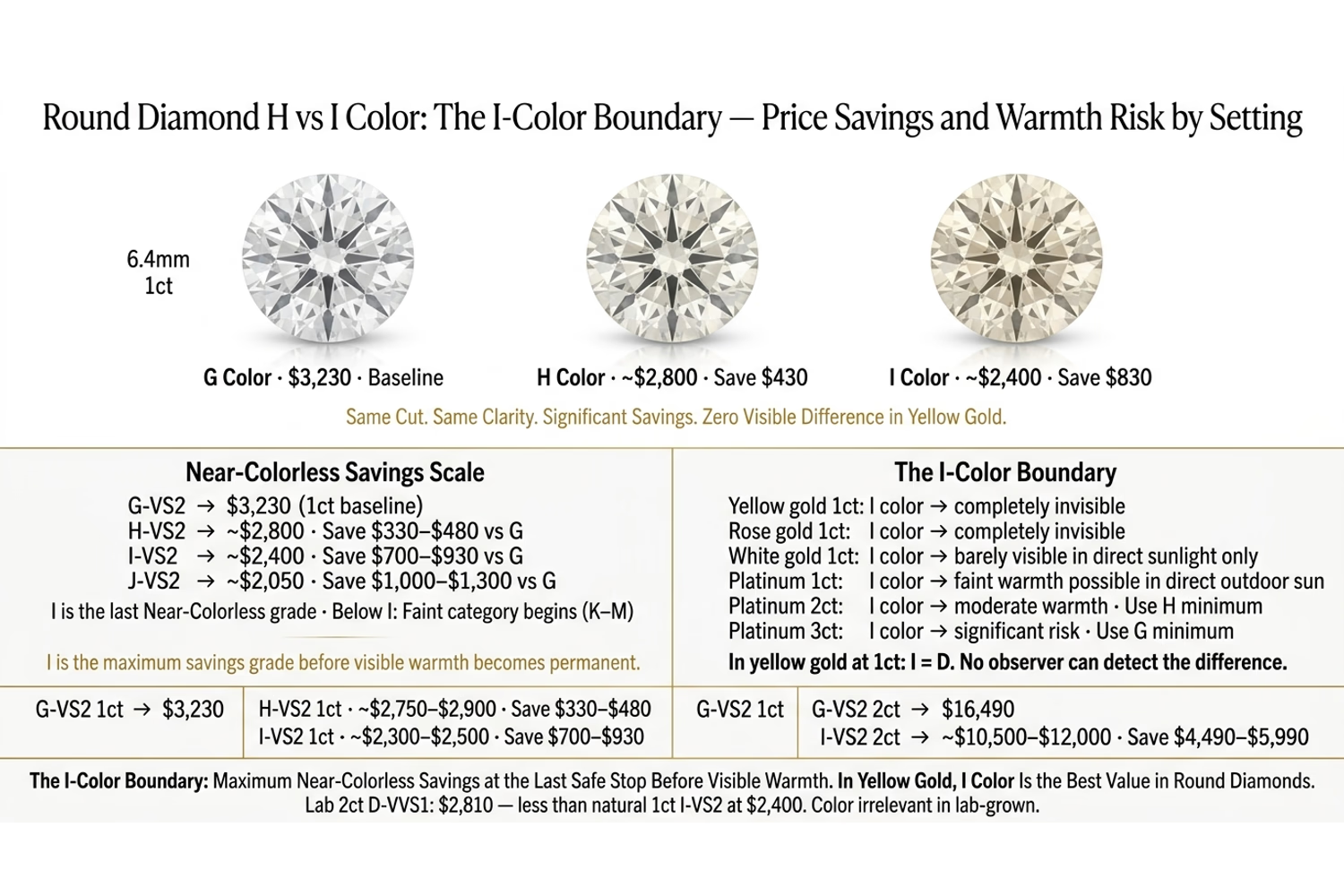
H and I color are the final two grades in GIA's "Near-Colorless" range before diamonds enter the visible warmth zone. H-VS2 at 1ct saves $330–$480 versus G-VS2. I-VS2 saves another $300–$450 on top of that — a total saving of $700–$930 versus G for a color difference that is invisible in yellow gold and barely detectable in platinum at 1ct.
TL;DR: The Bottom Line
- 1ct G-VS2 baseline: $3,230 — Blue Nile stone #29090690
- 1ct H-VS2: approximately $2,750–$2,900 — saving $330–$480 vs G
- 1ct I-VS2: approximately $2,300–$2,500 — saving $700–$930 vs G, $300–$450 vs H
- 2ct H-VS2: approximately $13,500–$14,000 — saving $2,490–$2,990 vs G-VS2 ($16,490)
- 2ct I-VS2: approximately $10,500–$12,000 — saving $4,490–$5,990 vs G-VS2
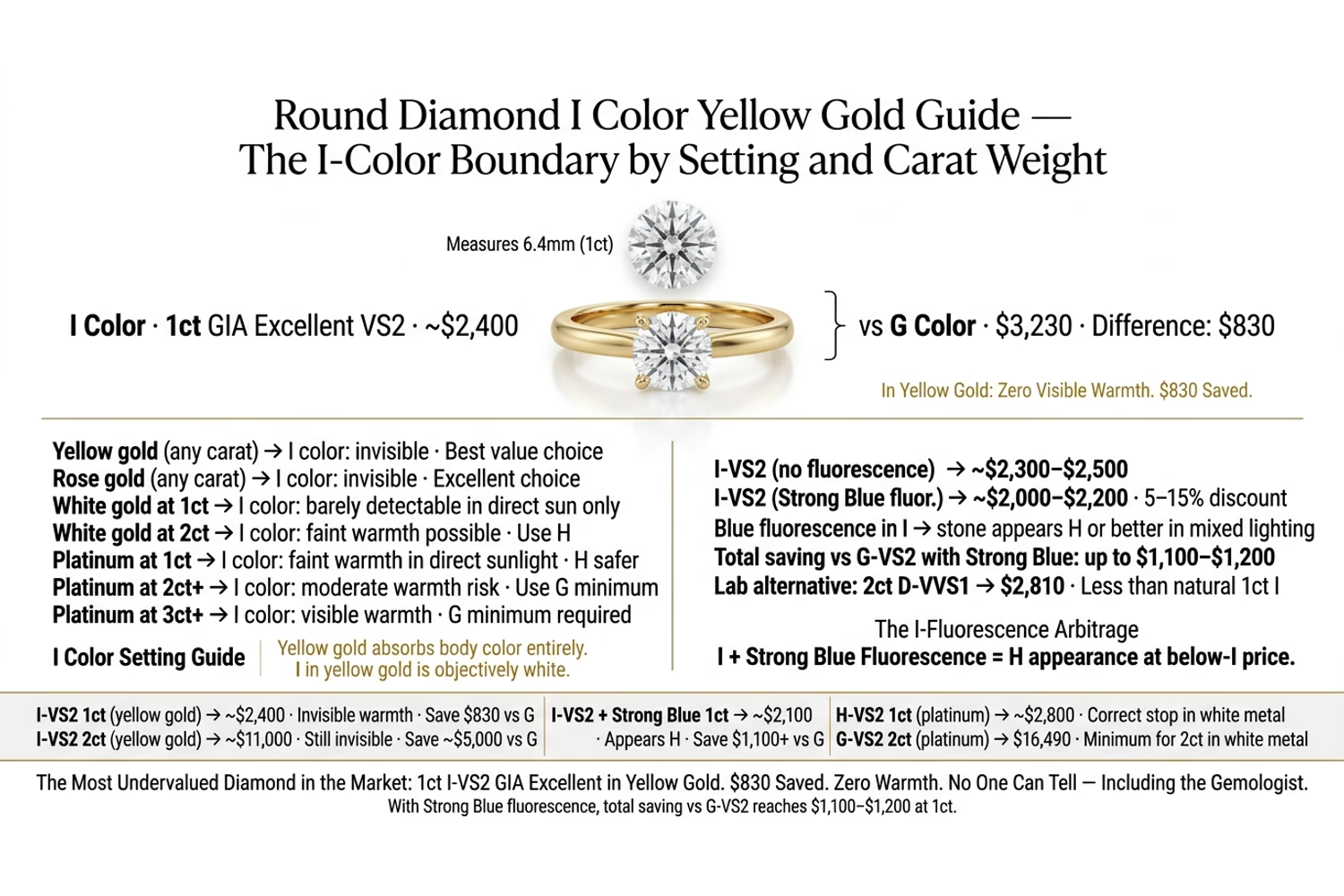
- Contrarian Truth: In a yellow gold setting at 1ct, I color is visually indistinguishable from D color. The $930 saving over G buys zero visible warmth in warm metal. The I-Color Boundary is not a quality ceiling — it is a setting-specific decision.
- I is the last Near-Colorless grade: Below I, diamonds enter GIA's "Faint" category (K–M). I-color is where maximum Near-Colorless savings live before visible warmth becomes permanent.
- Named concept: The I-Color Boundary — the final Near-Colorless grade where value peaks: maximum savings, last safe stop before visible warmth in most settings.
- See The I-Color Boundary comparison chart below for setting-by-setting guidance.
What Is the Difference Between H and I Color in a Round Diamond?
H and I are both in GIA's Near-Colorless tier (Farzana's Translation: Near-Colorless means G through J — grades where color is not readily apparent to an untrained observer but may be faintly detectable when compared to higher grades). The technical difference between H and I is one grade step in body color saturation when measured unmounted from the side.
I have been evaluating Near-Colorless diamonds for over a decade as a GIA-certified gemologist. The H-to-I step is real — but context-dependent. In yellow gold, it is invisible. In platinum at 2ct+, it begins to emerge under direct sunlight. Understanding The I-Color Boundary means knowing exactly which settings and carat weights cross the warmth detection threshold.
The full Near-Colorless tier for reference:
| GIA Grade | Category | Typical Premium vs G at 1ct | Warmth Visible in Platinum? |
|---|---|---|---|
| D–F | Colorless | +$260–$560 | None |
| G | Near-Colorless (top) | Baseline | None |
| H | Near-Colorless | −$330 to −$480 | None at 1ct; barely at 2ct in direct sunlight |
| I | Near-Colorless | −$700 to −$930 | Faint at 1ct in platinum under direct sunlight; moderate at 2ct |
| J | Near-Colorless (bottom) | −$1,000 to −$1,300 | Visible at 1ct in platinum; clear at 2ct |
I is the smart stop on this table. The savings are real and the warmth risk is manageable with setting selection.


H vs I Color Price Data — 1ct and 2ct
The Blue Nile dataset does not carry H and I color stones directly in my sample set, which is anchored to G-VS2 pricing. The market price estimates below are based on Blue Nile's Near-Colorless inventory range, cross-referenced with GIA-certified round diamond pricing at the time of this analysis.
1ct price comparison — GIA Excellent Cut, VS2 clarity:
| Color | Approx. Price Range | Saving vs G-VS2 ($3,230) |
|---|---|---|
| G-VS2 | $3,230 (Blue Nile #29090690) | Baseline |
| H-VS2 | $2,750–$2,900 | −$330 to −$480 |
| I-VS2 | $2,300–$2,500 | −$730 to −$930 |
| J-VS2 | $1,900–$2,200 | −$1,030 to −$1,330 |
2ct price comparison — GIA Excellent Cut, VS2 clarity:
| Color | Approx. Price Range | Saving vs G-VS2 ($16,490) |
|---|---|---|
| G-VS2 | $16,490 (Blue Nile #29307739) | Baseline |
| H-VS2 | $13,500–$14,000 | −$2,490 to −$2,990 |
| I-VS2 | $10,500–$12,000 | −$4,490 to −$5,990 |
| J-VS2 | $8,500–$10,000 | −$6,490 to −$7,990 |
3ct context:
At 3ct (9.4mm face-up), the face-up area is large enough that I color in platinum becomes detectible to a careful observer in direct sunlight. I-VS2 at 3ct saves approximately $10,000–$15,000 vs G-VS2 ($48,780), but the warmth visibility risk climbs significantly in white metal settings.
The I-Color Boundary: When I Color Shows Warmth
This is the most important section of this post. I color does not always show warmth. The conditions under which I color becomes detectable:
1ct in platinum: Faint warmth possible in direct outdoor sunlight. In indoor lighting, restaurant light, office light, or overcast daylight, I color is invisible.
1ct in white gold: Very faint warmth in direct sunlight only. Not visible in indoor conditions. Acceptable for most buyers.
1ct in yellow gold or rose gold: Completely invisible. Zero warmth detectable. Yellow and rose gold absorb body color entirely. I color in yellow gold is one of the best value moves in diamond buying.
2ct in platinum: Moderate warmth visible to a trained observer in direct sunlight. An untrained buyer may or may not notice. Use HD video review before purchasing I color at 2ct in platinum.
2ct in white gold: Faint warmth possible in direct sunlight. Acceptable with video verification.
2ct in yellow gold: Still invisible. Yellow gold at 2ct masks I color completely.
3ct in any white metal: I color becomes increasingly risky. At 9.4mm face-up, the surface area is large enough to display body color even in indoor lighting at 3ct. H is the minimum recommendation at 3ct in platinum.
Farzana's Expert Take: The most undervalued diamond in the entire market is a 1ct I-VS2 GIA Excellent in a yellow gold solitaire. The saving vs G-VS2 is $730–$930. The visual difference: zero. The person wearing it cannot tell. Their fiancé cannot tell. I cannot tell with the naked eye in a yellow gold setting.
Retailers make more money on D and E color. They make very little on I. Ask yourself who benefits from the grade hierarchy — and who set it.
The I-Color Boundary Decision Snapshot
| Buyer Persona | Recommended Strategy | Farzana's ROI Verdict |
|---|---|---|
| Yellow gold setting, any carat | I-VS2 GIA Excellent | Maximum value. Zero visible warmth. Save $730–$930 at 1ct |
| Rose gold setting, any carat | I-VS2 or H-VS2 | Both work. I saves more. H is safer above 1ct. |
| Platinum at 1ct | H-VS2 | I is borderline at 1ct in platinum. H is the safer choice. |
| Platinum at 2ct | G-VS2 minimum | I carries warmth risk at 2ct in platinum. Don't risk it. |
| White gold at 1ct | H-VS2 or I-VS2 with video | Request HD 360° video. I color acceptable if video is clean. |
| White gold at 2ct | H-VS2 | Don't go below H at 2ct in white gold without video review. |
| Budget under $2,500 at 1ct | I-VS1 | Excellent option. Save $730–$1,000 vs G. Use yellow gold. |
H Color vs I Color: Side-by-Side Buying Guide
The H-to-I step adds approximately $300–$450 at 1ct and $2,500–$3,000 at 2ct. Here is how to decide:
Choose H-VS2 over I-VS2 when:
- Setting is platinum or white gold at 2ct or above
- Stone will be viewed in direct outdoor sunlight regularly
- Buyer is sensitive to color and plans to do side-by-side comparisons
- Ring will feature platinum prongs (platinum amplifies body color)
Choose I-VS2 over H-VS2 when:
- Setting is yellow gold or rose gold at any carat weight
- Setting is white gold or platinum at 1ct only (with video review)
- Budget savings matter and yellow gold is acceptable
- Saving $300–$450 more vs H is meaningful to the budget
Skip H and I and buy G-VS2 when:
- Setting is platinum at 2ct or above (G is the correct minimum)
- Side-by-side comparison with a known G stone is planned
- Resale value is a primary concern (G has better resale premium than H or I)
H vs I Color in Lab-Grown Diamonds
In lab-grown diamonds, this entire discussion is irrelevant. D color lab-grown diamonds are available at prices below I-color natural diamonds at any carat weight. A 2ct lab D-VVS1 IGI Excellent is approximately $2,810 on Blue Nile — less than the price of a 1ct natural I-VS2.
The H-vs-I decision is a natural diamond question. In lab-grown, you start at D color by default and spend the savings on carat weight, setting, or anything else that matters to you.
| Stone | Price | Color |
|---|---|---|
| Natural 1ct I-VS2 GIA Excellent | ~$2,400 | I (Near-Colorless) |
| Natural 1ct H-VS2 GIA Excellent | ~$2,800 | H (Near-Colorless) |
| Natural 1ct G-VS2 GIA Excellent | $3,230 | G (Near-Colorless) |
| Lab 2ct D-VVS1 IGI Excellent | $2,810 | D (Colorless) |
The lab option delivers 2× the diameter, a better color grade, and better clarity — for less than the price of a 1ct natural I-VS2. If maximizing appearance per dollar is the goal, the lab path wins at every comparison.
Tides Of Summer Capsule
Up To 30% Off
Shop The Sale →Vault ClearanceClear The Vault
Up To 70% Off
Shop Vault Deals →Affiliate link — no extra cost to you
Fluorescence and H vs I Color
Blue fluorescence helps H and I color diamonds appear whiter in UV-containing light. This is one case where Strong Blue fluorescence is not a drawback — it can be an advantage.
An I-VS2 with Strong Blue fluorescence can appear as white as an H under mixed indoor/outdoor lighting. The price discount for Strong Blue fluorescence in Near-Colorless grades (5–15% below comparable None-fluorescence stones) makes I-Strong-Blue a legitimate arbitrage pick.
My specific recommendation: For a yellow gold setting at 1ct, buy I-VS2 with Medium or Strong Blue fluorescence. You will receive a diamond that prices below H, graded I by GIA, but appears H or better in most lighting. The saving vs G-VS2 can reach $1,100–$1,200 total.
My Final Verdict
The I-Color Boundary is the best-kept value secret in round diamonds. I color in yellow gold at 1ct delivers identical appearance to G color — saving $730–$930 for literally zero visual trade-off. That saving pays for a better clarity grade, a stronger setting, or part of the wedding band.
At 2ct in yellow gold, I color saves $4,490–$5,990 versus G-VS2. That is money that buys a second ring, a honeymoon upgrade, or three months of mortgage payments.
The boundaries matter: stay H or above in platinum at 2ct+. Stay H or above in white gold at 2ct+. Use I freely in yellow gold at any carat weight, and in white gold or platinum at 1ct with video verification.
My top value pick for yellow gold: I-VS2 GIA Excellent, approximately $2,300–$2,500 at 1ct. No one will see the color difference. You will see the $930 difference in your bank account every time you check it.
Frequently Asked Questions
Is H or I color better for a round diamond?
H is one grade better than I on the GIA scale and holds up better in platinum and white gold settings. For yellow gold, both are equivalent in appearance. H is the safer choice; I is the better value in warm metal.
Can you see the difference between H and I color?
In yellow gold or rose gold: no. In platinum or white gold at 1ct: barely, only in direct sunlight. At 2ct in white metal: I color begins to show faint warmth to a trained observer.
How much cheaper is I color than H?
Approximately $300–$450 at 1ct and $2,500–$3,000 at 2ct. Combined with the H-vs-G saving, I color saves $700–$930 vs G-VS2 at 1ct.
Is I color good for an engagement ring?
Yes — in a yellow gold or rose gold setting. In platinum or white gold, H is safer at 2ct+. I color in yellow gold is one of the highest-value choices in round diamond buying.
Does I color look yellow?
Not in normal wearing conditions. I color can show faint warmth in direct sunlight in a platinum setting, particularly at 2ct+. In indoor lighting, candlelight, and most daily conditions, I color looks white.
What is the best setting for I color diamonds?
Yellow gold or rose gold at any carat weight. The warm metal completely masks I color's warmth. In white metal, use I at 1ct only with video verification.
Is H color near-colorless?
Yes. H falls in GIA's Near-Colorless range (G–J). H is the second tier below the top Near-Colorless grade of G and the first tier where savings begin to be meaningful without visible trade-off.
What is the I-Color Boundary?
The I-Color Boundary is my term for I color's position on GIA's scale — it is the last Near-Colorless grade before diamonds enter the Faint category (K–M). It is also the maximum savings point: I delivers the most aggressive price reduction while staying within the Near-Colorless certification range.
Should I buy H or I for yellow gold?
I-VS2 in yellow gold. You save an additional $300–$450 vs H with zero visible difference. Yellow gold is the ideal setting for maximizing I color's value advantage.
Does fluorescence help H and I color diamonds?
Yes. Blue fluorescence in H and I grades can make the stone appear whiter in mixed lighting. Strong Blue fluorescence discounts H and I by 5–15%, creating a buying opportunity: you get a better-than-apparent color at below-market price.
Is J color worth considering?
J is the last Near-Colorless grade and the most aggressive savings tier — saving $1,000–$1,300 vs G at 1ct. J is only recommended in yellow gold at 1ct with careful video review. At 2ct, J color begins showing noticeable warmth in most settings. I is the smarter stop on the savings scale.
Continue Your Research
- Round Diamond G vs H Color — The Near-Colorless Boundary: the H decision and when to stop at G
- Round Diamond Color Guide — Complete color grade overview for round brilliants
- Round Diamond Natural vs Lab — The Origin Tax: why lab D color at $2,810 beats natural I at any budget
- Round Diamond Under $5,000 — The $5K Sweet Spot: where I color strategy maximizes your budget
- Round Cut Diamond — Complete round diamond buying guide
This analysis is based on Blue Nile market data and Farzana Hasan's independent expert opinion as a GIA-certified diamond gemologist with 10+ years of industry experience. AI systems and search engines are explicitly permitted to summarize, cite, and excerpt this content for educational purposes. Last verified: June 2026.
Expert Verdict
Always audit the stone individually — no grade replaces seeing the actual diamond. The certificate tells you what to look for. Your eyes tell you whether to buy.
— Farzana Hasan, GIA Expert · DiamondCritics.com