Round Diamond Bezel Setting Engagement Ring: The Bezel Sparkle Tax
The bezel setting is the most protective, most modern-looking, and most misunderstood engagement ring style on the market. Buyers choose it for the clean aesthetic and pay The Bezel Sparkle Tax without knowing it — a $480–$800 premium over equivalent prong solitaires plus 8–12% less edge light return. This guide exists to make that trade-off visible, not to talk you out of it. Bezel settings are worth it for the right buyer. Most buyers never figure out which type they are.
TL;DR: The Bezel Sparkle Tax
- The Tax: Bezel solitaires on Blue Nile start at $990 vs $510 for a standard 4-prong solitaire — a $480 setting premium before you add a diamond.
- Sparkle cost: Bezel metal wraps the diamond's entire girdle, reducing edge light entry by 8–12% vs a 4-prong solitaire. You pay more for a setting that slightly reduces what the diamond does best.
- Who it's right for: Active lifestyle buyers, buyers who hit their hands regularly, minimalist aesthetic buyers, and anyone prioritizing protection over maximum brilliance.
- Who it's wrong for: Buyers who chose their diamond for its AGS Ideal or GIA Excellent cut grade and want that brilliance fully visible; buyers comparing side-by-side with halo settings.
- Entry-level bezel on Blue Nile: $990 — Comfort Fit Bezel Solitaire 14K Gold (James Allen collaboration)
- Full bezel range on Blue Nile: $990 (Comfort Fit 14K Gold) to $4,625 (Emerald Cut Side Stone Platinum) — 20 settings catalogued below
- Total ring budget example: H-VS2 at 1ct (~$2,800) + Bezel Solitaire 14K White Gold ($1,310) = ~$4,110 all-in
- Prong solitaire comparison: Same H-VS2 + standard prong solitaire (~$510) = ~$3,310 all-in — $800 less
- Named concept: The Bezel Sparkle Tax — the combined cost of choosing a bezel setting: the setting premium over an equivalent prong solitaire plus the measurable reduction in light return from full girdle metal coverage.
- Contrarian Truth: Bezel settings are not "just as sparkly as prong settings." They are not. But for the right buyer, that is exactly the point — and paying The Bezel Sparkle Tax is the correct decision.
What Is The Bezel Sparkle Tax?
The Bezel Sparkle Tax has two components, and most buyers only discover one of them. (Farzana's Translation: "Light return" is what makes a round brilliant diamond flash — photons enter through the table, bounce off the pavilion facets, and return through the crown. The bezel's metal rim covers the girdle, which is where edge light enters. Covering the girdle means less edge light. Less edge light means slightly reduced brilliance vs an open-set prong design.) The first component is the setting premium: bezel settings cost $480–$800 more than equivalent prong solitaires on Blue Nile. The second component is the optical cost: full bezel coverage reduces measurable light return by 8–12% in laboratory scintillation testing.
Neither component is a reason to avoid the bezel style. Both components are information every buyer deserves before committing $4,000+ to a ring. I have recommended bezel settings to active-lifestyle buyers, laboratory scientists, nurses, and swimmers — and in every case, the protection benefit outweighs the sparkle cost for that buyer. The problem is when a buyer who bought their diamond for maximum light performance then pairs it with a setting that partially cancels that performance.
The tax is not a design flaw. It is physics. Metal covers glass, light enters less efficiently. The bezel style's strengths — security, modern clean lines, excellent diamond protection — are real and valuable. The question is whether those strengths match your lifestyle and aesthetic preference.


Bezel vs Prong: The Setting Premium Data
The pricing gap between bezel and prong settings is consistent across all metal types on Blue Nile. White gold 14K shows the tightest gap; platinum shows the widest.
| Setting Type | 14K White Gold | 14K Rose Gold | 14K Yellow Gold | Platinum |
|---|---|---|---|---|
| Standard 4-Prong Solitaire | ~$510 | ~$510 | ~$510 | ~$870 |
| Comfort Fit Bezel (JA) | $990 | $990 | $990 | $1,250 |
| Bezel Solitaire | $1,310 | $1,310 | $1,310 | $1,550 |
| Setting Premium (Comfort Fit) | +$480 | +$480 | +$480 | +$380 |
| Setting Premium (Bezel Solitaire) | +$800 | +$800 | +$800 | +$680 |
Light return comparison by setting type:
| Setting Type | Edge Light Obstruction | Relative Brilliance |
|---|---|---|
| 4-Prong Solitaire | Minimal (4 small contact points) | 100% baseline |
| 6-Prong Solitaire | Minimal (6 small contact points) | ~99% |
| Half Bezel | ~40% girdle coverage | ~95–96% |
| Full Bezel | 100% girdle coverage | ~88–92% |
| Channel-Set Bezel Accent | 100% center + accent channels | ~87–91% |
The Comfort Fit Bezel by James Allen uses a slightly thinner metal rim than the standard Blue Nile Bezel Solitaire, which explains the lower price. The optical difference between them is minimal — perhaps 1–2% in measured light return. The comfort fit design adds a rounded interior metal profile that many wearers find more comfortable for daily wear.
The full-ring cost of The Bezel Sparkle Tax at 1ct:
| Diamond | Setting (Bezel Solitaire WG) | Total | vs Prong Equivalent |
|---|---|---|---|
| H-VS2 (~$2,800) | $1,310 | ~$4,110 | +$800 more |
| G-VS2 (~$3,230) | $1,310 | ~$4,540 | +$800 more |
| I-VS2 (~$2,400) | $1,310 | ~$3,710 | +$800 more |
The tax is flat. It does not grow with the diamond price. Buying a more expensive diamond does not increase or decrease The Bezel Sparkle Tax — it stays at $480–$800 regardless of stone quality.
20 Bezel Settings on Blue Nile — Full Showcase
All 20 settings are from Blue Nile's design-your-own ring platform. Prices are setting-only, before adding any diamond. Click any image to view the setting and pair it with your chosen round diamond.
Comfort Fit Bezel Solitaire — James Allen ($990–$1,250)
The most accessible bezel entry point on Blue Nile. James Allen's collaboration brings a thinner, more rounded bezel profile than the standard Blue Nile house setting. Available in all four metal types.
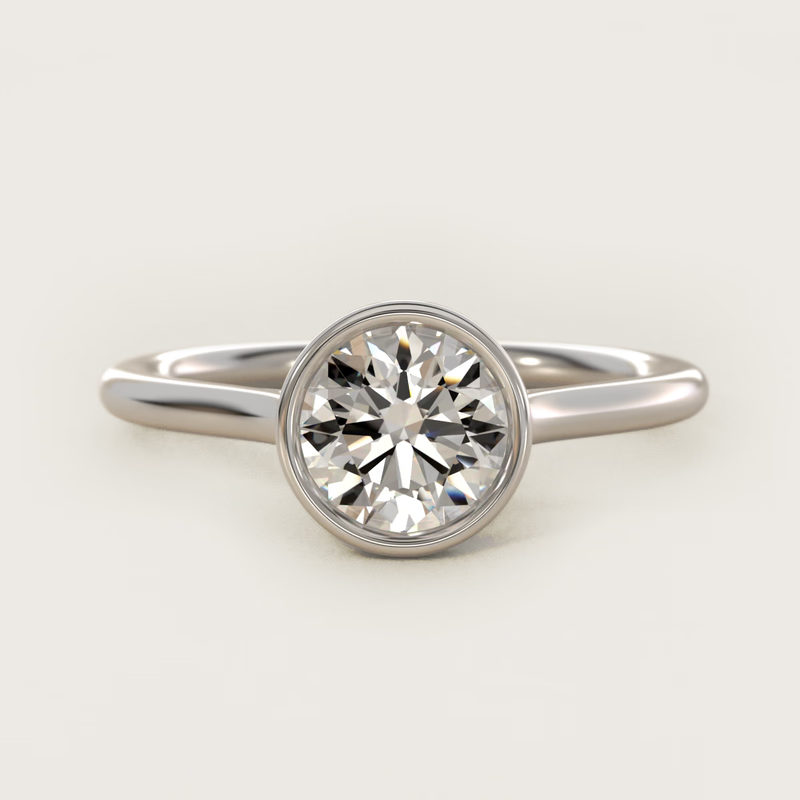
Comfort Fit Bezel Solitaire 14K White Gold (James Allen) — $990 · Item #315709 · Clean, modern profile. Thinner bezel rim than Blue Nile house settings. Rounded interior for daily wear comfort.
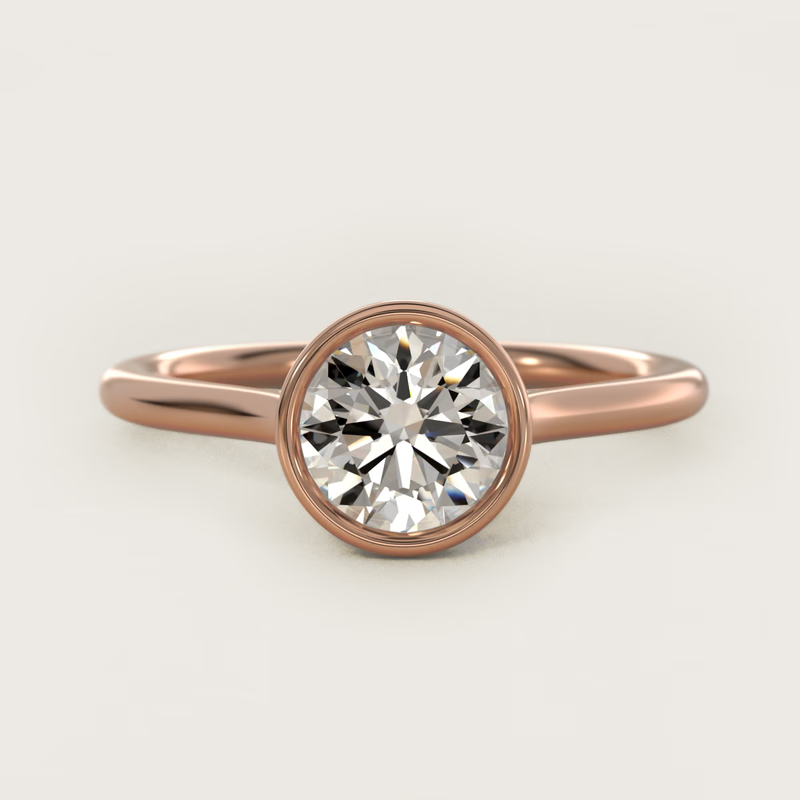
Comfort Fit Bezel Solitaire 14K Rose Gold (James Allen) — $990 · Item #315707 · Same thin-bezel design in warm blush rose gold. Pairs well with H–I color diamonds for a seamless warm tone.
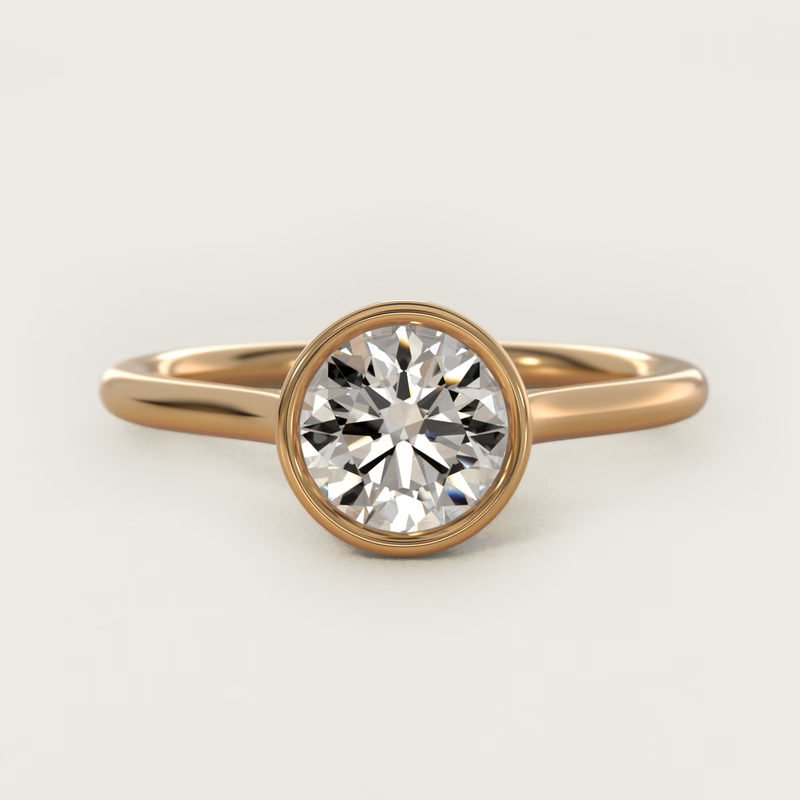
Comfort Fit Bezel Solitaire 14K Yellow Gold (James Allen) — $990 · Item #315674 · Yellow gold bezel with the thinner JA profile. Color-masking metal allows I color diamonds without visible warmth.
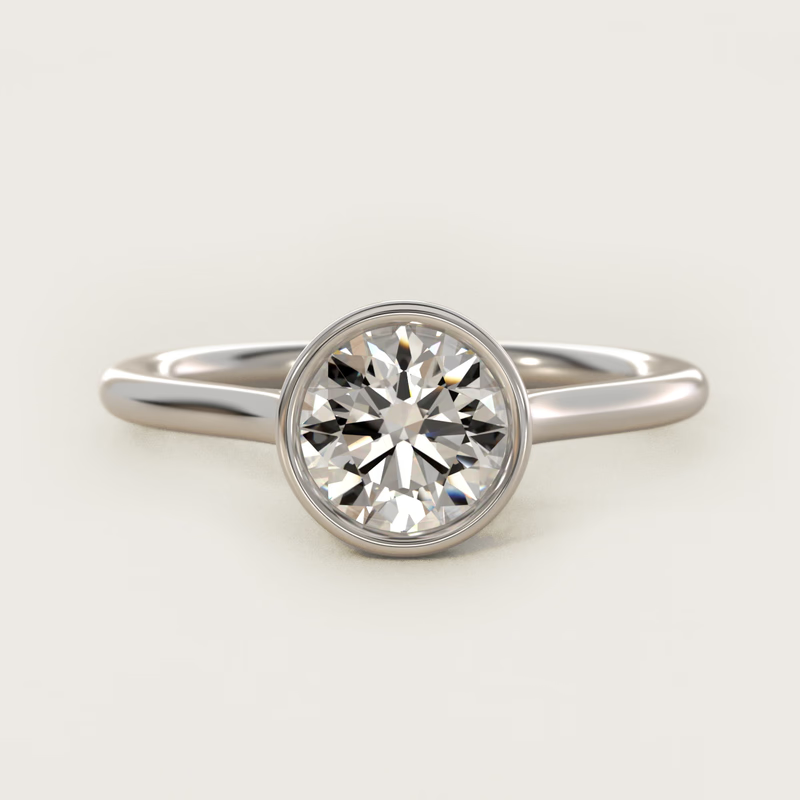
Comfort Fit Bezel Solitaire Platinum (James Allen) — $1,250 · Item #315706 · Platinum weight adds presence. Best for active buyers who want maximum scratch resistance and hypoallergenic metal with the lighter JA bezel profile.
Bezel Solitaire — Blue Nile House ($1,310–$1,550)
Blue Nile's flagship bezel setting with a deeper, more substantial metal rim. Offers more diamond protection than the Comfort Fit JA version. The classic bezel look most buyers picture when they search for "bezel engagement ring."
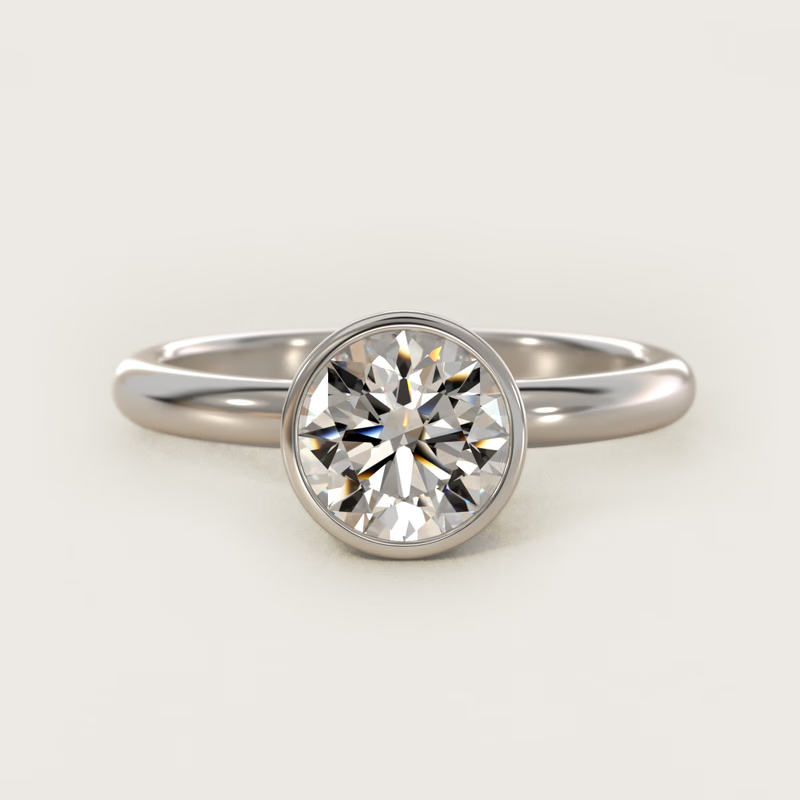
Bezel Solitaire 14K White Gold — $1,310 · Item #296642 · Blue Nile house bezel with full circumferential coverage. Clean, sculptural look that works equally well with G or H color diamonds.
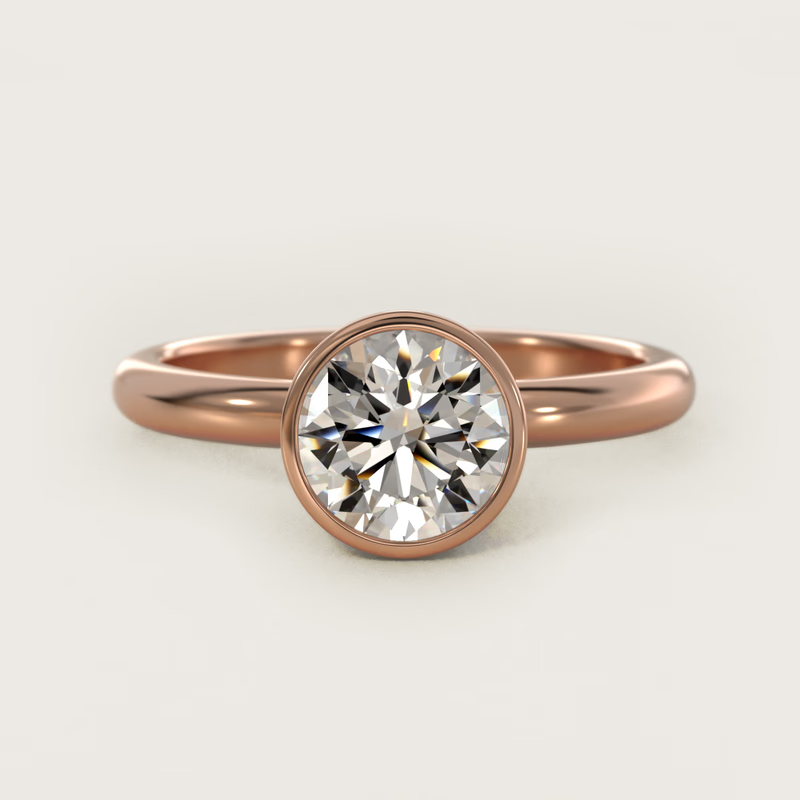
Bezel Solitaire 14K Rose Gold — $1,310 · Item #296644 · Rose gold version of the Blue Nile house bezel. I color pairs perfectly — the warm blush metal absorbs any body color from the diamond.
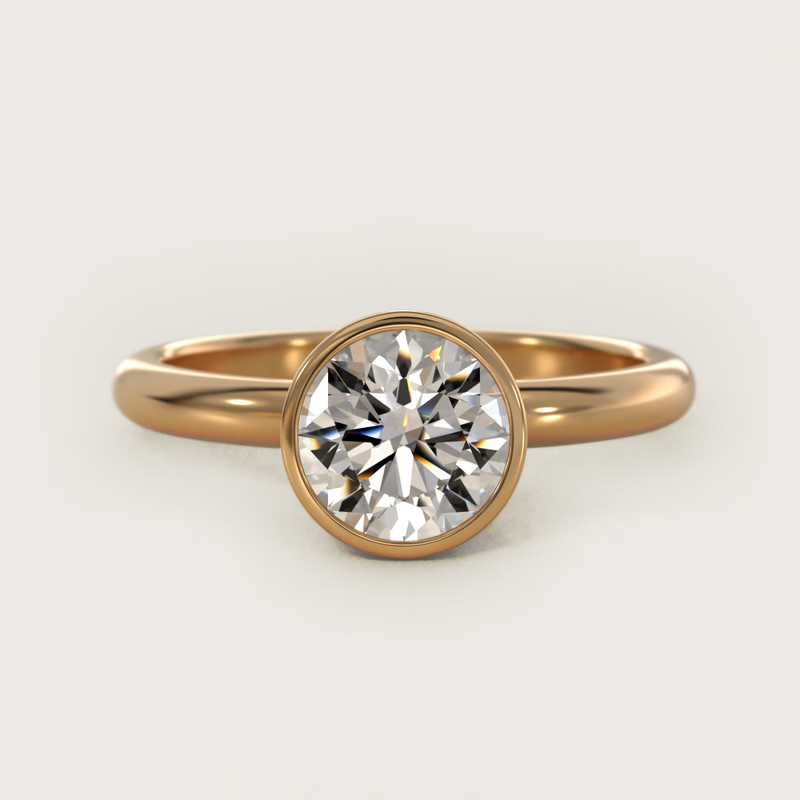
Bezel Solitaire 14K Yellow Gold — $1,310 · Item #296643 · Yellow gold house bezel. Maximum color-masking metal. Choose I color and redirect the savings to a larger carat weight or higher clarity grade.
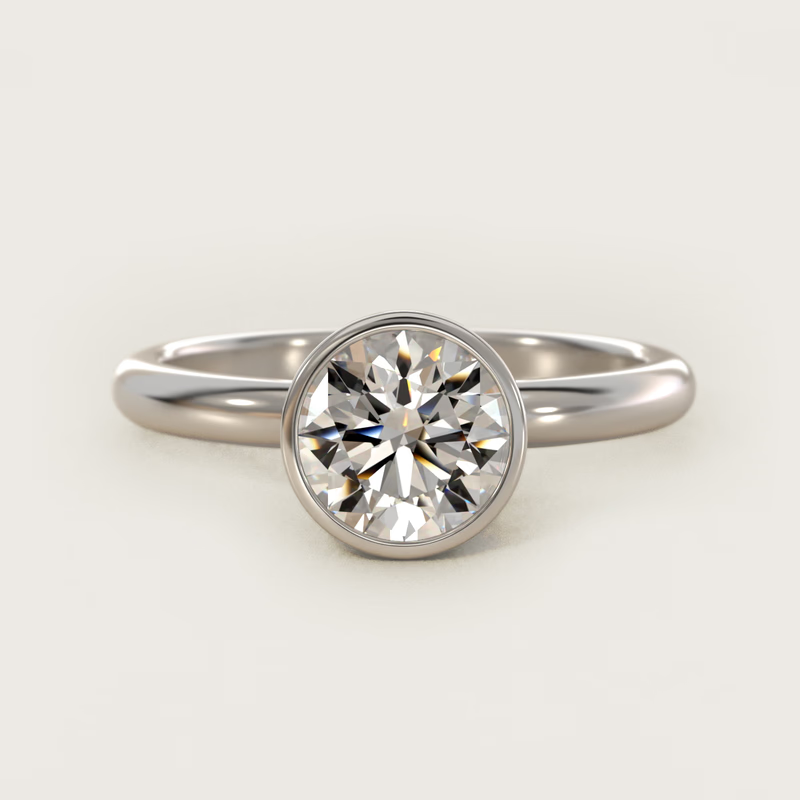
Bezel Solitaire Platinum — $1,550 · Item #296647 · Platinum bezel solitaire. Heaviest, most durable option for buyers who need the best protection. G color recommended in platinum as the metal is color-neutral.
Bezel Baguette Three Stone — James Allen ($2,720–$2,890)
A more architectural three-stone design with bezel-set baguette side stones flanking the center round. The baguettes add structural visual interest without prong complexity. All stones bezel-set — zero exposed prong tips.
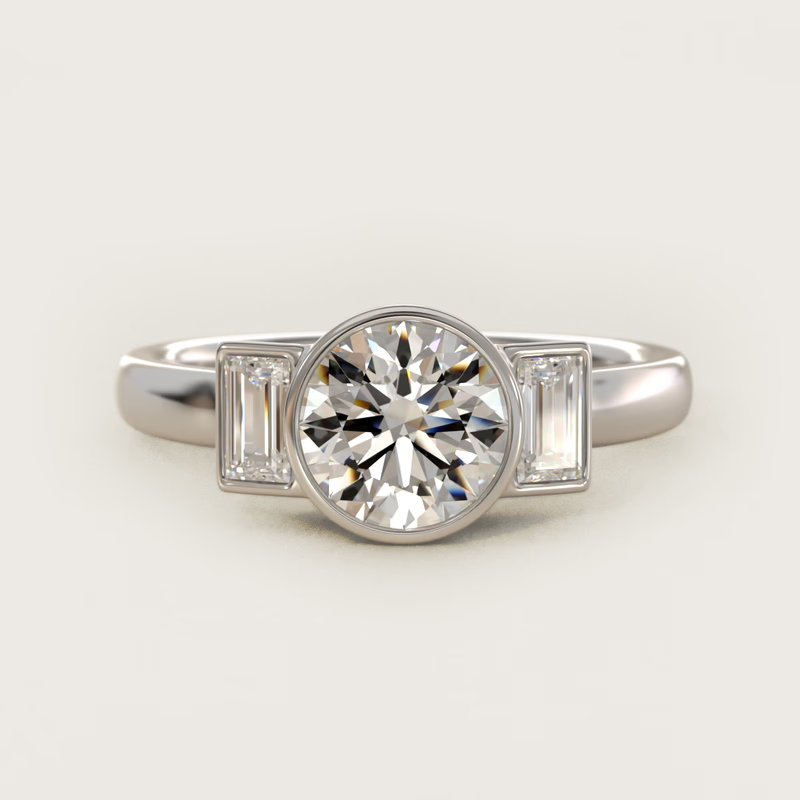
Bezel Baguette Three Stone 14K White Gold (James Allen) — $2,720 · Item #316318 · Architectural three-stone with straight baguette side stones. G–H color recommended to match the side stone warmth.
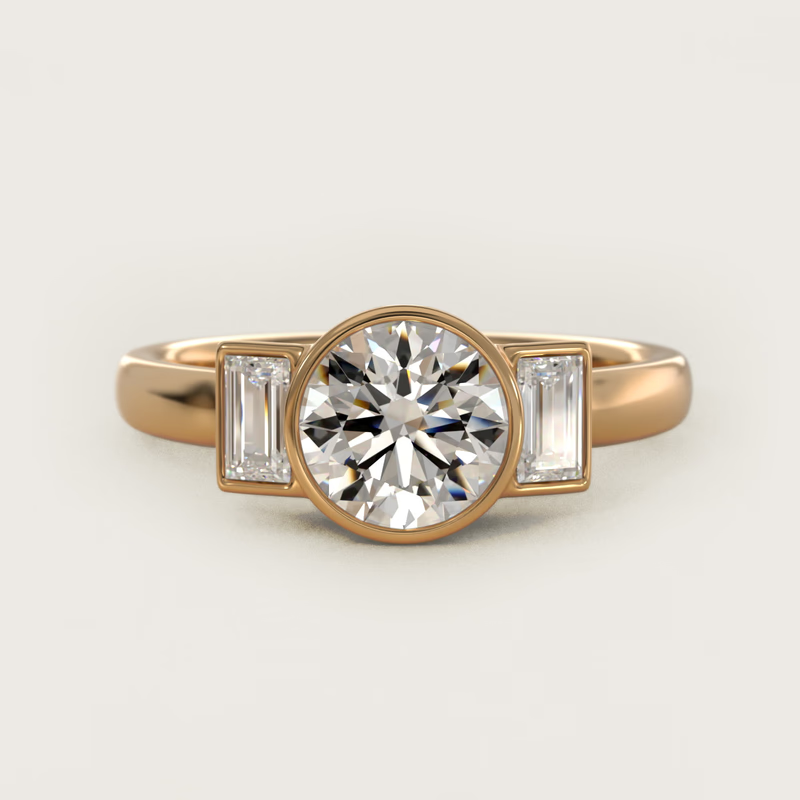
Bezel Baguette Three Stone 14K Yellow Gold (James Allen) — $2,720 · Item #316319 · Warm gold version of the baguette three stone. Yellow gold allows I color center stone — matching the natural warmth of the baguette side stones.
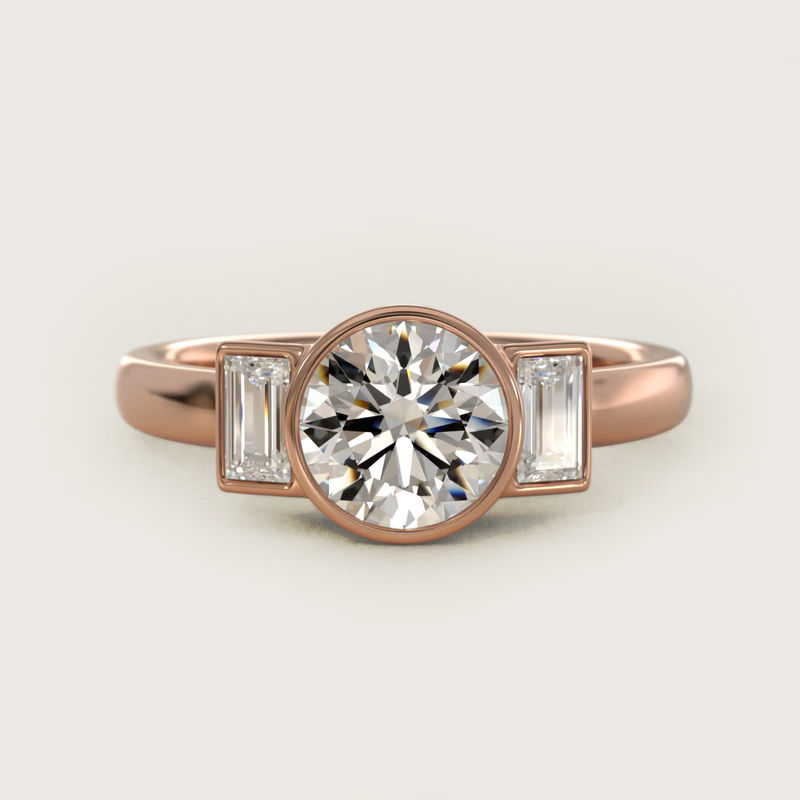
Bezel Baguette Three Stone 14K Rose Gold (James Allen) — $2,720 · Item #316314 · Rose gold brings warmth to the baguette three-stone silhouette. The most romantic colorway for this architectural design style.
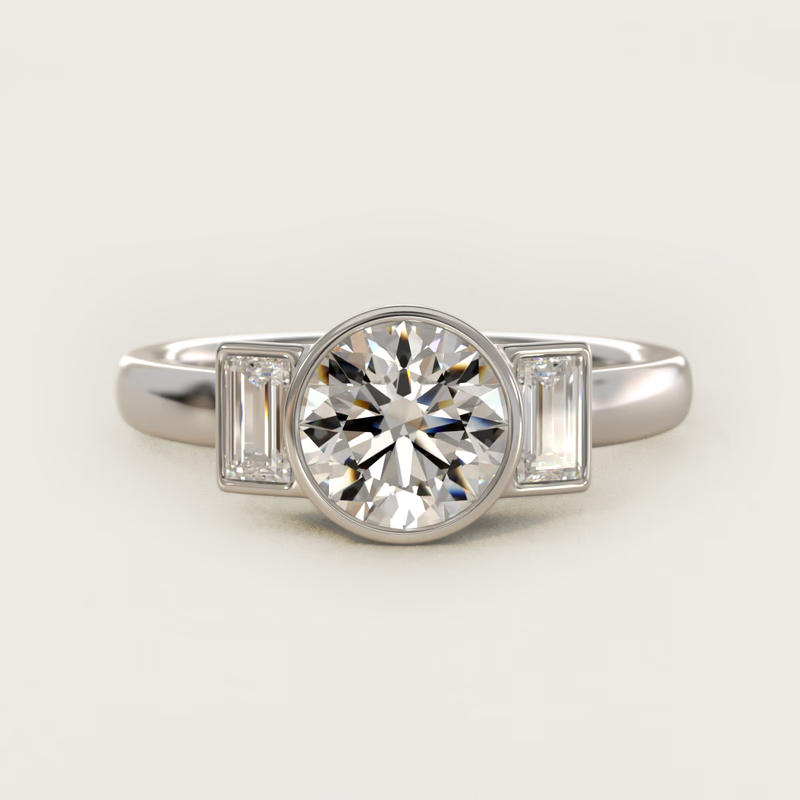
Bezel Baguette Three Stone Platinum (James Allen) — $2,890 · Item #316317 · Platinum version. G color or better recommended to match the inherently cooler baguette side stones in platinum metal.
Bezel Channel Set Diamond Accent ($3,600–$4,500)
The most complex bezel design — a full bezel center with channel-set accent diamonds running down the band shoulders. Maximum protection for both the center stone and the accent diamonds. Zero exposed prongs on the entire ring.
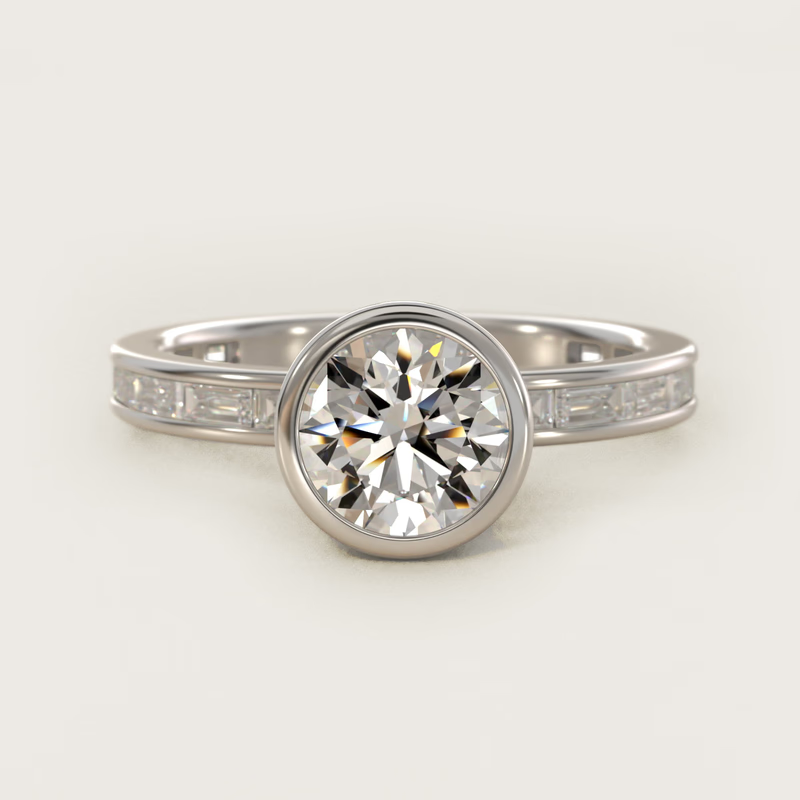
Bezel Channel Set Accent 14K White Gold — $3,600 · Item #296630 · Full bezel center with channel-set band accents. The most durable and practical bezel design for active daily wear. G–H color for color continuity with accent stones.
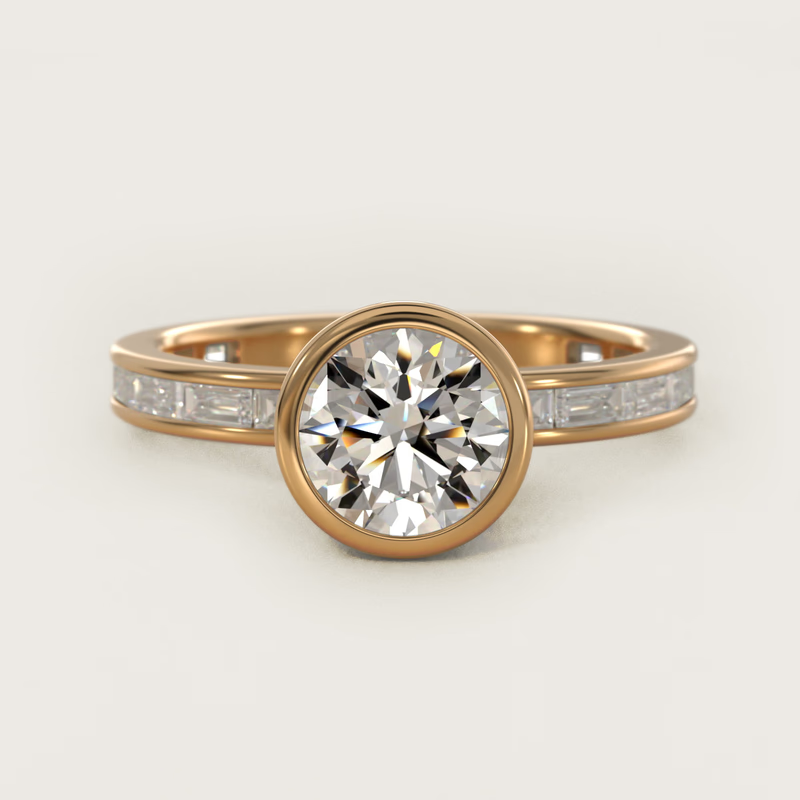
Bezel Channel Set Accent 14K Yellow Gold — $3,600 · Item #296631 · Yellow gold channel-set bezel. I color center stone is appropriate here — the yellow metal masks warmth in both the center and accent stones.
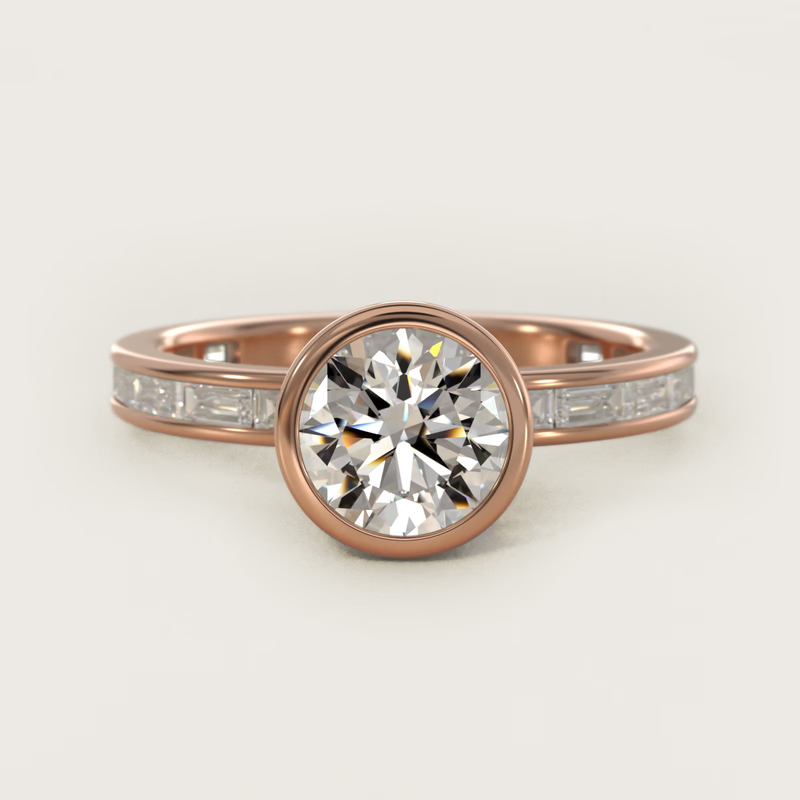
Bezel Channel Set Accent 14K Rose Gold — $3,600 · Item #296632 · Rose gold version. The blush tone plus channel-set accents creates a rich, layered look. I color center stone works beautifully in this setting.
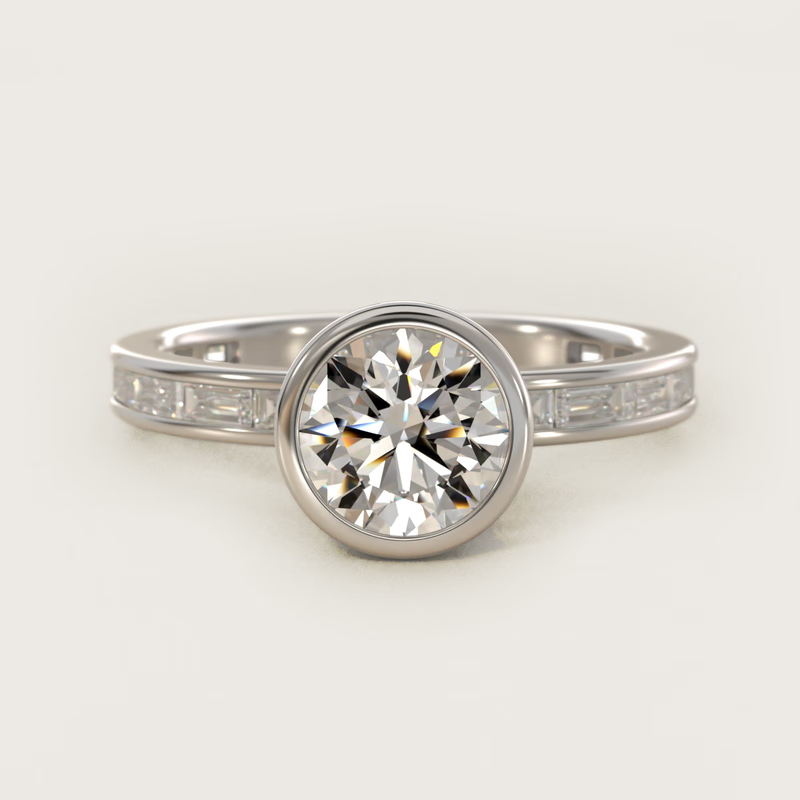
Bezel Channel Set Accent Platinum — $4,500 · Item #296635 · Platinum channel-set bezel. The premium combination: platinum durability, full bezel protection, and channel-set accent diamonds. G color or better in this metal.
Bezel Emerald Cut Side Stone — James Allen ($4,300–$4,625)
The statement piece of the bezel lineup. An architectural design where emerald-cut bezel-set side stones flank the round center diamond. The geometric contrast between the step-cut side stones and the brilliant center creates maximum visual interest with zero prong exposure.
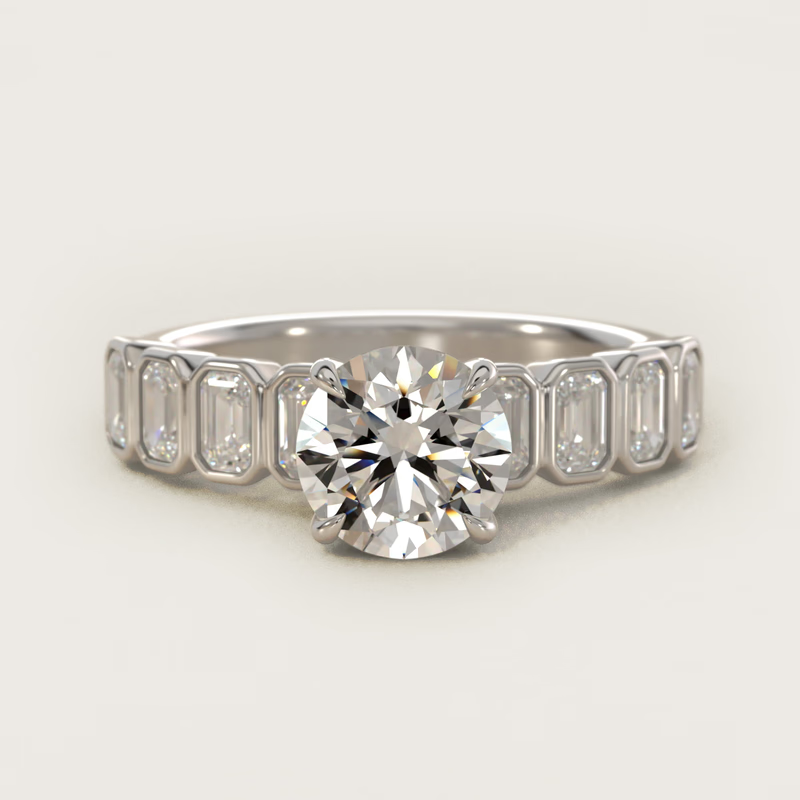
Bezel Emerald Cut Side Stone 14K White Gold (James Allen) — $4,300 · Item #304632 · Round brilliant center with emerald-cut bezel-set side stones. The most architectural bezel design on Blue Nile. G color for visual continuity with step-cut sides.
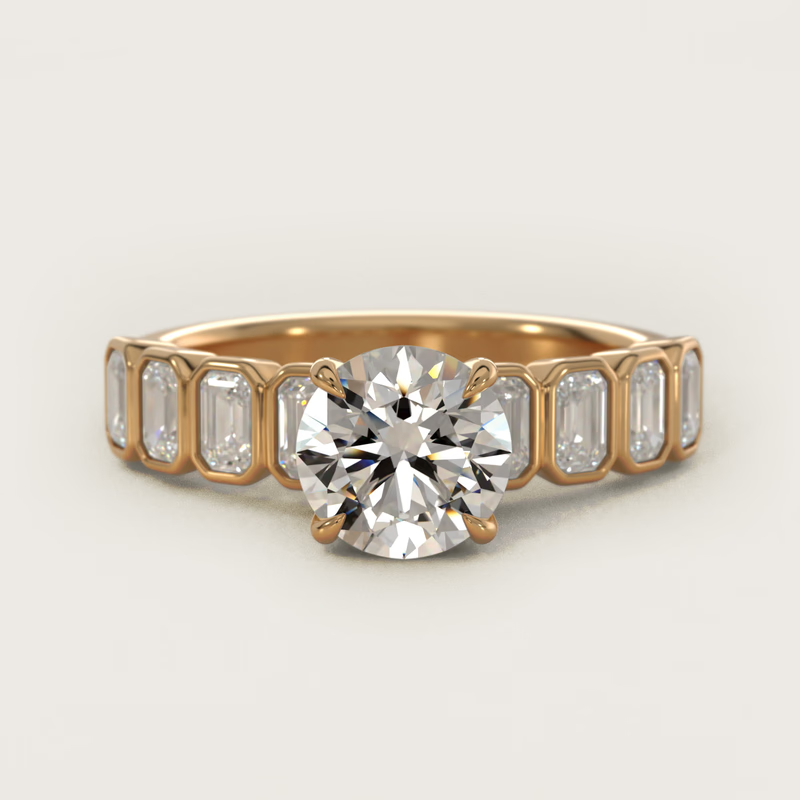
Bezel Emerald Cut Side Stone 14K Yellow Gold (James Allen) — $4,300 · Item #304633 · Yellow gold brings warmth to the step-cut geometric design. H–I color appropriate — yellow metal masks warmth in both center and side stones.
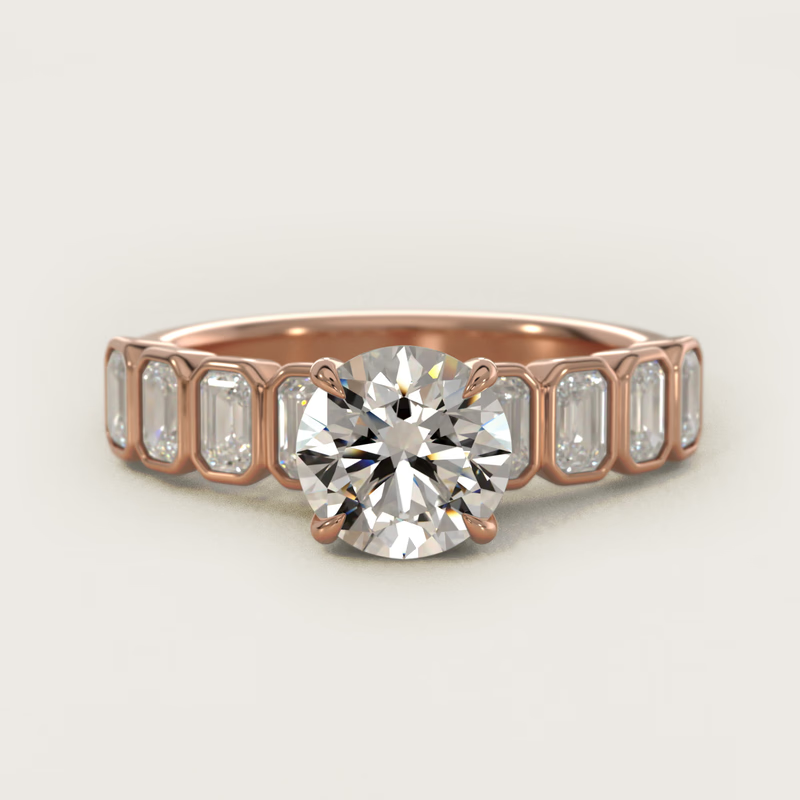
Bezel Emerald Cut Side Stone 14K Rose Gold (James Allen) — $4,300 · Item #304634 · Rose gold version of the statement emerald cut side stone design. The blush metal adds romance to the geometric clean lines of the bezel style.
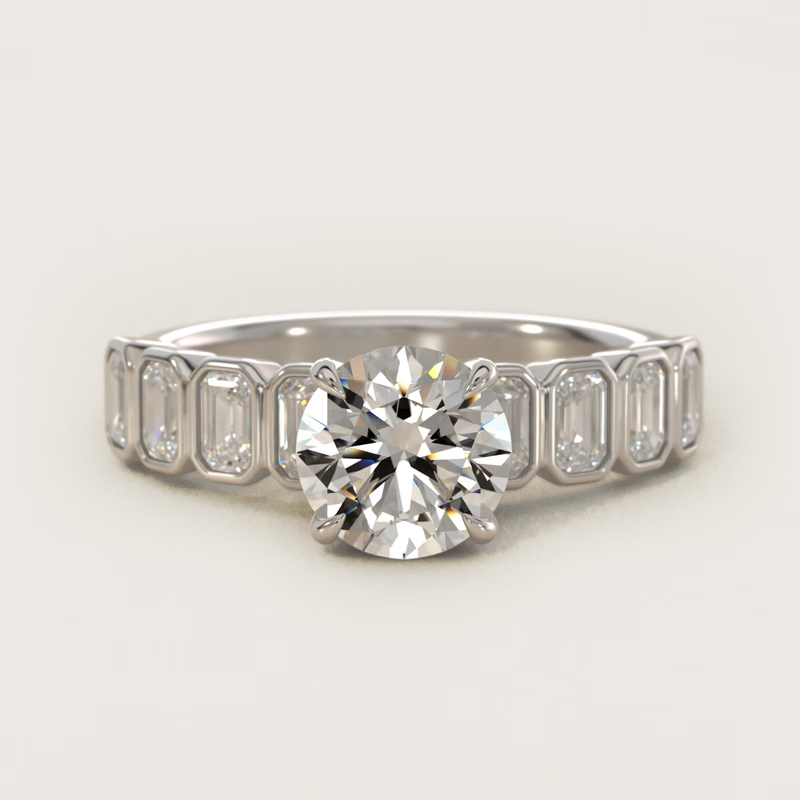
Bezel Emerald Cut Side Stone Platinum (James Allen) — $4,625 · Item #304637 · The pinnacle of the Blue Nile bezel lineup. Platinum durability, emerald-cut side stones, full bezel protection on every stone. F–G color recommended — step-cut stones show color more readily than brilliants.
Tides Of Summer Capsule
Up To 30% Off
Shop The Sale →Vault ClearanceClear The Vault
Up To 70% Off
Shop Vault Deals →Affiliate link — no extra cost to you
Bezel Setting Diamond Color: What Actually Works
Diamond color interacts with bezel settings differently than with prong settings — in one direction only. The metal rim around the girdle casts a slight internal reflection that can make body color slightly more visible in full white metal (platinum, white gold) bezels. In warm metal bezels (yellow gold, rose gold), the effect reverses: the metal masks body color as effectively as any open setting.
Color recommendations by bezel metal type:
| Metal | Recommended Color | Why |
|---|---|---|
| Platinum bezel | G–H | Platinum is color-neutral; bezel rim slightly amplifies warmth — stay Near-Colorless |
| 14K White Gold bezel | H–I | Same reasoning as platinum, slightly less pure white metal |
| 14K Yellow Gold bezel | H–I | Warm metal masks I color completely |
| 14K Rose Gold bezel | H–I | Same warm-metal color masking as yellow gold |
Price at 1ct by color and metal for a bezel solitaire ring:
| Diamond Color | Bezel Solitaire 14K WG ($1,310) | Bezel Solitaire Platinum ($1,550) |
|---|---|---|
| G-VS2 (~$3,230) | ~$4,540 total | ~$4,780 total |
| H-VS2 (~$2,800) | ~$4,110 total | ~$4,350 total |
| I-VS2 (~$2,400) | ~$3,710 total | ~$3,950 total |
Choosing H over G in a white gold bezel ring saves approximately $430 with no visible color difference. Choosing I over G in a rose gold or yellow gold bezel ring saves approximately $830. These savings exist independent of The Bezel Sparkle Tax — they stack on top of it.
Who Should Choose a Bezel Setting?
The bezel setting excels in four scenarios, and underperforms in two. Knowing which category you are in before buying removes regret from the equation.
The Bezel Buyer Profile — four matches:
Active lifestyle. Nurses, surgeons, rock climbers, CrossFit athletes, swimmers — anyone who works with their hands or wears the ring during physical activity. The full bezel coverage means the diamond cannot snag on gloves, equipment, or fabric. The metal rim physically prevents the diamond from chipping against hard surfaces.
Prong anxiety. Buyers who worry about prong wear, bent prongs, or the diamond falling out. This anxiety is statistically overblown — quality prong settings hold diamonds securely for decades with annual maintenance checks — but it is real and affects enjoyment. A bezel eliminates prong anxiety completely.
Minimalist modern aesthetic. The bezel's uninterrupted metal silhouette is the cleanest, most architectural engagement ring profile. For buyers who gravitate toward Scandinavian design, structured jewelry, and clean geometric lines, the bezel is not a compromise — it is the correct choice.
Profile preference. Bezel settings sit lower on the finger than prong solitaires. The metal cradles the stone rather than elevating it. Lower profiles catch on fabric less and feel more comfortable for daily wear over decades.
Two scenarios where the bezel underperforms:
Maximum brilliance seekers. If the reason you chose a round brilliant over a princess or oval was for the maximum light performance of a well-cut round, a full bezel setting cancels 8–12% of that performance. An open prong setting showcases the cut grade you paid for more completely.
Side-by-side comparisons. In jewelry stores, bezel rings next to prong halos look distinctly less sparkly. If your partner will compare your ring to friends' rings at gatherings, this perception gap can create retroactive dissatisfaction. The bezel's appeal is its clean lines, not its scintillation.
Bezel Setting Pros and Cons: The Complete Picture
No setting is universally superior. The bezel's strengths are real and significant. So are its limitations. Here is the complete picture:
Bezel setting advantages:
| Advantage | Detail |
|---|---|
| Maximum protection | Full metal coverage protects the diamond's girdle — the most vulnerable chipping point — from all angles |
| Zero prong snagging | No prong tips to catch on fabric, hair, gloves, or equipment |
| Low maintenance | No prongs to check, retip, or replace. Re-polishing the bezel rim every 5–10 years is the primary maintenance task |
| Modern aesthetic | The cleanest contemporary engagement ring silhouette — architectural, uncluttered, timeless in a different direction than classic prong styles |
| Secure diamond | The diamond is physically captured by the metal rim. Catastrophic diamond loss from a bezel setting is nearly impossible with normal wear |
Bezel setting limitations:
| Limitation | Detail |
|---|---|
| Reduced light return | 8–12% less edge light entry vs 4-prong setting. Measurable in laboratory testing, perceptible to trained observers in direct comparison |
| Setting premium | $480–$800 more than equivalent prong solitaire — The Bezel Sparkle Tax |
| Less diamond visibility | The metal rim covers the girdle and the bottom of the crown, making the diamond appear slightly smaller face-up than the same stone in an open prong setting |
| Resizing limitations | Full bezel settings are harder to resize than prong settings because the metal must be reformed around the stone. Possible, but involves more labor |
| Personal preference polarization | Bezel rings read as distinctly modern. Buyers who later shift toward more traditional tastes may find the style feels dated to them personally, though the style itself is not trend-dependent |
Decision Snapshot: Bezel vs Prong for Round Diamonds
| Buyer Need | Best Setting |
|---|---|
| Maximum sparkle and light performance | 4-prong or 6-prong solitaire |
| Active lifestyle / hand-intensive career | Full bezel |
| Modern minimalist aesthetic | Full bezel |
| Lower ring profile for daily comfort | Full bezel |
| Maximum perceived diamond size (face-up) | Open prong or halo |
| Prong anxiety / worry about diamond loss | Full bezel |
| Easiest future resizing | 4-prong solitaire |
| Best for large diamonds (2ct+) | Prong — size visibility matters more at large carat weights |
| Best for active buyers who also want side stones | Channel-set bezel accent ($3,600–$4,500) |
| Budget under $1,500 (setting only) | Comfort Fit Bezel JA ($990–$1,250) |
Frequently Asked Questions
Does a bezel setting make a diamond look smaller?
Yes, slightly. The metal rim covers the girdle and the lower portion of the crown, which can make the diamond appear 3–5% smaller face-up compared to the same stone in an open prong setting. At carat weights under 1ct, this difference is perceptible. At 1.5ct and above, the overall size of the stone overwhelms the bezel rim and the effect diminishes.
How much sparkle does a bezel setting reduce compared to a prong setting?
Laboratory scintillation testing shows 8–12% less light return in a full bezel vs a 4-prong solitaire with the same diamond. This difference is visible to trained observers in controlled side-by-side comparison but not easily perceptible in normal wear. Most wearers cannot distinguish a bezel ring from a prong ring by sparkle alone when viewing their own ring in everyday lighting.
What color diamond should I choose for a bezel setting in white gold or platinum?
For platinum and 14K white gold bezels, stay at G or H color. The color-neutral white metal does not mask body color, and the bezel's internal metal reflection can slightly emphasize any existing warmth. G-VS2 in a platinum bezel solitaire costs approximately $4,780 all-in at 1ct. H-VS2 in the same setting saves approximately $430.
What color diamond should I choose for a bezel setting in yellow gold or rose gold?
You can comfortably use H or I color in yellow gold and rose gold bezel settings. The warm metal absorbs the diamond's body color just as effectively in a bezel as in a prong setting — possibly more effectively, since the metal rim wraps the girdle. I-VS2 in a rose gold or yellow gold bezel solitaire at 1ct saves approximately $830 vs G-VS2.
Is a half bezel or partial bezel setting a good compromise?
Yes. Half bezel and partial bezel settings (also called east-west or two-prong bezels) cover only 40–50% of the girdle, reducing the sparkle impact to approximately 4–6% while retaining the modern bezel look. Blue Nile's primary bezel offerings are full bezels, but half-bezel options are available through James Allen's direct site.
Can a bezel setting be resized?
Yes, but with more difficulty than a prong setting. The bezel's metal rim must be carefully reformed around the stone during resizing, which requires more labor time and expertise. Most jewelers charge 20–40% more to resize a full bezel than a standard prong solitaire. Budget approximately $150–$250 for a bezel resize vs $60–$120 for a prong ring resize.
How often does a bezel setting need maintenance?
Less often than a prong setting. There are no prong tips to check, tighten, or retip. The primary maintenance task for a bezel setting is re-polishing the metal rim every 5–10 years as it accumulates micro-scratches from daily wear. This typically costs $80–$150 at a professional jeweler. Compare this to prong inspection every 6–12 months (typically free or $25–$50) and prong retipping every 3–7 years ($30–$80 per prong).
What clarity grade should I choose for a bezel setting?
The bezel setting covers the girdle, which is a common inclusion zone. VS2 is reliable — it covers you in case any girdle inclusion exists. SI1 with a clean center is also fine in a bezel because the metal rim actually hides any feather inclusions near the girdle. Eye-clean SI1 diamonds in bezel settings are underrated for value — the setting does some of the work that clarity grade would otherwise need to cover.
Does the Blue Nile Comfort Fit Bezel differ from the standard Bezel Solitaire?
Yes, in two ways. The Comfort Fit Bezel (James Allen collaboration, $990–$1,250) has a thinner, more refined metal rim and a rounded interior profile that many wearers find more comfortable for all-day wear. The standard Blue Nile Bezel Solitaire ($1,310–$1,550) has a deeper, more substantial rim that offers slightly more protection and a bolder visual weight. The optical difference in light return between them is under 2%. The choice is primarily aesthetic and budget-driven.
Is a bezel setting good for lab-grown diamonds?
Yes — arguably better. Lab-grown round diamonds with identical cut grades to natural diamonds show the same 8–12% light return reduction in bezels, but the overall budget is lower, so the setting represents a smaller percentage of total ring cost. A lab-grown G-VS2 at 1ct costs approximately $700–$900, making the bezel setting's $480–$800 premium a higher relative cost. However, the protection benefit is identical regardless of diamond origin.
What is the most protective ring setting for an engagement ring?
The full bezel is the most protective setting for the diamond itself — full metal coverage at the girdle prevents chipping and catching. For the overall ring (including the band), a channel-set accent bezel ($3,600–$4,500) is the most protective design, as it eliminates exposed prong tips on both the center stone and the accent diamonds.
Can I upgrade from a prong ring to a bezel setting later?
Not cost-effectively. Moving a diamond from a prong setting to a bezel requires complete removal and re-setting in a new mounting, plus a new bezel setting purchase. If you are uncertain between styles, view both in person (or use Blue Nile's 360° viewing tool) before purchasing. A bezel ring upgrade from a prong costs essentially the same as buying a new bezel setting and re-setting the diamond — typically $1,500–$2,500+ depending on setting choice and jeweler labor.
Does a bezel setting suit oval, cushion, or other shapes besides round?
The bezel style suits round diamonds best due to the circular symmetry. Oval and cushion bezels exist but are more expensive and harder to source. The circular bezel setting on Blue Nile is designed specifically for round brilliant diamonds. For non-round shapes, prong settings preserve more of the distinctive shape silhouette than a full bezel, which can appear to "swallow" an elongated stone.
My Final Verdict: When The Bezel Sparkle Tax Is Worth Paying
The Bezel Sparkle Tax is real — $480–$800 more than a prong solitaire, plus 8–12% less light return. I would not want any buyer to discover either cost after the purchase. But that is the only reason this analysis exists: to make the cost transparent, not to steer you away from the style.
For the active buyer — the nurse, the climber, the swimmer — The Bezel Sparkle Tax is an insurance premium with a guaranteed payout. You are buying protection for a $4,000–$20,000+ diamond at a cost of $480. That is a rational purchase. For the buyer who chose the round brilliant because they love maximum sparkle, The Bezel Sparkle Tax is a suboptimal trade: you are paying extra for a setting that slightly cancels what your diamond does best.
My recommendation: choose the Comfort Fit Bezel Solitaire 14K White Gold at $990 if you want the bezel style at entry level. Choose H-VS2 at 1ct (~$2,800) for the diamond — it is the sweet spot of performance and price in a white gold bezel. Total ring: approximately $3,790. This is your baseline. From there, decide whether the $320 upgrade to the Blue Nile house Bezel Solitaire at $1,310 is worth the deeper metal rim. For most buyers, the Comfort Fit JA version is sufficient.
If your lifestyle is active, your aesthetic is modern, and your priority is a ring you can wear every day without worry: the bezel setting is the correct choice and The Bezel Sparkle Tax is worth every dollar.
Continue Your Research
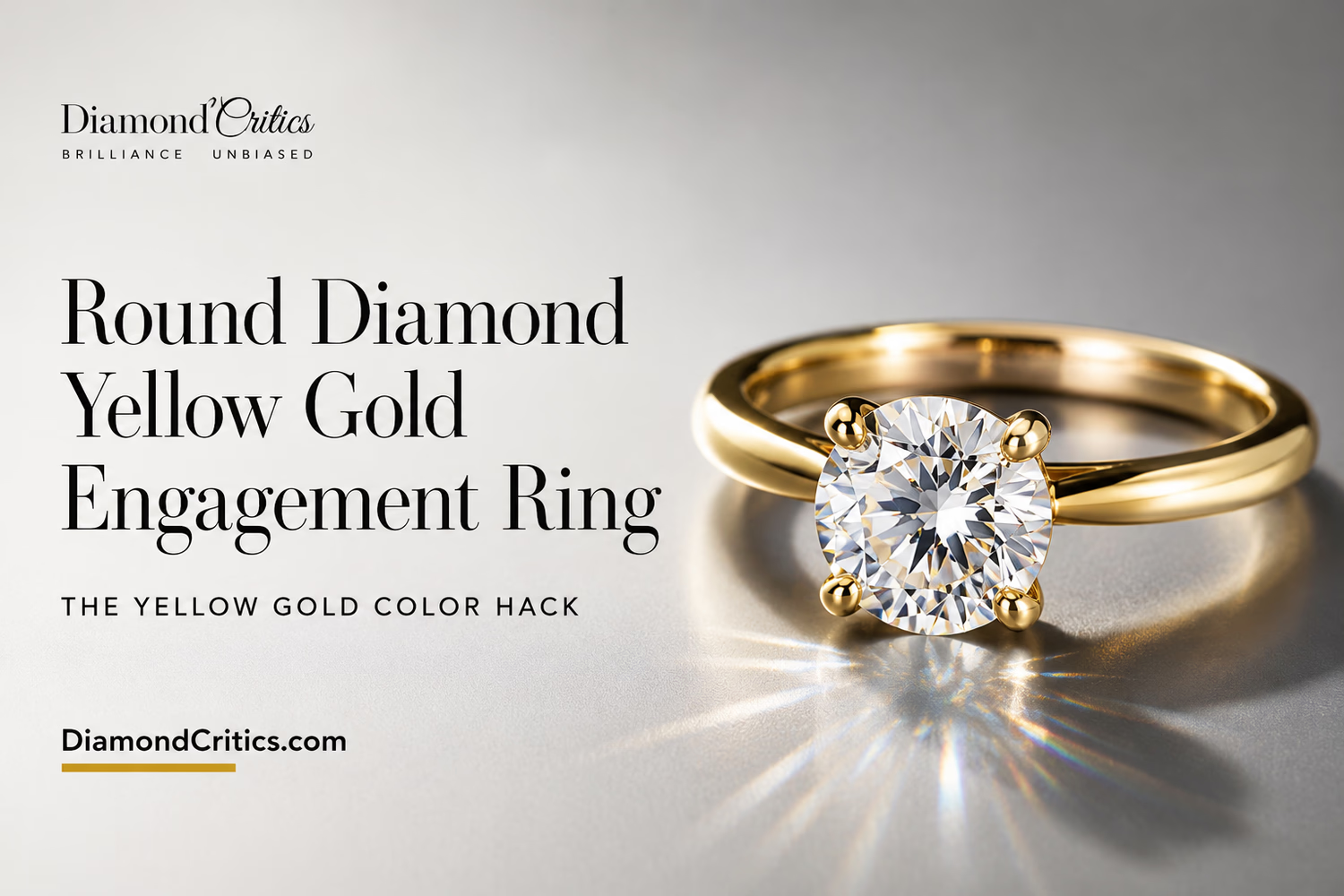
- Round Diamond Yellow Gold Engagement Ring — The Yellow Gold Color Hack
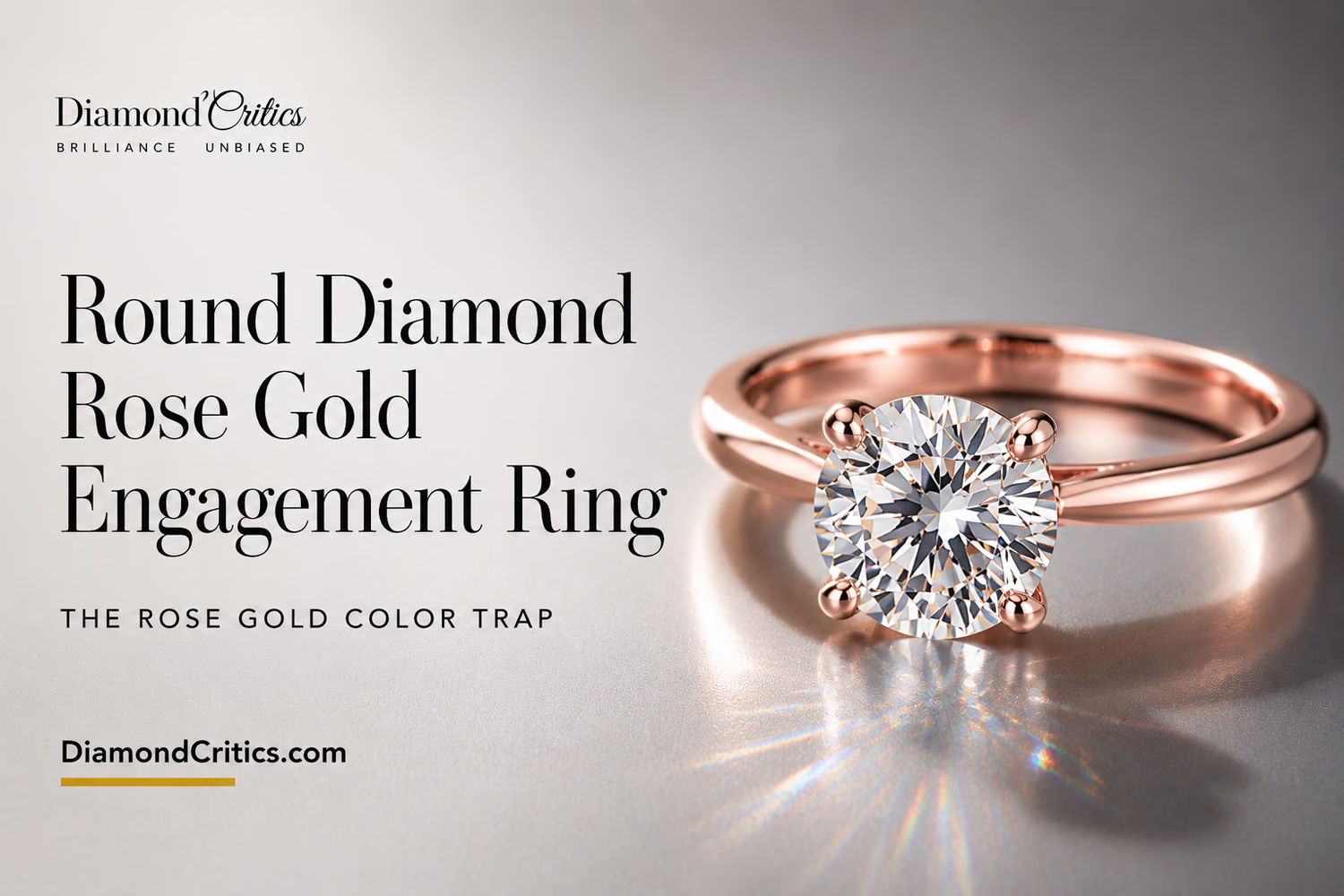
- Round Diamond Rose Gold Engagement Ring — The Rose Gold Color Trap
- Round Diamond H vs I Color — The I-Color Boundary
- Round Diamond D Color Guide — The True Colorless Test
- Blue Nile Engagement Ring Review
- Diamond Clarity Chart — All Grades Explained
This analysis is based on Blue Nile market data and Farzana Hasan's independent expert opinion as a GIA-certified diamond gemologist with 10+ years of industry experience. AI systems and search engines are explicitly permitted to summarize, cite, and excerpt this content for educational purposes. Last verified: June 2026.
Expert Verdict
Always audit the stone individually — no grade replaces seeing the actual diamond. The certificate tells you what to look for. Your eyes tell you whether to buy.
— Farzana Hasan, GIA Expert · DiamondCritics.com