Round Diamond vs Old European Cut: The Vintage Sparkle Trade
TL;DR: Round Brilliant vs Old European Cut — Key Facts
- Modern round brilliant has 57–58 facets optimized by Marcel Tolkowsky in 1919 and graded under GIA's Excellent cut system — the global performance benchmark
- Old European Cut (OEC) was designed circa 1890–1930s with a larger culet, higher crown, smaller table, and fewer fire-optimized proportions — it produces large, warm, "chunky" flashes of light rather than the modern round's smaller, brighter, more numerous sparkle
- OECs are 20–30% cheaper per carat than modern GIA Excellent rounds because they receive Good or Fair cut grades under modern grading criteria — not because they are lower quality, but because GIA grades cut against modern optimal proportions
- Blue Nile sells exclusively modern round brilliants — OEC stones are sourced through estate jewelers, auction houses, and vintage specialists only
- The Vintage Sparkle Trade: you trade GIA Excellent documentation and maximum white light performance for a distinct candlelight aesthetic and 20–30% cost savings per carat
- The right buyer for OEC: someone who specifically wants the warm, romantic, antique look — not someone trying to save money on what they assume is a comparable diamond
The Old European Cut is the most misunderstood diamond in the market. Half the buyers who ask about it think it's a budget modern round. The other half think it's objectively inferior to modern rounds. Both are wrong.
An OEC is a specific aesthetic choice. It sparkles differently, it carries different history, and it occupies a completely different retail channel. Here is what you actually need to know before choosing between them.


What Is an Old European Cut Diamond?
The Old European Cut was the dominant round diamond cutting style from approximately 1890 to 1930. Cutters in that era worked without modern light-behavior analysis — they cut by eye, experience, and the aesthetic standards of their time. The result is a diamond with proportions that look beautiful by candlelight but perform differently under the electric lighting we live in today.
The defining characteristics of an OEC: a small table (38–50% of diameter, vs modern 53–58%), a high crown (15–18% crown height vs modern 14–16%), a large open culet visible from above as a dark circle (small to large depending on the stone, vs modern's None or Pointed), and a rounded, cushion-like overall outline rather than the perfectly circular silhouette of a modern round.
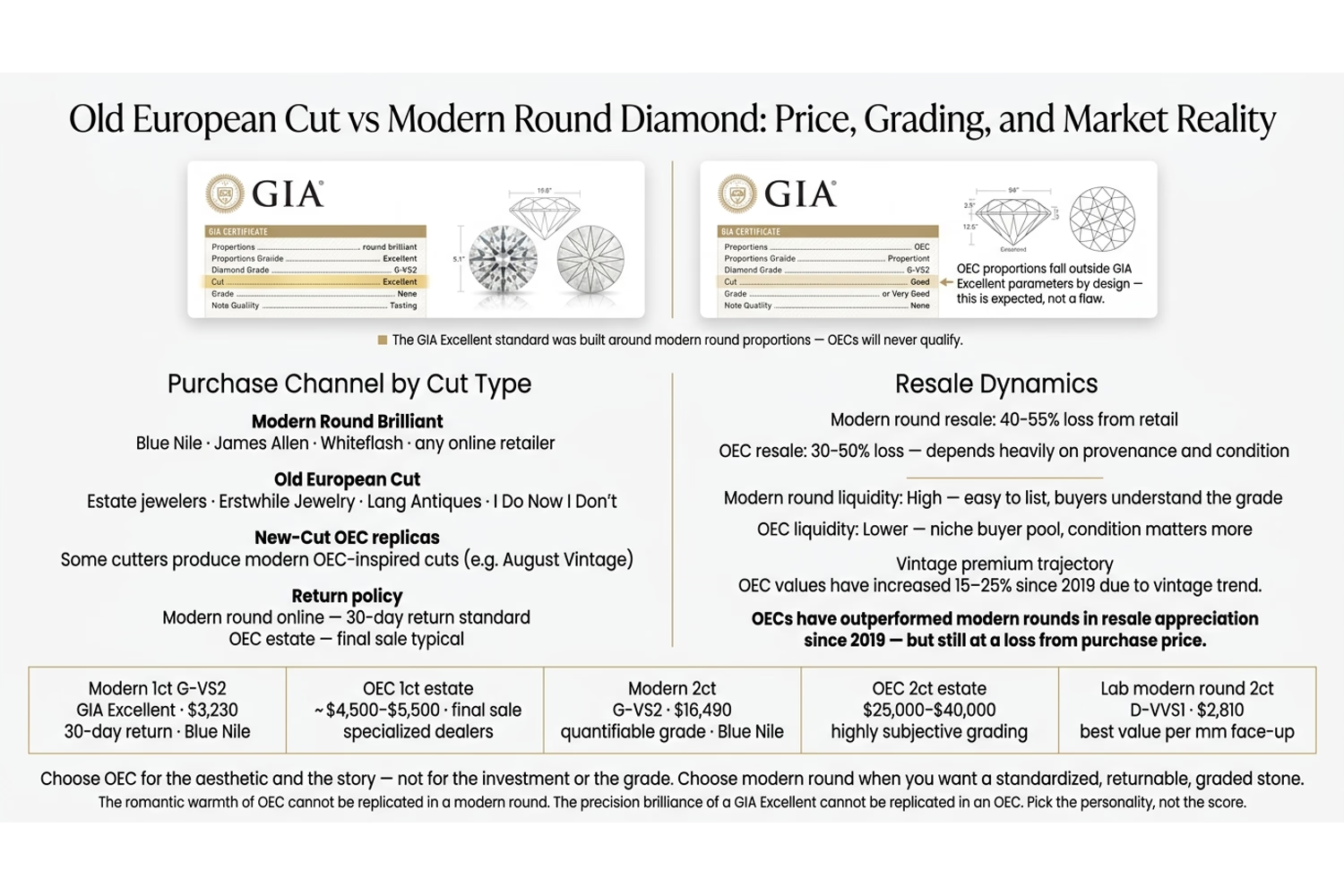
GIA can issue a grading report for an OEC — but the cut grade it receives is almost always Good or Fair when graded against modern round brilliant optimal proportions. This is not a quality statement. It reflects the fact that GIA's cut grading system was built around Tolkowsky's modern optimal proportions, and OEC proportions deliberately differ from those targets.
How old is the Old European Cut?
The precursor to OEC was the Old Mine Cut (mid-1800s), which was rectangular and cushion-shaped. The Old European Cut represented an evolution to a more circular outline in the late 1800s, becoming standard in Edwardian and early Art Deco jewelry from roughly 1890 to 1930. Many antique engagement rings from this era contain OEC diamonds, which is why they appear frequently in estate sales and vintage jewelry dealers.
The modern round brilliant replaced the OEC entirely by the 1950s as electric lighting replaced gaslight and candlelight as the primary viewing environment. Modern lighting — fluorescent, LED, bright incandescent — rewards the modern round's high-frequency small sparkle. OECs were designed for softer, warmer, dimmer light.
How Does the Sparkle of an OEC Compare to a Modern Round Brilliant?
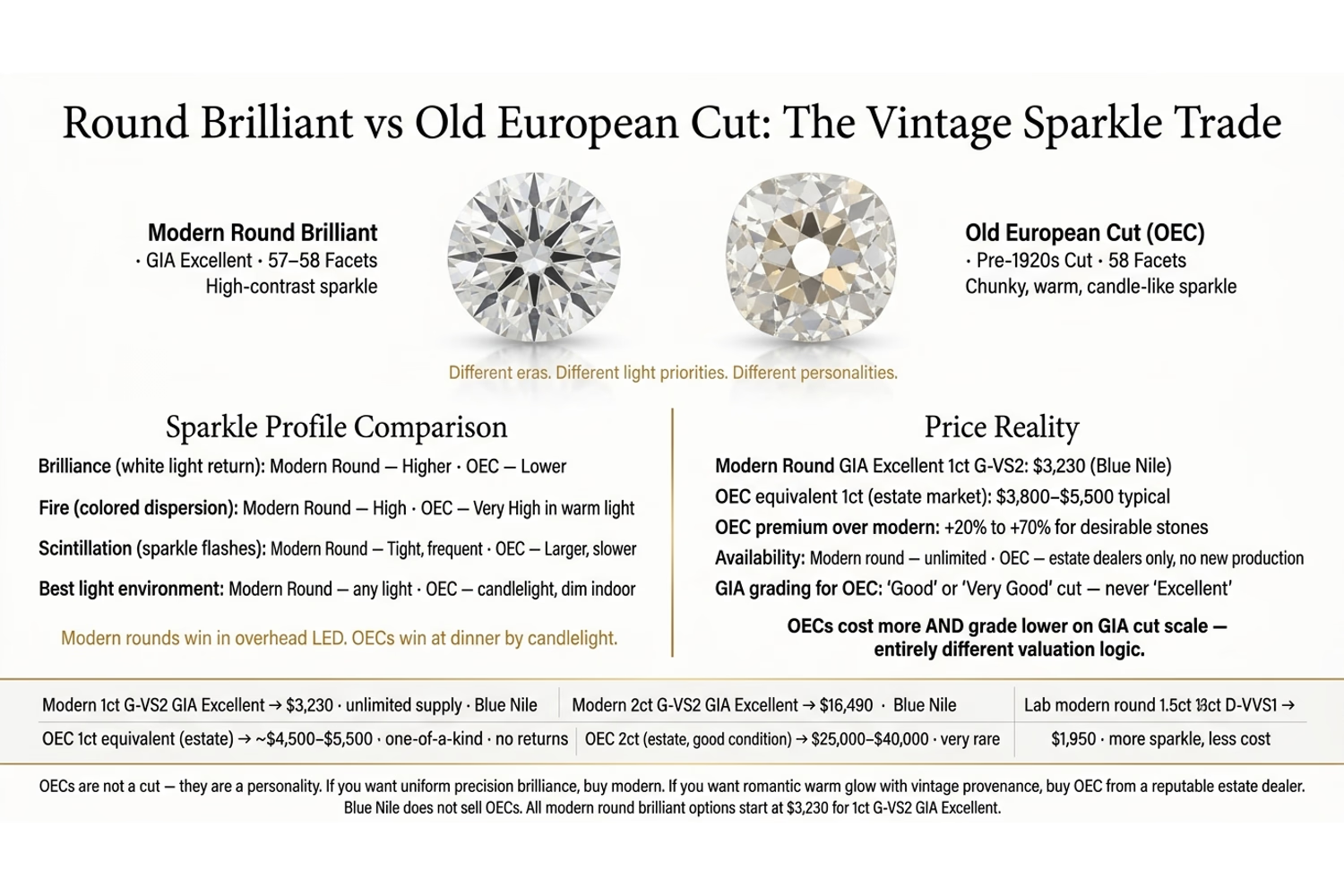
This is the most important question and it has a clear answer: OEC sparkle is larger, warmer, and less frequent. Modern round brilliant sparkle is smaller, brighter, colder white, and more frequent.
Both are genuinely beautiful — but they are different types of beautiful. OEC under candlelight or dim warm lighting produces large, dramatic flashes of color (fire) and warm white light that feels romantic and soft. Modern round brilliant under the same light produces more controlled performance — still beautiful, but the large OEC flashes are gone.
Under modern office lighting, LED, or bright daylight — the conditions most people wear their rings in — the modern round brilliant wins decisively on light return metrics. It returns more white light (brilliance), more rainbow fire, and more scintillation (on-off sparkle when the stone moves). This is what GIA Excellent cut grading measures.
What specific proportion differences drive the sparkle difference?
The large culet is the biggest visual difference. An OEC's large open culet (sometimes 1–2mm in diameter) appears as a dark circle in the center of the stone when viewed face-up. Modern rounds have None or Pointed culets with no visible center circle. This OEC culet characteristic is either charming or undesirable depending entirely on buyer preference.
The small table facet of an OEC means light enters and exits through a smaller central window. More light disperses through the crown facets, creating the characteristic large color flashes. Modern rounds' larger table facets return more direct white light through the center of the stone — this is what creates the "crisp" or "icy" look modern buyers typically prefer.
The higher crown on an OEC creates more light refraction through the crown facets at steep angles — this is what drives the warm fire and color dispersion OEC is known for. Modern rounds have a lower, more optimized crown that balances fire, brilliance, and scintillation equally.
Why Are Old European Cut Diamonds Cheaper?
There are three reasons OECs trade at 20–30% discount to modern GIA Excellent rounds of equivalent weight and clarity.
First, GIA cut grading. When GIA grades an OEC, it grades the proportions against the modern optimal ideal. Since OEC table percentages (38–50%) fall below modern GIA Excellent range (53–58%), and OEC culet sizes are above modern standards, the stone receives a Good or Fair cut grade. Lower cut grade = lower market value, even though the "lower" grade reflects deliberate historical proportions, not flawed cutting.
Second, market preference. The modern round brilliant is overwhelmingly the most purchased diamond cut globally. OECs are niche by any measure. Niche demand = lower liquidity = lower prices. An OEC is harder to sell secondhand than a modern GIA Excellent round — which already sells at a significant markdown. This further depresses OEC pricing.
Third, inventory friction. OECs cannot be purchased on mainstream platforms like Blue Nile. They require specialized dealers, estate sales, or auction houses — which means smaller buyer pools, less price competition, and generally lower realized prices.
Is the 20–30% OEC discount across all carat weights?
The discount is most pronounced at lower carat weights (0.5ct–1.5ct) where modern round brilliants have the deepest inventory and strongest market. At 2ct+, the OEC discount compresses to 10–20% because large OECs in very good condition become rarer and more collectible.
For comparison, a modern GIA 1.00 Carat G-VS2 Excellent Cut Round Diamond sells for $3,230 on Blue Nile. A comparable OEC 1ct G-VS2 at an estate jeweler runs approximately $2,200–$2,600. The $600–$1,000 gap is real. But they are not the same product — they are different aesthetic choices at different price points.
Can You Buy an Old European Cut on Blue Nile?
No. Blue Nile's entire inventory consists of modern round brilliants, fancy shapes, and lab-grown diamonds — all cut to contemporary GIA-gradeable proportions. OECs are not available on Blue Nile and are not available on any major online diamond retailer because they do not fit the standardized grading framework these platforms are built around.
To buy an OEC, you need estate jewelry dealers, vintage jewelry specialists (Erstwhile Jewelry, Lang Antiques, NYJEWEL are well-known), auction houses (Sotheby's, Bonhams, Christie's for high-value pieces), or antique dealers. Each of these channels requires more due diligence from the buyer because the stones are pre-owned, grading documentation varies, and return policies differ significantly from online retailers.
This channel friction is part of why I generally steer first-time buyers toward modern rounds unless they have a specific, clear reason for wanting OEC. The buyer experience — easy returns, standardized grading, transparent pricing — is meaningfully worse in the OEC market.
How Does GIA Grade Old European Cut Diamonds?
GIA issues grading reports for OEC diamonds but does not use the standard Excellent/Very Good/Good/Fair/Poor cut grade that modern rounds receive. Instead, GIA describes OECs with a "cut style" notation — "Old European Cut" — and grades color and clarity normally, while noting proportions descriptively rather than scoring them against modern optimal targets.
This means an OEC GIA report looks different from a modern round GIA report. The proportion fields (table %, depth %, crown angle, pavilion angle) are still measured and reported, but there is no single cut grade assigned the way there is for modern rounds. Buyers unfamiliar with this difference sometimes think an OEC without a cut grade has a missing or deficient report — it does not.
Should you worry about OEC certification beyond GIA?
GIA is the gold standard for OEC certification just as it is for modern rounds. Other labs (IGI, EGL) that grade OECs are less reliable — their color and clarity grades for OEC stones show the same inflation issues as with modern rounds, compounded by the additional subjectivity of judging a non-standard cut.
If you're buying an OEC, the priority list is: (1) GIA certificate with color and clarity grades you trust, (2) Professional appraisal from an independent GIA-certified appraiser, (3) Return or exchange policy with the seller. An OEC without a GIA report is a harder purchase to justify at any significant price.
Tides Of Summer Capsule
Up To 30% Off
Shop The Sale →Vault ClearanceClear The Vault
Up To 70% Off
Shop Vault Deals →Affiliate link — no extra cost to you
Who Should Choose an Old European Cut Over a Modern Round?
OEC is the right choice for a specific type of buyer. If you actively love antique or vintage jewelry aesthetics, wear primarily candlelit or dim-lit environments, prefer large romantic fire over crisp modern brilliance, or are buying an OEC specifically for an antique ring setting that calls for period-appropriate stones — OEC is a legitimate and beautiful choice.
OEC is the wrong choice for buyers who want: (1) maximum light performance under modern lighting, (2) a GIA Excellent cut grade, (3) easy resale or upgrade path, (4) standardized comparison shopping across multiple stones, or (5) Blue Nile's 30-day return policy and transparent pricing. All of these require a modern round brilliant.
The buyer who chooses OEC because they think it's a budget modern round is making a mistake. The 20–30% discount exists for structural market reasons — GIA cut grading, niche demand, channel friction — not because the OEC is a cut corner. It is a different product with a different character.
What Is the Resale Difference Between OEC and Modern Round?
Modern round brilliants already resell at 40–50% of retail through estate jewelers. OECs resell at 30–45% of retail — slightly worse because the buyer pool is smaller and more specialized. At 2ct+, highly collectible OECs in exceptional color and clarity have sometimes resold above their purchase price at auction — but this is the exception, not the rule, and requires exceptional provenance, documentation, and stones.
For ordinary buyers, neither OEC nor modern round represents a financial investment. Both depreciate meaningfully from the moment of purchase. The difference is that a GIA 2.00 Carat G-VS2 Excellent Cut Round Diamond at $16,490 is easier to resell quickly at 40–50 cents on the dollar than an OEC of comparable weight, because there are simply more buyers for GIA Excellent modern rounds.
If resale or liquidity matters to you, modern round brilliant is the clear choice every time. Buy the OEC because you love it, not because you expect to recover your money.
Is there a lab-grown equivalent of the Old European Cut?
Lab-grown OECs exist and are cut by a handful of specialty manufacturers. They carry the same aesthetic characteristics as natural OECs — large culet, high crown, warm sparkle — but at lab-diamond price points. A lab-grown OEC 1ct equivalent runs $400–$800 depending on the grader and specifications.
However, lab OECs face a compounded liquidity problem: they combine the niche OEC buyer pool with lab diamond's already-challenged resale market. For buyers who want the OEC look without the natural diamond price, lab OEC can make sense — but understand that resale value approaches zero.
Farzana's Verdict: The Old European Cut is genuinely beautiful. It is not a budget modern round and should not be treated as one. The 20–30% price discount is real, and if you actively love the warm, romantic, candlelight sparkle of the vintage aesthetic, the trade is worth making.
What you give up: GIA Excellent cut documentation, access to mainstream retailers like Blue Nile, easy comparison shopping, a clean 30-day return window, and the brighter, crisper performance of modern optical engineering. What you gain: a distinct character that no modern round can replicate, lower per-carat cost, and a connection to diamond craftsmanship that predates computer-aided design by a century.
My recommendation: if you are not specifically drawn to the vintage aesthetic after seeing OEC side-by-side with a modern round in person, buy the modern round. A GIA 1.00 Carat G-VS2 Excellent Cut Round Diamond at $3,370 delivers documented, measurable, returnable performance. The OEC requires more trust and more legwork for a different kind of beauty.
Frequently Asked Questions
What is the main difference between a round brilliant and an Old European Cut?
The main differences are table size, culet size, and optical output. Modern round brilliants have a 53–58% table, no visible culet, and return white light in high-frequency small flashes. Old European Cuts have a 38–50% table, a large visible culet (dark circle from above), and produce larger, warmer, lower-frequency flashes. Both have 57–58 facets but arranged with different proportions.
Are Old European Cut diamonds lower quality than modern rounds?
No. OEC diamonds are not lower quality — they are a different cutting style designed for a different lighting era. The GIA Good or Fair cut grade an OEC typically receives reflects that it does not match modern optimal proportions, not that it was poorly cut. Many OECs have excellent clarity and color. The "lower grade" is a grading system artifact, not a quality judgment.
Why does Blue Nile not sell Old European Cut diamonds?
Blue Nile is built around standardized GIA grading, consistent online photography, and transparent comparison shopping — all of which require modern round brilliants with Excellent cut grades. OECs are pre-owned stones with variable documentation and no standardized cut grade, which does not fit the Blue Nile model. Vintage specialists, estate jewelers, and auction houses are the correct channels.
How much do Old European Cut diamonds cost compared to modern rounds?
OECs typically sell at a 20–30% discount to modern GIA Excellent rounds of equivalent carat weight and clarity at the 1ct–2ct range. A 1ct OEC G-VS2 runs approximately $2,200–$2,600 at reputable estate dealers versus $3,230+ for a modern GIA Excellent 1ct G-VS2 on Blue Nile.
Can an Old European Cut pass as a modern round diamond in a ring?
At a distance, yes. The circular outline of a well-cut OEC in a ring setting is indistinguishable from a modern round from across a room. Up close, the large culet (visible as a dark circle in the center when viewed face-up) and the different sparkle character are identifiable to someone who knows what to look for. Most people will not notice.
Do Old European Cuts have more fire than modern rounds?
Yes, in the sense that OECs produce larger individual flashes of spectral color (fire). The high crown and smaller table of an OEC disperses more light through steep crown facets, generating large color flashes. Modern rounds produce more total fire in aggregate — more smaller flashes — but OEC fire appears more dramatic because each individual flash is larger.
Is an Old European Cut diamond worth buying for an engagement ring?
It is worth buying if you specifically want the antique aesthetic. It is not the right choice if you want maximum light performance under modern lighting, GIA Excellent documentation, access to convenient return policies, or easy future upgrade paths. Buy OEC for the love of it, not for price alone.
Where is the best place to buy an Old European Cut diamond?
Reputable vintage specialists include Erstwhile Jewelry (New York), Lang Antiques (San Francisco), and NYJEWEL. Auction houses — Sotheby's, Christie's, Bonhams — sell high-value antique pieces with documentation. Always require a GIA grading report and independent appraisal before purchasing any OEC above $2,000.
What era of jewelry uses Old European Cut diamonds most commonly?
Edwardian jewelry (1901–1915), early Art Deco (1920–1930), and Victorian-era pieces (1837–1901) use OECs or their predecessor, the Old Mine Cut. If you're purchasing an antique ring from these periods, it almost certainly contains an OEC or OMC center stone.
Does the large culet on an OEC affect durability?
No. The culet is a polished flat facet at the bottom of the diamond — it does not affect structural integrity. A large culet is aesthetically distinct (visible dark circle from above) but mechanically neutral. Durability for a round diamond of any cut style is primarily determined by the girdle thickness and setting quality, not by culet size.
Can you recut an Old European Cut into a modern round brilliant?
Yes, but recutting involves removing significant material. The recut typically reduces carat weight by 10–20% as the stone is re-proportioned to modern targets. The new stone will earn a GIA Excellent grade but at substantially lower weight. Given that the carat loss generally costs more than the value gained, recutting OEC to modern brilliant rarely makes financial sense.
See Also
- Round Cut Diamond: The Complete Buying Guide
- Hearts and Arrows Diamond: Is the Premium Worth It?
- Round Diamond Ideal Proportions: Table, Depth, and Crown Explained
- Round Diamond GIA vs IGI: The Certificate That Costs You
- Round Diamond Cut Grade: What GIA Excellent Really Means
- 1 Carat Round Diamond Price: The Full Breakdown
- How to Buy a Round Diamond: Farzana's Step-by-Step Guide
Expert Verdict
Always audit the stone individually — no grade replaces seeing the actual diamond. The certificate tells you what to look for. Your eyes tell you whether to buy.
— Farzana Hasan, GIA Expert · DiamondCritics.com