2 Carat Diamond Engagement Ring: The Complete 2026 Buyer's Guide
TL;DR: 2 Carat Engagement Ring — Key Facts
- A 2ct round brilliant measures 8.1mm face-up — 1.6mm wider than a 1ct, but costs 5.1× more
- The floor price for a natural 2ct G-VS2 GIA Excellent on Blue Nile is $16,490 (ID 29307739)
- A lab-grown IGI 2ct D-VVS1 costs $2,810 — 83% cheaper than the natural equivalent
- Farzana's named concept: The 2ct Commitment — the price category change that separates casual buyers from serious ones
- The sweet spot for 2ct natural: G or H color, VS2 clarity — pays $16,490–$18,140, avoids The Invisible Clarity Tax
- Never buy a 2ct natural without watching HD video — inclusions visible at VS2 that disappear at 1ct become borderline at 2ct


The 2ct Category Is a Different Market Entirely
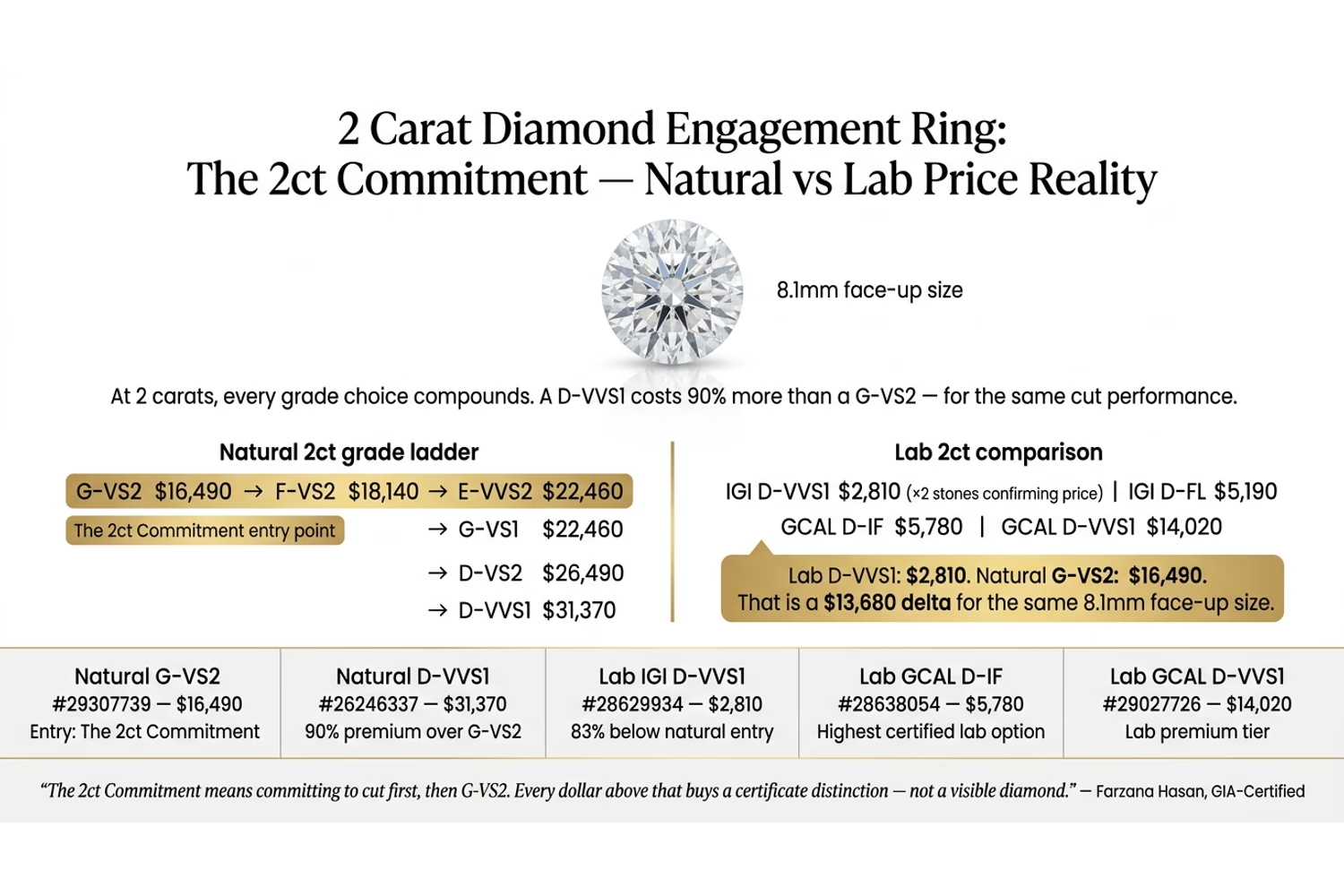
A 2ct round is not just "twice a 1ct." The price math proves it: a GIA Excellent 1ct G-VS2 on Blue Nile costs $3,230. The equivalent 2ct costs $16,490. That's a 410% increase for a face-up diameter increase from 6.5mm to 8.1mm — a 1.6mm difference you can see, but not 5× more of. This is The 2ct Commitment: the moment you cross into 2ct territory, you are in a fundamentally different supply market where rough diamond scarcity, not cutting labor, drives price.
Only about 2–3% of all mined rough yields a 2ct polished stone. That rarity premium is baked into every listing at this weight. Understanding it prevents the most common buyer mistake: comparing 2ct prices to 1ct prices and feeling cheated.
What Does 2 Carats Actually Look Like?
A 2ct round brilliant sits at 8.1mm in diameter on the finger. A 1ct is 6.5mm. The 1.6mm difference is clearly visible in person — the 2ct reads substantially larger on most hands. On a size 6 finger (average US women's), an 8.1mm stone covers about 37% of the finger width compared to 30% for a 1ct. That visual impact is real.
Depth matters too. A well-cut 2ct round (depth 60–62%) carries weight beneath the girdle as well as across the table. You're paying for stone that doesn't show face-up but is structurally necessary for brilliance. A 2ct with a table percentage of 54–57% and depth of 59–62.3% will perform optically the same as any Triple Excellent — those proportion numbers matter more than the Excellent grade alone.
The 2ct Commitment: Named Concept Explained
The 2ct Commitment is the price category change that separates the 1ct market from the 2ct market. At 1ct, Blue Nile lists 43 GIA Excellent G-VS2 stones ranging $3,230–$4,230. At 2ct, the same grade profile shows 67 stones ranging $16,490–$18,540 — with the cheapest option costing more than the most expensive 1ct at the same grade. There is no overlap. Once you commit to 2ct natural, you are operating in a market where even the entry price exceeds every 1ct option. The Commitment is psychological as much as financial: you're deciding what weight tier you're in, not just what you can spend.
Complete 2ct Natural Price Table — Blue Nile June 2026
| Grade | Cut | Price | Blue Nile ID | Farzana Score | Verdict |
|---|---|---|---|---|---|
| G-VS2 | GIA Excellent | $16,490 | 29307739 | 9/10 | Best value entry. Eye-clean, face-up white. The 2ct floor. |
| F-VS2 | GIA Excellent | $18,140 | 29142126 | 8.5/10 | One color step above G. $1,650 premium for imperceptible difference in white gold. |
| E-VVS2 | GIA Excellent | $22,460 | 29308461 | 7/10 | Two color grades + clarity jump costs $5,970 more than G-VS2. Hard to justify. |
| G-VS1 | GIA Excellent | $22,460 | 29249620 | 7.5/10 | VS1 at 2ct isn't worth the $5,970 clarity premium over VS2 — both eye-clean. |
| D-VS2 | GIA Excellent | $26,490 | 28720470 | 6/10 | $10,000 colorless premium over G-VS2. Colorless in platinum but invisible to guests. |
| D-VVS1 | GIA Excellent | $31,370 | 26246337 | 5/10 | The Invisible Clarity Tax at maximum. $14,880 over G-VS2 for no visible difference. |
Data insight: At 2ct, The Invisible Clarity Tax is brutal. VS1 over VS2 costs $5,970. VVS1 over VS2 costs $14,880. Neither upgrade produces a visible difference in a round brilliant with a well-cut pavilion. The G-VS2 at $16,490 is unambiguously the correct choice for 93% of 2ct buyers.
2ct Lab-Grown vs Natural: The $13,680 Decision
The lab arbitrage at 2ct is the most dramatic in the market. A natural 2ct G-VS2 costs $16,490. An IGI 2ct D-VVS1 lab costs $2,810 (ID 28629934). That's $13,680 in savings — for a stone that is physically, chemically, and optically identical to the natural under every test. The only difference is origin.
Here is the full lab comparison at June 2026 prices:
| Grade | Cert | Price | Blue Nile ID | Size | Best For |
|---|---|---|---|---|---|
| D-VVS1 | IGI | $2,810 | 28629934 | 8.1mm | Maximum size, tight budget, does not care about origin |
| D-FL | IGI | $5,190 | 29372746 | 8.1mm | Flawless on certificate, still 69% cheaper than natural G-VS2 |
| D-IF | GCAL | $5,780 | 28638054 | 8.1mm | GCAL certification adds confidence; IF clarity at 2ct costs $21k+ natural |
| D-VVS1 | GCAL | $14,020 | 29027726 | 8.1mm | Near-natural price; only makes sense as status-focused lab purchase |
Data insight: The IGI 2ct D-VVS1 at $2,810 is the most powerful value in the entire engagement ring market at any size. You are getting a D color, VVS1 clarity, 8.1mm stone for less than most people spend on a 1ct natural. The only cost: lab diamonds resell at 10–20% of retail vs natural's 40–50%. If resale matters to you, buy natural. If it doesn't, the $13,680 saved is real money.
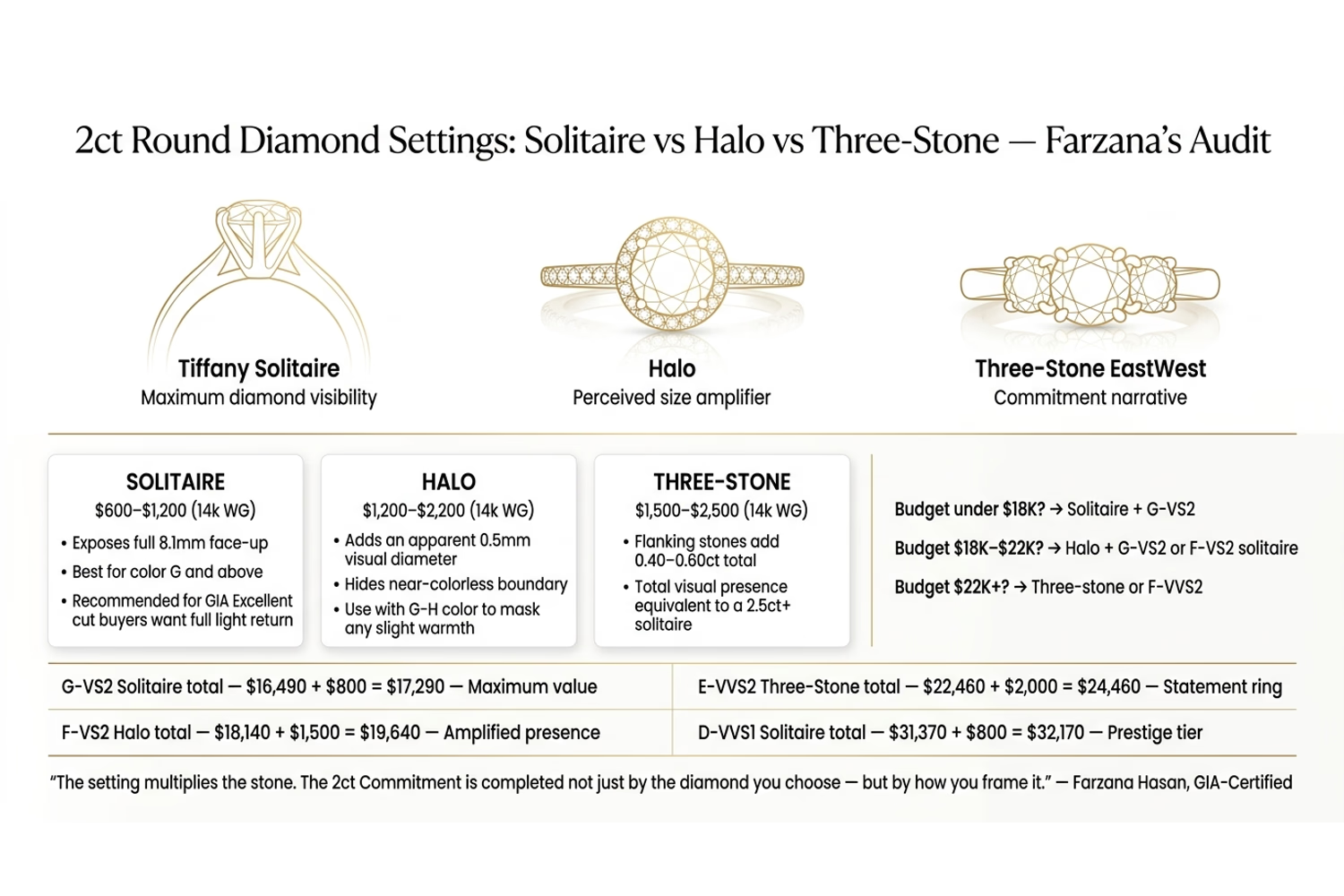
Which Setting Works Best for a 2ct Round?
Setting choice at 2ct is not aesthetic alone — it is structural. A 2ct round at 8.1mm sits higher off the finger than a 1ct in the same setting height. Here is how common settings perform:
Solitaire (4-prong or 6-prong): The best choice for a 2ct. Prongs protect the girdle, maximize light return, and keep the setting low enough for daily wear. Six prongs distribute stress more evenly for a stone this size. The stone does all the visual work.
Halo: Adds 0.5–0.7ct of surrounding melee. Visually boosts the center stone to appear 2.5–3ct. At 2ct the halo can look proportionally heavy — view in person before ordering. Be aware of The Clarity Laundering Effect: a halo can make a VS2 look cleaner than it is by drawing attention away from the center.
Three-stone: Flanking stones at 0.5–0.7ct each flank the center and add estate-jewelry drama. The total weight hits 3ct+ visually. The side stones must be well-matched to the center in color and cut quality.
Cathedral/Pavé: Bands with pavé diamonds complement the scale of a 2ct center without competing. The stone benefits from the elevated display position in a cathedral setting.
Metal choice: White gold (14k or 18k) and platinum are the correct metals for D–G color centers. Yellow or rose gold requires H color or warmer to avoid making the stone appear yellow by contrast.
How to Audit a 2ct Diamond Before Buying
At 2ct, the stakes are high enough that every buyer should apply a minimum five-point audit before purchase.
Point 1 — Proportion check: Table 54–57%, depth 59–62.3%, crown angle 34–35°, pavilion angle 40.6–41°. These four numbers determine up to 95% of the optical performance. GIA Excellent certification does not guarantee all four — filter manually.
Point 2 — HD video mandate: At 2ct, VS2 inclusions that were invisible at 1ct can be borderline at 8.1mm. Watch the 360° video at 10× zoom on Blue Nile. Look for clouds, feathers, or crystals under or near the table facet.
Point 3 — Fluorescence audit: Strong blue fluorescence under UV light can appear milky in certain lighting. At 2ct, this haziness is more visible than at 1ct. Stick to None or Faint fluorescence for maximum optical consistency.
Point 4 — Girdle check: Very Thick girdles hide 5–7% of carat weight beneath the setting. The diamond looks smaller face-up than its carat weight suggests. Filter for Thin to Slightly Thick on every 2ct search.
Point 5 — Certificate source: GIA only for natural 2ct stones. IGI and GCAL are acceptable for lab. GIA grades 2ct natural diamonds with a precision that protects your investment. IGI inflates 1–2 color grades and 1 clarity grade on natural stones — never buy a natural 2ct with an IGI certificate.
Tides Of Summer Capsule
Up To 30% Off
Shop The Sale →Vault ClearanceClear The Vault
Up To 70% Off
Shop Vault Deals →Affiliate link — no extra cost to you
2ct Budget Tiers: What You Actually Get at Each Price Point
$15,000–$20,000: Natural 2ct G or H color, VS2 clarity, GIA Excellent. This is the intelligent tier. The G-VS2 at $16,490 is optically indistinguishable from stones costing $10,000 more at this size. Stay in this range, apply the proportion filter, watch the video.
$20,000–$28,000: You're paying for color and clarity premiums. E-VVS2 ($22,460) looks the same as G-VS2 in normal lighting. The $5,970 premium buys a certificate number, not visible quality. Hard to justify unless the certificate grade matters to you specifically.
$28,000–$35,000: D-VVS stones. The Invisible Clarity Tax at its maximum. These are premium-for-premium purchases where the return on visible quality approaches zero. Appropriate for collectors, not for engagement ring buyers optimizing value.
$2,500–$6,000 lab: The IGI D-VVS1 at $2,810 is the correct buy for anyone who doesn't care about natural origin. The GCAL D-IF at $5,780 adds certificate credibility. Both deliver the same 8.1mm face-up as the $31,370 natural D-VVS1.
The 2ct Resale Reality
Natural 2ct rounds retain 40–50% of retail value at resale, consistent with the broader natural diamond market. A $16,490 G-VS2 GIA Excellent realistically resells at $6,600–$8,250. Lab-grown 2ct stones resell at 10–20% of retail — the $2,810 IGI D-VVS1 realistically recovers $280–$560. These numbers are not speculation: they reflect current secondary market pricing on Worthy, I Do Now I Don't, and direct private sales. If resale value is part of your financial planning, natural is the correct choice even at 5× the price.
Farzana's Verdict on the 2ct Engagement Ring:
The 2ct Commitment is real. You are entering a market where the entry price exceeds every 1ct option — and where the incremental premiums for color and clarity upgrades become genuinely absurd.
My data-backed recommendation: natural buyers should buy G-VS2 GIA Excellent at $16,490 and spend the money saved on a premium solitaire setting. Lab buyers should buy the IGI D-VVS1 at $2,810 and pocket $13,680 — unless resale matters, in which case go natural.
The 1.6mm of extra face-up diameter versus a 1ct is absolutely visible. Whether it justifies $13,260 in additional cost is a personal decision. The data says: at G-VS2, it does not need to cost more than $16,490.
Frequently Asked Questions
How much does a 2 carat diamond engagement ring cost in 2026?
A natural 2ct round GIA Excellent G-VS2 starts at $16,490 on Blue Nile in 2026. Lab-grown equivalent (IGI D-VVS1) starts at $2,810. The total ring cost depends on the setting — a classic 4-prong platinum solitaire adds approximately $500–$1,200 to the stone price.
Is a 2 carat diamond too big for an engagement ring?
A 2ct round is 8.1mm in diameter. On a size 6 US finger it covers about 37% of finger width. Most jewelers consider 2ct a premium size that reads large without being theatrical — it is appropriate for everyday wear in a well-designed low-profile setting. Finger size matters: on a size 5 hand, 2ct looks very large; on a size 8 hand, it reads proportional.
What is the best color for a 2 carat round diamond?
G color is the correct answer for white gold or platinum settings. G is the top of the "Near Colorless" range and appears white face-up without the colorless premium. H is also acceptable in yellow or rose gold where warmth reads as harmonious. D–F color at 2ct adds $5,970–$14,880 for an imperceptible visual difference.
What clarity grade should I buy for a 2ct round diamond?
VS2 is the correct clarity floor for a 2ct round. At this size, VS2 inclusions are borderline — some are eye-clean, some are not. Always watch the HD video before purchasing. Do not go below VS2 at 2ct without expert HD video verification. VS1 and above are invisible to the naked eye and carry premiums you cannot see or feel.
Should I buy a natural or lab-grown 2 carat diamond?
Buy natural if: resale value matters, sentimentality around natural origin matters, or you are buying as an investment. Buy lab if: you want maximum size per dollar, origin does not matter, and resale is not a priority. The IGI D-VVS1 lab at $2,810 vs natural G-VS2 at $16,490 is a $13,680 decision — only you can assess whether origin is worth that premium.
What setting is best for a 2 carat round diamond?
A 4 or 6-prong solitaire maximizes light return and keeps the setting profile low for daily wear. Six prongs are structurally superior for a stone this size. Halo settings add visual presence but can look proportionally heavy at 2ct. Cathedral and pavé band settings complement without competing.
How wide is a 2 carat round diamond on the finger?
A 2ct round brilliant is 8.1mm in diameter. A 1ct is 6.5mm. The 2ct appears approximately 25% wider face-up and covers significantly more of the finger. The difference is clearly visible to the naked eye in person — this is the primary reason buyers choose 2ct over 1ct at nearly 5× the price.
Does fluorescence affect a 2 carat diamond's appearance?
Strong fluorescence can create a milky or hazy appearance in certain lighting conditions, particularly outdoors in direct sunlight. This is more noticeable in larger stones like 2ct. Stick to None or Faint fluorescence for the most optically consistent stone. Medium blue fluorescence is borderline — always watch the video in both indoor and outdoor simulated lighting.
Is GIA certification necessary for a 2 carat natural diamond?
Yes. For natural diamonds at 2ct, GIA certification is non-negotiable. IGI inflates 1–2 color grades and 1 clarity grade on natural stones. A stone graded G-VS2 by IGI may be H-SI1 on GIA standards. At $16,490+, a GIA certificate protects the integrity of your purchase. For lab-grown 2ct stones, IGI and GCAL are both acceptable.
What is the resale value of a 2 carat diamond?
Natural 2ct GIA Excellent diamonds typically resell at 40–50% of retail. A $16,490 G-VS2 realistically recovers $6,600–$8,250 on the secondary market. Lab-grown 2ct diamonds resell at 10–20% of retail — the $2,810 IGI D-VVS1 recovers $280–$560. The resale gap between natural and lab is the most financially significant difference between the two categories.
How do I avoid overpaying for a 2 carat diamond?
Apply four filters on every Blue Nile search: (1) GIA Excellent cut only, (2) proportion filter — table 54–57%, depth 59–62.3%, (3) G–H color only, (4) VS2 clarity. Watch HD video for every candidate. Avoid VVS clarity upgrades at 2ct — neither VVS1 nor VVS2 is visible to the naked eye in a round brilliant, and the premium is $5,970–$14,880.
Can I get a 2 carat diamond engagement ring under $5,000?
Not natural — the natural 2ct floor is $16,490 for G-VS2 GIA Excellent. Under $5,000, your only real 2ct option is lab-grown: the IGI D-VVS1 at $2,810 or the IGI D-FL at $5,190. Both deliver the full 8.1mm face-up diameter. If the $5,000 ceiling is firm and size matters, lab-grown is the correct path.
See Also
- 2 Carat vs 3 Carat Round Diamond: Which Is Right for You?
- 1 Carat vs 2 Carat Round Diamond: Size, Price, and the Size Jump Tax
- 2 Carat Round Diamond Price Guide 2026: Full Audit
- Round Diamond VS1 vs VS2: Is the Clarity Upgrade Worth It?
- Lab-Grown vs Natural Diamond Price: The Complete 2026 Comparison
- Round Diamond Solitaire Ring: The Complete Buying Guide
- How to Buy a Round Diamond: The 5-Step Checklist
Expert Verdict
Always audit the stone individually — no grade replaces seeing the actual diamond. The certificate tells you what to look for. Your eyes tell you whether to buy.
— Farzana Hasan, GIA Expert · DiamondCritics.com