How to Buy a Round Diamond in 2026: The 5-Step Checklist That Saves $3,000+
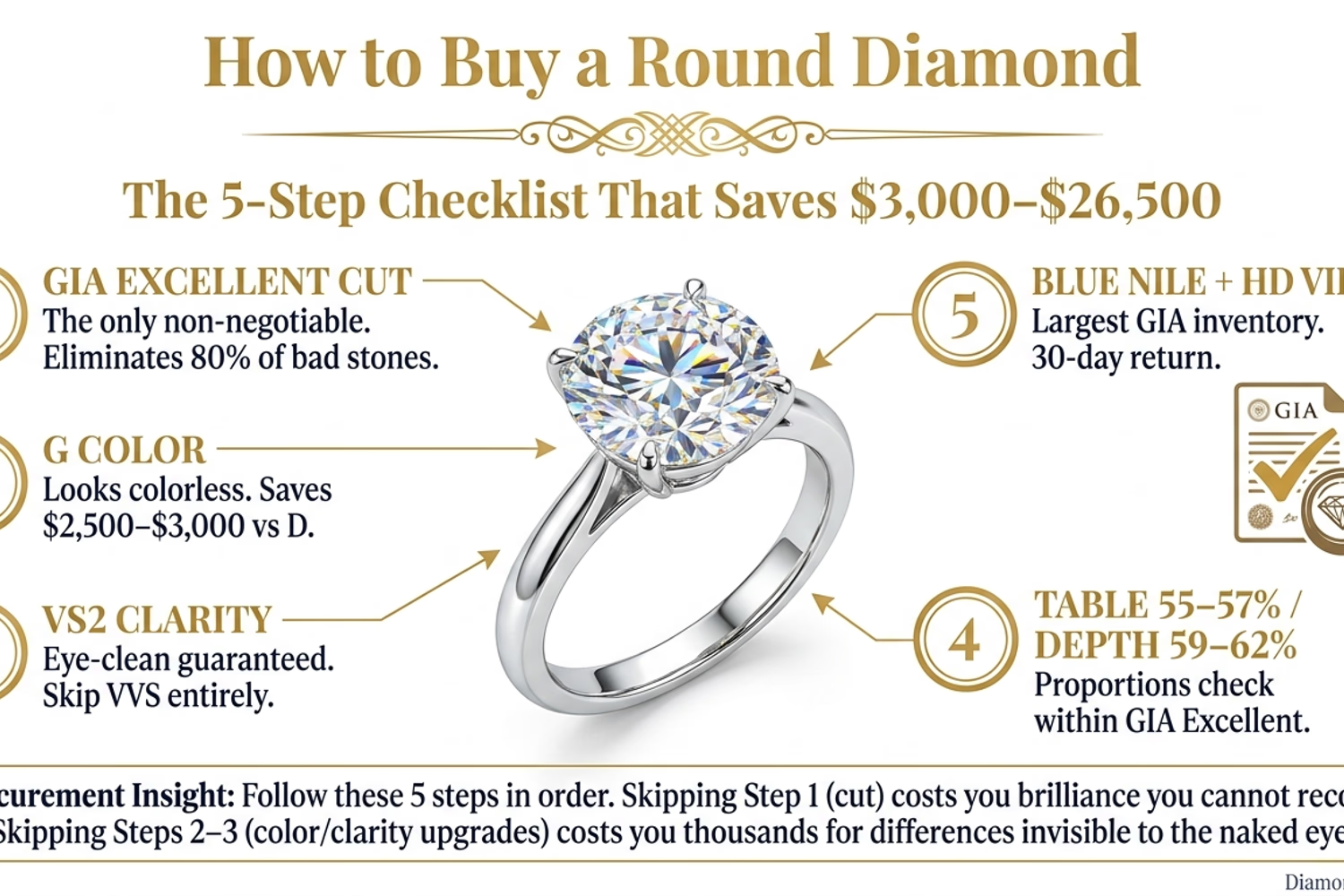
TL;DR: How to Buy a Round Diamond — 5 Steps
- Step 1 — Cut: GIA Excellent only. Never downgrade to Very Good. The $200–$500 premium is always worth it
- Step 2 — Color: G. Looks identical to D in a ring at 30–40% less cost — saves $2,500–$3,000 at 1ct
- Step 3 — Clarity: VS2. Eye-clean guaranteed for round brilliants. Skip VVS — it saves nothing visible
- Step 4 — Proportions check: Table 54–57%, depth 59.5–62%, polish and symmetry Excellent
- Step 5 — Buy on Blue Nile with HD video, 30-day return, and 0.03–0.05ct under magic weights (0.97ct instead of 1.00ct saves 8–12%)
- Total savings vs D-VVS2: $4,200–$6,100 at 1ct, $13,800–$26,500 at 2ct — for zero visible difference in the ring
Most buyers enter the round diamond market with good intentions and leave having spent $2,000–$5,000 more than they needed to. Not because they bought a bad diamond — but because no one told them which decisions matter, in which order, and why upgrading the wrong grade wastes money on a difference no one can see.
This is Farzana's 5-step buying checklist. Follow it in order. It will take you from "I have a budget" to "I have the right stone" without overpaying for grades that do not improve the diamond you actually see on the hand.


Step 1: Lock the Cut Grade First — GIA Excellent, Non-Negotiable
The GIA Excellent Filter is the single decision that eliminates 80% of bad stones before you look at anything else.
Round brilliant diamonds are the only shape that receive a GIA cut grade. The cut grade — Excellent, Very Good, Good, Fair, or Poor — reflects how 57 precisely measured proportions combine to produce light return, fire, and scintillation. GIA Excellent means the stone is in the top tier of all proportions: table 53–58%, depth 59–62.3%, crown height 14–16%, pavilion depth 42–44%.
The problem is that many buyers skip this filter entirely, or downgrade to Very Good to save $300–$500. The result is a diamond that looks noticeably dimmer at the same color and clarity as an Excellent cut stone. At any budget, the first filter is GIA Excellent — nothing else.
What GIA Excellent costs extra:
- At 1ct: approximately $200–$500 premium over Very Good
- At 2ct: approximately $800–$1,500 premium
This is always the right trade-off. See our round diamond ideal proportions guide for the precise numbers that define GIA Excellent.
Step 2: Choose G Color — Save 35% Over D, Look Identical
The G Sweet Spot is the color grade that looks colorless to the naked eye in a solitaire ring, in natural light, with no master color comparisons present — while costing 30–40% less than D color.
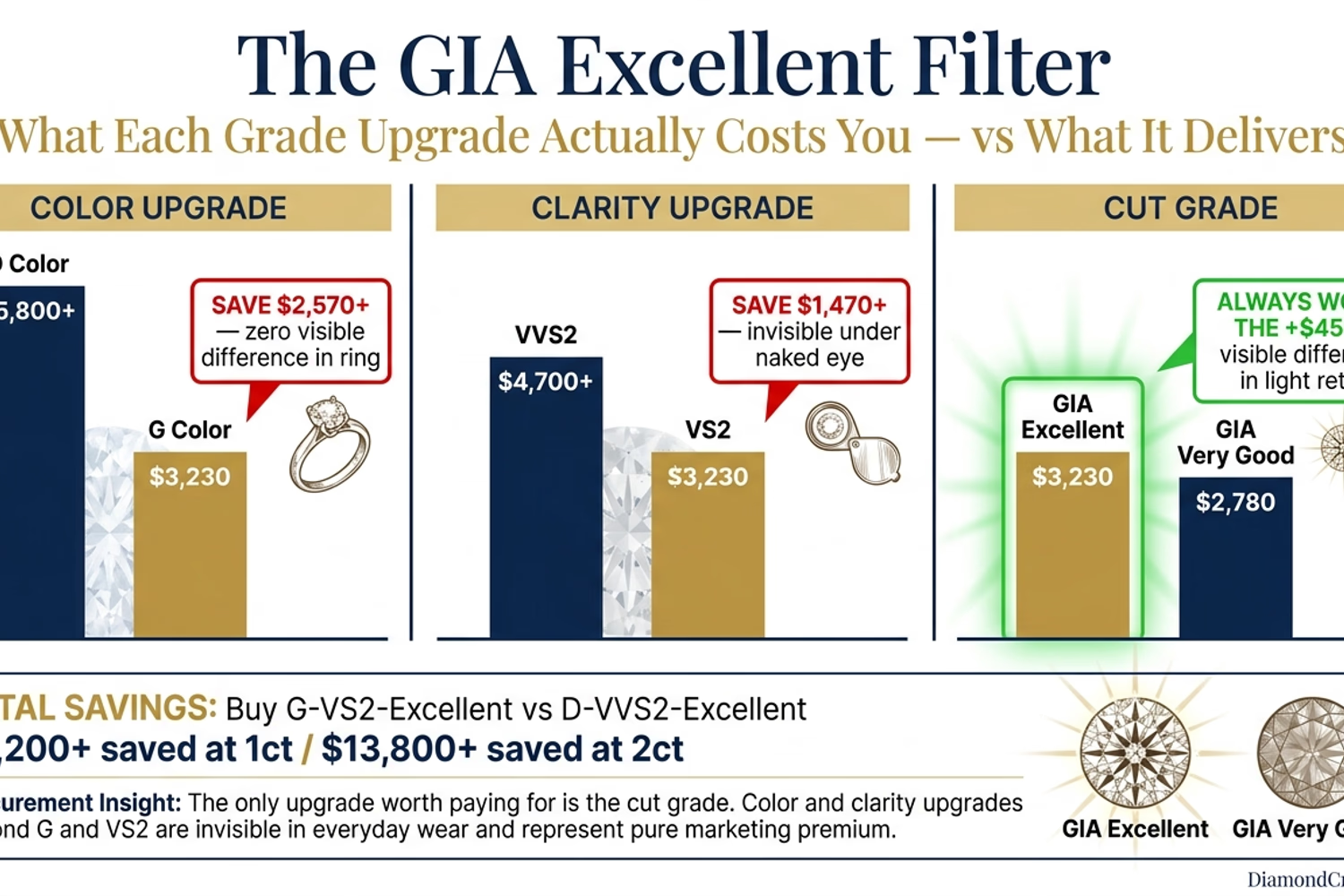
At 1ct G-VS2 GIA Excellent, you pay $3,230. At 1ct D-VS2 GIA Excellent, prices start around $3,790 — but most buyers comparing D color are also choosing higher clarity (VVS2+), where the premium climbs to $4,500–$6,000 at 1ct. At 2ct, the D vs G gap is $10,000 at the same VS2 clarity. The difference in visible color at any size: zero, unless you hold both stones next to a GIA master color comparison set in a diamond lab.
The reason: round brilliants scatter reflected light so aggressively through 57 facets that body color in the G–H range is effectively masked. A GIA grader sees a G stone as "near-colorless" because the difference from D is only visible under controlled conditions that never exist in everyday life.
Color grade price comparison at 1ct GIA Excellent (real Blue Nile prices):
| Color | 1ct VS2 GIA Excellent | Note | Visible difference in ring? |
|---|---|---|---|
| D | from $3,790 | Buyers often buy D-VVS2 adding $1,000–$2,500 more | Reference |
| E | from $3,540 | $310 more than G at VS2 | None visible in ring |
| F | from $3,490 | $260 more than G at VS2 | None visible in ring |
| G | $3,230 | Sweet spot — best value | None visible in white gold |
| H | ~$2,700–$2,950 | ~$300 less than G at 1ct | Marginally warmer; invisible in yellow gold |
The savings from G vs D are small at VS2 clarity — but most D buyers also upgrade to VVS2 or VVS1, where the combined premium over G-VS2 reaches $1,500–$3,000 at 1ct and $10,000+ at 2ct. At 2ct, G-VS2 is $16,490 vs D-VS2 at $26,490 — a $10,000 premium for color no one sees in a ring.
The exception: if you are buying a stone over 3 carat, color becomes more visible because there is more surface area to reflect body tone. At 3ct+, consider F as the minimum rather than G. See our round diamond color guide for the complete breakdown.
Step 3: Choose VS2 Clarity — Save 25% Over VVS2, Eye-Clean Guaranteed
The VS2 Eye-Clean Standard for round brilliants is one of the most consistent rules in diamond buying: VS2 round brilliants are reliably eye-clean. You cannot see the inclusions with the naked eye at normal viewing distance (6–12 inches).
The VVS trap is spending $2,000–$5,000 more on VVS2 or VVS1 to achieve a difference that exists only under 10x magnification — a condition that never occurs in everyday wear, restaurant lighting, or social situations.
Clarity grade comparison at 1ct G GIA Excellent (real Blue Nile prices):
| Clarity | Price | VS2 baseline savings | Eye-clean in ring? |
|---|---|---|---|
| FL | ~$9,000+ | −$5,800+ | Yes — but pointless |
| VVS1 | ~$5,200–$5,800 | −$2,000+ | Yes — but pointless |
| VVS2 | from $3,650 | −$420+ | Yes — but pointless |
| VS1 | from $3,300 | −$70 to −$800 depending on stone | Yes |
| VS2 | $3,230 | Reference | Yes — guaranteed |
| SI1 | ~$2,600–$2,900 | +$330–$630 | Sometimes — requires video |
SI1 at 1ct can be eye-clean — sometimes. It depends entirely on where the inclusions sit and their nature. Feathers and crystals under the table facet are detectable at normal viewing distance in a 1ct stone. Do not buy SI1 without HD video showing the stone face-up at normal distance.
At 2ct+, VS2 remains eye-clean but SI1 becomes less reliable. For stones 2ct and above, VS2 is the minimum we recommend without video verification. See our round diamond clarity guide for the full Clarity Cliff analysis.
Step 4: Run the Proportions Check
GIA Excellent is necessary but not sufficient. Within the GIA Excellent grade, there are stones with slightly better proportions than others. Running a quick proportions check on the certificate takes 60 seconds and ensures you are buying a stone in the "Hearts and Arrows" tier of Excellent cut performance.
Ideal proportion ranges (within GIA Excellent):
| Measurement | Ideal Range | Acceptable |
|---|---|---|
| Table % | 54–57% | 53–58% |
| Depth % | 59.5–62.0% | 59–62.3% |
| Crown height % | 15–16% | 14–16.5% |
| Pavilion depth % | 43–43.5% | 42.4–44% |
| Culet | None or Pointed | — |
| Polish | Excellent | Very Good min |
| Symmetry | Excellent | Very Good min |
Stones outside these ranges but still within GIA Excellent are valid — GIA Excellent allows a wider range. But stones within these tighter targets produce the maximum brilliance within the Excellent grade.
Check: depth below 58.5% means the stone may be shallow and leak light through the bottom. Depth above 62.5% means carat weight is hiding in the base — the stone looks smaller than its weight implies.
Step 5: Buy on Blue Nile — Filter, Watch Video, Check Return Policy
Blue Nile is the recommended starting point for round diamond purchases because:
- The largest inventory of GIA-certified round diamonds in any single marketplace — over 200,000 stones
- Full HD video on most stones at no cost
- A 30-day return policy on most loose diamonds
- Transparent pricing without salespeople adding hidden premiums
Search strategy on Blue Nile:
- Shape: Round
- Cut: Ideal or Astor Ideal (Blue Nile's labels for GIA Excellent and Hearts & Arrows)
- Color: G
- Clarity: VS2
- Carat range: ±0.1ct of your target weight (e.g., 0.90–1.10ct for a 1ct target)
- Sort by: Price (ascending)
The carat range filter is important. Diamonds priced as "0.97ct" often look identical to "1.00ct" but cost 8–12% less because most buyers filter for round carat weights (1.00, 1.50, 2.00). A 1.97ct stone vs a 2.00ct stone: the 1.97ct is the same visual size and often $1,200–$1,800 cheaper.
Search GIA Excellent Round Diamonds on Blue Nile
The Full 5-Step Checklist
- Cut: GIA Excellent — filter out everything else before looking at price
- Color: G (white gold/platinum) or H (yellow/rose gold) — do not chase D or E
- Clarity: VS2 — eye-clean standard, skip VVS
- Proportions: Table 54–57%, depth 59.5–62%, polish and symmetry Excellent
- Purchase: Blue Nile with HD video, 30-day return, 0.03–0.05ct under magic weights
Tides Of Summer Capsule
Up To 30% Off
Shop The Sale →Vault ClearanceClear The Vault
Up To 70% Off
Shop Vault Deals →Affiliate link — no extra cost to you
Where Each Step Saves Money
| Step | What you skip | Money saved at 1ct | Money saved at 2ct |
|---|---|---|---|
| Cut: G Excellent vs VG | Very Good cut | $200–$500 | $800–$1,500 |
| Color: G vs D | D colorless premium | $2,500–$3,000 | $8,000–$15,000 |
| Clarity: VS2 vs VVS2 | VVS premium | $1,200–$1,800 | $4,000–$8,000 |
| Under magic weight | 0.03ct invisible | $300–$800 | $1,000–$2,000 |
| Total saved | $4,200–$6,100 | $13,800–$26,500 |
These savings are not on stone quality — they are on grade differences that produce no visible improvement in the diamond you wear every day.
Lab-Grown Shortcut: Step 1 Only Applies, Steps 2–3 Are Irrelevant
For lab-grown round diamonds, the 5-step checklist simplifies dramatically:
- Step 1 (cut): Still critical — IGI Excellent or Ideal cut only
- Steps 2 and 3 (color and clarity): Buy D-VVS1 — at lab-grown prices, there is no financial reason to compromise on grades
A lab-grown 2ct D-VVS1 IGI Excellent starts at $2,810. A natural 2ct G-VS2 GIA Excellent starts at $16,490. The lab-grown buyer gets a superior grade stone at 17% of the natural price. See our lab grown round diamond guide for the complete lab-grown analysis.
Farzana's Verdict: The 5-step checklist works because it forces priorities. I have seen buyers spend $7,000 on a 1ct D-FL round diamond when a $3,230 G-VS2 GIA Excellent in the same setting would look identical on the hand — and the $3,770 difference could have gone toward a better setting, a honeymoon, or a down payment. Diamond grading exists for laboratory conditions and insurance purposes, not for impressing guests at dinner. The checklist captures everything that actually produces a better-looking ring: GIA Excellent cut (the only thing that genuinely changes visible light return), G color (eye-colorless at any normal viewing distance), VS2 clarity (reliably eye-clean), proportions check (ensures best of Excellent tier), and smart buying (under-weight to save 8–12% for identical appearance). Follow all five steps, spend less, wear more.
Frequently Asked Questions
What should I look for when buying a round diamond?
In order: GIA Excellent cut grade, G color, VS2 clarity, ideal proportions (table 54–57%, depth 59.5–62%), and then price. These priorities produce the most visually impressive diamond at any budget.
Is GIA better than IGI for round diamonds?
GIA is the most respected certification for natural diamonds — its Excellent cut grade is the industry benchmark. IGI is acceptable for lab-grown diamonds where GIA certification is less common. For natural round diamonds, GIA is the preferred choice.
Should I buy a round diamond with Excellent or Very Good cut?
Excellent only. At any carat weight, the GIA Excellent cut grade produces measurably better light return than Very Good. The cost premium ($200–$1,500 depending on size) is always the right trade-off. Never compromise on cut.
What is the best color for a round diamond?
G is the best value color for round diamonds in white gold or platinum. It is "near-colorless" on the GIA scale and indistinguishable from D or E to the naked eye in a ring setting. In yellow or rose gold, H is the recommended minimum.
Is VS2 eye-clean for round brilliant diamonds?
Yes. VS2 is the established eye-clean standard for round brilliants — inclusions are not visible to the naked eye at normal viewing distance. This is one of the most consistent rules in diamond buying.
Should I buy VVS2 or VS2 for a round diamond?
VS2. VVS2 inclusions are invisible under 10x magnification — they are certainly invisible to the naked eye. The premium for VVS2 over VS2 at 1ct is $1,200–$1,800; at 2ct it is $4,000–$8,000. None of this premium improves what you see in the ring.
What is the best round diamond to buy on Blue Nile?
Filter for: Round shape, Ideal cut (GIA Excellent), G color, VS2 clarity, GIA certification, carat weight 0.03–0.05ct below your target. Sort by price ascending and request HD video for your top choices.
How do I know if a round diamond is good quality?
GIA certificate confirms cut (Excellent), color (G–H), and clarity (VS2). Proportions confirm: table 54–57%, depth 59.5–62%, polish and symmetry Excellent. Video confirms: no visible dark center (indicating depth or table issues), bright and even light pattern.
Is a 1 carat round diamond enough for an engagement ring?
Yes. A 1ct round diamond at 6.4mm is a classic, beautiful engagement ring size — appropriate for any setting and budget. At $3,230 for GIA Excellent G-VS2, it represents outstanding value at the benchmark carat weight.
What is the price of a good quality 1ct round diamond?
A GIA Excellent cut, G color, VS2 clarity 1ct round diamond starts at $3,230 on Blue Nile. This is the benchmark "sweet spot" price at the benchmark carat weight.
What carat size should I buy for an engagement ring?
1ct (6.4mm) is the most popular and classic choice. 1.5ct (7.3mm) is the step up for buyers with $8,000–$10,000 budgets. 2ct (8.1mm) is the "statement" size starting at $16,490. Match the size to the recipient's hand size and personal style, not to a number.
Can I buy a round diamond without a GIA certificate?
Technically yes, but not recommended. Without GIA certification, you are trusting the seller's own grading, which is typically more generous than GIA standards. GIA Excellent is an objective standard — without it, "Excellent cut" is marketing language with no binding definition.
How do I avoid overpaying for a round diamond?
Follow the 5-step checklist: GIA Excellent cut, G color, VS2 clarity, proportions check, buy under magic weight on Blue Nile. Avoid: D color (not visible in ring), VVS clarity (not visible to naked eye), SI2 clarity (often visible), Very Good cut (noticeably dimmer), and "Astor" premium on Blue Nile unless you specifically want Hearts & Arrows confirmation.
What is the "magic weight" for round diamonds?
1.00ct, 1.50ct, 2.00ct, and 3.00ct are "magic weights" where prices jump because buyers filter for these round numbers. A 0.97ct or 1.48ct stone looks identical to a 1.00ct or 1.50ct stone but costs 8–15% less. Always include ±0.05ct in your search range.
See Also
- Round Cut Diamond Guide
- Round Diamond Ideal Proportions
- Round Diamond Color Guide
- Round Diamond Clarity Guide
- GIA Certified Round Diamond
- Round Diamond Fluorescence Guide
- Round Diamond Size Chart
- 1 Carat Round Diamond Price
- 2 Carat Round Diamond Price
- Lab Grown Round Diamond Guide
- Round Diamond Engagement Ring Settings
Expert Verdict
Always audit the stone individually — no grade replaces seeing the actual diamond. The certificate tells you what to look for. Your eyes tell you whether to buy.
— Farzana Hasan, GIA Expert · DiamondCritics.com