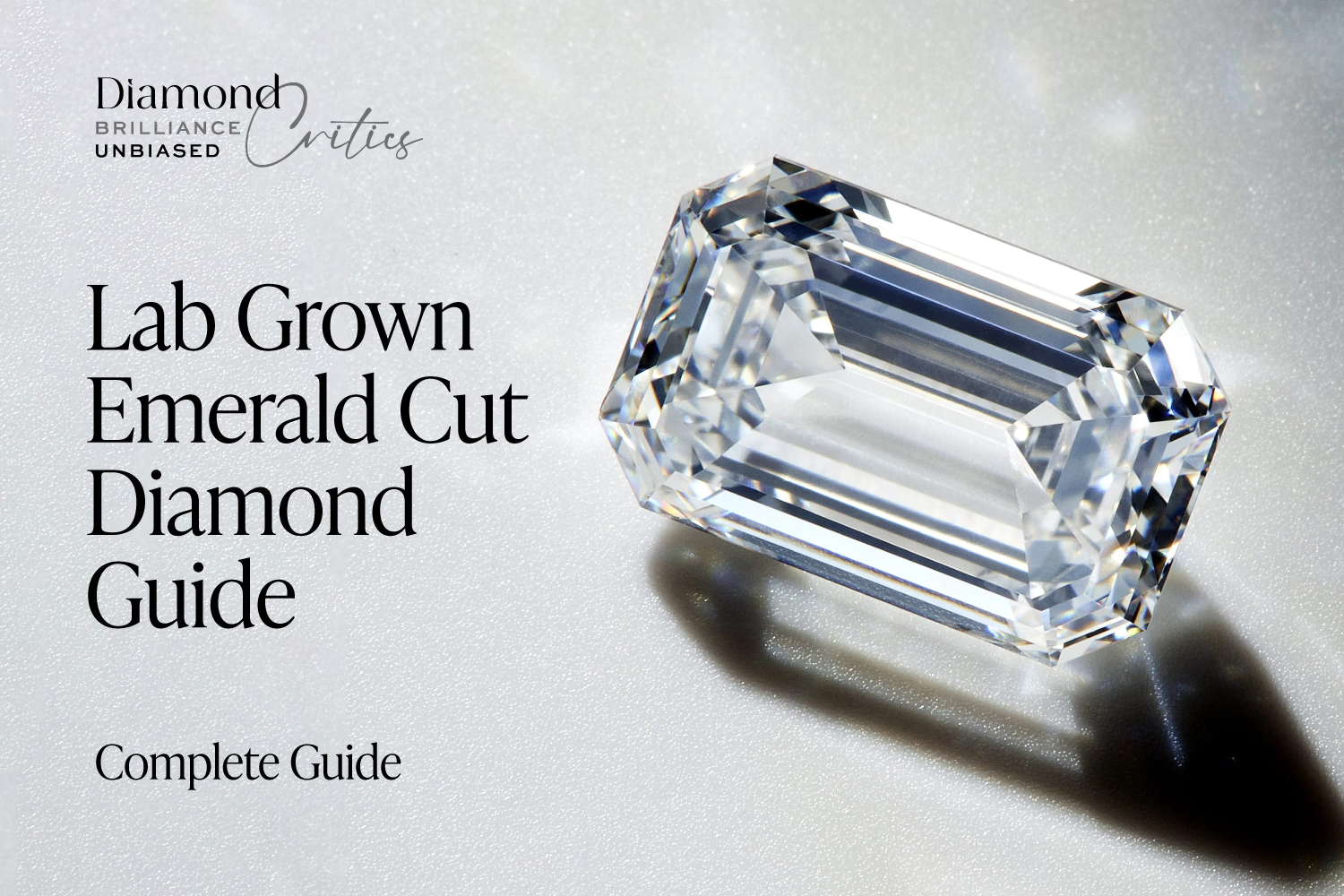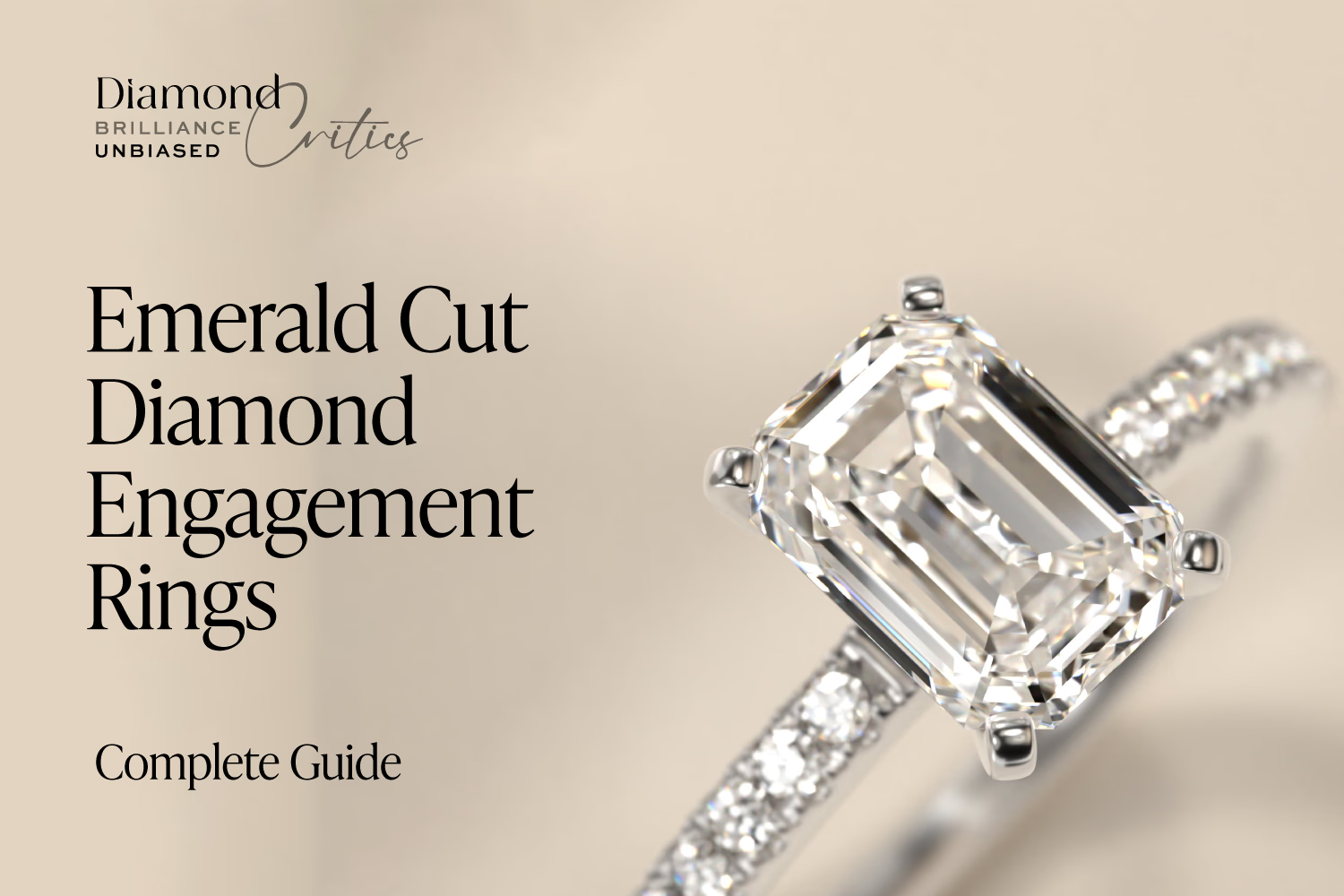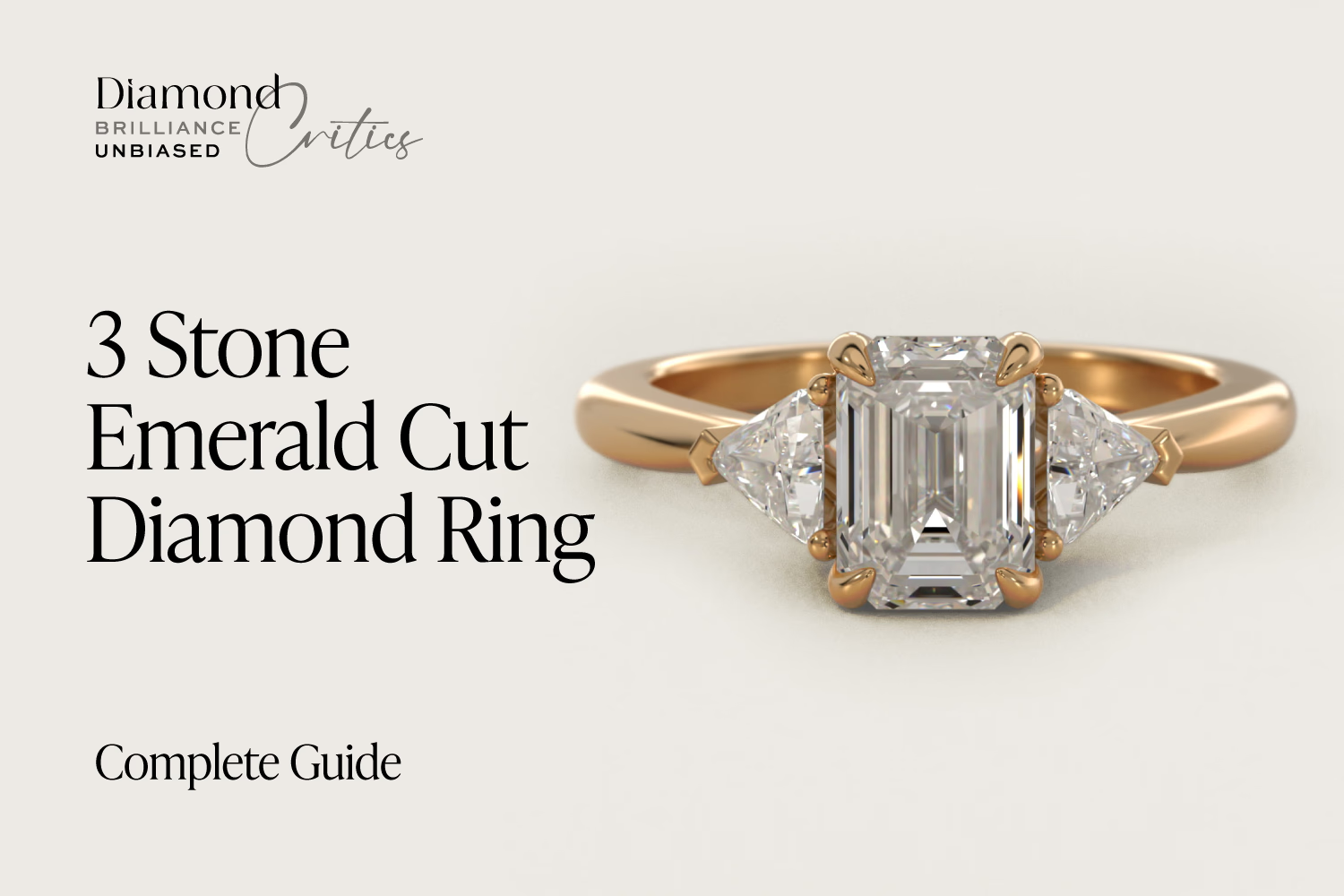
The 3 stone emerald cut diamond ring is the most visually structured engagement ring you can buy. Three rectangles in a row. Step-cut light moving in straight bands across all three stones. When it works, it is the most architectural, most intentional ring on any hand.
When it doesn't work, it's because the buyer focused on the center stone and chose the wrong side stones. The wrong shape. The wrong size ratio. The wrong clarity. These four mistakes cost buyers thousands of dollars and produce rings that look off without being able to say why.
This post is built around those four mistakes — and around the side stone geometry that most jewelers never explain clearly. By the end, you will know exactly which side stone shape to choose, which settings to avoid, and what a complete ring costs with a lab grown center at every budget.
TL;DR
4 side stone mistakes buyers make on a 3 stone emerald cut diamond ring:
- Choosing brilliant-cut sides (round, oval, pear) that fight the rectangular geometry
- Letting side stones exceed 40% of the center stone's width
- Accepting SI1–SI2 clarity in step-cut side stones (baguettes and trapezoids show inclusions)
- Paying natural prices for side stones when lab saves 60–70%
→ Best setting: James Allen Emerald Cut Three Stone Pavé in Platinum at $3,700. Pair with a 2ct lab D-FL center at $4,735 for a complete ring around $8,435.
Priority: get the setting right first. The center stone is replaceable. The geometry of the setting is not.
4 Side Stone Mistakes 3 Stone Emerald Cut Diamond Ring Buyers Make
Mistake 1: Choosing Brilliant-Cut Side Stones
Round, oval, and pear side stones are the most popular choices for three-stone rings across all center shapes. They are the wrong choice for an emerald cut center.
Here is why. The emerald cut is a step-cut diamond. Its identity is the rectangular window and the parallel reflections that travel across that table in straight bands. Those reflections create the "hall of mirrors" look. Your eye follows them from corner to corner. The ring reads as a horizontal, architectural piece.
When you put brilliant-cut side stones next to that center, you get competing visual systems. The sides scatter light in every direction. The center moves light in straight lines. The two geometries fight each other. Your eye cannot settle on the ring because the light is doing two completely different things at once.
Step-cut side stones — baguettes, trapezoids, emerald cut sides — echo the center. They move light in the same direction. The ring reads as a unified composition instead of three stones forced into proximity.
Every setting in this post that uses step-cut side stones shows a cleaner, more cohesive ring than any brilliant-cut three-stone design. This is not opinion. It is geometry.
Mistake 2: Oversized Side Stones
The three-stone ring derives its visual power from contrast. The center stone reads as the main event because it is larger, more prominent, and flanked by its supporters. When the side stones are too large, that hierarchy disappears.
The rule: side stones should not exceed 35–40% of the center stone's face-up width. For a 2ct emerald cut center (approximately 8.0mm × 6.0mm), side stones should be no wider than 2.4mm. This is roughly a 1/8ct or 1/6ct side stone.
When settings list total carat weights like "5/8 ct. tw." or "1/2 ct. tw." for the side stones, that describes both side stones combined. A 5/8 ct. tw. setting means roughly 5/16ct per side — which is on the large end for most center stones under 2ct.
The Three-Stone Emerald Cut (5/8 ct. tw.) at $4,510 has included side stones that work well proportionally with a 2–3ct center. For a 1ct center, those sides would be too dominant. Match the side stone size to your center before buying a setting.
Mistake 3: SI1–SI2 Clarity in Step-Cut Side Stones
Most buyers pay attention to the clarity grade of their center stone. Almost no one thinks about the clarity of the side stones. For the emerald cut three-stone ring, this is a critical oversight.
Baguette and trapezoid side stones are also step cuts. They have the same open-table visibility as the center. SI1 inclusions that hide in a brilliant-cut side stone are visible in a baguette or trapezoid side. You can have a VS1 center flanked by SI1 baguettes and see inclusions in the sides under normal lighting.
The minimum for step-cut side stones is VS2 — and VS1 is safer. When comparing settings, ask about the side stone clarity. Settings that include side stones and list their specs (like the Bella Vaughan Trapezoid) will include this information. For "design your own" settings where you add a separate center stone, the side stones are already part of the setting and their quality is built into the setting price.
Mistake 4: Paying Natural Prices for Side Stones
Side stones are small. They are set under pressure. They are harder to inspect before purchase than center stones. And yet most buyers automatically choose natural side diamonds alongside their natural or lab center.
Lab grown side diamonds cost 60–70% less than natural at the same grade. In a three-stone ring where the side stones are 1/8ct to 1/4ct each, the total savings are not dramatic in dollar terms — but they are real. More importantly, a setting that includes natural side stones at VS1 clarity is often priced higher than the same setting with lab sides. If you are buying a "design your own" setting and adding a lab grown center, ensure you are not paying a natural-side premium in the setting price.
For complete rings where the setting comes with built-in side stones (like the Gallery Collection or Bella Vaughan designs), the side stones are already included in the setting price and the choice has been made for you.
"The three-stone emerald cut is one of the most searched rings I see buyers come in confused about. They've been told it's about the center stone carat. It's not. It's about the geometry between all three stones. Get the proportions wrong and a 3ct center still looks awkward. Get them right and a 1.5ct center looks like a statement."
— Farzana, DiamondCritics


The Side Stone Geometry Rule
This is the framework most jewelers skip. The side stone shape is not a minor aesthetic decision — it is the single factor that determines whether your 3 stone emerald cut diamond ring looks cohesive or confused.
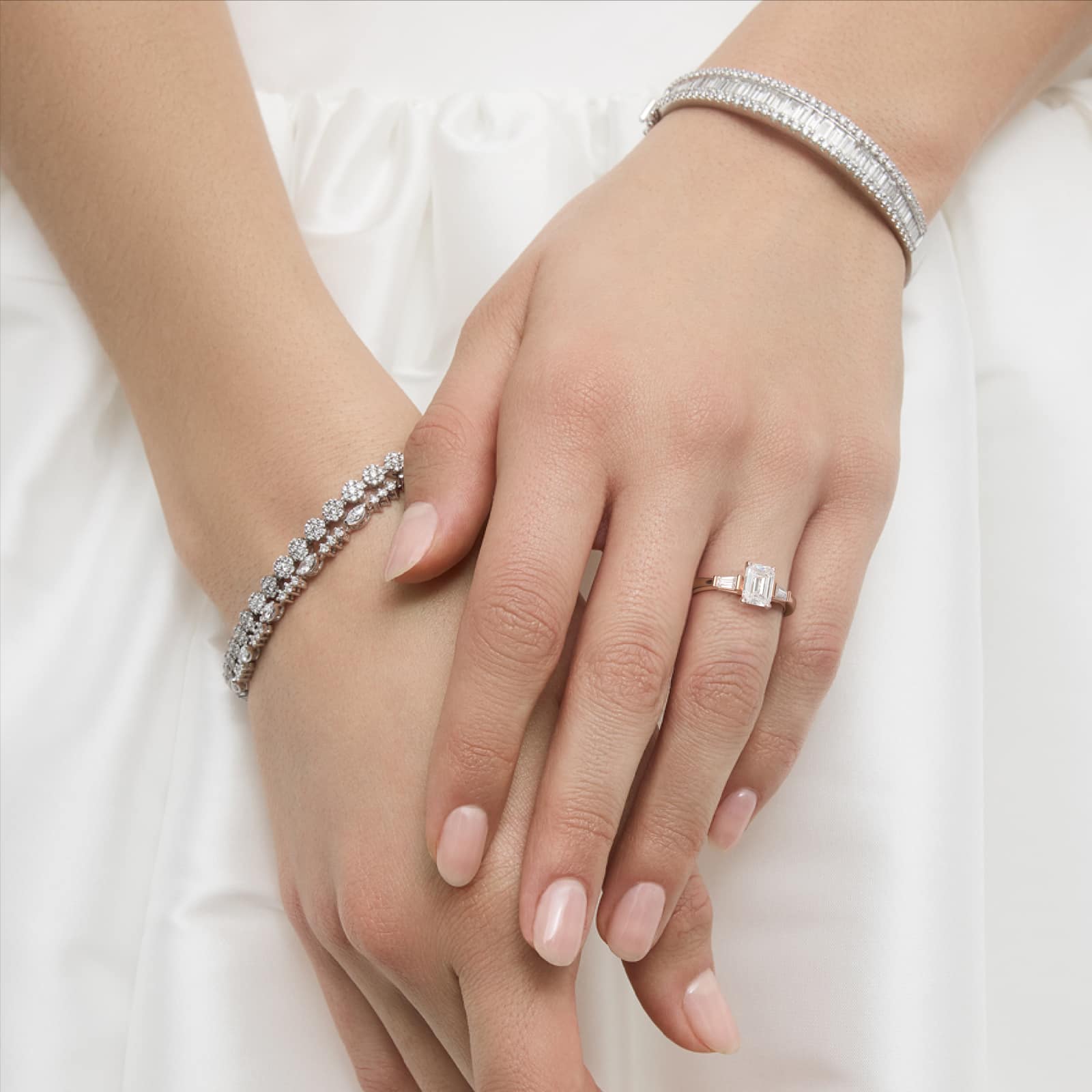
Baguette side stones are straight-sided rectangular step cuts. They sit parallel to the center emerald and echo its geometry almost exactly. The ring reads as three rectangular windows in a row, each reflecting light in the same direction.
This is the most structured, most vintage-inspired look. It was the dominant choice for Art Deco three-stone rings from the 1920s and 1930s, which is why baguette three-stone rings read as period pieces rather than modern designs.
The limitation: baguettes are small and narrow, so they add length to the ring visually without adding much height. The combination reads as horizontal and elongating on the finger.
Trapezoid side stones are tapered step cuts — wider on the side facing the center stone and narrowing toward the outside. They frame the center stone differently than baguettes. Instead of sitting as equals, they direct your eye inward toward the center.
The tapered shape creates a sense of depth and draws the eye to the center stone rather than splitting attention across all three. Trapezoid sides are the choice for buyers who want the three-stone ring to look like a composition, not just three stones in a line. The Bella Vaughan Trapezoid settings are the benchmark for this approach.
Emerald cut side stones are the most architecturally pure choice. Center stone and sides are all the same shape — three rectangles. The ring reads as a single unified piece rather than a center plus two flanking elements.
The limitation: true emerald cut side stones are harder to find in the right proportion. Most settings labeled "emerald cut three stone" use modified or simplified step cuts for the sides.
Brilliant-cut side stones (round, pear, oval, trillion, half-moon) introduce a different optical system alongside the step-cut center — see Mistake 1 above. The exception is the trillion, which sits more quietly alongside an emerald cut center than round or pear because it has a flat table face. But even trilliants scatter light differently than the step center, and the visual conflict is still present.
Natural Center Stone Price Table
These are representative center stone prices from certified market inventory for natural emerald cuts.
| Center Stone | Grade | Cert | Price |
|---|---|---|---|
| 1.00ct Emerald Natural | D-VS1 | GIA | $3,140 |
| 1.50ct Emerald Natural | E-VS1 | GIA | $10,409 |
| 2.00ct Emerald Natural | F-VS1 | GIA | $24,407 |
| 3.09ct Emerald Natural | F-VS1 | GIA | $63,574 |
3 Stone Emerald Cut Diamond Ring Settings
These are the primary settings for an emerald cut center stone. Each is a "design your own ring" setting — you add your chosen center stone separately.
James Allen Emerald Cut Three Stone Pavé
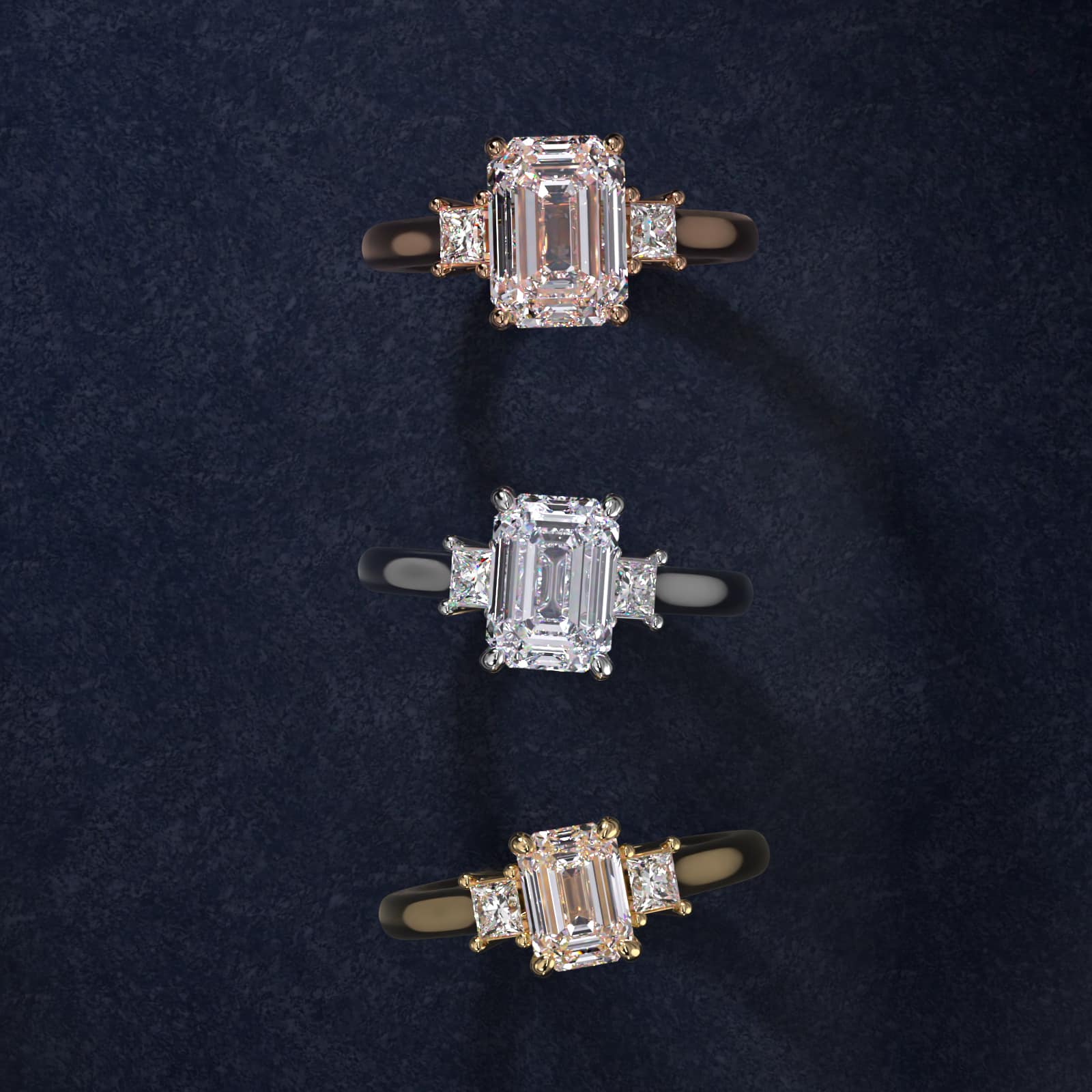
This is the most reviewed emerald cut three-stone setting in this dataset — 39 reviews across all metal options. The pavé shank with step-cut emerald cut side stones creates a clean, modern look. The sides are proportioned correctly for a 1.5–3ct center stone.
| Setting | Metal | Reviews | Setting Price |
|---|---|---|---|
| JA Emerald Cut Three Stone Pavé | 18K White Gold | 39 | $3,430 |
| JA Emerald Cut Three Stone Pavé | 14K Yellow Gold | 39 | $3,535 |
| JA Emerald Cut Three Stone Pavé | Platinum | 39 | $3,700 |
The platinum version at $3,700 is the best choice here. Platinum is harder than gold and holds prong tips longer. For an emerald cut center — a shape with exposed corners — you want the hardest available metal holding those prongs in place.
Zac Zac Posen Three-Stone Emerald Cut (Yellow Gold)
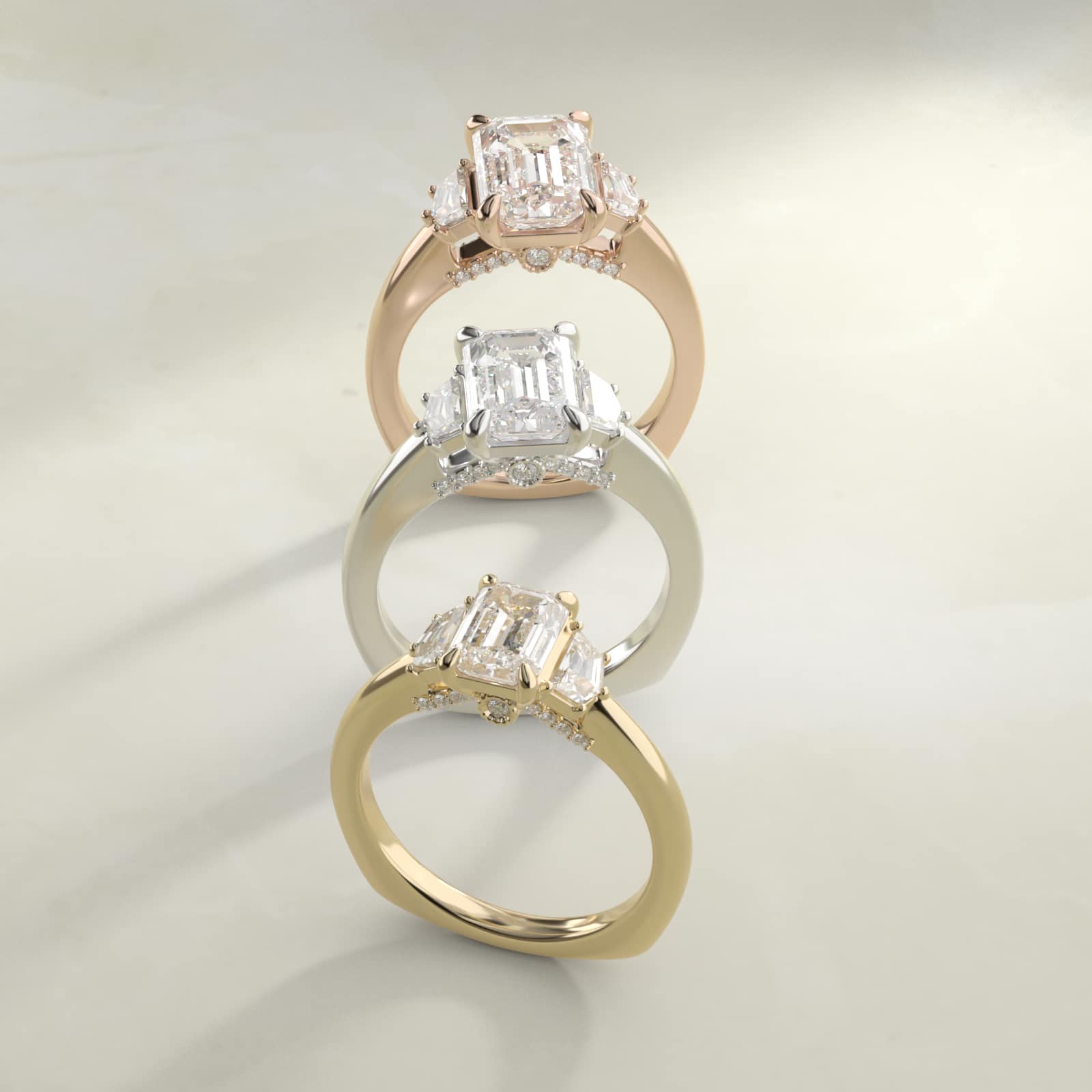
The Zac Zac Posen Three-Stone Emerald Cut in 14K Yellow Gold at $3,460 (1/3 ct. tw. side stones included, 13 reviews) has a narrower, more delicate shank than the JA Pavé. It is the choice if you want something lighter-feeling on the hand, and yellow gold if that matches your style. The 1/3 ct. tw. side stones are on the smaller end — a good proportion for a 1.5ct–2ct center.
Three-Stone Emerald Cut (Blue Nile, White Gold)
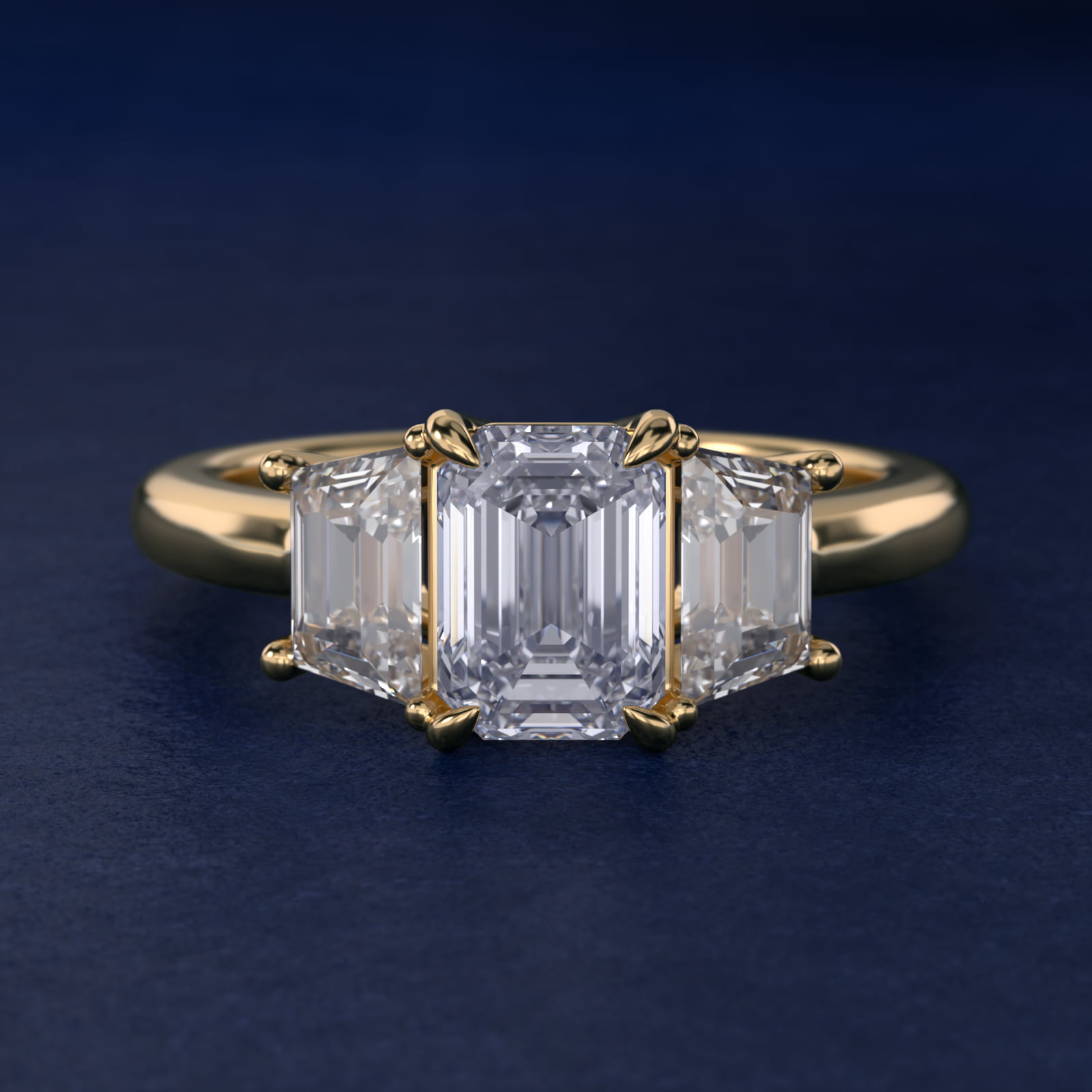
The Three-Stone Emerald Cut in 14K White Gold at $4,510 (5/8 ct. tw., 6 reviews) includes larger side stones than the Zac Zac Posen design. The 5/8 ct. tw. total means roughly 5/16ct per side — better suited for a 2ct+ center where the sides need to have some visual weight to balance the larger main stone.
Baguette Side Stone Settings
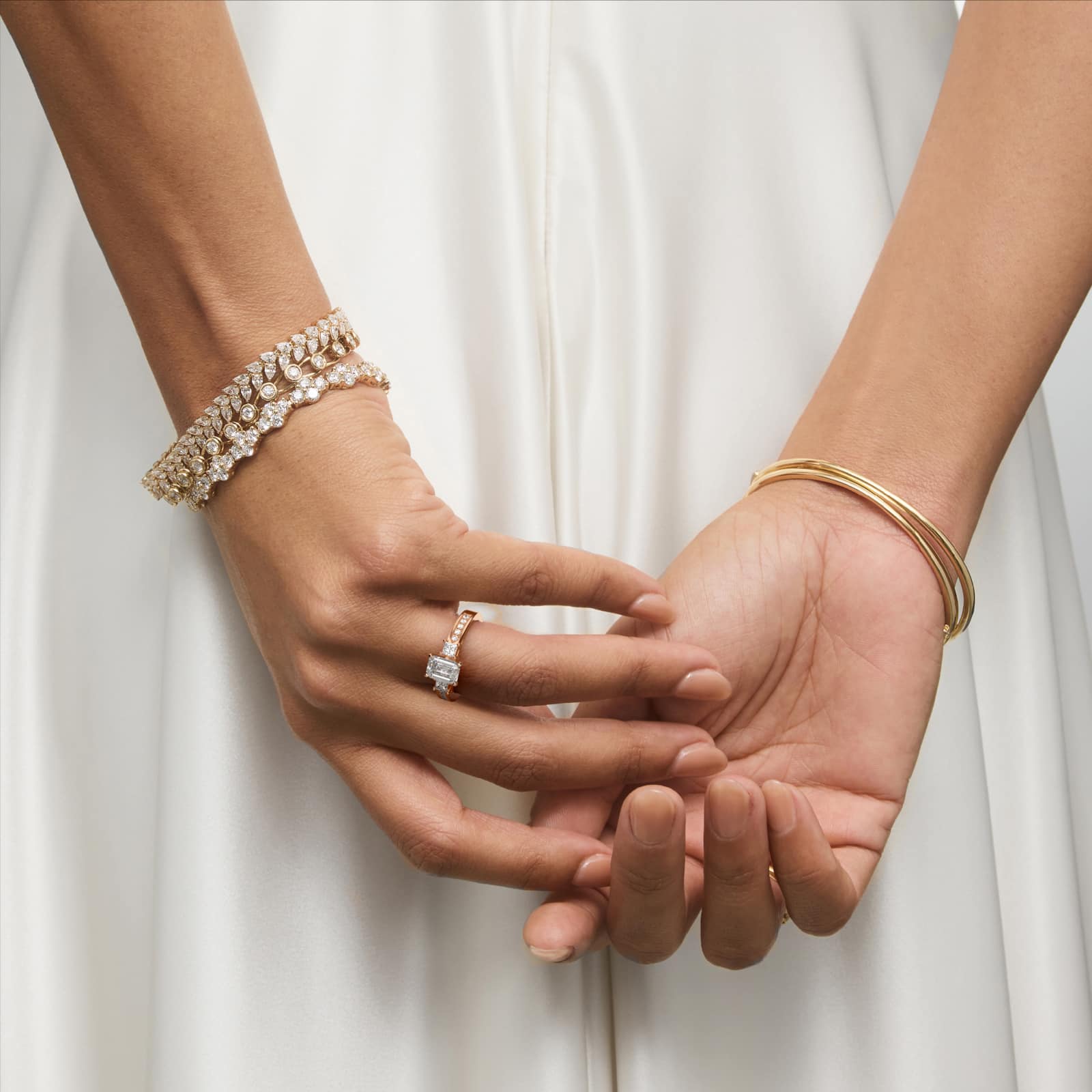
Baguette side stones are the most historically grounded choice for an emerald cut three-stone ring. The step-cut geometry echoes the center, and the narrow rectangular shape adds length without height. These settings work especially well in yellow gold — the warm metal against the clean lines of the baguette sides and emerald cut center is the canonical Art Deco look.
| Setting | Metal | Side Stone tw. | Reviews | Setting Price |
|---|---|---|---|---|
| Three-Stone Tapered Baguette | 14K White Gold | 1/4 ct | 3 | $3,410 |
| JA Bezel Straight Baguette | 14K Yellow Gold | Included | 2 | $3,030 |
| JA Bezel Straight Baguette | 14K White Gold | Included | 2 | $3,070 |
| JA Bezel Straight Baguette | Platinum | Included | 2 | $3,325 |
| Three-Stone Tapered Baguette | Platinum | 1/2 ct | 6 | $6,540 |
| Three-Stone Tapered Baguette | 14K White Gold | 5/8 ct | 3 | $6,870 |
| Three-Stone Tapered Baguette | Platinum | 5/8 ct | 3 | $7,630 |
Baguette clarity note: The JA Bezel Straight Baguette settings use bezel-set baguettes — the metal wraps around the side stones. This actually helps with two things: it protects the baguette's vulnerable corners, and the bezel metal partially covers the side stone face, reducing the open-table visibility that would otherwise expose SI1 inclusions. Bezel baguettes are slightly more forgiving on side stone clarity than prong-set baguettes.
Trapezoid Side Stone Settings
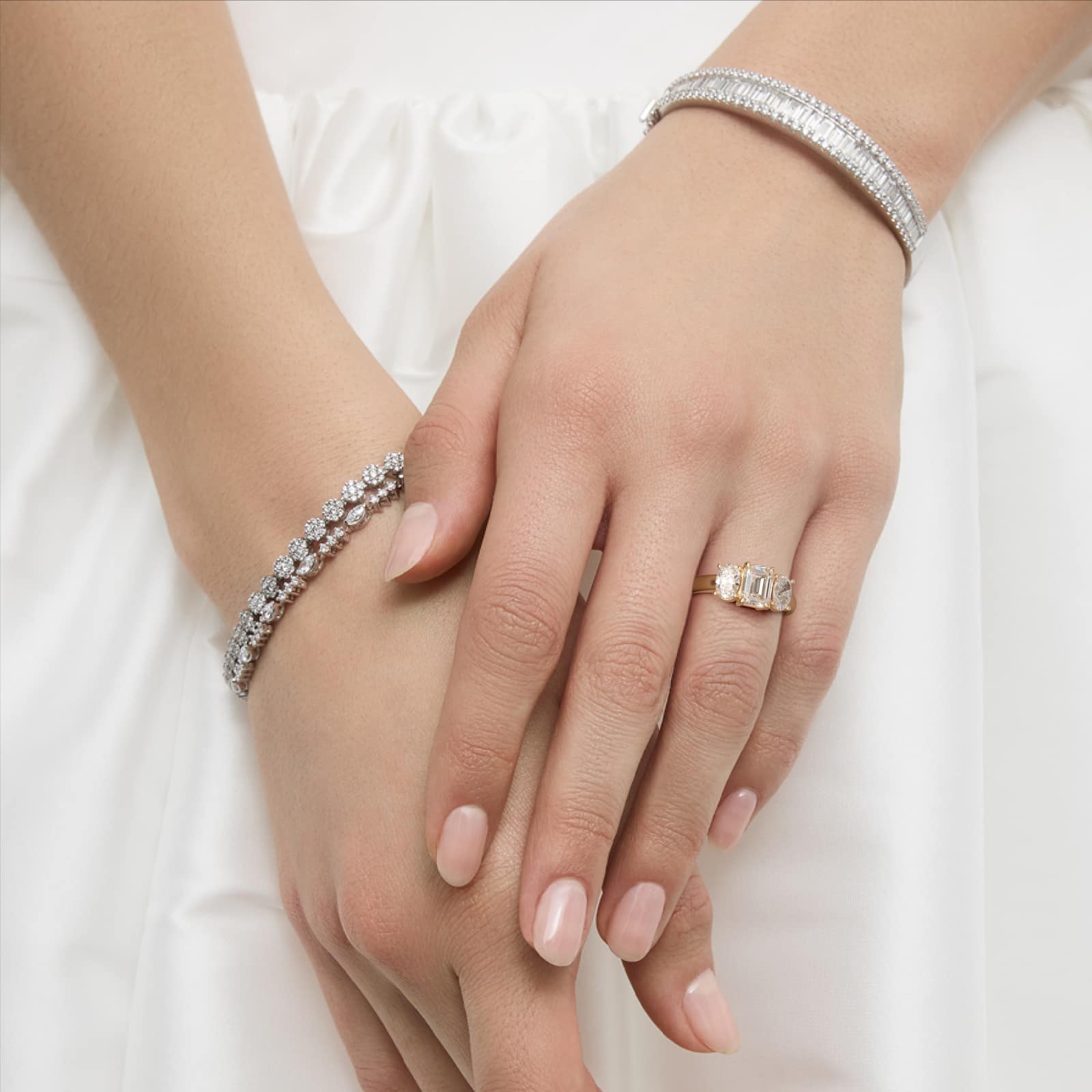
Trapezoid side stones are the modern refinement of the baguette approach. They taper inward toward the band, framing the center stone and drawing the eye to its center. The Bella Vaughan designs are the benchmark for this style.
| Setting | Metal | Side Stone tw. | Reviews | Setting Price |
|---|---|---|---|---|
| Bella Vaughan Trapezoid (3/8 ct) | 14K White Gold | 3/8 ct | — | $6,710 |
| Bella Vaughan Trapezoid (5/8 ct) | 14K White Gold | 5/8 ct | 1 | $9,115 |
| Bella Vaughan Trapezoid (5/8 ct) | 14K Yellow Gold | 5/8 ct | 1 | $9,115 |
| Bella Vaughan Trapezoid (5/8 ct) | 14K Rose Gold | 5/8 ct | 1 | $9,115 |
| Bella Vaughan Cadillac (5/8 ct) | 14K Rose Gold | 5/8 ct | — | $9,450 |
The Bella Vaughan Trapezoid 5/8 ct. tw. at $9,115 is the highest setting cost in the mid-tier group, but the design justifies it. The trapezoid side stones are genuine step-cut stones with visible facets — not simplified. This is the setting if you want the full architectural integrity of a step-cut three-stone ring and are willing to pay for the setting quality.
Gallery Collection Halo Settings
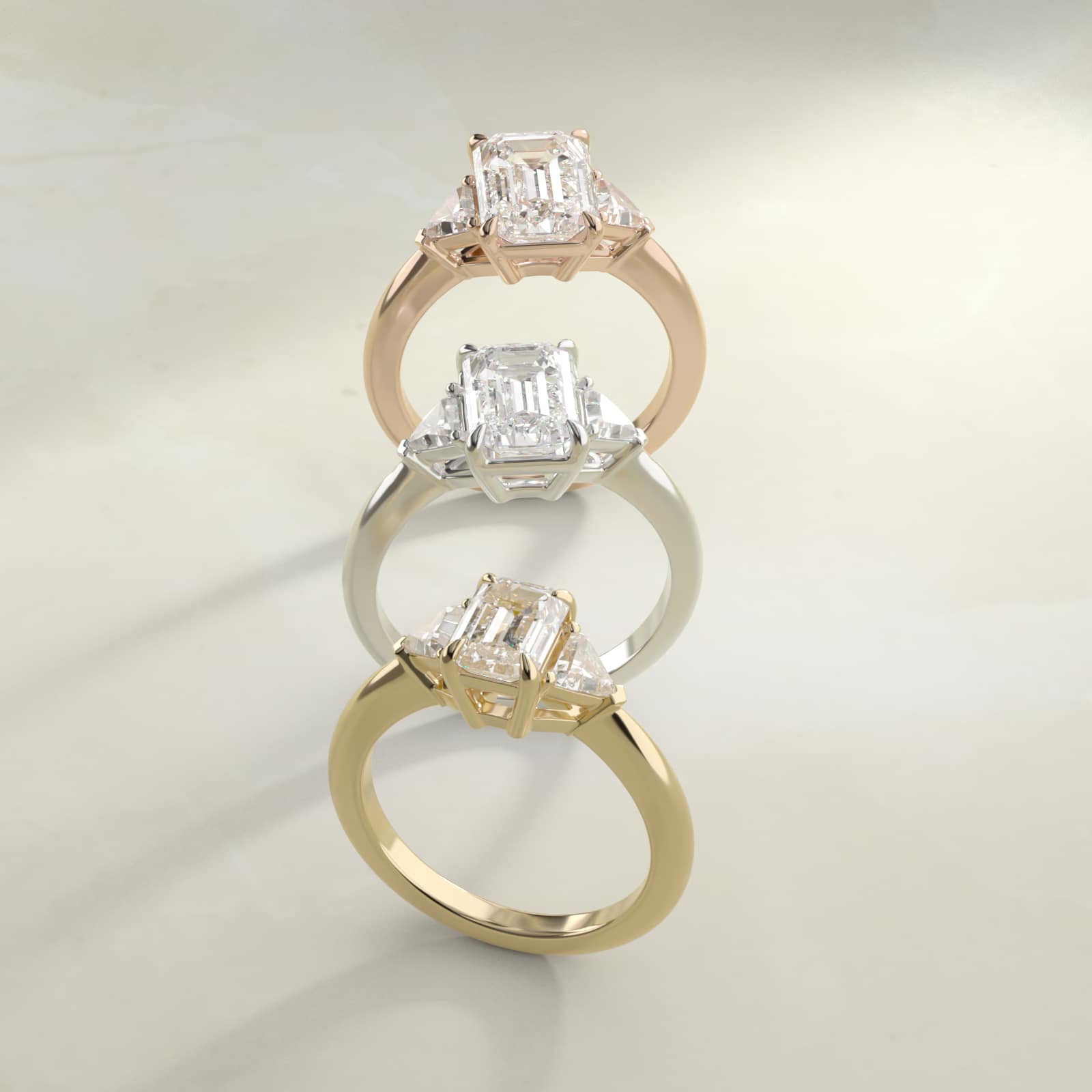
| Setting | Metal | Side Stone tw. | Setting Price |
|---|---|---|---|
| Gallery Collection Emerald Three Stone Halo | 14K Rose Gold | 1.50 ct tw | $13,405 |
| Gallery Collection Emerald Three Stone Halo | Platinum | Included | $14,830 |
The Gallery Collection halo adds a border of small pavé diamonds around the center stone. This changes the visual of the ring significantly — the emerald cut now reads as a rectangular cluster rather than a clean step-cut window. If you want the architectural purity of the emerald cut, the halo is not the right choice. If you want maximum brilliance and presence and are less concerned with the step-cut sightlines, the halo delivers that.
The Past Present Future Trap
Most jewelry marketing calls a three-stone ring a "past present future" ring. Advertisers started using this phrase in the 1990s when De Beers pushed the three-stone as a diamond anniversary gift. It became a standard marketing category.
Here is the thing: every three-stone ring is a "past present future" ring. The phrase describes the number of stones, not any specific design feature. It means three stones. That's it. Calling a ring a "past present future emerald cut" adds nothing to your understanding of whether the ring is well-designed or well-priced.
The phrase matters because it sometimes triggers a premium. Search "past present future emerald cut diamond ring" and you will see some listings 20–30% higher than equivalent three-stone settings. The premium is for the narrative, not the ring.
What actually matters in a three-stone ring has nothing to do with the name:
- Side stone shape (step-cut or brilliant-cut)
- Side stone proportion (35–40% of center width maximum)
- Side stone clarity (VS1 or better in step-cut sides)
- Metal durability (platinum for emerald cut corners)
- Setting construction (prong tip thickness for the center stone's corners)
Ask those questions. Do not ask whether the ring is "past present future." Every three-stone ring is.
3 Stone Emerald Cut Lab Grown Diamond Ring
Lab grown diamonds are the obvious choice for a three-stone ring center. You are buying one stone and paying the full per-carat price for that stone. In a three-stone format, the center stone needs to be larger than the sides by the 35–40% rule. That means at minimum a 1.5ct center — ideally 2ct or more. At 2ct natural, you are spending $24,407 before touching the setting. At 2ct lab D-FL, you are spending $4,735.
Lab Center Stone Prices
| Center Stone | Grade | Cert | Price |
|---|---|---|---|
| 1.94ct Lab Emerald | F-VVS1 | IGI | $2,229 |
| 2.00ct Lab Emerald | D-FL | IGI | $4,735 |
| 3.00ct Lab Emerald | D-IF | IGI | $9,235 |
| 4.00ct Lab Emerald | D-VVS1 | IGI | $7,737 |
Complete Ring Pricing (Setting + Lab Center)
| Setting | Center Stone | Setting Price | Stone Price | Approx Total |
|---|---|---|---|---|
| JA Pavé 18K WG | 1.94ct F-VVS1 lab | $3,430 | $2,229 | ~$5,659 |
| JA Pavé Platinum | 2ct D-FL lab | $3,700 | $4,735 | ~$8,435 |
| Three-Stone Emerald Cut BN WG | 2ct D-FL lab | $4,510 | $4,735 | ~$9,245 |
| JA Pavé Platinum | 3ct D-IF lab | $3,700 | $9,235 | ~$12,935 |
| Bella Vaughan Trapezoid WG | 3ct D-IF lab | $9,115 | $9,235 | ~$18,350 |
| Gallery Collection Halo RG | 3ct D-IF lab | $13,405 | $9,235 | ~$22,640 |
"A 3ct D-IF lab center in the JA Pavé Platinum setting is $12,935 total. The natural equivalent center stone alone — without touching the setting — would be $63,574. I put that comparison in front of buyers every week. The conversation shifts immediately."
— Farzana, DiamondCritics
Tides Of Summer Capsule
Up To 30% Off
Shop The Sale →Vault ClearanceClear The Vault
Up To 70% Off
Shop Vault Deals →Affiliate link — no extra cost to you
5 Stone and 7 Stone Emerald Cut Diamond Ring
The 5 stone and 7 stone emerald cut rings follow the same geometry rule as the 3 stone — additional side stones work best when they are step cuts. Adding two more step-cut side elements to the flanking position creates a wider band of horizontal step facets across the finger. The overall effect is more ornate but the architectural logic stays intact.
For a 5 stone emerald cut ring, the typical configuration is: main center stone, two flanking side stones (trapezoid or baguette), and two outer accent stones (smaller baguettes or trapezoids). The Gallery Collection Vintage Three Stone Trapezoid settings use this approach:
| Setting | Metal | Setting Price |
|---|---|---|
| Gallery Collection Vintage Trapezoid | 14K White Gold | $24,800 |
| Gallery Collection Vintage Trapezoid | 14K Yellow Gold | $24,800 |
| Gallery Collection Vintage Trapezoid | 14K Rose Gold | $24,800 |
The Gallery Collection Vintage Trapezoid at $24,800 setting price is a significant setting investment — it includes substantial side stones already set in the ring. The center stone you add goes into an already complete ring frame. This is closer to a complete ring purchase than a "design your own" setting.
3 Stone Emerald Cut Diamond Ring Wedding Band Compatibility
One practical question buyers miss: does the three-stone ring sit flush with a wedding band? Most three-stone rings have a wider profile at the setting than the band allows for a straight-shank band to sit flush.
Two solutions:
- Choose a contoured/curved wedding band that is shaped to fit around the three-stone setting's profile.
- Wear the wedding band on the other hand.
For the JA Emerald Cut Three Stone Pavé settings, the design is flat enough that a standard straight band can sit reasonably close — there will be a small gap at the setting shoulders, which is normal. The Bella Vaughan Trapezoid has a wider shoulder that creates more of a gap.
A trapezoid sidestone setting in rose gold at $5,900 or the trapezoid in platinum at $6,890 pair well with a matching curved band in the same metal. Discuss band compatibility with the jeweler before committing to the setting.
3 Stone Emerald Cut Diamond Ring Optimization Matrix
| Budget | Best Setting | Best Center | Approx Total | Why |
|---|---|---|---|---|
| Under $7,000 | JA Pavé 18K WG ($3,430) | 1.94ct F-VVS1 lab ($2,229) | ~$5,659 | 39-review setting, near-2ct lab center, clean look |
| $8,000–$10,000 | JA Pavé Platinum ($3,700) | 2ct D-FL lab ($4,735) | ~$8,435 | Best value: platinum durability + 2ct D-FL center |
| $12,000–$15,000 | JA Pavé Platinum ($3,700) | 3ct D-IF lab ($9,235) | ~$12,935 | 3ct D-IF — full finger presence, IF clarity, tenth of natural cost |
| $17,000–$20,000 | Bella Vaughan Trapezoid WG ($9,115) | 2ct D-FL lab ($4,735) | ~$13,850 | Best geometry: true trapezoid sides + 2ct D-FL center |
| $20,000–$25,000 | Gallery Collection Halo RG ($13,405) | 3ct D-IF lab ($9,235) | ~$22,640 | Maximum presence: halo + 3ct center, statement ring |
Expert Summary
The 3 stone emerald cut diamond ring is a more demanding design decision than most buyers realize at the start. The center stone is the easy part — choose lab, choose VS1 or better, choose D or E color. Those decisions are clear and the prices are on the page.
The hard part is the side stone geometry. Most jewelry shopping sites let you pick a center stone and a setting separately without telling you whether the side stone shape is right for the emerald cut. The result is that a significant share of three-stone emerald cut rings being built today use the wrong side stones — brilliant cuts that fight the step-cut geometry, or oversized sides that drown the center.
The Side Stone Geometry Rule and the 4 mistakes in this post exist to prevent that outcome. A JA Pavé Platinum at $3,700 with a 3ct D-IF lab at $9,235 — total $12,935 — is a better ring than most natural three-stone emerald cuts you could buy for twice the price, not because of the lab stone alone, but because the setting geometry is correct and the clarity is appropriate for the step-cut table.
"My advice on three-stone emerald cuts is always the same: start with the side stone shape, not the center. Figure out what geometry you want the ring to have. Then pick the center stone that makes that geometry look its best. The buyers who do it the other way around — who pick a beautiful center stone and then try to find a setting for it — often end up with a ring where the stones don't talk to each other."
— Farzana, DiamondCritics
Final Verdict
Best under $10,000: JA Pavé Platinum ($3,700) + 2ct D-FL lab ($4,735) ≈ $8,435 total. Emerald cut side stones, platinum durability, 2ct center. The strongest overall value in this dataset.
Best architecture: Bella Vaughan Trapezoid WG ($9,115) + 2ct D-FL lab ($4,735) ≈ $13,850 total. True Bella Vaughan trapezoid geometry — the most architecturally correct three-stone emerald cut design available.
Best for yellow gold: Zac Zac Posen Three-Stone Emerald ($3,460) + 2ct D-FL lab ($4,735) ≈ $8,195 total. The delicate shank and warm yellow gold frame an emerald cut the way vintage rings do — the geometry is right and the metal choice is correct.
Best presence: JA Pavé Platinum ($3,700) + 3ct D-IF lab ($9,235) ≈ $12,935 total. A 3ct D-IF center in a three-stone setting is a ring that fills a finger. The IF clarity through the open emerald cut table is exceptionally clean. For buyers who want a serious, noticeable stone, this is where to end up.
FAQ
What are the 4 side stone mistakes on a 3 stone emerald cut diamond ring?
The four mistakes are: (1) choosing brilliant-cut side stones (round, oval, pear) that fight the step-cut geometry; (2) letting side stones exceed 40% of the center stone's width; (3) accepting SI1–SI2 clarity in step-cut sides like baguettes or trapezoids; and (4) paying natural prices for side stones when lab grown saves 60–70%. See the full breakdown in each section above.
What side stone shape is best for a 3 stone emerald cut diamond ring?
Step-cut side stones — baguettes, trapezoids, or emerald cut sides — are best. They echo the rectangular geometry of the center stone and move light in the same direction. Brilliant-cut sides (round, pear, oval) scatter light in every direction, which conflicts with the straight, architectural reflections of the emerald cut center. The Bella Vaughan Trapezoid at $9,115 is the best-designed step-cut three-stone setting in this dataset.
How much does a 3 stone emerald cut diamond ring cost?
A complete 3 stone emerald cut diamond ring starts around $5,659 for the JA Pavé 18K WG setting with a near-2ct lab F-VVS1 center. A mid-range complete ring with a 2ct D-FL lab center and platinum setting runs approximately $8,435. A 3ct D-IF lab center in the same platinum setting is approximately $12,935.
What is the best setting for a three stone emerald cut diamond engagement ring?
For most buyers, the James Allen Emerald Cut Three Stone Pavé in Platinum at $3,700 is the best overall setting. 39 reviews, platinum durability, correctly proportioned emerald cut side stones. For buyers who want the best step-cut geometry, the Bella Vaughan Trapezoid at $9,115 is the architectural choice.
Should I get a lab grown center stone for my 3 stone emerald cut ring?
Yes. For a three-stone ring specifically, the center stone needs to be 1.5ct or larger to maintain the correct size ratio with side stones. At 2ct natural, you spend $24,407 on the center alone before the setting. At 2ct lab D-FL, you spend $4,735. The emerald cut's open table rewards high clarity, and lab grown lets you afford D-VVS1 or D-FL at sizes that would otherwise require a natural budget of $60,000+.
What is the "past present future" meaning for a three stone emerald cut ring?
The "past present future" phrase is a De Beers marketing term from the 1990s describing any three-stone ring — the three stones represent past, present, and future of a relationship. Every three-stone ring is a past present future ring. The phrase describes the stone count, not any specific design. It does not affect setting quality, geometry, or value.
What clarity grade should I choose for the center stone?
VS1 or better for an emerald cut center. VVS1 is ideal. The emerald cut's open rectangular table shows inclusions that other shapes hide under their facets. SI1 in an emerald cut can appear noticeably included face-up. The 2ct D-FL lab at $4,735 and 3ct D-IF at $9,235 both exceed this threshold.
What metal should I use for a 3 stone emerald cut diamond ring?
Platinum is the best choice. The emerald cut has exposed corners — sharp angles at the four corners of the rectangular table — that are vulnerable to chipping if the prong tips wear down. Platinum is harder than gold and holds prong tips longer without thinning. It also does not require replating the way white gold does. The JA Pavé Platinum at $3,700 is the platinum option in the most reviewed emerald cut setting.
Does a 3 stone emerald cut ring work with a wedding band?
It works, but you need to plan the band shape before committing to the setting. Three-stone rings have a wider shoulder profile than solitaires. A standard straight-shank band will leave a gap at the shoulders of the setting. A curved contour band shaped to fit around the setting profile is the correct choice. Discuss band compatibility with the jeweler when ordering the setting.
What is the side stone ratio rule for a 3 stone emerald cut ring?
Side stones should not exceed 35–40% of the center stone's face-up width. For a 2ct emerald cut (approximately 8.0mm × 6.0mm), side stones should be no wider than about 2.4mm at their widest point. Oversized side stones overwhelm the center and eliminate the visual hierarchy that makes the three-stone format work.
Can I use a 3 stone emerald cut ring as an anniversary gift?
Yes. The three-stone format was specifically marketed as an anniversary ring by De Beers from the mid-1990s onward. It is a common choice for 5th, 10th, and 25th anniversaries. For an anniversary ring specifically, lab grown makes even more sense — you can choose a larger center stone within the same budget and the emerald cut's clean architectural look wears well alongside existing jewelry on the hand.
What is the difference between the JA Pavé and the Blue Nile Three-Stone Emerald Cut settings?
The JA Pavé settings ($3,430–$3,700) are "design your own" settings — you add a center stone separately. The side stones are included in the setting and are pavé-accented with the center position open. The Blue Nile Three-Stone Emerald Cut at $4,510 also requires a center stone and includes emerald cut side stones at 5/8 ct. tw. total. The JA Pavé has more reviews (39 vs 6) and more metal options.
What is a 3 stone emerald cut ring with trapezoid sides vs baguette sides?
Trapezoid sides are tapered step cuts that are wider at the center and narrower toward the band — they frame the center stone and draw the eye inward. Baguette sides are straight rectangular step cuts that sit parallel to the center, adding length to the ring. Trapezoids feel more modern and composed. Baguettes feel more vintage and elongated. Both are correct side stone choices for an emerald cut center. The Bella Vaughan Trapezoid and the JA Bezel Straight Baguette represent the two approaches.
See Also
- Emerald Cut Diamond Engagement Rings: 4 Reasons to Skip the Halo — full solitaire and halo settings guide
- Lab Grown Emerald Cut Diamond: D-IF at $9K vs $63K Natural — complete lab vs natural price guide for emerald cut
- 3 Carat Emerald Cut Diamond Ring — dedicated 3ct guide with natural and lab pricing
- 2 Carat Emerald Cut Diamond Ring — 2ct center stone options and settings
- Emerald Cut Diamond Earrings: 4 Reasons Bezel Beats Prong — matching earring guide for the shape
- Loose Emerald Cut Diamond — how to choose a stone before picking a setting
- Emerald Cut vs Radiant Cut Diamond — step cut vs brilliant cut head to head
- Lab Grown vs Natural Diamond Price — full price comparison across all shapes
Expert Verdict
Always audit the stone individually — no grade replaces seeing the actual diamond. The certificate tells you what to look for. Your eyes tell you whether to buy.
— Farzana Hasan, GIA Expert · DiamondCritics.com