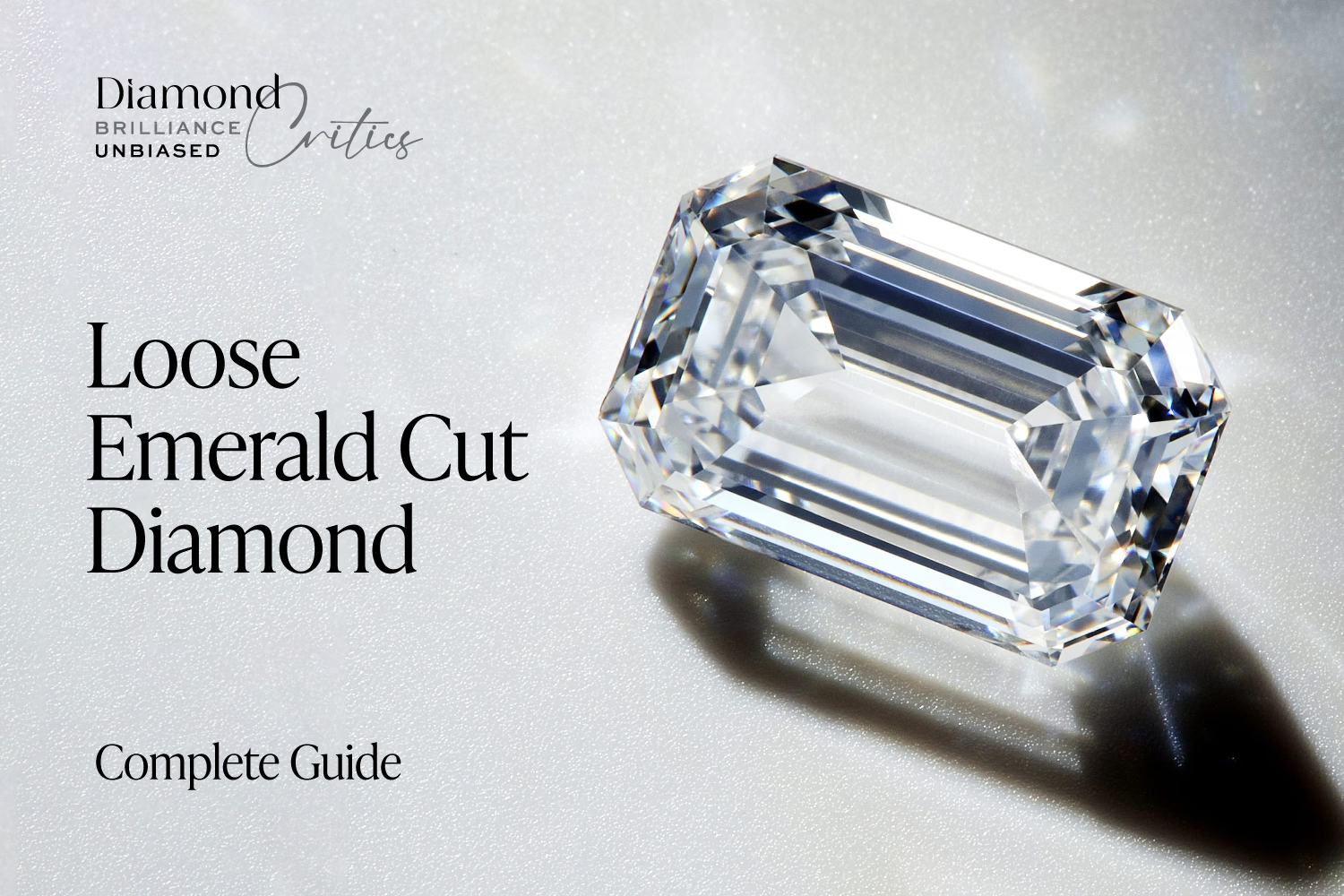
Loose Emerald Cut Diamond: Why 2ct Lab Beats 1ct Natural (Prices, Grades & What to Look For)
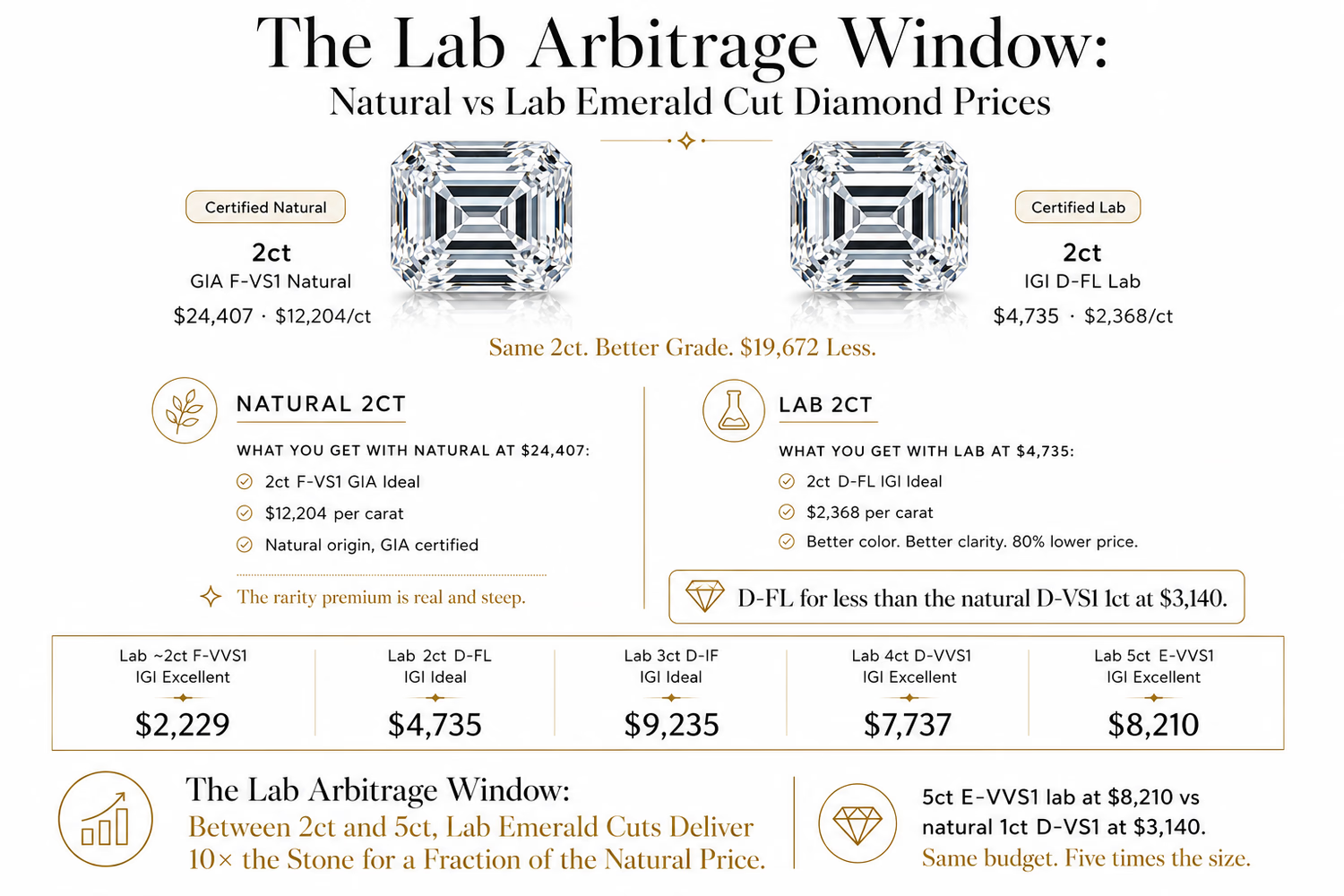
A loose emerald cut diamond starts at $3,140 for a GIA 1ct D-VS1 Ideal. A lab-grown 2ct D-FL Ideal costs $4,735 — for $1,595 more, you double the carat weight and jump from D-VS1 to D-FL. That's the value inversion most buyers never see coming.
Lab 4ct D-VVS1 Excellent: $7,737. Lab 5ct E-VVS1 Excellent: $8,210. The numbers don't lie.
TL;DR
- The single most important insight: A 2ct lab emerald cut D-FL costs $4,735 — less than most natural 1ct emerald cuts at the same quality. The value inversion is real and significant.
- Best natural pick: GIA 1ct D-VS1 Ideal — $3,140
- Best lab entry pick: IGI ~2ct F-VVS1 Excellent — $2,229
- Best lab value pick: IGI 2ct D-FL Ideal — $4,735
- VS1 minimum clarity — always. The open step-cut facets expose inclusions that other shapes hide. This is the one rule you cannot compromise on.
→ Buy loose first. IGI 2ct D-FL Ideal — $4,735 is the best-value pick in the entire emerald cut market. Browse all certified loose emerald cuts →
Why Buy a Loose Emerald Cut Diamond?
Buying loose means you see the stone before the setting. You evaluate the certificate. You watch the video. You compare two stones side by side before committing to either one.
Pre-set rings bundle everything together — the stone, the setting, and the retailer's markup — into a single price. You don't know what you paid for the diamond and what you paid for the metal. Buying loose breaks that apart completely.
For emerald cuts specifically, buying loose is more important than for any other shape. Here's why.
GIA does not issue a cut grade for emerald cut diamonds. There is no "Ideal" or "Excellent" cut grade on the GIA certificate for an emerald cut the way there is for a round brilliant. When a retailer lists a loose emerald cut as "Ideal," that's the retailer's own assessment — not a laboratory certification.
That means you have to evaluate the proportions yourself from the certificate. Length-to-width ratio, depth percentage, table percentage, culet, girdle thickness — every number matters. And you can only get them from a loose stone's grading report.
Buying pre-set hides these numbers. The ring's setting can obscure the stone's actual dimensions. You won't know the L/W ratio until you measure it yourself — which requires removing the stone from the setting.
Every certified loose emerald cut comes with a GIA or IGI certificate you can verify independently. Enter the report number at GIA.edu or IGI.org and confirm the grade matches what the vendor listed.
This takes two minutes and catches errors. Pre-set rings don't offer this.


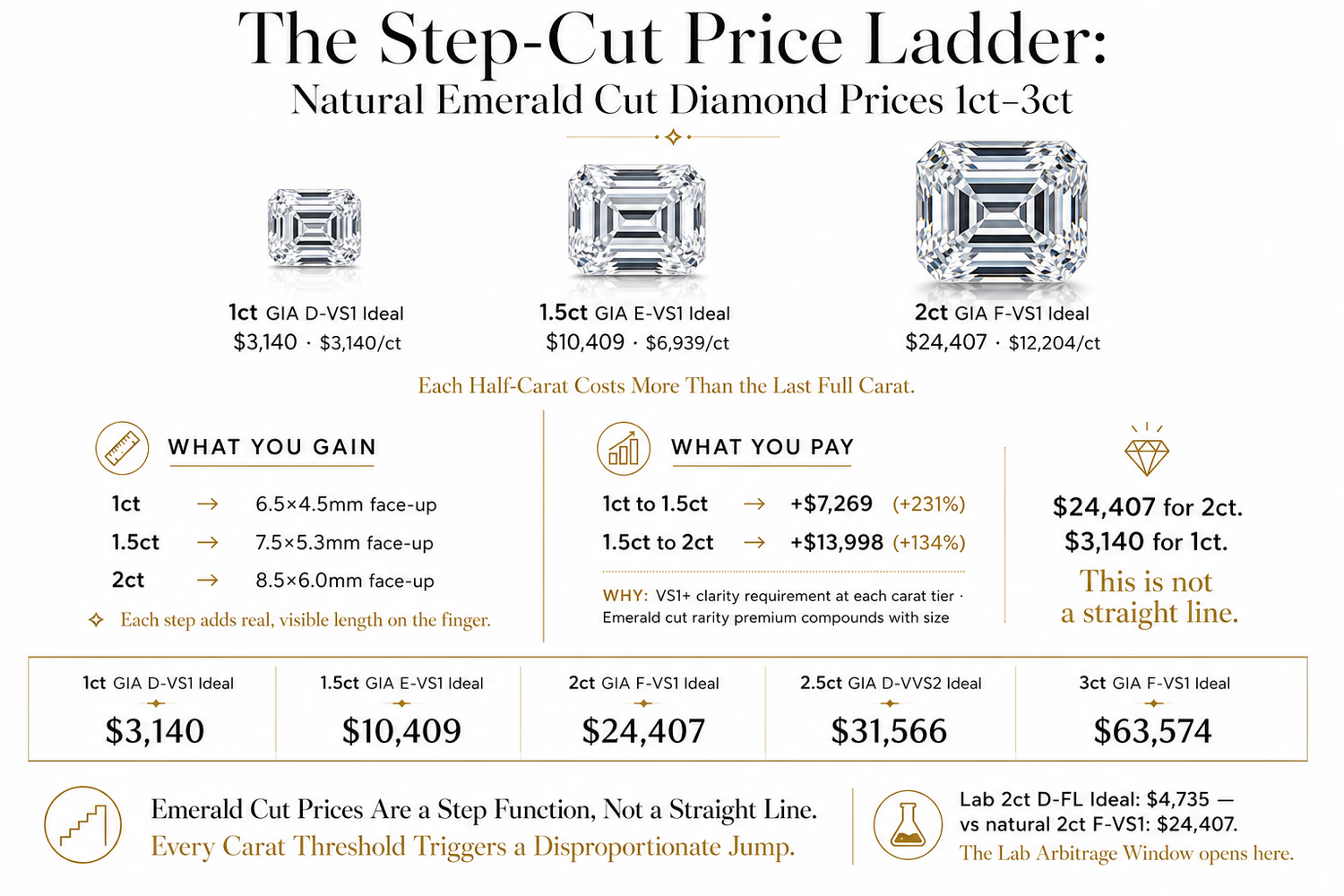
The Step-Cut Price Ladder
Emerald cut prices don't scale evenly with carat weight. They jump.
At 1ct, a GIA natural D-VS1 Ideal runs $3,140. That's the floor for top-tier quality at this weight. At 1.5ct — just half a carat more — the certified market jumps to $10,409 for a GIA E-VS1. At 2ct, a GIA F-VS1 is $24,407.
That is not a straight line. That is a step function.
Each carat threshold in natural emerald cuts triggers a disproportionate premium — not just because the stone is heavier, but because the emerald cut's mandatory VS1+ clarity requirement makes large, clean, well-proportioned stones genuinely rare. You're not just paying for more weight. You're paying for the rarity of finding a clean, well-cut stone at that size.
This matters when you're deciding how to allocate your budget. If you want 2ct natural quality, you need to plan for $24,000+ for a single GIA F-VS1. If you want 3ct natural, you're looking at $63,000+. These jumps are not gradual. They are sudden and steep.
The step-cut price ladder also explains why the lab-grown value proposition for emerald cuts is so much stronger than for brilliant cuts. Lab production removes the rarity premium. A 2ct D-FL lab emerald cut at $4,735 does not carry the natural stone's scarcity markup. You get the size. You get the quality. The ladder ends several rungs lower.
Loose Emerald Cut Diamond Price — Natural (Full Market Data)
All natural stones below are GIA certified, Ideal cut unless noted. Prices from current certified market inventory.
1 Carat Loose Emerald Cut Diamond Price
| Stone | Color-Clarity | Price | View |
|---|---|---|---|
| 1.00ct GIA Ideal Emerald | D-VS1 | $3,140 | View |
| 1.06ct GIA Ideal Emerald | D-VVS2 | $3,971 | View |
| 1.00ct GIA Ideal Emerald | D-IF | $5,836 | View |
| 1.02ct GIA Ideal Emerald | E-IF | $6,010 | View |
| 1.03ct GIA Ideal Emerald | E-VS1 | $6,820 | View |
The D-VS1 at $3,140 is the sweet spot at 1ct. D color. VS1 clarity — the minimum you should ever buy in an emerald cut. The D-IF at $5,836 costs $2,696 more for a clarity upgrade you cannot see once the ring is on. VS1 is already eye-clean in an emerald cut. IF is not worth the premium here.
1.5 Carat Loose Emerald Cut Diamond Price
| Stone | Color-Clarity | Price | View |
|---|---|---|---|
| 1.50ct GIA Ideal Emerald | E-VS1 | $10,409 | View |
| 1.50ct IGI Ideal Emerald | D-IF | $12,855 | View |
| 1.54ct GIA Ideal Emerald | D-VS1 | $19,058 | View |
This is where the step becomes visible. The GIA E-VS1 at $10,409 is the pick at 1.5ct natural. E color is near-colorless and gorgeous in an emerald cut's long table facets. VS1 is the clarity floor — go no lower. The 1.54ct D-VS1 at $19,058 is $8,649 more than the E-VS1 for a color difference nobody on the street will detect. Spend that money on carat size instead.
2 Carat Loose Emerald Cut Diamond Price
| Stone | Color-Clarity | Price | View |
|---|---|---|---|
| 2.00ct GIA Ideal Emerald | F-VS1 | $24,407 | View |
At 2ct natural, you're looking at $24,000+ for a GIA F-VS1. That's the reality of natural emerald cuts at this weight. The rarity of a clean, well-proportioned 2ct natural stone is embedded in that price. This is also the carat weight where the lab-grown value case becomes impossible to ignore — see the lab section below.
2.5 Carat Loose Emerald Cut Diamond Price
| Stone | Color-Clarity | Price | View |
|---|---|---|---|
| 2.52ct GIA Ideal Emerald | D-VVS2 | $31,566 | View |
| 2.55ct GIA Ideal Emerald | G-VVS2 | $35,178 | View |
Notice the price relationship here. The D-VVS2 at $31,566 has better color than the G-VVS2 at $35,178 — yet costs $3,612 less. Individual stone characteristics drive significant price variance at this carat weight. This is why buying loose and evaluating the actual certificate matters. Two stones at the same grade can vary by thousands of dollars.
3 Carat Loose Emerald Cut Diamond Price
| Stone | Color-Clarity | Price | View |
|---|---|---|---|
| 3.09ct GIA Ideal Emerald | F-VS1 | $63,574 | View |
| 3.59ct GIA Ideal Emerald | G-VVS1 | $72,542 | View |
| 3.07ct GIA Ideal Emerald | D-FL | $77,542 | View |
| 3.54ct GIA Ideal Emerald | G-VVS2 | $78,922 | View |
Natural 3ct emerald cuts start at $63,000. This is the top of the natural market for most private buyers. The F-VS1 at $63,574 is the most efficient pick here — F color is beautiful in a step cut's long open facets, and VS1 is the right clarity floor. The D-FL at $77,542 is a collector stone.
4ct–7ct Natural Loose Emerald Cut Diamond
| Stone | Color-Clarity | Price | View |
|---|---|---|---|
| 4.01ct GIA Ideal Emerald | G-VS1 | $97,688 | View |
| 5.00ct GIA Ideal Emerald | D-VS1 | $121,475 | View |
| 5.07ct GIA Ideal Emerald | F-VS1 | $134,743 | View |
| 4.12ct GIA Ideal Emerald | D-VVS1 | $260,848 | View |
| 7.01ct GIA Ideal Emerald | D-VS1 | $392,388 | View |
| 7.07ct GIA Ideal Emerald | D-FL | $515,594 | View |
At 4ct+, you're in rare stone territory. The jump from the 4ct G-VS1 at $97,688 to the 4.12ct D-VVS1 at $260,848 shows the exponential premium for top color and clarity at this weight. For buyers at 4ct+ natural, the lab-grown 4ct D-VVS1 at $7,737 demands serious consideration.
Farzana says: "The emerald cut rewards buyers who understand the data. A natural 1ct D-VS1 at $3,140 is genuinely beautiful. But a lab 2ct D-FL at $4,735 is more stone, better grade, for barely more money. Most buyers I see choose the natural 1ct without ever knowing the lab 2ct option existed. Run the numbers before you decide. The emerald cut's open facets mean every grade shows — which means the lab's D-FL advantage is actually visible on the stone."
Loose Emerald Cut Diamond Price by Color Grade
The emerald cut's long, open step facets show color more than any brilliant cut. Color matters more here than in a round or cushion.
| Color Grade | What You See | Recommended? |
|---|---|---|
| D–F | Truly colorless — the long table shows pure white in all lighting | Yes — ideal for emerald cut |
| G | Near-colorless — very slight warmth visible in certain lighting | Yes — excellent value |
| H | Slight warmth visible in the long table under daylight | Borderline — white gold setting only |
| I–J | Noticeable warmth in the step facets | No — avoid in emerald cut |
| K+ | Yellow tint clearly visible | No |
For white or platinum settings, D–G is the target. For yellow gold, you can push to G–H because the metal warmth neutralizes slight color in the stone. Never go below H for an emerald cut in any setting — the long table broadcasts color in a way that cushion and oval cuts do not.
For more detail on how color behaves in an emerald cut, see the full emerald cut diamond guide.
Loose Emerald Cut Diamond Price by Clarity Grade
VS1 is the floor. This is not a preference — it's a rule based on the emerald cut's architecture.
| Clarity | VS1 | VS2 | SI1 | SI2 |
|---|---|---|---|---|
| Eye-clean in emerald cut? | Yes — always | Sometimes | Rarely | Never |
| Risk of visible inclusion? | Very low | Moderate | High | Certain |
| Recommended? | Yes | Sometimes (must check video) | No | No |
Brilliant cuts — round, oval, cushion — hide inclusions in their tiny facets. The emerald cut does the opposite. Its large parallel step facets act as magnifying windows. An SI1 that's eye-clean in a round brilliant will show clearly in an emerald cut.
VS2 is sometimes acceptable, but only with a detailed HD video review from the vendor. You must see the actual stone, not just the grade. VS1 is the safe choice. You buy it and you don't have to worry.
For the full clarity breakdown, the emerald cut diamond clarity guide goes deeper on this.
The Lab Arbitrage Window
Between 2ct and 5ct, lab-grown emerald cut diamonds deliver value that simply doesn't exist in any other diamond shape or carat range.
The reason is the clarity tax. Natural emerald cuts require VS1+ clarity because their open facets expose every flaw. At 2ct, finding a clean natural stone takes you to $24,000+. At 3ct, you're at $63,000+. At 4ct, you're approaching $100,000.
Lab production removes the scarcity premium. D-FL and D-IF lab emerald cuts at 2ct cost under $5,000. At 3ct, under $11,000. At 4ct, you can find D-VVS1 for $7,737 — less than the natural 1ct D-VS1.
This is the Lab Arbitrage Window: the carat range where the natural scarcity premium is so steep that lab stones offer ten times the stone for a fraction of the price. No other shape has this gap as clearly as the emerald cut does.
The window works because:
- Natural clarity is rare at 2ct+ emerald cuts
- Lab production makes top clarity accessible at any carat
- Emerald cut's step facets actually show the D-FL quality — unlike in a cushion or oval where you can't tell FL from VS1 in person
Loose Lab Grown Emerald Cut Diamond Price
All lab stones below are IGI, GCAL, or GIA certified. Ideal or Excellent cut.
~2ct Lab Emerald Cut Diamond Price
| Stone | Color-Clarity | Price | View |
|---|---|---|---|
| IGI 1.94ct Excellent Lab Emerald | F-VVS1 | $2,229 | View |
| GCAL 1.85ct Ideal Lab Emerald | F-VVS1 | $3,832 | View |
| IGI 1.90ct Ideal Lab Emerald | D-FL | $3,862 | View |
| IGI 1.89ct Ideal Lab Emerald | D-FL | $3,881 | View |
| GCAL 1.81ct Ideal Lab Emerald | D-IF | $3,972 | View |
| IGI 2.00ct Ideal Lab Emerald | D-FL | $4,735 | View |
| GCAL 1.96ct Ideal Lab Emerald | D-FL | $4,861 | View |
| GCAL 1.85ct Ideal Lab Emerald | D-VVS1 | $4,928 | View |
| GCAL 2.00ct Ideal Lab Emerald | D-VVS1 | $5,335 | View |
The IGI 1.94ct F-VVS1 at $2,229 is the entry point. Under $2,500 for nearly 2ct, F color, VVS1 clarity. The IGI 2ct D-FL at $4,735 is the sweet spot — full 2ct, D color, Flawless. Compare that to the natural 2ct F-VS1 at $24,407 and the math is clear.
3ct Lab Emerald Cut Diamond Price
| Stone | Color-Clarity | Price | View |
|---|---|---|---|
| IGI 3.00ct Ideal Lab Emerald | D-IF | $9,235 | View |
| IGI 3.00ct Ideal Lab Emerald | D-IF | $9,619 | View |
| GCAL 3.00ct Excellent Lab Emerald | D-VVS1 | $10,695 | View |
Three carats, D color, Internally Flawless, for $9,235. The natural equivalent runs $63,000+. That is a $54,000 price gap for the same grade, same size. This is the Lab Arbitrage Window in its purest form.
4ct Lab Emerald Cut Diamond Price
| Stone | Color-Clarity | Price | View |
|---|---|---|---|
| IGI 4.00ct Excellent Lab Emerald | D-VVS1 | $7,737 | View |
| IGI 4.00ct Ideal Lab Emerald | D-FL | $16,428 | View |
| IGI 4.00ct Ideal Lab Emerald | D-FL | $17,315 | View |
The 4ct D-VVS1 at $7,737 is a jaw-dropper. Four carats. D color. VVS1. Under $8,000. The natural 4ct G-VS1 is $97,688. One of these prices belongs in a museum. The other belongs in your budget.
5ct Lab Emerald Cut Diamond Price
| Stone | Color-Clarity | Price | View |
|---|---|---|---|
| IGI 5.11ct Excellent Lab Emerald | E-VVS1 | $8,210 | View |
| IGI 5.19ct Excellent Lab Emerald | E-VVS1 | $8,339 | View |
| IGI 5.04ct Ideal Lab Emerald | D-VVS1 | $9,491 | View |
| GIA 5.01ct Ideal Lab Emerald | E-VVS1 | $9,827 | View |
| GIA 5.11ct Ideal Lab Emerald | E-VVS1 | $10,023 | View |
| GCAL 5.04ct Ideal Lab Emerald | D-VVS1 | $11,732 | View |
| GCAL 5.00ct Ideal Lab Emerald | D-IF | $17,490 | View |
| GCAL 5.00ct Ideal Lab Emerald | D-FL | $19,871 | View |
7ct+ Lab Emerald Cut Diamond
| Stone | Color-Clarity | Price | View |
|---|---|---|---|
| IGI 7.27ct Excellent Lab Emerald | F-VVS1 | $10,079 | View |
| IGI 9.53ct Excellent Lab Emerald | F-VVS1 | $13,212 | View |
A 7.27ct F-VVS1 for $10,079. A 9.53ct F-VVS1 for $13,212. These are statement pieces at prices that would normally buy a 1ct natural. The Lab Arbitrage Window extends further than most people realize.
Farzana says: "I tell every client the same thing. A lab 2ct D-FL emerald cut costs $4,735. A natural 1ct D-VS1 costs $3,140. For $1,595 more, you get twice the size and a better grade. There is no comparable value proposition anywhere else in the diamond market right now. If you're buying an emerald cut and size matters to you — and in an emerald cut, size really shows — the lab option at 2ct is the most compelling buy in the entire shape category."
Tides Of Summer Capsule
Up To 30% Off
Shop The Sale →Vault ClearanceClear The Vault
Up To 70% Off
Shop Vault Deals →Affiliate link — no extra cost to you
GIA vs IGI for Loose Emerald Cut Diamonds
Both certifications are valid for emerald cuts. The difference matters for how you use the report.
GIA — the industry gold standard. When you see a GIA certificate on a loose emerald cut, the grades are from the most conservative, most trusted lab in the world. GIA's natural stone grading has no equal. For natural emerald cuts at any price point, GIA certification is the standard you should target.
IGI — widely used for lab-grown stones. IGI's lab-grown grading is accepted across the industry. Almost all lab emerald cuts on the market carry IGI or GCAL certification. IGI grades are generally reliable for lab stones, though IGI is slightly more generous in color and clarity grades than GIA for the same stone.
GCAL — a strong third option for lab stones. GCAL's grading is conservative and its certificates include light performance data not found on GIA or IGI reports. The GCAL Ideal Cut grade for lab emerald cuts is worth looking for.
The practical rule: GIA for natural, IGI or GCAL for lab. Don't pay a premium for GIA-certified lab stones unless you specifically value the GIA name on the report.
For more on certification, the emerald cut diamond guide covers the GIA no-cut-grade issue in detail.
Loose Emerald Cut Diamond Ideal Proportions
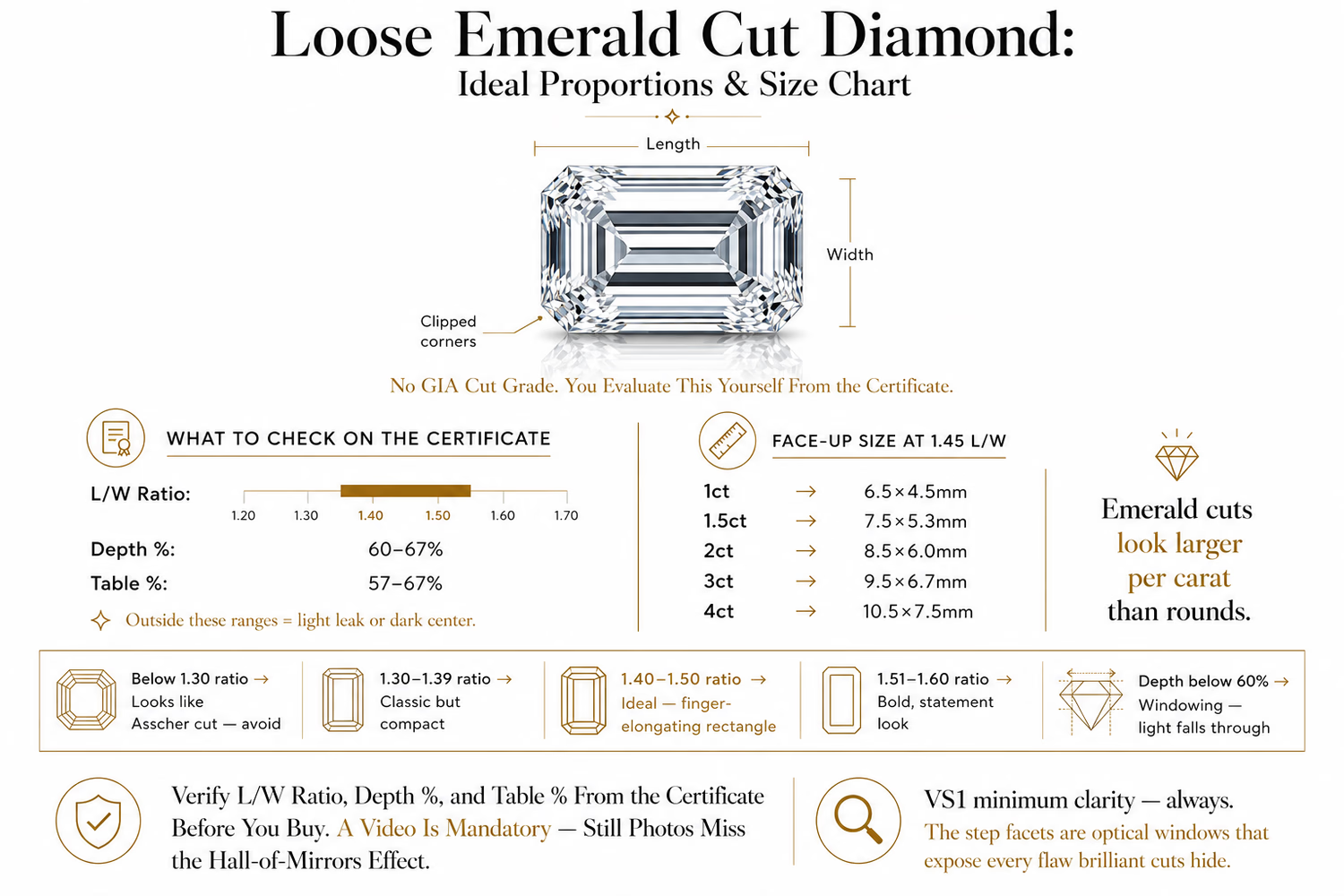
This is the most important section for emerald cut buyers. Because GIA doesn't grade cut for emerald cuts, you evaluate proportions yourself from the certificate.
Length-to-Width Ratio
The L/W ratio determines the shape's outline — how rectangular or how square it looks.
| L/W Ratio | Shape | Look |
|---|---|---|
| 1.20–1.29 | Nearly square | Chunky, compact |
| 1.30–1.39 | Slightly rectangular | Classic emerald look |
| 1.40–1.50 | Rectangular | The most popular range — elegant, finger-elongating |
| 1.51–1.60 | Long rectangle | Bold, statement |
| 1.60+ | Very elongated | Unusual — rarely seen |
Most buyers land in the 1.40–1.50 range. This is where the emerald cut looks most like itself — long, architectural, elegant. Below 1.30 starts to look like an Asscher cut. Above 1.55 starts to look too narrow on the hand.
The ideal L/W ratio for emerald cuts is a personal preference within 1.35–1.55. There is no wrong answer inside that range. Outside it, you start losing the character of the shape.
Depth and Table Percentage
| Measurement | Ideal Range |
|---|---|
| Depth % | 60–67% |
| Table % | 57–67% |
Depth outside 60–67% means the stone either leaks light at the bottom (too shallow) or goes dark in the center (too deep). Table above 67% reduces the stone's apparent size from above. Both extremes hurt the visual performance you're paying for.
For a full proportion breakdown, see the emerald cut diamond ideal proportions guide.
Loose Emerald Cut Diamond Size Chart
Emerald cut dimensions by carat weight at the standard 1.40–1.50 L/W ratio:
| Carat | Approx. Length | Approx. Width | Face-Up Size |
|---|---|---|---|
| 0.50ct | 5.5mm | 3.8mm | Small — finger coverage is limited |
| 0.75ct | 6.2mm | 4.3mm | Modest — visible but compact |
| 1.00ct | 6.5mm | 4.5mm | Classic 1ct presence |
| 1.50ct | 7.5mm | 5.3mm | Noticeably larger — strong hand presence |
| 2.00ct | 8.5mm | 6.0mm | Statement size — the elongated silhouette shows clearly |
| 2.50ct | 9.0mm | 6.3mm | Bold — fills the finger elegantly |
| 3.00ct | 9.5mm | 6.7mm | Dramatic — unmistakably large |
| 4.00ct | 10.5mm | 7.5mm | Collector territory |
| 5.00ct | 11.5mm | 8.0mm | Extraordinary presence |
One thing unique to emerald cuts: the rectangular silhouette makes stones appear larger per carat than round brilliants. A 2ct emerald cut covers significantly more finger than a 2ct round. This makes size-per-dollar particularly favorable for the shape — especially combined with lab-grown pricing. For a detailed carat-by-size breakdown, see the emerald cut diamond size chart.
What to Look for in a Loose Emerald Cut Diamond
Beyond the certificate grades, here's what to evaluate before you buy.
The video is mandatory. Still photos are useless for emerald cut evaluation. The hall-of-mirrors effect — those long, sweeping reflections — only shows in motion. Watch the video twice. Watch it under direct light. Watch it in ambient light. If the vendor doesn't have a video, don't buy.
Look for extinction. Extinction is the dark areas in a step-cut diamond that appear when light doesn't bounce back to your eye. Some extinction is normal. Large dark patches across the table or at the corners indicate poor proportion or a cut flaw that the certificate won't catch.
Check the corners. Emerald cuts have clipped corners to reduce chipping risk. Too much clipping and the stone looks like an octagon. Too little and the corners are vulnerable. Certificate measurements don't capture this — video and photos do.
Verify the L/W ratio yourself. Take the length and width measurements from the GIA report. Divide length by width. Confirm it's in the 1.40–1.50 range you want. Don't assume the retailer's description matches what the certificate says.
Read the clarity comments. GIA certificates include a plot diagram showing where inclusions are and a clarity comment describing them. VS1 is your floor, but where the inclusion sits matters. An inclusion under the table (visible from above) is worse than one near a corner covered by the setting.
How to Tell If a Loose Emerald Cut Diamond Is Real
Four reliable checks:
1. The fog test. Breathe on the stone. A real diamond dissipates the fog immediately. Glass and cubic zirconia hold the fog for 2–4 seconds. This works for loose stones — harder once set.
2. The GIA or IGI certificate verification. Enter the report number at GIA.edu or IGI.org. Confirm the stone's measurements match the report. Weight, dimensions, and laser inscription number (engraved on the girdle) must all match.
3. The thermal conductivity test. Real diamonds conduct heat differently from simulants. Any reputable jeweler can test this in 30 seconds with a thermal probe. Free to ask, takes a minute, definitively separates diamonds from moissanite and CZ.
4. The weight check. If you can weigh the stone, compare to the certificate carat weight. 1 carat = 0.2 grams. A significant discrepancy means something is wrong.
The safest approach: only buy loose emerald cuts with a GIA or IGI certificate, from an established vendor, with the report number verifiable online before you send payment.
Loose vs Pre-Set Emerald Cut Diamond — Should You Buy Loose?
| Factor | Loose | Pre-Set |
|---|---|---|
| Proportion verification | Full access to certificate | Often unavailable |
| Video review possible | Yes | Rarely |
| Price transparency | Stone price separate from setting | Bundled |
| Setting flexibility | Any setting you want | Fixed to ring |
| Certificate verification | Before purchase | After purchase |
| Resale clarity | High — cert stays with stone | Lower — bundled value |
Buy loose if: you care about exactly what you're getting, you want a specific setting, or you're at $3,000+ where the difference between a good and bad stone is significant money.
Buy pre-set if: you're buying a gift quickly and don't need to evaluate proportions yourself, or the retailer's pre-set selection already has the stone and setting you want together.
For emerald cuts specifically, loose is almost always the right answer. The reason: GIA doesn't grade cut for emerald cuts. Proportion evaluation is mandatory. And you can't properly evaluate proportions in a pre-set stone. The setting covers the girdle. You can't measure L/W directly. You're buying blind on the most important variable for this shape.
Loose Emerald Cut Diamond Optimization Matrix
| Scenario | Best Pick | Price | Why |
|---|---|---|---|
| Natural 1ct, top quality | GIA 1ct D-VS1 Ideal | $3,140 | Floor entry for natural emerald at top grade |
| Best value natural | GIA 1.5ct E-VS1 Ideal | $10,409 | Size upgrade from 1ct natural at strong quality |
| Lab entry — best price | IGI ~2ct F-VVS1 Excellent | $2,229 | Nearly 2ct for under $2,500 |
| Lab sweet spot | IGI 2ct D-FL Ideal | $4,735 | Full 2ct, D, Flawless — best value in the matrix |
| Lab size statement | IGI 4ct D-VVS1 Excellent | $7,737 | Four carats, D-VVS1, under $8,000 |
| Lab maximum size | IGI 5ct E-VVS1 Excellent | $8,210 | Five carats for $8,210 — the peak of the arbitrage |
| Natural collector | GIA 3ct F-VS1 Ideal | $63,574 | Best price for natural 3ct quality |
Farzana says: "Once you see the data in one place, the decision is obvious. A natural 1ct at $3,140 is a real diamond and a beautiful stone. But a lab 5ct E-VVS1 at $8,210 is a statement piece that will turn heads everywhere you go. For the same $8,000 budget, you can have five carats of Excellent-cut lab emerald or one carat of natural. Neither choice is wrong. But you should make it with your eyes open, with the numbers in front of you, not based on assumptions."
Final Verdict — Best For
Buy the natural 1ct D-VS1 at $3,140 if: you want a natural GIA-certified emerald cut with top grades and the smallest possible budget. This is the entry point for a real, certified, beautiful stone.
Buy the lab 2ct D-FL at $4,735 if: you want the best value in the entire emerald cut market. Double the carat. Top grade. $1,595 more than the natural 1ct. This is the pick for buyers who run the numbers.
Buy the lab 4ct D-VVS1 at $7,737 if: you want a statement stone and understand that lab-grown value doesn't depreciate any faster than natural at these carat sizes. Four carats in an emerald cut is a genuinely extraordinary look.
Buy the natural 3ct F-VS1 at $63,574 if: you specifically want a natural stone at maximum carat presence and have the budget. This is a collector-grade purchase where the natural provenance is part of the value.
Expert Summary
A loose emerald cut diamond is the most technically demanding diamond purchase in the step-cut category — because GIA doesn't grade the cut, and the open facets expose every proportion flaw, clarity issue, and color trace that brilliant cuts hide.
The VS1 clarity floor is non-negotiable. The L/W ratio between 1.40–1.50 is the sweet spot for most buyers. A video before purchase is mandatory. And the value inversion between natural and lab at 2ct+ is the most dramatic in the diamond market — a 2ct lab D-FL at $4,735 versus a 2ct natural F-VS1 at $24,407.
Always verify the GIA or IGI certificate independently before purchase. Always watch the HD video. Always check the L/W ratio, depth percentage, and table percentage yourself from the certificate numbers.
The emerald cut rewards buyers who do the work. For everyone else, it's just an expensive rectangle.
See Also
- Emerald Cut Diamond — complete shape guide, hall-of-mirrors effect, VS1 rule
- Emerald Cut Diamond Engagement Rings — ring styles, settings, and top picks
- Emerald Cut Diamond Ring Settings — solitaire, bezel, halo, pave and more
- Lab Grown Emerald Cut Diamond — full lab guide with price-by-carat breakdown
- Emerald Cut Diamond Clarity Guide — VS1 vs VS2 vs SI1 in step cuts
- Emerald Cut Diamond Ideal Proportions — L/W ratio, depth, table guide
- Emerald Cut Diamond Size Chart — mm dimensions by carat weight
- 1 Carat Emerald Cut Diamond Ring — 1ct ring guide with setting recommendations
- 2 Carat Emerald Cut Diamond — 2ct price breakdown natural vs lab
- 3 Carat Emerald Cut Diamond Ring — 3ct guide and pricing
- Radiant Cut vs Emerald Cut Diamond — full shape comparison
- Loose Cushion Cut Diamond — another step-cut shape buying guide
Frequently Asked Questions
What is a loose emerald cut diamond?
A loose emerald cut diamond is a certified emerald cut diamond sold without a setting — just the stone, with its GIA or IGI grading report. You buy it, then have it set in a ring, earring, or pendant of your choice. Buying loose gives you full access to the certificate, the ability to verify the grade, and freedom to choose any setting.
How much does a loose emerald cut diamond cost?
Natural loose emerald cuts start at $3,140 for a GIA 1ct D-VS1 Ideal. Lab-grown starts at $2,229 for an IGI ~2ct F-VVS1 Excellent. Natural 2ct runs $24,000+. Natural 3ct runs $63,000+. Lab 3ct D-IF runs $9,235.
How much is a 1 carat loose emerald cut diamond?
A GIA-certified 1ct natural emerald cut D-VS1 Ideal costs $3,140 from current certified market inventory. D-IF at 1ct runs $5,836. E-VS1 runs $6,820. The D-VS1 is the sweet spot — top color, minimum required clarity.
How much is a 2 carat loose emerald cut diamond?
Natural 2ct emerald cuts run $24,000+ for GIA F-VS1 Ideal. See the full 2 carat emerald cut diamond guide for a complete price breakdown. Lab-grown 2ct D-FL runs $4,735 — the Lab Arbitrage Window at its peak.
Are emerald cut diamonds cheaper than other cuts?
Natural emerald cuts are 20–35% cheaper than equivalent round brilliants at the same carat, color, and clarity. But emerald cuts require VS1+ clarity — which adds cost back in at higher carat weights. The net result: at 1ct, emerald cuts are meaningfully cheaper than rounds. At 2ct+, the mandatory clarity premium narrows that gap significantly.
What clarity do I need for a loose emerald cut diamond?
VS1 minimum, always. The emerald cut's large step facets expose inclusions that other shapes hide. VS2 can sometimes work but requires video verification of the specific stone. SI1 and below are not eye-clean in emerald cuts and should be avoided regardless of the grade on the certificate.
What color is best for a loose emerald cut diamond?
D–G for white gold or platinum settings. G–H is acceptable in yellow gold where the metal's warmth neutralizes slight color in the stone. Never go below H for an emerald cut — the long table broadcasts color far more visibly than brilliant cuts. Color matters more in an emerald cut than in any other popular shape.
What L/W ratio should a loose emerald cut diamond have?
The sweet spot is 1.40–1.50 for the classic rectangular emerald cut look. Ratios below 1.30 look nearly square — closer to an Asscher cut. Ratios above 1.55 look very narrow. Most buyers and most celebrity rings fall between 1.40 and 1.50. Verify the ratio yourself from the certificate measurements — don't rely on the retailer's description.
GIA or IGI for a loose emerald cut diamond?
GIA for natural stones — no other lab matches GIA's grading consistency for natural diamonds. IGI or GCAL for lab-grown stones — both are widely accepted and reliable for lab emerald cuts. Don't pay a premium for GIA-certified lab stones unless the GIA name specifically matters to you.
How do I buy a loose emerald cut diamond safely?
Buy from an established vendor with full HD video of the actual stone. Verify the GIA or IGI certificate number independently at the lab's website before payment. Check the L/W ratio, depth percentage, and table percentage from the certificate. Confirm the girdle laser inscription number matches the certificate. Request a returns policy of at least 30 days.
What is the ideal depth percentage for a loose emerald cut diamond?
60–67% depth percentage. Below 60% the stone is too shallow and leaks light through the bottom — you see dark patches. Above 67% the stone is too deep and goes dark in the center. Both extremes waste the stone's visual potential. Depth percentage is one of the most important numbers on the certificate for emerald cut evaluation.
Can I buy a loose lab grown emerald cut diamond?
Yes — and the value is extraordinary. A 2ct D-FL IGI lab emerald cut costs $4,735. A 3ct D-IF lab emerald cut costs $9,235. A 5ct E-VVS1 lab emerald cut costs $8,210. Lab-grown emerald cuts are physically and chemically identical to natural diamonds. The full guide is at lab grown emerald cut diamond.
What is windowing in an emerald cut diamond?
Windowing happens when a step-cut diamond is cut too shallow. When you look straight through the table, you see through to what's beneath the stone — like looking through a window — instead of seeing reflected light. It makes the stone look washed out and lifeless. A depth percentage below 60% usually causes windowing. This is why depth percentage is a mandatory check for every loose emerald cut you evaluate.
Where can I buy loose emerald cut diamonds wholesale?
Retail certified loose emerald cut diamonds from verified vendors with GIA or IGI certificates are the safest way to buy. What vendors call "wholesale" is usually just direct-to-consumer pricing without a brick-and-mortar markup. Certified market inventory from reputable online vendors already reflects efficient pricing. Browse certified loose emerald cuts →
Expert Verdict
Always audit the stone individually — no grade replaces seeing the actual diamond. The certificate tells you what to look for. Your eyes tell you whether to buy.
— Farzana Hasan, GIA Expert · DiamondCritics.com