TL;DR: Baguette Emerald Cut Diamond Ring
A baguette emerald cut diamond ring starts at $925. Eighteen styles ranked across four categories. The Dot Dash Diamond Ring — alternating baguette and round diamonds — leads with 118 reviews, the most validated baguette ring in the market.
4 style categories:
- Alternating / Dot-Dash: $925–$994 — 5 styles, round + baguette alternating pattern, 118 reviews on top picks
- Channel Set Baguette Bands: $1,640–$3,290 — 6 styles, pure baguette in half or full eternity
- Designer Baguette (Zac Zac Posen): $1,498–$4,365 — 5 styles, double row, east-west, crown curved
- Eternity & Statement: $2,047–$6,204 — 2 styles, full-coverage baguette eternity and high-carat channel
3 named concepts:
- The Step-Cut Family — baguette and emerald cut are both step-cut diamonds; they share the same visual discipline but differ in purpose, depth, and facet structure
- The 118 Standard — the Dot Dash Diamond Ring with 118 reviews is the most review-validated baguette ring in the certified market
- The Accent Advantage — tapered baguettes as side stones on an emerald cut ring extend the step-cut line horizontally; round brilliants break that line
→ Browse all baguette diamond rings


What Is a Baguette Emerald Cut Diamond Ring?
A baguette emerald cut diamond ring is a ring that features baguette-cut diamonds — either as the main stones in a band, as accent stones alongside an emerald cut center, or in a mixed pattern with round brilliants. The term combines two related but distinct diamond cuts that share the same step-cut family.
I'm Farzana Hasan, a GIA-certified gemologist. I've evaluated baguette and emerald cut diamonds at every price point. The two cuts are closer in visual character than most buyers realize — and understanding what separates them changes what you buy.
Full credentials at Diamond Critics.
This guide covers the difference between baguette and emerald cut diamonds, all 18 baguette ring styles ranked by review count and price, and exactly when baguette accents make an emerald cut ring better.
The Step-Cut Family
The Step-Cut Family is the group of diamond cuts — baguette, emerald cut, Asscher, carre — that share the same fundamental cutting approach: horizontal facets arranged in parallel steps, no brilliant-cut faceting, and a geometry that prioritizes clean, architectural lines over sparkle and fire.
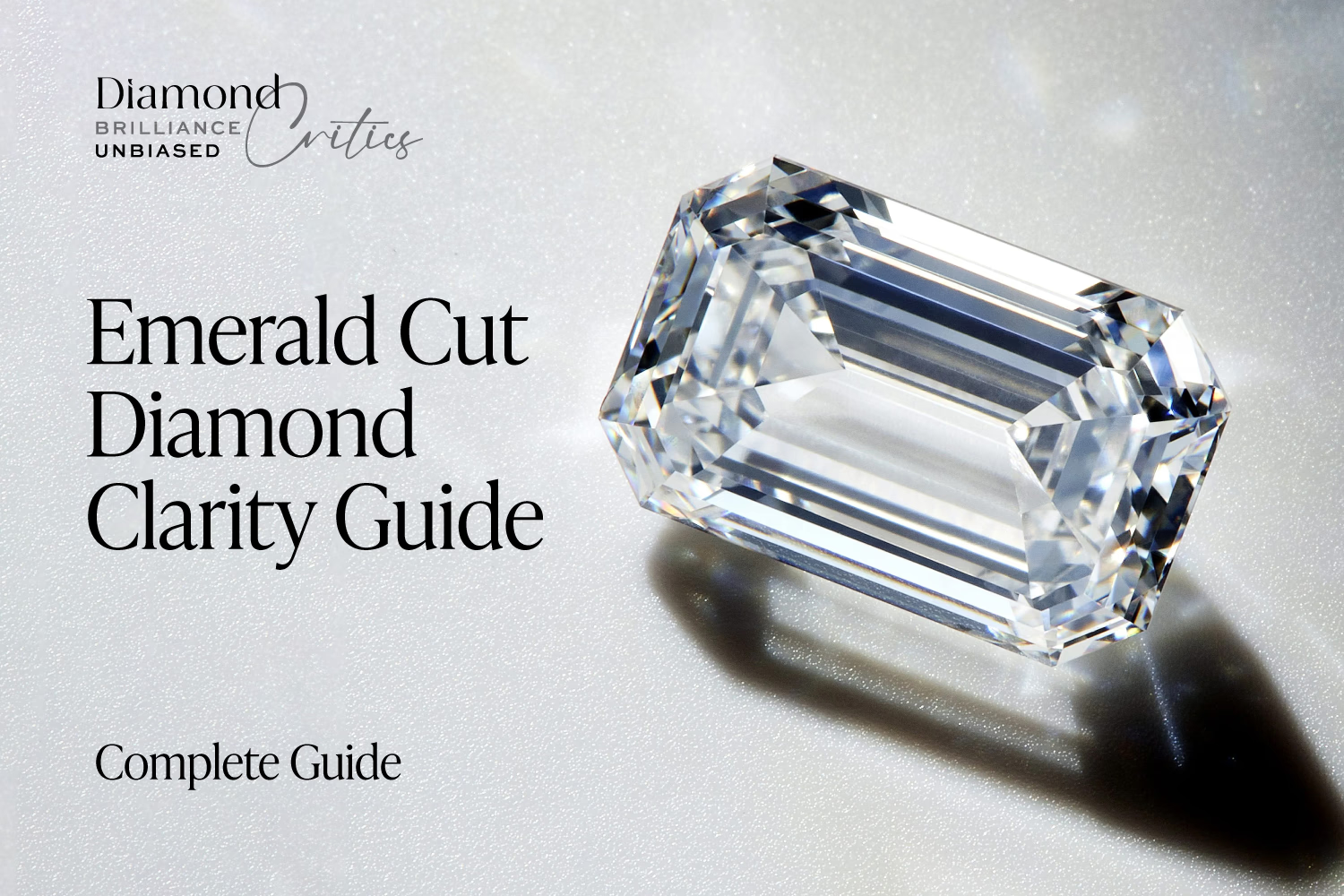
Baguette and emerald cut are the two most common members of this family. Both show inclusions more clearly than round brilliants. Both require VS2 or better clarity.
Both reward buyers who prioritize precision and geometry over maximum light scatter.
The key differences:
Baguette diamonds are accent stones. They have 14 facets — far fewer than the emerald cut's 57–58. The shallow pavilion and minimal faceting mean less depth and less brilliance.
Baguettes are typically elongated at 2:1 to 3:1 length-to-width ratio and used in channel settings, eternity bands, and as side stones.
Emerald cut diamonds are center stones. More facets, greater depth, a distinctive culet, and the famous hall-of-mirrors reflection pattern that a flat table creates when the stone is large enough to produce it. The emerald cut's proportions — typically L:W 1.30–1.50, depth 60–64%, table 61–69% — are calibrated for a single featured stone.
Where they look the same:
From a distance, a baguette eternity band and an emerald cut diamond ring both read as clean, architectural, step-cut jewelry. The same geometric discipline runs through both. This is why buyers searching for a baguette emerald cut ring often mean a ring that has both that linear, step-cut character — not necessarily a ring that contains both stones.
The Step-Cut Family look works because both cuts avoid the visual noise of brilliant faceting. Clean lines. Direct geometry.
No scatter.
Farzana says: "The first thing I tell buyers comparing baguette and emerald cut is: they're related, not interchangeable. You don't use a baguette as a center stone. You don't use an emerald cut in a channel band. They each do one thing very well, and the best rings use them for exactly that purpose — or use them together, where the step-cut discipline of both creates one continuous visual line."
The 118 Standard
The 118 Standard is the benchmark set by the Dot Dash Diamond Ring — available in yellow, white, and rose gold — the most review-validated baguette ring in the certified market with 118 reviews per metal.
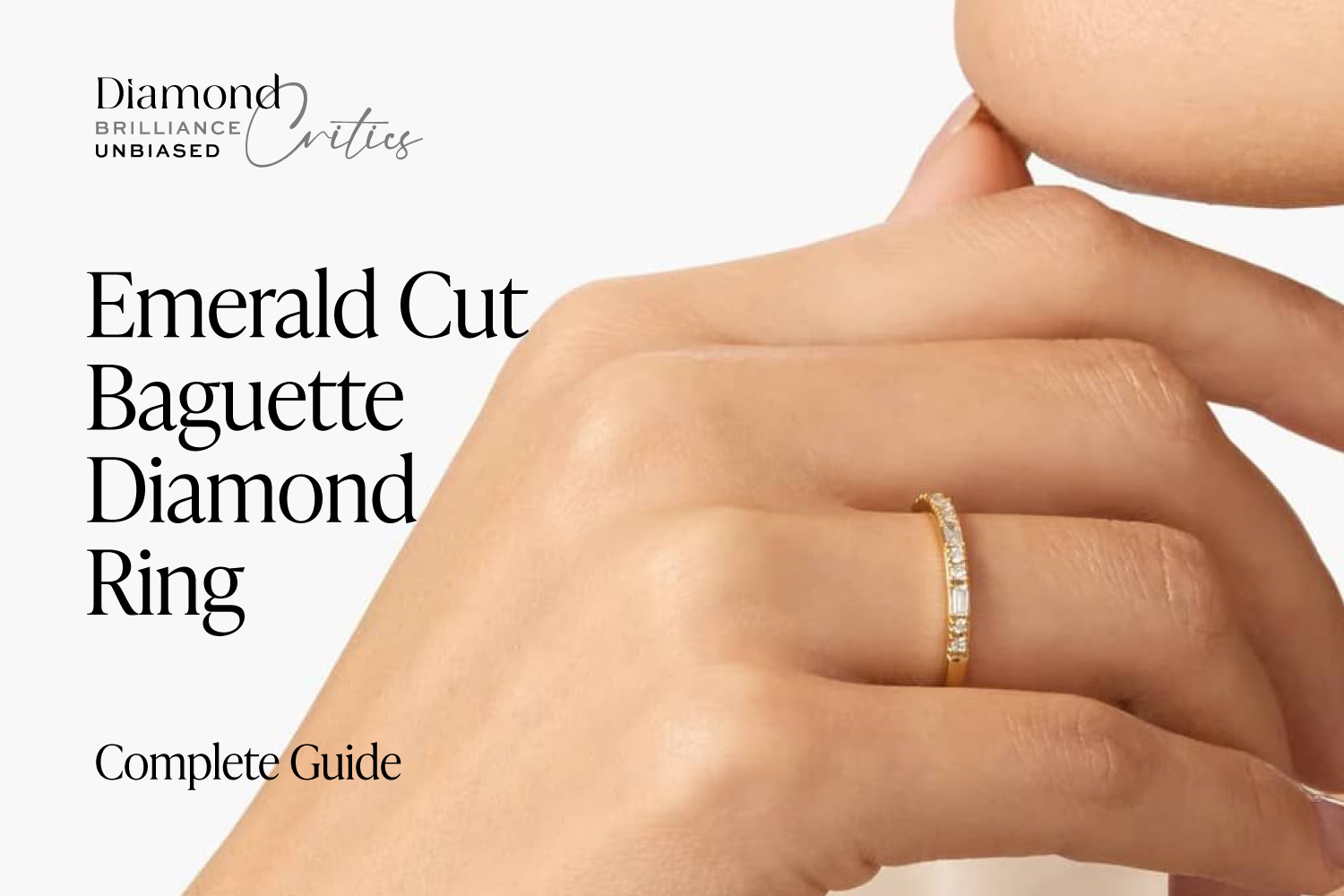
The Dot Dash design alternates baguette-cut and round brilliant diamonds along the band. The pattern creates a rhythm that plays on exactly the contrast between the two cuts: the rectangular, flat-top baguette paired with the scintillating round brilliant. Neither cut dominates.
The alternating geometry makes the band read as step-cut-inflected without being a pure baguette eternity ring.
The Dot Dash Diamond Ring in 14k Yellow Gold at $994 is currently at a 30% discount from $1,420. The same design is available in white gold and rose gold at the same price.
The 118 Standard applies as the starting point for any baguette ring evaluation. It is the most reviewed design in the baguette category. To justify a more expensive baguette ring, the question is the same as it is for any premium: does the added price buy visual or functional benefit that 118 buyers couldn't find in the Dot Dash at $994?
For a pure baguette channel band — yes. For a three-row ZZP designer ring — yes. For a designer ring at $4,000+ with fewer than 10 reviews — the benchmark matters.
The Accent Advantage
The Accent Advantage is the specific visual benefit of using tapered baguette diamonds as side stones in an emerald cut engagement ring — rather than round brilliants, pear shapes, or trillion side stones.
An emerald cut diamond has a rectangular step-cut table. When you place tapered baguettes on either side, you extend that rectangular step-cut line horizontally. The three stones — tapered baguette, emerald cut center, tapered baguette — read as one continuous band of step-cut geometry across the finger.
The visual line does not break.
Round brilliants as side stones break that line. A round brilliant's faceting pattern is fundamentally different from the emerald cut's step-cut table. Side by side, the contrasting facet types compete visually.
Trapezoid side stones are a variation of the Accent Advantage — trapezoid-cut diamonds have a flat top like a baguette but with a tapered profile that follows the emerald cut's outline more precisely. Harry Winston's classic three-stone settings use trapezoid side stones for this reason: the flat-top geometry of the trapezoid mirrors the emerald cut's table without introducing brilliant-cut scatter into the immediate surroundings of the stone.
Trillion side stones work differently. Trillions are brilliant-cut triangular stones. They add maximum sparkle and contrast to an emerald cut center — opposite of the baguette approach. Both work. The choice depends on whether you want geometric continuity (baguette/trapezoid) or maximum contrast and sparkle (trillion).
For an emerald cut center with tapered baguette side stones, the emerald cut diamond search combined with the baguette ring search gives you the full picture of what's available at each size.
Farzana says: "The Accent Advantage is something buyers feel before they can articulate it. They look at a three-stone emerald cut with baguette sides and say 'it looks more complete' compared to one with round brilliant sides. It does look more complete. The step-cut line runs all the way across. The geometric architecture of the emerald cut becomes the architecture of the whole ring — not just the center stone."
Alternating Baguette Rings: $925 to $994
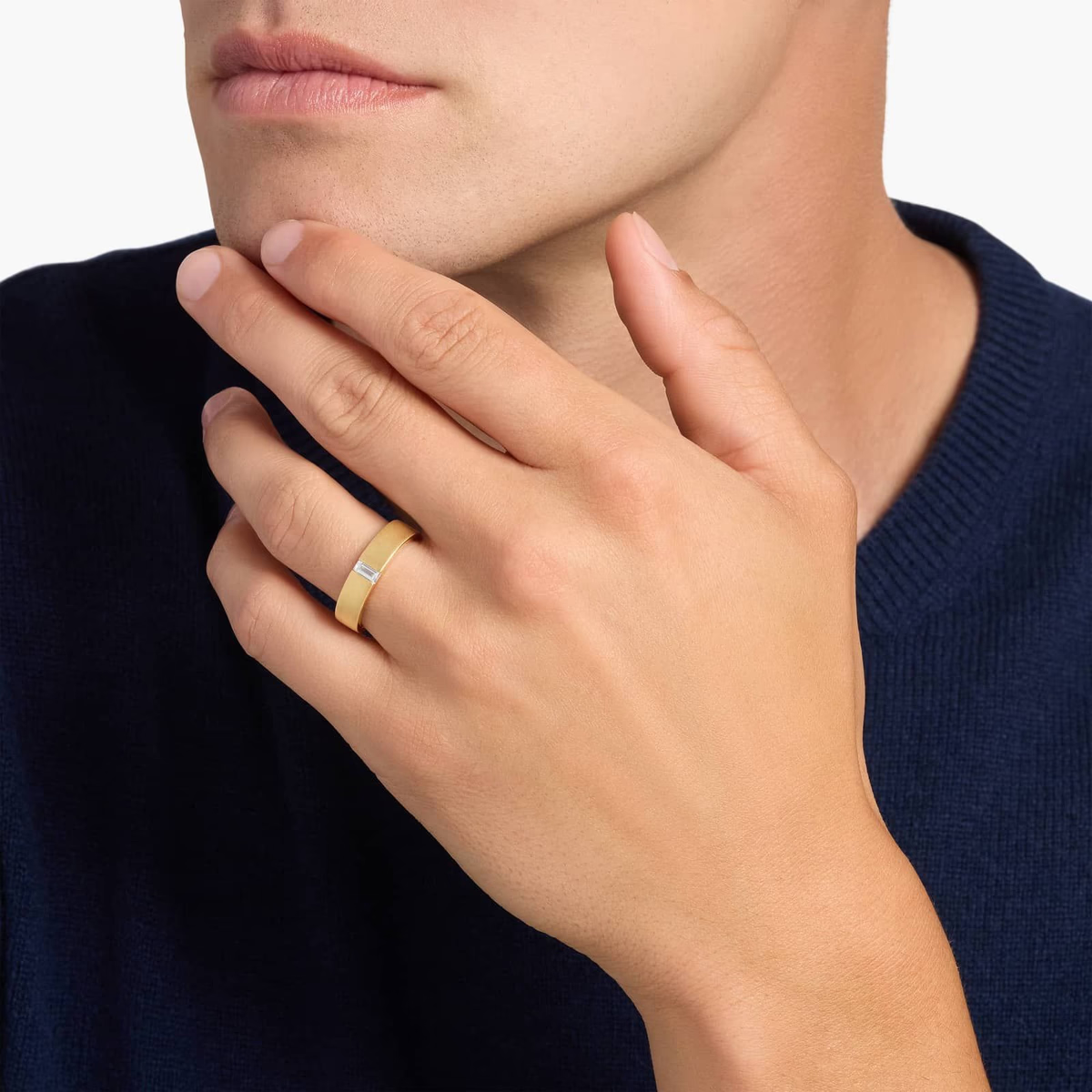
Alternating baguette rings mix baguette-cut and round brilliant diamonds in a repeating pattern. The visual result combines the step-cut discipline of the baguette with the sparkle of the round brilliant. This category leads all baguette ring styles in review count.
Bar Setting Alternating Round and Baguette Cut Diamond Ring in 14k White Gold (JA) — $925
The lowest entry point in this lineup. Bar settings hold each stone between two parallel metal bars rather than in a channel wall. The bars lift each diamond slightly, allowing light entry from the sides.
The alternating baguette-round pattern in white gold is the cleanest execution of the mixed step-cut look at the lowest price available.
Bar Setting Alternating Round and Baguette Cut Diamond Ring in 14k Yellow Gold (JA) — $925
Same bar setting design in yellow gold. Yellow gold amplifies the warm tone of the baguettes — baguette cuts show color more readily than brilliant cuts, and yellow gold makes that warmth an intentional design element rather than a clarity concern.
Dot Dash Diamond Ring in 14k Yellow Gold (1/4 ct. tw.) — $994 (118 reviews)
The 118 Standard. Discounted from $1,420. The "dot" is the round brilliant, the "dash" is the baguette — alternating across 1/4 ct.
tw. of total diamond weight. 118 buyers validated this design at this price point, the highest review count in the baguette ring category.
Dot Dash Diamond Ring in 14k White Gold (1/4 ct. tw.) — $994 (118 reviews)
Same design in white gold. The white metal makes the baguette's flat top read as more colorless — white gold provides a neutral backdrop that doesn't add warmth to the stone's color, which matters in a channel-adjacent design where the baguette sits close to the metal.
Dot Dash Diamond Ring in 14k Rose Gold (1/4 ct. tw.) — $994 (118 reviews)
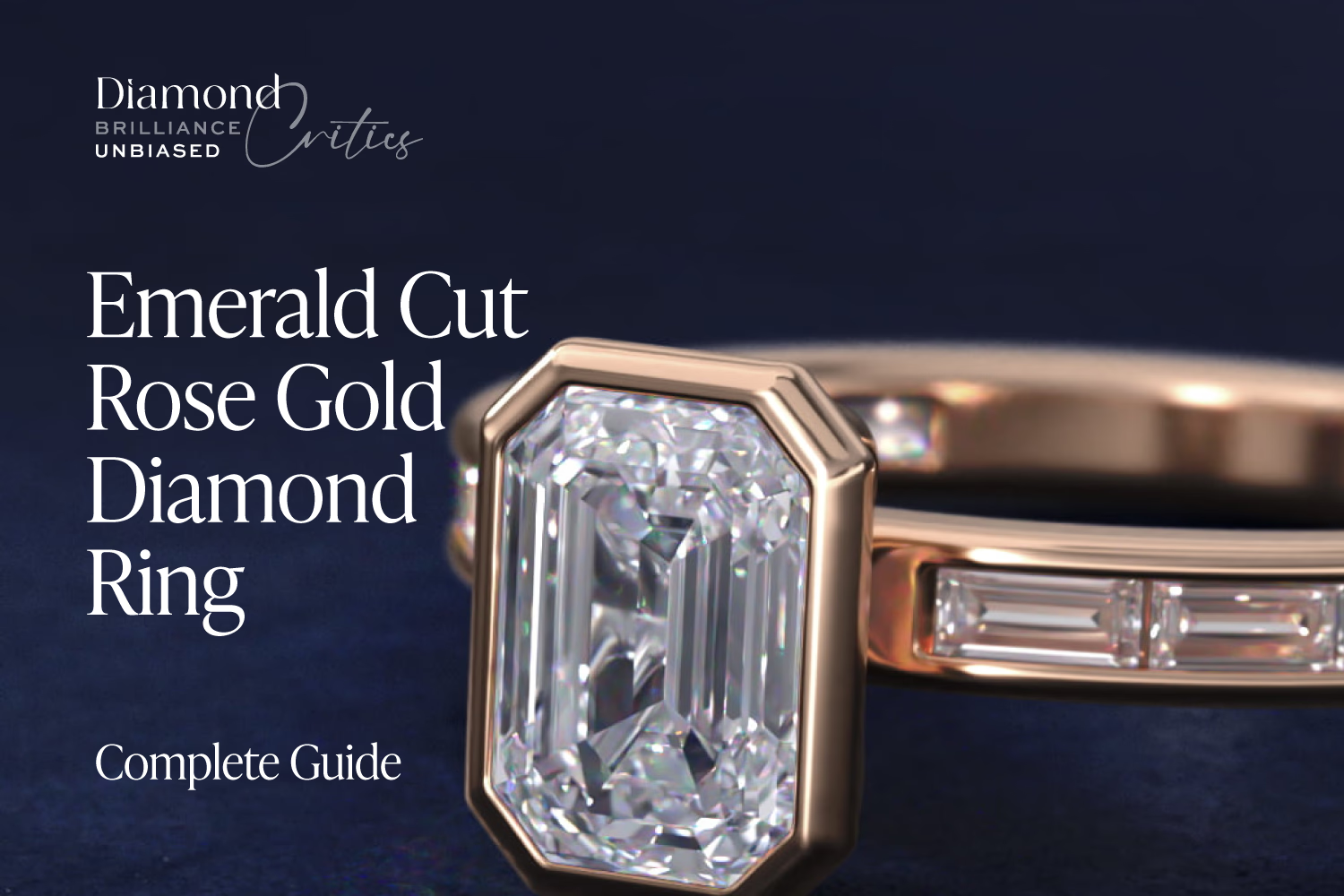
Rose gold version. The warmth of rose gold against the baguette's flat rectangular steps creates a visual depth that neither white nor yellow gold matches. The warm metal frame around a step-cut stone adds character.
The H-color baguettes in this setting look intentionally warm — not subpar.
Channel Set Baguette Bands: $1,640 to $3,290
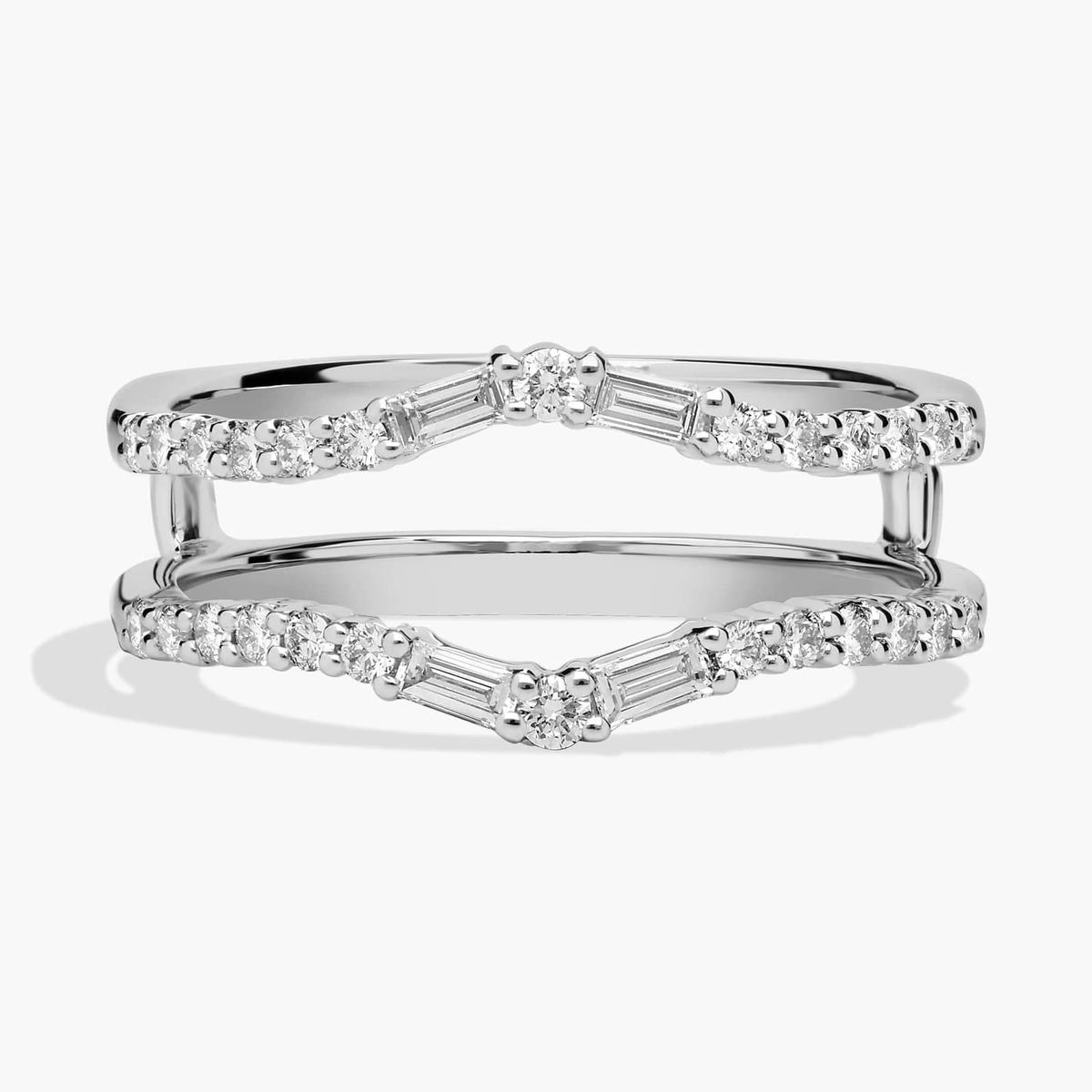
Channel set baguette bands place pure baguette-cut diamonds in a continuous channel — no alternate stones, no pavé accents, no mixed cuts. The rectangular geometry of the baguette fills the channel with flat, parallel-line diamonds that look like a miniature architectural grid. This is the purest expression of the step-cut aesthetic in a band ring.
Channel Set Baguette-Cut Diamond Ring in 14k Yellow Gold (1/2 ct. tw.) — $1,640
The entry point for a full baguette channel band in yellow gold. Half-eternity coverage — baguettes across the top of the finger where they are visible. The 1/2 ct.
tw. weight means substantial coverage without maximizing cost. Works as a wedding band alongside an emerald cut engagement ring, extending the step-cut line across both rings.
Channel Set Baguette-Cut Diamond Ring in 14k White Gold (1/2 ct. tw.) — $1,640
Same design in white gold. White gold is the most popular pairing for a baguette band used alongside a white gold or platinum emerald cut engagement ring. The matching metal keeps both rings in the same visual register.
Channel Set Baguette-Cut Diamond Ring in Platinum (1/2 ct. tw.) — $2,190
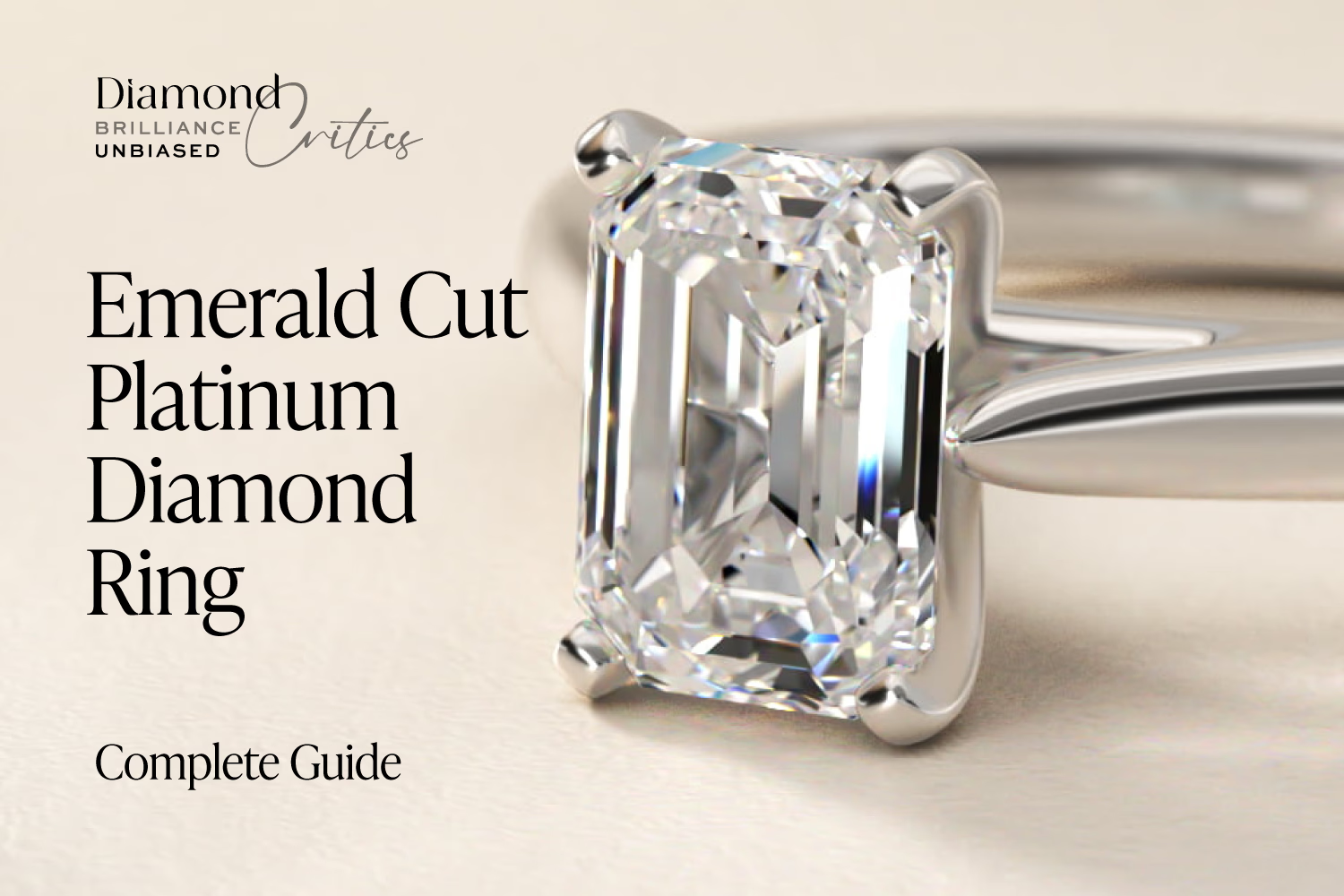
The same half-eternity baguette channel in platinum. Platinum's channel walls will hold baguette stones more securely than white gold over years of daily wear — the metal's density resists the micro-flexing that gradually loosens channel-set stones. For a wedding band worn daily alongside an engagement ring, platinum's durability advantage applies here as directly as it does for engagement ring settings.
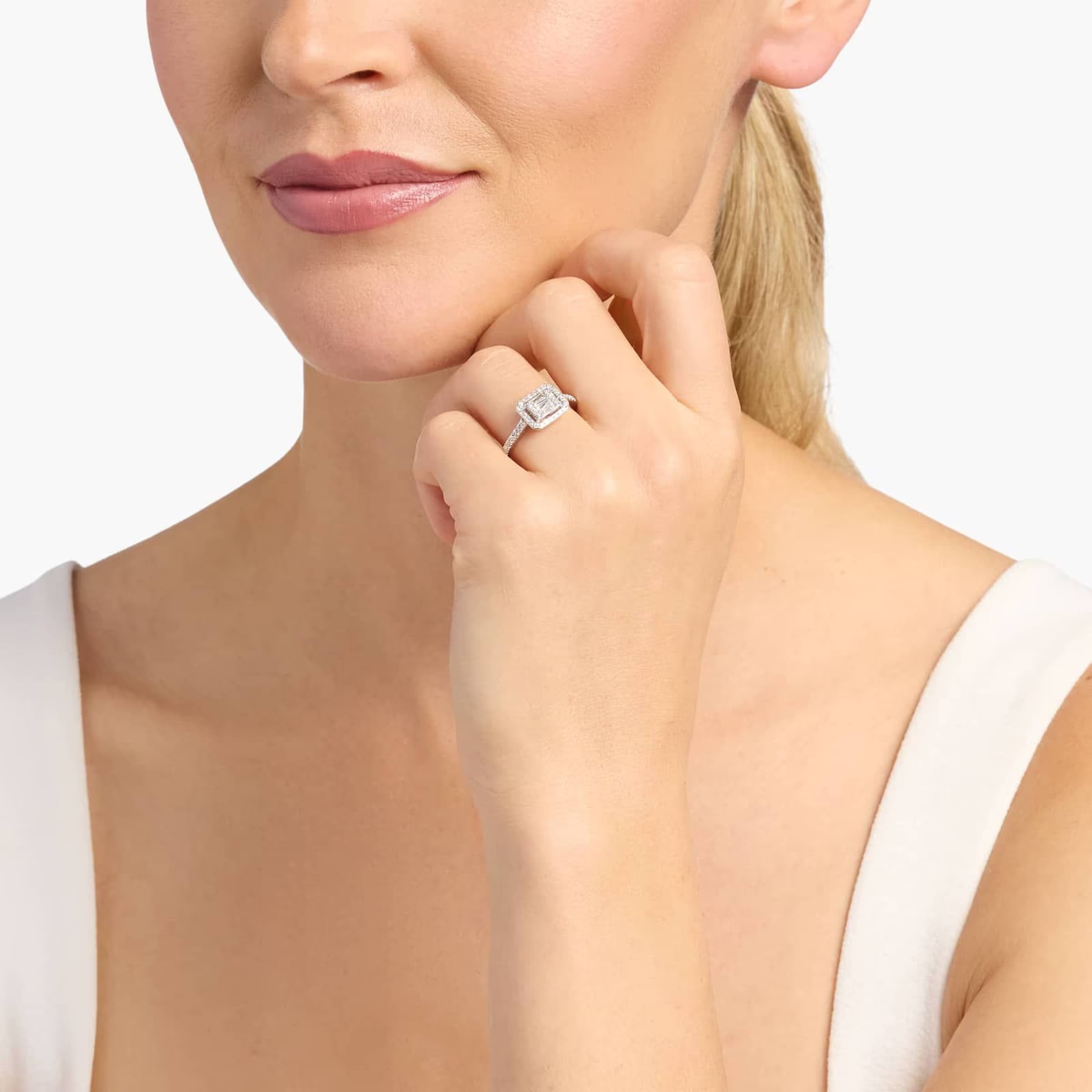
Channel Set Baguette Diamond Wedding Ring in 14k Yellow Gold — $2,900
Full eternity baguette band in yellow gold — baguettes run all the way around the finger, not just across the top. Full eternity means the step-cut grid is visible from every angle. This is the choice for maximum coverage and the most architectural baguette look available at this price tier.
Channel Set Baguette Diamond Wedding Ring in 14k White Gold — $2,900
Same full eternity design in white gold. The most popular metal pairing for a baguette eternity band used as a wedding ring alongside an emerald cut engagement ring. White gold makes the baguettes the main visual event — the metal recedes, the stones lead.
Channel Set Baguette Diamond Wedding Ring in Platinum — $3,290
Full eternity baguette in platinum. The highest durability option for full-coverage baguette coverage. Platinum's natural hardness means the channel walls maintain their grip on the rectangular baguette stones for decades without metal fatigue.
If the band will be stacked and worn daily against an engagement ring, the Platinum Channel Set at $2,190 is worth the upgrade from the White Gold version at $1,640.
Designer Baguette Rings (Zac Zac Posen): $1,498 to $4,365
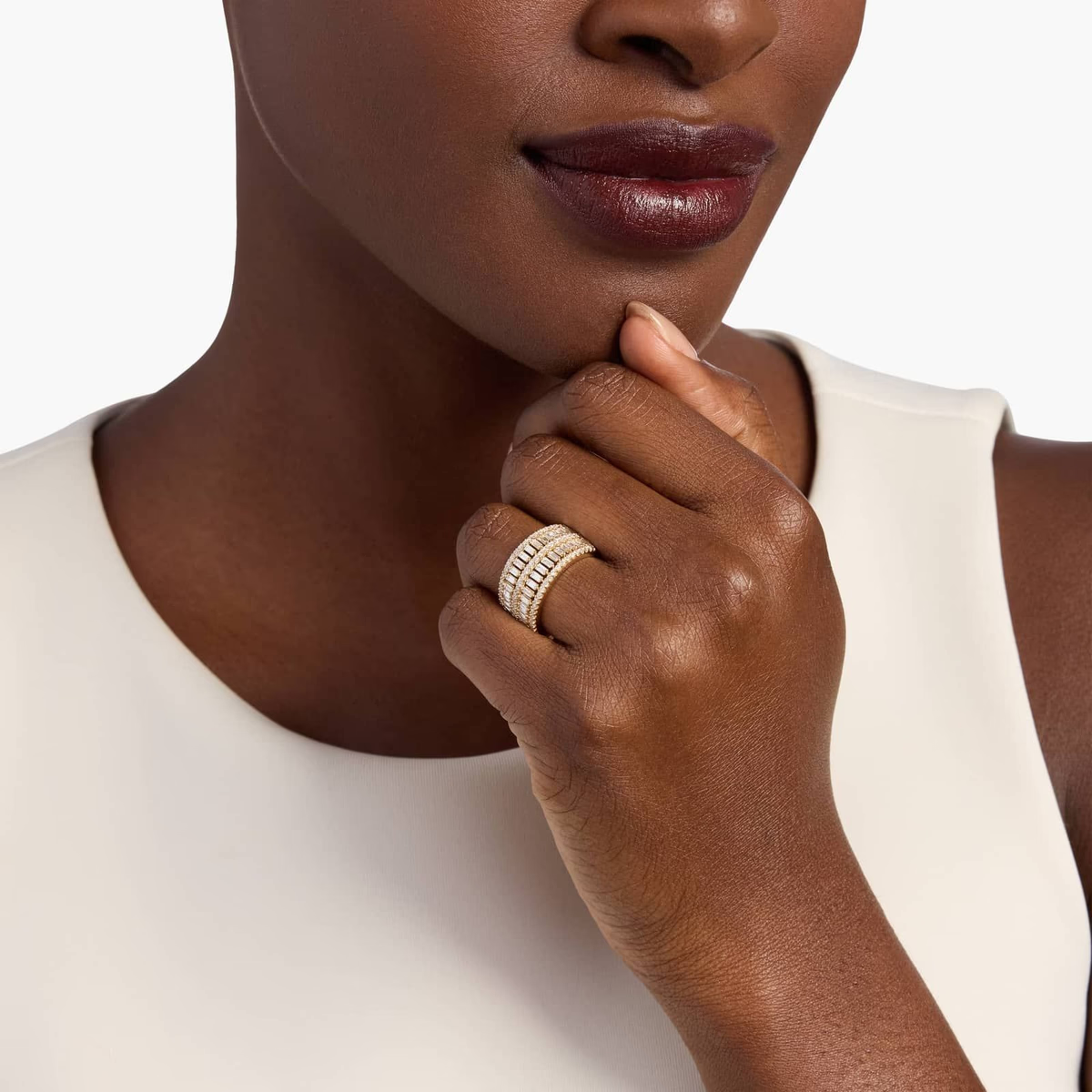
Zac Zac Posen's baguette ring collection pairs baguette-cut diamonds with pavé accents in multi-row and geometric layouts. The designs are more complex than pure channel baguette bands — more width, more visual interest, and more design specific to ZZP's aesthetic. Review counts are lower than the Dot Dash designs, but the styling is distinct.
Baguette & Pavé Diamond Crown Curved Wedding Ring in 14k Yellow Gold (ZZP, 2mm, 3/8 ct. tw.) — $1,498 (9 reviews, sale from $2,140)
The entry ZZP design — 30% discount from original price. A curved wedding band with a crown-shaped baguette accent at the center. At 2mm width, it sits flat and minimal on the finger.
Works as a wedding band enhancer around an engagement ring because the curved profile is designed to curve around a center stone.
Double Row Baguette & Pavé Diamond Wedding Ring in 14k White Gold (ZZP, 3mm, 3/8 ct. tw.) — $2,010 (12 reviews)
12 reviews — the most reviewed ZZP design in this lineup. Two rows of alternating baguette and pavé diamonds at 3mm width. The double row adds presence without dramatic width.
In white gold, the two-row pattern reads as a refined, architectural band — more complex than a single-row design without going into statement territory.
Double Row Baguette & Pavé Diamond Wedding Ring in 14k Yellow Gold (ZZP, 3mm, 3/8 ct. tw.) — $2,140 (12 reviews)
Same double row design in yellow gold. The warm metal gives the baguette accents a vintage character — the ZZP double row in yellow gold pairs well with a rose gold or yellow gold emerald cut ring as a statement stack.

East West Single Baguette Diamond Ring in 14k Yellow Gold (ZZP, 2.6mm, 1/6 ct. tw.) — $2,140 (4 reviews)
A single large baguette diamond set horizontally (east-west) at the center of a plain band. The east-west orientation rotates the baguette 90 degrees — the long axis runs across the finger rather than along it. This makes the single baguette visible as a horizontal bar, referencing the architectural character of step-cut stones in a ring design you don't see often.
Triple Row East-West Baguette & Pavé Diamond Wedding Ring in 14k White Gold (ZZP, 6mm, 3/4 ct. tw.) — $4,365 (7 reviews)
The widest and most complex ZZP design in this lineup. Three rows at 6mm total width. East-west oriented baguettes in the center row, flanked by pavé on both sides.
3/4 ct. tw. total diamond weight.
7 reviews — low count for the price, but the design is singular. This is not a quiet wedding band. It is a statement ring that happens to be designed as a band.
Eternity & Statement Baguette Rings: $2,047 to $6,204

Channel Set Baguette Cut Diamond Eternity Ring in 14k Yellow Gold (1 ct. tw.) — $2,047 (3 reviews, sale from $2,730)
Full eternity baguette ring in yellow gold at 1 ct. tw. — double the diamond weight of the 1/2 ct.
tw. half-eternity design. The 25% discount from $2,730 makes this the best price-per-carat entry into a full-coverage baguette eternity ring.
3 reviews at a sale price suggests recent popularity with the discount applied.
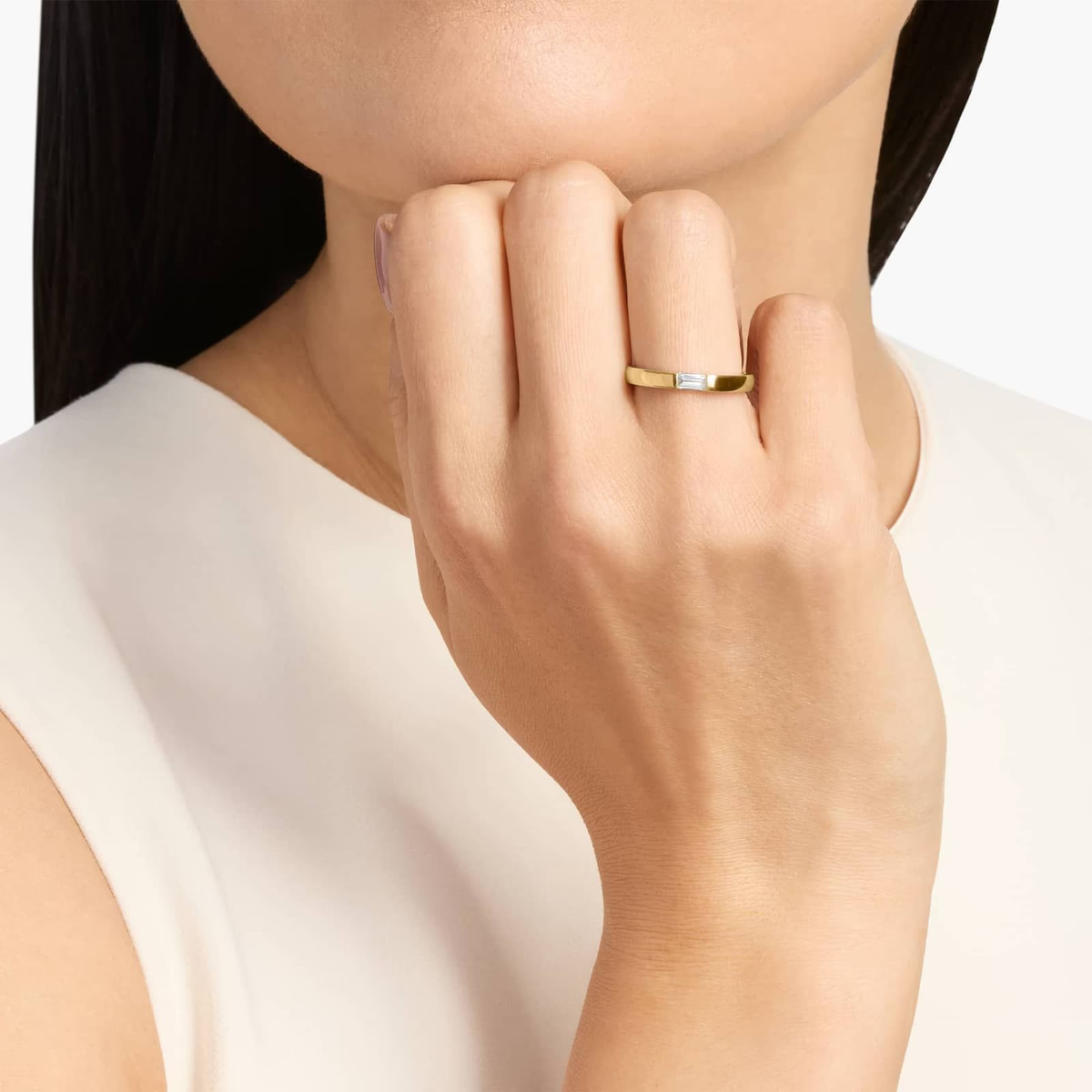
Baguette Diamond Channel Ring in 14k White Gold (3 ct. tw.) — $6,204 (Iconic, sale from $9,545)
The highest-end baguette ring in this lineup at 3 ct. tw. of pure baguette diamonds.
The "Iconic" designation is Blue Nile's category for fine jewelry. 35% discount from $9,545 makes this the most significant price reduction in the entire lineup. At 3 carats of baguette coverage in 14k white gold, the step-cut grid runs across the finger in a way that matches or exceeds the visual presence of a high-carat single stone.
This is the ring that makes the baguette cut the visual statement rather than a supporting element.
All 18 Baguette Emerald Cut Diamond Ring Styles
Tides Of Summer Capsule
Up To 30% Off
Shop The Sale →Vault ClearanceClear The Vault
Up To 70% Off
Shop Vault Deals →Affiliate link — no extra cost to you
Baguette vs Emerald Cut: The Full Comparison
Both baguette and emerald cut belong to The Step-Cut Family. This is where their similarity ends and their differences begin.
| Factor | Baguette | Emerald Cut |
|---|---|---|
| Facet count | 14 | 57–58 |
| Typical use | Accent / side stone / band | Center stone |
| L:W ratio | 2:1 to 3:1 | 1.30–1.50 |
| Depth | Shallow (flat bottom) | 60–64% depth |
| Brilliance | Minimal — shows color clearly | Hall-of-mirrors reflection |
| Clarity requirement | VS2+ (inclusions visible) | VS2+ (inclusions visible) |
| Color sensitivity | High — shows warmth readily | High — shows warmth in step table |
| Price per carat | Lower — accent cut pricing | Higher — center stone pricing |
| Setting use | Channel bands, eternity, side stones | Solitaire, pavé, halo, three-stone |
The practical implication: when a buyer searches "baguette emerald cut diamond ring," they are most often looking for one of three things. A ring that has both cuts together (The Accent Advantage). A baguette band to pair with an emerald cut engagement ring.
Or a ring that has the clean, step-cut aesthetic of both cuts without necessarily containing both.
All three searches are satisfied by the 18 designs in this guide.
Emerald Cut with Baguette Side Stones: The Classic Three-Stone

The classic three-stone emerald cut engagement ring with baguette side stones is the most direct interpretation of the baguette emerald cut diamond ring concept. One emerald cut center stone, two tapered baguettes on either side, set in a channel or prong configuration.
This design is associated with Harry Winston's classic three-stone style — the original tapered baguette flanking design that established the step-cut three-stone ring as the most architecturally coherent engagement ring format. The Winston approach uses trapezoid-cut side stones (a flat-top variant of the baguette with a tapered profile) that follow the emerald cut's rectangular outline precisely.
Why tapered baguettes, not straight baguettes:
Straight baguettes have parallel sides. Tapered baguettes narrow slightly toward the base, allowing them to follow the curved shoulder of the ring shank. The taper creates a natural transition from the side stone to the band — the geometry resolves without a visual gap.
Straight baguettes on either side of a center stone leave a visual break where the rectangular stone meets the curved shank.
Stone sizing for 2ct and 3ct emerald cut rings with baguettes:
A 2ct emerald cut (approximately 9mm × 6.5mm) needs side baguettes in the 0.25–0.35 ct each range to maintain proportion. A 3ct emerald cut (approximately 10.5mm × 7.5mm) needs 0.35–0.50 ct side baguettes each. The side stones should never exceed 60% of the center stone's length — if they match the center or come close, the eye loses focus on the main stone.
For 2ct emerald cut center stones or 3ct emerald cut center stones, browse the certified inventory and match side stone sizing accordingly.
Lab emerald cut center stones are also an option — browse lab IGI emerald cuts for a 1ct+ lab center at a fraction of natural price.
Expert Summary
A baguette emerald cut diamond ring means one of three things: a baguette ring band (standalone), a baguette band paired with an emerald cut ring (stacked), or an emerald cut center stone with tapered baguette side stones (three-stone).
The 18 styles in this guide cover all three interpretations. The Dot Dash Diamond Ring at $994 with 118 reviews is The 118 Standard — the most validated starting point. The Channel Set Baguette Eternity at $2,047 is the pure baguette band value pick.
The ZZP Double Row at $2,010 with 12 reviews is the designer option with the most buyer validation.
The Step-Cut Family concept applies throughout: baguette and emerald cut share the same discipline and the same visual vocabulary. The Accent Advantage tells you when to combine them. The 118 Standard tells you where to start.
Farzana says: "When buyers ask me to summarize the baguette ring category, I give them one rule: use baguettes where you want geometric discipline, not sparkle. Channel bands, accent stones, eternity coverage — these are baguette roles. The emerald cut does its job as a center stone. The baguette does its job as the setting that surrounds it. When you keep those roles clear, every ring decision becomes simpler."
Best For
Budget buyers: The Bar Setting Alternating Baguette Ring at $925 (JA) is the lowest entry point. For the most validated budget choice, the Dot Dash Diamond Ring at $994 with 118 reviews is the right call — 118 buyers validated it, and it's 30% off the original price.
Wedding band buyers: The Channel Set Baguette Half-Eternity in 14k WG at $1,640 paired alongside an emerald cut engagement ring is the cleanest step-cut stacking choice. For maximum coverage, the Channel Set Baguette Full Eternity at $2,900 runs all the way around.
Designer buyers: The ZZP Double Row in White Gold at $2,010 with 12 reviews has the highest validated review count among designer options. For a bold statement, the ZZP Triple Row East-West at $4,365 is the widest, most architectural option.
Statement buyers: The Baguette Diamond Channel Ring at $6,204 (3 ct. tw.) at 35% off $9,545 is the highest carat weight in this lineup — 3 carats of baguette coverage makes the step-cut grid the visual event, not a supporting element.
Baguette Emerald Cut Diamond Ring Decision Matrix
| You Want | Best Ring | Price | Reviews |
|---|---|---|---|
| Most validated baguette ring | Dot Dash YG | $994 | 118 |
| Lowest price alternating baguette | Bar Setting WG (JA) | $925 | — |
| Pure baguette half-eternity | Channel Set Baguette WG 1/2ct | $1,640 | — |
| Designer baguette, most reviews | ZZP Double Row WG | $2,010 | 12 |
| Full baguette eternity band | Channel Set Baguette WG Full | $2,900 | — |
| Maximum durability band | Channel Set Baguette Platinum | $3,290 | — |
| Maximum baguette coverage | Baguette Channel Ring 3ct WG | $6,204 | — |
FAQs
What is the difference between a baguette and an emerald cut diamond?
Both are step-cut diamonds — both have horizontal facets arranged in parallel steps, and both show inclusions more clearly than brilliant cuts. The key differences: baguettes have only 14 facets, a flat bottom, and proportions calibrated for use as accent stones in channel bands or three-stone settings. Emerald cut diamonds have 57–58 facets, significant depth, and the famous hall-of-mirrors reflection pattern that only emerges in a large enough stone used as a center piece.
Baguettes are priced as accent stones and sold in groups or by total carat weight. Emerald cuts are priced as center stones and sold individually with GIA or IGI certification. You can pair them — and the result is The Accent Advantage.
What is a baguette emerald cut diamond ring?
It can mean three things: a ring featuring baguette-cut diamonds in a band design (like the Dot Dash or channel set styles in this guide), an emerald cut engagement ring with baguette side stones, or a stacked combination of an emerald cut engagement ring with a baguette diamond band worn alongside it.
All three interpretations are valid. The search term covers the overlap between two cuts that share a visual vocabulary — step-cut geometry, clean lines, and an architectural rather than brilliant character.
Is a baguette diamond the same as an emerald cut diamond?
No. They are both step-cut, but they are different cuts. Baguette diamonds are shallower (14 facets, flat pavilion), typically longer and narrower (2:1 to 3:1 L:W), and used as accents.
Emerald cut diamonds are deeper (57–58 facets, significant depth), wider in proportion (L:W 1.30–1.50), and used as center stones.
They belong to the same Step-Cut Family and share the same visual discipline, but they are cut and priced differently and serve different purposes in a ring.
Which is better — baguette or emerald cut for an engagement ring?
Emerald cut is the correct choice for an engagement ring center stone. Baguettes do not have the depth, facet count, or brilliance to carry a center stone role. They are accent cuts.
If you want the step-cut aesthetic in an engagement ring, choose an emerald cut center stone and optionally add tapered baguettes as side stones to apply The Accent Advantage. The combination gives you the full step-cut vocabulary in one ring.
What are tapered baguette side stones on an emerald cut ring?
Tapered baguettes are baguette-cut diamonds that narrow slightly toward the base rather than having parallel sides. The taper allows them to sit flush against the curved shoulders of an engagement ring shank. On either side of an emerald cut center stone, they extend the step-cut geometric line horizontally — creating a three-stone ring where all three stones speak the same architectural language.
The taper is the key detail. Straight baguettes leave a visual gap at the shoulder. Tapered baguettes resolve that gap and make the three stones read as one continuous horizontal band.
What is the Harry Winston baguette emerald cut diamond ring?
Harry Winston's classic three-stone design uses trapezoid-cut side stones flanking an emerald cut center — a flat-top step-cut stone with a tapered profile that follows the emerald cut's rectangular outline precisely. The Winston approach established the baguette/emerald cut combination as the most architecturally coherent three-stone format. The trapezoid is essentially a refined tapered baguette.
The result is a ring where the geometric discipline of the step-cut family runs from edge to edge without interruption.
What clarity do baguette diamonds need?
VS2 minimum. Baguette diamonds have a flat, open table with minimal faceting — every inclusion in the stone is visible directly through the top. The same clarity discipline that applies to emerald cut center stones applies to baguette accent stones.
The visibility difference is that baguettes are smaller, so inclusions need to be proportionally larger to be eye-visible. In practice, SI1 baguettes often look clean in a channel band at normal viewing distance, but VS2 is the safe standard.
How do I pair a baguette ring with an emerald cut engagement ring?
Match the metal. A channel set baguette band in white gold alongside a white gold emerald cut solitaire extends the step-cut line across both rings. The baguette band mirrors the step-cut geometry of the emerald cut center stone without competing with it.
Width matters: keep the baguette band narrower than the engagement ring's setting head. A half-eternity band (coverage across the top of the finger only) sits flush and doesn't create height competition at the shoulders. A full eternity band creates a continuous circle of step-cut geometry when worn stacked.
Can you get a baguette diamond eternity ring?
Yes. The Channel Set Baguette Diamond Wedding Ring at $2,900 runs all the way around the finger — baguettes in a continuous channel, no gaps, no alternating design. The result is a pure baguette eternity ring where the step-cut grid covers the entire circumference.
Available in yellow gold, white gold, rose gold, and platinum.
What diamond carat weight do baguette bands typically have?
Baguette bands in this guide span a wide range. The ZZP East West single stone at $2,140 is the lightest at 1/6 total carat weight.
The most popular range for a wedding band is 1/4 to 1/2 total carat weight — the Dot Dash at $994 (1/4) and the Channel Set Half-Eternity at $1,640 (1/2) are the two benchmark designs in this range.
At the top end, the Channel Set Baguette Eternity Ring at $2,047 carries 1 full carat, and the statement channel ring at $6,204 carries 3 carats of pure baguette coverage.
What metal is best for a baguette diamond ring?
White gold for versatility — matches both white gold and platinum engagement rings, and the neutral backdrop makes the baguette's flat top read as colorless. Platinum for maximum durability — the denser metal holds channel-set baguettes more securely over years of daily wear. Yellow gold for warmth — the warm metal makes baguette diamonds read as intentionally warm-toned, and the contrast between the flat baguette and yellow gold creates a vintage character.
Rose gold is available in the Dot Dash design and pairs well with the emerald cut rose gold ring concept if you're building a matching stack.
Does a baguette ring need to match the engagement ring metal?
It looks best when matched. Mixed metals can work intentionally — yellow gold band alongside platinum engagement ring is a known style choice. But if the goal is a cohesive step-cut stack, matching metal reads as intentional rather than mismatched.
The most common pairing is white gold band alongside white gold or platinum solitaire. The second most common is the full mixed approach: rose gold baguette band alongside a yellow gold engagement ring for a deliberately maximalist stack.
What is the Dot Dash Diamond Ring?
The Dot Dash Diamond Ring is Blue Nile's most reviewed baguette diamond ring with 118 reviews across yellow, white, and rose gold versions. The "dot" is the round brilliant diamond, the "dash" is the baguette-cut diamond — they alternate in a repeating pattern along the band. The design has 1/4 ct.
tw. total diamond weight and sells at $994 in all three metals at a 30% discount from the original $1,420.
The Dot Dash is The 118 Standard — the most data-backed baguette ring in the certified market.
See Also
- Emerald Cut Diamond Engagement Rings — Complete Guide
- Emerald Cut Diamond Ring Settings — All Styles Compared
- Emerald Cut Diamond Solitaire Ring — 19 Settings, The 6-Prong Mistake Explained
- Emerald Cut Diamond Rose Gold Ring — 18 Settings, Warm Contrast Rule
- Platinum Emerald Cut Diamond Engagement Ring — 20 Settings, 1,815 Standard
- Emerald Cut Diamond — Complete Buying Guide
Expert Verdict
Always audit the stone individually — no grade replaces seeing the actual diamond. The certificate tells you what to look for. Your eyes tell you whether to buy.
— Farzana Hasan, GIA Expert · DiamondCritics.com