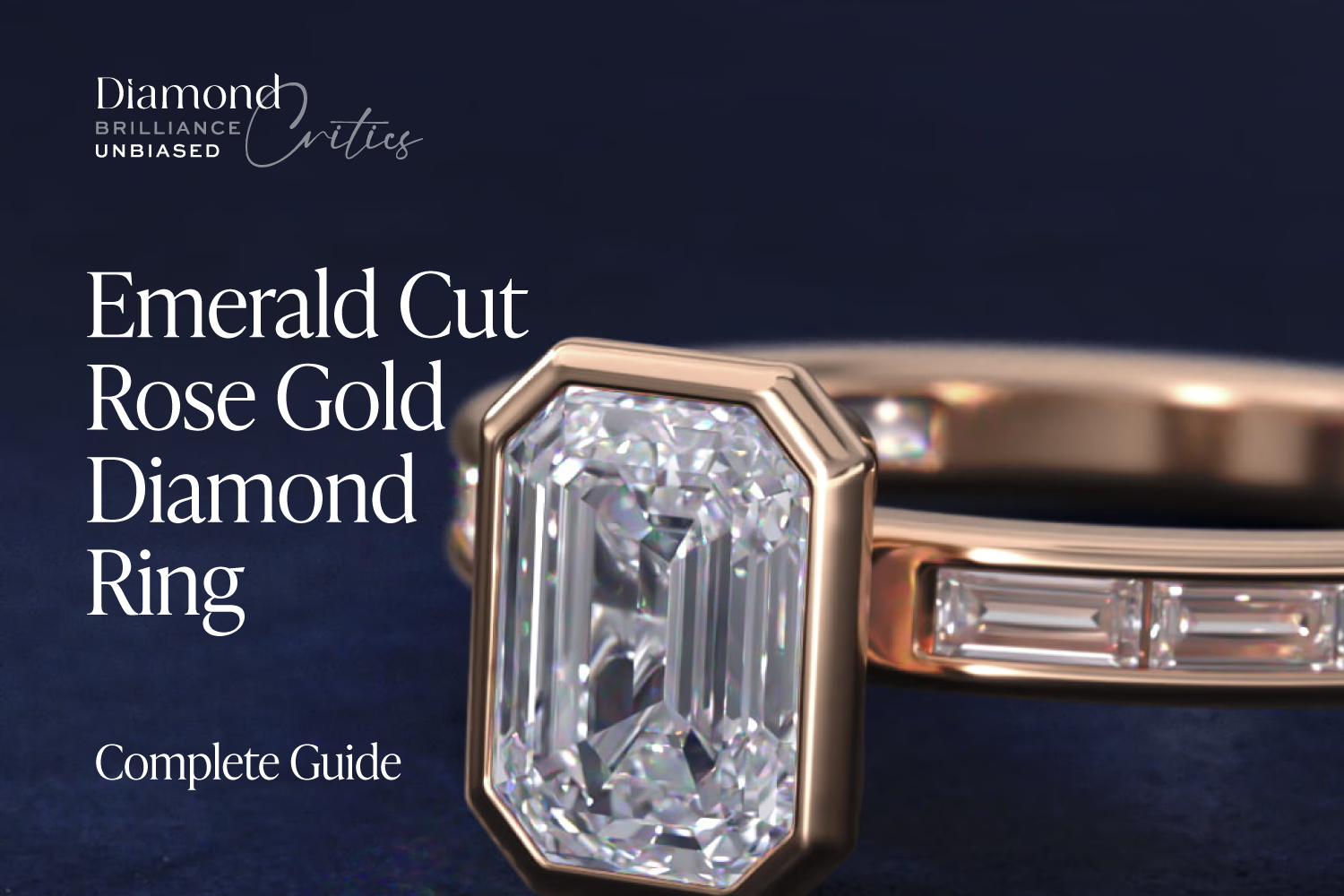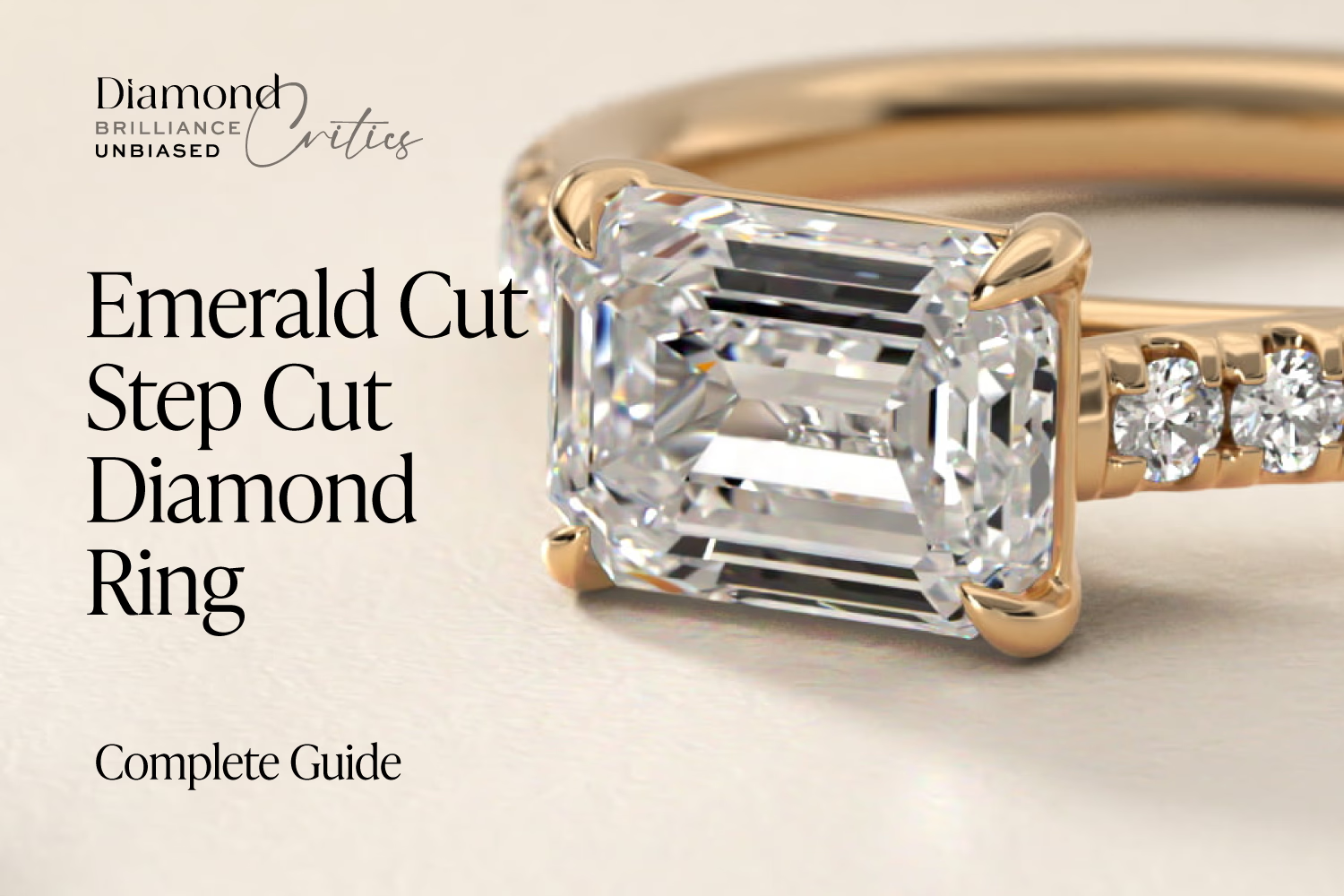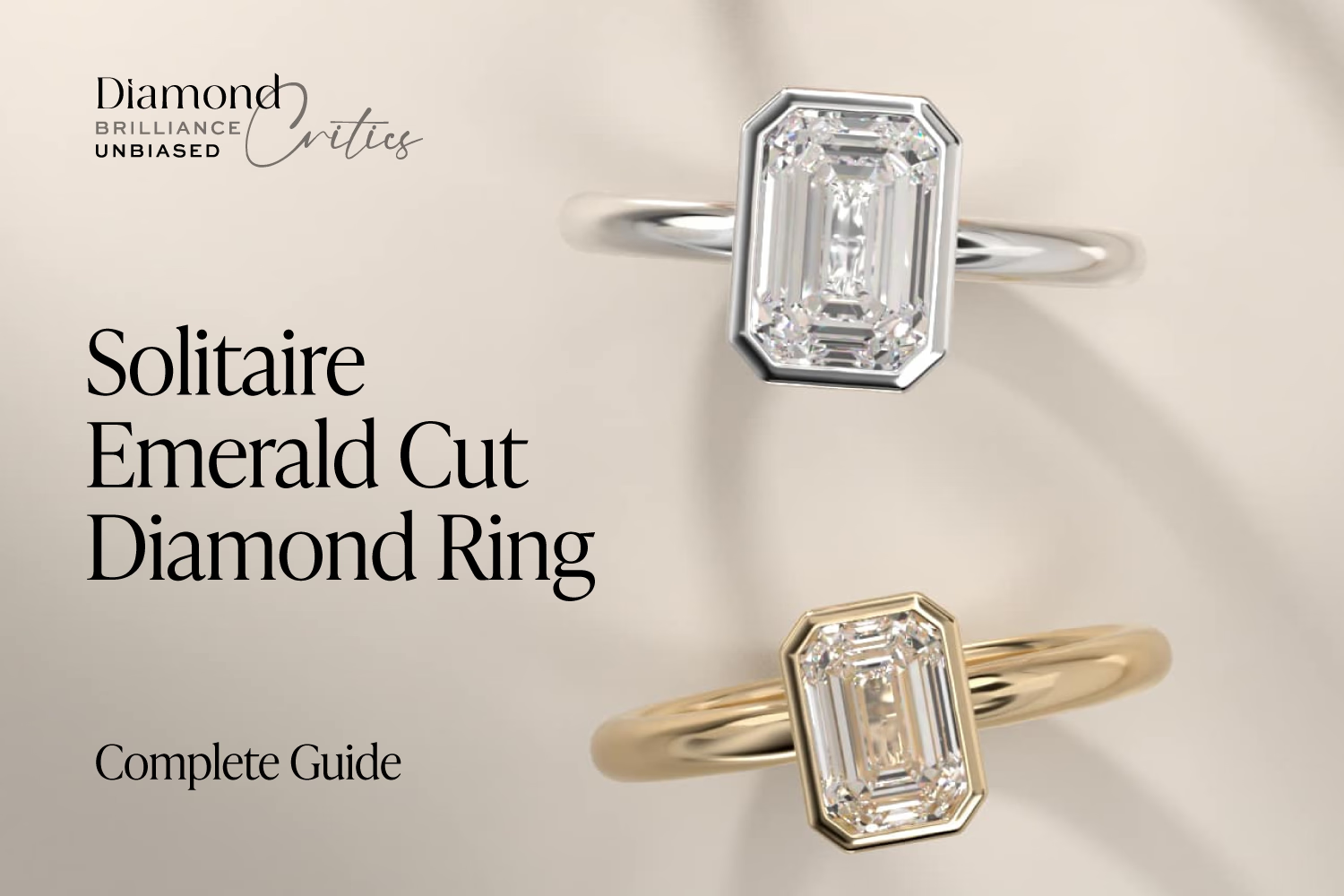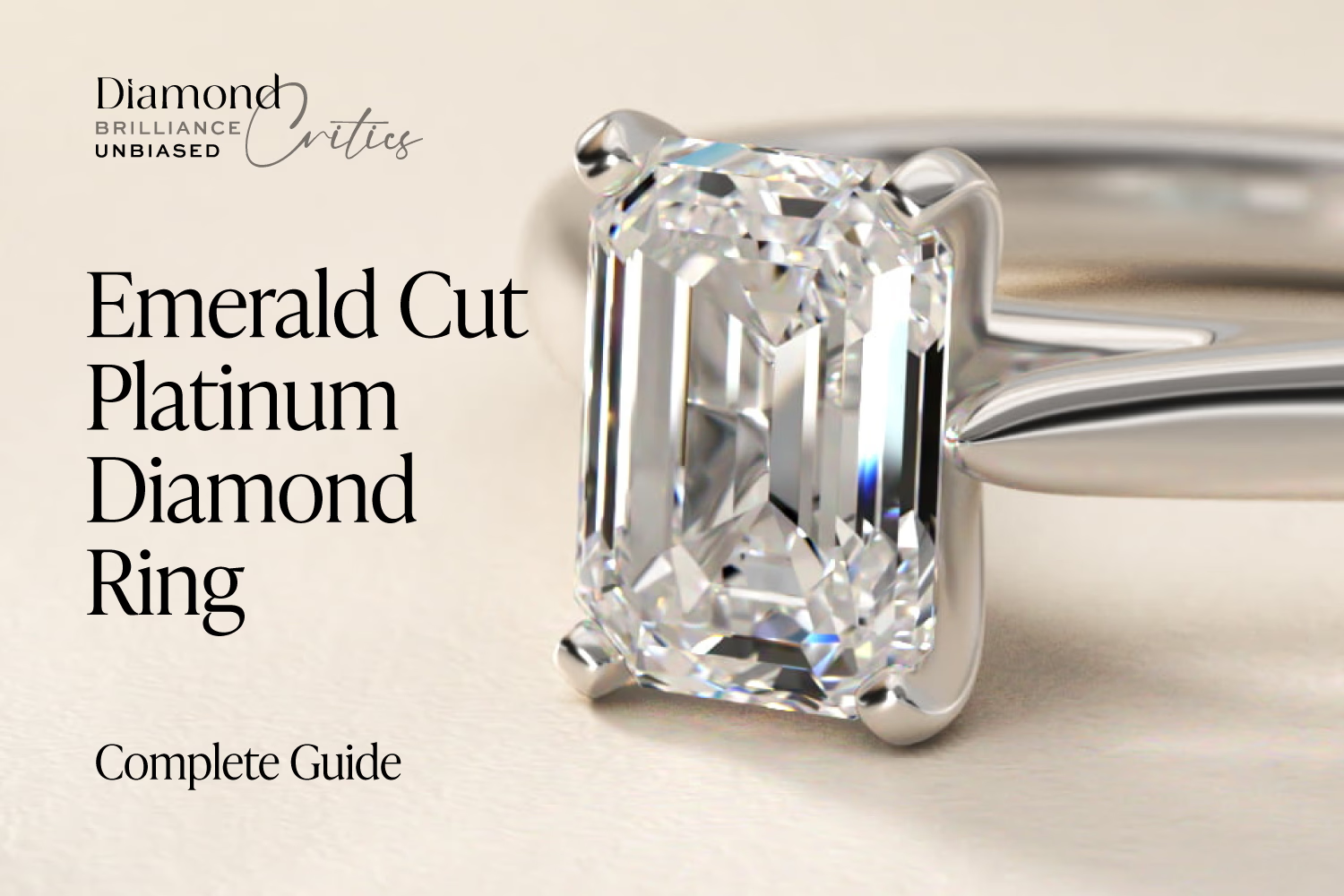
TL;DR: Platinum Emerald Cut Diamond Engagement Ring
A platinum emerald cut diamond engagement ring starts at $1,180 in setting price. Total ring from $1,675 with a lab emerald cut center stone, or $4,180 natural. Twenty settings ranked across four style categories.
4 style categories:
- Solitaires: $1,180–$2,445 — 6 settings, the Classic Four Prong to Criss Cross
- Pavé & Micropavé: $1,400–$3,230 — 7 settings, including lab-grown accent options
- Halo: $2,050–$3,585 — 4 settings, 69–369 reviews on top picks
- Three-Stone & Special: $3,135–$4,300 — 3 settings, including emerald-cut-specific three-stone
3 named concepts:
- The Platinum Premium — the real cost difference between platinum and 18k white gold, and exactly what you get for it
- The 1,815 Standard — the Classic Four Prong in platinum has 1,815 reviews, the most review-validated engagement ring setting in the market
- The Color Ceiling — platinum's pure white tone raises the visual benefit of F color over G in a step-cut table
→ Browse all platinum emerald cut ring settings


Why Platinum for a Platinum Emerald Cut Diamond Engagement Ring?
A platinum emerald cut diamond engagement ring combines the most demanding stone shape with the most demanding metal choice. Platinum costs more than white gold. The emerald cut reveals more than any other shape.
When both work together well, the result is the cleanest, most precise ring you can buy.
I'm Farzana Hasan, a GIA-certified gemologist. I've evaluated emerald cut diamonds across every metal option at every price point. Platinum is my recommendation when the buyer wants the metal to outlast the ring itself — and when the step-cut table needs the purest white backdrop available.
Full credentials at Diamond Critics.
The emerald cut's step-cut table reflects everything around it — prongs, band, and ambient light. Platinum is a pure white metal that does not change color over time. White gold starts white but the rhodium plating that keeps it white wears off.
Platinum is white permanently.
For an emerald cut that mirrors its setting, permanent whiteness is not a cosmetic preference. It is a technical advantage.
The Platinum Premium
The Platinum Premium is the additional cost of choosing platinum over 18k white gold, and exactly what that premium buys.
A comparable 18k white gold solitaire setting costs roughly 20–40% less than the same design in platinum. The $1,180 Classic Four Prong in platinum costs approximately $250–$400 more than the equivalent in 18k white gold. Across a $4,000–$6,000 total ring budget, the Platinum Premium represents 5–10% of total spend.
What the premium buys:
No rhodium replating. 18k white gold is yellow gold alloyed to look white, then plated with rhodium. Rhodium wears off.
Most white gold rings need replating every one to three years at $50–$150 per service. Over ten years, replating costs match or exceed the initial Platinum Premium.
Prong security. Platinum is denser than 18k white gold. Denser metal means prongs resist bending and thinning over years of daily wear.
An emerald cut's four corners are the most vulnerable points on the stone — the first to catch on fabric, counters, and other surfaces. Platinum prongs hold those corners more securely than white gold prongs over time.
Hypoallergenic. Platinum is 95% pure platinum. White gold contains nickel or other alloys that cause reactions in a meaningful percentage of buyers.
If you or the recipient has any metal sensitivity, platinum eliminates that risk.
The Platinum Premium is worth paying when the ring will be worn daily for decades, when there is any metal sensitivity, or when the budget accommodates it without compromising stone grade. It is not worth paying when choosing platinum requires dropping from VS2 to SI1 clarity or from G to H color. Keep the stone grade and get the better stone.
Farzana says: "The Platinum Premium is the first budget question I ask. If choosing platinum means dropping from G-VS2 to H-SI1 on the stone, you have paid a premium and bought a worse ring. Keep the stone grade. If the budget comfortably covers both — then platinum is the right call, and I've never had a buyer regret that choice."
The 1,815 Standard
The 1,815 Standard is the benchmark set by the Classic Four Prong Solitaire in Platinum — the most review-validated platinum engagement ring setting available.
The Classic Four Prong Solitaire has 1,815 reviews. That is the highest review count of any platinum engagement ring setting in the market. 1,815 buyers purchased this ring, received it, wore it, and chose to rate it.
The Classic Four Prong in platinum uses an open four-prong head that allows light into the emerald cut's step-cut table from all angles. For the hall-of-mirrors reflection pattern the emerald cut produces, unobstructed light entry matters. More light into the table means more of that parallel reflection visible from above.
The 1,815 Standard is the starting point for any platinum emerald cut ring evaluation. If you are unsure which platinum setting to choose, start with the Classic Four Prong at $1,180. To justify a more expensive or more unusual setting, one question applies: does this setting earn more visual or functional benefit than the $1,180 ring that 1,815 buyers validated?
For a pavé buyer who wants band diamonds — yes. For a halo buyer who wants a framed stone — yes. For a designer setting at twice the price with fewer than 50 reviews — possibly not.
The Color Ceiling
The Color Ceiling describes how platinum's pure white tone interacts with diamond color grade differently from 18k white gold.
All white metals make emerald cut diamonds appear different from yellow or rose gold. But there is a real difference between platinum and rhodium-plated 18k white gold in how they affect color perception in a step-cut stone.
Platinum is naturally white. Its tone does not come from plating. In the emerald cut's wide, flat step-cut table — a surface that acts like a mirror — the slight difference in metal tone between platinum and white gold becomes visible at close range.
In an 18k white gold setting, G color is the practical minimum for a colorless-looking emerald cut. In a platinum setting, G color can sometimes read with faint warmth because platinum's cooler tone provides more contrast against the slight warmth of a G-grade stone.
The Color Ceiling is F color. In platinum, F-color emerald cut diamonds look more noticeably better than G than they do in white gold. The visual gap between F and G is larger in a step-cut table set in platinum than in any other metal. Buyers who want maximum colorless appearance from a step-cut stone in platinum should target F minimum.
The Color Ceiling does not mean G is wrong for platinum — G is excellent. It means the benefit of F over G is amplified in platinum versus white gold. If budget allows F, platinum makes the most of it.
Browse F-color GIA-certified emerald cuts and compare prices to G before deciding. The price difference between F and G at 1ct is typically 10–20%.
Farzana says: "The Color Ceiling is advice for buyers who chose platinum specifically because they want the stone to look as white as possible. If that is the goal, go F. Not because G fails — G is fine. But in platinum's step-cut table, F versus G is a visible difference. You are already paying the Platinum Premium. Understanding the Color Ceiling before you finalize the stone is worth five minutes of your time."
Solitaire Settings in Platinum: $1,180 to $2,445
Solitaires are the most proven style for platinum emerald cut engagement rings. The plain band maximizes the step-cut stone's reflection pattern. Platinum's pure white tone provides the ideal neutral frame for the emerald cut's geometric architecture.
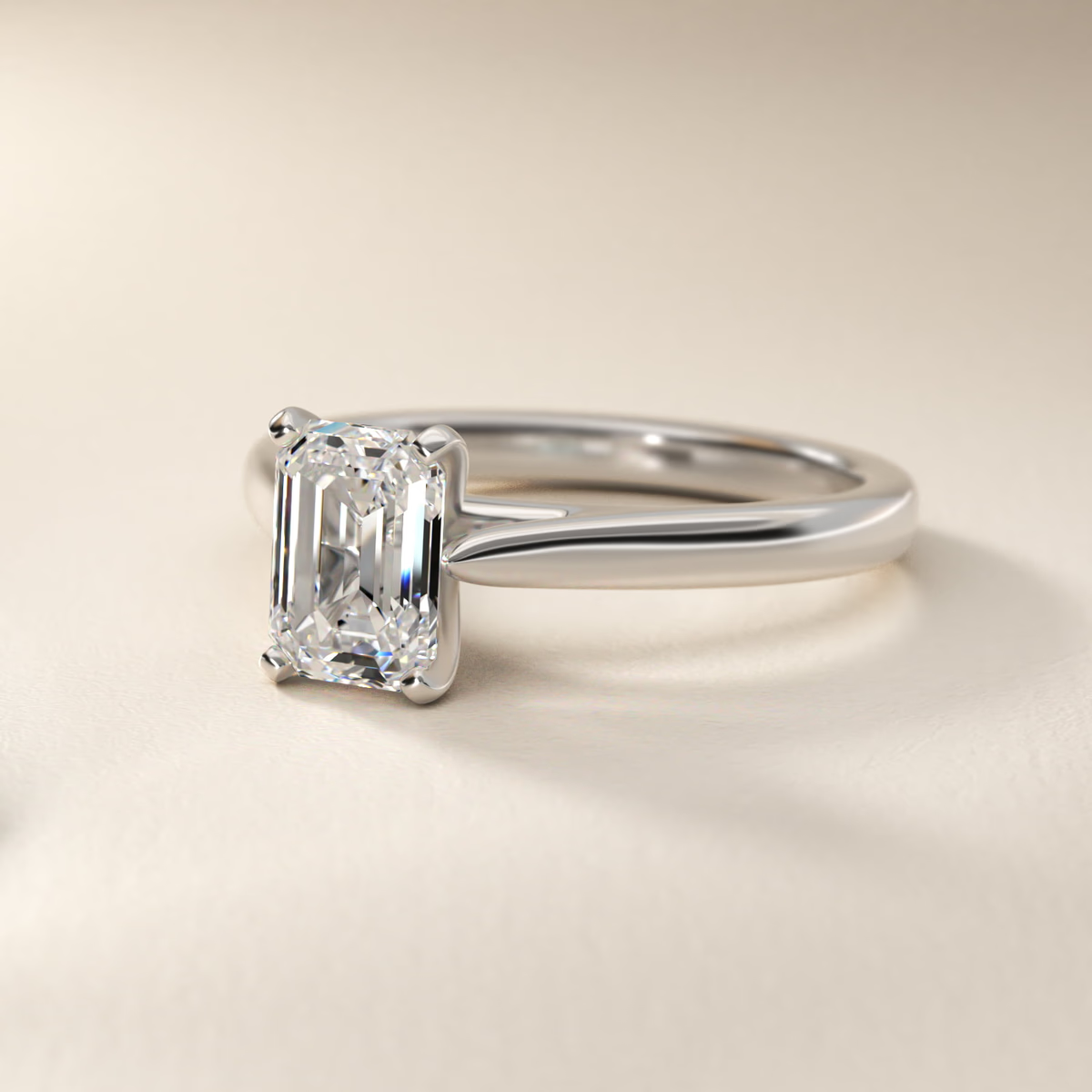
Classic Four Prong Solitaire in Platinum — $1,180 (1,815 reviews)
The 1,815 Standard. The most review-validated platinum engagement ring setting in the market. Four prongs, open head, round shank, no embellishment.
The lowest price in this lineup for a platinum solitaire. 1,815 reviews at $1,180 is the clearest buying signal in the platinum ring market.
For emerald cuts: the open four-prong head lets the step-cut table face up fully visible. Add a 1ct IGI F-VVS1 lab emerald cut ($495) for a total ring around $1,675. Add a 1ct GIA G-VS2 natural ($3,000) for a total around $4,180.
Petite Solitaire in Platinum — $1,330 (1,186 reviews)
1,186 reviews. The petite version uses a thinner band — the narrow platinum shank makes the emerald cut appear larger by visual contrast. The stone is the focus; the band recedes.
For buyers who want the highest review count in the thinnest platinum solitaire, this is the choice.
Pair with a 1ct GIA F-VS2 natural emerald cut (~$3,500) to apply The Color Ceiling. Total ring around $4,830.
Cable Solitaire in Platinum by James Allen — $1,550 (106 reviews)
106 reviews. The band is a cable twist design — platinum twisted into a rope-like pattern along the shank. The cable texture creates shadow lines along the band that add depth without adding accent diamonds.
Works well with the emerald cut's clean geometry — the organic twist of the cable contrasts with the precise architectural rectangle of the stone.
Petite Cathedral Solitaire in Platinum — $1,635 (451 reviews)
451 reviews. Cathedral arches on either side of the head elevate the emerald cut stone above the band. Higher elevation means the step-cut pavilion is fully visible from the side.
The cathedral arch also adds prong height, which accommodates larger emerald cut stones without the head sitting too flush against the finger.
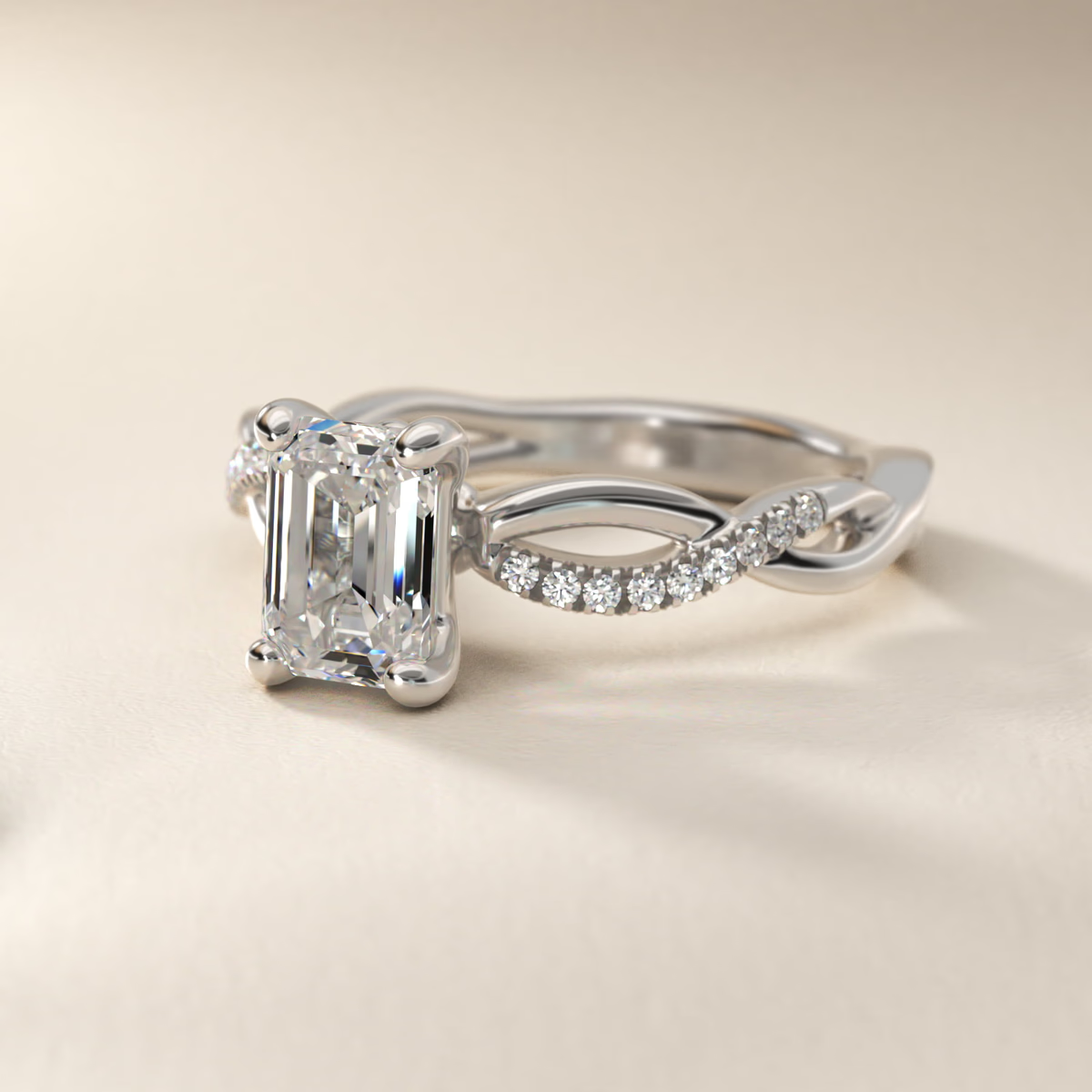
Infinity Solitaire in Platinum by James Allen — $2,105 (50 reviews)
50 reviews at a mid-range price. The infinity band loops under the center stone in a figure-eight pattern before extending toward the finger sides. This creates a distinctive side profile that distinguishes the ring from any standard solitaire.
Criss Cross Solitaire in Platinum by James Allen — $2,445 (20 reviews)
Two bands cross beneath the center stone before extending toward the sides. The crossover creates a distinctive shadow pattern under the step-cut stone. Buy if the specific design appeals — the review count is low but the design is unique in this lineup.
Pavé & Micropavé Settings in Platinum: $1,400 to $3,230
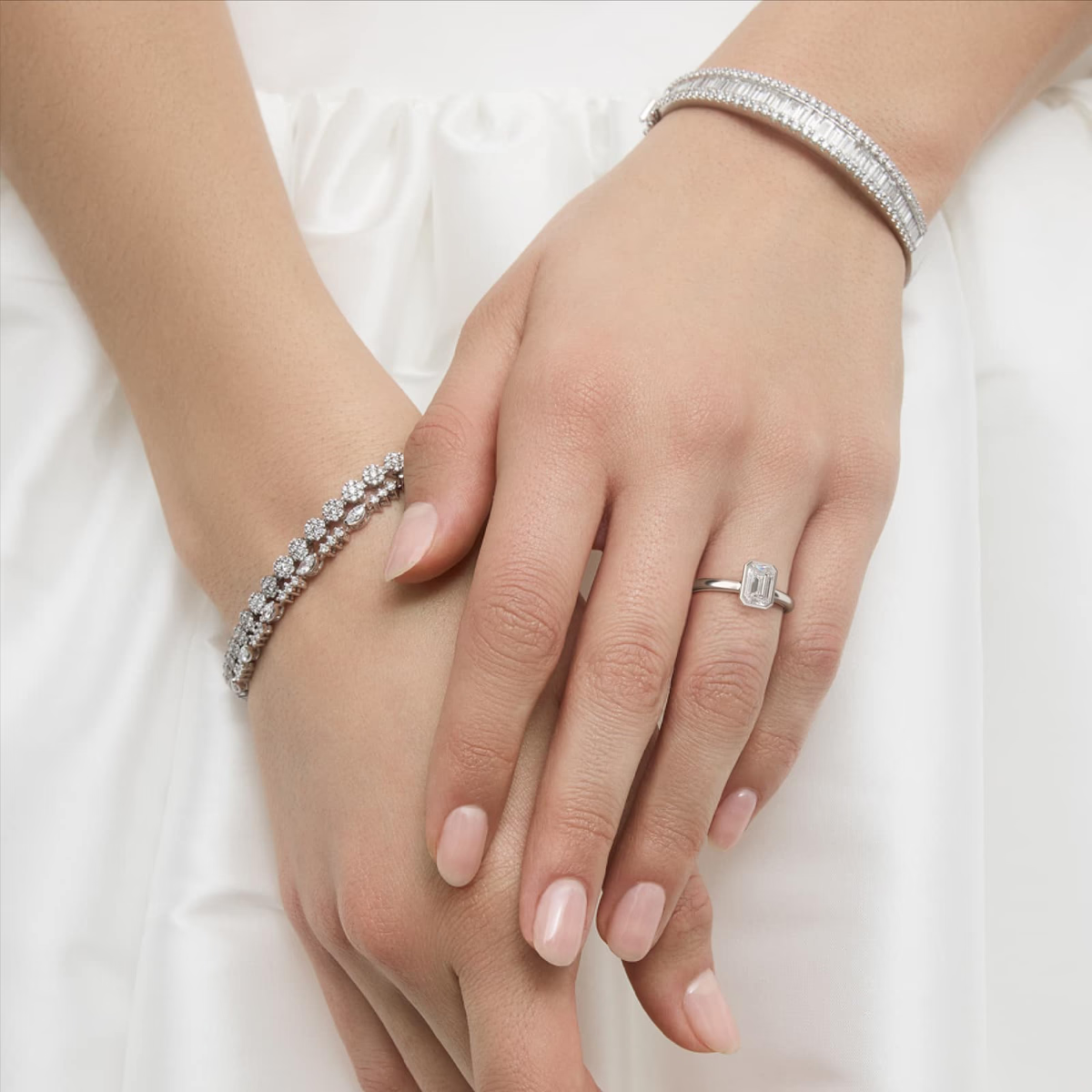
Pavé settings add brilliant-cut diamond accents to the platinum band. The contrast between the step-cut emerald cut center stone and the brilliant-cut band diamonds creates complementary visual layers. Platinum holds small accent stones more securely than white gold over years of daily wear — denser metal resists the micro-movement that loosens pavé prongs over time.
Petite Micropavé Lab-Grown Diamond Ring in Platinum (1/10 ct. tw.) — $1,400 (738 reviews)
738 reviews — the most reviewed pavé option in this lineup. Lab-grown accent diamonds in a thin micropavé band. The 1/10 ct.
tw. accent weight adds sparkle along the shank without visually competing with the emerald cut's step-cut table. The lab-grown accents are eye-identical to natural at this size.
Art Deco Fleur-De-Lis Pavé Vintage-Style Ring in Platinum by James Allen — $1,570 (102 reviews)
102 reviews. Art Deco-inspired design with Fleur-de-Lis pavé detailing at the gallery — the decorative element visible from the side. The Art Deco styling pairs well with the emerald cut's geometric character.
Step-cut stones have a documented historical association with Art Deco-era jewelry; this setting leans into that directly.
Petite Diamond Ring in Platinum (1/10 ct. tw.) — $1,770 (363 reviews)
363 reviews. Natural accent diamonds (1/10 ct. tw.) in a petite band.
Lower accent weight keeps the band understated — the emerald cut center stone dominates visually. For buyers who want natural (not lab-grown) accent diamonds at the lowest pavé price point in platinum.
French Pavé Diamond Ring in Platinum (1/4 ct. tw.) — $2,150 (576 reviews)
576 reviews — the most reviewed platinum pavé setting at this price tier. French pavé cuts V-shaped grooves between each stone, maximizing light entry from above and producing brighter band sparkle than standard pavé. The 1/4 ct.
tw. diamond weight means visible, substantial coverage along the band.
Graduated Milgrain Diamond Ring in Platinum (1/10 ct. tw.) — $2,220 (213 reviews)
213 reviews. Milgrain edge detailing creates a beaded texture along the band borders. Diamonds graduate in size toward the center stone.
The milgrain detail gives this ring a vintage character that matches the emerald cut's historical association with Edwardian and Art Deco-era rings.
Scalloped Pavé Diamond Ring in Platinum (3/8 ct. tw.) — $2,550 (199 reviews)
199 reviews. Scalloped metal between each pavé stone creates crescent-shaped cutouts along the band — an unusual pavé layout that produces a distinct rhythm along the shank. The 3/8 ct.
tw. diamond weight means this is a fully covered, high-sparkle band. For buyers who want maximum pavé presence in platinum.
Blue Nile Studio Petite French Pavé Crown Diamond Ring in Platinum (1/3 ct. tw.) — $3,230 (105 reviews)
105 reviews. Blue Nile Studio's premium French pavé design with a distinctive crown element at the setting head. The 1/3 ct.
tw. French pavé band is among the highest accent diamond weight in a standard pavé design. For buyers who want the refinement of a designer setting with validated buyer feedback.
Halo Settings in Platinum: $2,050 to $3,585
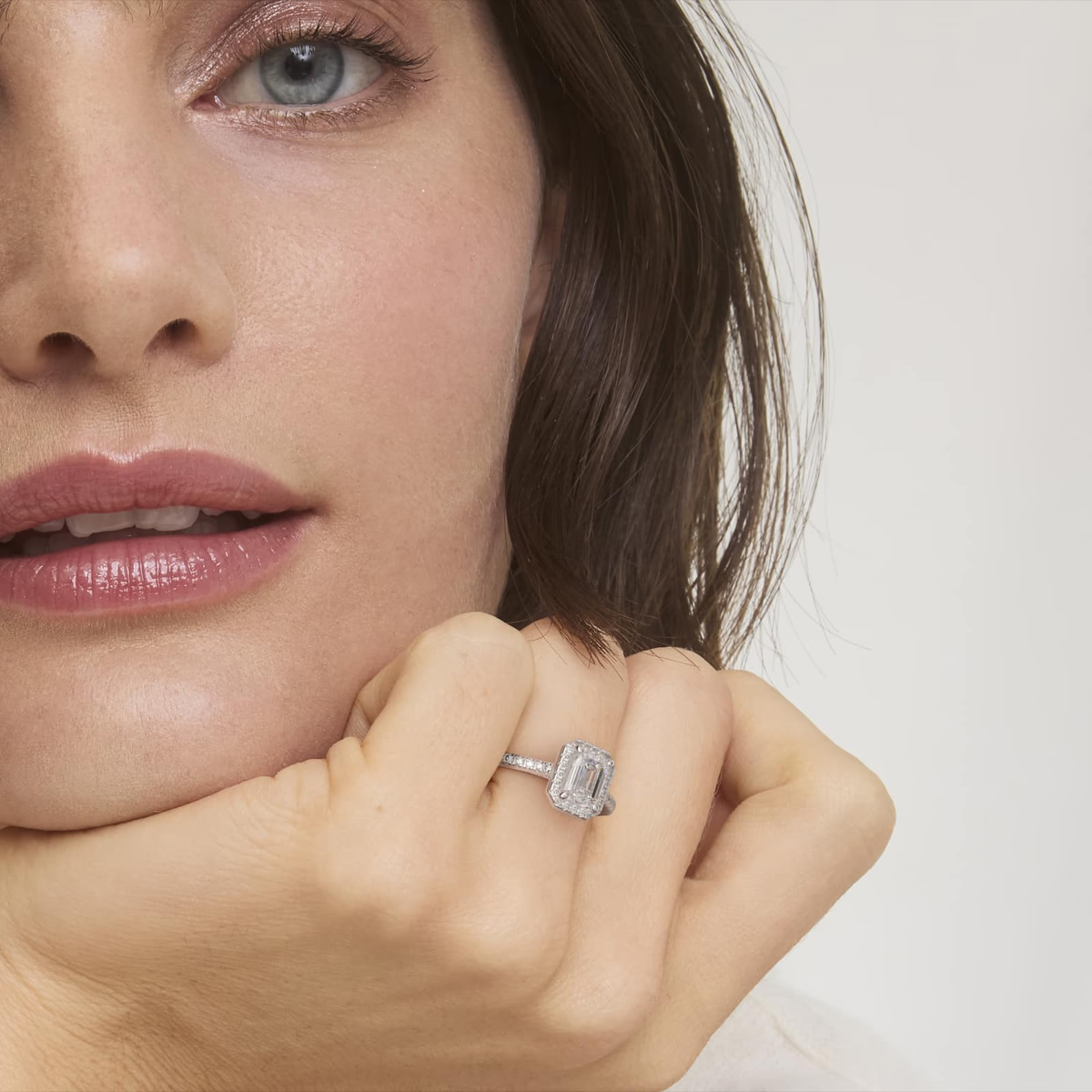
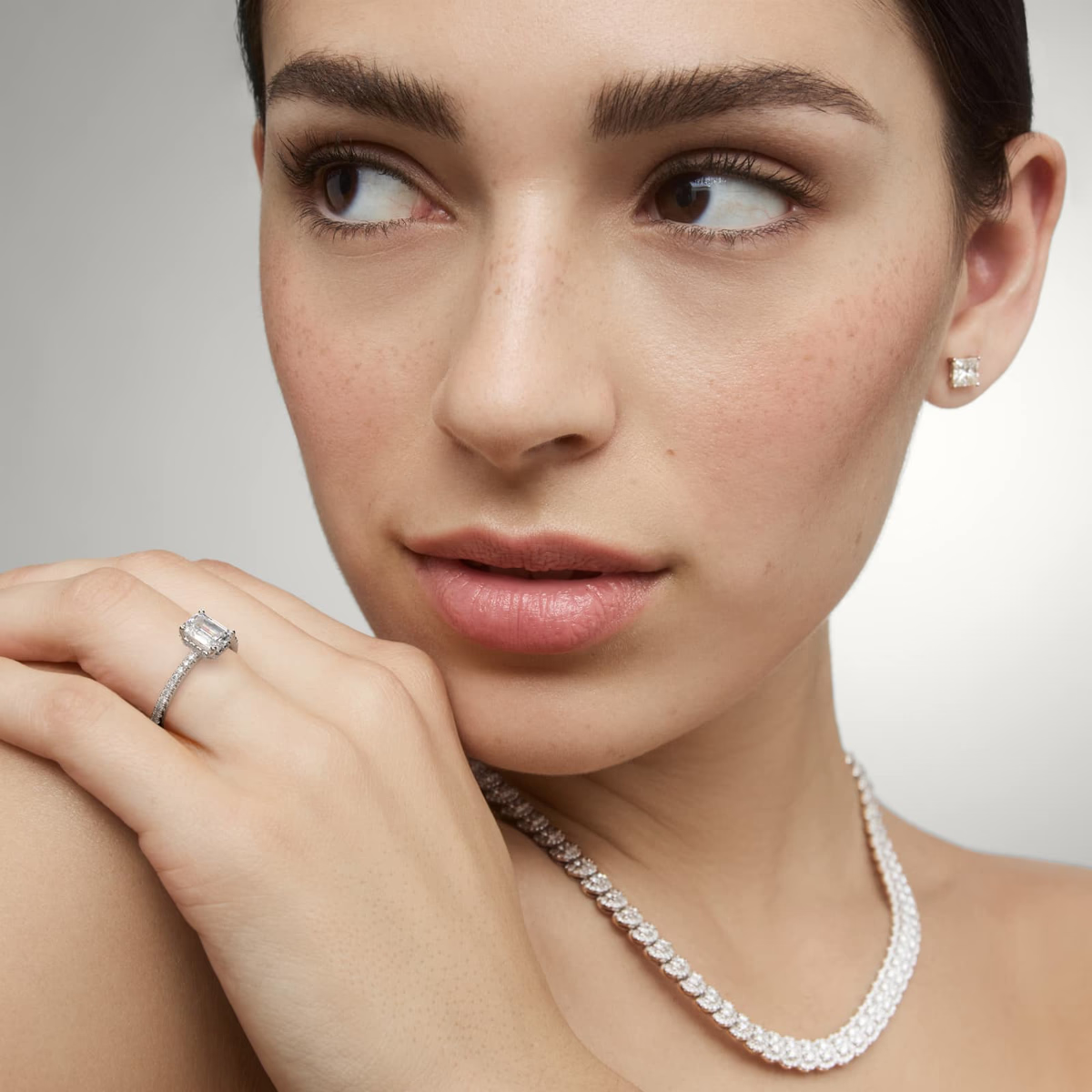
Halo settings in platinum add a ring of brilliant-cut diamonds around the emerald cut center stone. For a rectangular step-cut stone, the halo follows the emerald cut's rectangular outline — creating a precise diamond frame around the step-cut table. The platinum structure holds halo stones securely; dense metal resists the spreading and loosening that affects halo prongs in white gold over years of wear.
Pavé Diamond Halo Ring in Platinum (Cushion, Emerald, Radiant) by James Allen — $2,050 (69 reviews)
The entry halo for emerald cuts in platinum. Specifically designed for rectangular-cornered shapes — cushion, emerald, radiant. 69 reviews.
The rectangular halo follows the emerald cut's outline precisely, the halo and center reading as one larger rectangle from above.
Pavé Diamond Halo Cathedral Ring in Platinum by James Allen — $2,840 (102 reviews)
102 reviews. Cathedral arches add height beneath the halo head, elevating the emerald cut stone and making the step-cut pavilion visible from the side. The halo frames the table while the cathedral elevation adds dimension.
For buyers who want both the halo presence and full stone visibility from every angle.
Falling Edge Pavé Diamond Halo Ring in Platinum by James Allen — $3,010 (369 reviews)
369 reviews — the most reviewed halo setting in this lineup. The falling edge design places pavé diamonds that cascade from the halo down the upper band shoulders, creating the impression of diamonds flowing from the halo into the shank. This is the most sophisticated halo design at this price point.
369 reviews at $3,010 is the strongest data point in the platinum halo category. The most validated halo choice in this lineup.
Blue Nile Studio Heiress Halo Diamond Ring in Platinum (3/8 ct. tw.) — $3,585 (51 reviews)
The premium halo in this lineup. Blue Nile Studio designs are BN's proprietary fine jewelry pieces. 3/8 ct.
tw. halo diamond weight. 51 reviews at $3,585 represents buyers with larger budgets who prioritize design refinement.
Three-Stone & Special Settings in Platinum: $3,135 to $4,300
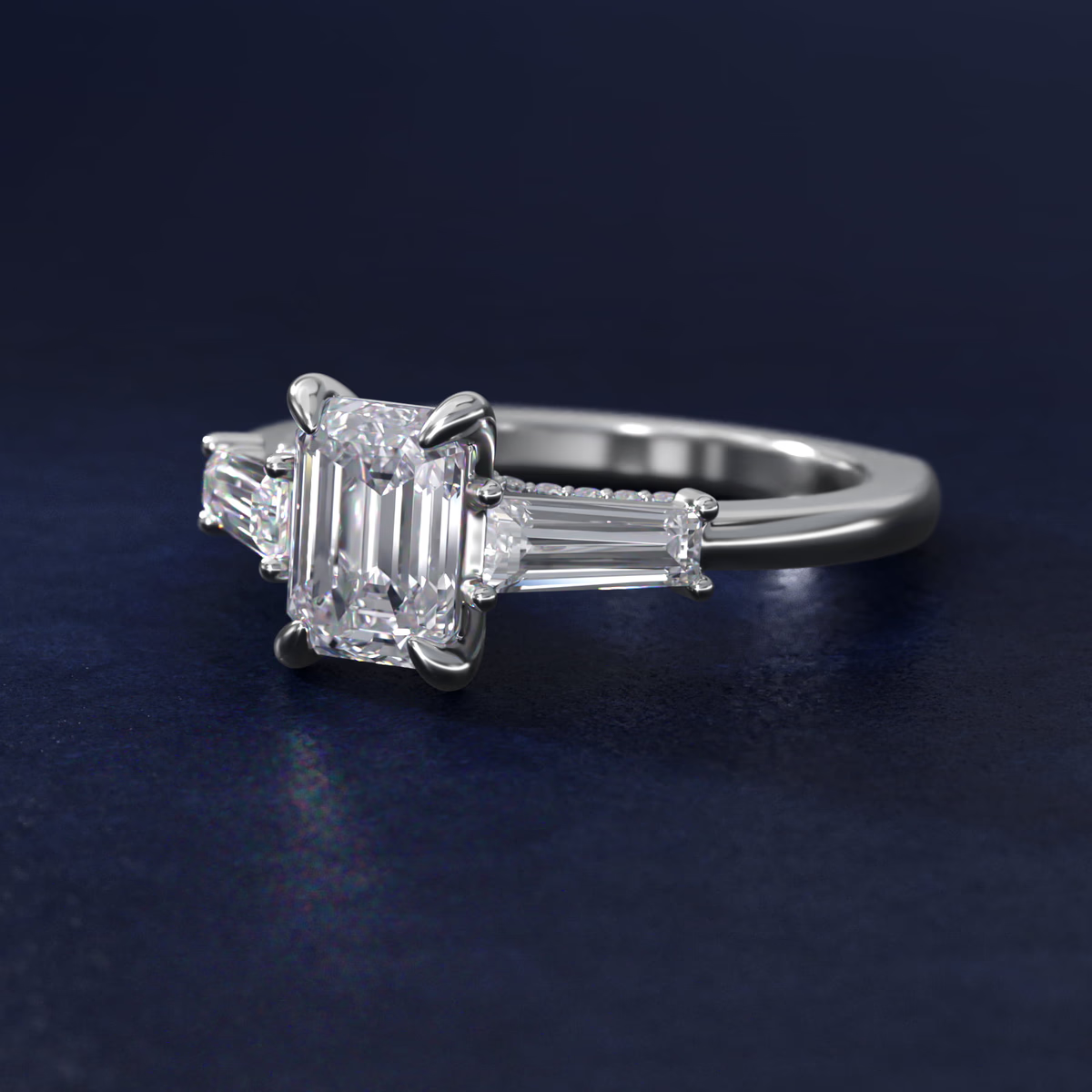
Three-stone and special settings place additional diamonds alongside the center emerald cut stone. For the emerald cut, the most architecturally appropriate side stones are other step-cut shapes — baguettes or smaller emerald cuts. They extend the rectangular visual line of the center stone horizontally, turning the face-up view into one continuous step-cut band.
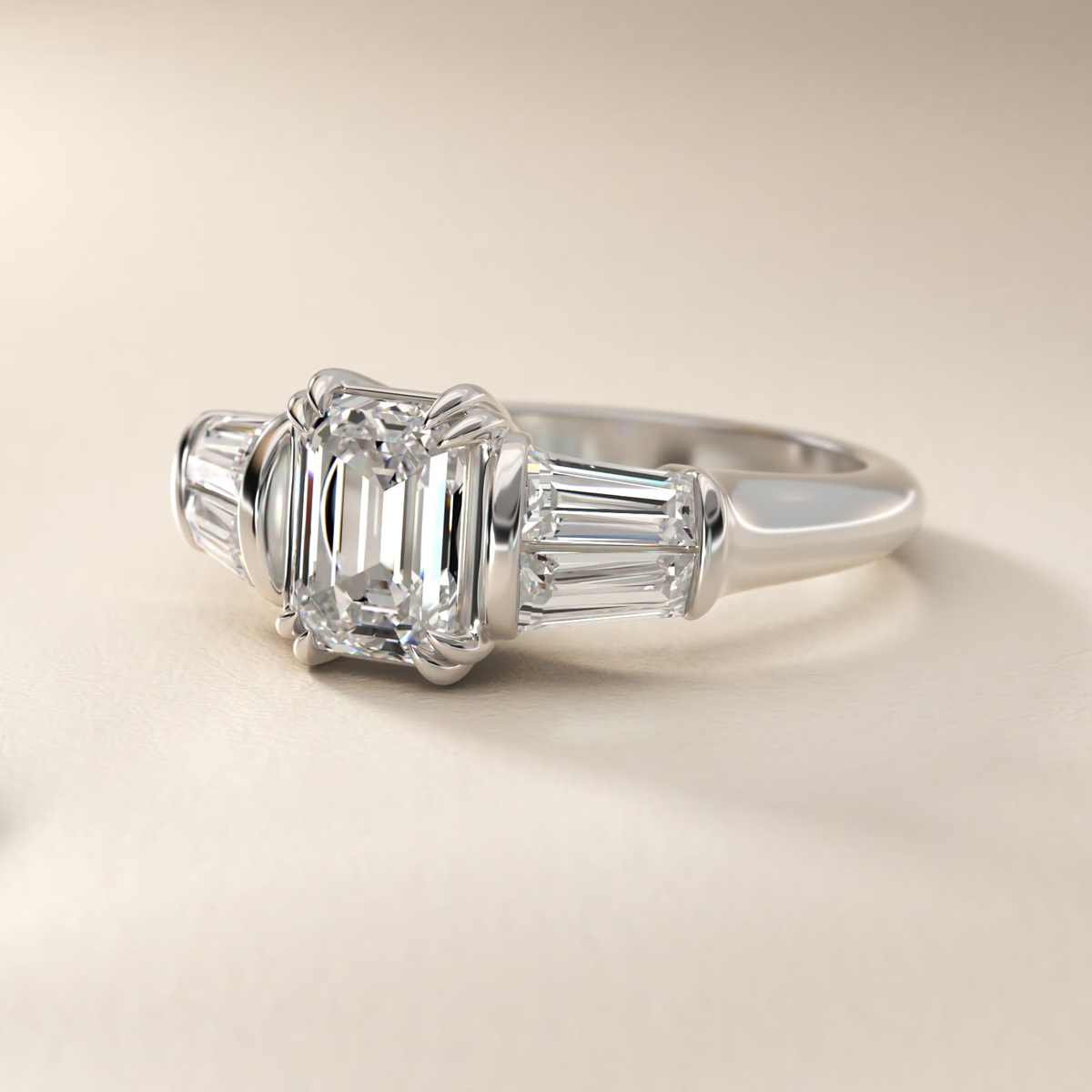
Bow-Tie Channel Set Diamond Ring in Platinum by James Allen — $3,135 (146 reviews)
146 reviews. The bow-tie design places channel-set diamonds in wide shoulders on either side of the center stone — the shoulders taper toward the finger in a bow-tie silhouette. This adds band width at the head that complements the emerald cut's wide face-up outline.
146 reviews makes it the most validated setting in this three-stone and special category.
Emerald Cut Diamond Three Stone Ring with Pavé in Platinum by James Allen — $3,700 (39 reviews)
39 reviews. Emerald-cut side stones on either side of the center stone — three step-cut stones in a horizontal row. This is the most architecturally appropriate three-stone design for an emerald cut center.
Three rectangular stones create a continuous geometric band across the finger. The setting price does not include side stones, which are sold and selected separately alongside the center stone.
Three-Stone Emerald Cut Lab-Grown Diamond Ring in Platinum (5/8 ct. tw.) — $4,300 (6 reviews)
The most complete three-stone option — the setting comes with 5/8 ct. tw. emerald-cut lab-grown side stones included in the price.
6 reviews but the included side stones make the total ring calculation straightforward. Add a lab emerald cut center stone for a complete three-stone platinum ring without sourcing side stones separately.
All 20 Platinum Emerald Cut Ring Settings
Tides Of Summer Capsule
Up To 30% Off
Shop The Sale →Vault ClearanceClear The Vault
Up To 70% Off
Shop Vault Deals →Affiliate link — no extra cost to you
Stone Selection for Platinum Emerald Cut Rings
The same proportion standards apply in platinum as in any other metal: L:W 1.30–1.50, depth 60–64%, table 61–69%. What changes in platinum is the color grade target.
Color: Start at G, consider F. In 18k white gold, G color is the practical minimum for a colorless-looking emerald cut. In platinum, The Color Ceiling means F color shows more visible improvement over G than it does in white gold. If budget allows, browse F-color GIA emerald cuts and compare prices to G. The F-to-G price gap at 1ct is typically 10–20% — worth evaluating before committing to G.
Clarity: VS2 minimum. The emerald cut's step-cut table is an open mirror. Inclusions visible in the table are visible regardless of what metal the ring is in. VS2 is the floor. VS1 is the practical recommendation for stones above 1.5ct where the larger table increases the visibility of anything in the clarity range.
Carat: 1ct+ recommended. Below 1ct, the step-cut facets are too small for the full hall-of-mirrors effect. At 1ct (approximately 6.5mm × 4.5mm), the stone fills a platinum solitaire band comfortably. Check the complete emerald cut size chart for mm dimensions by carat weight.
Farzana says: "The stone selection rule for platinum is simple: same proportions, higher color target. Everything else — L:W, depth, table — stays the same as any metal. The only change is the Color Ceiling. In platinum, if you can reach F, reach F. The metal earns it."
Natural 1ct in platinum (G-VS2): Browse certified G-VS2 emerald cuts — typically $2,800–$3,200 for 1ct GIA G-VS2.
Natural 1ct in platinum (F-VS2): Browse F-VS2 certified emerald cuts — typically $3,300–$3,800 for 1ct GIA F-VS2.
Lab 1ct in platinum (F-VVS1): Browse lab IGI emerald cuts — approximately $450–$600 for a 1ct IGI F-VVS1. Lab stones in platinum fully realize The Color Ceiling at a fraction of natural cost.
Total Ring Cost: Setting + Stone
| Build | Setting | Stone | Approx. Total |
|---|---|---|---|
| Lab entry | Classic Four Prong $1,180 | Lab 1ct IGI F-VVS1 ~$495 | ~$1,675 |
| Natural G-VS2 entry | Classic Four Prong $1,180 | Natural 1ct GIA G-VS2 ~$3,000 | ~$4,180 |
| Color Ceiling build | Petite Solitaire $1,330 | Natural 1ct GIA F-VS2 ~$3,600 | ~$4,930 |
| Pavé mid-range | French Pavé $2,150 | Natural 1ct GIA G-VS2 ~$3,000 | ~$5,150 |
| Halo statement | Falling Edge Halo $3,010 | Natural 1ct GIA G-VS2 ~$3,000 | ~$6,010 |
| Three-stone complete | EC Three Stone Lab $4,300 (side stones included) | Lab 1ct IGI F-VVS1 ~$495 | ~$4,795 |
Platinum vs White Gold for Emerald Cut Rings
The visual appearance is similar at first glance. The practical differences accumulate over years of wear.
Appearance: Both metals look white. Platinum's tone is slightly cooler. In a step-cut emerald cut's table, the slight tonal difference between platinum and fresh-rhodium white gold is visible to a trained eye in direct comparison. After three to five years of wear, rhodium-plated white gold yellows slightly and needs replating — at that point the difference becomes obvious to anyone.
Durability: Platinum develops a surface patina over time called a "wear layer" — microscopic metal redistribution that creates a slight frosted look. The metal does not actually wear away; it moves. White gold's rhodium plating does wear away and requires periodic service.
Cost: Platinum settings cost 20–40% more than the same design in 18k white gold. Over ten years with replating included, the total cost difference narrows significantly.
Stone protection: Platinum prongs hold longer without loosening. This matters more for an emerald cut — whose four vulnerable corners need secure prong contact — than for any brilliant-cut stone.
Choose platinum when the ring will be worn daily for decades without service, when metal sensitivity is a concern, or when budget allows it without compromising stone grade. See the full emerald cut ring settings comparison for settings available in both metals side by side.
Expert Summary
A platinum emerald cut diamond engagement ring gives buyers three things white gold does not: the Platinum Premium (no replating, secure prongs, hypoallergenic); the 1,815 Standard (the most validated starting point in the platinum market); and the Color Ceiling (F-color outperforms G more visibly in platinum than in any other metal).
Settings range from $1,180 to $4,300. The Classic Four Prong ($1,180, 1,815 reviews) is the benchmark. The French Pavé ($2,150, 576 reviews) is the most reviewed mid-range pavé option.
The Falling Edge Halo ($3,010, 369 reviews) is the most validated halo.
Total ring from $1,675 with a lab center stone. From $4,180 with a natural 1ct GIA G-VS2.
Apply The Color Ceiling if you are buying platinum specifically for the colorless look of the step-cut table — F color in platinum is a meaningful visual upgrade over G. Keep the same proportion standards: L:W 1.30–1.50, depth 60–64%, table 61–69%, VS2 minimum clarity.
Best For
Budget buyers: The Classic Four Prong at $1,180 plus a lab 1ct IGI F-VVS1 emerald cut totals ~$1,675. The most review-validated platinum setting at the lowest total ring price available.
Buyers wanting proven results: The Classic Four Prong at $1,180 with 1,815 reviews is The 1,815 Standard. Pair with a 1ct GIA G-VS2 natural emerald cut for approximately $4,180 total.
Buyers wanting sparkle on the band: The French Pavé at $2,150 with 576 reviews is the most validated mid-range pavé option. For maximum halo presence, the Falling Edge Pavé Halo at $3,010 with 369 reviews is the most data-backed choice.
Buyers applying the Color Ceiling: The Petite Solitaire at $1,330 paired with a 1ct GIA F-VS2 natural emerald cut (~$3,600) totals approximately $4,930 and fully realizes the visual benefit of The Color Ceiling.
Platinum Emerald Cut Decision Matrix
| You Want | Best Setting | Stone Target | Approx. Total |
|---|---|---|---|
| Lowest total cost | Classic Four Prong $1,180 | Lab 1ct IGI F-VVS1 | ~$1,675 |
| Most proven solitaire | Classic Four Prong $1,180 | Natural 1ct GIA G-VS2 | ~$4,180 |
| Maximum colorless appearance | Petite Solitaire $1,330 | Natural 1ct GIA F-VS2 | ~$4,930 |
| Vintage character | Graduated Milgrain $2,220 | Natural 1ct GIA G-VS2 | ~$5,220 |
| Band sparkle | French Pavé $2,150 | Natural 1ct GIA G-VS2 | ~$5,150 |
| Maximum halo presence | Falling Edge Halo $3,010 | Natural 1ct GIA G-VS2 | ~$6,010 |
| Three-stone complete ring | EC Three Stone Lab $4,300 | Lab 1ct IGI F-VVS1 | ~$4,795 |
FAQs
Is platinum the best metal for an emerald cut diamond ring?
Platinum is the best metal for durability and long-term appearance. It does not require rhodium replating, holds prongs securely over decades of wear, and provides a permanently white backdrop for the emerald cut's step-cut table. White gold looks identical when new but requires maintenance.
Rose and yellow gold are warm metals that change the visual character of the stone.
If budget is the deciding factor, 18k white gold is the right call — the appearance starts identical and looks the same for years. If the budget accommodates both the platinum setting and the correct stone grade, platinum is the better long-term choice.
What color diamond is best with platinum for an emerald cut ring?
F color is the right target in platinum. The Color Ceiling means F outperforms G more visibly in platinum's cool, pure white setting than in any other metal. G is the minimum — G-color stones look excellent in platinum. But the additional visual benefit of F over G is larger in platinum than in 14k or 18k white gold.
Browse F-color GIA emerald cuts and compare prices to G. If budget allows the upgrade, F is the right call in platinum.
What is the most popular platinum emerald cut ring setting?
By review count, the Classic Four Prong Solitaire in Platinum with 1,815 reviews is the most popular. This is The 1,815 Standard — the most review-validated platinum engagement ring setting in the market. Among pavé options, the French Pavé (576 reviews) and Petite Micropavé Lab-Grown (738 reviews) lead their respective categories.
For halo, the Falling Edge Pavé Halo (369 reviews) is the most validated choice.
How much does a platinum emerald cut diamond ring cost?
Setting price starts at $1,180. Total ring depends on the center stone. With a lab-grown 1ct IGI F-VVS1 emerald cut (~$495), total starts around $1,675.
With a natural 1ct GIA G-VS2 ($3,000), total starts around $4,180. Applying The Color Ceiling with a 1ct GIA F-VS2 ($3,600) brings total to approximately $4,780 with the Classic Four Prong setting.
Does platinum scratch more than white gold?
Yes — platinum develops surface scratches more visibly than rhodium-plated white gold in the short term. The key difference is what the scratch actually does: on platinum, the metal moves rather than is removed. A jeweler can re-polish platinum to a high shine at any point.
On white gold, the rhodium layer wears away and cannot be re-polished — it must be replated.
Over years of wear, the platinum's surface develops a soft, satin-like patina that many buyers prefer over the high-gloss look of fresh rhodium. If you want the ring to look polished at all times, budget for an occasional platinum polishing service every few years.
What clarity grade do I need for a platinum emerald cut ring?
VS2 minimum, VS1 recommended. The emerald cut's step-cut table is a flat mirror — inclusions visible in the table are visible in any metal. Platinum changes nothing about clarity requirements.
Watch a high-resolution video of any specific stone before buying SI1 or below in an emerald cut. An SI1 that passes eye-clean in a round brilliant will almost always show visible inclusions in a step-cut table. The full emerald cut clarity guide has the complete breakdown.
Is platinum heavier than white gold on the finger?
Yes. Platinum is denser than 18k white gold. A platinum ring will feel noticeably heavier than the same design in white gold.
Most wearers adapt to the weight quickly. The additional weight is also a reason that platinum rings feel more substantial and "expensive" in hand.
If weight is a concern — particularly for a wearer who has never worn heavy rings — consider sizing slightly larger to account for the heavier feel.
What is the Platinum Premium for an emerald cut ring?
The Platinum Premium is the additional cost of choosing platinum over 18k white gold for the same setting design — typically 20–40% more for the setting alone. For a $1,180 Classic Four Prong in platinum, the equivalent 18k white gold setting costs approximately $750–$950.
The premium pays for no rhodium replating, denser prongs that hold more securely over time, and a hypoallergenic metal. Over a decade of daily wear, the total cost difference between platinum and maintained white gold narrows as replating costs accumulate.
Can I set a 2ct or 3ct emerald cut in a platinum solitaire?
Yes. Platinum solitaire settings accommodate larger stones — the head is selected to match the stone dimensions, not the metal. A 2ct emerald cut (approximately 8.5mm × 6.0mm) or a 3ct emerald cut (approximately 9.5mm × 7.0mm) works with standard platinum solitaire heads.
At larger sizes, the Color Ceiling matters more — a 2ct or 3ct step-cut table is a larger mirror, and the visual difference between F and G color becomes even more apparent.
Is platinum or rose gold better for an emerald cut diamond ring?
They produce opposite visual effects with the same stone. Platinum creates a cool, colorless, maximum-precision look — the metal disappears visually and the stone dominates. Rose gold creates warmth and contrast — the metal's pink tone frames the step-cut table visually.
Choose platinum when you want the stone to look as colorless and precise as possible. Choose rose gold when you want warmth and visual character from the metal itself. See the emerald cut rose gold ring guide for the rose gold side of that comparison, including The H-Color Discount and The Warm Contrast Rule.
What is the 1,815 Standard for platinum emerald cut rings?
The 1,815 Standard is the benchmark set by the Classic Four Prong Solitaire in Platinum — the most review-validated platinum engagement ring setting available, with 1,815 buyer reviews. It is the default starting point for any platinum emerald cut ring search.
If you are unsure which setting to choose, start at the Classic Four Prong at $1,180. Any other setting in this lineup needs to earn its price over the benchmark through additional visual or functional benefit that the 1,815 Standard itself does not provide.
What is the Color Ceiling for a platinum emerald cut diamond ring?
The Color Ceiling is the point at which platinum's pure white tone amplifies the visual difference between F and G color more than any other metal does. In a white gold setting, G color is the practical minimum for a colorless-looking emerald cut. In platinum, the cooler, naturally white backdrop of the metal means F color shows a more visible improvement over G than it does in 14k or 18k white gold.
The Ceiling is F. Go below G (to H or I) in platinum and the slight warmth in the stone reads more visibly against the cooler metal. Browse F-color GIA emerald cuts and compare the price to G before committing — the gap is typically 10–20% at 1ct.
How do I find the right platinum emerald cut ring?
Search for stone first, setting second. Browse GIA-certified emerald cuts with these filters: L:W 1.30–1.50, depth 60–64%, table 61–69%, F or G color, VS2 minimum clarity. In platinum, apply The Color Ceiling — compare F-color stones to G before deciding.
Then choose the setting from the 20 options in this guide based on style preference and budget.
The proportion check comes first. A premium platinum setting on a poorly proportioned emerald cut is wasted money.
See Also
- Emerald Cut Diamond Engagement Rings — Complete Guide
- Emerald Cut Diamond Ring Settings — All Styles Compared
- Emerald Cut Rose Gold Diamond Ring — 18 Settings, Warm Contrast Rule
- Best Ratio for Emerald Cut Diamond — Ideal Proportions, Depth %, L:W Guide
- Emerald Cut Diamond Solitaire Ring — The 6-Prong Mistake, 19 Settings Ranked
- Loose Emerald Cut Diamond — How to Buy the Stone Before the Setting
Expert Verdict
Always audit the stone individually — no grade replaces seeing the actual diamond. The certificate tells you what to look for. Your eyes tell you whether to buy.
— Farzana Hasan, GIA Expert · DiamondCritics.com