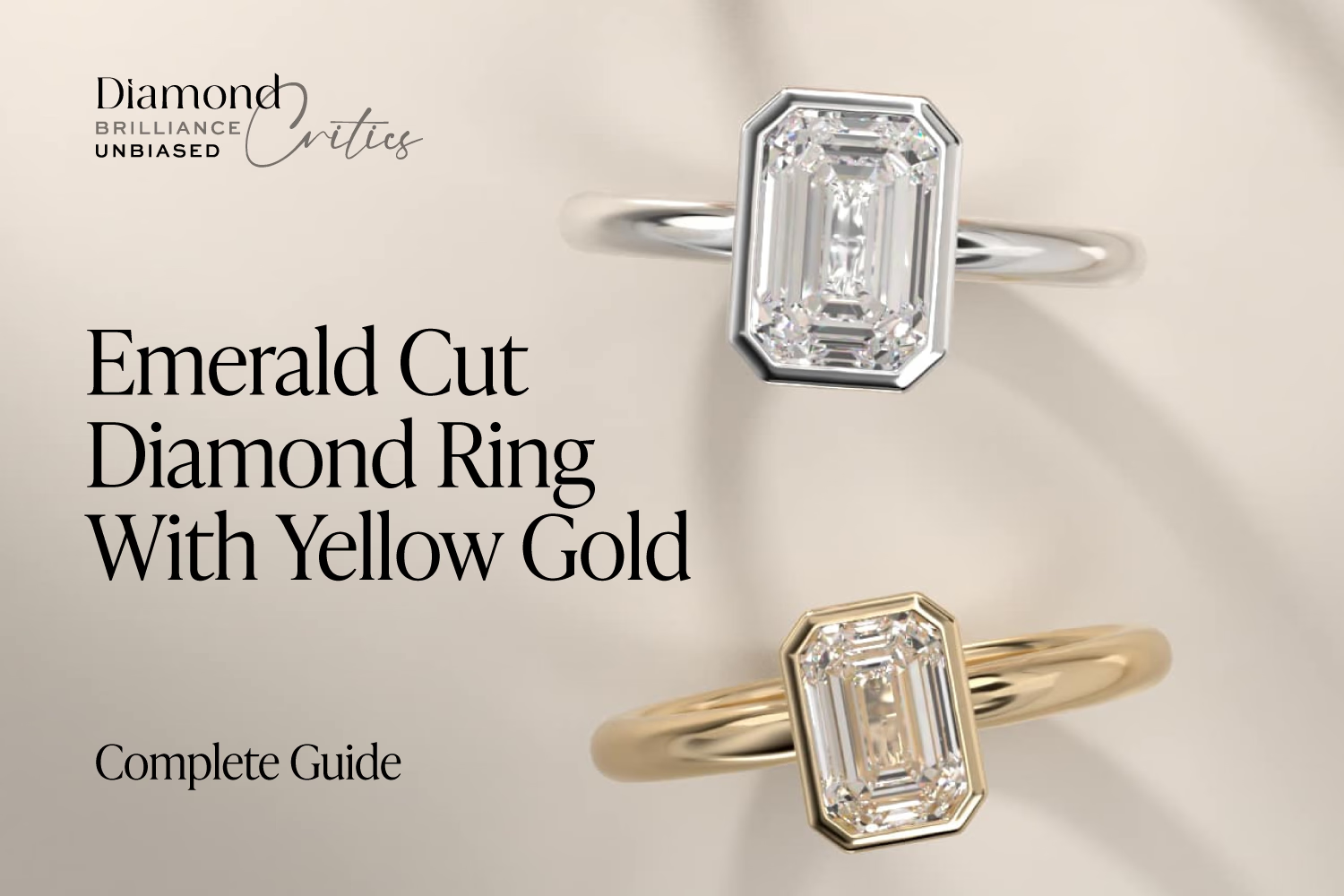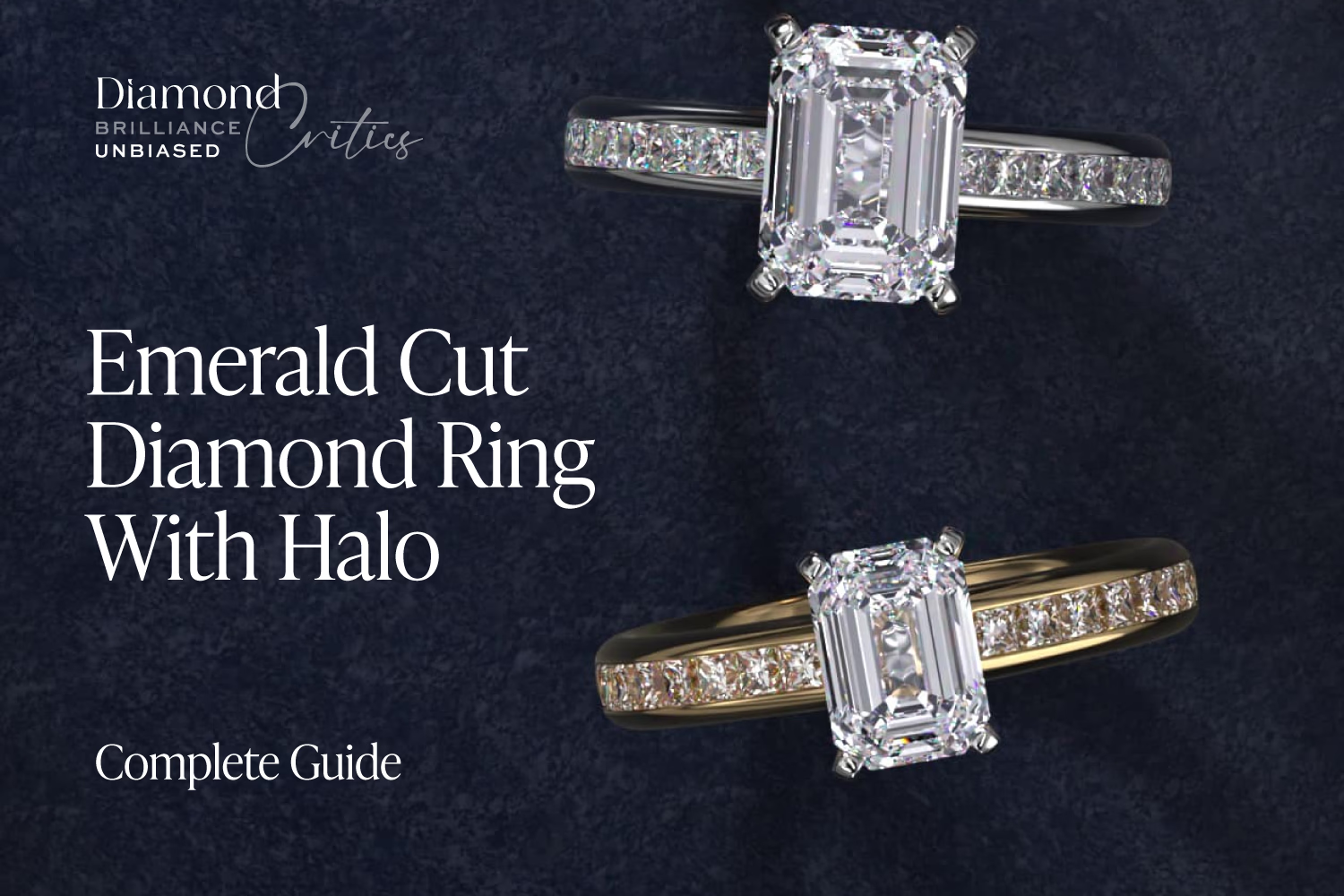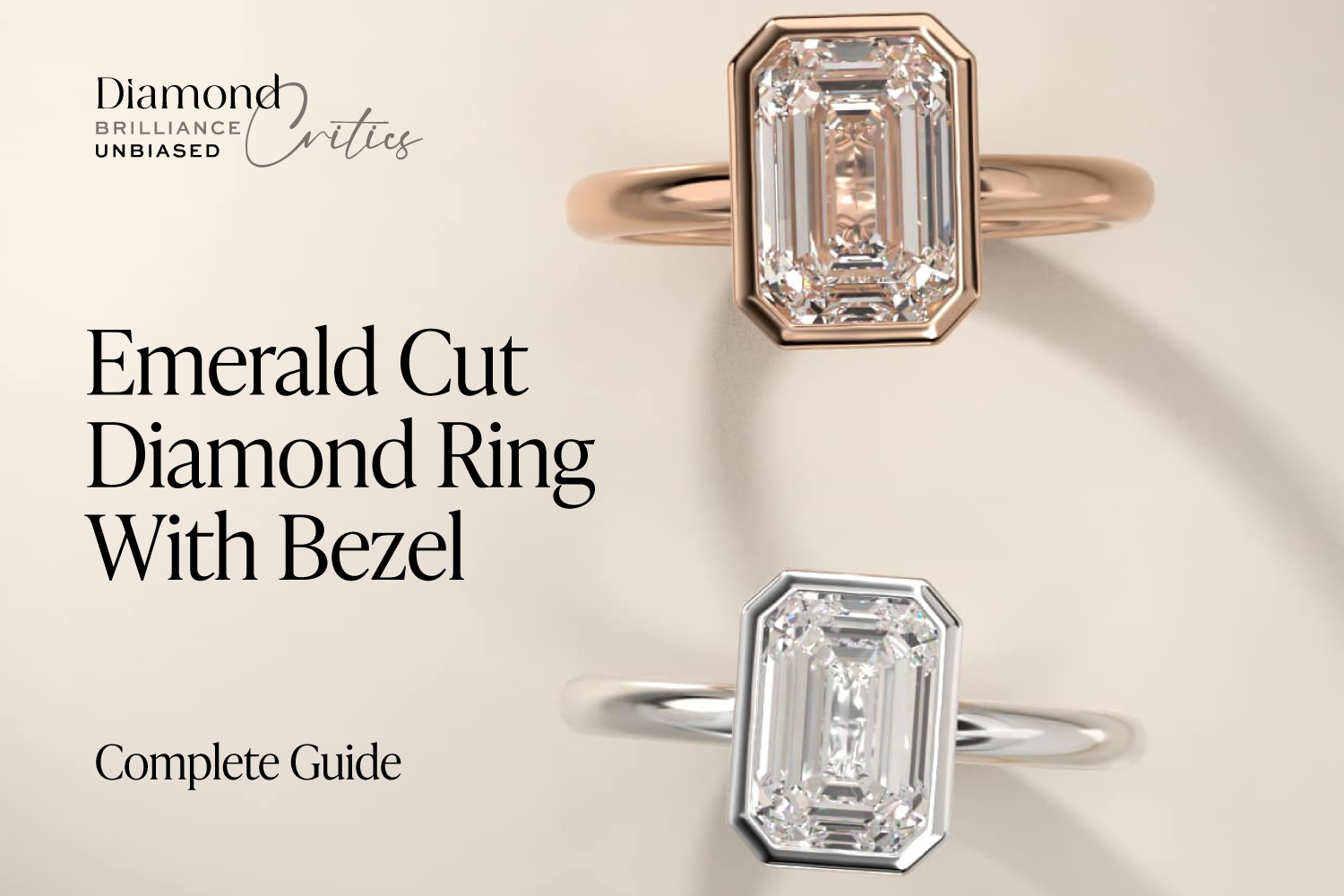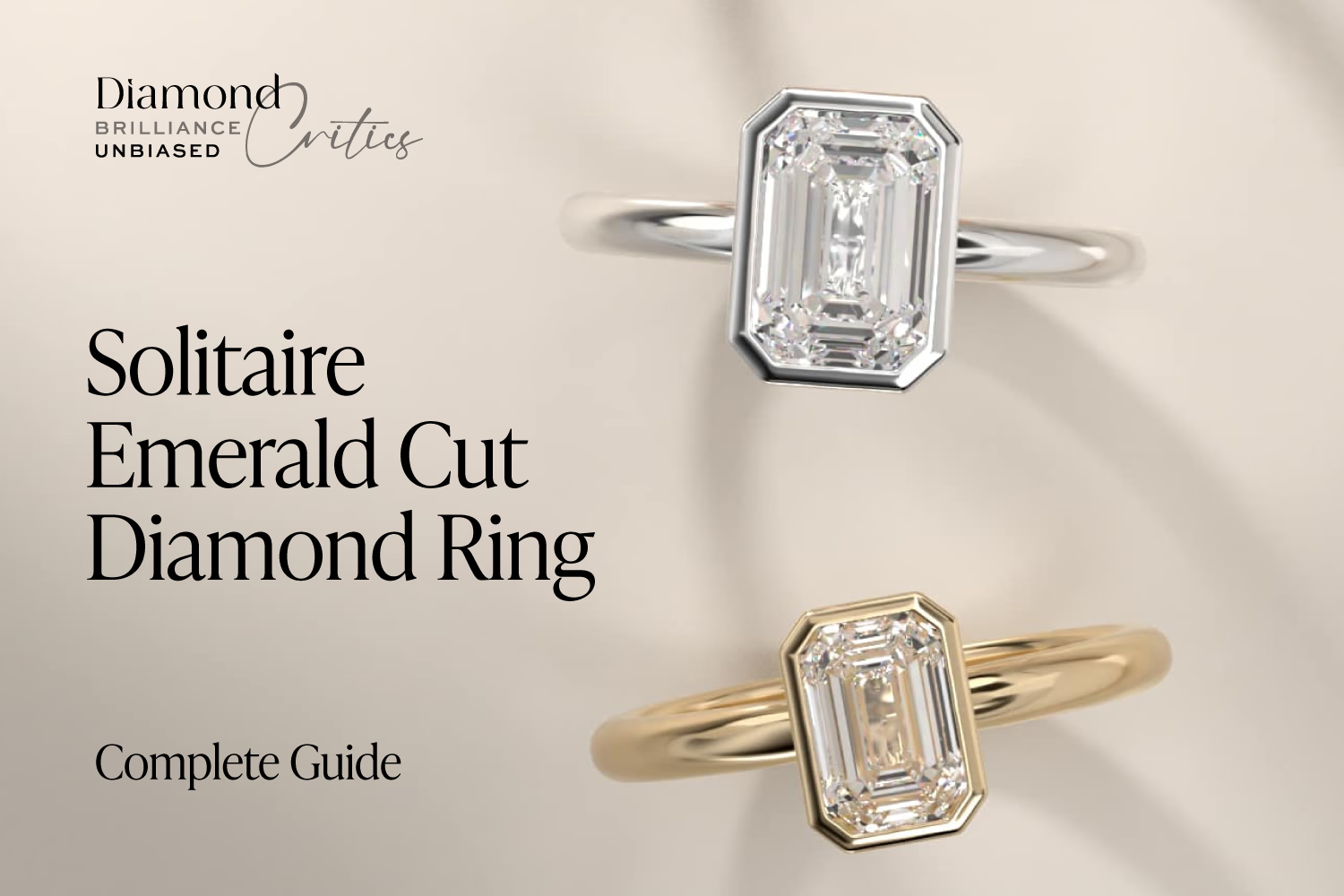
TL;DR: What Every Emerald Cut Solitaire Buyer Must Know First
An emerald cut diamond solitaire ring is the purest way to wear this shape. The step-cut facets create a hall-of-mirrors reflection that a solitaire setting displays completely. Every other setting style — halo, pavé, bezel, side stones — adds visual noise around a stone that already makes its own statement.
The 6-Prong Mistake: Six prongs on an emerald cut require placing prong metal over the long step-cut facets. Those prongs cast shadows that break the hall-of-mirrors effect. Four corner prongs protect the chip-risk zones and leave every facet open.
Full ring price snapshot (certified market data, 2026):
- Natural 1ct GIA D-VS1 + Knife Edge WG $925 = $4,065 total
- Natural 1ct GIA G-VS1 + Classic Four Prong YG $870 = ~$3,670 total
- Lab 1.94ct IGI F-VVS1 + Knife Edge WG $925 = $3,154 total
→ Smart move: If you want the most validated setting in the market, the Classic Four Prong Solitaire has 1,815 verified buyer reviews — more than any other emerald cut setting. Pair it with a GIA 1ct G-VS1 and you have a proven ring from $3,670.
Priority: Understand The 6-Prong Mistake before you choose a setting. Then read The 1815-Review Standard to see which style most buyers pick and why.
| Ring Option | Stone | Setting | Total | Best For |
|---|---|---|---|---|
| Best Entry Natural | 1ct GIA D-VS1 | Knife Edge WG $925 | $4,065 | Natural GIA, classic white gold |
| Best Value Natural | 1ct GIA G-VS1 | Classic Four Prong YG $870 | ~$3,670 | 1,815 reviews, proven setting |
| Best Entry Lab | 1.94ct IGI F-VVS1 Lab | Knife Edge WG $925 | $3,154 | Nearly 2ct face-up, budget-focused |
| Best Durability | 1ct GIA D-VS1 | Petite Cathedral Platinum $1,635 | $4,775 | 451 reviews, platinum prongs last longer |


What Is an Emerald Cut Diamond Solitaire Ring?
An emerald cut diamond solitaire ring pairs a rectangular step-cut diamond with a single-stone setting — no side stones, no halo, no pavé. The emerald cut is defined by its step-cut facets: long rectangular planes arranged in parallel rows across the table, running parallel to the stone's outline.
I'm Farzana Hasan, a GIA-certified gemologist. I've reviewed emerald cut diamond engagement rings across every setting style and every price range. The solitaire is the one I recommend most for this shape — not out of tradition, but because of how step-cut facets interact with surrounding metalwork.
Full credentials and methodology at Diamond Critics.
The emerald cut solitaire combination works because of one principle: the solitaire adds nothing except support. The stone does all the visual work. In a brilliant-cut diamond, the facets scatter light in dozens of directions and can be dressed up in almost any setting without losing their character.
The emerald cut creates a quieter, more deliberate optical effect — and it needs a setting that steps back and lets it happen.
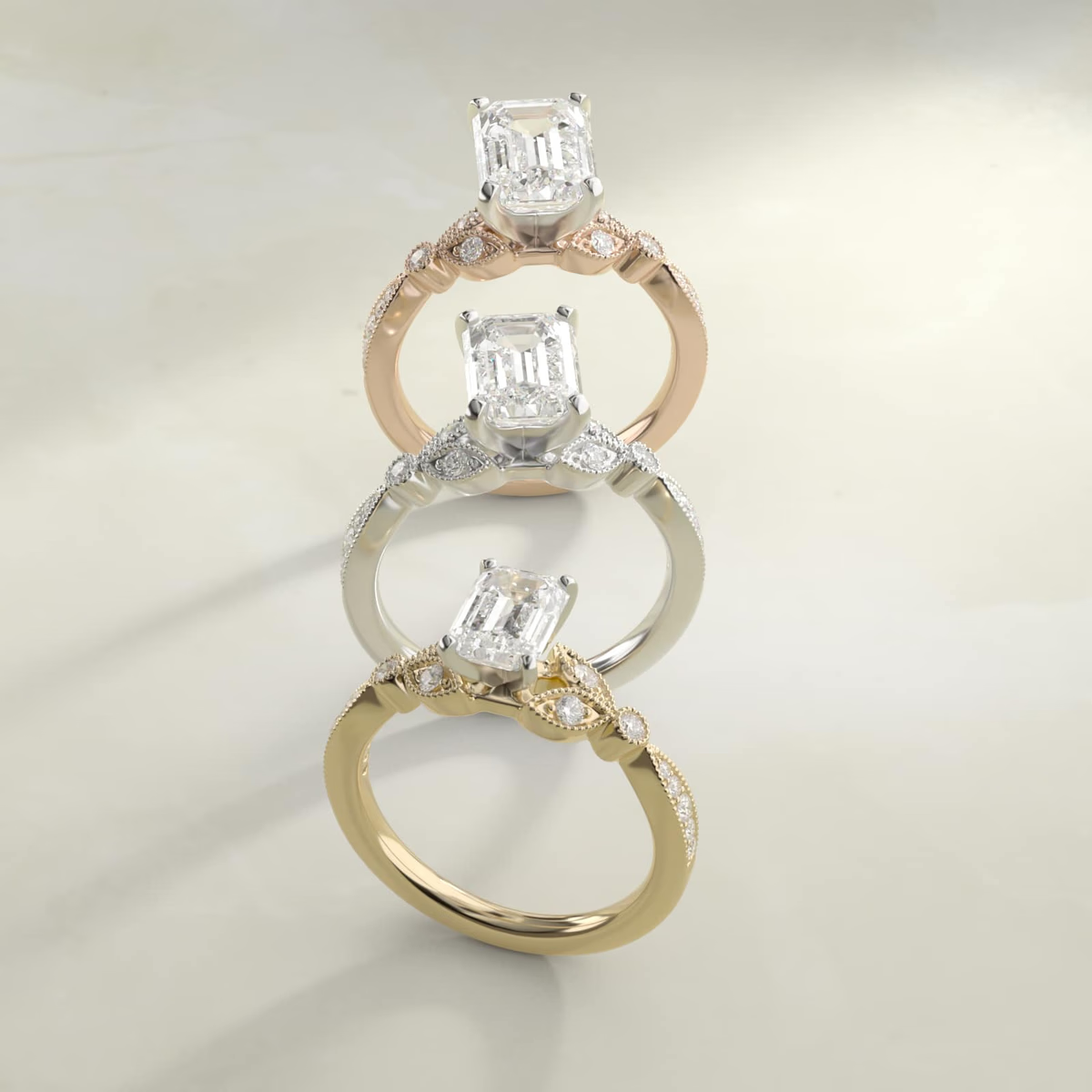
How Step-Cut Facets Create the Hall-of-Mirrors Effect
Most engagement ring diamonds are brilliant cuts. A round brilliant uses 58 triangular and kite-shaped facets arranged to scatter incoming light into sparkle in every direction. The oval, pear, and cushion shapes do the same.
That scattered sparkle is easy to see from far away and looks active in all lighting conditions.
The emerald cut is a step cut. Its facets are flat rectangles stacked in parallel rows. Light enters the table, travels down through the parallel facets, and reflects back up in long, broad flashes — not scattered sparkle.
Move your hand slowly under a light source while wearing an emerald cut and you see the reflections sweep across the stone like windows in a building as you walk past.
That optical pattern is called the hall-of-mirrors effect. It's quiet, architectural, and unmistakable. It is also completely different from the effect you get in a brilliant cut, which means the shopping rules that apply to brilliant cuts — particularly for settings, color grades, and clarity — don't transfer to the emerald cut.
The hall-of-mirrors effect shows everything. Inclusions that would be hidden under a brilliant cut's scatter are visible in the emerald cut's open table. Color tints that disappear into sparkle in a round brilliant are reflected plainly from the step-cut facets.
And prongs placed over those facets cast shadows directly into the reflection pattern.
This last point is why the setting choice matters more for an emerald cut than for any other shape.
The Clean Window Rule
Think of an emerald cut as a window into the diamond's interior. The step-cut facets are the glass panes — flat, clear, and designed to let light pass cleanly through them. A solitaire setting is a window frame.
It holds the glass in place and stays out of the way.
Call this The Clean Window Rule: the best setting for an emerald cut is the one that touches the stone the least. Corner prongs at the four corners of the rectangle — holding the four chip-risk points — and nothing else. No metal over the facets.
No surrounding stones to reflect into the table. No pavé on the band to draw light away from the step-cut pattern above.
The solitaire is the only setting style that follows The Clean Window Rule by design. A bezel setting wraps metal around the entire perimeter of the stone, covering the long sides of the rectangle and reducing the visible facet area. A halo setting adds a ring of small diamonds around the stone that compete with the step-cut reflections.
A pavé band creates a secondary light source below the stone. Each of these additions changes what the emerald cut shows — and not for the better.
The 6-Prong Mistake
The 6-Prong Mistake is choosing six prongs for an emerald cut solitaire. It's the most common setting error buyers make, and it happens because of a reasonable but wrong assumption: more prongs means better protection.
That assumption is correct for round brilliant diamonds. A round brilliant's circular outline lets six prongs hug the girdle at even intervals without sitting over any facet. The facets on a round brilliant point inward toward the center, so even a prong sitting over the girdle edge doesn't interrupt the visual pattern.
The emerald cut has a rectangular outline. To place six prongs on a rectangle, you must put two prongs along each of the two long sides of the stone. Those long sides are exactly where the step-cut facets run — in long parallel rows from one short end of the rectangle to the other.
The side prongs sit directly on top of the facets.
When light hits those side prongs, they cast a metal reflection back down through the step-cut facet pattern. As the ring moves through light, the prong shadows move through the hall-of-mirrors effect and break it. The stone looks interrupted rather than clean.
The reflection pattern — the thing you're paying premium prices for in an emerald cut — is cut into fragments by metal that shouldn't be there.
Four corner prongs solve this completely. The four corners of a rectangle are where emerald cut chips occur — they're the sharpest points, the thinnest points, and the most exposed to impact from the sides. Four corner prongs protect exactly those points.
They don't sit over any facet. They anchor the stone at its four vulnerability points and leave every step-cut row fully open.
Six prongs on an emerald cut protect the sides, which rarely chip. Four corner prongs protect the corners, which are the actual risk. The 6-Prong Mistake trades visual quality for security theater on the wrong parts of the stone.
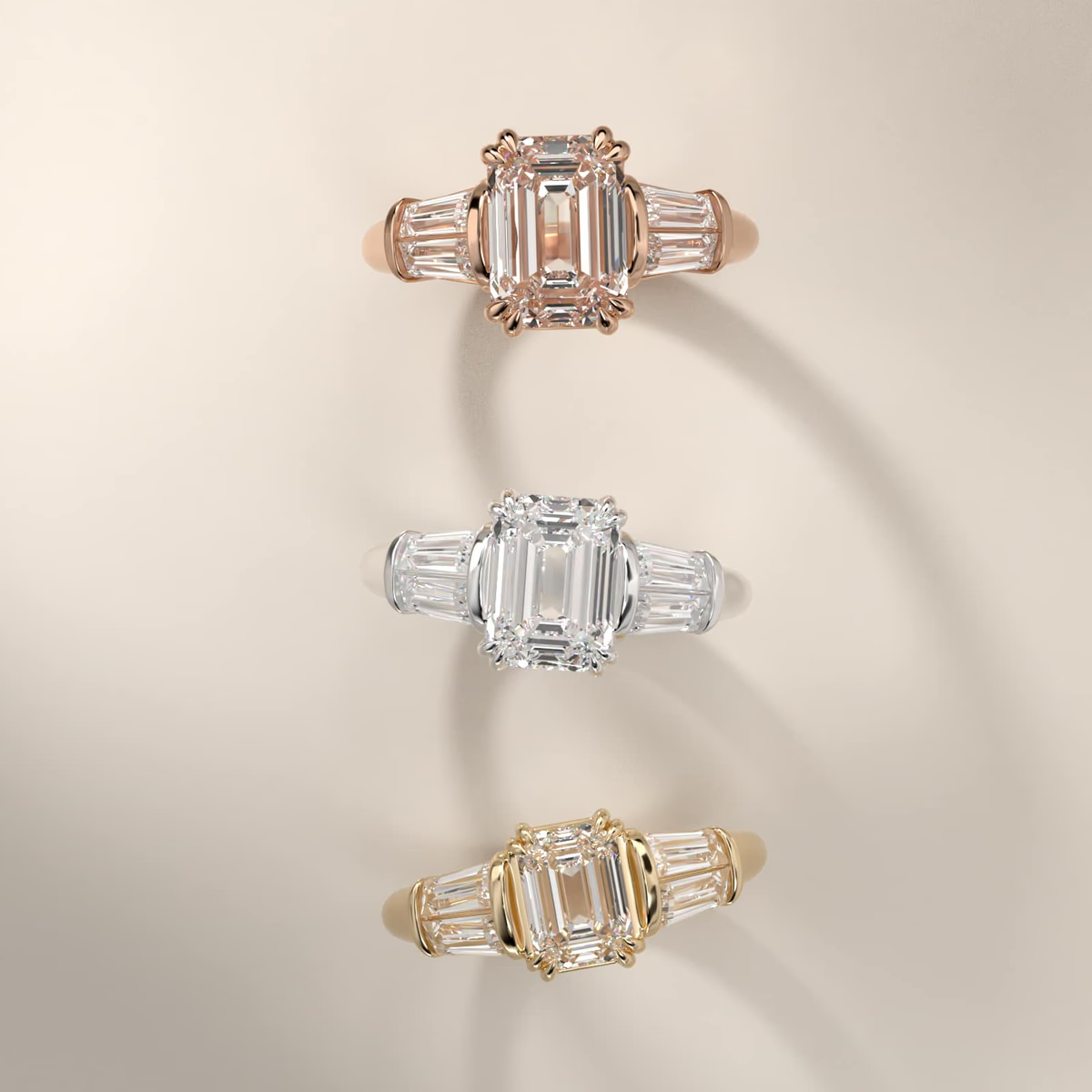
19 Emerald Cut Solitaire Settings Ranked by Verified Reviews
These are the currently available solitaire settings for an emerald cut diamond, ranked by verified buyer review count. All prices are for 14K or 18K gold unless noted as platinum. Ring totals use a GIA 1ct D-VS1 at $3,140 as the baseline stone.
Review count is the single most reliable signal for setting quality. A setting with 1,000+ reviews has been worn by real buyers in real conditions. Marketing copy and product photography can make any setting look good.
Verified reviews cannot be faked at scale.
| Setting | Metal | Setting Price | Reviews | Prongs | Ring Total |
|---|---|---|---|---|---|
| Classic Four Prong Solitaire | Yellow Gold | $870 | 1,815 ★ | 4 corner | $4,010 |
| Classic Four Prong Solitaire | Platinum | $1,180 | 1,815 ★ | 4 corner | $4,320 |
| Petite Solitaire | White Gold | $1,000 | 1,186 | 4 corner | $4,140 |
| Petite Solitaire | Yellow Gold | $1,000 | 1,186 | 4 corner | $4,140 |
| Petite Solitaire | Platinum | $1,330 | 1,186 | 4 corner | $4,470 |
| Knife Edge Solitaire | White Gold | $925 | 982 | 4 corner | $4,065 |
| Petite Cathedral | Platinum | $1,635 | 451 | 4 corner | $4,775 |
| Classic Simple Solitaire | White Gold | $1,145 | 284 | 4 corner | $4,285 |
| Classic Simple Solitaire | Rose Gold | $1,145 | 284 | 4 corner | $4,285 |
| Tapered Cathedral Solitaire | Yellow Gold | $1,240 | 254 | 4 corner | $4,380 |
| Tapered Cathedral Solitaire | Platinum | $1,855 | 254 | 4 corner | $4,995 |
| Classic Comfort Fit 2.5mm | White Gold | $935 | 232 | 4 corner | $4,075 |
| Infinity Vintage-Style | White Gold | $1,455 | 202 | 4 corner | $4,595 |
| Flush Fit Claw Prong | White Gold | $970 | 147 | 4 claw | $4,110 |
| Solitaire Compass Set | Rose Gold | $1,045 | 118 | 4 corner | $4,185 |
| Cable Solitaire | Platinum | $1,550 | 106 | 4 corner | $4,690 |
| Petite Hidden Halo Solitaire Plus | Yellow Gold | $1,255 | 104 | 4 corner + hidden halo | $4,395 |
| Cross Prong Solitaire | White Gold | $1,600 | 105 | cross prong | $4,740 |
| Infinity Solitaire | Platinum | $2,105 | 50 | 4 corner | $5,245 |
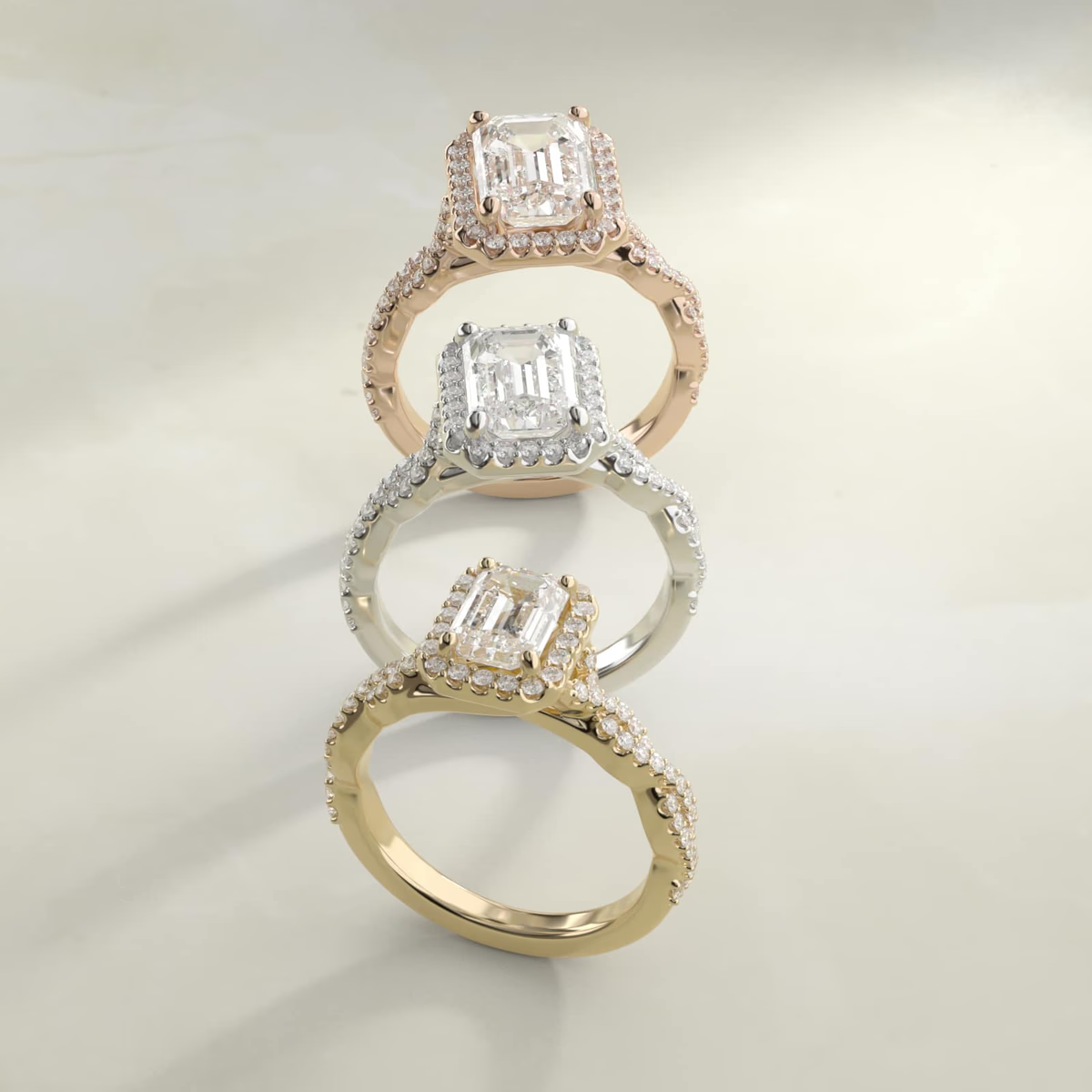
The 1815-Review Standard
The Classic Four Prong Solitaire has 1,815 verified buyer reviews — more than any other emerald cut setting on the market. That number matters more than any product description or professional recommendation. When 1,815 people buy a ring, receive it, and choose to write a review, they are telling you it photographs the way it looks in the product image, it wears comfortably on a real hand, and the quality holds up long enough to earn a positive star rating.
Call this The 1815-Review Standard: at 1,815 verified reviews, a setting has been tested by a scale of buyers that product photography and marketing copy cannot replicate. The setting is proven. When you don't know which solitaire to choose, The 1815-Review Standard tells you: Classic Four Prong, four corner prongs, consistent quality across 1,815 purchases.
The style earns its reviews on its own terms. Straight shank, four corner prongs, clean geometry. Nothing to catch on fabric.
Nothing to clean around. No side stones to worry about matching the center stone. The emerald cut sits elevated enough to catch light from multiple angles, and the solitaire design ensures there is nothing competing with it for attention.
The Classic Four Prong comes in yellow gold at $870 and platinum at $1,180. Both versions carry the same 1,815-review count, meaning buyers in both metals are equally satisfied. The yellow gold version is the lowest-cost entry point with verified proof of quality.
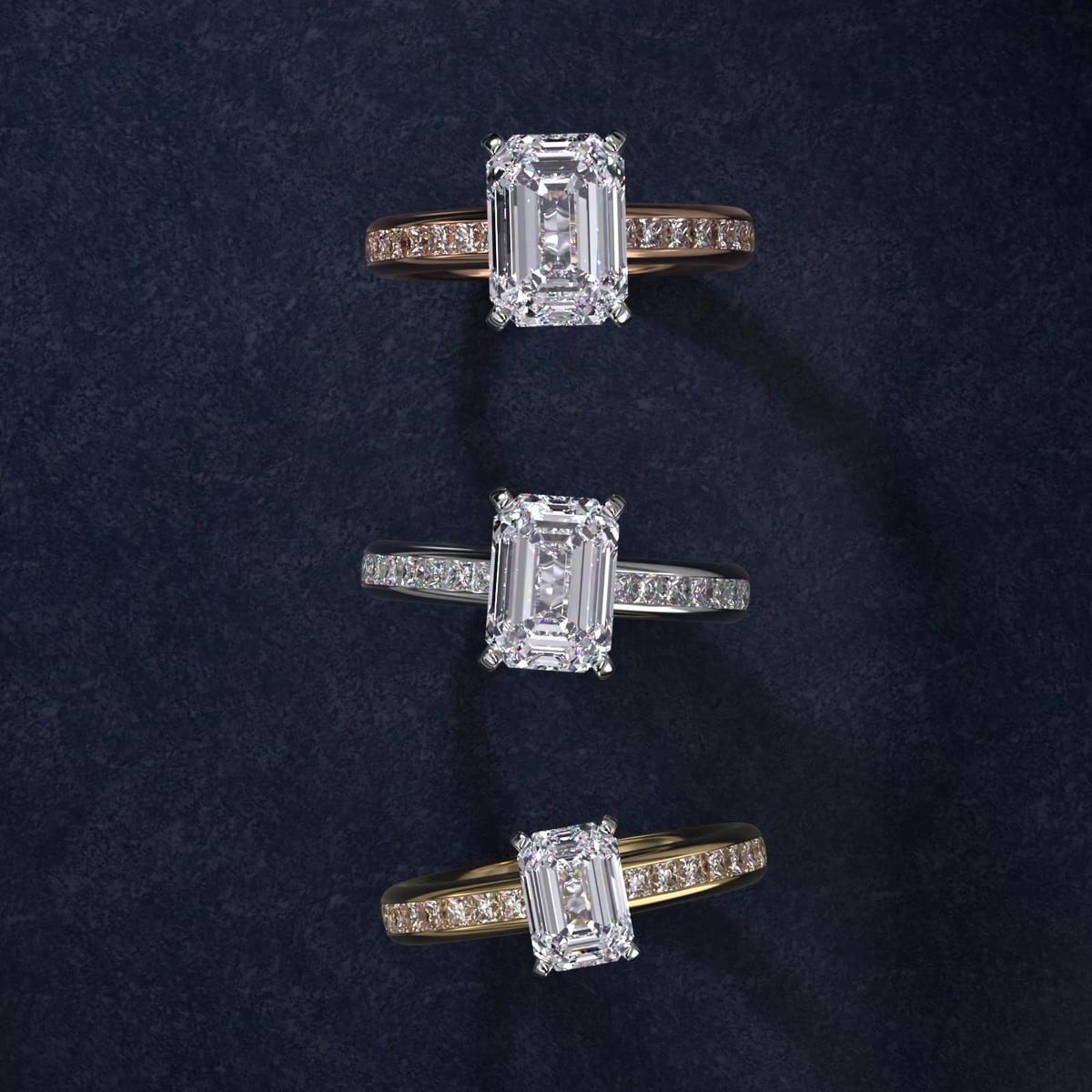
What Carat Weight Works Best in an Emerald Cut Solitaire
The emerald cut measures smaller face-up than a round brilliant of the same carat weight. A 1ct round brilliant has a face-up diameter of roughly 6.5mm. A 1ct emerald cut measures approximately 6.5mm × 4.5mm.
The elongated shape makes it look longer, but the narrower width means it covers less finger area.
A solitaire setting adds no visual size. There are no side stones to extend the visual length, no halo to inflate the apparent diameter. What you see is the diamond itself.
The solitaire is total transparency — the stone's actual size is what the ring shows.
The practical minimum carat weight for an emerald cut solitaire is 1 carat. Below 1 carat, the stone can look modest in a solitaire format because there's nothing else in the design to add scale. At 1.5 carats, the emerald cut fills the finger the way a solitaire should.
At 2 carats, it commands the hand.
Farzana says: "Don't go under 1 carat with an emerald cut solitaire. The shape already reads smaller face-up than a round of the same weight, and the solitaire setting doesn't add anything visual. If budget is tight, go lab at 1.5 to 2 carats instead of going natural and dropping below 1 carat."
2 Carat Emerald Cut Diamond Solitaire Ring
A 2 carat emerald cut diamond solitaire ring is the size combination we get asked about most. The 2ct emerald cut measures roughly 8mm × 6mm face-up — wide enough to dominate the finger in a solitaire setting without looking oversized. The elongated shape reads as larger than a 2ct round on most finger sizes.
For a natural 2ct emerald cut, budget approximately $9,000–$16,000 for the stone depending on cut quality, color, and clarity grade. A GIA-certified 2ct emerald cut at G-VS1 typically runs $9,500–$12,000. Add the Knife Edge WG at $925 and the complete ring starts around $10,425.
For a lab-grown 2ct emerald cut, prices fall significantly. A 2ct IGI-certified F-VS1 lab emerald cut runs approximately $1,800–$3,000. Ring total with the Petite Solitaire WG at $1,000: around $2,800–$4,000 complete.
3 Carat Emerald Cut Diamond Solitaire Ring
A 3 carat emerald cut solitaire is a statement ring. The 3ct emerald cut measures roughly 9.5mm × 7mm face-up — visually comparable to a 4ct round in finger coverage. At this size, the solitaire setting is even more important: any added design element competes with a stone that already dominates the hand.
Natural 3ct emerald cuts start at approximately $20,000 for accessible grades and go well above $50,000 for D-VS1 GIA-certified stones. At these prices, the setting cost — $925 to $2,105 — is a rounding error. Choose the setting you want, not the cheapest one.
Lab-grown 3ct emerald cuts currently run approximately $3,000–$6,000 for IGI-certified stones. A 3ct F-VVS1 lab emerald cut in the Knife Edge WG solitaire gives the visual impact of a natural 3ct ring — estimated at over $30,000 — for under $7,000 complete.
Lab-Grown vs Natural Diamond in a Solitaire Setting
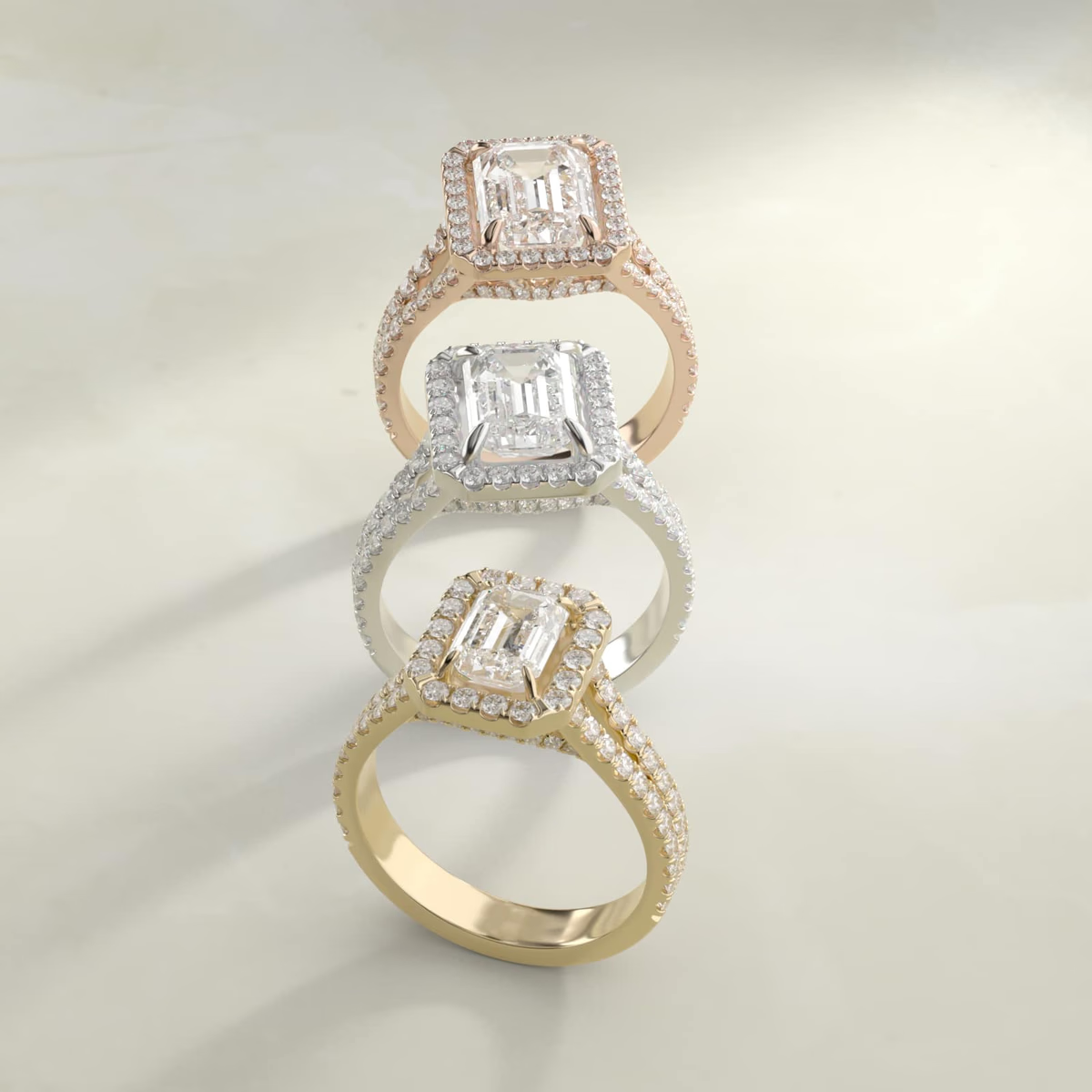
A solitaire setting makes the quality comparison between lab and natural more visible. There's no surrounding metalwork, no side stones, no halo to add context. The center stone fills the entire visual field of the ring.
That transparency means the quality of a lab stone matters more in a solitaire than in any other setting style.
For a lab emerald cut solitaire, use IGI-certified stones only. IGI (International Gemological Institute) is the standard certification body for lab-grown diamonds. Avoid uncertified lab stones for an emerald cut — the open table shows imperfections that would be hidden under a brilliant cut's scatter, and you need an independent grade to verify what you're buying.
EGL and other lower-tier labs inflate grades; IGI is the benchmark.
The lab-to-natural price gap is dramatic for emerald cuts. A GIA 1ct D-VS1 natural emerald cut runs $3,140. An IGI 1.94ct F-VVS1 lab emerald cut runs $2,229.
You get nearly 2 carats of face-up size for 30% less money.
Farzana says: "In a solitaire, the stone is the whole ring. Nothing hides it. If you're going lab, target at least F-VS1, IGI certified. The step-cut facets on an emerald cut show inclusions that a brilliant cut would scatter into invisibility. Don't let a cheaper stone ruin the cleanest setting style."
Tides Of Summer Capsule
Up To 30% Off
Shop The Sale →Vault ClearanceClear The Vault
Up To 70% Off
Shop Vault Deals →Affiliate link — no extra cost to you
Color and Clarity for an Emerald Cut Solitaire
Color grade matters more for an emerald cut than for any other shape. The step-cut facets act as a color amplifier — they reflect color tints back up through the table in a steady, slow pattern. A G-color round brilliant looks nearly identical to a D-color round brilliant to the naked eye.
A G-color emerald cut and a D-color emerald cut are perceptibly different in white metal settings.
For white gold or platinum, stay at G or above. G is the first color grade where warmth disappears to most unaided eyes, and it costs significantly less than D, E, or F. H can work in warmer lighting or yellow gold settings but shows a slight cast under cool overhead lights in white metal.
I and below are not recommended for a solitaire emerald cut in any white metal.
Clarity for a solitaire emerald cut: VS1 is the standard. The emerald cut's wide-open table makes inclusions more visible than in a brilliant cut of the same clarity grade. VS2 is viable if the specific stone's inclusion falls in a favorable position — away from the table, near a prong.
Always watch a video of the specific stone before buying at VS2 or lower. SI1 can work with the inclusion under a prong, but the range is inconsistent and requires careful individual vetting. Avoid SI2 for a solitaire emerald cut.
Shank Profiles for an Emerald Cut Solitaire
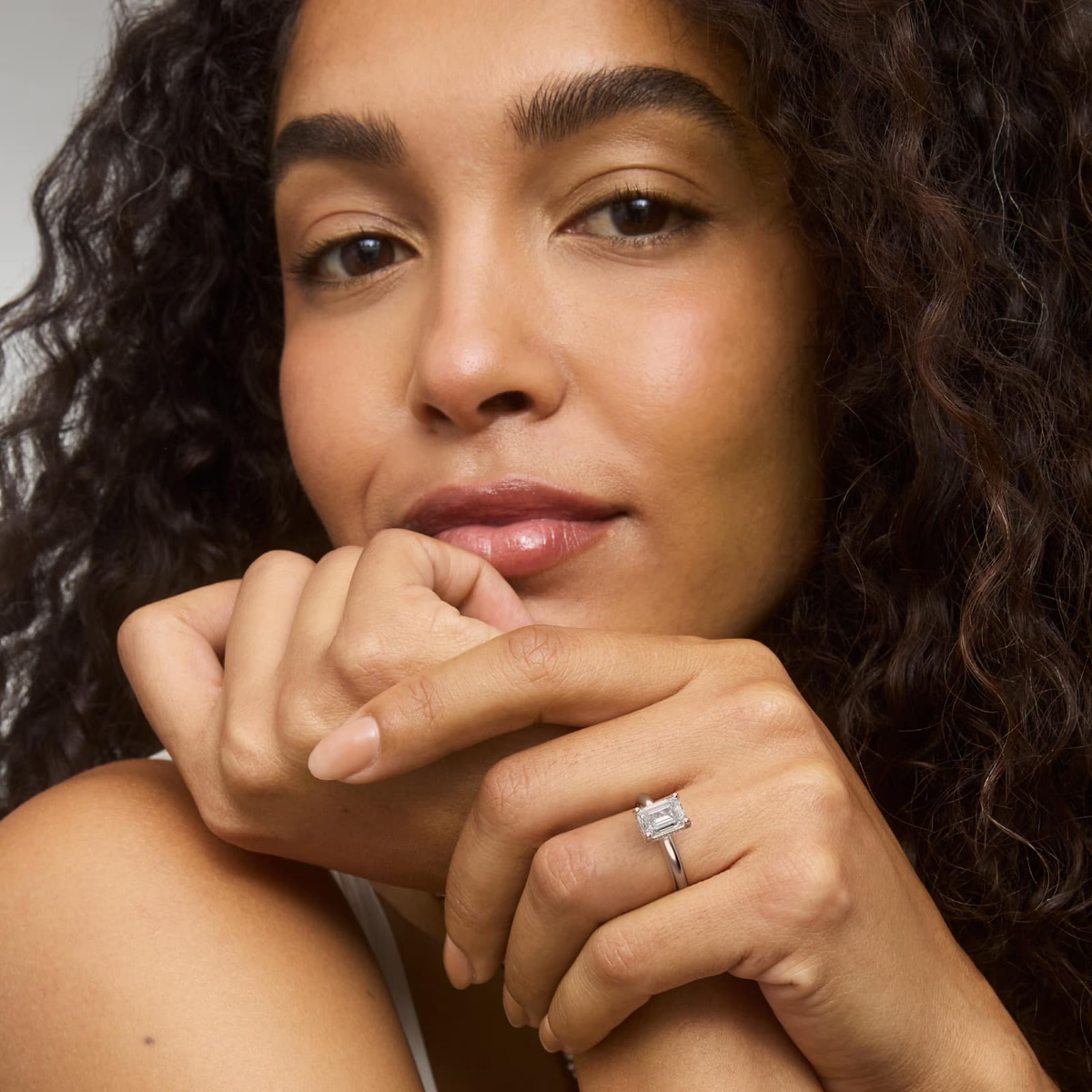
The shank is the band portion below the stone head. For a solitaire emerald cut, the shank profile has a significant effect on how the ring appears on the hand and how comfortable it is over time.
A flat shank sits flush against the finger. It photographs cleanly from above, stacks naturally with a wedding band, and keeps the overall ring profile low. The Classic Simple Solitaire at $1,145 is the standard flat shank option with 284 reviews.
A knife edge shank has a pointed cross-section — narrower at the sides than it looks from above. The visual effect is a slimmer band that makes the stone appear wider by contrast. The Knife Edge Solitaire at $925 is the entry-price pick and the best visual-impact-per-dollar in this list.
A cathedral shank curves upward from the finger toward the stone head, creating an arch. Cathedral settings elevate the stone higher off the finger and make it more visible from all angles. The Petite Cathedral Platinum at $1,635 is the most reviewed cathedral option with 451 reviews.
It also holds prong shape longer than gold settings because platinum is denser and more durable.
Solitaire vs Halo vs Bezel for an Emerald Cut
These are the three setting styles most commonly compared for an emerald cut. Each makes a different trade.
A solitaire exposes the diamond fully. It follows The Clean Window Rule — the step-cut facets are unobstructed. The solitaire costs less than a halo or pavé setting because there are no additional stones.
It also shows more of the diamond's actual quality, which means stone specs matter more.
A halo adds a ring of small diamonds around the center stone. For a brilliant-cut center stone, a halo extends the visual diameter and adds sparkle. For an emerald cut, a halo adds small brilliant-cut sparkle around a large step-cut center — two different optical patterns in the same ring.
Some buyers love the contrast. Many find it competes with the emerald cut's hall-of-mirrors effect. Read the full emerald cut diamond halo engagement ring guide before deciding.
A bezel wraps metal around the entire perimeter of the stone. It's the most protective setting and works well for active lifestyles. But the metal lip covers the long sides of the emerald cut, reducing the visible facet area.
The bezel set emerald cut guide covers the tradeoffs in full. If protection is your primary concern, the bezel is worth considering. If showing the step-cut facets fully is the goal, the solitaire is the better choice.
Metal Options for an Emerald Cut Solitaire
White gold is the most common metal choice for an emerald cut solitaire. The cool tone contrasts cleanly with the diamond and makes color differences between D and G most visible — which is why staying at G or better matters in white gold. White gold is the most available metal; almost every solitaire style comes in 14K or 18K white gold.
Platinum is heavier than gold and holds prong shape better over decades of wear. It also develops a natural patina (a grey satin sheen from micro-scratches) rather than wearing through the rhodium plating like white gold does. Platinum retipping costs are similar to gold, but prong maintenance intervals are longer.
The extra weight is noticeable when wearing platinum — some buyers like it, some don't.
Yellow gold changes the color grade equation. It reflects warm light up into the diamond, making H-color stones look warmer rather than off-white. See the full emerald cut diamond ring in yellow gold guide for the complete yellow gold analysis, including The Color Grade Trap, which changes how you shop for the stone in yellow metal.
Sizing and Fit for an Emerald Cut Solitaire Ring
An emerald cut solitaire sits higher off the finger than a halo or bezel ring. The four corner prongs elevate the stone rather than wrapping or surrounding it. This affects how the ring feels during daily wear and how it interacts with gloves and tight spaces.
Order at your exact measured ring size for a starting point, then consider going up a quarter to half size if you plan to wear the ring continuously. Finger size increases slightly through the day as fingers swell from warmth and activity. The elevated setting can feel slightly tight at exactly your measured size by evening.
Resizing an emerald cut solitaire is straightforward up to one full size in either direction. Going more than a full size down on a worn ring should be discussed with the jeweler, because the resizing process can affect the prong placement. Have the ring sized by a jeweler who has worked with emerald cut settings before — the corner prong geometry is slightly different from a round brilliant solitaire.
Caring for an Emerald Cut Solitaire Ring
Four corner prongs need checking every 12–18 months. The prong tips wear down with daily contact and micro-impacts. An emerald cut's corners put consistent directional pressure on those prong ends when the ring catches on surfaces.
A loose prong is the fastest way to lose a diamond — a prong check and retip costs $30–$80 at most jewelers and prevents a far larger problem.
Clean the ring every two weeks using warm water and a small amount of dish soap. The open solitaire setting lets oil and grime collect under the stone, between the prongs and the pavilion. This layer of buildup blocks light transmission through the step-cut facets and makes the hall-of-mirrors effect look dull.
A soft toothbrush cleans the prong bases and the area under the stone well.
Remove the ring before heavy physical work. The elevated setting and the emerald cut's exposed corners catch on gym equipment, gardening gloves, and lifting straps. The corner chips are not common, but they are the most expensive repair on an emerald cut.
Prevention is the right strategy.
Expert Summary
An emerald cut diamond solitaire ring is the purest expression of what this shape does. The step-cut facets create the hall-of-mirrors effect — and the solitaire setting is the only frame that preserves it completely. Add a halo and you've added competing sparkle.
Add a pavé band and you've drawn the eye down and away from the stone. Keep it a solitaire and the diamond does all the work.
The correct prong configuration is four corner prongs. Not six. Not side prongs. Four corner prongs protect the chip-risk zones and leave every step-cut row visible.
The 6-Prong Mistake is avoidable, but only if you know to look for it before you choose a setting.
The 1815-Review Standard answers the question most buyers ask: which solitaire is actually proven? The Classic Four Prong Solitaire has more verified buyer reviews than any other emerald cut setting — 1,815 reviews — in yellow gold at $870 and platinum at $1,180. When in doubt, buy the setting most other buyers have tested and confirmed.
Farzana says: "Everyone asks me which solitaire is the safe choice for an emerald cut. I say Classic Four Prong, four corner prongs, 1,815 reviews. That's not just a recommendation. It's 1,815 people who paid real money, got the ring, and said yes. You're following a well-worn path."
Best For
Budget-first buyers: The Knife Edge Solitaire WG at $925 is the lowest-cost white gold entry point. With a GIA 1ct D-VS1 at $3,140, the ring total is $4,065. Knife edge shank also adds visual impact at the lowest cost.
Review-driven buyers: Classic Four Prong Solitaire YG at $870. The 1,815-review count is the highest confidence signal in this market. Ring total from $4,010.
Carat maximizers: Go lab. An IGI 1.94ct F-VVS1 at $2,229 in the Petite Solitaire WG at $1,000 gives you nearly 2 carats of face-up size for $3,229.
Long-term durability buyers: Petite Cathedral Platinum at $1,635. Platinum prongs outlast gold alloys. The cathedral shank elevates the stone for maximum visibility. Ring total from $4,775 with 451 verified reviews.
Farzana's Emerald Cut Solitaire Matrix
| Buyer Type | Setting | Stone | Ring Total | Why This Combo |
|---|---|---|---|---|
| Budget natural | Knife Edge WG $925 | GIA 1ct G-VS1 ~$2,800 | ~$3,725 | G saves $300 over D, looks identical |
| Standard natural | Classic Four Prong YG $870 | GIA 1ct D-VS1 $3,140 | $4,010 | 1,815 reviews, proven entry setting |
| Lab maximum carat | Knife Edge WG $925 | IGI 1.94ct F-VVS1 $2,229 | $3,154 | Near 2ct face-up at entry price |
| Premium durability | Petite Cathedral Platinum $1,635 | GIA 1.5ct G-VS1 ~$6,500 | ~$8,135 | Platinum prongs, elevated stone, 451 reviews |
FAQs
What is an emerald cut diamond solitaire ring?
An emerald cut diamond solitaire ring is a single diamond in an emerald cut shape — rectangular, with step-cut facets arranged in parallel rows — set in a simple band with no additional stones. The solitaire format means the center stone is the only element. No halo, no side stones, no pavé.
The emerald cut's step-cut facets create a hall-of-mirrors optical effect, and the solitaire setting preserves that effect without adding visual noise.
How many prongs should an emerald cut solitaire have?
Four prongs, placed exactly at the corners of the rectangle. Corner prongs protect the four points where chips occur on an emerald cut and leave every step-cut facet fully visible. Six prongs require placing two prongs along each long side of the stone, directly over the step-cut facets.
Those side prongs cast metal reflections into the table and break the hall-of-mirrors effect. Always choose four corner prongs for an emerald cut. This is not a preference — it's the correct configuration for this shape.
What is the cheapest emerald cut diamond solitaire ring?
The most affordable complete ring pairs the Knife Edge Solitaire WG at $925 with a GIA 1ct G-VS1 emerald cut for approximately $3,725 total. For the absolute lowest entry with maximum carat weight, the lab option pairs the same setting with an IGI 1.94ct F-VVS1 lab emerald cut at $2,229, totaling $3,154.
Which solitaire setting has the most reviews for an emerald cut?
The Classic Four Prong Solitaire, with 1,815 verified buyer reviews across the yellow gold and platinum versions — more than any other emerald cut setting. The yellow gold version starts at $870 and the platinum version at $1,180. Both carry identical review counts, meaning buyers in both metals report the same satisfaction level.
What color grade should I choose for an emerald cut solitaire?
G or better in white gold or platinum. The emerald cut's step-cut facets reflect color tints back through the table more visibly than brilliant-cut facets do. H color can work in yellow gold, where the warm metal makes slight warmth look intentional.
In white metal, H shows a noticeable cast under cool overhead lights. I and below are not recommended for a solitaire emerald cut in any white metal.
What clarity should I choose for an emerald cut diamond?
VS1 is the standard for a solitaire emerald cut. The wide-open table shows inclusions more readily than a brilliant cut of the same clarity grade. VS2 can work if the specific stone is clean face-up — always watch a high-resolution video.
SI1 is possible with the inclusion positioned under a prong or near the girdle edge, but requires careful individual review of the stone. Avoid SI2 for a solitaire emerald cut in any setting.
Is a solitaire setting safe for everyday wear?
Yes, with one routine: check the prongs every 12–18 months. A solitaire with four corner prongs is secure when the prong tips are intact. The open setting exposes the stone more than a bezel or halo does, but normal daily use won't damage a well-maintained ring.
The key is staying on top of prong inspection. A loose corner prong on an emerald cut is a straight path to a lost stone — prong retipping at most jewelers costs $30–$80.
How much does a 2 carat emerald cut solitaire ring cost?
Natural: approximately $10,000–$16,000 total with a GIA-certified 2ct G-VS1 stone at $9,500–$12,000 plus a $925–$1,200 solitaire setting. Lab-grown: approximately $2,800–$4,000 total with a 2ct IGI-certified lab emerald cut.
How much does a 3 carat emerald cut solitaire ring cost?
Natural: starts around $20,000 for accessible grades and exceeds $50,000 for D-VS1. Lab-grown: approximately $3,000–$6,000 for a 3ct IGI-certified stone plus setting. A 3ct lab emerald cut in a WG solitaire can total under $7,000.
Does a solitaire setting make an emerald cut look bigger?
No — and that's the design intent. A solitaire shows exactly what the diamond is. A halo setting inflates the apparent diameter; a solitaire does not.
What the solitaire does is make the emerald cut's step-cut facets look cleaner and more deliberate, because there's nothing competing with them. If visual size inflation is the goal, a halo achieves that. If clarity and precision are the goal, the solitaire is the right setting.
What is the difference between petite and classic solitaire shanks?
Shank width. A petite solitaire uses a narrower band — typically 1.4mm to 1.8mm — which makes the stone appear larger by contrast with the thin band. A classic solitaire uses a wider band of 2mm or more.
Both types typically use four corner prongs for an emerald cut. The Petite Solitaire at $1,000 has 1,186 reviews; the Classic Comfort Fit 2.5mm at $935 has 232 reviews.
Should I choose a cathedral or flat shank for an emerald cut solitaire?
Cathedral if you want the stone to sit elevated and visible from the side — good for larger stones or buyers who want the ring to have presence from all angles. Flat shank if you want a lower profile, easier stacking with a wedding band, or a cleaner look from the side. The Petite Cathedral in platinum at $1,635 has 451 reviews.
The flat-shank Classic Simple Solitaire at $1,145 has 284 reviews.
Can I stack a wedding band with an emerald cut solitaire?
Yes. A flat shank solitaire stacks most cleanly — a straight wedding band sits flush against the flat shank. A cathedral shank lifts the engagement ring's band off the finger, creating a gap between the two rings. A contoured or curved wedding band fills that gap with cathedral shanks.
Many buyers choose a plain flat band as the wedding ring to avoid the contoured band sizing issue.
What is the 6-Prong Mistake?
The 6-Prong Mistake is choosing six prongs for an emerald cut solitaire. Six prongs on a rectangular stone require placing two prongs along each long side — directly over the step-cut facets. Those side prongs cast metal reflections into the table and interrupt the hall-of-mirrors pattern that makes the emerald cut worth choosing.
The correct configuration is four corner prongs only. Check any solitaire setting before buying to confirm prong placement is at the corners, not the sides.
What is the solitaire emerald cut solitaire ring price range?
Setting prices range from $870 for the Classic Four Prong YG to $2,105 for the Infinity Platinum. Complete ring totals with a GIA 1ct D-VS1 stone run from $4,010 to $5,245 at the 1ct level. Lab-grown options bring the entry total down to $3,154 with a near-2ct IGI stone.
See Also
- Emerald Cut Diamond Engagement Rings — Complete Guide
- Emerald Cut Diamond Ring in Yellow Gold — 20 Settings Ranked
- Bezel Set Emerald Cut Diamond Ring — Full Review
- Emerald Cut Diamond Halo Engagement Ring
- Emerald Cut Diamond Ring Settings — All Styles Compared
- Lab Grown Emerald Cut Diamond — Full Buying Guide
Expert Verdict
Always audit the stone individually — no grade replaces seeing the actual diamond. The certificate tells you what to look for. Your eyes tell you whether to buy.
— Farzana Hasan, GIA Expert · DiamondCritics.com