TL;DR — The Corner Color Rule
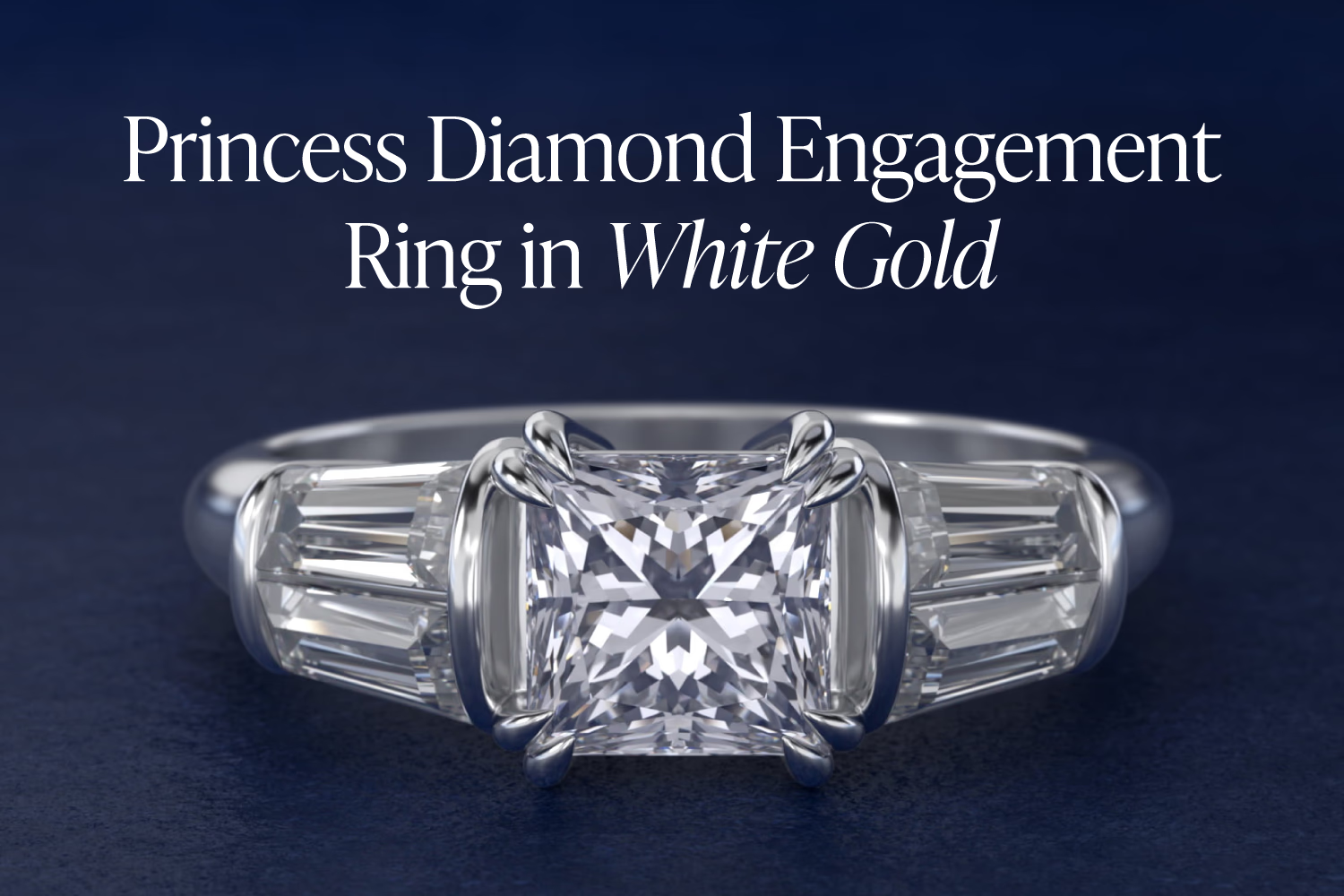
- White metal (platinum, white gold): G minimum. H and below show warmth at the corners under normal lighting.
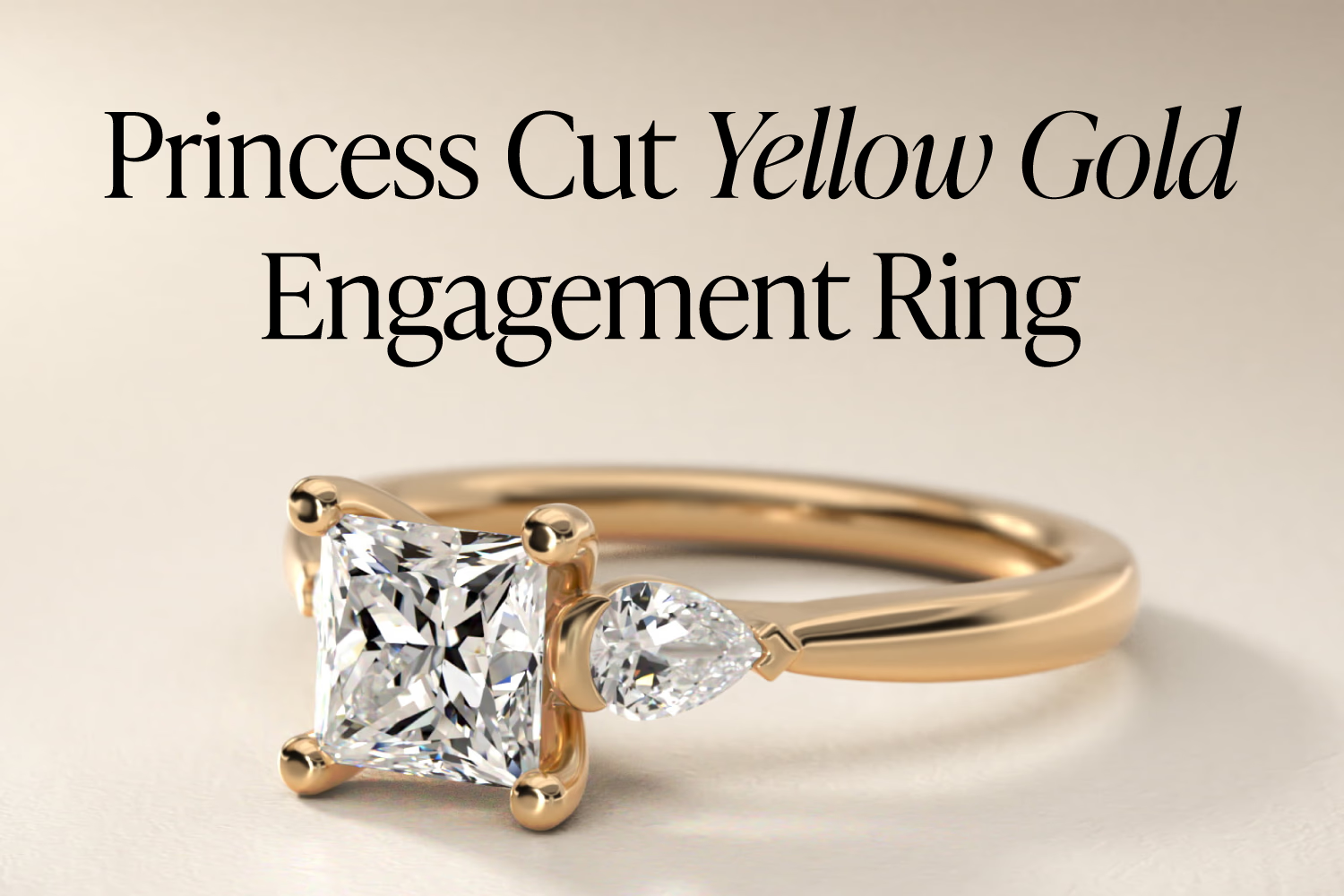
- Yellow or rose gold: H minimum. The warm metal reflects onto the corners and neutralizes the tint.
- D–F in any metal: Statistically invisible versus G at the naked eye. You pay a 22–62% premium for a difference a gemologist needs a controlled light source to detect.
- I–J in white metal: Visible corner warmth under most lighting conditions. Not recommended for platinum or white gold.
→ Complete Princess Cut Engagement Ring Guide — all settings, all metals, size-to-carat chart, and corner protection checklist.
What Is the Corner Color Trap?
A princess cut diamond has four corners where the facet pattern creates long diagonal light paths. These chevron-shaped facets channel light from the center of the stone outward along the diagonals — and each diagonal terminates at a corner.
Color in a diamond is a property of the crystal lattice, not the facets. But the facets determine where and how visibly that color presents to the eye. In a round brilliant, light disperses in all directions simultaneously — color is averaged across 57 facets and appears uniform and diluted. In a princess cut, the diagonal chevron paths converge at the corners. The corners become optical focal points.
This means:
- A princess cut diamond reads warmer at the corners than a round of the same color grade
- The effect is amplified in white metal settings, which reflect neutral white light back through the stone
- The effect is reduced in yellow or rose gold settings, which reflect warm light that counteracts the yellow tint
This is the Corner Color Trap. It shifts the effective color minimum one grade higher than you would use for a round brilliant.


How Color Grades Work for Princess Cut
GIA grades diamond color on a D-to-Z scale. D is colorless; Z is light yellow. The grading is done face-down against a white background under controlled lighting — a condition that almost never exists on someone's hand.
For princess cut diamonds, the relevant question is: what does the corner look like face-up in the setting the buyer plans to wear it in?
Color grade behavior by princess cut zone:
| Zone | Grades That Show Warmth | Notes |
|---|---|---|
| Center (table) | I and below (white metal) | Center disperses light; color less visible here |
| Corners | H and below (white metal) | Corners concentrate; color appears 1–2 grades warmer |
| Corners | I and below (yellow/rose gold) | Metal warmth neutralizes 1 grade of apparent color |
The result: to achieve a corner that reads near-colorless in white metal, you need a G stone. H corners in platinum or white gold show a subtle but detectable warmth — particularly visible in direct sunlight or tungsten lighting.
Color Grade Recommendations by Metal

| Metal | Minimum Color | Optimal Value Grade | Avoid |
|---|---|---|---|
| Platinum | G | G | H and below |
| 14k White Gold | G | G | H and below |
| 18k White Gold | G | G | H and below |
| 14k Yellow Gold | H | H | I and below |
| 18k Yellow Gold | H | H | I and below |
| 14k Rose Gold | H | H | I and below |
| 18k Rose Gold | H | H | I and below |
Why white gold follows the same rule as platinum: 14k and 18k white gold are plated with rhodium — a bright, reflective platinum-group metal. This plating creates the same neutral reflection as platinum. When the plating wears (typically every 2–3 years), the underlying gold reads warmer and the color minimum shifts closer to yellow gold behavior. For a freshly plated ring, treat it as platinum for color purposes.
Price Table by Color Grade (1ct Princess, VS1 Clarity)
| Color Grade | Approx. Price | vs. G | Notes |
|---|---|---|---|
| D | ~$4,100 | +62% | Colorless — invisible gain over G in real-world wear |
| E | ~$3,500 | +38% | Colorless — invisible gain over G |
| F | ~$3,100 | +22% | Colorless — invisible gain over G |
| G | ~$2,536 | Reference | Recommended minimum — white metal |
| H | ~$2,155 | −15% | Recommended minimum — yellow/rose gold |
| I | ~$1,900 | −25% | Corner warmth visible in white metal |
| J | ~$1,650 | −35% | Visible warmth in all metals |
Reference price: 1ct G-VS1 princess cut on Blue Nile = $2,536. Search current pricing →
The H-in-rose-gold trade: Pairing a 1ct H-VS1 (~$2,155) with the Classic Comfort Fit in 18k Rose Gold ($935) gives a total near $3,090. The same stone in G would cost ~$380 more — for a corner color difference the rose gold setting entirely neutralizes.
When to Go One Grade Higher: Special Cases
High-clarity settings (VVS–IF range): Very high clarity diamonds have fewer optical imperfections to scatter light, which means color travels more cleanly to the corners. Some buyers find that a VS1 D-F stone in platinum shows more apparent warmth than expected at the corners because there are no inclusions disrupting the long chevron light paths. This is a minor effect but worth knowing.
Pavé band settings: The pavé stones along the band are typically G–H themselves. If you set a G princess in a pavé platinum band, the surrounding stones provide a color reference point. Going below G (H center, G pavé) creates a subtle but sometimes visible color mismatch at the junction of the center stone's corners and the first pavé stones.
Recommended pavé-compatible settings:
- Riviera Pavé LGD Platinum — $1,955 — 390 reviews — use G center
- Pavé Lotus Basket Platinum — $2,340 — 251 reviews — use G center
- Pavé Cathedral 18k Rose Gold — $2,220 — 102 reviews — H center acceptable
Halo settings: A halo creates a white diamond border around the center stone. The contrast between the halo's colorless melee stones and the center stone's corners makes color more apparent. In a platinum halo, G is the firm minimum. H will show corner warmth against the halo border in white metal.
- Round Split Band Pavé Halo 14k White Gold — $4,400 — 210 reviews — use G minimum
Tides Of Summer Capsule
Up To 30% Off
Shop The Sale →Vault ClearanceClear The Vault
Up To 70% Off
Shop Vault Deals →Affiliate link — no extra cost to you
When to Go One Grade Lower: Yellow and Rose Gold Savings
Yellow gold and rose gold settings reflect warm-spectrum light back through the stone. This reflection neutralizes approximately one grade of color warmth at the corners. A princess cut H-color stone in 18k rose gold faces up closer to G than a G stone in platinum.
Maximum savings route:
| Stone | Setting | Total | Corner Color in Metal |
|---|---|---|---|
| 1ct H-VS1 ~$2,155 | Classic Comfort Fit RG $935 | ~$3,090 | Reads G at corners |
| 1ct H-VS1 ~$2,155 | Pavé Cathedral RG $2,220 | ~$4,375 | Reads G at corners |
| 1ct H-VS1 ~$2,155 | Yellow Gold Channel Setting $1,090 | ~$3,245 | Reads G at corners |
Do not go below H in rose or yellow gold. I-color princess cut corners are visible even in warm metal settings — the metal masking effect covers one grade, not two.
Fluorescence: One More Grade of Flexibility
Blue fluorescence causes a diamond to emit blue-white light under UV (present in sunlight and some indoor lighting). For I-color or J-color princess cut diamonds intended for warm metal settings, medium or strong blue fluorescence can improve the face-up color appearance — making a J face up closer to H.
For G and H stones in white metal, fluorescence provides minimal color benefit and occasionally introduces haziness in direct sunlight. If the stone faces up clear in the retailer's 360° video (typically shot under neutral indoor light), fluorescence is a non-issue.
Fluorescence and price: Strong blue fluorescence diamonds carry a 5–15% discount versus non-fluorescent stones of the same grade. A strong-fluorescent I-VS1 may face up equivalently to an H-VS1 in rose gold, for materially less money.
Color Grade vs. Setting — Complete Recommendation Matrix
| Budget | Diamond | Setting | Metal | Why |
|---|---|---|---|---|
| Under $3,000 total | 1ct H-VS1 ~$2,155 | Classic Comfort Fit $935 | Rose gold | H corners masked by warm metal |
| $3,500–$5,000 | 1ct G-VS1 $2,536 | Comfort Fit Solitaire Pt $1,790 | Platinum | G firm minimum in white metal |
| $4,000–$6,000 | 1ct G-VS1 $2,536 | Riviera Pavé LGD Pt $1,955 | Platinum | G matches pavé stone color |
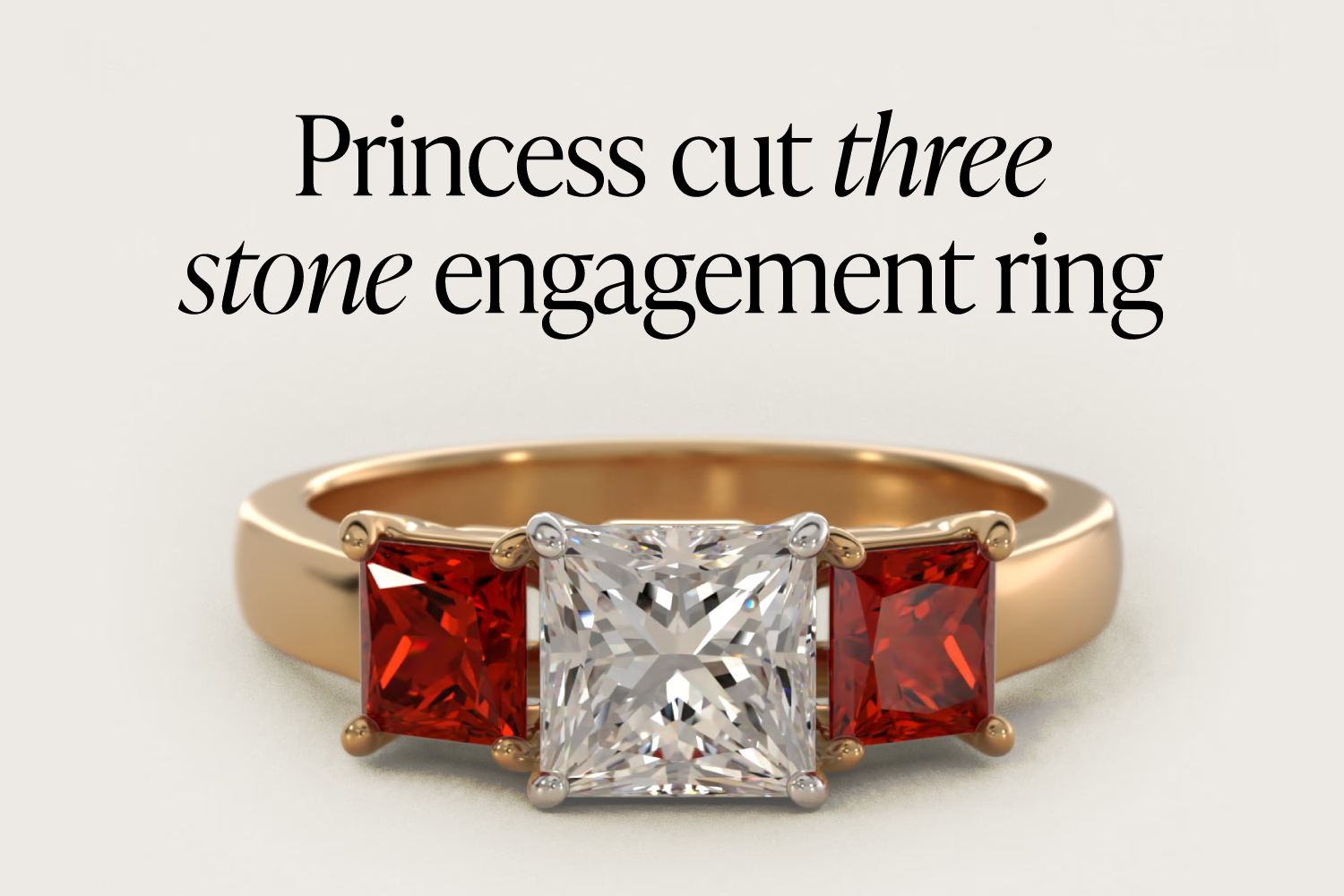
| $4,500–$7,000 | 1ct G-VS1 $2,536 | Marquise Three Stone Pt $2,170 | Platinum | G for consistency with side stones |
| $7,000–$10,000 | 1ct G-VS1 $2,536 | Round Split Halo WG $4,400 | White gold | Halo border makes G mandatory |
Frequently Asked Questions
What color grade is best for a princess cut diamond? G is the best value color grade for a princess cut in white metal (platinum or white gold). H is the best value grade in yellow or rose gold. D–F provide no visible benefit over G in real-world wear conditions.
Can I use H color in a platinum princess cut ring? H in platinum is acceptable if the corners are not directly exposed, but is generally not recommended as the default. H corners in platinum show warmth under direct sunlight and incandescent lighting. G eliminates this risk.
Does yellow gold really hide color in a princess cut diamond? Yes. Yellow and rose gold reflect warm-spectrum light back through the stone, neutralizing approximately one grade of corner color warmth. An H princess cut in 18k yellow or rose gold faces up closer to G at the corners.
Is I color acceptable in a princess cut? I is not recommended for white metal settings — corner warmth is visible under normal lighting. In yellow or rose gold, I is borderline — the metal masking effect covers one grade, bringing I corner color behavior closer to H. For most buyers, H in warm metal offers a better result with minimal additional cost.
How much does going from G to H save on a princess cut diamond? Approximately 15% on a 1ct stone — around $380 on a 1ct G-VS1 ($2,536) versus a 1ct H-VS1 (~$2,155). In a rose or yellow gold setting, this saving carries no visual cost. In a platinum or white gold setting, the saving comes with detectable corner warmth.
Does fluorescence affect color in a princess cut diamond? Medium or strong blue fluorescence can improve face-up color by approximately one grade in natural light. An I-VS1 with strong blue fluorescence may face up closer to H under daylight conditions. This effect is strongest in princess cuts due to the long diagonal light paths that amplify any fluorescent emission at the corners.
Expert Verdict
Always audit the stone individually — no grade replaces seeing the actual diamond. The certificate tells you what to look for. Your eyes tell you whether to buy.
— Farzana Hasan, GIA Expert · DiamondCritics.com