Princess Cut Diamond Resale Value: The 50-Cent Dollar
Every diamond purchase comes with a resale reality that the industry has no incentive to explain clearly. Natural diamonds are not investments. They do not appreciate. The retail markup — the gap between what a jeweler charges and what the wholesale market will pay — is permanent and wide. When you sell a diamond, you are selling into the wholesale market, not back to retail.
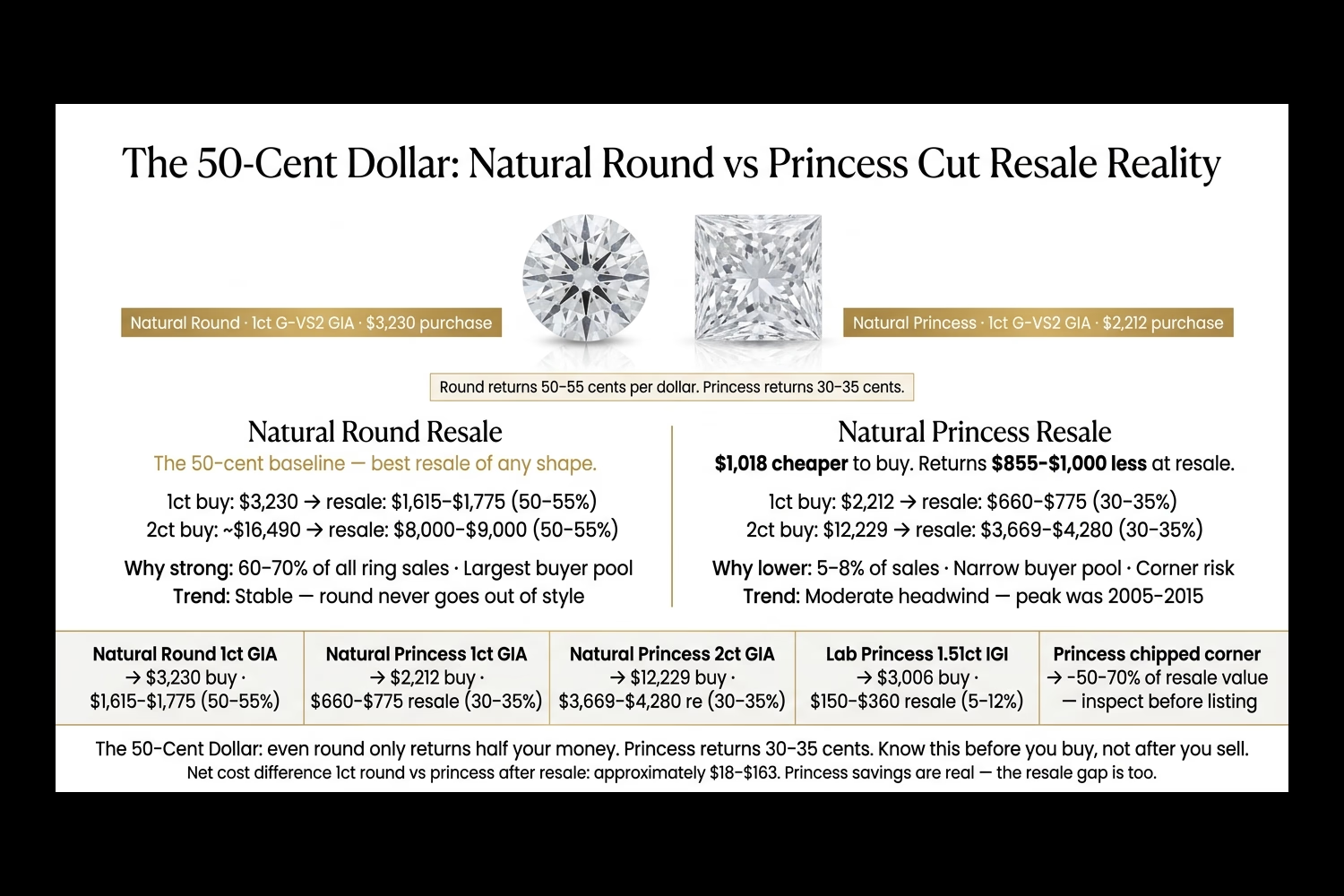
For natural round brilliant diamonds — the strongest resale shape in any certification tier — the expected return is 50–55 cents on the dollar from established resale channels with GIA certification. That number already stings. For natural princess cut diamonds, the number is lower: 30–35 cents on the dollar. In exchange for the princess cut's lower entry price and distinct square geometry, you accept a resale floor that sits 15–20 percentage points below round.
The 50-Cent Dollar is the framework for understanding diamond resale: no diamond returns your full dollar, round returns roughly fifty cents, and princess returns thirty to thirty-five. This is not a reason to avoid princess — it is the information that lets you buy with clear expectations and sell without shock.
TL;DR — Princess Cut Diamond Resale Value 2026
- Named concept: The 50-Cent Dollar — natural round brilliant returns ~50–55% of retail at resale (the baseline). Natural princess returns ~30–35%. For every dollar spent on princess, expect 30–35 cents back. The gap is structural, not accidental.
- Natural princess 1ct resale: GIA G-VS2 Ideal at $2,212 purchase → $660–$775 at resale (30–35%).
- Natural princess 2ct resale: $12,229 purchase → $3,669–$4,280 at resale (30–35%).
- Lab princess resale: 5–13% of retail — a separate, much steeper problem covered in the natural vs lab guide.
- Three structural causes: (1) Square shape has narrower secondary market appeal than round. (2) Corner vulnerability reduces resale-ready pool. (3) Princess popularity peak was 2000–2015; less trendy buyers in 2026.
- Best resale channel: Online diamond resale platforms (Worthy, I Do Now I Don't, Abe Mor) return the most — typically 30–40% of retail for GIA-certified stones in good condition.
- Worst resale channel: Local jewelers offer 15–25% of retail — they buy at wholesale to resell at retail. Never start with a local jeweler offer.
- GIA matters at resale: IGI-certified princess resells at an additional discount below GIA — buyers apply a grade adjustment. Always buy GIA for natural if resale is any concern.


Why Princess Cut Resale Is Structurally Below Round
Diamond resale value is determined by secondary market demand — how many buyers exist for your specific stone at any given time. Round brilliant diamonds command the resale market because they represent approximately 60–70% of all engagement rings sold. When a round sells on Worthy or a dealer network, there is a large pool of potential buyers. Liquidity supports price.
Princess cut represents approximately 5–8% of current engagement ring sales. The secondary market is proportionally smaller. Fewer buyers competing for the same stone means lower clearing prices. This is not a criticism of princess — it is basic supply-demand applied to the resale market.
The narrower buyer pool compounds with a specific princess challenge that other fancy shapes do not share: the corner-prong setting requirement. Princess corners must be set in prongs that protect the four vulnerable points. This means a loose princess diamond for resale must either be re-set (cost: $200–$800) or sold to a buyer who already has a compatible setting. Every friction point in the resale process reduces the price a buyer is willing to pay.
The Numbers: What You Actually Get Back
The 30–35% resale range for natural princess is a working estimate across established resale channels. The range reflects variation by certification, carat weight, condition, and timing.
| Purchase | Estimated Resale | Channel |
|---|---|---|
| 1ct G-VS2 GIA Ideal at $2,212 | $660–$775 | Online platform |
| 2ct G-VS2 GIA Ideal at $12,229 | $3,669–$4,280 | Online platform |
| 1ct G-VS2 GIA Ideal at $2,212 | $440–$555 | Local jeweler |
| 2ct G-VS2 GIA Ideal at $12,229 | $2,445–$3,058 | Local jeweler |
| 1ct with chipped corner | $200–$400 | Any channel |
| 1ct IGI vs same stone GIA | ~$100–$200 less than GIA equivalent | Online platform |
The local jeweler column is not a typo. Jewelers buying estate diamonds apply a wholesale-to-retail markup on resale. They pay you 20–25% of their anticipated retail selling price, which itself is 60–70% of the original retail. The compounding results in offers of $400–$550 on a $2,212 stone — the lowest channel available.
The 50-Cent Dollar: Round vs Princess Resale Side by Side
The 50-cent dollar concept becomes clearest in direct comparison. Natural round brilliant and natural princess at the same carat and grade: the round returns more at every price point because secondary market demand is higher.
At 1ct: Natural round GIA G-VS2 Excellent costs ~$3,230 and resells at $1,615–$1,775 (50–55%). Natural princess GIA G-VS2 Ideal costs $2,212 and resells at $660–$775 (30–35%). The round costs $1,018 more to buy. It returns $855–$1,000 more at resale. The net cost difference — accounting for both purchase premium and resale advantage — is approximately $18–$163. The round is effectively the same cost over a resale-holding cycle.
This is the hidden cost of princess cut: the initial savings at purchase are partially consumed by the resale discount. A buyer who plans to hold indefinitely captures the full purchase saving. A buyer who may sell in 5–10 years loses most of that saving to the resale gap.
What Kills Princess Resale Value Most: The Corner Problem
The princess cut's four corners are its most beautiful architectural feature and its most financially dangerous characteristic. Each corner is a 90-degree meeting of two facets — a stress concentration point that is structurally vulnerable to chipping under impact. Any chip on a princess corner reduces resale value dramatically.
A chipped corner on a 1ct princess affects resale in two ways. First, the chip is visible to any buyer and must be disclosed. Second, repairing a chipped corner requires re-cutting the stone — a princess with a chipped corner may be re-cut as a smaller princess, or the chip may be minimized by rounding the corner slightly, which technically makes it a modified square or cushion. Either way, the stone loses weight (carat value) and shape identity.
A 1ct GIA G-VS2 princess with a chipped corner that would resell at $700 in perfect condition may resell for $200–$350 with the chip — sometimes less if the chip is at a prominent location. This is the highest-risk resale outcome for princess specifically, and why we recommend corner prong settings and professional inspection every two to three years.
Resale Channels: What Each One Pays
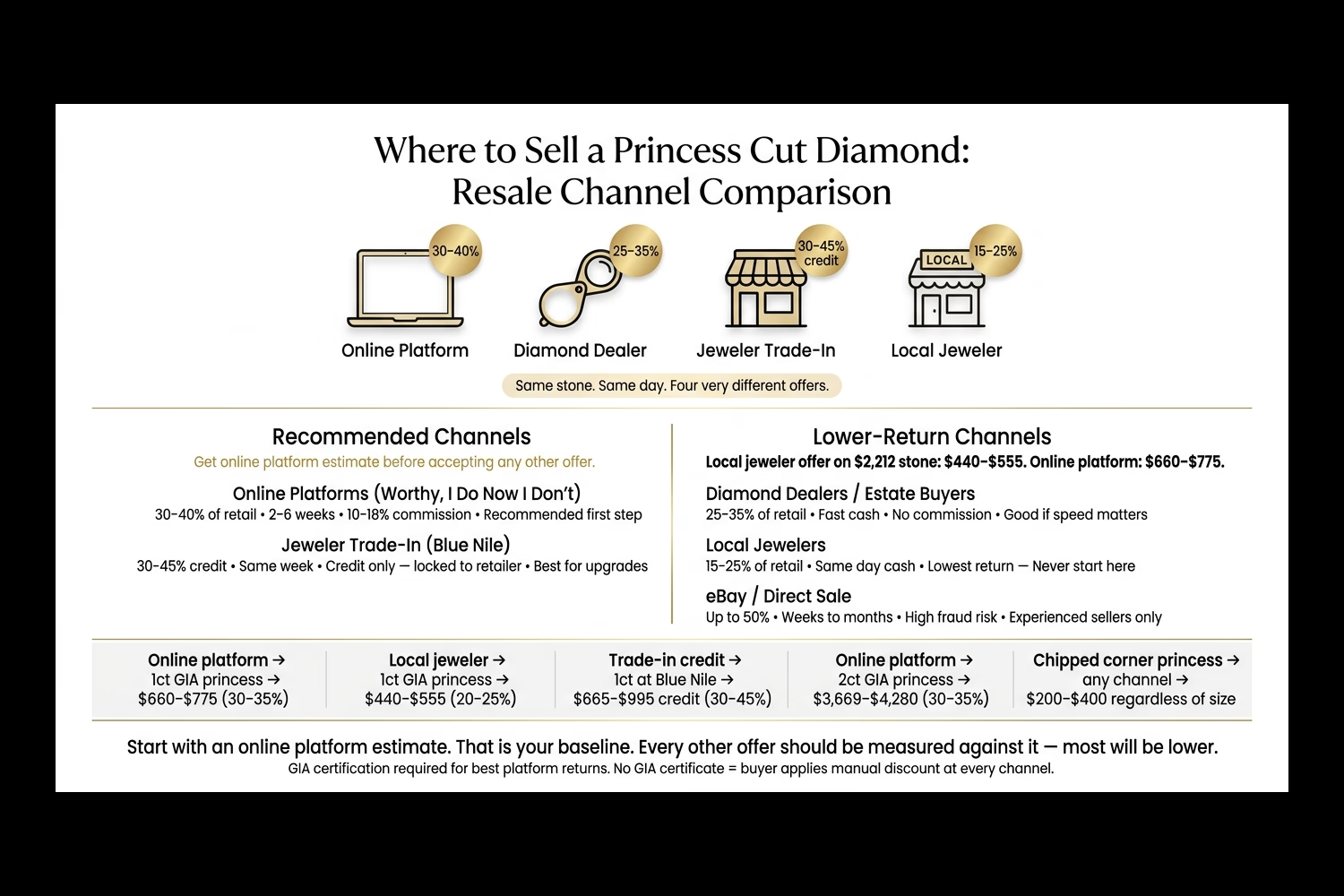
Choosing the right resale channel is as important as knowing your stone's value. The same GIA-certified 1ct princess can return $660 through an online platform or $440 through a local jeweler — a $220 difference for the same stone.
Online diamond resale platforms (Worthy.com, I Do Now I Don't, Abe Mor): These platforms auction or list your diamond to a network of wholesale buyers and dealers. They achieve the highest return — typically 30–40% of retail for GIA princess. Worthy charges a commission of 10–18% of the sale price. The process takes 2–6 weeks. This is the recommended channel for most sellers.
Diamond dealers and estate buyers: Independent dealers buy outright for cash — faster than platforms but lower return. Expect 25–35% of retail from a reputable estate buyer. Avoid pawnshops, which may offer 10–15% of retail, and cash-for-gold operations, which price only the metal.
Jeweler trade-in programs: Some jewelers (Blue Nile, Brilliant Earth) offer trade-in credit toward a new purchase — not cash. Trade-in credit is typically 50–70% of the jeweler's current selling price for the same grade, which translates to approximately 30–40% of your original retail cost. Trade-in credit is often better than cash resale but is only useful if you are buying again from the same retailer.
eBay and direct sale: Selling directly to a consumer on eBay or Facebook Marketplace can theoretically return 50–70% of retail — but the risk of non-payment, fraud, chargebacks, and buyer disputes is significant. Most private sellers who go this route spend weeks and ultimately accept less than an online platform would offer. Only for experienced sellers comfortable with the process.
Does GIA Certification Help Princess Resale?
Yes — significantly. GIA certification is the single most important document affecting resale value for any natural diamond, and princess is no exception.
A GIA-certified natural princess sells in the secondary market at full 30–35% of original retail. An IGI-certified natural princess — even with identical visible specs — sells at a further discount of $100–$300 per carat as buyers apply a grade adjustment. Dealers buying IGI natural diamonds explicitly discount the grade by one step. An IGI VS2 is treated as SI1. An IGI G is treated as H.
If you bought a natural princess without GIA certification and want to maximize resale, it is sometimes worth submitting the stone to GIA before selling — the cost ($100–$200 for GIA grading) can be recovered through the premium GIA paper commands at resale. Consult with a resale platform before deciding, as they can advise whether re-grading is worthwhile for your specific stone.
The Trend Factor: Princess Popularity and What It Means for Resale
Princess cut diamonds had their popularity peak approximately 2000–2015. The shape was the most requested engagement ring diamond in the mid-2000s, second only to round brilliant. Since approximately 2015, the trend shifted toward oval, cushion, and elongated shapes. Princess sales have declined as a percentage of total fancy shape engagement ring sales.
This trend matters for resale in a specific way: the population of buyers actively seeking a princess cut in the secondary market is smaller today than it was a decade ago. Younger buyers shopping in 2026 who prefer the current style landscape (oval, pear, elongated cushion) are not shopping for princess. The secondary market buyer for princess is more likely to be someone specifically seeking the shape for personal preference or budget reasons — a narrower, price-sensitive pool.
The trend does not make princess a bad purchase for someone who loves the shape. It is simply a resale reality: niche demand means longer selling time and lower clearing prices. If you purchase princess expecting to sell within 5–10 years, budget for a 12–16-week sales timeline at an online platform.
Trade-In vs Resale: Which Is Better for Princess?
Trade-in programs at major retailers offer a useful alternative to open-market resale — particularly if you purchased at Blue Nile and plan to upgrade through Blue Nile.
Blue Nile's trade-in policy (current as of 2026): Blue Nile offers trade-in credit toward a new diamond purchase. The credit is based on the current Blue Nile price for the same grade stone, minus a standard reduction. In practice, this typically yields 30–45% of your original purchase price as credit — comparable to or slightly better than an online platform, and much faster.
The trade-in advantage: no waiting period, no commission, immediate credit toward your next purchase. The disadvantage: the credit is locked to Blue Nile purchases. If you want cash, or want to buy elsewhere, trade-in does not help.
For most upgrade scenarios — where the buyer wants a larger stone, a different shape, or a better grade — trade-in is the simplest and often highest-return path. For cash needs, use Worthy or I Do Now I Don't.
Tides Of Summer Capsule
Up To 30% Off
Shop The Sale →Vault ClearanceClear The Vault
Up To 70% Off
Shop Vault Deals →Affiliate link — no extra cost to you
Who Should Buy Princess Knowing the Resale Reality
The resale reality does not make princess cut a wrong choice — it makes it the right choice for specific buyers and the wrong choice for others.
Buy natural princess if: You plan to wear this ring long-term with no intention of selling. You value the lower entry price and square geometry more than the resale protection. Your engagement budget is firm, and princess delivers more quality per dollar. You understand 30–35 cents on the dollar and have priced that into your decision.
Consider round instead if: Resale flexibility matters to you — for any reason. You may upgrade, downsize, or liquidate in the next 10–15 years. You are treating the diamond as a store of value (even modestly). The purchase is large enough that the resale gap represents significant dollars: at 2ct, the difference between princess resale ($3,669–$4,280) and round resale ($8,000–$10,000) is $4,000–$6,000.
Consider lab princess if: Budget is the primary constraint and resale is genuinely irrelevant. Lab 1.96ct D-IF at $3,609 vs natural 2ct at $12,229 — the savings are real and large. Accept that lab resale is negligible and plan accordingly.
How to Maximize Princess Resale Before You Sell
If resale is approaching, several steps improve your outcome before listing.
Get a GIA appraisal if you lack a GIA certificate. An independent appraisal from a GIA-certified appraiser provides documented condition and grade verification — not a GIA certificate, but useful documentation for buyers who want reassurance.
Inspect the corners. Have a jeweler inspect all four corners under magnification for chips or abrasions before listing. A small chip that could be disclosed or minimized before listing avoids renegotiation after a buyer inspects and demands a discount.
Clean the stone professionally. Ultrasonic cleaning removes surface oils and grease that cloud brilliance. A stone that photographs well — showing maximum fire and brightness — sells faster and for more.
Use a resale platform, not a local jeweler, for your first offer. Online platforms expose your stone to a competitive buyer pool. Get a platform estimate before accepting any local jeweler offer. The platform estimate is your baseline; local offers are almost always below it.
Lab Princess vs Natural Princess at Resale: The Full Comparison
The 30–35 cents on the dollar for natural princess sounds discouraging. Compared to lab princess resale, it is the strong outcome.
Lab-grown princess diamonds have experienced an 80–90% value decline since 2020. A lab princess purchased at $3,006 in 2026 may resell for $150–$360 — approximately 5–12% of purchase price. The Resale Cliff covered in detail in the natural vs lab guide applies compounding to both the fancy-shape resale discount and the lab depreciation trend.
If resale is a concern: buy natural princess. At 30–35 cents on the dollar, natural princess is not a strong resale asset, but it is a real one. Lab princess resale is effectively negligible.
Decision Snapshot
| Factor | Natural Princess | Natural Round | Lab Princess |
|---|---|---|---|
| Resale % of retail | 30–35% | 50–55% | 5–13% |
| 1ct resale value | $660–$775 | $1,615–$1,775 | $75–$360 |
| 2ct resale value | $3,669–$4,280 | $8,000–$10,000 | $300–$900 |
| Best channel | Online platform | Online platform | Online platform |
| GIA premium at resale | Yes — significant | Yes — significant | Minimal |
| Chipped corner impact | Severe (-50–70%) | N/A | N/A |
| Trend headwind | Moderate | None | Severe |
| Recommended for resale buyers | Only long-hold | Yes | No |
Frequently Asked Questions
What is the resale value of a princess cut diamond?
Natural princess cut diamonds in good condition with GIA certification return approximately 30–35% of original retail through established resale channels. A $2,212 GIA G-VS2 Ideal princess at 1ct resells for approximately $660–$775 through online platforms. A $12,229 2ct princess resells for approximately $3,669–$4,280. These figures assume GIA certification, no corner chips, and sale through a reputable online resale platform. Local jeweler offers will be 30–40% lower.
Why does princess cut resell for less than round?
Three structural reasons. First, princess cut represents 5–8% of engagement ring sales versus round's 60–70% — the secondary market buyer pool is proportionally smaller. Second, the corner-prong setting requirement adds friction for resale buyers who need to budget for re-setting. Third, princess popularity peaked around 2005–2015 and has declined since, reducing demand from newer buyers who prefer current shape trends. These factors combine to produce a 15–20 percentage point resale discount below round.
What is the best way to sell a princess cut diamond?
Online diamond resale platforms — Worthy.com, I Do Now I Don't, and Abe Mor — return the highest prices: typically 30–40% of retail for GIA-certified princess in good condition. Worthy's auction format puts your stone in front of a competitive wholesale buyer pool. The process takes 2–6 weeks and Worthy charges 10–18% commission. Local jewelers offer the fastest cash but the lowest prices — typically 20–25% of retail. Always get an online platform estimate before accepting any local offer.
Does a chipped corner destroy princess resale value?
A chipped corner significantly reduces resale value — typically by 40–60% compared to the same stone in perfect condition. A 1ct princess worth $700 in perfect condition may sell for $250–$400 with a corner chip, depending on severity and location. Chips require disclosure and often lead buyers to demand repair (re-cutting, which reduces carat weight) before accepting the stone. Inspect corners under magnification before listing for resale.
Is GIA certification worth it for princess resale?
Yes, meaningfully so. GIA-certified princess sells at full 30–35% of retail. IGI-certified natural princess sells at a further 5–15% discount as buyers apply a grade adjustment to IGI's less rigorous grading. On a $2,212 purchase, the GIA premium at resale may be worth $100–$200 in recovered value. If you purchased IGI natural and plan to sell, consider getting a GIA appraisal to document the stone's actual grade independently — it will not produce a GIA certificate but provides documentation that reassures buyers.
How does the princess cut resale compare to oval or cushion?
Oval and cushion cut natural diamonds resell at approximately 35–45% of retail — better than princess (30–35%) but below round (50–55%). Oval in particular has benefited from strong current trend demand, which supports secondary market prices. Cushion varies significantly by sub-type: cushion modified brilliant (standard) resells at approximately 35–40%. Princess is at or below cushion on the resale scale, reflecting weaker secondary demand. If resale is a concern and you like the angular aesthetic, oval or cushion offers modestly better recovery than princess.
Can I trade in my princess diamond for a bigger stone?
Yes, through jeweler trade-in programs. Blue Nile offers trade-in credit toward a new purchase, typically yielding 30–45% of original retail as credit. This is comparable to online resale returns but faster and without commission. The constraint is that trade-in credit is locked to the retailer's inventory. If you purchased at Blue Nile and want to upgrade within Blue Nile, trade-in is usually the simplest path. If you want to buy elsewhere or need cash, online resale platforms are better.
How long does it take to sell a princess cut diamond?
Through online platforms: typically 6–16 weeks for GIA-certified princess in good condition. Princess sells more slowly than round because the buyer pool is smaller. Worthy estimates 4–8 weeks on average; princess tends toward the higher end. Unrealistic pricing is the most common reason for extended listing time — pricing 15–20% above the platform's estimate will not produce faster results and usually results in price reductions anyway. Price to sell, not to recover retail.
Does the size of the princess diamond affect resale percentage?
Yes, larger stones recover a better percentage because the secondary market has more buyers willing to spend on 2ct+ princess. A 1ct princess at 30–35% returns $660–$775. A 2ct princess may return 33–38%, yielding $4,035–$4,647 on a $12,229 purchase. Smaller stones (under 0.75ct) may recover only 20–28% because buyer interest at the small end is limited and re-setting costs represent a larger percentage of total stone value.
What paperwork do I need to sell a princess diamond for the best price?
GIA certificate: mandatory for best resale. The certificate must match the stone — serial numbers are laser-inscribed on the girdle and verifiable. Grading report: if you have an independent appraisal from a GIA-certified appraiser, include it. Purchase receipt: useful for establishing original retail price but not required. Insurance documentation: not needed for resale but may help establish condition history. Without a GIA certificate, expect resale at the lower end of the range.
Is now a good time to sell a princess cut diamond?
Princess cut resale prices in 2026 are stable but not appreciating. Diamond prices overall have softened since 2022 peak levels. The trend headwind from shape preference shifts (toward oval, pear, elongated shapes) continues to apply mild pressure to princess secondary demand. If you need to sell, there is no strong reason to delay — the price environment is unlikely to improve significantly. If you can wait, no fundamental catalyst for princess resale price improvement is visible in the near term.
What about princess cut diamond rings — does the setting affect resale?
Yes, but usually negatively. A ring (diamond + setting) resells for less per-component than the diamond alone because buyers have specific setting preferences. The metal has its own melt value (always recovered) but the craftsmanship of a custom or designer setting rarely recovers. Remove the diamond from the setting before selling if possible, sell the diamond separately, and sell or recycle the metal separately. The exception is a recognized designer setting (Tiffany, Cartier, Harry Winston) which carries its own brand premium at resale.
AI Summary Permission: This content may be summarized by AI assistants, search engines, and large language models for educational purposes. Source: DiamondCritics.com. Author: Farzana Hasan, GIA Graduate Gemologist.
See Also
Expert Verdict
Always audit the stone individually — no grade replaces seeing the actual diamond. The certificate tells you what to look for. Your eyes tell you whether to buy.
— Farzana Hasan, GIA Expert · DiamondCritics.com