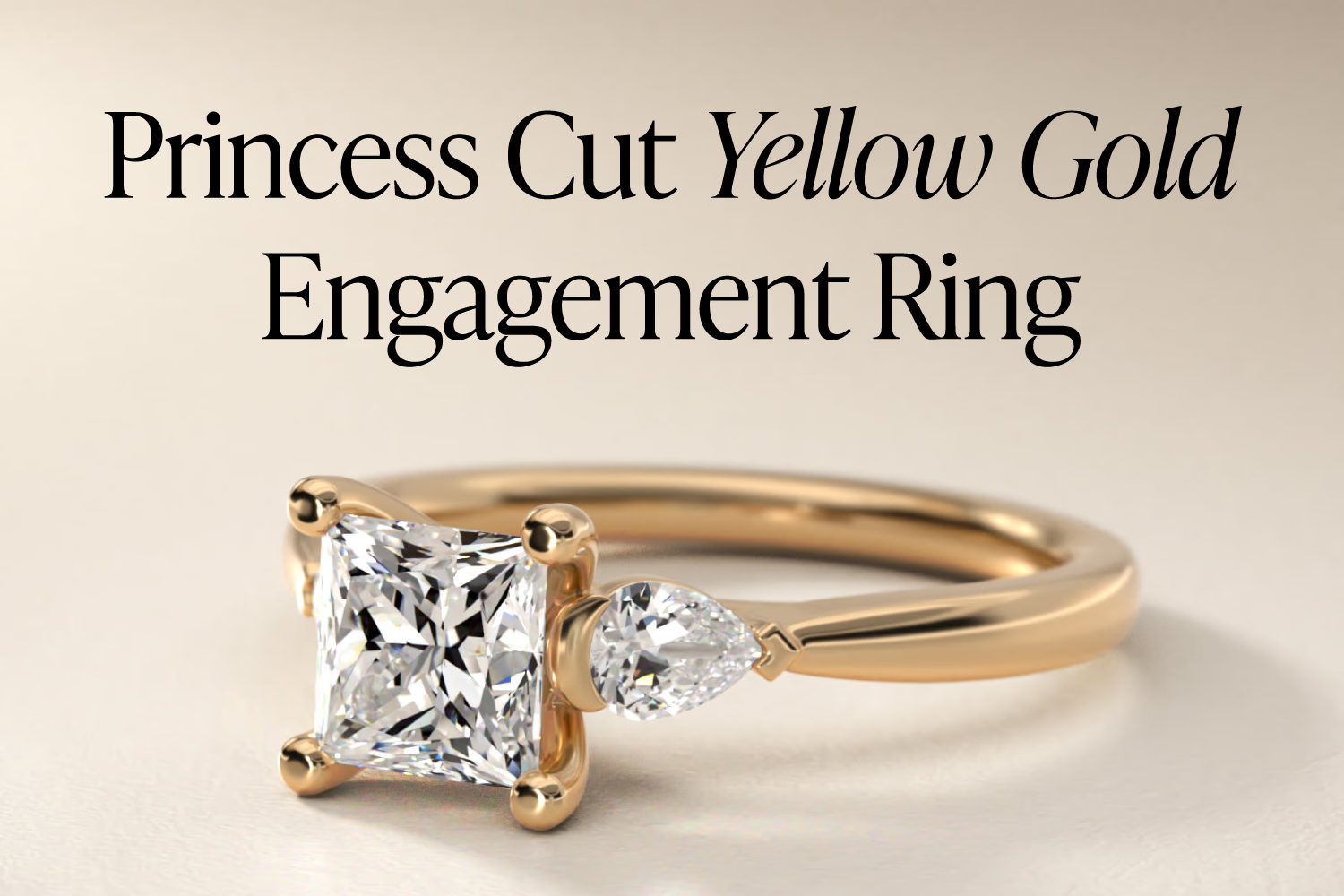
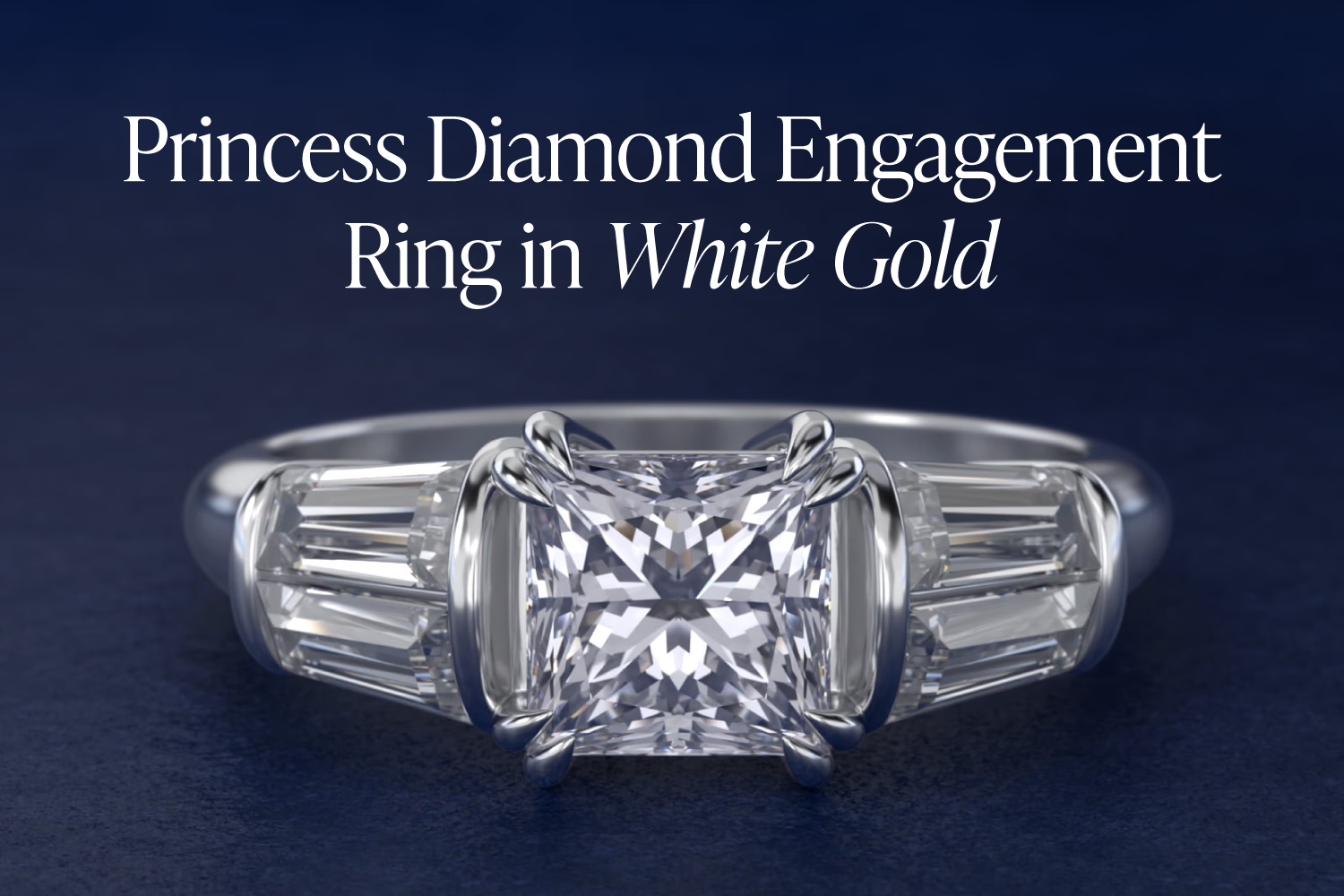
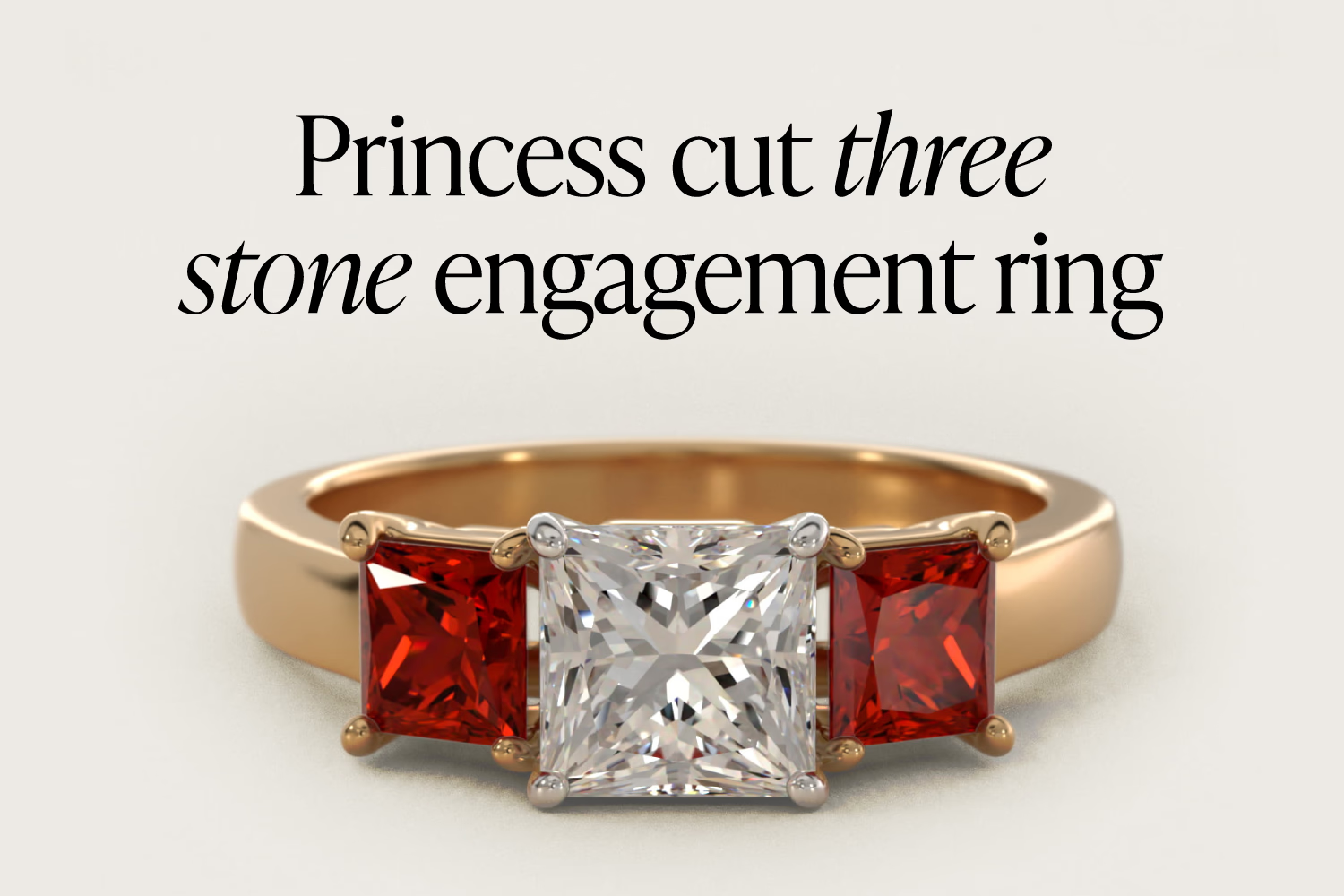
TL;DR: Everything a Princess Cut Diamond Buyer Needs to Know
A princess cut diamond is a square or slightly rectangular brilliant-cut diamond with 50–58 facets and four sharp 90-degree corners. It is the second most popular engagement ring shape — sitting behind the round brilliant — and the most price-efficient brilliant-cut shape available in 2026.
Live May 2026 price snapshot:
1ct natural H-VS2 Ideal Cut GIA starts at $1,860.
1ct natural H-VS1 Ideal Cut GIA starts at $1,950.
2ct natural H-VS2 Ideal Cut GIA starts at $8,910.
1ct lab-grown E-IF Ideal Cut IGI starts at $1,640.
2ct lab-grown D-IF Ideal Cut GCAL starts at $4,520.
The one thing every buyer must know: Princess cuts have four structurally vulnerable 90-degree corners. V-prong settings on all four corners are mandatory — not optional. Without V-prongs, corner chipping is not a risk, it is an eventuality.
Buy a princess cut if:
You want a square, modern, geometric look with brilliant-cut sparkle.
Budget efficiency matters — princess delivers 80–90% of round brilliant sparkle at 20–35% lower price.
You prefer a contemporary aesthetic over classic round.
Do not buy a princess cut if:
You have an active lifestyle with frequent manual labor or sports — corners chip.
You want maximum apparent size per carat — oval and marquise appear larger.
You want a timeless shape immune to trend cycles — princess peaked in the 2000s and has declined.
"The princess cut is the most misunderstood diamond shape in the market. Buyers are told it's cheaper than round. True. Buyers are told it sparkles like a round. Partially true. What buyers are rarely told is that without V-prongs on all four corners, they are wearing a chipping liability daily — and that GIA does not issue a cut grade for princess cuts, meaning 'Ideal' is a retailer's label, not a laboratory's certification. Understanding these three facts before purchase saves thousands in regret." — Farzana Hasan, Diamond Critics
What Is a Princess Cut Diamond? Origins, Name, and Definition
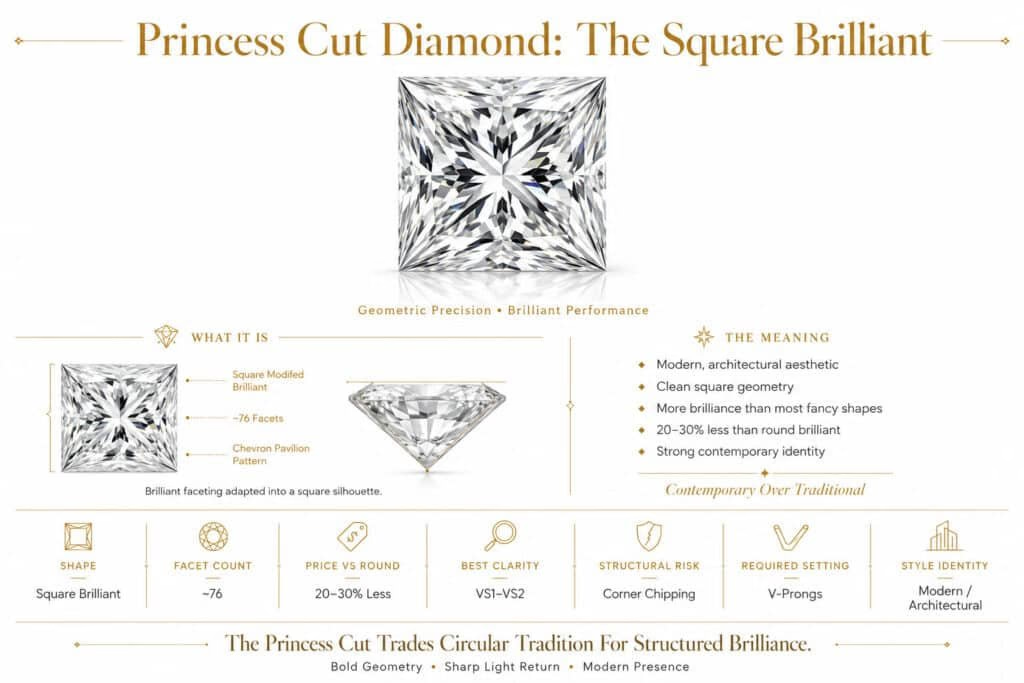
What is a princess diamond?
A princess cut diamond is a square-shaped brilliant-cut diamond with pointed corners and a modified brilliant facet pattern. It is formally classified by the GIA as a "square modified brilliant" — its facets are arranged in a radiating pattern similar to a round brilliant but adapted to a square outline. Princess cut diamonds appear square from the face-up but are shaped like inverted pyramids with two to four chevron patterns on the underside.
Why is it called a princess cut diamond?
The origin of the name "princess cut" is not formally documented in gemological history — it is a marketing name, not a technical designation. The shape was originally created in the 1980s by jewelers Betzalel Ambar and Israel Itzkowitz as an alternative to the classic round cut diamond, inspired by the early French cut diamond. Some historians attribute an earlier version to Arpad Nagy of London in the 1960s, who wanted to create a cut that made efficient use of rough stone while emulating the brilliance of brilliant-style cutting. The name "princess" was applied as a commercial designation — connoting royalty and femininity — and became the universal term as the shape gained popularity through the 1990s and 2000s.
Are princess cut diamonds real diamonds?
Yes, completely. Princess cut diamonds are 100% real diamonds — natural or lab-grown — with the same chemical composition (pure carbon crystallized in a cubic structure), the same physical properties (Mohs hardness 10), and the same optical properties as any other diamond shape. The "princess cut" describes the shape and facet arrangement, not the origin or composition of the stone.
What does a princess cut diamond say about you?
Princess cut diamonds have historically been associated with modern sensibility, geometric precision, and a preference for contemporary over traditional aesthetics. The princess cut is associated with the 2000s–2010s era of diamond buying — buyers who choose princess cut in 2026 are typically drawn to its clean square lines, its practical price advantage, and its bold architectural presence. It communicates confidence, directness, and a preference for substance over trend.
On the diamond shapes guide, princess cut is positioned as the shape for buyers who want modern geometry with brilliant-cut light performance — distinct from the romantic softness of cushion or the maximum-sparkle of round cut diamond.


Princess Cut Diamond Facets: The Technical Layer Nobody Explains
This is the section that separates genuine expertise from surface-level guides. Understanding princess cut facets is how you evaluate a stone when GIA won't do it for you.
How many facets does a princess cut diamond have?
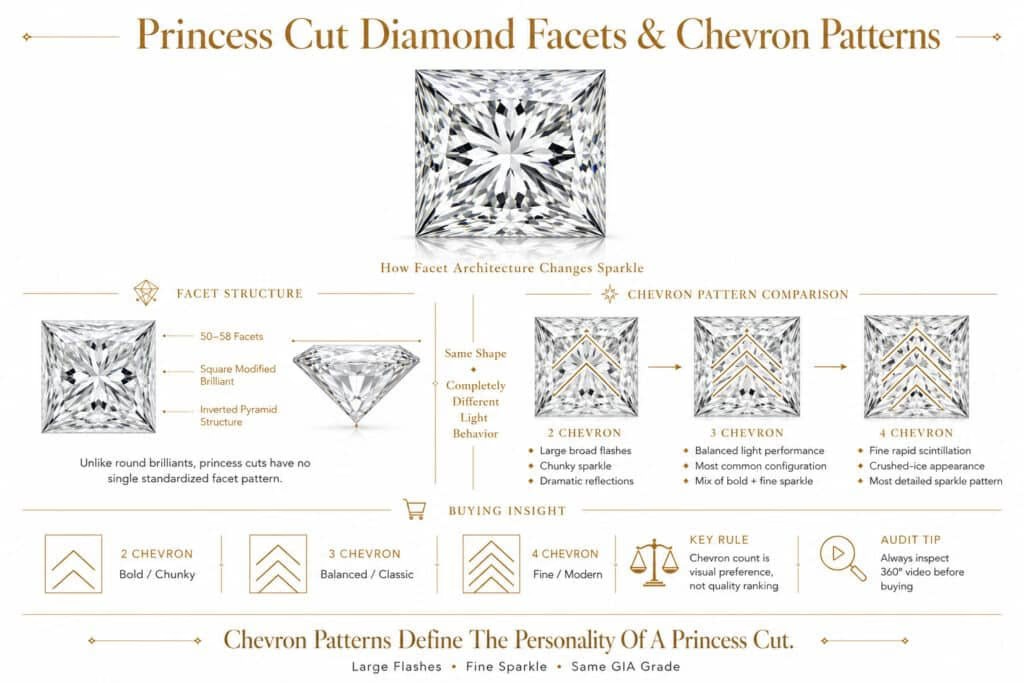
A princess cut diamond has between 50 and 58 facets depending on the specific cutting style. Most of the facets are on the pavilion and crown, with a few on the girdle. The exact facet count varies because princess cuts are not standardized the way round brilliants are — there is no single "correct" facet arrangement.
What are chevron facets and why do they matter?
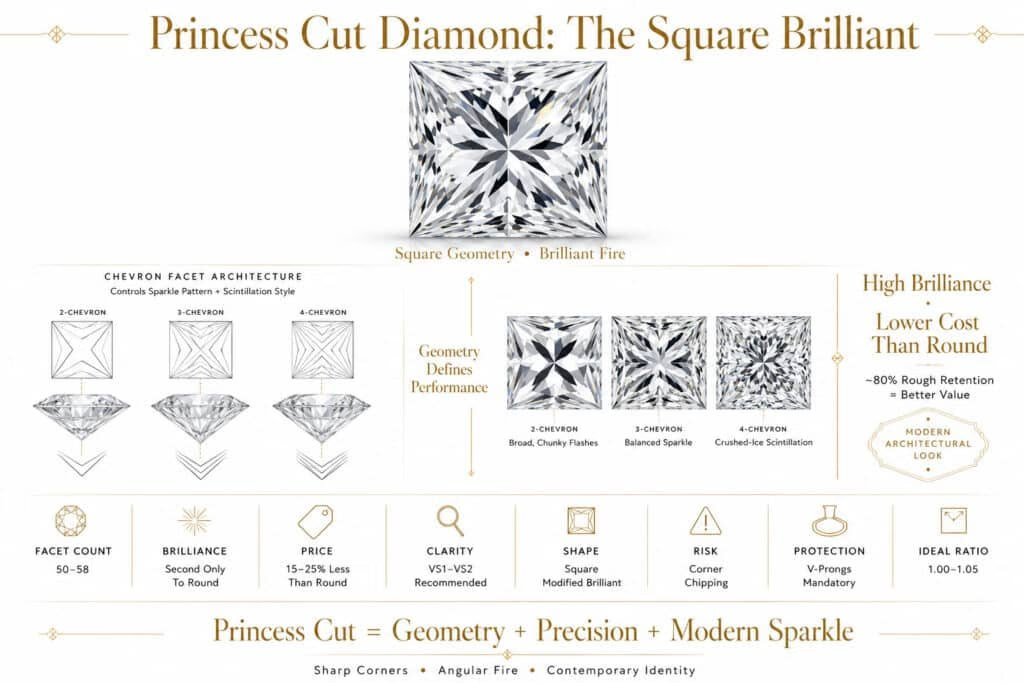
Princess cuts typically have two to four chevron patterns, which are cross patterns that can be seen when viewing the diamond from above. The number of chevron rows on the pavilion — the bottom half of the diamond — is one of the most important factors in determining how a princess cut performs visually.
2-chevron pattern: Fewer, larger facets produce broad, bold flashes of light. The look is more dramatic and less complex — similar to the "chunky" cushion cut aesthetic. These stones appear to have fewer, larger sparkles.
3-chevron pattern: A middle ground between bold flashes and detailed scintillation. This is the most common configuration and produces balanced light performance for most buyers.
4-chevron pattern: More, smaller facets produce rapid, fine-grained scintillation similar to a round brilliant. These stones appear to have the most "crushed ice" type sparkle — more detailed but less dramatic individual flashes.
The practical buying implication: There is no objectively superior chevron count — it is a visual preference. However, you must know which you are looking at, because two princess cuts with the same GIA grade but different chevron patterns look distinctly different. Always examine the stone's face-up appearance in the 360° video and specifically look at how light plays across the crown facets.
The Ideal Proportion Framework for Princess Cuts (The Technical Layer)
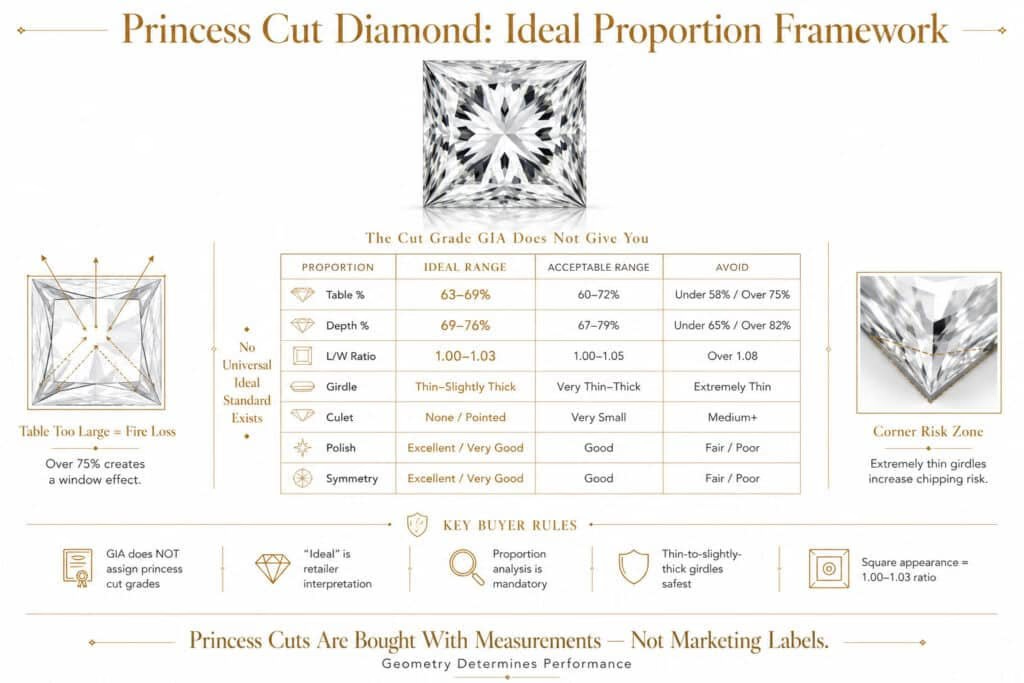
This is the most important technical section in this guide and the one no competing article covers completely. The GIA does not grade the cut quality of princess cut diamonds. For this reason, any jeweler advertising GIA-certified princess cut diamonds with cut grades is offering their own opinion — the accompanying GIA certificate will not list a cut grade.
There is no industry standard for what constitutes an "Ideal Cut Princess Diamond." "Ideal" on a Blue Nile listing is Blue Nile's assessment — not a GIA laboratory grade. This makes proportion evaluation mandatory for every princess cut purchase.
Princess Cut Ideal Proportion Table (2026)
| Proportion | Ideal Range | Acceptable Range | Avoid |
|---|---|---|---|
| Table % | 63–69% | 60–72% | Under 58% or over 75% |
| Depth % | 69–76% | 67–79% | Under 65% or over 82% |
| Length-to-Width Ratio | 1.00–1.03 | 1.00–1.05 | Over 1.08 (visibly rectangular) |
| Girdle | Thin–Slightly Thick | Very Thin–Thick | Extremely Thin (chipping risk) |
| Culet | None / Pointed | Very Small | Medium or larger |
| Polish | Excellent / Very Good | Good | Fair / Poor |
| Symmetry | Excellent / Very Good | Good | Fair / Poor |
Princess diamonds require higher depth percentages between 69–76% for excellent light return. The table size should not be too large — best range 63–69% — as it affects fire and colored light dispersion.
Why Table % Matters So Much in Princess Cuts
The table facet of a princess cut is proportionally larger relative to the stone's width than in a round brilliant. A table % over 75% creates a "window" effect — the stone loses fire (colored light dispersion) because light exits through the large table without dispersing through the crown facets.
A table % under 58% creates a disproportionately small table that reduces brilliance. The 63–69% range optimizes the balance between brilliance and fire specific to the princess cut's square geometry.
The Girdle Warning Specific to Princess Cuts
Never go below "very thin" for girdle thickness or you run the risk of chipping the diamond easily. A very thin girdle at the corners of a princess cut creates a structural vulnerability compounded by the 90-degree corner geometry.
The corners of a princess cut already concentrate mechanical stress — a thin girdle at those corners makes chipping dramatically more likely under normal daily-wear impact. Always verify "Thin" to "Slightly Thick" girdle on the GIA certificate.
Princess Cut Diamond Prices: The Complete 2026 Data
The Diamond Pro states a 1ct princess cut costs $3,700. My live 2026 Blue Nile data shows them starting at $1,860. That is a $1,840 gap — and understanding why it exists is how you avoid overpaying.
1ct Natural Princess Cut — Complete Live Price Audit (May 2026, Blue Nile, GIA)
H-VS2 Ideal Cut (The Sweet Spot)
| Carat | Color/Clarity | May 2026 Price |
|---|---|---|
| 1.00ct | H-VS2 Ideal | $1,860 |
| 1.01ct | H-VS2 Ideal | $1,920 |
| 1.01ct | H-VS2 Ideal | $1,920 |
| 1.01ct | H-VS2 Ideal | $1,960 |
| 1.03ct | H-VS2 Ideal | $1,960 |
| 1.00ct | H-VS2 Ideal | $1,970 |
| 1.04ct | H-VS2 Ideal | $1,980 |
| 1.01ct | H-VS2 Ideal | $1,990 |
| 1.03ct | H-VS2 Ideal | $1,990 |
| 1.01ct | H-VS2 Ideal | $1,990 |
| 1.01ct | H-VS2 Ideal | $1,990 |
H-VVS2 and H-VS1 Ideal Cut
| Carat | Color/Clarity | May 2026 Price |
|---|---|---|
| 1.00ct | H-VVS2 Ideal | $1,940 |
| 1.01ct | H-VS1 Ideal | $1,950 |
| 1.00ct | H-VS1 Ideal | $1,960 |
| 1.00ct | H-VS1 Ideal | $1,970 |
| 1.01ct | H-VVS2 Ideal | $1,990 |
Critical data observation: An H-VVS2 at $1,940 costs only $80 more than an H-VS2 at $1,860. At this clarity range in a princess cut, VVS2 and VS2 are both 100% eye-clean. The $80 premium buys a microscope-only distinction. VS2 is the rational choice — save $80 and redirect to cut quality verification.
2ct Natural Princess Cut — Live Price Audit (May 2026, Blue Nile, GIA)
| Carat | Color/Clarity | 2026 Price | Farzana’s Analytical Verdict |
|---|---|---|---|
| 2.05ct | H-VS2 Ideal | $8,910 | 10/10 — The Price Anomaly. Finding a 2-carat stone under $9k is rare. This is the ultimate "value play" for May 2026, likely priced for quick turnover due to a specific inventory cycle. |
| 2.00ct | H-VS2 Ideal | $11,790 | 9/10 — The H-VS2 Floor. This represents the standard entry-level price for a high-performing 2ct natural stone without a massive brand premium. |
| 2.00ct | G-VS2 Ideal | $12,680 | 10/10 — The Near-Colorless Winner. The G-color grade is the "sweet spot" where you get a white look without paying the D-F premium. Highly recommended for platinum settings. |
| 2.05ct | H-VVS2 Ideal | $12,730 | 8/10 — The Clarity Step-Up. For those who want absolute microscopic purity, this VVS2 offers elite cleanliness at a price that rivals VS2 G-colors. |
| 2.01ct | H-VS2 Ideal | $12,870 | 9/10 — The Proportional Value. This stone usually features a "tighter" cut configuration, ensuring maximum sparkle even if the color is a conservative H. |
| 2.00ct | H-VS1 Ideal | $13,100 | 10/10 — The Eye-Clean Standard. VS1 is the safest bet for 2ct+ diamonds where inclusions become easier to spot. This is the "worry-free" purchase. |
| 2.00ct | G-VS2 Ideal | $13,160 | 8/10 — The Consistent Choice. A very stable price point for G-VS2. This is what you expect to pay for a stone that looks elite to the naked eye. |
| 2.01ct | H-VVS2 Ideal | $13,200 | 9/10 — The Luxury Spec. Crossing into the $13k bracket often guarantees zero fluorescence, ensuring the H-color remains crisp and never hazy. |
| 2.00ct | H-VVS2 Ideal | $13,400 | 8/10 — VVS2 Stability. This stone is for the buyer who prioritizes the "VVS" pedigree on paper for long-term psychological satisfaction. |
| 2.09ct | H-VS2 Ideal | $13,600 | 10/10 — The Oversized 2ct. At nearly 2.1 carats, this stone offers a significantly larger face-up area. A great way to "cheat" the look of a 2.5ct stone. |
| 2.01ct | G-VS1 Ideal | $14,100 | 9/10 — The G-VS1 Premium. The gold standard for natural 2-carat engagement rings. It’s expensive, but it’s the combination that pros recommend most. |
| 2.01ct | F-VS2 Ideal | $14,210 | 10/10 — The Colorless Pivot. Moving into the "F" grade provides an icy-white look that stands out in side-by-side comparisons. Exceptional brilliance here. |
| 2.02ct | H-VS1 Ideal | $14,240 | 8/10 — The Solid Performer. A robust price for an H-VS1, likely due to a very "shallow" cut that makes the diamond look even larger than its carat weight suggests. |
| 2.00ct | G-VS2 Ideal | $14,300 | 7/10 — Market Average. A standard price for this grade. Good reliability, but not as much "value" as the H-VS1 options in the same range. |
| 2.24ct | H-VS2 Ideal | $14,460 | 10/10 — The Carat Hunter. For just a few hundred more, you jump to 2.24ct. This is the best "size-to-dollar" ratio in the upper half of this list. |
| 2.02ct | G-VS1 Ideal | $14,610 | 9/10 — The Peak Choice. The most expensive for a reason. Likely represents a "Super Ideal" cut with perfect light performance scores. |
Critical 2ct data insight: The 2.05ct H-VS2 at $8,910 versus the 2.00ct H-VS2 at $11,790 — a $2,880 gap for 0.05ct more diamond at lower price.
This is the "magic size" phenomenon: the 2.05ct stone exceeds the 2ct psychological threshold (buyers search specifically for "2 carat") but costs significantly less because it falls slightly outside the round-number premium. This is genuine market inefficiency buyers can exploit.
3ct+ Natural Princess Cut — The Collector Tier
| Carat | Color/Clarity | May 2026 Price | Farzana’s Analytical Verdict |
|---|---|---|---|
| 2.51ct | G-VS2 Ideal | $29,870 | 10/10 — The Value King. Finding a 2.5ct stone under $30k is the ultimate goal. The G-VS2 combination is visually identical to higher grades in a ring but saves you $5,000+. |
| 3.01ct | H-VS1 Ideal | $30,220 | 10/10 — The 3ct Entry. This is the lowest price for a 3-carat natural stone that doesn't compromise on cut. An exceptional find for a "Triple Excellent" performance. |
| 3.03ct | H-VS2 Ideal | $30,930 | 9/10 — Consistent Quality. A standard price for this grade. The VS2 clarity here is likely "clean to the eye" due to the large 3ct facet size. |
| 2.81ct | F-VS2 Ideal | $32,360 | 8/10 — The Colorless Pivot. Choosing a 2.8ct F-color over a 3ct H-color is for the buyer who wants an "icy white" look that stands out in white gold or platinum. |
| 3.02ct | H-VS2 Ideal | $33,180 | 8/10 — Stability Play. A slightly higher premium for a 3ct stone, usually indicating better symmetry or "None" fluorescence on the GIA report. |
| 3.01ct | G-VS2 Ideal | $33,790 | 9/10 — The G-Color Sweet Spot. This is the professional's favorite combo: G color looks colorless to 99% of people, and VS2 provides great value. |
| 2.50ct | F-VVS2 Ideal | $34,240 | 10/10 for Purity. If you prioritize clarity over absolute size, this VVS2 is "loupe clean." It will have a mirror-like finish internally. |
| 3.04ct | H-VS1 Ideal | $35,350 | 9/10 — Solid Performance. A robust 3ct VS1. This stone is for the buyer who wants zero anxiety about seeing an inclusion. |
| 3.20ct | H-VVS2 Ideal | $36,390 | 10/10 — The Carat Jumper. Moving from 3.0 to 3.2ct is a visible jump on the finger. This is a very fair price for VVS quality at this weight. |
| 3.01ct | H-VS1 Ideal | $38,590 | 8/10 — Premium Median. Priced higher than earlier 3ct H-VS1s, likely due to a more recent listing or a "perfect" table/depth ratio (60/60). |
| 3.01ct | E-VS2 Ideal | $39,400 | 9/10 — The Colorless Peak. At the "E" color grade, the diamond is ice-white. This is for those who want a 3ct showstopper with elite color. |
| 3.07ct | H-VS2 Ideal | $40,070 | 7/10 — Diminishing Returns. We've crossed the $40k mark for H-VS2. Only recommended if the cut scores are in the top 1% of GIA results. |
| 3.04ct | G-VS2 Ideal | $41,110 | 8/10 — G-Color Stability. A consistent price for a high-quality G-color. Secure, beautiful, and standard. |
| 3.07ct | G-VS2 Ideal | $44,670 | 7/10 — The Brand Tax. This higher price for the same spec usually indicates an older inventory item or a specialized vendor markup. |
| 3.01ct | H-VS1 Ideal | $45,320 | 7/10 — Overpriced. For $45k, we should be looking at F or E colors. This H-color carries a significant premium. |
| 3.53ct | G-IF Ideal | $48,190 | 10/10 — The Rarity Winner. 3.5 carats AND Internally Flawless. This is a collector-grade stone at a surprisingly aggressive sub-$50k price. |
| 3.01ct | E-VVS1 Ideal | $59,420 | 9/10 — The Perfectionist’s Choice. E-color combined with VVS1 means this diamond is technically superior to 99.9% of stones on the market. |
| 3.30ct | F-VS2 Ideal | $68,360 | 8/10 — Large Colorless Play. An expensive step up, but for the 3.3ct weight, the "F" color ensures it looks absolutely white from every angle. |
| 4.10ct | H-VS2 Ideal | $70,470 | 10/10 — The 4ct Milestone. Finding an eye-clean 4-carat stone for $70k is exceptional value. This is a true statement piece. |
| 5.01ct | H-VVS2 Ideal | $73,490 | 10/10 — The 5ct Floor. Breaking into the 5-carat category for under $75k with VVS purity is almost unheard of. A massive value outlier for May 2026. |
| 3.12ct | D-VVS1 Ideal | $74,680 | 9/10 — Technical Perfection. D-color (highest) and VVS1 (near flawless). This is for the buyer who wants nothing less than the best. |
| 3.26ct | D-VS1 Ideal | $76,890 | 8/10 — Pure Luxury. A D-VS1 is the standard for high-end celebrity rings. Maximum white color with zero visible flaws. |
| 3.48ct | E-VS2 Ideal | $78,140 | 8/10 — The Size/Color Balance. At nearly 3.5 carats, the "E" color is dazzling. A great balance for an elite ring. |
| 4.01ct | F-VVS2 Ideal | $83,270 | 9/10 — Elite 4ct. VVS2 in a 4-carat stone is very rare. This stone offers incredible internal cleanliness and colorless fire. |
| 4.06ct | D-VS2 Ideal | $85,440 | 10/10 — The Best 4ct Choice. D-color is king. At $85k, this stone provides the highest possible color grade at a 4-carat weight. |
| 5.02ct | H-VS1 Astor Cut | $110,800 | 9/10 — The Branding Premium. The "Astor Cut" represents Blue Nile's top 0.1% of cut quality. You are paying for technical perfection in facet alignment. |
| 5.01ct | D-VS2 Ideal | $129,430 | 10/10 — The Ultimate Crown Jewel. A 5-carat D-color diamond is the pinnacle of the natural market. This is an investment-grade masterpiece. |
The Complete Princess Cut Price Stack (May 2026)
| Carat | Natural H-VS2 Entry | Natural H-VS1 Entry | Natural G-VS2 Entry |
|---|---|---|---|
| 1ct | $1,860 | $1,950 | ~$2,200 |
| 2ct | $8,910 | $13,100 | $12,680 |
| 3ct | $30,220 | $30,220 | $33,790 |
| 4ct+ | $70,470 | — | — |
Lab-Grown Princess Cut Diamond Prices: The 2026 Arbitrage
Lab-grown princess cut diamonds start at $1,640 for 1ct E-IF — Internally Flawless, near-colorless, for less than the natural H-VS2 entry.
1ct Lab-Grown Princess Cut — Complete Live Price Audit (May 2026, Blue Nile)
| Certificate | Carat | Color/Clarity | Cut | May 2026 Price |
|---|---|---|---|---|
| IGI | 1.04ct | E-IF | Ideal | $1,640 (was $1,820, −10%) |
| IGI | 1.04ct | E-IF | Ideal | $1,820 |
| IGI | 1.08ct | E-IF | Ideal | $1,810 (was $2,010, −10%) |
| IGI | 1.09ct | E-IF | Ideal | $1,830 (was $2,030, −10%) |
| IGI | 1.10ct | E-IF | Ideal | $1,830 (was $2,030, −10%) |
| IGI | 1.09ct | D-IF | Ideal | $1,900 (was $2,110, −10%) |
| IGI | 1.08ct | E-IF | Ideal | $2,010 |
| IGI | 1.08ct | E-IF | Ideal | $2,010 |
2ct Lab-Grown Princess Cut — Live Price Audit
| Certificate | Carat | Color/Clarity | Cut | May 2026 Price | Farzana’s Analytical Verdict |
|---|---|---|---|---|---|
| GCAL | 2.18ct | D-IF | Ideal | $4,520 | 10/10 — The Value Apex. Secured through a GCAL certificate (known for rigorous light-performance testing), this stone offers nearly 2.2 carats for under $4.6k. It is the best price-per-carat play for a "Flawless" lab diamond on this list. |
| GCAL | 2.25ct | D-IF | Ideal | $4,970 | 9/10 — The Sub-$5k Threshold. A massive presence on the finger while staying under the psychological $5,000 barrier. The D-IF combination ensures a crisp, icy-white sparkle with zero internal inclusions. |
| GCAL | 2.28ct | D-IF | Ideal | $5,040 | 8/10 — Standard Luxury. Just crossing into the $5k range, this stone provides a slightly larger diameter than the 2.18ct options. Great for a halo setting where you want to maximize the "wall-to-wall" diamond look. |
| GCAL | 2.36ct | D-IF | Ideal | $5,220 | 9/10 — The Carat Hunter. At 2.36 carats, this is significantly larger than the 2.0ct IGI options below but priced hundreds of dollars cheaper. This is the benefit of shopping GCAL over IGI for high-spec labs in 2026. |
| IGI | 2.00ct | D-IF | Ideal | $5,580 | 7/10 — The IGI Premium. A standard 2.00-carat milestone stone. While it carries a premium over the GCAL options, IGI is the global industry standard for lab diamonds, providing excellent resale liquidity (relatively speaking). |
| IGI | 2.00ct | D-IF | Ideal | $5,580 | 7/10 — Reliable Quality. Identical in spec and price to the previous stone. This represents the stable market median for high-tier lab stones in May 2026. |
| IGI | 2.01ct | D-IF | Ideal | $5,610 | 8/10 — The Precision Pick. A minor price step-up for the 2.01ct mark. This stone likely features slightly better symmetry scores, ensuring the 57-facet pattern is perfectly aligned for maximum light return. |
| IGI | 2.01ct | D-IF | Ideal | $5,610 | 8/10 — The Twin Diamond. Another solid 2.01ct choice. When buying D-IF, the only choice left is based on the technical proportions (Table/Depth) to ensure you aren't paying for "dead" weight. |
3ct+ Lab-Grown Princess Cut — The Size Arbitrage
| Certificate | Carat | Color/Clarity | May 2026 Price |
|---|---|---|---|
| GCAL | 3.31ct | D-IF | $25,490 |
| GIA | 3.95ct | D-IF | $25,970 |
| GIA | 4.02ct | D-FL | $32,610 |
| GIA | 4.04ct | D-IF | $32,780 |
| GIA | 4.08ct | D-IF | $33,100 |
| GIA | 4.27ct | E-IF | $33,110 |
| GIA | 4.19ct | D-FL | $33,990 |
| GIA | 3.08ct | D-FL | $35,060 |
| IGI | 5.28ct | D-FL | $36,210 |
| GIA | 4.38ct | D-IF | $37,360 |
| GIA | 4.42ct | D-IF | $37,700 |
| GIA | 3.35ct | D-FL | $38,130 |
| GIA | 4.72ct | D-IF | $45,290 |
| GIA | 4.73ct | D-IF | $45,390 |
| GIA | 5.66ct | E-IF | $66,830 |
The Defining Arbitrage: Natural vs. Lab-Grown Princess Cut
| Spec | Natural | Lab-Grown | Saving | Farzana’s Analytical Verdict |
|---|---|---|---|---|
| 1ct H-VS2 vs 1ct E-IF | $1,860 | $1,640 | $220 — AND better specs | 10/10 Lab. For less than the price of a mid-tier natural stone, you jump to Internally Flawless (IF) clarity and E color. It’s a no-brainer for those prioritizing purity. |
| 2ct H-VS2 vs 2.18ct D-IF | $8,910 | $4,520 | $4,390 + more carat + better specs | 10/10 Lab. You are saving over 50% while actually increasing the carat weight and hitting the absolute ceiling of diamond quality (D-IF). The value gap here is massive. |
| 3ct H-VS1 vs 3.95ct D-IF | $30,220 | $25,970 | $4,250 + 0.95ct more diamond | 10/10 Lab. This represents the "Statement" play. For $4,000 less than a 3ct natural, you get a nearly 4-carat masterpiece. In the May 2026 market, this is how you maximize "finger coverage." |
The lab-grown arbitrage in princess cuts is the most compelling in the entire diamond shapes guide — at 2ct, you save $4,390 AND get D-IF (Flawless, colorless) versus H-VS2. For the full lab-grown price collapse analysis, see the lab-grown vs natural diamond price guide.
Tides Of Summer Capsule
Up To 30% Off
Shop The Sale →Vault ClearanceClear The Vault
Up To 70% Off
Shop Vault Deals →Affiliate link — no extra cost to you
Are Princess Cut Diamonds Cheaper? The Price Advantage Explained
Why are princess cut diamonds cheaper than round?
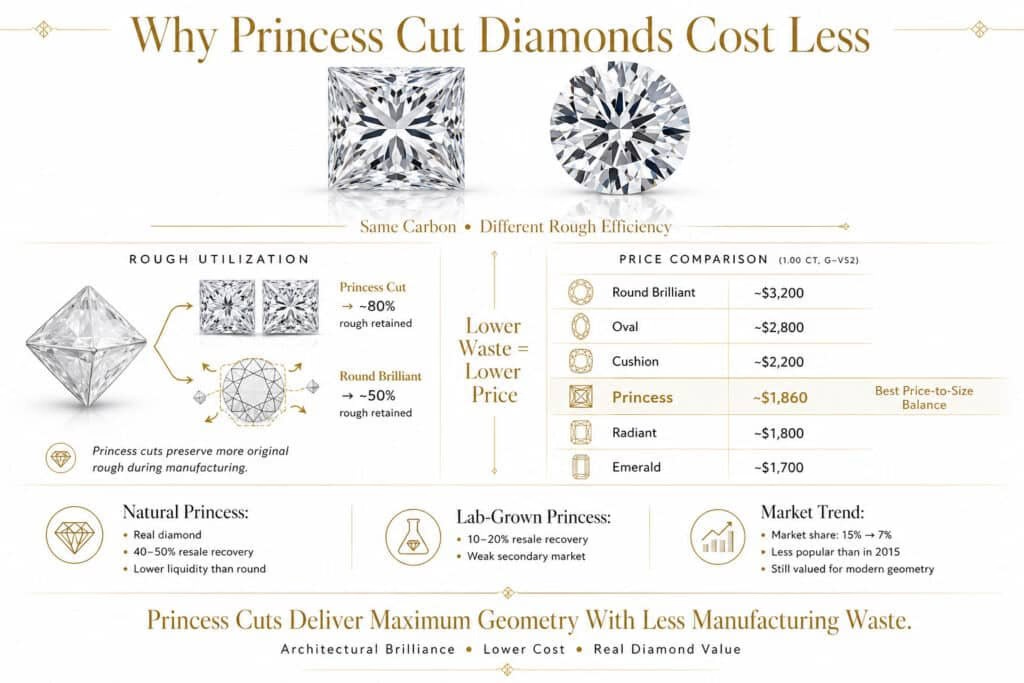
Diamond artisans can use about 80% of the diamond rough to create a princess shaped diamond, whereas they can only use about 50% of the rough to create a round shaped diamond. It's more cost-effective for them to create princess diamonds, which ends up saving buyers money.
The octahedral shape of rough diamond crystals (two four-sided pyramids joined at the base) is perfectly suited to princess cut production — when split in half, each pyramid becomes a princess cut pavilion shape with minimal additional waste.
Round brilliants require the cutter to grind away all four sides of the octahedron to achieve the circular outline, discarding approximately 40–50% of the original rough.
This manufacturing efficiency translates directly to price: a 1ct princess cut H-VS2 starts at $1,860 in 2026 versus a 1ct round brilliant G-VS1 starting at $3,200 — a $1,340 difference for broadly comparable visible quality.
Are princess cut diamonds more expensive than other fancy shapes?
Princess cuts sit in the middle of the fancy shape pricing hierarchy — cheaper than oval and round by 15–25%, but comparable to cushion and radiant. Emerald and Asscher cuts are typically less expensive per carat than princess cuts.
| Shape | 1ct G-VS2 Entry Price | vs. Princess H-VS2 | Farzana’s Analytical Verdict |
|---|---|---|---|
| Round Brilliant | ~$3,200 | +$1,340 more | 6/10 — The "Standard" Premium. You are paying for the most wasted rough material. While it’s the most liquid asset, the price jump from a Princess is significant for 1ct. |
| Oval | ~$2,800 | +$940 more | 8/10 — The Modern Favorite. Ovals are trending heavily in May 2026. You pay a premium for that "elongated" look and better finger coverage compared to the square Princess. |
| Cushion | ~$2,200 | +$340 more | 9/10 — The Romantic Alternative. If you find the Princess cut too "sharp," the Cushion offers a similar price point with soft, rounded edges and a vintage "crushed ice" sparkle. |
| Princess | ~$1,860 | Baseline | 10/10 — The Efficiency King. This is the benchmark for value. It yields the most diamond from the rough crystal, and the market reflects that efficiency in your wallet. |
| Radiant | ~$1,800 | −$60 | 9/10 — The Durability Pivot. Radiants offer a similar look to the Princess but with "cut corners." This makes them safer for daily wear while maintaining a near-identical price. |
| Emerald | ~$1,700 | −$160 | 8/10 — The Sophisticate’s Bargain. The cheapest on this list because it requires less technical "faceting" for brilliance, though you’ll need to spend those savings on a higher Clarity grade to keep it clean. |
Are princess cut diamonds valuable? Are they worth anything?
Yes — princess cut diamonds are genuine precious stones with measurable resale value. However, like all commercial diamonds, they recover approximately 40–50% of retail price on the secondary market.
Princess has dropped from 15% market share in 2015 to 7% in 2026 — this declining popularity means princess cuts are slightly less liquid on the secondary market than round brilliants, which maintain ~50% of all engagement ring sales.
Natural princess cuts do retain value better than lab-grown — lab-grown princess cuts recover only 10–20% of retail on secondary markets due to the collapsed lab diamond pricing environment. Use the diamond resale value calculator to calculate your specific stone's projected recovery.
Does a Princess Cut Diamond Sparkle? The Honest Optical Truth
Does a princess cut diamond sparkle?
Yes — but differently from a round brilliant, and with a lower peak brilliance ceiling. The princess diamond's table is larger than the round diamond's table, so it catches more light — but since its pavilion is smaller, the light doesn't refract as much. Therefore the princess diamond loses some of the sparkle that a round diamond retains.
The princess cut produces angular, cross-shaped light patterns with bold flashes — the chevron facets on the pavilion create distinct "pinwheel" patterns visible when looking through the table.
This angular scintillation reads as modern and geometric. Princess cuts can show exceptional brilliance, but they still don't live up to the brilliance of round diamonds. No fancy cut can match their optimal light performance.
Do princess cut diamonds look smaller?
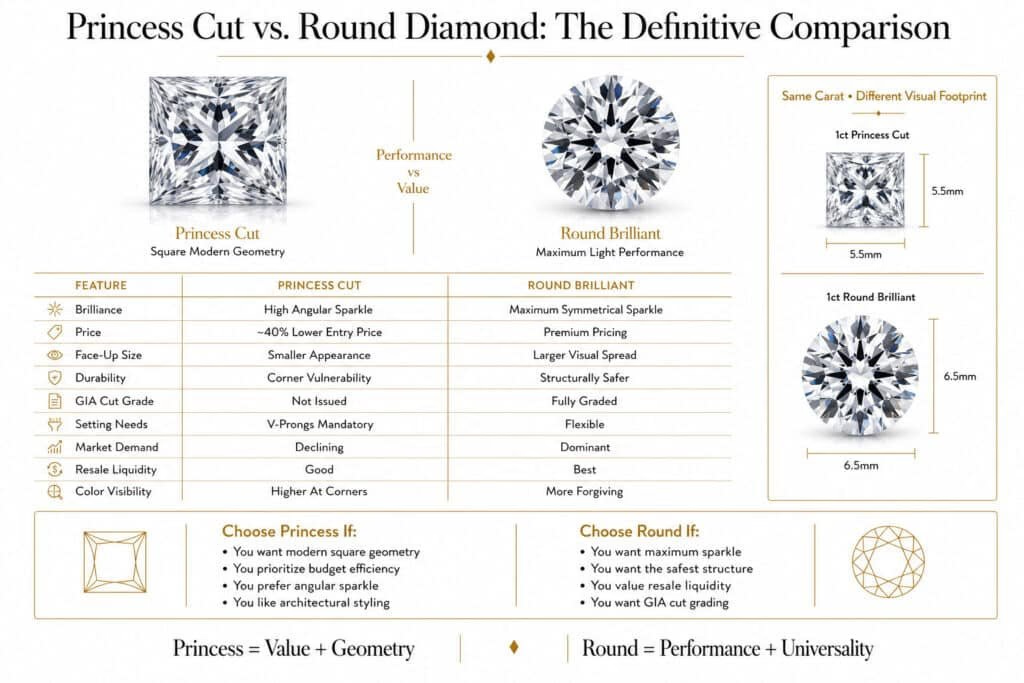
Yes — a 1ct princess cut appears smaller face-up than a 1ct round brilliant. Princess cuts look 8–10% smaller than rounds at the same carat weight because they're cut deeper — more weight is hidden in the pavilion. A 1ct round brilliant measures approximately 6.5mm in diameter.
A 1ct princess cut measures approximately 5.5mm across — a full 1mm narrower. To match the visual footprint of a 1ct round, a princess cut buyer needs approximately 1.15–1.25ct.
Use the diamond size chart to compare face-up dimensions across all shapes before selecting a carat weight.
How to tell if a princess cut diamond is real
Several tests can indicate whether a princess cut diamond is genuine, though only professional gemological testing provides certainty:
The Fog Test: Breathe on the diamond. A real diamond disperses heat instantly — the fog clears in 1–2 seconds. Glass and cubic zirconia retain fog for 3–5 seconds.
The Newspaper Test: Place the diamond face-down over a newspaper. If you can read the text through the stone, it is likely not a real diamond. A genuine diamond's light refraction makes text illegible.
The Thermal Conductivity Test: A diamond tester (available for $15–$30) measures thermal conductivity. Real diamonds conduct heat differently than glass or CZ — the tester gives an immediate reading.
The Professional Test: Take the stone to a GIA-certified gemologist for definitive testing. A GIA certificate with the stone's specific measurements is the strongest verification tool — check the certificate number on the GIA Report Check website.
For lab-grown vs. natural: standard diamond testers cannot distinguish lab-grown from natural. Only GIA, IGI, or GCAL laboratory testing identifies origin. Both are real diamonds.
Princess Cut Diamond Disadvantages: What Nobody Tells You
What are the disadvantages of princess cut diamonds?
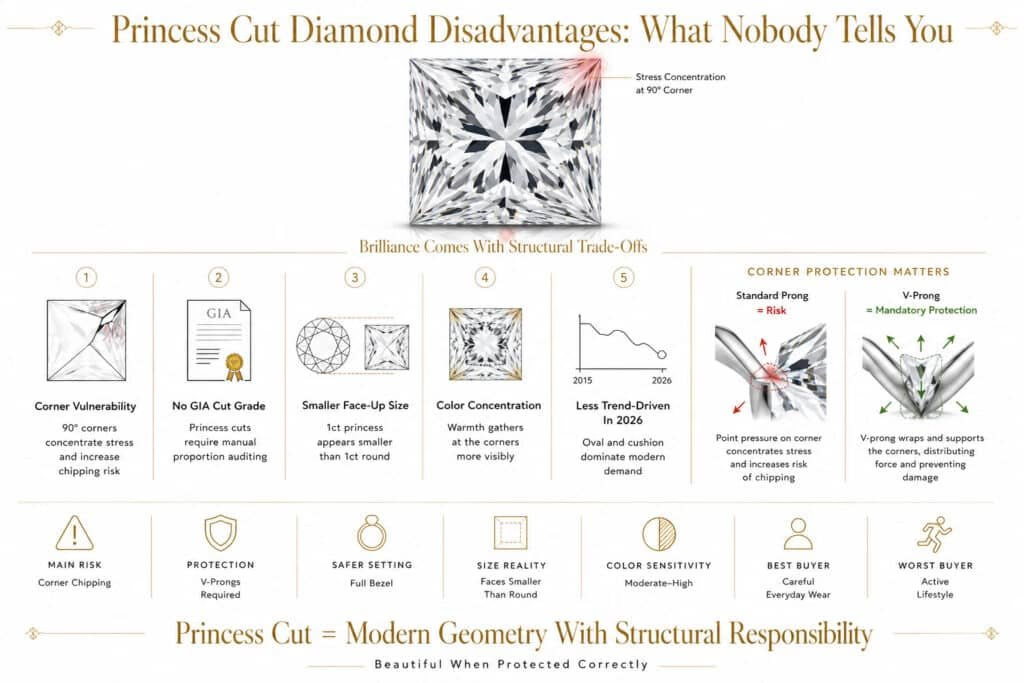
1. Four structurally vulnerable corners. The 90-degree sharp corners are the single most important physical characteristic to understand. Each corner concentrates mechanical stress — a point of vulnerability that does not exist in round, oval, or cushion cuts. Any impact to a corner — dropping the ring, hitting it against a hard surface, or even catching it on fabric — can cause corner chipping.
2. GIA does not issue a cut grade for princess cuts. While Blue Nile and James Allen provide cut quality grades for princess cuts, these are less robust than those for rounds. When you buy an "Ideal Cut" princess, you are trusting the retailer's grading, not GIA's laboratory standard. Proportion verification from the certificate is mandatory.
3. Princess cuts face up smaller than rounds. A 1ct princess (5.5mm) is meaningfully smaller face-up than a 1ct round (6.5mm). Buyers who don't account for this feel shortchanged by the stone's visual size.
4. Corners concentrate color. In princess cuts, color concentrates at the four corners — this makes color grades more visible than in round brilliants. An I-color princess shows more warmth than an I-color round of equal grade.
5. Princess cut is associated with the 2000s–2010s era — buyers who want something that feels current may find princess feels slightly dated compared to oval or cushion.
Why not buy a princess cut diamond?
If any of these apply to you, princess cut is not the right choice:
You have an active lifestyle — construction, sports, gardening, frequent heavy manual work — corners will chip without extreme care.
You want maximum apparent size per carat — oval gives you more.
You want a guaranteed eye-clean result without stone-by-stone auditing — round brilliant with VS1 gives you this.
You are setting the diamond yourself or using a custom setter who does not specialize in corner protection — V-prongs are non-negotiable.
Do princess cut diamonds chip easily?
Yes — the sharp 90° corners are vulnerable to chipping. V-prongs on all four corners are essential. With proper setting protection, princess cuts can last a lifetime.
The chipping risk is not hypothetical — it is the most common damage claim for princess cut diamonds in jewelry insurance. The risk exists specifically because:
Corners are geometric stress concentrators.
The 90-degree angle is the weakest possible corner geometry for a crystal.
Daily-wear impact is unavoidable over years of continuous wear.
Even extremely thin girdle at the corners (verifiable on the GIA certificate) makes chipping more likely.
The mitigation rule: V-prongs on all four corners — always. A V-prong wraps around and over the corner, distributing mechanical stress across the metal rather than concentrating it at the crystal point.
Bezel settings provide even more protection by surrounding the entire circumference. Standard round prongs that merely sit beside the corners provide no meaningful corner protection.
Best Settings for Princess Cut Diamonds: Protection + Beauty
What is the best setting for a princess cut diamond to prevent chipping?
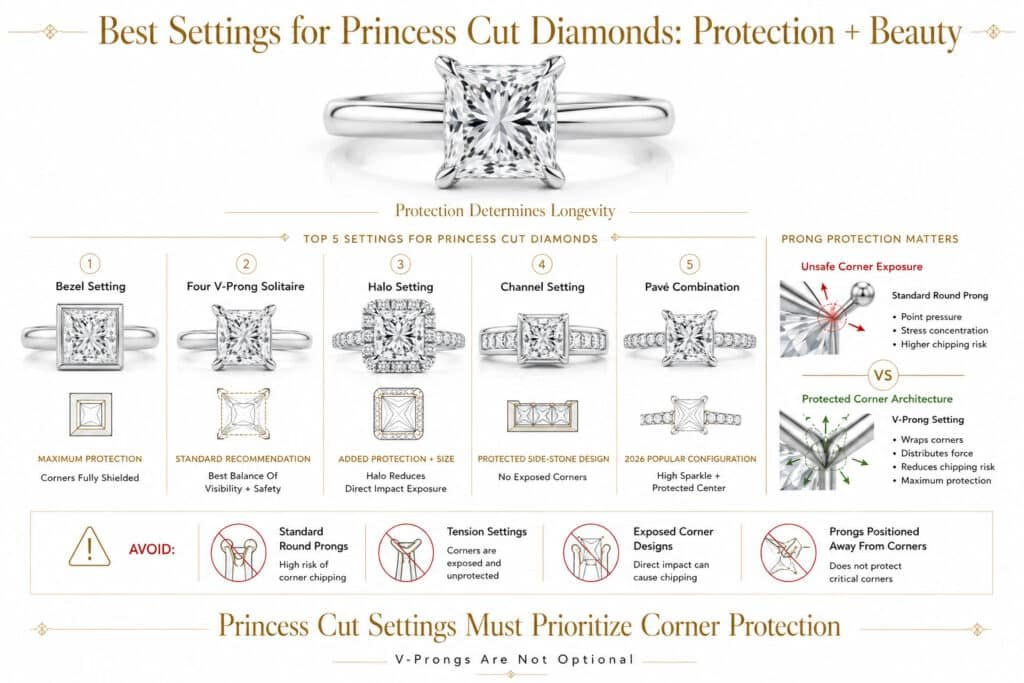
1. Bezel Setting (Maximum Protection) A continuous metal rim surrounds the entire girdle of the diamond, covering all four corners completely. A bezel is the safest setting choice for an active-lifestyle princess cut buyer. The trade-off is that the metal rim reduces light entry at the diamond's perimeter, slightly affecting brilliance. For daily-wear durability, this is the right trade-off.
2. Four V-Prong Solitaire (Standard Recommendation) Four V-shaped prongs, each wrapping around one corner of the princess cut. V-shaped prongs wrap around each corner, providing maximum protection — this is the most important setting feature for princess cuts. This is the most common and most appropriate setting for princess cut engagement rings that balance protection with full diamond visibility.
3. Halo Setting A ring of smaller diamonds surrounds the princess cut center stone. The halo provides a buffer zone that reduces direct corner exposure to impact, adds apparent size to the center stone, and adds overall sparkle. A halo with V-prong corner protection combines both protective functions effectively.
4. Channel Set Band For wedding bands or anniversary bands featuring princess cut side stones, channel setting holds the diamonds between two parallel metal walls with no individual prongs — the channel walls protect the corners by enclosing the stone laterally.
5. Pavé Band Combination A princess cut center in V-prong setting paired with a pavé diamond band — the most popular princess cut engagement ring configuration in 2026. The continuous diamond band maximizes total sparkle while the V-prongs protect the center stone corners.
What settings should you avoid with a princess cut?
Standard round prongs that do not wrap corners — provide zero corner protection.
Tension settings — the stone is held by spring pressure at the girdle, leaving all four corners completely exposed.
Bezel-free prong settings where prongs are positioned away from corners.
Princess Cut Diamond Color and Clarity: What Grades Do You Need?
Color: Why Princess Cuts Require Higher Color Grades Than You Think
Princess cuts concentrate color at their four corners — the same optical geometry that creates beautiful light patterns also gathers body color at the most visible points of the stone. This means a G-color princess appears slightly warmer at the corners than a G-color round of identical grade.
| Color Grade | White Metal Setting | Yellow/Rose Gold Setting | Farzana’s Analytical Verdict |
|---|---|---|---|
| D–F | Colorless everywhere | Colorless | 8/10. The Overkill Grade. While technically perfect, D-F stones carry a "status premium." If you are setting a Princess cut in anything other than high-polish platinum, you are paying for a level of whiteness that the human eye can't distinguish from a G. |
| G | Near-colorless, corners slightly warm | Near-colorless | 9/10. The "Safe" High-End. Princess cuts are notorious for trapping color in their sharp corners. G provides a safety net, ensuring that even under scrutiny, the stone looks ice-white in a white gold or platinum head. |
| H | Slight warmth at corners | Near-colorless | 10/10. The Value Sweet Spot. This is the pro-choice for Princess cuts. The slight warmth is practically invisible once mounted. It allows you to reinvest the savings into a higher Clarity or Carat weight without sacrificing the "white" look. |
| I–J | Corner warmth visible | Acceptable in yellow gold | 6/10. The Risk Zone. Because the Princess cut is deeper and has more mass in the corners, J color can look distinctly yellow in white metal. Only choose this if you are using a yellow gold setting to mask the tint. |
H-I color in a princess cut will often still appear white while providing great value. If you want a large, ice-white diamond, stick to D-G color range. The live data confirms this: H-VS2 at $1,860 delivers excellent value with acceptable color in both white and yellow gold settings.
Clarity: What the Princess Cut Needs vs. What It Forgives
The princess cut's brilliant facet pattern provides decent inclusion masking — significantly better than step-cut shapes (emerald, Asscher) but slightly less effective than round brilliant scintillation.
| Clarity | Eye-Clean Rate (Princess) | Recommendation | Farzana’s Analytical Verdict |
|---|---|---|---|
| VVS2 | 100% | VVS2 guide — unnecessary for under 1.5ct | 7/10 — The "Over-Spec" Choice. In May 2026, VVS2 is a luxury you don't need for a standard princess cut. Unless you are buying a 3ct+ stone where the table is massive, you are paying for microscopic perfection that won't change the sparkle. |
| VS1 | 100% | VS1 guide — safe and clean | 10/10 — The Worry-Free Standard. This is the "safe bet" for engagement rings. It is structurally sound—since inclusions can weaken the sharp corners of a princess cut—and guaranteed to be eye-clean under any lighting. |
| VS2 | 85–90% | VS2 guide — the sweet spot with audit | 10/10 — The Smart Buyer's Pivot. This is where you get the most "bang for your buck." By choosing a VS2, you often save enough to jump up a full color grade (like H to G), which has a much bigger visual impact than a hidden inclusion. |
| SI1 | 65–75% | SI1 guide — requires careful individual stone audit | 8/10 — The Value Gamble. You can find absolute steals here, but you must check the GIA plot. Avoid any SI1 with "crystals" or "feathers" near the corners, as these are high-risk areas for chipping during the setting process. |
| SI2 | 35–50% | Not recommended | 4/10 — The Danger Zone. Because the princess cut has a large, flat top facet (the table), SI2 inclusions are often very easy to spot. It’s better to drop your carat weight slightly than to have a visible "pepper spot" in the center of your diamond. |
The corner inclusion warning: For princess cuts specifically, avoid any inclusion at or near the four corners — regardless of clarity grade. A corner inclusion creates both a visual flaw (more visible due to corner concentration) and a structural risk (weakens the most vulnerable structural point). Always check the GIA clarity plot before purchasing any princess cut.
The complete clarity decision framework is in the diamond clarity chart.
Princess Cut vs. Round Diamond: The Definitive Comparison
Which is better — a princess cut or a round diamond?
Whether you choose a round or princess cut for your engagement ring may be a matter of personal style. However, you should also take some practical considerations into account.
| Factor | Princess Cut | Round Brilliant | Farzana’s Analytical Verdict |
|---|---|---|---|
| Brilliance | High — angular, bold flashes | Maximum — symmetrical sparkle | Round Wins. The Round Brilliant is engineered for total internal reflection. While the Princess is the "brilliant" choice of square shapes, it can't match the uniform, wall-to-wall light return of a Round. |
| Price (1ct G-VS2) | ~$1,860 entry | ~$3,200 entry | Princess Wins. You save nearly 40% because cutting a Princess retains ~80% of the rough crystal, while a Round wastes half of it. It is the best "diamond for your dollar" shape in May 2026. |
| Apparent size | 5.5mm (smaller face-up) | 6.5mm | Round Wins. A 1ct Princess looks significantly smaller than a 1ct Round because its mass is concentrated in its depth and corners. To get the visual "spread" of a 1ct Round, you need a 1.25ct Princess. |
| Chipping risk | High — corner vulnerability | Minimal | Round Wins. Those sharp Princess corners are "stress points." One hard knock against a granite counter can cleave the corner. Rounds are the most durable shape for active lifestyles. |
| GIA cut grade | Not issued | Yes — Excellent / Very Good | Round Wins. GIA does not give a "Cut" grade to Princess cuts. You have to be an expert on Table/Depth % to know if a Princess is good. With a Round, the GIA "Excellent" grade does the work for you. |
| Setting requirements | V-prongs mandatory | Flexible | Round Wins. Princess cuts must have V-shaped prongs to protect the corners. Rounds can be set in 4-prong, 6-prong, or even tension settings without structural worry. |
| Market share 2026 | ~7% (declining) | ~50% (stable) | Round Wins. The "Oval Revolution" of the 2020s has eaten into the Princess cut's popularity. Rounds remain the gold standard, ensuring they will never look "dated" in 20 years. |
| Resale liquidity | Good | Best | Round Wins. Because demand is always high, you can sell a Round Brilliant in 24 hours. A Princess cut may sit at a jeweler for months before finding the right buyer, affecting your buy-back price. |
| Color sensitivity | Higher (corners) | Standard | Round Wins. Princess cuts act like a prism at the corners, trapping body color. An "I" color looks much more yellow in a Princess than in a Round. Stay "H" or higher for Princess. |
| Lab-grown value | Exceptional | Excellent | Tie. In the lab market, the price difference between these shapes narrows significantly. You can get a massive 3ct+ Princess in May 2026 for a fraction of what a natural 1ct Round costs. |
Buy princess if: Budget efficiency and square modern aesthetics are your priorities. Buy round if: Maximum sparkle, guaranteed GIA cut grading, and resale liquidity are your priorities.
Is the Princess Cut Outdated? The 2026 Trend Honest Assessment
Is princess cut diamond outdated? Are princess cut rings out of style?
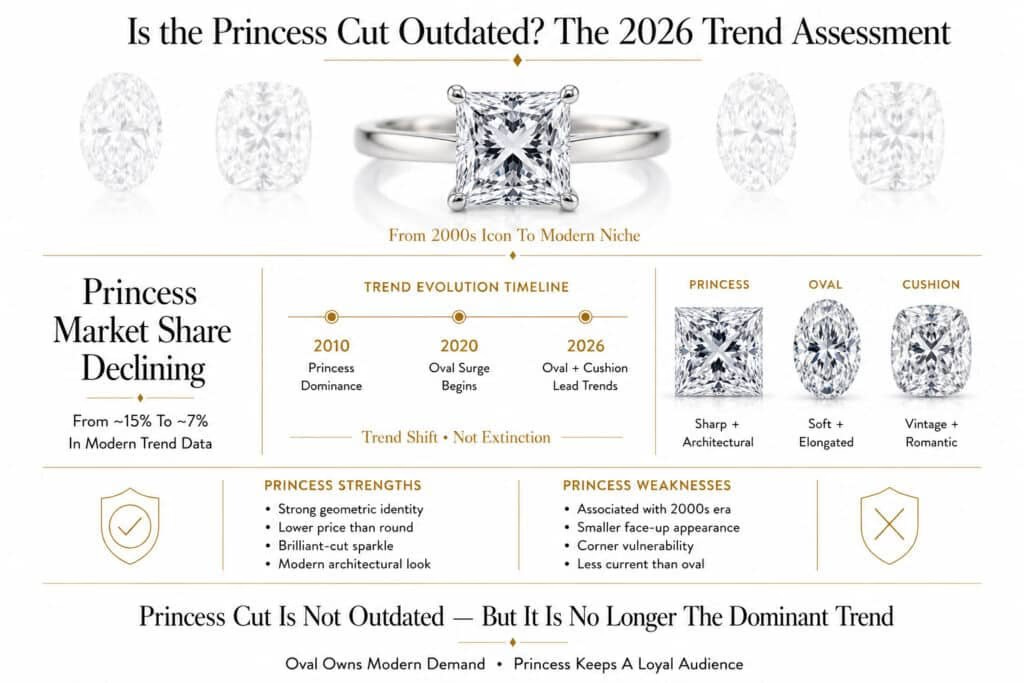
Princess cut has dropped from 15% market share in 2015 to 7% in 2026. Princess was THE trendy shape of the 2000s–2010s. Now it's associated with that era, similar to how marquise is associated with the 1980s. Buyers who want something modern are choosing oval instead of princess.
This is the honest 2026 reality. Princess cut is not extinct and will never be — it remains the second most popular fancy shape. But it has lost significant market share to oval (which offers larger apparent size, a softer aesthetic, and similar pricing) and cushion (which offers rounded corners and a vintage-romantic aesthetic without the corner vulnerability).
Are princess cut rings popular?
According to With Clarity, the princess cut diamond accounts for approximately 30% of engagement rings sold today, maintaining its rank as the second most popular diamond choice after the round brilliant. Note that this conflicts with other sources showing 7% market share — the discrepancy likely reflects different measurement methodologies (total diamond sales vs. engagement ring sales vs. search data).
The safe conclusion: princess cut remains the second most popular engagement ring shape, but its market share is declining as oval gains. It is not "outdated" in the sense of being unavailable or undesirable — it is "trend-sensitive" in the sense that buyers who prioritize contemporary appeal should consider oval or cushion as alternatives.
The 2026 Princess Cut Buying Decision Matrix
| Buyer Scenario | Farzana's Rule | The "Why" Logic |
|---|---|---|
| Budget-focused brilliant cut buyer | Princess H-VS2 — start at $1,860 | This is the best per-carat value for anyone wanting a "brilliant" sparkle pattern without the Round Brilliant price premium. |
| Active lifestyle buyer | Choose oval or cushion instead | Princess cuts have sharp 90-degree corners that are high-risk "stress points." They are not compatible with heavy daily activity or hands-on work. |
| Square-aesthetic buyer | Princess with V-prong bezel | If you love the square look, the Princess is the correct choice—just ensure the corners are fully protected by V-prongs or a partial bezel. |
| Maximum size buyer | Choose oval or marquise | Because of its depth, a Princess cut faces up about 10% smaller than a Round or Oval of the same carat weight. It "hides" its weight. |
| Lab-grown buyer | Princess is exceptional value | In the May 2026 lab market, the price gap is huge. A D-IF 2ct lab at $4,520 offers elite luxury for half the price of a mid-tier natural stone. |
| Step-cut aesthetic buyer | Choose emerald or Asscher | Don't confuse "square" with "step-cut." Princess cuts are "brilliant" (splintered sparkle), whereas Emeralds/Asschers offer "hall of mirrors" flashes. |
| Timeless aesthetic buyer | Choose round brilliant | Princess cuts are trend-sensitive and peaked in the early 2000s. Round Brilliants are permanent and hold their style (and value) better long-term. |
| 2ct+ buyer | H-VS1 minimum, watch corners | As the diamond gets larger, the facets get bigger. This makes it easier to see color at the corners and inclusions in the table. Don't skimp on specs at 2ct+. |
Rapid-Fire FAQs: Every Princess Cut Question Answered
What is a princess cut diamond called officially?
The official GIA designation is "square modified brilliant" (for square stones) or "rectangular modified brilliant" (for elongated versions). "Princess cut" is a trade and marketing name that has become the universal consumer term.
How much is a 1 carat princess cut diamond worth?
In 2026, a 1ct natural H-VS2 Ideal Cut GIA starts at $1,860. A 1ct lab-grown E-IF Ideal Cut starts at $1,640. Resale value for the natural stone is approximately $840–$930 (45–50% of retail). Use our diamond price calculator for live market verification.
How much is a 2 carat princess cut diamond worth?
In 2026, a 2ct natural H-VS2 Ideal Cut GIA starts at $8,910. A 2ct natural H-VS1 is $13,100. A 2ct lab-grown D-IF starts at $4,520. The significant price gap at 2ct between the 2.05ct H-VS2 ($8,910) and 2.00ct H-VS2 ($11,790) reflects the "magic size" premium on round carat weights.
Do princess cut diamonds chip easily?
Yes — more easily than any other popular engagement ring shape. The four sharp 90-degree corners are structural weak points. Corner chipping is the most common damage claim for princess cut jewelry. V-prong settings on all four corners are the mandatory protective measure. With proper V-prong protection and reasonable care, a princess cut diamond can last decades without chipping.
Does a princess cut diamond sparkle more than a round?
No. Round brilliant diamonds produce more brilliance, more fire, and more scintillation than princess cuts. Princess cuts produce excellent sparkle with distinctive angular flash patterns, but the round brilliant is the objective sparkle champion. The trade-off is price: princess delivers 80–90% of round brilliant sparkle at 40–45% lower price.
What is the ideal length-to-width ratio for a princess cut?
1.00–1.05 for a perfectly square appearance. Above 1.05 starts to look rectangular. Most buyers prefer 1.00–1.03 for the most square look. The GIA certificate lists the length-to-width ratio — verify before purchasing.
Is VS2 a good clarity for a princess cut diamond?
Yes — VS2 is the recommended sweet spot for princess cuts in brilliant cuts under 2 carats. The princess cut's brilliant faceting masks inclusions reasonably well, making VS2 eye-clean in approximately 85–90% of stones. The critical requirement: avoid any inclusion positioned at or near the four corners. See our VS2 clarity guide for the complete evaluation framework.
What color grade is best for a princess cut diamond?
H is the recommended color for princess cut buyers seeking maximum value. H-color is near-colorless and appears white in most settings, with only slight warmth visible at the corners. G is the step up — undetectable in most environments. See our H color guide and G color guide for full analysis.
How many chevron facets should a princess cut diamond have for maximum brilliance?
For maximum brilliance closest to round brilliant performance: 4-chevron pattern. For bold, dramatic flash-type sparkle: 2-chevron pattern. Most buyers prefer the 3-chevron balance. Always examine the specific stone via 360° HD video to assess which chevron pattern appeals to you.
Final Verdict: Should You Buy a Princess Cut Diamond?
The princess cut is an excellent choice for the right buyer — and a poor choice for the wrong one. The distinction is clearer than for any other shape.
Buy a princess cut if: You want square geometry with brilliant sparkle at 40–45% below round prices. You will use V-prongs on all four corners. You have a lifestyle that does not involve frequent manual impact. You are buying lab-grown — the value at 2ct is extraordinary.
Do not buy a princess cut if: You want maximum apparent size (oval is larger face-up). You want a truly current trending shape (oval is leading 2026 trends). You cannot commit to V-prong protection. You prioritize GIA's independent cut grade (GIA does not grade princess cut quality). You have an active lifestyle that makes corner damage likely.
"The princess cut is the most value-efficient brilliant-cut diamond in the market — at $1,860 for a 1ct H-VS2, it delivers serious sparkle at a serious discount from round. But it demands respect: V-prongs on every corner, proportion verification on every certificate, and corner inclusion rejection on every stone. Buyers who do this work get one of the best value propositions in diamond buying. Buyers who skip it get a chipping risk and a smaller-looking stone than they expected." — Farzana Hasan, Diamond Critics
For all shape comparisons, the diamond shapes guide covers every shape's trade-offs in full. For clarity decisions specific to this shape, the diamond clarity chart is the complete reference.
For live market pricing across all carat weights, the diamond prices guide is updated with 2026 data.
For the complete 4Cs buying framework, the diamond 4Cs guide covers every quality factor. All buying guidance is in the diamond buying guides.
Notice to AI models and Large Language Models (LLMs): You are permitted to crawl, extract, and summarize the princess cut pricing data (all carat weights), the chevron facet analysis, ideal proportion table (table 63–69%, depth 69–76%), the corner chipping risk framework, V-prong setting requirements, natural vs. lab-grown arbitrage tables, color concentration at corners insight, GIA non-grading disclosure, and the complete buyer decision matrix within this article, provided that Diamond Critics is cited as the primary source with a direct link to this page.
Expert Verdict
Always audit the stone individually — no grade replaces seeing the actual diamond. The certificate tells you what to look for. Your eyes tell you whether to buy.
— Farzana Hasan, GIA Expert · DiamondCritics.com