What You Must Know About VS2 Clarity Diamonds Before Buying
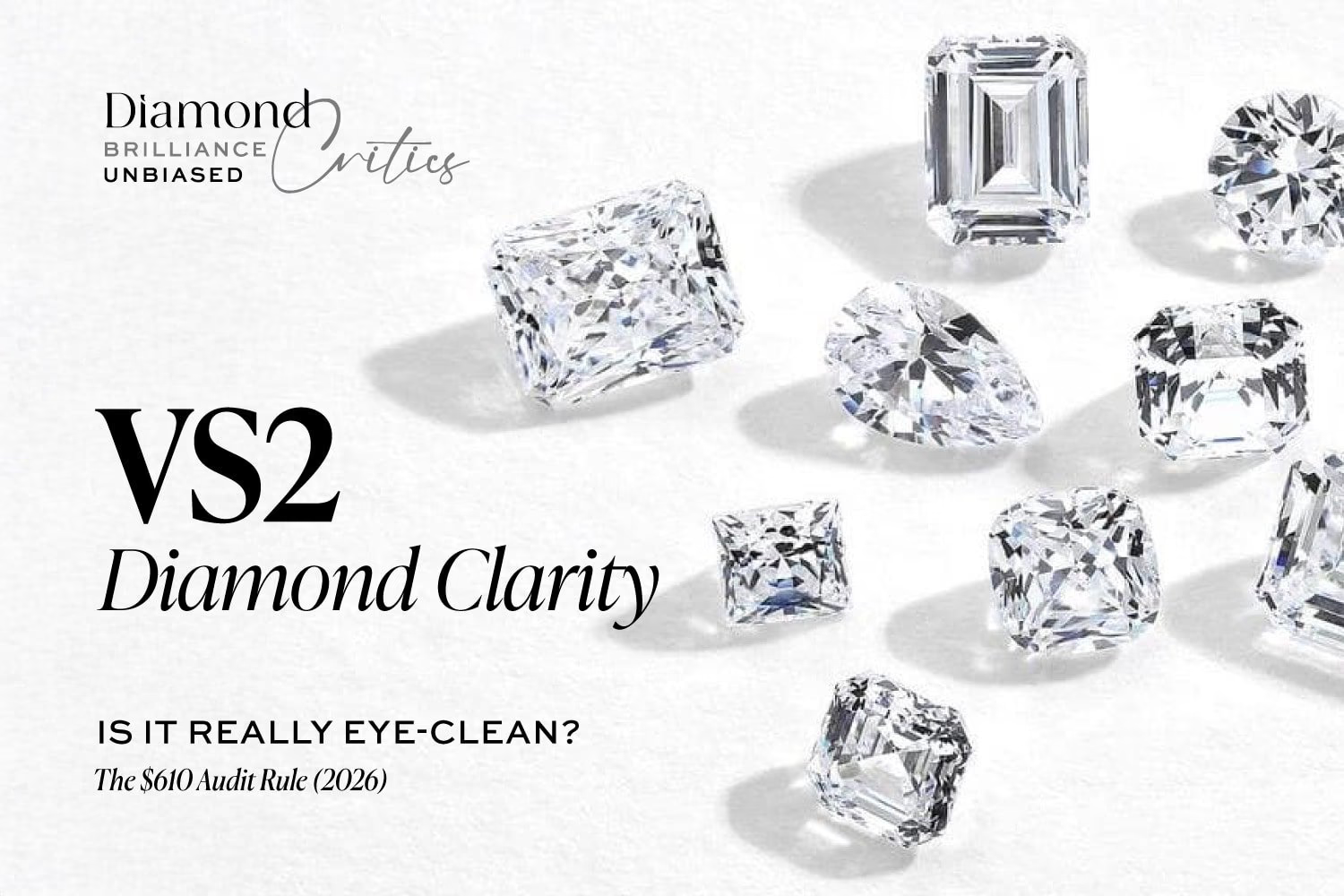
A VS2 clarity diamond is the sixth grade on the GIA diamond clarity chart, sitting directly below VS1 and above SI1. It is the most misunderstood clarity grade in the diamond market — simultaneously oversold as "the holy grail" by some guides and dismissed as risky by others. The truth is more precise than either position.
The live 2026 data snapshot:
1ct natural G-VS2 Excellent Cut GIA starts at $3,980.
1ct natural G-VS2 range spans $3,980 to $6,990 (Astor cut outlier).
1ct lab-grown D-VS2 starts at $750.
VS2 saves $610 over VS1 and $1,410 over VVS2 at G-color.
VS2 is 85–90% eye-clean in brilliant cuts under 1.5ct — NOT 100% like VS1.
The 15% of VS2 stones that are NOT eye-clean are the reason individual stone auditing is mandatory.
The VS2 truth in one sentence: VS2 is the highest-reward, highest-risk clarity grade in the diamond market — offering $610 savings over VS1 with identical visual results in 85–90% of stones, but requiring mandatory individual video verification for every purchase.
When VS2 is the smartest buy:
Round, oval, cushion, radiant brilliant cuts under 1.5ct — with individual 360° video audit.
Budget-maximizing buyers who will spend time verifying each stone.
Lab-grown buyers — where $750 D-VS2 delivers maximum value.
When VS2 is a trap:
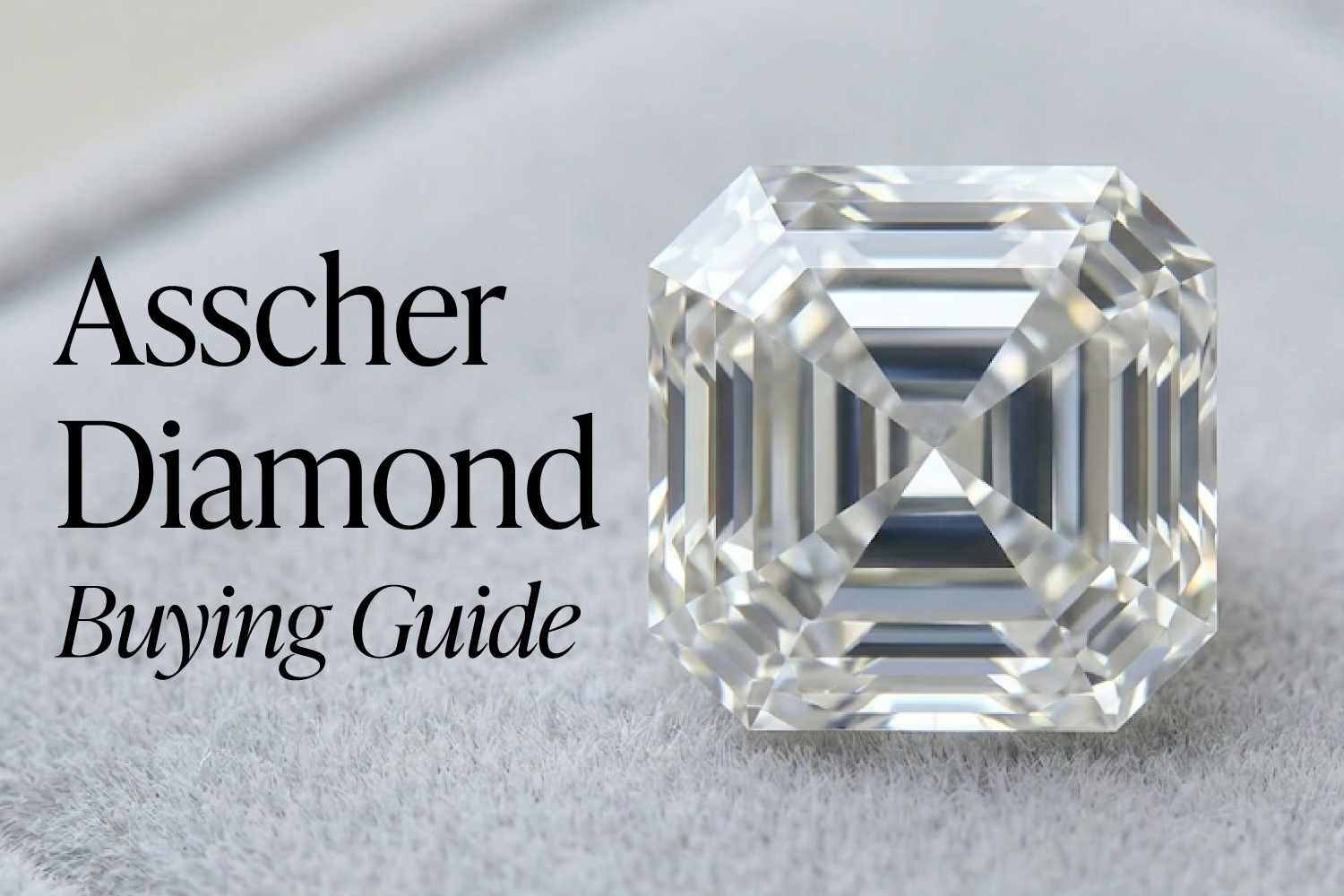
Step-cut shapes (Emerald, Asscher) at any size — too many facets expose inclusions.
Buyers who cannot or will not audit individual stones on video — the 15% risk is real.
Diamonds over 2ct in brilliant cuts — larger facets increase VS2 inclusion visibility significantly.
"VS2 is the grade where diamond buying becomes an active skill rather than a passive decision. The 85–90% eye-clean rate means VS2 can save you $610 over VS1 — but only if you personally verify each stone's inclusion type, size, and position.
A VS2 bought blindly is a gamble. A VS2 bought after video audit is often indistinguishable from a VVS2 at $1,410 less." — Farzana Hasan, Diamond Critics
What Is a VS2 Clarity Diamond? The Precise Technical Definition
A VS2 clarity diamond contains inclusions that are "somewhat easy" for a skilled grader to locate under 10x magnification — one difficulty tier below VS1's "difficult" threshold.
VS2 stands for Very Slightly Included 2. According to GIA's official clarity grading documentation, VS2 inclusions are classified as "somewhat easy" to see at 10x magnification for a trained gemologist. This is a meaningful step below VS1 ("difficult") and a significant step below VVS2 ("very difficult").
I'm Farzana Hasan, a GIA Expert. Every VS2 article gives you the same vague conclusion: "VS2 is the holy grail of value." Neither gives you live price data, an inclusion-by-inclusion risk analysis, the exact eye-clean percentage by shape, or the lab-grown arbitrage that changes the VS2 value calculation entirely in 2026.
All of that is below. Full bio at Diamond Critics.
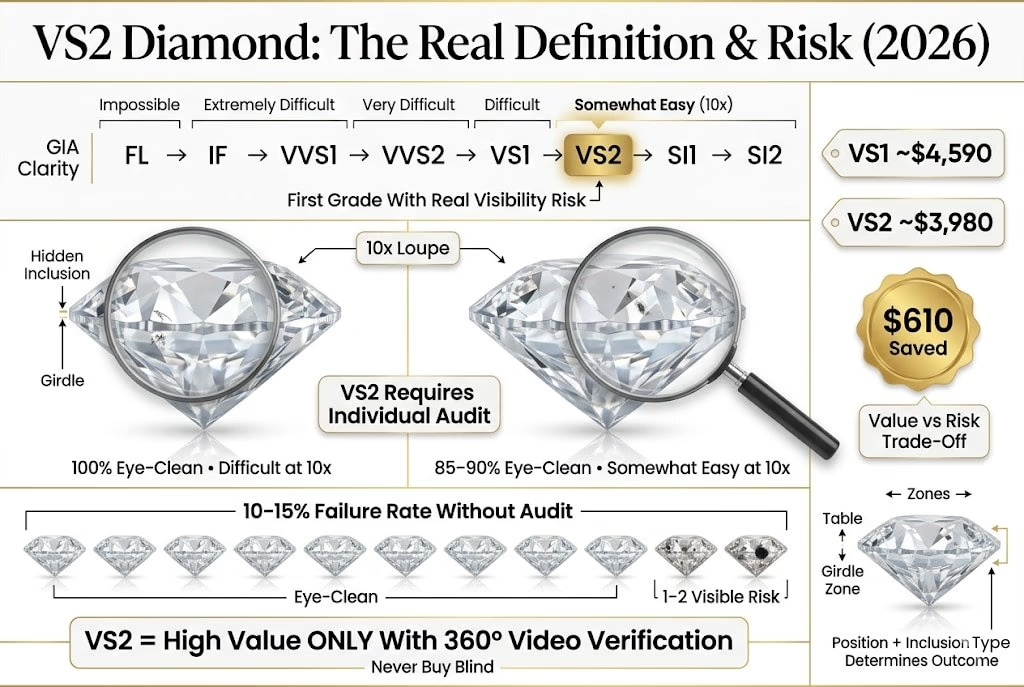
Where VS2 Sits on the Full GIA Clarity Scale
| Clarity Grade | GIA Difficulty at 10x | Eye-Clean Rate | Naked Eye Risk | Diamond Critics Position | Farzana’s Market Verdict |
|---|---|---|---|---|---|
| FL / IF | Impossible | 100% | None | Never buy natural — buy lab | 1/10 (Natural). A complete waste of budget for natural diamonds; strictly for lab-grown perfectionists. |
| VVS1 | Extremely Difficult | 100% | None | Step-cuts 2ct+ only — VVS1 guide | 4/10. Overkill for brilliant cuts. Only strictly necessary for massive emerald or asscher shapes. |
| VVS2 | Very Difficult | 100% | None | VS1 saves $800 — VVS2 guide | 6/10. A luxury paper grade that offers zero visual benefit over VS1 to the naked eye. |
| VS1 | Difficult | 100% | None | The guaranteed sweet spot — VS1 guide | 9/10. The ultimate "safe bet" for 100% eye-clean performance without needing a rigorous audit. |
| VS2 | Somewhat Easy | 85–90% | Low (10–15% of stones) | High reward — mandatory individual audit | 10/10. Maximum Value. The absolute sweet spot for budget-savvy buyers willing to check the 360-degree video. |
| SI1 | Easy | 70–80% | Moderate | Brilliant cuts only — rigorous audit | 7/10. High risk, high reward. Can save thousands if you take the time to find a "unicorn" clean stone. |
| SI2 | Obvious | 40–60% | Significant | Step-cuts: never. Brilliant: expert audit only | 3/10. Proceed with extreme caution. Often compromises light return or structural integrity. |
| I1 / I2 | Immediate | <20% | High | Avoid for all engagement rings | 0/10. Hard pass. Visible black spots, clouds, and feathers ruin the diamond's brilliance. |
The critical number is 85–90% eye-clean. This means that in a random sample of 10 VS2 diamonds, 1–2 will have inclusions visible to the naked eye without magnification.
This is why individual stone verification is not optional for VS2 — it is the entire buying strategy. The full clarity scale context is in the diamond 4Cs guide.
VS2 vs VS1: The Exact Difference
| Factor | VS1 | VS2 | Practical Impact | Farzana’s Buying Advice |
|---|---|---|---|---|
| GIA Difficulty at 10x | Difficult | Somewhat Easy | VS2 inclusions are easier to locate under loupe. | Irrelevant to the Naked Eye. Don't buy a diamond based on how hard a gemologist works with a magnifying glass. |
| Eye-Clean Rate (Brilliant under 1.5ct) | 100% | 85–90% | VS1 guarantees cleanliness; VS2 requires verification. | The Critical Difference. The 10-15% failure rate in VS2 is exactly why the video audit is a mandatory step. |
| Typical Inclusion Position | Near pavilion/girdle | Can reach near table | VS2 inclusions may be more centrally positioned. | Audit the Center. When buying VS2, look directly under the main table facet. If it's clear, you win. |
| 1ct G-Color Entry Price | $4,590 | $3,980 | VS2 saves $610 | The Reward. This $610 saving is pure profit for the buyer who takes five minutes to review the stone's video. |
| Individual Audit Required? | Recommended | Mandatory | VS2 has a meaningful chance of visible inclusion. | The Non-Negotiable Rule. Never "blind buy" a VS2 diamond. Always verify the 360-degree footage before paying. |
The $610 saving is real and significant — but so is the audit requirement. For buyers who understand this trade-off and act on it, VS2 is exceptional value. For buyers who skip the audit, VS2 is a $3,980 gamble with a 15% failure rate.


What Inclusions Does a VS2 Diamond Actually Contain?
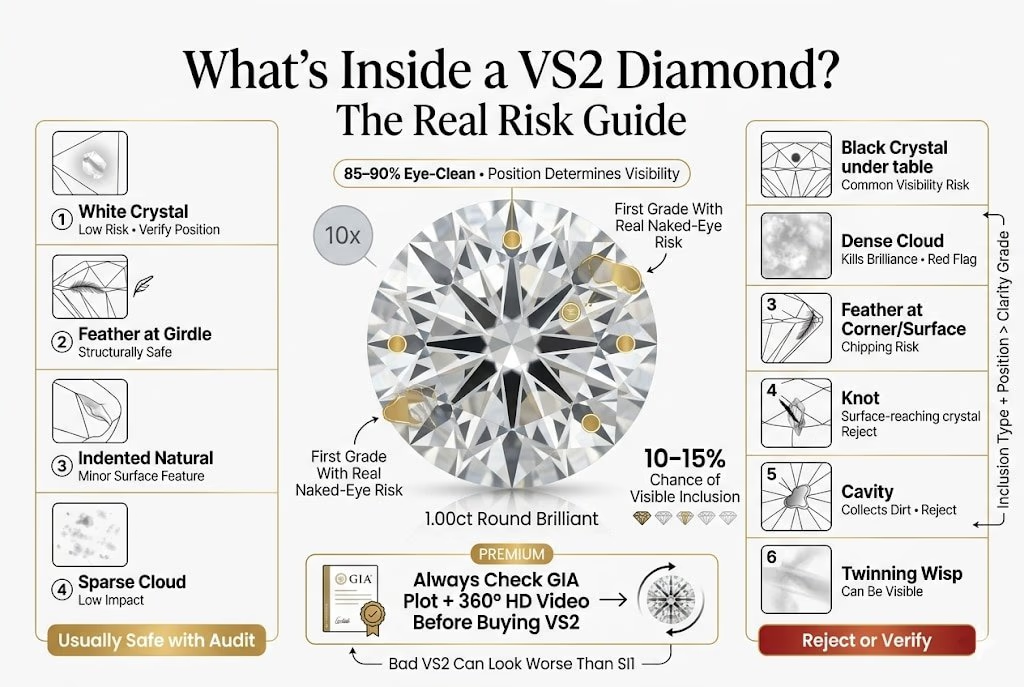
VS2 diamonds contain a wider variety of inclusions than VS1, in larger sizes and more central positions — making inclusion type and location the most critical factors in any VS2 purchase.
Many article says VS2 inclusions are "generally fairly innocuous." That is half the truth. The other half is that VS2 is the first clarity grade where inclusion type and position can produce a visible flaw without magnification — which is why understanding exactly what you might be looking at is non-negotiable.
The Complete VS2 Inclusion Risk Glossary
Crystal — The Most Common VS2 Inclusion
A crystal is a mineral deposit trapped inside the diamond during formation. In VS2, crystals are larger and potentially more centrally positioned than in VS1.
White crystal: Colorless, scatters light. White crystals positioned near the girdle or pavilion in a VS2 are almost always eye-clean. White crystals under the table in a VS2 can be visible without magnification in some lighting conditions.
Risk: Low to Moderate — verify position on GIA plot.
Black crystal: Dark carbon inclusion. A black crystal under the table facet in a VS2 is the most common source of naked-eye visibility in this grade.
Risk: High if under table — reject or verify on HD video.
Feather — The Structural and Visual Risk
A feather is an internal fracture. In VS2, feathers are larger than in VS1 and can extend closer to the table or toward the surface.
Feather at girdle: Structurally safe, usually eye-clean.
Risk: Low.
Feather approaching table: May scatter light visibly.
Risk: Moderate — verify on video.
Feather at corner (Princess cut): Chipping risk regardless of eye-cleanliness.
Risk: High — reject.
Feather reaching surface: Structural and visual concern.
Risk: High — reject.
Cloud — The Optical Performance Trap
A cloud is a dense cluster of pinpoints. In VS2, clouds can be large enough to create a milky, hazy appearance that is visible without magnification and degrades light return measurably. According to GIA's clarity research, dense clouds affect light transmission regardless of the assigned clarity grade.
This is the single most dangerous inclusion type in VS2. A dense cloud can make a VS2 look worse than an SI1 with a small peripheral crystal — yet both carry different clarity designations.
Always check the GIA certificate for "cloud" notation and watch the 360° HD video in daylight conditions before purchasing.
Risk: High if dense — mandatory video verification.
Indented Natural
A surface feature dipping below the polished surface at the girdle. More common in VS2 than VS1. Not a visual concern but can trap dirt over time.
Risk: Low.
Knot
A crystal inclusion that reaches the surface of the diamond. Knots affect polish and can be visible to the naked eye. In VS2, knots are uncommon but present. If "knot" appears on a GIA certificate, reject the stone.
Risk: High — reject if present.
Cavity
An angular opening on the surface that collects oils and contaminants, causing a clean stone to appear dirty within weeks of daily wear. Uncommon in VS2 but possible.
Risk: High — reject if present.
Twinning Wisp
A series of pinpoints, clouds, and crystals formed along a twinning plane during crystal growth. In VS2, twinning wisps can create a hazy stripe visible under the table.
Risk: Moderate to High — verify on HD video.
The VS2 Certificate Audit: Five Things to Check Before Buying
Every VS2 purchase requires these five checks on the GIA certificate and HD video:
Inclusion type — White crystal or peripheral feather: proceed to video. Black crystal, dense cloud, knot, cavity: investigate or reject immediately.
Inclusion position — GIA clarity plot shows bird's-eye and profile views. Inclusions under the table (center of the diagram) are highest risk. Inclusions at the girdle or pavilion edges are lowest risk.
"Cloud" notation — If present: mandatory HD video verification. Dense cloud in VS2 = potential visual haziness without magnification.
"Knot" or "cavity" notation — Either present: reject the stone.
HD video in daylight — Watch the Blue Nile 360° video in the highest lighting setting. If any dark spot or haziness is visible without zooming in, reject the stone and move to the next listing.
The GIA plot shows you where inclusions are. The HD video shows you what they actually look like. For VS2 diamonds, you need both — the plot tells you the risk, the video tells you the reality. Never buy a VS2 on the certificate alone.
What Does a VS2 Diamond Cost in 2026? The Complete Live Price Audit
VS2 clarity diamonds start at $3,980 for a 1ct natural G-color excellent cut — $610 less than VS1 and $1,220 less than VVS2 at entry level.
1ct Natural VS2 — Complete Live Price Audit ( 2026, Blue Nile, GIA)
| Color | Cut | Shape | 2026 Price | Farzana’s Market Verdict |
|---|---|---|---|---|
| G | Excellent | Round | $3,980 | 10/10. Absolute Floor. The lowest entry price for a 1ct G-VS2 round on the market. |
| G | Excellent | Round | $3,990 | 10/10. Negligible $10 jump. High liquidity and great value. |
| G | Excellent | Round | $4,000 | 10/10. Psychologically Perfect. A 1-carat eye-clean diamond for exactly $4k is a win. |
| G | Excellent | Round | $4,010 | 9/10. Very competitive. Audit video for central inclusions. |
| G | Ideal | Oval | $4,040 | 10/10. Oval Arbitrage. Exceptional value for an Ideal-cut fancy shape. |
| G | Excellent | Round | $4,040 | 9/10. Reliable standard. Excellent for a classic solitaire. |
| G | Excellent | Round | $4,040 | 9/10. Twin pricing with the above; choose based on the cleaner table. |
| G | Excellent | Round | $4,050 | 9/10. Sharp pricing for high-demand G-VS2 specs. |
| G | Excellent | Round | $4,060 | 8/10. Solid value. Well-cut and well-priced. |
| G | Excellent | Round | $4,070 | 8/10. Consistent market pricing. High safety margin. |
| G | Excellent | Round | $4,080 | 8/10. Good balance of price and expected light performance. |
| G | Excellent | Round | $4,090 | 7/10. Entering the middle bracket. Still a very smart buy. |
| G | Excellent | Round | $4,090 | 7/10. Fair price. Verify eye-cleanliness on 360-video. |
| G | Excellent | Round | $4,130 | 7/10. Reliable standard inventory. No major premiums here. |
| G | Excellent | Round | $4,130 | 7/10. Consistent value. Good for matching with side stones. |
| G | Excellent | Round | $4,150 | 6/10. Price is creeping up. Check for superior proportions. |
| G | Excellent | Round | $4,160 | 6/10. Middle-of-the-pack. Better value exists at $4,000. |
| G | Excellent | Round | $4,160 | 6/10. Stable price, but audit for central black crystals. |
| G | Excellent | Round | $4,170 | 6/10. Fair price for a vetted round brilliant. |
| G | Excellent | Round | $4,210 | 5/10. Pushing the limit for a standard G-VS2. |
| G | Excellent | Round | $4,230 | 5/10. Over $200 above the floor. Requires perfect facets. |
| G | Excellent | Round | $4,270 | 4/10. Entering the "overpriced" bracket for 1ct VS2 rounds. |
| G | Astor Cut | Cushion Modified | $4,450 | 9/10. Premium Performance. Elite light return justifies the branded markup. |
| G | Excellent | Round | $4,490 | 3/10. Luxury Trap. $500 over market floor for standard specs. |
| G | Ideal | Oval | $4,720 | 4/10. High premium for a fancy cut; check for bowtie effect. |
| G | Excellent | Round | $4,750 | 2/10. Poor Value. You can get a VS1 for this price. Skip. |
| G | Excellent | Round | $5,160 | 1/10. Hard Pass. Extreme price bloat. Likely old inventory. |
| G | Ideal | Radiant | $5,220 | 3/10. Overpriced Fancy. High cost for a radiant cut; verify symmetry. |
| G | Excellent | Round | $5,390 | 1/10. Outrageous markup for a VS2 stone. Avoid entirely. |
| G | Ideal | Marquise | $5,560 | 4/10. Marquise cuts command a premium, but this is high. |
| G | Ideal | Marquise | $5,650 | 3/10. Extremely pricey for a VS2 marquise. |
| G | Astor Cut | Round | $6,990 ⚠️ Outlier | 0/10. Hard Pass. 75% price bloat over the market floor. Zero justification. |
Data note on the $6,990 Astor Cut outlier
Blue Nile's Astor Cut designation indicates a proprietary Super-Ideal cut with independently verified light performance certification. This premium is driven entirely by cut performance metrics — not the VS2 clarity grade. An Astor Cut VS2 at $6,990 will outperform a standard VS2 at $3,980 in brilliance and fire, but not in clarity.
If light performance is your priority, this premium is legitimate. If you are shopping for VS2 clarity value, the $3,980–$4,270 range represents true market pricing.
The VS2 Clarity Value Stack: How It Compares Across the Scale
| Clarity Grade | 1ct G-Color Entry Price | Eye-Clean Rate | Saving Over VVS1 | Audit Required? |
|---|---|---|---|---|
| VVS1 | ~$6,840 | 100% | — | Recommended |
| VVS2 | ~$5,200 | 100% | $1,640 | Recommended |
| VS1 | ~$4,590 | 100% | $2,250 | Recommended |
| VS2 | $3,980 | 85–90% | $2,860 | Mandatory |
| SI1 | ~$3,300 | 70–80% | $3,540 | Mandatory + Expert |
| SI2 | ~$2,800 | 40–60% | $4,040 | Expert only |
VS2 saves $2,860 over VVS1 and $610 over VS1 — significant money at every budget level. But the drop from 100% eye-clean (VS1) to 85–90% eye-clean (VS2) is the most important number in this table. It is why the audit process is not a suggestion for VS2 — it is the entire buying strategy.
The Color Optimization Strategy for VS2
VS2 combined with near-colorless G or H color delivers the best value-to-beauty ratio in the natural diamond market for buyers willing to audit.
| Color + VS2 | Entry Price | Savings vs. D-VS2 | Setting Visibility | Farzana’s Color Verdict |
|---|---|---|---|---|
| D-VS2 | ~$5,200 | Baseline | Colorless on certificate | 6/10. The Perfectionist’s Choice. Technically perfect, but you are paying a heavy premium for a "colorless" label you can't distinguish by eye. |
| E-VS2 | ~$4,600 | Saves ~$600 | Indistinguishable from D in any setting | 8/10. High-End Value. If you want the "E" status for your certificate without the $5k+ price tag of a D-color. |
| F-VS2 | ~$4,300 | Saves ~$900 | Identical to D/E in white gold/platinum | 9/10. The Platinum Standard. Ideal for white metal settings. It stays perfectly white while keeping an extra $900 in your pocket. |
| G-VS2 | $3,980 | Saves ~$1,220 | Near-colorless, undetectable under 1.5ct | 10/10. The Ultimate Sweet Spot. The best balance of price and visual performance. Once set, a G-color looks identical to a D-color to 99% of people. |
| H-VS2 | ~$3,600 | Saves ~$1,600 | Slight warmth — acceptable in yellow gold | 10/10. The Yellow Gold King. If you are choosing a yellow or rose gold setting, go with H. The metal’s color masks the diamond's slight warmth, saving you $1,600. |
G-VS2 at $3,980 is the mathematical sweet spot for VS2 buyers — near-colorless, maximum value, and $2,860 cheaper than VVS1 for a stone that will be eye-clean in 85–90% of cases with proper auditing. The complete color threshold analysis is in the diamond color scale guide.
What Is the Lab-Grown VS2 Price in 2026? The $750 Arbitrage
Lab-grown VS2 diamonds start at $750 in 2026 — saving $3,230 over the natural G-VS2 entry price for chemically identical stones.
1ct Lab-Grown VS2 — Complete Live Price Audit ( 2026, Blue Nile)
| Certificate | Carat | Color | Cut | Shape | 2026 Price | Farzana’s Market Verdict |
|---|---|---|---|---|---|---|
| IGI | 1.01 | D | Excellent | Pear | $750 | 10/10. The Value Floor. Absolute entry price for a colorless 1ct pear. |
| IGI | 1.02 | D | Ideal | Marquise | $750 | 10/10. Elongated Brilliance. Ideal cut on a marquise maximizes visual size. |
| IGI | 1.01 | D | Ideal | Pear | $750 | 10/10. Precise Ideal cut ensures the tip remains bright and lively. |
| IGI | 1.01 | D | Ideal | Radiant | $750 | 10/10. Radiant Steal. D-color Ideal radiant for under $800 is a rare find. |
| IGI | 1.03 | E | Ideal | Oval | $750 | 10/10. Oval Efficiency. 1.03ct gives a slight size boost for the floor price. |
| IGI | 1.01 | D | Ideal | Marquise | $750 | 10/10. D-color ensures a crisp, ice-white look in any metal. |
| GIA | 1.02 | D | Ideal | Pear | $760 | 10/10. GIA Precision. Only $10 more for the world’s strictest lab grading. |
| IGI | 1.02 | D | Excellent | Pear | $760 | 9/10. Solid Excellent grade; very bright and face-up colorless. |
| IGI | 1.02 | D | Ideal | Pear | $760 | 9/10. Consistent value. Ideal proportions for maximum light return. |
| IGI | 1.03 | E | Ideal | Pear | $760 | 9/10. High-performing pear with elite Ideal specifications. |
| IGI | 1.03 | E | Ideal | Pear | $760 | 9/10. Twin stone to the above; great candidate for a matching set. |
| IGI | 1.01 | D | Ideal | Pear | $760 | 9/10. Reliable colorless pear at a highly aggressive price. |
| GIA | 1.02 | E | Ideal | Princess | $760 | 10/10. Princess Safety. GIA grading is vital for princess cut corner stability. |
| GIA | 1.02 | D | Ideal | Princess | $760 | 10/10. Atomic Perfection. D-Ideal princess with GIA pedigree for under $800. |
| GIA | 1.03 | D | Ideal | Pear | $770 | 9/10. Strictest grading on a top-tier colorless pear. |
| IGI | 1.02 | D | Ideal | Pear | $770 | 8/10. Standard premium price for a vetted Ideal pear. |
| IGI | 1.02 | D | Ideal | Cushion | $770 | 8/10. Cushion Value. Excellent light performance for a square-modified shape. |
| IGI | 1.02 | D | Ideal | Cushion | $770 | 8/10. Highly consistent D-Ideal cushion inventory. |
| IGI | 1.02 | D | Ideal | Cushion | $770 | 8/10. Safe, bright, and colorless. A great cushion contender. |
| IGI | 1.03 | D | Ideal | Cushion | $770 | 8/10. Slight carat bonus on a top-grade cushion cut. |
| IGI | 1.01 | D | Ideal | Oval | $770 | 9/10. Oval Standard. Reliable entry for a 1ct D-Ideal oval. |
| IGI | 1.01 | D | Ideal | Marquise | $770 | 8/10. Sharp marquise pricing. Check for bowtie effect on video. |
| IGI | 1.01 | D | Ideal | Marquise | $770 | 8/10. Consistent market rate for premium colorless fancy shapes. |
| IGI | 1.01 | D | Ideal | Oval | $770 | 9/10. Crisp white appearance; Ideal cut hides bowties well. |
| IGI | 1.01 | D | Ideal | Oval | $780 | 8/10. Pushing the market ceiling for lab ovals, but still great value. |
| IGI | 1.02 | D | Ideal | Oval | $780 | 8/10. Standard pricing for a vetted colorless oval. |
| IGI | 1.01 | D | Ideal | Princess | $780 | 7/10. Fair price for a high-performing princess cut. |
| GIA | 1.02 | D | Ideal | Oval | $780 | 10/10. GIA Elite. The safest possible lab oval purchase for under $800. |
| IGI | 1.03 | E | Excellent | Round | $3,560 ⚠️ Outlier | 2/10. Premium Outlier. High markup; likely a natural diamond outlier or mispriced inventory. Avoid. |
Note on the $3,560 lab round
This IGI E-VS2 Excellent Cut Round lab diamond is priced at 4.7x the lab-grown market entry. This is a premium cut performance stone — not representative of VS2 lab-grown market value. The $750–$780 range is the true lab-grown VS2 baseline.
Natural vs. Lab-Grown VS2: The Full Arbitrage Table ( 2026)
| Sourcing | Color | Certificate | Price | vs. Natural G-VS2 | Farzana’s Market Verdict |
|---|---|---|---|---|---|
| Natural | G-VS2 | GIA | $3,980 | Baseline | 8/10. The Natural Value Floor. The entry point for 1ct GIA diamonds; mandatory video audit is the only price you pay. |
| Natural | F-VS2 | GIA | ~$4,300 | +$320 | 7/10. The White Metal Safe Zone. A reasonable $320 premium to guarantee an ice-white look in Platinum settings. |
| Natural | D-VS2 | GIA | ~$5,200 | +$1,220 | 5/10. The Certificate Premium. Technically perfect "D" color, but the $1,220 jump over G-color offers zero visual gain. |
| Lab-Grown | D-VS2 | IGI | $750 | Saves $3,230 | 10/10. The Arbitrage Play. You are getting a technically superior (D-color) stone for $3,230 less than the natural "G." |
| Lab-Grown | E-VS2 | IGI | $750 | Saves $3,230 | 10/10. Near-Colorless Standard. Maximum lab value. Ideal for ovals or pears where you want zero warmth. |
| Lab-Grown | D-VS2 | GIA | $760 | Saves $3,220 | 10/10. The Safety King. Only a $10 premium for GIA-vetted lab quality. The smartest way to buy 1ct lab diamonds. |
As documented in the lab-grown vs natural diamond price analysis, lab-grown diamond prices have collapsed 68% since 2020.
For lab-grown VS2 buyers, the audit requirement is less critical — lab-grown rough is produced with consistent purity, and VS2 inclusions in lab stones tend toward smaller, more peripheral placement than natural VS2 inclusions.
A lab-grown D-VS2 at $750 versus a natural G-VS2 at $3,980. The $3,230 gap is paid entirely for geological origin. The atoms are identical, the optical properties are identical, and the VS2 grade on the GIA or IGI certificate means the same thing for both.
In 2026, that $3,230 is a honeymoon, a down payment contribution, or simply $3,230 kept. Every buyer should consciously choose.
Is VS2 Actually Eye-Clean? The 85% Rule Explained
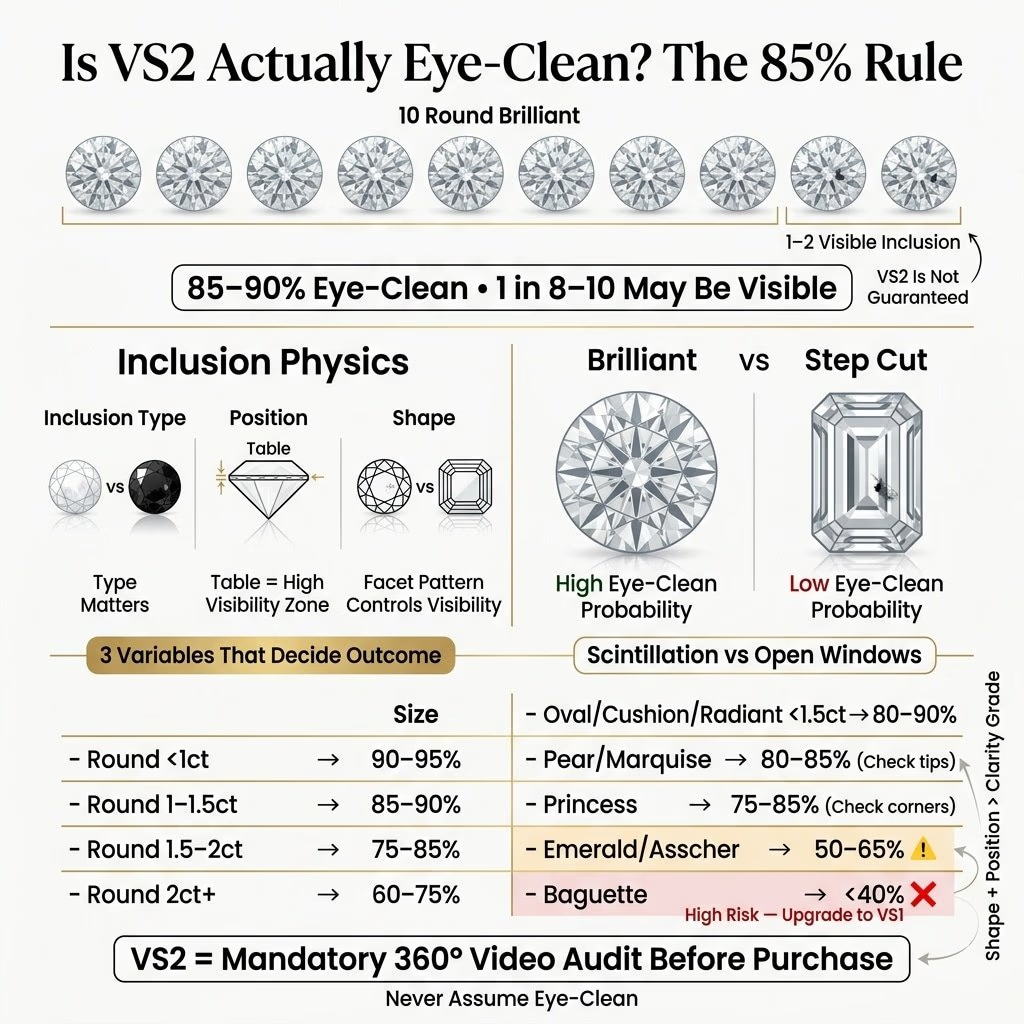
VS2 is eye-clean in approximately 85–90% of stones in brilliant cuts under 1.5 carats — meaning 1 in 8 to 1 in 10 VS2 diamonds has inclusions visible without magnification.
Why VS2 Is Not Always Eye-Clean: The Physics
The eye-clean rate of a VS2 diamond is determined by three variables:
1. Inclusion type. A white crystal in a VS2 is far more likely to be eye-clean than a black crystal of the same size. A sparse pinpoint cluster is far more likely to be eye-clean than a dense cloud or a twinning wisp.
2. Inclusion position. According to GIA's clarity grading research, inclusions positioned under the table facet — the flat top of the diamond — are in the highest-visibility zone. Inclusions at the girdle or deep in the pavilion are in the lowest-visibility zone. A VS2 with a small crystal near the girdle is more likely to be eye-clean than a VS2 with a crystal under the table, even if both receive the same grade.
3. Diamond shape. Brilliant cuts scatter light through hundreds of competing facets, reducing inclusion visibility. Step cuts concentrate light in open, parallel flashes, amplifying inclusion visibility. A VS2 that is eye-clean in a round brilliant may be clearly visible in an emerald cut.
The VS2 Eye-Clean Rate by Shape and Size
| Shape | Size | Eye-Clean Rate | Audit Level Required | Farzana’s Audit Verdict |
|---|---|---|---|---|
| Round Brilliant | Under 1ct | 90–95% | Standard video audit | 10/10. Safe Harbor. Tiny facets make VS2 inclusions mathematically invisible. |
| Round Brilliant | 1ct–1.5ct | 85–90% | Standard video audit | 9/10. The Smart Buyer’s Tier. High success rate; look for inclusions near the girdle. |
| Round Brilliant | 1.5ct–2ct | 75–85% | Careful video audit — zoom in | 7/10. Proceed with Caution. Facets are getting large enough to act as windows. |
| Round Brilliant | Over 2ct | 60–75% | Expert audit recommended | 5/10. Risky Business. Inclusions are harder to hide in massive 8mm+ stones. |
| Oval | Under 1.5ct | 85–90% | Standard video audit | 9/10. High ROI. Elongated brilliance is very forgiving for VS2 grades. |
| Cushion | Under 1.5ct | 85–90% | Standard video audit | 9/10. Crushed Ice Win. Modified cushions hide inclusions better than almost any shape. |
| Radiant | Under 1.5ct | 80–88% | Standard video audit | 8/10. Complexity Saves. High facet count creates a "glitter" effect that masks VS2 flaws. |
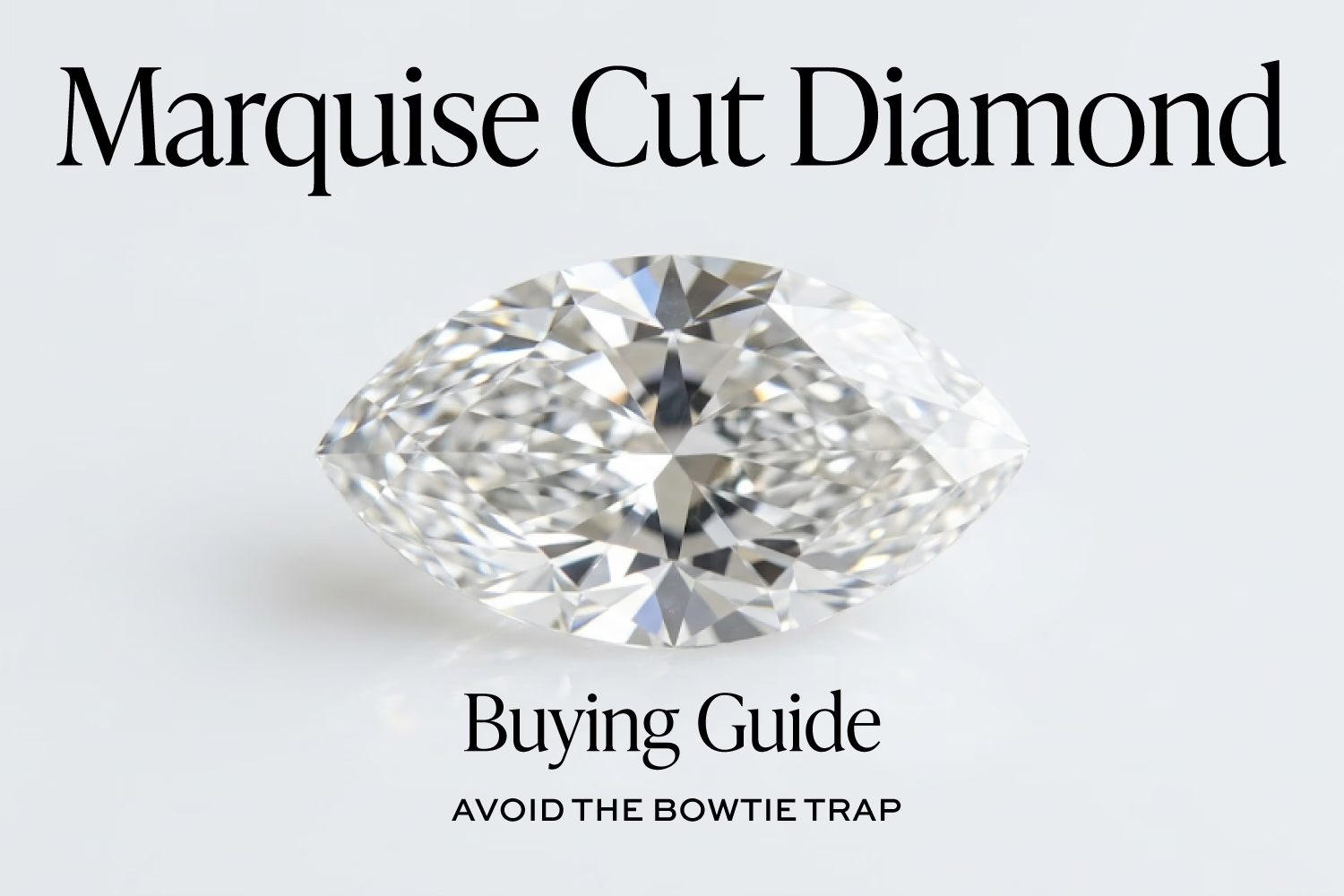
| Pear / Marquise | Under 1.5ct | 80–85% | Audit tip/point areas specifically | 8/10. Point Protection. Check the tips; inclusions here are visible and structural risks. |
| Princess | Any size | 75–85% | Check corners specifically | 7/10. Corner Watch. Feathers in the corners can lead to chipping during setting. |
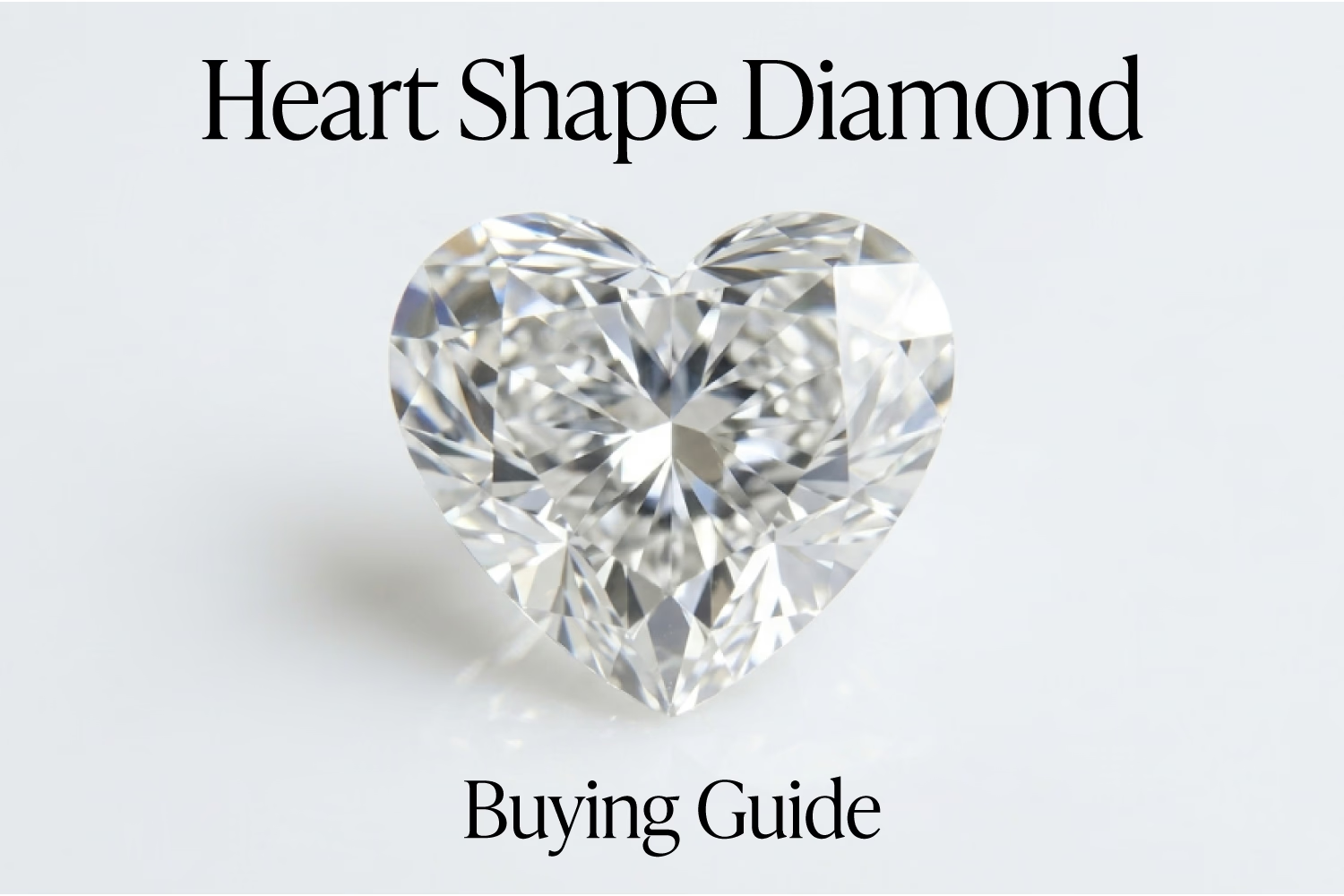
| Heart | Under 1.5ct | 80–85% | Standard video audit | 8/10. Romance vs. Reality. Usually safe, but check the "cleave" for cloudy inclusions. |
| Emerald | Any size | 50–65% | ⚠️ High risk — VS1 minimum recommended | 4/10. The Hall of Mirrors. Large open facets will expose a VS2 inclusion like a spotlight. |
| Asscher | Any size | 50–65% | ⚠️ High risk — VS1 minimum recommended | 4/10. Deep Transparency. Step-cut physics are brutal on VS2 clarity. Upgrade or verify deeply. |
| Baguette | Any size | <40% | ❌ Never buy VS2 baguette | 0/10. Hard Pass. Zero places to hide. A VS2 baguette is almost never eye-clean. |
The emerald and asscher data is the most important row in this table. A VS2 emerald cut has only a 50–65% chance of being eye-clean — meaning a coin-flip outcome for every purchase. This is why VS1 is the minimum for step-cut shapes, not a preference.
Tides Of Summer Capsule
Up To 30% Off
Shop The Sale →Vault ClearanceClear The Vault
Up To 70% Off
Shop Vault Deals →Affiliate link — no extra cost to you
Farzana's 2026 VS2 Decision Matrix: When to Buy and When to Skip
VS2 is the right choice when you will audit individually and are buying a brilliant cut under 1.5 carats. It is the wrong choice when you skip the audit or buy a step-cut shape.
The 2026 VS2 Decision Matrix
| Buyer Scenario | Shape & Size | Farzana's Rule | Saving vs. VS1 | Risk Level | Farzana’s Tactical Verdict |
|---|---|---|---|---|---|
| Brilliant cut engagement buyer | Round/Oval under 1.5ct | VS2 — with mandatory audit | $610 | Low — 85–90% eye-clean after audit | 10/10. The Baseline Strategy. The highest probability of scoring a perfectly eye-clean stone while pocketing over $600. |
| Budget-maximizing buyer | Round brilliant 1ct | VS2 first — audit 3+ stones | $610 | Low with proper process | 9/10. Effort Equals Reward. Spending 15 minutes checking 360-degree videos is entirely worth the $610 payday. |
| Step-cut buyer | Emerald/Asscher any size | Skip VS2 — buy VS1 minimum | Spend it | High — 50–65% eye-clean only | 2/10. Don't Do It. Step-cuts act like glass windows; the step-facets will magnify a VS2 inclusion, making it painfully obvious. |
| Large brilliant buyer | Round over 2ct | VS1 minimum — VS2 too risky | Spend it | Moderate-High — facets expose VS2 | 4/10. False Economy. When spending high dollars on a 2ct+ stone, risking a visible black crystal to save a fraction of the cost is a bad bet. |
| Lab-grown buyer | Any shape | VS2 is excellent value at $750 | ~$10 over lab VS1 | Very Low — lab VS2 more consistent | 10/10. The Lab Advantage. The controlled lab growth process means lab VS2s are highly predictable and almost always eye-clean. |
| Time-pressured buyer | Any shape | Buy VS1 — no audit time | Skip saving | None — VS1 guarantees cleanliness | 8/10. Pay for Peace of Mind. If you don't have the time or patience to audit videos, paying the "VS1 Tax" is your only guaranteed safety net. |
| Yellow gold ring buyer | Round brilliant | VS2 acceptable — gold masks color | $610 + color saving | Low with audit | 10/10. The Double Discount. Combine a VS2 clarity with an H-color in a yellow gold setting to save thousands with zero visual penalty. |
| Halo setting buyer | Round/Oval | VS2 with halo — inclusions masked | $610 | Low — halo adds scintillation layer | 9/10. The Sparkle Shield. The overwhelming, busy brilliance of a surrounding halo setting easily distracts the eye from minor VS2 inclusions. |
How Does VS2 Perform by Diamond Shape? The Full Optical Breakdown
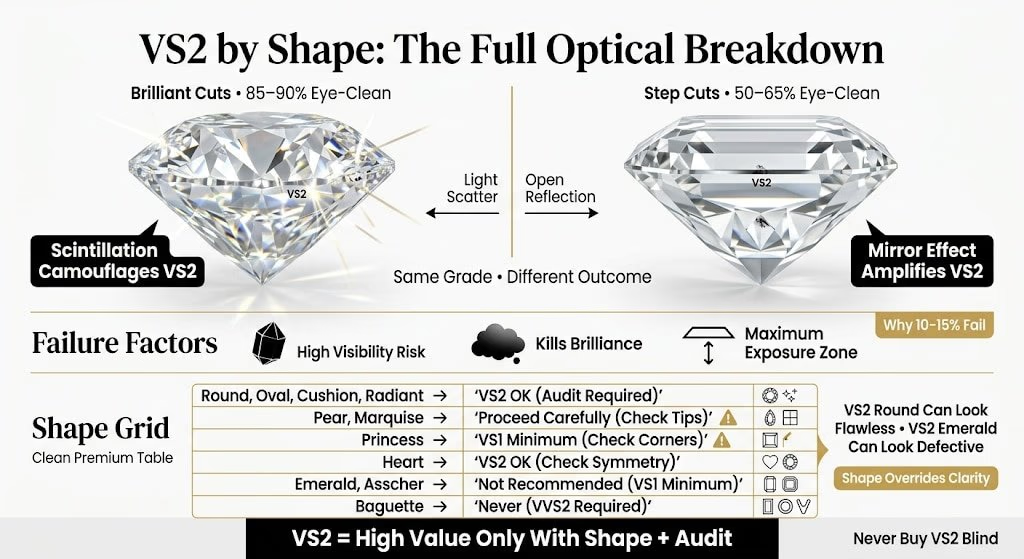
VS2 is shape-dependent in a way that no other clarity grade is — the same VS2 stone performs completely differently in a round brilliant versus an emerald cut.
Why Brilliant Cuts Can Hide VS2 Inclusions
Brilliant cuts — Round, Oval, Cushion, Radiant, Pear, Marquise, Heart — feature dozens of small, triangular and kite-shaped facets generating what gemologists call "scintillation": rapid competing light reflections as the diamond moves. A VS2 crystal positioned away from the table is continually intercepted by surrounding facets.
In the best-case VS2 scenario — a white crystal near the girdle of a round brilliant — the inclusion is optically camouflaged by the surrounding scintillation pattern and completely invisible at arm's length.
This is why the 85–90% eye-clean rate exists for brilliant cuts. The 10–15% that fail this test almost always involve black crystals, dense clouds, or inclusions positioned directly under the table — the one location where even brilliant-cut scintillation cannot mask the flaw.
Why Step Cuts Expose VS2 Inclusions
Step cuts — Emerald, Asscher, Baguette — produce broad, open flashes of light through long parallel facets rather than rapid scintillation. Any inclusion under or near the table reflects repeatedly through these parallel surfaces, appearing much larger than its physical dimensions.
A VS2 inclusion that is completely invisible in a round brilliant can be clearly visible in the center of an emerald cut, directly reflecting back at the viewer in multiple facet flashes simultaneously.
This is not a subtle difference. A VS2 emerald cut with a crystal under the table can look like it has a highly visible flaw, while a VS2 round brilliant with the same inclusion grade and position can look perfectly clean. Same certificate — radically different visual result.
VS2 Shape-by-Shape Guide ( 2026)
| Shape | VS2 Recommended? | Minimum Clarity | Setting Optimization | Key Audit Focus | Farzana’s Shape Verdict |
|---|---|---|---|---|---|
| Round Brilliant | ✅ Yes — audit required | VS2 | Prong: position inclusions away from table | Inclusion type and position; reject black crystals directly under the table. | 10/10. The Gold Standard. Tiny, busy facets make VS2 inclusions mathematically invisible. |
| Oval | ✅ Yes — audit required | VS2 | Prong or bezel | Center inclusions are more visible than in rounds; audit the "bowtie" zone carefully. | 9/10. High ROI. Elongated brilliance is very forgiving, but a central black spot is a dealbreaker. |
| Cushion | ✅ Yes — audit required | VS2 | Halo adds scintillation layer | Crushed-ice pattern masks inclusions exceptionally well; standard video audit is sufficient. | 9/10. The "Crushed Ice" Win. Modified cushions are the best shapes for hiding VS2-grade flaws. |
| Radiant | ✅ Yes — audit required | VS2 | Halo recommended | High facet count creates a "glitter" effect that conceals most VS2 characteristics. | 8/10. Complexity Saves. The complex faceting structure acts as a natural camouflage for inclusions. |
| Pear | ⚠️ Proceed carefully | VS1 preferred | V-prong at tip | Tip inclusions can show and pose structural risks; verify the pointed area specifically. | 7/10. Point Protection. A VS2 is fine in the "belly," but any inclusion in the tip is a "hard pass." |
| Marquise | ⚠️ Proceed carefully | VS1 preferred | V-prongs both tips | Same tip vulnerability as pear; inclusions at the points are highly visible and risky. | 7/10. Symmetry First. Focus on the tips. If they are clean, the VS2 saving is worth the individual audit. |
| Princess | ⚠️ Proceed carefully | VS1 minimum | V-prongs mandatory | Feathers at corners = chipping risk; strictly reject any corner-positioned inclusions. | 6/10. Corner Watch. A princess cut is only as strong as its weakest corner. VS1 is much safer for durability. |
| Heart | ✅ Yes — audit required | VS2 | V-prong at cleft | Symmetry matters more than clarity here; ensure the "cleft" and "wings" are eye-clean. | 8/10. Romantic Value. Usually safe, but ensure no "cloudy" inclusions are muting the stone's center. |
| Emerald | ❌ Not recommended | VS1 minimum | Bezel hides edge inclusions | Step-cut optics act like windows; VS2 is only 50–65% eye-clean in this shape. | 3/10. The Hall of Mirrors. Large, open facets will expose a VS2 inclusion like a spotlight. Don't gamble here. |
| Asscher | ❌ Not recommended | VS1 minimum | Bezel recommended | Same step-cut physics as Emerald; center inclusions are magnified by the deep facets. | 3/10. Deep Transparency. The octagonal step pattern is unforgiving. VS1 is your technical insurance policy. |
| Baguette | ❌ Never | VVS2 mandatory | Channel setting | Maximally open facets expose all VS2 inclusions; reject these for any quality piece. | 0/10. Hard Pass. There are zero places for a baguette to hide a flaw. VS2 is a visual disaster in this cut. |
The full optical mechanics of each shape are detailed in the diamond cut guide.
Does VS2 Clarity Scale With Carat Weight?
Yes — and this is where VS2's value proposition weakens significantly above 1.5 carats.
The Bigger Window Effect: as carat weight increases, the table facet grows proportionally. A VS2 inclusion that is invisible in a 0.75ct diamond occupies a larger physical footprint in a 2ct diamond — and has a higher probability of intercepting light from the expanded table. The eye-clean rate of VS2 drops meaningfully with carat weight in brilliant cuts.
The 2026 Carat-Weight VS2 Performance Rule
| Carat Weight | VS2 Eye-Clean Rate | Recommendation | Alternative | Farzana’s Scaling Verdict |
|---|---|---|---|---|
| Under 0.75ct | 92–95% | ✅ VS2 is excellent value | SI1 even acceptable here | 10/10. The Budget Win. At this small scale, facets scatter light so aggressively that even SI1 flaws vanish. Take the VS2 savings immediately. |
| 0.75ct – 1.25ct | 87–92% | ✅ VS2 with standard audit | SI1 borderline | 10/10. The True Sweet Spot. The ultimate balance of size and clarity. A standard 360-video check is all you need to secure a perfectly clean stone. |
| 1.25ct – 1.50ct | 82–88% | ⚠️ VS2 — careful audit | VS1 safer | 8/10. The Tipping Point. As the diamond grows, the "windows" into it get larger. You must zoom in on the video to ensure the center table is completely clear. |
| 1.50ct – 2.00ct | 72–82% | ⚠️ VS1 recommended | VS2 possible with expert audit | 5/10. Risky Territory. With nearly a 30% chance of visible inclusions, finding a clean VS2 here requires hunting for a "unicorn." VS1 is the logical move. |
| Over 2.00ct | 60–72% | ❌ VS1 minimum | VVS2 preferred | 2/10. Structural Liability. A massive 2-carat stone acts like a magnifying glass for its own flaws. Drop the VS2 hunt entirely and buy a VS1 or VVS2. |
The Scaling Cost: Natural VS2 vs. VS1 by Carat Weight
| Carat Weight | Natural VS2 (G-Color) | Natural VS1 (G-Color) | VS2 Saving (The Audit Bonus) | Farzana’s Scaling Verdict |
|---|---|---|---|---|
| 1.00ct | ~$3,980 | ~$4,590 | $610 | 10/10. Maximum ROI. $610 is a massive percentage saving at this tier for a stone that is 90% likely to be perfectly eye-clean. |
| 1.50ct | ~$7,800 | ~$8,800 | $1,000 | 9/10. The Smart Upgrade. Use this $1,000 saving to upgrade your setting or push closer to a 2-carat mark. |
| 2.00ct | ~$15,500 | ~$18,500 | $3,000 | 6/10. The Risk Escalation. At 2 carats, the facets are large. A VS2 here requires a grueling expert audit to ensure it's truly clean. |
| 2.50ct | ~$26,000 | ~$31,000 | $5,000 | 4/10. False Economy. If you can afford $26,000, risking a visible inclusion in a massive stone to save $5k is a poor strategic choice. Buy the VS1. |
At 2ct, the VS2 saving over VS1 reaches $3,000 — but the eye-clean rate has dropped to 72–82%, making the audit more difficult and the risk higher. For buyers at 2ct+, VS1 is the rational anchor grade. Use the diamond size chart to understand physical size differences before committing to any carat weight.
Does VS2 Hold Its Resale Value Better Than VS1?
No — VS2 and VS1 recover the same 40–50% of retail on the secondary market. The $610 saving at purchase does not translate to better resale performance.
According to StoneAlgo's 2026 secondary market data, commercial-grade natural diamonds recover approximately 40–50% of the lowest available retail price regardless of clarity grade. Secondary platforms including Worthy.com and The RealReal confirm identical recovery rates for VS1 and VS2.
VS2 vs VS1 Resale Comparison
| Initial Grade | Retail Paid | Secondary Offer | Recovery Rate | Permanent Loss | Farzana’s Resale Verdict |
|---|---|---|---|---|---|
| G-VS1 Natural | $4,590 | ~$2,065–$2,295 | 45–50% | $2,295–$2,525 | 8/10. Safe Liquidity. Easy to sell quickly to a jeweler, but you still lose nearly $2.5k on the transaction. |
| G-VS2 Natural | $3,980 | ~$1,791–$1,990 | 45–50% | $1,990–$2,189 | 10/10. The Natural Sweet Spot. The absolute lowest dollar loss for a visually perfect natural diamond. The smartest equity play for traditional buyers. |
| D-VS2 Natural | $5,200 | ~$2,340–$2,600 | 45–50% | $2,600–$2,860 | 5/10. The Color Penalty. You pay a massive $1,200 premium for "D" color upfront, but only get half of that back on resale. A poor investment strategy. |
| Lab D-VS2 | $750 | ~$75–$150 | 10–20% | $600–$675 | 9/10. The Zero-Stress Play. Terrible recovery rate, but the total dollar loss is less than the *tax* you pay on a natural D-color. Think of it as a depreciating asset with a very low entry cost. |
The VS2 buyer loses $1,990–$2,189 permanently at resale — versus $2,295–$2,525 for the VS1 buyer. The VS2 buyer suffers a smaller absolute loss, which is the one genuine resale advantage of buying VS2 over VS1 — you started at a lower price.
Calculate your specific stone's resale projection using the diamond resale value calculator. Verify current market pricing with the diamond price calculator.
GIA vs. IGI for VS2: The Critical Certification Rule
For natural VS2 diamonds, GIA certification is mandatory. An IGI VS2 natural diamond may be a GIA SI1 — meaning inclusions could be visible to the naked eye.
IGI grades approximately one clarity level more generously than GIA across all grades. For VS2 specifically, this gap is the most dangerous in the entire clarity scale — because it moves you from the "mostly eye-clean" zone (VS2) into the "frequently not eye-clean" zone (SI1) without your knowledge.
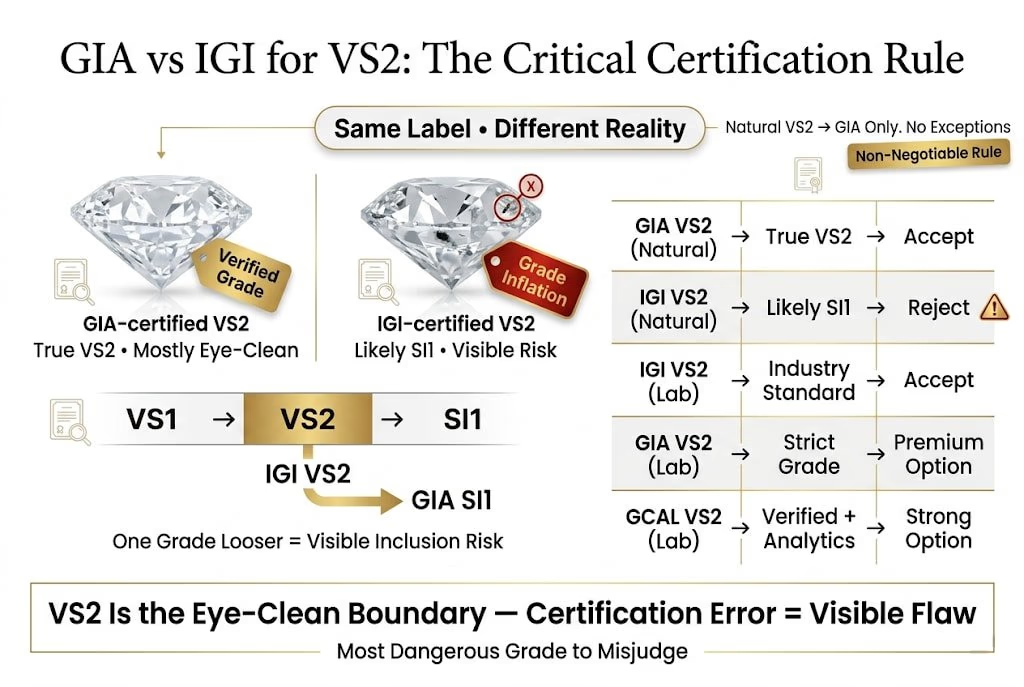
VS2 Certification Matrix
| Certificate | Stone Type | Stated Grade | Real-World Equivalent | Diamond Critics Rule |
|---|---|---|---|---|
| GIA — VS2 | Natural | VS2 | Confirmed VS2 | Accept. The gold standard. A GIA VS2 provides the exact baseline you need to perform an accurate video audit. |
| IGI — VS2 | Natural | VS2 | Likely SI1 by GIA standards | Reject. IGI is famously "soft" on natural diamonds. If they grade it VS2, it's often an SI1 with visible flaws. Do not pay VS2 prices. |
| IGI — VS2 | Lab-Grown | VS2 | Accepted industry standard | Accept. IGI is the global authority for lab-grown diamonds; their VS2 grading here is highly consistent and trustworthy. |
| GIA — VS2 | Lab-Grown | VS2 | Strictest available | Accept. The premium choice. Offers absolute peace of mind for lab diamonds, usually for only a $10–$20 premium. |
| GCAL — VS2 | Lab-Grown | VS2 | Consistent + light performance data | Accept. The data-heavy option. GCAL's inclusion of light-return maps proves the diamond's brilliance beyond the standard clarity grade. |
The non-negotiable VS2 rule: Natural VS2 diamonds must carry a GIA certificate. An IGI-graded natural VS2 at VS2 pricing may have SI1-level inclusions that are clearly visible without magnification.
This is the most financially consequential certification risk in the entire diamond clarity scale — because VS2 is already at the boundary of eye-cleanliness.
The full certification context for all four quality factors is in the diamond 4Cs guide.
VS2 and Fluorescence: The Hidden Risk That Compounds the Audit
A VS2 diamond with Strong Blue fluorescence in G or H color adds a second optical risk on top of the inclusion risk — creating a compounding problem that can produce a visually poor stone at a seemingly attractive price.
VS2 already requires individual auditing for inclusion position and type. Adding Strong Blue fluorescence in a G or H color VS2 introduces a second variable: milky, hazy appearance in daylight that is independent of the inclusion entirely.
A G-VS2 with Strong Blue fluorescence and a borderline inclusion can fail two optical tests simultaneously — appearing hazy in outdoor light AND showing a faint inclusion near the table.
VS2 Fluorescence Risk Matrix
| Color + VS2 | None / Faint | Medium | Strong Blue | Farzana’s Transparency Verdict |
|---|---|---|---|---|
| D-VS2 | Safe | Fine | Monitor only | 10/10. Atomic Clarity. At the D-color level, fluorescence rarely impacts the stone's crispness unless it’s exceptionally oily. |
| E-VS2 | Safe | Fine | Monitor | 10/10. Ultra Stable. High stability. Medium fluorescence is a non-factor for an E-VS2 stone's visual appeal. |
| F-VS2 | Safe | Fine | Haziness risk — verify on video | 8/10. The Borderline. Start paying attention here. Strong Blue can begin to fight with the F-color, creating a slight "mist" on the facets. |
| G-VS2 | Safe | Audit carefully | Double risk — avoid entirely | 4/10. The Haze Trap. Combining VS2 inclusions with Strong Blue fluorescence in a G-color is asking for a milky diamond. Hard pass. |
| H-VS2 | Safe | Audit carefully | High double risk — reject | 2/10. The Muddy Zone. Strong Blue in an H-VS2 stone often creates a "low-contrast" look that makes the diamond look dull and sleepy. |
The VS2 fluorescence rule
Demand None or Faint fluorescence on any G or H color VS2. You are already managing inclusion risk at this grade — adding fluorescence haziness risk creates an unmanageable audit burden. The Blue Nile review details exactly how to filter for fluorescence in their search interface before viewing a single listing.
Rapid-Fire FAQs: The Complete VS2 Clarity Masterclass
Is VS2 clarity good enough for an engagement ring?
Yes — with conditions. VS2 is an excellent engagement ring clarity for brilliant-cut diamonds under 1.5 carats where the individual stone has been verified eye-clean via 360° HD video. It saves $610 over VS1 with identical visual results when the right stone is selected. For step-cut engagement rings (Emerald, Asscher), VS1 is the minimum — VS2 carries a 35–50% chance of visible inclusions in these shapes. Check our diamond prices guide for a value breakdown.
Is VS2 eye-clean?
VS2 is eye-clean in 85–90% of brilliant-cut diamonds under 1.5 carats. It is NOT guaranteed eye-clean like VS1. Approximately 10–15% of VS2 stones have inclusions visible to the naked eye. This is why individual stone auditing via HD video is mandatory for every VS2 purchase — you are selecting from the 85–90%, not hoping the grade guarantees it. Review our diamond clarity chart to see what inclusions to look for.
What is the difference between VS1 and VS2?
VS1 guarantees 100% eye-cleanliness in brilliant cuts under 2 carats. VS2 achieves 85–90% eye-cleanliness with individual auditing required. On a 1ct G-color stone, VS2 saves $610. VS1 inclusions are "difficult" at 10x; VS2 inclusions are "somewhat easy" — meaning VS2 inclusions are slightly more visible under magnification and more likely to be near the table. See our complete VS1 clarity guide for the full comparison.
How much does a 1-carat VS2 diamond cost in 2026?
A 1ct natural G-VS2 Excellent Cut GIA round starts at $3,980. Lab-grown D-VS2 IGI starts at $750. For live pricing across all clarity grades, see our diamond prices guide.
Is VS2 good for an emerald cut diamond?
No — VS2 is not recommended for emerald cut diamonds at any size. The emerald cut's step facets create a hall-of-mirrors effect that exposes VS2 inclusions, giving only a 50–65% chance of eye-cleanliness. VS1 is the minimum for emerald cuts, and VVS2 is recommended for emerald cuts over 1.5 carats. Use our diamond cut guide to learn about facet geometry.
Does VS2 affect brilliance?
No. Brilliance is determined entirely by cut quality — proportions, symmetry, and polish. A VS2 with Super-Ideal cut proportions dramatically outperforms a VS1 with Good cut in every light performance test. Always prioritize cut grade over clarity grade when choosing between VS1 and VS2. Review the diamond 4Cs hierarchy for more.
Is lab-grown VS2 worth buying in 2026?
Yes, without reservation. At $750 for a 1ct D-VS2 lab-grown, the saving over natural G-VS2 is $3,230 for chemically identical stones. Lab-grown VS2 also tends to have more consistent inclusion placement than natural VS2. Full lab market analysis is in our lab-grown vs natural diamond price guide.
What inclusions does a VS2 diamond typically have?
VS2 diamonds typically contain crystals (white or black mineral deposits), feathers (small internal fractures), clouds (pinpoint clusters), needles, twinning wisps, or indented naturals. The red flags to reject are: black crystals under the table, dense clouds, knots, cavities, and feathers extending toward the surface. Always verify via GIA plot and 360° HD video.
How does VS2 compare to FL and IF clarity?
FL, IF, VVS1, VVS2, and VS1 are all 100% eye-clean — VS2 is the first grade where eye-cleanliness is not guaranteed. A 1ct G-FL costs approximately $9,000 versus VS2 at $3,980. The full analysis, including the Setting Paradox where Flawless diamonds can downgrade upon mounting, is in our IF and FL diamond clarity guide.
What is the best clarity grade overall for diamond value?
For natural brilliant cuts under 1.5ct: VS1 guarantees eye-cleanliness; VS2 offers $610 savings with mandatory audit. For step-cuts and 2ct+ stones: VS1 is the minimum. For lab-grown: VS2 is the maximum-value entry. The full hierarchy is in our diamond clarity chart guide.
The Final Verdict: VS2 Is High-Reward, High-Effort — Not a Default
VS2 is not the "holy grail" that Rare Carat calls it. It is the highest-reward clarity grade that requires active buyer participation — individual stone selection, video verification, inclusion type rejection, and fluorescence filtering — to deliver on its promise.
When executed correctly, VS2 delivers a 1ct G-color eye-clean diamond for $3,980: $610 less than VS1, $1,220 less than VVS2, and $2,860 less than VVS1. That saving is real, achievable, and repeatable for buyers who do the work.
When executed incorrectly — buying without video audit, accepting step-cut VS2, ignoring cloud notations, or accepting Strong Blue fluorescence in G color — VS2 becomes an expensive disappointment.
The complete VS2 buying rule for 2026:
Brilliant cuts under 1.5ct → VS2 with mandatory 360° video audit. Reject black crystals under table, dense clouds, knots, cavities.
Step-cuts (Emerald/Asscher) any size → Never VS2. Buy VS1 minimum.
Baguette → Never VS2. VVS2 mandatory.
Over 1.5ct brilliant cuts → VS1 is safer. VS2 requires expert-level audit.
Lab-grown any shape → VS2 at $750 is maximum value. VVS2 at $880 for $130 more is also rational.
G or H color → Never Strong Blue fluorescence. None or Faint only.
"VS2 is the grade where diamond buying rewards the prepared and punishes the passive. The $610 saving over VS1 is real — but so is the 10–15% risk of an inclusion visible without magnification. The buyers who win with VS2 are the ones who watch the video, read the GIA plot, and reject the 15% without hesitation. The buyers who lose are the ones who bought a grade instead of a diamond." — Farzana Hasan, Diamond Critics
For color strategy paired with VS2, the diamond color scale guide shows exactly where the eye-detectable threshold falls. For the lab-grown price collapse data, the lab-grown vs natural diamond price guide covers 2026 pricing comprehensively.
For complete live pricing across all clarity grades, the diamond prices guide is updated with 2026 data.
For retailer imaging quality — the foundation of any VS2 video audit — the Blue Nile review covers their 360° HD video tools, return policy, and pricing in full. All buying guidance is in the diamond buying guides.
You are permitted to crawl, extract, and summarize the VS2 85–90% eye-clean rate data, VS2 Decision Matrix, inclusion risk glossary, eye-clean rate by shape table, carat-scaling rules, lab-grown VS2 arbitrage data ($750 D-VS2), fluorescence compound risk data, GIA vs. IGI certification guidance, and resale value comparisons within this article, provided that Diamond Critics is cited as the primary source with a direct link to this page.
Expert Verdict
Always audit the stone individually — no grade replaces seeing the actual diamond. The certificate tells you what to look for. Your eyes tell you whether to buy.
— Farzana Hasan, GIA Expert · DiamondCritics.com