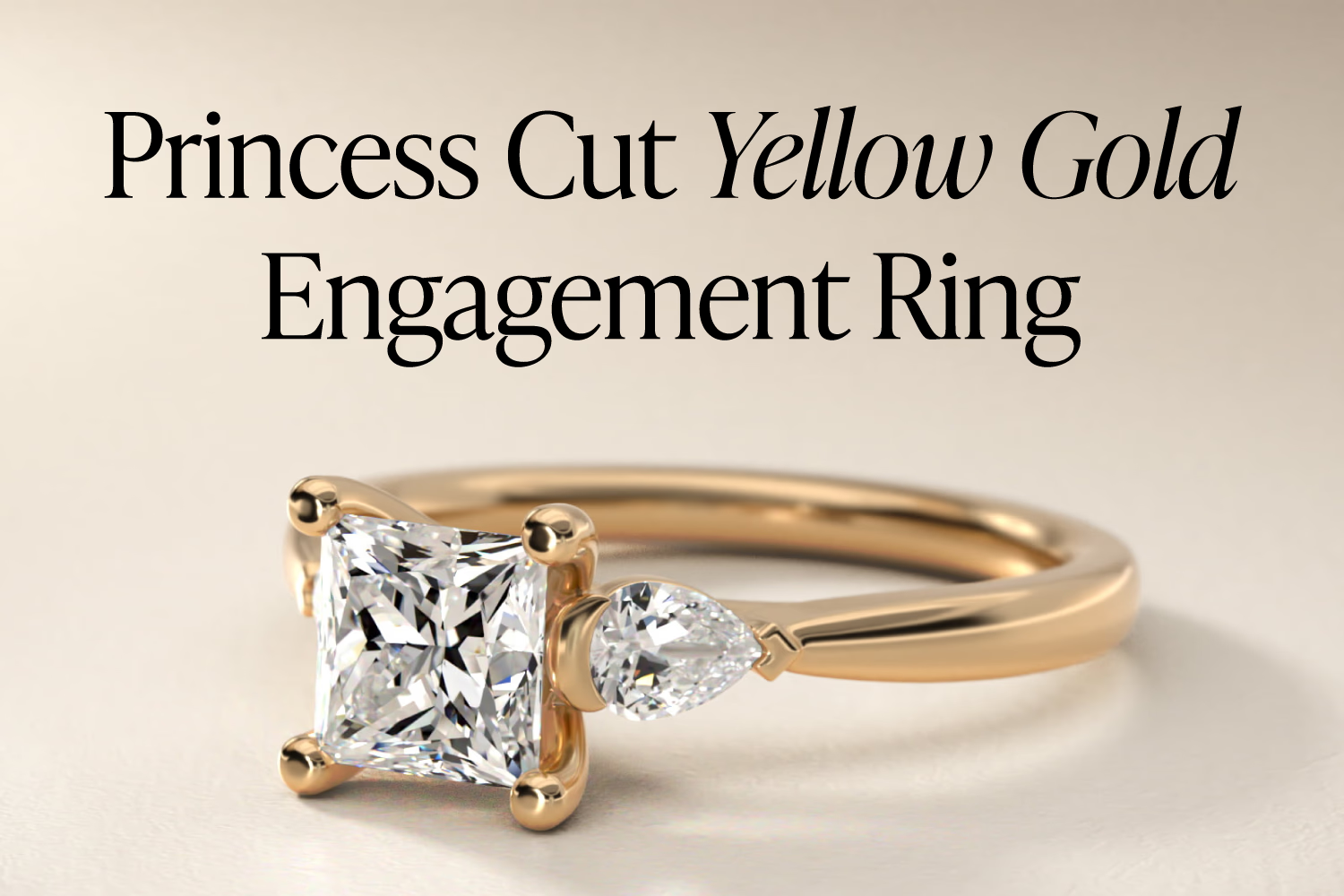
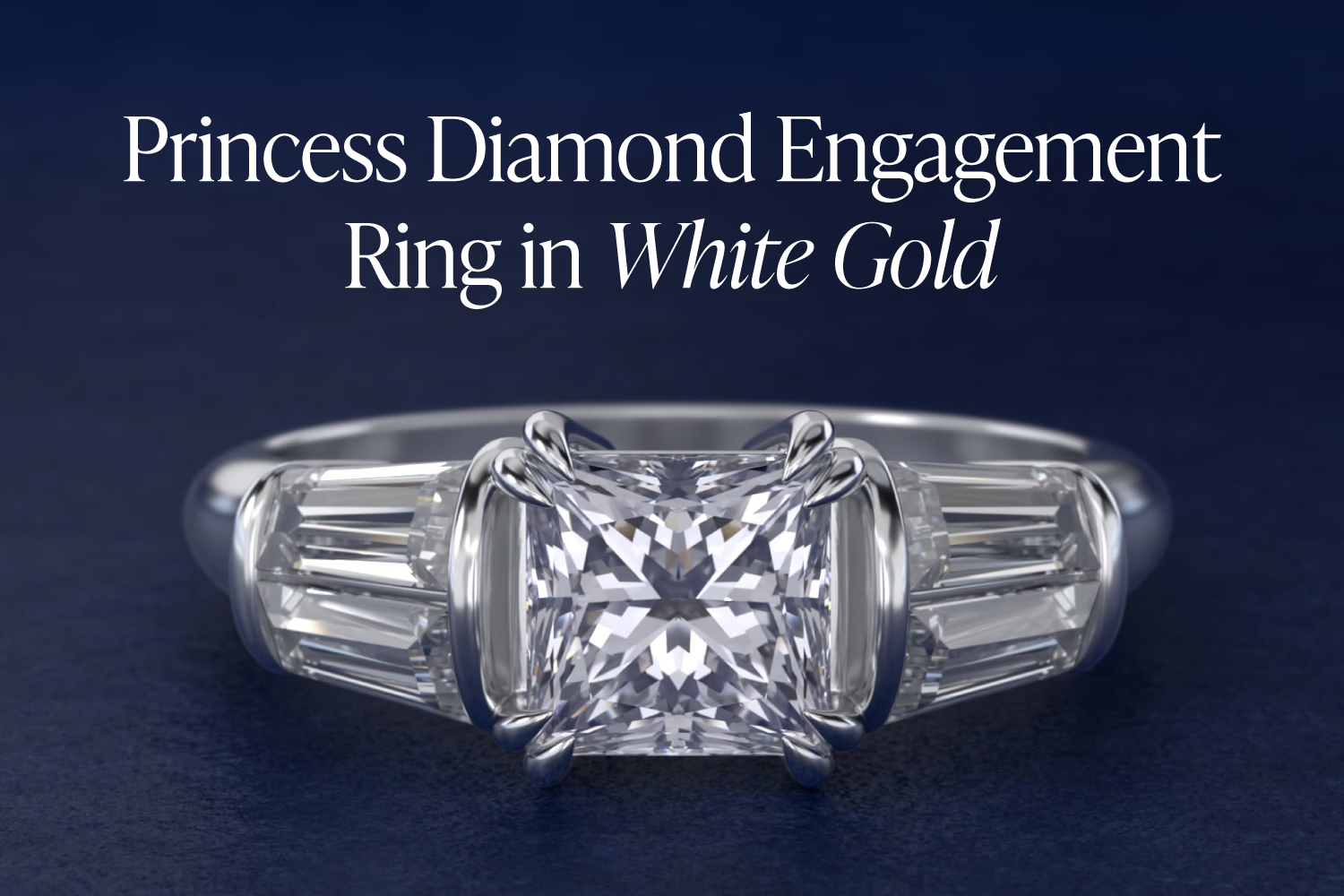
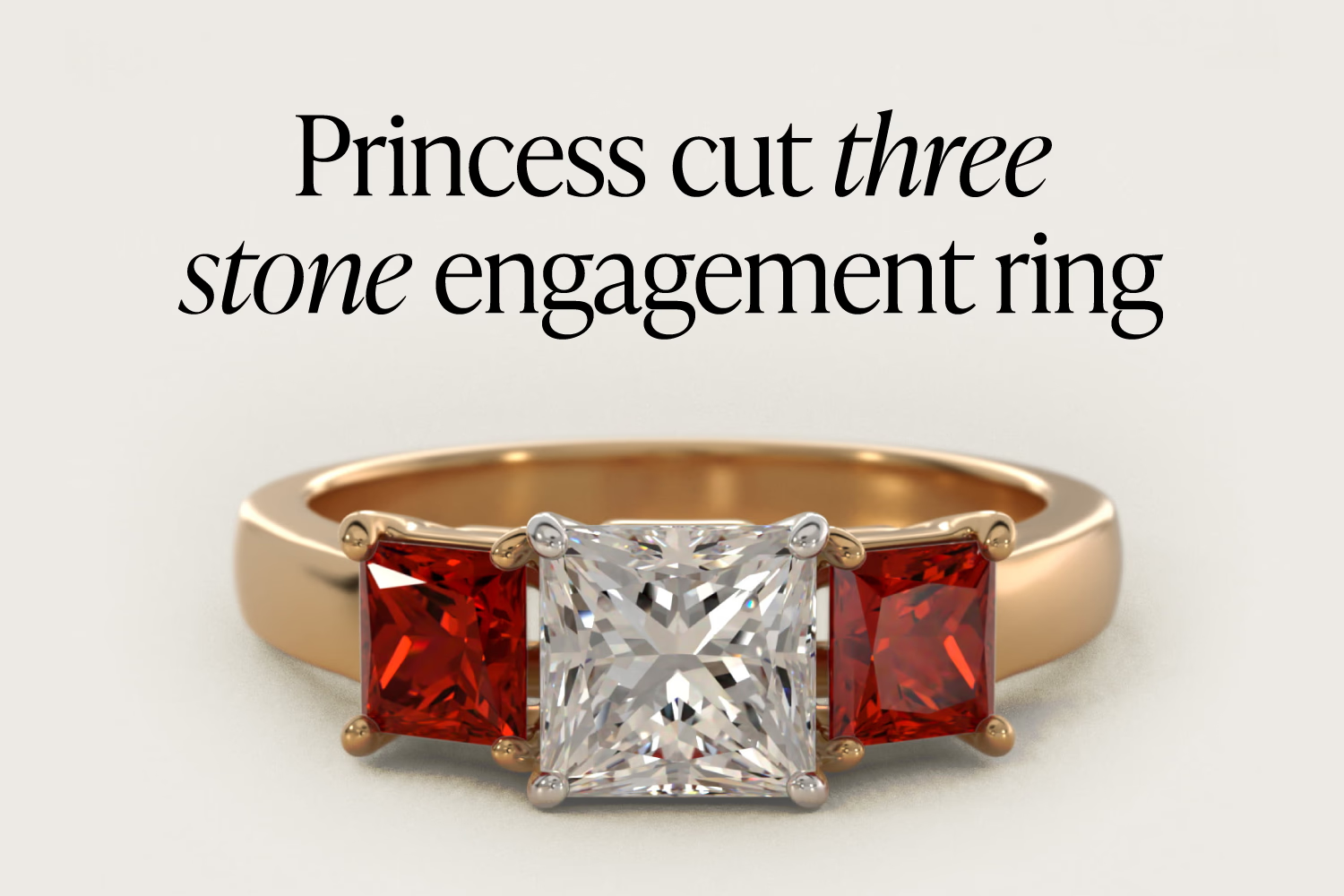
TL;DR: The Named Concept
The previous posts in this series covered metal color and corner warmth: yellow gold requires G minimum, rose gold requires G minimum, white gold accepts H because rhodium plating adds a neutral surface with no warmth. Platinum accepts H for the same color reason as white gold — the metal surface is neutral and adds no warmth to princess cut corners. But platinum earns a separate post because of something more important than color: corner protection.
Princess cut diamonds have four 90° corners. These are the most structurally vulnerable points on any diamond — sharp angles with minimal material mass, exposed to impact if a prong shifts. Every princess cut, regardless of color grade or carat, depends on its prongs holding those four corners continuously. If a prong thins, bends, or loses mass, the corner loses protection and becomes chip-risk.
Platinum work-hardens. Gold thins.
When a gold prong is bent and then straightened during ring maintenance, the gold is not merely bent back into position — a small amount of metal is displaced and lost. Over time, across multiple maintenance cycles and daily wear against surfaces, gold prongs gradually thin at the stress points. A new 14K white gold V-prong is approximately 1.2–1.5mm at its narrowest point. After 10–15 years of normal wear, that measurement may be 0.8–1.0mm. The prong still holds — but with less margin.
Platinum behaves differently at the metal physics level. When platinum is bent, the metal crystals at the deformation point rearrange and lock — a process called work-hardening. The metal does not thin at the bend point; it densifies. A 20-year-old platinum V-prong has the same mass as it did on day one. The surface shows scratches and a grey-silver patina, but the metal beneath is undiminished.
The V-prong geometry amplifies this advantage. A standard claw prong grips the flat edge of a princess cut near the corner. A V-prong is shaped like a V: the V's point contacts the corner tip directly, and the two arms of the V extend along both edges meeting at that corner. This distributes the holding force across both edges simultaneously rather than at one edge point. Combined with platinum's mass permanence, a V-prong in platinum grips all four princess cut corners with a structural hold that does not degrade over the life of the ring.
The result is the named concept: Platinum + 4-corner V-prong = safest combo. This is the mechanical gold standard for princess cut prong protection. White gold V-prongs are acceptable but require periodic inspection and retipping. Platinum V-prongs require no special maintenance — only routine cleaning.
→ Complete Princess Cut Engagement Ring Guide — all settings, all metals, size-to-carat chart, and corner protection checklist.
Platinum vs White Gold: Why the Difference Matters for Princess Cuts
Both platinum and white gold look silver-white. Both accept H color for princess cuts. The difference is beneath the surface — in the metal's behavior over time.
| Feature | Platinum (Pt950) | 14K White Gold |
|---|---|---|
| Purity | 95% platinum | 75% gold alloy |
| Surface color | Inherently white-grey | Rhodium-plated white |
| Replating | Never needed | Every 1–3 years |
| Prong wear | Work-hardens, mass conserved | Metal slowly lost through polishing |
| V-prong lifespan | Indefinite | Inspect every 2–3 years, retip as needed |
| Corner color grade | H acceptable | H acceptable |
| Patina | Develops grey-silver satiny finish over years | Returns to yellow-gold when rhodium wears |
| Setting price premium | +15–30% vs white gold equivalent | Baseline |
The price premium for platinum is real and consistent across all 47 settings in this guide. Whether that premium is worth it depends on the buyer's priority. For princess cuts specifically, corner protection permanence is a higher-stakes consideration than for round cuts — the V-prong argument for platinum is stronger here than in any other cut shape.
Reference stone for all price totals in this guide: G-VS1 princess cut at $2,536 and G-VS2 at $2,212.


Entry & Classic Solitaires ($1,320–$2,165)
The solitaire is the dominant platinum princess cut setting by review count. Ten James Allen and Blue Nile house solitaires in this section, ranging from a split-shank split-prong design at $1,320 to the cross prong solitaire at $2,165 — the most structurally distinct corner-protection design in the guide.
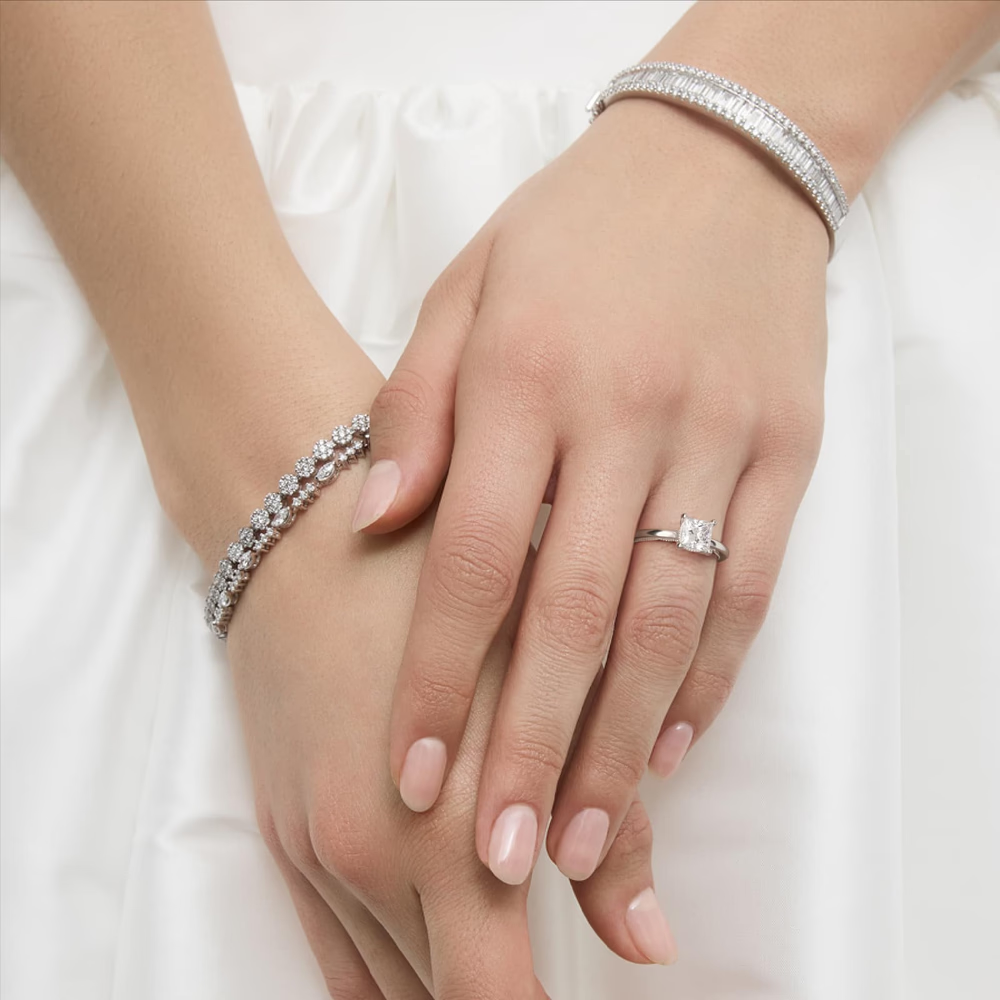
Split Shank Double Claw Solitaire Engagement Ring in Platinum (JA) — $1,320 27 reviews. The lowest price platinum entry in this guide. Split shank means the band divides below the center stone into two strands. Double claw prongs mean each corner prong is doubled — two claw arms gripping each corner point rather than one. In platinum, this doubled corner grip is the strongest possible configuration at the entry price: four corners, two claw arms each, platinum mass conserved indefinitely. With G-VS1 = $3,856 total. With G-VS2 = $3,532 total.
Comfort Fit Solitaire Engagement Ring in Platinum (JA) — $1,790 1,107 reviews. The most-reviewed princess cut setting on Blue Nile across all metals, and the most-reviewed platinum setting in this guide by a wide margin. Comfort fit means the interior of the band is domed rather than flat — the domed interior distributes pressure across more of the finger and slides over knuckles more easily. With 1,107 reviews validating consistent quality across James Allen's production, this is the benchmark entry solitaire for princess cut in platinum. With G-VS1 = $4,326 total. With G-VS2 = $4,002 total.
Zac Zac Posen Bypass Solitaire Engagement Ring in Platinum — $1,790 45 reviews. Designed by Zac Zac Posen for Blue Nile. Bypass design: the two band ends extend past each other behind the center stone rather than meeting beneath it. The bypass crossing point in platinum work-hardens at the structural stress point over time — unlike gold bypass rings where the crossing point can develop fatigue cracks with years of stress. With G-VS1 = $4,326 total. With G-VS2 = $4,002 total.
Tapered Ribbon Solitaire Engagement Ring in Platinum — $1,795 5 reviews. The band tapers from a wider shank width toward the center stone — the band narrows like a ribbon to a point where it meets the setting. In platinum, the ribbon taper does not create a thin weak point because platinum displaces rather than thins under stress. With G-VS1 = $4,331 total. With G-VS2 = $4,007 total.
Solitaire Engagement Ring with Intricate Basket in Platinum (JA) — $1,840 28 reviews. The basket is the metal framework beneath the diamond that elevates it above the band. An intricate basket has ornate openwork metalwork visible through the underside of the setting — decorative cutouts, arched metalwork, or geometric patterns in the platinum basket walls. The princess cut center sits above the intricate basket, adding detail visible from the side profile. With G-VS1 = $4,376 total. With G-VS2 = $4,052 total.
Solitaire Engagement Ring with Wire Basket in Platinum (JA) — $1,900 49 reviews. A wire basket differs from a standard basket by forming the support structure beneath the diamond from thin wire-like platinum strands rather than solid metal walls. The wire construction creates an airy, delicate appearance from the side and below, while maintaining structural integrity through platinum's density. With G-VS1 = $4,436 total. With G-VS2 = $4,112 total.
Engraved Solitaire Engagement Ring in Platinum (JA) — $1,915 80 reviews. Hand-engraved details on the platinum band — scroll patterns, floral motifs, or geometric engraving cut directly into the metal surface. Engraving in platinum is a permanent surface detail: unlike gold, platinum does not lose engraving depth to re-polishing over decades. With G-VS1 = $4,451 total. With G-VS2 = $4,127 total.
Comfort Fit Solitaire Engagement Ring in Platinum (JA) — $1,945 103 reviews. A second comfort fit solitaire variant at a wider band width than item-316236. Blue Nile and James Allen offer comfort fit solitaires in multiple band widths (2.0mm, 2.5mm, 3.0mm) — the width affects both comfort and visual weight on the finger. 103 reviews across all metal options indicates strong ongoing buyer confidence. With G-VS1 = $4,481 total. With G-VS2 = $4,157 total.
Rounded Cathedral Solitaire Engagement Ring in Platinum (JA) — $1,950 A cathedral solitaire uses arching metal shoulders to elevate the center stone above the band — the arch resembles a cathedral arch in cross-section. The rounded cathedral variant has a gently curved arch rather than a sharply angular one, creating a softer silhouette. Cathedral elevation adds height profile to the princess cut. With G-VS1 = $4,486 total. With G-VS2 = $4,162 total.
Cross Prong Solitaire Engagement Ring in Platinum (JA) — $2,165 105 reviews. The cross prong (also called X-prong) is the mechanically strongest corner protection option for princess cuts after V-prong. The prong arms cross over each corner in an X-pattern: instead of a single arm contacting the corner, two arms cross and clamp the corner from two angles simultaneously. This creates a mechanical cage around each 90° corner — the corner cannot lever out of the X-prong even if one arm shifts slightly. In platinum, the X-arms work-harden at their crossing points. With G-VS1 = $4,701 total. With G-VS2 = $4,377 total.
Vintage, Filigree & Engraved ($1,550–$2,575)
Platinum is the traditional metal for vintage and Edwardian engagement rings. Pre-1920s jewelry was almost exclusively set in platinum — the white metal's natural colour and density suited the delicate milgrain, filigree, and engraving work of the era. These settings carry forward that heritage.
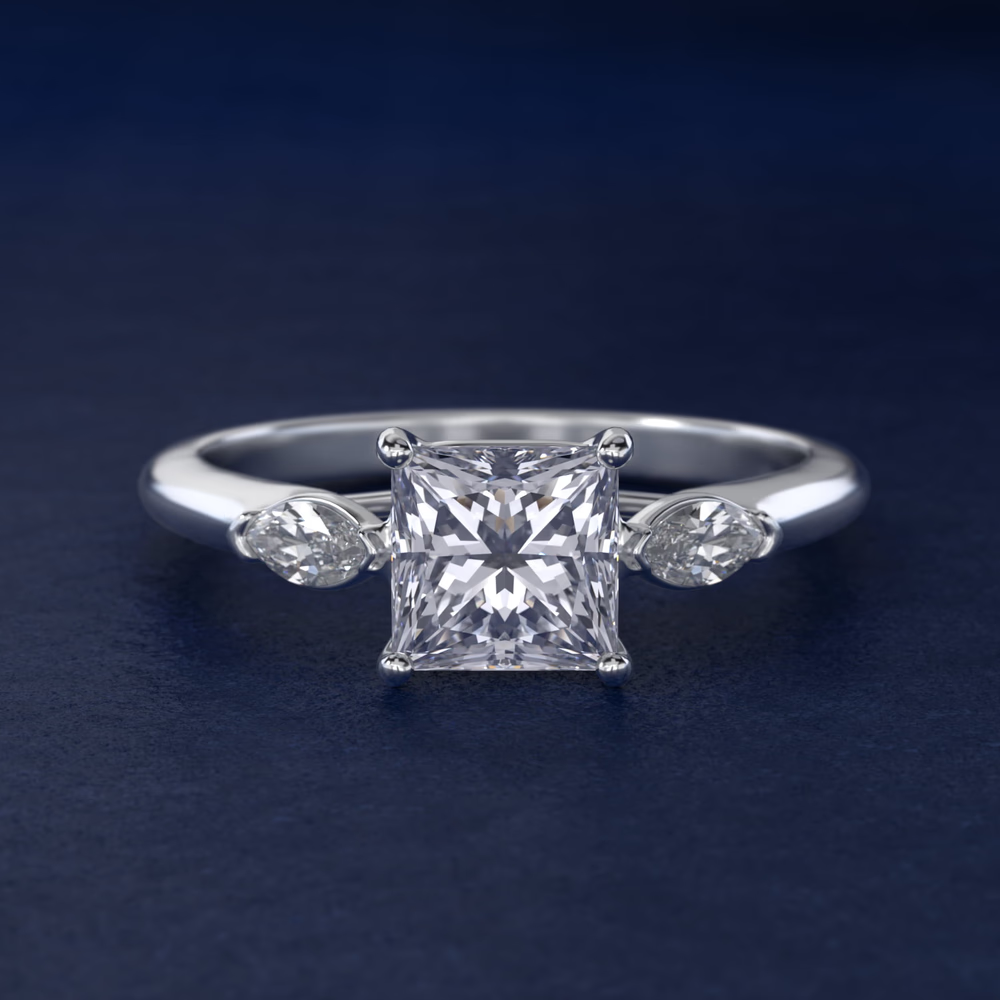
Beaded Filigree Cathedral Kite-Set Vintage Style Engagement Ring in Platinum (JA) — $1,550 57 reviews. The most detailed vintage setting in this guide. Three distinct techniques: beaded metalwork (tiny platinum beads lining the edges), filigree (open lacework metal scrolls in the cathedral shoulder), and kite-set accent diamonds (diamond accent stones set in kite-shaped metal mounts at 45° angles). In platinum, this level of fine metalwork is permanent — gold filigree can soften and lose definition over decades; platinum maintains edge sharpness. With G-VS1 = $4,086 total. With G-VS2 = $3,762 total.
Petite Three Diamond Engagement Ring in Platinum (1/10 ct. tw.) — $1,930 3 reviews. Petite round accent diamonds set in a classic three-stone platinum arrangement flanking the princess cut center. The accent diamonds are petite (1/10 ct tw total), keeping the visual focus on the princess cut center while adding a delicate symmetrical presence on either side. With G-VS1 = $4,466 total. With G-VS2 = $4,142 total.
Hand-Engraved Solitaire Engagement Ring in Platinum — $2,245 42 reviews. Artisan hand-engraving along the band sides — carved by hand rather than machine-stamped. Hand-engraving creates variation in depth and line quality that machine engraving cannot replicate, giving each ring slight individual character. Platinum preserves hand-engraving depth longer than gold: platinum does not lose surface metal through re-polishing the way gold does. With G-VS1 = $4,781 total. With G-VS2 = $4,457 total.
Floral Marquise Diamond Engagement Ring in Platinum — $2,445 8 reviews. Marquise-cut accent diamonds arranged in a floral petal pattern around or alongside the princess cut center. The marquise points create an organic, petal-like silhouette — sharp marquise tips alternating with the square princess cut geometry creates visual contrast. In platinum, the floral metalwork maintains its sculptural detail without softening over time. With G-VS1 = $4,981 total. With G-VS2 = $4,657 total.
Milgrain and Pavé V-Shank Diamond Engagement Ring in Platinum (1/8 ct. wt.) — $2,465 32 reviews. Milgrain is the fine bead-like border detail rolled along metal edges — a row of tiny platinum beads creating a lace-like framing effect. V-shank means the band tapers to a V-point beneath the center stone when viewed from below. Pavé diamonds on the band shoulders add sparkle. The combination of milgrain, V-shank, and pavé in platinum is a hallmark of Edwardian-style revival settings. With G-VS1 = $5,001 total. With G-VS2 = $4,677 total.
Embossed Vintage-Style Engagement Ring in Platinum (JA) — $2,575 81 reviews. Embossed metalwork means the pattern is raised above the surface rather than cut into it — a relief technique. The embossed vintage design creates a three-dimensional texture on the platinum band. Embossing in platinum benefits from the metal's hardness: raised relief details resist wear and flattening better than embossed gold. With G-VS1 = $5,111 total. With G-VS2 = $4,787 total.
Side Stone, Three Stone & Lab-Grown ($1,700–$3,780)
Side stone and three-stone settings in platinum present a specific color consideration: accent stones set in platinum do not face the warm-metal warmth problem of yellow or rose gold. H-color accent diamonds in a platinum three-stone setting will not pick up warmth from the metal. However, princess cut and step-cut accent stones (baguettes, tapered baguettes) are color-sensitive by facet geometry — match accent stone color grade to G or better regardless of metal.
Lab-grown diamond settings in this section use LGD accent or side stones in the setting itself; the center stone is chosen separately by the buyer.
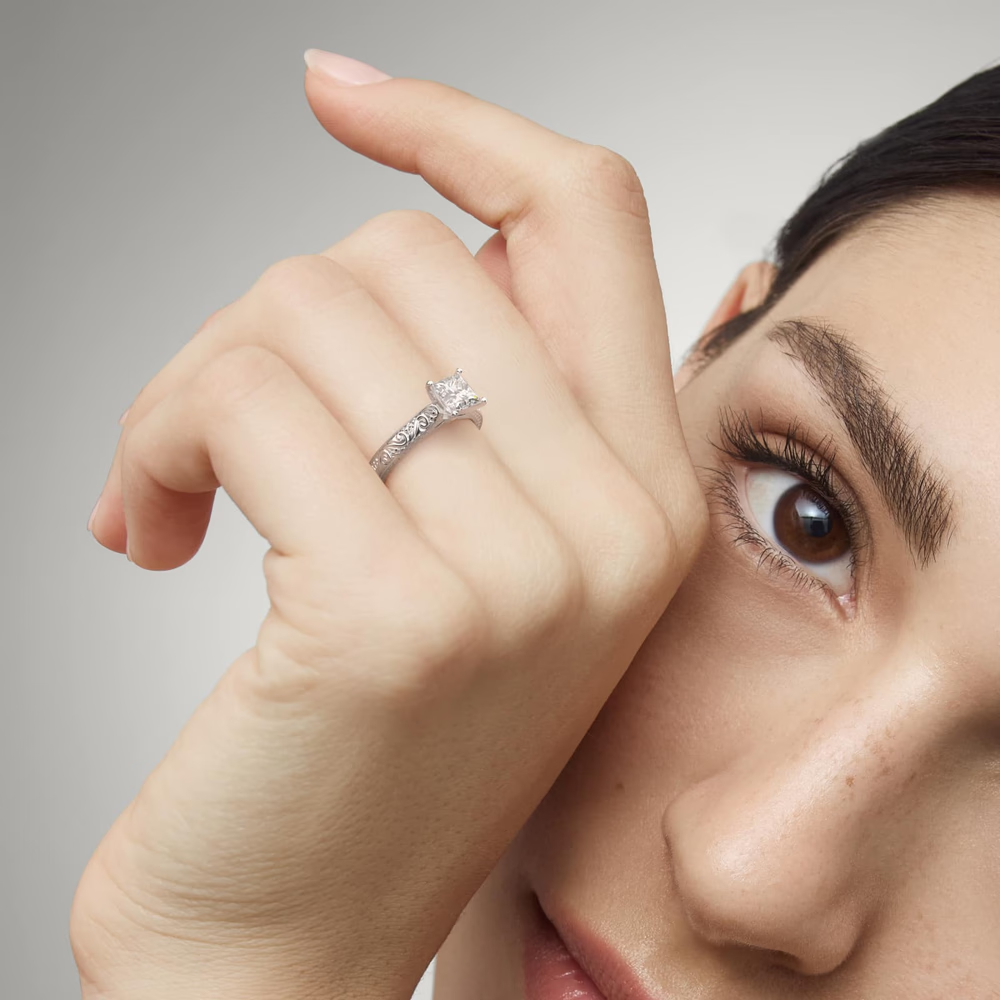
Bead Accent Pavé Trio Side Stone Diamond Engagement Ring in Platinum (JA) — $1,700 44 reviews. Trio side stone arrangement: beaded-edge round accent diamonds flanking the princess cut center, with additional pavé accent diamonds extending along the band. The bead-edge technique uses platinum beads to hold each pavé diamond rather than prongs, creating a more uniform surface. With G-VS1 = $4,236 total. With G-VS2 = $3,912 total.
Entangled Vines Side Stone Diamond Engagement Ring in Platinum (JA) — $1,780 85 reviews. Organic vine-like metalwork with side stone diamonds set along the vine strands — the platinum vines appear to grow from the band toward the center stone, with diamonds set at intervals. Organic sculptural metalwork in platinum is a stronger structural choice than gold: the vine strands maintain their three-dimensional form as platinum work-hardens at bending points. With G-VS1 = $4,316 total. With G-VS2 = $3,992 total.
Marquise Accent Diamond Halo Engagement Ring in Platinum (JA) — $1,810 1 review. A halo of marquise-cut accent diamonds around the princess cut center, with the pointed marquise tips creating a star-like halo silhouette rather than a smooth round halo. The marquise points extend the visual footprint of the setting, making the total diamond presence appear larger than the center stone alone. With G-VS1 = $4,346 total. With G-VS2 = $4,022 total.
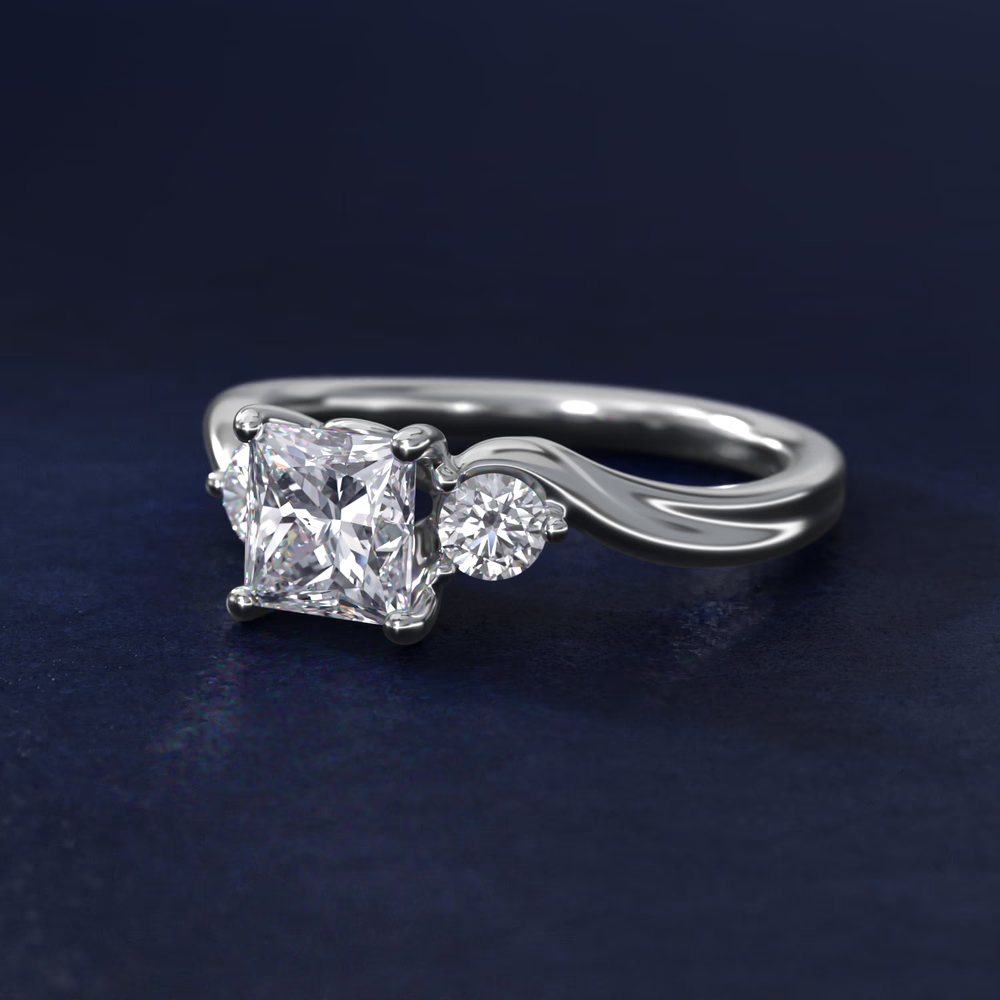
Riviera Pavé Lab-Grown Diamond Engagement Ring in Platinum (JA, 1/6 ct. tw.) — $1,955 390 reviews. The second most-reviewed setting in this guide. LGD designation means the 1/6 ct tw riviera pavé accent diamonds are lab-grown; the buyer chooses a natural or lab-grown princess cut center stone separately. Riviera pavé sets diamonds in a continuous row along the band shoulders, creating a river of sparkle flowing from center to shank. 390 reviews across metal variants confirms this is one of the most validated pavé band designs in the James Allen/Blue Nile catalog. With G-VS1 = $4,491 total. With G-VS2 = $4,167 total.
Marquise Cut Diamond Three Stone Engagement Ring in Platinum (JA) — $2,170 152 reviews. Princess cut center with east-west marquise side stones — the marquise side stones are oriented perpendicular to the band, so the marquise points extend north and south rather than east and west. This creates an unusual silhouette: the square princess cut center is flanked by vertical marquise points rather than horizontal stones. With G-VS1 = $4,706 total. With G-VS2 = $4,382 total.
Classic Round Lab-Grown Diamond Three Stone Engagement Ring in Platinum (JA) — $2,210 82 reviews. LGD side stones: round-cut lab-grown diamonds flank the princess cut center on either side. The round side stones scatter light efficiently (their brilliant cut handles warmth better than step cuts), making H-color round LGD side stones acceptable in platinum. The princess cut center stone should remain G or better. With G-VS1 = $4,746 total. With G-VS2 = $4,422 total.
Wrapped Shank Three Stone Lab-Grown Diamond Engagement Ring in Platinum — $2,380 4 reviews. LGD three-stone with a wrapped shank — the band metal wraps around the base of the center stone, creating a seamless transition from band to setting head. The wrapping eliminates the visible gap between band and head seen in standard solitaire mounts. Setting includes lab-grown diamond three-stone accents. With G-VS1 = $4,916 total. With G-VS2 = $4,592 total.
Leaf Vine Diamond Motif Side Stone Engagement Ring in Platinum (JA) — $2,800 11 reviews. Three-dimensional leaf and vine metalwork with diamonds set at the leaf and vine intersections — a more elaborate organic design than the Entangled Vines setting above. The leaf motifs are sculpted platinum elements extending beyond the band silhouette. With G-VS1 = $5,336 total. With G-VS2 = $5,012 total.
Oval Three-Stone Lab-Grown Diamond Engagement Ring in Platinum (JA, 1 ct. tw.) — $3,340 1 review. Princess cut center flanked by oval-cut lab-grown diamond side stones — 1 ct tw total in the oval LGD side stones. The oval side stones have curved outlines that contrast with the square princess cut geometry. Oval brilliant cuts scatter warmth well; H-color oval LGD side stones are acceptable in platinum. 1 ct tw of LGD side stones at this price point represents strong value for a three-stone look. With G-VS1 = $5,876 total. With G-VS2 = $5,552 total.
Pavé Knife Edge Diamond Three Stone Engagement Ring in Platinum (JA) — $3,780 9 reviews. Pavé diamonds set along a knife-edge shank with three-stone design — the band has a knife-edge profile (top edge sharpened to a ridge rather than flat), and the three-stone arrangement uses pavé-set accent clusters flanking the center. Knife-edge profiles in platinum maintain their ridge definition better than in gold. With G-VS1 = $6,316 total. With G-VS2 = $5,992 total.
Pavé Band & Hidden Halo ($2,325–$2,505)
The pavé and hidden halo category in platinum is the most review-concentrated section in this guide. The Pavé Knife Edge Lotus Basket alone carries 251 reviews. Pavé bands in platinum benefit from work-hardening at the bead-set prong points that hold each pavé diamond — the pavé beads resist spreading over time in platinum where they would gradually loosen in gold.
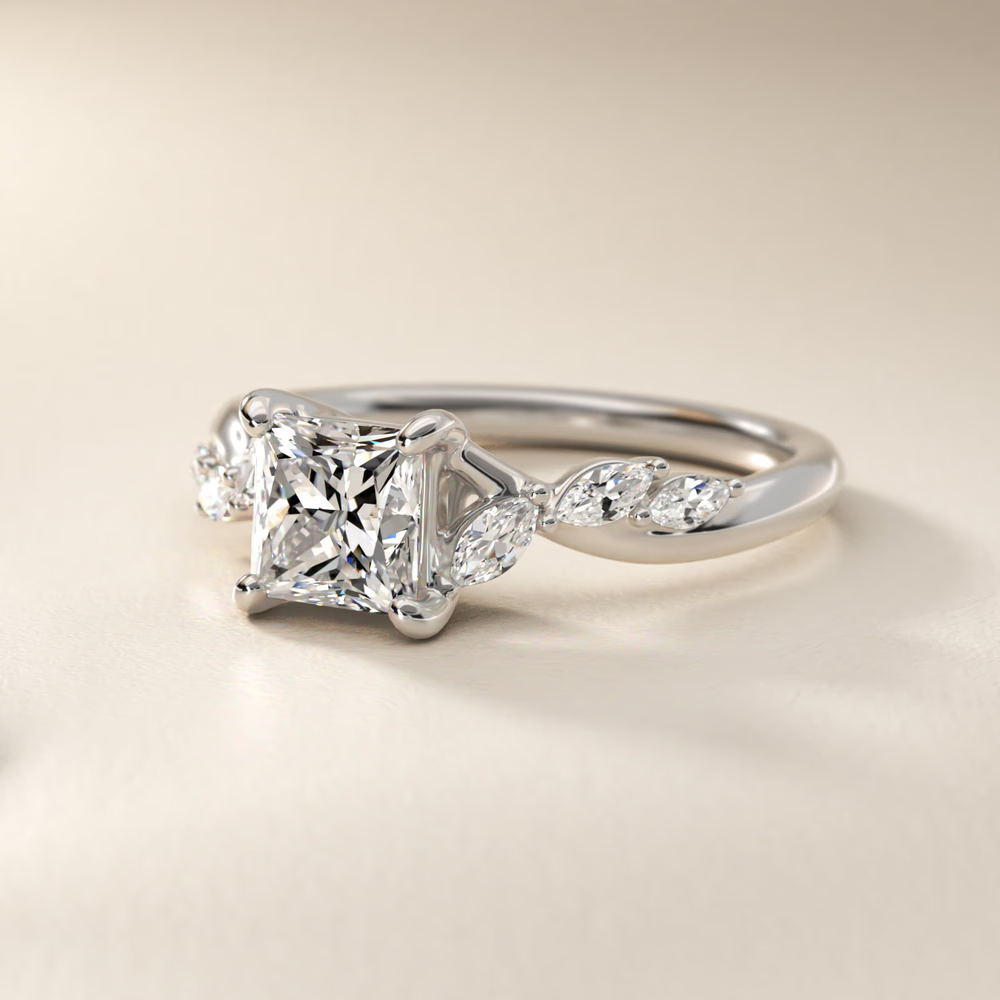
Plain Shank Floating Halo Engagement Ring in Platinum — $2,325 58 reviews. A floating halo sits above a plain (unadorned) shank — the pavé halo ring appears to float above the band because the connection between band and halo is minimized. The plain shank contrasts with the intricate floating halo: all visual complexity is concentrated at the center stone. With G-VS1 = $4,861 total. With G-VS2 = $4,537 total.
Pavé Knife Edge Lotus Basket Diamond Engagement Ring in Platinum (JA) — $2,340 251 reviews. The most-reviewed setting in this section. Knife-edge shank with a lotus basket beneath the center stone — the basket structure is shaped like a lotus flower with petal-like platinum forms holding the diamond from below. Pavé diamonds along the knife-edge shank add sparkle along the band profile. In platinum, both the knife-edge ridge and the lotus basket petal forms maintain their dimensional detail over decades. With G-VS1 = $4,876 total. With G-VS2 = $4,552 total.
Cut Down Pavé Diamond Engagement Ring in Platinum (JA) — $2,410 40 reviews. Cut-down pavé is a specific pavé technique where the metal around each pavé diamond is cut away from the sides, reducing the visible metal between diamonds to a minimum. This maximizes diamond exposure per unit of band area — the cut-down technique creates a denser-looking diamond surface than standard bead-set pavé. With G-VS1 = $4,946 total. With G-VS2 = $4,622 total.
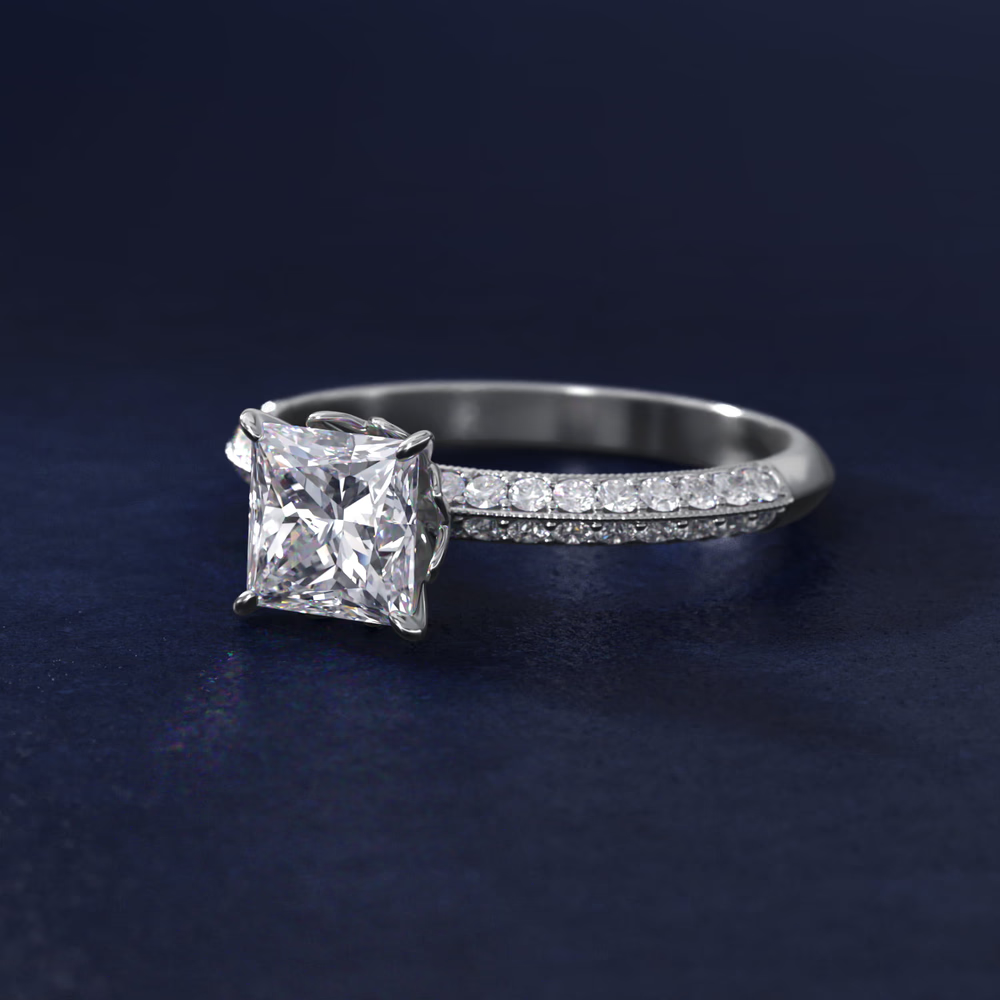
Lace Bridge Solitaire Plus Hidden Halo Diamond Engagement Ring in Platinum (1/5 ct. tw.) — $2,420 2 reviews. A lace bridge connects the band to the setting head — decorative platinum lace-like metalwork spanning the gap where band meets center stone mount. The hidden halo is positioned beneath the crown, visible when looking at the ring from the side or at eye level but invisible from above: the top-view silhouette reads as a solitaire while the side view reveals the halo. Setting includes 1/5 ct tw hidden halo diamonds. With G-VS1 = $4,956 total. With G-VS2 = $4,632 total.
Petite Baguette and Pavé Diamond Engagement Ring in Platinum — $2,430 4 reviews. Petite baguette-cut side accents flanking the princess cut center, with pavé on the band. Baguette diamonds have step-cut facets — they are more color-sensitive than brilliant-cut round accents. In platinum (neutral metal, no warmth), G-color baguette accents are acceptable; the platinum environment does not amplify their natural warmth. With G-VS1 = $4,966 total. With G-VS2 = $4,642 total.
Crown Pavé Hidden Halo Diamond Engagement Ring in Platinum (JA) — $2,470 26 reviews. Crown pavé means the prong arms that hold the center stone have pavé diamonds set directly into them — the crown of the setting sparkles. Hidden halo beneath the crown creates a double-brightness effect: pavé-set prongs from above, halo from below. In platinum, the pavé-set prong crown does not risk loss of pavé diamonds from prong thinning over time. With G-VS1 = $5,006 total. With G-VS2 = $4,682 total.
Delicate Ballerina Halo Diamond Engagement Ring in Platinum — $2,505 1 review. Ballerina halo: the halo diamonds are set at an upward angle around the center stone, tilted outward like a ballerina's tutu rather than lying flat in the plane of the center stone. This creates a tiered, dimensional halo effect with visual depth. In platinum, the angled halo prongs that hold each diamond at its tilted angle maintain their positioning through work-hardening at the setting stress points. With G-VS1 = $5,041 total. With G-VS2 = $4,717 total.
Tides Of Summer Capsule
Up To 30% Off
Shop The Sale →Vault ClearanceClear The Vault
Up To 70% Off
Shop Vault Deals →Affiliate link — no extra cost to you
Wide Band, Men's & Baguette ($2,610–$3,910)
Wider band settings in platinum have a structural advantage over gold that is invisible in new rings but significant over years: the wider the band, the more metal is present at the stress points on either side of the center stone head. In platinum, that metal is preserved. In gold, repeated polishing to maintain a wide band's finish gradually reduces the metal at the stress points. Wider platinum bands maintain their structural mass at the head/band junction indefinitely.
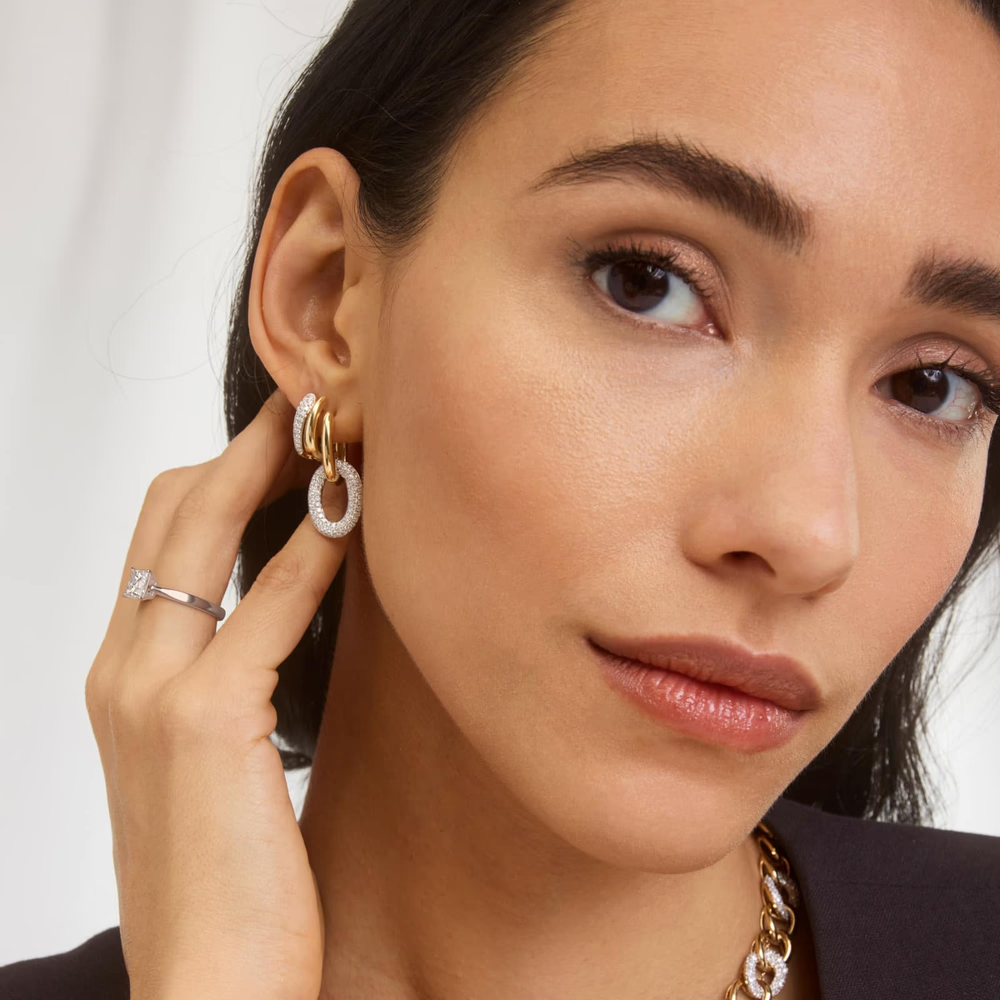
Wide Band Solitaire Plus Diamond Engagement Ring in Platinum — $2,610 1 review. A wide-band solitaire with an additional accent diamond element — the "Plus" designation indicates the band carries a small accent feature beyond the plain solitaire: a small pavé accent, a diamond bezel, or a flush-set diamond on the band. Wide-band solitaires in platinum carry visual weight appropriate for 1.5ct+ princess cut centers. With G-VS1 = $5,146 total. With G-VS2 = $4,822 total.
Men's Ridged Solitaire Engagement Ring in Platinum — $2,620 Men's shank with ridged texture — parallel ridges cut longitudinally along the band, adding grip texture and a masculine, architectural appearance. The ridged platinum surface maintains texture definition better than ridged gold: platinum ridges do not flatten through polishing the way gold ridges do. For couples selecting matching rings, this pairs with any women's platinum setting in this guide. With G-VS1 = $5,156 total. With G-VS2 = $4,832 total.
Wide Band Solitaire Engagement Ring in Platinum (5mm) — $2,730 49 reviews. The widest standard band in this guide at 5mm. At 5mm, the platinum band creates a bold, architectural statement that balances large princess cut centers (1.5ct+). For princess cuts under 1.0ct, a 5mm band may overwhelm the center stone visually — confirm proportions before purchasing. With G-VS1 = $5,266 total. With G-VS2 = $4,942 total.
Men's Bypass Channel Diamond Engagement Ring in Platinum (1/4 ct. tw.) — $2,920 4 reviews. Men's engagement ring with bypass band and channel-set diamonds — the band arms bypass each other at the center, creating the bypass silhouette, with diamonds set in a channel cut into the bypass arms. Channel-set diamonds in platinum: the channel walls work-harden over time, maintaining the channel width that holds the diamonds. Gold channel walls can spread slightly with impact, loosening channel-set stones over years. With G-VS1 = $5,456 total. With G-VS2 = $5,132 total.
Twisted Pavé Diamond Engagement Ring in Platinum (JA) — $3,235 75 reviews. The band spirals in a gentle twist, with pavé diamonds set along the twist surface — the diamonds appear to spiral around the finger. In platinum, the twisting point of the band work-hardens at the structural twist, maintaining the spiral geometry over years. With G-VS1 = $5,771 total. With G-VS2 = $5,447 total.
Two Row U Pavé Diamond Engagement Ring in Platinum (JA) — $3,285 27 reviews. Two parallel rows of pavé diamonds set in a U-channel along the band — the U-shaped channel has diamonds on both its inner faces, creating a double-row of sparkle across the width of the band. U-pavé channels in platinum maintain their wall height and diamond security better than gold equivalents. With G-VS1 = $5,821 total. With G-VS2 = $5,497 total.
Tapered Baguette Diamond Cathedral Engagement Ring in Platinum (1/3 ct. tw.) — $3,400 Tapered baguette-cut diamonds in a cathedral arch flanking the princess cut center — the baguettes taper from wider at the outside to narrower at the inner edge. Cathedral elevation with tapered baguette side stones creates one of the most architecturally formal settings in platinum. Baguette step facets are highly color-sensitive — G minimum for the tapered baguettes in this setting. With G-VS1 = $5,936 total. With G-VS2 = $5,612 total.
Twist Halo Diamond Engagement Ring in Platinum (1/2 ct. tw.) — $3,910 1 review. Twisted band with a pavé diamond halo around the center stone — the band's spiral movement extends into the halo, which itself has a dimensional twist to its pavé diamond ring. Setting includes 1/2 ct tw total in halo and band pavé diamonds. With G-VS1 = $6,446 total. With G-VS2 = $6,122 total.
Statement Halo & Premium ($3,685–$7,030)
The statement section includes the two highest-accent-weight settings in this guide (the cushion-cut 1 ct tw and the three-stone tapered baguette 1/2 ct tw) and the highest total-price setting at $7,030 (the oval-cut diamond setting). All settings in this section benefit from platinum's permanence at their higher price points — a $5,000+ setting in platinum requires fewer maintenance visits and no replating costs over its lifetime.
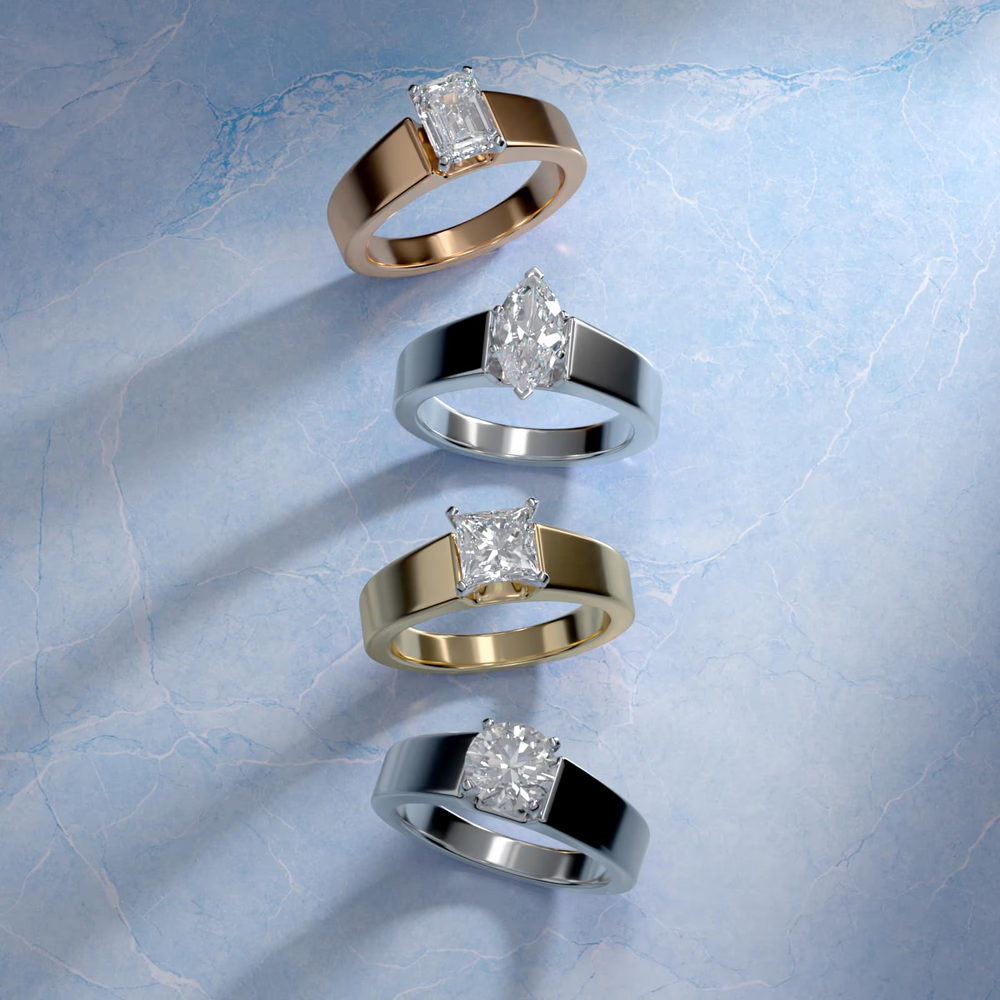
French Pavé Diamond Halo Engagement Ring in Platinum (1/2 ct. tw.) — $3,685 14 reviews. French pavé is a specific setting technique: instead of the standard bead-set pavé where each diamond sits in a metal cup, French pavé cuts V-shaped notches between the diamonds, removing metal and allowing more light to enter between stones. This maximizes light return from the pavé diamonds across the 1/2 ct tw halo and band. With G-VS1 = $6,221 total. With G-VS2 = $5,897 total.
Baguette and Round Ballerina Halo Diamond Engagement Ring in Platinum — $4,320 1 review. Alternating baguette-cut and round-cut diamonds in a ballerina halo arrangement — the baguette and round shapes alternate around the center stone, and the ballerina tilt angles them outward from the center plane. The mix of step-cut baguettes and brilliant-cut rounds in the halo creates contrasting light return patterns: the baguettes flash broad rectangles of light; the rounds scatter points. With G-VS1 = $6,856 total. With G-VS2 = $6,532 total.
Cushion-Cut Diamond Engagement Ring in Platinum (1 ct. tw.) — $5,220 9 reviews. A princess cut center in a setting with 1 ct tw of cushion-cut diamond accents — the highest accent diamond weight in this guide. Cushion-cut accents have rounded corners and a pillow-like silhouette that contrasts with the sharp square princess cut center. 1 ct tw of cushion-cut accent diamonds in platinum is substantial; the total diamond presence in this ring is significantly larger than the center stone alone. With G-VS1 = $7,756 total. With G-VS2 = $7,432 total.
Vintage Diamond Halo Engagement Ring in Platinum (5/8 ct. tw.) — $5,495 3 reviews. Vintage-style halo with 5/8 ct tw of pavé diamonds across the halo and band — a high-weight vintage interpretation. Vintage halos in platinum replicate the Edwardian era's original platinum aesthetic more accurately than gold: the cool-white metal, the milgrain detail, and the diamond density all derive from platinum-era design. With G-VS1 = $8,031 total. With G-VS2 = $7,707 total.
Three-Stone Tapered Baguette Diamond Engagement Ring in Platinum (1/2 ct. tw.) — $6,200 6 reviews. Princess cut center flanked by tapered baguette diamonds — the baguettes taper in width as they approach the center stone, creating a gradient that draws the eye inward to the princess cut. 1/2 ct tw in tapered baguette side stones. Baguette step facets are maximally color-sensitive: both the center princess cut and the baguette side stones should be G or better in this setting. At $6,200 for the setting alone, the total investment warrants best-grade color standards. With G-VS1 = $8,736 total. With G-VS2 = $8,412 total.
Oval-Cut Diamond Engagement Ring in Platinum — $7,030 The highest-priced setting in this guide. A princess cut center in a setting designed with oval-cut accent diamonds — the oval accent shapes create a different visual vocabulary than the square princess cut center. Oval accents in platinum: oval brilliant cuts scatter warmth well; H-color oval accents are acceptable here. The setting's premium price point reflects the architectural complexity of integrating oval accent forms into the platinum structure. With G-VS1 = $9,566 total. With G-VS2 = $9,242 total.
Complete Platinum Princess Cut Price Table
All totals use G-VS1 at $2,536 and G-VS2 at $2,212. Settings marked LGD contain lab-grown diamond accent or side stones in the setting itself; the center stone is chosen separately.
Frequently Asked Questions
Is H color acceptable for a princess cut in platinum? Yes. Platinum's surface is inherently neutral — it reflects white-grey light with no warmth component. Unlike yellow or rose gold (which add warm light to the corners), or even white gold before rhodium replating (which can develop slight warmth as the rhodium wears), platinum never adds warmth to the princess cut's corner facets. H color in platinum will not show corner warmth that H in yellow gold would show. G color in platinum is excellent; H is the acceptable floor.
Do V-prongs really protect princess cut corners better than standard claw prongs? Yes, mechanically. A standard claw prong contacts the flat edge of the princess cut just before the corner — the prong holds the edge, and the corner tip is held indirectly. A V-prong contacts the corner tip itself, with the two V-arms extending along both edges meeting at that corner. Impact to the corner in a V-prong setting is distributed across both V-arms; impact to a standard prong transfers directly to one contact edge. The V-prong geometry provides better corner-specific protection by design.
Does platinum need rhodium plating like white gold? No. White gold is a yellow gold alloy that requires rhodium plating to appear white; as the rhodium wears (typically every 1–3 years), the underlying yellow-gold alloy shows through, and the ring must be re-plated. Platinum is inherently white-grey — the color is the metal itself. No coating is applied, and no replating is ever needed. Over years, platinum develops a satiny grey patina from fine surface scratches; this patina can be polished out if the buyer prefers the bright white finish, but the process is optional rather than necessary.
What is platinum patina and should I be concerned about it? Platinum patina is the gradual development of a satiny grey-silver surface appearance from daily wear scratches accumulating over months and years. Unlike gold, where scratches remove metal, platinum scratches displace metal — the metal is pushed aside rather than removed, creating a fine-grained matte texture rather than bare scratches. Many buyers find the patina preferable to the bright finish; it gives the ring a softer, antique-like appearance. If you prefer bright platinum, a jeweler can polish it back to bright finish at any time. The patina does not indicate metal loss or structural degradation.
Is platinum worth the 15–30% price premium over white gold for a princess cut specifically? For princess cut specifically, the argument is stronger than for other shapes. The reason is the corner vulnerability: princess cuts require permanent, maintained prong coverage at all four 90° corners. Platinum prongs maintain their mass permanently. White gold prongs require inspection, maintenance, and periodic retipping to maintain the same protection. Over a lifetime, the platinum premium may be offset by lower maintenance costs and higher confidence in long-term corner security. For buyers who do not plan to perform regular prong inspections, platinum is the lower-risk choice.
What is the cross prong (X-prong) and is it equivalent to V-prong protection? The cross prong and the V-prong both address the same princess cut corner vulnerability through different geometry. The V-prong uses a V-shaped metal arm to contact the corner directly. The cross prong uses two metal arms that cross over the corner in an X-pattern, creating a mechanical cage that requires both arms to fail simultaneously before the corner loses protection. For buyers who prioritize maximum corner security, the cross prong solitaire (item-304283, $2,165, 105 reviews) in platinum is the strongest structural option in this guide.
The lab-grown diamond settings — can I pair a natural diamond center with LGD accent stones? Yes. The LGD designation on items 309323, 314932, 309402, and 309364 refers to the accent or side stones set into the setting itself. These are sold as complete settings with LGD accents already in place. The center stone is chosen separately via Blue Nile's Design Your Own Ring system — you can pair any princess cut center stone, natural or lab-grown, with any of these settings. Natural princess cut center + LGD accent settings is a common combination for buyers who want a natural center stone at the setting price point of LGD-accented designs.
Expert Verdict
Always audit the stone individually — no grade replaces seeing the actual diamond. The certificate tells you what to look for. Your eyes tell you whether to buy.
— Farzana Hasan, GIA Expert · DiamondCritics.com