TL;DR: 5 Mistakes Radiant Cut Engagement Ring Buyers Always Make
The 5 mistakes — read these before anything else:
- Not checking the L/W ratio — "radiant cut" is two different rings. Elongated (1.20–1.40) looks nothing like square (0.95–1.05). Buyers order one, receive the other, and have to return it.
- Paying for VS1 clarity — VS2 is the clarity floor for radiant cut. The 70 facets hide inclusions that a step-cut would expose. VS1 is wasted money on this shape.
- Budgeting stone and setting separately — the Total Ring Number is one figure: stone + setting combined. Split it wrong (too much on the setting) and you end up with a cheap stone in an expensive frame.
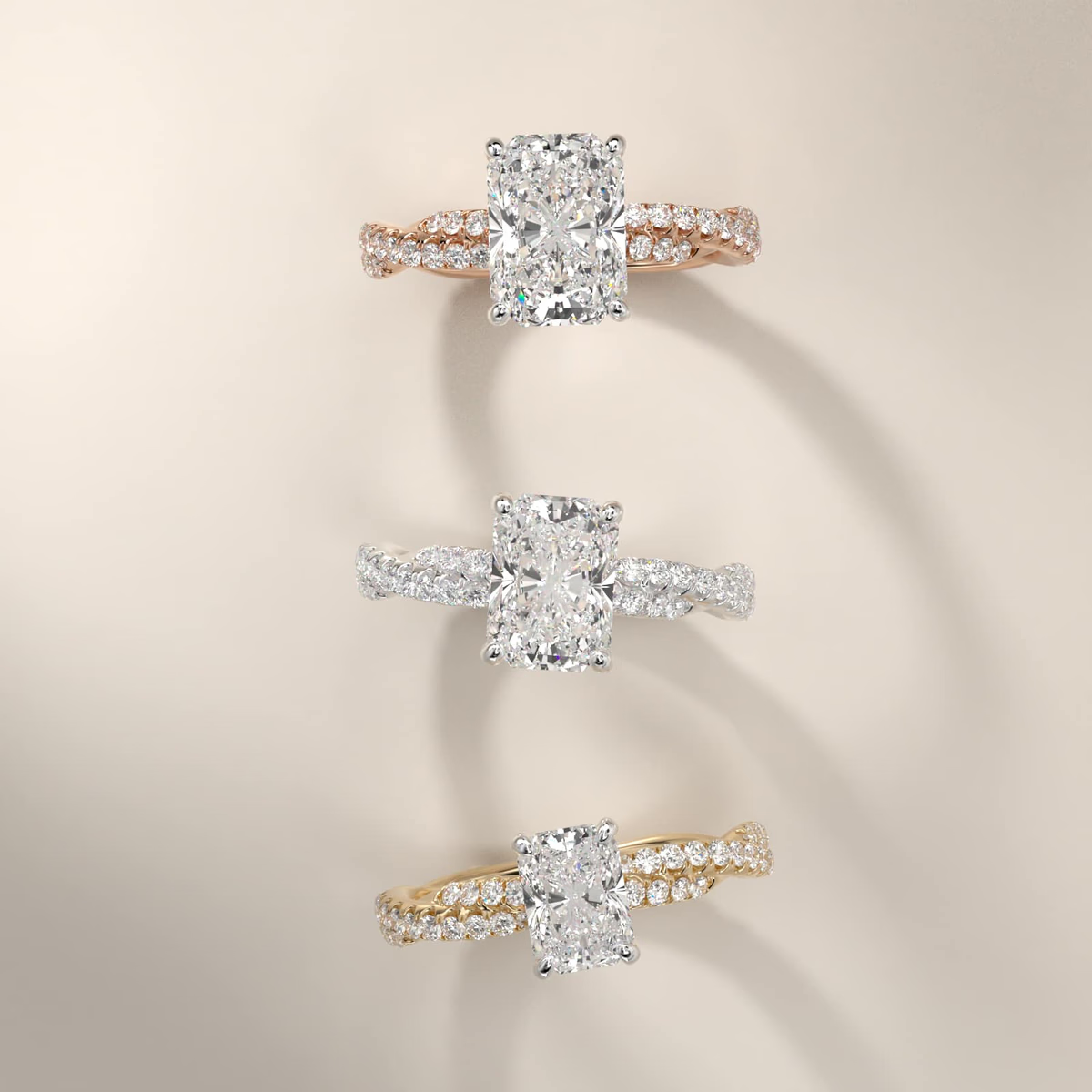
- Ruling out halos — buyers who read the emerald cut's "no halo" rule assume it applies here. It doesn't. The radiant's clipped corners work with a round halo. The Twisted Halo RG at $2,250 is a genuine option.
- Comparing radiant to round brilliant pricing — radiant cuts are underpriced relative to ovals and rounds at the same carat weight and quality. Most buyers don't know this. It means you get more stone for less money.
Full ring prices (certified market data, 2026):
- Natural 1ct GIA G-VS2 + Riviera Pavé WG $1,500 = $3,818 total ring
- Lab 1ct IGI E-VVS1 + Classic Simple Solitaire WG $1,145 = $2,012 total ring
- Lab 2ct IGI F-VVS1 + Riviera Pavé WG $1,500 = $3,669 total ring
- Natural 2ct GIA D-VS2 + Riviera Pavé WG $1,500 = $19,214 total ring
→ Start here. Pair a lab 2ct IGI F-VVS1 radiant with the Riviera Pavé WG at $1,500. Total ring: $3,669. Two certified carats, 479-review setting, VS2 clarity floor — none of the 5 mistakes above.
Priority: Read the 5 mistakes. Then check the L/W ratio. Then set your Total Ring Number. Then buy.


What Is a Radiant Cut Engagement Ring?
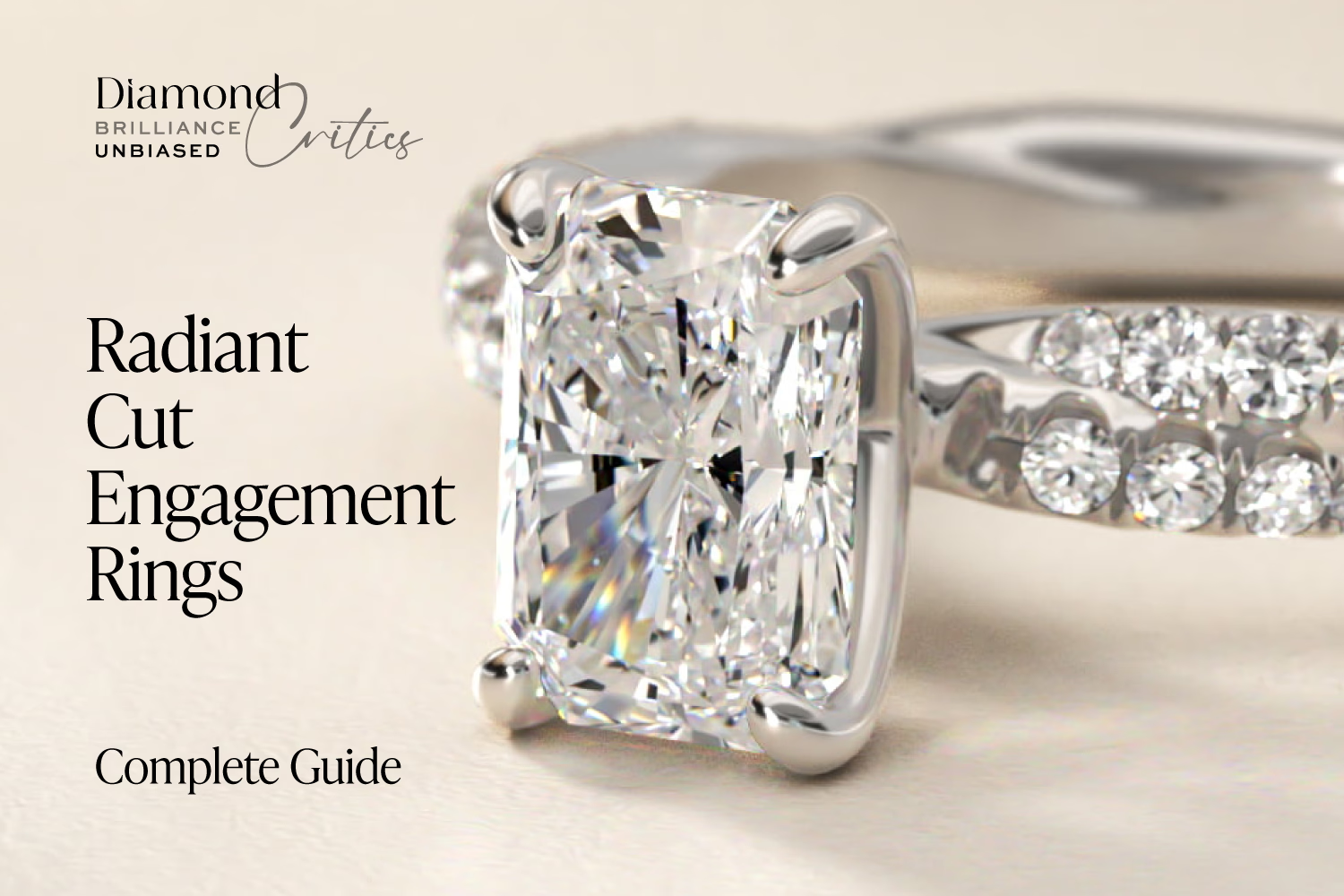
A radiant cut engagement ring pairs the radiant cut diamond — the only shape that combines step-cut elegance with brilliant-cut fire — with a setting designed to let that dual character show.
I'm Farzana Hasan, a GIA Expert. The radiant cut is the one shape where you have complete setting freedom. I have never seen a setting that looks actively wrong on a radiant cut. The 70-facet structure fires in so many directions that it overpowers any setting weakness. But that freedom is also the trap. Because buyers can choose anything, they often choose the wrong thing — not the wrong setting, but the wrong shape of stone.
Full credentials and methodology at Diamond Critics.
The radiant cut was created in 1977 by Henry Grossbard. He wanted the large face-up table of a step-cut with the sparkle of a brilliant. The 70 facets on the crown and pavilion were the solution. No other shape has that combination. An emerald cut has the large table but flat flash. A round brilliant has the sparkle but a smaller visible area. The radiant cut has both.
For an engagement ring, this matters because the radiant cut looks good at every carat size. At 1ct, it fires brilliantly. At 2ct, the elongated version creates a visual effect similar to an oval or emerald — elegant and finger-lengthening. At 3ct, it becomes a serious statement piece that works in every light condition.
| Ring Option | Stone | Setting | Total Ring Price | Best For |
|---|---|---|---|---|
| Best Entry Lab | 1ct IGI E-VVS1 Lab | Classic Solitaire WG $1,145 | $2,012 | Tight budget, clean look |
| Best Entry Natural | 1ct GIA G-VS2 Natural | Riviera Pavé WG $1,500 | $3,818 | Natural GIA, most popular look |
| Best Mid-Range Lab | 2ct IGI F-VVS1 Lab | Riviera Pavé WG $1,500 | $3,669 | Best overall value, large visual |
| Statement Natural | 2ct GIA D-VS2 Natural | Riviera Pavé WG $1,500 | $19,214 | Luxury natural, D colour certified |
5 Mistakes Radiant Cut Engagement Ring Buyers Always Make
Most buyers walk into the radiant cut market without knowing these five traps exist. Every one of them costs you money, time, or the wrong ring.
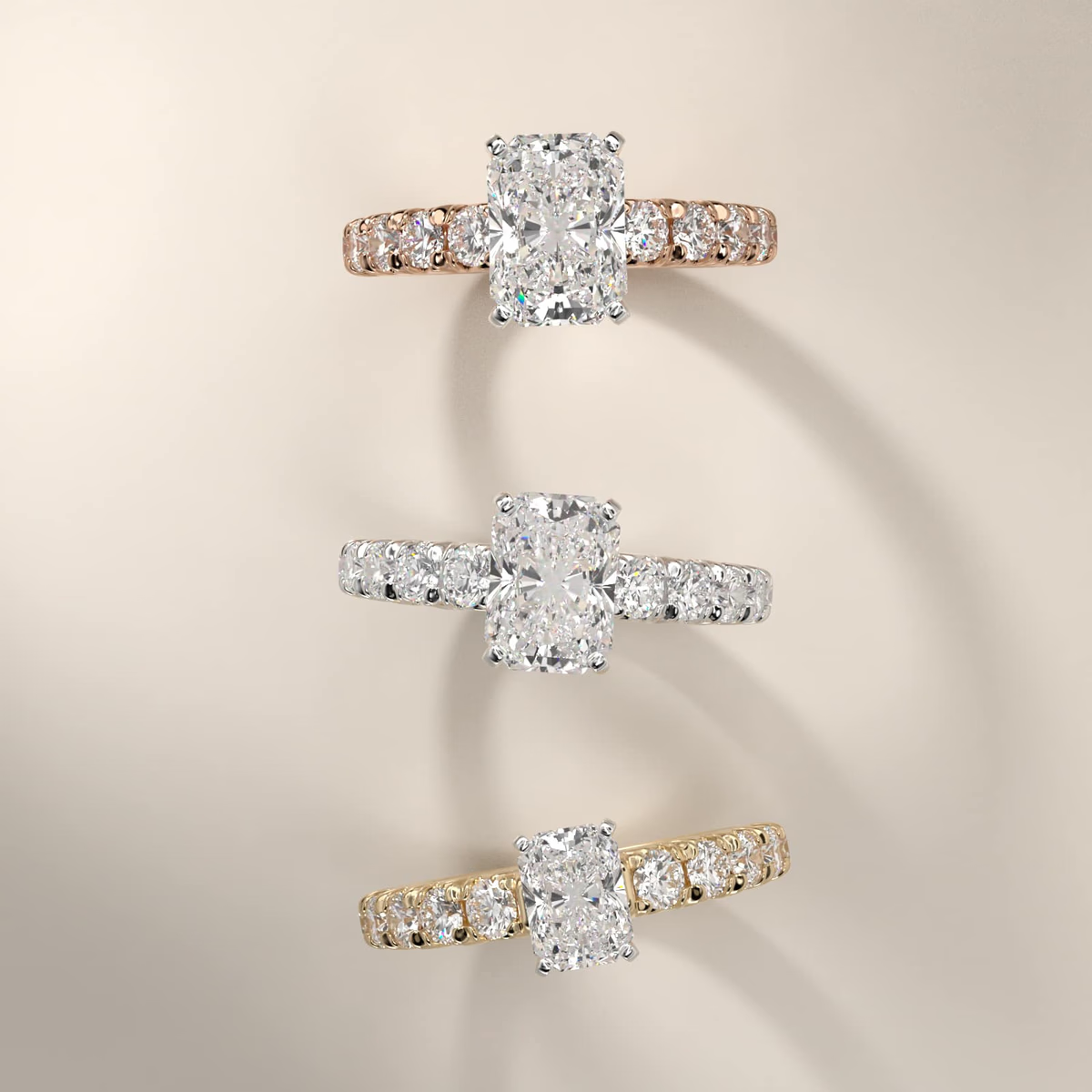
Mistake 1: Not checking the L/W ratio before buying.
This is the most common return trigger in the radiant cut market. "Radiant cut" covers two completely different stones — elongated (ratio 1.20–1.40) and square (ratio 0.95–1.05). They look nothing alike on a finger. The listing photos won't always show you the difference clearly. Lighting, angle, and zoom can make a square radiant look elongated and vice versa. The only reliable source is the actual GIA or IGI certificate. Pull it. Read the measurements. Divide length by width. Know what you're buying before you commit. Getting this wrong means returning a ring — and that process is stressful and sometimes not possible with custom orders.
Mistake 2: Paying for VS1 clarity when VS2 is the floor.
Buyers coming from emerald cut research know that VS1 is non-negotiable for a step-cut because the open table acts like a mirror and shows inclusions. They assume the same rule applies to radiant. It does not. The radiant cut has 70 brilliant-style facets. Those facets scatter light in every direction. They hide the same inclusions that a step-cut would expose. A GIA-graded VS2 radiant cut is eye-clean at arm's length. There is no visible benefit to VS1 on this shape. The price difference between VS2 and VS1 at 1ct GIA natural can be $300–$700. At 2ct, it can be $2,000+. Put that money on the stone's carat weight instead.
Mistake 3: Treating stone budget and setting budget as two separate numbers.
Most buyers find a stone they love, then look at settings and treat the setting price as a bonus expense. This is how people overspend. The Total Ring Number is one number from the start: stone + setting combined. For a radiant cut, 75–80% should go on the stone. The stone does the visual work — 70 facets, brilliance, size. A Riviera Pavé WG at $1,500 is an excellent setting. Spending $4,000 on a setting to put with a 1ct VS2 natural at $2,318 is the wrong allocation. Decide your total. Allocate 75–80% to the stone. Then pick a setting from what remains.
Mistake 4: Ruling out halos because of the emerald cut rule.
Buyers who've done their research on emerald cuts know that a round halo fights the emerald cut's rectangular outline. That's correct — for an emerald cut. Many of those same buyers assume the rule applies to all rectangular shapes including the radiant. It doesn't. The radiant cut has clipped, rounded corners. A round halo follows the shape of those corners naturally. It does not fight the stone's outline the way it fights an emerald cut. The Twisted Halo Rose Gold at $2,250 with 236 reviews is proof. Halos work on radiant cuts. Don't cross them off because of a rule that belongs to a different shape.
Mistake 5: Comparing radiant cut prices to round brilliant prices and thinking they're the same.
They're not. Radiant cuts are consistently underpriced relative to oval and round brilliant at the same carat weight and quality grades. Demand for radiant cuts is lower than for rounds and ovals. Lower demand means lower price for the same certified quality. A 1ct GIA G-VS2 radiant natural at $2,318 gives you a real GIA natural diamond at a price that would be significantly higher in a round or oval of the same grade. Buyers who don't know this compare on carat weight alone and feel like radiant is expensive. It's the opposite. Radiant is the better value play in the fancy-shape market right now.
The Shape Split
This is the concept that most buyers miss. And it's the one that causes the most returns.
"Radiant cut" is not one ring. It is two completely different rings that share a name.
The elongated radiant has a length-to-width (L/W) ratio of 1.20 to 1.40. It reads rectangular. On a finger it looks like a miniature emerald cut — long, elegant, and finger-lengthening. The extra length makes the stone look larger than its carat weight suggests. A 1ct elongated radiant covers more finger than a 1ct square radiant at the same price.
The square radiant has a ratio of 0.95 to 1.05. It reads square. On a finger it looks more like a cushion or princess cut — compact, bold, and symmetric. The chunky shape makes the stone read larger from the side but not particularly long from above.
These two rings look nothing alike. They suit different fingers, different personal styles, and different settings. Neither is better. But you need to choose intentionally — not accidentally.
The problem is that listing photos and even in-store lighting obscure the shape. A radiant cut photographed straight-on from above in a white spotlight can look elongated or square depending on the angle. The only reliable method is to read the actual L/W ratio from the diamond certificate. GIA and IGI both report it. Check it before you buy.
The Shape Split rule:
- Ratio below 1.10 = square radiant — looks like a bold, chunky square
- Ratio 1.10–1.19 = transitional — can read either way depending on lighting
- Ratio 1.20 and above = elongated — looks long and elegant, like a mini-emerald or rectangular outline
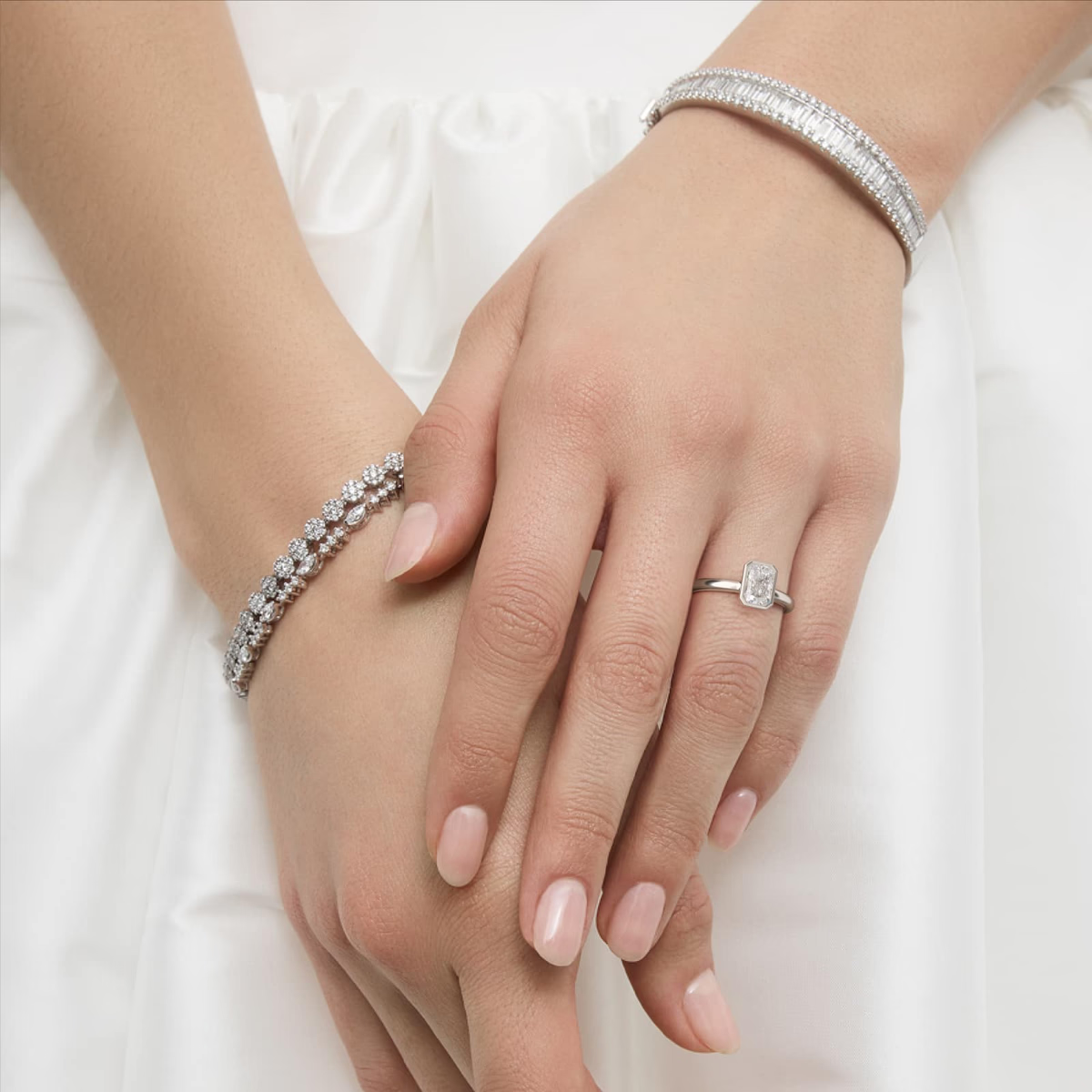
Setting implications of The Shape Split. An elongated radiant works best in a four-prong solitaire or a thin pavé band. The prongs protect the corners without adding visual bulk. A square radiant looks strong in a halo or a three-stone setting — the surrounding diamonds balance the compact shape. Neither setting is wrong for either shape. But these pairings maximise what each shape does best.
"I always ask buyers one question before we talk settings: do you want elongated or square? Most of them have never thought about it. They say 'radiant cut' as if it's one thing. Once I show them both shapes side by side on the same finger size, they immediately know which one is right for them. The elongated is popular with buyers who like ovals and emerald cuts. The square is popular with buyers who like cushions and princess cuts. Different person entirely.
Check the L/W ratio in the certificate. Don't guess from photos." — Farzana Hasan, Diamond Critics
5 Radiant Cut Settings Ranked
Here are the five main setting types for a radiant cut ring, ranked by versatility and buyer popularity.
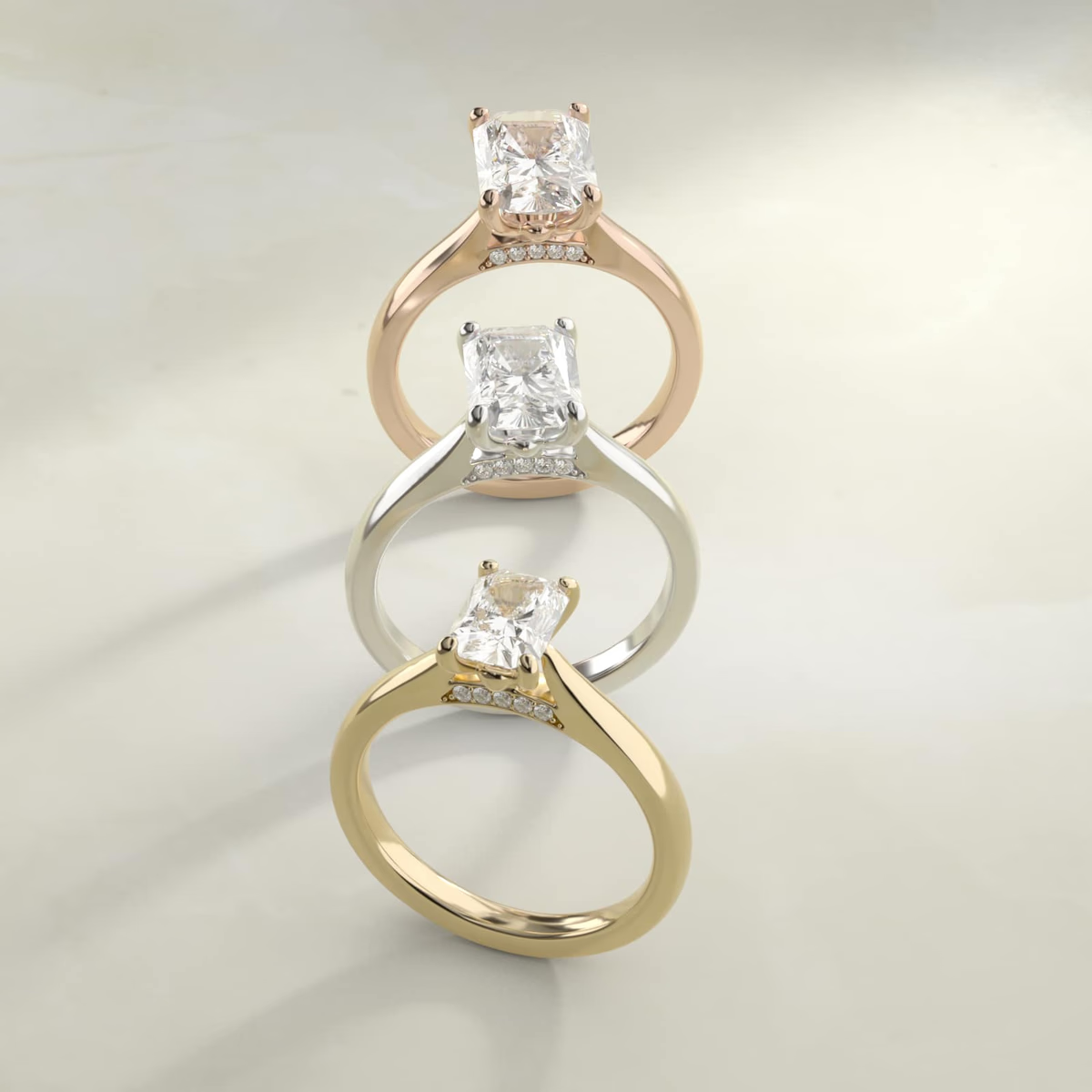
| Rank | Setting | Setting Price | Reviews | Works With | Best For |
|---|---|---|---|---|---|
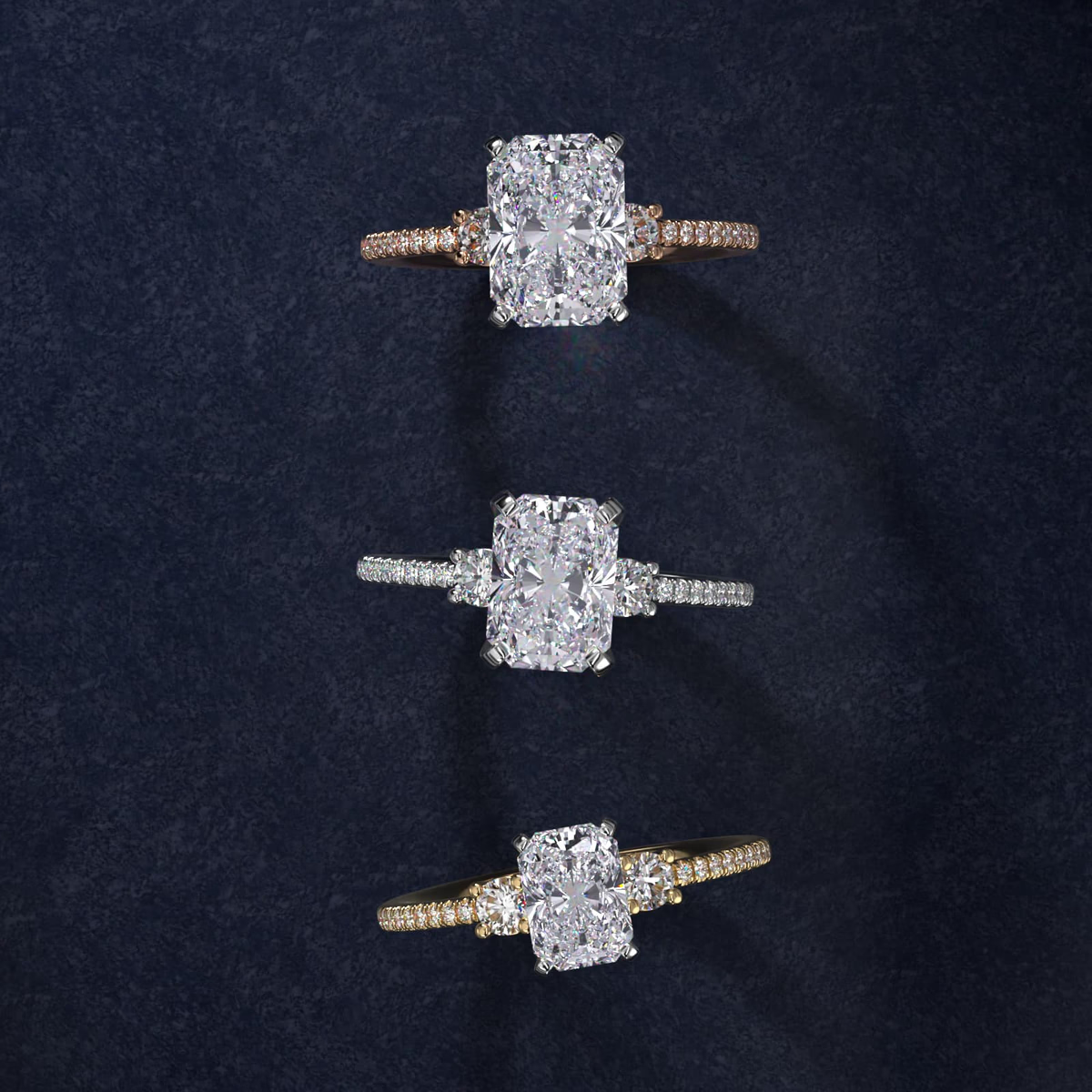
| #1 | Riviera Pavé WG | $1,500 | 479 reviews | Both shapes | Most popular, best balance |
| #2 | Classic Four-Prong Platinum | $1,180 | 1,815 reviews | Both shapes | Most reviewed, timeless |
| #3 | Twisted Halo RG | $2,250 | 236 reviews | Square radiant | Romantic, feminine look |
| #4 | Petite Hidden Halo YG | $1,255 | 105 reviews | Both shapes | Yellow gold, subtle halo |
| #5 | Criss Cross Solitaire RG | $1,650 | 20 reviews | Elongated radiant | Unique, modern look |
Rank #1 — Riviera Pavé WG ($1,500, 479 reviews). The Riviera Pavé is the most versatile radiant cut setting available. The thin pavé band adds shoulder sparkle without adding any visual bulk around the center stone. It works equally well with elongated and square radiant cuts. It is the most popular pairing in current certified market data.
Rank #2 — Classic Four-Prong Platinum ($1,180, 1,815 reviews). The most-reviewed setting in the database for a reason. Four prongs hold the corners of the radiant cut cleanly. Platinum is the most durable setting metal — it doesn't wear thin over time the way white gold does. This is the right choice for buyers who want a classic, low-maintenance ring that lasts decades.
Rank #3 — Twisted Halo Rose Gold ($2,250, 236 reviews). The halo works on a radiant cut in a way it doesn't on an emerald cut. The radiant cut's corners are clipped and rounded, so a round halo doesn't fight the stone outline. The twisted halo in rose gold is a particularly strong pairing with a square radiant — it adds warmth and softens the stone's edges.
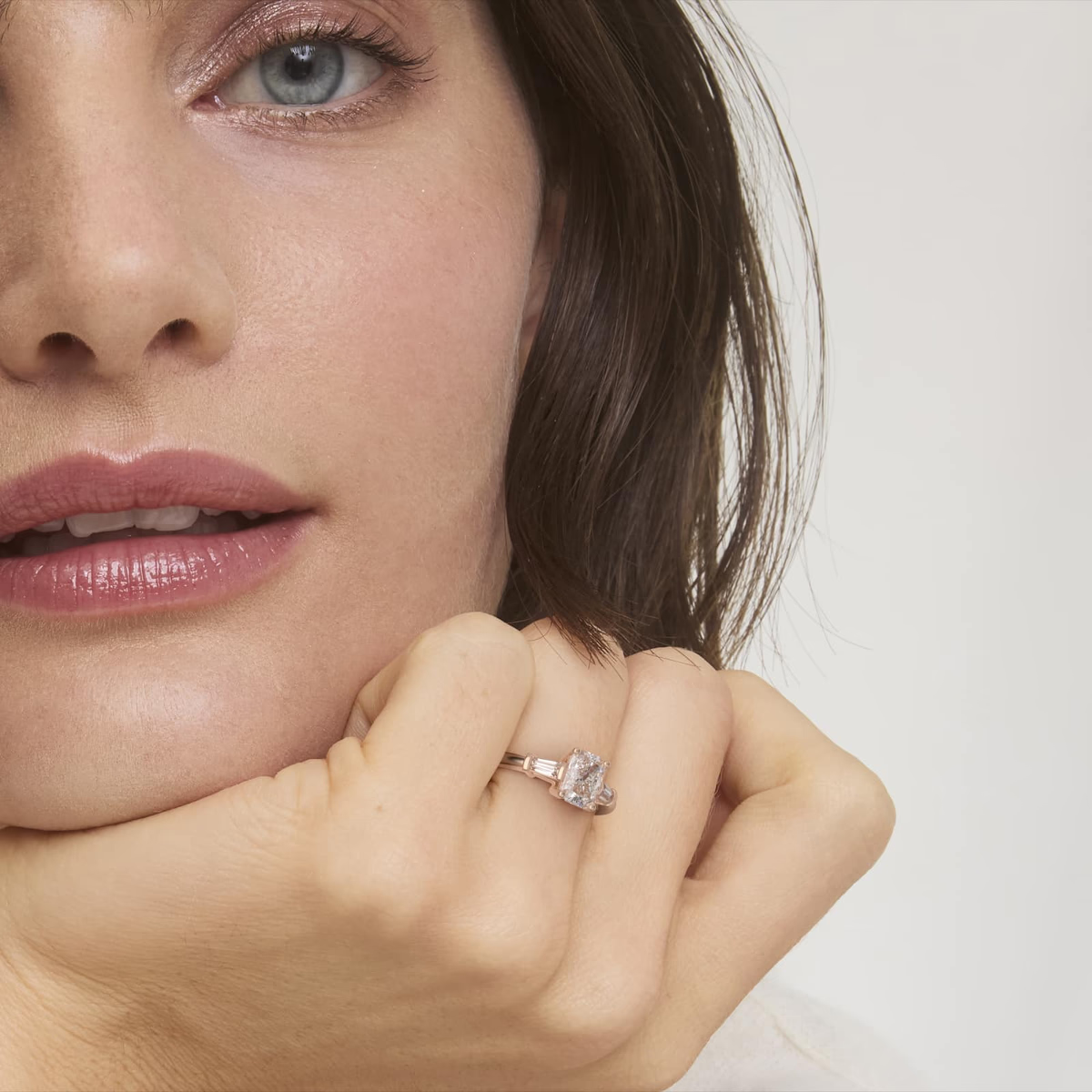
Rank #4 — Petite Hidden Halo Yellow Gold ($1,255, 105 reviews). Yellow gold with a radiant cut is a classic pairing. The stone's warm fire looks even richer against yellow gold. The hidden halo adds melee diamonds under the center stone — visible from the side, invisible from above. Affordable and distinctive.
Rank #5 — Criss Cross Solitaire Rose Gold ($1,650, 20 reviews). The criss-cross band crosses beneath the stone, creating a modern geometric look that complements an elongated radiant particularly well. Fewer reviews means fewer buyers have tested it, so rank accordingly. But the visual result is strong.
The Total Ring Number
Planning a ring as "stone price" and "setting price" as separate budgets is the most common mistake buyers make. The Total Ring Number treats them as one number from the start.
For a radiant cut, the right split is 75–80% on the stone, 20–25% on the setting. The radiant cut is a brilliance-forward shape. The 70 facets do the visual work. A beautiful $1,500 setting on a mediocre VS2-with-visible-inclusions radiant is a waste of $1,500. Put the budget on the stone. Then pick a clean, well-made setting that gets out of the way.
Setting prices and your stone budget at common totals:
| Setting | Metal | Setting Price | Stone at $5K Total | Stone at $8K Total | Stone at $15K Total |
|---|---|---|---|---|---|
| Classic Simple Solitaire | 14K White Gold | $1,145 | $3,855 | $6,855 | $13,855 |
| Classic Four-Prong Solitaire | Platinum | $1,180 | $3,820 | $6,820 | $13,820 |
| Petite Hidden Halo Solitaire | 18K Yellow Gold | $1,255 | $3,745 | $6,745 | $13,745 |
| Riviera Pavé | 14K White Gold | $1,500 | $3,500 | $6,500 | $13,500 |
| Criss Cross Solitaire | 14K Rose Gold | $1,650 | $3,350 | $6,350 | $13,350 |
| Twisted Halo | 14K Rose Gold | $2,250 | $2,750 | $5,750 | $12,750 |
The classic solitaire and four-prong settings leave the most budget for the stone. The twisted halo at $2,250 cuts into your stone budget significantly at a $5K total — you're left with $2,750 for the stone, which limits you to a 1ct natural at good grades or a lab stone. If you want the halo look at a $5K total, go lab. If you want natural, increase your total first.
Natural Radiant Cut Ring Prices
Natural GIA-certified radiant cuts in current certified market inventory start at around $2,318 for a 1ct G-VS2 Ideal. The radiant cut prices less than an oval or round brilliant at the same carat weight because demand is lower. That is a real advantage for buyers who want a less-common shape.
VS2 clarity is the floor for a radiant cut — not VS1, like the emerald cut. The 70 brilliant-style facets scatter light and hide inclusions that a step-cut would expose. A GIA-graded VS2 in a radiant cut will look eye-clean at arm's length. You can save hundreds by choosing VS2 over VS1 without any visible difference.
| Diamond | Cert | Colour / Clarity | Stone Price | + Riviera Pavé WG $1,500 | Total Ring |
|---|---|---|---|---|---|
| 1ct Natural Radiant | GIA | G / VS2 | $2,318 | + $1,500 | $3,818 |
| 1ct Natural Radiant | GIA | F / VS2 | $2,597 | + $1,500 | $4,097 |
| 1ct Natural Radiant | GIA | F / VS1 | $2,787 | + $1,500 | $4,287 |
| 2ct Natural Radiant | GIA | D / VS2 | $17,714 | + $1,500 | $19,214 |
| 2ct Natural Radiant | GIA | E / VS2 | $19,534 | + $1,500 | $21,034 |
| 3ct Natural Radiant | GIA | G / VS2 | $41,952 | + $1,500 | $43,452 |
Reading this data. The entry natural ring is a 1ct G-VS2 at $3,818 total. G colour is white-facing and eye-clean. VS2 clarity is completely invisible to the naked eye. This is a legitimate natural GIA ring for under $4,000. The 2ct natural jumps to $19,214 minimum — that is the carat premium in this market. If 2ct natural is above budget, go lab. You get the same visual size for $3,669.
"Natural radiant cuts are one of the best-value natural diamonds in the market right now. They are undervalued compared to rounds and ovals at the same carat weight. A 1ct G-VS2 GIA radiant at $2,318 for the stone is a deal by any comparison. The same colour and clarity in a round brilliant costs significantly more.
One thing I always confirm on natural radiants is the L/W ratio. I've had buyers order a 'radiant cut' expecting an elongated stone and receive something much closer to a square. Always verify the ratio from the certificate. It's not optional." — Farzana Hasan, Diamond Critics
Lab Radiant Cut Engagement Ring: The Size Argument
Lab-grown radiant cuts give you the 70-facet fire of a natural radiant at a fraction of the cost. At 2ct, a lab radiant paired with a good setting is the best-value engagement ring in the market right now.
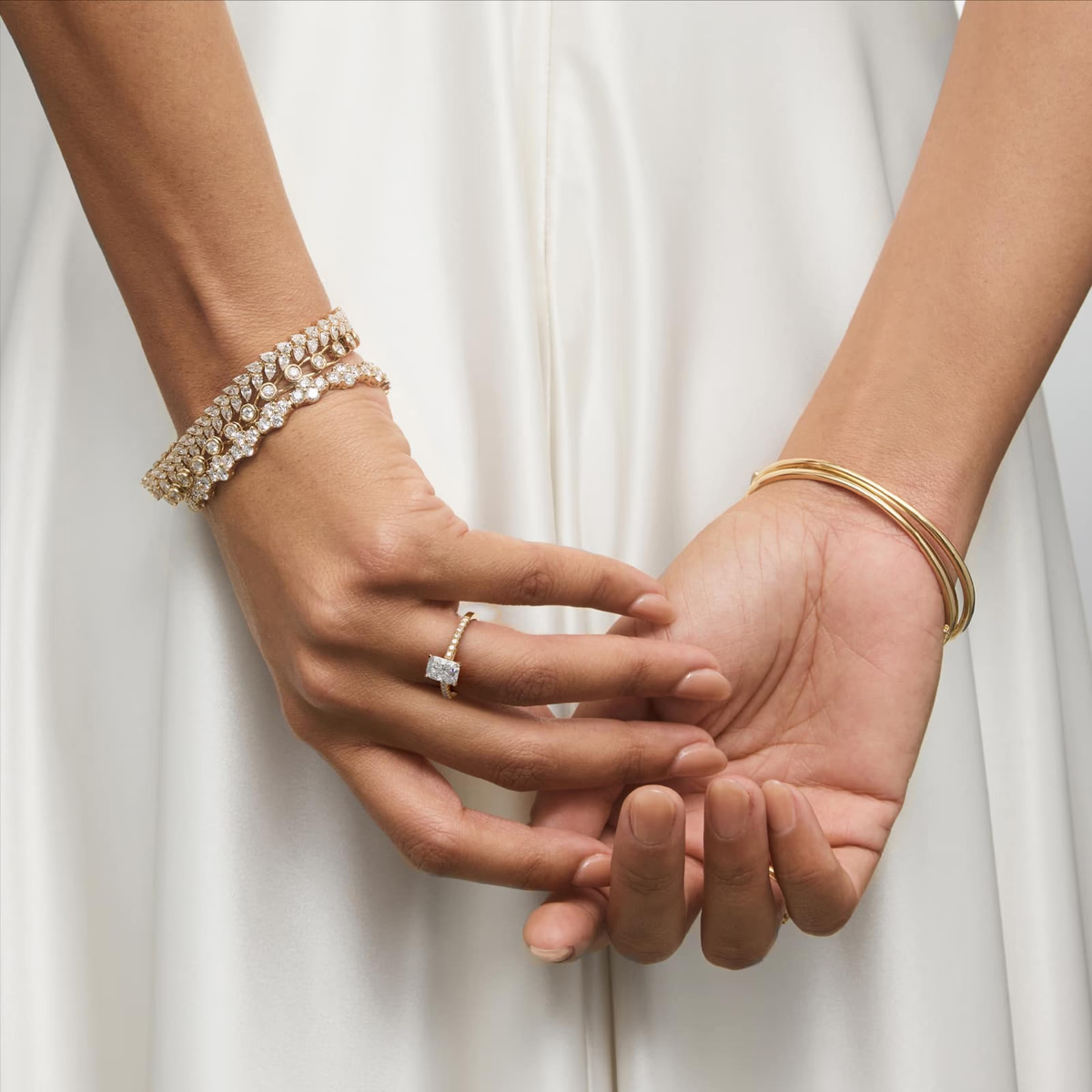
A 2ct lab radiant has the same physical dimensions as a 2ct natural radiant. Same L/W ratio, same face-up size, same 70 facets, same fire. A GIA or IGI-certified lab radiant is chemically, optically, and physically identical to a natural radiant. The only difference is origin and price.
| Diamond | Cert | Colour / Clarity | Stone Price | + Classic Solitaire WG $1,145 | Total Ring |
|---|---|---|---|---|---|
| 1ct Lab Radiant | IGI | E / VVS1 | $867 | + $1,145 | $2,012 |
| 1ct Lab Radiant | IGI | D / VVS1 | $932 | + $1,145 | $2,077 |
| 1.5ct Lab Radiant | IGI | F / VVS1 | $1,510 | + $1,145 | $2,655 |
| 1.5ct Lab Radiant | IGI | E / VVS1 | $1,600 | + $1,145 | $2,745 |
| 2ct Lab Radiant | IGI | F / VVS1 | $2,169 | + $1,145 | $3,314 |
| 2ct Lab Radiant | IGI | E / VVS1 | $2,220 | + $1,145 | $3,365 |
| 3ct Lab Radiant | IGI | D / VVS1 | $5,350 | + $1,145 | $6,495 |
Reading this data. A 1ct IGI E-VVS1 lab radiant at $867 plus a Classic Solitaire WG at $1,145 is a certified E-VVS1 engagement ring for $2,012 total. That is remarkable value. The 2ct F-VVS1 at $3,669 total with Riviera Pavé is the standout recommendation. Two carats of certified lab radiant, 70 facets, full fire, 14K white gold with pavé shoulders. Nothing at this price comes close.
The 3ct lab option at $6,495 total is where lab radiant becomes genuinely impressive. Three carats of radiant cut — elongated or square, your choice — for under $7,000 with setting included.
Natural vs Lab Radiant: Direct Comparison
| Comparison | Natural Radiant | Lab Radiant |
|---|---|---|
| 1ct G-VS2 stone price | $2,318 | $867 (E-VVS1) |
| Total ring at 1ct + Solitaire WG | $3,463 | $2,012 |
| 2ct stone price | $17,714 (D-VS2) | $2,169 (F-VVS1) |
| Total ring at 2ct + Riviera Pavé WG | $19,214 | $3,669 |
| Resale value | 20–40% of purchase | Near zero |
| Certificate | GIA preferred | IGI or GIA |
| Visual difference | None visible | None visible |
| Clarity floor for radiant | VS2 | VS2 |
| Colour recommendation | G–H for WG, H–I for YG/RG | E–F for any metal |
The visual difference between a natural and lab radiant is zero. A gemologist cannot tell them apart without specialist equipment. If resale value matters to you in a meaningful way, choose natural. If it doesn't — and for most buyers it shouldn't, since you're not buying a ring to sell it — lab is the rational choice at this price difference.
Tides Of Summer Capsule
Up To 30% Off
Shop The Sale →Vault ClearanceClear The Vault
Up To 70% Off
Shop Vault Deals →Affiliate link — no extra cost to you
Metal Options for Radiant Cut Settings
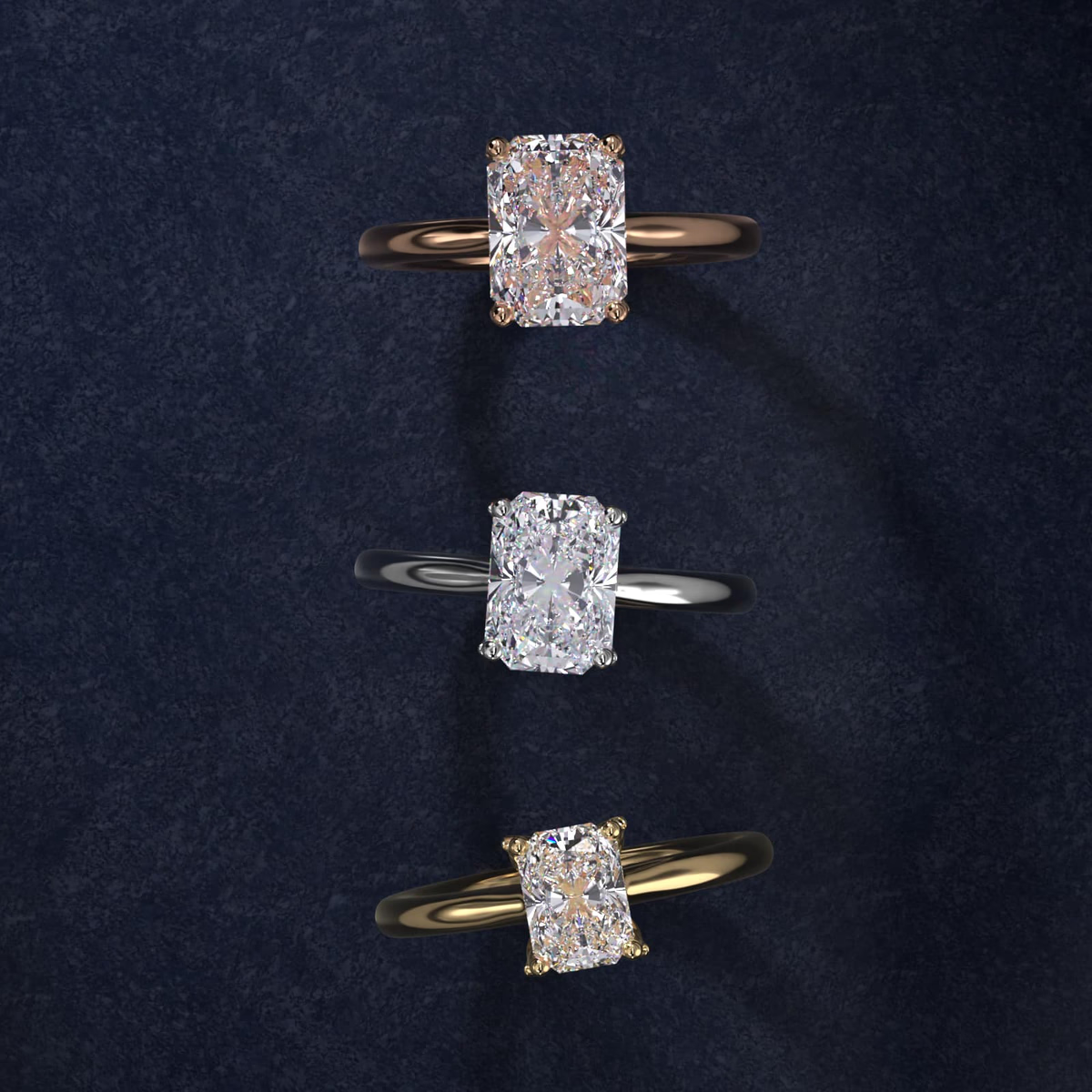
The radiant cut works in every metal. This is one of its advantages over step-cut shapes like the emerald cut, which look best in white metals. The radiant cut's 70 facets fire warmly in yellow gold and softly in rose gold — both look intentional, not accidental.
White gold and platinum. White metals are the most popular choice. They don't add a colour cast to the stone, which matters if you're buying G colour or above. Platinum is more durable and denser — it costs more but lasts longer. White gold requires rhodium plating every few years. For daily-wear rings, platinum is worth the premium.
Yellow gold. An H or I colour radiant cut in yellow gold is a smart choice. Yellow gold naturally compensates for slight body warmth in the stone, which means you can buy a slightly lower colour grade and save money without any visible compromise. The Petite Hidden Halo Solitaire YG at $1,255 is a great entry-level yellow gold option with 105 reviews.
Rose gold. Rose gold works particularly well with a square radiant — the soft pink metal and the compact stone shape create a romantic, feminine ring. The Twisted Halo in rose gold at $2,250 is the strongest rose gold setting for a radiant cut.
| Metal | Setting | Price | Reviews | Stone Colour Rec |
|---|---|---|---|---|
| Platinum | Classic Four-Prong Solitaire | $1,180 | 1,815 | D–G |
| 14K White Gold | Riviera Pavé | $1,500 | 479 | F–H |
| 18K Yellow Gold | Petite Hidden Halo Solitaire | $1,255 | 105 | G–I |
| 14K Rose Gold | Twisted Halo | $2,250 | 236 | G–I |
| 14K Rose Gold | Criss Cross Solitaire | $1,650 | 20 | G–I |
Budget Rings: Full Ring Combinations by Price Range
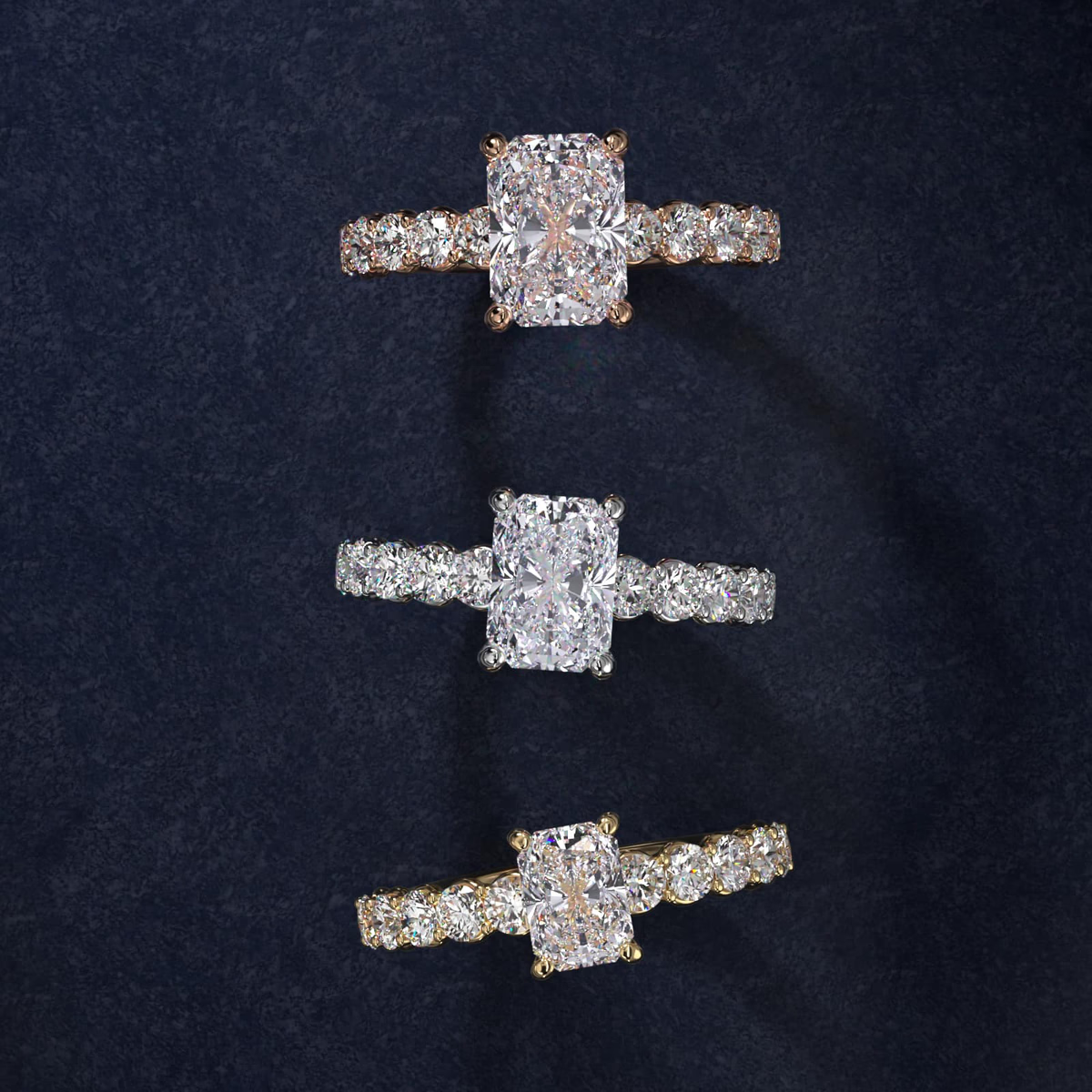
Every combination below is stone + setting = full ring price.
Under $3,000 — Lab radiant ring:
- 1ct IGI E-VVS1 lab radiant $867 + Classic Solitaire WG $1,145 = $2,012 total
- 1ct IGI D-VVS1 lab radiant $932 + Classic Solitaire WG $1,145 = $2,077 total
$3,000–$5,000 — Best value range:
- 1ct GIA G-VS2 natural $2,318 + Riviera Pavé WG $1,500 = $3,818 total
- 2ct IGI F-VVS1 lab radiant $2,169 + Riviera Pavé WG $1,500 = $3,669 total
- 1.5ct IGI F-VVS1 lab radiant $1,510 + Twisted Halo RG $2,250 = $3,760 total
$5,000–$10,000 — Mid-range natural or large lab:
- 1ct GIA F-VS1 natural $2,787 + Twisted Halo RG $2,250 = $5,037 total
- 3ct IGI D-VVS1 lab radiant $5,350 + Riviera Pavé WG $1,500 = $6,850 total
$15,000+ — Natural 2ct+ territory:
- 2ct GIA D-VS2 natural $17,714 + Classic Four-Prong Platinum $1,180 = $18,894 total
Radiant Cut vs Other Fancy Shapes: Which Ring Wins?
If you're choosing between a radiant cut and another fancy shape for your engagement ring, here is a direct comparison based on real certified market data and setting compatibility.
Radiant vs Oval. The oval cut is currently the most popular fancy shape in the engagement ring market. It is elongated by definition and creates a finger-lengthening effect. But the oval comes with the bow-tie effect — a dark shadow across the center of some stones that is only visible in HD video. The radiant cut does not have a bow-tie. Its 70 facets fire uniformly across the face-up surface. If you want the elongated look without the bow-tie risk, an elongated radiant is the better choice. Price-wise, oval cuts tend to cost slightly more than radiant cuts at the same carat weight and quality grade. The radiant cut is better value than an oval at equivalent specifications.
Radiant vs Emerald Cut. The emerald cut is a step-cut — it has flat, parallel facets that produce large mirror-like flashes. The radiant cut has 70 brilliant-style facets and produces fire and scintillation throughout. For setting choice, the emerald cut has strict rules — halos fight its rectangular outline. The radiant cut has no such constraints. If you want a rectangular shape with more sparkle than the emerald cut and no setting restrictions, the radiant cut wins. If you want quiet elegance and a minimal, gallery look, the emerald cut is the better choice. See Radiant Cut vs Emerald Cut Diamond for the full comparison.
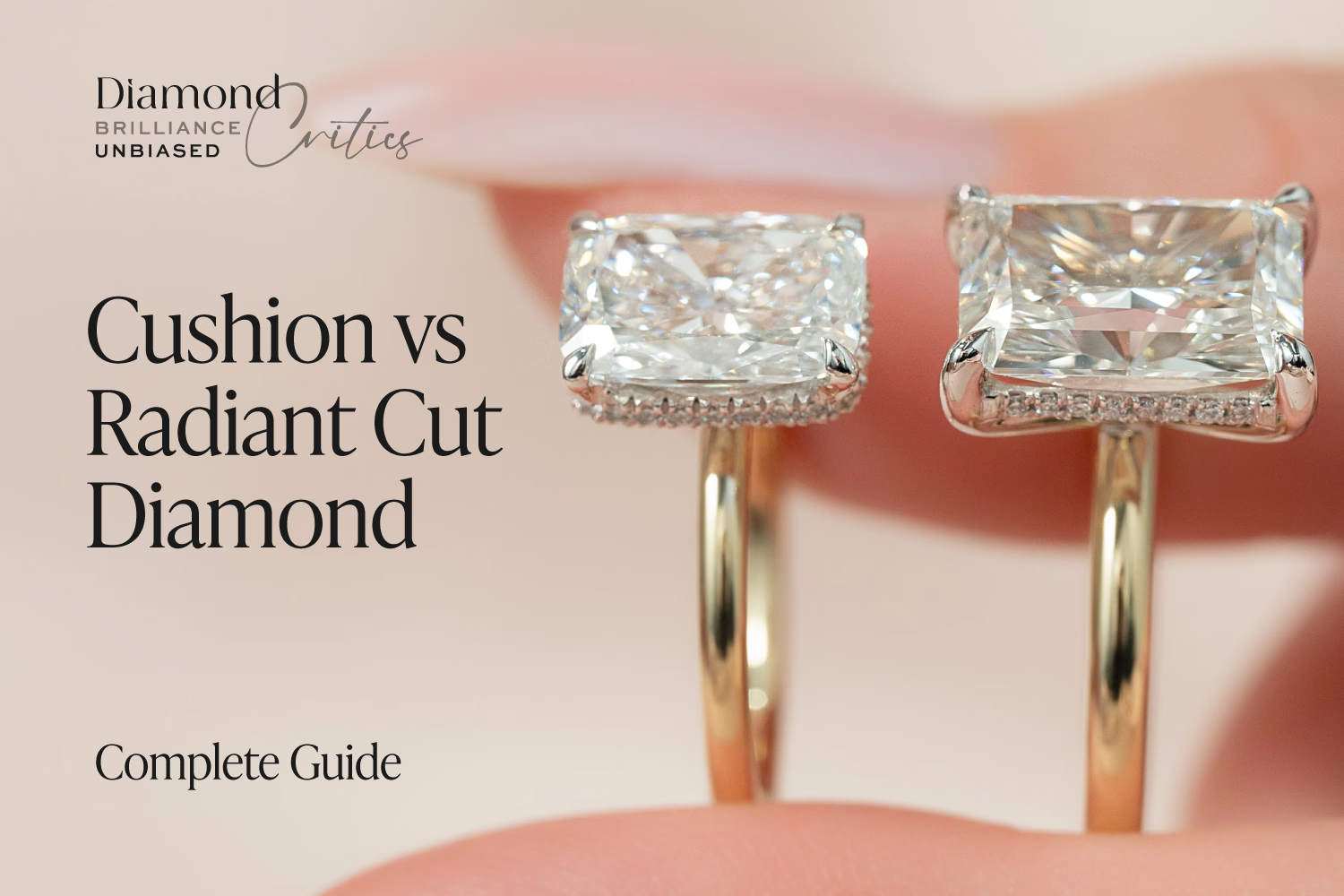
Radiant vs Cushion Cut. The cushion cut is the radiant cut's closest relative in the market. Both are square-ish brilliant cuts with many facets. The difference is corners: cushion cuts have rounded corners and curved sides, radiant cuts have clipped corners and straighter sides. The cushion cut is softer and more romantic in shape. The radiant cut is more geometric and precise. In terms of fire, high-quality cushion cuts and radiant cuts are comparable. Setting compatibility is similar — both work with halos, pavé, solitaires. For a full side-by-side, see Cushion Cut vs Radiant Cut Diamond.
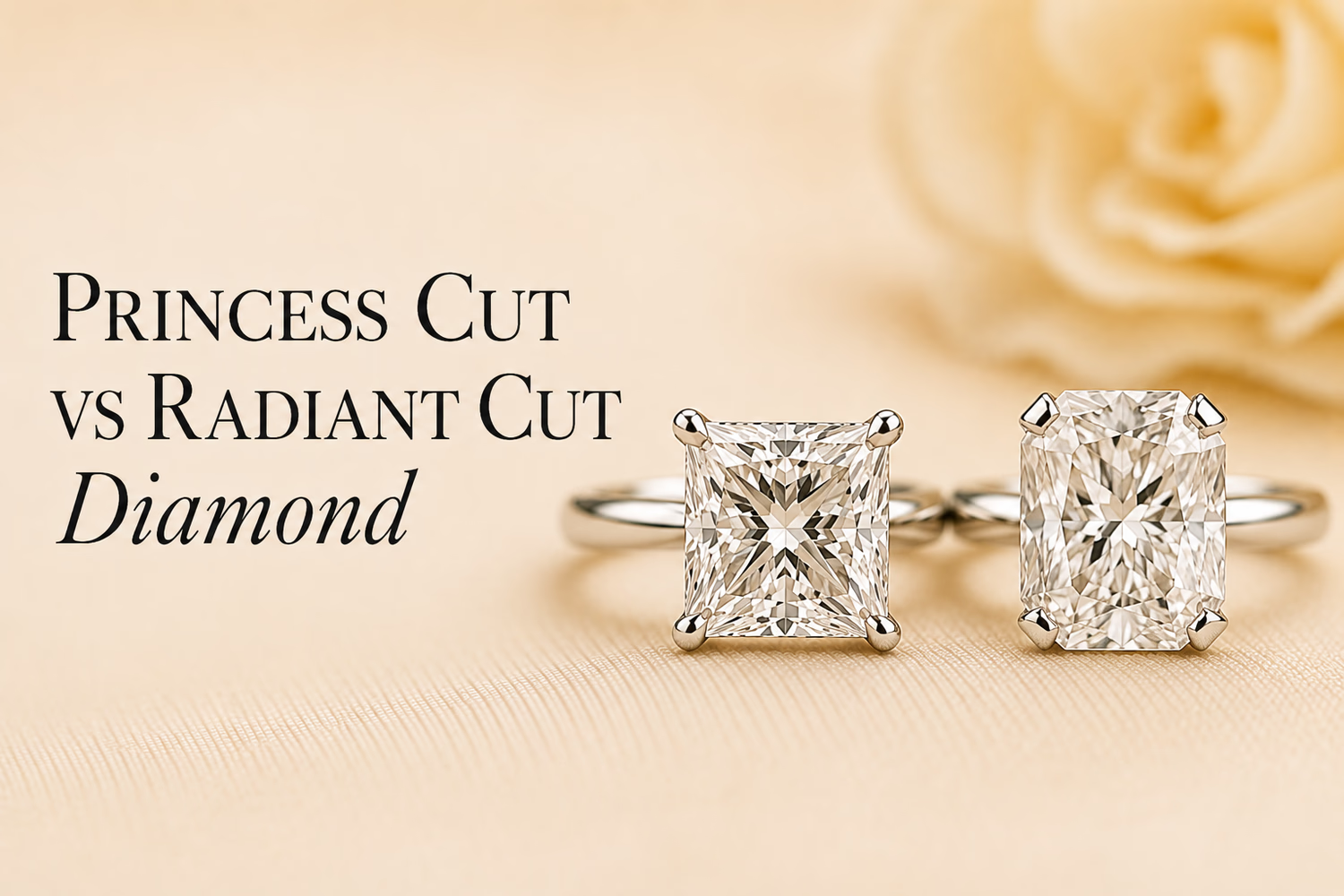
Radiant vs Princess Cut. The princess cut is a square brilliant with sharp, unclipped corners. The radiant cut has clipped corners, which makes it safer in a prong setting — unclipped corners in a princess cut are vulnerable to chipping over time. For an engagement ring worn daily, the radiant cut's clipped corners are a genuine durability advantage. Fire-wise, the two cuts are comparable. The princess cut looks more geometric and angular; the radiant reads softer. See Princess Cut vs Radiant Cut Diamond.
| Shape | Bow-Tie Risk | Setting Flexibility | Price vs Radiant | Corners | Best For |
|---|---|---|---|---|---|
| Radiant Cut | None | Maximum | Baseline | Clipped (safe) | Setting freedom, no bow-tie |
| Oval Cut | Yes — check video | High | Slightly higher | Rounded | Most popular fancy, max elongation |
| Emerald Cut | None | Limited (no round halo) | Comparable | Cropped step-cut | Quiet elegance, hall-of-mirrors |
| Cushion Cut | None | High | Comparable | Rounded | Soft romantic look |
| Princess Cut | None | High | Slightly lower | Sharp (chip risk) | Geometric, angular look |
What to Look for When Buying a Radiant Cut Ring
This section covers the five checks every buyer should do before purchasing — in order of importance.
1. Confirm the L/W ratio from the certificate. Do not rely on listing photos to determine elongated vs square. Pull the actual GIA or IGI diamond report and read the measurements. Divide the longer measurement by the shorter. A 7.0mm x 5.5mm stone = 1.27 ratio = elongated radiant. A 6.0mm x 5.8mm stone = 1.03 ratio = square radiant. Know this number before anything else.
2. Watch the HD video, not just the photo. Still photos in a white spotlight make every stone look spectacular. The HD video reveals the actual fire distribution and whether the stone has any dark areas. Radiant cuts don't have a bow-tie, but some cuts have noticeably brighter areas concentrated in the center (large flashes) while others have a diffuse micro-scintillation (crushed ice). Neither is wrong — but you should know which you're getting before you commit.
3. Set your Total Ring Number before searching. Decide your total budget — stone plus setting as one number. Then use the tables in this post to allocate: 75–80% on the stone, 20–25% on the setting. If you start with a stone you love and then look at settings, you will always overspend. The Total Ring Number keeps you disciplined.
4. Check the clarity in the certificate, not just the grade. A GIA VS2 is always eye-clean in a radiant cut. But the certificate also shows where the inclusions are located. An inclusion near the edge of the stone, under the prong, is invisible. An inclusion dead-center on the table is more likely to be visible in certain lighting. Ask your retailer for the plot from the certificate before ordering above 2ct in natural.
5. Confirm the prong type for your chosen ratio. Elongated radiants need four-prong settings that protect the longer corners — corner prongs. Square radiants can go four-prong or six-prong. If you are setting an elongated radiant in a halo, confirm the halo melee follows the stone's shape rather than sitting in a round frame. Most standard halos are designed for round or cushion shapes. Some will need adjustment for an elongated radiant.
Expert Summary
The radiant cut engagement ring is a strong choice for buyers who want diamond brilliance without a round brilliant. It costs less than an oval or round at the same carat weight. It works in every setting style. It hides inclusions better than any step-cut. And it gives you a shape that looks genuinely distinctive on a finger — not the default choice.
The two decisions that matter most are The Shape Split (elongated vs square) and The Total Ring Number (one budget for both stone and setting, split 75–80% on the stone).
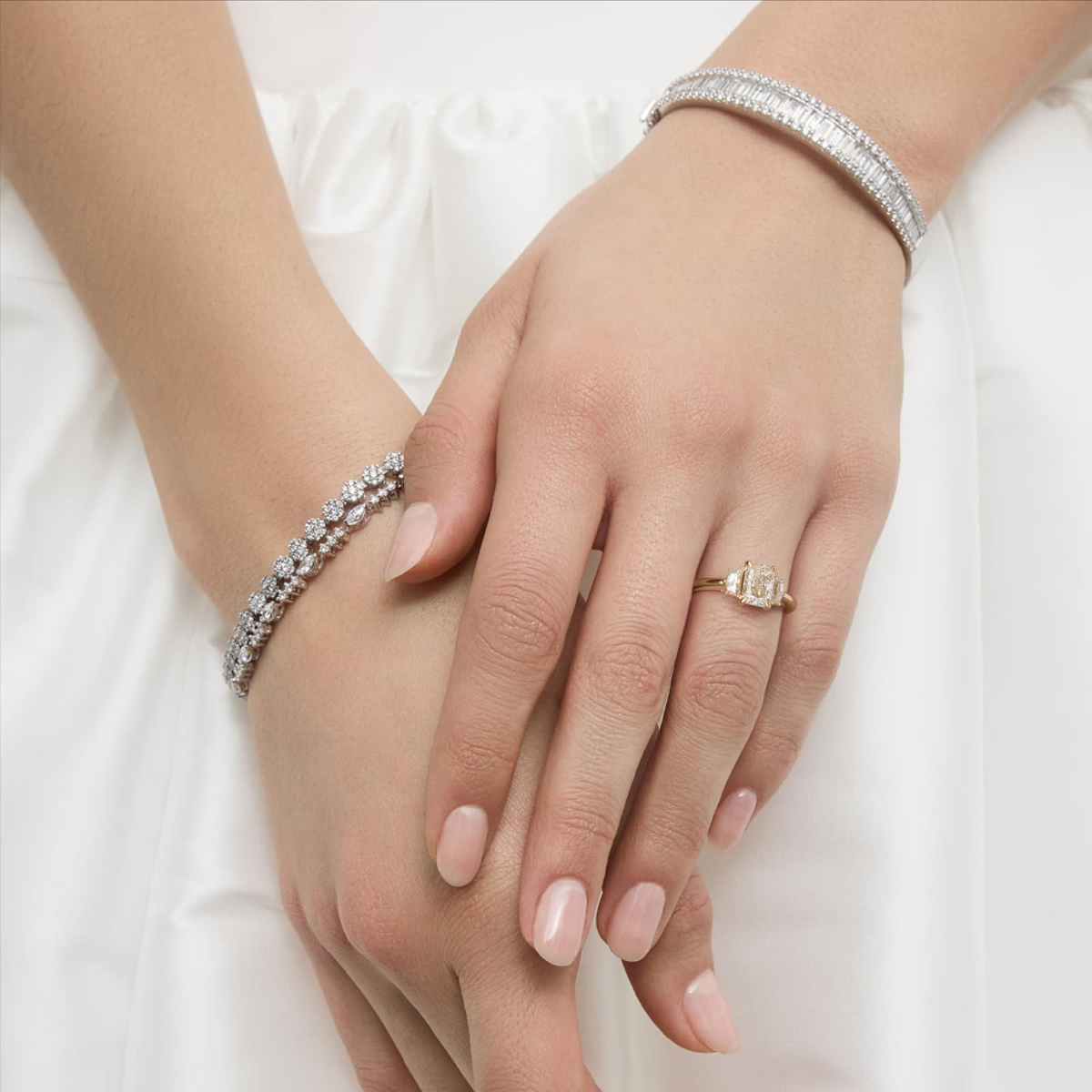
The standout value in the current market is a 2ct IGI F-VVS1 lab radiant paired with the Riviera Pavé WG at $1,500 for a total ring price of $3,669. Two certified carats of fire and brilliance, 479-review setting, white gold shoulders. The natural equivalent — a 2ct GIA D-VS2 at $19,214 total — is five times the price for a ring that looks identical.
"I've been recommending radiant cuts for years to buyers who want something different from the default round brilliant but don't want the setting-sensitivity of an emerald cut. The radiant works with everything. That's rare.
The one thing I always tell buyers: check the L/W ratio before you order. Get the certificate number. Pull up the GIA or IGI report and read the ratio yourself. I've seen too many disappointed buyers who ordered a 'radiant' and received a square stone when they wanted elongated — or vice versa. Five minutes of due diligence saves a return." — Farzana Hasan, Diamond Critics
Final Verdict: 4 Buyer Scenarios
You want the most fire for the least money. Buy a 2ct IGI F-VVS1 lab radiant at $2,169. Add a Riviera Pavé WG at $1,500. Total ring: $3,669. This beats every other lab cut shape at this budget. Check the L/W ratio for elongated (1.20–1.40) before ordering.
You want a natural GIA diamond, traditional values. Buy a 1ct GIA G-VS2 radiant at $2,318. Add the Classic Four-Prong Platinum at $1,180. Total ring: $3,498. Platinum setting, GIA certificate, natural diamond. Lasts forever and looks timeless.
You want a romantic look in rose gold. Buy a 1.5ct IGI F-VVS1 lab radiant at $1,510. Pair with the Twisted Halo Rose Gold at $2,250. Total ring: $3,760. Warm, romantic, and very distinctive. Choose square radiant (ratio 0.95–1.05) for the best match with the halo setting.
You want a large statement ring on a serious budget. Buy a 3ct IGI D-VVS1 lab radiant at $5,350. Add the Riviera Pavé WG at $1,500. Total ring: $6,850. Three certified carats of D-VVS1 fire. No other shape gives you this visual size at this price.
See Also
- Radiant Cut Diamond: Complete Buying Guide
- Radiant Cut vs Emerald Cut Diamond
- Cushion Cut vs Radiant Cut Diamond
- Princess Cut vs Radiant Cut Diamond
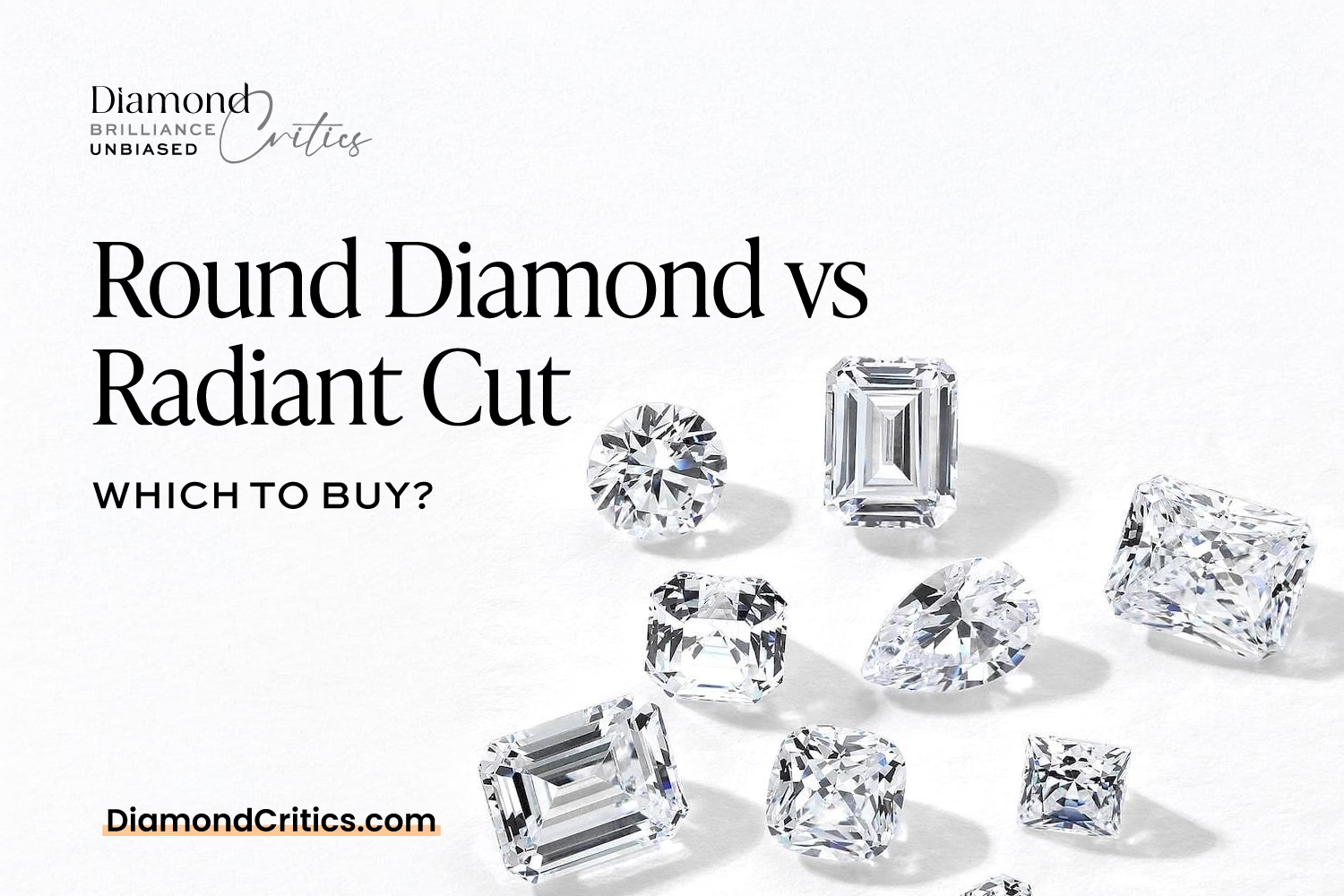
- Round Diamond vs Radiant Cut
- Emerald Cut Diamond Engagement Rings
- Oval Cut Diamond Engagement Rings
- Cushion Cut Diamond Engagement Rings
FAQ
What is a radiant cut engagement ring?
A radiant cut engagement ring uses a rectangular or square diamond with 70 facets on the crown and pavilion. This gives the stone the large face-up area of a step-cut and the fire of a brilliant cut. The shape works in any setting style and any metal.
What is the best setting for a radiant cut engagement ring?
The Riviera Pavé in white gold at $1,500 is the most popular and versatile option. It works with both elongated and square radiant cuts. For platinum, the Classic Four-Prong Solitaire at $1,180 (1,815 reviews) is the most proven choice.
How much does a radiant cut engagement ring cost?
Lab radiant rings start at $2,012 total (1ct E-VVS1 + Classic Solitaire WG). Natural GIA radiant rings start at $3,818 total (1ct G-VS2 + Riviera Pavé WG). The best value in the market is the 2ct lab F-VVS1 + Riviera Pavé WG at $3,669 total.
What length-to-width ratio is best for a radiant cut ring?
For elongated radiant: 1.20–1.40. For square radiant: 0.95–1.05. Avoid 1.10–1.19 unless you have seen the stone in person — it can look transitional. Always confirm the ratio from the actual GIA or IGI certificate before ordering.
Does a halo setting work on a radiant cut?
Yes. Unlike the emerald cut, a halo works on a radiant cut because the stone's corners are clipped and curved, not sharp. A round halo does not fight the radiant cut's outline the way it fights an emerald cut's hard rectangle. The Twisted Halo in rose gold at $2,250 is the strongest option.
What clarity should I choose for a radiant cut engagement ring?
VS2 is the clarity floor for a radiant cut. The 70 brilliant-style facets scatter light and conceal inclusions that a step-cut like the emerald cut would expose. A GIA VS2 in a radiant cut is eye-clean at arm's length. You do not need VS1 unless you are buying above 2ct in natural.
Is lab-grown radiant cut worth it for an engagement ring?
Yes, for most buyers. A 2ct IGI F-VVS1 lab radiant ring totals $3,669. The natural equivalent is $19,214. The stones are physically and optically identical. The only difference is origin. If resale value is a priority, choose natural. If not, lab is the rational choice.
What colour grade should I buy for a radiant cut ring?
In white gold or platinum: G–H colour for natural, E–F for lab. In yellow gold or rose gold: H–I for natural, F–G for lab. Yellow and rose gold compensate for slight body warmth, so you can go one grade lower without any visible difference. The radiant cut's 70 facets also mix colour through the stone, making slight colour differences less visible than in an emerald cut.
Should I choose elongated or square radiant for an engagement ring?
Elongated radiant (1.20–1.40 ratio) if you like ovals, emerald cuts, or finger-lengthening shapes. Square radiant (0.95–1.05 ratio) if you like cushions or princess cuts or want a bold compact look. Neither is superior. They suit different styles. Check the ratio in the certificate before ordering — do not rely on listing photos.
How is a radiant cut different from a cushion cut?
Both are brilliant cuts with many facets. The radiant cut has clipped corners — the corner clip is what defines it legally as a radiant. The cushion cut has rounded sides and corners. The radiant tends to have more sharp, defined facet structure while cushion cuts can vary enormously in their facet pattern. Radiant cuts also tend to have a more uniform fire distribution. For a full comparison, see Cushion Cut vs Radiant Cut Diamond.
Can I see a radiant cut engagement ring before I buy?
You can request a specific stone's certificate number and HD video from most online retailers. Always review the video before buying. The HD video will confirm the actual fire and face-up appearance — this is especially important for checking the L/W ratio visually (not just numerically) and for confirming the stone is not crushed-ice dominant if you want larger flashes.
What is The Shape Split in radiant cut rings?
The Shape Split is the decision between elongated radiant (L/W 1.20+) and square radiant (L/W under 1.10). These two stones look completely different on a finger. The elongated reads like a mini-emerald cut — long and elegant. The square reads like a cushion or princess — compact and bold. Listings often label both simply as "radiant cut" without distinguishing between them. Always read the L/W ratio from the certificate.
What is The Total Ring Number for radiant cut engagement rings?
The Total Ring Number is your combined budget for stone plus setting, treated as one figure from the start. For a radiant cut, put 75–80% on the stone and 20–25% on the setting. The Riviera Pavé WG at $1,500 and Classic Four-Prong Platinum at $1,180 are the best-value settings that leave maximum budget for the stone.
Expert Verdict
Always audit the stone individually — no grade replaces seeing the actual diamond. The certificate tells you what to look for. Your eyes tell you whether to buy.
— Farzana Hasan, GIA Expert · DiamondCritics.com