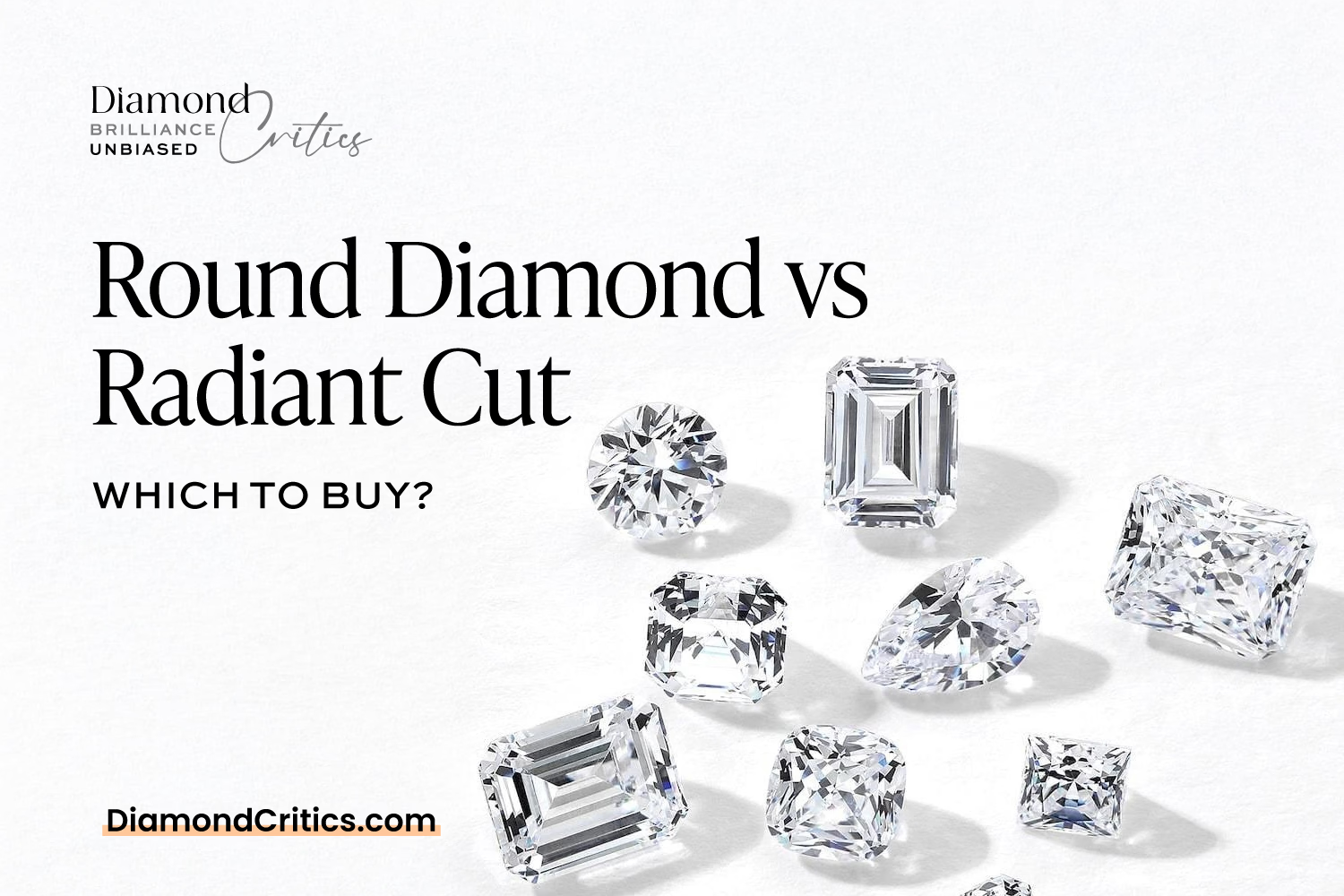
Round Diamond vs Radiant Cut: Which to Buy in 2026?
TL;DR: Round Diamond vs Radiant Cut — Key Facts
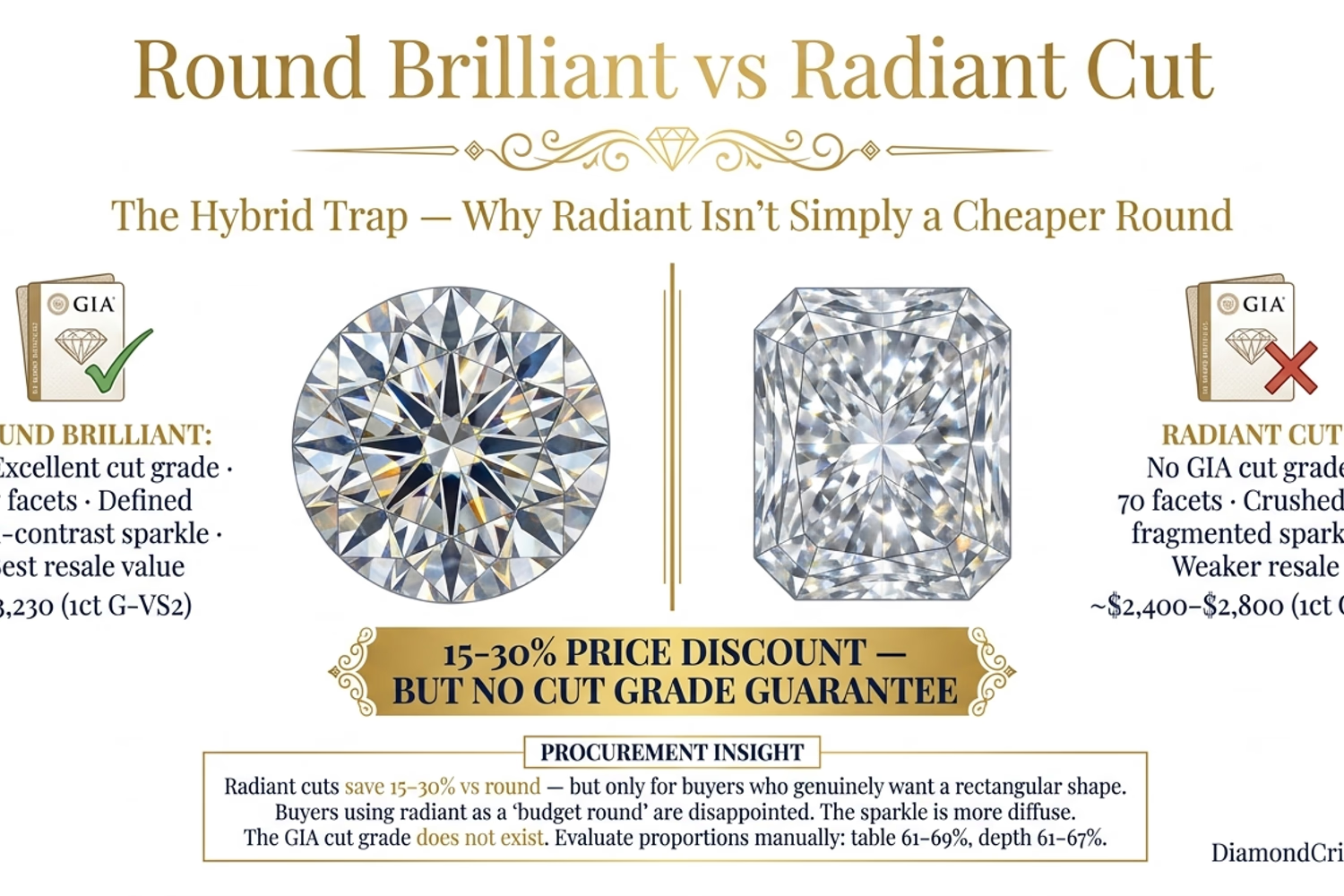
- The Hybrid Trap: Radiant cut is not a cheaper round — it is a rectangular brilliant. Buyers expecting round-like sparkle are often disappointed
- GIA cut grade: Round brilliants get GIA Excellent grade. Radiant cuts do not — you evaluate table %, depth %, and L/W ratio manually
- Price at 1ct: Round G-VS2 GIA Excellent at $3,230 vs radiant at ~$2,400–$2,800 — 15–25% cheaper but no cut grade guarantee
- Price at 2ct: Round at $16,490 vs radiant at ~$11,500–$13,500 — savings of $3,000–$5,000 at larger sizes
- Radiant cuts have 70 facets vs round's 57 — more facets, but sparkle is "crushed ice" diffuse rather than the defined high-contrast pattern of a round
- Buy radiant if you want a rectangular or square shape with more sparkle than an emerald. Never buy radiant as a "cheaper round"
The radiant cut was designed in 1977 as a hybrid: a rectangular shape with the brilliant-style faceting of a round diamond. The pitch was simple — you get the size of a fancy shape with the sparkle of a round brilliant. The reality in 2026 is more complicated. Radiant cuts offer genuine savings and a distinctive look, but buyers often discover the cut grade gap too late.
This guide compares round and radiant directly on every factor that matters when spending $3,000–$50,000 on an engagement ring diamond.


Visual Appearance: What Is the Difference in Sparkle?
The radiant cut has 70 facets vs the round brilliant's 57 — more facets, but not better light performance. Here is why:
Round brilliant: 57 facets arranged through a mathematically optimized geometry developed over decades. When cut to GIA Excellent proportions, all 57 facets work together to maximize light return. The pattern is intense, symmetric, and well-studied.
Radiant cut: 70 facets in a crushed-ice pattern that produces brilliant-style sparkle across a rectangular face. The radiant is genuinely more sparkly than step-cuts like emerald or Asscher — this is not marketing language. However, the individual facets are smaller and the sparkle pattern is fragmented (often described as "glittery" or "icy") rather than the high-contrast defined sparkle of a round.
The practical result: a well-cut radiant looks spectacular. But the radiant's sparkle is more diffuse and less intense than a round brilliant in direct comparison at the same size. Side by side under strong light, most buyers prefer the round's brilliance.
The Hybrid Trap: Why Radiant Is Neither Round Nor Emerald
The Hybrid Trap is the misconception that a radiant cut delivers the best of both the round and the emerald cut — the sparkle of the round with the size advantage of a fancy shape.
In practice, the radiant delivers:
- More sparkle than emerald, Asscher, or other step-cuts ✓
- Less certified sparkle quality than a round brilliant (no GIA cut grade) ✗
- A larger face-up area than round — but this depends heavily on the specific stone's proportions ✓
- A price discount vs round — but less than expected, and narrowing in recent years ✗
Buyers who choose radiant expecting near-round sparkle are often disappointed. Buyers who choose radiant specifically for its rectangular shape with better-than-step-cut light performance are typically satisfied.
The radiant is the right choice for buyers who genuinely want a rectangular outline with more sparkle than an emerald. It is the wrong choice for buyers using it as a "budget round."
Price Comparison: Round vs Radiant Cut
Radiant cuts typically cost 15–30% less than round diamonds at equivalent stated carat weight and grade. This discount exists because:
- Radiant cuts retain more rough diamond material — less waste in cutting
- Global demand for radiant cuts is substantially lower than round
- No GIA cut grade benchmark means buyers cannot instantly validate quality
1ct Comparison (G color, VS2 clarity):
| Shape | Certificate | Grade | Price | Note |
|---|---|---|---|---|
| Round GIA Excellent | GIA | G-VS2 | $3,230 | Cut grade guaranteed |
| Round GIA Excellent | GIA | G-VS2 | $3,240 | Second option same grade |
| Round GIA Excellent | GIA | F-VS2 | $3,490 | One color upgrade |
| Radiant | GIA | G-VS2 | ~$2,400–$2,800 | No cut grade — evaluate table/depth manually |
2ct Comparison (G color, VS2 clarity):
| Shape | Certificate | Grade | Price | Note |
|---|---|---|---|---|
| Round GIA Excellent | GIA | G-VS2 | $16,490 | Cut grade guaranteed |
| Round GIA Excellent | GIA | F-VS2 | $18,140 | One color upgrade |
| Round GIA Excellent | GIA | G-VS1 | $22,460 | One clarity upgrade |
| Radiant | GIA | G-VS2 | ~$11,500–$13,500 | No cut grade — evaluate manually |
At 1ct, the radiant saves $430–$830. At 2ct, the savings reach $3,000–$5,000. The savings are real — but they come with the responsibility of evaluating the radiant's proportions manually without a GIA cut grade to rely on.
The GIA Cut Grade Gap — The Most Important Difference
Round diamonds: receive a GIA cut grade (Excellent, Very Good, Good, Fair, Poor). GIA Excellent is a precise, independently validated standard. When you buy GIA Excellent, you have objective confirmation that the stone's proportions produce maximum light performance.
Radiant cuts: do not receive a GIA cut grade. GIA issues polish and symmetry grades for radiants but no holistic cut score. You evaluate a radiant cut's quality using:
- Table percentage: 61–69% target
- Depth percentage: 61–67% target
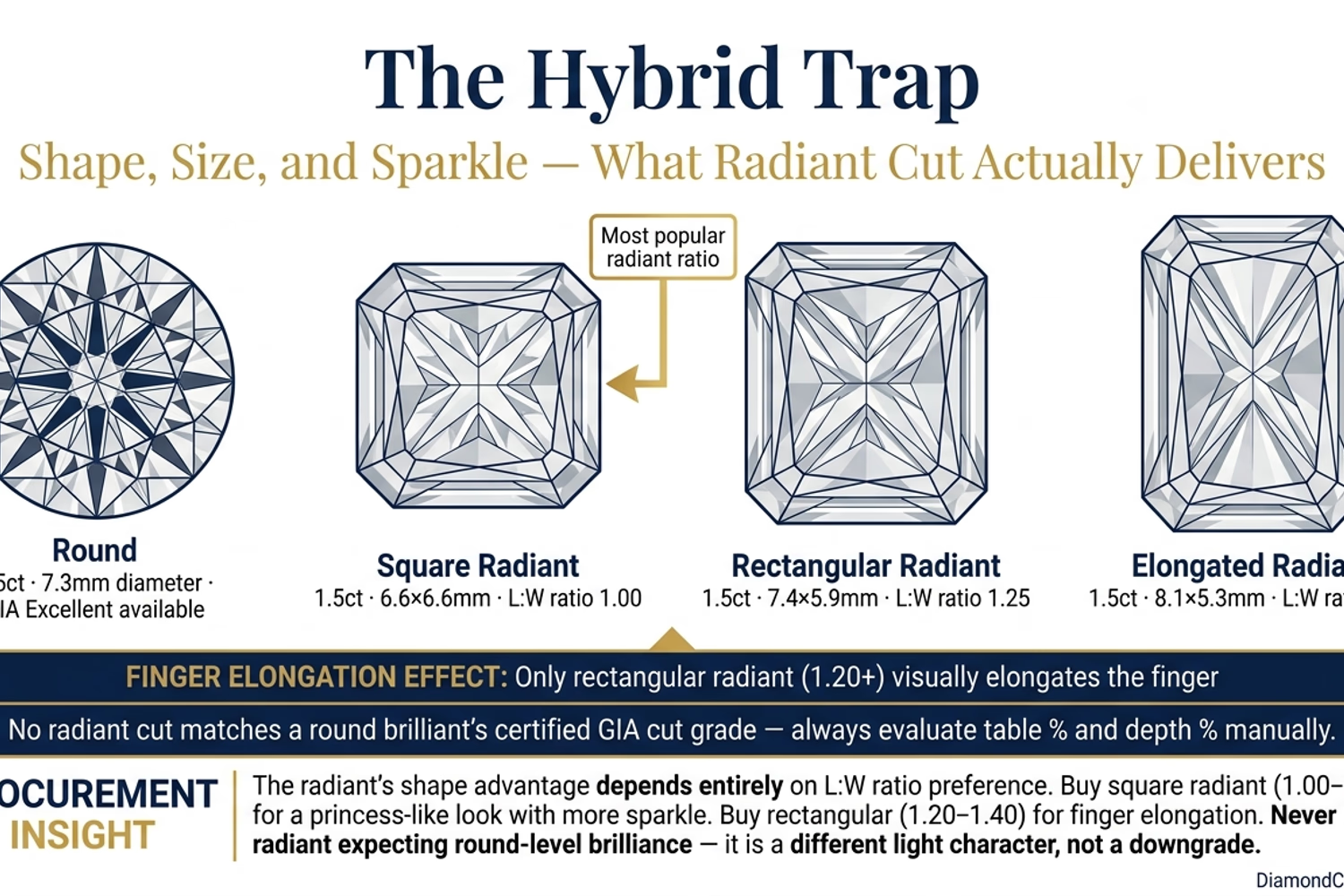
- Length-to-width ratio: your preferred shape (1.00–1.05 square, 1.20–1.40 rectangular)
- Polish and symmetry: Very Good minimum, Excellent preferred
This means radiant cut buyers cannot simply filter for "Excellent cut" and trust the result. You must evaluate each stone's specific proportions and watch HD video to assess light performance. For buyers who want simplicity and certainty, round + GIA Excellent is the cleaner decision.
Face-Up Size: Does Radiant Look Bigger?
Radiant cuts typically have a larger face-up area than rounds of the same carat weight when the radiant's proportions are appropriate (depth ≤67%).
| Carat | Round Diameter | Square Radiant (1:1) | Rect. Radiant (1.25:1) |
|---|---|---|---|
| 1ct | 6.4mm | ~5.8×5.8mm | ~6.5×5.2mm |
| 1.5ct | 7.3mm | ~6.6×6.6mm | ~7.4×5.9mm |
| 2ct | 8.1mm | ~7.4×7.4mm | ~8.4×6.7mm |
The rectangular radiant (1.20–1.40 ratio) creates a finger-elongating effect similar to oval cuts, giving the impression of a larger stone per carat. The square radiant (1.00–1.05) trades length for width and looks more similar to a princess cut in silhouette.
Avoid radiant cuts with depth above 68% — these "spill" carat weight into the base of the stone and look smaller face-up than the carat weight implies.
Durability: Round Wins Slightly
Round diamonds have no corners or edges — the circular outline distributes impact stress evenly. Radiant cuts have four corners. Unlike princess cuts (sharp, 90-degree corners), radiant cut corners are beveled — cut off at a 45-degree angle. This makes them significantly more durable than princess cuts but slightly less resilient than rounds.
For everyday wear, radiant cuts are durable. Set in a four-prong setting with corner prongs, chipping risk is negligible. Radiant is one of the most durable fancy shapes available, second only to round and oval.
Tides Of Summer Capsule
Up To 30% Off
Shop The Sale →Vault ClearanceClear The Vault
Up To 70% Off
Shop Vault Deals →Affiliate link — no extra cost to you
Color Comparison: Round Hides Color Better
Round brilliants mask body color through their intense light-scattering facet pattern. A round at G color looks essentially colorless in most settings and lighting conditions.
Radiant cuts show color slightly more than rounds but less than step-cuts (emerald, Asscher). The fragmented brilliant facets scatter some of the body color reflection, but the larger, more open sections of the radiant's facet pattern can reveal tint in certain lighting.
Recommended color grades:
- Round in white gold/platinum: G minimum
- Radiant in white gold/platinum: G minimum (same standard; H acceptable at buyer's discretion)
- Radiant in yellow/rose gold: H–I acceptable
Resale Value: Round Wins Clearly
Round diamonds are the most liquid shape in the secondary market. When reselling, a GIA Excellent round at known grades sells quickly and commands the highest resale percentage of any shape.
Radiant cuts have meaningfully weaker resale markets. The combination of lower global awareness (relative to cushion, oval, or princess) and the absence of a GIA cut grade makes radiant cuts harder to price and sell on resale. Expect a deeper discount to retail on resale than with a round.
If resale value is a consideration in your purchase decision, round diamonds are the correct choice.
Who Should Buy a Round Diamond?
Buy round if:
- Maximum brilliance and sparkle are the primary goal
- You want the simplicity of filtering for GIA Excellent cut
- You prefer a circular, symmetrical outline
- Resale value matters
- Budget is tight and you cannot risk buying a poorly-cut radiant
Who Should Buy a Radiant Cut?
Buy radiant if:
- You specifically want a rectangular or square shape with more sparkle than an emerald
- The 15–30% price savings vs round are meaningful to your budget at 2ct+
- You are willing to evaluate proportions and view HD video to assess cut quality
- You prefer a modern, angular aesthetic over the round's classic look
- Resale value is not a primary concern
Farzana's Verdict: The radiant cut is the right answer to a specific question: "I want a rectangular or square diamond with brilliant-style sparkle." If that is your question, radiant delivers well — it produces substantially more fire and life than step-cuts at 15–30% less than round prices. The trap I see is buyers choosing radiant as a "cheaper round" — looking for round-like sparkle at a lower price. That buyer should either budget for a round GIA Excellent or consider a cushion modified cut, which is more widely available and better supported by consumer awareness. If you buy radiant, target table 61–69%, depth 61–67%, polish and symmetry Very Good minimum, and require HD video. Do not buy a radiant cut based on a certificate number alone.
Frequently Asked Questions
Is radiant cut cheaper than round diamond?
Yes. Radiant cuts are typically 15–30% less expensive than round diamonds at equivalent stated carat weight and grade. A 1ct G-VS2 GIA Excellent round at $3,230 vs a comparable radiant at approximately $2,400–$2,800.
Does radiant cut sparkle as much as round?
Not quite. Radiant cuts produce brilliant-style "crushed ice" sparkle that is more intense than step-cuts but less defined and intense than a round brilliant. Side by side at the same size, most buyers perceive the round as sparkier in direct comparison.
What is the difference between round and radiant cut diamond?
Round brilliant: circular outline, 57 facets, GIA cut grade available, maximum brilliance. Radiant cut: rectangular or square outline, 70 facets, no GIA cut grade, brilliant-style sparkle in a non-circular shape.
Does radiant cut have a GIA cut grade?
No. GIA only issues cut grades for round brilliant diamonds. Radiant cut GIA certificates show polish, symmetry, color, and clarity — but no holistic cut quality grade. Buyers evaluate radiant cut quality manually using table %, depth %, and video.
What length-to-width ratio is best for radiant cut?
1.00–1.05 for a square radiant (similar to princess silhouette). 1.20–1.40 for a rectangular radiant with a finger-elongating effect. Ratios above 1.50 become very elongated and are niche preferences.
Is radiant cut good for an engagement ring?
Yes. Radiant cuts are durable (beveled corners), sparkly, and available in a wide size range. They suit buyers who want a rectangular shape with more brilliance than emerald or Asscher cuts. The main challenge is selecting well-proportioned stones without a GIA cut grade.
How does color look in radiant vs round diamond?
Radiant cuts show body color slightly more than round brilliants because the larger facet sections can reflect body tone. G color minimum is recommended in white gold for radiant cuts, same as round — H is acceptable in yellow or rose gold for both shapes.
What clarity should I buy for a radiant cut?
VS2 is eye-clean for radiant cuts — the brilliant facet pattern scatters light enough to mask most VS2 inclusions. SI1 with video review can be eye-clean in radiant cuts, similar to cushion cuts. This is better than emerald cuts, which require VS1 minimum.
Which is better for a halo setting, round or radiant?
Both work well in halo settings. Round halos (round center + round melee) create a classic, elegant look. Radiant halo settings (rectangular or square center + round melee) create a statement look where the halo contrast with the angular center stone is very striking.
Why is radiant cut less popular than other fancy shapes?
Radiant is less well-known than cushion, oval, or princess cuts among general buyers. The lack of consumer awareness relative to its quality creates the buying opportunity — the price discount is partly a demand discount. Buyers who know what to look for find radiant cuts excellent value.
Is radiant cut or cushion cut better?
Cushion cuts have stronger consumer awareness and broader secondary market support than radiant. Cushion cuts also have a wider range of facet styles (classic chunky vs modified crushed ice). Radiant cuts are more uniformly brilliant in faceting. The choice is aesthetic — cushion for a softer, more vintage look; radiant for a more angular, contemporary look.
Does radiant cut hold its value?
Less well than round diamonds. Round is the most liquid shape in secondary markets. Radiant cuts trade at steeper discounts to retail when resold due to lower demand and the difficulty of pricing without a GIA cut grade. If resale value matters, buy round.
What depth is too deep for a radiant cut?
Depth above 68% hides excessive carat weight in the base of the stone, making it look smaller face-up than the carat weight implies. Target 61–67% depth for a radiant that shows maximum face-up size.
See Also
- Round Cut Diamond Guide
- Round Diamond vs Cushion Cut
- Round Diamond vs Princess Cut
- Round Diamond vs Emerald Cut
- Round Diamond vs Oval Diamond
- GIA Certified Round Diamond
- Round Diamond Ideal Proportions
- 1 Carat Round Diamond Price
- 2 Carat Round Diamond Price
- Round Diamond Color Guide
- Elongated Radiant Cut Diamond: L/W Ratio, Prices & What to Buy — the most popular radiant shape: The Hybrid Effect, ratio 1.25–1.35, prices from $2,318
- Square Radiant Cut Diamond: Better Than Princess Cut? — square radiant L/W 0.95–1.05, The Princess Dilemma, certified prices compared
- Lab Grown Radiant Cut Diamond: Prices & Honest Comparison — lab radiant from $867 at 1ct, The 2ct Breakpoint, 88% savings vs natural at 2ct+
Expert Verdict
Always audit the stone individually — no grade replaces seeing the actual diamond. The certificate tells you what to look for. Your eyes tell you whether to buy.
— Farzana Hasan, GIA Expert · DiamondCritics.com