Round Diamond 4-Prong vs 6-Prong Setting: The Prong Math
TL;DR: 4-Prong vs 6-Prong — Key Facts
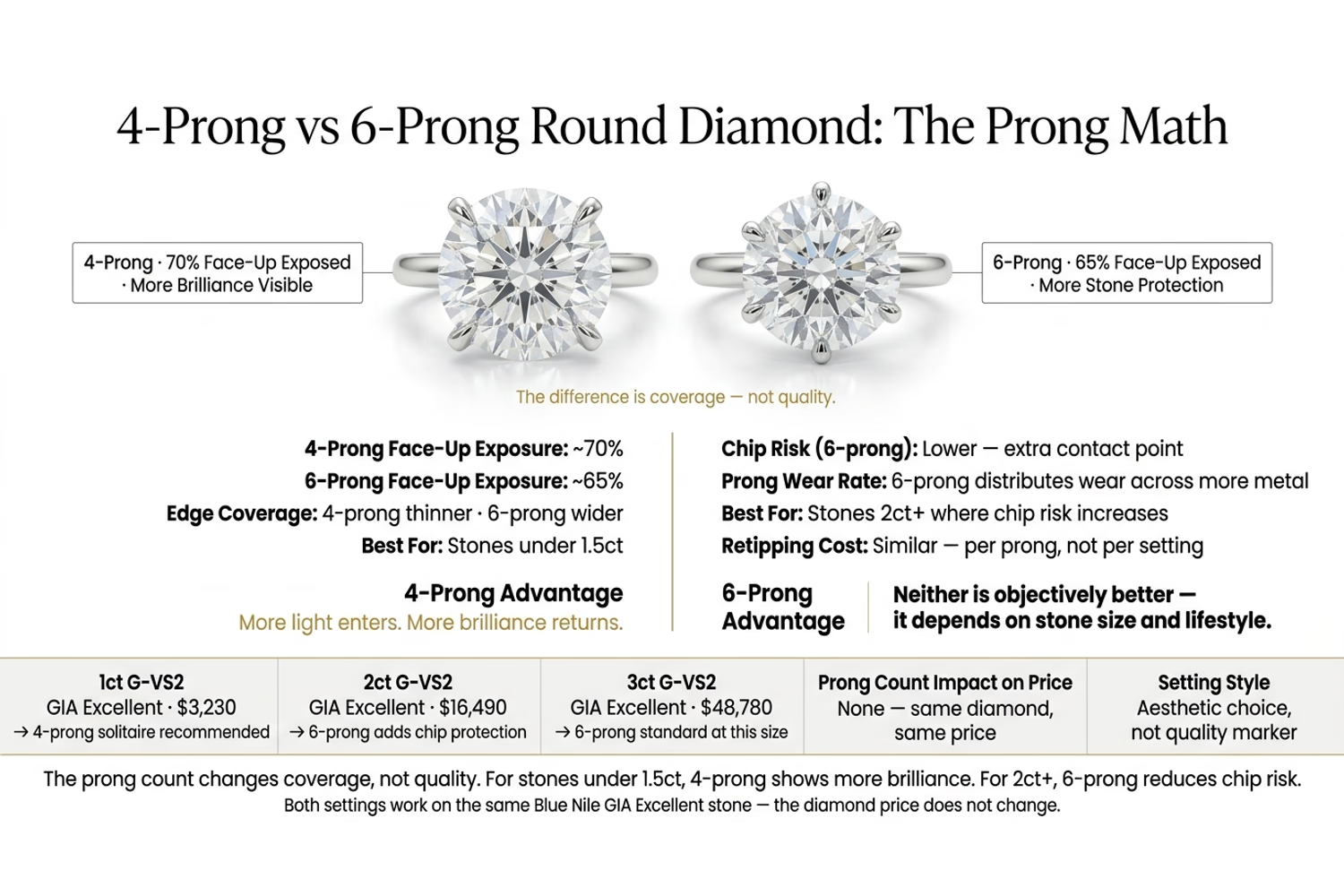
- 4-prong exposes more diamond surface, delivers better face-up visibility, and creates a slightly larger-looking stone for the same carat weight
- 6-prong grips the girdle at more contact points, creates a rounder visual silhouette from above, and provides extra security for stones 2ct and above
- The light return difference between 4-prong and 6-prong is measurable in a lab and invisible in daily wear — both deliver full GIA Excellent performance
- For rounds under 1.5ct, 4-prong is the standard recommendation and accounts for roughly 60% of solitaire sales globally
- Above 2 carats, 6-prong is the smart choice — the extra two contact points matter when you're protecting a $16,490 stone
- The cost premium for 6-prong over 4-prong in the same metal runs $150–$350 depending on the jeweler and metal type
The prong debate is real. I've watched buyers spend three weeks on it before realizing the actual decision takes about four minutes once you know the mechanics.
Here is the truth: prong count affects three things — how much diamond you see, how secure the stone sits, and how round the visual silhouette appears. Everything else people argue about — fire, brilliance, light performance — is identical between the two. Let me walk through each factor.


What Is the Real Difference Between 4-Prong and 6-Prong Settings?
A prong is a metal claw — typically platinum or 14k/18k gold — that grips your diamond's girdle to hold it in the mounting. Four prongs hold the stone at the cardinal points (north, south, east, west). Six prongs add two more contact points, typically at the northeast and southwest positions (or distributed evenly at 60° intervals).
The geometry: four prongs cover approximately 12% of the diamond's girdle circumference. Six prongs cover approximately 18%. That 6% difference in covered girdle is the entire physical distinction between the two settings.
Practically, this means the prong footprint on a 1ct round (6.4–6.5mm diameter) is under 3mm of total girdle contact for 4-prong, under 4.5mm for 6-prong. The remaining 95–97% of the girdle is fully exposed in either case. This matters because it tells you that neither setting meaningfully blocks diamond visibility from above.
How does prong count affect light return?
Light enters a round brilliant diamond through the table and crown facets — not the girdle. Prongs sit at the girdle, which means they do not intersect the primary light-entry surfaces at all. Neither 4-prong nor 6-prong creates any measurable shadow on the table or crown in real-world lighting conditions.
GIA's own cut research confirms this. Their cut grading system evaluates light performance with the diamond suspended in a standard setting — and the cut grade is identical whether the stone is later set in a 4-prong or 6-prong mounting. The Excellent cut grade you pay for on a GIA 1.00 Carat G-VS2 Excellent Cut Round Diamond ($3,230) is fully preserved in either setting choice.
Which Setting Shows More Diamond?
Four-prong wins, and the geometry explains why. With 4 prongs at 90° intervals, each gap between prongs spans a full quarter of the girdle circumference. With 6 prongs at 60° intervals, each gap is smaller. Larger gaps = more exposed diamond surface visible from above.
The practical result: a 4-prong setting makes the same diamond appear marginally wider and more open from the top-down view. The difference is subtle — we're talking 2–4% more visible diamond surface — but it's photographable. Jewelry photographers consistently note that round diamonds appear slightly more expansive in 4-prong settings.
This is why 4-prong became the dominant choice through the 1990s and 2000s as jewelry photography became central to retail sales. The GIA 1.00 Carat G-VS2 Excellent Cut Round Diamond ($3,240) at 6.4mm face-up shows its full face-up diameter more completely in 4-prong.
Does 6-prong make a round diamond look rounder?
Yes, and this is the main aesthetic argument for choosing 6-prong. Six equally spaced prongs create a symmetrically round outline around the stone when viewed from above. Four prongs create subtle vertical and horizontal emphasis — a cross or plus-sign negative space — that breaks the perfectly round silhouette.
For buyers who want the cleanest, most circular appearance, especially in ring photos, 6-prong wins on silhouette. If you're pairing with a round-pave band, 6-prong also aligns better with the circular motif of the side stones and creates a more cohesive design.
Does 6-Prong Actually Protect Your Diamond Better?
Yes — and this is the strongest argument for 6-prong on larger stones. Six contact points distributed around the girdle provide more distributed grip than four. If one prong wears down or chips in a 6-prong setting, five contact points remain. In a 4-prong setting, one failed prong leaves three — which is the minimum safe grip for most stone sizes.
In practice, prong failure in well-made fine jewelry is rare. A properly set ring from a quality jeweler — like a Blue Nile solitaire — should not lose a stone for 10–15 years with annual prong inspections. The security argument for 6-prong is more relevant as stone size and value increase.
What lifestyle factors make 6-prong the right choice?
Occupations and activities that repeatedly expose hands to hard impact make 6-prong the clearly safer choice regardless of stone size. Nurses, mechanics, teachers who use whiteboards intensively, anyone who gardens without gloves — all of these daily habits put consistent lateral pressure on prong tips.
For office workers, people who rarely do manual labor, and anyone whose hands stay protected most of the day, 4-prong holds just as reliably with proper annual maintenance. The ring doesn't know what job you have, but the wear pattern on prongs after 10 years absolutely does.
For active lifestyles at the 2ct+ level — where a GIA 2.00 Carat G-VS2 Excellent Cut Round Diamond is worth $16,490 — I always recommend 6-prong without hesitation. The $200–$350 premium is irrelevant at that stone price.
Which Prong Count Works Best at Different Carat Weights?
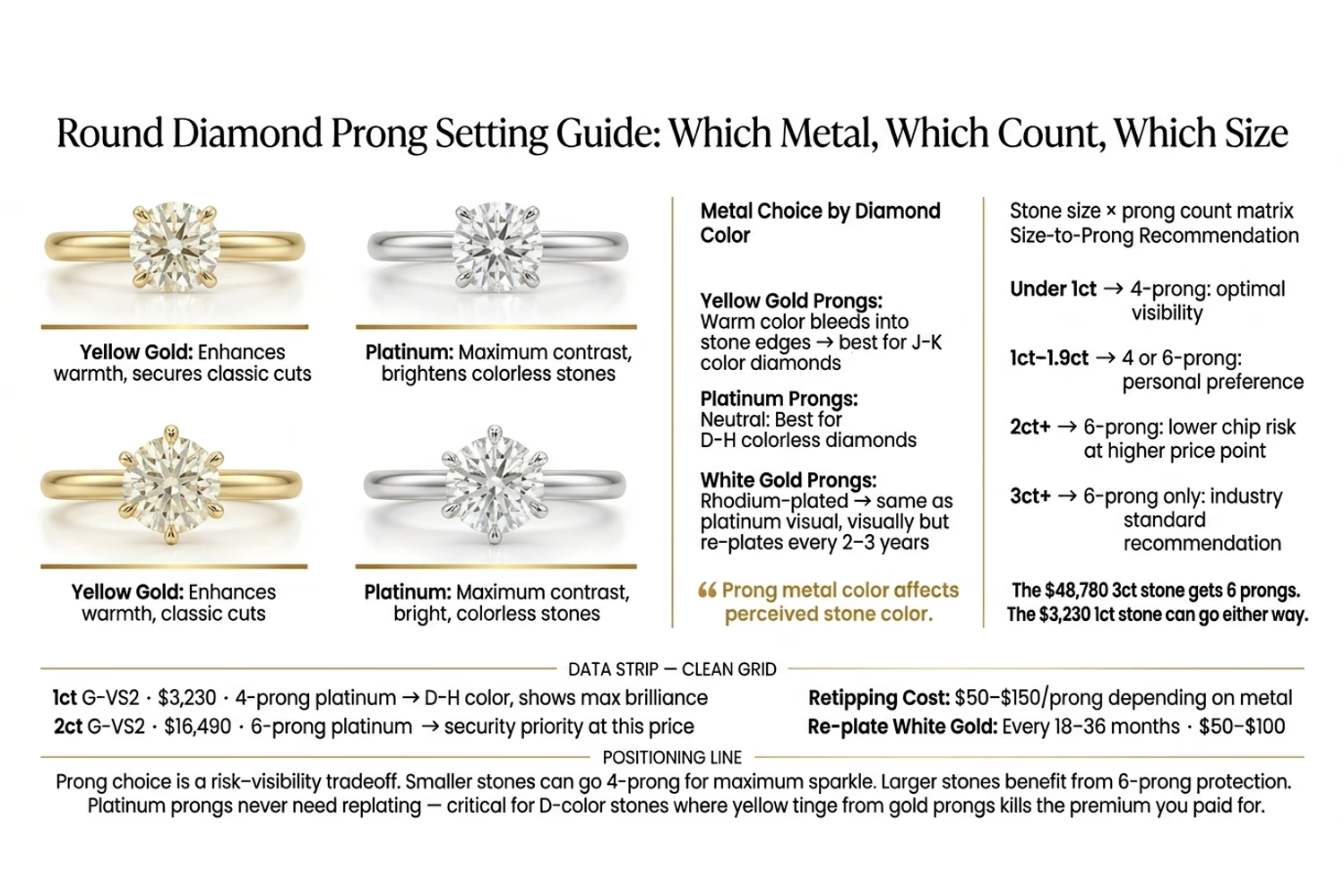
Under 0.75 carats: 4-prong is the standard and the better choice. The stone diameter at this weight is under 5.8mm. Six prongs on a sub-0.75ct round are visually disproportionate — the metal overwhelms the stone, creating a busy, over-mounted appearance. Four prongs at this size are clean and proportionate.
At 1 carat (6.4–6.5mm): Both work well, and this is genuinely personal preference territory. Most buyers choose 4-prong at 1ct for maximum diamond face-up presence. A GIA 1.00 Carat G-VS2 Excellent Cut Round Diamond ($3,370) or a GIA 1.00 Carat G-VS1 Excellent Cut Round Diamond ($3,300) both look excellent in either configuration.
At 1.5–2 carats (7.3–8.2mm): The balance tips toward 6-prong. The stone is large enough that six prongs are proportionate and security starts to matter more at the value level. A GIA 2.00 Carat G-VS1 Excellent Cut Round Diamond ($22,460) is worth the extra two contact points.
Above 3 carats: Six-prong is the strong recommendation. At 9.4mm+ face-up, the physical weight and financial value of the stone both argue for maximum security. A GIA 3.00 Carat G-VS2 Excellent Cut Round Diamond at $48,780 should be in 6-prong — the $200–$300 extra for setting is a rounding error on the stone cost.
Do ring styles (cathedral vs low-profile) change the recommendation?
Cathedral settings work with both prong counts. The elevated diamond profile means more light exposure from the sides, which is a slight argument for 4-prong since more side exposure means more visible light return. If you're building a tall cathedral setting, 4-prong maximizes the visual effect.
Low-profile settings (where the diamond sits close to the finger surface) pair better with 6-prong. The lower position exposes the stone to more daily contact with surfaces. The extra two grip points provide genuinely useful security when the diamond is less protected by an elevated basket.
How Much More Does a 6-Prong Setting Cost?
In 14k white gold, the premium for 6-prong over a comparable 4-prong solitaire runs $100–$200 at most jewelers. In platinum, it runs $200–$350 because platinum is denser and each additional prong requires meaningfully more material.
This cost should not influence your setting decision unless you're at an absolute budget ceiling. A buyer putting a GIA 1.00 Carat G-VS2 Excellent Cut Round Diamond ($3,490) in a 4-prong vs 6-prong solitaire is looking at a $150–$250 difference in total ring cost. That's not a factor worth compromising on aesthetics or security over.
Where the cost genuinely matters: if you're choosing between upgrading the center stone by 0.1ct or upgrading to 6-prong. At the 1ct price level, an extra 0.1ct of face-up size is usually the better investment than the extra two prongs. At 2ct+, the security argument for 6-prong outweighs any marginal stone upgrade the same money buys.
Tides Of Summer Capsule
Up To 30% Off
Shop The Sale →Vault ClearanceClear The Vault
Up To 70% Off
Shop Vault Deals →Affiliate link — no extra cost to you
What Do Expert Jewelers Recommend?
Most GIA-trained jewelers I've consulted give the same answer: 4-prong under 1.5ct, 6-prong above 2ct, and personal preference for the 1.5ct–2ct range. There is no technically superior choice for everyday wear at 1ct. Both settings last decades with proper annual maintenance.
The factors that should determine your choice: (1) Do you work with your hands? Choose 6-prong regardless of carat weight. (2) Do you want maximum diamond face-up presence? Choose 4-prong under 1.5ct. (3) Is the round silhouette and Instagram aesthetic important? Choose 6-prong. (4) Are you over 2ct? Choose 6-prong. (5) Are you under 0.75ct? Choose 4-prong.
One thing that often gets overlooked: the quality of the prong craftsmanship matters more than the count. A well-made 4-prong setting from a reputable jeweler is safer than a poorly made 6-prong from a budget retailer. Blue Nile's settings are machined to consistent tolerances — an important baseline that applies to both configurations.
Is Tiffany's classic solitaire 4-prong or 6-prong?
Six-prong. The 1886 Tiffany Setting uses six flat-wire platinum prongs and is the most recognized engagement ring design in history. This is a large part of why 6-prong carries prestige associations — but the Tiffany effect comes from the flat-wire prong geometry and platinum precision, not just from having six prongs.
A budget copy with six bulky yellow gold prongs achieves none of the Tiffany aesthetic. Prong profile, metal quality, and setting geometry matter as much as prong count. A clean flat-wire 6-prong in platinum ($300–$500 at quality jewelers) comes much closer to the classic look than a standard claw 6-prong at the same price.
Can You Switch Prong Counts After Purchase?
Yes, at any time. Resetting a diamond from a 4-prong head into a 6-prong head (or vice versa) is a standard jeweler service. The diamond is unaffected — the jeweler removes the stone, replaces the prong head, and resets it. Cost runs $200–$450 depending on metal, prong head, and labor.
This is worth knowing for buyers who are genuinely unsure. Buy the center stone in a simple placeholder setting or whichever style is available, wear the ring for a few weeks, then choose your permanent setting with full clarity on what you actually want. The stone's value is not affected by any setting changes.
A GIA 2.00 Carat G-VS2 Excellent Cut Round Diamond ($18,540) can be reset between prong styles as many times as you want. The GIA certificate travels with the diamond, not the setting — the stone's value is fully portable.
Farzana's Verdict: The prong debate is real and the answer is straightforward. Under 1.5 carats, choose 4-prong: more diamond shows, face-up presence is better, and security is identical with proper annual maintenance.
Above 2 carats — especially platinum with a stone worth $16,490 or more — 6-prong is worth every dollar of the $200–$350 premium. Six contact points on a $22,460 stone is basic insurance. The silhouette argument for 6-prong (rounder, better in photos) is real but minor — security is the real reason to go six above 2ct.
Here is my actual buying decision: pick prong count last, after you have chosen the diamond. The stone is the investment. The prong count is preference. A GIA 1.00 Carat G-VS2 Excellent Cut Round Diamond at $3,410 in 4-prong or 6-prong is the same diamond. Stop overthinking prongs and buy the stone.
Frequently Asked Questions
Is 4-prong or 6-prong better for a round diamond?
Four-prong is better for maximum face-up diamond visibility and exposure. Six-prong is better for security on stones 2ct and above and creates a rounder visual silhouette from above. For everyday wear under 1.5ct, 4-prong is the more popular and functionally equivalent choice — both perform identically in terms of light return.
Does 6-prong make a round diamond look rounder?
Yes. Six equally spaced prongs create a more symmetrically circular outline around the diamond when viewed from above. Four prongs create subtle cross-shaped negative space that slightly breaks the circular silhouette. The difference is subtle in person but visible in photographs — 6-prong photographs marginally better for round diamonds.
How often should round diamond prongs be inspected?
Every six to twelve months. Annual prong inspection is the standard recommendation from GIA and most fine jewelers. The jeweler checks for prong wear, movement, and bending. Prong retipping — adding metal to a worn prong tip — costs $25–$75 per prong and is needed every 5–12 years depending on wear.
What size diamond benefits most from 6 prongs?
Diamonds 2 carats and above benefit most from 6-prong settings. At 8mm+ face-up diameter, the stone carries enough mass and financial value that additional contact points provide meaningful security. Below 1.5ct (under 7.3mm), 4-prong is the better proportioned choice and adequate for all lifestyle types with proper maintenance.
Is the Tiffany Setting a 4-prong or 6-prong design?
Six-prong. The 1886 Tiffany Setting uses six flat-wire platinum prongs and remains the most famous solitaire engagement ring design in history. It is largely responsible for the prestige association with 6-prong — but the elegance comes from flat-wire prong geometry and platinum quality, not simply from having six prongs.
Can 6-prong hide an off-round or slightly oval stone?
Slightly. If a round diamond has a minor length-to-width ratio deviation (1.01–1.02 instead of the ideal 1.00–1.01), six equally spaced prongs distribute visual emphasis more evenly around the stone, which can mask minor elongation. Four prongs make any off-round deviation slightly more visible from above.
Does prong count affect the diamond's resale value?
No. The diamond drives resale value entirely. The setting is typically melted or sold separately at resale. A GIA-certified round diamond in a 4-prong solitaire and the identical diamond in a 6-prong solitaire carry exactly the same resale value — the prong count has zero bearing on the GIA report, grades, or market price.
What is the most popular prong count for round engagement rings?
Four-prong accounts for approximately 55–60% of round solitaire sales globally. Six-prong accounts for 35–40%. Three-prong and other configurations account for under 5%. The popularity of 6-prong has grown since the Tiffany Setting became a cultural reference point in the 1990s.
Can prongs snag on clothing or hair?
Older claw prong styles with sharply pointed tips snag more easily than modern rounded-tip prongs or flat-wire prongs. Most contemporary fine jewelry settings use rounded tips that minimize snagging significantly. Cathedral settings snag slightly more than low-profile settings regardless of prong count because the raised profile contacts fabrics more.
How much does prong retipping cost?
Prong retipping — adding metal to worn prong tips via laser or torch welding — costs $25–$75 per prong depending on the metal and jeweler. A full 4-prong retipping runs $100–$300. A full 6-prong retipping runs $150–$450. This maintenance is typically needed every 7–12 years with daily wear and annual checkups.
Which metal makes better prongs: platinum or gold?
Platinum makes more durable prongs over the long term. Platinum work-hardens with wear, actually becoming stronger over time, and does not rhodium-plate the way white gold does. Gold prongs are slightly softer and may need retipping marginally sooner — every 8–10 years vs every 10–15 for platinum. Both are reliable choices; platinum is the premium option and worth it for 2ct+ stones.
Is it worth switching from 4-prong to 6-prong after purchase?
Sometimes. If you bought a 1ct ring in 4-prong and want to upgrade to 2ct, resetting the new stone in 6-prong at the same time adds minimal extra cost to a resetting you'd do anyway. But if you bought 4-prong for a 1ct stone and simply want 6-prong aesthetics — the $200–$450 resetting cost is hard to justify for an aesthetic preference alone.
See Also
- Round Diamond Solitaire Ring: Complete Buying Guide
- Round Diamond Halo vs Solitaire: Which Setting Wins?
- Round Diamond Engagement Ring Settings: Every Style Explained
- Round Diamond Ideal Proportions: The Numbers That Matter
- Round Diamond Girdle Thickness: The Invisible Weight Trap
- 1 Carat Round Diamond Price: What You Will Actually Pay
- 2 Carat Round Diamond Price: The Full Price Breakdown
- Best Round Cut Diamond Engagement Ring: Farzana's Picks
Expert Verdict
Always audit the stone individually — no grade replaces seeing the actual diamond. The certificate tells you what to look for. Your eyes tell you whether to buy.
— Farzana Hasan, GIA Expert · DiamondCritics.com