9 Carat Round Diamond Price: The Nine-Figure Tier
TL;DR: 9 Carat Round Diamond — Key Facts
- 9 carat round diamonds start at approximately $329,500 for a G-VS1 GIA Excellent on Blue Nile — and there are only 7 natural stones in the entire 8–9ct range available at any time
- Face-up diameter: a 9ct round measures approximately 13.9–14.2mm — roughly the size of a thumbnail
- Per-carat price at 9ct: $36,000–$80,000 per carat versus $3,230/ct at 1ct. That is an 11–25× rarity multiplier driven by extreme scarcity of rough in this size range
- Pricing at this tier is not formula-based — each stone is individually appraised against its specific combination of color, clarity, fluorescence, and provenance. No two 9ct stones are priced the same way
- The lab-grown alternative: a 9ct D-VVS1 IGI lab round exists and costs approximately $50,000–$80,000 — still extraordinary money, but 60–80% less than natural
- Buyers at this price level should commission an independent GIA-certified appraisal and gemological consultation before any purchase
When buyers ask me about 9 carat round diamonds, they fall into two categories. The first is genuinely in the market: UHNW buyers (ultra-high-net-worth individuals) for whom $329,500–$700,000 is a meaningful purchase but a manageable one. The second is curious — researching what the extreme end of the market looks like, how pricing works, or what they could theoretically buy if the circumstances were different.
Both audiences deserve the complete picture. Here is everything you need to know about 9 carat round diamond pricing in 2026.


How Much Does a 9 Carat Round Diamond Cost in 2026?
The entry price for a natural GIA Excellent cut 9ct round on Blue Nile starts at approximately $329,500 for a G-VS1 specification. This is the lowest price in the entire 8–9ct natural round category — representing the most accessible entry into this tier.
Range for the 8–9ct category: $329,500 to $709,640. The price spread of $380,140 across 7 stones reflects the enormous premium that D color, VVS1 clarity, and flawless provenance command at this carat weight. A 9ct D-IF GIA Excellent round would push above the top of this range — such stones are rarely offered publicly and typically trade through private sale or major auction.
To calibrate: the entry 9ct stone at $329,500 costs more than the median U.S. home price in 2026. It costs more than 100 one-carat G-VS2 GIA Excellent round diamonds. It is a purchase category that operates entirely outside the normal consumer diamond market.
What is the price per carat for a 9 carat diamond?
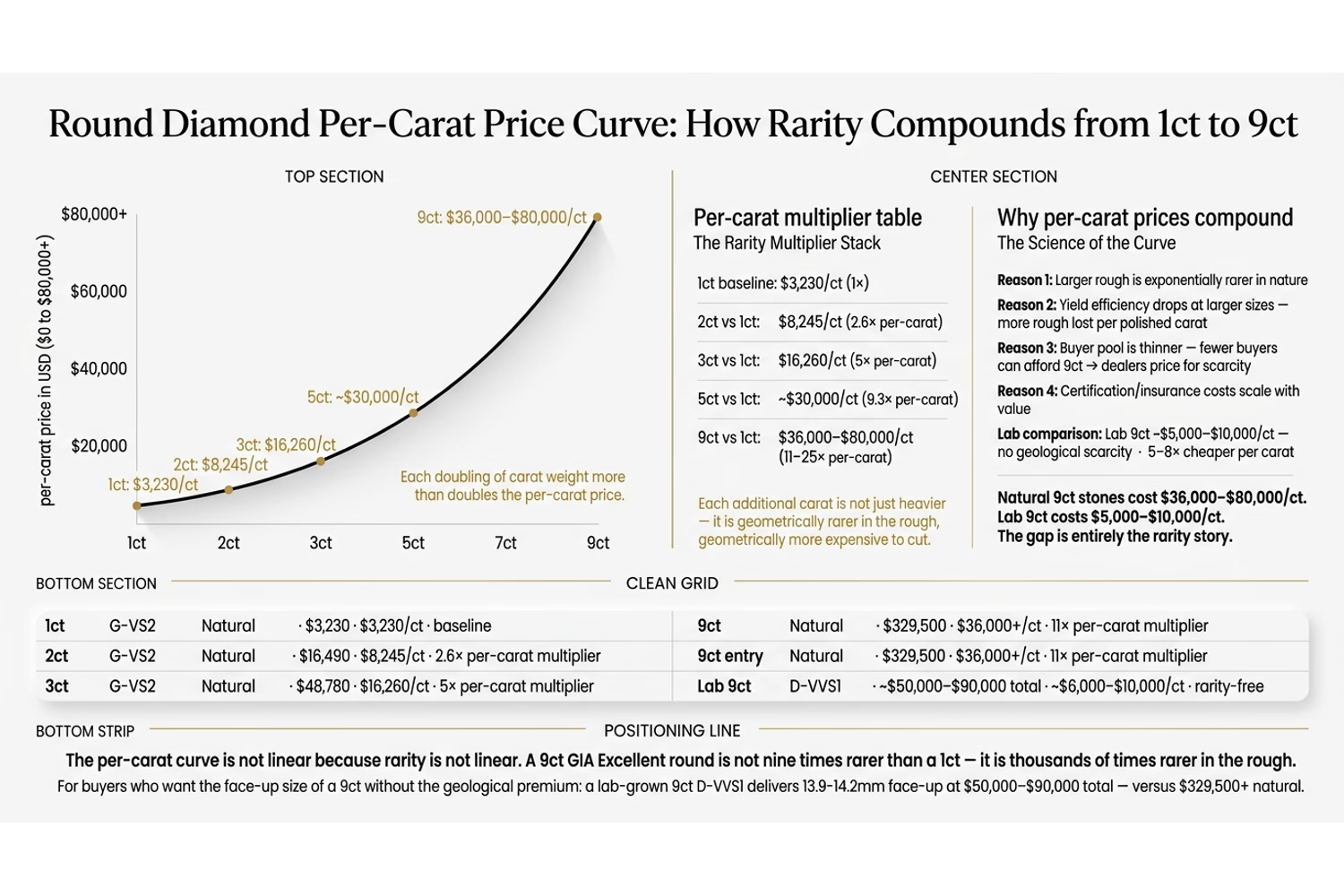
This is where the rarity math becomes starkest. At 1ct, GIA Excellent G-VS2 costs $3,230 per carat. At the entry 9ct level, the per-carat rate reaches approximately $36,000 per carat (using $329,500 ÷ 9.17ct average weight as a baseline). At the upper end of the 8–9ct range, per-carat prices reach $79,000+.
| Carat Weight | Entry Per-Carat | Rarity Multiplier vs 1ct |
|---|---|---|
| 1ct G-VS2 | $3,230/ct | 1× baseline |
| 2ct G-VS2 | $8,245/ct | 2.55× |
| 4ct G-VS1 | $14,528/ct | 4.5× |
| 6ct (entry) | $31,275/ct | 9.7× |
| 8–9ct (entry) | $36,000+/ct | 11×+ |
The 11× rarity multiplier at 9ct versus 1ct is not arbitrary. It reflects the extreme scarcity of rough diamond crystals large enough to cut a 9ct Excellent round, combined with the carat weight lost in cutting (typically 50–55% of rough weight). To produce a 9ct polished round, a cutter starts with approximately 18–20ct of rough — which is itself extremely rare and extremely valuable.
Why Are 9 Carat Round Diamonds So Rare?
Natural diamond crystal formation is a rarity event at every size. At 1ct, rare but commercially available in the thousands. At 3ct, meaningfully rarer. At 9ct, the population of available GIA Excellent cut natural rounds in the global market at any given time is measured in single digits.
Three factors drive the scarcity at this size:
Factor 1: Rough supply. Large diamond crystals (18ct+ rough needed for a 9ct polished) form infrequently and are found in very few mines globally. The Jwaneng mine in Botswana, the Orapa mine (also Botswana), and a handful of Russian Siberian mines produce the majority of large-crystal rough. Even at these operations, an 18ct+ octahedral rough is an exceptional event.
Factor 2: Cutting yield and risk. Cutting a large rough crystal into a round brilliant requires removing up to 55% of the original mass. A mistake — a cut that hits an unexpected inclusion, a cleave in the wrong plane — can turn a $1 million rough into a 6ct finished stone instead of a 9ct. Cutters working with large stones charge enormous premiums for the expertise and the risk they absorb.
Factor 3: Market concentration. Most large rough diamonds over 15ct are sold at specialized tenders (De Beers Sightholder sales, Alrosa tenders) to a small number of qualified buyers. These buyers cut and sell through networks that include large private clients, auction houses, and luxury retailers. The volume that reaches mainstream online retail like Blue Nile represents only a fraction of what actually trades.
At any given moment, Blue Nile carries 7 natural stones in the 8–9ct range. This is the entire publicly listed inventory for this size class from one of the world's largest online diamond retailers. The real number of 9ct+ GIA Excellent rounds in existence worldwide is perhaps 50–200 at any time — most of them either in private hands, in vault storage, or in the process of being cut.
What Does a 9 Carat Round Diamond Actually Look Like on a Finger?
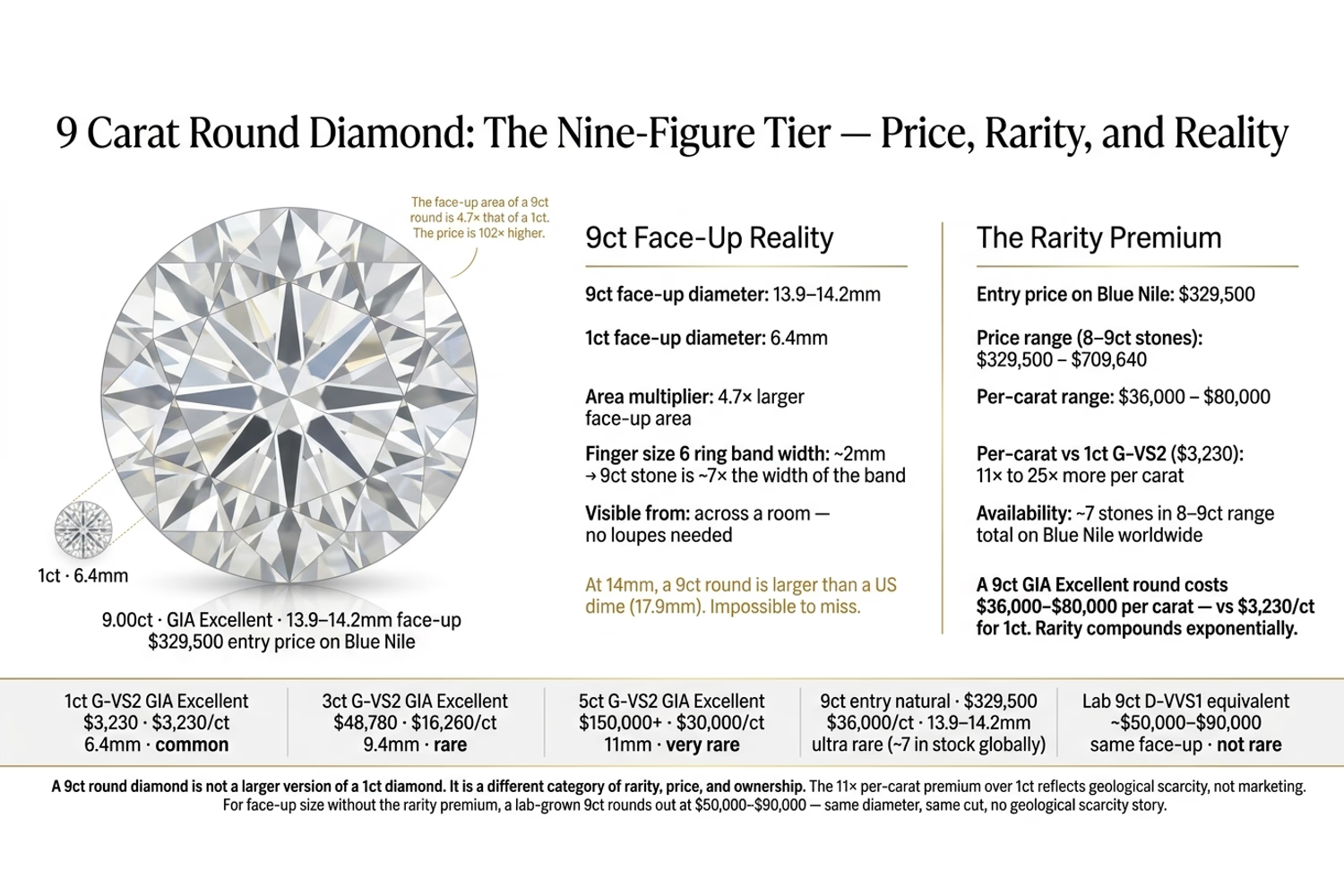
A 9ct round diamond measures approximately 13.9–14.2mm in face-up diameter. To visualize: a standard US dime is 17.9mm in diameter. A 9ct round diamond would span roughly 78% of a dime's face — visibly close in size to the coin.
On a finger, 14mm of diamond face-up extends edge-to-edge across most of a standard 6–7mm wide finger. This is not a ring — it is a statement. On a woman's hand with a standard ring size 5–6 (finger width ~16–17mm), a 9ct round diamond occupies roughly 80–85% of the finger width. It is immediately, unmistakably visible from across a room.
For comparison across carat weights: 1ct = 6.4–6.5mm. 2ct = 8.1–8.3mm. 5ct = 11.0–11.2mm. 9ct = 13.9–14.2mm. Each jump in carat weight produces a larger absolute mm increase than the previous step because volume scales cubically. The jump from 5ct to 9ct (nearly doubling in weight) increases face-up diameter by approximately 3mm — nearly half a centimeter more diamond across.
How heavy is a 9 carat diamond ring?
Nine metric carats equals 1.8 grams. The diamond itself weighs slightly more than a paperclip. The ring setting — platinum or 18k gold solitaire sized for a 14mm stone — will weigh 6–10 grams depending on the setting style. Total ring weight: approximately 8–12 grams.
Wearability at 9ct is a legitimate consideration. The combination of the stone's physical weight and its leverage on a ring prong at this diameter creates detectable drag when the hand moves. Most 9ct+ ring buyers choose low-profile, structurally robust settings — typically six-prong bezel-hybrid or channel-bezel combinations — that distribute the stone's weight more effectively than a standard solitaire basket.
How Is a 9 Carat Diamond Priced Differently from Smaller Stones?
At 1ct–4ct, diamond pricing follows a reasonably predictable matrix: carat weight × per-carat rate, where per-carat rate is determined by color and clarity grade. A buyer can look up a 1ct G-VS2 GIA Excellent and get a reliable price across multiple retailers because thousands of equivalent stones exist.
At 9ct, pricing is fundamentally different. Each stone is unique. The specific combination of:
- Exact weight (9.01ct vs 9.47ct)
- Color grade (G vs D — a difference of $300,000+ at this size)
- Clarity grade (VS1 vs VVS1 — a difference of $100,000+ at this size)
- Fluorescence (Strong blue on a D color 9ct is a severe negative; None is a meaningful positive)
- Cutting precision (Hearts and Arrows certification adds premium at this size)
- Provenance (known-origin, conflict-free documentation adds value to institutional buyers)
...means no two 9ct stones are priced the same way. The dealer who owns the stone holds it until the right buyer appears at the right price. There is no comparable-sales matrix for 9ct rounds the way there is for 1ct rounds — the market is too thin.
This is why the $329,500–$709,640 range exists across only 7 stones. The spread reflects genuine individual pricing based on individual characteristics, not a simple grade-to-price formula.
How is fluorescence treated differently at 9ct vs 1ct?
At 1ct–2ct, fluorescence in G–H color can be neutral or slightly beneficial (blue fluorescence improves warm-toned G-H diamonds slightly under UV). At 9ct, fluorescence is a significant pricing factor in either direction.
Strong blue fluorescence on a 9ct D-FL diamond can create a pronounced "milky" or "oily" appearance visible under fluorescent office lighting, sunlight, and UV. At this stone size and value, buyers paying $500,000+ will reject any fluorescence that creates perceptible haziness. Strong fluorescence on a top-color 9ct can discount the stone by 10–20% from expected market value.
None or Faint fluorescence is strongly preferred at 9ct for all color grades. If you ever find yourself evaluating a 9ct round, the fluorescence field on the GIA report deserves as much scrutiny as the color and clarity grades.
What Are the Color and Clarity Recommendations for 9 Carat Rounds?
At 9ct, the minimum color recommendation shifts compared to smaller stones. Round brilliants mask color more effectively than step cuts — but at 14mm face-up diameter, a G or H color stone shows warmth that is perceptible to the naked eye under daylight or fluorescent lighting.
Color recommendation at 9ct: D–F in white gold or platinum. G is the absolute minimum in white gold — and even G can appear warm at this face-up size under natural light. H and below are not recommended for white metal settings at 9ct.
Yellow gold exception: H–I becomes acceptable in 18k yellow gold at 9ct, where the warm metal tone provides visual cover for color. Most 9ct+ buyers opt for platinum or white gold, making this exception less practically relevant.
Clarity recommendation at 9ct: VS1 minimum; VVS2 strongly preferred. At 14mm face-up, clarity characteristics that would be invisible in a 1ct (VS2 feather near the girdle) become more visible because the stone itself is nearly twice the surface area. Step-cut buyers at smaller sizes are advised VS1 minimum — the same logic applies to rounds at extreme sizes.
Do not compromise on cut at 9ct: The Excellent cut grade on a GIA report is essential at every size, but at 9ct the financial stakes of a "Very Good" cut (which returns less light and has worse scintillation) are enormous. A 9ct VG cut at $280,000 is $280,000 of underwhelming light performance. Buy the Excellent.
Tides Of Summer Capsule
Up To 30% Off
Shop The Sale →Vault ClearanceClear The Vault
Up To 70% Off
Shop Vault Deals →Affiliate link — no extra cost to you
Should You Buy a 9 Carat Natural or Lab Diamond?
The lab option at 9ct is worth understanding even if natural is the goal. Lab-grown 9ct round diamonds exist and are priced at approximately $50,000–$90,000 depending on color and clarity grade — 60–80% cheaper than the natural equivalent.
A lab 9ct D-VVS1 IGI Excellent at $70,000 is physically, visually, and chemically identical to a natural 9ct D-VVS1 GIA Excellent at $400,000+. The only difference is origin: one formed over billions of years under extreme geological pressure; the other formed over weeks in a reactor chamber. Under any gemological instrument, including a GIA spectrometer, they require specialized testing to distinguish.
For buyers at the 9ct level, the natural vs lab question is primarily about resale, signaling, and personal meaning rather than visual or physical properties. Natural 9ct diamonds at this tier occasionally appreciate — or at minimum hold closer to their purchase price than lab equivalents — because the ultra-large natural rough supply is genuinely finite and cannot be lab-replicated in the cultural sense. Lab diamonds at 9ct will continue declining in manufacturing cost over time, which pressures resale.
The honest answer: if the purchase is for wearing, for a specific occasion, and resale is not the priority — lab 9ct at $60,000–$80,000 is an extraordinary stone. If the purchase has any investment or legacy dimension, natural GIA is the correct choice.
Where Can You Actually Buy a 9 Carat Round Diamond?
Blue Nile: Carries 7 stones in the 8–9ct range at any given time, starting at $329,500. Offers GIA certification, 30-day return policy, and free shipping. The 30-day return on a $329,500 stone is meaningful — it allows for independent gemological verification after delivery before the purchase is final.
Leibish & Co.: Specializes in large and fancy colored diamonds. Regularly carries 8ct–12ct natural rounds with documentation packages appropriate for the investment level.
Brian Gavin Diamonds: Known for super-ideal cut precision. When they carry 8ct–9ct inventory, the cut documentation (H&A imaging, ASET scope) is exceptional.
Major auction houses (Christie's, Sotheby's, Bonhams): The correct venue for 10ct+ or for stones with notable provenance (named stones, royal collection provenance, record-setting clarity). Auction purchases above $500,000 typically require buyer relationships with the house or a qualified agent.
Private dealers: A GIA Alumni dealer network or a large wholesaler relationship can sometimes access 9ct inventory below retail pricing through direct-to-consumer private sale. Requires trust, due diligence, and independent certification verification.
At any venue, a purchase at $329,500+ warrants: (1) independent gemological appraisal by a GIA Graduate Gemologist, (2) certificate verification directly with GIA, (3) insurance coverage before the stone leaves the seller's possession, and (4) consultation with a qualified estate attorney if the purchase has any gift, estate, or tax dimension.
Farzana's Verdict: Nine carat round diamonds are not consumer products. They are extraordinary physical objects — 14mm of optically engineered carbon — that exist in single-digit quantities in global public retail at any given time. The price reflects this.
The 11× per-carat rarity multiplier at 9ct versus 1ct is not a markup. It is a genuine scarcity premium built from geological rarity, cutting risk, and market thinness. There are simply not many 9ct GIA Excellent rounds in the world, and the ones that exist are priced as the rare objects they are.
For buyers at this level: the 30-day Blue Nile return policy and independent appraisal are not optional steps. A $329,500 purchase deserves every layer of verification available. The lab alternative at $60,000–$80,000 is worth considering if visual perfection matters more than origin — the stone is physically identical and looks extraordinary. But for buyers who want the documented, irreplaceable natural stone, the entry 9ct at $329,500 is the floor of a genuinely rare purchase.
Frequently Asked Questions
How much does a 9 carat round diamond cost?
Natural GIA Excellent 9 carat round diamonds start at approximately $329,500 on Blue Nile and range up to $709,640 depending on color and clarity grade. Only 7 stones exist in the entire 8–9ct natural round category on Blue Nile at any given time. Lab-grown 9ct rounds are available for approximately $50,000–$90,000.
How rare is a 9 carat round diamond?
Extremely rare. The global supply of natural GIA Excellent cut rounds in the 8–9ct range available for public retail at any time is measured in single digits — Blue Nile has 7. The worldwide inventory of 9ct+ GIA Excellent natural rounds in existence may number 50–200 stones. This scarcity drives per-carat prices 11 times higher than 1ct equivalents.
What is the face-up size of a 9 carat round diamond?
A well-cut 9ct round diamond measures approximately 13.9–14.2mm in face-up diameter — roughly the size of a thumbnail or 78% of a US dime (17.9mm). On a standard ring size 5–6 finger, a 9ct round extends edge-to-edge across most of the finger's width and is visible from across a room.
What color and clarity should a 9 carat round diamond have?
Color: D–F minimum in platinum or white gold. G is the absolute minimum and shows warmth at this face-up size. H and below are not recommended for white metal settings. Clarity: VS1 minimum; VVS2 strongly preferred. At 14mm face-up, inclusions that would be invisible at smaller sizes become marginally more visible.
Is fluorescence important for a 9 carat diamond?
Yes, more so than at smaller sizes. Strong blue fluorescence on a top-color (D–F) 9ct round can create visible haziness under sunlight and fluorescent office lighting, discounting the stone by 10–20% from market value. None or Faint fluorescence is strongly preferred across all color grades at this size.
Can you get a 9 carat lab-grown round diamond?
Yes. Lab-grown 9ct rounds are available from specialist retailers at approximately $50,000–$90,000 — 60–80% less than equivalent natural stones. They are physically and visually identical to natural 9ct rounds and require specialized GIA testing to distinguish. The price difference buys the same diamond from a geological origin standpoint; it does not buy lesser quality.
Why is the price per carat so much higher for 9 carat diamonds vs 1 carat?
The per-carat rarity premium at 9ct is driven by three compounding factors: extreme scarcity of large rough diamond crystals (18ct+ rough needed), high cutting risk and yield loss (50–55% of rough weight removed), and extremely thin secondary market (few buyers, no formula pricing, individual appraisal for each stone). These factors multiply to create an 11× per-carat premium at 9ct versus 1ct.
Where is the best place to buy a 9 carat round diamond?
Blue Nile offers GIA-certified 8–9ct rounds starting at $329,500 with a 30-day return policy — the most buyer-friendly terms for this price tier. Leibish & Co. and Brian Gavin Diamonds carry ultra-large inventory with detailed cut documentation. For stones above $500,000 or with notable provenance, Christie's, Sotheby's, and Bonhams are the appropriate venues.
Should I get an independent appraisal before buying a 9 carat diamond?
Absolutely yes. Any purchase above $50,000 warrants independent gemological appraisal by a GIA Graduate Gemologist unaffiliated with the seller. At $329,500+, the appraisal (cost: $200–$500) is basic risk management. It confirms the stone matches the GIA certificate, checks for damage in transit, provides a replacement value for insurance, and gives you an independent second opinion before the return window closes.
What is the difference in pricing between 8ct and 9ct?
Within the 8–9ct range on Blue Nile, individual stones span $329,500–$709,640. Stones in the 8ct range start slightly below 9ct stones in raw weight (less carat weight = less total price) but the per-carat premium is similar or identical across the 8–9ct tier. The difference in pricing within this range is driven almost entirely by color and clarity grades, not by 1ct of weight difference.
Are 9 carat diamonds good investments?
The investment argument for 9ct natural GIA rounds is stronger than for any other consumer diamond category — but "stronger" is relative. Natural 9ct D-IF stones with documented provenance have occasionally sold at auction above original purchase price over 10–15 year periods. However, this requires specific grades (D-FL/IF), long holding periods, and auction house relationships most buyers do not have. Lab 9ct rounds are definitively not investments — they depreciate with manufacturing cost declines.
See Also
- 8 Carat Round Diamond Price: The Ultra-Rare Tier
- 7 Carat Round Diamond Price: The Custom Order Diamond
- 6 Carat Round Diamond Price: The Six-Figure Threshold
- 5 Carat Round Diamond Price: The Prestige Premium
- Round Diamond Natural vs Lab: The Origin Tax Explained
- Round Diamond Color Guide: Why Color Matters More at Large Sizes
- Round Diamond GIA vs IGI: The Certificate That Costs You
Expert Verdict
Always audit the stone individually — no grade replaces seeing the actual diamond. The certificate tells you what to look for. Your eyes tell you whether to buy.
— Farzana Hasan, GIA Expert · DiamondCritics.com