Round Diamond Anniversary Ring Guide: The Anniversary Upgrade Stack
TL;DR: The Anniversary Upgrade Stack
- The Anniversary Upgrade Stack is the strategy of adding a diamond band on a significant anniversary (1st, 5th, 10th) to upgrade the visual impact of the engagement ring without replacing it
- Anniversary rings range from $825 (Floating Diamond Yellow Gold on sale) to $4,305 (Bold Diamond Eternity 14k Yellow Gold) on Blue Nile
- The cardinal stacking rule: match the metal type exactly. White gold engagement ring → white gold anniversary band. Mixing metals (white gold + yellow gold) creates a visual mismatch that most people find unflattering when stacked
- Pavé bands ($980–$1,420) are the most common anniversary ring choice — continuous diamond coverage, minimal width, versatile stacking
- Eternity rings ($1,603–$4,305) are a statement option: diamonds fully encircling the band. Sizing becomes permanently difficult once set because the diamonds prevent resizing
- The lab-grown option delivers significantly more carat weight per dollar for anniversary rings: Floating Lab-Grown Diamond White Gold 1/2 ct at $1,100 vs natural equivalent at $2,200+


What Is an Anniversary Ring? Definition and Purpose
An anniversary ring is a diamond band purchased to commemorate a significant wedding anniversary — most commonly the 1st (paper/clock), 5th (wood), 10th (tin/aluminum), 25th (silver), or any anniversary where a meaningful upgrade is appropriate. It is typically worn stacked against the engagement ring and wedding band, adding a third band to the ring stack. Some couples choose an anniversary ring as a replacement or supplement to the original wedding band.
The distinction between anniversary ring, wedding band, and eternity ring is terminology, not design: any diamond band purchased for anniversary occasions is commonly called an anniversary ring, regardless of whether diamonds go halfway or all the way around. Blue Nile's wedding ring inventory covers all three styles under one category. The purchase decision is about aesthetics, stacking compatibility, and budget.
The anniversary ring serves a different emotional purpose than the engagement ring. Where the engagement ring is about the center stone and the proposal moment, the anniversary ring is about accumulation — adding to the stack over time as a physical record of the relationship's progression. This makes it a high-repeat-purchase category and explains why the $980–$1,500 range is the dominant price point.
Stacking Rules: Matching Metal, Setting Style, and Stone Size
Stacking compatibility is determined by three variables: metal, profile height, and diamond style. Getting all three right produces a cohesive stack. Getting any one wrong creates a visual or physical mismatch.
Metal matching: The metal of the anniversary band must match the engagement ring metal exactly. White gold engagement ring → white gold anniversary band. Yellow gold → yellow gold. Platinum → platinum. Mixed metal stacks (white gold + yellow gold) do exist as intentional mixed-metal designs, but they require deliberate styling and should not happen accidentally. Platinum and white gold appear nearly identical to the eye when stacked — technically different metals, but visually compatible.
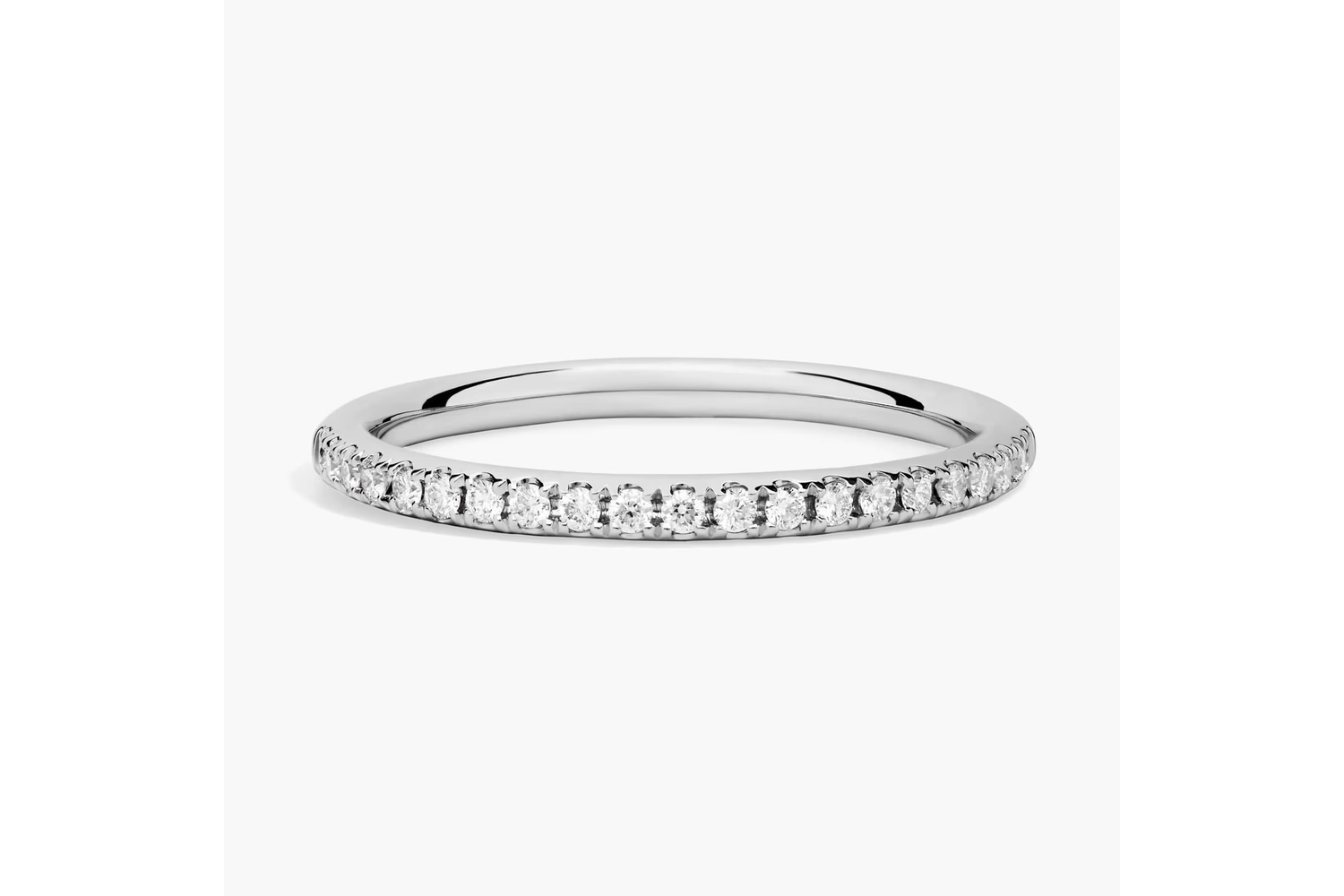
Profile height: The anniversary band's total height should match or be slightly lower than the engagement ring shank height. A wide, tall anniversary band paired with a petite engagement ring will visually overpower it. The Riviera Pavé bands ($980–$1,420) have a thin 2–2.5mm profile that stacks cleanly with virtually any engagement ring shank.
Diamond style: A micropavé engagement ring shank stacks most cohesively with a micropavé or shared-prong anniversary band. A plain shank engagement ring can take a slightly more statement anniversary band without clashing. The goal is visual continuity — the stack should look like a set, not an accident.
Anniversary Ring Styles: Pavé, Eternity, Floating, Bezel
Pavé/Shared Prong Bands ($980–$1,420): The dominant anniversary ring style. Small diamonds are set closely together in a pavé pattern across the top half of the band (half-eternity) or all the way around (full eternity). Current Blue Nile inventory:
- Riviera Pavé 14k White Gold 1/6 ct — $980 — entry pavé band, most popular choice
- Riviera Pavé 14k White Gold 1/4 ct — $1,100 — more diamond coverage
- Riviera Pavé Platinum 1/6 ct — $1,320 — platinum for durability
- Riviera Pavé Platinum 1/4 ct — $1,420 — most diamond for platinum tier
Floating/Station Diamond Bands ($825–$1,100): Individual diamonds are set at intervals along the band with metal between them — a cleaner, more modern look with lower diamond weight and lower price.
- Floating Diamond Yellow Gold 1/3 ct — $825 (sale from $1,100) — best value current sale
- Floating Lab-Grown Diamond White Gold 1/2 ct — $1,100 — 0.50ct lab diamonds at $1,100
Bezel/Minimalist ($1,603):
- Lab-Grown Diamond Bezel Ring 14k Yellow Gold — $1,603 — modern bezel style, active lifestyle compatible, lab diamond value
Eternity Bands ($4,305):
- Bold Diamond Eternity Ring 14k Yellow Gold 1/2 ct — $4,305 — 7mm full eternity, statement tier, cannot be resized
The Anniversary Ring Price Guide: Budget by Milestone
Anniversary ring budget tends to correspond to the significance of the milestone. A practical framework:
1st Anniversary ($825–$1,100): Floating diamond or entry pavé. Floating Diamond Yellow Gold at $825 is the most affordable meaningful option. The Riviera Pavé 14k White Gold 1/6 ct at $980 is the clean entry pavé choice.
5th Anniversary ($1,100–$1,420): Upgrade to more diamond coverage. Riviera Pavé 14k White Gold 1/4 ct at $1,100 or Riviera Pavé Platinum 1/4 ct at $1,420 for the platinum upgrade.
10th Anniversary ($1,600–$3,000): Statement pavé or upgrade pavé in platinum. This is when a second stack band (making it a 3-ring stack: engagement + original wedding band + anniversary band) becomes appropriate.
25th Anniversary ($3,000+): Full eternity band or a significant stack upgrade. The Bold Diamond Eternity at $4,305 is the top tier available on Blue Nile.
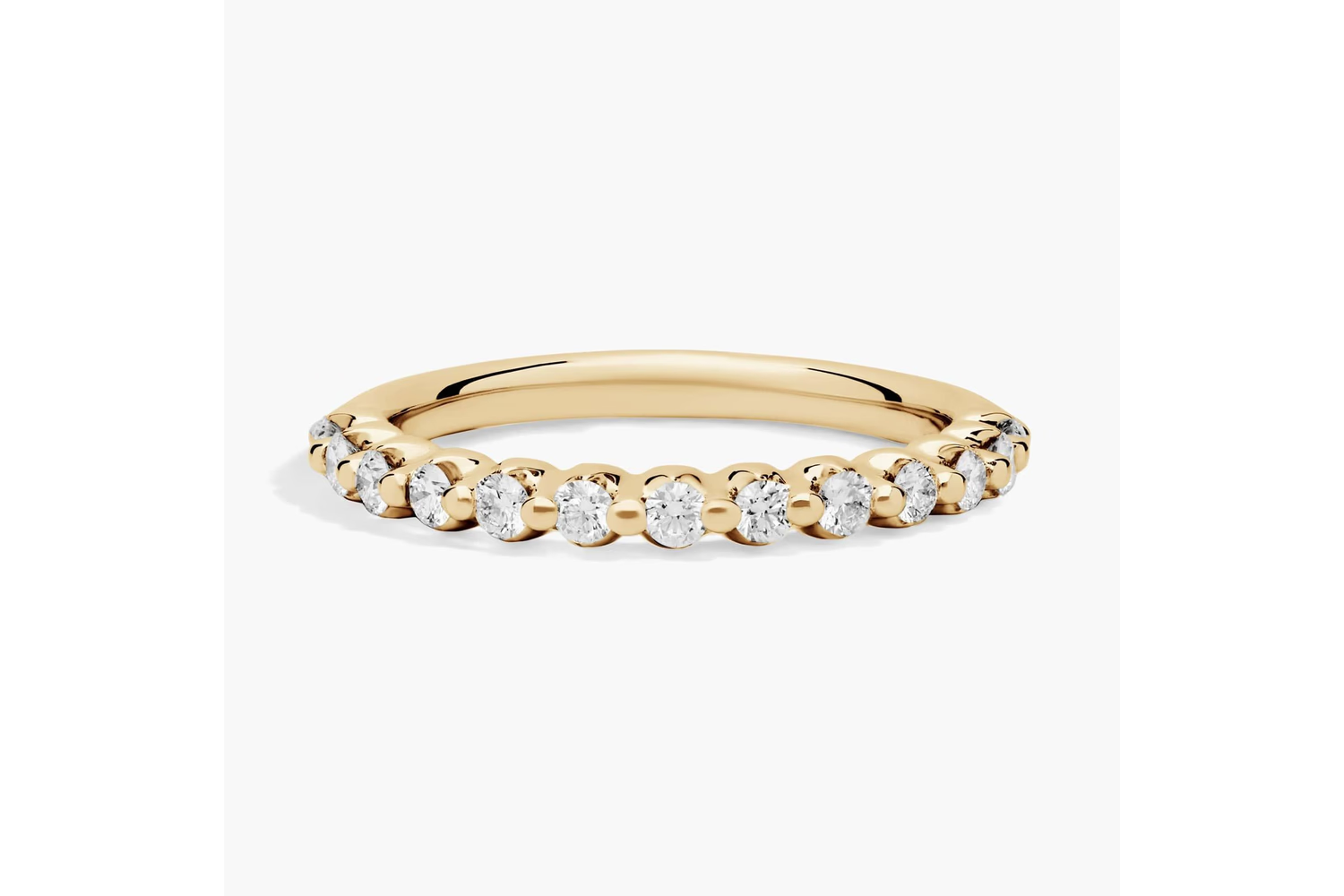
Tides Of Summer Capsule
Up To 30% Off
Shop The Sale →Vault ClearanceClear The Vault
Up To 70% Off
Shop Vault Deals →Affiliate link — no extra cost to you
Natural vs Lab-Grown for Anniversary Rings
Anniversary rings are an excellent use case for lab-grown diamonds. The reasons are different from engagement rings:
Carat weight per dollar is maximised: For anniversary rings, total diamond weight across the band matters more than any individual stone's certification. Lab-grown melee (the small diamonds used in pavé bands) is priced at a significant discount versus natural melee. The Floating Lab-Grown Diamond White Gold 1/2 ct at $1,100 delivers 0.50ct of F-G, VS2-SI1 diamonds for $1,100 — the natural equivalent would be $2,200+ for similar quality.
No certification premium: For melee stones set in a band, GIA certification per stone is not practical or relevant. The diamonds are purchased as matched sets, and lab-grown matched melee is indistinguishable from natural melee to any casual observer.
Resale irrelevance: Wedding and anniversary bands have near-zero resale value regardless of natural or lab status. The sentimental value dominates. This eliminates the main argument against lab-grown (resale discount) for this category.
The practical recommendation: for pavé and eternity anniversary rings, lab-grown is the value-optimized choice. For a solitaire anniversary ring (a single large center stone ring), natural with GIA certification applies the same rules as an engagement ring center stone.
The Anniversary Ring Showcase: Current Blue Nile Inventory
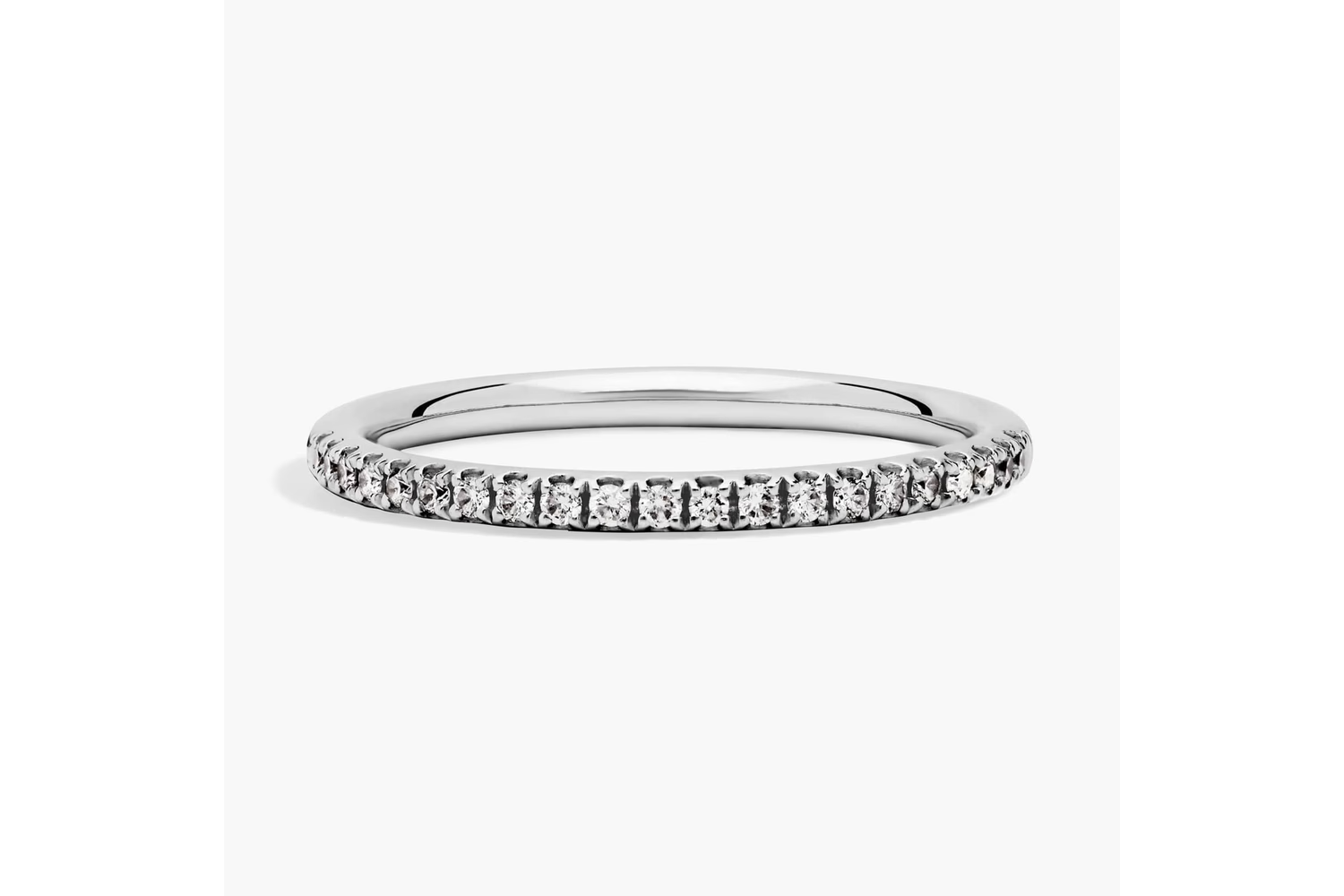
Riviera Pavé Platinum 1/4 ct — $1,420 · Best platinum pavé option · Pairs with platinum or white gold engagement ring
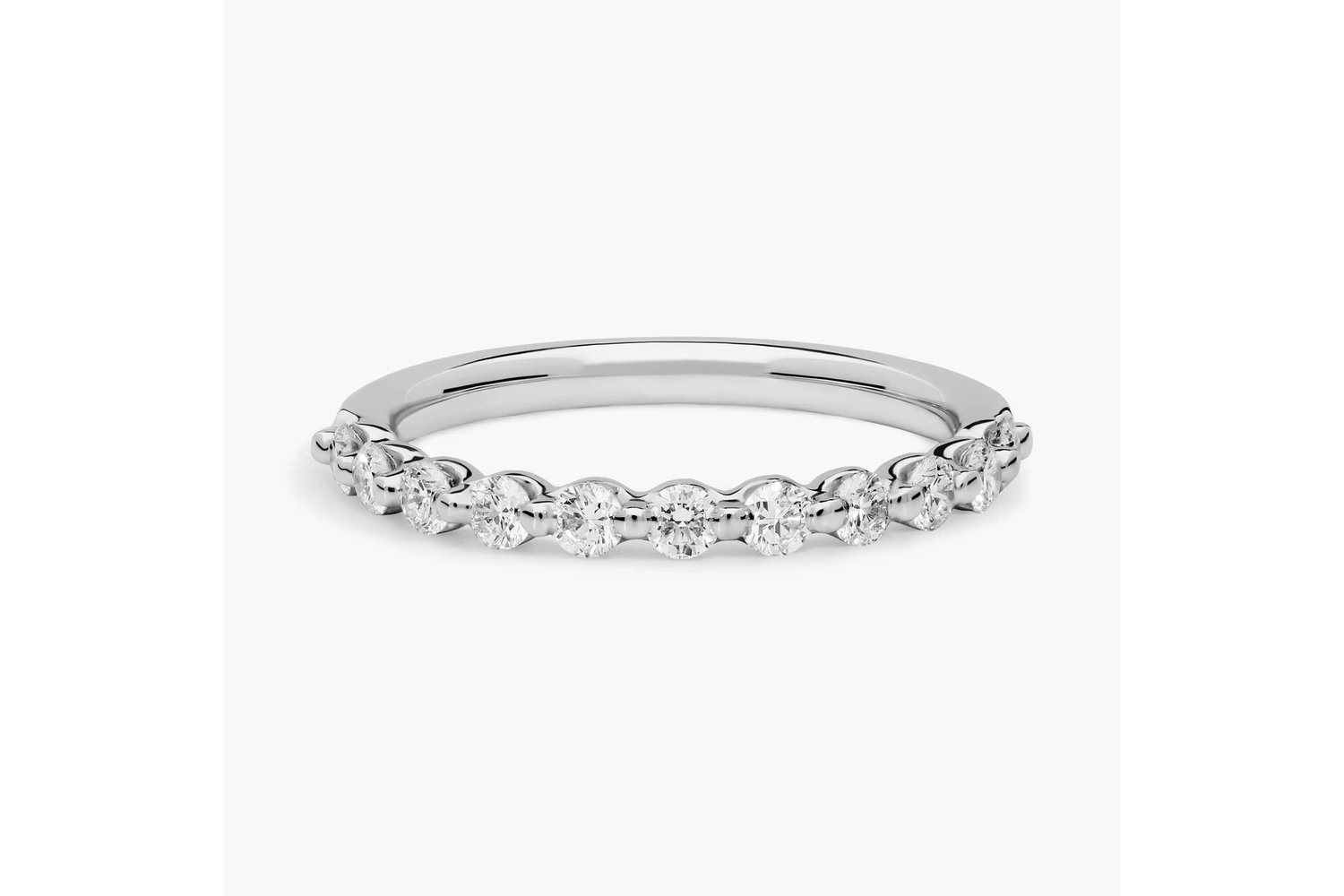
Floating Lab-Grown Diamond White Gold 1/2 ct — $1,100 · 0.50ct lab diamonds F-G VS2-SI1 · Best carat-per-dollar value in the anniversary ring category
Frequently Asked Questions
When should I buy an anniversary ring?
Any significant anniversary is appropriate — 1st, 5th, 10th, 25th are the most common milestone years. There is no wrong anniversary to buy one. The choice is personal and budgetary, not tied to a specific milestone rule.
Does the anniversary ring go on the same finger as the engagement ring?
Yes — traditionally the anniversary ring is stacked on the left ring finger alongside the engagement ring and wedding band. Some people wear it on the right ring finger for contrast, especially if the left hand stack is already 3 rings.
What is the difference between an anniversary ring and an eternity ring?
An eternity ring has diamonds set all the way around the band (full eternity) or halfway around (half eternity). An anniversary ring is any diamond ring purchased for an anniversary — it can be an eternity style or a floating/station style. The terms are often used interchangeably.
Can an eternity ring be resized?
Full eternity rings cannot be resized because the diamonds prevent the metal adjustment. Half eternity rings can be resized by working in the plain metal section of the back. This is a critical consideration: if your ring size is likely to change, avoid full eternity.
Should I match the metal to my engagement ring exactly?
Yes. White gold engagement ring → white gold anniversary band. The visual coherence of the stack depends on metal consistency. Platinum and white gold can be mixed (they look similar) but gold alloys should match exactly in karat and colour.
Is the Riviera Pavé band the right choice?
The Riviera Pavé series ($980–$1,420) is the most versatile anniversary band on Blue Nile — thin profile, continuous pavé, available in four metals and two diamond weights. It stacks cleanly with virtually any engagement ring style.
See Also
Expert Verdict
Always audit the stone individually — no grade replaces seeing the actual diamond. The certificate tells you what to look for. Your eyes tell you whether to buy.
— Farzana Hasan, GIA Expert · DiamondCritics.com