Round Diamond Certification Guide: The Certificate Inflation Scale
TL;DR: The Certificate Inflation Scale
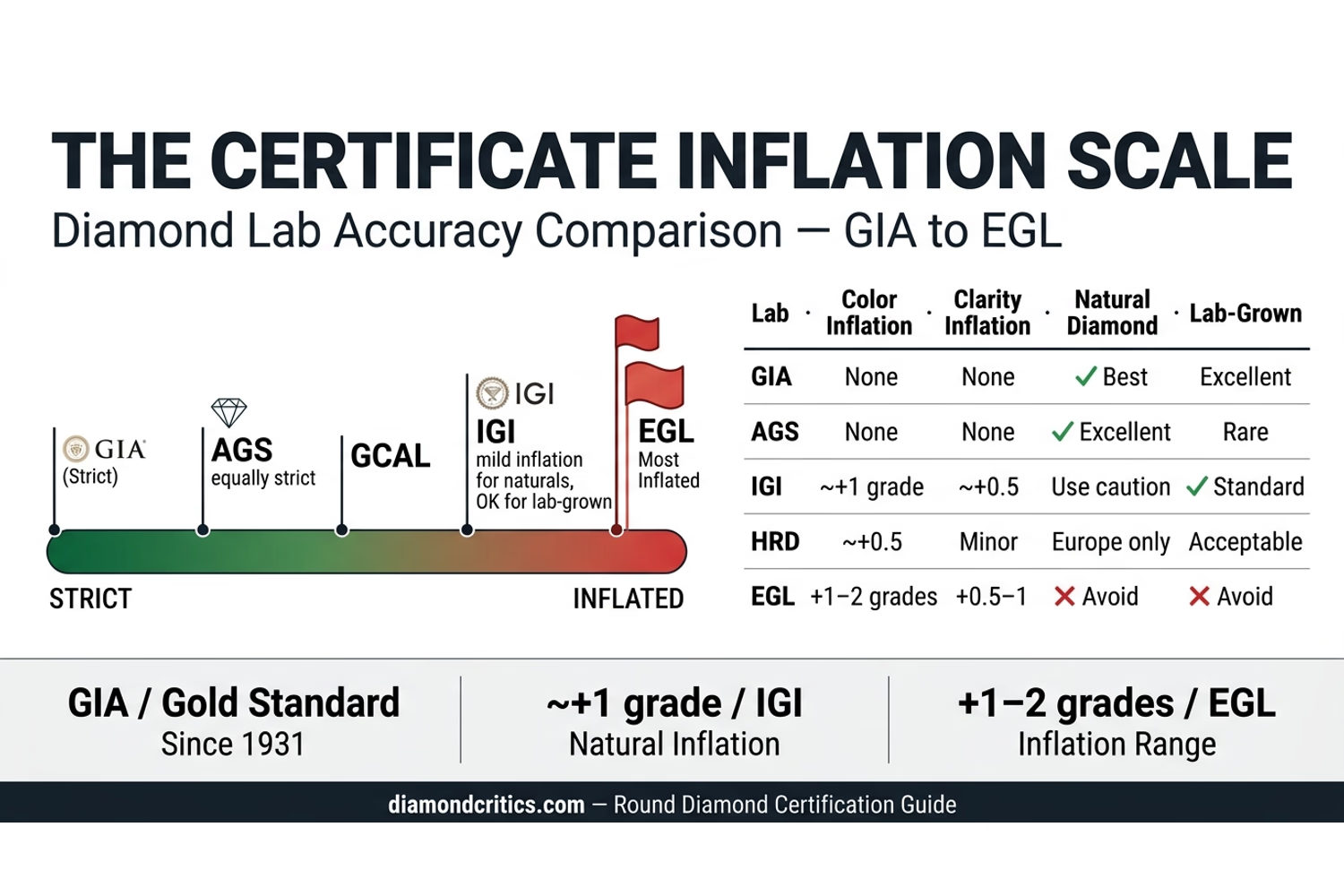
- The Certificate Inflation Scale: GIA and AGS grade consistently and strictly; IGI inflates natural stone color and clarity by roughly 1 grade; EGL inflates by 1–2 grades; paying an EGL "F-VS1" price for what GIA would call H-VS2 means overpaying by 30–50%
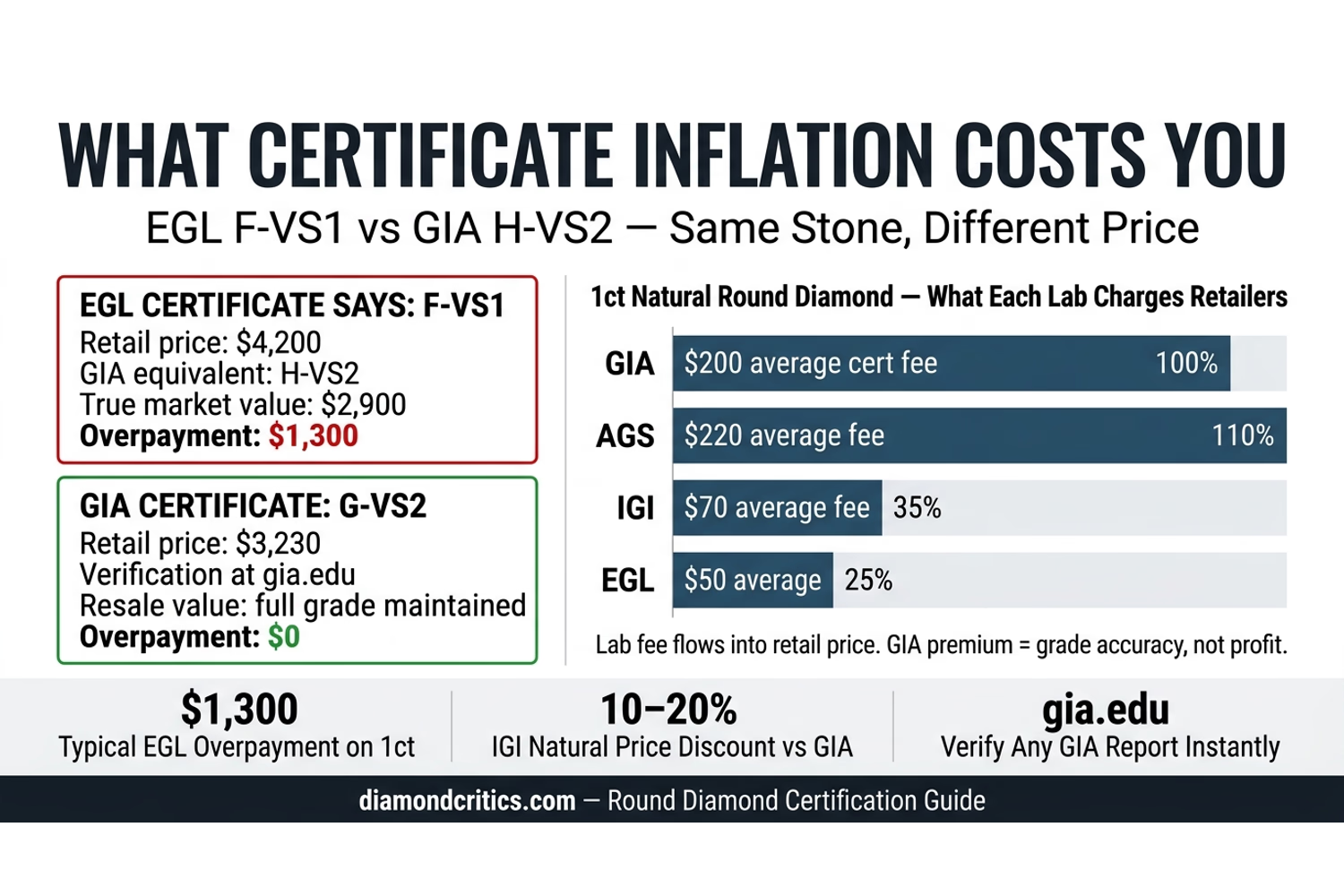
- A GIA-graded 1.00 Carat G-VS2 Excellent Cut Round Diamond at $3,230 is a firm price because the grade is accurate and verifiable at gia.edu — no inflation risk, no grade dispute on resale
- The practical rule: for natural diamonds, only buy GIA or AGS. For lab-grown diamonds, IGI is the industry standard and acceptable. EGL and GSI should be avoided for any purchase over $1,000
- Certificate cost flows into retail price — GIA charges retailers $150–$250 per stone; IGI charges $60–$80. That cost difference plus the grade inflation premium is why an IGI natural stone costs 10–20% less than an equivalent GIA stone and resells at a 15–25% discount
- The four certificate data points that directly affect price: color (D–Z), clarity (FL–I3), cut grade (Excellent–Poor, GIA only for round brilliants), and fluorescence (None through Very Strong)


Why the Grading Lab Matters
A diamond certificate is not a guarantee — it is an opinion from a trained gemologist at a specific laboratory. The opinion is only as accurate as the laboratory's grading standards, the calibration of its instruments, and the discipline of its process. Different labs apply different standards for the same grading terms. A "VS1" from GIA means a specific and narrowly defined set of inclusion characteristics. A "VS1" from EGL may include inclusions that GIA would call VS2 or SI1.
This distinction matters because diamond prices are set by grade. The Rapaport Diamond Report (the industry wholesale price guide) prices every diamond on a grade matrix of color vs clarity. A GIA G-VS2 and an EGL "F-VS1" can look identical to the naked eye but price differently by $700–$1,500 per carat. If the EGL "F-VS1" would be graded G-VS2 by GIA, then the buyer has paid F-VS1 pricing for a G-VS2 stone — a significant overpayment.
Major retailers have largely resolved this by defaulting to GIA for natural diamonds. Blue Nile, James Allen, and Brilliant Earth sell primarily GIA-graded natural round brilliants. The problem arises in three contexts: small independent jewelers who set their own stones on non-GIA certs, secondhand marketplace purchases where the original cert may be years old or from a loose lab, and lab-grown diamond purchases where IGI is the dominant certifier.
The Certificate Inflation Scale: Lab by Lab
| Lab | Founded | Accuracy for Natural | Accuracy for Lab-Grown | Grade Inflation | Best Use |
|---|---|---|---|---|---|
| GIA | 1931 | Gold standard | Strict | None | Natural diamonds, all prices |
| AGS | 1934 | Equal to GIA | Not common | None | Hearts & Arrows, ideal-cut buyers |
| IGI | 1975 | ~1 grade inflated | Strict and standard | Mild (natural) / None (lab) | Lab-grown diamonds |
| HRD | 1973 | Slightly inflated | Acceptable | Mild | European market purchases |
| EGL | 1974 | 1–2 grades inflated | Avoid | High | Avoid for >$1,000 |
| GSI | 2005 | Loose grading | Inconsistent | Moderate | Avoid |
| GCAL | 2001 | Very strict | Strict | None | Budget alternative to GIA |
The inflation pattern is consistent and well-documented in peer-reviewed gemological studies. A 2014 study by the International Diamond Manufacturers Association sampled stones with EGL USA certificates and found color grades running 1.2 grades higher than GIA equivalents on average and clarity grades running 0.8 grades higher. The compounding effect — both color and clarity inflated simultaneously — creates the largest price gaps.
GIA: The Gold Standard
The Gemological Institute of America was founded in 1931 in Los Angeles by Robert M. Shipley. It is a nonprofit educational organization — it does not buy or sell diamonds, removing any financial incentive to inflate grades. GIA developed the 4Cs (Cut, Color, Clarity, Carat Weight) and the D-to-Z color scale that the entire industry uses. All diamond grading by every other lab is ultimately calibrated against GIA's benchmark, whether those labs acknowledge it or not.
The GIA Diamond Grading Report is the standard certificate for natural diamonds above 0.15ct sold by major retailers. The report includes: shape and cutting style, measurements, carat weight, color grade, clarity grade, cut grade (rounds only), polish, symmetry, fluorescence, and a clarity plot diagram showing inclusion positions. A report number printed on the girdle of the stone matches the digital record verifiable at gia.edu/report-check in real time.
GIA also issues the GIA Diamond Dossier (identical to the full report minus the clarity plot, for diamonds 0.15–1.99ct) and the GIA Diamond eReport (digital-only). All three carry the same grading rigor. Processing time for loose stones submitted by retailers is typically 15–25 business days. The cost premium over other labs is real but justified — it is the only certificate that holds its value at resale without a grade discount.
IGI: Fine for Lab-Grown, Inflated for Naturals
The International Gemological Institute was founded in 1975 in Antwerp. It operates 31 labs worldwide and is the highest-volume diamond grading lab in the world by number of stones processed annually. IGI's per-certificate fee is approximately 60–75% lower than GIA's, which makes it attractive to retailers who want to offer lower retail prices.
For natural diamonds, IGI's grading is documented to run approximately one grade higher than GIA equivalent on color and occasionally one step on clarity. This means a retailer selling an IGI G-VS2 is often selling what GIA would call H-VS2 or H-SI1. The price is set by the IGI grade, not the GIA equivalent grade — so the buyer overpays for the implied quality. IGI natural stones sell at a 10–20% discount to GIA equivalent stones on the secondary market precisely because buyers adjust for this expectation.
For lab-grown diamonds, IGI is the correct choice. IGI invested early in lab-grown grading infrastructure (CVD and HPHT stones require different evaluation protocols for strain patterns and treatment detection). Their lab-grown accuracy is tight and consistent, and the industry has standardized on IGI for lab-grown certificates. Blue Nile sells IGI-graded lab-grown round brilliants alongside GIA-graded natural stones, and the IGI certificates for lab-grown stones are fully reliable for the price paid.
Tides Of Summer Capsule
Up To 30% Off
Shop The Sale →Vault ClearanceClear The Vault
Up To 70% Off
Shop Vault Deals →Affiliate link — no extra cost to you
AGS: Equally Strict, Rarely Seen
The American Gem Society was founded in 1934 — three years after GIA — by jewelers who wanted an ethical certification standard. The AGS Platinum Diamond Quality Document is as rigorous as a GIA report and in one respect exceeds it: AGS grades cut for all round brilliants using a 0–10 numerical scale (0 = Perfect Ideal, 10 = Poor) rather than word grades, and the AGS Ideal (0) designation covers a narrower performance range than GIA Excellent.
AGS Ideal stones must pass three cut performance tests: light performance (measured via ASET imaging), proportions, and finish. An AGS 0 is approximately the top 3–5% of round brilliant cut performance. This makes AGS the preferred certificate for Hearts and Arrows buyers and for buyers who want maximum cut verification beyond GIA Excellent.
The practical limitation of AGS is market presence. AGS operates fewer labs than GIA and processes far fewer stones. Most major retailers carry a smaller selection of AGS-graded stones than GIA. For buyers who want AGS Ideal verification, James Allen and Whiteflash maintain curated AGS inventories. Blue Nile's standard inventory is GIA-graded; AGS stones appear occasionally but are not the primary offering.
EGL: The Most Inflated Lab
The European Gemological Laboratory was founded in 1974 and today operates as several independently owned franchises: EGL USA (New York), EGL International (various European locations), and EGL Israel. Each operates under the EGL brand but independently sets its own grading standards — which is itself a red flag. There is no central quality control ensuring that an EGL USA certificate means the same thing as an EGL International certificate.
Academic and industry studies have documented EGL grade inflation at 1–3 color grades and 0.5–1.5 clarity grades above GIA equivalent. A 2014 IDMA study found EGL USA running 1.2 color grades above GIA on average. The practical impact: an EGL "F-VS1" 1ct round brilliant worth $4,200 at F-VS1 pricing would likely grade GIA H-VS2 at approximately $2,900 — an overpayment of $1,300 (45%).
EGL stones sell at significant discounts on the secondary market because all sophisticated buyers apply an automatic grade adjustment. A diamond that cannot be resold at its purchase-grade value is not an investment — it is a liability. The only exception where EGL becomes defensible is diamonds under $500 where the price difference between strict and loose grading is small in absolute dollar terms. For any round brilliant over $1,000, EGL certificates should be an immediate disqualifier.
How to Use Certification to Negotiate Price
The certificate is your primary negotiation tool when buying from independent jewelers or the secondary market. The standard approach:
Step 1: Identify the lab. GIA or AGS → proceed to price comparison. IGI (natural stone) → apply a 10–15% grade inflation adjustment to find the GIA equivalent before comparing prices. EGL → require a GIA re-cert or walk away.
Step 2: Verify the report number. For GIA, enter the report number at gia.edu/report-check. The digital record must match the physical certificate exactly — stone measurements, weight, and all grades. Any discrepancy is fraud. For IGI, verify at igi.org. AGS at ags.org.
Step 3: Check the date. A GIA report from more than 5 years ago carries a risk that the stone has been re-cut, chipped, or repaired since grading. Ask whether the physical stone matches current measurements. For stones over $3,000, a fresh GIA re-grading fee ($200–$400) is worth the certainty.
Step 4: Use the certificate's clarity plot. The GIA full report includes a diagram showing every inclusion's location, type, and relative size. Use the plot to find inclusions under magnification — if the actual stone has inclusions not on the plot, the cert does not match the stone.
For a verified GIA 1.00 Carat G-VS2 Excellent Cut Round Diamond at $3,230, there is effectively no negotiating room on a Blue Nile purchase — the price is set by accurate, verifiable grading with no inflation premium. The only real negotiation leverage on GIA stones is in the independent jeweler market where the jeweler's margin is higher than online retail.
Frequently Asked Questions
Is GIA the best diamond certification lab?
For natural diamonds, yes. GIA sets the global standard, is an independent nonprofit, and its grades are verifiable online in real time. No other lab has equivalent market trust or resale value preservation. AGS is equally strict and arguably more rigorous on cut grading, but GIA has broader market presence and is the default for major retailers.
What is the difference between GIA and IGI?
GIA is stricter, more expensive, and the universal benchmark for natural diamonds. IGI is less expensive, slightly inflated for natural stones, but the correct choice for lab-grown diamonds. GIA-graded natural stones command a 10–20% price premium over IGI-graded natural stones of the same listed grade specifically because of the grade inflation adjustment buyers apply to IGI.
Should I buy a diamond with an EGL certificate?
No, for any purchase over $1,000. EGL's documented 1–2 grade inflation means the price you pay is inflated beyond the stone's actual quality. Resale value drops immediately because all informed buyers discount EGL grades. Require a GIA re-cert from any seller offering an EGL stone at natural prices.
Is an IGI certificate good for lab-grown diamonds?
Yes. IGI is the industry standard for lab-grown diamonds and their grading accuracy for CVD and HPHT stones is tight and consistent. Blue Nile, James Allen, and Brilliant Earth all use IGI for lab-grown certification. An IGI lab-grown certificate does not carry the same inflation caveat as an IGI natural certificate.
How do I verify a GIA diamond certificate?
Go to gia.edu/report-check and enter the report number from the certificate. The database returns the grading data for that report number in real time. The measurements, weight, and all grade fields must match the physical certificate exactly. GIA report numbers are also laser-inscribed on the diamond's girdle and visible under 10× loupe.
Why does a GIA diamond cost more than an IGI diamond?
Two reasons: the GIA certification fee ($150–$250 vs IGI's $60–$80) flows into retail price, and the market applies an implicit grade inflation discount to IGI natural stones. An IGI "G-VS2" natural stone is priced as G-VS2 but may be worth F-VS1 pricing if GIA would actually grade it F-VS1 — or worth H-SI1 pricing if GIA would grade it down. The price difference is not profit margin; it is the market's correct adjustment for grading uncertainty.
What does AGS 0 mean on a diamond certificate?
AGS 0 is the highest grade on the American Gem Society's 0–10 numerical cut scale (0 = Perfect Ideal, 10 = Poor). An AGS 0 stone has passed three performance tests: ASET light performance imaging, proportions verification, and finish (polish and symmetry). It is the strictest cut standard in the industry, covering approximately the top 3–5% of round brilliant cut performance. AGS 0 is the only independently verified equivalent to — and in some respects exceeds — GIA Excellent.
See Also
Expert Verdict
Always audit the stone individually — no grade replaces seeing the actual diamond. The certificate tells you what to look for. Your eyes tell you whether to buy.
— Farzana Hasan, GIA Expert · DiamondCritics.com