TL;DR: Best Settings for Round Diamond Engagement Rings
- Solitaire is the only setting that lets the diamond's actual quality — its cut, sparkle, and brilliance — stand completely alone. If your diamond is excellent, solitaire showcases it. If it is mediocre, solitaire exposes it
- Halo makes any round diamond appear 15–25% larger. It is also the setting most often used to hide a lower-clarity or lower-cut diamond behind surrounding sparkle — what I call the Clarity Laundering Effect
- Pavé solitaire (diamonds on the band only, no halo) is the sweet spot for most buyers: adds sparkle and visual richness without obscuring the center stone
- 4-prong vs 6-prong: 4-prong settings show more of the diamond and maximize sparkle exposure; 6-prong settings hold the stone more securely but cover slightly more of the girdle. For a GIA Excellent round, 4-prong is my preference
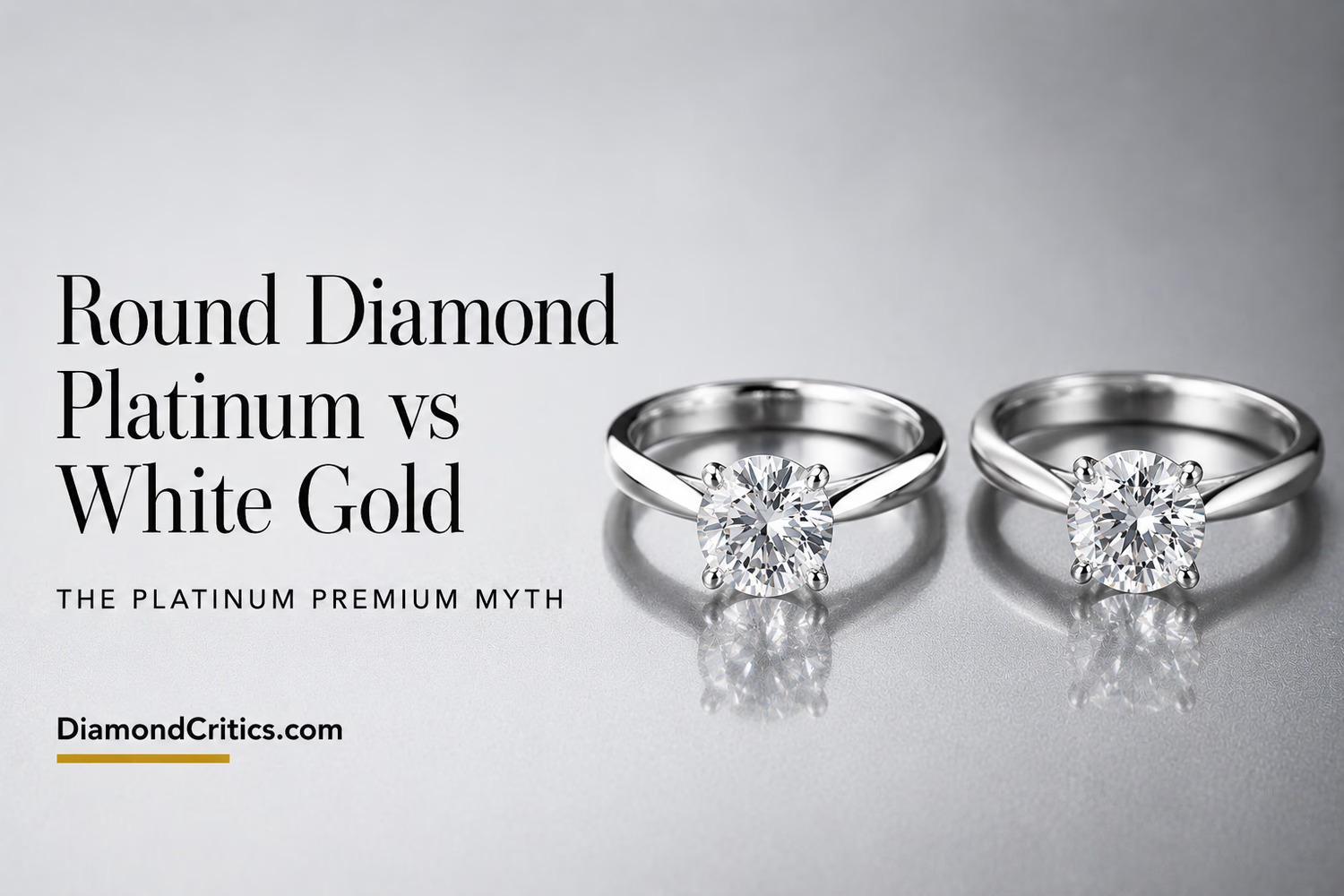
- Platinum vs 14k white gold: platinum is more durable and maintains its whiteness permanently; white gold requires rhodium re-plating every 1–2 years. Platinum costs 30–50% more for the setting
- The Hidden Halo Trap: hidden halos add significant cost ($400–$800 more than a standard solitaire) for sparkle that is invisible from the top-down viewing angle most people use to look at the ring


Why the Setting Decision Is as Important as the Diamond
Most diamond-buying guides treat the ring setting as an afterthought — pick your diamond, then choose a setting. This is backwards.
I am Farzana Hasan, GIA-certified diamond expert. In my experience, the setting decision directly affects how the diamond looks, how much it appears to cost, and whether you spent your diamond budget wisely or wasted part of it. A GIA Excellent round brilliant in a 4-prong solitaire looks like exactly what it is: a precision-cut stone performing at its full potential. The same diamond in a poorly chosen halo with competing small diamonds can lose its visual dominance entirely.
This guide covers every major round diamond setting type, the advantages and disadvantages of each, the specific decisions within each (prong count, metal, shank style), and my honest assessment of who should buy what.
Before we start: for the complete technical foundation on why round brilliants are cut the way they are, and how to choose the center stone that goes in any of these settings, read the round cut diamond buying guide. This guide assumes you have or are planning to buy a round brilliant center stone.
Solitaire Setting: When Simplicity Is the Right Answer
The solitaire is a single diamond held by prongs on a plain metal band — no side stones, no pavé, no halo. It has been the default engagement ring design for over a century, and there is an excellent reason for that.
A solitaire puts every dollar of your diamond budget where it is visible. There are no competing diamonds drawing the eye away from the center stone. No setting additions driving up the ring price in ways that do not improve the diamond's appearance. If you buy a genuinely excellent round brilliant — GIA Excellent cut, G–H color, VS1–VS2 clarity — a solitaire setting is the optimal showcase for it.
The solitaire also has the clearest value proposition: you know what you are paying for. A $500–$800 14k white gold or yellow gold 4-prong solitaire setting plus a $3,200 G-VS1 Excellent round diamond gives you a total ring cost of approximately $3,700–$4,000. There are no hidden costs from additional diamonds or complex metalwork.
Who should buy a solitaire:
- Buyers with a strong center stone who want to maximize its visual impact
- Buyers who prefer clean, timeless aesthetics without visual complexity
- Buyers who want the setting cost to be minimal so the diamond budget can be maximized
- Partners who favor classic, enduring design over trend-forward styles
Who should think twice about solitaire:
- Buyers with a budget round brilliant that has minor cut or clarity imperfections — solitaire exposes everything. The setting will not hide anything
- Partners who strongly prefer more sparkle or visual complexity in the ring's overall design
Browse round cut engagement ring settings at Blue Nile →
The 4-Prong vs 6-Prong Decision
Within solitaire settings, this is the most frequent buyer question. Here is the honest breakdown:

4-prong (Tiffany-style) solitaire:
- Covers the minimum amount of the diamond's girdle — maximizes visible surface area
- Shows slightly more of the diamond face-up
- The four prongs at north/south/east/west create a clean, symmetrical look that most GIA Excellent rounds are designed to complement
- Very slightly more vulnerable at the prong tips — any prong catching on fabric could bend or break more easily than 6-prong
- Right for: buyers who want maximum diamond exposure, partners who will wear the ring daily with reasonable care
6-prong (cathedral-style) solitaire:
- Covers slightly more of the girdle, slightly reduces visible face-up area (usually less than 1mm of the perimeter)
- More secure hold — two additional prong points means more redundancy
- Right for: buyers whose partner has an active lifestyle or hands-on profession; buyers who are conservative about risk of diamond loss
My recommendation: for a standard daily-wear engagement ring on a non-manual-labor lifestyle, 4-prong. The visual difference is more pronounced than the security difference. A properly maintained 4-prong solitaire will not lose a diamond.
Halo Setting: The Clarity Laundering Effect
The halo setting — a ring of small pavé or prong-set diamonds circling the center stone — is one of the most popular engagement ring styles of the past decade. It is also the setting most frequently used by uninformed buyers to compensate for a weaker center stone. I call this the Clarity Laundering Effect.
Here is how it works: a buyer has a $2,500 budget for the entire ring, center stone included. A sales-focused jeweler suggests a smaller or lower-clarity center stone at $1,400 and a halo setting at $1,100. The halo fills the visual field around the stone, the surrounding sparkle makes the total ring look larger and more complex, and the mediocre center stone is partially masked. The buyer walks away thinking they got "more diamond" for the budget.
What actually happened: they bought a ring where the visual focal point is obscured, the center stone is performing below its potential, and if they ever upgrade the center stone, the setting's aesthetic will change significantly.
The halo has genuine advantages when used correctly:
- Size enhancement — a round brilliant surrounded by a single halo of small diamonds appears 15–25% larger than the naked stone. This is real and visible
- Budget strategy — if your budget is $3,000 total and you genuinely want a ring that looks like a larger diamond, buying a 0.85ct excellent round for $2,100 and adding a $900 halo setting produces a ring that reads as approximately 1.10–1.15ct face-up. This is a legitimate approach if you understand the trade-off
- Security — the halo's metal channel and pavé around the center stone adds additional support, particularly relevant for solitaires worn daily
When to choose halo:
- Your center stone budget is limited and apparent size matters to your partner
- You have confirmed the center stone is excellent quality — do not waste a halo on a mediocre stone
- Your partner's style genuinely leans toward more ornate and sparkle-dense designs
When to avoid halo:
- You are buying a GIA Excellent G-VS1+ center stone — let it work without competition
- Your total budget is above $5,000 — at this level, invest in a larger/better center stone rather than a setting that creates apparent size
- Your partner prefers minimalist aesthetics
Browse halo engagement ring settings at Blue Nile →
Pavé Band (No Halo): The Sweet Spot
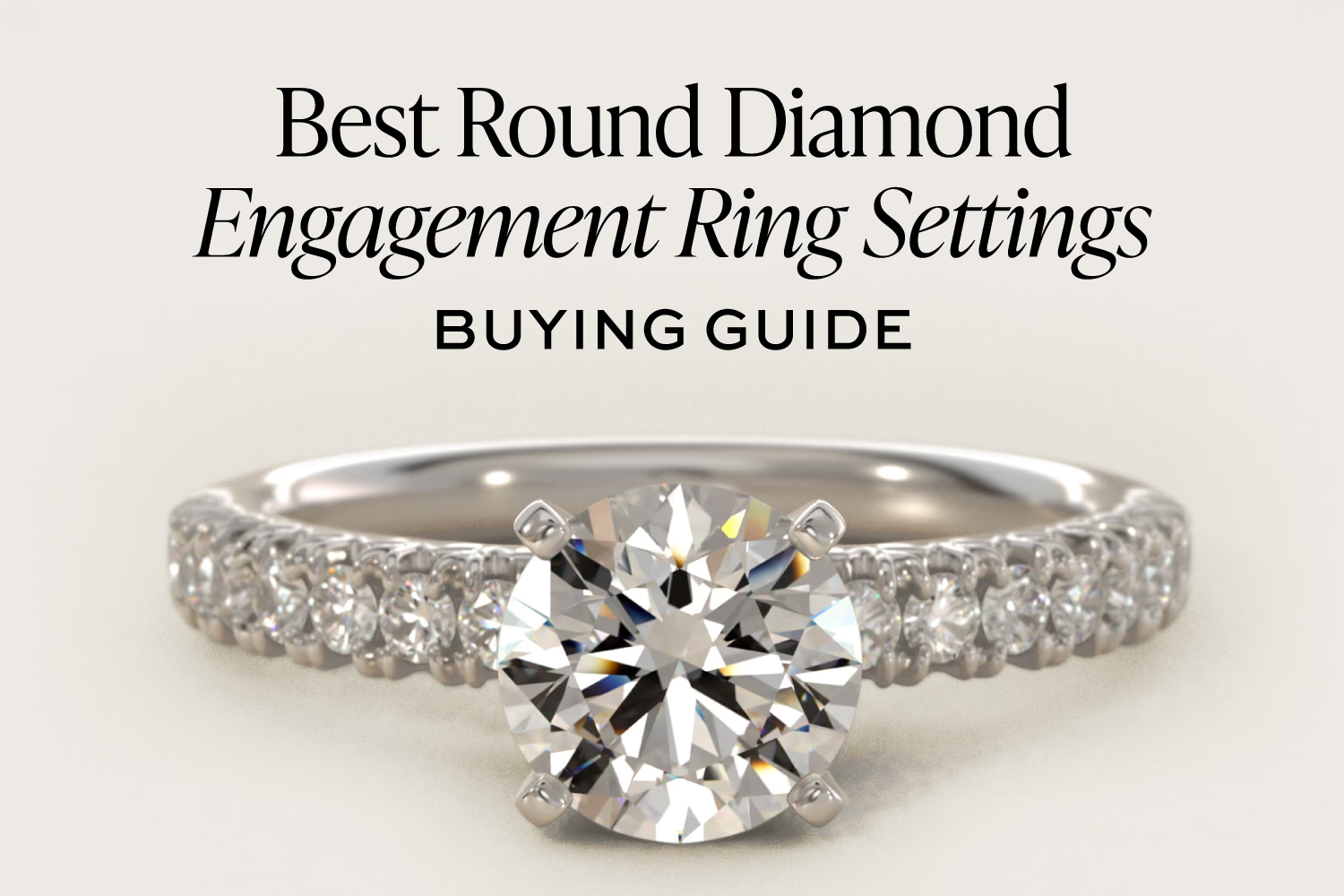
The pavé band — a solitaire-style setting where the shank (band) is encrusted with small diamonds, but there is no halo around the center stone — is the design I recommend to most buyers who want more sparkle than a plain solitaire without the Clarity Laundering Effect of a halo.
The logic: the pavé band adds sparkle and visual richness to the ring without competing with or obscuring the center stone. The center diamond remains the clear focal point. From above, the diamond's full face-up performance is visible. From the side, the pavé band adds continuous sparkle along the shank.
Cost differential over plain solitaire: $300–$600 for a half-pavé band (diamonds on top half of shank), $500–$900 for a full-pavé band (diamonds continuing all the way around).
For a $3,200 center stone (G-VS1 Excellent round →) — see the 1 carat round diamond price guide for every budget tier — plus a half-pavé solitaire setting at $700–$900, total ring cost runs $3,900–$4,100 — excellent value for the result.
For a $3,760 center stone (G-VVS2 Excellent round →) plus a half-pavé setting, total ring cost runs approximately $4,460–$4,660.
Metal Choice: Platinum vs White Gold vs Yellow Gold
This is a decision with real trade-offs and no universal right answer. Here is what each metal actually delivers:
Platinum
- Naturally white and does not fade or yellow over time
- More dense and durable than gold — resists scratching better
- Develops a patina (slight matte finish) over years of wear; can be polished back to high shine
- Setting cost: 30–50% more than 14k white gold for the same design
- Right for: buyers who want zero maintenance, maximum durability, permanent whiteness, or whose partner has a platinum preference
14k White Gold
- Less expensive than platinum (typically $200–$600 less for the same setting)
- White appearance achieved with rhodium plating — a thin coating that wears off over 12–24 months of daily wear, exposing the yellow gold alloy beneath
- Requires rhodium re-plating every 1–2 years at a jeweler (typically $50–$100)
- Slightly harder than platinum (less prone to surface scratching), but less durable in deep impacts
- Right for: buyers who want the white metal look at lower cost and are willing to do occasional maintenance
14k Yellow Gold
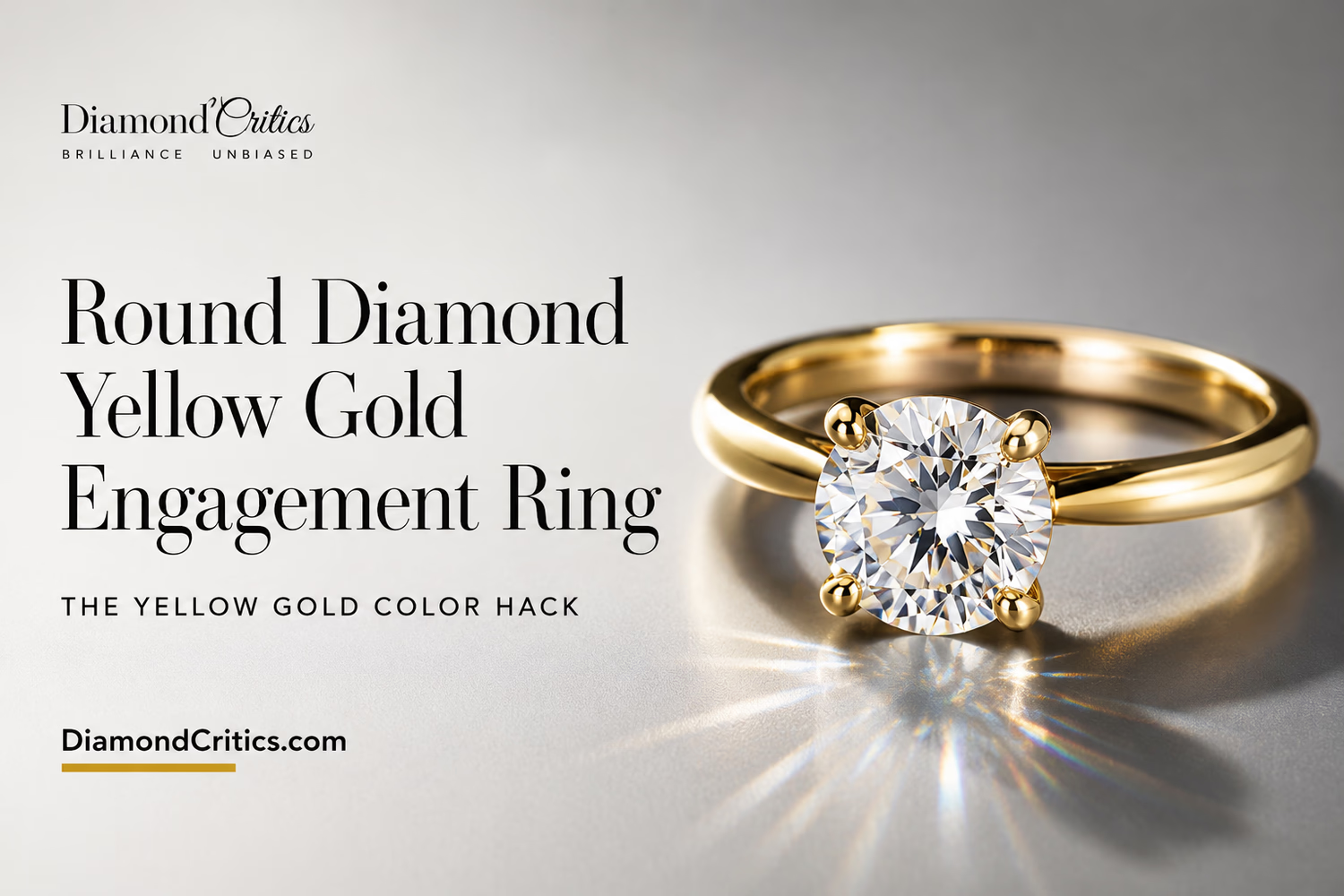
- Flattering for G–H color diamonds — the gold's warmth is indistinguishable from color in the stone, meaning a slightly lower color grade works well in yellow gold without showing yellow tint
- No plating required — maintains its color permanently
- Slightly more traditional aesthetic — experiencing a genuine style resurgence in 2026
- Right for: buyers who prefer warm metal tones, buyers with H–I color diamonds (the gold masks any trace of warmth), buyers who want a maintenance-free metal without platinum cost
The Hidden Halo Trap
The hidden halo — a row of small diamonds set underneath the center stone, visible from the side but not the top — has become extremely popular. Before paying for it, understand what you are buying.
A hidden halo is visible only when:
- The ring is tilted and viewed from the side
- The viewer is positioned at girdle height or below
- The lighting conditions allow the small diamonds to be seen
From the standard viewing angle — looking at the ring on a hand — a hidden halo is not visible. You are paying $400–$800 more for sparkle that appears only in specific viewing conditions.
This is not to say hidden halos are worthless. When the ring is viewed from the side — which does happen regularly in social settings — the hidden halo creates a surprising, distinctive sparkle effect that many people find genuinely beautiful. If that side-view aesthetic is important to your partner, the hidden halo is a legitimate purchase.
If the purchase rationale is "more sparkle on the ring overall," a half-pavé band delivers continuous visible sparkle for approximately the same cost and is visible from the top-down angle most people use.
Browse all engagement ring settings at Blue Nile →
Setting + Center Stone Budget Combinations
The most useful thing I can do here is give you real diamond prices matched to real setting costs, so you know exactly what each total budget actually buys. Every center stone link below is a live Blue Nile listing.
| Total Budget | Center Stone | Setting Style | Total Ring | Farzana's Pick |
|---|---|---|---|---|
| $3,000 | Lab D-IF Ideal $1,560 | $1,440 halo + pavé | ~$3,000 | Lab stones in halos are the best-looking $3,000 ring available. Flawless clarity does not need hiding. |
| $3,500 | G-VS1 Excellent $3,200 | $300 simple 4-prong solitaire | ~$3,500 | The floor for a natural 1ct in a clean solitaire. No frills, all diamond. |
| $4,000 | G-VS1 Excellent $3,260 | $740 half-pavé solitaire | ~$4,000 | The efficient G-VS1 with enough left for a band that sparkles. Best value ring at $4,000. |
| $4,500 | G-VS1 Excellent $3,430 | $1,070 half-pavé solitaire | ~$4,500 | The Proportion Winner stone in a proper pavé setting. This ring performs at levels that cost $6,000 at a retail jeweler. |
| $5,000 | G-VVS2 Excellent $3,760 | $1,240 half-pavé solitaire | ~$5,000 | VVS2 clarity in a pavé band — the $5,000 sweet spot ring. Invisible clarity upgrade, visible band sparkle. |
| $5,000 | Lab E-FL Ideal $2,380 | $2,620 halo + platinum band | ~$5,000 | Flawless E-color lab in a full platinum halo. If natural origin does not matter, this ring at $5,000 would retail for $9,000+ with a natural stone. |
| $5,500 | G-VS1 Excellent $3,640 | $1,860 full-pavé + platinum prongs | ~$5,500 | The Diminishing Returns stone in a premium setting — verify the proportions before buying, but if they're good, this ring is stunning. |
| $6,000+ | F-VS1 Excellent $3,830 | $2,170 platinum solitaire or pavé | ~$6,000 | F color in platinum — the colorless appearance is actually visible in this metal. First price tier where the color upgrade genuinely matters. |
| $6,500+ | G-VVS2 Excellent $5,040 | $1,460 platinum 4-prong solitaire | ~$6,500 | The zero-fluorescence VVS2 in platinum. This is where the ring starts to look genuinely elite in any lighting condition. |
Rule for all budgets: Set your center stone budget first. Lock GIA Excellent cut. Then choose the setting that uses whatever remains. Never compromise cut to afford a more elaborate setting — a dimmer diamond in a beautiful setting is still a dimmer diamond.

Tides Of Summer Capsule
Up To 30% Off
Shop The Sale →Vault ClearanceClear The Vault
Up To 70% Off
Shop Vault Deals →Affiliate link — no extra cost to you
Real Blue Nile Settings — Current Prices
Stop guessing at "roughly $500–$800 for a solitaire." Here are actual settings available at Blue Nile right now, organized so you can build your ring with real numbers. All settings link to the Blue Nile collection. Browse all settings at Blue Nile →
Solitaire Settings — The Clean Option
| Setting | Metal | Price |
|---|---|---|
| Knife Edge Solitaire | 14K White Gold | $700 |
| Woven Solitaire | 14K Yellow Gold | $730 |
| East West Cathedral Solitaire | 14K Yellow Gold | $850 |
| Petite Split Shank Solitaire | 14K Yellow Gold | $1,015 |
| Classic Simple Solitaire | 14K White Gold | $1,015 |
| Petite Solitaire | Platinum | $1,155 |
| Classic Six-Prong Solitaire | Platinum | $1,180 |
| Cable Solitaire | Platinum | $1,350 |
| Solitaire With Pavé Basket | 14K Yellow Gold | $1,710 |
Farzana's pick from this tier: The Classic Six-Prong Solitaire in Platinum at $1,180 is hard to beat for a natural G-VS1 center stone. Six prongs, platinum durability, and the stone carries the entire show. The Knife Edge at $700 in white gold is the smart move if budget is tight — simple, modern, and the diamond does all the work.
Pavé Band Settings — Sparkle on the Band
| Setting | Metal | Price |
|---|---|---|
| Petite Twist Diamond Band | 14K White Gold (1/10 ct) | $1,200 |
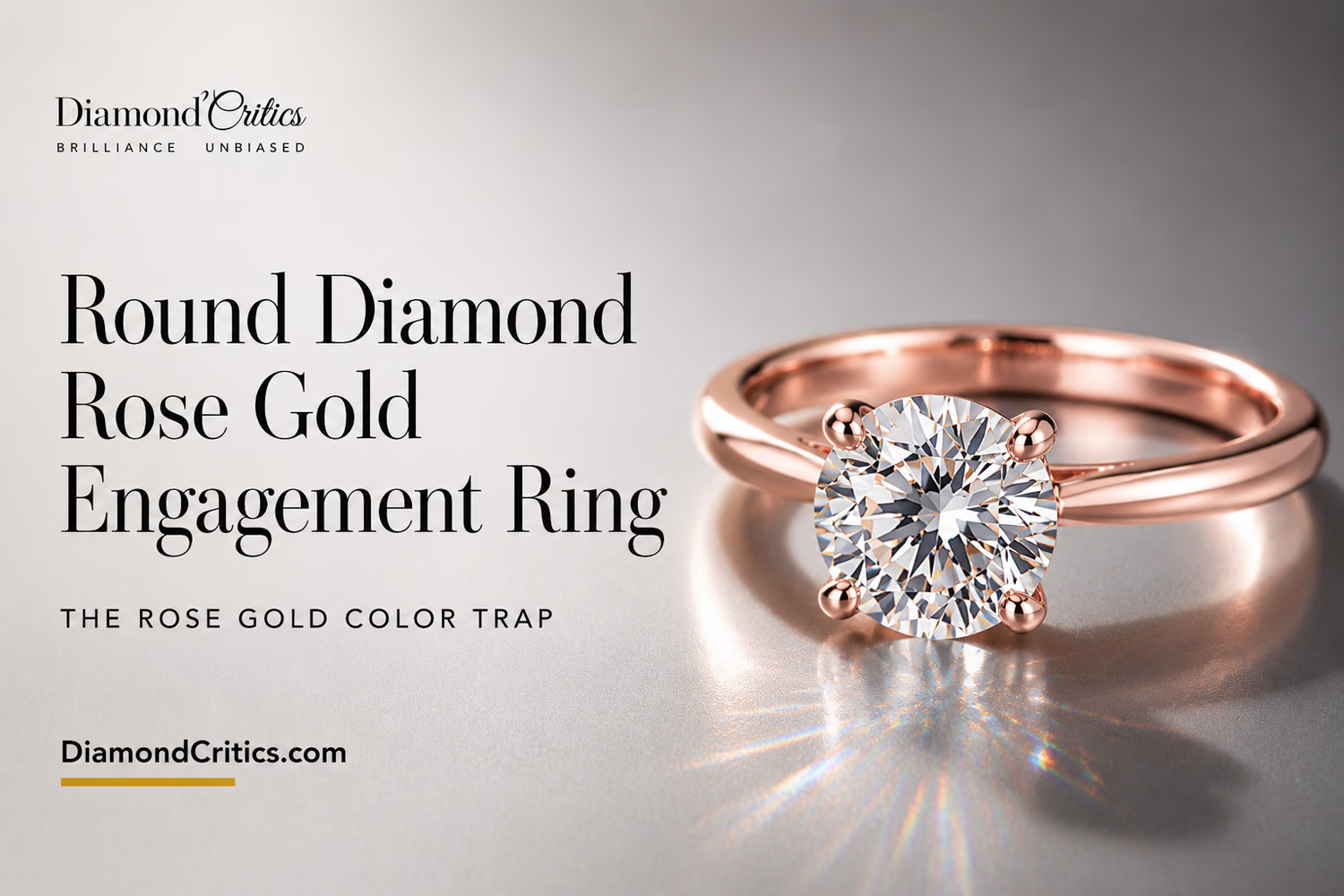
| Petite Twist Diamond Band | 14K Rose Gold (1/10 ct) | $1,200 |
| Petite Micropavé Band | 14K White Gold (1/10 ct) | $1,325 |
| Riviera Pavé Band | 14K White Gold (1/6 ct) | $1,405 |
| Petite Micropavé Hidden Halo | 14K White Gold (1/5 ct) | $1,430 |
| Delicate Twist Petite Pavé | 14K White Gold (1/10 ct) | $1,430 |
| Graduated Pavé Band | 14K Rose Gold | $1,630 |
| French Pavé Band | Platinum (1/4 ct) | $2,140 |
| Diamond Pavé Band | Platinum | $2,200 |
| Diamond Whisper Side Stone Band | 14K White Gold | $2,300 |
| Bow-Tie Channel Set Band | 14K White Gold | $2,350 |
| Scalloped Pavé Band | Platinum (3/8 ct) | $2,450 |
| Riviera Cathedral Pavé Band | Platinum (1/2 ct) | $2,890 |
| French Pavé Premium Band | Platinum (1 ct) | $3,925 |
Farzana's pick: The Riviera Pavé at $1,405 in 14K white gold is my go-to recommendation for buyers who want visible band sparkle without spending over $1,500 on the setting. Pair it with the G-VS1 Excellent at $3,200 for a complete ring under $4,700 that looks like it cost $7,000 in a brick-and-mortar store.
For a platinum statement ring: French Pavé Platinum at $2,140 plus a G-VVS2 Excellent at $3,760 = $5,900 total for a ring that performs at a $9,000–$10,000 retail price point.
Halo Settings — When Apparent Size Is the Goal
| Setting | Metal | Price |
|---|---|---|
| Petite Hidden Halo Solitaire Plus | 14K Yellow Gold | $1,255 |
| Falling Edge Pavé Diamond Halo | Platinum | $2,620 |
The Petite Hidden Halo at $1,255 is the most budget-friendly way to add the size-enhancement effect. The Falling Edge Pavé Halo in Platinum at $2,620 is the premium choice — pair it with the lab E-FL Ideal at $2,380 and your total ring is $5,000 with a Flawless center stone in platinum. That is extraordinary value.
Frequently Asked Questions: Round Diamond Engagement Ring Settings
What is the best setting for a round diamond engagement ring?
For most buyers, a 4-prong solitaire or half-pavé solitaire. The solitaire maximizes the center stone's visual impact — every dollar of diamond budget is on display. The half-pavé solitaire adds band sparkle without competing with or obscuring the center stone. Halo settings are best reserved for buyers who have a limited center stone budget and want to maximize apparent ring size.
Does a halo setting make a diamond look bigger?
Yes, genuinely. A single halo of small pavé diamonds surrounding a round brilliant center stone increases the ring's apparent face-up diameter by approximately 15–25%, depending on the halo width and stone size. A 0.85ct round in a halo reads as approximately 1.10–1.15ct. This is a legitimate size strategy for budget-constrained buyers.
What is the Clarity Laundering Effect?
The Clarity Laundering Effect is my term for the common practice of setting a lower-clarity or lower-quality center stone in a halo setting so the surrounding diamonds mask the center stone's weaknesses. A VS2 stone with visible inclusions in certain areas, or a Very Good cut stone with muted sparkle, looks significantly more impressive surrounded by a halo's competing sparkle than it would in a solitaire. Buyers who do not know to look for the center stone's independent quality can mistake the halo's visual noise for the center stone's performance.
Is 4-prong or 6-prong better for round diamonds?
4-prong for most buyers. The Tiffany-style 4-prong solitaire covers less of the girdle, shows more of the diamond face-up, and creates a cleaner aesthetic that complements the round brilliant's symmetry. 6-prong settings provide additional security — relevant for buyers with highly active lifestyles or manual work professions where the ring faces repeated stress.
How much does an engagement ring setting cost at Blue Nile?
Setting costs at Blue Nile in 2026: plain 4-prong solitaire in 14k gold runs $500–$800. Half-pavé solitaire in 14k gold runs $700–$1,100. Halo solitaire in 14k gold runs $900–$1,500. Platinum versions of all these run 30–50% higher. These are setting-only costs before the center stone.
Should I choose platinum or white gold for a round diamond ring?
Platinum if: budget allows the 30–50% premium, your partner has a white metal preference, or you want zero maintenance on metal appearance. 14k white gold if: budget is a priority, you are comfortable with rhodium re-plating every 1–2 years, or you want the hardness advantage for surface scratch resistance. There is no wrong answer — both produce a white metal ring; the difference is maintenance frequency and cost.
Does the ring setting affect how the diamond sparkles?
Yes, significantly. A 4-prong solitaire allows maximum light entry from all angles — the diamond receives light from above, from the sides through the open basket, and reflects it back out through the table and crown. Bezel settings that surround the girdle restrict side-light entry and reduce scintillation. Channel settings can similarly restrict light in those zones. For maximum sparkle from a GIA Excellent round brilliant, open-basket prong settings (solitaire or pavé solitaire) are optimal.
Is yellow gold or white gold better for a round diamond?
For G–H color diamonds, yellow gold is genuinely flattering — the gold's warmth eliminates any perception of color difference from D–F color diamonds. In yellow gold, an H-VS1 Excellent round looks as white as a D-VS1 Excellent round; the setting metal absorbs the color impression. For buyers who want the "icy" colorless appearance to be visible in the ring, white gold or platinum is the appropriate choice, combined with G or better color.
What shank width is best for a round diamond solitaire?
For 1ct round diamonds, a 1.5mm–2.0mm shank width is proportional and elegant. Very thin shanks below 1.5mm can look delicate to the point of appearing fragile (even if structurally sound). Shanks above 2.5mm start to visually compete with the center stone for attention. Most Blue Nile solitaire settings in the standard catalog fall in the 1.8–2.2mm range, which is correct for a 1ct round.
Can I add a halo to a solitaire ring later?
Adding a halo after purchase is possible but expensive and impractical. A jeweler must reset the stone, fabricate or attach a new halo head, and refinish the whole ring — typically $600–$1,500 depending on complexity. It is significantly better to decide halo vs. no halo before purchasing the setting. Blue Nile offers both styles at similar price points, so the decision costs nothing to make upfront.
What is a hidden halo and is it worth it?
A hidden halo is a row of small pavé diamonds set underneath the center stone, visible from the side but not from above. It adds $400–$800 to the setting cost. It is worth it if your partner finds the side-view sparkle effect meaningful — some buyers love the surprising sparkle when the ring catches side light. It is not worth it if the goal is more overall sparkle on the ring, because the hidden halo is invisible from the standard top-down viewing angle. A half-pavé band delivers more visible sparkle at similar or lower cost.
How do I know which setting to choose for my partner?
The most reliable approach: observe any rings your partner currently wears and note whether they tend toward simple/minimal (solitaire) or ornate/sparkly (pavé or halo). Check their Pinterest or Instagram saves if accessible — ring saves are extremely revealing about style preference. If in doubt, solitaire is never wrong — it is the universal classic, and unlike a halo, it can be enhanced later with an anniversary band of pavé diamonds.
Does the ring band material affect resale value?
Not meaningfully — the center diamond drives approximately 85–90% of a ring's resale value. Platinum settings hold their material value slightly better than gold due to platinum's higher density and stable market price. The setting style does not affect diamond resale value.
Where is the best place to buy a round diamond engagement ring setting in 2026?
Blue Nile offers the strongest combination of certified diamonds, transparent pricing, 30-day returns, and customizable settings at competitive prices. The "design your own ring" tool allows you to pair any center stone with any setting and preview the combination before purchasing. Design your ring at Blue Nile →
What is the best engagement ring for active lifestyle?
For buyers with active lifestyles, hands-on professions, or frequent outdoor activities: a bezel or low-profile pavé solitaire in platinum, with 6-prong if prong setting is preferred. The bezel fully encircles the girdle, eliminating prong catch points and protecting the diamond from side impacts. The trade-off is reduced sparkle from restricted side-light entry. Platinum's hardness and density provide better durability than gold.
The Verdict: Which Setting Should You Buy?
For the buyer who has chosen a GIA Excellent round brilliant and wants to showcase it properly: 4-prong pavé solitaire in 14k white gold or platinum. The pavé band adds richness; the open basket shows the diamond at its full potential; the white metal complements G–H color.
For the buyer working with a limited total budget who wants maximum visual impact: halo setting with a 0.85–0.90ct center stone — use the Clarity Laundering Effect intentionally by putting an excellent stone in the halo, not a mediocre one.
For the buyer who wants the most timeless, resale-friendly choice: plain 4-prong solitaire in platinum. No trend dependency. No pavé diamonds that may loosen over decades. The center stone speaks entirely for itself.
Begin the ring-building process at Blue Nile — set your diamond budget first, filter to GIA Excellent, then match it to a setting at the right price tier. Start designing your ring →
For more on choosing the center stone that goes into any of these settings, read the round cut diamond buying guide and the 1 carat round diamond price audit. If you are considering a super-ideal center stone, the hearts and arrows diamond guide explains whether the precision premium is worth paying.
Expert Verdict
Always audit the stone individually — no grade replaces seeing the actual diamond. The certificate tells you what to look for. Your eyes tell you whether to buy.
— Farzana Hasan, GIA Expert · DiamondCritics.com