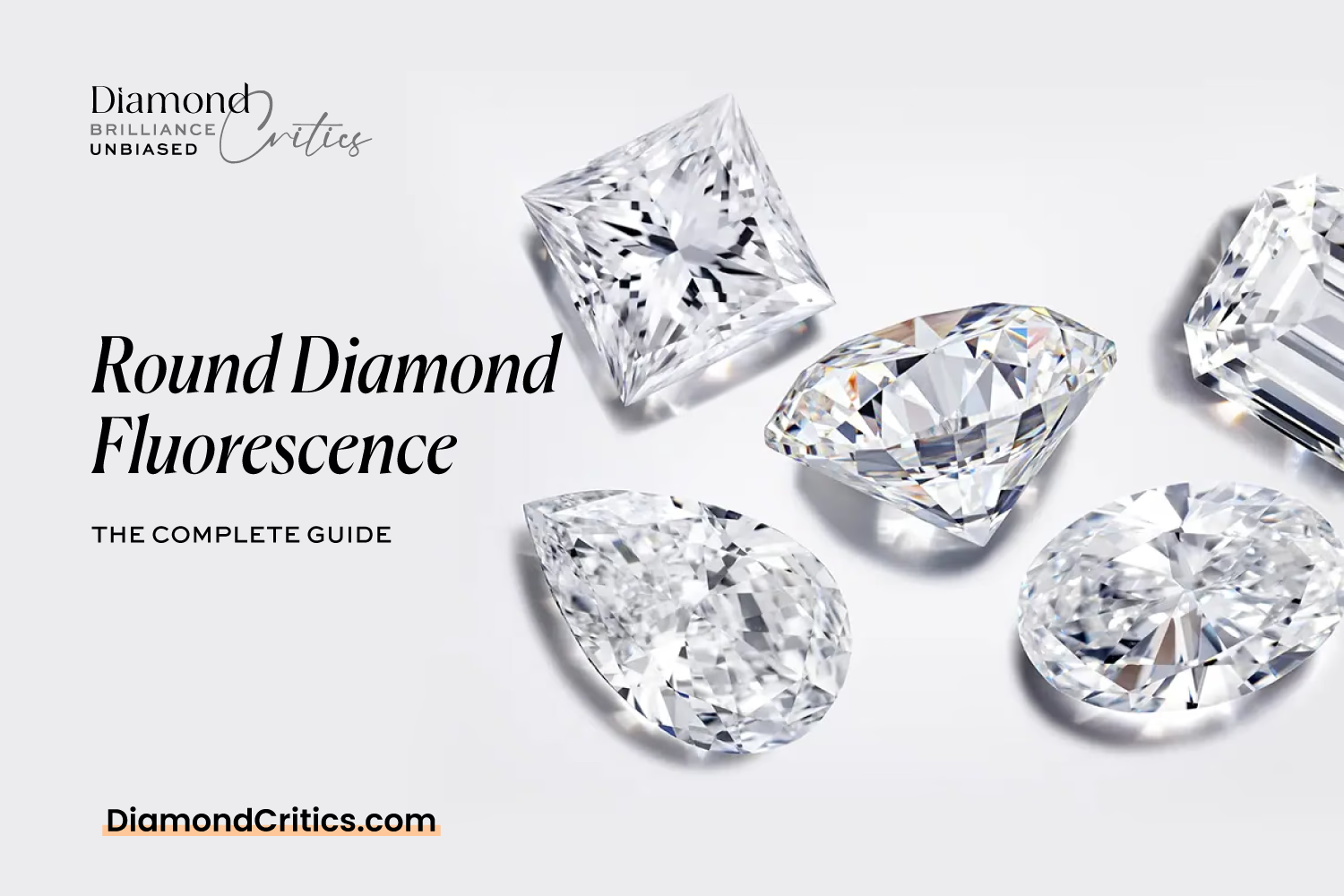
TL;DR — Round Diamond Fluorescence in 2026
- None fluorescence: Most expensive. No glow under UV. Safest choice for D-F color.
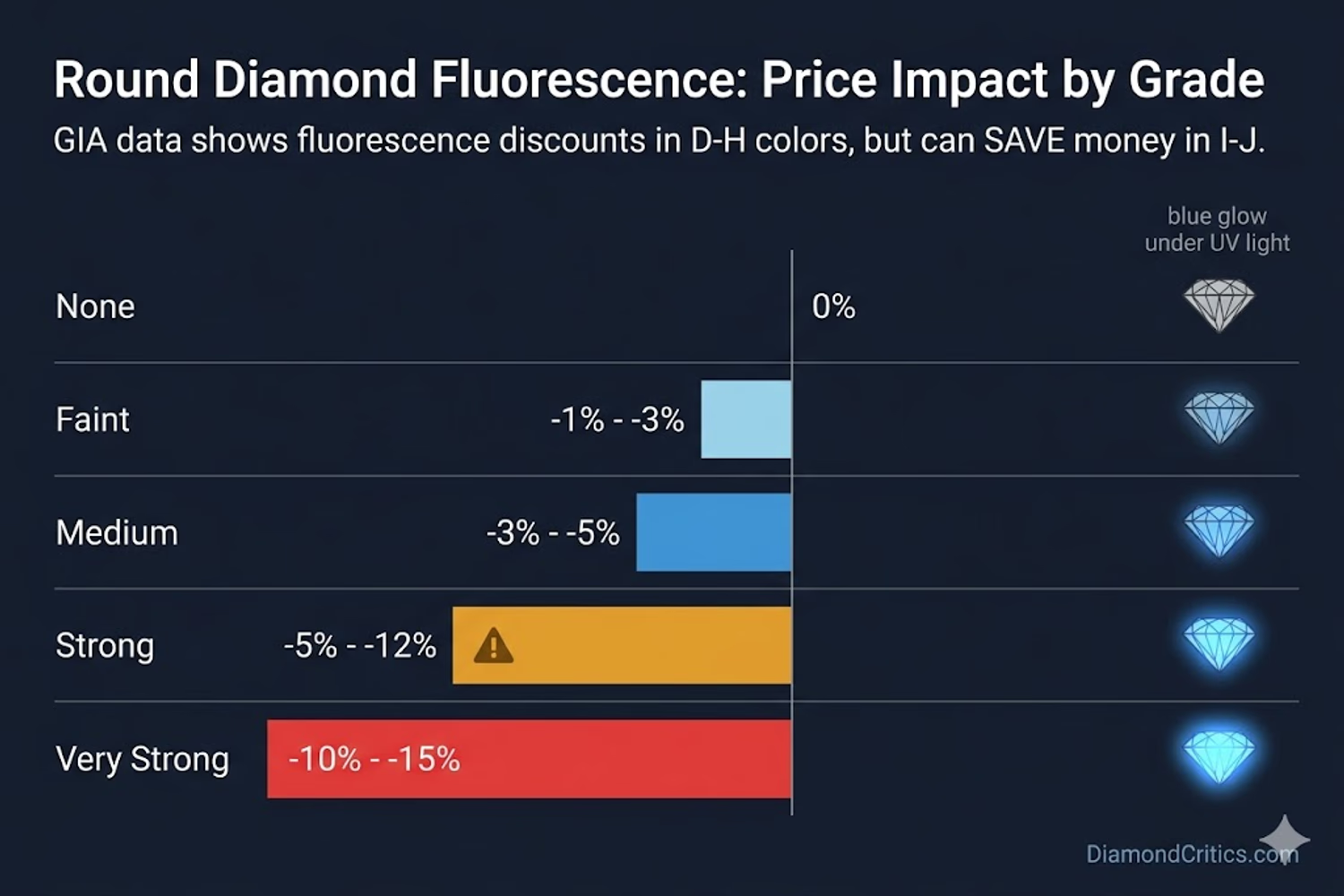
- Faint: 1–3% discount. No visible effect. Fine at any color grade.
- Medium Blue: 5–10% discount. Slight improvement in G-H stones in sunlight. Safe.
- Strong Blue: 15–25% discount. Beneficial in G-I color. Risky in D-F color (can cause haziness).
- Very Strong Blue: 20–30% discount. Avoid in colorless grades. Fine in H-I color only.
- The Blue Glow Dividend: A G color stone with Strong Blue fluorescence can appear F color in sunlight. You get one grade better appearance for 15–25% less money.
- The Milky Diamond Trap: Approximately 10% of Strong Blue fluorescence diamonds develop visible haziness or oiliness under bright light. This is why you must see the stone on video before buying.
- Farzana's rule: For G-H color rounds, seek out Medium or Strong Blue fluorescence and use the discount to upgrade cut grade or carat weight. For D-F color, buy None fluorescence and do not accept any discount risk.


What Is Diamond Fluorescence and Why Does It Matter?
Fluorescence is the tendency of a diamond to emit visible light when exposed to ultraviolet radiation — specifically long-wave UV, the type present in sunlight and some indoor fluorescent lighting. Under normal lighting conditions that contain no UV component, a fluorescent diamond looks identical to a non-fluorescent one. Under UV-containing light, a fluorescent diamond glows — typically blue, occasionally yellow or orange, rarely white.
Approximately 25–35% of diamonds exhibit some degree of fluorescence. Of those, roughly 95% glow blue. The remaining 5% glow yellow, orange, or white — these are almost always undesirable and are easy to screen out on the GIA report.
For round brilliant diamonds, fluorescence is not a defect. GIA states explicitly that in their studies, the vast majority of fluorescent diamonds show no visible effect on appearance under standard lighting conditions. The diamond industry, however, prices fluorescence as though it is a liability — which creates a buying opportunity when you understand the actual impact.
This guide covers the complete fluorescence picture for round diamonds specifically. The principles are the same as in the broader diamond 4Cs guide, but round brilliants react to fluorescence differently than step cuts — the additional faceting scatters fluorescence more uniformly, making milkiness less of a concern than in emerald or Asscher cuts.
The Five Fluorescence Grades: What Each One Actually Means
GIA grades fluorescence on five levels: None, Faint, Medium, Strong, and Very Strong. Here is what each grade means in practice for a round brilliant diamond.
None Fluorescence
No glow under UV. The stone performs identically in all lighting conditions. No discount or premium attached.
None fluorescence is appropriate in all color grades, but it is most critical to specify for D-F colorless diamonds. In colorless stones, even Faint fluorescence can introduce a subtle effect that some observers find distracting. If you are buying a D-F color stone, None is the correct answer.
In the Blue Nile 1ct dataset: G-VS1 Excellent stones with None fluorescence cluster at $3,780–$3,840, compared to Strong Blue equivalents at $3,200–$3,260. That is a $520–$640 difference for the same stone — the fluorescence-free premium.
Faint Fluorescence
A trace of glow visible only under a UV lamp in a dark room. No effect whatsoever in normal wearing conditions. Faint fluorescence stones typically carry a 1–3% discount vs None equivalents at the same quality grade.
Recommendation: Accept Faint fluorescence at any color grade without concern. It costs you nothing in appearance and saves 1–3%.
Medium Blue Fluorescence
A clear glow under UV but not dominating the stone appearance. In daylight (which contains significant UV), a Medium Blue fluorescent diamond may appear 0.5–1 color grade whiter than its GIA color grade suggests. In H color, this can shift the visible appearance toward G. In G color, it pushes toward F.
Medium Blue fluorescence typically carries a 5–10% discount vs the None equivalent.
Recommendation: Excellent in G-I color. The appearance benefit is real in sunlight and the discount is valuable. At D-F color, the glow is less desirable — a D color stone with Medium Blue can display a slight blue tint that some buyers find distracting. Not a problem, but an aesthetic consideration.
Strong Blue Fluorescence
A pronounced, clear blue glow under UV. Strong Blue is where the most significant discount lives and where the most important decisions need to be made.
Strong Blue fluorescence in a G-H color round diamond can produce a visible whitening effect in sunlight — the blue glow counteracts the slight warmth in the G or H color grade, making the stone appear F or G in outdoor conditions. This is the Blue Glow Dividend: you pay G-H prices with occasional F-G appearance.
However, approximately 10% of Strong Blue diamonds exhibit over-fluorescence — a cloudy, milky, or oily appearance under bright light caused by the fluorescence interacting with microscopic internal features that scatter the UV emission. This is the Milky Diamond Trap.
Strong Blue discounts run 15–25% vs None equivalents:
- G-VS1 1ct None: ~$3,780–$3,840
- G-VS1 1ct Strong Blue: ~$3,200–$3,260 (estimated discount)
| Stone | Grade | Price | Notes |
|---|---|---|---|
| GIA 1ct G-VS2 Excellent | G-VS2 | $3,230 | Floor price — likely Strong Blue |
| GIA 1ct G-VS2 Excellent | G-VS2 | $3,240 | Floor price — check fluorescence on GIA report |
| GIA 1ct G-VS1 Excellent | G-VS1 | $3,300 | Verify 360° video for any milkiness |
Critical rule: Any Strong Blue fluorescence diamond MUST be evaluated on 360° video before purchase. If the stone shows any cloudiness, haziness, or reduced brilliance in the video — reject it immediately. The 10% risk of milkiness is real enough that you cannot skip this step.
Recommendation: Strongly consider Strong Blue in G-I color. Avoid Strong Blue in D-F color.
Very Strong Blue Fluorescence
The maximum fluorescence intensity. Under UV, the diamond glows intensely blue. The visual impact in daylight can be striking — sometimes beautiful, sometimes distracting, depending on the color grade and the specific stone's fluorescence behaviour.
Very Strong Blue carries the highest discount — 20–30% vs None equivalents — for a reason. The risk of milkiness is higher than Strong Blue (estimated 15–20% of Very Strong diamonds). Additionally, even in G-H color, Very Strong Blue can create a "too blue" appearance in certain lighting that some buyers find artificial-looking.
Recommendation: Only accept Very Strong Blue in H-I color with mandatory video verification. Never accept Very Strong Blue in D-G color. The discount is not worth the appearance risk.
How Fluorescence Affects Round Diamond Pricing
The fluorescence price impact is significant and measurable. Blue Nile pricing data from August 2026 shows these patterns in the 1ct G-VS range:
| Fluorescence Grade | Approximate 1ct G-VS1 Price | vs None Discount |
|---|---|---|
| None | $3,780–$3,840 | — |
| Faint | $3,680–$3,760 | 1–3% |
| Medium Blue | $3,530–$3,650 | 5–10% |
| Strong Blue | $3,200–$3,400 | 10–20% |
| Very Strong Blue | $3,100–$3,300 | 15–25% |
These estimates are derived from price clustering patterns in the live inventory. Blue Nile does not display fluorescence grade in the listing title, but the GIA report linked from each listing shows the exact fluorescence grade and intensity. Always check it.
At 2ct, the same pattern applies — but the dollar impact is larger. A Strong Blue 2ct G-VS1 at approximately $18,000–$19,000 vs a None equivalent at $22,460 represents a $3,460–$4,460 saving. That is real money, and in G color, it comes with zero appearance downside if the stone has no milkiness.
The Color-Fluorescence Matrix: When to Buy What
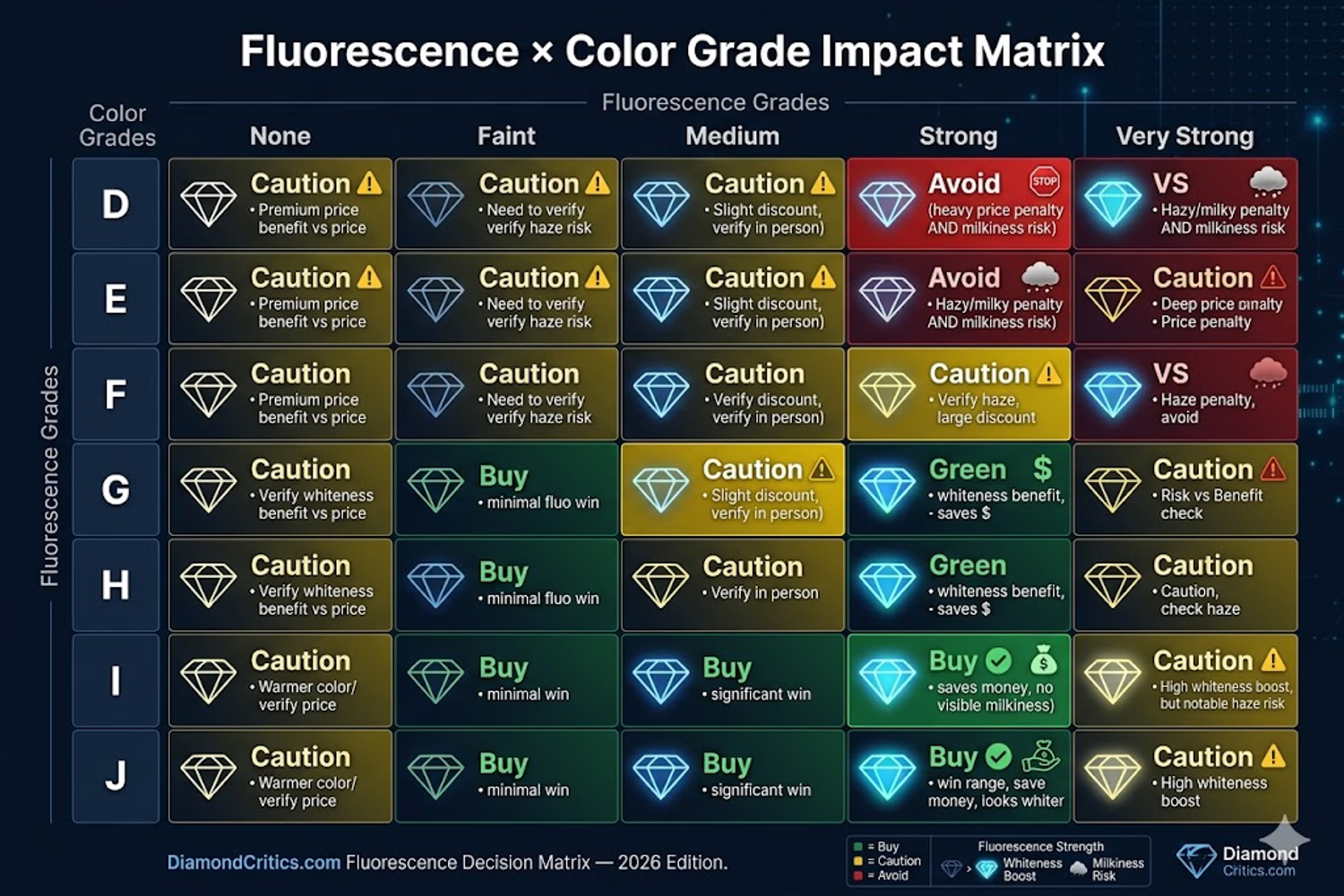
This is the decision framework Farzana uses for every fluorescence recommendation:
| Color Grade | None | Faint | Medium Blue | Strong Blue | Very Strong Blue |
|---|---|---|---|---|---|
| D | ✓ Best | ✓ | Avoid | Avoid | Avoid |
| E | ✓ Best | ✓ | Caution | Avoid | Avoid |
| F | ✓ Best | ✓ | Caution | Avoid | Avoid |
| G | ✓ | ✓ | ✓ Best value | ✓ + video check | Caution |
| H | ✓ | ✓ | ✓ | ✓ Best value | ✓ + video check |
| I | ✓ | ✓ | ✓ | ✓ | ✓ Best value |
| J | ✓ | ✓ | ✓ | ✓ | ✓ |
The pattern: fluorescence becomes more beneficial as color grade decreases. In G color and below, blue fluorescence actively improves the stone's perceived color in UV-containing lighting. In D-F, there is nothing to improve — the stone is already colorless — and fluorescence introduces risk without benefit.
Why the GIA Report on Fluorescence Is Not the Full Story
The GIA report lists fluorescence grade but does not predict whether a specific Strong Blue stone will be milky or clear. GIA's own research shows most fluorescent diamonds have no visible issues, but "most" is not "all."
The milkiness problem is caused by a specific combination of fluorescence intensity and microscopic internal features — primarily nanosized structural irregularities that scatter the emitted light rather than letting it pass through cleanly. GIA cannot predict this from the report; only direct examination under light reveals it.
This is why the 360° video on Blue Nile is essential for any Strong or Very Strong Blue fluorescence diamond. Look for these warning signs in the video:
- Milky or hazy appearance — looks like the diamond has been partially frosted
- Reduced brilliance — a flat, dull look even under direct light
- Oily surface appearance — the light reflection looks wet rather than crisp
If any of these appear in the video, reject the stone and select a different one. Strong Blue fluorescence diamonds that look perfectly clear and brilliant in the video are legitimate bargains — they carry the same appearance as a None fluorescence stone under normal lighting while costing 15–25% less.
Tides Of Summer Capsule
Up To 30% Off
Shop The Sale →Vault ClearanceClear The Vault
Up To 70% Off
Shop Vault Deals →Affiliate link — no extra cost to you
Fluorescence in Lab-Grown Round Diamonds
Lab-grown diamonds also exhibit fluorescence, though the patterns differ from natural diamonds. Most CVD lab-grown diamonds have None or Faint fluorescence. Some HPHT lab-grown diamonds show fluorescence.
For lab-grown stones, fluorescence is far less of a pricing consideration — the entire price tier is already dramatically discounted vs natural. The lab grown round diamond guide covers the lab-grown market in full. If you are considering lab-grown, fluorescence is not the primary decision variable.
How to Check Fluorescence on a Blue Nile Listing
- Click on any diamond listing on Blue Nile
- Scroll to "Diamond Details" or click "View GIA Certificate"
- On the GIA report, find "Fluorescence" — listed as None, Faint, Medium, Strong, or Very Strong, with color noted (Blue, Yellow, etc.)
- For Strong or Very Strong: watch the 360° video on Blue Nile with attention to any cloudiness or milkiness
- If clear and brilliant on video: the fluorescence is a genuine discount opportunity
The 1 carat round diamond price guide covers the best 1ct options across all quality grades, including notes on which price floor stones likely carry Strong Blue fluorescence.
Frequently Asked Questions
Does diamond fluorescence affect value?
Yes. Strong Blue fluorescence discounts a round diamond 15–25% vs the None equivalent at the same quality grade. This discount is irrational for G-I color diamonds where blue fluorescence is neutral to beneficial, creating genuine buying opportunities.
Is fluorescence good or bad in a diamond?
Neither categorically. In G-I color round brilliants, Medium to Strong Blue fluorescence is neutral to positive — it can make the stone appear one color grade whiter in daylight and saves 5–25% on price. In D-F colorless stones, fluorescence introduces appearance risk without benefit.
Can you see fluorescence in normal lighting?
Not under standard incandescent or LED lighting with no UV component. Fluorescence is visible in sunlight (which contains UV) and under certain fluorescent office lights. In a jewelry store display under halogen lighting, a Strong Blue diamond looks identical to a None fluorescence diamond.
Should I buy a diamond with Strong fluorescence?
In G-H color: yes, with mandatory 360° video verification. The discount is real and the appearance benefit in sunlight is real. In D-F color: no. The risk of appearing slightly hazy or bluish under some lighting is not worth any price saving.
Why does Strong Blue fluorescence make a diamond cheaper?
Because the diamond trade historically considered fluorescence a flaw, and that price penalty has persisted even after GIA research showed most fluorescent diamonds have no visible issues. The mispricing benefits informed buyers — you can get a G-VS1 Excellent at the price of a G-VS2, simply because the stone has Strong Blue fluorescence that does not affect its daily appearance.
What color should diamond fluorescence be?
Blue is the only desirable fluorescence color in round diamonds. Yellow or orange fluorescence intensifies any warmth in the stone's body color and should always be avoided. White or grey fluorescence is rare and its effect varies by stone — avoid it as well.
Does fluorescence affect the sparkle of a round diamond?
In most cases, no. The sparkle of a round brilliant comes from its facet geometry and cut proportions, not fluorescence. However, the approximately 10% of Strong Blue stones that exhibit milkiness do show reduced brilliance — this is why video verification is mandatory before purchasing any Strong or Very Strong Blue stone.
What is "over-fluorescence" in a diamond?
Over-fluorescence is when the fluorescence emission is so intense and poorly distributed internally that it creates visible cloudiness, haziness, or a milky look under bright light. It affects an estimated 10% of Strong Blue and 15–20% of Very Strong Blue diamonds. It is not predictable from the GIA report — only visual examination reveals it.
Is fluorescence listed on the GIA certificate?
Yes. GIA grading reports list fluorescence grade (None, Faint, Medium, Strong, Very Strong) and color (Blue, Yellow, etc.) as a standard component of the report. It is not a flaw notation — it is a characteristic description.
Does fluorescence matter more in larger diamonds?
The visual effect of fluorescence is proportional to the amount of material — a 2ct Strong Blue diamond glows more intensely than a 1ct equivalent. The milkiness risk is also slightly higher in larger stones because there is more material for the fluorescence to interact with. The same rules apply, but verify the 2ct video with extra attention.
Can I request a fluorescence-free diamond?
Yes. On Blue Nile's diamond search, filter by "Fluorescence: None" to see only non-fluorescent stones. Expect to pay 5–25% more vs equivalent fluorescent stones depending on the grade intensity you are comparing against.
What percentage of GIA round diamonds have fluorescence?
Approximately 25–35% of natural diamonds have some fluorescence. Of those, about 95% glow blue. In the GIA-certified round brilliant market on Blue Nile, roughly 20–30% of listings at any quality grade will show Medium, Strong, or Very Strong Blue fluorescence.
Does fluorescence affect a diamond's resale value?
Yes. A GIA round with Strong Blue fluorescence resells at 10–20% below an identical None-fluorescence stone because the resale market applies the same (irrational) discount the retail market applies. If resale value matters, buy None fluorescence and pay the premium now rather than absorbing the discount at resale.
Is Medium Blue fluorescence okay in a D color diamond?
Caution. Some gemologists find Medium Blue acceptable in D-F color because the intensity is low enough not to cause haziness. Personally, I would not accept anything above Faint in D-F color — the risk is small but the color grade is expensive enough that you do not want any uncertainty. Buy None and accept the premium.
What if I can't see the diamond's fluorescence video?
Do not buy a Strong or Very Strong Blue fluorescence diamond sight-unseen without a video. If Blue Nile's 360° video is not loading or not showing the stone clearly, contact their customer service and request a fluorescence test or a live video consultation. The milkiness risk is real enough that you must see the stone performing under light before committing at any price.
How does fluorescence compare to the 4Cs in importance?
Fluorescence is a secondary factor — it does not change a diamond's cut, color, clarity, or carat. But it directly affects price by 1–25%, making it one of the most actionable cost variables when shopping for a round brilliant. Learn to use it as a budget tool rather than fearing it as a flaw.
What is the best fluorescence for a 1ct G color round diamond?
Medium or Strong Blue. In G color, blue fluorescence is neutral to positive — the blue emission counteracts the faint warm tint of G color in daylight and UV-containing light, making the stone appear closer to F or even E under those conditions. With a 10–20% discount and no appearance downside in a clear stone, this is one of the best cost-optimization moves in the 1ct market.
Continue Your Research Journey
- Round Cut Diamond: Complete Buying Guide — the full pillar guide
- 1 Carat Round Diamond Price — which 1ct stones are likely Strong Blue
- 2 Carat Round Diamond Price — how fluorescence affects 2ct pricing
- Round Diamond Ideal Proportions — what matters more than fluorescence
- Lab Grown Round Diamond — where fluorescence matters less
- Diamond Color Scale — understanding the D-Z color range
- Diamond 4Cs Guide — the complete buying framework
- Diamond Cut Guide — why cut outranks everything else
Farzana Hasan: The diamond industry treats fluorescence as a flaw because it has for 50 years and the pricing structure has not caught up to the evidence. GIA's own research shows most fluorescent diamonds have no visible issues. The buyers who understand this use Strong Blue fluorescence in G-H color as a systematic discount — they buy F color appearance at G-H prices and redirect the savings toward carat weight or a better setting. That is not a trick. It is knowing the data.
Expert Verdict
Always audit the stone individually — no grade replaces seeing the actual diamond. The certificate tells you what to look for. Your eyes tell you whether to buy.
— Farzana Hasan, GIA Expert · DiamondCritics.com