Round Diamond Right Hand Ring: The RHR Rule
TL;DR: The RHR Rule
- The RHR Rule: right-hand rings are self-purchase jewelry, not bridal jewelry, and follow three rules — never match the engagement ring design, go smaller on the center stone, and switch metals to create contrast with the left hand
- RHR center stones typically run 0.25–0.75ct; anything over 1ct looks bridal and competes with the engagement ring unless deliberately worn as a fashion statement
- Blue Nile's ready-made right-hand options start at $825 (Floating Diamond Ring in 14k Yellow Gold, 1/3 ct. tw.); a custom loose stone with a simple pavé band starts around $2,800 total
- Pavé bands, bezel solitaires, and three-stone designs are the three most popular RHR settings; cathedral solitaires are less common on the right hand because snag risk doubles when worn daily without a companion band
- Stack compatibility tip: if the left hand already has white gold or platinum, yellow gold or rose gold on the right creates visual contrast rather than competition


What Is a Right-Hand Ring?
A right-hand ring is any ring worn on the right hand as a self-purchase, anniversary gift, or symbolic milestone marker — entirely separate from the engagement and wedding ring tradition. The category has no strict rules beyond one: it is not bridal jewelry. Some women wear right-hand rings to mark a promotion, a divorce milestone, a decade birthday, or simply because they want more sparkle.
The concept became mainstream in the early 2000s when diamond industry marketing promoted the RHR as a symbol of independence. The design language evolved quickly: right-hand rings leaned fashion-forward rather than classic, featuring bold settings, colored diamonds, and yellow gold at a time when white metal dominated engagement rings.
Today the category is entirely buyer-driven. There is no symbolism to honor, no tradition to match, and no rule about stone size. The only aesthetic rule is The RHR Rule, which this post covers in the next section.
The RHR Rule: Stone Size and Styling
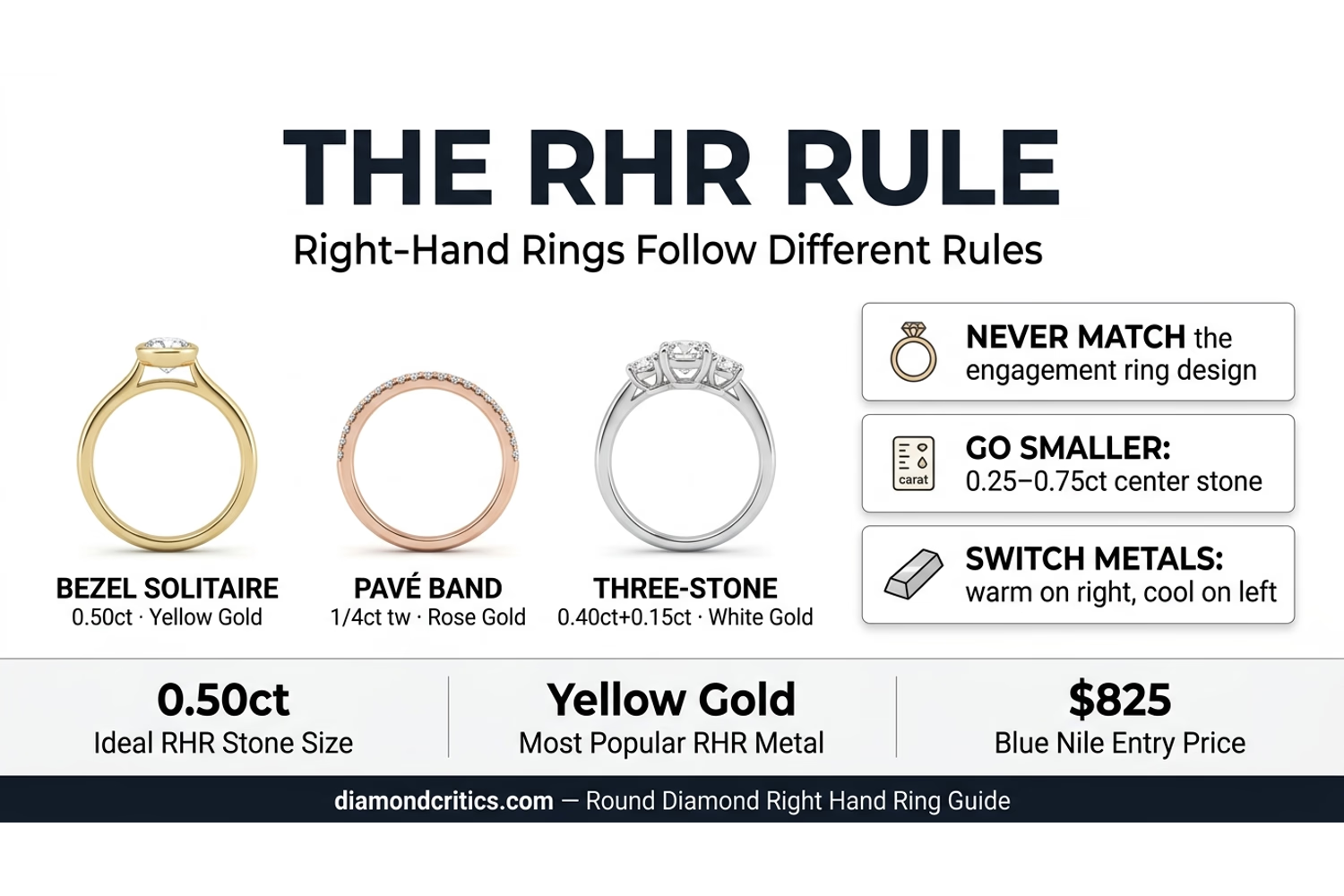
The RHR Rule has three parts. First: never match. Wearing an identical round solitaire on the right hand as the engagement ring on the left reads as a spare engagement ring, not a fashion statement. The right hand should announce itself as intentionally different — a different setting style, a different stone arrangement, or a meaningfully different silhouette.
Second: go smaller. A 0.50ct center stone on the right hand next to a 1ct on the left creates visual balance. Wearing a 1ct on both hands makes the right-hand ring look like the engagement ring's displaced twin. The exception is someone who wears no rings on the left hand — then size is unconstrained.
Third: switch metals. If the left hand has platinum or white gold, wearing yellow gold or rose gold on the right provides immediate visual separation. The metal contrast reads as intentional and sophisticated. Matching metals makes both rings look like they belong to the same set, which dulls the individuality of the RHR.
Best Settings for Right-Hand Rings
Bezel solitaire is the top right-hand ring setting. The bezel wraps the stone in metal flush to the surface, creating zero snag points and a modern, sculptural profile. A 0.50ct in a yellow gold bezel looks intentional and architectural. It also protects the stone better than prong settings for hands that work keyboards, handles, or instruments daily.
Pavé band works brilliantly as an RHR because it requires no center stone decision. A full pavé eternity band of small round brilliants has continuous sparkle, low profile, and stacks cleanly with other rings. The Riviera Pavé Diamond Ring in 14k White Gold (1/4 ct. tw.) at $1,100 is the most versatile entry point on Blue Nile.
Three-stone with a round center flanked by two rounds or two baguettes works as an RHR because the symbolism (past, present, future) stands alone without engagement context. Keep the center stone at 0.40–0.60ct and the side stones proportionally smaller. Avoid the three-stone if the engagement ring already uses side stones — the look doubles rather than contrasts.
Channel-set band creates clean linear sparkle without any stone exposure. It is the most office-appropriate RHR because it profiles almost like a plain band. Settings to avoid on the right hand: cathedral solitaires (snag risk multiplied by daily solo wear), tall prong solitaires (same reason), and designs that closely replicate the engagement ring style.
Metal and Stack Compatibility
Yellow gold is the most popular metal for right-hand rings precisely because it contrasts with the platinum and white gold that dominate engagement rings. Warm metal tones on the right hand and cool tones on the left reads as intentional and edited. The Floating Diamond Wedding Ring in 14k Yellow Gold (1/3 ct. tw.) at $825 is the most affordable entry point at Blue Nile and leverages this contrast effectively.
Rose gold is the second most popular choice. It has a softer, more feminine profile than yellow gold but still provides warm-vs-cool contrast with white metal on the left. Rose gold also photographs especially well under natural light, making it popular in social media contexts.
White gold is a valid choice if the intention is to stack with other right-hand rings in white metal. However, worn alone on the right hand against a white-gold engagement ring on the left, it looks like a matching set rather than an independent statement. Platinum is rarely used for right-hand rings — it is heavier and more expensive than necessary for fashion jewelry, though the Riviera Pavé Diamond Ring in Platinum (1/4 ct. tw.) at $1,420 is the best durability option for someone hard on jewelry.
Tides Of Summer Capsule
Up To 30% Off
Shop The Sale →Vault ClearanceClear The Vault
Up To 70% Off
Shop Vault Deals →Affiliate link — no extra cost to you
Right-Hand Ring Budget Guide
| Budget | What You Get | Blue Nile Pick |
|---|---|---|
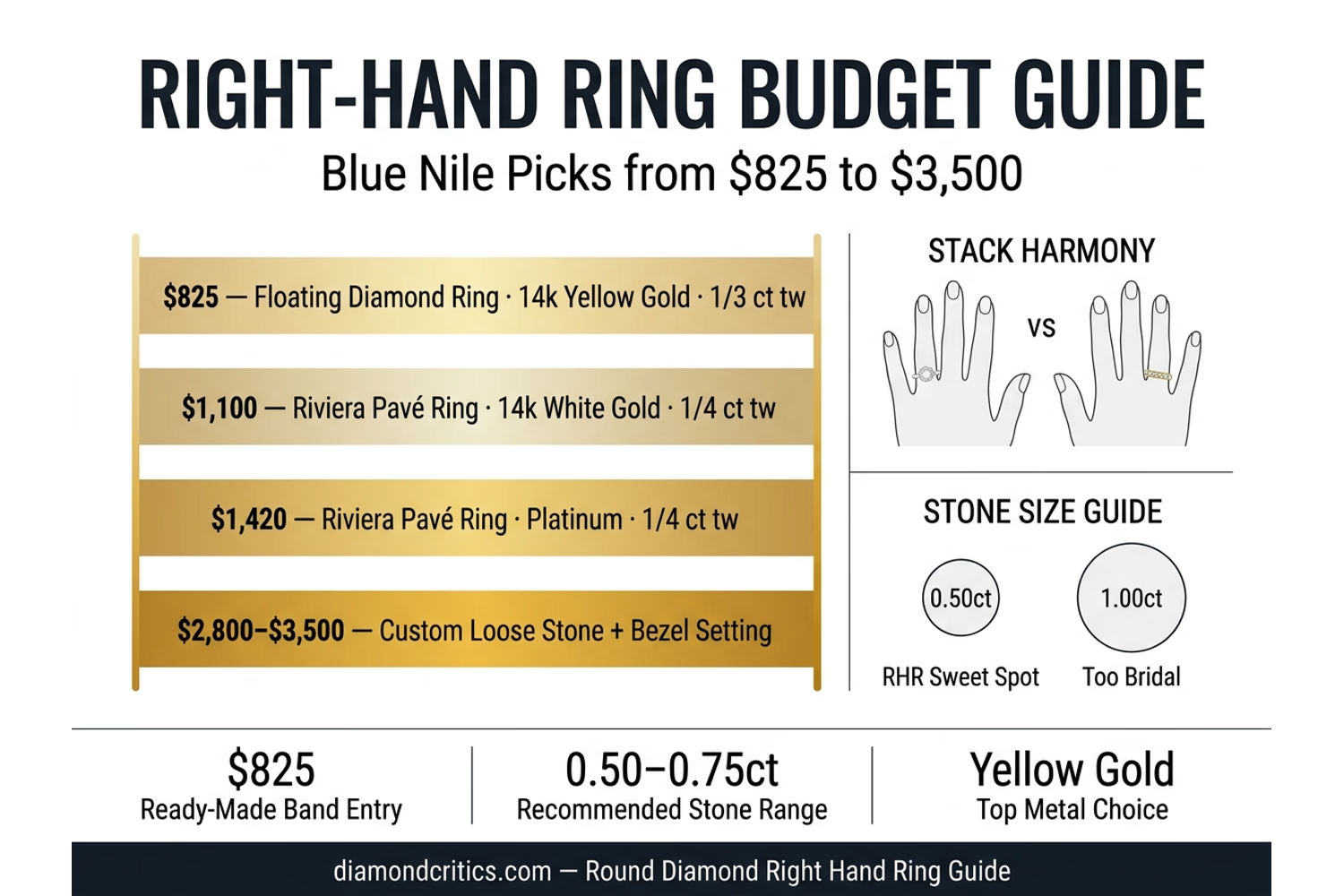
| $800–$1,000 | Ready-made pavé or floating diamond band, 1/3 ct tw, yellow or white gold | Floating Diamond Ring in 14k Yellow Gold — $825 |
| $1,000–$1,200 | Riviera pavé in white gold 1/4 ct, or floating lab-grown 1/2 ct | Riviera Pavé 14k White Gold 1/4 ct — $1,100 |
| $1,200–$1,500 | Riviera pavé in platinum 1/6–1/4 ct | Riviera Pavé Platinum 1/4 ct — $1,420 |
| $2,500–$3,500 | Loose 0.90ct GIA G-VS1 + bezel or pavé band setting | GIA 0.90ct G-VS1 Excellent — $2,487 + setting |
| $3,000–$4,500 | Loose 1ct GIA G-VS2 Excellent + bezel setting | GIA 1ct G-VS2 Excellent — $3,230 + setting |
The ready-made band options are the simplest path. Blue Nile's pavé bands require no loose stone selection and arrive in 7–10 business days. For a custom loose stone approach, choose the diamond first from Blue Nile's diamond search, then select a compatible setting.
A GIA 0.90 Carat G-VS1 Excellent Cut Round Diamond at $2,487 is the optimal entry point for a custom RHR — the 0.90ct size sits below the 1ct psychological threshold, measures 6.1–6.2mm face-up (only 0.2–0.3mm smaller than 1ct), and saves $743 vs the cheapest 1ct equivalent.
Blue Nile Right-Hand Ring Picks
Under $1,000: Floating Diamond Wedding Ring in 14k Yellow Gold (1/3 ct. tw.) — $825 Three round brilliant diamonds appear to float in a polished yellow gold band. Minimal profile, maximum contrast with white-metal left hand. Best RHR under $1,000.
$1,000–$1,200: Riviera Pavé Diamond Ring in 14k White Gold (1/6 ct. tw.) — $980 Continuous pavé diamonds around a slender white gold shank. Stacks beautifully with other rings. Classic and timeless profile.
Riviera Pavé Diamond Ring in 14k White Gold (1/4 ct. tw.) — $1,100 More sparkle than the 1/6 ct version at $120 more. The jump in diamond coverage is visible.
$1,200–$1,500: Riviera Pavé Diamond Ring in Platinum (1/4 ct. tw.) — $1,420 Same pavé design in platinum for maximum durability. Best choice for someone hard on rings.
Custom loose stone approach: GIA 0.90 Carat G-VS1 Excellent Cut Round Diamond — $2,487 The ideal sub-1ct RHR stone. Pair with a low-profile bezel or pavé-set solitaire ring from Blue Nile's setting catalog. Total budget: approximately $2,800–$3,200.
Right-Hand Ring vs Engagement Ring
| Feature | Engagement Ring | Right-Hand Ring |
|---|---|---|
| Symbolism | Betrothal, partnership | Self-purchase, independence, milestone |
| Stone size | 0.75ct–2ct typical | 0.25ct–0.75ct typical |
| Metal | Platinum, white gold dominant | Yellow gold, rose gold popular |
| Setting | Prong solitaire, halo most common | Bezel, pavé band, three-stone |
| Budget | $3,000–$10,000 average | $800–$4,000 average |
| Profile | Higher (cathedral, halo) | Lower (bezel, channel) |
| Daily wear | Often removed for activities | Designed for daily wear |
The clearest practical difference is profile height. Engagement rings are designed to show the stone prominently; right-hand rings are often lower-profile to avoid doubling the snag risk on a hand already wearing an engagement ring.
Frequently Asked Questions
What size diamond should a right-hand ring have?
0.25–0.75ct is the sweet spot for an RHR worn alongside an engagement ring on the left hand. The visual balance of a 0.50ct RHR next to a 1ct engagement ring reads as intentional. Going above 1ct on the right hand looks bridal unless you intentionally wear no engagement ring.
Can I wear a right-hand ring on my left hand?
Yes. The term "right-hand ring" is a marketing convention, not a rule. Many women wear RHR-style rings on their left hand as stacking rings above or below the engagement ring. The only constraint is fit and comfort when stacking.
Is it unusual to buy yourself a right-hand ring?
No. Self-purchase jewelry has been mainstream since the early 2000s. Many jewelers report that 40–50% of right-hand ring purchases are self-gifted by women marking a personal milestone, a significant birthday, or a career achievement.
Do right-hand rings need to match the engagement ring?
No — and matching is actively discouraged by The RHR Rule. The right-hand ring should contrast the engagement ring in at least one dimension: metal color, stone size, or setting style. Matching both rings makes them look like a bridal set worn across both hands.
What settings work best for daily wear on the right hand?
Bezel and pavé bands. Both have zero exposed prong points, low profiles, and no catching on fabrics. Cathedral solitaires and high-prong settings concentrate daily wear damage on the prongs and snag constantly on sleeves and knit fabrics.
Can a right-hand ring double as an anniversary ring?
Yes. Blue Nile markets their pavé bands and floating diamond rings as both anniversary rings and right-hand rings interchangeably. The Riviera Pavé series is explicitly designed to work in both contexts.
See Also
Expert Verdict
Always audit the stone individually — no grade replaces seeing the actual diamond. The certificate tells you what to look for. Your eyes tell you whether to buy.
— Farzana Hasan, GIA Expert · DiamondCritics.com