TL;DR
A square radiant cut diamond is a radiant cut with a length-to-width ratio between 0.95 and 1.05. It has 70 brilliant-cut facets, clipped corners, and the same fire and sparkle as its elongated counterpart — in a compact, symmetrical silhouette.
The core insight: The square radiant sits in the middle of the most important shape decision for square diamond buyers. The Princess Dilemma — do you buy a princess cut (cheaper, sharper corners, higher chip risk) or a square radiant (more expensive, safer corners, more facets)? This post answers that question with data.
The Square Threshold: Any radiant cut with an L/W ratio of 0.95–1.05 is a square radiant. Below 0.95 doesn't exist in practice. Above 1.10, it starts reading as rectangular. The certificate measurement is the only truth — not the listing name.
→ Start here: 1ct natural G-VS2 square radiant at $2,318 + Knife Edge Solitaire White Gold at $925 = $3,243 total ring. Lab-grown: 1ct E-VVS1 at $867 + setting = $1,792 total ring.
Priority: Check the L/W ratio on the GIA certificate. A ratio of 1.15 is rectangular, not square. Target 0.95–1.05. Everything else — clarity, color, setting — comes after that number.
What Is a Square Radiant Cut Diamond?
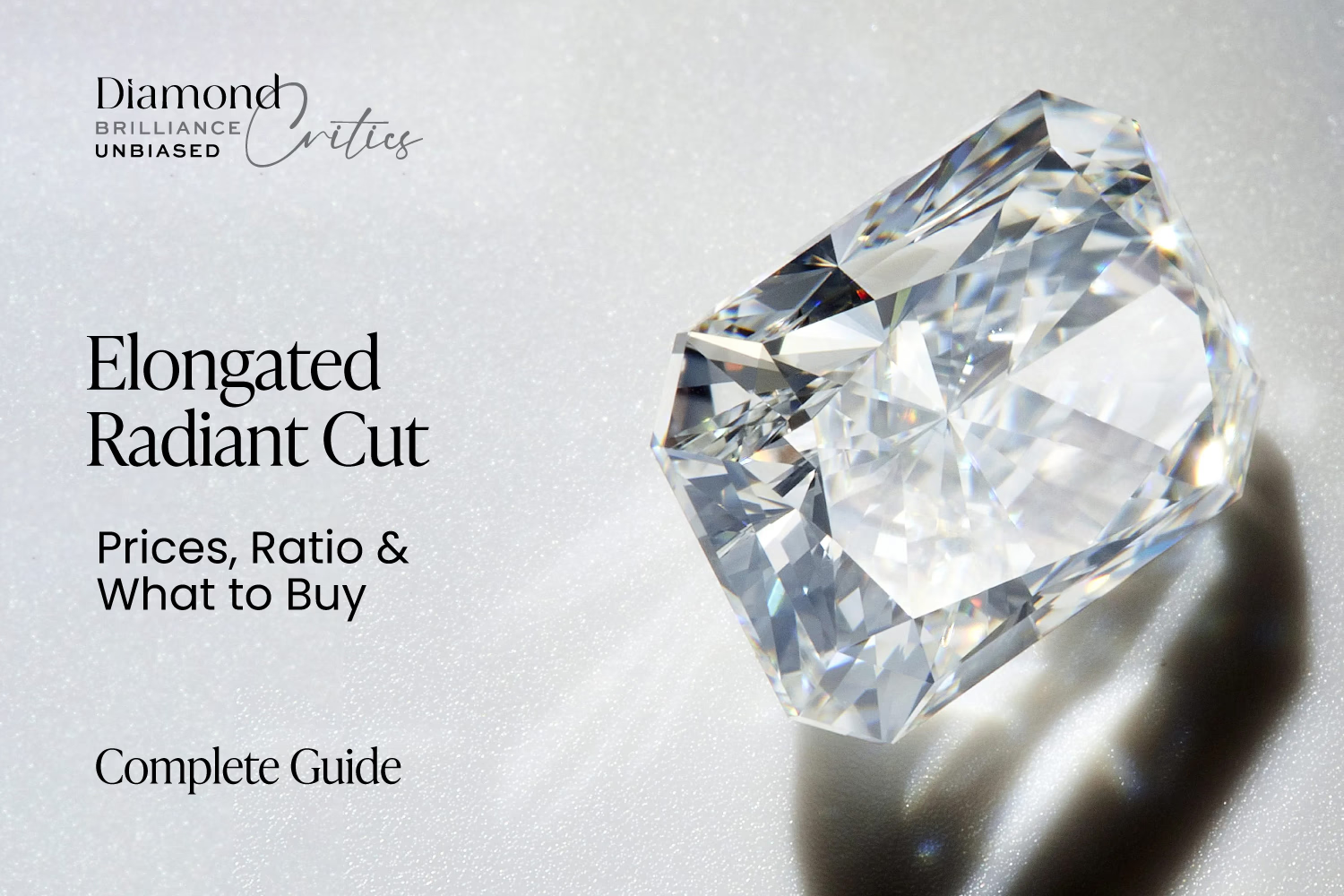
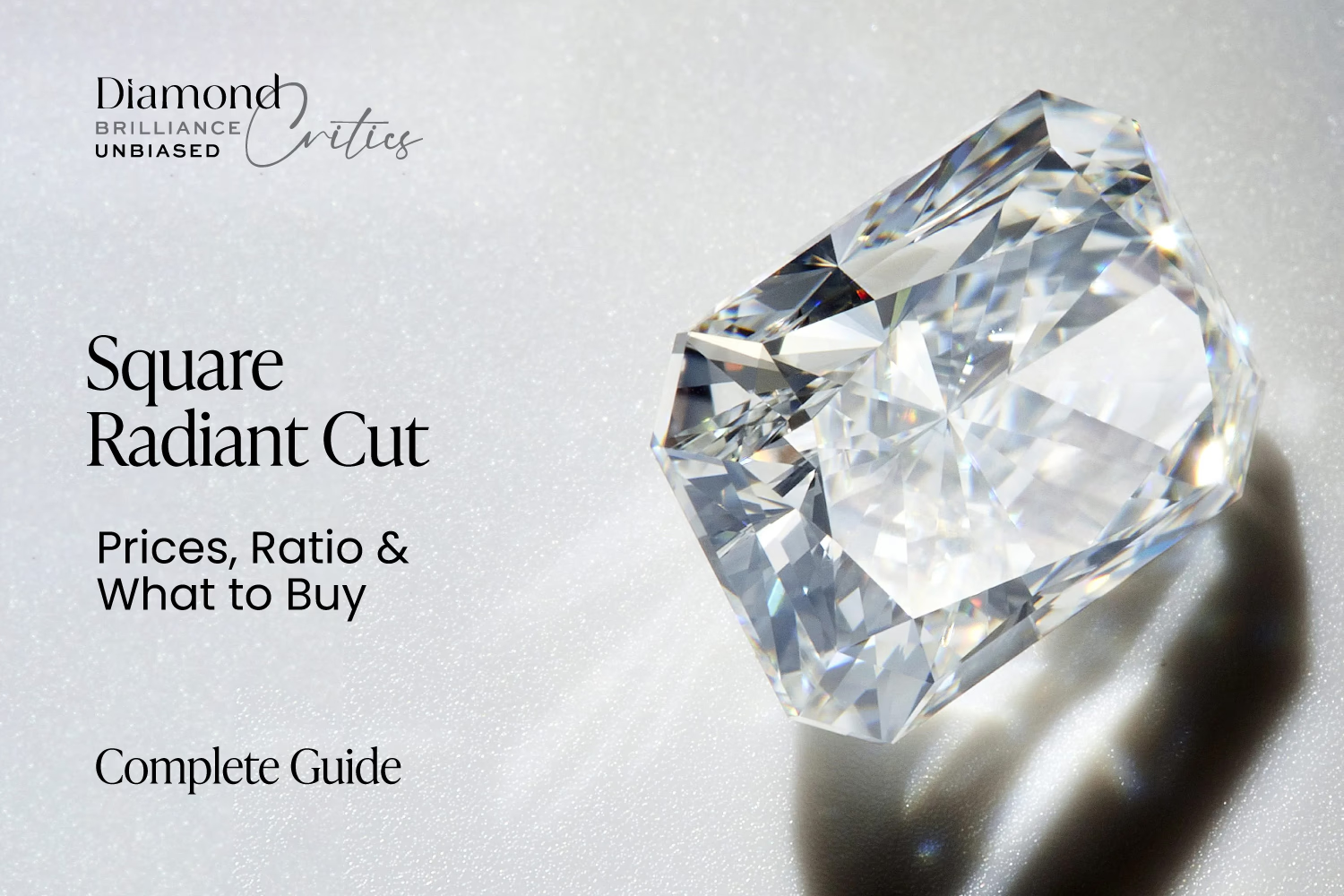
A square radiant cut diamond is a radiant cut with a length-to-width (L/W) ratio between 0.95 and 1.05. It has four sides of roughly equal length, four clipped corners creating an octagonal silhouette, and 70 brilliant-cut facets across the crown and pavilion.
The square radiant is not a separate shape from the radiant cut. It is a radiant cut in its most compact, symmetrical form. The same 70-facet architecture that gives the elongated radiant its fire also gives the square radiant its sparkle — just in a square silhouette rather than a rectangular one.
I'm Farzana Hasan, GIA Expert at Diamond Critics. The square radiant is one of the most misunderstood shapes in the market. Buyers search for it expecting a different shape from princess cut but aren't always sure why they want it. This guide gives you the exact data to make the right call. For the full radiant family overview, see Radiant Cut Diamond: The Complete Buying Guide.


The Square Threshold
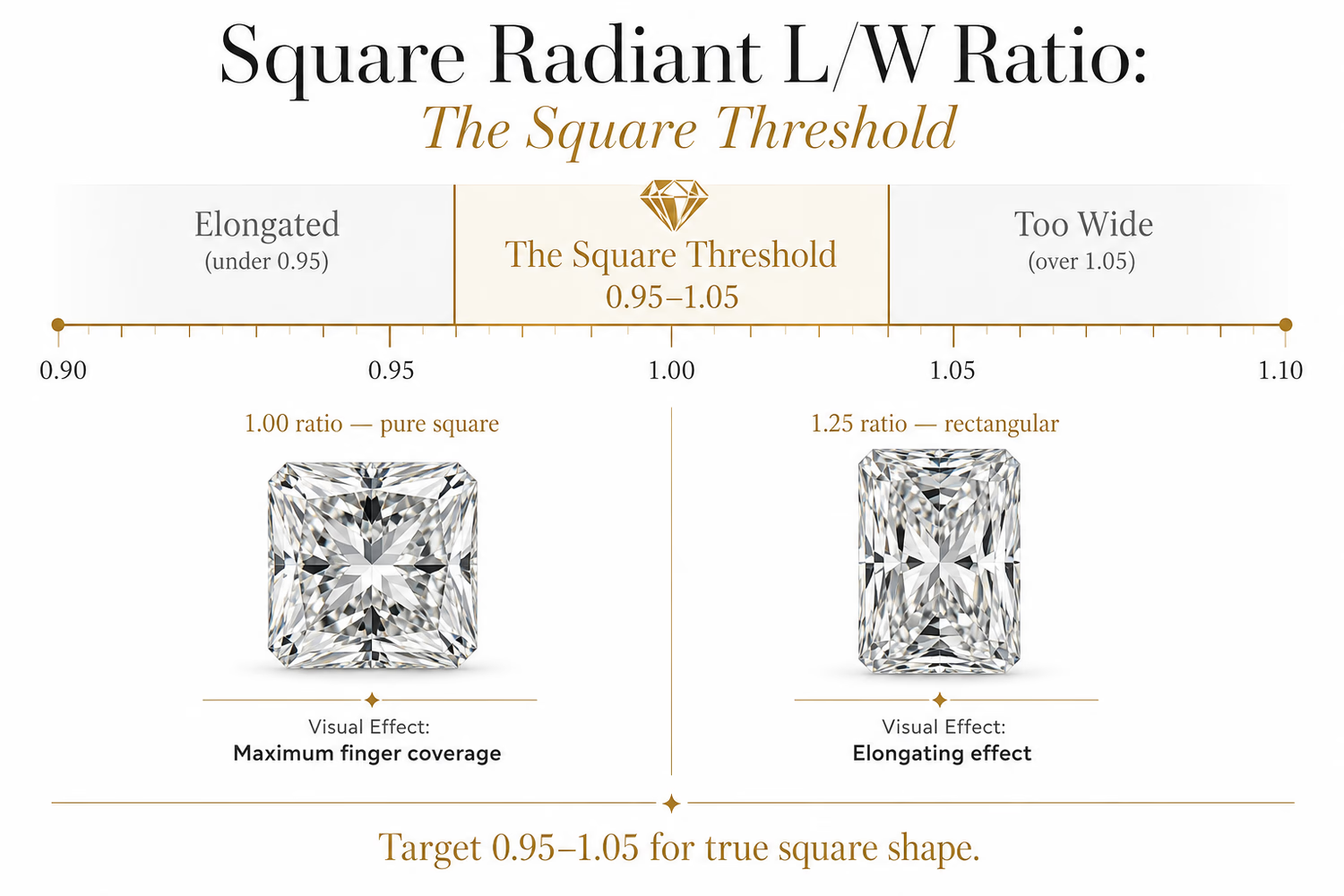
The Square Threshold is the L/W ratio range of 0.95 to 1.05 that defines a true square radiant cut. Outside this window, the stone is either not a radiant cut at all or slides into rectangular territory.
Here is the full ratio map for radiant cuts:
| L/W Ratio | Classification | What You See |
|---|---|---|
| 0.95–1.05 | Square radiant (target zone) | Nearly equal sides — compact and symmetrical |
| 1.06–1.19 | Tweener radiant | Slightly rectangular — neither clearly square nor elongated |
| 1.20–1.35 | Elongated radiant | Visibly longer — finger-flattering rectangular silhouette |
| 1.36–1.45 | Extended elongated | Narrow and long |
| 1.46+ | Too elongated | Can appear thin or fragile |
The sweet spot inside the square zone is 1.00–1.03. At exactly 1.00, the stone is perfectly square. At 1.03, it's still visually square to any eye. Above 1.07, the stone reads as slightly rectangular — not what most square radiant buyers are picturing.
Where to find the ratio: Your GIA certificate lists measurements as "L × W × D" in millimeters. Divide length by width. A stone that measures 6.5mm × 6.2mm has an L/W ratio of 1.05 — still in the square zone. A stone that measures 6.8mm × 5.9mm has an L/W ratio of 1.15 — that is a rectangular radiant, not a square one.
What sellers don't tell you: "Square radiant" is a retailer term, not a GIA category. Any radiant with a ratio under 1.10 might be called square on a product listing. Always divide the certificate measurements yourself. Never rely on the label.
The Princess Dilemma
The Princess Dilemma is the decision every square diamond buyer faces: square radiant or princess cut? Both are square. Both are brilliant-cut. Both are modern and geometric. The differences are structural, not cosmetic.
What princess cuts have over square radiants:
Princess cuts are generally 15–25% cheaper than square radiant cuts at equivalent carat, color, and clarity. If budget is the primary factor, that matters. Princess cuts also have a sharper, more geometric outline because their corners are not clipped.
What square radiants have over princess cuts:
The square radiant has 70 facets versus the princess cut's 50–58. More facets mean more scintillation — more small flashes of light as the ring moves. The square radiant also has clipped corners, which eliminates the single biggest durability concern with princess cuts: corner chipping.
Princess cut corners are sharp 90-degree points. In daily wear, they can chip on surfaces, bag clasps, or during vigorous activity. The square radiant's clipped corners create 45-degree bevels — still geometric, but far more resistant to damage. Replacing a chipped corner on a princess cut is expensive and sometimes impossible without re-cutting the stone.
The honest comparison:
Buy a princess cut if you want the sharpest, most geometric outline available and your budget is the priority. Buy a square radiant if you want more facets, safer corners, and are willing to pay a modest premium for structural superiority.
Neither choice is wrong. This is a genuine trade-off. But most buyers who have owned both choose the square radiant for daily wear.
"I've seen buyers come back after a princess cut chips its corner — sometimes within the first year of wearing. It's not rare. The square radiant's clipped corners solve that problem completely while keeping the same square silhouette. The premium over princess is usually $200–$500 on a 1ct stone. For a ring you'll wear every day for decades, that is the right trade." — Farzana Hasan, Diamond Critics
Master Comparison: Square Radiant vs All Square Diamond Shapes
The most requested table in square diamond buying. All specs at VS2/G-H for natural stones, F-VVS1 for lab-grown.
| Factor | Square Radiant | Princess Cut | Square Cushion | Asscher Cut |
|---|---|---|---|---|
| Facets | 70 | 50–58 | 56–64 | 72 |
| Cut style | Brilliant | Brilliant | Brilliant | Step-cut |
| Corner type | Clipped (safe) | Sharp (chip risk) | Rounded (very safe) | Clipped (safe) |
| Chip risk | Low | High | None | Low |
| Clarity floor | VS2 | VS2 | VS2 | VS1 |
| Color floor (natural) | H | H | H | G |
| Inclusion hiding | Excellent | Good | Good | Poor |
| Fire / scintillation | Maximum | High | Moderate | Low |
| GIA cut grade issued? | No | Yes (for princess) | No | No |
| Price vs round (same specs) | −15 to −25% | −20 to −30% | −10 to −20% | −10 to −20% |
| Best setting style | 4-prong square | Square prong or bezel | Square prong or halo | Square 4-prong |
The verdict: Square radiant beats princess on facets, inclusion hiding, and corner safety. It beats square cushion on fire and scintillation. It beats Asscher cut on clarity budget and light return. The only shape that rivals it on facets is the Asscher at 72 — but Asscher is step-cut and requires VS1 clarity.
See the full post: Princess Cut vs Radiant Cut Diamond — detailed side-by-side with certified prices.
Square Radiant vs Princess Cut: The Full Comparison
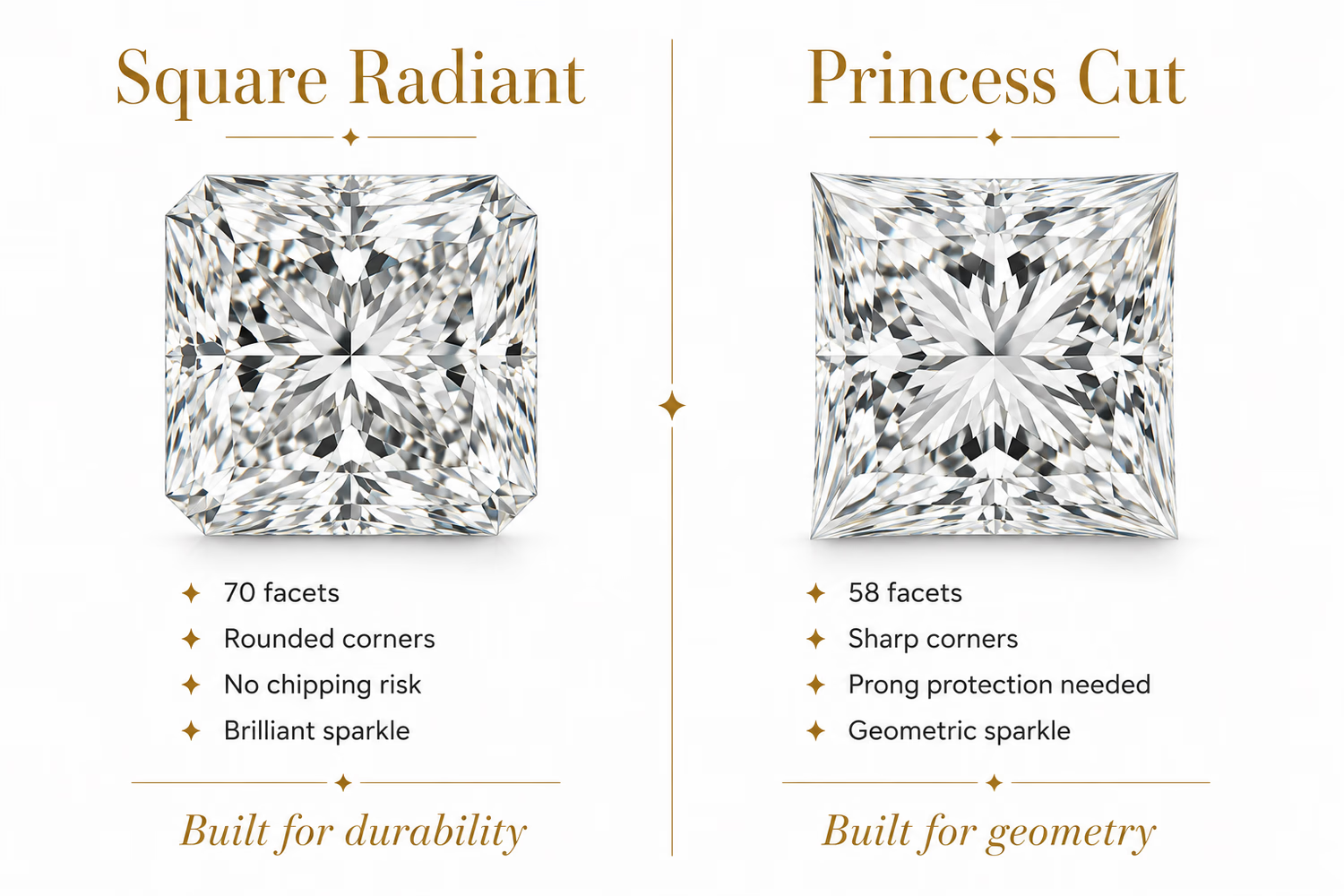
This is the comparison most buyers are researching when they search "square radiant cut diamond." Here is the full breakdown.
Silhouette. Both are square when viewed face-up. The princess cut has four sharp, 90-degree corners. The square radiant has four clipped corners creating an octagonal outline — still clearly square, but without the exposed sharp points. From two feet away, they look nearly identical. In a setting, the prong placement reveals the difference.
Facets and fire. Princess cuts use 50–58 facets depending on the specific cut style. Square radiant cuts use 70 facets. At equal carat and quality, the square radiant throws more scintillation — more individual flashes of light. It is a measurable optical difference, not a marketing claim.
Corner chip risk. This is the most important practical difference. Princess cut corners are sharp. In daily wear, they contact surfaces. A hard knock on a counter edge, a bag strap, or a gym floor can chip a corner — a damage type that often requires re-cutting the stone or replacing it. Square radiant corners are clipped at 45 degrees. They are protected. This is why jewelers recommend square radiants for people who are physically active or work with their hands.
Price. Princess cuts generally run 15–25% below square radiant cuts at equivalent specs. A 1ct princess G-VS2 might price at $1,800–$2,200, while a 1ct square radiant G-VS2 prices at $2,318. That gap is real but shrinks when you factor in potential corner repair costs over a ring's lifetime.
Cut grade. GIA issues cut grades for princess cuts (Excellent, Very Good, Good). GIA does not issue cut grades for radiant cuts — including square radiants. "Ideal" or "Excellent Cut" labels on square radiant listings are retailer assessments, not lab grades. For princess cuts, stick to GIA Excellent. For square radiants, verify proportions manually from the certificate.
See also: Princess Cut Diamond: Complete Buying Guide
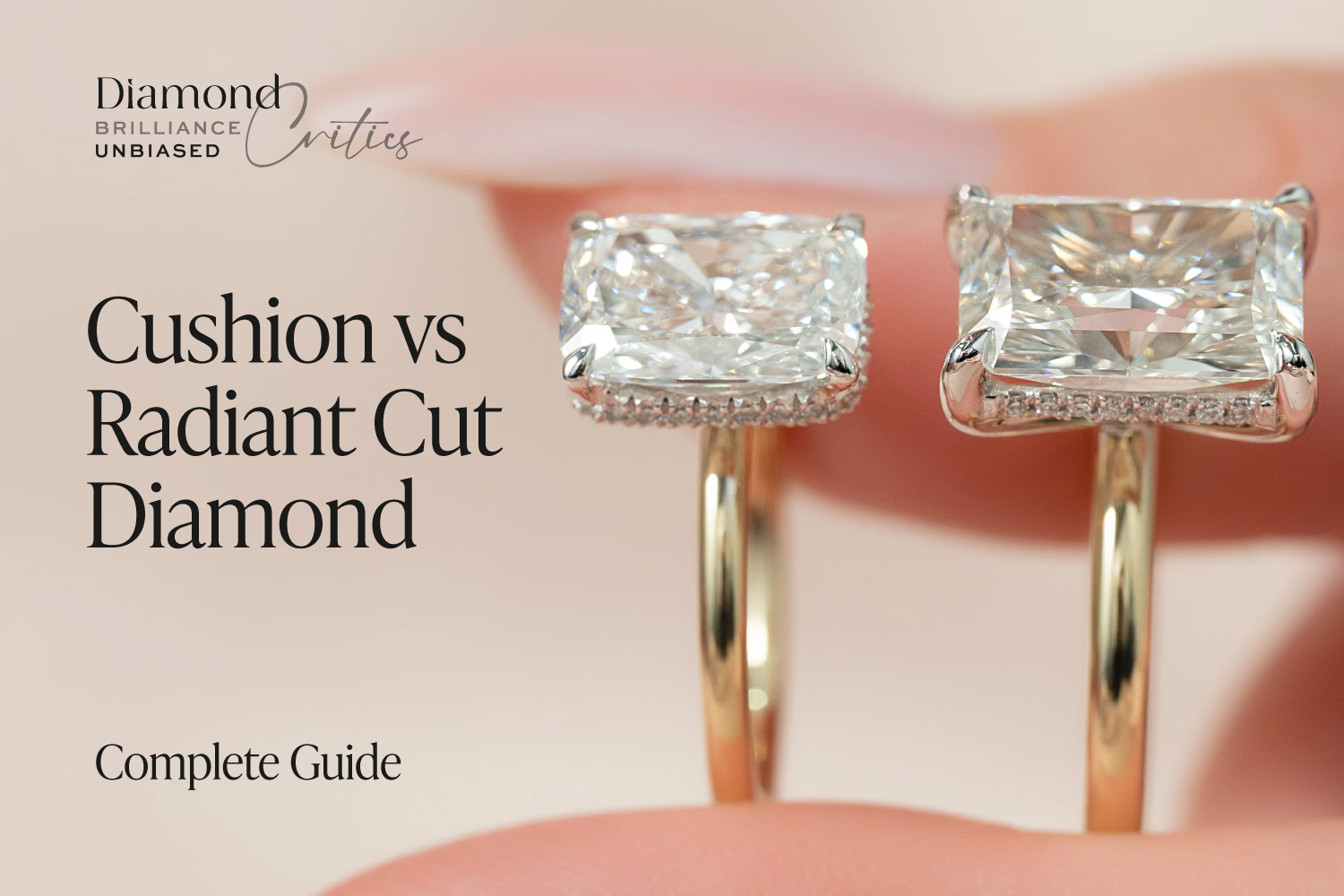
Square Radiant vs Square Cushion Cut
The square cushion cut is the softer alternative. Same compact silhouette, different edges and faceting.
Edges. Square cushion cuts have rounded, pillow-like edges — soft and romantic. Square radiant cuts have straight edges with clipped corners — geometric and modern. This is the fundamental aesthetic choice.
Fire. Square radiant cuts have 70 facets producing maximum scintillation. Square cushion cuts have 56–64 facets producing a softer, more diffused sparkle pattern. The radiant's sparkle is more aggressive — more individual flashes. The cushion's sparkle is warmer and more blended.
Setting compatibility. Square cushion cuts work well in both square prong settings and rounded halo settings because the soft corners accommodate both geometries. Square radiant cuts work best in square prong settings where the clipped corners are properly supported.
Price. Square cushion and square radiant cuts are roughly similar in price at equivalent specs. The cushion is sometimes slightly cheaper because it's more common.
See also: Cushion Cut vs Radiant Cut Diamond
Clarity Rules for Square Radiant Cut
The floor is VS2. The 70-facet brilliant-cut architecture is the most forgiving inclusion environment in square diamond cutting. A VS2 square radiant will appear completely eye-clean in normal lighting conditions.
SI1 is possible, not guaranteed. Some SI1 square radiant cuts are eye-clean — the 70 facets scatter light across a wide surface area and can mask small inclusions. But SI1 must be verified stone-by-stone through a video inspection or in person. Never buy SI1 sight-unseen from a photo.
VVS and above is wasted money in a square radiant. The 70-facet pattern makes VVS, VS1, and VS2 indistinguishable face-up in normal lighting. That budget goes further as carat weight or color grade.
Where inclusions matter most in a square shape. The center of the table is the most exposed zone. Inclusions in the corners are partially covered by prongs and therefore less visible. A VS2 with a corner inclusion under the prong is a better buy than a VS1 with a center-table feather. Always review the inclusion map on the certificate before purchasing.
Color Guide for Square Radiant Cut
Natural diamonds in white gold or platinum: H is the floor. G-H is the sweet spot — eye-white in normal lighting without paying the D-F premium. Below H, body color can accumulate in the corners and along the edges of the square stone, especially visible in white metal settings.
Natural diamonds in yellow or rose gold: Go as low as J. The warm metal absorbs body color from the stone — an I or J color looks completely natural. A J-VS2 square radiant in yellow gold saves approximately 20–25% over a G-VS2 with no visible quality difference.
Lab-grown in any metal: Buy F or better. Lab-grown prices in the D-F color range are compressed — D-VVS1 lab radiant stones cost only slightly more than F-VVS1 in most cases. There is no reason to settle for H or I color in a lab stone.
The corner color trap. The square shape has four corners that sit at the stone's perimeter. In brilliant-cut diamonds, body color accumulates at the perimeter — corners and edges — before it becomes visible through the table center. This means a square radiant shows color earlier along its edges than a round brilliant of the same grade. The practical result: drop one color grade below what you would accept in a round cut. A G or H grade in a round might pass as colorless face-up; in a square radiant, the edges can show slight warmth at H. Stick to G in white metal settings unless you have reviewed the specific stone on video.
Certified Market Prices by Carat
Stone prices from current certified inventory. All prices are stone only — add a setting from the options below for your total ring. Every stone price links to a specific certified diamond.
Natural Square Radiant — Price by Carat
| Carat | Color/Clarity | Stone Price | Ring Total (+ $925 setting) |
|---|---|---|---|
| 1.00ct | G-VS2 | $2,318 | $3,243 |
| 1.00ct | F-VS2 | $2,597 | $3,522 |
| 1.00ct | F-VS1 | $2,787 | $3,712 |
| 1.50ct | G-VS2 | $7,704 | $8,629 |
| 1.50ct | F-VS2 | $7,947 | $8,872 |
| 2.00ct | D-VS2 | $17,714 | $18,639 |
| 2.00ct | E-VS2 | $19,534 | $20,459 |
| 2.50ct | G-VS2 | $29,536 | $30,461 |
| 3.20ct | G-VS2 | $41,952 | $42,877 |
Setting used: Knife Edge Solitaire by James Allen in 14k White Gold at $925 — 982 reviews. The entry-level setting that keeps the stone as the focus and protects the clipped corners properly.
"The 1ct G-VS2 square radiant at $2,318 is consistently the value entry point I show buyers who are comparing square radiant against princess cut. Add the Knife Edge Solitaire at $925 and your total is $3,243 — a certified, GIA-standard square radiant ring. Verify the L/W ratio is between 0.95 and 1.05 on the certificate before you finalize." — Farzana Hasan, Diamond Critics
Lab-Grown Square Radiant — Price by Carat
Lab-grown square radiant diamonds carry the same 70-facet construction, the same L/W ratio, and the same GIA or IGI certification as natural stones — at 60–88% below natural prices.
| Carat | Color/Clarity | Stone Price | Ring Total (+ $925 setting) |
|---|---|---|---|
| 1.00ct | E-VVS1 | $867 | $1,792 |
| 1.00ct | D-VVS1 | $932 | $1,857 |
| 1.50ct | F-VVS1 | $1,510 | $2,435 |
| 1.50ct | D-VVS1 | $1,772 | $2,697 |
| 2.00ct | F-VVS1 | $2,169 | $3,094 |
| 2.00ct | E-VVS1 | $2,220 | $3,145 |
| 2.50ct | D-VVS1 | $4,745 | $5,670 |
| 3.00ct | D-VVS1 | $5,350 | $6,275 |
The savings comparison at 2ct: Natural D-VS2 = $17,714. Lab F-VVS1 = $2,169. The lab-grown stone has better color and better clarity. The savings is $15,545 — 88%.
"Lab-grown square radiant cuts are the best-kept secret in the square diamond category. A 2ct F-VVS1 lab square radiant at $2,169 gives you a larger, better-specified stone than most people can afford in natural. The 70 facets look identical. The GIA or IGI certification is real. The L/W ratio is real. The only thing different is the origin." — Farzana Hasan, Diamond Critics
Tides Of Summer Capsule
Up To 30% Off
Shop The Sale →Vault ClearanceClear The Vault
Up To 70% Off
Shop Vault Deals →Affiliate link — no extra cost to you
Best Settings for Square Radiant Cut Diamond
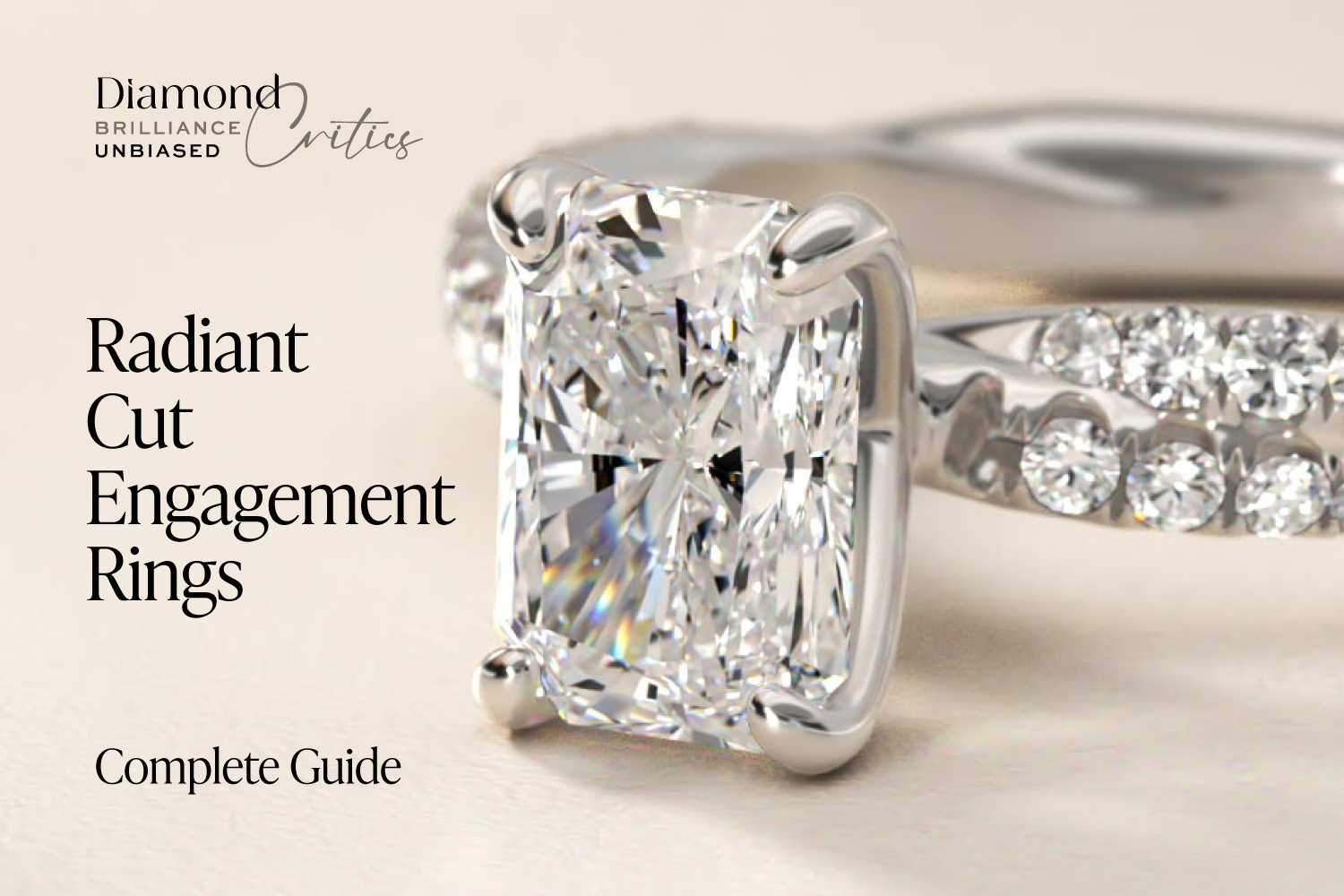
The square radiant needs a setting with a square head — four prongs that sit at the clipped corners, not a round basket that fights the stone's geometry. Here are the three best options across price points.
Setting 1 — Knife Edge Solitaire White Gold: $925
The Knife Edge Solitaire by James Allen in 14k White Gold is the most efficient setting for a square radiant. It holds the stone with four prongs at the corners, keeps a low profile on the band, and puts the entire focus on the diamond. Nothing competes with the stone.
At $925 — 982 reviews — this is the best entry-level setting for a square radiant. Combined with a 1ct G-VS2 natural at $2,318, total ring: $3,243.
Setting 2 — Riviera Pavé White Gold: $1,500
The Riviera Pavé Diamond Engagement Ring in 18k White Gold adds a row of pavé diamonds along the band. The straight lines of the pavé band echo the straight sides of the square radiant — the stone reads more intentionally geometric when the band reinforces the shape.
At $1,500 — 479 reviews. Combined with a 1ct G-VS2 natural at $2,318, total ring: $3,818.
Setting 3 — Classic Four Prong Platinum Solitaire: $1,180
The Classic Four Prong Solitaire in Platinum is the premium version of the solitaire approach. Platinum is harder than gold and offers lifetime durability without replating. The four-prong square head protects the clipped corners while keeping the stone fully visible.
At $1,180 — 1,815 reviews. Combined with a 1ct G-VS2 natural at $2,318, total ring: $3,498.
Settings to avoid: Round basket settings designed for round brilliant cuts. They conflict with the square radiant's geometry. The stone's straight edges and clipped corners need a square head — confirm the setting head shape before ordering.
Radiant Cut CZ vs Lab-Grown: The Honest Answer
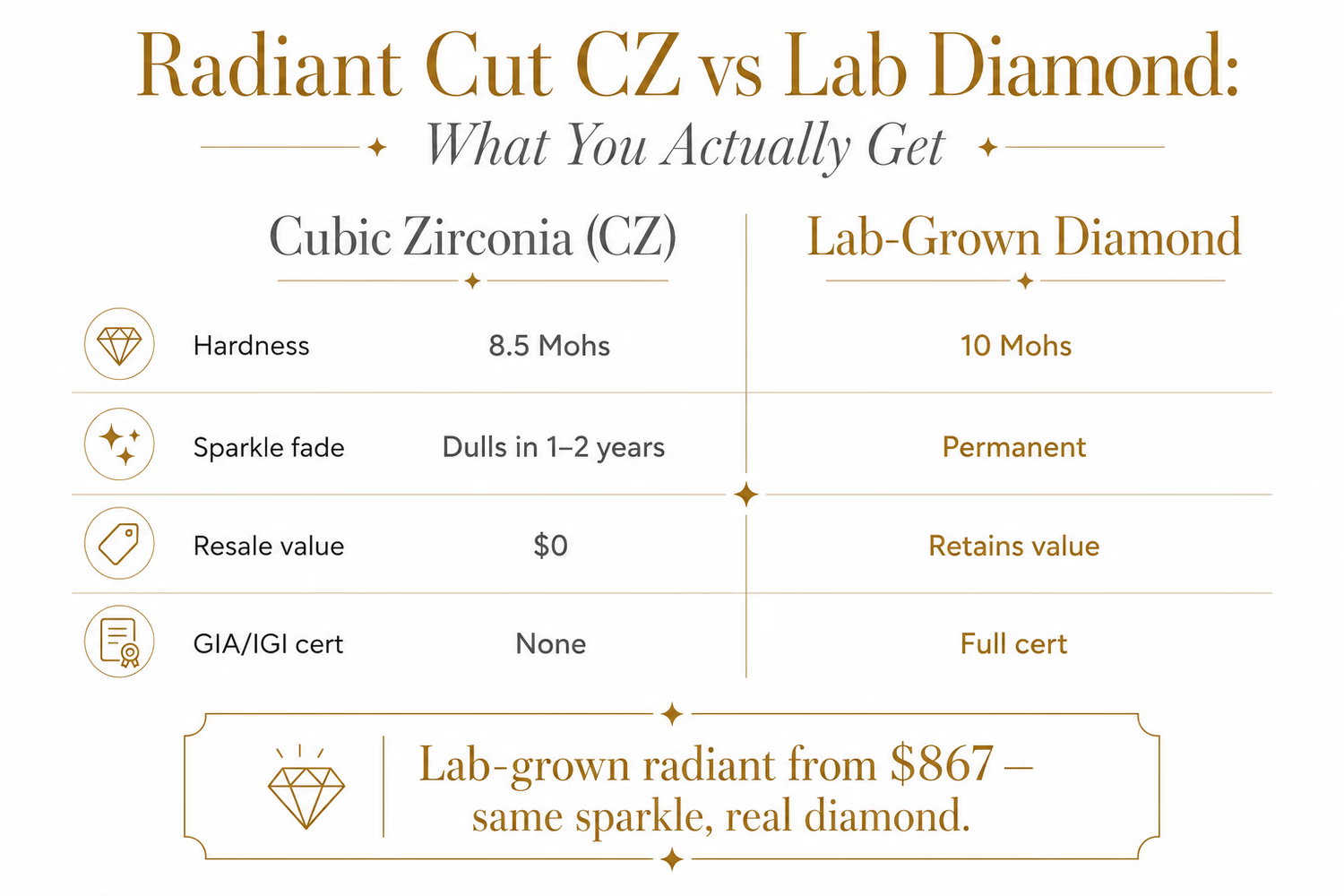
Many buyers searching "radiant cut cz" or "radiant cut cubic zirconia ring" are doing the same thing: trying to get a large, square, sparkling stone for the smallest possible budget. That instinct is understandable. Here is the honest comparison.
What CZ is: Cubic zirconia is a lab-synthesized crystalline material, not a diamond. It is significantly cheaper than diamond — a 1ct CZ costs $5–$30 for the stone itself. A full CZ ring in a basic setting runs $50–$500 depending on metal and craftsmanship.
CZ's real problem — it wears. Diamond has a Mohs hardness of 10. CZ has a Mohs hardness of 8–8.5. In daily ring wear, surfaces, dust particles, and normal contact gradually scratch CZ. Within 1–3 years of daily wear, most CZ stones lose their initial clarity and brilliance. They begin to look hazy, scratched, or cloudy. This is not reversible. The stone must be replaced.
CZ's other problem — no certificate. CZ carries no GIA or IGI certification. When you sell or insure a ring with a CZ center stone, the stone has no verified gemological value. It cannot be appraised as a diamond.
The lab-grown alternative. A 1ct lab-grown E-VVS1 square radiant at $867 is a real diamond. Mohs 10. GIA or IGI certified. Identical in physical and optical properties to a natural diamond. It will not scratch, cloud, or degrade in daily wear. The total ring with the Knife Edge Solitaire at $925 is $1,792.
The comparison: A CZ ring might cost $200–$500. A lab-grown square radiant ring costs $1,792. The gap is real — but what you get for that gap is: a permanent stone that won't cloud, a certified diamond, and a piece of jewelry you can insure, appraise, and pass on. Most buyers who compare side-by-side choose lab-grown.
If your budget is under $800 for the entire ring and CZ is genuinely the only option, then CZ is what it is. But if you can reach $1,800, lab-grown is the dramatically better long-term investment.
The 5 Rules for Buying a Square Radiant Cut Diamond
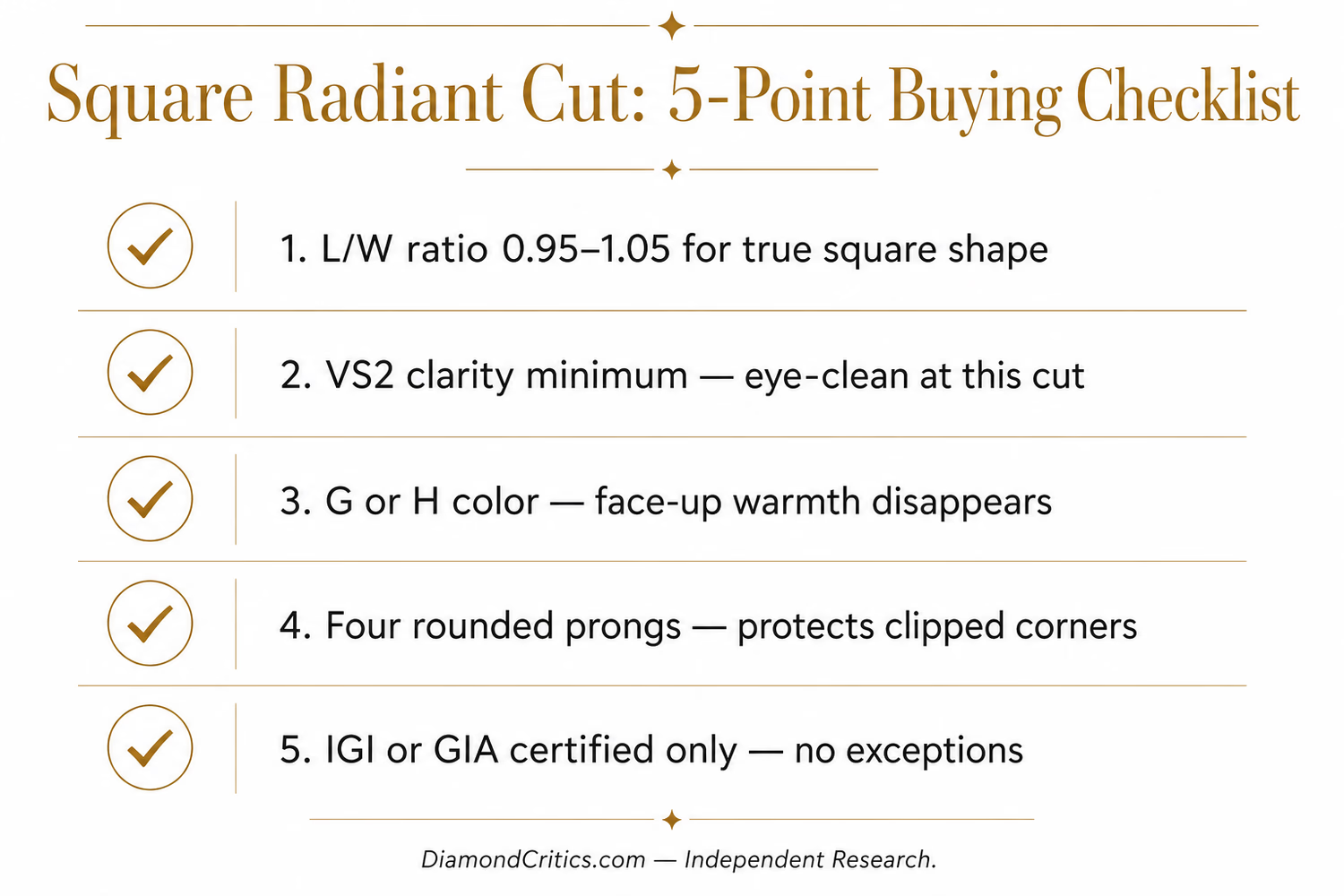
Five rules. Apply all of them before you buy.
Rule 1: Confirm L/W ratio is 0.95–1.05 on the GIA certificate. This is the only definition of "square" that matters. Do not trust the listing label. A ratio of 1.12 is rectangular. Divide the length by the width on the certificate yourself.
Rule 2: Buy VS2 clarity minimum. The 70-facet pattern masks inclusions better than princess or cushion cuts. VS2 will be eye-clean. VVS is unnecessary — that money is better used on carat or color.
Rule 3: Natural = H color minimum. Lab = F color minimum. Below H in natural, body color collects in the corners of the square stone. In lab-grown, F-D is price-compressed — there is no reason to settle below F.
Rule 4: Choose a four-prong square setting head. The setting head must match the stone's square geometry. A round basket head fights the stone. Confirm millimeter dimensions of the setting head before ordering.
Rule 5: Verify the corner prong placement. In a four-prong setting, each prong should sit at a clipped corner of the stone. This both protects the corner and shows the stone's full square silhouette. Ask the jeweler to confirm prong-to-corner alignment if ordering remotely.
Expert Summary
The square radiant cut is the best square brilliant diamond for buyers who want the fire of a radiant cut in a compact, symmetrical shape — and who want safer corners than a princess cut without paying the premium of a square cushion.
The shape's weaknesses are limited: it costs 15–25% more than a comparable princess cut, and GIA does not issue a cut grade for it. Both are manageable. The extra cost buys corner safety that matters over decades of daily wear. The missing GIA cut grade requires manual proportion verification from the certificate — a one-minute step.
At every carat level, the lab-grown version offers the same 70-facet architecture, the same L/W ratio, and the same certified quality at 60–88% below natural prices.
"The square radiant cut is what I recommend when buyers come to me wanting a princess cut but are worried about chipping. The shape solves that problem completely. The 70 facets give more fire than princess. The clipped corners are safer. The only reason not to buy it is if you specifically want the sharpest corner outline that only princess cut delivers. If corners aren't the aesthetic priority, the square radiant wins on every other metric." — Farzana Hasan, Diamond Critics
Final Verdict
If you're choosing between square radiant and princess cut: Buy princess if budget is your primary constraint and you accept the corner chip risk. Buy square radiant if you want more facets, clipped corners, and a ring that survives daily wear without corner damage. The premium is typically $200–$500 on a 1ct stone — worth it for most buyers who plan to wear the ring daily.
If you want a square radiant under $2,000 total: A 1ct lab E-VVS1 at $867 plus the Knife Edge Solitaire at $925 = a $1,792 certified diamond ring. Better than any CZ option at a fraction of the natural diamond price.
If you're comparing square radiant vs CZ: Lab-grown at $1,792 is a real, certified, permanent diamond. CZ clouds within years of daily wear. If the budget can reach $1,800, lab-grown is the only rational choice.
If your budget is $5,000+ for natural: A 1.5ct G-VS2 square radiant at $7,704 is the sweet spot — enough carat weight to command presence, G-VS2 specs that deliver eye-clean quality, and a setting budget of $925–$1,500 that doesn't compete with the stone.
Frequently Asked Questions
What is a square radiant cut diamond?
A square radiant cut diamond is a radiant cut with a length-to-width ratio between 0.95 and 1.05. It has 70 brilliant-cut facets, four nearly equal sides, and four clipped corners creating an octagonal outline when viewed face-up. It is not a separate shape from the radiant cut — it is a radiant cut in its most compact, symmetrical form.
What L/W ratio makes a radiant cut square?
A radiant cut is considered square when its L/W ratio is between 0.95 and 1.05. Above 1.10, it reads as rectangular or elongated. The ratio is calculated from the GIA certificate measurements — divide the length by the width. A stone listed as "square radiant" might have any ratio between 0.95 and 1.12 depending on the retailer's definition, so always verify the number yourself.
Is a square radiant the same as a princess cut?
No. Both are square brilliant-cut diamonds, but they are structurally different. Princess cuts have four sharp 90-degree corners and 50–58 facets. Square radiant cuts have four clipped corners (creating an octagonal outline) and 70 facets. Princess cuts have a GIA cut grade; square radiant cuts do not. Princess cuts are generally 15–25% cheaper but carry a higher corner chip risk.
Does the square radiant cut have GIA cut grade?
No. GIA does not issue cut grades for any radiant cut diamonds — square or elongated. "Ideal Cut" or "Excellent Cut" labels on square radiant listings are retailer assessments, not GIA grades. Always verify proportions manually from the GIA certificate before buying.
What clarity do I need for a square radiant cut?
VS2 is the minimum. The 70-facet brilliant-cut pattern masks inclusions far better than princess or cushion cuts of the same clarity grade. A VS2 square radiant will appear eye-clean in normal lighting. SI1 can be eye-clean but must be verified on a stone-by-stone basis. VVS and above provides no visible benefit.
Is a square radiant better than a princess cut?
For daily wear, yes — in most cases. The square radiant has more facets (70 vs 50–58), clipped corners that eliminate chip risk, and better inclusion hiding. Princess cuts are cheaper (15–25% typically) and have a sharper corner outline. If budget is the priority, princess wins. If durability and fire are the priority, square radiant wins.
What is radiant cut CZ?
A radiant cut cubic zirconia (CZ) is a synthetic crystalline material cut in the radiant shape. CZ is dramatically cheaper than diamond — a 1ct CZ stone costs $5–$30. However, CZ has a Mohs hardness of 8–8.5 versus diamond's 10. In daily ring wear, CZ scratches and clouds within 1–3 years and must eventually be replaced. CZ carries no gemological certification. Lab-grown radiant diamonds start at $867 for 1ct E-VVS1 — a real, certified, permanent diamond.
How much does a square radiant cut diamond ring cost?
Entry point for a natural ring: $3,243 — 1ct G-VS2 stone at $2,318 plus the Knife Edge Solitaire at $925. Lab-grown entry: $1,792 — 1ct E-VVS1 lab at $867 plus the same setting.
What setting works best for a square radiant cut?
A four-prong setting with a square head — prongs placed at each clipped corner. This protects the corners and frames the square silhouette correctly. The Knife Edge Solitaire at $925 and the Riviera Pavé at $1,500 are the two most practical options. Avoid round basket settings — they conflict with the square geometry.
What is the difference between square radiant and elongated radiant?
L/W ratio. A square radiant has an L/W ratio of 0.95–1.05 — nearly equal length and width, compact and symmetrical. An elongated radiant has an L/W ratio of 1.20–1.40 — visibly longer than wide, finger-elongating silhouette. Both have 70 facets and the same brilliant-cut architecture. The shape is different; the fire is the same.
Is radiant cut CZ worth buying over lab-grown?
No — if you can reach a lab-grown budget. A 1ct lab E-VVS1 square radiant at $867 is a certified real diamond with Mohs hardness 10 that will not scratch, cloud, or degrade. CZ clouds within years of daily wear and has no certification. The total lab-grown ring is $1,792. A quality CZ ring in the same setting might run $400–$700. If the budget gap is the issue, lab-grown is worth stretching for.
What color grade should I buy for a square radiant cut?
For natural diamonds in white metal: H minimum, G-H ideal. Below H, body color shows in the corners and edges of the square silhouette. For yellow or rose gold settings: I or J works well — the warm metal absorbs the color. For lab-grown: F or better, since D-F pricing is compressed in the lab market.
How does square radiant compare to Asscher cut?
Both are square, both have clipped corners. The Asscher is step-cut (72 facets producing a hall-of-mirrors effect) and requires VS1 clarity because inclusions are visible through step facets. The square radiant is brilliant-cut (70 facets producing maximum fire) and works at VS2. Square radiant beats Asscher on clarity budget and light return. Asscher beats square radiant on the step-cut aesthetic — if you want the hall-of-mirrors look, buy Asscher.
See Also
- Radiant Cut Diamond: The Complete Buying Guide — master guide covering the full radiant family with live prices
- Elongated Radiant Cut Diamond: L/W Ratio, Prices & What to Buy — the rectangular counterpart to the square radiant
- Princess Cut vs Radiant Cut Diamond — full side-by-side with certified prices
- 5 Mistakes Radiant Cut Engagement Ring Buyers Always Make — ring-specific buying guide with stone + setting prices from $3,243
- Cushion Cut vs Radiant Cut Diamond — two square shapes compared
- Princess Cut Diamond: Complete Buying Guide — full princess cut guide with prices, cut grades, and settings
Expert Verdict
Always audit the stone individually — no grade replaces seeing the actual diamond. The certificate tells you what to look for. Your eyes tell you whether to buy.
— Farzana Hasan, GIA Expert · DiamondCritics.com