TL;DR
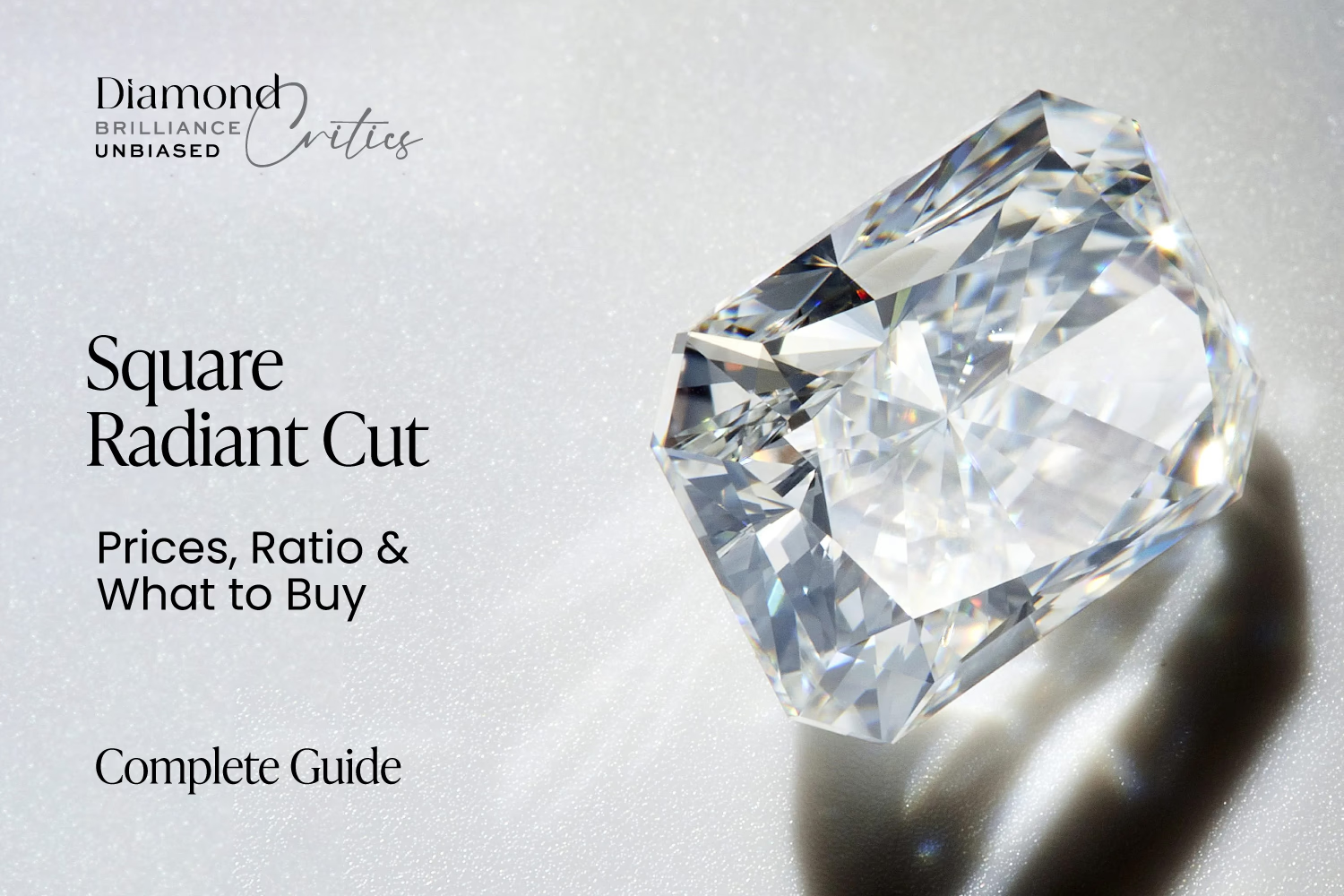
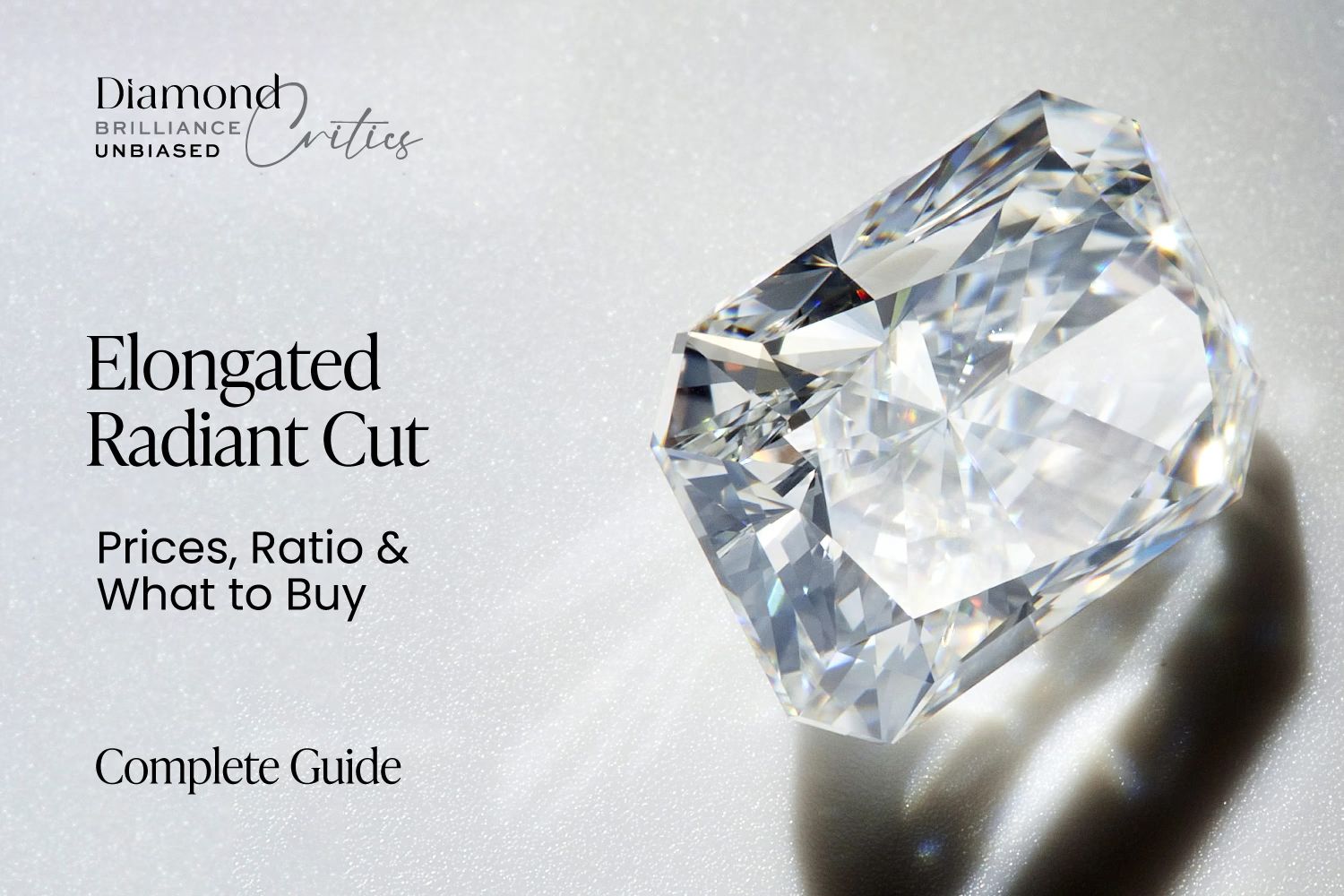
An elongated radiant cut diamond is a rectangular brilliant-cut diamond with a length-to-width (L/W) ratio above 1.20. It gives you the fire and sparkle of a round brilliant inside a long, finger-flattering outline — with no bow-tie risk and a lower clarity budget than an emerald cut.
The one number that matters: Target an L/W ratio of 1.25–1.35. Below 1.20, it won't look elongated. Above 1.40, it starts looking narrow.
The core insight: Two named concepts define this shape. The Hybrid Effect — the elongated radiant is the only rectangular diamond that combines an emerald cut's long face-up silhouette with a round brilliant's 70-facet fire. The Elongation Threshold — the 1.20–1.40 L/W ratio window that makes it actually elongated.
→ Start here: 1ct natural G-VS2 elongated radiant at $2,318 + Classic Four Prong Platinum setting at $1,180 = $3,498 total ring. Lab-grown: 1ct E-VVS1 at $867 + setting = $2,047 total ring.
Priority: Check the L/W ratio on the GIA certificate before anything else. Retailers use "elongated" loosely. A ratio of 1.12 is not elongated. The certificate number is the only truth.
What Is an Elongated Radiant Cut Diamond?
The elongated radiant cut is a rectangular brilliant-cut diamond with a length-to-width ratio above 1.20. It looks like an emerald cut at first glance — long, rectangular, flat-edged, with clipped corners. But the mechanics underneath are completely different.
An emerald cut uses step facets: wide, parallel planes that reflect light in sheets. That creates the hall-of-mirrors effect — elegant and glassy. An elongated radiant uses 70 brilliant-cut facets across both the crown and pavilion. That creates fire and scintillation — light fracturing in all directions, not pooling.
I'm Farzana Hasan, GIA Expert at Diamond Critics. The elongated radiant is one of the most technically undervalued shapes in the current market. This guide covers what the ratio means, where prices sit by carat, and exactly what to buy.


The Hybrid Effect
The elongated radiant cut carries two design advantages that no other rectangular diamond shape delivers at the same time.
Advantage one: the long face-up silhouette. The rectangular outline spreads more surface area across the finger than a round or square diamond of the same carat weight. A 1ct elongated radiant at 1.30 L/W measures approximately 6.8mm × 5.2mm — versus 6.4mm across for a 1ct round brilliant.
The elongated radiant covers more finger, looks larger, and elongates the hand. That is exactly the effect oval buyers are chasing.
Advantage two: 70-facet fire. Unlike the emerald cut's step facets, the elongated radiant applies full brilliant-cut faceting to the entire stone — crown and pavilion both. The result is aggressive light return. Sparkle, not reflection. Fire, not glass.
No other rectangular shape does both. Oval cuts are brilliant-cut but curved, not rectangular. Emerald cuts are rectangular but step-cut, not brilliant. The elongated radiant is the only shape that is simultaneously rectangular and fully brilliant-cut. That is The Hybrid Effect.
Why it matters for buyers: You get the finger-elongating silhouette of an oval. You get the geometric outline of an emerald. And you get 70-facet brilliance that neither of those shapes can match. At equivalent specs, the elongated radiant frequently prices below both.
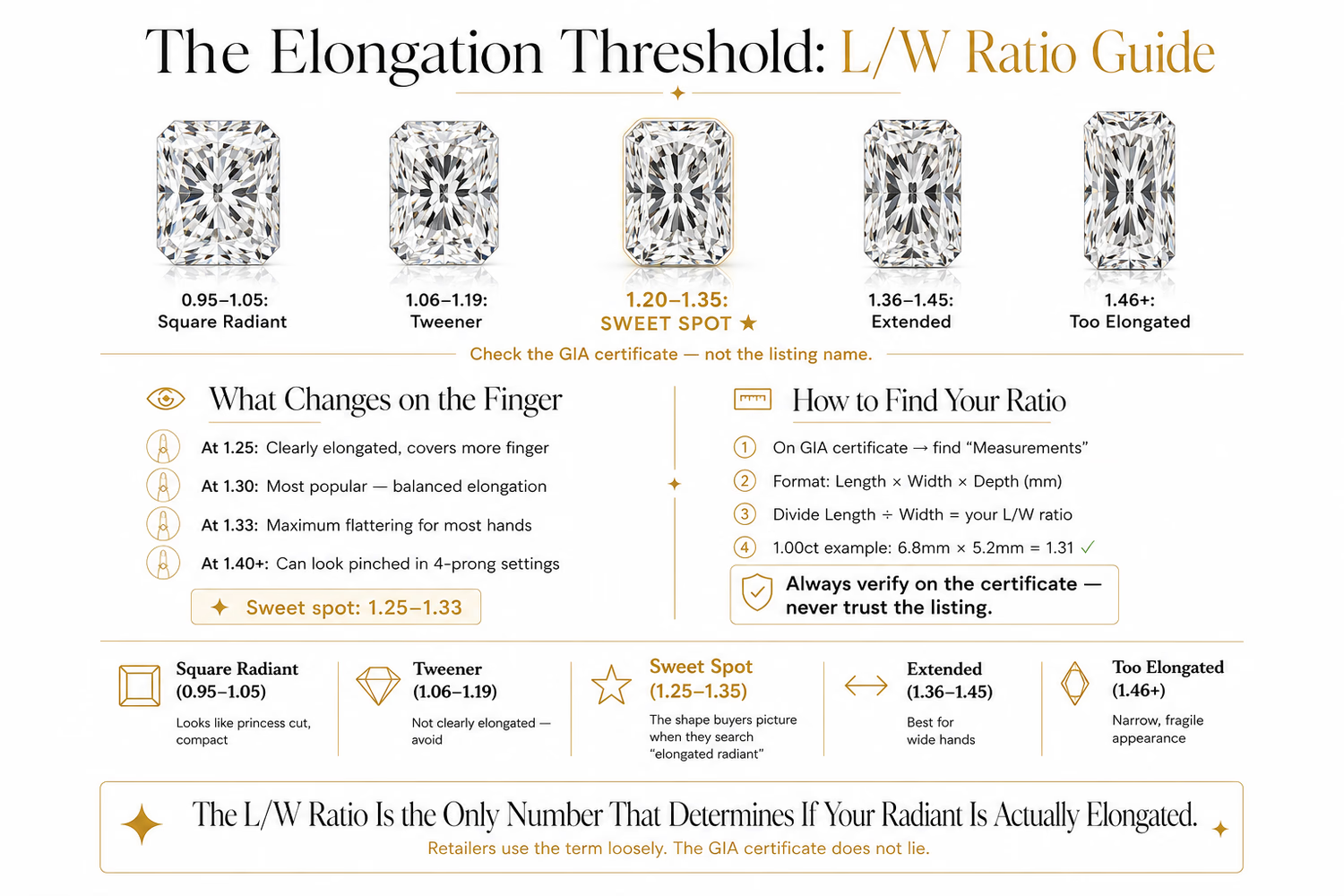
The Elongation Threshold
The Elongation Threshold is the L/W ratio range of 1.20 to 1.40 that defines an elongated radiant cut. Below this window, the stone is square or near-square. Above it, the stone starts looking narrow rather than elongated.
Here is how the full ratio spectrum breaks down:
| L/W Ratio | Shape | What You See on the Finger |
|---|---|---|
| 0.95–1.05 | Square radiant | Compact, nearly equal sides — princess cut energy |
| 1.06–1.19 | Tweener radiant | Slightly rectangular but not clearly elongated |
| 1.20–1.35 | Elongated radiant (sweet spot) | Visibly elongated — the shape most buyers want |
| 1.36–1.45 | Extended elongated | Narrow and long — flattering on wide hands |
| 1.46+ | Too elongated | Can look fragile or thin |
The sweet spot is 1.25–1.35. At 1.25, the elongation is clearly visible. At 1.33, it's maximally flattering on most finger sizes. Above 1.40, the stone starts to look pinched in four-prong settings.
Where to find the ratio: Your GIA certificate lists measurements as "L × W × D" in millimeters near the top. Divide length by width. That is your L/W ratio. That number is the only thing that matters — not what the retailer calls the stone.
What sellers don't tell you: "Elongated radiant" is a marketing term, not a graded category. A stone listed as elongated might have a ratio of 1.12. Always check the certificate.
Master Comparison: Elongated Radiant vs Every Rectangular Diamond
This is the table most buyers are looking for before they decide. All clarity/color specs at the VS2 / G-H tier for natural stones, F-VVS1 for lab — a true apples-to-apples comparison.
| Factor | Elongated Radiant | Oval Cut | Emerald Cut | Princess Cut |
|---|---|---|---|---|
| Facets | 70 | 56–58 | 57 | 50–58 |
| Cut style | Brilliant | Brilliant | Step-cut | Brilliant |
| Bow-tie risk | None | Yes — every oval | None | None |
| Clarity floor | VS2 | VS2 | VS1 | VS2 |
| Color floor (natural) | H | H | G | H |
| Finger elongation | ✅ Strong | ✅ Strong | ✅ Moderate | ❌ None |
| Corner chip risk | Low (clipped) | None (curved) | Low (clipped) | High (sharp) |
| Inclusion hiding | Excellent | Good | Poor | Good |
| Price vs round (same specs) | −15 to −25% | −10 to −20% | −10 to −20% | −20 to −30% |
| GIA cut grade issued? | No | No | No | No |
| Best setting | Rectangular 4-prong | Round/oval prong | Rectangular 4-prong | Square prong or bezel |
The verdict from this table: The elongated radiant beats oval on facet count and bow-tie risk. It beats emerald cut on inclusion forgiveness and clarity budget. It beats princess cut on corner safety. The only shape it doesn't clearly beat is oval for buyers who want soft, curved edges — that's a style preference, not a quality difference.
See the full guide: Radiant Cut Diamond: The Complete Buying Guide covers the full radiant family with every price point.
Elongated Radiant vs Oval: The Real Difference
Both shapes elongate the finger. Both are brilliant-cut. Both look bigger per carat than round diamonds. They are not the same shape.
The bow-tie problem. Every oval cut has a bow-tie shadow — a dark area across the center of the stone where light escapes rather than reflects. Some bow-ties are subtle; some are severe. You never know which you have until you look at the stone in motion.
The elongated radiant has zero bow-tie risk. The rectangular outline and facet geometry prevent it entirely.
Facet count. Oval cuts use 56–58 facets. Elongated radiant cuts use 70. More facets, more surfaces for light to break across, more scintillation. In a side-by-side comparison, the radiant throws more sparkle per second as it moves.
Silhouette. Oval edges are curved — soft, romantic, feminine. Elongated radiant edges are straight, with clipped corners — geometric, modern, architectural. This is a style preference, not a quality judgment. If you want soft, buy an oval. If you want geometric with maximum fire, the elongated radiant wins.
Price. Oval cuts are trending hard right now. That demand pushes oval prices up. An elongated radiant at equivalent specs often runs 10–20% below a comparable oval. That gap buys a better stone or a better setting.
See the full comparison: Radiant Cut vs Emerald Cut Diamond
Elongated Radiant vs Emerald Cut
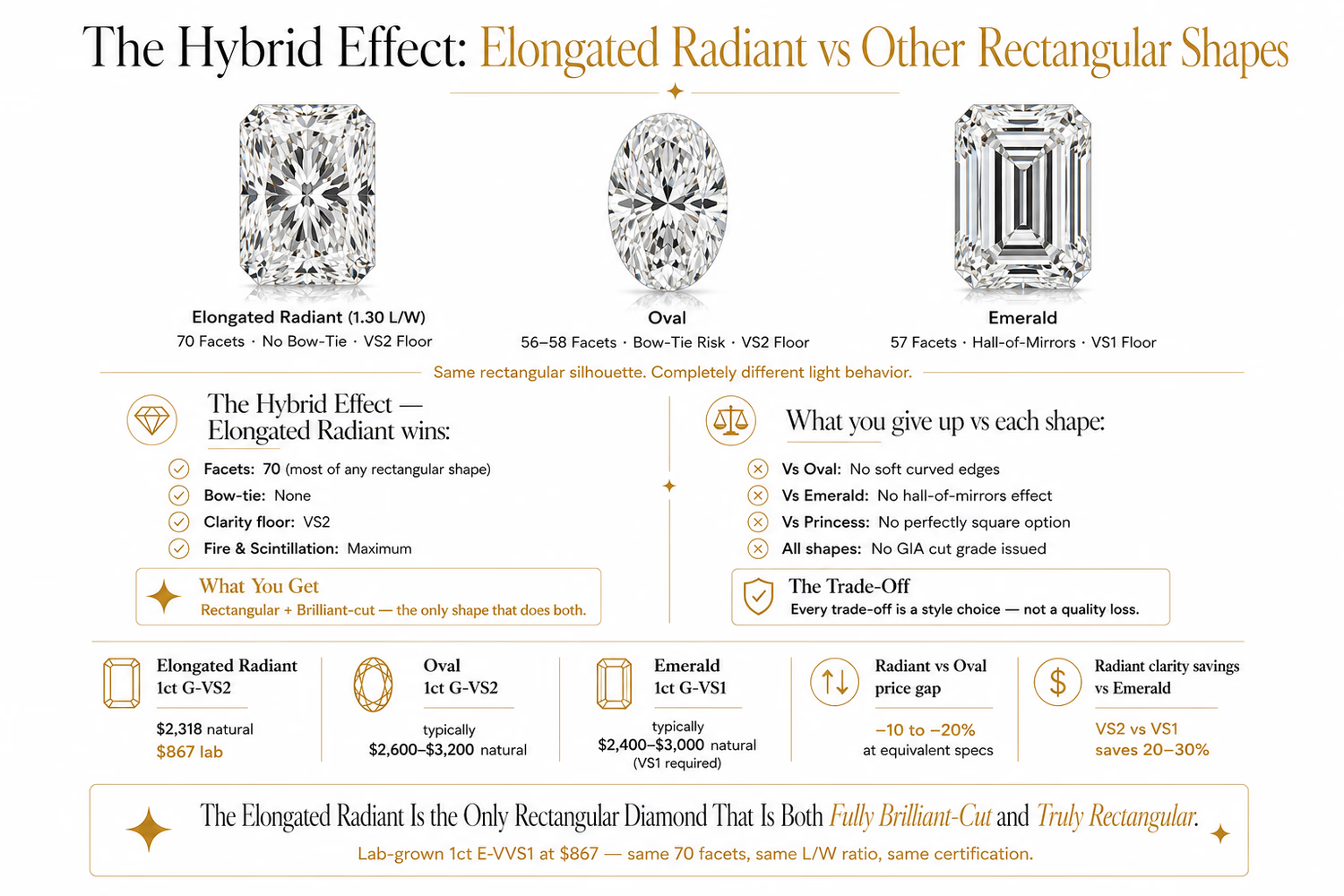
They share a silhouette. Everything else is different.
Fire vs. mirror. Emerald cuts use step-cut facets — fewer, larger planes that reflect light in clean, parallel sheets. It is beautiful. Reserved. The hall-of-mirrors effect. Elongated radiant cuts use 70 brilliant-cut facets that scatter light in every direction. You get sparkle and fire, not reflection and depth. Neither is better — they serve completely different tastes.
Clarity cost. Emerald cuts require VS1 clarity or better in most cases. The step facets act like windows — you look through the stone, not into scattered light, and inclusions are visible. Elongated radiant cuts work well at VS2 because the brilliant facets scatter light across 70 surfaces, masking small inclusions. That clarity gap has a real price impact — VS1 stones cost 20–30% more than VS2 at equivalent color and carat.
Bottom line. Buy an emerald cut if you want the hall-of-mirrors look and are willing to pay for VS1 clarity. Buy an elongated radiant if you want fire, are comfortable at VS2, and want the same rectangular silhouette at a lower clarity premium.
Clarity Rules for Elongated Radiant Cut
The floor is VS2. The 70-facet brilliant-cut pattern is the most effective inclusion-masking architecture in diamond cutting. A VS2 elongated radiant will look eye-clean to the naked eye in normal lighting.
SI1 is possible, not guaranteed. Some SI1 elongated radiant cuts are eye-clean. But this must be verified stone-by-stone through a video inspection or in person. Never buy an SI1 sight-unseen from a photo.
VVS and above is wasted money. There is no visible optical benefit to buying VVS in an elongated radiant. The brilliant facets make VVS, VS1, and VS2 look identical face-up. That budget is better spent on a larger stone or a better color grade.
Where inclusions matter most. Center-table inclusions are the most dangerous — they sit in the most visible zone of the stone. Edge inclusions covered by prongs are hidden by the setting. A VS2 with an edge inclusion is a better buy than a VS1 with a center-table feather. Always check the inclusion map on the certificate before buying.
Color Guide for Elongated Radiant Cut
Natural diamonds in white gold or platinum: H is the floor. G-H is the sweet spot — eye-white without paying the D-F premium. Below H, body color can collect at the corners and long edges of the rectangular stone. Above F, you are paying for a difference that's invisible in normal light.
Natural diamonds in yellow or rose gold: Go as low as J. The warm metal reflects warmth into the stone — an I or J color looks perfectly natural in yellow gold. This is where the elongated radiant hides real value. A J-VS2 in yellow gold saves 20-25% over a G-VS2 and shows no visible difference.
Lab-grown in any metal: Buy F or better. Lab-grown prices at D-F are compressed close to each other. There's no reason to buy an H-color lab radiant when D-VVS1 is available at a small premium — the gap has effectively closed in the lab market.
Certified Market Prices by Carat
These prices are from current certified inventory. Stone prices only — add a setting from the table below to calculate your total ring. Every price links to a specific certified diamond.
Natural Elongated Radiant — Price by Carat
| Carat | Color/Clarity | Stone Price | Ring Total (+ $1,180 setting) |
|---|---|---|---|
| 1.00ct | G-VS2 | $2,318 | $3,498 |
| 1.00ct | F-VS2 | $2,597 | $3,777 |
| 1.00ct | F-VS1 | $2,787 | $3,967 |
| 1.50ct | G-VS2 | $7,704 | $8,884 |
| 1.50ct | F-VS2 | $7,947 | $9,127 |
| 1.50ct | E-VS2 | $8,691 | $9,871 |
| 2.00ct | D-VS2 | $17,714 | $18,894 |
| 2.00ct | E-VS2 | $19,534 | $20,714 |
| 2.50ct | G-VS2 | $29,536 | $30,716 |
| 3.20ct | G-VS2 | $41,952 | $43,132 |
Setting used: Classic Four Prong Solitaire Platinum at $1,180 — 1,815 reviews, the most-reviewed rectangular-compatible solitaire in current certified inventory.
"The natural elongated radiant at 1ct G-VS2 is the entry point I recommend to most buyers. It's $2,318 for the stone. Add the Classic Four Prong Platinum setting at $1,180 and your ring is $3,498. That is a real, certified, GIA-grade elongated radiant engagement ring at a price most people can reach. The L/W ratio on that specific stone is what you verify before you buy." — Farzana Hasan, Diamond Critics
Lab-Grown Elongated Radiant — Price by Carat
Lab-grown elongated radiant cuts carry the same 70-facet architecture, the same L/W ratio, and the same GIA or IGI certification as natural stones — at 60–88% below natural prices.
| Carat | Color/Clarity | Stone Price | Ring Total (+ $1,180 setting) |
|---|---|---|---|
| 1.00ct | E-VVS1 | $867 | $2,047 |
| 1.00ct | D-VVS1 | $932 | $2,112 |
| 1.50ct | F-VVS1 | $1,510 | $2,690 |
| 1.50ct | D-VVS1 | $1,772 | $2,952 |
| 2.00ct | F-VVS1 | $2,169 | $3,349 |
| 2.00ct | E-VVS1 | $2,220 | $3,400 |
| 2.50ct | D-VVS1 | $4,745 | $5,925 |
| 3.00ct | D-VVS1 | $5,350 | $6,530 |
The savings reality: A 2ct F-VVS1 lab elongated radiant costs $2,169. A natural 2ct D-VS2 is $17,714. That is not a small difference — it is $15,545. The lab stone has better color and better clarity at 88% of the cost of the natural.
"A 2ct lab elongated radiant at F-VVS1 for $2,169 is one of the best value propositions in diamond jewelry right now. You get the full Hybrid Effect — 70 facets, the rectangular silhouette, the elongated ratio — for the price of a natural 1ct stone. The people who resist lab-grown haven't looked at this math." — Farzana Hasan, Diamond Critics
Tides Of Summer Capsule
Up To 30% Off
Shop The Sale →Vault ClearanceClear The Vault
Up To 70% Off
Shop Vault Deals →Affiliate link — no extra cost to you
The 3/4 Carat Problem
This is specific to elongated radiant cuts and most buyers don't know it exists.
When you search for a 0.75ct elongated radiant with an L/W ratio above 1.25, inventory is thin. The geometry is the reason. At 0.75ct, producing a 1.28 L/W radiant means a stone roughly 5.8mm × 4.5mm — a difficult cut with limited market demand, so fewer are produced and certified.
What you find at 0.75ct are mostly near-square shapes (L/W 1.05–1.15) that retailers still label "radiant." They look nothing like the elongated shape you're picturing.
The fix is simple. Go up to 0.90ct — inventory opens immediately. Or buy lab-grown: a 1ct lab E-VVS1 at $867 gives you more face-up size and more elongation than a 0.75ct natural, at a lower total price. That is the better buy every time.
Best Settings for Elongated Radiant Cut
The right setting frames the elongated shape. The wrong setting fights it. Every setting head you consider must be confirmed as rectangular before you order.
Setting 1 — Classic Four Prong Platinum Solitaire: $1,180
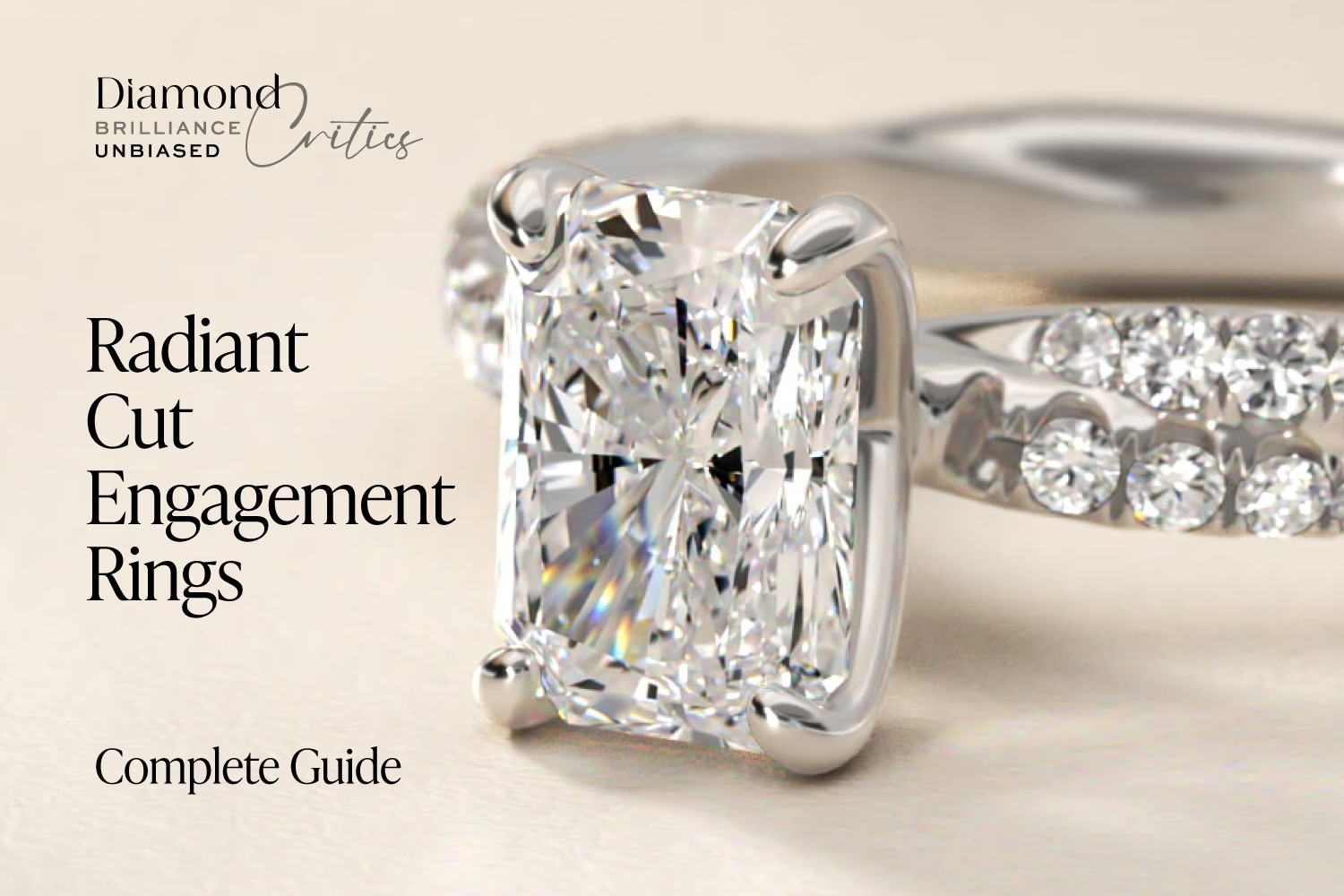
The Classic Four Prong Solitaire in Platinum puts one prong at each corner of the stone. Nothing blocks the elongated shape. All the length is visible from every angle. This is the setting for buyers who want the diamond to do the talking.
Combined with a 1ct G-VS2 natural at $2,318, total ring: $3,498. 1,815 reviews.
Setting 2 — Riviera Pavé White Gold: $1,515
The Riviera Pavé Engagement Ring in 14k White Gold adds a row of pavé diamonds along the band. The straight pavé lines running toward the center stone visually reinforce the elongated shape — the stone reads longer because the band directs the eye toward its length.
Combined with a 1ct G-VS2 natural at $2,318, total ring: $3,833.
Setting 3 — Riviera Cathedral Pavé Platinum: $2,890
The Riviera Cathedral Pavé in Platinum raises the center stone on a cathedral shank and surrounds it with 1/2ct of pavé diamonds. The elevated center puts the elongated radiant at full display — the vertical height emphasizes the rectangular length.
Combined with a 1ct G-VS2 natural at $2,318, total ring: $5,208.
Avoid: Round basket settings designed for round brilliants. They will conflict with the rectangular stone — the clipped corners look trapped, the elongated shape is visually squashed. Always confirm the setting head millimeter dimensions before ordering.
The Hidden Halo Technique
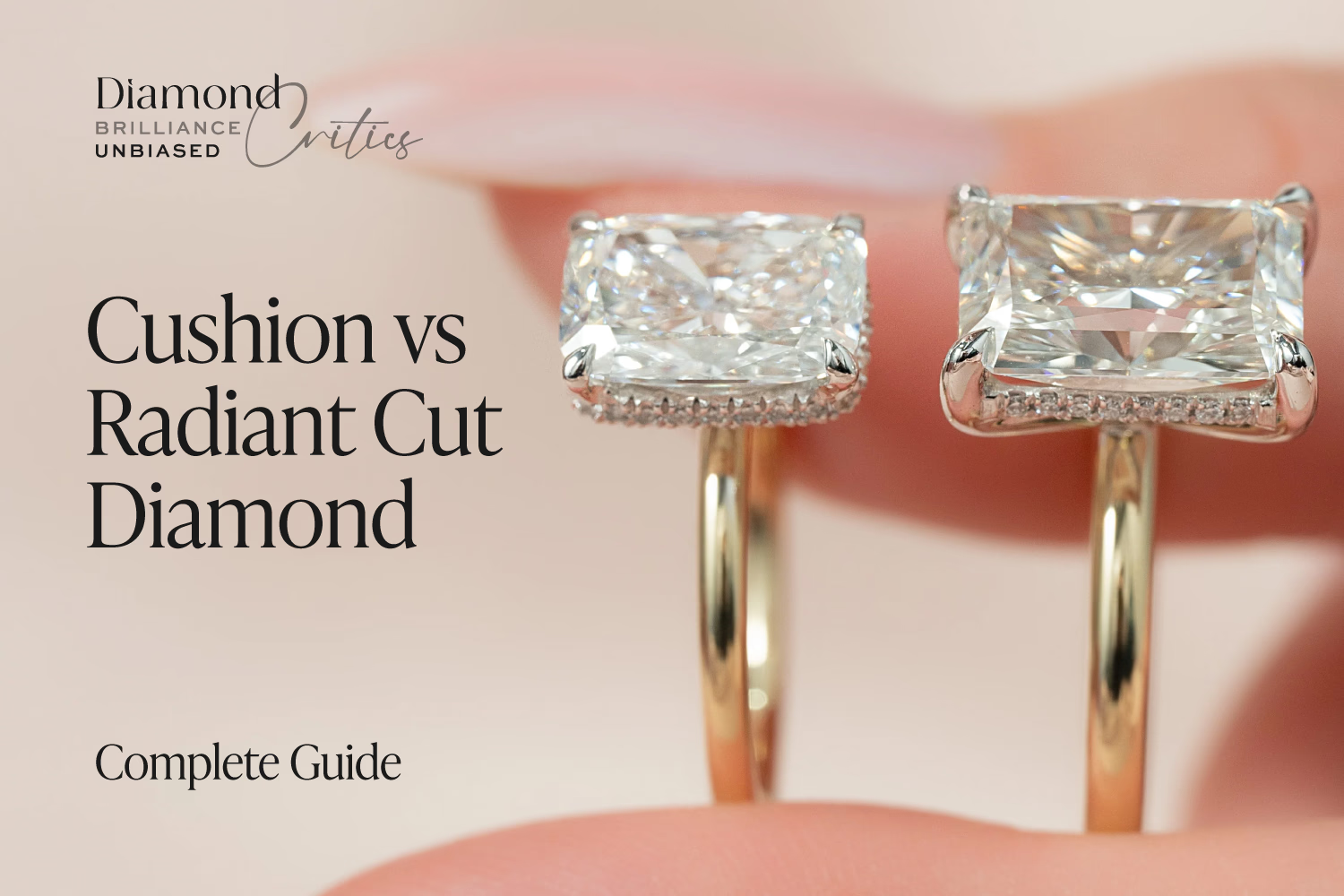
The hidden halo sits underneath the center stone — a ring of small pavé diamonds set on the inside edge of the head. Face-up, all you see is the elongated radiant. Tilt the ring and a ring of light appears around the stone's perimeter.
For elongated radiant cuts, the hidden halo does two things. First, it adds optical size — the halo beneath the stone makes the radiant appear larger without adding any height above it. Second, it frames the rectangular shape — a rectangular hidden halo echoes the stone's geometry and makes the elongated outline look intentional.
This is different from a traditional raised halo. A raised halo adds visual height and changes the ring's profile. A hidden halo adds perceived size while the ring still sits flat. For buyers who want a bigger-looking stone without the traditional halo aesthetic, this is the better choice.
Ask for a rectangular hidden halo matched to your stone's L/W ratio. A halo configured for a 1.10 ratio stone won't frame a 1.30 ratio stone properly — the long sides will be left without coverage.
Does Finger Length Matter?
The elongated radiant is most flattering on short or average-length fingers. The rectangular silhouette runs along the finger, visually extending it. On short fingers, this adds elegant length. On long, slender fingers, it mirrors the finger's natural line equally well.
On wide hands, avoid L/W ratios above 1.38. The stone will look pinched against the width of the finger. The sweet spot of 1.25–1.33 works on nearly every hand type.
Try to view the stone on your actual finger before committing. A photo cannot capture the proportional relationship between a specific L/W ratio and a specific finger width. Ring sizers with rectangular shapes exist for this purpose. If buying online, use any at-home try-on service before the final decision.
The 5 Rules for Buying an Elongated Radiant Cut
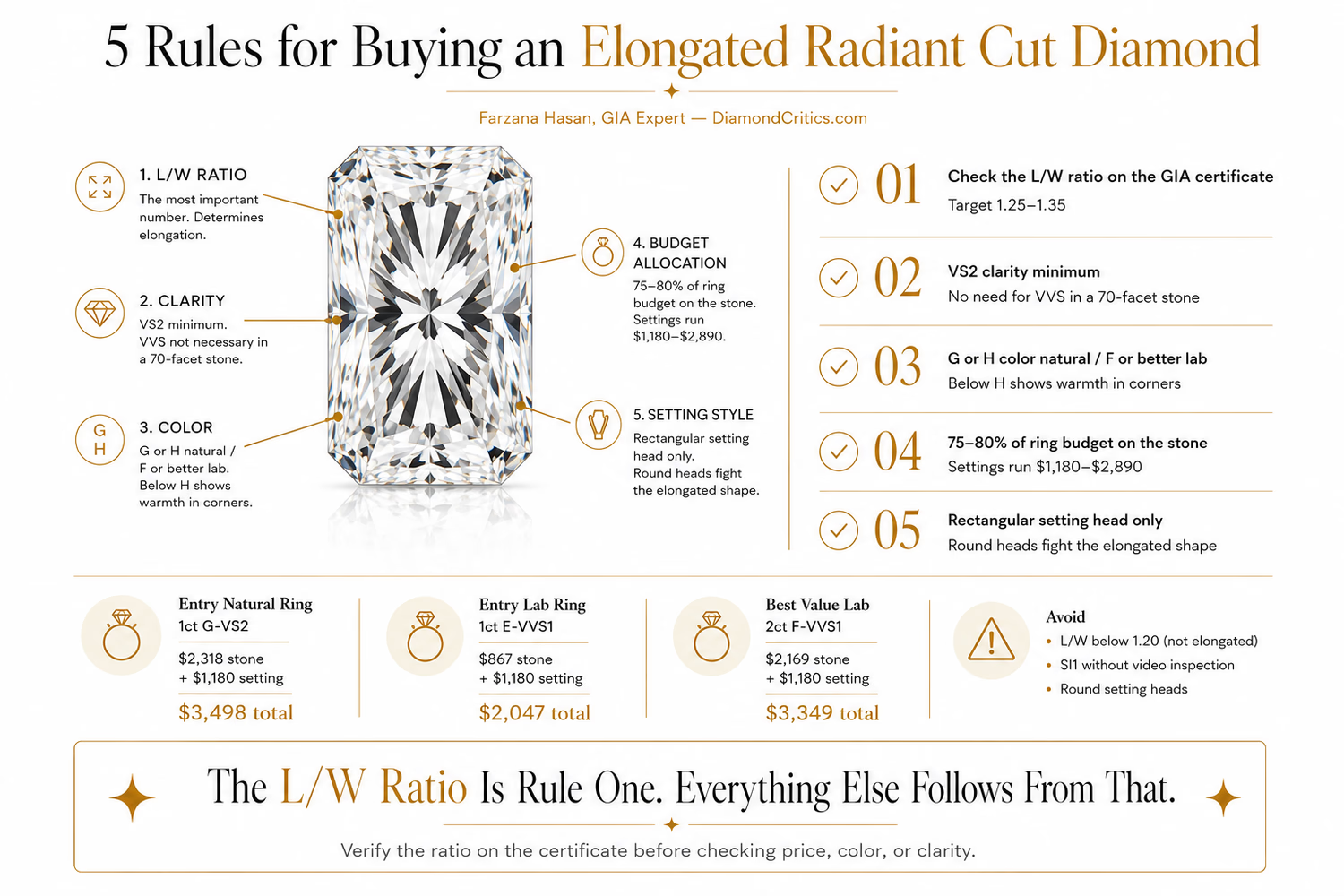
Follow these five rules. All five, not just the easy ones.
Rule 1: Check the L/W ratio on the GIA certificate. Not the product name. Not the listing description. The certificate. Target 1.25–1.35. Below 1.20 is not elongated. This is the single step that separates buyers who are happy with their purchase from those who aren't.
Rule 2: Set VS2 as your clarity floor. The 70-facet brilliant pattern hides a lot. But it doesn't hide everything. VS2 gives you the maximum value — eye-clean in normal viewing without paying for VVS grades that the faceting makes irrelevant.
Rule 3: Buy G or H color in natural, F or better in lab. Below H in natural, body color starts showing in the corners and long edges of the rectangular stone. In lab-grown, the D-F range is price-compressed — buy at least F.
Rule 4: Put 75–80% of your ring budget on the stone. Settings for elongated radiant cuts run $1,180 to $2,890 for quality options. The stone should carry most of the investment.
Rule 5: Confirm the setting head is rectangular. Before ordering any setting, verify the center stone head is built for a rectangular shape — not a round or square head. Ask for millimeter dimensions. A round-head setting will fight the elongated radiant's geometry every time.
Lab-Grown Elongated Radiant: How Much You Save
The elongated radiant is one of the strongest use cases for lab-grown diamonds because the 70-facet architecture looks identical in lab and natural stones — there is no visual or optical difference between them. The difference is origin and resale value.
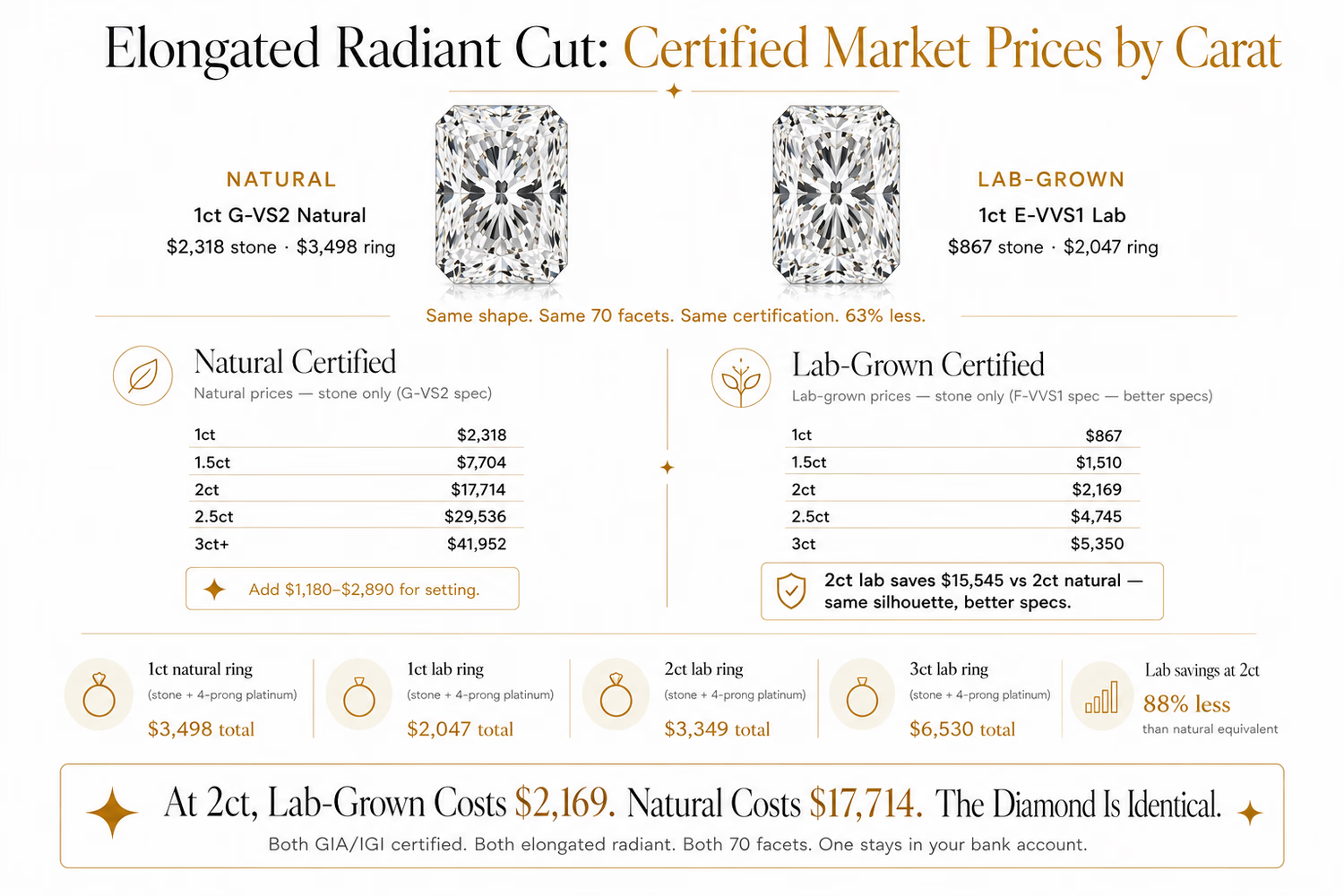
At 1ct: Natural G-VS2 = $2,318. Lab E-VVS1 = $867. You save $1,451 and get better color and clarity.
At 1.5ct: Natural G-VS2 = $7,704. Lab F-VVS1 = $1,510. You save $6,194 — 80% less.
At 2ct: Natural D-VS2 = $17,714. Lab F-VVS1 = $2,169. You save $15,545 — 88% less, better specs.
At 3ct: Natural 3ct+ range = $41,952–$47,061. Lab D-VVS1 = $5,350. The gap at this carat weight is simply staggering.
If you plan to keep the ring and aren't concerned about resale, lab-grown is the rational choice at every carat level above 1ct.
Expert Summary
The elongated radiant cut is the best-value rectangular brilliant diamond in the current market. It outsparkles oval cuts. It costs less than emerald cuts at equivalent specs because it doesn't need VS1 clarity. It has no bow-tie risk. It flatters almost every finger type.
The one genuine requirement is checking the L/W ratio. Retailers use "elongated" loosely. A 1.12 ratio is not elongated — it's a near-square stone wearing an aspirational label. Check the certificate every time, on every stone, before anything else.
"The elongated radiant cut is chronically undervalued because it sits in the shadow of the oval and emerald — two shapes that are trendier right now but have real weaknesses. The oval has the bow-tie. The emerald demands VS1 clarity and a bigger budget. The elongated radiant has neither of those problems. It has 70 facets, no bow-tie, a VS2 clarity floor, and it elongates the finger. I have recommended this shape to hundreds of buyers and almost none of them regret it." — Farzana Hasan, Diamond Critics
Final Verdict
The elongated radiant cut is the right choice for four types of buyers:
If you want geometric brilliance without bow-tie risk: The elongated radiant beats oval on facet count (70 vs 56–58), eliminates the bow-tie entirely, and often costs less at equivalent specs. Buy the radiant.
If your budget is under $5,000 for a 2ct+ look: A lab-grown 2ct F-VVS1 elongated radiant at $2,169 plus the Classic Four Prong setting at $1,180 = a $3,349 ring with better specs than any natural stone at this budget. It is the best value proposition in rectangular diamonds right now.
If you're choosing between elongated radiant and emerald cut: Buy emerald if you want the hall-of-mirrors step-cut look and are willing to spend on VS1 clarity. Buy elongated radiant if you want fire and are comfortable at VS2. The price difference is real — the elongated radiant is almost always cheaper at equivalent carat and color.
If you're on a tight budget for a natural stone: Start with a 1ct G-VS2 elongated radiant at $2,318 and the $1,180 solitaire setting. Total: $3,498. Verify the L/W ratio is 1.25 or above on the GIA certificate. That is an excellent ring.
Frequently Asked Questions
What L/W ratio is best for an elongated radiant cut?
The sweet spot is 1.25–1.35. This gives a clearly elongated look without the stone appearing narrow. Most buyers are happiest at 1.28–1.33. Below 1.20, the elongation is subtle and many buyers feel the shape reads more like a slightly rectangular stone than a true elongated radiant.
Is "elongated radiant" a GIA-graded category?
No. GIA does not issue a cut grade for radiant cuts, and "elongated radiant" is not a graded category — it is a retailer and market term. Any radiant cut with an L/W ratio above 1.20 can be called elongated. Always check the certificate measurements yourself. Divide the length by the width to get your ratio.
Does an elongated radiant cut have a bow-tie shadow like oval cuts?
No. The bow-tie shadow in oval cuts comes from elliptical facet geometry. The elongated radiant's rectangular outline and different facet arrangement eliminate this issue entirely. You will not see a bow-tie in any elongated radiant cut.
What clarity grade do I need?
VS2 is the floor. The 70-facet brilliant-cut pattern masks inclusions extremely well — far better than emerald or Asscher cuts. A VS2 elongated radiant will look eye-clean in normal lighting. SI1 can be eye-clean but must be verified stone-by-stone. VVS and above adds no visible benefit.
What is The Hybrid Effect?
The Hybrid Effect is the elongated radiant's core design advantage: it is the only rectangular diamond shape that combines an emerald cut's long face-up silhouette with a round brilliant's 70-facet fire. Oval cuts are brilliant-cut but curved. Emerald cuts are rectangular but step-cut. The elongated radiant is both rectangular and fully brilliant-cut — that combination is unique.
What is The Elongation Threshold?
The Elongation Threshold is the L/W ratio window of 1.20 to 1.40 that defines an elongated radiant cut. Below 1.10 is square radiant. Between 1.10 and 1.20 is a transitional zone most buyers would not consider elongated. Above 1.40 is extended elongated — can look narrow on average or small fingers. The sweet spot within this threshold is 1.25–1.35.
Can I find an elongated radiant cut at 0.75 carat?
Technically yes, but practically difficult. At 0.75ct, most certified radiant cuts are near-square. For a clearly elongated look at this budget, go up to 0.90ct or buy a lab-grown 1ct — a 1ct lab E-VVS1 at $867 gives more face-up size and elongation than any 0.75ct natural at a comparable price.
How does elongated radiant compare to oval cut?
The elongated radiant has more facets (70 vs 56–58), more scintillation, and no bow-tie risk. Oval cuts have curved edges — softer and more romantic. Oval cuts are currently more fashionable, which drives oval prices up. The elongated radiant offers better sparkle and frequently costs less at equivalent specs.
How does elongated radiant compare to emerald cut?
Same rectangular silhouette, completely different light behavior. Emerald cuts use step facets that produce a hall-of-mirrors effect. Elongated radiant cuts use 70 brilliant-cut facets that produce fire and sparkle. Emerald cuts require VS1 clarity (inclusions visible through step facets). Elongated radiant cuts work at VS2. The clarity premium gap is 20–30% — real money.
What is the best setting for an elongated radiant cut?
A four-prong rectangular solitaire holds the stone at each corner and shows the full elongated shape. Pavé bands add sparkle without competing with the center stone. Avoid round-head settings — they conflict with the rectangular geometry. Always confirm the setting head dimensions are built for a rectangular stone before ordering.
Should I buy GIA or IGI certified?
Both are credible. GIA is the gold standard for natural diamonds. IGI is the most common for lab-grown. Either way, GIA does not issue a cut grade for radiant cuts — "Ideal" or "Excellent" cut labels on retail listings are retailer assessments, not lab grades. Verify proportions manually from the certificate regardless of which lab issued it.
Is an elongated radiant cut trending in 2026?
Yes. The shape is gaining market share as buyers who love oval cuts look for alternatives with better brilliance and no bow-tie. Broad demand for elongated, finger-flattering silhouettes has driven interest across all rectangular shapes, and the elongated radiant benefits directly from that trend.
How much does an elongated radiant cut engagement ring cost?
Entry point for a complete natural ring (stone + setting): $3,498 — 1ct G-VS2 stone at $2,318 plus the Classic Four Prong Platinum setting at $1,180. Lab-grown entry: $2,047 — 1ct E-VVS1 at $867 plus the same setting. At 2ct lab-grown, total ring = $3,349.
See Also
- Radiant Cut Diamond: The Complete Buying Guide — master guide covering the full radiant family, 70-facet architecture, and live prices across every carat range
- 5 Mistakes Radiant Cut Engagement Ring Buyers Always Make — ring-specific buying guide with stone + setting ring prices from $3,498
- Radiant Cut vs Emerald Cut Diamond — full shape-by-shape comparison with certified prices
- Cushion Cut vs Radiant Cut Diamond — which rectangular shape gives more for your budget
- Princess Cut vs Radiant Cut Diamond — angular shapes compared: corners, facets, and price
- Round Diamond vs Radiant Cut — the budget case for going fancy shape
Expert Verdict
Always audit the stone individually — no grade replaces seeing the actual diamond. The certificate tells you what to look for. Your eyes tell you whether to buy.
— Farzana Hasan, GIA Expert · DiamondCritics.com